


1. Introduction
The rapid growth in the production and consumption of consumer electronics has led to a dramatic increase in Waste Electrical and Electronic Equipment (WEEE), raising significant environmental and public health concerns. In 2022, a record-breaking 62 billion kg of e-waste was generated globally, with only 22.3% documented as formally collected and recycled (Reference Balde, Kuehr, Yamamoto, Donald, Angelo, Althaf, Bel, Deubzer, Fernandes-Cubillo, Forti, Gray, Herat, Honda, Lattoni, Khetriwal, Cortemiglia, Lobuntsova, Nnorom, Pralat and WagnerBalde et al., 2024). Projections suggest that by 2030, e-waste generation could rise to an alarming 82 billion kg, further amplifying the urgency for effective recycling systems (UNITAR et al., 2024). Regional disparities are evident, with Europe generating the highest e-waste per capita at 17.6 kg, of which 42.8% was recycled, while Africa produced 2.5 kg per capita but recycled only 0.7%. These variations highlight the urgent need for improved e-waste management systems, particularly in regions with lower recycling performance. Effective WEEE recycling is urgently needed to mitigate environmental pollution and recover valuable resources (Reference Long, Kokke, Lundie, Shaw, Ijomah and KaoLong et al., 2016, Reference AwasthiAwasthi, 2023).
WEEE encompasses a diverse range of discarded electronic products, ranging from large items such as televisions to smaller devices like mobile phones and headphones. These consumer electronic products typically incorporate various components, including body enclosure, batteries, printed circuit boards (PCBs), digital screens, buttons and switches. These components can be made from different materials, such as metals, plastics and composites (Reference Berwald, Dimitrova, Feenstra, Onnekink, Peters, Vyncke and RagaertBerwald et al., 2021) and are often assembled using adhesives, screws, and other fasteners. Additionally, the design trend towards compactness in electronic devices results in densely packed components and intricate assemblies (Reference Corzo, Tostado-Blazquez and BaranCorzo et al., 2020). Traditional disassembly methods, which often rely on manual operation and categorisation, can be labour-intensive and inefficient.
The use of robotic systems for the automated disassembly of consumer electronics offers a viable alternative to conventional methods, potentially reducing human labour, increasing recycling efficiency, and enabling more effective valuable material recovery. Although specialised disassembly robots, such as Apple’s Daisy (designed exclusively for iPhone disassembly and recycling), demonstrate effective outcomes, their application is constrained to specific tasks within controlled environments. Additionally, these robots require extensive programming and customisation investments to handle diverse product designs, which limits scalability and cost-effectiveness (Reference Engelen, Marelle, Kellens and PeetersEngelen et al., 2023).
General-purpose robots offer a flexible and potentially more cost-effective solution for automated disassembly, particularly when consumer electronics are redesigned to facilitate robotic manipulation. Product redesign is therefore a key enabler for effective robotic disassembly, allowing for greater adaptability and efficiency in handling a diverse range of products. Common strategies for redesign typically include simplifying product structures and adopting modular design principles, which enable easier separation of individual components (Reference MuleMule, 2012). Other redesign principles such as minimising the use of adhesives, reducing reliance on specialised tools, and limiting the number of complex fasteners further enhance the automation compatibility (Reference Long, Kokke, Lundie, Shaw, Ijomah and KaoLong et al., 2016, Reference Berwald, Dimitrova, Feenstra, Onnekink, Peters, Vyncke and RagaertBerwald et al., 2021).
Advances in sensor technology and machine learning capabilities have further amplified the potential of general-purpose robots to execute disassembly tasks autonomously, thereby enhancing the automation of electronic waste recycling on a larger scale, supporting a more sustainable and efficient approach to e-waste management. This highlights an opportunity for rethinking priorities during product design, and creating designs that balance functionality and sustainability, especially within the context of automated robotic disassembly.
This study evaluates the feasibility of redesigning consumer electronics for automated disassembly using general-purpose robots, with a particular focus on redesign strategies that enhance disassembly efficiency by minimising tooling requirements. Although our approach centres on redesigning products to facilitate automated disassembly, it complements existing efforts to optimise disassembly processes for current market products. This study serves as a proof-of-concept, demonstrating that integrating end-of-life considerations early in the design phase can yield significant benefits. By incorporating features such as snap-fits—which are easier for general-purpose robots equipped with dedicated grippers or keys to handle than traditional screws—we show that consumer electronics can be made much more amenable to automated recycling. This design-for-disassembly strategy is intended to work in tandem with ongoing robotic disassembly optimisations, encouraging manufacturers to account for disassembly efficiency from the outset. Ultimately, these design modifications can lead to faster, more reliable, and more sustainable recycling outcomes, underscoring the importance of rethinking product design with the end-of-life phase in mind.
This paper is organised as follows: Section 2 reviews relevant literature on robotic disassembly and design for disassembly. Section 3 outlines redesign strategies and disassembly pipeline setup. Section 4 provides a practical implementation of product redesign and robotic disassembly via a remote control case study. In Section 5, we discuss the implications of the findings and potential directions for future research. Finally, Section 6 concludes the study.
2. Related work
2.1. Robotic disassembly
Robotic disassembly is gaining increasing attention within the scientific community, driven by the global emphasis on sustainability and environmental responsibility (Reference Lee, Liang, Hu, Onel, Behhad and ZhengFoo, 2022; Lee et al., Reference Foo, Kara and Pagnucco2023). This emerging field seeks to address challenges related to recycling and waste management by improving efficiency and material recovery in various industrial applications.
Recent literature highlights a shift toward greater automation and human-robot collaboration (HRC) in disassembly processes (Reference Chatzikonstantinou, Giakoumis and TzovarasChatzikonstantinou et al., 2019; Reference Poschmann, Brüggemann and GoldmannPoschmann et al., 2020a). For instance, a hybrid disassembly cell combining automated and manual processes has been employed to disassemble power steering electronic control units (ECUs) from electric vehicles, resulting in enhanced material recovery and concentration (Reference Li, Barwood and RahimifardLi, 2014). However, this approach often requires significant manual pre-assessment of end-of-life (EoL) products and remains limited in its ability to adapt to external uncertainties.
A noteworthy example of robotic-aided disassembly involves multiple robots collaboratively disassembling a PC, where one robot acquires information while the other performs disassembly tasks. Despite achieving component identification, the system necessitated manual preparation of the PC and relied on a pre-existing component database (Reference Hohm, Muller Hofstede and TolleHohm, 2020). Similarly, for electric vehicle batteries, an information-driven control architecture was employed to optimize the semi-automated disassembly of a Volkswagen E-Up model. This system allowed human operators to provide instructions via a user interface while performing other tasks (Reference Poschmann, Bruggemann and GoldmannPoschmann et al., 2020b). Other studies, such as those by Huang (Reference Huang2021), explored HRC and active compliance control in the disassembly of water pumps and turbochargers.
Advanced sensor-based sorting technologies have also emerged as promising tools to enhance material recovery rates in automated recycling systems. For instance, Hayashi et al. (Reference Hayashi, Koyanaka and Oki2019) utilized object-recognition algorithms and labeling information to improve material identification and sorting. Similarly, Araujo-Andrade et al. (Reference Araujo-Andrade, Bugnicourt, Philippet, Rodriguez-Turienzo, Nettleton, Hoffmann and Schlummer2021) applied laser-based spectroscopy to identify high-value engineering plastics, further refining the recycling process.
Focusing specifically on WEEE recycling, Palmieri et al. (Reference Palmieri, Marconi, Corinaldi, Germani and Callegari2018) assessed the feasibility of a flexible robotic cell for disassembling electronic components soldered onto circuit boards. However, their study overlooked the initial disassembly steps required to extract the circuit board from its host device. More recently, Lu et al. (Reference Lu, Pei and Peng2023) identified a gap in the field: most studies on e-waste disassembly focus on technical aspects in laboratory settings. To address this, they conducted a systematic literature review analyzing WEEE disassembly from a strategic perspective, spanning manual operations, semi-automation, and intelligent disassembly. Their framework integrates Industry 4.0 technologies with automated processes to enhance flexibility and efficiency, providing a promising blueprint for future WEEE treatment. However, while this work offers an insightful conceptual framework, it lacks a physical implementation of the proposed strategies.
In addition, studies have highlighted the challenges of screwing and unscrewing tasks in robotic disassembly due to the high precision and complex force control required. For example, Torres et al. (Reference Balde, Kuehr, Yamamoto, Donald, Angelo, Althaf, Bel, Deubzer, Fernandes-Cubillo, Forti, Gray, Herat, Honda, Lattoni, Khetriwal, Cortemiglia, Lobuntsova, Nnorom, Pralat and Wagner2009) demonstrated that task planning for disassembly with cooperative robots often struggles to reliably perform screwing operations, which can compromise overall efficiency. Likewise, Vanegas et al. (Reference Vanegas, Peeters, Cattrysse, Tecchio, Ardente, Mathieux, Dewulf and Duflou2018) noted that products designed with snap-fits considerably improve disassembly efficiency and reliability compared to those relying on traditional screws.
2.2. Design for disassembly
Design for disassembly has been around since the 90s as a promising approach in consumer electronics design, where product end-of-life management poses substantial environmental and economic challenges. Studies of electronic waste management indicate that end-of-life considerations represent one of the most extensively researched domains in this sector (Viswanathan & Allada, Reference Viswanathan and Allada2001;Yung et al.,Reference Yung, Chan, So, Wong, Choi, C. and Yue2009). Studies demonstrate that optimising product lifecycle through effective design yields superior sustainability outcomes compared to conventional post-consumer recycling and recovery methods (Reference Yung, Chan, So, Wong, Choi, C. and YueSubramanian & Yung, 2016).
Some research in design for disassembly has focused on maximising value recovery through systematic workflow improvement and disassembly process optimisation (Reference Ren, Jin, Zhao, Qu, Meng, Zhang, Zhang, Wang and SutherlandVanegas et al., 2015; Reference Soh, Ong and NeeSoh et al., 2015; Ramirez et al., Reference Ramirez, Aledo, Gamez and Pham2020 and Ren et al., Reference Vanegas, Peeters, Dewulf, Cattrysse and Duflou2021), while the main research efforts in design for disassembly has focused on strategies for product redesign to facilitate maintenance, repair, component recovery, and material reuse (Reference MuleMule, 2012). These approaches aim to enhance resource conservation and improve recycling efficiencies at the end of a product's life cycle (Reference Fan, Fan, Yang and LiuFan et al., 2013). Significant methodological advancements include the development of systematic redesign guidelines informed by dismantling centres (Reference Favi, Germani, Mandolini and MarconiFavi et al., 2016), which contributed to the creation of LeanDfD, a quantitative tool for assessing the disassembly and recyclability of mechatronic products (Reference Favi, Marconi, Germani and MandoliniFavi et al., 2019).
During the implementation of product re-design, Long et al. (Reference Long, Kokke, Lundie, Shaw, Ijomah and Kao2016) identified product design features that hinder the remanufacturing of mobile phones, emphasising the importance of optimised joining methods for improved disassembly. Furthermore, Cong et al. (Reference Cong, Zhao and Sutherland2017) proposed a framework to pinpoint disassembly bottlenecks to guide design optimisation, while Escoto and Munoz (Reference Escoto and Munoz2020) aligned design for disassembly principles with Lean manufacturing and mass production. More recently, De Fazio et al. (Reference De Fazio, Bakker, Flipsen and Balkenende2021) introduced the “disassembly map” to visually represent component access routes and evaluate critical design parameters, such as sequence depth, tool type, and fastener reusability. This map aids in assessing the efficiency of disassembly operations and guiding redesign processes. In parallel, Berwald et al. (Reference Berwald, Dimitrova, Feenstra, Onnekink, Peters, Vyncke and Ragaert2021 ) formulated comprehensive circular design guidelines for electronic equipment, addressing concerns like hazardous substances, material selection, and component accessibility. Talami (Reference Talami2021) carried out a case study aimed at redesigning a thermometer to make it easier to disassemble by a robotic arm. In the redesign, snap-fit joints were used instead of screws and glue. Finally, integrating various design approaches, including Design for Manufacturing and Assembly (DFMA), Design for Reliability (DFR), and Finite Element Analysis (FEA), has been shown to support cost-effective redesign at early development stages (Reference Poschmann, Bruggemann and GoldmannJuniani et al., 2022).
2.3. Related work summary
While robotic disassembly systems have gained increasing attention as a means of automating the end-of-life treatment of complex products, and design for disassembly principles have been extensively researched to optimise product redesign for improved maintenance, repair, and material recovery, the integration of these approaches remains underexplored. Robotic disassembly offers the potential to enhance the efficiency, precision, and safety of product end-of-life processing. However, the effectiveness of such systems is heavily dependent on the collaborative thinking of design for disassembly principles and the capability of robotic systems. Moreover, the practical implementation and validation within physical robotic systems have yet to be thoroughly investigated. This study aims to address this research gap by integrating design for disassembly principles and robotic automation capabilities via a pipeline. Experimental case studies were conducted to validate the feasibility.
3. Pipeline
The proposed pipeline for automating the disassembly of consumer electronics using general-purpose robots emphasises product redesign, robotic adaptability, and iterative refinement. This pipeline comprises six sequential phases, grouped into three core components: Consumer Electronic Product Re-Design, Robotic Cell, and Evaluation & Re-adjustment. Figure 1 provides a visual representation of the overall structure, workflow, and detailing each phase.
Pipeline for Consumer Electronic Product Redesign and automated disassembly

3.1. Consumer electronic product redesign
The Consumer Electronic Product Re-Design phase focuses on analysing and modifying the product to enhance its compatibility with robotic disassembly. This section includes Product Analysis & Assessment (See Figure 1, Phase 1), Redesign for Robotic Compatibility (See Figure 1, Phase 2), and Redesign of the Gripper Mechanism (See Figure 1, Phase 3).
3.1.1. Product Analysis & Assessment:
In this initial stage, the product is scanned to create a 3D model, which aids in identifying components, fasteners (e.g., screws), and materials used. The analysis pinpoints elements that could complicate robotic handling, such as screws or adhesives. The goal is to identify areas for modification to improve robot compatibility, producing a 3D model annotated with redesign targets and a detailed breakdown of materials and fasteners.
3.1.2. Redesign for Robotic Compatibility:
Based on the initial analysis, the product is re-engineered to replace traditional fasteners with snap-fits or other robot-friendly connections. These modifications enhance modularity, allowing components to be detached without damaging adjacent parts. Durable, recyclable materials are selected to withstand repeated disassembly, resulting in a CAD model that optimizes the product for automated handling.
3.1.3. Snap-Fit Design for Automated Disassembly:
HP Development Company, L.P. (2019) provides detailed guidelines on snap-fit designs, emphasizing their importance for efficient robotic assembly and disassembly of consumer electronics. In this framework, various types of snap-fits, including cantilever snap-fits, are highlighted for their ability to facilitate automated processes. Cantilever snap-fits, in particular, feature a flexible beam that deflects during assembly, securing components without traditional fasteners, and then returns to its original position. Their balance of strength and flexibility allows for repeated robotic engagement with minimal effort. However, the choice and optimization of snap-fit designs depend on product-specific requirements, with factors such as mating force, beam stress, deflection, and design angles requiring careful consideration.
3.1.4. Redesign of the Gripper Mechanism:
To effectively interact with the redesigned product, the robotic gripper undergoes adjustments. These include adding friction-enhancing materials or adapting the gripper’s shape to securely engage with snap-fits. The gripper design is tested for compatibility to ensure reliable engagement and gentle handling, ultimately enabling the robot to interact with modified components without causing damage.
3.2. Robotic cell
The Robotic Cell phase includes Pose Identification & Calibration (See Figure 1, Phase 4) and Robotic Disassembly Execution (See Figure 1, Phase 5). This section involves calibrating and programming the robotic system to accurately recognize and manipulate the redesigned product.
3.2.1. Pose Identification & Calibration :
Accurate pose identification is critical for precise robotic handling. Using a calibrated RGBD camera, the system identifies the product's 3D orientation, while computer vision and machine learning detect graspable regions. This ensures the robot can effectively recognize and position components for disassembly.
3.2.2. Robotic Disassembly Execution:
The redesigned product and calibrated gripper enable the robotic system to perform disassembly in a structured, step-by-step sequence, ensuring precise detachment of components without damaging adjacent parts. Real-time feedback on force, position, and alignment allows for dynamic adjustments, resulting in a fully autonomous disassembly process that minimizes human intervention and offers a scalable solution for consumer electronics.
3.3. Evaluation and re-adjustment
The final component, Evaluation & Re-adjustment, includes Iterative Testing & Refinement (See Figure 1, Phase 6). This phase involves evaluating the system’s performance and making iterative improvements to ensure reliability and adaptability.
3.3.1. Iterative Testing & Refinement:
This phase emphasizes iterative testing to refine both the redesigned product and the robotic system. Multiple trials are conducted to document failures, friction points, or inconsistencies in gripper engagement. Based on these findings, adjustments are made to optimize snap-fit placements, gripper strength, and calibration. This iterative approach is essential for achieving a high success rate and ensuring the system’s readiness for diverse, real-world applications.
4. Remote control case study
The case study focuses on redesigning a consumer electronic product, specifically the WiZ Smart Lighting Remote Control shown in Figure 2, to enhance automated disassembly using general-purpose robots.
WiZ Smart Lighting Remote Control black

Initially, the remote control's design posed significant challenges for automation due to its reliance on screws and traditional fasteners, which required manual effort and specialized tools for removal. The redesign aimed to replace these fasteners with snap-fits, simplifying disassembly and improving accessibility for robotic systems.
The process began with an analysis and 3D scanning of the original remote using an Ein Scan HX scanner, which provided a precise digital model for studying its internal and external components.
This model guided the redesign, ensuring snap-fits could replace screws without interfering with critical parts like the PCB and battery compartment. In addition, a robot gripper was designed specifically for the various actions required during disassembly, including disassembling the snap-fits, gripping components, and removing the battery. The gripper design (refer to Figure 3) featured integrated keys that could enter the grooves of the snap-fits and apply the necessary force to release them without damaging the components. This customization was critical for enabling the robotic system to perform precise and reliable disassembly actions as well as other necessary manipulative tasks.
Gripper design with integrated key features

The selection of the most suitable material for the remote design in this case study was carried out using a Pugh Matrix, which evaluated ABS, PLA, PETG, and TPU based on tensile strength, impact resistance, flexibility, recyclability, cost, and availability. ABS emerged as the optimal choice with the highest weighted score (5.3), owing to its superior durability, flexibility, and suitability for repeated robotic manipulation. Although PLA, PETG, and TPU demonstrated strengths in specific areas, none provided the overall balance of performance required for this application, solidifying ABS as the preferred material.
The remote was detected by the camera to ensure the robot could precisely locate and grasp it accurately, allowing the robot to adjust its end effector and actions based on the identified pose (refer to Figure 4).
Product detection and pose identification

The new design was tested iteratively with a robotic system (refer to Figure 5), the Franka Emika Panda, over nine versions. Each iteration aimed to refine the disassembly process, enhancing both the product and the gripper mechanism. These iterations were crucial for evaluating the process and detecting failures, enabling adjustments to the design and improvements in snap-fit positions, sizes, and dimensions, as well as gripper design and the force needed for effective disassembly.
Robotic disassembly cell

The disassembly process was divided into seven distinct phases, each essential for the complete disassembly of the remote and the proper separation of materials:
1. Removal of the battery cover and extraction of the batteries.
2. Sorting the battery cover into the plastic recycling compartment.
3. Detaching the remote enclosure to access internal components.
4. Sorting the product cover and attached buttons into the plastic recycling container.
5. Extracting the remote base, which contains the PCB, for further processing.
6. Separating the PCB from the base and placing it into the electronics recycling compartment.
7. Sorting the empty remote base into the plastic recycling container.
These phases ensured that each material type—plastics, electronic components and batteries—was separated effectively for recycling. The final design shown in Figure 6 achieved high success rates across all phases, demonstrating significant improvements and reliability for robotic disassembly.
Final remote design

5. Results and discussion
Implications of this study can contribute to sustainability across all aspects. Environmentally, the improper disposal of WEEE poses significant risks to ecosystems and human health. By improving the efficiency and effectiveness of disassembly and recycling processes, automated systems can help mitigate these risks and reduce the environmental footprint of electronic waste. Economically, the recovery of valuable materials from WEEE presents a substantial opportunity. Automated disassembly and recycling systems, with their ability to process large volumes of e-waste quickly and accurately, can enhance the profitability of disassembling and recycling operations. Socially, adopting automated disassembly and recycling technologies can improve working conditions in the recycling industry. Traditional disassembly and recycling operations often involve hazardous manual labour, exposing workers to toxic substances and physical injuries. Automated systems can reduce the need for manual disassembly, and minimise exposure to hazardous materials and operations, thereby improving worker safety and well-being.
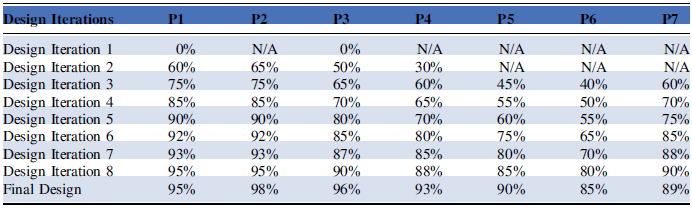
The iterative design process led to progressive enhancements in the snap-fit and gripper mechanisms, significantly improving the success rates in the robotic disassembly phases for the remote case study (Refer to Table 1). The initial design encountered issues with snap-fit placement, which caused multiple components to detach prematurely during robotic handling. To address these issues, adjustments were made in subsequent iterations, including repositioning snap-fits, introducing a sliding mechanism for the battery cover, and adding flexible snap-fits to the remote base. These changes improved the product's accessibility for the robot and minimized unintended component detachment.
Further refinements were made to the gripper mechanism. By modifying the gripper keys, adding fillets, and increasing grasping force, the robot could more effectively engage and manipulate the snap-fits. Frictional materials were also applied to the gripper to enhance stability during handling. As iterations continued, adjustments were made to the external features of the remote, such as adding fillets and refining corners, which optimized the robot's ability to grip and manipulate components with precision.
In the final iteration, the remote design achieved consistent success across all disassembly phases, with each phase reaching high success rates. These iterative adjustments led to a reliable robotic disassembly process for the remote case study, demonstrating the efficacy of the optimized snap-fit design and gripper modifications for automated disassembly applications. The case study highlights how targeted design improvements can effectively address challenges in robotic disassembly, resulting in a robust and repeatable process for consumer electronics.
Success percentages across design iterations for each phase

6. Conclusion
The rapid growth of Waste Electrical and Electronic Equipment (WEEE) underscores the urgent need for streamlined disassembly and recycling strategies. Current consumer electronic product design predominantly neglects end-of-life disassembly and recyclability, consequently requiring labour-intensive processes and producing negative environmental effects. This research proposes an innovative pipeline for redesigning consumer electronic products to facilitate automated disassembly. A remote control redesign and disassembly case study utilising a general-purpose Franka robot was conducted to evaluate the proposed pipeline's practical feasibility. Preliminary findings demonstrate significant potential for implementing efficient, autonomous disassembly processes with minimal human intervention. Subsequent research directions include developing more resilient snap-fit mechanisms, incorporating water and dust resistance features and exploring collaborative multi-robotic approaches for addressing more complex disassembly tasks.



 Open access

