


With the rapid development of information technology, people can obtain access to the internet more easily than ever before. The ‘anytime, anywhere’ internet service facilitates our life, but, on the other hand, it causes problems as well. Problematic internet use (PIU) is one of these problems. PIU includes a series of symptoms that resemble the symptoms of pathological gambling, such as craving internet use, spending an increasing amount of time to achieve satisfaction in internet use, preoccupation with the internet, and unsuccessful attempts to control use of the internet (Young, Reference Young1998a).
The prevalence of PIU ranges from 0.3% to approximately 36.7% in different cultures (Cao & Su, Reference Cao and Su2007; Fu et al., Reference Fu, Chan, Wong and Yip2010; Park et al., Reference Park, Kim and Cho2008; Shaw & Black, Reference Shaw and Black2008; Siomos et al., Reference Siomos, Dafouli, Braimiotis, Mouzas and Angelopoulos2008; Yen et al., Reference Yen, Ko, Yen, Chen, Chung and Chen2008). Adolescents have been regarded as more vulnerable to PIU than other age groups (Song et al., Reference Song, Li, Liu, Zhang, Zhu and Wang2008). In China, the prevalence of PIU among adolescents has ranged from 2.4% to 14% (Cao & Su, Reference Cao and Su2007; Lei & Liu, Reference Lei and Liu2005; Xu & Zhang, Reference Xu and Zhang2012), and is estimated to be 20% in Taiwan (Yen et al., Reference Yen, Ko, Yen, Wu and Yang2007) and 38% in South Korea (Kim et al., Reference Kim, Ryu, Chon, Yeun, Choi, Seo and Nam2006). If adolescents with PIU cannot control their use of the internet, it may eventually harm their psychological, social, and academic performances (Cao & Su, Reference Cao and Su2007; Young, Reference Young1998a). Hence, research on the etiological mechanisms of PIU is needed for establishing appropriate prevention and intervention strategies.
One key issue in understanding the etiological mechanisms of PIU is to find out to what extent the PIU is genetically and environmentally influenced. Most previous studies have explored finding environmental risk factors for PIU, such as poor family functioning, low socio-economic status, negative life events, and limited social supports (Hardie & Tee, Reference Hardie and Tee2007; Ni et al., Reference Ni, Yan, Chen and Liu2009; Park et al., Reference Park, Kim and Cho2008; Yen et al., Reference Yen, Yen, Chen, Chen and Ko2007). However, as pointed out by Potenza (Reference Potenza2006), the vulnerability to PIU may be due to a person's genetic predisposition as well.
There are some indications that genetic factors may contribute to the development of PIU. First, studies of substance abuse and other types of behavioral addictions, such as pathological gambling, demonstrate potent genetic impacts (Eisen et al., Reference Eisen, Lin, Lyons, Scherrer, Griffith, True, Goldberg and Tsuang1998, Li et al., Reference Li, Cheng, Ma and Swan2003; Xian et al., Reference Xian, Scherrer, Slutske, Shah, Volberg and Eisen2007). Given that PIU shares with these addictions some clinical symptoms as well as a neural basis, genes may also affect PIU (Potenza, Reference Potenza2006). Second, associations between PIU and personality traits, such as impulsivity, sensation-seeking, self-control, and neuroticism, have been identified (Cao et al., Reference Cao, Su, Liu and Gao2007; Kim et al., Reference Kim, Namkoong, Ku and Kim2008; Lin & Tsai, Reference Lin and Tsai2002). These personality traits have demonstrated salient genetic influence (Beaver et al., Reference Beaver, Schutt, Boutwell, Ratchford, Roberts and Barnes2009; Heiman et al., Reference Heiman, Stallings, Hofer and Hewitt2003; Koopmans et al., Reference Koopmans, Boomsma, Heath and van Doornen1995). Based on these findings, it can be speculated that genetic factors probably also influence the development of PIU. Until now, only one molecular genetics study (Lee et al., Reference Lee, Han, Yang, Daniels, Na, Kee and Renshaw2008) has shown the gene basis for PIU: The homozygous short allelic variant of the serotonin-transporter-linked polymorphic region (5-HTTLPR) was more frequent in the PIU group than in the control group. The knowledge is still limited about how, and whether, genetic factors affect PIU. To fill the gap, the present study utilizes a twin design to estimate the extent to which genetic and environmental influences account for adolescent PIU.
As a component of self-regulation, effortful control is defined as ‘the ability to inhibit a dominant response and/or to activate a subordinate response, to plan, and to detect errors’ (Rothbart & Bates, Reference Rothbart, Bates, Damon, Lerner and Eisenberg2006, p. 129). It involves the voluntary process of attentional regulation, the inhibition of inappropriate behaviors, and behaving in an adaptive manner (Kochanska et al., Reference Kochanska, Murray and Harlan2000). Poor effortful control has been reported to be associated with higher levels of externalizing behavior, aggression, and negative emotionality in previous studies (Eisenberg et al., Reference Eisenberg, Sadovsky, Spinrad, Fabes, Losoya, Valiente and Shepard2005; Olson et al., Reference Olson, Sameroff, Kerr, Lopez and Wellman2005). Some recent studies have begun to identify the relationship between effortful control and PIU. Li and colleagues (Reference Li, Zhang, Li, Zhen and Wang2010) revealed that effortful control buffers the effect of negative life events on females’ PIU. Another study also detected an association between PIU and poor effortful control (Claes et al., Reference Claes, Müller, Norré, Assche, Wonderlich and Mitchell2012).
While the above-mentioned studies have established an association between poor effortful control and PIU, the underlying mechanisms of the association remain unknown. An especially interesting question is the origin of this observed association; that is, whether the phenotypic association is genetically mediated or environmentally mediated. One possibility is that effortful control and PIU share some common genes. In fact, effortful control per se is a genetically based temperament with moderate to high heritability (range 49–83%; Lemery-Chalfant et al., Reference Lemery-Chalfant, Doelger and Goldsmith2008; Yamagata et al., Reference Yamagata, Takahashi, Kijima, Maekawa, Ono and Ando2005). Thus, genes acting on effortful control may also have an effect on adolescents’ PIU. Alternatively, as effortful control is also open to the influence of environmental factors, it is likely that its association with PIU is shaped by common environmental effects between the two, such as parenting style and peer affiliation (Grolnick & Ryan, Reference Grolnick and Ryan1989). Hence, the second goal of the present study is to investigate how genetic and environmental factors influence association between PIU and effortful control. If genetic factors account for a large proportion of the association, future studies should focus on identifying specific gene loci; otherwise, the focus should be on identifying specific environmental factors.
Finally, sex differences in both effortful control and PIU have been detected. Boys have been found to have lower level of effortful control than girls (Li et al., Reference Li, Zhang, Li, Zhen and Wang2010); boys are also more likely to be addicted to the internet than girls, as in China, the male-to-female ratio of internet addiction was found to be 4.8:1 (Cao & Su, Reference Cao and Su2007). Similar sex differences have also been found in many other cultures (Jang et al., Reference Jang, Hwang and Choi2008; Morahan-Martin & Schumacher, Reference Morahan-Martin and Schumacher2000). Thus, the third goal of this study is to explore sex differences in genetic and environmental effects on PIU and its association with effortful control.
Materials and Method
Participants
Data for the present study were drawn from Beijing Twin Study (BeTwiSt), a longitudinal, population-representative study that has recruited reared-together twins of both sexes from Beijing, China. The first wave of data collection (the T1 assessment) was conducted from 2008 to 2009, in which 1,387 pairs of twins and their parents were recruited. After about 1.5 years (in 2009–2010), 1,004 twin families were traced through home visits (the T2 assessment). For detailed information of the recruitment and measurement, please refer to the introductory paper about BeTwiSt (Chen et al., Reference Chen, Li, Zhang, Natsuaki, Leve, Harold and Ge2013). The present sample comprised 825 families from the T2 assessment, with each family having the same-sex twin pair (aged 10 to 20 years, mean (M) = 15.47, standard deviation (SD) = 2.68) and at least one parent. The participants comprised 449 female twin pairs (328 monozygotic [MZ], 121 dizygotic [DZ]) and 376 male twin pairs (279 MZ, 97 DZ). Written informed consents were obtained from twins and their parents, and all research protocols for BeTwiSt were ratified by the Institutional Review Board.
Zygosity was determined by a valid method combining DNA analysis (for 89.5% of twins) and questionnaire (for 10.5% of twins who were not able to provide DNA; Chen et al., Reference Chen, Li, Chen, Yang, Zhang, Duan and Ge2010). In DNA analysis, nine short tandem repeat (STR) loci, which are highly heterogeneous in the Chinese population, were used. The same-sex twins with at least one different genetic marker were classified as DZ twins, whereas others were classified as MZ twins. The accuracy of genotype detection analysis was 99.99%. The accuracy of the questionnaire method used in our sample was estimated to be 91% compared with genotyping (Chen et al., Reference Chen, Li, Chen, Yang, Zhang, Duan and Ge2010).
Measures
Problematic internet use
Twins completed a 13-item questionnaire adapted from Young's Internet Addiction Test (IAT; Young, Reference Young1998b). Items that were highly relevant to adolescents’ daily life were selected, such as ‘How often do your grades or school work suffer because of the amount of time you spend online?’; ‘How often do you choose to spend time online over going out with others?’; and ‘How often do you find that you stay online longer than you intended?’ Responses ranged from 1 (rarely) through 4 (always). The scores for all the items were added up to create a continuous variable that ranged from 13 to 52, with higher scores indicating more severe PIU. Cronbach's alpha was 0.88, suggesting that this measure is reliable.
Effortful control
The self- and parent-reported adolescents’ effortful control were collected by using the Early Adolescent Temperament Questionnaire — Revised (Ellis & Rothbart, Reference Ellis and Rothbart2001). This scale assesses individuals’ ability in attentional focusing (e.g., ‘It is easy for me/the kid to really concentrate on homework problems’), inhibitory control (e.g., ‘When someone tells me/the kid to stop doing something, it is easy for me to stop’), and activation control (e.g., ‘If I have/the kid has a hard assignment to do, I/he or she get started right away’). The self-reported questionnaire comprised 15 items, and the parent-reported one comprised 17 items, with both scaling from 1 (almost always untrue) to 5 (almost always true). The total score ranges from 15 to 75 for the self-reported scale, and 17 to 85 for the parent-reported scale, with a higher score indicating a higher level of effortful control. The internal consistency of the self-reported and parent-reported scales was 0.79 and 0.82 respectively.
Controlled variables
The monthly family income was used as indicators of family's socio-economic status (SES) and controlled in the analysis. The parents reported monthly family income (in US dollars) on an 8-point scale: 1 ≤ $100 (3.9%); 2 = $100–$200 (6.1%); 3 = $200–$350 (14.8%); 4 = $350–$500 (20.4%); 5 = $500–$1,000 (28.6%); 6 = $1,000–$1,600 (13.1%); 7 = $1,600–$3,300 (7.2%); 8 ≥ $ 3,300 (2.7%); M = 4.50, SD = 1.57.
Statistical Analysis
Bivariate correlation between PIU and effortful control was analyzed first to examine their phenotypic association. A regression analysis of the effect of effortful control on PIU was then conducted after controlling for the effect of age and family SES, as the latter has been found to have strong associations with both PIU and effortful control (Lengua, Reference Lengua2006; Yen et al., Reference Yen, Ko, Yen, Wu and Yang2007). Before conducting model fitting analysis, scores for PIU and effortful control were residualized for age through a multiple regression procedure, as age may increase the sibling similarity on both phenotypes (McGue & Bouchard, Reference McGue and Bouchard1984).
Univariate genetic analysis was utilized to divide the phenotypic variances of PIU and effortful control into genetic (A), shared environmental (C), and non-shared environmental (E) components. As MZ twins share 100% of their genes and DZ twins just share half of their genes on average, greater correlation between MZ twin pairs than that of DZ twin pairs may indicate the effect of genetic factors. Any differences between MZ twins (indicated by an intraclass correlation of less than 1) growing up in one family can be attributed to the non-shared environmental effects and measurement error. The rest of the variance may be attributed to the shared environmental factor–sibling similarity that remains after controlling for genetic effects.
A sex-limitation model was tested to detect whether genetic, shared environmental and non-shared environmental factors contributed differently for girls and boys to variance in PIU and effortful control. For each variable, we first estimated the genetic, shared environmental, and non-shared environmental sources of variance for boys and girls freely, and then constrained the estimates of A, C, and E to be equal across the two sexes. If the constrained model turned out to have significantly better model fit than the unconstrained models, it means that genetic and environmental factors may have similar effects for the two sexes; otherwise, they may contribute differently for girls and boys (Neale & Maes, Reference Neale and Maes2001).
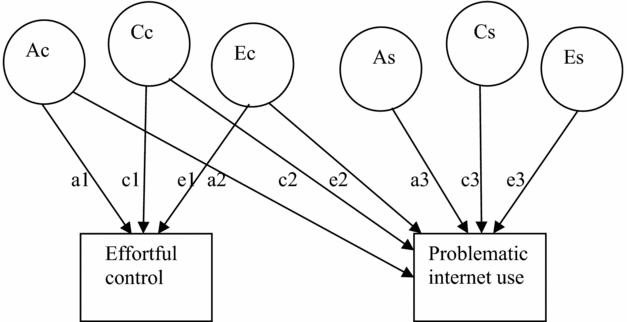
We then used the bivariate Cholesky decomposition model (Neale & Maes, Reference Neale and Maes2001) to explore the relative contributions of genetic and environmental factors to the phenotypic correlation between effortful control and PIU. A simplified representation of the Cholesky decomposition model, containing only one twin in a pair, is presented in Figure 1. In this model, Ac, Cc, and Ec represent the genetic, shared environmental and non-shared environmental factors that contribute to the covariance between effortful control and PIU. As, Cs, and Es denote the genetic and environmental factors that are unique to PIU. The variance of PIU explained by genetic, shared, and non-shared environmental influences could be calculated as a2 2 + a3 2, c2 2 + c3 2, e2 2 + e 3 2. The portion of genetic overlap between PIU and effortful control is calculated as a2 2/(a2 2 + a3 2). Similarly, c2 2/(c2 2 + c3 2) and e2 2/(e2 2 + e3 2) denote the shared environment and non-shared environment overlap between the two variables.
The bivariate Cholesky decomposition model for effortful control and PIU. The model estimates common genetic (Ac) and environmental (Cc, Ec) factors contributing to both variables and genetic and environmental factors that are unique to PIU (As, Cs, and Es).
Structural equation models were conducted to fit twin correlations using the maximum-likelihood method in the statistical package Mx (Neale et al., Reference Neale, Boker, Xie and Maes1999). In univariate genetic analysis, models were compared by estimating the differences in chi-square (Δχ2) values against the changes in degrees of freedom (Δdf). In the bivariate Cholesky decomposition model, standardized residuals of each variable were analyzed using the raw data option in Mx (Neale et al., Reference Neale, Boker, Xie and Maes1999). We initially tested the full model and gradually dropped parameters to test the significance of each submodel. Models were evaluated using both -2 × log-likelihood values (-2LL) and Akaike's Information Criterion (AIC); -2LL represents the difference between expected model and the observed data. If fixing a path to zero does not significantly deteriorate the full model, then this path has a non-significant contribution to the model and can be dropped. AIC weighs both model fit and parsimony with a lower AIC value indicating better fitting.
Results
Descriptive Statistics
Means and intraclass correlations of PIU and effortful control are presented in Table 1. Boys scored significantly higher than girls in PIU (t = 4.90, p < .001) but lower in effortful control (self-report: t = -2.85, p < .001; parent report: t = -6.44, p < .001). Intraclass correlations in MZ twins were higher than in DZ twins for both PIU and effortful control, indicating that genetic factors might contribute to both variables.
Mean (SD) Scores and Twin Intraclass Correlation for PIU and Effortful Control by Sex and Zygosity
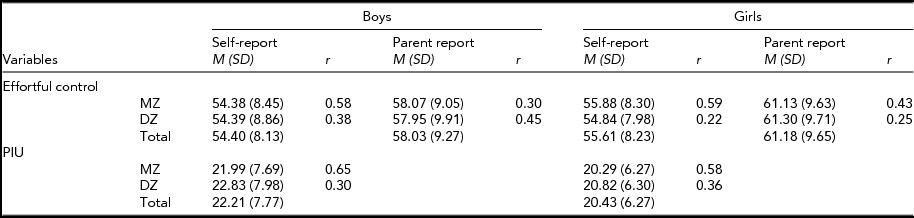
All the correlations were statistically significant at p < .001.
The phenotypic correlation between effortful control and PIU was -0.33 for self-report (p < .01) and -0.21 for parent report (p < .01). After controlling for age and family SES, effortful control significantly predicted the severity of PIU (self-report: B = -0.27, β = -0.32, t = -13.18, p < .001; parent report: B = -0.15, β = -0.21, t = -7.99, p < .001).
Univariate Analysis
Standardized estimates and fit statistics of the univariate model for effortful control and PIU are presented in Tables 2 and 3. For effortful control, non-significant changes were detected when constraining parameters to be equal across the two sexes (self-report: Δχ2 = 1.69, Δdf = 3, p = .64; parent report: Δχ2 = 4.79, Δdf = 3, p = .19). Data from self-report and parent report indicated that the total variances could be attributed to genetic and non-shared environmental factors. The significance of shared environment could be ignored. For both sexes, the heritability (i.e., the proportion of total variance due to genetic effects) for effortful control was 60–74%, with the rest attributed to non-shared environmental effects.
Standardized Estimate and Fit Statistics of Univariate Analysis of Effortful Control
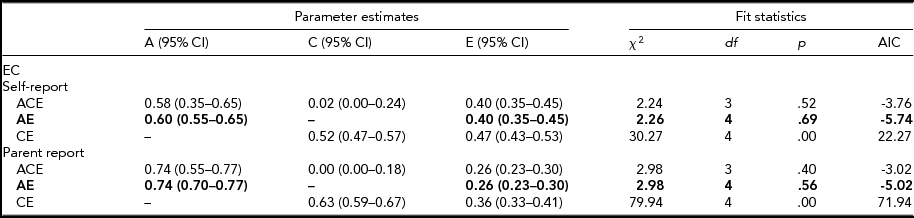
For self-reports, AE to ACE: Δχ2 = 0.02, Δdf = 1, p = .88; CE–ACE: Δχ2 = 28.03, Δdf = 1, p < .000.
For parent reports, AE to ACE: Δχ2 = 0.00, Δdf = 1, p = 1; CE–ACE: Δχ2 = 76.96, Δdf = 1, p < .000.
Best models are denoted in bold.
Standardized Estimate and Fit Statistics of Univariate Analysis of Problematic Internet Use for Different Sex
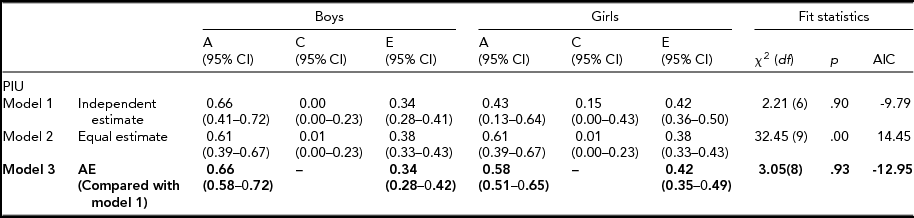
Model 2 to Model 1: Δχ2 = 30.24, Δdf = 3, p < .001; Model 3 to Model 1: Δχ2 = 0.84, Δdf = 2, p = .656.
Best models are denoted in bold.
The same analysis was conducted for PIU, and the results are shown in Table 3. The equal model resulted in a significant decrease in the model fit (Δχ2 (3) = 30.24, p < .001) when compared with the independent-estimated model. That is to say, a sex difference emerged in the etiology of PIU. Then a series of nested models gradually dropping A, C, and E components were fitted, and the results were compared with the results of the independent-estimate model to see whether genetic or environmental (shared and non-shared) factors could be eliminated. It turned out that the AE model with differing parameters between sexes was the best fitting model (Δχ2 (2) = 0.84, p = .66). For boys, genetic effects accounted for the majority of the variance (66%), with the rest (34%) attributable to non-shared environmental variance. For girls, the heritability of PIU was 58%, slightly lower than that of boys, and the rest of the variance (42%) was attributed to non-shared environmental influences.
Bivariate Cholesky Decompositions
Cross-twin, cross-trait correlations were higher in MZ twins than in DZ twins for both boys and girls (rMZ = -0.33, rDZ = -0.17 for boys; rMZ = -0.24, rDZ = -0.16 for girls, p-values <.01), suggesting a common genetic influence for the phenotypic association of effortful control and PIU. To further examine the genetic and environmental factors contributing to effortful control and PIU, we then conducted the bivariate Cholesky decomposition analysis. As shared environmental factors have been found to have negligible influence on both effortful control and PIU, the C component was not included in the bivariate Cholesky model. Standardized estimates and fit statistics of the full model and the best submodel are presented in Table 4. For boys, dropping common genetic factors between effortful control and PIU led to a significant reduction in fit, whereas dropping common non-shared environmental factors did not lead to a significant change in fit, suggesting that genetic influences instead of environmental factors contribute to the co-occurrence of effortful control and PIU. Genetic correlation between effortful control and PIU was rg = -0.56. Common genetic factors contributed to 21% of the total variance of PIU, while specific genetic factors accounted for 45% of its total variance, with the rest attributed to specific non-shared environmental factors. For girls, both genetic and non-shared environmental correlation for effortful control and PIU were significant (rg = -0.37 and re = -0.18). Common genetic and common non-shared environmental factors together could explain 10% of the total variance of PIU, with the rest accounted for by specific genetic and non-shared environmental factors. The bivariate Cholesky analysis using parent report confirmed this trend: The association between adolescents’ PIU and effortful control was almost fully mediated by common genetic influences, and this genetically mediated association was more substantial for boys than for girls.
Parameter Estimates and Fit Statistics for the Bivariate Cholesky Model
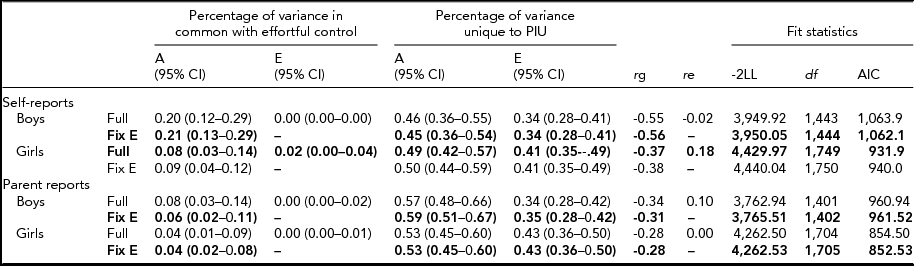
Self-report boys: Fix E-Full: Δχ2 = 0.07, Δdf = 1, p = .096; girls: Fix E-Full Δχ2 = 10.07, Δdf = 1, p = .002.
Parent report boys: Fix E-Full: Δχ2 = 2.58, Δdf = 1, p = .108; girls: Fix E-Full Δχ2 = 0.02, Δdf = 1, p = .884.
Best models are denoted in bold.
Discussion
In this study, we utilized a twin design to examine how genetic and environmental factors affect adolescent PIU and its association with effortful control. The results provide insight into the nature of individual differences in PIU among adolescents: PIU has a moderate to high heritability, with the remaining variance explained by non-shared environment. Furthermore, effortful control accounted for the modest portion of the genetic and non-shared environmental variance in PIU.
Consistent with previous studies, we also found significant sex differences in PIU: boys presented with more symptoms of PIU than girls (Cao & Su, Reference Cao and Su2007). Moreover, heritability was slightly higher and the magnitude of environment effects was much lower in boys than in girls. One possibility for this sex difference is that social norms (lower mean level of PIU in girls) restrict girls’ genetic propensities to expression. This sex difference may also arise from some relatively stable personality traits and their underlying genetic neurobiological differences. A stronger impact of genetic effects on impulsivity, which is strongly related to PIU and other behavioral addictions, has been found in boys (Blanco et al., Reference Blanco, Hasin, Petry, Stinson and Grant2006). Similarly, a meta-analysis has revealed that males present more motivational responses captured by reward sensitivity, risk-taking, and sensation-seeking, which are associated with a higher risk of internet addiction for males than for females (Cross et al., Reference Cross, Copping and Campbell2011). From pre-adolescence to mid-adolescence, boys experience a more salient process of postnatal reduction of dopamine receptor density in striatum and prefrontal cortex than girls. This remodeling process may affect the dopamine activity in the reward circuitry, which would in turn result in an increase in reward-seeking (Sisk & Zehr, Reference Sisk and Zehr2005; Steinberg, Reference Steinberg2008; Steinberg et al., Reference Steinberg, Albert, Cauffman, Banich, Graham and Woolard2008).
A significant overlap between genetic influences on PIU and effortful control implies that genetic influence on adolescent PIU may be partly due to the immature neurobiological system underlying self-regulation and behavioral inhibition. As the dual system model (Steinberg, Reference Steinberg2008) implies, reward-seeking behaviors common in adolescents may result from the different maturing time of two distinct neurobiological circuitries: the socio-emotional system and the cognitive control system. The socio-emotional system sits at the limbic and paralimbic area and arouses reward-seeking as the dopamine activity in this circuitry increases, while the cognitive control system is projected from the prefrontal cortex to other brain areas, and is responsible for the self-regulation process. The former system precedes the latter one in maturation, which may lead to increasing vulnerability of sensation-seeking during early- and mid-adolescence (Steinberg, Reference Steinberg2008).
In addition to genetic factors, non-shared environmental effects also exerted a greater influence on adolescent PIU. The first and the most obvious environmental factor is accessibility to the internet. A great many studies have indicated that access to the internet is a risk factor for internet overuse or addiction (Lin & Tsai, Reference Lin and Tsai2002; Wang, Reference Wang2001; Yang & Tung, Reference Yang and Tung2007). As individuals grow from adolescence into early adulthood, they can afford to go to internet cafes and/or have their own internet-connected personal computers. Technical convenience, accompanied by inadequate self-control and other restrictions, exposes them to higher risk of PIU. Moreover, family factors, such as parent–child relationships and family functioning, also contribute to the risk of PIU. Prior studies have indicated that low family monitoring and high family conflict are two significant factors for PIU. If the parent–child relationship deteriorates because of high family conflict, adolescents may turn to other resources, such as the internet, to seek warmth and support. On the other hand, low family monitoring may lead to fewer restrictions on the time adolescents spend on the internet (Liu & Kuo, Reference Liu and Kuo2007; Yen et al., Reference Yen, Yen, Chen, Chen and Ko2007). Another important environmental factor to consider is peer influence. As individuals enter adolescence and early adulthood, peers can exert great influence on individuals’ opinions and behaviors, both directly and indirectly. Liu and Kuo (Reference Liu and Kuo2007) have indicated that among college students, poor interpersonal relationships may cause social anxiety and feelings of isolation, which in turn may prompt individuals to seek acceptance and support in the cyber world. As well, peer pressure and expectations may prompt adolescents to engage in a variety of activities that can promote the development of pathological drug and behavioral addictions (Kuss & Griffiths, Reference Kuss and Griffiths2012).
In the present study, we identified a larger overlap between effortful control and PIU in boys than in girls, with a relatively higher influence of intrinsic self-regulation (effortful control) shown by boys. Sex differences underlying the mechanisms of PIU and effortful control may also result from greater external monitoring received by girls. Some researchers have suggested that girls in Asian countries receive more family supervision than boys, which may both improve their self-regulation and prevent them from becoming addicted to internet (Yen et al., Reference Yen, Ko, Yen, Wu and Yang2007). Results of the present study have both theoretical and practical implications for PIU. To our knowledge, this is the first study to separate the effects of genetic and environmental influence on PIU and further investigate possible underlying mechanisms with core elements of self-regulation. Future research should pay more attention to both specific genes related to PIU (especially in boys) and specific environmental risks for PIU (especially in girls).
Several limitations should be mentioned. First, the measurement of PIU used in this study is a short version adapted specifically for adolescents; although its reliability has been estimated to be accepted, the validity has not been proven before. The results thus have to be explained cautiously due to the measuring instruments used. Second, the self-report questionnaire for both PIU and effortful control may be biased due to the risk of socially desirable responding. Another limitation is the cross-sectional design — in the current study, the sample age ranged from 10 to 21 years, and so it is not possible to reveal the longitudinal, dynamic trends of how genetic and environmental factors affect PIU and its association with effortful control. In addition, although significant gender differences were detected in the heritability of PIU and its association with effortful control in the current study, the results should be interpreted with caution due to the relatively modest effects. Further replication of the gender differences is needed. Moreover, previous studies have revealed that adults are also likely to be addicted to the internet. Thus, to establish a full picture of how genetic and environmental factors affect PIU through different developmental stages, longitudinal data across a relatively large age span is needed for future studies.
Conclusions
This study was designed to explore the source of individual differences in PIU, and whether effortful control is a source of these genetic and/or environmental variances. PIU was found to be affected by both genetic and non-shared environmental factors. As found in previous studies, PIU presented significant sex difference: boys presented with more severe PIU symptoms than girls. Moreover, PIU in boys showed slightly higher heritability than in girls. This may be partly due to the genetic vulnerability to poor effortful control, which may result from the more salient underlying genetic and neurobiological process in boys, while for girls, specific genetic and non-shared environmental factors exerted a more crucial influence on PIU than those associated with effortful control.
Acknowledgments
This study was supported by the funds for young scholars of the Institute of Psychology, Chinese Academy of Science (Y0CX351S01), and the National Natural Science Foundation of China (31170993, 91132728, and 31300841). This research was also supported by the Key Laboratory of Mental Health, Institute of Psychology, Chinese Academy of Sciences, and the BeTwiSt of Institute of Psychology, Chinese Academy of Sciences. Thanks to Professor Kirby Deater-Deckard from the Department of Psychology, Virginia Tech, for his suggestions and help in manuscript editing. The original principal investigator, Dr Xiaojia Ge, passed away during the course of this study and the authors dedicate this paper to his memory and for his great contribution in founding the BeTwiSt. We are also grateful to participating twin families and schools.



