Introduction
Plastic pollution is one of the most pressing environmental crises of our time, affecting a growing number of wildlife species worldwide (Santos et al., Reference Santos, Machovsky-Capuska and Andrades2021). As plastic is becoming part of the landscape, turning into a stratigraphic marker likely to enter fossil records, the term Plasticene has been suggested as a stage within the Anthropocene and an era in our geological history (Haram et al., Reference Haram, Carlton, Ruiz and Maximenko2020; Rangel-Buitrago et al., Reference Rangel-Buitrago, Neal and Williams2022). The consequences of plastic pollution are most often discussed within the topic of ocean health, as plastic accounts for ~80% of marine pollution alongside an average of 9 million metric tons flowing into the world’s ocean every year (Jambeck et al., Reference Jambeck, Geyer, Wilcox, Siegler, Perryman, Andrady, Narayan and Law2015; Fava, Reference Fava2022). Numerous plastic pollution awareness campaigns include photographs of sea turtles or marine birds that have become caught in plastic or accidentally ingested it. But while mismanaged plastic waste can eventually reach the oceans, plastic originates on land; it is created, used, and discarded well before reaching the ocean, yet the effects of plastic pollution on terrestrial and freshwater fauna and flora remain understudied and under-monitored (Alimi et al., Reference Alimi, Farner Budarz, Hernandez and Tufenkji2018; de Souza Machado et al., Reference de Souza Machado, Kloas, Zarfl, Hempel and Rillig2018; Bucci et al., Reference Bucci, Tulio and Rochman2020). With increasing research on plastic pollution in recent years ecologists are encouraged to focus more attention on plastic pollution’s impacts on terrestrial ecosystems and species (de Souza Machado et al., Reference de Souza Machado, Kloas, Zarfl, Hempel and Rillig2018; Blettler and Mitchell, Reference Blettler and Mitchell2021). In marine environments, a concentration of 1.21 × 10⁵ microplastic particles per m−3 has been proposed as a minimum threshold; higher levels could lead to significant ecological risks (Everaert et al., Reference Everaert, De Rijcke, Lonneville, Janssen, Backhaus, Mees, van Sebille, Koelmans, Catarino and Vandegehuchte2020; Tekman et al., Reference Tekman, Walther, Peter, Gutow and Bergmann2022). A similar threshold has not been determined for terrestrial ecosystems and no comprehensive understanding of the potential ecological risks has been published (Koelmans et al., Reference Koelmans, Redondo-Hasselerharm, Nor, de Ruijter, Mintenig and Kooi2022). Recent studies have documented interactions and ingestion of plastic in various terrestrial mammals and freshwater species (Andrade et al., Reference Andrade, Winemiller, Barbosa, Fortunati, Chelazzi, Cincinelli and Giarrizzo2019; Blettler and Mitchell, Reference Blettler and Mitchell2021; Thrift et al., Reference Thrift, Porter, Galloway, Coomber and Mathews2022; Ayala et al., Reference Ayala, Zeta-Flores, Ramos-Baldárrago, Tume-Ruiz, Rangel-Vega, Reyes, Quinde, De-la-Torre, Lajo-Salazar and Cárdenas-Alayza2023). Yet, little is known about the scale and consequences of microplastic exposure, physiological accumulation, and impact on their ecological functions.
Created by humans, plastic and its eventual disposal into the environment may lead to direct and indirect human–wildlife interaction. Pollution, among other human activities, can lead to animal mortality (Gross et al., Reference Gross, Jayasinghe, Brooks, Polet, Wadhwa and Hilderink-Koopmans2021; Narayan and Rana, Reference Narayan and Rana2023), and plastic pollution is no exception. In the environment, plastic undergoes weathering processes (e.g., UV exposure, physical abrasion), fragmentation into smaller particles such as microplastic <5 mm (hereafter, MP) and nanoplastic <100 nm (hereafter, NP) and can be dispersed, transferred and deposited throughout various ecosystems (Barnes, Reference Barnes, Galgani, Thompson and Barlaz2009; Alimi et al., Reference Alimi, Farner Budarz, Hernandez and Tufenkji2018). While mismanaged plastic continues to persist and fragment in the environment, it creates a physical hazard when ingested by wildlife, possibly transferring chemicals, and distributing microorganisms up the food chain (Barnes, Reference Barnes, Galgani, Thompson and Barlaz2009). The presence and accumulation of plastic in the bodies of humans have been linked to adverse health effects, ranging from reproductive health to immune response and cancer (Wright and Kelly, Reference Wright and Kelly2007; Gore et al., Reference Gore, Chappell, Fenton, Flaws, Nadal, Prins, Toppari and Zoeller2015). In humans, MP and NP have been found in the blood (Leslie et al., Reference Leslie, Van Velzen, Brandsma, Vethaak, Garcia-Vallejo and Lamoree2022), digestive tract (Schwabl et al., Reference Schwabl, Köppel, Königshofer, Bucsics, Trauner, Reiberger and Liebmann2019), lungs (Amato-Lourenço et al., Reference Amato-Lourenço, Carvalho-Oliveira, Júnior, dos Santos Galvão, Ando and Mauad2021), and heart (Yang et al., Reference Yang, Xie, Du, Han, Li, Zhao, Qin, Xue, Li and Hua2023). Humans ingest between 0.1 and 5 g of microplastic every week, not intentionally, but simply because it is in our environment and food sources (Senathirajah et al., Reference Senathirajah, Attwood, Bhagwat, Carbery, Wilson and Palanisami2021). Most plastic products are manufactured with endocrine-disrupting chemicals (EDCs) with estrogenic activity, such as bisphenol A (BPA) and phthalates, that have adverse effects on human and animal health (Yang et al., Reference Yang, Yaniger, Jordan, Klein and Bittner2011). BPA exposure in humans and animals is found to affect development, immune and metabolic systems, and is linked to behavioural changes, obesity, inflammation and reproductive health and fertility in both sexes (Molina-Lopez et al., Reference Molina-López, Bujalance-Reyes, Ayala-Soldado, Mora-Medina, Lora-Benítez and Moyano-Salvago2023). Phthalates and BPA have also been linked to decreased fertility, cardiovascular health, and immunological and metabolic disorders in humans (Ramadan et al., Reference Ramadan, Cooper and Posnack2020; Wang and Qian, Reference Wang and Qian2021). Because we have documented proof of the adverse effects of plastic (and its additives) on human health, we should expand our concern to other species also exposed to microplastics in their environment. This is especially important for our closest living relatives, the nonhuman primates (hereafter, ‘primates’ or ‘NHP’). Many primates are already currently threatened with extinction (Wolfe et al., Reference Wolfe, Dunavan and Diamond2007; Siepel, Reference Siepel2009; Estrada et al., Reference Estrada, Garber, Rylands, Roos, Fernandez-Duque, Di Fiore, Nekaris, Nijman, Heymann, Lambert and Rovero2017) and plastic pollution only serves to exacerbate their dire situation.
Throughout their evolution, humans and nonhuman primates have shared habitats and formed relationships, some of which remain today, for example, for consumption, tourism, pet keeping and traditional medicine (Fuentes, Reference Fuentes2006; Estrada et al., Reference Estrada, Garber, Rylands, Roos, Fernandez-Duque, Di Fiore, Nekaris, Nijman, Heymann, Lambert and Rovero2017). Primates are the most endangered group of large mammals, constituting 533 species (723 taxa), of which over ~60% are threatened with extinction and 93% with declining populations (Estrada and Garber, Reference Estrada and Garber2022; IUCN, 2023). The threats faced by the world’s primates are mostly the results of human activities, for example, habitat loss, fragmentation, disease transmission, hunting and climate change. Pollution is an emerging threat to primates that we are yet to fully understand and include in conservation work (Wich and Marshall, Reference Wich and Marshall2016; Estrada et al., Reference Estrada, Garber, Rylands, Roos, Fernandez-Duque, Di Fiore, Nekaris, Nijman, Heymann, Lambert and Rovero2017). Out of the range of unsustainable anthropogenic activities, plastic pollution may act as an accelerator to these threats and is already affecting primates.
Plastic pollution is now drawing the attention of primatologists as an emerging threat that must be explored and quantified (Wallis, Reference Wallis2015; Chapman and Peres, Reference Chapman and Peres2021). The flexibility and intelligence of primates in adjusting to human habitats often lead to growing interaction with human property and waste, more inclusive diets, increasing access and consumption of human foods in anthropogenic habitats (McLennan et al., Reference McLennan, Spagnoletti and Hockings2017). Due to physiological similarities, phylogenetic relationship and cross-species pathogen and disease transmission between humans and primates (Wallis and Lee, Reference Wallis and Lee1999; Wolfe et al., Reference Wolfe, Dunavan and Diamond2007), research is needed to understand how primates respond to microplastic accumulation in their bodies. Primates and their population stability also serve as a proxy for ecosystem health and hold a key role in forest regeneration, another reason for protecting them and their habitats from plastic pollution (Chapman, Reference Chapman1995; Stevenson et al., Reference Stevenson, Castellanos, Pizarro and Garavito2002; Estrada et al., Reference Estrada, Garber, Rylands, Roos, Fernandez-Duque, Di Fiore, Nekaris, Nijman, Heymann, Lambert and Rovero2017).
Sources of plastic pollution in primate habitats
In areas where humans and primates live in close proximity, pollution created by human activities may disperse into primate habitats. Asia and Africa (including Madagascar) are home to 65% of primate species (IUCN, 2023), and more specifically, Southeast Asia and West Africa, regions with high primate species richness, are major hotspots for mismanaged plastic waste and contribution to ocean plastic from land (Maijer et al., 2020). Future projections on the distribution of plastic waste show that even if mitigation efforts occur, Africa and Asia will still cope with disproportionate levels of mismanaged waste (Lebreton and Andrady, Reference Lebreton and Andrady2019).
Exploitation and resource extraction
Extractive industries are known for their destructive impacts on natural habitats. One of the effects of natural resource extractions such as logging, mining and road expansion is environmental pollution and resource contamination (Fuwape, Reference Fuwape2003; Kreif et al., Reference Krief, Iglesias-González, Appenzeller, Okimat, Fini, Demeneix, Vaslin-Reimann, Lardy-Fontan, Guma and Spirhanzlova2020; Sun et al., Reference Sun, Li, Yu, Zhang, Liu and Zhang2021). These could occur as a direct consequence of resource extraction and also through human presence and the disposal of plastic and other solid waste (Fuwape, Reference Fuwape2003; Sun et al., Reference Sun, Li, Yu, Zhang, Liu and Zhang2021). For example, in Uganda’s Kibale National Park the impact of a new road showed a high level of plastic pollution and bisphenol A, an EDC associated with plastic, was found in wild chimpanzee hair for the first time (Kreif et al., Reference Krief, Iglesias-González, Appenzeller, Okimat, Fini, Demeneix, Vaslin-Reimann, Lardy-Fontan, Guma and Spirhanzlova2020).
Indigenous and local communities
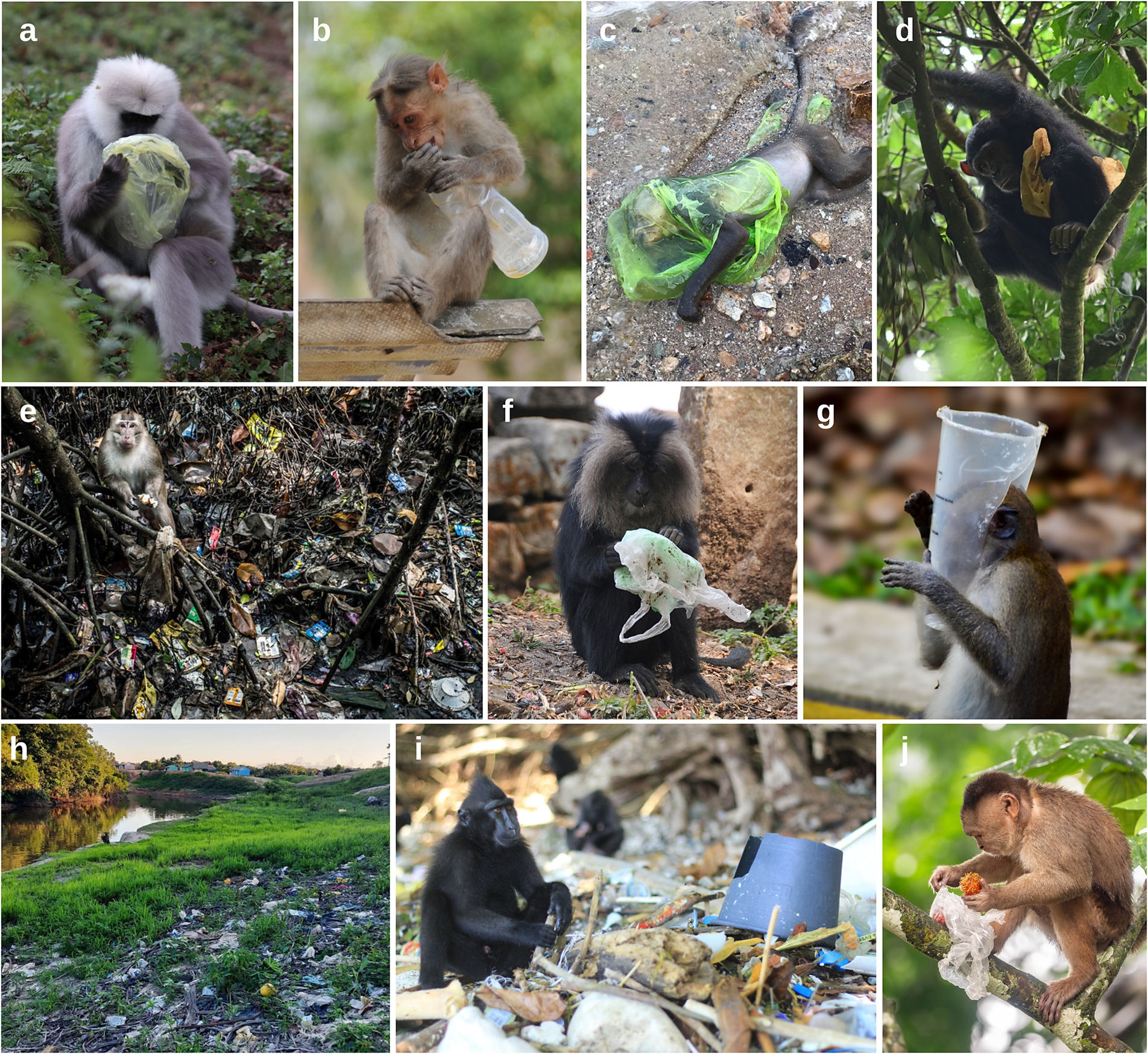
The environmental injustice faced by indigenous and local communities (ILC) has consequences for biodiversity and primate conservation, as 71% of primate species’ ranges overlap with indigenous peoples’ lands (Estrada et al., Reference Estrada and Garber2022). ILC in developing countries are disproportionately affected by plastic pollution and environmental pollution, as the lack of social justice systems and access to environmental management bodies leads to increased exposure to pollution and its impact on the ecosystem, public health and livelihoods (Fernández‐Llamazares et al., Reference Fernández‐Llamazares, Garteizgogeascoa, Basu, Brondizio, Cabeza, Martínez‐Alier, McElwee and Reyes‐García2020; UNEP, 2021). In addition to pollution created by external factors, products packaged in plastic and brought into remote ILC may create an accumulation of solid waste and lead to improper disposal practices such as waste incineration and uncontained landfills (Verma et al., Reference Verma, Vinoda, Papireddy and Gowda2016; UNEP, 2021; Figure 1a), and contaminate the habitats of wildlife living alongside them. The burning of plastic waste releases toxic chemicals linked to air pollution and long-term health effects such as cancer and reproductive problems in humans (Verma et al., Reference Verma, Vinoda, Papireddy and Gowda2016). Frequent rainfall causes the substances released into the air when plastic is burned to become more incorporated into the soil and the food chain (Ágnes and Rajmund, Reference Ágnes and Rajmund2016), and makes tropical and subtropical regions (where more primate species are found) more susceptible to this form of contamination.
Figure 1.
(a) Himalayan langur (Semnopithecus ajax) interacting with a plastic bag in Kanchula, India. Photo by Ryan Ura, The Himalayan Langur Project; (b) Bonnet macaque (Macaca radiata) in India. Photo by Janette Wallis; (c) Dead macaque (Macaca spp.) suffocated in a plastic bag found on the beach at a popular tourist site, Khao Sam Muk, Thailand. Photo by Phongphat Veeradeetanon; (d) Chimpanzee (Pan troglodytes schweinfurthii) interacting with a plastic tarp in Uganda. Photo by Janette Wallis; (e) Pig-tailed macaque (Macaca nemestrina) in a polluted mangrove forest, Jakarta, Indonesia, photo by Elisabetta Zavoli; (f) Lion-tailed macaque (Macaca silenus) picking food off a plastic bag in a village in India. Photo by Janette Wallis; (g) Long-tailed macaque (Macaca fascicularis) with a plastic cup over its head along Thomson Road, Singapore. Photo by Amos Chua; (h) Polluted river bank along the Ucayali River, Peru. Photo by Evelyn D Anca; (i) Celebes crested macaque (Macaca nigra) interacting with plastic in Tangkoko Nature Reserve, North Sulawesi, Indonesia. Photo by Meldi/Macaca Nigra Project; (j) White-fronted capuchin (Cebus albifrons) eating fruits from a plastic bag ‘stolen’ from tourists, Puerto Misahuallí, Ecuador. Photo by Adrián Ordieres.
Rivers
Land-based plastic pollution carried by rivers is the main source of ocean plastic pollution, with an estimated annual input of 1.15 to 2.41 million tonnes (Lebreton et al., Reference Lebreton, Van Der Zwet, Damsteeg, Slat, Andrady and Reisser2017; Schmidt et al., Reference Schmidt, Krauth and Wagner2017). The highest riverine plastic emissions to the ocean come from 20 countries, most of which are primate range countries (Meijer et al., Reference Meijer, Van Emmerik, Van Der Ent, Schmidt and Lebreton2020), and the top 20 most polluting rivers all flow in primate range countries (Lebreton et al., Reference Lebreton, Van Der Zwet, Damsteeg, Slat, Andrady and Reisser2017). Because rivers are a key component in primate distribution and diversity (Harcourt, Reference Harcourt and Wood2012; Naka et al., Reference Naka, Werneck, Rosser, Pil and Boubli2022), the plastic pollution carried by rivers can negatively impact primate ecosystems along the way, becoming trapped in mangroves and flooded forests (do Sul et al., Reference Sul, Costa, Silva-Cavalcanti and Araújo2014; Bijsterveldt et al., Reference van Bijsterveldt, van Wesenbeeck, Ramadhani, Raven, van Gool, Pribadi and Bouma2021; Figure 1e, h).
Tourism
According to the UNEP, tourism is a major contributor to plastic pollution globally (UNEP, 2023a). Plastic pollution brought by tourists can accumulate, attract wildlife, and potentially disperse into natural habitats. In addition, feeding wild or habituated primates in their habitats as a touristic activity can increase their exposure to plastic as food packaging may be left behind, break down in the environment, and serve as a fomite for disease transmission, that is, pathogens left behind by humans on their discarded plastic can be transmitted to primates that pick up and inspect these items with their mouth and hands. Curious primates may also ‘steal’ items from tourists. The impact of waste from tourists and visitors on wild primates is documented in primate range countries such as Thailand (Jones, Reference Jones2018), India (Krupa, Reference Krupa2021), Singapore (Reference CheungCheung, 2020) and Ecuador (Figure 1j).
Research
NHP research may be a contributor to plastic pollution in their habitats, most of which are in forests. A survey of primate research field projects indicated reports of increased plastic pollution in and around study sites over recent years (Wallis and Cohen, Reference Wallis and Cohen2016). Predictably, the survey respondents who worked at sites located deep within a protected forest reported little to no evidence of plastic, while researchers working in unprotected areas or forest fragments indicated a growing problem of plastic pollution. While the exact source of any plastic pollution may be difficult to identify, it is possible that research field staff may contribute to the problem by accidentally leaving plastic in areas where NHPs can access it. In fact, field station trash pits are often raided by nocturnal animals or bold diurnal ones (e.g., baboons) (J. Wallis, pers. obs.). Exposure to plastic is much more likely with more terrestrial than arboreal NHPs.
How does plastic pollution affect primates?
Habitat degradation
Pollution is a major source of habitat degradation, affecting the quality of water, soil and food sources. As a result, the habitat becomes less suitable to support life and leads to a loss of crucial ecosystem services (Adla et al., Reference Adla, Dejan, Neira, Dragana, Prata, Ribeiro and Rocha-Santos2022).
Globally, ~50% of primate species with defined ranges potentially encounter mangrove forest in their habitat, and 147 species were observed to directly use it (Hamilton et al., Reference Hamilton, Presotto and Lembo2022). Beyond serving as an essential habitat for various species of primates (Nowak, Reference Nowak2012; Gardner, Reference Gardner2016; Hamilton et al., Reference Hamilton, Presotto and Lembo2022), mangroves hold a substantial role in shoreline protection, water quality, food, shelter and support for over 1,000 species (UNEP, 2023b). With 75% of the world’s mangroves being under threat (Azoulay, Reference Azoulay2023), one of the many dangers to their survival is pollution. Easily trapped by mangrove forests, plastic waste covers aerial roots and persists in the forest floor and sediment, affecting tree growth in density and size, causing stress reactions, as well as suffocation and death (Suyadi and Manullang, Reference Manullang2020; Bijsterveldt et al., Reference van Bijsterveldt, van Wesenbeeck, Ramadhani, Raven, van Gool, Pribadi and Bouma2021). As plastic pollution accumulates in mangrove forests, it exposes primates to physiological harm and also impacts the health, quality, and growth of their habitats (Figure 1e).
Ecosystem health in primate habitats often starts with the soil. Microplastic accumulation in soil was found to affect its composition and ecological functions (Sajjad et al., Reference Sajjad, Huang, Khan, Khan, Liu, Wang, Lian, Wang and Guo2022). Consumed by soil’s flora and fauna and affecting plant growth, it also attracts fungal communities and pathogens travelling up the food chain (Gkoutselis et al., Reference Gkoutselis, Rohrbach, Harjes, Obst, Brachmann, Horn and Rambold2021). Microplastic stress in plants was found to affect physiological growth, development and nutrient uptake (Jia et al., Reference Jia, Liu, Zhang, Fu, Liu, Wang, Tanveer and Huang2023). Airborne MP and NP are released into the atmosphere and travel through wind and rain deposited in soils and water sources contributing to further contamination in surrounding areas (Brahney et al., Reference Brahney, Hallerud, Heim, Hahnenberger and Sukumaran2020). Primates, arboreal or terrestrial, heavily depend on plants and fruiting trees in their natural habitats (Chapman and Onderdonk, Reference Chapman and Onderdonk1998), and plastic pollution negatively affecting the soil can have an impact on this important co-dependency.
Plastic pollution also reaches rainforests and savannahs. MP was detected in neotropical rainforest and savannah soil in Oaxaca, Mexico, falling in a primate habitat (Álvarez-Lopeztello et al., Reference Álvarez-Lopeztello, Robles and del Castillo2021). Plastic pollution was documented in the tropical rainforest along the Ucayali River, Peru where over 10 species of primate live in sympatry and near human settlements (Anca et al., Reference Anca, Shanee and Svensson2023; Figure 1h; Shanee et al., Reference Shanee, Fernández-Hidalgo, Walford, Fernandez-Hilario, Alarcon, Llaja and Allgas2023). Microplastic has reached the Himalayas, contaminating the lakes, rivers and downstream communities of humans and wildlife, such as the Himalayan langurs (Semnopithecus ajax) (Napper et al., Reference Napper, Davies, Clifford, Elvin, Koldewey, Mayewski, Miner, Potocki, Elmore, Gajurel and Thompson2020; Talukdar et al., Reference Talukdar, Bhattacharya, Bandyopadhyay and Dey2023; Figure 1a).
Ingestion and entanglement
As in marine wildlife, plastic waste affects a range of non-marine species through ingestion and entanglement. But while most marine plastic ingestion is accidental (e.g., a sea turtle mistaking a plastic bag for jellyfish), primates are highly intelligent and can carefully explore plastic items for play, exploration, foraging, and unintentionally consume plastic (Wallis, Reference Wallis2015; Figure 1b). As plastic breaks down into MP or NP, and leaches particles and chemicals into air, food and beverages in a wide range of temperatures (Uadia et al., Reference Uadia, Makinwa and Akeshinro2019; Mortula et al., Reference Mortula, Atabay, Fattah and Madbuly2021), ingestion or inhalation is almost inevitable. Therefore, primates living in close proximity to human settlements, foraging for food in human waste or provisioned by the public or tourists, and manipulating plastic can lead to accidental ingestion of plastic’s fragmentation particles and chemical additives or lead to physical injuries (Figure 1c,d,g). Entanglement has been documented in several instances for example: a macaque fatally suffocated inside a plastic bag in Thailand (Sheralyn, 2019; Figure 1c); a macaque hand was trapped in a plastic bottle causing bleeding in Chonburi, Thailand (Yahoo News UK, 2019); and a black howler monkey (Alouatta caraya) was found entangled in a fishing net (Blettler and Mitchell, Reference Blettler and Mitchell2021). Ingestion of MP and NP in humans mainly results from the consumption of food contaminated with further exposure through inhalation and skin contact (Domenech and Marcos, Reference Domenech and Marcos2021), and in similar ways could be ingested by NHPs. MP and NP were found in a wide range of human foods, from fruits and vegetables to fish, salt, bottled water, soft drinks and processed foods (Conti et al., Reference Conti, Ferrante, Banni, Favara, Nicolosi, Cristaldi, Fiore and Zuccarello2020; Kwon et al., Reference Kwon, Kim, Pham, Tarafdar, Hong, Chun, Lee, Kang, Kim, Kim and Jung2020; Shruti et al., Reference Shruti, Pérez-Guevara, Elizalde-Martínez and Kutralam-Muniasamy2020; Lin et al., Reference Lin, Zhao, Pang, Sun, Chen and Li2022). Due to the leaching of MP and chemical additives, packaged and ultra-processed foods are concerning sources of MP ingestions and exposure to EDCs (Yang et al., Reference Yang, Yaniger, Jordan, Klein and Bittner2011; Buckley et al., Reference Buckley, Kim, Wong and Rebholz2019; Jadhav et al., Reference Jadhav, Sankhla, Bhat and Bhagat2021). Foraging for food in human garbage dumps can expose primates to plastic through oral interaction with plastic items or food packaging and ingestion of food contaminated with plastic and its chemical additives (Figure 1a,b,f). First documentations of MP in primate digestive system were found in Juruá red howler (Alouatta juara) gut content, in the Brazilian Amazon (de Souza Jesus, Reference de Souza Jesus, Nonato, Cruz, Valsecchi, El Bizri, Tregidgo and Rabelo2023) and pig-tailed macaque (Macaca nemestrina) stool in Indonesia (Suyadi, 2023). In another case, a plastic clothes peg was found in a primate intestine in Bengaluru, India, causing blockage and infection (Prasher, Reference Prasher2023).
Disease transmission
Plastic waste dispersed in the environment and uncontained/unofficial landfills and garbage dumps may lead to primates foraging on human food that may be contaminated with plastic or pathogens that may cause illness (Sapolsky and Share, Reference Sapolsky and Share2004; Lappan et al., Reference Lappan, Malaivijitnond, Radhakrishna, Riley and Ruppert2020). Plastic has great absorption capabilities taking up a range of environmental pollutants, organic matter, and biomolecules (Rochman et al., Reference Rochman, Hoh, Hentschel and Kaye2013). This makes it an effective means of spreading microorganisms (Meng et al., Reference Meng, Zhang, Zheng, He and Shi2021). Thus, plastic can serve as a fomite – transmitting pathogens, including influenza and COVID-19, resulting in disease from humans to NHP and vice versa (Devaux, Reference Devaux, Mediannikov, Medkour and Raoult2019; Meng et al., Reference Meng, Zhang, Zheng, He and Shi2021). In the post-COVID-19 era, human-primate interactions require careful consideration in our avoidance of disease transmission/risk of zoonosis (Lappan et al., 2020). Plastic pollution therefore should be seen as a form of indirect human-primate interaction and its role in disease transmission should not be overlooked. Wallis and Lee (Reference Wallis and Lee1999) highlight the need to prevent disease transmission as a major conservation concern; because NHPs are closely related to our own species, they are susceptible to many of the same diseases we carry (Wolfe et al., Reference Wolfe, Dunavan and Diamond2007; Harper et al., Reference Harper, Zuckerman, Turner, Armelagos, Brinkworth and Pechenkina2013). Thus, any pathogen able to be transmitted via plastic is of greater danger to NHPs than to, for example, marine wildlife.
Habitat changes
Behavioural changes, shifts in diet, and modified ranging patterns have been observed in primates as a result of anthropogenic activity (McLennan et al., Reference McLennan, Spagnoletti and Hockings2017). Evidence of habitat shift as a result of alternative food sources in open garbage dumps near human settlements was seen in lion-tailed macaques (Macaca silenus), posing a risk of dependence on human food (Dhawale and Sinha, Reference Dhawale and Sinha2022). Similarly, olive baboons (Papio anubis) were found to shift sleeping sites and foraging exclusively on garbage dumps (Sapolsky and Share, Reference Sapolsky and Share2004). For many primate species, any substantial shift in habitat use or range can ultimately impact their social structure, reproductive opportunities, and long-term survival.
Chemical additives to plastic
As in humans, exposure to MP, NP, and added EDCs can have long and transgenerational impacts on reproductive health in primates. Studies on primates in laboratory settings show that exposure to EDCs affect reproductive health, cognition, behaviour, and growth in rhesus (Macaca mulatta) and long-tailed (Macaca fascicularis) macaques (Hunt et al., Reference Hunt, Lawson, Gieske, Murdoch, Smith, Marre, Hassold and VandeVoort2012; Annamalai and Namasivayam, Reference Annamalai and Namasivayam2015). Bisphenols, chemicals found in plastic, were detected in wild chimpanzee hair in Kibale National Park (Krief et al., Reference Krief, Iglesias-González, Appenzeller, Okimat, Fini, Demeneix, Vaslin-Reimann, Lardy-Fontan, Guma and Spirhanzlova2020). Another study (Krief et al., Reference Krief, Iglesias-González, Appenzeller, Rachid, Beltrame, Asalu, Okimat, Kane-Maguire and Spirhanzlova2022) showed that captive chimpanzees’ exposure to chemical pollutants was even higher, linked to consumption of food and water stored in plastic and interaction with plastic toys. The exposure of wild primate populations to EDCs, transmitted through air or through consumption of contaminated food and water can act as an overlooked ‘silent killer’ with transgenerational impacts on reproductive health and population stability.
Conclusions
Ecosystem health in primate habitats is vital to the protection and persistence of their populations (Estrada and Garber, Reference Estrada and Garber2022). Primate populations are under growing threat of unsustainable human activities, among them plastic pollution (Chapman and Peres, Reference Chapman and Peres2021; Estrada and Garber, Reference Estrada and Garber2022). The alarming rate at which plastic pollution contaminates ecosystems makes it urgent to understand how exposure can affect the health of primates as we evaluate the threats they face in the Anthropocene. As plastic pollution continues to spread far from its source of production, primates’ exposure to plastic and its associated chemical additives is almost inevitable. We encourage primatologists to incorporate the study of plastic pollution in research and conservation efforts. By collecting data that measures and evaluates any possible threat created by plastics, we can better address the concerns and develop mitigation measures to reduce harm. Despite global efforts to minimise damage from plastic pollution and a growing body of literature warning about its impacts on ecosystems, wildlife, and humans, plastic production is on the rise, with an additional 6 million tonnes produced every year and the 460 million tonnes consumed globally in 2019 is projected to triple by 2060 (OECD, 2022). The accumulation of plastic pollution in the environment, in its many forms and derivatives, is inevitable at this point and expected to increase despite mitigation efforts (Borrelle et al., Reference Borrelle, Ringma, Law, Monnahan, Lebreton, McGivern, Murphy, Jambeck, Leonard, Hilleary and Eriksen2020). While entirely eliminating plastic pollution may not be possible in the near future, a significant reduction in the production of plastic, improved waste management and a shift towards a reuse model is needed on the local, national and global levels (Lau et al., Reference Lau, Shiran, Bailey, Cook, Stuchtey, Koskella, Velis, Godfrey, Boucher, Murphy and Thompson2020). In the Plasticene, where our plastic footprint has entered fossil records and humans and animals live with plastic in their bodies, mitigation and prevention can help reduce the exposure of all living things to adverse effects of plastic and its chemical additives while research and monitoring are crucial to understanding its consequences and implications for conservation.




 Open access


Impact statement
Plastic pollution is a worldwide environmental problem that impacts a wide range of species, ecosystems and landscapes. But, while much attention is given to the consequences of plastic pollution in marine environments (e.g., sea turtles and marine birds eating plastic while foraging), relatively little attention has been given to plastic’s effect on terrestrial wildlife. In fact, as the impact of plastic on human health is gaining attention, the effect on our closest relatives and vulnerable species group, nonhuman primates, remains unknown. This article raises awareness of the existing and potential impacts of plastic pollution on the conservation of primates and their habitats and highlights existing evidence of exposure, sources and knowledge gaps. This article provides a starting point for biologists, ecologists, primatologists, and conservationists, summarising the reasons for concern and urgency in exploring the impact of plastic pollution on primates.
Introduction
Plastic pollution is one of the most pressing environmental crises of our time, affecting a growing number of wildlife species worldwide (Santos et al., Reference Santos, Machovsky-Capuska and Andrades2021). As plastic is becoming part of the landscape, turning into a stratigraphic marker likely to enter fossil records, the term Plasticene has been suggested as a stage within the Anthropocene and an era in our geological history (Haram et al., Reference Haram, Carlton, Ruiz and Maximenko2020; Rangel-Buitrago et al., Reference Rangel-Buitrago, Neal and Williams2022). The consequences of plastic pollution are most often discussed within the topic of ocean health, as plastic accounts for ~80% of marine pollution alongside an average of 9 million metric tons flowing into the world’s ocean every year (Jambeck et al., Reference Jambeck, Geyer, Wilcox, Siegler, Perryman, Andrady, Narayan and Law2015; Fava, Reference Fava2022). Numerous plastic pollution awareness campaigns include photographs of sea turtles or marine birds that have become caught in plastic or accidentally ingested it. But while mismanaged plastic waste can eventually reach the oceans, plastic originates on land; it is created, used, and discarded well before reaching the ocean, yet the effects of plastic pollution on terrestrial and freshwater fauna and flora remain understudied and under-monitored (Alimi et al., Reference Alimi, Farner Budarz, Hernandez and Tufenkji2018; de Souza Machado et al., Reference de Souza Machado, Kloas, Zarfl, Hempel and Rillig2018; Bucci et al., Reference Bucci, Tulio and Rochman2020). With increasing research on plastic pollution in recent years ecologists are encouraged to focus more attention on plastic pollution’s impacts on terrestrial ecosystems and species (de Souza Machado et al., Reference de Souza Machado, Kloas, Zarfl, Hempel and Rillig2018; Blettler and Mitchell, Reference Blettler and Mitchell2021). In marine environments, a concentration of 1.21 × 10⁵ microplastic particles per m−3 has been proposed as a minimum threshold; higher levels could lead to significant ecological risks (Everaert et al., Reference Everaert, De Rijcke, Lonneville, Janssen, Backhaus, Mees, van Sebille, Koelmans, Catarino and Vandegehuchte2020; Tekman et al., Reference Tekman, Walther, Peter, Gutow and Bergmann2022). A similar threshold has not been determined for terrestrial ecosystems and no comprehensive understanding of the potential ecological risks has been published (Koelmans et al., Reference Koelmans, Redondo-Hasselerharm, Nor, de Ruijter, Mintenig and Kooi2022). Recent studies have documented interactions and ingestion of plastic in various terrestrial mammals and freshwater species (Andrade et al., Reference Andrade, Winemiller, Barbosa, Fortunati, Chelazzi, Cincinelli and Giarrizzo2019; Blettler and Mitchell, Reference Blettler and Mitchell2021; Thrift et al., Reference Thrift, Porter, Galloway, Coomber and Mathews2022; Ayala et al., Reference Ayala, Zeta-Flores, Ramos-Baldárrago, Tume-Ruiz, Rangel-Vega, Reyes, Quinde, De-la-Torre, Lajo-Salazar and Cárdenas-Alayza2023). Yet, little is known about the scale and consequences of microplastic exposure, physiological accumulation, and impact on their ecological functions.
Created by humans, plastic and its eventual disposal into the environment may lead to direct and indirect human–wildlife interaction. Pollution, among other human activities, can lead to animal mortality (Gross et al., Reference Gross, Jayasinghe, Brooks, Polet, Wadhwa and Hilderink-Koopmans2021; Narayan and Rana, Reference Narayan and Rana2023), and plastic pollution is no exception. In the environment, plastic undergoes weathering processes (e.g., UV exposure, physical abrasion), fragmentation into smaller particles such as microplastic <5 mm (hereafter, MP) and nanoplastic <100 nm (hereafter, NP) and can be dispersed, transferred and deposited throughout various ecosystems (Barnes, Reference Barnes, Galgani, Thompson and Barlaz2009; Alimi et al., Reference Alimi, Farner Budarz, Hernandez and Tufenkji2018). While mismanaged plastic continues to persist and fragment in the environment, it creates a physical hazard when ingested by wildlife, possibly transferring chemicals, and distributing microorganisms up the food chain (Barnes, Reference Barnes, Galgani, Thompson and Barlaz2009). The presence and accumulation of plastic in the bodies of humans have been linked to adverse health effects, ranging from reproductive health to immune response and cancer (Wright and Kelly, Reference Wright and Kelly2007; Gore et al., Reference Gore, Chappell, Fenton, Flaws, Nadal, Prins, Toppari and Zoeller2015). In humans, MP and NP have been found in the blood (Leslie et al., Reference Leslie, Van Velzen, Brandsma, Vethaak, Garcia-Vallejo and Lamoree2022), digestive tract (Schwabl et al., Reference Schwabl, Köppel, Königshofer, Bucsics, Trauner, Reiberger and Liebmann2019), lungs (Amato-Lourenço et al., Reference Amato-Lourenço, Carvalho-Oliveira, Júnior, dos Santos Galvão, Ando and Mauad2021), and heart (Yang et al., Reference Yang, Xie, Du, Han, Li, Zhao, Qin, Xue, Li and Hua2023). Humans ingest between 0.1 and 5 g of microplastic every week, not intentionally, but simply because it is in our environment and food sources (Senathirajah et al., Reference Senathirajah, Attwood, Bhagwat, Carbery, Wilson and Palanisami2021). Most plastic products are manufactured with endocrine-disrupting chemicals (EDCs) with estrogenic activity, such as bisphenol A (BPA) and phthalates, that have adverse effects on human and animal health (Yang et al., Reference Yang, Yaniger, Jordan, Klein and Bittner2011). BPA exposure in humans and animals is found to affect development, immune and metabolic systems, and is linked to behavioural changes, obesity, inflammation and reproductive health and fertility in both sexes (Molina-Lopez et al., Reference Molina-López, Bujalance-Reyes, Ayala-Soldado, Mora-Medina, Lora-Benítez and Moyano-Salvago2023). Phthalates and BPA have also been linked to decreased fertility, cardiovascular health, and immunological and metabolic disorders in humans (Ramadan et al., Reference Ramadan, Cooper and Posnack2020; Wang and Qian, Reference Wang and Qian2021). Because we have documented proof of the adverse effects of plastic (and its additives) on human health, we should expand our concern to other species also exposed to microplastics in their environment. This is especially important for our closest living relatives, the nonhuman primates (hereafter, ‘primates’ or ‘NHP’). Many primates are already currently threatened with extinction (Wolfe et al., Reference Wolfe, Dunavan and Diamond2007; Siepel, Reference Siepel2009; Estrada et al., Reference Estrada, Garber, Rylands, Roos, Fernandez-Duque, Di Fiore, Nekaris, Nijman, Heymann, Lambert and Rovero2017) and plastic pollution only serves to exacerbate their dire situation.
Throughout their evolution, humans and nonhuman primates have shared habitats and formed relationships, some of which remain today, for example, for consumption, tourism, pet keeping and traditional medicine (Fuentes, Reference Fuentes2006; Estrada et al., Reference Estrada, Garber, Rylands, Roos, Fernandez-Duque, Di Fiore, Nekaris, Nijman, Heymann, Lambert and Rovero2017). Primates are the most endangered group of large mammals, constituting 533 species (723 taxa), of which over ~60% are threatened with extinction and 93% with declining populations (Estrada and Garber, Reference Estrada and Garber2022; IUCN, 2023). The threats faced by the world’s primates are mostly the results of human activities, for example, habitat loss, fragmentation, disease transmission, hunting and climate change. Pollution is an emerging threat to primates that we are yet to fully understand and include in conservation work (Wich and Marshall, Reference Wich and Marshall2016; Estrada et al., Reference Estrada, Garber, Rylands, Roos, Fernandez-Duque, Di Fiore, Nekaris, Nijman, Heymann, Lambert and Rovero2017). Out of the range of unsustainable anthropogenic activities, plastic pollution may act as an accelerator to these threats and is already affecting primates.
Plastic pollution is now drawing the attention of primatologists as an emerging threat that must be explored and quantified (Wallis, Reference Wallis2015; Chapman and Peres, Reference Chapman and Peres2021). The flexibility and intelligence of primates in adjusting to human habitats often lead to growing interaction with human property and waste, more inclusive diets, increasing access and consumption of human foods in anthropogenic habitats (McLennan et al., Reference McLennan, Spagnoletti and Hockings2017). Due to physiological similarities, phylogenetic relationship and cross-species pathogen and disease transmission between humans and primates (Wallis and Lee, Reference Wallis and Lee1999; Wolfe et al., Reference Wolfe, Dunavan and Diamond2007), research is needed to understand how primates respond to microplastic accumulation in their bodies. Primates and their population stability also serve as a proxy for ecosystem health and hold a key role in forest regeneration, another reason for protecting them and their habitats from plastic pollution (Chapman, Reference Chapman1995; Stevenson et al., Reference Stevenson, Castellanos, Pizarro and Garavito2002; Estrada et al., Reference Estrada, Garber, Rylands, Roos, Fernandez-Duque, Di Fiore, Nekaris, Nijman, Heymann, Lambert and Rovero2017).
Sources of plastic pollution in primate habitats
In areas where humans and primates live in close proximity, pollution created by human activities may disperse into primate habitats. Asia and Africa (including Madagascar) are home to 65% of primate species (IUCN, 2023), and more specifically, Southeast Asia and West Africa, regions with high primate species richness, are major hotspots for mismanaged plastic waste and contribution to ocean plastic from land (Maijer et al., 2020). Future projections on the distribution of plastic waste show that even if mitigation efforts occur, Africa and Asia will still cope with disproportionate levels of mismanaged waste (Lebreton and Andrady, Reference Lebreton and Andrady2019).
Exploitation and resource extraction
Extractive industries are known for their destructive impacts on natural habitats. One of the effects of natural resource extractions such as logging, mining and road expansion is environmental pollution and resource contamination (Fuwape, Reference Fuwape2003; Kreif et al., Reference Krief, Iglesias-González, Appenzeller, Okimat, Fini, Demeneix, Vaslin-Reimann, Lardy-Fontan, Guma and Spirhanzlova2020; Sun et al., Reference Sun, Li, Yu, Zhang, Liu and Zhang2021). These could occur as a direct consequence of resource extraction and also through human presence and the disposal of plastic and other solid waste (Fuwape, Reference Fuwape2003; Sun et al., Reference Sun, Li, Yu, Zhang, Liu and Zhang2021). For example, in Uganda’s Kibale National Park the impact of a new road showed a high level of plastic pollution and bisphenol A, an EDC associated with plastic, was found in wild chimpanzee hair for the first time (Kreif et al., Reference Krief, Iglesias-González, Appenzeller, Okimat, Fini, Demeneix, Vaslin-Reimann, Lardy-Fontan, Guma and Spirhanzlova2020).
Indigenous and local communities
The environmental injustice faced by indigenous and local communities (ILC) has consequences for biodiversity and primate conservation, as 71% of primate species’ ranges overlap with indigenous peoples’ lands (Estrada et al., Reference Estrada and Garber2022). ILC in developing countries are disproportionately affected by plastic pollution and environmental pollution, as the lack of social justice systems and access to environmental management bodies leads to increased exposure to pollution and its impact on the ecosystem, public health and livelihoods (Fernández‐Llamazares et al., Reference Fernández‐Llamazares, Garteizgogeascoa, Basu, Brondizio, Cabeza, Martínez‐Alier, McElwee and Reyes‐García2020; UNEP, 2021). In addition to pollution created by external factors, products packaged in plastic and brought into remote ILC may create an accumulation of solid waste and lead to improper disposal practices such as waste incineration and uncontained landfills (Verma et al., Reference Verma, Vinoda, Papireddy and Gowda2016; UNEP, 2021; Figure 1a), and contaminate the habitats of wildlife living alongside them. The burning of plastic waste releases toxic chemicals linked to air pollution and long-term health effects such as cancer and reproductive problems in humans (Verma et al., Reference Verma, Vinoda, Papireddy and Gowda2016). Frequent rainfall causes the substances released into the air when plastic is burned to become more incorporated into the soil and the food chain (Ágnes and Rajmund, Reference Ágnes and Rajmund2016), and makes tropical and subtropical regions (where more primate species are found) more susceptible to this form of contamination.
(a) Himalayan langur (Semnopithecus ajax) interacting with a plastic bag in Kanchula, India. Photo by Ryan Ura, The Himalayan Langur Project; (b) Bonnet macaque (Macaca radiata) in India. Photo by Janette Wallis; (c) Dead macaque (Macaca spp.) suffocated in a plastic bag found on the beach at a popular tourist site, Khao Sam Muk, Thailand. Photo by Phongphat Veeradeetanon; (d) Chimpanzee (Pan troglodytes schweinfurthii) interacting with a plastic tarp in Uganda. Photo by Janette Wallis; (e) Pig-tailed macaque (Macaca nemestrina) in a polluted mangrove forest, Jakarta, Indonesia, photo by Elisabetta Zavoli; (f) Lion-tailed macaque (Macaca silenus) picking food off a plastic bag in a village in India. Photo by Janette Wallis; (g) Long-tailed macaque (Macaca fascicularis) with a plastic cup over its head along Thomson Road, Singapore. Photo by Amos Chua; (h) Polluted river bank along the Ucayali River, Peru. Photo by Evelyn D Anca; (i) Celebes crested macaque (Macaca nigra) interacting with plastic in Tangkoko Nature Reserve, North Sulawesi, Indonesia. Photo by Meldi/Macaca Nigra Project; (j) White-fronted capuchin (Cebus albifrons) eating fruits from a plastic bag ‘stolen’ from tourists, Puerto Misahuallí, Ecuador. Photo by Adrián Ordieres.
Rivers
Land-based plastic pollution carried by rivers is the main source of ocean plastic pollution, with an estimated annual input of 1.15 to 2.41 million tonnes (Lebreton et al., Reference Lebreton, Van Der Zwet, Damsteeg, Slat, Andrady and Reisser2017; Schmidt et al., Reference Schmidt, Krauth and Wagner2017). The highest riverine plastic emissions to the ocean come from 20 countries, most of which are primate range countries (Meijer et al., Reference Meijer, Van Emmerik, Van Der Ent, Schmidt and Lebreton2020), and the top 20 most polluting rivers all flow in primate range countries (Lebreton et al., Reference Lebreton, Van Der Zwet, Damsteeg, Slat, Andrady and Reisser2017). Because rivers are a key component in primate distribution and diversity (Harcourt, Reference Harcourt and Wood2012; Naka et al., Reference Naka, Werneck, Rosser, Pil and Boubli2022), the plastic pollution carried by rivers can negatively impact primate ecosystems along the way, becoming trapped in mangroves and flooded forests (do Sul et al., Reference Sul, Costa, Silva-Cavalcanti and Araújo2014; Bijsterveldt et al., Reference van Bijsterveldt, van Wesenbeeck, Ramadhani, Raven, van Gool, Pribadi and Bouma2021; Figure 1e, h).
Tourism
According to the UNEP, tourism is a major contributor to plastic pollution globally (UNEP, 2023a). Plastic pollution brought by tourists can accumulate, attract wildlife, and potentially disperse into natural habitats. In addition, feeding wild or habituated primates in their habitats as a touristic activity can increase their exposure to plastic as food packaging may be left behind, break down in the environment, and serve as a fomite for disease transmission, that is, pathogens left behind by humans on their discarded plastic can be transmitted to primates that pick up and inspect these items with their mouth and hands. Curious primates may also ‘steal’ items from tourists. The impact of waste from tourists and visitors on wild primates is documented in primate range countries such as Thailand (Jones, Reference Jones2018), India (Krupa, Reference Krupa2021), Singapore (Reference CheungCheung, 2020) and Ecuador (Figure 1j).
Research
NHP research may be a contributor to plastic pollution in their habitats, most of which are in forests. A survey of primate research field projects indicated reports of increased plastic pollution in and around study sites over recent years (Wallis and Cohen, Reference Wallis and Cohen2016). Predictably, the survey respondents who worked at sites located deep within a protected forest reported little to no evidence of plastic, while researchers working in unprotected areas or forest fragments indicated a growing problem of plastic pollution. While the exact source of any plastic pollution may be difficult to identify, it is possible that research field staff may contribute to the problem by accidentally leaving plastic in areas where NHPs can access it. In fact, field station trash pits are often raided by nocturnal animals or bold diurnal ones (e.g., baboons) (J. Wallis, pers. obs.). Exposure to plastic is much more likely with more terrestrial than arboreal NHPs.
How does plastic pollution affect primates?
Habitat degradation
Pollution is a major source of habitat degradation, affecting the quality of water, soil and food sources. As a result, the habitat becomes less suitable to support life and leads to a loss of crucial ecosystem services (Adla et al., Reference Adla, Dejan, Neira, Dragana, Prata, Ribeiro and Rocha-Santos2022).
Globally, ~50% of primate species with defined ranges potentially encounter mangrove forest in their habitat, and 147 species were observed to directly use it (Hamilton et al., Reference Hamilton, Presotto and Lembo2022). Beyond serving as an essential habitat for various species of primates (Nowak, Reference Nowak2012; Gardner, Reference Gardner2016; Hamilton et al., Reference Hamilton, Presotto and Lembo2022), mangroves hold a substantial role in shoreline protection, water quality, food, shelter and support for over 1,000 species (UNEP, 2023b). With 75% of the world’s mangroves being under threat (Azoulay, Reference Azoulay2023), one of the many dangers to their survival is pollution. Easily trapped by mangrove forests, plastic waste covers aerial roots and persists in the forest floor and sediment, affecting tree growth in density and size, causing stress reactions, as well as suffocation and death (Suyadi and Manullang, Reference Manullang2020; Bijsterveldt et al., Reference van Bijsterveldt, van Wesenbeeck, Ramadhani, Raven, van Gool, Pribadi and Bouma2021). As plastic pollution accumulates in mangrove forests, it exposes primates to physiological harm and also impacts the health, quality, and growth of their habitats (Figure 1e).
Ecosystem health in primate habitats often starts with the soil. Microplastic accumulation in soil was found to affect its composition and ecological functions (Sajjad et al., Reference Sajjad, Huang, Khan, Khan, Liu, Wang, Lian, Wang and Guo2022). Consumed by soil’s flora and fauna and affecting plant growth, it also attracts fungal communities and pathogens travelling up the food chain (Gkoutselis et al., Reference Gkoutselis, Rohrbach, Harjes, Obst, Brachmann, Horn and Rambold2021). Microplastic stress in plants was found to affect physiological growth, development and nutrient uptake (Jia et al., Reference Jia, Liu, Zhang, Fu, Liu, Wang, Tanveer and Huang2023). Airborne MP and NP are released into the atmosphere and travel through wind and rain deposited in soils and water sources contributing to further contamination in surrounding areas (Brahney et al., Reference Brahney, Hallerud, Heim, Hahnenberger and Sukumaran2020). Primates, arboreal or terrestrial, heavily depend on plants and fruiting trees in their natural habitats (Chapman and Onderdonk, Reference Chapman and Onderdonk1998), and plastic pollution negatively affecting the soil can have an impact on this important co-dependency.
Plastic pollution also reaches rainforests and savannahs. MP was detected in neotropical rainforest and savannah soil in Oaxaca, Mexico, falling in a primate habitat (Álvarez-Lopeztello et al., Reference Álvarez-Lopeztello, Robles and del Castillo2021). Plastic pollution was documented in the tropical rainforest along the Ucayali River, Peru where over 10 species of primate live in sympatry and near human settlements (Anca et al., Reference Anca, Shanee and Svensson2023; Figure 1h; Shanee et al., Reference Shanee, Fernández-Hidalgo, Walford, Fernandez-Hilario, Alarcon, Llaja and Allgas2023). Microplastic has reached the Himalayas, contaminating the lakes, rivers and downstream communities of humans and wildlife, such as the Himalayan langurs (Semnopithecus ajax) (Napper et al., Reference Napper, Davies, Clifford, Elvin, Koldewey, Mayewski, Miner, Potocki, Elmore, Gajurel and Thompson2020; Talukdar et al., Reference Talukdar, Bhattacharya, Bandyopadhyay and Dey2023; Figure 1a).
Ingestion and entanglement
As in marine wildlife, plastic waste affects a range of non-marine species through ingestion and entanglement. But while most marine plastic ingestion is accidental (e.g., a sea turtle mistaking a plastic bag for jellyfish), primates are highly intelligent and can carefully explore plastic items for play, exploration, foraging, and unintentionally consume plastic (Wallis, Reference Wallis2015; Figure 1b). As plastic breaks down into MP or NP, and leaches particles and chemicals into air, food and beverages in a wide range of temperatures (Uadia et al., Reference Uadia, Makinwa and Akeshinro2019; Mortula et al., Reference Mortula, Atabay, Fattah and Madbuly2021), ingestion or inhalation is almost inevitable. Therefore, primates living in close proximity to human settlements, foraging for food in human waste or provisioned by the public or tourists, and manipulating plastic can lead to accidental ingestion of plastic’s fragmentation particles and chemical additives or lead to physical injuries (Figure 1c,d,g). Entanglement has been documented in several instances for example: a macaque fatally suffocated inside a plastic bag in Thailand (Sheralyn, 2019; Figure 1c); a macaque hand was trapped in a plastic bottle causing bleeding in Chonburi, Thailand (Yahoo News UK, 2019); and a black howler monkey (Alouatta caraya) was found entangled in a fishing net (Blettler and Mitchell, Reference Blettler and Mitchell2021). Ingestion of MP and NP in humans mainly results from the consumption of food contaminated with further exposure through inhalation and skin contact (Domenech and Marcos, Reference Domenech and Marcos2021), and in similar ways could be ingested by NHPs. MP and NP were found in a wide range of human foods, from fruits and vegetables to fish, salt, bottled water, soft drinks and processed foods (Conti et al., Reference Conti, Ferrante, Banni, Favara, Nicolosi, Cristaldi, Fiore and Zuccarello2020; Kwon et al., Reference Kwon, Kim, Pham, Tarafdar, Hong, Chun, Lee, Kang, Kim, Kim and Jung2020; Shruti et al., Reference Shruti, Pérez-Guevara, Elizalde-Martínez and Kutralam-Muniasamy2020; Lin et al., Reference Lin, Zhao, Pang, Sun, Chen and Li2022). Due to the leaching of MP and chemical additives, packaged and ultra-processed foods are concerning sources of MP ingestions and exposure to EDCs (Yang et al., Reference Yang, Yaniger, Jordan, Klein and Bittner2011; Buckley et al., Reference Buckley, Kim, Wong and Rebholz2019; Jadhav et al., Reference Jadhav, Sankhla, Bhat and Bhagat2021). Foraging for food in human garbage dumps can expose primates to plastic through oral interaction with plastic items or food packaging and ingestion of food contaminated with plastic and its chemical additives (Figure 1a,b,f). First documentations of MP in primate digestive system were found in Juruá red howler (Alouatta juara) gut content, in the Brazilian Amazon (de Souza Jesus, Reference de Souza Jesus, Nonato, Cruz, Valsecchi, El Bizri, Tregidgo and Rabelo2023) and pig-tailed macaque (Macaca nemestrina) stool in Indonesia (Suyadi, 2023). In another case, a plastic clothes peg was found in a primate intestine in Bengaluru, India, causing blockage and infection (Prasher, Reference Prasher2023).
Disease transmission
Plastic waste dispersed in the environment and uncontained/unofficial landfills and garbage dumps may lead to primates foraging on human food that may be contaminated with plastic or pathogens that may cause illness (Sapolsky and Share, Reference Sapolsky and Share2004; Lappan et al., Reference Lappan, Malaivijitnond, Radhakrishna, Riley and Ruppert2020). Plastic has great absorption capabilities taking up a range of environmental pollutants, organic matter, and biomolecules (Rochman et al., Reference Rochman, Hoh, Hentschel and Kaye2013). This makes it an effective means of spreading microorganisms (Meng et al., Reference Meng, Zhang, Zheng, He and Shi2021). Thus, plastic can serve as a fomite – transmitting pathogens, including influenza and COVID-19, resulting in disease from humans to NHP and vice versa (Devaux, Reference Devaux, Mediannikov, Medkour and Raoult2019; Meng et al., Reference Meng, Zhang, Zheng, He and Shi2021). In the post-COVID-19 era, human-primate interactions require careful consideration in our avoidance of disease transmission/risk of zoonosis (Lappan et al., 2020). Plastic pollution therefore should be seen as a form of indirect human-primate interaction and its role in disease transmission should not be overlooked. Wallis and Lee (Reference Wallis and Lee1999) highlight the need to prevent disease transmission as a major conservation concern; because NHPs are closely related to our own species, they are susceptible to many of the same diseases we carry (Wolfe et al., Reference Wolfe, Dunavan and Diamond2007; Harper et al., Reference Harper, Zuckerman, Turner, Armelagos, Brinkworth and Pechenkina2013). Thus, any pathogen able to be transmitted via plastic is of greater danger to NHPs than to, for example, marine wildlife.
Habitat changes
Behavioural changes, shifts in diet, and modified ranging patterns have been observed in primates as a result of anthropogenic activity (McLennan et al., Reference McLennan, Spagnoletti and Hockings2017). Evidence of habitat shift as a result of alternative food sources in open garbage dumps near human settlements was seen in lion-tailed macaques (Macaca silenus), posing a risk of dependence on human food (Dhawale and Sinha, Reference Dhawale and Sinha2022). Similarly, olive baboons (Papio anubis) were found to shift sleeping sites and foraging exclusively on garbage dumps (Sapolsky and Share, Reference Sapolsky and Share2004). For many primate species, any substantial shift in habitat use or range can ultimately impact their social structure, reproductive opportunities, and long-term survival.
Chemical additives to plastic
As in humans, exposure to MP, NP, and added EDCs can have long and transgenerational impacts on reproductive health in primates. Studies on primates in laboratory settings show that exposure to EDCs affect reproductive health, cognition, behaviour, and growth in rhesus (Macaca mulatta) and long-tailed (Macaca fascicularis) macaques (Hunt et al., Reference Hunt, Lawson, Gieske, Murdoch, Smith, Marre, Hassold and VandeVoort2012; Annamalai and Namasivayam, Reference Annamalai and Namasivayam2015). Bisphenols, chemicals found in plastic, were detected in wild chimpanzee hair in Kibale National Park (Krief et al., Reference Krief, Iglesias-González, Appenzeller, Okimat, Fini, Demeneix, Vaslin-Reimann, Lardy-Fontan, Guma and Spirhanzlova2020). Another study (Krief et al., Reference Krief, Iglesias-González, Appenzeller, Rachid, Beltrame, Asalu, Okimat, Kane-Maguire and Spirhanzlova2022) showed that captive chimpanzees’ exposure to chemical pollutants was even higher, linked to consumption of food and water stored in plastic and interaction with plastic toys. The exposure of wild primate populations to EDCs, transmitted through air or through consumption of contaminated food and water can act as an overlooked ‘silent killer’ with transgenerational impacts on reproductive health and population stability.
Conclusions
Ecosystem health in primate habitats is vital to the protection and persistence of their populations (Estrada and Garber, Reference Estrada and Garber2022). Primate populations are under growing threat of unsustainable human activities, among them plastic pollution (Chapman and Peres, Reference Chapman and Peres2021; Estrada and Garber, Reference Estrada and Garber2022). The alarming rate at which plastic pollution contaminates ecosystems makes it urgent to understand how exposure can affect the health of primates as we evaluate the threats they face in the Anthropocene. As plastic pollution continues to spread far from its source of production, primates’ exposure to plastic and its associated chemical additives is almost inevitable. We encourage primatologists to incorporate the study of plastic pollution in research and conservation efforts. By collecting data that measures and evaluates any possible threat created by plastics, we can better address the concerns and develop mitigation measures to reduce harm. Despite global efforts to minimise damage from plastic pollution and a growing body of literature warning about its impacts on ecosystems, wildlife, and humans, plastic production is on the rise, with an additional 6 million tonnes produced every year and the 460 million tonnes consumed globally in 2019 is projected to triple by 2060 (OECD, 2022). The accumulation of plastic pollution in the environment, in its many forms and derivatives, is inevitable at this point and expected to increase despite mitigation efforts (Borrelle et al., Reference Borrelle, Ringma, Law, Monnahan, Lebreton, McGivern, Murphy, Jambeck, Leonard, Hilleary and Eriksen2020). While entirely eliminating plastic pollution may not be possible in the near future, a significant reduction in the production of plastic, improved waste management and a shift towards a reuse model is needed on the local, national and global levels (Lau et al., Reference Lau, Shiran, Bailey, Cook, Stuchtey, Koskella, Velis, Godfrey, Boucher, Murphy and Thompson2020). In the Plasticene, where our plastic footprint has entered fossil records and humans and animals live with plastic in their bodies, mitigation and prevention can help reduce the exposure of all living things to adverse effects of plastic and its chemical additives while research and monitoring are crucial to understanding its consequences and implications for conservation.
Supplementary material
The supplementary material for this article can be found at https://doi.org/10.1017/plc.2024.10.
Open peer review
To view the open peer review materials for this article, please visit http://doi.org/10.1017/plc.2024.10.
Data availability statement
Data availability is not applicable to this article as no new data were created or analysed in this study.
Acknowledgements
We wish to thank the anonymous reviewers for their feedback and help in improving the quality of this manuscript. We also thank photographers and researchers who have kindly allowed us to use their photos in this paper.
Author contribution
Concept and writing: E.D.A.; Writing and editing: J.W.
Financial support
This research received no specific grant from any funding agency, commercial or not-for-profit sectors.
Competing interest
The authors declare none.