





1. Introduction
We study the minimal model theory for log surfaces in the analytic case. In order to extend the theory from the algebraic setting to the analytic setting, we introduce several specific techniques.
Before stating the main result, we describe the conditions adopted in the analytic case. We say that $(X, Y, W, \pi , \Delta )$
satisfies the condition (
$(X, Y, W, \pi , \Delta )$
satisfies the condition ( $\bigstar $
) if it satisfies the following conditions:
$\bigstar $
) if it satisfies the following conditions:
-
• $(X, \Delta )$
is a pair of a normal complex surface X and a boundary
$\mathbb {R}$
-divisor
$\Delta $
on X.
$(X, \Delta )$
is a pair of a normal complex surface X and a boundary
$\mathbb {R}$
-divisor
$\Delta $
on X. -
•
$K_X+\Delta $
is
$\mathbb {R}$
-Cartier. -
•
$\pi \colon X\rightarrow Y$
is a projective surjective morphism of complex analytic varieties. -
• W is a compact subset of Y such that
$\rho (X/Y;W)<\infty $
.



In the analytic case, the notation $K_X$
is somewhat delicate. This is because a divisor corresponding to the canonical line bundle may not be globally well-defined. Therefore, the second condition should more precisely be stated as:
$K_X$
is somewhat delicate. This is because a divisor corresponding to the canonical line bundle may not be globally well-defined. Therefore, the second condition should more precisely be stated as: $K_X+\Delta $
is
$K_X+\Delta $
is $\mathbb {R}$
-Cartier at every point
$\mathbb {R}$
-Cartier at every point $x\in X$
. In this article, we adopt the simplified notation without further clarification for the sake of simplicity. The last condition is also specific to the analytic setting. We replace Y with a small open neighborhood of W if necessary.
$x\in X$
. In this article, we adopt the simplified notation without further clarification for the sake of simplicity. The last condition is also specific to the analytic setting. We replace Y with a small open neighborhood of W if necessary.
For later use, we collect here four cases.
-
Case (A)
$K_X$
is
$\mathbb {Q}$
-Cartier and every prime divisor on X which is mapped into W is
$\mathbb {Q}$
-Cartier. -
Case (B) X is
$\mathbb {Q}$
-factorial over W. -
Case (C)
$(X, \Delta )$
is log canonical. -
Case (D) X has only rational singularities.


In what follows, we study the minimal model theory in each of Cases (A)–(D). Case (A) is a new setting. The following theorem is the main result of this article.
Theorem 1.1 (See [Reference Fujino4, Theorem 1.1])
Assume that $(X, Y, W, \pi , \Delta )$
satisfies the condition (
$(X, Y, W, \pi , \Delta )$
satisfies the condition ( $\bigstar $
) and that one of Cases (A)–(D) holds. We shrink Y around W suitably. Then there is a sequence of at most
$\bigstar $
) and that one of Cases (A)–(D) holds. We shrink Y around W suitably. Then there is a sequence of at most $\rho (X/Y;W)-1$
contractions
$\rho (X/Y;W)-1$
contractions
 $$ \begin{align*}(X, \Delta)=(X_0, \Delta_0)\stackrel{\varphi_0}{\rightarrow}(X_1, \Delta_1)\stackrel{\varphi_1}{\rightarrow}\cdots\stackrel{\varphi_{k-1}}{\rightarrow}(X_k, \Delta_k)=(X^*, \Delta^*) \end{align*} $$
over Y such that:
-
• (Good minimal model) If
$K_X+\Delta $
is
$\pi $
-pseudo-effective, then
$K_{X^*}+\Delta ^*$
is semi-ample over some open neighborhood of W. -
• (Mori fiber space) If
$K_X+\Delta $
is not
$\pi $
-pseudo-effective, then
$(X^*, \Delta ^*)$
is a Mori fiber space.


We note that $K_{X_i}$
is
$K_{X_i}$
is $\mathbb {Q}$
-Cartier and every prime divisor on
$\mathbb {Q}$
-Cartier and every prime divisor on $X_i$
which is mapped into W is
$X_i$
which is mapped into W is $\mathbb {Q}$
-Cartier for every i in Case (A), that
$\mathbb {Q}$
-Cartier for every i in Case (A), that $X_i$
is
$X_i$
is $\mathbb {Q}$
-factorial over W for every i in Case (B), that
$\mathbb {Q}$
-factorial over W for every i in Case (B), that $(X_i, \Delta _i)$
is log canonical for every i in Case (C), and that
$(X_i, \Delta _i)$
is log canonical for every i in Case (C), and that $X_i$
has only rational singularities for every i in Case (D).
$X_i$
has only rational singularities for every i in Case (D).
Remark 1.2. When $\operatorname {dim}X>2$
, each contraction morphism given by the minimal model program exists only after shrinking around W as mentioned in [Reference Fujino5, Theorem 1.7]. Then we have to repeatedly replace Y with a small open neighborhood of W. In contrast, when
$\operatorname {dim}X>2$
, each contraction morphism given by the minimal model program exists only after shrinking around W as mentioned in [Reference Fujino5, Theorem 1.7]. Then we have to repeatedly replace Y with a small open neighborhood of W. In contrast, when $\operatorname {dim}X=2$
, we can construct an open neighborhood U of W on Y such that, once we replace Y with U, each step
$\operatorname {dim}X=2$
, we can construct an open neighborhood U of W on Y such that, once we replace Y with U, each step $\varphi _i$
in the above theorem exists. We note that this U depends only on the compact subset W and the morphism
$\varphi _i$
in the above theorem exists. We note that this U depends only on the compact subset W and the morphism $\pi \colon X\rightarrow Y$
, and it is independent of the choice of the divisor
$\pi \colon X\rightarrow Y$
, and it is independent of the choice of the divisor $\Delta $
.
$\Delta $
.
Definition 1.3 (Mori fiber space)
Assume that $(X, Y, W, \pi , \Delta )$
satisfies the condition (
$(X, Y, W, \pi , \Delta )$
satisfies the condition ( $\bigstar $
). Let
$\bigstar $
). Let $\varphi \colon X\rightarrow Z$
be a projective morphism of normal complex analytic varieties over Y. Then
$\varphi \colon X\rightarrow Z$
be a projective morphism of normal complex analytic varieties over Y. Then $\varphi \colon (X, \Delta )\rightarrow Z$
is a Mori Fiber space over Y if
$\varphi \colon (X, \Delta )\rightarrow Z$
is a Mori Fiber space over Y if
-
(i)
$\varphi $
is a contraction morphism associated with a
$(K_X+\Delta )$
-negative extremal ray of
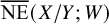
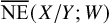
$\overline {\text {NE}}(X/Y; W)$
; -
(ii)
$\operatorname {dim}Z<2$
.



In the algebraic case, Fujino showed that the analogs of Theorem 1.1 in Cases (B) and (C) are true over $\mathbb {C}$
(cf. [Reference Fujino4]). In positive characteristics, Tanaka proved that the corresponding statements hold (cf. [Reference Tanaka15]).
$\mathbb {C}$
(cf. [Reference Fujino4]). In positive characteristics, Tanaka proved that the corresponding statements hold (cf. [Reference Tanaka15]).
We cannot directly use this algebraic framework, due to an issue in the analytic setting. A key difficulty is that $\mathbb {Q}$
-factoriality does not behave well. We take a compact subset
$\mathbb {Q}$
-factoriality does not behave well. We take a compact subset $W'$
of Y with
$W'$
of Y with $W'\subset W$
. Then, X is not necessarily
$W'\subset W$
. Then, X is not necessarily $\mathbb {Q}$
-factorial over
$\mathbb {Q}$
-factorial over $W'$
even if X is
$W'$
even if X is $\mathbb {Q}$
-factorial over W. This is because there may exist a divisor defined over an open neighborhood of
$\mathbb {Q}$
-factorial over W. This is because there may exist a divisor defined over an open neighborhood of $\pi ^{-1}W'$
which cannot be extended to a divisor defined over an open neighborhood of
$\pi ^{-1}W'$
which cannot be extended to a divisor defined over an open neighborhood of $\pi ^{-1}W$
(cf. [Reference Fujino5, Remark 2.39]). This fact is troublesome because we sometimes want to take a Stein open subset U of Y, which may not contain W, and replace Y with U in the analytic case. In order to address this problem, we replace the assumption of
$\pi ^{-1}W$
(cf. [Reference Fujino5, Remark 2.39]). This fact is troublesome because we sometimes want to take a Stein open subset U of Y, which may not contain W, and replace Y with U in the analytic case. In order to address this problem, we replace the assumption of $\mathbb {Q}$
-factoriality with a weaker condition that is local on Y. Specifically, we assume that
$\mathbb {Q}$
-factoriality with a weaker condition that is local on Y. Specifically, we assume that $K_X$
is
$K_X$
is $\mathbb {Q}$
-Cartier and that every prime divisor on X mapped into W is
$\mathbb {Q}$
-Cartier and that every prime divisor on X mapped into W is $\mathbb {Q}$
-Cartier; this is precisely the condition stated in Case (A). Moreover, we can reduce Case (B), where X is
$\mathbb {Q}$
-Cartier; this is precisely the condition stated in Case (A). Moreover, we can reduce Case (B), where X is $\mathbb {Q}$
-factorial over W, to Case (A) in order to prove the main result. Indeed, if X is
$\mathbb {Q}$
-factorial over W, to Case (A) in order to prove the main result. Indeed, if X is $\mathbb {Q}$
-factorial over W, then every prime divisor on X mapped into W is
$\mathbb {Q}$
-factorial over W, then every prime divisor on X mapped into W is $\mathbb {Q}$
-Cartier. In addition, by suitably shrinking Y around W, we may also assume that
$\mathbb {Q}$
-Cartier. In addition, by suitably shrinking Y around W, we may also assume that $K_X$
is
$K_X$
is $\mathbb {Q}$
-Cartier.
$\mathbb {Q}$
-Cartier.
Theorem 1.1 is a consequence of the following two theorems: the minimal model program and the abundance theorem. In the proof of the minimal model program in Case (A), we use the condition that every prime divisor on X mapped into W is $\mathbb {Q}$
-Cartier, but we need not require
$\mathbb {Q}$
-Cartier, but we need not require $K_X$
to be
$K_X$
to be $\mathbb {Q}$
-Cartier. The latter condition is used in the proof of the following abundance theorem in Case (A), which constitutes the most technically challenging part of this article.
$\mathbb {Q}$
-Cartier. The latter condition is used in the proof of the following abundance theorem in Case (A), which constitutes the most technically challenging part of this article.
Theorem 1.4 (Abundance theorem, see Theorem 5.1)
Assume that $(X, Y, W, \pi , \Delta )$
satisfies the condition (
$(X, Y, W, \pi , \Delta )$
satisfies the condition ( $\bigstar $
) and that one of Cases (A)–(D) holds. If
$\bigstar $
) and that one of Cases (A)–(D) holds. If $K_X+\Delta $
is nef over W, then it is semi-ample over a neighborhood of W.
$K_X+\Delta $
is nef over W, then it is semi-ample over a neighborhood of W.
We encounter two additional difficulties in the analytic setting. First, we need to prove the openness of nefness. In the algebraic case, it suffices to show that if $K_X + \Delta $
is nef, then it is semi-ample. Thus, the openness of nefness is not a problem. In contrast, in the analytic setting, we have to show that if
$K_X + \Delta $
is nef, then it is semi-ample. Thus, the openness of nefness is not a problem. In contrast, in the analytic setting, we have to show that if $K_X + \Delta $
is nef over W, then it is nef even over a neighborhood of W. In this article, we prove this openness of nefness, in the case where X is a complex surface (cf. Lemma 2.6 below). Second, the technique of compactification is not available. In the algebraic setting, Fujino reduced the relative abundance theorem to the absolute case (i.e.,
$K_X + \Delta $
is nef over W, then it is nef even over a neighborhood of W. In this article, we prove this openness of nefness, in the case where X is a complex surface (cf. Lemma 2.6 below). Second, the technique of compactification is not available. In the algebraic setting, Fujino reduced the relative abundance theorem to the absolute case (i.e., $\dim Y = 0$
) by using compactification (cf. [Reference Fujino4]). However, in the analytic setting, such a reduction is not possible. Therefore, we need to prove the relative abundance theorem directly in the cases where
$\dim Y = 0$
) by using compactification (cf. [Reference Fujino4]). However, in the analytic setting, such a reduction is not possible. Therefore, we need to prove the relative abundance theorem directly in the cases where $\dim Y = 1$
and
$\dim Y = 1$
and $\dim Y = 2$
, respectively.
$\dim Y = 2$
, respectively.
As a corollary of the abundance theorem, we obtain the following finite generation of log canonical rings.
Corollary 1.5 (See [Reference Fujino4, Theorem 4.5])
Assume that $(X, Y, W, \pi , \Delta )$
satisfies the condition (
$(X, Y, W, \pi , \Delta )$
satisfies the condition ( $\bigstar $
),
$\bigstar $
), $\Delta $
is a
$\Delta $
is a $\mathbb {Q}$
-divisor and that one of Cases (A) and (B) holds. After shrinking Y around W suitably, the log canonical ring
$\mathbb {Q}$
-divisor and that one of Cases (A) and (B) holds. After shrinking Y around W suitably, the log canonical ring
 $$ \begin{align*}R(X, \Delta)=\bigoplus_{m \geq 0}\pi_*\mathcal{O}_X(\llcorner m(K_X+\Delta)\lrcorner) \end{align*} $$
is a locally finitely generated graded $\mathcal {O}_Y$
-algebra.
$\mathcal {O}_Y$
-algebra.
Corollary 1.6 (See [Reference Fujino4, Theorem 4.6])
Let $(X, \Delta )$
be a pair of a normal complex surface X and a boundary
$(X, \Delta )$
be a pair of a normal complex surface X and a boundary $\mathbb {Q}$
-divisor
$\mathbb {Q}$
-divisor $\Delta $
on X such that
$\Delta $
on X such that $K_X+\Delta $
is
$K_X+\Delta $
is $\mathbb {Q}$
-Cartier. Let
$\mathbb {Q}$
-Cartier. Let $\pi \colon X\rightarrow Y$
be a projective surjective morphism of complex analytic varieties. Assume that one of Cases (C) and (D) holds. Then the log canonical ring
$\pi \colon X\rightarrow Y$
be a projective surjective morphism of complex analytic varieties. Assume that one of Cases (C) and (D) holds. Then the log canonical ring
 $$ \begin{align*}R(X, \Delta)=\bigoplus_{m \geq 0}\pi_*\mathcal{O}_X(\llcorner m(K_X+\Delta)\lrcorner) \end{align*} $$
is a locally finitely generated graded $\mathcal {O}_Y$
-algebra.
$\mathcal {O}_Y$
-algebra.
In [Reference Fujino4], Fujino showed that the analogs of the results in Cases (B)–(D) in the above corollaries are true in the algebraic setting. In [Reference Hashizume9], Hashizume generalized the finite generation of the log canonical rings. He proved that the finite generation of the adjoint ring for $\mathbb {Q}$
-factorial log surfaces also holds.
$\mathbb {Q}$
-factorial log surfaces also holds.
This article is organized as follows. In Section 2, we recall basic definitions and results, including the openness of nefness. In Section 3, we prove that the $(K_X+\Delta )$
-minimal model program over Y around W works in each of Cases (A)–(D). In this section, we also treat a case without the assumption that
$(K_X+\Delta )$
-minimal model program over Y around W works in each of Cases (A)–(D). In this section, we also treat a case without the assumption that $K_X$
is
$K_X$
is $\mathbb {Q}$
-Cartier. Moreover, in all cases, we prove that the program can be carried out within the corresponding class. We mainly use Fujino’s cone and contraction theorems (cf. [Reference Fujino6, Theorems 4.6.1 and 4.6.2]). In Section 4, we prove the abundance theorem when
$\mathbb {Q}$
-Cartier. Moreover, in all cases, we prove that the program can be carried out within the corresponding class. We mainly use Fujino’s cone and contraction theorems (cf. [Reference Fujino6, Theorems 4.6.1 and 4.6.2]). In Section 4, we prove the abundance theorem when $\Delta $
is a
$\Delta $
is a $\mathbb {Q}$
-divisor. This section is the main part of this article. We first treat the case where
$\mathbb {Q}$
-divisor. This section is the main part of this article. We first treat the case where $K_X+\Delta $
is big over Y. In the proof, we apply the minimal model program under the new assumption given in Case (A). Moreover, we use the vanishing theorem (cf. Lemma 2.14 below). When
$K_X+\Delta $
is big over Y. In the proof, we apply the minimal model program under the new assumption given in Case (A). Moreover, we use the vanishing theorem (cf. Lemma 2.14 below). When $K_X+\Delta $
is not big over Y, we reduce the problem to the case when Y is a curve. In Section 5, we extend the abundance theorem to the case when
$K_X+\Delta $
is not big over Y, we reduce the problem to the case when Y is a curve. In Section 5, we extend the abundance theorem to the case when $\Delta $
is an
$\Delta $
is an $\mathbb {R}$
-divisor, reducing it to the
$\mathbb {R}$
-divisor, reducing it to the $\mathbb {Q}$
-divisor case by using the technique of Shokurov’s polytope. In Section 6, we prove the main theorem and corollaries stated in this introduction.
$\mathbb {Q}$
-divisor case by using the technique of Shokurov’s polytope. In Section 6, we prove the main theorem and corollaries stated in this introduction.
2. Preliminaries
In this section, we will collect some basic definitions and results. For the details of the definitions of $\mathbb {Q}$
-divisors,
$\mathbb {Q}$
-divisors, $\mathbb {R}$
-divisors, linear equivalence, Cartier divisors, ampleness, bigness, and pseudo-effectiveness in the complex analytic setting, see [Reference Fujino5] or [Reference Fujino6].
$\mathbb {R}$
-divisors, linear equivalence, Cartier divisors, ampleness, bigness, and pseudo-effectiveness in the complex analytic setting, see [Reference Fujino5] or [Reference Fujino6].
Definition 2.1. Let D be an $\mathbb {R}$
-divisor on a normal complex analytic variety. We say that D is boundary if every coefficient
$\mathbb {R}$
-divisor on a normal complex analytic variety. We say that D is boundary if every coefficient $a_i$
of
$a_i$
of $D=\sum a_iD_i$
satisfies
$D=\sum a_iD_i$
satisfies $a_i\in [0, 1]$
. We put
$a_i\in [0, 1]$
. We put
 $$ \begin{align*} \llcorner D\lrcorner&:=\sum\llcorner a_i\lrcorner D_i, \quad \ulcorner D\urcorner:=\sum\ulcorner a_i\urcorner D_i, \quad \{ D\}:=\sum(a_i-\llcorner a_i\lrcorner) D_i,\\ D^{>1}&:=\sum_{a_i>1}a_i D_i, \quad D^{=1}:=\sum_{a_i=1}a_i D_i,\quad\text{and} \quad D^{<1}:=\sum_{a_i<1}a_i D_i. \end{align*} $$
Remark 2.2 (Stein factorization)
We can take the Stein factorization of each proper surjective morphism of reduced complex analytic spaces (cf. [Reference Ueno16, Theorem 1.9]).
Definition 2.3 (Nefness, see [Reference Fujino5, Definition 2.48])
Let $\pi \colon X\rightarrow Y$
be a projective morphism of complex analytic spaces such that X is a normal complex analytic variety, and let W be a subset of Y. Let D be an
$\pi \colon X\rightarrow Y$
be a projective morphism of complex analytic spaces such that X is a normal complex analytic variety, and let W be a subset of Y. Let D be an $\mathbb {R}$
-Cartier
$\mathbb {R}$
-Cartier $\mathbb {R}$
-divisor on X. If
$\mathbb {R}$
-divisor on X. If $D\cdot C\geq 0$
for every projective integral curve C on X such that
$D\cdot C\geq 0$
for every projective integral curve C on X such that $\pi (C)$
is a point, then D is said to be
$\pi (C)$
is a point, then D is said to be $\pi $
-nef or nef over Y. If
$\pi $
-nef or nef over Y. If $D\cdot C\geq 0$
for every projective integral curve C on X such that
$D\cdot C\geq 0$
for every projective integral curve C on X such that $\pi (C)$
is a point of W, then D is said to be nef over W or
$\pi (C)$
is a point of W, then D is said to be nef over W or $\pi $
-nef over W.
$\pi $
-nef over W.
Definition 2.4 (Suitable neighborhoods)
Let $\pi \colon X\rightarrow Y$
be a projective surjective morphism of complex analytic varieties. Assume that X is a normal complex surface. Let W be a compact subset of Y. If an open neighborhood U of W on Y satisfies the following properties, we call it a suitable neighborhood of W associated with
$\pi \colon X\rightarrow Y$
be a projective surjective morphism of complex analytic varieties. Assume that X is a normal complex surface. Let W be a compact subset of Y. If an open neighborhood U of W on Y satisfies the following properties, we call it a suitable neighborhood of W associated with $\pi \colon X\rightarrow Y$
.
$\pi \colon X\rightarrow Y$
.
-
• U is a relatively compact subset of Y.
-
•
$U-W$
is smooth. -
•
$\pi \colon X\rightarrow Y$
is smooth over
$U-W$
.


Remark 2.5. The definition given in Definition 2.4 is not standard. We introduced it for convenience.
Lemma 2.6 (Openness of nefness)
Let X be a normal complex surface and let $\pi \colon X\rightarrow Y$
be a projective surjective morphism of complex analytic varieties. Let W be a compact subset of Y. Let U be a suitable neighborhood of W associated with
$\pi \colon X\rightarrow Y$
be a projective surjective morphism of complex analytic varieties. Let W be a compact subset of Y. Let U be a suitable neighborhood of W associated with $\pi \colon X\rightarrow Y$
in the sense of Definition 2.4. If an
$\pi \colon X\rightarrow Y$
in the sense of Definition 2.4. If an $\mathbb {R}$
-Cartier
$\mathbb {R}$
-Cartier $\mathbb {R}$
-divisor D is nef over W, then it is nef over U. In particular, if an
$\mathbb {R}$
-divisor D is nef over W, then it is nef over U. In particular, if an $\mathbb {R}$
-Cartier
$\mathbb {R}$
-Cartier $\mathbb {R}$
-divisor D is nef over W, then it is nef over some open neighborhood of W.
$\mathbb {R}$
-divisor D is nef over W, then it is nef over some open neighborhood of W.
Proof. By Remark 2.2, we can take the Stein factorization, and then we may assume that $\pi $
has connected fibers. When
$\pi $
has connected fibers. When $\dim Y=0$
, we have
$\dim Y=0$
, we have $U=W=Y$
and there is nothing to prove. When
$U=W=Y$
and there is nothing to prove. When $\dim Y=1$
, since we have replaced
$\dim Y=1$
, since we have replaced $\pi $
with its Stein factorization, Y is a smooth curve and
$\pi $
with its Stein factorization, Y is a smooth curve and $\pi $
has smooth connected fibers on
$\pi $
has smooth connected fibers on $U-W$
. Then
$U-W$
. Then $\pi $
is flat over Y, and
$\pi $
is flat over Y, and $\pi $
has irreducible fibers on
$\pi $
has irreducible fibers on $U-W$
. Pick a point
$U-W$
. Pick a point $P\in W$
. Since
$P\in W$
. Since $\pi $
is flat, we have
$\pi $
is flat, we have $\pi ^*Q\cdot D=\pi ^*P\cdot D\geq 0$
for each
$\pi ^*Q\cdot D=\pi ^*P\cdot D\geq 0$
for each $Q\in Y$
. Since the fiber
$Q\in Y$
. Since the fiber $\pi ^{-1}(Q)$
is irreducible for each
$\pi ^{-1}(Q)$
is irreducible for each $Q\in U-W$
, D is
$Q\in U-W$
, D is $\pi $
-nef over
$\pi $
-nef over $U-W$
. Since D is also
$U-W$
. Since D is also $\pi $
-nef over W, D is
$\pi $
-nef over W, D is $\pi $
-nef over U. When
$\pi $
-nef over U. When $\dim Y=2$
, since
$\dim Y=2$
, since $\pi $
has connected fibers,
$\pi $
has connected fibers, $\pi $
is isomorphic over
$\pi $
is isomorphic over $U-W$
. Then D is clearly
$U-W$
. Then D is clearly $\pi $
-nef over U.
$\pi $
-nef over U.
Remark 2.7. When $\dim X>2$
, an
$\dim X>2$
, an $\mathbb {R}$
-Cartier
$\mathbb {R}$
-Cartier $\mathbb {R}$
-divisor D which is nef over W is not necessarily nef over a neighborhood of W. This fact often causes troublesome problems when we discuss the minimal model program for projective morphisms between complex analytic spaces (cf. [Reference Fujino5, Remark 1.5]). However, in the case when
$\mathbb {R}$
-divisor D which is nef over W is not necessarily nef over a neighborhood of W. This fact often causes troublesome problems when we discuss the minimal model program for projective morphisms between complex analytic spaces (cf. [Reference Fujino5, Remark 1.5]). However, in the case when $\dim X=2$
, there is no such problem by Lemma 2.6.
$\dim X=2$
, there is no such problem by Lemma 2.6.
Definition 2.8 (Semi-ampleness, see [Reference Fujino5, Definition 2.45])
Let $\pi \colon X\rightarrow Y$
be a projective morphism of complex analytic spaces. A finite
$\pi \colon X\rightarrow Y$
be a projective morphism of complex analytic spaces. A finite $\mathbb {R}_{>0}$
-linear (resp.
$\mathbb {R}_{>0}$
-linear (resp. $\mathbb {Q}_{>0}$
-linear) combination of
$\mathbb {Q}_{>0}$
-linear) combination of $\pi $
-semi-ample Cartier divisors is called a
$\pi $
-semi-ample Cartier divisors is called a $\pi $
-semi-ample
$\pi $
-semi-ample $\mathbb {R}$
-divisor (resp.
$\mathbb {R}$
-divisor (resp. $\mathbb {Q}$
-divisor).
$\mathbb {Q}$
-divisor).
Definition 2.9 (
$\mathbb {Q}$
-factoriality, see [Reference Fujino5, Definition 2.38])

Let X be a normal complex analytic variety and let K be a compact subset of X. Then X is said to be $\mathbb {Q}$
-factorial at K if every prime divisor defined on an open neighborhood of K is
$\mathbb {Q}$
-factorial at K if every prime divisor defined on an open neighborhood of K is $\mathbb {Q}$
-Cartier at any point
$\mathbb {Q}$
-Cartier at any point $x\in K$
. Let
$x\in K$
. Let $\pi \colon X\rightarrow Y$
be a projective morphism and let W be a compact subset of Y. If X is
$\pi \colon X\rightarrow Y$
be a projective morphism and let W be a compact subset of Y. If X is $\mathbb {Q}$
-factorial at
$\mathbb {Q}$
-factorial at $\pi ^{-1}(W)$
, then we usually say that X is
$\pi ^{-1}(W)$
, then we usually say that X is $\mathbb {Q}$
-factorial over W.
$\mathbb {Q}$
-factorial over W.
Definition 2.10 (Kleiman–Mori cones, see [Reference Fujino5, Section 4])
Let $\pi \colon X\rightarrow Y$
be a projective morphism of complex analytic spaces and let W be a compact subset of Y. Let
$\pi \colon X\rightarrow Y$
be a projective morphism of complex analytic spaces and let W be a compact subset of Y. Let $Z_1(X/Y; W)$
be the free abelian group generated by the projective integral curves C on X such that
$Z_1(X/Y; W)$
be the free abelian group generated by the projective integral curves C on X such that $\pi (C)$
is a point of W. Let U be any open neighborhood of W. Then we can consider the following intersection pairing:
$\pi (C)$
is a point of W. Let U be any open neighborhood of W. Then we can consider the following intersection pairing:
 $$ \begin{align*}\cdot \colon \operatorname{Pic}(\pi^{-1}(U))\times Z_1(X/Y; W)\rightarrow\mathbb{Z}, \end{align*} $$
given by $\mathcal {L}\cdot C\in \mathbb {Z}$
for
$\mathcal {L}\cdot C\in \mathbb {Z}$
for $\mathcal {L}\in \operatorname {Pic}(\pi ^{-1}(U))$
and
$\mathcal {L}\in \operatorname {Pic}(\pi ^{-1}(U))$
and $C\in Z_1(X/Y; W)$
. We put
$C\in Z_1(X/Y; W)$
. We put
 $$ \begin{align*}\widetilde{A}(U, W):=\operatorname{Pic}(\pi^{-1}(U))/{\equiv _W} \end{align*} $$
and define
 $$ \begin{align*}A^1(X/Y; W):=\varinjlim_{W\subset U}\widetilde{A}(U, W), \end{align*} $$
where U runs through all the open neighborhoods of W. We assume that $A^1(X/Y; W)$
is a finitely generated abelian group. Then we can define the relative Picard number
$A^1(X/Y; W)$
is a finitely generated abelian group. Then we can define the relative Picard number $\rho (X/Y; W)$
to be the rank of
$\rho (X/Y; W)$
to be the rank of $A^1(X/Y; W)$
. We put
$A^1(X/Y; W)$
. We put
 $$ \begin{align*}N^1(X/Y; W):=A^1(X/Y; W)\otimes_{\mathbb{Z}}\mathbb{R}. \end{align*} $$
Let $A_1(X/Y; W)$
be the image of
$A_1(X/Y; W)$
be the image of
 $$ \begin{align*}Z_1(X/Y; W)\rightarrow \operatorname{Hom}_{\mathbb{Z}}(A^1(X/Y; W), \mathbb{Z}) \end{align*} $$
given by the above intersection pairing. Then we set
 $$ \begin{align*}N_1(X/Y; W):=A_1(X/Y; W)\otimes_{\mathbb{Z}}\mathbb{R}. \end{align*} $$
As usual, we can define the Kleiman–Mori cone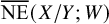 $\overline {\text {NE}}(X/Y; W)$
of
$\overline {\text {NE}}(X/Y; W)$
of $\pi \colon X\rightarrow Y$
over W, that is,
$\pi \colon X\rightarrow Y$
over W, that is,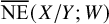 $\overline {\text {NE}}(X/Y; W)$
is the closure of the convex cone in
$\overline {\text {NE}}(X/Y; W)$
is the closure of the convex cone in $N_1(X/Y; W)$
spanned by the projective integral curves C on X such that
$N_1(X/Y; W)$
spanned by the projective integral curves C on X such that $\pi (C)$
is a point of W.
$\pi (C)$
is a point of W.
Lemma 2.11 (Negativity lemma, see [Reference Matsuki12, Theorem 4-6-1])
Let $f\colon V\rightarrow S$
be a proper bimeromorphic morphism from a nonsingular complex surface V to a normal complex surface S. Let
$f\colon V\rightarrow S$
be a proper bimeromorphic morphism from a nonsingular complex surface V to a normal complex surface S. Let $P\in S$
be a point. Then the intersection matrix
$P\in S$
be a point. Then the intersection matrix $(E_i\cdot E_j)$
is negative definite, where
$(E_i\cdot E_j)$
is negative definite, where $E_i$
’s are the exceptional divisors mapped into P.
$E_i$
’s are the exceptional divisors mapped into P.
Lemma 2.12 (Zariski’s lemma, see [Reference Barth, Hulek, Peters and Van de Ven1, Chapter III, Lemma 8.2])
Let $f\colon X\rightarrow C$
be a proper surjective connected morphism from a smooth complex surface X to a smooth curve C. Let
$f\colon X\rightarrow C$
be a proper surjective connected morphism from a smooth complex surface X to a smooth curve C. Let $f^*y=X_y=\sum _i n_iC_i$
, where
$f^*y=X_y=\sum _i n_iC_i$
, where $n_i>0$
and
$n_i>0$
and $C_i\subset X$
are irreducible, be a fiber of f. Then we have
$C_i\subset X$
are irreducible, be a fiber of f. Then we have
-
(1)
$C_i\cdot X_y=0$
for each i, -
(2) if
$D=\sum _im_iC_i$
, where
$m_i\in \mathbb {Z}$
, then
$D^2\leq 0$
, and -
(3)
$D^2=0$
holds in (2) if and only if
$D=rX_y$
, where
$r\in \mathbb {Q}$
.


Definition 2.13 (Singularities of pairs, see [Reference Fujino6, Paragraph 2.1.1])
We consider a normal complex analytic variety X. Let $X_{sm}$
denote the smooth locus of X. Let
$X_{sm}$
denote the smooth locus of X. Let $\Delta $
be an
$\Delta $
be an $\mathbb {R}$
-divisor on X such that
$\mathbb {R}$
-divisor on X such that $K_X+\Delta $
is
$K_X+\Delta $
is $\mathbb {R}$
-Cartier and let
$\mathbb {R}$
-Cartier and let $f\colon Y\rightarrow X$
be a proper bimeromorphic morphism from a normal complex analytic variety Y. We take a small Stein open subset U of X where
$f\colon Y\rightarrow X$
be a proper bimeromorphic morphism from a normal complex analytic variety Y. We take a small Stein open subset U of X where $K_U+\Delta |_U$
is a well-defined
$K_U+\Delta |_U$
is a well-defined $\mathbb {R}$
-Cartier
$\mathbb {R}$
-Cartier $\mathbb {R}$
-divisor on U. In this situation, we can define
$\mathbb {R}$
-divisor on U. In this situation, we can define $K_{f^{-1}U}$
and
$K_{f^{-1}U}$
and $K_U$
such that
$K_U$
such that $f_*K_{f^{-1}U}=K_U$
. Then we can write
$f_*K_{f^{-1}U}=K_U$
. Then we can write
 $$ \begin{align*}K_{f^{-1}U}=f^*(K_U+\Delta|_U)+E_U \end{align*} $$
as usual. Note that $E_U$
is a well-defined
$E_U$
is a well-defined $\mathbb {R}$
-divisor on
$\mathbb {R}$
-divisor on $f^{-1}U$
such that
$f^{-1}U$
such that $f_*E_U=\Delta |_U$
. Then we have the following formula:
$f_*E_U=\Delta |_U$
. Then we have the following formula:
 $$ \begin{align*}K_Y=f^*(K_X+\Delta)+\sum_E a(E, X, \Delta)E \end{align*} $$
as in the algebraic case. We note that $\sum _E a(E,X, \Delta )E$
is a globally well-defined
$\sum _E a(E,X, \Delta )E$
is a globally well-defined $\mathbb {R}$
-divisor on Y such that
$\mathbb {R}$
-divisor on Y such that
 $$ \begin{align*}\left.\left(\sum_E a(E,X, \Delta)E\right)\right|{}_{f^{-1}U}=E_U \end{align*} $$
although $K_X$
and
$K_X$
and $K_Y$
are well-defined only locally.
$K_Y$
are well-defined only locally.
If $\Delta $
is a boundary
$\Delta $
is a boundary $\mathbb {R}$
-divisor and
$\mathbb {R}$
-divisor and $a(E, X, \Delta )\geq -1$
holds for any
$a(E, X, \Delta )\geq -1$
holds for any $f\colon Y\rightarrow X$
and every f-exceptional divisor E, then
$f\colon Y\rightarrow X$
and every f-exceptional divisor E, then $(X, \Delta )$
is called a log canonical pair. If
$(X, \Delta )$
is called a log canonical pair. If $(X,\Delta )$
is log canonical,
$(X,\Delta )$
is log canonical, $\llcorner \Delta \lrcorner =0$
, and
$\llcorner \Delta \lrcorner =0$
, and $a(E, X, \Delta )>-1$
for any
$a(E, X, \Delta )>-1$
for any $f\colon Y\rightarrow X$
and every f-exceptional divisor E, then
$f\colon Y\rightarrow X$
and every f-exceptional divisor E, then $(X, \Delta )$
is called a kawamata log terminal pair.
$(X, \Delta )$
is called a kawamata log terminal pair.
Let X be a normal complex analytic variety and let $\Delta $
be an effective
$\Delta $
be an effective $\mathbb {R}$
-divisor on X such that
$\mathbb {R}$
-divisor on X such that $K_X+\Delta $
is
$K_X+\Delta $
is $\mathbb {R}$
-Cartier. The image of E with
$\mathbb {R}$
-Cartier. The image of E with $a(E, X, \Delta )=-1$
for some
$a(E, X, \Delta )=-1$
for some $f\colon Y\rightarrow X$
such that
$f\colon Y\rightarrow X$
such that $(X, \Delta )$
is log canonical around general points of
$(X, \Delta )$
is log canonical around general points of $f(E)$
is called a log canonical center (for short, lc center) of
$f(E)$
is called a log canonical center (for short, lc center) of $(X, \Delta )$
. The image of E with
$(X, \Delta )$
. The image of E with $a(E, X, \Delta )\leq -1$
for some
$a(E, X, \Delta )\leq -1$
for some $f\colon Y\rightarrow X$
is called a non-klt center of
$f\colon Y\rightarrow X$
is called a non-klt center of $(X, \Delta )$
. The non-lc locus of
$(X, \Delta )$
. The non-lc locus of $(X, \Delta )$
, denoted by
$(X, \Delta )$
, denoted by $\operatorname {Nlc}(X, \Delta ),$
is the smallest closed subset Z of X such that the complement
$\operatorname {Nlc}(X, \Delta ),$
is the smallest closed subset Z of X such that the complement $(X-Z, \Delta |_{X-Z})$
is log canonical.
$(X-Z, \Delta |_{X-Z})$
is log canonical.
Lemma 2.14 (Vanishing theorem of Reid–Fukuda type, see [Reference Fujino7, Theorem 1.2])
Let $(\widetilde {X}, \Delta )$
be a pair of smooth complex analytic variety
$(\widetilde {X}, \Delta )$
be a pair of smooth complex analytic variety $\widetilde {X}$
and a boundary
$\widetilde {X}$
and a boundary $\mathbb {R}$
-divisor
$\mathbb {R}$
-divisor $\Delta $
on
$\Delta $
on $\widetilde {X}$
such that
$\widetilde {X}$
such that $\operatorname {Supp}\Delta $
is a simple normal crossing divisor on
$\operatorname {Supp}\Delta $
is a simple normal crossing divisor on $\widetilde {X}$
. Let
$\widetilde {X}$
. Let $f\colon \widetilde {X}\rightarrow X$
and
$f\colon \widetilde {X}\rightarrow X$
and $\pi \colon X\rightarrow Y$
be projective morphisms between complex analytic varieties, and let
$\pi \colon X\rightarrow Y$
be projective morphisms between complex analytic varieties, and let $\mathcal {L}$
be a line bundle on
$\mathcal {L}$
be a line bundle on $\widetilde {X}$
. If
$\widetilde {X}$
. If $\mathcal {L}-(\omega _{\widetilde {X}}+\Delta )\sim _{\mathbb {R}}f^*\mathcal {H}$
holds for some
$\mathcal {L}-(\omega _{\widetilde {X}}+\Delta )\sim _{\mathbb {R}}f^*\mathcal {H}$
holds for some $\mathbb {R}$
-line bundle
$\mathbb {R}$
-line bundle $\mathcal {H}$
on X which is nef and log big over Y with respect to
$\mathcal {H}$
on X which is nef and log big over Y with respect to $f\colon (\widetilde {X}, \Delta )\rightarrow X$
, then
$f\colon (\widetilde {X}, \Delta )\rightarrow X$
, then
 $$ \begin{align*}\mathcal{R}^p\pi_*\mathcal{R}^qf_*\mathcal{L}=0 \end{align*} $$
holds for every $p>0$
and every q. We note that an
$p>0$
and every q. We note that an $\mathbb {R}$
-line bundle
$\mathbb {R}$
-line bundle $\mathcal {H}$
on X is called log big over Y with respect to
$\mathcal {H}$
on X is called log big over Y with respect to $f\colon (\widetilde {X}, \Delta )\rightarrow X$
if
$f\colon (\widetilde {X}, \Delta )\rightarrow X$
if $\mathcal {H}$
is
$\mathcal {H}$
is $\pi $
-big and
$\pi $
-big and $\mathcal {H}|_{f(S)}$
can be written as a finite
$\mathcal {H}|_{f(S)}$
can be written as a finite $\mathbb {R}_{>0}$
-linear combination of
$\mathbb {R}_{>0}$
-linear combination of $\pi $
-big line bundles on
$\pi $
-big line bundles on $f(S)$
for every lc center S of
$f(S)$
for every lc center S of $(\widetilde {X}, \Delta )$
.
$(\widetilde {X}, \Delta )$
.
See also [Reference Fujino and Moriyama8], which discusses a vanishing theorem for surfaces formulated in a different way.
3. Minimal model program
In this section, we will prove the minimal model program.
Lemma 3.1 (Cone and contraction theorem)
Let $\pi \colon X\rightarrow Y$
be a projective surjective morphism of complex analytic varieties such that X is a normal complex surface, and let W be a compact subset of Y such that
$\pi \colon X\rightarrow Y$
be a projective surjective morphism of complex analytic varieties such that X is a normal complex surface, and let W be a compact subset of Y such that $\rho (X/Y; W)<\infty $
. Let
$\rho (X/Y; W)<\infty $
. Let $\Delta $
be an effective
$\Delta $
be an effective $\mathbb {R}$
-divisor on X such that
$\mathbb {R}$
-divisor on X such that $K_X+\Delta $
is
$K_X+\Delta $
is $\mathbb {R}$
-Cartier.
$\mathbb {R}$
-Cartier.
-
(1)
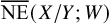
$\overline {\text {NE}}(X/Y; W)=\overline {\text {NE}}(X/Y; W)_{(K_X+\Delta )\geq 0}+\sum R_j$
, where
$R_j$
’s are rational
$(K_X+\Delta )$
-negative extremal rays of
$\overline {\text {NE}}(X/Y; W)$
. -
(2) For each rational
$(K_X+\Delta )$
-negative extremal face F of
$\overline {\text {NE}}(X/Y; W)$
, after shrinking Y around W suitably, there is a projective morphism
$\varphi _F\colon X\rightarrow Z$
over Y with the following properties:-
(i) Let C be a projective curve on X such that
$\pi (C)$
is a point of W. Then
$\varphi _F(C)$
is a point if and only if the numerical equivalence class
$[C]$
of C is in F. -
(ii) The natural map
$\mathcal {O}_Z\rightarrow (\varphi _F)_*\mathcal {O}_X$
is an isomorphism. -
(iii) Let
$\mathcal {L}$
be a line bundle on X such that
$\mathcal {L}\cdot C=0$
for every curve C with
$[C]\in F$
. After shrinking Y around W again, there exists a line bundle
$\mathcal {L}_Z$
on Z such that
$\mathcal {L}\cong \varphi _F^*\mathcal {L}_Z$
holds.
-









Proof. This is obvious by [Reference Fujino6, Theorems 4.6.1 and 4.6.2]. Since $\operatorname {dim}\operatorname {Nlc}(X, \Delta )=0$
, we have
$\operatorname {dim}\operatorname {Nlc}(X, \Delta )=0$
, we have $\overline {\text {NE}}(X/Y; W)_{\operatorname {Nlc}(X, \Delta )}=0$
.
$\overline {\text {NE}}(X/Y; W)_{\operatorname {Nlc}(X, \Delta )}=0$
.
We note a property of $(K_X+\Delta )$
-negative extremal curves in Case (C).
$(K_X+\Delta )$
-negative extremal curves in Case (C).
Lemma 3.2. Under the assumptions of Lemma 3.1, we further assume that Case (C) holds. Let C be an irreducible projective curve which is mapped into a point on W. Suppose that there exists the contraction morphism $\varphi _R\colon X\rightarrow Z$
associated with a rational
$\varphi _R\colon X\rightarrow Z$
associated with a rational $(K_X+\Delta )$
-negative extremal ray R of
$(K_X+\Delta )$
-negative extremal ray R of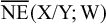 $\operatorname {\overline {NE}(X/Y; W)}$
, given by Lemma 3.1, such that
$\operatorname {\overline {NE}(X/Y; W)}$
, given by Lemma 3.1, such that $\varphi _R(C)$
is a point. Suppose that
$\varphi _R(C)$
is a point. Suppose that $\operatorname {dim}Y\geq 1$
. Then, C is
$\operatorname {dim}Y\geq 1$
. Then, C is $\mathbb {Q}$
-Cartier.
$\mathbb {Q}$
-Cartier.
Proof. By Lemma 3.1, we have $[C]\in R$
. Since
$[C]\in R$
. Since $\operatorname {dim}Y\geq 1$
, we have
$\operatorname {dim}Y\geq 1$
, we have $\operatorname {dim}Z\geq 1$
. When
$\operatorname {dim}Z\geq 1$
. When $\operatorname {dim}Z=1$
, then Z is a smooth curve. If
$\operatorname {dim}Z=1$
, then Z is a smooth curve. If $\operatorname {Supp}\varphi _R^*(\varphi _R(C))$
is irreducible, C is proportional to the pullback of a point in Z. In particular, C is
$\operatorname {Supp}\varphi _R^*(\varphi _R(C))$
is irreducible, C is proportional to the pullback of a point in Z. In particular, C is $\mathbb {Q}$
-Cartier. Suppose now that
$\mathbb {Q}$
-Cartier. Suppose now that $\operatorname {Supp}\varphi _R^*(\varphi _R(C))$
is reducible. (Actually, it turns out that this situation does not occur. See the proof of the next lemma.) In this case, we have
$\operatorname {Supp}\varphi _R^*(\varphi _R(C))$
is reducible. (Actually, it turns out that this situation does not occur. See the proof of the next lemma.) In this case, we have $C^2<0$
in the sense of Mumford (see, e.g., [Reference Sakai14, Section 1]), because
$C^2<0$
in the sense of Mumford (see, e.g., [Reference Sakai14, Section 1]), because $\varphi _R$
has connected fibers. On the other hand, when
$\varphi _R$
has connected fibers. On the other hand, when $\operatorname {dim}Z=2$
, we also have
$\operatorname {dim}Z=2$
, we also have $C^2<0$
in the sense of Mumford. Then there exists a bimeromorphic contraction morphism
$C^2<0$
in the sense of Mumford. Then there exists a bimeromorphic contraction morphism $\psi \colon X\rightarrow X'$
such that
$\psi \colon X\rightarrow X'$
such that $\operatorname {Exc}(\psi )=C$
, by the Grauert–Sakai contraction theorem (cf. [Reference Sakai14, Theorem 1.2]). By Lemma 2.11,
$\operatorname {Exc}(\psi )=C$
, by the Grauert–Sakai contraction theorem (cf. [Reference Sakai14, Theorem 1.2]). By Lemma 2.11, $(X', \psi _*\Delta )$
is numerically log canonical (for the definition of numerical log canonicity, see [Reference Kollár and Mori11, Notation 4.1]). This implies that
$(X', \psi _*\Delta )$
is numerically log canonical (for the definition of numerical log canonicity, see [Reference Kollár and Mori11, Notation 4.1]). This implies that $K_{X'}+\psi _*\Delta $
is
$K_{X'}+\psi _*\Delta $
is $\mathbb {R}$
-Cartier. Thus, we can write
$\mathbb {R}$
-Cartier. Thus, we can write $K_X+\Delta =\psi ^*(K_{X'}+\psi _*\Delta )+aC$
, where
$K_X+\Delta =\psi ^*(K_{X'}+\psi _*\Delta )+aC$
, where $a\in \mathbb {R}_{>0}$
. In particular, C is
$a\in \mathbb {R}_{>0}$
. In particular, C is $\mathbb {Q}$
-Cartier.
$\mathbb {Q}$
-Cartier.
We now take a closer look at the contraction associated with the extremal ray.
Lemma 3.3. Under the assumptions of Lemma 3.1, we further assume that one of Cases (A)–(D) holds. We replace Y with a suitable neighborhood U of W associated with $\pi \colon X\rightarrow Y$
in the sense of Definition 2.4. Then, we need not shrink Y anymore in Lemma 3.1, when the extremal face F in Lemma 3.1 is a ray. More precisely, for each rational
$\pi \colon X\rightarrow Y$
in the sense of Definition 2.4. Then, we need not shrink Y anymore in Lemma 3.1, when the extremal face F in Lemma 3.1 is a ray. More precisely, for each rational $(K_X+\Delta )$
-negative extremal ray R of
$(K_X+\Delta )$
-negative extremal ray R of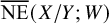 $\overline {\text {NE}}(X/Y; W)$
, without shrinking Y around W anymore, there is a projective morphism
$\overline {\text {NE}}(X/Y; W)$
, without shrinking Y around W anymore, there is a projective morphism $\varphi _R\colon X\rightarrow Z$
over Y with the following properties:
$\varphi _R\colon X\rightarrow Z$
over Y with the following properties:
-
(i) Let C be a projective curve on X such that
$\pi (C)$
is a point of W. Then
$\varphi _R(C)$
is a point if and only if the numerical equivalence class
$[C]$
of C is in R. -
(ii) The natural map
$\mathcal {O}_Z\rightarrow (\varphi _R)_*\mathcal {O}_X$
is an isomorphism. -
(iii)’ Let
$\mathcal {L}$
be a line bundle on X such that
$\mathcal {L}\cdot C=0$
for every curve C with
$[C]\in R$
. Without shrinking Y around W anymore, there exists a line bundle
$\mathcal {L}_Z$
on Z such that
$\mathcal {L}\cong \varphi _R^*\mathcal {L}_Z$
holds. -
(iv) Y is a suitable neighborhood of W also associated with the induced morphism
$\pi _Z\colon Z \rightarrow Y$
in the sense of Definition 2.4.





Proof. By Lemma 3.1, we have a contraction morphism $\phi _R$
over some open neighborhood of W. We divide the argument according to the dimensions of Y and
$\phi _R$
over some open neighborhood of W. We divide the argument according to the dimensions of Y and $\operatorname {Im} \phi _R$
.
$\operatorname {Im} \phi _R$
.
Case 1. When $\operatorname {dim}Y=0$
, we have
$\operatorname {dim}Y=0$
, we have $U=W=Y$
. Then this lemma is obvious by Lemma 3.1.
$U=W=Y$
. Then this lemma is obvious by Lemma 3.1.
We note that when $\operatorname {dim}Y\geq 1$
, every exceptional curve of
$\operatorname {dim}Y\geq 1$
, every exceptional curve of $\phi _R$
is
$\phi _R$
is $\mathbb {Q}$
-Cartier. Indeed, it is clear in Cases (A) and (B), and follows from Lemma 3.2 in Case (C). In Case (D), any divisor on an open subset of X is
$\mathbb {Q}$
-Cartier. Indeed, it is clear in Cases (A) and (B), and follows from Lemma 3.2 in Case (C). In Case (D), any divisor on an open subset of X is $\mathbb {Q}$
-Cartier (cf. [Reference Ishii10, Theorem 7.3.2]).
$\mathbb {Q}$
-Cartier (cf. [Reference Ishii10, Theorem 7.3.2]).
In Cases 2 and 3, we assume that $\dim Y=1$
. In these cases, taking the Stein factorization of
$\dim Y=1$
. In these cases, taking the Stein factorization of $\pi $
, we may assume that the fiber
$\pi $
, we may assume that the fiber $\pi ^{-1}(P)$
is smooth and irreducible for each
$\pi ^{-1}(P)$
is smooth and irreducible for each $P\in Y-W$
. Let C be a curve on X mapped into a point on W such that the numerical equivalence class
$P\in Y-W$
. Let C be a curve on X mapped into a point on W such that the numerical equivalence class $[C]\in \overline {\text {NE}}(X/Y; W)$
generates R.
$[C]\in \overline {\text {NE}}(X/Y; W)$
generates R.
Case 2. When $\dim Y=1$
and
$\dim Y=1$
and $\dim (\operatorname {Im} \phi _R)=1$
, we can write
$\dim (\operatorname {Im} \phi _R)=1$
, we can write $\phi _R^*(\phi _R(C))=E=\sum a_iE_i$
, where
$\phi _R^*(\phi _R(C))=E=\sum a_iE_i$
, where $a_i>0$
and
$a_i>0$
and $E_i$
’s are irreducible curves. As noted above, each
$E_i$
’s are irreducible curves. As noted above, each $E_i$
is a
$E_i$
is a $\mathbb {Q}$
-Cartier divisor. If
$\mathbb {Q}$
-Cartier divisor. If $\operatorname {Supp}E\neq \operatorname {Supp}C$
, then some
$\operatorname {Supp}E\neq \operatorname {Supp}C$
, then some $E_i$
satisfies
$E_i$
satisfies $E_i\cdot C>0$
because
$E_i\cdot C>0$
because $\phi _R$
has connected fibers. By the property (i) in Lemma 3.1, we have
$\phi _R$
has connected fibers. By the property (i) in Lemma 3.1, we have $E^2>0$
. This is a contradiction, by Lemma 2.12. Then,
$E^2>0$
. This is a contradiction, by Lemma 2.12. Then, $\operatorname {Supp}\phi _R^*(\phi _R(C))=\operatorname {Supp}C$
. By Lemma 2.12, we have
$\operatorname {Supp}\phi _R^*(\phi _R(C))=\operatorname {Supp}C$
. By Lemma 2.12, we have $C^2=0$
. Then, C is a support function of R. Moreover, since C is proportional to a pullback of a point in Z,
$C^2=0$
. Then, C is a support function of R. Moreover, since C is proportional to a pullback of a point in Z, $mC$
is
$mC$
is $\pi $
-free over Y for some positive integer m. We obtain a morphism
$\pi $
-free over Y for some positive integer m. We obtain a morphism $X\rightarrow \mathbb {P}_Y(\pi _*\mathcal {O}_X(mC))$
. Taking the Stein factorization of this morphism, we obtain a contraction morphism
$X\rightarrow \mathbb {P}_Y(\pi _*\mathcal {O}_X(mC))$
. Taking the Stein factorization of this morphism, we obtain a contraction morphism $\varphi _R\colon X\rightarrow Z$
over Y. This
$\varphi _R\colon X\rightarrow Z$
over Y. This $\varphi _R$
coincides with
$\varphi _R$
coincides with $\phi _R$
on the open subset of X on which
$\phi _R$
on the open subset of X on which $\phi _R$
is defined. This morphism satisfies the properties (i), (ii), and (iv) of this lemma.
$\phi _R$
is defined. This morphism satisfies the properties (i), (ii), and (iv) of this lemma.
To show that $\varphi _R$
satisfies (iii)’, take a line bundle
$\varphi _R$
satisfies (iii)’, take a line bundle $\mathcal {L}$
on X such that
$\mathcal {L}$
on X such that $\mathcal {L}\cdot C=0$
. We take a general fiber F of
$\mathcal {L}\cdot C=0$
. We take a general fiber F of $\varphi _R$
. We may assume that F is smooth, by Sard’s theorem (cf. [Reference Ueno16, Corollary 1.8]). Since
$\varphi _R$
. We may assume that F is smooth, by Sard’s theorem (cf. [Reference Ueno16, Corollary 1.8]). Since $-(K_X+\Delta )$
is
$-(K_X+\Delta )$
is $\varphi _R$
-ample,
$\varphi _R$
-ample, $-(K_X+\Delta )|_F=-K_F-\Delta |_F$
is ample. Then,
$-(K_X+\Delta )|_F=-K_F-\Delta |_F$
is ample. Then, $-K_F$
is ample. This implies that the genus of the smooth curve F is 0, that is,
$-K_F$
is ample. This implies that the genus of the smooth curve F is 0, that is, $F\cong \mathbb {P}^1$
. Since
$F\cong \mathbb {P}^1$
. Since $\varphi _R$
is flat,
$\varphi _R$
is flat, $\mathcal {L}\cdot F=0$
. So,
$\mathcal {L}\cdot F=0$
. So, $\mathcal {L}|_F\cong \mathcal {O}_{\mathbb {P}^1}$
. Then, for a general point
$\mathcal {L}|_F\cong \mathcal {O}_{\mathbb {P}^1}$
. Then, for a general point $z\in Z$
, we have
$z\in Z$
, we have
 $$ \begin{align*} h^0(X_z, \mathcal{L}|_{X_z})=1,\quad\text{and}\quad h^0(X_z, \mathcal{L}^{-1}|_{X_z})=1. \end{align*} $$
By the upper semi-continuity (cf. [Reference Ueno16, Theorem 1.4]), for every point $z\in Z$
, we have
$z\in Z$
, we have
 $$ \begin{align*} h^0(X_z, \mathcal{L}|_{X_z})\geq1,\quad\text{and}\quad h^0(X_z, \mathcal{L}^{-1}|_{X_z})\geq1. \end{align*} $$
This implies that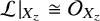 $\mathcal {L}|_{X_z}\cong \mathcal {O}_{X_z}$
for every point
$\mathcal {L}|_{X_z}\cong \mathcal {O}_{X_z}$
for every point $z\in Z$
. In particular,
$z\in Z$
. In particular, $\mathcal {L}$
is
$\mathcal {L}$
is $\varphi _R$
-free over Z. Since
$\varphi _R$
-free over Z. Since $\mathcal {L}$
is
$\mathcal {L}$
is $\varphi _R$
-numerically trivial, it is a pull-back of a line bundle on Z. Then,
$\varphi _R$
-numerically trivial, it is a pull-back of a line bundle on Z. Then, $\varphi _R$
satisfies (iii)’.
$\varphi _R$
satisfies (iii)’.
Case 3. When $\dim Y=1$
and
$\dim Y=1$
and $\dim (\operatorname {Im}\phi _R)=2$
, we have
$\dim (\operatorname {Im}\phi _R)=2$
, we have $C^2<0$
by Lemma 2.11. Take a
$C^2<0$
by Lemma 2.11. Take a $\pi $
-ample line bundle
$\pi $
-ample line bundle $\mathcal {A}$
on X. Then there is a positive rational number
$\mathcal {A}$
on X. Then there is a positive rational number $\lambda $
such that
$\lambda $
such that $C+\lambda \mathcal {A}$
is a support function of R. Put
$C+\lambda \mathcal {A}$
is a support function of R. Put $H:=C+\lambda \mathcal {A}$
. We can take some positive integer a such that
$H:=C+\lambda \mathcal {A}$
. We can take some positive integer a such that $aH-(K_X+\Delta )$
is
$aH-(K_X+\Delta )$
is $\pi $
-ample over W. By the basepoint-free theorem (cf. [Reference Fujino6, Theorem 1.1.11]),
$\pi $
-ample over W. By the basepoint-free theorem (cf. [Reference Fujino6, Theorem 1.1.11]), $mH$
is
$mH$
is $\pi $
-free over a neighborhood of W for every sufficiently large positive integer m. By the definition of H, for a point
$\pi $
-free over a neighborhood of W for every sufficiently large positive integer m. By the definition of H, for a point $P\in Y-W$
, we have
$P\in Y-W$
, we have $H\cdot \pi ^*P>0$
. Then
$H\cdot \pi ^*P>0$
. Then $m_1(H\cdot \pi ^*P)\geq 2g+1$
for every sufficiently large positive integer
$m_1(H\cdot \pi ^*P)\geq 2g+1$
for every sufficiently large positive integer $m_1$
, where g is the genus of the smooth curve
$m_1$
, where g is the genus of the smooth curve $\pi ^{-1}(P)$
. Then
$\pi ^{-1}(P)$
. Then $m_1H|_{\pi ^{-1}(P)}$
is very ample. Since
$m_1H|_{\pi ^{-1}(P)}$
is very ample. Since $\pi \colon X\rightarrow Y$
is flat,
$\pi \colon X\rightarrow Y$
is flat, $H\cdot \pi ^*Q=H\cdot \pi ^*P$
and the genus of
$H\cdot \pi ^*Q=H\cdot \pi ^*P$
and the genus of $\pi ^{-1}(Q)$
is equal to the genus g of
$\pi ^{-1}(Q)$
is equal to the genus g of $\pi ^{-1}(P)$
for every point
$\pi ^{-1}(P)$
for every point $Q\in Y-W$
. Then
$Q\in Y-W$
. Then $m_1H|_{\pi ^{-1}(Q)}$
is very ample for every point
$m_1H|_{\pi ^{-1}(Q)}$
is very ample for every point $Q\in Y-W$
. This implies that
$Q\in Y-W$
. This implies that $mH$
is
$mH$
is $\pi $
-very ample over
$\pi $
-very ample over $Y-W$
for every sufficiently large positive integer m. Then,
$Y-W$
for every sufficiently large positive integer m. Then, $mH$
is
$mH$
is $\pi $
-free over Y for a positive integer m, and we obtain a morphism
$\pi $
-free over Y for a positive integer m, and we obtain a morphism $\varphi _R\colon X\rightarrow Z$
over Y as in Case 2. This
$\varphi _R\colon X\rightarrow Z$
over Y as in Case 2. This $\varphi _R$
coincides with
$\varphi _R$
coincides with $\phi _R$
on the open subset of X on which
$\phi _R$
on the open subset of X on which $\phi _R$
is defined. This morphism satisfies the properties (i), (ii), and (iv) of this lemma.
$\phi _R$
is defined. This morphism satisfies the properties (i), (ii), and (iv) of this lemma.
To show that $\varphi _R$
satisfies (iii)’, we take a line bundle
$\varphi _R$
satisfies (iii)’, we take a line bundle $\mathcal {L}$
on X such that
$\mathcal {L}$
on X such that $\mathcal {L}\cdot C=0$
. Then
$\mathcal {L}\cdot C=0$
. Then $\mathcal {L}-(K_X+\Delta )$
is
$\mathcal {L}-(K_X+\Delta )$
is $\varphi _R$
-ample over
$\varphi _R$
-ample over $\pi _Z^{-1}W$
. By the basepoint-free theorem (cf. [Reference Fujino6, Theorem 1.1.11]),
$\pi _Z^{-1}W$
. By the basepoint-free theorem (cf. [Reference Fujino6, Theorem 1.1.11]), $m\mathcal {L}$
is
$m\mathcal {L}$
is $\varphi _R$
-free over a neighborhood of
$\varphi _R$
-free over a neighborhood of $\pi _Z^{-1}W$
for every sufficiently large positive integer m.
$\pi _Z^{-1}W$
for every sufficiently large positive integer m.
We will check that $m\mathcal {L}$
is
$m\mathcal {L}$
is $\varphi _R$
-free over
$\varphi _R$
-free over $Z-\pi _Z^{-1}W$
for every sufficiently large positive integer m. Since
$Z-\pi _Z^{-1}W$
for every sufficiently large positive integer m. Since $\dim Z=2$
, let E be a divisor on X such that
$\dim Z=2$
, let E be a divisor on X such that $\operatorname {Supp}E$
corresponds to the exceptional locus of
$\operatorname {Supp}E$
corresponds to the exceptional locus of $\varphi _R$
. By the property (i), the numerical equivalence class
$\varphi _R$
. By the property (i), the numerical equivalence class $[E_i]\in \overline {\text {NE}}(X/Y; W)$
of each irreducible component
$[E_i]\in \overline {\text {NE}}(X/Y; W)$
of each irreducible component $E_i$
of E is included in R. Since
$E_i$
of E is included in R. Since $E_i\cdot H=0$
, we have
$E_i\cdot H=0$
, we have $E_i\subset \operatorname {Supp}C$
. Then, the exceptional locus of
$E_i\subset \operatorname {Supp}C$
. Then, the exceptional locus of $\varphi _R$
corresponds to
$\varphi _R$
corresponds to $\operatorname {Supp}C$
. Since
$\operatorname {Supp}C$
. Since $\varphi _R$
is isomorphic over
$\varphi _R$
is isomorphic over $Z-\pi _Z^{-1}W$
,
$Z-\pi _Z^{-1}W$
, $m\mathcal {L}$
is
$m\mathcal {L}$
is $\varphi _R$
-free over
$\varphi _R$
-free over $Z-\pi _Z^{-1}W$
for any positive integer m.
$Z-\pi _Z^{-1}W$
for any positive integer m.
We have checked that $m\mathcal {L}$
is
$m\mathcal {L}$
is $\varphi _R$
-free over Z for every sufficiently large positive integer m. Then, there is some positive integer
$\varphi _R$
-free over Z for every sufficiently large positive integer m. Then, there is some positive integer $m_0$
such that both
$m_0$
such that both $m_0\mathcal {L}$
and
$m_0\mathcal {L}$
and $(m_0+1)\mathcal {L}$
are
$(m_0+1)\mathcal {L}$
are $\varphi _R$
-free over Z. Since both
$\varphi _R$
-free over Z. Since both $m_0\mathcal {L}$
and
$m_0\mathcal {L}$
and $(m_0+1)\mathcal {L}$
are
$(m_0+1)\mathcal {L}$
are $\varphi _R$
-numerically trivial, they are pull-backs of line bundles on Z. Therefore,
$\varphi _R$
-numerically trivial, they are pull-backs of line bundles on Z. Therefore, $\mathcal {L}$
is also a pull-back of a line bundle on Z. Then,
$\mathcal {L}$
is also a pull-back of a line bundle on Z. Then, $\varphi _R$
satisfies (iii)’.
$\varphi _R$
satisfies (iii)’.
Case 4. When $\dim Y=2$
, taking the Stein factorization of
$\dim Y=2$
, taking the Stein factorization of $\pi $
, we may assume that
$\pi $
, we may assume that $\pi \colon X\rightarrow Y$
is isomorphic over
$\pi \colon X\rightarrow Y$
is isomorphic over $Y-W$
. Then any line bundle on X is
$Y-W$
. Then any line bundle on X is $\pi $
-free over
$\pi $
-free over $Y-W$
. We can show this case in the same way as in Case 3.
$Y-W$
. We can show this case in the same way as in Case 3.
Lemma 3.4. Assume that $(X, Y, W, \pi , \Delta )$
satisfies the condition (
$(X, Y, W, \pi , \Delta )$
satisfies the condition ( $\bigstar $
) and that one of Cases (A)-(D) holds. Let
$\bigstar $
) and that one of Cases (A)-(D) holds. Let $\varphi \colon X\rightarrow X'$
be a bimeromorphic contraction morphism associated with a
$\varphi \colon X\rightarrow X'$
be a bimeromorphic contraction morphism associated with a $(K_X+\Delta )$
-negative ray of
$(K_X+\Delta )$
-negative ray of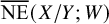 $\overline {\text {NE}}(X/Y; W)$
, which is given by Lemma 3.3. Let
$\overline {\text {NE}}(X/Y; W)$
, which is given by Lemma 3.3. Let $\pi '\colon X'\rightarrow Y$
be the induced morphism and let
$\pi '\colon X'\rightarrow Y$
be the induced morphism and let $\Delta ':=\varphi _*\Delta $
.
$\Delta ':=\varphi _*\Delta $
.
Then $(X', Y, W, \pi ', \Delta ')$
also satisfies the condition (
$(X', Y, W, \pi ', \Delta ')$
also satisfies the condition ( $\bigstar $
). Moreover,
$\bigstar $
). Moreover, $K_{X'}$
is
$K_{X'}$
is $\mathbb {Q}$
-Cartier and every prime divisor on
$\mathbb {Q}$
-Cartier and every prime divisor on $X'$
which is mapped into W is
$X'$
which is mapped into W is $\mathbb {Q}$
-Cartier in Case (A),
$\mathbb {Q}$
-Cartier in Case (A), $X'$
is
$X'$
is $\mathbb {Q}$
-factorial over W in Case (B),
$\mathbb {Q}$
-factorial over W in Case (B), $(X', \Delta ')$
is log canonical in Case (C), and
$(X', \Delta ')$
is log canonical in Case (C), and $X'$
has only rational singularities in Case (D).
$X'$
has only rational singularities in Case (D).
Proof. We note that the contraction morphism $\varphi $
preserves normality by (ii) of Lemma 3.3. We also note that
$\varphi $
preserves normality by (ii) of Lemma 3.3. We also note that $\rho (X/Y; W)-\rho (X'/Y; W)=1$
, because we have the following exact sequence
$\rho (X/Y; W)-\rho (X'/Y; W)=1$
, because we have the following exact sequence
 $$ \begin{align*}0\rightarrow A^1(X'/Y; W)\xrightarrow{D\mapsto\varphi^*D} A^1(X/Y; W)\xrightarrow{D\mapsto(D\cdot C)} \mathbb{Z}, \end{align*} $$
where C is a curve on X such that its numerical equivalence class $[C]\in \overline {\text {NE}}(X/Y; W)$
generates the extremal ray associated with
$[C]\in \overline {\text {NE}}(X/Y; W)$
generates the extremal ray associated with $\varphi $
, by (iii)’ of Lemma 3.3.
$\varphi $
, by (iii)’ of Lemma 3.3.
In order to show that $(X', Y, W, \pi ', \Delta ')$
satisfies the condition (
$(X', Y, W, \pi ', \Delta ')$
satisfies the condition ( $\bigstar $
), we only have to show that
$\bigstar $
), we only have to show that $K_{X'}+\Delta '$
is
$K_{X'}+\Delta '$
is $\mathbb {R}$
-Cartier because
$\mathbb {R}$
-Cartier because $(X, Y, W, \pi , \Delta )$
satisfies the condition (
$(X, Y, W, \pi , \Delta )$
satisfies the condition ( $\bigstar $
) and
$\bigstar $
) and $\varphi \colon X\rightarrow X'$
is a bimeromorphic contraction morphism.
$\varphi \colon X\rightarrow X'$
is a bimeromorphic contraction morphism.
In Case (A), let E be a divisor on X such that its support $\operatorname {Supp}E$
corresponds to the exceptional locus of
$\operatorname {Supp}E$
corresponds to the exceptional locus of $\varphi $
. Let
$\varphi $
. Let $E_i$
be an irreducible component of E. By assumption, each
$E_i$
be an irreducible component of E. By assumption, each $E_i$
is
$E_i$
is $\mathbb {Q}$
-Cartier. Since the contraction morphism
$\mathbb {Q}$
-Cartier. Since the contraction morphism $\varphi $
satisfies the conditions in Lemma 3.3, the numerical equivalence class
$\varphi $
satisfies the conditions in Lemma 3.3, the numerical equivalence class $[E_i]\in \overline {\text {NE}}(X/Y; W)$
is proportional to
$[E_i]\in \overline {\text {NE}}(X/Y; W)$
is proportional to $[C]\in \overline {\text {NE}}(X/Y; W)$
. By assumption, C is also
$[C]\in \overline {\text {NE}}(X/Y; W)$
. By assumption, C is also $\mathbb {Q}$
-Cartier. Since
$\mathbb {Q}$
-Cartier. Since $C^2<0$
implies
$C^2<0$
implies $C\cdot E_i<0$
, we have
$C\cdot E_i<0$
, we have $\operatorname {Supp}E_i=\operatorname {Supp}C$
. Then
$\operatorname {Supp}E_i=\operatorname {Supp}C$
. Then $\operatorname {Supp}E=\operatorname {Supp}C$
and in particular the exceptional locus of
$\operatorname {Supp}E=\operatorname {Supp}C$
and in particular the exceptional locus of $\varphi $
is irreducible. Pick a
$\varphi $
is irreducible. Pick a $\mathbb {Q}$
-Cartier
$\mathbb {Q}$
-Cartier $\mathbb {Q}$
-divisor
$\mathbb {Q}$
-divisor $\Gamma $
on X. Since
$\Gamma $
on X. Since $\rho (X/Y; W)-\rho (X'/Y; W)=1$
and
$\rho (X/Y; W)-\rho (X'/Y; W)=1$
and $E\cdot E<0$
, there is a rational number
$E\cdot E<0$
, there is a rational number $\lambda $
such that
$\lambda $
such that $(\Gamma +\lambda E)\cdot E=0$
. Then
$(\Gamma +\lambda E)\cdot E=0$
. Then $\Gamma +\lambda E$
is both
$\Gamma +\lambda E$
is both $\mathbb {Q}$
-Cartier and
$\mathbb {Q}$
-Cartier and $\varphi $
-numerically trivial. This implies that
$\varphi $
-numerically trivial. This implies that $\varphi _*(\Gamma +\lambda E)=\varphi _*\Gamma $
is
$\varphi _*(\Gamma +\lambda E)=\varphi _*\Gamma $
is $\mathbb {Q}$
-Cartier, by (iii)’ of Lemma 3.3. Since
$\mathbb {Q}$
-Cartier, by (iii)’ of Lemma 3.3. Since $K_X+\Delta $
is
$K_X+\Delta $
is $\mathbb {R}$
-Cartier, we can write
$\mathbb {R}$
-Cartier, we can write $K_X+\Delta =\sum _{i=1}^na_i(K_X+\Delta _i)$
on some open neighborhood V of
$K_X+\Delta =\sum _{i=1}^na_i(K_X+\Delta _i)$
on some open neighborhood V of $\operatorname {Supp}E$
on X, where every
$\operatorname {Supp}E$
on X, where every $\Delta _i$
is a boundary
$\Delta _i$
is a boundary $\mathbb {Q}$
-divisor such that
$\mathbb {Q}$
-divisor such that $K_X+\Delta _i$
is
$K_X+\Delta _i$
is $\mathbb {Q}$
-Cartier and every
$\mathbb {Q}$
-Cartier and every $a_i$
is a positive real number such that
$a_i$
is a positive real number such that $\sum a_i=1$
. Since
$\sum a_i=1$
. Since $\operatorname {Supp}E$
corresponds to the exceptional locus of
$\operatorname {Supp}E$
corresponds to the exceptional locus of $\varphi $
,
$\varphi $
, $\varphi (V)\subset X'$
is open and
$\varphi (V)\subset X'$
is open and $V=\varphi ^{-1}(\varphi (V))$
. Substituting
$V=\varphi ^{-1}(\varphi (V))$
. Substituting $\Gamma =K_X+\Delta _i$
, we see that
$\Gamma =K_X+\Delta _i$
, we see that $\varphi _*(K_X+\Delta _i)$
is
$\varphi _*(K_X+\Delta _i)$
is $\mathbb {Q}$
-Cartier for every i. Then,
$\mathbb {Q}$
-Cartier for every i. Then, $K_{X'}+\Delta '=\sum _{i=1}^na_i(K_{X'}+\varphi _*\Delta _i)$
is
$K_{X'}+\Delta '=\sum _{i=1}^na_i(K_{X'}+\varphi _*\Delta _i)$
is $\mathbb {R}$
-Cartier on
$\mathbb {R}$
-Cartier on $\varphi (V)$
. Since
$\varphi (V)$
. Since $\varphi $
is isomorphic on
$\varphi $
is isomorphic on $X-\operatorname {Supp}E$
,
$X-\operatorname {Supp}E$
, $K_{X'}+\Delta '$
is
$K_{X'}+\Delta '$
is $\mathbb {R}$
-Cartier on
$\mathbb {R}$
-Cartier on $X'$
. Substituting
$X'$
. Substituting $\Gamma =K_X$
,
$\Gamma =K_X$
, $K_{X'}$
is
$K_{X'}$
is $\mathbb {Q}$
-Cartier. Pick a prime divisor
$\mathbb {Q}$
-Cartier. Pick a prime divisor $D'$
on
$D'$
on $X'$
which is mapped into W. Let D be the strict transform of
$X'$
which is mapped into W. Let D be the strict transform of $D'$
. Then
$D'$
. Then $\pi (D)\subset W$
implies that D is
$\pi (D)\subset W$
implies that D is $\mathbb {Q}$
-Cartier. Then, substituting
$\mathbb {Q}$
-Cartier. Then, substituting $\Gamma =D$
,
$\Gamma =D$
, $\varphi _*D=D'$
is
$\varphi _*D=D'$
is $\mathbb {Q}$
-Cartier. Therefore,
$\mathbb {Q}$
-Cartier. Therefore, $(X', Y, W, \pi ', \Delta ')$
satisfies the condition (
$(X', Y, W, \pi ', \Delta ')$
satisfies the condition ( $\bigstar $
) and
$\bigstar $
) and $K_{X'}$
is
$K_{X'}$
is $\mathbb {Q}$
-Cartier and every prime divisor on
$\mathbb {Q}$
-Cartier and every prime divisor on $X'$
which is mapped into W is
$X'$
which is mapped into W is $\mathbb {Q}$
-Cartier.
$\mathbb {Q}$
-Cartier.
In Case (B), as above, the exceptional locus of $\varphi $
is irreducible. In order to prove that
$\varphi $
is irreducible. In order to prove that $X'$
is
$X'$
is $\mathbb {Q}$
-factorial over W, pick a prime divisor
$\mathbb {Q}$
-factorial over W, pick a prime divisor $D'$
defined on an open neighborhood U of
$D'$
defined on an open neighborhood U of $(\pi ')^{-1}(W)$
. Let D be the strict transform of
$(\pi ')^{-1}(W)$
. Let D be the strict transform of $D'$
. Then D is
$D'$
. Then D is $\mathbb {Q}$
-Cartier over a neighborhood of W by the assumption of (B). Then as above,
$\mathbb {Q}$
-Cartier over a neighborhood of W by the assumption of (B). Then as above, $\varphi _*D=D'$
is
$\varphi _*D=D'$
is $\mathbb {Q}$
-Cartier over a neighborhood of W. Then
$\mathbb {Q}$
-Cartier over a neighborhood of W. Then $X'$
is
$X'$
is $\mathbb {Q}$
-factorial over W. We can show that
$\mathbb {Q}$
-factorial over W. We can show that $K_{X'}+\Delta '$
is
$K_{X'}+\Delta '$
is $\mathbb {R}$
-Cartier in the same way as above. Therefore,
$\mathbb {R}$
-Cartier in the same way as above. Therefore, $(X', Y, W, \pi ', \Delta ')$
satisfies the condition (
$(X', Y, W, \pi ', \Delta ')$
satisfies the condition ( $\bigstar $
) and
$\bigstar $
) and $X'$
is
$X'$
is $\mathbb {Q}$
-factorial over W.
$\mathbb {Q}$
-factorial over W.
In Case (C), by Lemma 2.11, $(X', \Delta ')$
is numerically log canonical (for the definition of numerical log canonicity, see [Reference Kollár and Mori11, Notation 4.1]). This implies that
$(X', \Delta ')$
is numerically log canonical (for the definition of numerical log canonicity, see [Reference Kollár and Mori11, Notation 4.1]). This implies that $K_{X'}+\Delta '$
is
$K_{X'}+\Delta '$
is $\mathbb {R}$
-Cartier. Therefore,
$\mathbb {R}$
-Cartier. Therefore, $(X', Y, W, \pi ', \Delta ')$
satisfies the condition (
$(X', Y, W, \pi ', \Delta ')$
satisfies the condition ( $\bigstar $
) and
$\bigstar $
) and $(X', \Delta ')$
is log canonical.
$(X', \Delta ')$
is log canonical.
In Case (D), $X'$
also has only rational singularities by the vanishing theorem (cf. [Reference Fujino6, Theorem 3.3.1]), because the same argument as [Reference Fujino4, Proposition 3.7] is available, and we have
$X'$
also has only rational singularities by the vanishing theorem (cf. [Reference Fujino6, Theorem 3.3.1]), because the same argument as [Reference Fujino4, Proposition 3.7] is available, and we have
 $$ \begin{align*}\mathcal{R}^j\varphi_*\mathcal{O}_X=0 \end{align*} $$
for all $j>0$
. In particular, any divisor on an open subset of X is
$j>0$
. In particular, any divisor on an open subset of X is $\mathbb {Q}$
-Cartier (cf. [Reference Ishii10, Theorem 7.3.2]). This implies that
$\mathbb {Q}$
-Cartier (cf. [Reference Ishii10, Theorem 7.3.2]). This implies that $K_{X'}+\Delta '$
is
$K_{X'}+\Delta '$
is $\mathbb {R}$
-Cartier. Therefore,
$\mathbb {R}$
-Cartier. Therefore, $(X', Y, W, \pi ', \Delta ')$
satisfies the condition (
$(X', Y, W, \pi ', \Delta ')$
satisfies the condition ( $\bigstar $
) and
$\bigstar $
) and $X'$
also has only rational singularities.
$X'$
also has only rational singularities.
Remark 3.5 (See also Remark 3.7)
If $(X, Y, W, \pi , \Delta )$
satisfies the conditions
$(X, Y, W, \pi , \Delta )$
satisfies the conditions $(\bigstar )$
and
$(\bigstar )$
and
-
(A’) every prime divisor on X which is mapped into W is
$\mathbb {Q}$
-Cartier,

then $(X', Y, W, \pi ', \Delta ')$
also satisfies the conditions
$(X', Y, W, \pi ', \Delta ')$
also satisfies the conditions $(\bigstar )$
and every prime divisor on
$(\bigstar )$
and every prime divisor on $X'$
which is mapped into W is
$X'$
which is mapped into W is $\mathbb {Q}$
-Cartier. This can be proved in the same way as in the proof of Case (A).
$\mathbb {Q}$
-Cartier. This can be proved in the same way as in the proof of Case (A).
Theorem 3.6 (Minimal model program, see [Reference Fujino4, Theorem 3.3])
Assume that $(X, Y, W, \pi , \Delta )$
satisfies the condition (
$(X, Y, W, \pi , \Delta )$
satisfies the condition ( $\bigstar $
) and that one of Cases (A)-(D) holds. We shrink Y around W suitably. Then, there is a sequence of at most
$\bigstar $
) and that one of Cases (A)-(D) holds. We shrink Y around W suitably. Then, there is a sequence of at most $\rho (X/Y;W)-1$
contractions
$\rho (X/Y;W)-1$
contractions
 $$ \begin{align*}(X, \Delta)=(X_0, \Delta_0)\stackrel{\varphi_0}{\rightarrow}(X_1, \Delta_1)\stackrel{\varphi_1}{\rightarrow}\cdots\stackrel{\varphi_{k-1}}{\rightarrow}(X_k, \Delta_k)=(X^*, \Delta^*) \end{align*} $$
over Y such that
-
• (Minimal model) if
$K_X+\Delta $
is
$\pi $
-pseudo-effective, then
$K_{X^*}+\Delta ^*$
is nef over W, and -
• (Mori fiber space) if
$K_X+\Delta $
is not
$\pi $
-pseudo-effective, then
$(X^*, \Delta ^*)$
is a Mori fiber space.


We note that $K_{X_i}$
is
$K_{X_i}$
is $\mathbb {Q}$
-Cartier and every prime divisor on
$\mathbb {Q}$
-Cartier and every prime divisor on $X_i$
which is mapped into W is
$X_i$
which is mapped into W is $\mathbb {Q}$
-Cartier for every i in Case (A), that
$\mathbb {Q}$
-Cartier for every i in Case (A), that $X_i$
is
$X_i$
is $\mathbb {Q}$
-factorial over W for every i in Case (B), that
$\mathbb {Q}$
-factorial over W for every i in Case (B), that $(X_i, \Delta _i)$
is log canonical for every i in Case (C), and that
$(X_i, \Delta _i)$
is log canonical for every i in Case (C), and that $X_i$
has only rational singularities for every i in Case (D).
$X_i$
has only rational singularities for every i in Case (D).
Proof. We consider the following step-by-step procedure.
-
Step 1. We start with
$(X, \Delta )$
. -
Step 2. If
$K_X+\Delta $
is nef over W, we stop. -
Step 3. If
$K_X+\Delta $
is not nef, then there is a rational
$(K_X+\Delta )$
-negative extremal ray R of
$\overline {\text {NE}}(X/Y; W)$
and we have the corresponding contraction morphism
$\varphi _R\colon X\rightarrow X'$
over Y in Lemma 3.3. We note that
$X'$
is normal, and that
$\rho (X/Y; W)-\rho (X'/Y; W)=1$
as shown in the proof of Lemma 3.4. -
Step 4. If
$\varphi _R\colon X\rightarrow X'$
is not bimeromorphic, then it is a Mori fiber space and we stop. -
Step 5. Otherwise,
$\varphi _R\colon X\rightarrow X'$
is bimeromorphic. Let
$\pi '\colon X'\rightarrow Y$
be the induced morphism and let
$\Delta ':={\varphi _R}_*\Delta $
. By Lemma 3.4,
$(X', Y, W, \pi ', \Delta ')$
also satisfies the condition (
$\bigstar $
). Moreover,
$K_{X'}$
is
$\mathbb {Q}$
-Cartier and every prime divisor on
$X'$
which is mapped into W is
$\mathbb {Q}$
-Cartier in Case (A),
$X'$
is
$\mathbb {Q}$
-factorial over W in Case (B),
$(X', \Delta ')$
is log canonical in Case (C), and
$X'$
has only rational singularities in Case (D). Then, we can replace
$(X, \Delta )$
with
$(X', {\varphi _R}_*\Delta )$
and go back to the first procedure.


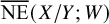






We may repeat this process. Since $\rho (X_i/Y; W)-\rho (X_{i+1}/Y; W)=1$
, we obtain a sequence of at most
$\rho (X_i/Y; W)-\rho (X_{i+1}/Y; W)=1$
, we obtain a sequence of at most $\rho (X/Y;W)-1$
contractions
$\rho (X/Y;W)-1$
contractions
 $$ \begin{align*}(X, \Delta)=(X_0, \Delta_0)\stackrel{\varphi_0}{\rightarrow}(X_1, \Delta_1)\stackrel{\varphi_1}{\rightarrow}\cdots\stackrel{\varphi_{k-1}}{\rightarrow}(X_k, \Delta_k)=(X^*, \Delta^*) \end{align*} $$
over Y such that either $K_{X^*}+\Delta ^*$
is nef over W or
$K_{X^*}+\Delta ^*$
is nef over W or $(X^*, \Delta ^*)$
is a Mori fiber space.
$(X^*, \Delta ^*)$
is a Mori fiber space.
By Lemma 2.11, we can write
 $$ \begin{align*}K_X+\Delta=\Phi^*(K_{X^*}+\Delta^*)+E, \end{align*} $$
where $\Phi \colon X\rightarrow X^*$
is the composition of the
$\Phi \colon X\rightarrow X^*$
is the composition of the $\varphi _i$
’s, and E is an effective
$\varphi _i$
’s, and E is an effective $\Phi $
-exceptional divisor on X whose support corresponds to the exceptional locus of
$\Phi $
-exceptional divisor on X whose support corresponds to the exceptional locus of $\Phi $
. If
$\Phi $
. If $K_{X^*}+\Delta ^*$
is nef over W, then it is nef over Y by Lemma 2.6. Then
$K_{X^*}+\Delta ^*$
is nef over W, then it is nef over Y by Lemma 2.6. Then $K_X+\Delta $
is
$K_X+\Delta $
is $\pi $
-pseudo-effective. Conversely, if
$\pi $
-pseudo-effective. Conversely, if $K_X+\Delta $
is
$K_X+\Delta $
is $\pi $
-pseudo-effective, then so is
$\pi $
-pseudo-effective, then so is $K_{X^*}+\Delta ^*$
, because
$K_{X^*}+\Delta ^*$
, because $\Phi \colon X\rightarrow X^*$
is bimeromorphic. In order to show that
$\Phi \colon X\rightarrow X^*$
is bimeromorphic. In order to show that $(X^*, \Delta ^*)$
is a minimal model, we suppose that
$(X^*, \Delta ^*)$
is a minimal model, we suppose that $\varphi _k\colon (X_k, \Delta _k)=(X^*, \Delta ^*)\rightarrow Z$
is a Mori fiber space over Y. In this case,
$\varphi _k\colon (X_k, \Delta _k)=(X^*, \Delta ^*)\rightarrow Z$
is a Mori fiber space over Y. In this case, $-(K_{X_k}+\Delta _k)$
is
$-(K_{X_k}+\Delta _k)$
is $\varphi _k$
-ample and
$\varphi _k$
-ample and $\operatorname {dim}Z<2$
. For every point
$\operatorname {dim}Z<2$
. For every point $P\in X_k$
, there exists a curve C on
$P\in X_k$
, there exists a curve C on $X_k$
passing through P which is contracted by
$X_k$
passing through P which is contracted by $\varphi _k$
, which satisfies that
$\varphi _k$
, which satisfies that $(K_{X_k}+\Delta _k)\cdot C<0$
. This contradicts the fact that
$(K_{X_k}+\Delta _k)\cdot C<0$
. This contradicts the fact that $(K_{X_k}+\Delta _k)\cdot C\geq 0$
for a very general curve C on
$(K_{X_k}+\Delta _k)\cdot C\geq 0$
for a very general curve C on $X_k$
. Therefore,
$X_k$
. Therefore, $(X^*, \Delta ^*)$
is a minimal model when
$(X^*, \Delta ^*)$
is a minimal model when $K_X+\Delta $
is
$K_X+\Delta $
is $\pi $
-pseudo-effective and it is a Mori fiber space when
$\pi $
-pseudo-effective and it is a Mori fiber space when $K_X+\Delta $
is not
$K_X+\Delta $
is not $\pi $
-pseudo-effective.
$\pi $
-pseudo-effective.
Remark 3.7. If $(X, Y, W, \pi , \Delta )$
satisfies the conditions
$(X, Y, W, \pi , \Delta )$
satisfies the conditions $(\bigstar )$
and
$(\bigstar )$
and
-
(A’) every prime divisor on X which is mapped into W is
$\mathbb {Q}$
-Cartier,

then we can run the $(K_X+\Delta )$
-MMP over Y around W as above. Moreover,
$(K_X+\Delta )$
-MMP over Y around W as above. Moreover, $(X_i, Y, W, \pi _i, \Delta _i)$
satisfies the condition
$(X_i, Y, W, \pi _i, \Delta _i)$
satisfies the condition $(\bigstar )$
and every prime divisor on
$(\bigstar )$
and every prime divisor on $X_i$
which is mapped into W is
$X_i$
which is mapped into W is $\mathbb {Q}$
-Cartier for every i. This can be proved in the same way as in the proof of Theorem 3.6, by Remark 3.5.
$\mathbb {Q}$
-Cartier for every i. This can be proved in the same way as in the proof of Theorem 3.6, by Remark 3.5.
4. Abundance for
$\mathbb {Q}$
-divisors

In this section, we will prove the abundance theorem for $\mathbb {Q}$
-divisors.
$\mathbb {Q}$
-divisors.
Lemma 4.1 (Adjunction)
Let X be a normal complex surface, and $A_j$
a reduced irreducible closed subvariety of dimension 1. Then we have the short exact sequence
$A_j$
a reduced irreducible closed subvariety of dimension 1. Then we have the short exact sequence
 $$ \begin{align*}0 \rightarrow \mathcal{T} \rightarrow \mathcal{O}_X(K_X+{A_j}) \otimes \mathcal{O}_{A_j} \rightarrow \omega_{A_j} \rightarrow 0 \end{align*} $$
where $\mathcal {T}$
is a sheaf whose support has dimension zero.
$\mathcal {T}$
is a sheaf whose support has dimension zero.
Proof of Lemma 4.1.
The corresponding statement for algebraic surfaces holds by [Reference Fujino4, Lemma 4.4]. Using the technique from [Reference Ramis, Ruget and Verdier13], the analogous statement in the analytic setting also holds.
Theorem 4.2 (see, [Reference Fujino4, Theorem 4.1])
Assume that $(X, Y, W, \pi , \Delta )$
satisfies the condition (
$(X, Y, W, \pi , \Delta )$
satisfies the condition ( $\bigstar $
),
$\bigstar $
), $\Delta $
is a
$\Delta $
is a $\mathbb {Q}$
-divisor, and Case (A) holds. Assume that
$\mathbb {Q}$
-divisor, and Case (A) holds. Assume that $W:=\{P\}$
, where
$W:=\{P\}$
, where $P\in Y$
is a point. If
$P\in Y$
is a point. If $K_X+\Delta $
is nef over W and big over Y, then it is semi-ample over a neighborhood of W.
$K_X+\Delta $
is nef over W and big over Y, then it is semi-ample over a neighborhood of W.
Remark 4.3. The assumptions in Theorem 4.2 are slightly different from [Reference Fujino4, Theorem 4.1]. Let us explain this difference and the motivation of the assumptions in Theorem 4.2. The corresponding statement in the algebraic case was proved under the assumption that X is $\mathbb {Q}$
-factorial (cf. [Reference Fujino4, Theorem 4.1]). In the analytic case, for a compact subset
$\mathbb {Q}$
-factorial (cf. [Reference Fujino4, Theorem 4.1]). In the analytic case, for a compact subset $W'$
of Y with
$W'$
of Y with $W'\subset W$
, X is not necessarily
$W'\subset W$
, X is not necessarily $\mathbb {Q}$
-factorial over
$\mathbb {Q}$
-factorial over $W'$
even if X is
$W'$
even if X is $\mathbb {Q}$
-factorial over W. Since semi-ampleness is local on Y, this fact causes some problems. In order to avoid such problems, we work under an assumption weaker than
$\mathbb {Q}$
-factorial over W. Since semi-ampleness is local on Y, this fact causes some problems. In order to avoid such problems, we work under an assumption weaker than $\mathbb {Q}$
-factoriality.
$\mathbb {Q}$
-factoriality.
We closely follow Fujino’s proof of [Reference Fujino4, Theorem 4.1] with appropriate modifications. In particular, we adjust the argument to account for the non-compact case.
Proof of Theorem 4.2.
By Lemma 2.6, we may assume that $K_X+\Delta $
is nef over Y.
$K_X+\Delta $
is nef over Y.
Step 1. We may assume that $\pi $
has connected fibers.
$\pi $
has connected fibers.
Proof of Step 1.
By Remark 2.2, we can take the Stein factorization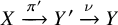 $X\xrightarrow {\pi '}Y'\xrightarrow {\nu }Y$
of
$X\xrightarrow {\pi '}Y'\xrightarrow {\nu }Y$
of $\pi \colon X\rightarrow Y$
. Since
$\pi \colon X\rightarrow Y$
. Since $\nu $
is finite,
$\nu $
is finite, $K_X+\Delta $
is
$K_X+\Delta $
is $\pi '$
-nef over a neighborhood of
$\pi '$
-nef over a neighborhood of $\nu ^{-1}W$
and
$\nu ^{-1}W$
and
 $$ \begin{align*}\nu^*\nu_*\pi^{\prime}_*\mathcal{O}_X(m(K_X+\Delta))\rightarrow\pi^{\prime}_*\mathcal{O}_X(m(K_X+\Delta)) \end{align*} $$
is surjective for any positive divisible integer m. Since $\pi ^{\prime *}$
is a right exact functor,
$\pi ^{\prime *}$
is a right exact functor,
 $$ \begin{align*} \pi^*\pi_*\mathcal{O}_X(m(K_X+\Delta))&=\pi^{\prime*}\nu^*\nu_*\pi^{\prime}_*{\mathcal{O}_X(m(K_X+\Delta))}\\ &\rightarrow\pi^{\prime*}\pi^{\prime}_*{\mathcal{O}_X(m(K_X+\Delta))} \end{align*} $$
is also surjective. Then if $K_X+\Delta $
is
$K_X+\Delta $
is $\pi '$
-semi-ample over a neighborhood of
$\pi '$
-semi-ample over a neighborhood of $\nu ^{-1}W$
, it is
$\nu ^{-1}W$
, it is $\pi $
-semi-ample over a neighborhood of W. Therefore, we can replace
$\pi $
-semi-ample over a neighborhood of W. Therefore, we can replace $\pi $
by
$\pi $
by $\pi '$
and so we may assume that
$\pi '$
and so we may assume that $\pi $
has connected fibers.
$\pi $
has connected fibers.
Step 2. Taking a relatively compact open neighborhood of W, we may assume that $\operatorname {Supp}\Delta $
has only finitely many irreducible components. Let
$\operatorname {Supp}\Delta $
has only finitely many irreducible components. Let $\llcorner \Delta \lrcorner =\sum _iC_i$
be the irreducible decomposition. Shrinking Y around W, we may assume that if
$\llcorner \Delta \lrcorner =\sum _iC_i$
be the irreducible decomposition. Shrinking Y around W, we may assume that if $C_i$
is mapped into a point in Y, then it is mapped into W. We put
$C_i$
is mapped into a point in Y, then it is mapped into W. We put
 $$ \begin{align*} A&:=\sum_{C_i\cdot(K_X+\Delta)=0\text{ and }\pi(C_i)\text{ is a point}}C_i, \text{ and}\\ B&:=\sum_{C_i\cdot(K_X+\Delta)>0\text{ or }\pi(C_i)\text{ is a curve}}C_i. \end{align*} $$
Then $\llcorner \Delta \lrcorner =A+B$
. If
$\llcorner \Delta \lrcorner =A+B$
. If $C_i$
is a component of A, then we may assume that
$C_i$
is a component of A, then we may assume that $C_i^2<0$
.
$C_i^2<0$
.
Proof of Step 2.
When $\operatorname {dim}Y=2$
, the dimension of the fibers of
$\operatorname {dim}Y=2$
, the dimension of the fibers of $\pi $
is 0 over a Zariski open subset of Y. Since
$\pi $
is 0 over a Zariski open subset of Y. Since $\pi $
has connected fibers,
$\pi $
has connected fibers, $\pi $
is bimeromorphic. Let
$\pi $
is bimeromorphic. Let $C_i$
be a component of A. It suffices to show that the pull-back
$C_i$
be a component of A. It suffices to show that the pull-back $C_i'$
of
$C_i'$
of $C_i$
to the resolution of X satisfies
$C_i$
to the resolution of X satisfies $C_i^{\prime 2}<0$
, and so we may assume that X is smooth. Then
$C_i^{\prime 2}<0$
, and so we may assume that X is smooth. Then $C_i^2<0$
by Lemma 2.11.
$C_i^2<0$
by Lemma 2.11.
When $\operatorname {dim}Y=1$
, we may assume that X is smooth as above. Then it is obvious that
$\operatorname {dim}Y=1$
, we may assume that X is smooth as above. Then it is obvious that $C_i^2\leq 0$
by Lemma 2.12. If
$C_i^2\leq 0$
by Lemma 2.12. If $C_i^2=0$
, then
$C_i^2=0$
, then $C_i$
is proportional to a pull-back of a point in Y by
$C_i$
is proportional to a pull-back of a point in Y by $\pi $
, by Lemma 2.12. Then
$\pi $
, by Lemma 2.12. Then $C_i$
is
$C_i$
is $\pi $
-semi-ample and it suffices to show that
$\pi $
-semi-ample and it suffices to show that $K_X+\Delta -C_i$
is semi-ample over a neighborhood of W. Replacing
$K_X+\Delta -C_i$
is semi-ample over a neighborhood of W. Replacing $K_X+\Delta $
by
$K_X+\Delta $
by $K_X+\Delta -C_i$
, the number of components
$K_X+\Delta -C_i$
, the number of components $C_i$
with
$C_i$
with $C_i^2=0$
decreases. Therefore, we may assume that
$C_i^2=0$
decreases. Therefore, we may assume that $C_i^2<0$
for every component
$C_i^2<0$
for every component $C_i$
.
$C_i$
.
From Step 3 to Step 5, we will check that there exists a positive integer m such that the subset
 $$ \begin{align*}T:=\operatorname{Supp}\operatorname{Coker}(\pi^*\pi_*\mathcal{O}_X(m(K_X+\Delta))\rightarrow\mathcal{O}_X(m(K_X+\Delta)))\subset X \end{align*} $$
contains no non-klt centers of $(X, \Delta )$
, after shrinking Y around W suitably.
$(X, \Delta )$
, after shrinking Y around W suitably.
Step 3. Let Q be a zero-dimensional non-klt center of $(X, \Delta )$
such that
$(X, \Delta )$
such that $Q\notin \operatorname {Supp}A$
. Then
$Q\notin \operatorname {Supp}A$
. Then $Q \notin T$
.
$Q \notin T$
.
Proof of Step 3.
Let $f\colon \widetilde {X}\rightarrow X$
be a resolution such that
$f\colon \widetilde {X}\rightarrow X$
be a resolution such that $K_{\widetilde {X}}+\Delta _{\widetilde {X}}=f^*(K_X+\Delta )$
. We may assume that
$K_{\widetilde {X}}+\Delta _{\widetilde {X}}=f^*(K_X+\Delta )$
. We may assume that
-
(1)
$f^{-1}(A)$
has simple normal crossing support, -
(2)
$\operatorname {Supp} f_*^{-1} \Delta \cup \operatorname {Exc}(f)$
is a simple normal crossing divisor on
$\widetilde {X}$
, and -
(3)
$f^{-1}(Q)$
has simple normal crossing support.




Let $W_1$
be the union of the irreducible components of
$W_1$
be the union of the irreducible components of $\Delta _{\widetilde {X}}^{=1}$
which are mapped into
$\Delta _{\widetilde {X}}^{=1}$
which are mapped into $A \cup Q$
by f. We put
$A \cup Q$
by f. We put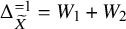 $\Delta _{\widetilde {X}}^{=1}=W_1+W_2$
. Then
$\Delta _{\widetilde {X}}^{=1}=W_1+W_2$
. Then
 $$ \begin{align*}-W_1-\llcorner\Delta_{\widetilde{X}}^{>1}\lrcorner+\ulcorner-(\Delta_{\widetilde{X}}^{<1})\urcorner-(K_{\widetilde{X}}+\{\Delta_{\widetilde{X}}\}+W_2) \sim_{\mathbb{Q}}-f^*(K_X+\Delta). \end{align*} $$
We put
 $$ \begin{align*}\mathcal{J}_1=f_* \mathcal{O}_{\widetilde{X}}(-W_1-\llcorner\Delta_{\widetilde{X}}^{>1}\lrcorner+\ulcorner-(\Delta_{\widetilde{X}}^{<1})\urcorner)\subset \mathcal{O}_X. \end{align*} $$
Then we can easily check that
 $$ \begin{align*}0 \rightarrow \mathcal{J}_1 \rightarrow \mathcal{O}_X(-A) \rightarrow \delta \rightarrow 0 \end{align*} $$
is exact, where $\delta $
is a skyscraper sheaf. We will check that the conditions in Lemma 2.14 hold. In other words, we will check that
$\delta $
is a skyscraper sheaf. We will check that the conditions in Lemma 2.14 hold. In other words, we will check that
-
•
$\mathcal {L}:=\mathcal {O}_{\widetilde {X}}(m(K_{\widetilde {X}}+\Delta _{\widetilde {X}})-W_1-\llcorner \Delta _{\widetilde {X}}^{>1}\lrcorner +\ulcorner -(\Delta _{\widetilde {X}}^{<1})\urcorner )$
is a line bundle on
$\widetilde {X}$
for some divisible positive integer m, -
•
$(\widetilde {X}, \Delta _{\widetilde {X}}-W_1-\llcorner \Delta _{\widetilde {X}}^{>1}\lrcorner +\ulcorner -(\Delta _{\widetilde {X}}^{<1})\urcorner )$
is a pair of smooth complex analytic variety and a boundary
$\mathbb {R}$
-divisor on it which has a simple normal crossing support, -
•
$f\colon \widetilde {X}\rightarrow X$
and
$\pi \colon X\rightarrow Y$
are projective, -
•
$\mathcal {L}-\mathcal {O}_{\widetilde {X}}(K_{\widetilde {X}}+\Delta _{\widetilde {X}}-W_1-\llcorner \Delta _{\widetilde {X}}^{>1}\lrcorner +\ulcorner -(\Delta _{\widetilde {X}}^{<1})\urcorner ) =\mathcal {O}_{\widetilde {X}}((m-1)(K_{\widetilde {X}}+\Delta _{\widetilde {X}}))=f^*\mathcal {O}_X((m-1)(K_X+\Delta ))$
, and -
•
$\mathcal {O}_X((m-1)(K_X+\Delta ))$
is nef and log big over Y with respect to
$f\colon (\widetilde {X}, \Delta _{\widetilde {X}}-W_1-\llcorner \Delta _{\widetilde {X}}^{>1}\lrcorner +\ulcorner -(\Delta _{\widetilde {X}}^{<1})\urcorner ) \rightarrow X$
.








We only have to show the last condition. We note that an $\mathbb {R}$
-line bundle
$\mathbb {R}$
-line bundle $\mathcal {H}$
on X is log big over Y with respect to
$\mathcal {H}$
on X is log big over Y with respect to $f\colon (\widetilde {X}, \Gamma :=\Delta _{\widetilde {X}}-W_1-\llcorner \Delta _{\widetilde {X}}^{>1}\lrcorner +\ulcorner -(\Delta _{\widetilde {X}}^{<1})\urcorner )\rightarrow X$
if
$f\colon (\widetilde {X}, \Gamma :=\Delta _{\widetilde {X}}-W_1-\llcorner \Delta _{\widetilde {X}}^{>1}\lrcorner +\ulcorner -(\Delta _{\widetilde {X}}^{<1})\urcorner )\rightarrow X$
if $\mathcal {H}$
is
$\mathcal {H}$
is $\pi $
-big and
$\pi $
-big and $\mathcal {H}|_{f(S)}$
can be written as a finite
$\mathcal {H}|_{f(S)}$
can be written as a finite $\mathbb {R}_{>0}$
-linear combination of
$\mathbb {R}_{>0}$
-linear combination of $\pi $
-big line bundles on
$\pi $
-big line bundles on $f(S)$
for every lc center S of
$f(S)$
for every lc center S of $(\widetilde {X}, \Gamma )$
. By assumption,
$(\widetilde {X}, \Gamma )$
. By assumption, $K_X+\Delta $
is
$K_X+\Delta $
is $\pi $
-big. An lc center S of
$\pi $
-big. An lc center S of $(\widetilde {X}, \Gamma )$
is zero-dimensional or a component of
$(\widetilde {X}, \Gamma )$
is zero-dimensional or a component of $W_2$
. If
$W_2$
. If $f(S)$
is a point,
$f(S)$
is a point, $(K_X+\Delta )|_{f(S)}$
is clearly
$(K_X+\Delta )|_{f(S)}$
is clearly $\pi $
-big. If
$\pi $
-big. If $f(S)$
is a curve and it is not contracted by
$f(S)$
is a curve and it is not contracted by $\pi $
, then
$\pi $
, then $\pi |_{f(S)}$
is finite. This implies that
$\pi |_{f(S)}$
is finite. This implies that $(K_X+\Delta )|_{f(S)}$
is
$(K_X+\Delta )|_{f(S)}$
is $\pi $
-big. If
$\pi $
-big. If $f(S)$
is a curve and it is contracted by
$f(S)$
is a curve and it is contracted by $\pi $
, then
$\pi $
, then $(K_X+\Delta )\cdot f(S)>0$
by the definitions of B and
$(K_X+\Delta )\cdot f(S)>0$
by the definitions of B and $\Gamma $
. This implies that
$\Gamma $
. This implies that $(K_X+\Delta )|_{f(S)}$
is
$(K_X+\Delta )|_{f(S)}$
is $\pi $
-big. Therefore,
$\pi $
-big. Therefore, $\mathcal {O}_X((m-1)(K_X+\Delta ))$
is log big over Y with respect to
$\mathcal {O}_X((m-1)(K_X+\Delta ))$
is log big over Y with respect to $f\colon (\widetilde {X}, \Gamma )\rightarrow X$
. Then we can apply Lemma 2.14 and we have
$f\colon (\widetilde {X}, \Gamma )\rightarrow X$
. Then we can apply Lemma 2.14 and we have
 $$ \begin{align*}\mathcal{R}^p\pi_*(\mathcal{O}_X(m(K_X+\Delta)) \otimes \mathcal{J}_1)=0 \end{align*} $$
for every $p>0$
by Lemma 2.14, where m is some divisible positive integer. This implies that
$p>0$
by Lemma 2.14, where m is some divisible positive integer. This implies that $\pi _*\mathcal {O}_X(m(K_X+\Delta )) \rightarrow \pi _*(\mathcal {O}_X(m(K_X+\Delta ))\otimes \mathcal {O}_X/\mathcal {J}_1) $
is surjective. We consider the commutative diagram
$\pi _*\mathcal {O}_X(m(K_X+\Delta )) \rightarrow \pi _*(\mathcal {O}_X(m(K_X+\Delta ))\otimes \mathcal {O}_X/\mathcal {J}_1) $
is surjective. We consider the commutative diagram

We note that $\pi ^*\pi _*\mathcal {O}_X(m(K_X+\Delta )) \rightarrow \pi ^*\pi _*(\mathcal {O}_X(m(K_X+\Delta ))\otimes \mathcal {O}_X/\mathcal {J}_1) $
is surjective because
$\pi ^*\pi _*\mathcal {O}_X(m(K_X+\Delta )) \rightarrow \pi ^*\pi _*(\mathcal {O}_X(m(K_X+\Delta ))\otimes \mathcal {O}_X/\mathcal {J}_1) $
is surjective because $\pi ^*$
is a right exact functor. By the definition of
$\pi ^*$
is a right exact functor. By the definition of $\mathcal {J}_1$
, the point Q is isolated in
$\mathcal {J}_1$
, the point Q is isolated in $\operatorname {Supp}(\mathcal {O}_X/\mathcal {J}_1)$
. Then
$\operatorname {Supp}(\mathcal {O}_X/\mathcal {J}_1)$
. Then $\pi ^*\pi _* (\mathcal {O}_X(m(K_X+\Delta ))\otimes \mathcal {O}_X/\mathcal {J}_1) \rightarrow (\mathcal {O}_X(m(K_X+\Delta ))\otimes \mathcal {O}_X/\mathcal {J}_1)$
is surjective at Q. Therefore,
$\pi ^*\pi _* (\mathcal {O}_X(m(K_X+\Delta ))\otimes \mathcal {O}_X/\mathcal {J}_1) \rightarrow (\mathcal {O}_X(m(K_X+\Delta ))\otimes \mathcal {O}_X/\mathcal {J}_1)$
is surjective at Q. Therefore, $Q\notin T$
.
$Q\notin T$
.
Step 4. $T\cap A= \emptyset $
.
$T\cap A= \emptyset $
.
Proof of Step 4.
Let $A=\sum _jA_j$
be the connected decomposition. Now,
$A=\sum _jA_j$
be the connected decomposition. Now, $\pi (A_j)=P$
for each j. Let
$\pi (A_j)=P$
for each j. Let $C_i$
be an irreducible component of
$C_i$
be an irreducible component of $A_j$
. Then
$A_j$
. Then $[C_i]\in N_1(X/Y; W)$
generates an extremal ray of
$[C_i]\in N_1(X/Y; W)$
generates an extremal ray of $\overline {\text {NE}}(X/Y; W)$
because
$\overline {\text {NE}}(X/Y; W)$
because $C_i^2<0$
. By assumption,
$C_i^2<0$
. By assumption, $C_i$
and
$C_i$
and $\Delta $
are
$\Delta $
are $\mathbb {Q}$
-Cartier. If
$\mathbb {Q}$
-Cartier. If $A_j$
is reducible, or it is not isolated in
$A_j$
is reducible, or it is not isolated in $\operatorname {Supp}\Delta $
, then
$\operatorname {Supp}\Delta $
, then $C_i\cdot (\Delta -C_i)>0$
. So,
$C_i\cdot (\Delta -C_i)>0$
. So,
 $$ \begin{align*}C_i\cdot(K_X+C_i)<C_i\cdot(K_X+\Delta)=0. \end{align*} $$
We note that $\rho (X/Y; W)<\infty $
(cf. Nakayama’s finiteness, [Reference Fujino5, Theorem 4.7]). By Lemma 3.1, after shrinking Y around W, there exists a contraction morphism
$\rho (X/Y; W)<\infty $
(cf. Nakayama’s finiteness, [Reference Fujino5, Theorem 4.7]). By Lemma 3.1, after shrinking Y around W, there exists a contraction morphism $\varphi _{C_i}\colon X\rightarrow X'$
over Y. Let
$\varphi _{C_i}\colon X\rightarrow X'$
over Y. Let $\pi '\colon X'\rightarrow Y$
be the induced morphism and
$\pi '\colon X'\rightarrow Y$
be the induced morphism and $\Delta '={\varphi _{C_i}}_*\Delta $
. Since
$\Delta '={\varphi _{C_i}}_*\Delta $
. Since $(X, Y, W, \pi , \Delta )$
satisfies the condition (
$(X, Y, W, \pi , \Delta )$
satisfies the condition ( $\bigstar $
), so does
$\bigstar $
), so does $(X', Y, W, \pi ', \Delta ')$
by Lemma 3.4. Moreover,
$(X', Y, W, \pi ', \Delta ')$
by Lemma 3.4. Moreover, $K_{X'}$
is
$K_{X'}$
is $\mathbb {Q}$
-Cartier and every prime divisor on
$\mathbb {Q}$
-Cartier and every prime divisor on $X'$
which is mapped into W is
$X'$
which is mapped into W is $\mathbb {Q}$
-Cartier by Lemma 3.4.
$\mathbb {Q}$
-Cartier by Lemma 3.4.
We will check that we can replace $(X, Y, W, \pi , \Delta )$
by
$(X, Y, W, \pi , \Delta )$
by $(X', Y, W, \pi ', \Delta ')$
in order to prove that
$(X', Y, W, \pi ', \Delta ')$
in order to prove that $T\cap A= \emptyset $
. Since
$T\cap A= \emptyset $
. Since $K_X+\Delta $
is
$K_X+\Delta $
is $\varphi _{C_i}$
-trivial, we have
$\varphi _{C_i}$
-trivial, we have $K_X+\Delta =\varphi _{C_i}^*(K_{X'}+\Delta ')$
. Then
$K_X+\Delta =\varphi _{C_i}^*(K_{X'}+\Delta ')$
. Then $K_{X'}+\Delta '$
is nef over Y. Let
$K_{X'}+\Delta '$
is nef over Y. Let
 $$ \begin{align*}T'=\operatorname{Supp}\operatorname{Coker}(\pi^{\prime*}\pi^{\prime}_*\mathcal{O}_{X'}(m(K_{X'}+\Delta'))\rightarrow\mathcal{O}_{X'}(m(K_{X'}+\Delta')))\subset X'. \end{align*} $$
Then, on $X'-T'$
, we have the exact sequence
$X'-T'$
, we have the exact sequence
 $$ \begin{align*}\pi^{\prime*}\pi^{\prime}_*\mathcal{O}_{X'}(m(K_{X'}+\Delta'))\rightarrow\mathcal{O}_{X'}(m(K_{X'}+\Delta'))\rightarrow0. \end{align*} $$
Taking pull-back by $\varphi _{C_i}\colon X\rightarrow X'$
, on
$\varphi _{C_i}\colon X\rightarrow X'$
, on $\varphi _{C_i}^{-1}(X'-T')=X-\varphi _{C_i}^{-1}T'$
, we have the exact sequence
$\varphi _{C_i}^{-1}(X'-T')=X-\varphi _{C_i}^{-1}T'$
, we have the exact sequence
 $$ \begin{align*}\varphi_{C_i}^*\pi^{\prime*}\pi^{\prime}_*\mathcal{O}_{X'}(m(K_{X'}+\Delta'))\rightarrow\varphi_{C_i}^*\mathcal{O}_{X'}(m(K_{X'}+\Delta'))\rightarrow0. \end{align*} $$
Since ${\varphi _{C_i}}_*\varphi _{C_i}^*\mathcal {O}_{X'}(m(K_{X'}+\Delta '))=\mathcal {O}_{X'}(m(K_{X'}+\Delta '))$
, on
${\varphi _{C_i}}_*\varphi _{C_i}^*\mathcal {O}_{X'}(m(K_{X'}+\Delta '))=\mathcal {O}_{X'}(m(K_{X'}+\Delta '))$
, on $X-\varphi _{C_i}^{-1}T'$
, we have the exact sequence
$X-\varphi _{C_i}^{-1}T'$
, we have the exact sequence
 $$ \begin{align*}\varphi_{C_i}^*\pi^{\prime*}\pi^{\prime}_*{\varphi_{C_i}}_*\varphi_{C_i}^*\mathcal{O}_{X'}(m(K_{X'}+\Delta'))\rightarrow\varphi_{C_i}^*\mathcal{O}_{X'}(m(K_{X'}+\Delta'))\rightarrow0. \end{align*} $$
Then, on $X-\varphi _{C_i}^{-1}T'$
, we have the exact sequence
$X-\varphi _{C_i}^{-1}T'$
, we have the exact sequence
 $$ \begin{align*}\pi^*\pi_*\mathcal{O}_X(m(K_X+\Delta))\rightarrow\mathcal{O}_X(m(K_X+\Delta))\rightarrow0. \end{align*} $$
Then $T\subset \varphi _{C_i}^{-1}T'$
. This implies that we can replace
$T\subset \varphi _{C_i}^{-1}T'$
. This implies that we can replace $(X, Y, W, \pi , \Delta )$
by
$(X, Y, W, \pi , \Delta )$
by $(X', Y, W, \pi ', \Delta ')$
in order to prove that
$(X', Y, W, \pi ', \Delta ')$
in order to prove that $T\cap A= \emptyset $
.
$T\cap A= \emptyset $
.
We put
 $$ \begin{align*} A^\sharp&:=\sum_{A_j \cap (\operatorname{Supp}\Delta-A_j)=\emptyset}A_j, \text{ and}\\ A^\flat&:=\sum_{A_j \cap (\operatorname{Supp}\Delta-A_j)\neq\emptyset}A_j. \end{align*} $$
Therefore, by replacing X with its contraction repeatedly as far as possible, we may assume that $A_j$
is an irreducible and isolated curve in
$A_j$
is an irreducible and isolated curve in $\operatorname {Supp}\Delta $
when
$\operatorname {Supp}\Delta $
when $A_j\subset A^\sharp $
. Moreover, by replacing X with its contraction,
$A_j\subset A^\sharp $
. Moreover, by replacing X with its contraction, $A_j$
is contracted to a point Q in
$A_j$
is contracted to a point Q in $\operatorname {Supp}\Delta $
when
$\operatorname {Supp}\Delta $
when $A_j\subset A^\flat $
. This point Q is a zero-dimensional non-klt center of
$A_j\subset A^\flat $
. This point Q is a zero-dimensional non-klt center of $(X, \Delta )$
such that
$(X, \Delta )$
such that $Q\notin A$
and it satisfies
$Q\notin A$
and it satisfies $Q \notin T$
by Step 3. Then we could assume that
$Q \notin T$
by Step 3. Then we could assume that $A=A^\sharp $
and each
$A=A^\sharp $
and each $A_j$
is irreducible from the beginning of the proof of Step 4.
$A_j$
is irreducible from the beginning of the proof of Step 4.
We note that since $A_j$
is contracted by a projective morphism, we can treat
$A_j$
is contracted by a projective morphism, we can treat $A_j$
as an algebraic curve by Serre’s GAGA principle. Pick a positive integer m such that
$A_j$
as an algebraic curve by Serre’s GAGA principle. Pick a positive integer m such that $m(K_X+\Delta )$
is Cartier. If
$m(K_X+\Delta )$
is Cartier. If $A_j$
is
$A_j$
is $\mathbb {P}^1$
, then
$\mathbb {P}^1$
, then $\mathcal {O}_{A_j}(m(K_X+\Delta )) \cong \mathcal {O}_{A_j}$
because
$\mathcal {O}_{A_j}(m(K_X+\Delta )) \cong \mathcal {O}_{A_j}$
because $A_j \cdot \left (K_X+\Delta \right )=0$
and a line bundle on
$A_j \cdot \left (K_X+\Delta \right )=0$
and a line bundle on $\mathbb {P}^1$
is trivial if and only if it has degree zero. If
$\mathbb {P}^1$
is trivial if and only if it has degree zero. If $A_j \ncong \mathbb {P}^1$
, then we obtain
$A_j \ncong \mathbb {P}^1$
, then we obtain $h^1(A_j, \mathcal {O}_{A_j})=p_a(A_j) \neq 0$
. Since
$h^1(A_j, \mathcal {O}_{A_j})=p_a(A_j) \neq 0$
. Since $A_j$
is projective, it has the dualizing sheaf
$A_j$
is projective, it has the dualizing sheaf $\omega _{A_j}$
. By Serre duality, we obtain
$\omega _{A_j}$
. By Serre duality, we obtain $H^0(A_j, \omega _{A_j}) \neq 0$
. We note that
$H^0(A_j, \omega _{A_j}) \neq 0$
. We note that
 $$ \begin{align*}0 \rightarrow \mathcal{T} \rightarrow \mathcal{O}_X\left(K_X+A_j\right) \otimes \mathcal{O}_{A_j} \rightarrow \omega_{A_j} \rightarrow 0 \end{align*} $$
is exact, where the support of $\mathcal {T}$
is of dimension zero by Lemma 4.1. Now, we have the exact sequence
$\mathcal {T}$
is of dimension zero by Lemma 4.1. Now, we have the exact sequence
 $$ \begin{align*}H^0(A_j, \mathcal{O}_X(K_X+A_j) \otimes \mathcal{O}_{A_j})\rightarrow H^0(A_j, \omega_{A_j})\rightarrow H^1(A_j, \mathcal{T})=0. \end{align*} $$
Since $H^0(A_j, \omega _{A_j})\neq 0$
,
$H^0(A_j, \omega _{A_j})\neq 0$
, $H^0(A_j, \mathcal {O}_X(K_X+A_j) \otimes \mathcal {O}_{A_j})\neq 0$
. Furthermore, as
$H^0(A_j, \mathcal {O}_X(K_X+A_j) \otimes \mathcal {O}_{A_j})\neq 0$
. Furthermore, as $A_j$
is isolated,
$A_j$
is isolated,
 $$ \begin{align*}H^0(A_j, \mathcal{O}_X(K_X+\Delta) \otimes \mathcal{O}_{A_j})=H^0(A_j, \mathcal{O}_X(K_X+A_j) \otimes \mathcal{O}_{A_j}). \end{align*} $$
Then we see that $\mathcal {O}_{A_j}(m(K_X+\Delta ))\cong \mathcal {O}_{A_j}$
because
$\mathcal {O}_{A_j}(m(K_X+\Delta ))\cong \mathcal {O}_{A_j}$
because $A_j \cdot \left (K_X+\Delta \right )=0$
. Therefore, we obtain
$A_j \cdot \left (K_X+\Delta \right )=0$
. Therefore, we obtain $\mathcal {O}_{A}(m(K_X+\Delta )) \cong \mathcal {O}_{A}$
.
$\mathcal {O}_{A}(m(K_X+\Delta )) \cong \mathcal {O}_{A}$
.
Let $f\colon \widetilde {X}\rightarrow X$
be a resolution such that
$f\colon \widetilde {X}\rightarrow X$
be a resolution such that $K_{\widetilde {X}}+\Delta _{\widetilde {X}}=f^*(K_X+\Delta )$
. We may assume that
$K_{\widetilde {X}}+\Delta _{\widetilde {X}}=f^*(K_X+\Delta )$
. We may assume that
-
(1)
$f^{-1}(A)$
has simple normal crossing support, and -
(2)
$\operatorname {Supp} f_*^{-1} \Delta \cup \operatorname {Exc}(f)$
is a simple normal crossing divisor on Y.


Let $W_3$
be the union of the irreducible components of
$W_3$
be the union of the irreducible components of $\Delta _{\widetilde {X}}^{=1}$
which are mapped into A by f. We write
$\Delta _{\widetilde {X}}^{=1}$
which are mapped into A by f. We write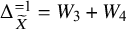 $\Delta _{\widetilde {X}}^{=1}=W_3+W_4$
. Then
$\Delta _{\widetilde {X}}^{=1}=W_3+W_4$
. Then
 $$ \begin{align*}-W_3-\llcorner\Delta_{\widetilde{X}}^{>1}\lrcorner+\ulcorner-(\Delta_{\widetilde{X}}^{<1})\urcorner-(K_{\widetilde{X}}+\{\Delta_{\widetilde{X}}\}+W_4) \sim_{\mathbb{Q}}-f^*(K_X+\Delta). \end{align*} $$
We put
 $$ \begin{align*}\mathcal{J}_2=f_*\mathcal{O}_{\widetilde{X}}(-W_3-\llcorner\Delta_{\widetilde{X}}^{>1}\lrcorner+\ulcorner-(\Delta_{\widetilde{X}}^{<1})\urcorner) \subset \mathcal{O}_X. \end{align*} $$
Then we can easily check that
 $$ \begin{align*}0 \rightarrow \mathcal{J}_2 \rightarrow \mathcal{O}_X(-A) \rightarrow \delta \rightarrow 0 \end{align*} $$
is exact, where $\delta $
is a skyscraper sheaf. As in the proof of Step 3, we have
$\delta $
is a skyscraper sheaf. As in the proof of Step 3, we have
 $$ \begin{align*}\mathcal{R}^p\pi_*(\mathcal{O}_X(m(K_X+\Delta)) \otimes \mathcal{J}_2)=0 \end{align*} $$
for every $p>0$
, where m is some divisible positive integer. By the above exact sequence, we obtain
$p>0$
, where m is some divisible positive integer. By the above exact sequence, we obtain
 $$ \begin{align*}\mathcal{R}^p\pi_*(\mathcal{O}_X(m(K_X+\Delta)) \otimes \mathcal{O}_X(-A))=0 \end{align*} $$
for every $p>0$
. Then
$p>0$
. Then $\pi _*\mathcal {O}_X(m(K_X+\Delta )) \rightarrow \pi _*\mathcal {O}_A(m(K_X+\Delta )) $
is surjective. We consider the commutative diagram
$\pi _*\mathcal {O}_X(m(K_X+\Delta )) \rightarrow \pi _*\mathcal {O}_A(m(K_X+\Delta )) $
is surjective. We consider the commutative diagram

We note that $\pi ^*\pi _*\mathcal {O}_X(m(K_X+\Delta )) \rightarrow \pi ^*\pi _*\mathcal {O}_A(m(K_X+\Delta )) $
is surjective because
$\pi ^*\pi _*\mathcal {O}_X(m(K_X+\Delta )) \rightarrow \pi ^*\pi _*\mathcal {O}_A(m(K_X+\Delta )) $
is surjective because $\pi ^*$
is a right exact functor, and
$\pi ^*$
is a right exact functor, and $\pi ^*\pi _*\mathcal {O}_A(m(K_X+\Delta )) \rightarrow \mathcal {O}_A(m(K_X+\Delta ))$
is surjective because
$\pi ^*\pi _*\mathcal {O}_A(m(K_X+\Delta )) \rightarrow \mathcal {O}_A(m(K_X+\Delta ))$
is surjective because $\mathcal {O}_A(m(K_X+\Delta )) \simeq \mathcal {O}_A$
. Therefore, we have
$\mathcal {O}_A(m(K_X+\Delta )) \simeq \mathcal {O}_A$
. Therefore, we have $T\cap A=\emptyset $
Step 5. Let $E_i$
be an irreducible component of B. Then
$E_i$
be an irreducible component of B. Then $E_i \not \subset T$
.
$E_i \not \subset T$
.
Proof of Step 5.
We may assume that $E_i \cap A=\emptyset $
by Step 4. When
$E_i \cap A=\emptyset $
by Step 4. When $\pi (E_i)$
is a point,
$\pi (E_i)$
is a point, $E_i\cdot (K_X+\Delta )>0$
and so
$E_i\cdot (K_X+\Delta )>0$
and so $\mathcal {O}_{E_i}(m(K_X+\Delta ))$
is ample. Then
$\mathcal {O}_{E_i}(m(K_X+\Delta ))$
is ample. Then $\pi ^*\pi _*\mathcal {O}_{E_i}(m(K_X+\Delta ))\rightarrow \mathcal {O}_{E_i}(m(K_X+\Delta ))$
is surjective. When
$\pi ^*\pi _*\mathcal {O}_{E_i}(m(K_X+\Delta ))\rightarrow \mathcal {O}_{E_i}(m(K_X+\Delta ))$
is surjective. When $\pi (E_i)$
is a curve,
$\pi (E_i)$
is a curve, $\pi |_{E_i}$
is a finite morphism. Then
$\pi |_{E_i}$
is a finite morphism. Then $\pi ^*\pi _*\mathcal {O}_{E_i}(m(K_X+\Delta ))\rightarrow \mathcal {O}_{E_i}(m(K_X+\Delta ))$
is surjective.
$\pi ^*\pi _*\mathcal {O}_{E_i}(m(K_X+\Delta ))\rightarrow \mathcal {O}_{E_i}(m(K_X+\Delta ))$
is surjective.
Let $f\colon \widetilde {X}\rightarrow X$
be the resolution as in the proof of Step 4. We can further assume that (4)
$f\colon \widetilde {X}\rightarrow X$
be the resolution as in the proof of Step 4. We can further assume that (4) $f^{-1}\left (E_i\right )$
has simple normal crossing support. Let
$f^{-1}\left (E_i\right )$
has simple normal crossing support. Let $W_5$
be the union of the irreducible components of
$W_5$
be the union of the irreducible components of $\Delta _{\widetilde {X}}^{=1}$
which are mapped into
$\Delta _{\widetilde {X}}^{=1}$
which are mapped into $A \amalg E_i$
by f. We put
$A \amalg E_i$
by f. We put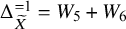 $\Delta _{\widetilde {X}}^{=1}=W_5+W_6$
. Then
$\Delta _{\widetilde {X}}^{=1}=W_5+W_6$
. Then
 $$ \begin{align*}-W_5-\llcorner\Delta_{\widetilde{X}}^{>1}\lrcorner+\ulcorner-(\Delta_{\widetilde{X}}^{<1})\urcorner-(K_{\widetilde{X}}+\{\Delta_{\widetilde{X}}\}+W_6) \sim_{\mathbb{Q}}-f^*(K_X+\Delta). \end{align*} $$
We put
 $$ \begin{align*}\mathcal{J}_3=f_* \mathcal{O}_{\widetilde{X}}(-W_5-\llcorner\Delta_{\widetilde{X}}^{>1}\lrcorner+\ulcorner-(\Delta_{\widetilde{X}}^{<1})\urcorner) \subset \mathcal{O}_X. \end{align*} $$
Then, as in the proof of Step 3, we have
 $$ \begin{align*}R^p\pi_*(\mathcal{O}_X(m(K_X+\Delta)) \otimes \mathcal{J}_3)=0 \end{align*} $$
for every $p>0$
by Lemma 2.14, where m is some divisible positive integer. We note that there exists a short exact sequence
$p>0$
by Lemma 2.14, where m is some divisible positive integer. We note that there exists a short exact sequence
 $$ \begin{align*}0 \rightarrow \mathcal{J}_3 \rightarrow \mathcal{O}_X\left(-A-E_i\right) \rightarrow \delta^{\prime} \rightarrow 0, \end{align*} $$
where $\delta ^{\prime }$
is a skyscraper sheaf on X. Thus,
$\delta ^{\prime }$
is a skyscraper sheaf on X. Thus,
 $$ \begin{align*}R^p\pi_*(\mathcal{O}_X(m(K_X+\Delta)) \otimes \mathcal{O}_X(-A-E_i))=0 \end{align*} $$
for every $p>0$
. This implies that
$p>0$
. This implies that
 $$ \begin{align*}\pi_*\mathcal{O}_X(m(K_X+\Delta)) \rightarrow \pi_*\mathcal{O}_{E_i}(m(K_X+\Delta)) \end{align*} $$
is surjective since $\operatorname {Supp} E_i \cap \operatorname {Supp} A=\emptyset $
. Therefore,
$\operatorname {Supp} E_i \cap \operatorname {Supp} A=\emptyset $
. Therefore, $E_i \not \subset T$
for every irreducible component
$E_i \not \subset T$
for every irreducible component $E_i$
of B.
$E_i$
of B.
We have checked that T contains no non-klt centers of $(X, \Delta )$
, after shrinking Y around W suitably. In fact, it contains no non-klt centers which are components of
$(X, \Delta )$
, after shrinking Y around W suitably. In fact, it contains no non-klt centers which are components of $\llcorner \Delta \lrcorner $
by Steps 4 and 5, and it contains no non-klt centers of dimension zero by Steps 3 and 4.
$\llcorner \Delta \lrcorner $
by Steps 4 and 5, and it contains no non-klt centers of dimension zero by Steps 3 and 4.
Finally, we will prove that $K_X+\Delta $
is semi-ample over a neighborhood of W.
$K_X+\Delta $
is semi-ample over a neighborhood of W.
Step 6. If $T\cap \pi ^{-1}(P)=\emptyset $
, then there is nothing to prove because
$T\cap \pi ^{-1}(P)=\emptyset $
, then there is nothing to prove because $T=\emptyset $
over a neighborhood of W. So, we assume that
$T=\emptyset $
over a neighborhood of W. So, we assume that $T\cap \pi ^{-1}(P)\neq \emptyset $
.
$T\cap \pi ^{-1}(P)\neq \emptyset $
.
Since $W=\{P\}$
, we only have to prove the result in the case where Y is a Stein space. In this case, we have
$W=\{P\}$
, we only have to prove the result in the case where Y is a Stein space. In this case, we have
 $$ \begin{align*} T&:=\operatorname{Supp}\operatorname{Coker}(\pi^*\pi_*\mathcal{O}_X(m(K_X+\Delta))\rightarrow\mathcal{O}_X(m(K_X+\Delta)))\\ &=\bigcap_{m(K_X+\Delta)\sim E\geq0}\operatorname{Supp}E \end{align*} $$
set-theoretically by [Reference Enokizono and Hashizume3, Lemma 2.7]. By the argument from Step 3 to Step 5, after shrinking Y around W suitably, T is an analytic subset of X and contains no non-klt centers of $(X,\Delta )$
. We take general members
$(X,\Delta )$
. We take general members $\Xi _1, \Xi _2, \Xi _3 \in \{E\geq 0|m(K_X+\Delta )\sim E\}$
and put
$\Xi _1, \Xi _2, \Xi _3 \in \{E\geq 0|m(K_X+\Delta )\sim E\}$
and put $\Theta =\Xi _1+\Xi _2+\Xi _3$
. Then
$\Theta =\Xi _1+\Xi _2+\Xi _3$
. Then $\Theta $
contains no non-klt centers of
$\Theta $
contains no non-klt centers of $(X, \Delta )$
and
$(X, \Delta )$
and $K_X+\Delta +\Theta $
is not log canonical at
$K_X+\Delta +\Theta $
is not log canonical at $\operatorname {Supp}\Xi _1\cap \operatorname {Supp}\Xi _2\cap \operatorname {Supp}\Xi _3$
by [Reference Fujino6, Lemma 2.1.3]. Since
$\operatorname {Supp}\Xi _1\cap \operatorname {Supp}\Xi _2\cap \operatorname {Supp}\Xi _3$
by [Reference Fujino6, Lemma 2.1.3]. Since $T\cap \pi ^{-1}(P)\neq \emptyset $
,
$T\cap \pi ^{-1}(P)\neq \emptyset $
, $K_X+\Delta +\Theta $
is not log canonical at
$K_X+\Delta +\Theta $
is not log canonical at $\pi ^{-1}(P)$
. We put
$\pi ^{-1}(P)$
. We put
 $$ \begin{align*}c=\max \{t\in\mathbb{R}|K_X+\Delta+t\Theta \text { is log canonical at } \pi^{-1}(P)\backslash\operatorname{Nlc}(X, \Delta)\}. \end{align*} $$
Then we can easily check that $c\in \mathbb {Q}$
and
$c\in \mathbb {Q}$
and $0<c<1$
. In this case,
$0<c<1$
. In this case,
 $$ \begin{align*}K_X+\Delta+c\Theta \sim_{\mathbb{Q}}(1+c m)\left(K_X+\Delta\right) \end{align*} $$
and there exists an lc center $\mathcal {C}$
of
$\mathcal {C}$
of $(X, \Delta +c \Theta )$
which is contained in
$(X, \Delta +c \Theta )$
which is contained in $\cap _{m(K_X+\Delta )\sim E\geq 0}\operatorname {Supp}E$
, and satisfies
$\cap _{m(K_X+\Delta )\sim E\geq 0}\operatorname {Supp}E$
, and satisfies $\mathcal {C}\cap \pi ^{-1}(P)\neq \emptyset $
. We take positive integers l and n such that
$\mathcal {C}\cap \pi ^{-1}(P)\neq \emptyset $
. We take positive integers l and n such that
 $$ \begin{align*}l(K_X+\Delta+c\Theta) \sim n m(K_X+\Delta) \end{align*} $$
Replace $m(K_X+\Delta )$
with
$m(K_X+\Delta )$
with $l(K_X+\Delta +c\Theta )$
and apply the previous arguments. Then, after shrinking Y around W,
$l(K_X+\Delta +c\Theta )$
and apply the previous arguments. Then, after shrinking Y around W, $\cap _{kl(K_X+\Delta +c\Theta )\sim E\geq 0}\operatorname {Supp}E$
contains no non-klt centers of
$\cap _{kl(K_X+\Delta +c\Theta )\sim E\geq 0}\operatorname {Supp}E$
contains no non-klt centers of $(X, \Delta +c\Theta )$
for some positive integer k. Since
$(X, \Delta +c\Theta )$
for some positive integer k. Since $\mathcal {C}\cap \pi ^{-1}(P)\neq \emptyset $
,
$\mathcal {C}\cap \pi ^{-1}(P)\neq \emptyset $
, $\mathcal {C}$
is still a non-empty subset of X. We obtain
$\mathcal {C}$
is still a non-empty subset of X. We obtain $\mathcal {C}\not \subset \cap _{kl(K_X+\Delta +c\Theta )\sim E\geq 0}\operatorname {Supp}E$
. Therefore,
$\mathcal {C}\not \subset \cap _{kl(K_X+\Delta +c\Theta )\sim E\geq 0}\operatorname {Supp}E$
. Therefore,
 $$ \begin{align*}\bigcap_{knm(K_X+\Delta)\sim E\geq0}\operatorname{Supp}E \subsetneq \bigcap_{m(K_X+\Delta)\sim E\geq0}\operatorname{Supp}E. \end{align*} $$
This is because there is an lc center $\mathcal {C}$
of
$\mathcal {C}$
of $(X, \Delta +c \Theta )$
such that
$(X, \Delta +c \Theta )$
such that $\mathcal {C} \subset \cap _{m(K_X+\Delta )\sim E\geq 0}\operatorname {Supp}E$
, and
$\mathcal {C} \subset \cap _{m(K_X+\Delta )\sim E\geq 0}\operatorname {Supp}E$
, and $l(K_X+\Delta +c\Theta )\sim nm(K_X+\Delta )$
. By noetherian induction, we deduce that
$l(K_X+\Delta +c\Theta )\sim nm(K_X+\Delta )$
. By noetherian induction, we deduce that $K_X+\Delta $
is semi-ample over a neighborhood of W.
$K_X+\Delta $
is semi-ample over a neighborhood of W.
The proof of Theorem 4.2 is finished.
Corollary 4.4 (Abundance for
$\mathbb {Q}$
-divisors, see [Reference Fujino4, Theorem 7.2])

Assume that $(X, Y, W, \pi , \Delta )$
satisfies the condition (
$(X, Y, W, \pi , \Delta )$
satisfies the condition ( $\bigstar $
),
$\bigstar $
), $\Delta $
is a
$\Delta $
is a $\mathbb {Q}$
-divisor, and that one of Cases (A)-(D) holds. If
$\mathbb {Q}$
-divisor, and that one of Cases (A)-(D) holds. If $K_X+\Delta $
is nef over W, then it is semi-ample over a neighborhood of W.
$K_X+\Delta $
is nef over W, then it is semi-ample over a neighborhood of W.
Proof. In Case (C), we replace X with its minimal resolution. In Case (D), any divisor on an open subset of X is $\mathbb {Q}$
-Cartier (cf. [Reference Ishii10, Theorem 7.3.2]). So, in these two cases, we may always assume that X is
$\mathbb {Q}$
-Cartier (cf. [Reference Ishii10, Theorem 7.3.2]). So, in these two cases, we may always assume that X is $\mathbb {Q}$
-factorial over W. So, we only consider Case (A) and Case (B). In Case (B), every prime divisor on X which is mapped into W is
$\mathbb {Q}$
-factorial over W. So, we only consider Case (A) and Case (B). In Case (B), every prime divisor on X which is mapped into W is $\mathbb {Q}$
-Cartier and, shrinking Y around W,
$\mathbb {Q}$
-Cartier and, shrinking Y around W, $\Delta $
is
$\Delta $
is $\mathbb {Q}$
-Cartier. By assumption of (
$\mathbb {Q}$
-Cartier. By assumption of ( $\bigstar $
),
$\bigstar $
), $K_X$
is also
$K_X$
is also $\mathbb {Q}$
-Cartier. So, we only consider Case (A). In this case, for any point
$\mathbb {Q}$
-Cartier. So, we only consider Case (A). In this case, for any point $P\in W$
, every prime divisor on X which is included in
$P\in W$
, every prime divisor on X which is included in $\pi ^{-1}(P)$
is
$\pi ^{-1}(P)$
is $\mathbb {Q}$
-Cartier.
$\mathbb {Q}$
-Cartier.
As in the proof of Theorem 4.2, we may assume that $K_X+\Delta $
is nef over Y. When
$K_X+\Delta $
is nef over Y. When $\dim Y=0$
, the statement is obvious by Serre’s GAGA principle and [Reference Fujino4, Theorem 7.2]. Then we may also assume that
$\dim Y=0$
, the statement is obvious by Serre’s GAGA principle and [Reference Fujino4, Theorem 7.2]. Then we may also assume that $\dim Y>0$
. If
$\dim Y>0$
. If $\dim Y$
=2, then
$\dim Y$
=2, then $K_X+\Delta $
is always
$K_X+\Delta $
is always $\pi $
-big. In order to prove that
$\pi $
-big. In order to prove that $K_X+\Delta $
is semi-ample over a neighborhood of W, we can replace W with P and Y with a Stein open neighborhood of P. Then by Theorem 4.2,
$K_X+\Delta $
is semi-ample over a neighborhood of W, we can replace W with P and Y with a Stein open neighborhood of P. Then by Theorem 4.2, $K_X+\Delta $
is semi-ample over a neighborhood of W. If
$K_X+\Delta $
is semi-ample over a neighborhood of W. If $\operatorname {dim}Y$
=1 and
$\operatorname {dim}Y$
=1 and $K_X+\Delta $
is
$K_X+\Delta $
is $\pi $
-big, by Theorem 4.2,
$\pi $
-big, by Theorem 4.2, $K_X+\Delta $
is semi-ample over a neighborhood of W. We may assume that
$K_X+\Delta $
is semi-ample over a neighborhood of W. We may assume that $\dim Y$
=1 and
$\dim Y$
=1 and $K_X+\Delta $
is not
$K_X+\Delta $
is not $\pi $
-big. Taking the Stein factorization of
$\pi $
-big. Taking the Stein factorization of $\pi \colon X\rightarrow Y$
, we may assume that Y is smooth and that
$\pi \colon X\rightarrow Y$
, we may assume that Y is smooth and that $\pi $
has connected fibers.
$\pi $
has connected fibers.
Let $y \in Y$
be any point,
$y \in Y$
be any point, $X_y$
the fiber of
$X_y$
the fiber of $\pi \colon X\rightarrow Y$
over y. Sard’s theorem implies that
$\pi \colon X\rightarrow Y$
over y. Sard’s theorem implies that $X_y$
is smooth for an analytically sufficiently general fiber
$X_y$
is smooth for an analytically sufficiently general fiber $X_y$
(cf. [Reference Ueno16, Corollary 1.8]). Since
$X_y$
(cf. [Reference Ueno16, Corollary 1.8]). Since $X_y$
is connected for each point
$X_y$
is connected for each point $y \in Y$
,
$y \in Y$
, $X_y$
is a smooth irreducible curve for an analytically sufficiently general fiber
$X_y$
is a smooth irreducible curve for an analytically sufficiently general fiber $X_y$
. Replacing Y with a relatively compact open neighborhood of W, we may assume that
$X_y$
. Replacing Y with a relatively compact open neighborhood of W, we may assume that $\Delta $
has only finitely many irreducible components. Then
$\Delta $
has only finitely many irreducible components. Then $X_y$
and
$X_y$
and $\Delta $
have no common components for an analytically sufficiently general fiber
$\Delta $
have no common components for an analytically sufficiently general fiber $X_y$
.
$X_y$
.
Then $(K_X+\Delta )|_{X_y}=K_{X_y}+\Delta |_{X_y}$
. Let
$(K_X+\Delta )|_{X_y}=K_{X_y}+\Delta |_{X_y}$
. Let $\Delta _{X_y}=\Delta |_{X_y}$
. Then
$\Delta _{X_y}=\Delta |_{X_y}$
. Then $\Delta _{X_y}\geq 0$
by assumption. Since
$\Delta _{X_y}\geq 0$
by assumption. Since $X_y$
is a smooth irreducible curve,
$X_y$
is a smooth irreducible curve,
 $$ \begin{align*} &h^0(X_y, \mathcal{O}_X(m(K_X+\Delta))|_{X_y})-h^1(X_y, \mathcal{O}_X(m(K_X+\Delta))|_{X_y})\\ &\quad =h^0(X_y, \mathcal{O}_{X_y})-h^1(X_y, \mathcal{O}_{X_y})\\ &\quad =1-h^1(X_y, \mathcal{O}_{X_y}), \end{align*} $$
by $\operatorname {deg}(K_X+\Delta )|_{X_y}=0$
. When
$\operatorname {deg}(K_X+\Delta )|_{X_y}=0$
. When $h^1(X_y, \mathcal {O}_{X_y})=0$
, we have
$h^1(X_y, \mathcal {O}_{X_y})=0$
, we have
 $$ \begin{align*}H^0(X_y, \mathcal{O}_X(m(K_X+\Delta))|_{X_y})\neq0. \end{align*} $$
We may assume that $h^1(X_y, \mathcal {O}_{X_y})\geq 1$
. By Serre duality,
$h^1(X_y, \mathcal {O}_{X_y})\geq 1$
. By Serre duality,
 $$ \begin{align*}1\leq h^1(X_y, \mathcal{O}_{X_y})=h^0(X_y, \mathcal{O}_{X_y}(K_{X_y})). \end{align*} $$
Since $\Delta _{X_y}\geq 0$
, there is an effective
$\Delta _{X_y}\geq 0$
, there is an effective $\mathbb {Q}$
-divisor
$\mathbb {Q}$
-divisor $D\neq 0$
which is
$D\neq 0$
which is $\mathbb {Q}$
-linearly equivalent to
$\mathbb {Q}$
-linearly equivalent to $K_{X_y}+\Delta _{X_y}$
. Then, for a divisible positive integer m, we have
$K_{X_y}+\Delta _{X_y}$
. Then, for a divisible positive integer m, we have
 $$ \begin{align*}1\leq h^0(X_y, \mathcal{O}_{X_y}(m(K_{X_y}+\Delta_{X_y})))=h^0(X_y, \mathcal{O}_X(m(K_X+\Delta))|_{X_y}). \end{align*} $$
This implies that $\pi _*\mathcal {O}_X(m(K_X+\Delta ))\neq 0$
. Since Y is Stein, we have
$\pi _*\mathcal {O}_X(m(K_X+\Delta ))\neq 0$
. Since Y is Stein, we have
 $$ \begin{align*}H^0(Y, \pi_*\mathcal{O}_X(m(K_X+\Delta)))=H^0(X, \mathcal{O}_X(m(K_X+\Delta)))\neq0. \end{align*} $$
Taking the minimal resolution of X, we may assume that X is smooth. We note that $\Delta $
is effective, but it is not necessarily boundary, after replacing X by its minimal resolution.
$\Delta $
is effective, but it is not necessarily boundary, after replacing X by its minimal resolution.
Since $H^0(X, \mathcal {O}_X(m(K_X+\Delta )))\neq 0$
, there is an effective Cartier divisor D on X such that
$H^0(X, \mathcal {O}_X(m(K_X+\Delta )))\neq 0$
, there is an effective Cartier divisor D on X such that
 $$ \begin{align*}\mathcal{O}_X(m(K_X+\Delta))\cong\mathcal{O}_X(D). \end{align*} $$
It suffices to prove that D is semi-ample over Y. Since we have already replaced Y with a relatively compact open neighborhood of W, D has only finitely many irreducible components. We can write $D=D_{\text {horiz}}+D_{\text {vert}}$
, where
$D=D_{\text {horiz}}+D_{\text {vert}}$
, where $D_{\text {horiz}}$
is the horizontal part of D and
$D_{\text {horiz}}$
is the horizontal part of D and $D_{\text {vert}}$
is the vertical part of D.
$D_{\text {vert}}$
is the vertical part of D.
Assume that $D_{\text {horiz}}>0$
. Then
$D_{\text {horiz}}>0$
. Then $D_{\text {horiz}}|_{X_y}$
is ample for any irreducible fiber
$D_{\text {horiz}}|_{X_y}$
is ample for any irreducible fiber $X_y$
of
$X_y$
of $\pi \colon X\rightarrow Y$
. This implies that
$\pi \colon X\rightarrow Y$
. This implies that $(K_X+\Delta )|_{X_y}$
is ample for general fibers
$(K_X+\Delta )|_{X_y}$
is ample for general fibers $X_y$
. In this case,
$X_y$
. In this case, $K_X+\Delta $
is
$K_X+\Delta $
is $\pi $
-big. This is a contradiction.
$\pi $
-big. This is a contradiction.
So, we may assume that $D_{\text {horiz}}=0$
. We have
$D_{\text {horiz}}=0$
. We have
 $$ \begin{align*}0\leq(K_X+\Delta)\cdot D_{\text{vert}}=D_{\text{vert}}^2\leq0, \end{align*} $$
by Lemma 2.12. Since $D_{\text {vert}}^2=0$
, by Lemma 2.12,
$D_{\text {vert}}^2=0$
, by Lemma 2.12, $D_{\text {vert}}$
is proportional to a pull-back of an effective
$D_{\text {vert}}$
is proportional to a pull-back of an effective $\mathbb {Q}$
-divisor on Y. In this case,
$\mathbb {Q}$
-divisor on Y. In this case, $D_{\text {vert}}=D$
is
$D_{\text {vert}}=D$
is $\pi $
-semi-ample.
$\pi $
-semi-ample.
5. Abundance for
$\mathbb {R}$
-divisors

Theorem 5.1 (Abundance for
$\mathbb {R}$
-divisors, see [Reference Fujino4, Theorem 8.1])

Assume that $(X, Y, W, \pi , \Delta )$
satisfies the condition (
$(X, Y, W, \pi , \Delta )$
satisfies the condition ( $\bigstar $
) and that one of Cases (A)–(D) holds. If
$\bigstar $
) and that one of Cases (A)–(D) holds. If $K_X+\Delta $
is nef over W, then it is semi-ample over a neighborhood of W.
$K_X+\Delta $
is nef over W, then it is semi-ample over a neighborhood of W.
The following proof closely follows the argument of [Reference Fujino4, Theorem 8.1].
Proof. As in the proof of Corollary 4.4, it suffices to consider only Case (A).
Step 1. Taking a relatively compact open neighborhood of W, we may assume that $\operatorname {Supp}\Delta $
has only finitely many irreducible components. We put
$\operatorname {Supp}\Delta $
has only finitely many irreducible components. We put $F=\operatorname {Supp}\Delta $
and consider the real vector space
$F=\operatorname {Supp}\Delta $
and consider the real vector space $V=\bigoplus _k\mathbb {R}F_k$
, where
$V=\bigoplus _k\mathbb {R}F_k$
, where $F=\sum _kF_k$
is the irreducible decomposition. We put
$F=\sum _kF_k$
is the irreducible decomposition. We put $\mathcal {P}=\{D\in V|D\text { is boundary and }K_X+D\text { is }\mathbb {R}\text {-Cartier at }\pi ^{-1}W\}$
. Since
$\mathcal {P}=\{D\in V|D\text { is boundary and }K_X+D\text { is }\mathbb {R}\text {-Cartier at }\pi ^{-1}W\}$
. Since $\pi ^{-1}W$
is a compact subset,
$\pi ^{-1}W$
is a compact subset, $\mathcal {P}$
is a rational polytope. Let
$\mathcal {P}$
is a rational polytope. Let $\{R_\lambda \}_{\lambda \in \Lambda }$
be the set of all extremal rays of
$\{R_\lambda \}_{\lambda \in \Lambda }$
be the set of all extremal rays of $\overline {\text {NE}}(X/Y; W)$
spanned by curves. We put
$\overline {\text {NE}}(X/Y; W)$
spanned by curves. We put $\mathcal {N}=\{D\in \mathcal {P}|(K_X+D)\cdot R_\lambda \geq 0\text { for every }\lambda \in \Lambda \}.$
We note that every
$\mathcal {N}=\{D\in \mathcal {P}|(K_X+D)\cdot R_\lambda \geq 0\text { for every }\lambda \in \Lambda \}.$
We note that every $(K_X+\Delta )$
-negative extremal ray is spanned by a rational curve C with
$(K_X+\Delta )$
-negative extremal ray is spanned by a rational curve C with $0<-(K_X+\Delta )\cdot C\leq 4$
(cf. [Reference Fujino6, Theorem 1.1.6]).
$0<-(K_X+\Delta )\cdot C\leq 4$
(cf. [Reference Fujino6, Theorem 1.1.6]).
From Step 2 to Step 4, we will check that $\mathcal {N}$
is a rational polytope in
$\mathcal {N}$
is a rational polytope in $\mathcal {P}$
. The proof of Steps 2–4 is essentially the same as the proof of [Reference Birkar2, Proposition 3.2].
$\mathcal {P}$
. The proof of Steps 2–4 is essentially the same as the proof of [Reference Birkar2, Proposition 3.2].
Step 2. There is a real number $\alpha>0$
such that for any extremal curve C of
$\alpha>0$
such that for any extremal curve C of $\overline {\text {NE}}(X/Y; W)$
, if
$\overline {\text {NE}}(X/Y; W)$
, if $(K_X+\Delta )\cdot C>0$
, then
$(K_X+\Delta )\cdot C>0$
, then $(K_X+\Delta )\cdot C>\alpha $
.
$(K_X+\Delta )\cdot C>\alpha $
.
Proof of Step 2.
If $\Delta $
is a
$\Delta $
is a $\mathbb {Q}$
-divisor, then the statement is trivially true. If
$\mathbb {Q}$
-divisor, then the statement is trivially true. If $\Delta $
is not a
$\Delta $
is not a $\mathbb {Q}$
-divisor, let
$\mathbb {Q}$
-divisor, let $\Delta _1$
,
$\Delta _1$
, $\dots $
,
$\dots $
, $\Delta _r$
be the vertices of
$\Delta _r$
be the vertices of $\mathcal {P}$
and let
$\mathcal {P}$
and let $a_1$
,
$a_1$
, $\dots $
,
$\dots $
, $a_r$
be nonnegative real numbers such that
$a_r$
be nonnegative real numbers such that $\Delta =\sum _ia_i\Delta _i$
and
$\Delta =\sum _ia_i\Delta _i$
and $\sum _ia_i=1$
. Then,
$\sum _ia_i=1$
. Then, $(K_X+\Delta )\cdot C=\sum _ia_i(K_X+\Delta _i)\cdot C$
and if
$(K_X+\Delta )\cdot C=\sum _ia_i(K_X+\Delta _i)\cdot C$
and if $(K_X+\Delta )\cdot C<1$
, then there are only finitely many possibilities for the intersection numbers
$(K_X+\Delta )\cdot C<1$
, then there are only finitely many possibilities for the intersection numbers $(K_X+\Delta _i)\cdot C$
because
$(K_X+\Delta _i)\cdot C$
because $(K_X+\Delta _i)\cdot C\geq -4$
. So, the existence of
$(K_X+\Delta _i)\cdot C\geq -4$
. So, the existence of $\alpha $
is clear.
$\alpha $
is clear.
Step 3. There is a real number $\delta>0$
such that if
$\delta>0$
such that if $D\in \mathcal {P}$
,
$D\in \mathcal {P}$
, $\lVert D-\Delta \rVert <\delta $
and
$\lVert D-\Delta \rVert <\delta $
and $(K_X+D)\cdot R\leq 0$
for an extremal ray R of
$(K_X+D)\cdot R\leq 0$
for an extremal ray R of $\overline {\text {NE}}(X/Y; W)$
, then
$\overline {\text {NE}}(X/Y; W)$
, then $(K_X+\Delta )\cdot R\leq 0$
.
$(K_X+\Delta )\cdot R\leq 0$
.
Proof of Step 3.
If the statement is not true, then there is an infinite sequence of $D_\lambda \in \mathcal {P}$
and extremal rays
$D_\lambda \in \mathcal {P}$
and extremal rays $R_\lambda $
of
$R_\lambda $
of $\overline {\text {NE}}(X/Y; W)$
such that for each
$\overline {\text {NE}}(X/Y; W)$
such that for each $\lambda $
we have
$\lambda $
we have $(K_X+D_\lambda )\cdot R_\lambda \leq 0$
,
$(K_X+D_\lambda )\cdot R_\lambda \leq 0$
, $(K_X+\Delta )\cdot R_\lambda>0$
, and
$(K_X+\Delta )\cdot R_\lambda>0$
, and $\lVert D_\lambda -\Delta \rVert $
converges to 0. For each
$\lVert D_\lambda -\Delta \rVert $
converges to 0. For each $\lambda $
, there are nonnegative real numbers
$\lambda $
, there are nonnegative real numbers $a_{1, \lambda }$
,
$a_{1, \lambda }$
, $\dots $
,
$\dots $
, $a_{r, \lambda }$
such that
$a_{r, \lambda }$
such that $D_\lambda =\sum _ia_{i, \lambda }\Delta _i$
and
$D_\lambda =\sum _ia_{i, \lambda }\Delta _i$
and $\sum _ia_{i, \lambda }=1$
. The representation of
$\sum _ia_{i, \lambda }=1$
. The representation of $\Delta =\sum _ia_i\Delta _i$
and
$\Delta =\sum _ia_i\Delta _i$
and $D_\lambda =\sum _ia_{i, \lambda }\Delta _i$
is not necessarily unique now. Taking an infinite subsequence of
$D_\lambda =\sum _ia_{i, \lambda }\Delta _i$
is not necessarily unique now. Taking an infinite subsequence of $\{D_\lambda \}$
, we may assume that there is some simplex
$\{D_\lambda \}$
, we may assume that there is some simplex $\mathcal {S}$
which is spanned by some vertices of
$\mathcal {S}$
which is spanned by some vertices of $\mathcal {P}$
such that every
$\mathcal {P}$
such that every $D_\lambda $
is in the inner of
$D_\lambda $
is in the inner of $\mathcal {S}$
. We can write
$\mathcal {S}$
. We can write $D_\lambda =\sum _ia_{i, \lambda }\Delta _i$
, where
$D_\lambda =\sum _ia_{i, \lambda }\Delta _i$
, where $a_{i, \lambda }>0$
if and only if
$a_{i, \lambda }>0$
if and only if $\Delta _i$
is a vertex of
$\Delta _i$
is a vertex of $\mathcal {S}$
, and this representation is unique. Since
$\mathcal {S}$
, and this representation is unique. Since $\lVert D_\lambda -\Delta \rVert $
converges to 0, the limits
$\lVert D_\lambda -\Delta \rVert $
converges to 0, the limits $\lim _{\lambda \to \infty }a_{i, \lambda }$
exist and we have
$\lim _{\lambda \to \infty }a_{i, \lambda }$
exist and we have $\Delta =\sum _i(\lim _{\lambda \to \infty }a_{i, \lambda })\Delta _i$
. We assume that
$\Delta =\sum _i(\lim _{\lambda \to \infty }a_{i, \lambda })\Delta _i$
. We assume that $a_i=\lim _{\lambda \to \infty }a_{i, \lambda }$
. After replacing the sequence with an infinite subsequence, we can assume that the sign of
$a_i=\lim _{\lambda \to \infty }a_{i, \lambda }$
. After replacing the sequence with an infinite subsequence, we can assume that the sign of $(K_X+\Delta _i)\cdot R_\lambda $
is independent of
$(K_X+\Delta _i)\cdot R_\lambda $
is independent of $\lambda $
, and that for each
$\lambda $
, and that for each $\lambda ,$
we have an extremal curve
$\lambda ,$
we have an extremal curve $C_\lambda $
for
$C_\lambda $
for $R_\lambda $
. Now, if
$R_\lambda $
. Now, if $(K_X+\Delta _i)\cdot C_\lambda \leq 0$
, then it is bounded from below, hence there are only finitely many possibilities for this number and we could assume that it is independent of
$(K_X+\Delta _i)\cdot C_\lambda \leq 0$
, then it is bounded from below, hence there are only finitely many possibilities for this number and we could assume that it is independent of $\lambda $
. On the other hand, if
$\lambda $
. On the other hand, if $a_i\neq 0$
, then
$a_i\neq 0$
, then $(K_X+\Delta _i)\cdot C_\lambda $
is bounded from below and above because
$(K_X+\Delta _i)\cdot C_\lambda $
is bounded from below and above because $(K_X+D_\lambda )\cdot C_\lambda =\sum _ia_{i, \lambda }(K_X+\Delta _i)\cdot C_\lambda \leq 0$
, hence there are only finitely many possibilities for
$(K_X+D_\lambda )\cdot C_\lambda =\sum _ia_{i, \lambda }(K_X+\Delta _i)\cdot C_\lambda \leq 0$
, hence there are only finitely many possibilities for $(K_X+\Delta _i)\cdot C_\lambda $
and we could assume that it is independent of
$(K_X+\Delta _i)\cdot C_\lambda $
and we could assume that it is independent of $\lambda $
. Assume that
$\lambda $
. Assume that $a_i\neq 0$
for
$a_i\neq 0$
for $1\leq i\leq l$
but
$1\leq i\leq l$
but $a_i=0$
for
$a_i=0$
for $i>l$
. Then, it is clear that
$i>l$
. Then, it is clear that
 $$ \begin{align*} (K_X+D_\lambda)\cdot C_\lambda=(K_X+\Delta)\cdot C_\lambda&+\sum_{i\leq l}(a_{i, \lambda}-a_i)(K_X+\Delta_i)\cdot C_\lambda\\ &+\sum_{i>l}a_{i, \lambda}(K_X+\Delta_i)\cdot C_\lambda \end{align*} $$
would be positive by Step 2 if $\lambda \gg 0$
, which gives a contradiction.
$\lambda \gg 0$
, which gives a contradiction.
Step 4. The set $\mathcal {N}$
is a rational polytope.
$\mathcal {N}$
is a rational polytope.
Proof of Step 4.
We may assume that, for each $\lambda \in \Lambda ,$
there is some
$\lambda \in \Lambda ,$
there is some $D\in \mathcal {P}$
such that
$D\in \mathcal {P}$
such that $(K_X+D)\cdot R_\lambda <0$
, in particular,
$(K_X+D)\cdot R_\lambda <0$
, in particular, $(K_X+\Delta _i)\cdot R_\lambda <0$
for a vertex
$(K_X+\Delta _i)\cdot R_\lambda <0$
for a vertex $\Delta _i$
of
$\Delta _i$
of $\mathcal {P}$
. Since the set of such extremal rays is discrete, we may assume that
$\mathcal {P}$
. Since the set of such extremal rays is discrete, we may assume that $\Lambda \subset \mathbb {N}$
. Obviously,
$\Lambda \subset \mathbb {N}$
. Obviously, $\mathcal {N}$
is a convex compact subset of
$\mathcal {N}$
is a convex compact subset of $\mathcal {P}$
. If
$\mathcal {P}$
. If $\Lambda $
is finite, the claim is trivial. So we may assume that
$\Lambda $
is finite, the claim is trivial. So we may assume that $\Lambda =\mathbb {N}$
. By Step 3 and by the compactness of N, there are
$\Lambda =\mathbb {N}$
. By Step 3 and by the compactness of N, there are $D_1,\dots ,D_n\in\mathcal {N}$
and
$D_1,\dots ,D_n\in\mathcal {N}$
and $\delta _1,\dots ,\delta _n>0$
such that
$\delta _1,\dots ,\delta _n>0$
such that $\mathcal {N}$
is covered by
$\mathcal {N}$
is covered by $\mathscr {B}_i=\{D\in \mathcal {P}|\lVert D-D_i\rVert <\delta _i\}$
, and such that if
$\mathscr {B}_i=\{D\in \mathcal {P}|\lVert D-D_i\rVert <\delta _i\}$
, and such that if $D\in \mathscr {B}_i$
with
$D\in \mathscr {B}_i$
with $(K_X+D)\cdot R_\lambda <0$
for some
$(K_X+D)\cdot R_\lambda <0$
for some $\lambda $
, then
$\lambda $
, then $(K_X+D_i)\cdot R_\lambda =0$
. If
$(K_X+D_i)\cdot R_\lambda =0$
. If $\Lambda _i=\{\lambda \in \Lambda |(K_X+D)\cdot R_\lambda <0\text { for some }D\in \mathscr {B}_i\}$
, then by construction
$\Lambda _i=\{\lambda \in \Lambda |(K_X+D)\cdot R_\lambda <0\text { for some }D\in \mathscr {B}_i\}$
, then by construction $(K_X+D_i)\cdot R_\lambda =0$
for any
$(K_X+D_i)\cdot R_\lambda =0$
for any $\lambda \in \Lambda _i$
. Then, since the
$\lambda \in \Lambda _i$
. Then, since the $\mathscr {B}_i$
give an open cover of
$\mathscr {B}_i$
give an open cover of $\mathcal {N}$
, we have
$\mathcal {N}$
, we have $\mathcal {N}=\bigcap _{1\leq i\leq l}\mathcal {N}_{\Lambda _i}$
, where
$\mathcal {N}=\bigcap _{1\leq i\leq l}\mathcal {N}_{\Lambda _i}$
, where $\mathcal {N}_{\Lambda _i}=\{D\in \mathcal {P}|(K_X+D)\cdot R_\lambda \geq 0\text { for all }\lambda \in \Lambda _i\}$
. So, it is enough to prove that each
$\mathcal {N}_{\Lambda _i}=\{D\in \mathcal {P}|(K_X+D)\cdot R_\lambda \geq 0\text { for all }\lambda \in \Lambda _i\}$
. So, it is enough to prove that each $\mathcal {N}_{\Lambda _i}$
is a rational polytope and replacing
$\mathcal {N}_{\Lambda _i}$
is a rational polytope and replacing $\Lambda $
with
$\Lambda $
with $\Lambda _i$
, we could assume from the beginning that there is some
$\Lambda _i$
, we could assume from the beginning that there is some $D\in \mathcal {N}$
such that
$D\in \mathcal {N}$
such that $(K_X+D)\cdot R_\lambda =0$
for every
$(K_X+D)\cdot R_\lambda =0$
for every $\lambda \in \Lambda $
. If
$\lambda \in \Lambda $
. If $\operatorname {dim}\mathcal {P}=1$
, this already proves the claim. If
$\operatorname {dim}\mathcal {P}=1$
, this already proves the claim. If $\operatorname {dim}\mathcal {P}>1$
, let
$\operatorname {dim}\mathcal {P}>1$
, let $\mathcal {P}^1,\dots ,\mathcal {P}^p$
be the proper faces of
$\mathcal {P}^1,\dots ,\mathcal {P}^p$
be the proper faces of $\mathcal {P}$
. Then, each
$\mathcal {P}$
. Then, each $\mathcal {N}^j=\mathcal {N}\cap \mathcal {P}^j$
is a rational polytope by induction. Moreover, for each
$\mathcal {N}^j=\mathcal {N}\cap \mathcal {P}^j$
is a rational polytope by induction. Moreover, for each $D"\in \mathcal {N}$
which is not D, there is
$D"\in \mathcal {N}$
which is not D, there is $D'$
on some proper face of
$D'$
on some proper face of $\mathcal {P}$
such that
$\mathcal {P}$
such that $D"$
is on the line segment determined by D and
$D"$
is on the line segment determined by D and $D'$
. Since
$D'$
. Since $(K_X+D)\cdot R_\lambda =0$
for every
$(K_X+D)\cdot R_\lambda =0$
for every $\lambda \in \Lambda $
, if
$\lambda \in \Lambda $
, if $D'\in \mathcal {P}^j$
, then
$D'\in \mathcal {P}^j$
, then $D'\in \mathcal {N}^j$
. Hence,
$D'\in \mathcal {N}^j$
. Hence, $\mathcal {N}$
is the convex hull of D and all the
$\mathcal {N}$
is the convex hull of D and all the $\mathcal {N}^j$
. Now, there is a finite subset
$\mathcal {N}^j$
. Now, there is a finite subset $\Lambda '\subset \Lambda $
such that
$\Lambda '\subset \Lambda $
such that $\cup _j\mathcal {N}^j=\mathcal {N}_{\Lambda '}\cap (\cup _j\mathcal {P}^j)$
. But then the convex hull of D and
$\cup _j\mathcal {N}^j=\mathcal {N}_{\Lambda '}\cap (\cup _j\mathcal {P}^j)$
. But then the convex hull of D and $\mathcal {N}^j$
is just
$\mathcal {N}^j$
is just $\mathcal {N}_{\Lambda '}$
and we are done.
$\mathcal {N}_{\Lambda '}$
and we are done.
We have checked that $\mathcal {N}$
is a rational polytope in
$\mathcal {N}$
is a rational polytope in $\mathcal {P}$
.
$\mathcal {P}$
.
Finally, we will prove that $K_X+\Delta $
is semi-ample over a neighborhood of W.
$K_X+\Delta $
is semi-ample over a neighborhood of W.
Step 5. We note that $\mathcal {N}=\{D\in \mathcal {P}|K_X+D\text { is nef}\}$
. By the above construction, we have
$\mathcal {N}=\{D\in \mathcal {P}|K_X+D\text { is nef}\}$
. By the above construction, we have $\Delta \in \mathcal {N}$
. Let
$\Delta \in \mathcal {N}$
. Let $\mathcal {F}$
be the minimal face of
$\mathcal {F}$
be the minimal face of $\mathcal {N}$
containing
$\mathcal {N}$
containing $\Delta $
. Then we can take
$\Delta $
. Then we can take $\mathbb {Q}$
-divisors
$\mathbb {Q}$
-divisors $\Delta _1,\dots ,\Delta _q$
on X and positive real numbers
$\Delta _1,\dots ,\Delta _q$
on X and positive real numbers $a_1,\ldots ,a_q$
such that
$a_1,\ldots ,a_q$
such that $\Delta _i$
is in the relative interior of
$\Delta _i$
is in the relative interior of $\mathcal {F}$
for every i,
$\mathcal {F}$
for every i, $K_X+\Delta =\sum _ia_i(K_X+\Delta _i)$
and
$K_X+\Delta =\sum _ia_i(K_X+\Delta _i)$
and $\sum _ia_i=1$
. By Corollary 4.4,
$\sum _ia_i=1$
. By Corollary 4.4, $K_X+\Delta _i$
is semi-ample over a neighborhood of W for every i since
$K_X+\Delta _i$
is semi-ample over a neighborhood of W for every i since $K_X+\Delta _i$
is nef over W. Therefore,
$K_X+\Delta _i$
is nef over W. Therefore, $K_X+\Delta $
is semi-ample over a neighborhood of W.
$K_X+\Delta $
is semi-ample over a neighborhood of W.
6. Proof of the main theorem and corollaries
Proof of Corollary 1.5.
We may assume that $\pi _*\mathcal {O}_X(\llcorner m(K_X+\Delta )\lrcorner )\neq 0$
for some
$\pi _*\mathcal {O}_X(\llcorner m(K_X+\Delta )\lrcorner )\neq 0$
for some $m\geq 0$
. In this case,
$m\geq 0$
. In this case, $K_X+\Delta $
is
$K_X+\Delta $
is $\pi $
-pseudo-effective. By Theorem 1.1, shrinking Y around W, we may assume that
$\pi $
-pseudo-effective. By Theorem 1.1, shrinking Y around W, we may assume that $K_X+\Delta $
is
$K_X+\Delta $
is $\pi $
-semi-ample. Then Corollary 1.5 follows from [Reference Fujino5, Lemma 2.36].
$\pi $
-semi-ample. Then Corollary 1.5 follows from [Reference Fujino5, Lemma 2.36].
Proof of Corollary 1.6.
In Case (C), we replace X with its minimal resolution. So, we may always assume that X has only rational singularities. Then we only have to prove the statement in Case (D). In this case, any divisor on an open subset of X is $\mathbb {Q}$
-Cartier (cf. [Reference Ishii10, Theorem 7.3.2]). Then, for each point
$\mathbb {Q}$
-Cartier (cf. [Reference Ishii10, Theorem 7.3.2]). Then, for each point $y\in Y$
, X is
$y\in Y$
, X is $\mathbb {Q}$
-factorial over
$\mathbb {Q}$
-factorial over $W=\{y\}$
. We note that
$W=\{y\}$
. We note that $\rho (X/Y; W)<\infty $
(cf. Nakayama’s finiteness, [Reference Fujino5, Theorem 4.7]). By Theorem 1.1, if
$\rho (X/Y; W)<\infty $
(cf. Nakayama’s finiteness, [Reference Fujino5, Theorem 4.7]). By Theorem 1.1, if $K_X+\Delta $
is
$K_X+\Delta $
is $\pi $
-pseudo-effective, we may assume that
$\pi $
-pseudo-effective, we may assume that $K_X+\Delta $
is
$K_X+\Delta $
is $\pi $
-semi-ample over some open neighborhood of y. By [Reference Fujino5, 2.36], the log canonical ring
$\pi $
-semi-ample over some open neighborhood of y. By [Reference Fujino5, 2.36], the log canonical ring $R(X,\Delta )$
is locally finitely generated over some open neighborhood of y. Then it is locally finitely generated on Y.
$R(X,\Delta )$
is locally finitely generated over some open neighborhood of y. Then it is locally finitely generated on Y.
Acknowledgements
The author would like to thank Professor Osamu Fujino for various suggestions, constant support, and warm encouragement. The author also wishes to thank the referee for their careful reading and for pointing out a gap in the proof of Lemma 3.3 in the previous version of the manuscript.
Funding statement
The author declares that no specific funding has been received for this article.

 Open access

