


INTRODUCTION
One of the most robust findings in second language (L2) acquisition research is that there are age effects, that is, in the long term, L2 children typically outperform L2 adults, though whether these age effects take the form of a critical period remains controversial (see Muñoz & Singleton, Reference Muñoz and Singleton2011, for a recent review). Generally, age effect studies in L2 acquisition compare L2 children with L2 adults, most usually when the children are already adults at testing. Whilst in this context various ages within childhood have been proposed as the age at which the ability to acquire an L2 to nativelike levels starts to decline (e.g. age 7–8 years; Johnson & Newport, Reference Johnson and Newport1989), until recently there has been little systematic investigation of the potential role of age of onset within childhood and its impact upon child L2 development.
Within this limited body of research, a number of studies have suggested that for certain aspects of morphosyntax, age effects may be observed at a (much) earlier age than proposed in previous literature. More specifically, it has been claimed that children whose age of onset is around age four or later acquire their L2 in a similar fashion to L2 adults and, crucially, in a fundamentally different way from the children whose age of onset is before this age (Kroffke & Rothweiler, Reference Kroffke, Rothweiler and Vliegen2006; Meisel, Reference Meisel, Haznedar and Gavruseva2008, Reference Meisel2009; Rothweiler, Reference Rothweiler and Lleó2006; Sopata, Reference Sopata, Prior, Watanabe and Lee2010). For example, in his study on the acquisition of subject–verb agreement and clitic placement in first language (L1) German children acquiring French as L2, Meisel (Reference Meisel, Haznedar and Gavruseva2008) found that children whose age of onset was between three and four made errors typical of L2 adults, such as using subject-clitics with non-finite verbs. These findings are argued to be consistent with the notion of a critical (or sensitive) period for (certain aspects of) morphosyntax, ending around age four, after which nativelike acquisition (gradually) becomes impossible (see Meisel, Reference Meisel2009).
Similarly, Kroffke and Rothweiler (Reference Kroffke, Rothweiler and Vliegen2006) and Rothweiler (Reference Rothweiler and Lleó2006) examined the acquisition of word order, subject–verb agreement, and subordinate clauses in L1 Turkish children acquiring German as L2. These authors observed that the children whose age of onset was between three and four patterned similarly to monolingual L1 children in terms of the developmental errors which they (did or did not) make, whereas those whose age of onset was older showed developmental patterns reminiscent of L2 adults. In short, then, whilst there is some variation in terms of the exact age of onset of the children involved, there are a number of studies on different L1/L2 combinations suggesting that there are age effects for certain aspects of morphosyntax in early childhood.
Whilst the longitudinal data analyzed in these studies provide a crucial insight into the developmental trajectories of their participants as they unfold, many of these studies involved a limited number of children only and they neglected to (systematically) take into account other factors known to vary with age of onset. As noted by Flege (Reference Flege, Piske and Young-Scholten2009), age of onset is a macro-variable which correlates with other factors including L1 proficiency, language dominance, frequency of (L1/L2) use, and kind of input (native vs. non-native). For claims about the existence of a critical period, age, that is, biological maturity, is the crucial factor, however. This means that any assessment of the role of age of onset in early childhood should control for possible effects of these other factors before drawing conclusions about the possibility of a critical period. In this paper, we will attempt to do this by including estimations of input quantity (at the time of testing and over time) in our analyses of children's developing L2.
There is a considerable body of literature demonstrating the impact of differential amounts of input on bilingual/L2 children's rate of acquisition (see Unsworth, Reference Unsworth, Montanari and Nicoladisin press, for a recent review). Variation in input quantity has been shown to be related to, amongst other things, vocabulary (e.g. Pearson, Fernández, Lewedeg & Oller, Reference Pearson, Fernández, Lewedeg and Oller1997; Thordardottir, Reference Thordardottir2011), verbal morphology (Nicoladis, Palmer & Marentette, Reference Nicoladis, Palmer and Marentette2007; Paradis, Reference Paradis2010), nominal morphology (Thomas, Williams, Jones, Davies & Binks, Reference Thomas, Williams, Jones, Davies and Binks2014), and grammatical gender (Gathercole & Thomas, Reference Gathercole and Thomas2009; Unsworth, Reference Unsworth2013), as well as to more comprehensive assessments of children's grammatical abilities (Chondrogianni & Marinis, Reference Chondrogianni and Marinis2011; Hoff, Core, Place, Rumiche, Senor & Parra, Reference Hoff, Core, Place, Rumiche, Senor and Parra2012).
The number of studies examining input effects across a range of linguistic domains within the same group of children is limited, however, and furthermore, the results of these studies are mixed. Thus, whilst several studies have found comparable relationships between input and rate of acquisition across domains, others have not. For example, in their study on English/Spanish bilingual toddlers, Hoff et al. (Reference Hoff, Core, Place, Rumiche, Senor and Parra2012) observed similar patterns in the relationship between rate of acquisition and both vocabulary and grammar scores (on the CDI). Likewise, Paradis (Reference Paradis2011) observed that the same input factors, namely length of L2 English exposure and richness of the English environment, emerged as significant predictors of children's scores on vocabulary and verbal morphology (see also Bohman, Bedore, Pena, Mendez-Perez & Gillam, Reference Bohman, Bedore, Pena, Mendez-Perez and Gillam2010). These results contrast with those of Chondrogianni and Marinis (Reference Chondrogianni and Marinis2011), who found that acquisition of vocabulary and complex syntax (i.e. passives, wh-questions) were affected by input factors, whereas the acquisition of verbal morphology was not. Likewise, Unsworth (Reference Unsworth, Grüter and Paradis2014) also found differences across domains: in her study of English/Dutch bilingual children aged four through seventeen, she observed that whereas amount of input was related to children's scores on grammatical gender, no such relation was observed with their acquisition of direct object scrambling, a property of Dutch involving the syntax–semantics interface.
Unsworth (Reference Unsworth, Grüter and Paradis2014) argued that because the information needed to acquire the meaning restrictions on scrambling is simply unavailable in the input (a ‘poverty of the stimulus’ problem), differences between bilingual children in terms of amount of exposure should be largely irrelevant, and hence no input effects are expected. She claimed that to fully understand the role of (variation in) input on children's developing language abilities, it is important to consider not only where input effects are expected but also where they are not, or at least where the role of input should be more minimal.
To date, there are only a handful of studies examining both the role of input and the role of age at the same time. In a cross-linguistic comparison of the acquisition of grammatical gender by English/Dutch and English/Greek children with varying ages of onset, Unsworth, Argyri, Cornips, Hulk, Sorace, and Tsimpli (Reference Unsworth, Argyri, Cornips, Hulk, Sorace and Tsimpli2014) found that amount of input was a significant predictor of children's accuracy scores in both Dutch and Greek, but age of onset was not. There were, however, some age-related differences in the Greek data: children with age of onset at birth were significantly more accurate on masculine and feminine nouns than children first exposed to Greek at age two or later. The authors related these cross-linguistic differences to the timing of acquisition in monolingual L1 development (see also Tsimpli, Reference Tsimpli2014), which in turn they linked to the comparative opacity of the Dutch gender system when compared with the Greek (following Gathercole & Thomas, Reference Gathercole, Thomas, Cohen, McAlister, Rolstad and MacSwan2005). Similarly, in a longitudinal study of the acquisition of French by Swedish-speaking children, Ågren, Granfeldt, and Thomas (Reference Ågren, Granfeldt and Thomas2014) also observed input (quantity/quality) effects on later acquired target language properties (subject–verb agreement), whereas earlier acquired properties (finite/non-finite verb forms) were more strongly related to age of onset than input. In short, there is reason to believe that age and input effects may interact with each other and therefore one should not be considered without the other.
Another factor which correlates with age of onset, again reflecting its status as a macro-variable (Flege, Reference Flege, Piske and Young-Scholten2009), is L1 proficiency. There is by now a considerable body of research demonstrating L1 transfer effects in child L2 acquisition, especially but not exclusively in the domain of morphosyntax (e.g. Blom & Baayen, Reference Blom and Baayen2013; Chondrogianni, Reference Chondrogianni, Haznedar and Gavruseva2008; Unsworth, Reference Unsworth2005; Zdorenko & Paradis, Reference Zdorenko and Paradis2008). Furthermore, under certain – as yet not completely understood – conditions, cross-linguistic influence is also attested in simultaneous bilingual language acquisition (see Serratrice, Reference Serratrice2013, for review).
The goal of this paper is to draw together these various lines of research to test for both age effects and input effects in a range of linguistic domains in child L2 acquisition of Dutch, namely morphosyntax, lexicon, and syntax–semantics. The specific properties tested are verb morphology and placement, receptive vocabulary, and direct object scrambling. We now briefly review previous research concerning possible age and input effects for the bilingual/child L2 acquisition of these particular properties in order to formulate some concrete predictions. Age effects in the present context are understood as differences between L2 children whose age of onset is before age four and L2 children whose age of onset is at age four or older. Input effects are understood as a significant relationship between variation in amount of exposure and L2 children's (developing) language abilities.
AGE AND INPUT EFFECTS ACROSS DOMAINS
We start with the domain of morphosyntax. Verbal inflection in Dutch is relatively impoverished. The present tense paradigm, illustrated in (1), consists of three forms: –ø, –t, and –en. There is a distinct infinitive form, marked by the suffix –en, and this is homophonous with 3PL finite forms. The focus of the present study is on the 3SG and 3PL contexts only.
(1) Singular Plural
1SG drink – ø drink – en
2SG drink – t drink – en
3SG drink – t drink – en
Dutch is a verb-second (V2) language, which means that in declarative main sentences the finite verb always appears in second constituent position with any non-finite verbs in sentence-final position, as in (2a) (Koster, Reference Koster1975). When some element other than the subject appears in sentence-initial position, for example, an adverbial (2b) or a topicalized object (2c), subject–verb inversion takes place.
- (2)
a. Ik heb gisteren een appel gegeten
I have yesterday an apple eaten
‘I ate an apple yesterday.’
b. Gisteren heb ik een appel gegeten
yesterday have I an apple eaten
‘Yesterday I ate an apple.’
c. Een appel heb ik gisteren gegeten
an apple have I yesterday eaten
‘An apple, I ate yesterday.’
A number of studies have examined age effects in the child L2 acquisition of verb morphology and placement in Dutch and German (also a V2 language). The findings are mixed. Kroffke and Rothweiler (Reference Kroffke, Rothweiler and Vliegen2006) and Sopata (Reference Sopata, Prior, Watanabe and Lee2010) observed that children with an age of onset (AO) of around four made the same errors as L2 adults, that is they produced non-finite forms in finite (V2) position, whereas children with an earlier age of onset did not, that is they patterned like monolingual L1 children (see also Tran, Reference Tran2005). These results contrast with Blom (Reference Blom, Haznedar and Gavruseva2008), who found that L2 children with AO of four were highly accurate and did not produce non-finite –en forms in V2 position.
Sopata (Reference Sopata, Prior, Watanabe and Lee2010) also observed that the three L1 Polish children in her study acquiring L2 German systematically produced utterances with the finite verb in third rather than second position (V3), illustrated in (3), whereas there was little evidence for such L1 transfer in Blom's (Reference Blom, Haznedar and Gavruseva2008) study of L1 Turkish and Moroccan Arabic / Tarafit-speaking children (consistent with Meisel, Reference Meisel, Haznedar and Gavruseva2008; but cf. Haznedar, Reference Haznedar1997).
(3) *Gisteren ik heb een appel gegeten
yesterday I have an apple eaten
‘Yesterday I ate an apple.’
In line with most (though not all) of the aforementioned studies, the prediction for the acquisition of verb morphology/placement is that there will be age effects, that is, we expect L2 children with age of onset at four or older to produce non-finite forms in finite positions and to produce V3 utterances, whereas children whose age of onset was before age four will do neither.
With respect to input effects, as noted above, various studies have observed bilingual/L2 children's rate of acquisition of verb morphology to be related to differences in amount of input (Blom, Reference Blom2010). To the best of my knowledge, this relationship has yet to be addressed for the acquisition of V2, at least for bilingual/L2 children. Given that the evidence available in the input to the language-learning child that Dutch is a V2 language is rather limited, it is expected that input effects will be found for this property, too.
The rationale for this prediction is as follows. In an analysis of parental input to the monolingual Dutch-speaking child Hein in the CHILDES corpus, Yang (Reference Yang2002, p. 35) observed that whilst subject-initial main clause utterances such as (2a) predominated, appearing at a rate of 65%, XVSO utterances as in (2b) and OVS utterances as in (2c), where the finite verb is clearly in second position, were much more infrequent (34% and 1%, respectively). For Yang, the crucial data were in fact the OVS utterances only, as on his parameter-setting approach this is the only word order to unambiguously distinguish Dutch as a V2 language from other languages, such as Hebrew. Yang proposed that because OVS utterances were so infrequent in the input, L1 Dutch-speaking children would need some time to arrive at the correct parameter setting of V2, and he presented a reanalysis of the monolingual Dutch-speaking child Hein's data in support of his claim. The crucial observation for present purposes is that non-subject-initial utterances, that is, the evidence to the language-learning child that Dutch is a V2 language, constitute a relatively small part of the input. Extending Yang's observations to acquisitional settings where the input is significantly reduced, such as child L2 acquisition, one would expect this effect to (potentially) be more severe. In other words, input effects are also expected in the child L2 acquisition of V2 in Dutch.
The predictions for the acquisition of vocabulary are straightforward. Given that vocabulary acquisition continues into adulthood, there is in principle no reason to believe that there should be age effects in this domain.Footnote 1 As noted above, input effects are widely attested in the acquisition of vocabulary by bilingual/L2 children (e.g. Thordardottir, Reference Thordardottir2011). Hence, the prediction for the present study is that we should find input but no age effects in the domain of vocabulary.
Finally, we turn to the acquisition of syntax–semantics, an area which has received little attention in the bilingual/child L2 acquisition literature (but see Sorace & Serratrice, Reference Sorace and Serratrice2009). The property of Dutch to be investigated is direct object scrambling, and more particularly, the interpretive constraints on scrambled indefinite objects. In English, indefinite objects in negative sentences such as (4) are ambiguous and can thus be interpreted either specifically or non-specifically, that is, the sentence in (4) can be paraphrased as ‘The boy didn't catch any fish’ (non-specific interpretation) or ‘There's a fish the boy didn't catch’ (specific interpretation).
(4) The boy didn't catch a fish
In Dutch, these two interpretations are associated with different word orders, that is, indefinite objects in the scrambled position, as in (5b), are interpreted specifically, whereas those which remain in their non-scrambled, or ‘base’ position within the verb phrase (VP), receive a non-specific interpretation, as in (5a); it is generally assumed that scrambling is the result of syntactic movement to some higher (VP-adjoined) position (de Hoop, Reference de Hoop1992), which position exactly is not important for the present discussion.
- (5)
a. De jongen heeft geen (niet + een) vis gevangen (not > a)
the boy has no not a fish caught
‘The boy didn't catch a(ny) fish.’
b. De jongen heeft [een vis]i niet t i gevangen (a > not)
the boy has a fish not caught
‘There's a fish that the boy didn't catch.’
It is important to note that, in addition to indefinites, other types of objects (e.g. definite objects and pronouns) may also scramble, albeit without the same truth-conditional implications, and that scrambling occurs in conjunction with other (scope-taking) sentence adverbials besides negation, such as ‘twice’, and in these cases, no suppletive forms (such as geen in (5a)) are involved. Furthermore, scrambling of indefinites is highly infrequent, occurring in just 2% (19/1187) of cases (van Bergen & de Swart, Reference van Bergen, de Swart, Schardl, Walkow and Abdurrahman2009).
Research has shown that L2 adults are able to acquire interpretive constraints on scrambling and comparable properties in other languages (Hopp, Reference Hopp2005; Marsden, Reference Marsden2009; Unsworth, Reference Unsworth2005), and on the basis of this and other literature, it has been argued that there is no critical period for (compositional) semantics (Slabakova, Reference Slabakova2006). The prediction for the present study is therefore that there will be no age effects within childhood for scrambling.
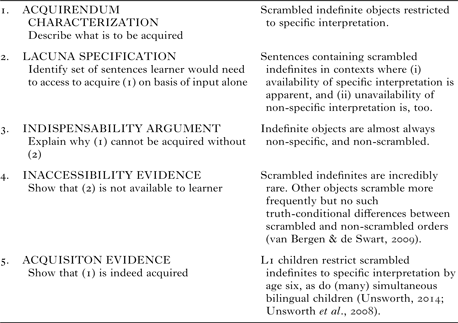
The predictions concerning input effects are as follows. If the acquisition of the interpretive constraints on scrambled indefinites constitutes a ‘poverty of the stimulus’ problem (Unsworth, Reference Unsworth2005, Reference Unsworth, Grüter and Paradis2014), no input effects are expected. The argument for the poverty of the stimulus for this particular property of Dutch is laid out in Table 1, following the five criteria given by Pullum and Scholz (Reference Pullum and Scholz2002). Whilst these conditions are not entirely unproblematic (see for example Schwartz & Sprouse, Reference Schwartz, Sprouse, Herschensohn and Young-Scholten2013 for a critique), they are included here as they provide a systematic way to qualify the acquisition of certain linguistic properties as a poverty of the stimulus problem (but see Rothman & Iverson, Reference Rothman and Iverson2011).
How the acquisition of the interpretive constraints on scrambled indefinite objects in Dutch constitutes a poverty of the stimulus problem (following Pullum and Scholz’ (Reference Pullum and Scholz2002) specification schema)

To sum up, if the information required to acquire the property in question is underdetermined by the input, then it should in principle not matter if the amount of input to which a child is exposed is reduced or varies. Table 2 presents a schematic overview of the predictions tested in the current study.
Predictions for age and input effects across domains

METHOD
Participants
The participants in this study (n = 87) were children who had English as their first language (L1) and were learning Dutch as their second language (L2). English was the only (or main) language spoken at home and children had been exposed to this language from birth. All children were resident in the Netherlands at the time of testing, and twenty-two were born there. Exposure to Dutch was either from daycare or school, depending on the child's age, out-of-school activities, and/or the local environment. Children were divided into two age of onset (AO) groups, namely those whose age of onset was no earlier than one year and before age four years, and those whose age of onset was at age four but before age eight (Schwartz, Reference Schwartz2004; Unsworth, Reference Unsworth2005). Details of the participants' background and experiential variables are given in Table 3. Traditional length of exposure was calculated in the usual fashion, i.e. by subtracting children's age of onset from their age at time of testing; cumulative length of exposure is a measure of exposure of time taking into account differences in amount of exposure of the years (see Unsworth, Reference Unsworth2013, for more details).
Mean values (and standard deviations) for background and experiential variables
Given the differences in age of onset, there are also inevitable differences in age at testing (see Muñoz, Reference Muñoz2008, for relevant discussion). In general, children in both groups have comparatively more day-to-day exposure to English than to Dutch. In the AO < 4 group, three children attended Dutch-language daycare, twenty-four attended schools where Dutch was the main or only language of instruction, and the remaining seventeen children in this group attended schools where English was the main or only language of instruction. In the AO ⩾ 4 group, thirteen children attended schools were Dutch was the main or only language of instruction and the remainder attended (predominantly) English-language schools with separate language classes in Dutch.
Tasks and procedure
Verb morphology and placement was tested using two elicited production tasks. The first task was designed to elicit data for both verb form and verb placement (Blom, Polišenskà & Weerman, Reference Blom, Polišenskà and Weerman2006/7; Polišenskà, Reference Polišenskà2010). Children were shown a picture of two people carrying out the same activity but with different objects, e.g. a man painting a door and a man painting a chair. The verb was introduced in the prompt in the infinitival form (Kijk! Deze twee plaatjes gaan over verven ‘Look! These two pictures are about painting’), and the child was asked to tell the experimenter what was happening. For example, the experimenter started the sentence for the child with the subject (Deze man … En die man … ‘This man … And that man …’) and the child was expected to complete it (…verft een deur ‘is painting a door’ … verft een stoel ‘is painting a chair’). In total there were twenty-four items, all targeting the present simple tense, distributed evenly across 3SG (n = 12) and 3PL (n = 12) forms and three different word orders, namely subject-initial main clauses, non-subject-initial main clauses, and embedded clauses (n = 8 for each). The example given above illustrates the subject-initial main clause condition. In the non-subject-initial main clause, the prompt included an adverbial, Op dit plaatje … En op dat plaatje … ‘On this picture … And on that picture …’, designed to force subject–verb inversion, i.e. verft de man een stoel.Footnote 2 All the verbs were bisyllabic and had a stem ending on a sonorant or fricative;Footnote 3 each verb was elicited four times, twice with a singular subject and twice with a plural subject. The selected verbs were aaien ‘stroke’, dromen ‘dream’, gooien ‘throw’, spelen ‘play’, dragen ‘carry’, geven ‘give’, kussen ‘kiss’, lezen ‘read’, verven ‘paint’, and wassen ‘wash’. Items targeting grammatical gender were included as fillers (Unsworth, Reference Unsworth2013).
For the assessment of children's verb morphology, children's responses were scored as percentage correct, that is, the number of target forms (main verb + –t in 3SG condition or main verb + –en in 3PL condition) divided by the number of scorable responses (main verb + –t, main verb + –en, and bare verbs). Reponses involving, for example, the past tense, the present continuous construction is/zijn aan het + infinitive, or the auxiliary gaat + infinitive were excluded from analysis.
For the assessment of children's verb placement, and more specifically their knowledge of V2, only responses in the non-subject-initial main clause condition were considered. Children's responses were scored as percentage correct, that is the number of responses with target word order (V2) divided by the number of scorable responses (V2 + V3). Responses where the subject was missing or where an auxiliary form was used instead of the main verb were excluded from analysis.
In the second elicited production task, children's knowledge of V2 was examined in a sentential context where a topicalized object appeared in sentence-initial position (cf. (2c)). This task was included because Tran (Reference Tran2005) found higher accuracy rates for production of V2 when the constituent in first position was a topicalized object rather than a PP-adverbial, as is the case in the previous task. In this task, children were presented with a series of objects on cards and were asked questions about them by a puppet, Worp, who was introduced to the children as coming from outer space. The child's task was to help the puppet understand ‘how things work on planet earth’. The child was first shown a picture and the puppet asked Wat is dat? ‘What is that?’ Once the child answered with the target object name, the puppet would repeat the name of the object as though she was hearing it for the first time and then she would ask a second question, namely X? Wat kun je met X doen? ‘X? What can you do with X?’, where X was the name of the object. The experimenter subsequently started the child's response with the object, i.e. Vertel ‘t even aan Worp. Aardbeien … ‘You tell Worp. Strawberries …’ using a rising intonation, and the child was expected to complete e.g. … eet je ‘lit: eat you’ or kun je eten ‘lit: can you eat’). There were no restrictions on the verb which the children were allowed to use in their responses.Footnote 4
There were seven target items using the following objects: boeken ‘books’, een konijn ‘a rabbit’, een gitaar ‘a guitar’, melk ‘milk’, kleren ‘clothes’, appelsap ‘apple juice’, and een krant (a newspaper).Footnote 5 Six filler items showed pictures of different kinds of people and the child was expected to tell the puppet what each person did (e.g. Een tandarts … ‘A dentist’ …). The fillers were excluded from the present analysis. Children's responses were scored as percentage correct, that is, the number of responses with target word order (V2) divided by the number of scorable responses (V2 + V3). As in the first elicitation task, responses where the subject was missing were excluded from analysis. The data from this second task were not analyzed for verb morphology because in the context of subject–verb inversion used here, the –t suffix is dropped in a 2SG context.
Vocabulary was assessed using the Dutch version of the Peabody Picture Vocabulary Task, PPVT-III-NL (Dunn, Dunn & Schlichting, Reference Dunn, Dunn and Schlichting2005). In this task, children are shown four pictures and asked to select the one which best represents a single word pronounced by the experimenter. The procedures given in the testing manual were followed. Standard scores (for monolinguals) are reported.
Scrambling was tested using a using a truth-value judgement task. In this task, based on Krämer (Reference Krämer2000) and adapted further by Unsworth, Gualmini, and Helder (Reference Unsworth, Gualmini and Helder2008), children were presented with a story in which the main character manipulated two out of a set of three objects; for instance, a boy caught two out of three available fish in a pond. In other words, the scenario presented to the children was consistent with a specific interpretation of the relevant indefinite object (e.g. there was a fish that the boy did not catch) and inconsistent with a non-specific interpretation (i.e. it is not the case that the boy caught a fish). Subsequently, a puppet was asked to describe what had happened in the story and, in doing so, uttered a negative sentence containing a scrambled indefinite (cf. (5b)). The child's task was to judge the truthfulness of this statement. On the target – specific – interpretation, the expected answer is ‘yes’, whereas on the non-target – non-specific – interpretation, the expected answer is ‘no’. Fillers (n = 8) were used to ensure that children could cope with true negatives, irrespective of their knowledge of scrambling. Accuracy scores were calculated for each child by dividing the number of target responses by the total number of items (n = 5).
Children were tested in each language in a separate session by a (near-)native-speaker research assistant. The sessions took place either at daycare/school or at the child's home, depending on their age and the parents' wishes. All three tasks were part of a larger test battery and were always conducted in the following order: vocabulary, verb morphology/placement tasks in the order presented above, scrambling. For all tasks except vocabulary, the order of presentation of the test items was counterbalanced across children. Test sessions were videotaped and responses on the verb morphology/placement were later checked by a second experimenter. A randomly selected subset (approximately 10%) were crosschecked by a second tester to calculate inter-rater reliability; the Kappa statistic was very high (0·99, p < ·001) indicating almost perfect agreement (Landis & Koch, Reference Landis and Koch1977).
RESULTS
For verb morphology and placement, children who consistently failed to include a subject or who consistently used alternatives were excluded (for verb form, this was 6 children in the AO < 4 group and 8 children in the AO ⩾ 4, and for verb placement, 10 and 8 children, respectively, in the first task (ADV in initial position), and 14 and 13 children, respectively, in the second task (OBJ in initial position)). Alternative responses used an auxiliary or the present continuous construction aan het + infinitive. It is important to note that while such responses are uninformative for the present purposes, they are perfectly acceptable in the context, and they are also regularly produced by monolingual L1 children (Polišenskà, Reference Polišenskà2010); furthermore, despite not providing a response suitable for analysis in the present study, these responses also show that the children clearly understood the task.
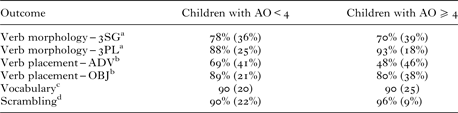
In the scrambling task, children who demonstrated a response bias or who failed on more than 2 fillers, thereby showing a lack of understanding of true negatives, were excluded from the analysis (6 children in the AO < 4 group and 2 children in the AO ⩾ 4). Finally, for the vocabulary task, three children in the AO < 4 group were unable to complete the task following the standard procedure and hence had to be excluded from analysis. The results for all five outcomes are presented in Table 4.
Mean scores (and standard deviations) for verb morphology (% correct for 3SG, 3PL), verb placement (% correct for V2), vocabulary (standard score), and scrambling (% scrambled indefinites interpreted specifically)
notes:a number of main verbs with target morphology divided by number of scorable responses; b number of responses with target V2 order divided by number of scorable (V2 + V3) responses; c standard score; d number of scrambled indefinite objects interpreted specifically divided by total number of items.
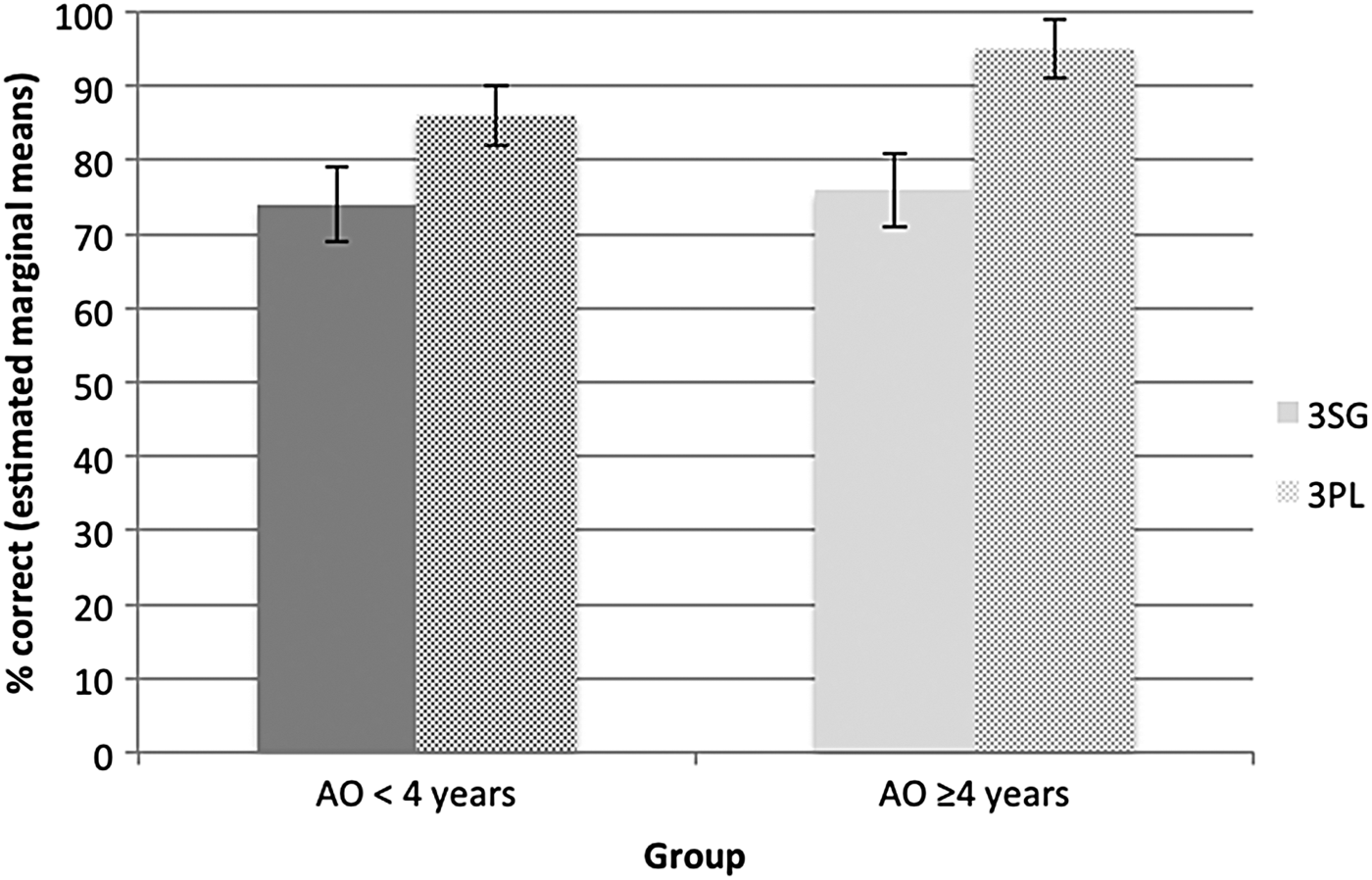
An ANCOVA was carried out for each outcome variable separately with group (AO < 4 vs. AO ⩾ 4) as between-subjects factor and age at testing, (cumulative) length of exposure, and current amount of exposure as covariates. A main effect of group was interpreted as evidence for age effects, and when either of the two experiential variables was found to be a significant covariate, this was interpreted as evidence for input effects. The results for verb morphology and verb placement are presented in Figures 1 and 2; note that the plotted values are estimated marginal means and therefore differ from the values in Table 4. The estimated marginal means for vocabulary are 88 (SE 3) for the AO < 4 group and 92 (SE 3) for the AO ⩾ 4 group; for scrambling, these are 91% (SE 3%) for the AO < 4 group and 96% (SE 3%) for the AO ⩾ 4 group.
Verb morphology (3SG and 3PL): percent correctly inflected verbs (estimated marginal means and standard error).
Verb placement (with adverb (ADV) or topicalized object (OBJ) in initial position): percent verbs in V2 position (estimated marginal means and standard error).
There was no main effect of group for verb morphology (cf. Figure 1), either for 3SG (F(1,73) = 0·07, p = ·79) or 3PL (F(1,73) = 2·11, p = ·15), for verb placement (cf. Figure 2), either for ADV (F(1,69) = 0·26, p = ·61) or OBJ (F(1,60) = 0·55, p = ·46), for vocabulary (F(1,83) = 0·74, p = ·39), or for scrambling (F(1,69) = 0·93, p = ·34). The covariate age at testing was not significantly related to children's scores on 3SG (F(1,73) = 0·80, p = ·38), 3PL (F(1,73) = 0·03, p = ·87), verb placement with ADV (F(1,68) = 0·40, p = ·53) or OBJ (F(1,60) = 2·87, p = ·10), vocabulary (F(1,83) = 0·38, p = ·54), or scrambling (F(1,69) = 1·78, p = ·08). This was also the case for the covariate (cumulative) length of exposure: 3SG (F(1,73) = 0·21, p = ·65), 3PL (F(1,73) = 0·04, p = ·84), verb placement ADV (F(1,69) = 0·30, p = ·59), verb placement OBJ (F(1,60) = 0·16, p = ·69), vocabulary (F(1,83) = 0·04, p = ·83), or scrambling (F(1,69) = 1·65, p = ·20).
The covariate current amount of exposure was, however, significantly related to children's scores on 3SG (F(1,73) = 40·1, p < ·001, η 2p = ·37), 3PL (F(1,73) = 3·86, p = ·05, η 2p = ·05), verb placement ADV(F(1,69) = 48·4, p < ·001, η 2p = ·43), verb placement OBJ (F(1,60) = 10·3, p = ·002, η 2p = ·16), and vocabulary (F(1,83) = 12·9, p = ·001, η 2p = ·14), but not to their scores on scrambling (F(1,69) = 1·38, p = ·25).
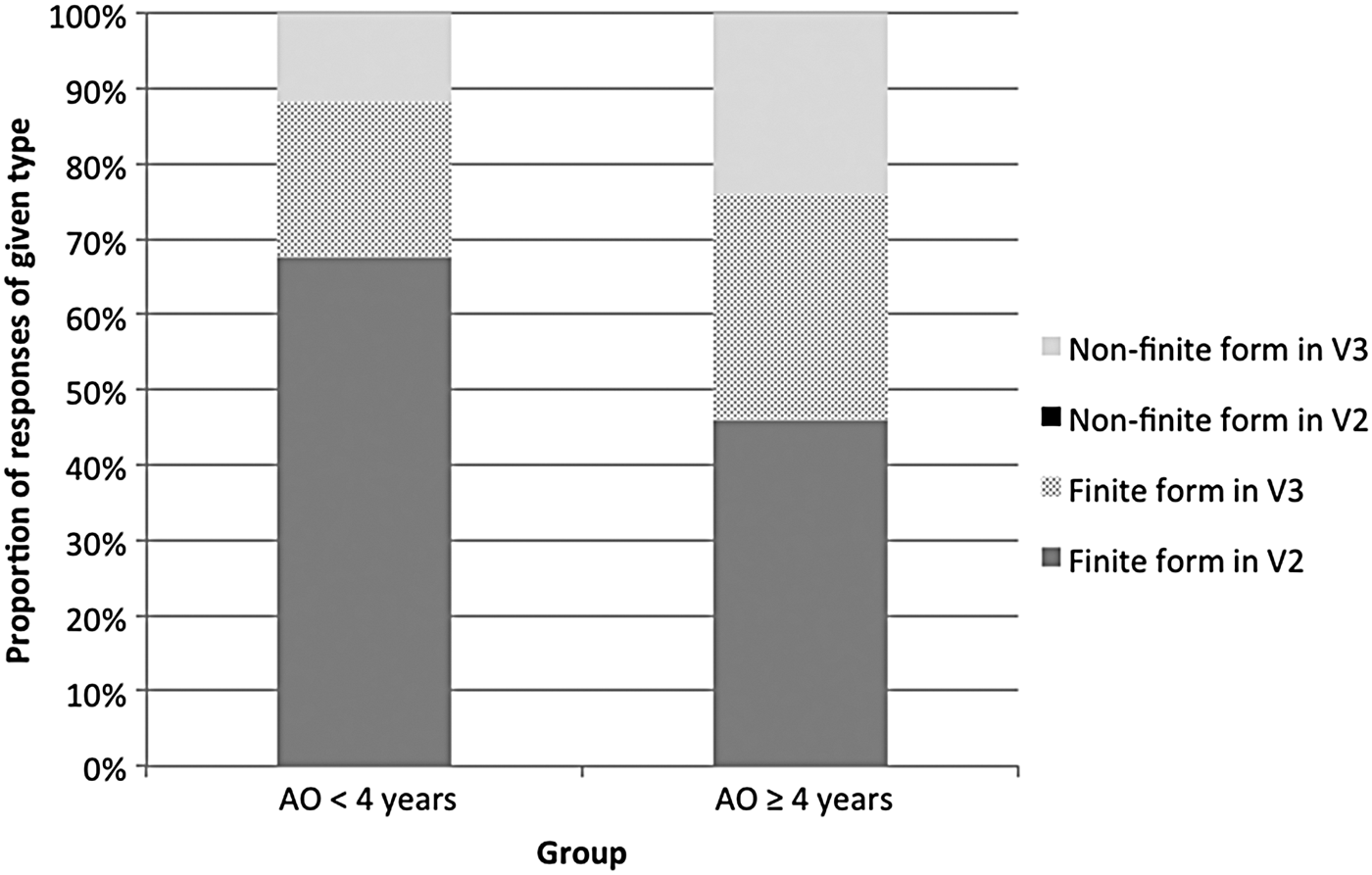
The analysis for verb form and verb placement has concentrated on – respectively – proportion of verbs with the correct form irrespective of position, and proportion of verbs in the correct position irrespective of form. For a complete understanding of children's knowledge of verb morphology and placement, it is, however, crucial to also examine these two variables in tandem to determine whether finite forms appear in finite positions only. For this analysis, 3SG only responses are used as the correct form of the plural verb is homophonous with the infinitive (e.g. ze verven ‘they paint’ and verven ‘to paint’), which means that correctly inflected (finite) forms of the verb are indistinguishable from incorrect (non-finite) forms. Children's responses in the 3SG/V2 condition were classified as belonging to one of the following four categories: non-finite form in V3 position (6a), non-finite form in V2 position (6b), finite form in V3 position (cf. (3)), and finally, the only correct response, namely finite form in V2 position (cf. (2b)).
- (6)
a. *Op dit plaatje de man verven een deur
on this picture the man paint a door
b. *Op dit plaatje verven de man een deur
on this picture paint the man a door
The results are presented as raw figures in Table 5 and as proportions in Figure 3.
Verb form and placement: error types. Proportion of responses within group of given type.
Contingency table for verb form and placement (number of responses)
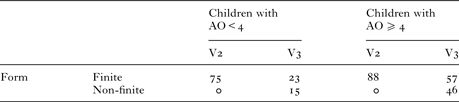
notes: AO = age of onset; V2 = finite verb in second constituent position; V3 = finite verb in third constituent position.
When children made errors, these were errors of placement only, or placement and form, that is, when children failed to produce a target finite form in V2 position, they produced either a finite or a non-finite form in V3 position. There were no children (in either group) who produced non-finite forms in V2 position. An analysis of the individual children's results reveal that the non-finite forms in V3 position are produced by six (out of thirty-five) children with AO < 4 (two with one token, one with two tokens, one with three tokens, and two with four tokens) and twelve (out of thirty-five) children with AO ≥ 4 (four with two tokens, four with three tokens, and four with four tokens). Finite forms in V3 position were produced by twelve children with AO < 4 (four with one token, six with two tokens, one with three tokens, and one with four tokens) and by fifteen children with AO ≥ 4 (four with one token, seven with two tokens, and four with four tokens).
DISCUSSION
In this paper, we presented data from English-speaking children acquiring Dutch as an L2 in order to investigate the role of age of onset and input quantity in (early) child L2 acquisition. Children were divided into two age groups, those whose age of onset was between the ages of one and three years and those whose age of onset was between the ages of four and seven years. Three different linguistic domains were targeted: children's knowledge of verb morphology and verb placement (morphosyntax) was examined using two elicited production tasks, vocabulary was tested using the standardized, receptive PPVT task (in Dutch), and the interpretation of scrambled indefinite objects (syntax–semantics) was accessed using a truth-value judgement task.
Our first prediction was that, for verb morphology and placement, there would be age effects and input effects. The results indicated no significant differences between the two groups on either verb morphology or placement, irrespective of the type of constituent in initial position (ADV or OBJ). In other words, once age at testing, (cumulative) length of exposure, and current amount of exposure were controlled for, the children whose AO was four years or older did not produce significantly more errors than children whose AO was younger than four years, despite having had less exposure to Dutch overall. Moreover, children in both groups produced similar types of errors, namely finite and non-finite forms in V3 position. The covariate current amount of exposure was significantly related to children's accuracy scores and explained 37% of the variance in the data for 3SG, 5% of the variance for 3PL, 43% of the variance for verb placement with an adverbial in initial position, and 16% of the variance for verb placement with an object in initial position. In short, then, our prediction concerning input effects in the domain of morphosyntax was borne out, whereas our prediction for age effects was not.
The production of V3 is often classified as an error which is typical for L2 adults and, as such, in previous work has been used to argue that L2 children (AO ⩾ 3) pattern like L2 adults rather than L1 children (Sopata, Reference Sopata, Prior, Watanabe and Lee2010). Given that children in the younger AO group also made these types of errors, albeit to a lesser degree, the same line of argumentation cannot be used here. If it were, then one would have to claim that the relevant age at which a purported critical period should end is earlier than around age four.
There are two possible (and not mutually exclusive) explanations for children's production of V3 utterances. The first is that, in the first elicitation task, participants produced more V3 utterances than they may otherwise have done as a result of the probe employed in the task. Recall that in this task the children were presented with two pictures of people carrying out the same activity but with different objects; in the non-subject-initial main clause condition the experimenter started the utterance for the child with the adverbial Op dit plaatje … Op dat plaatje … ‘On this picture … On that picture …’. We cannot rule out the possibility that the children failed to pick up on this cue and simply proceeded with what for them was a subject-initial main clause. This does, however, seem unlikely: data from monolingual four- to seven-year-old children (n = 31) using the same task contained just three such tokens, i.e. finite forms in V3 position, produced by two different children. If the L2 children produced more V3 utterances as the result of a methodological artefact, one would expect the monolingual children to do this, too, but they did not.
Rather than a methodological artefact, it is the bilingual/L2 children's other language, English, which may be the source of their non-target V3 responses, at least in the first elicitation task. This would be in line with several studies showing robust transfer effects in child L2 acquisition of word order (e.g. Mobaraki, Vainikka & Young-Scholten, Reference Mobaraki, Vainikka, Young-Scholten, Haznedar and Gavruseva2008; Unsworth, Reference Unsworth2005). It is also possible that these errors may be due to limited proficiency in or exposure to Dutch. At this stage, there is no way to tease apart these two possibilities.
On the whole, children were more targetlike in their production of V2 on the task where the finite verb was preceded by an object in sentence-initial position than on the task where the finite verb was preceded by a PP-adverbial. This is in line with Tran (Reference Tran2005), who also found that L1 English children acquiring German were more accurate in the production of V2 in contexts with a topicalized object than in contexts with a preposed PP-adverbial. There are (at least) two possible explanations for the observed difference in children's production of V2 in these two different contexts. The first is that this may simply be due to the type of data elicited: main verbs in 3SG and 3PL contexts in the ADV task versus main and auxiliary/modal verbs in 2SG contexts in the OBJ task. For example, it may be easier to produce the verb in the correct place in a context where inflection has to be dropped, as is the case for verbs with a postverbal 2SG subject in the OBJ task, rather than in a context where inflection is obligatory, as is the case for 3SG. The second is that it is also possible that the lower scores in the adverbial-initial context reflect an increased likelihood of transfer from English in this context. It would seem that English PP-adverbials, such as On Monday, are more likely to appear in sentence-initial position than topicalized objects, and this in turn may mean that crosslinguistic influence is more likely in a comparable context in Dutch.
A final noteworthy observation concerning verb form and placement is the fact that none of the children, in either group, used non-finite forms in V2. This is in line with L2 children with L1 Turkish and Moroccan Arabic / Berber in Blom (Reference Blom, Haznedar and Gavruseva2008), but contrasts with other studies such as Tran (Reference Tran2005) and Rothweiler (Reference Rothweiler and Lleó2006). In this sense, the L2 children in the present study pattern more like L1 children in their acquisition of verb morphology, but they are more like L2 adults in their verb placement in that they use V3 word order, as Sopata (Reference Sopata, Prior, Watanabe and Lee2010) also found for the L2 German children in her study.Footnote 6
The predictions for vocabulary were that children's scores were not expected to differ across AO groups but they were expected to be related to the input variables. Both these predictions were borne out. Once age at testing, (cumulative) length of exposure, and current amount of exposure were controlled for, there was no significant difference between the AO < 4 and the AO ⩾ 4 groups in their scores on the standardized vocabulary task. Current amount of exposure was, however, significantly related to their scores and explained 14% of the variance. The observation that amount of input is a significant predictor of children's vocabulary scores is in line with previous literature on bilingual/L2 children (e.g. Hoff et al., Reference Hoff, Core, Place, Rumiche, Senor and Parra2012; Pearson et al., Reference Pearson, Fernández, Lewedeg and Oller1997; Thordardottir, Reference Thordardottir2011).
It is noteworthy that while there is quite some variation in children's scores, scores for both groups are quite high: both groups have a standard score of on average 90, which means that they fall within age-appropriate monolingual norms. This is all the more surprising given that children in both groups have rather limited exposure to Dutch, namely on average 34% in the AO < 4 group and 23% in the AO ⩾ 4 group. Taken together with the comparatively small effect size (η 2p = ·17), these results suggest that other factors are likely to be at play in these data. One such factor may be the typological similarity between English and Dutch, which means that children may have been able to make use of cognates to arrive at the target response on the vocabulary task. Whilst a detailed analysis of the cognate vs. non-cognate items goes beyond the scope of this paper, studies on other bilingual/L2 populations suggest that the availability of cognates may indeed impact upon children's vocabulary scores and should be taken into account when comparing results across studies (e.g. Dijkstra, Reference Dijkstra2013; Stadthagen-González, Gathercole, Pérez-Tattam & Yavas, Reference Stadthagen-González, Gathercole, Pérez-Tattam, Yavas and Gathercole2013).
We now turn to the domain of syntax–semantics. No age effects were predicted and this prediction was borne out. The finding that the children with AO ⩾ 4 performed similarly to children with AO < 4 is in line with Slabakova (Reference Slabakova2006), who argues that there is no critical period for (compositional) semantics, as well as with a large body of literature demonstrating that L2 adults are able to acquire targetlike knowledge of a range of linguistic phenomena at the syntax–semantics interface.
With respect to input, it was argued that the acquisition of the interpretive constraints on scrambled indefinite objects constitutes a poverty of the stimulus problem (Unsworth, Reference Unsworth, Grüter and Paradis2014), and consequently no input effects were predicted. In line with this prediction, children's scores on the truth-value judgement task were neither related to current amount of exposure nor to cumulative length of exposure. In fact, children in both groups scored almost at ceiling, indicating target knowledge of this particular property of Dutch, despite their rather limited exposure to Dutch.
There is, however, a potentially complicating factor in this analysis, namely the (unpredicted) possibility of transfer from English in this particular experimental context. Whilst indefinite objects in negative sentences (cf. (4)) are in principle ambiguous, when we examined data from a task in English comparable to the one reported on here for Dutch (based on Miller & Schmitt, Reference Miller, Schmitt, Van Kampen and Baauw2004), we found that most children showed a preference for the specific interpretation. We therefore cannot rule out the possibility that when children allowed the specific interpretation in Dutch, they did so because they transferred their preferred interpretation from English, rather than because they were employing targetlike knowledge of Dutch.
There is nevertheless reason to believe that L1 transfer cannot be the whole story. When we compare children's response patterns on the Dutch and English tasks, we find evidence to suggest that they do differentiate their interpretations across the two languages. Whilst the vast majority of children (55/69) (almost) always accepted the specific reading in both languages, almost all of the children (11/14) who had a different response pattern in their two languages allowed an interpretation in English (non-specific) which they did not appear to allow in Dutch, or which they at least allowed less frequently. In a study with a larger group of simultaneous bilingual children (Unsworth, Reference Unsworth, Grüter and Paradis2014), similar tendencies were observed. Thus, whilst the results concerning children's knowledge of scrambling are less clear-cut than they appeared at first blush, the fact that children differentiated their responses in English and Dutch in this way suggests that when they accepted the target-specific interpretation in Dutch, they did not necessarily do so as a result of L1 transfer. In other words, they appear to have overcome the poverty of the stimulus (see Unsworth, Reference Unsworth, Grüter and Paradis2014, for an account of how they exactly they might do this). A summary of the findings across all three domains for both age and input is provided in Table 6.
Findings for age and input effects across domains

Comparing results across different domains, the present study provides little evidence for age effects in (early) child L2 acquisition, including in domains where they have been observed in previous studies, for example for verbal morphology/placement. One reason for this might be that, in contrast to most of the earlier studies (e.g. Rothweiler, Reference Rothweiler and Lleó2006), this study also takes into account factors which co-vary with age of onset, such as input quantity. It is, however, important to bear in mind that failing to find a significant difference between groups does not mean that we can say that there is evidence against age of onset effects; there may be a multitude of reasons for why such a difference was not found. All we can say at this stage is that for the target language properties and two groups of children here, no significant differences were observed. It is worth noting, however, that similar findings obtain when the dividing line between the two groups is drawn at age three or at age six (Meisel, Reference Meisel2009; Sopata, Reference Sopata, Prior, Watanabe and Lee2010), and when the age of onset is included as a continuous variable in a regression analysis, that is, there remain no significant differences between the two groups and age of onset is not a significant predictor. An alternative approach, which may more readily detect age of onset effects, should they exist, might be to compare more differentiated groups, for example a group of children whose age of onset is between two and three years with a group of children whose age of onset is between six and seven years. Unfortunately, there are not enough children in the present dataset to carry out such an analysis.Footnote 7
In the present study, children's scores for verb morphology, verb placement, and vocabulary were significantly related to their current amount of exposure. This finding underscores the importance of treating age of onset as a macro-variable (Flege, Reference Flege, Piske and Young-Scholten2009,) and including variation in, for example, input quantity and quality in any analysis of age effects in (early) childhood. Given that input quantity and quality (in part inevitably) vary between children who start acquiring their L2 earlier and children with an older age of onset, it is essential to control for these variables before concluding that age is the crucial factor. Similarly, for a complete picture of input (or age) effects in early child L2/bilingual acquisition, it is necessary to examine linguistic domains where such effects are expected, and crucially where they are not. Whilst further research is necessary to (dis)confirm the pattern of findings observed here, the present study illustrates the need to go beyond target language properties such as verb morphology and vocabulary and examine more complex syntactic phenomena, and/or phenomena which involve interaction between different domains.
Finally, let us consider the theoretical implications of the present study's findings. In several studies examining the relationship between variation in input and bilingual children's language outcomes, the existence of input effects has been argued to support a usage-based (or constructivist) approach to language acquisition (e.g. Gathercole, Reference Gathercole2007; Hammer, Komaroff, Rodriguez, Lopez, Scarpino & Goldstein, Reference Hammer, Komaroff, Rodriguez, Lopez, Scarpino and Goldstein2012; Hoff et al., Reference Hoff, Core, Place, Rumiche, Senor and Parra2012; Paradis, Nicoladis, Crago & Genesee, Reference Paradis, Nicoladis, Crago and Genesee2011). Indeed, the findings for verb morphology, verb placement, and vocabulary in this study are consistent with such an approach. Oversimplifying somewhat, the general idea is that if language is acquired in a piecemeal fashion on the basis of the input, we can expect an effect of relative amount of input for bilingual children across different domains, and crucially in the acquisition of grammar/morphosyntax as well as in the acquisition of vocabulary.
Whilst the logic of this argument is undisputed, it is worth noting that, as yet, the focus of much of the research in this area has been on linguistic properties such as verbal morphology and vocabulary, that is, properties where input effects would be expected on any approach to (bilingual/second) language acquisition. Expanding the domain of enquiry to (complex) properties where input severely underdetermines the knowledge children acquire, as well as explaining why input effects are not always found is an important – and arguably, crucial – step in implementing this approach to the language development of bilingual/L2 children (see e.g. Goldberg, Casenhiser & Sethuraman, Reference Goldberg, Casenhiser and Sethuraman2004, for one proposal concerning monolingual children and O'Grady, Reference O'Grady2013, on L2 acquisition).
The present study's finding that, despite the relative infrequency of indefinite objects in scrambled position, (at least some) L2 children come to know that these are restricted to a specific interpretation, is arguably hard to reconcile with a usage-based approach to bilingual acquisition, such as for example that of Gathercole (Reference Gathercole2007). It is, however, in principle consistent with the nativist approach, where this acquisitional task constitutes a ‘poverty of the stimulus’ problem (Unsworth, Reference Unsworth, Grüter and Paradis2014). The observation that there are input effects for verb morphology and placement are also consistent with this approach (see Yang, Reference Yang2002, on V2, for example). However, to more thoroughly test differences between these two approaches, much more specific predictions are required, especially from a nativist perspective, where variation in input and its impact on the developmental process has only recently started to be taken (more) seriously (see, e.g. Miller & Schmitt, Reference Miller and Schmitt2012; Omaki & Lidz, Reference Omaki and Lidzin press; Yang, Reference Yang2002; cf. Blom, Paradis & Sorenson Duncan, Reference Blom, Paradis and Sorenson Duncan2012, for a recent demonstration of to the child L2 acquisition of verb morphology within a usage-based approach).
There are a number of limitations to the present study. First, it included a range of linguistic domains, but the number and type of phenomena investigated nevertheless were quite limited. For example, vocabulary was examined using a receptive one-word standardized task only. Furthermore, the tasks used for each of the three target phenomena were different (elicited production, receptive standardised task, truth-value judgement); for completely comparable data, similar methodologies should be employed in future studies.Footnote 8 The analysis of input effects was limited to input quantity only; it is likely that differences in input quality will also impact on children's L2 development (Unsworth, in press). Finally, as discussed in detail above, the interpretation of the scrambling data were complicated by the possible role of L1 transfer. Once again, additional research is needed to address this issue.
CONCLUSION
The present findings suggest that input (quantity) is an important factor in (early) child L2 acquisition, and in the context of the English/Dutch children studied here, it appears to be more important than age of onset. Nevertheless, input effects were not observed across the board, and where they were observed they were not equally large. Across domains, crosslinguistic influence (or transfer) from the children's other language, English, contributed to the some of the observed response patterns, sometimes in non-negligible ways. Taken together, these findings reiterate the need for a more multi-faceted approach to age effects in child L2 acquisition, whereby the influence of factors known to covary with age of onset is ruled out before concluding that biological maturity is a (or even the) key determinant of children's second language acquisition.