

Introduction
The livestock industry in Nigeria is considered one of the largest industries in agriculture and one of the biggest in Africa, with records showing that over 300 million animals are raised annually (Ritchie et al. Reference Ritchie, Rosado and Roser2017; Olajide & Akpan Reference Olajide and Akpan2020). According to these reports, the breakdown of animals in the country in a given year is as follows — 180 million poultry birds, 44 million sheep, 76 million goats, 21 million cattle, 8.9 million pigs, and 1.4 million equine species (horses, donkeys, etc) (Ritchie et al. Reference Ritchie, Rosado and Roser2017; Olajide & Akpan Reference Olajide and Akpan2020). With this rate showing an annual increase of over 3%, this figure is projected to be above 250% by the year 2050 (Sasu Reference Sasu2022). Typically these animals are raised by small-scale farmers through free-range and backyard farming systems and 70% of the large animals (cattle, sheep, goats, and equids) are based in the savannah agro-ecological zones to the north of the country, raised mostly by the Fulanis and the Shuwa Arabs (Lawal-Adebowale Reference Lawal-Adebowale2012).
Meanwhile, in contrast, the southern part of the country has a higher percentage of consumption of food animals, with Lagos alone reputed to slaughter 1.8 million cattle annually, according to the Commissioner for Agriculture in the state (Oyero Reference Oyero2021). This would imply that most of the animals slaughtered are subjected to transportation from the north and neighbouring states either by vehicle or via trekking, thereby making transportation a significant component of the livestock trade (Adenkola et al. Reference Adenkola, Ayo, Sackey, Adelaiye and Minka2009). Furthermore, the chairman of the Association of Sheep and Goat Sellers in Nigeria claimed that over 1,800 truckloads of livestock travel monthly from north to south (Liman Reference Liman2023). This procedure of animals needing to be transported long distances via both major and minor cattle routes would appear to expose animals to considerable discomfort given the livestock losses incurred en route (Ibironke et al. Reference Ibironke, McCrindle and Adejuwon2010). Research into the mitigation of sickness due to transportation stress and inconvenience has also been undertaken (Dhabhar Reference Dhabhar2014; Biobaku et al. Reference Biobaku, Omobowale, Akeem, Aremu, Okwelum and Adah2018, Reference Biobaku, Ameen and Jibir2020) as well as studies on the use of anti-stress after transportation (Adenkola Reference Adenkola2011), providing evidence of discomfort during transportation. Yet, despite this, there remains a dearth of data and scientific literature in this field.
The issue of animal discomfort during transportation is clearly not limited to merely Nigeria or Africa; it remains a global issue, with only a few countries able to maintain good practices — such as appropriate vehicle design, journey planning, handling by trained personnel, and adherence to animal welfare regulations — to minimise stress and injury during transit (Felde Reference Felde2023). However, while there are myriad papers exploring these issues in developed countries, in Africa there remains a paucity of scientific publications assessing the welfare status of transported animals. In certain African countries, e.g. Ghana, Mogre (Reference Mogre, Adzitey, Teye and Birteeb2024) explored transporters’ practices and reported that inadequate infrastructure, overcrowding, transport of sick or injured animals, and poor handling skills were associated with high stress, injury, and mortality during cattle transport. In Kenya, there are related studies looking into the link between truck design and cattle mortality, with Wambui (Reference Wambui2016) establishing a direct correlation between poor truck design and increased mortality rates during cattle transport. The study emphasised the dearth of trucks specifically designed for transporting livestock, highlighting that locally available trucks were improvised and modified to transport livestock. Such modifications often lacked ventilation, featured poor non-slip flooring, and inappropriate loading densities. A study by Ewutsa et al. (Reference Ewutsa, Abiola, Ajibola and Mngusonun2023) in Nigeria examined animal welfare during transport to abattoirs in a specific community and documented significant welfare violations, including prolonged journey times without rest, physical abuse, and poor vehicle conditions, which contributed to dehydration, injuries and behavioural distress in the animals. Additionally, Masiga and Munyua (Reference Masiga and Munyua2005) provided a broader overview of animal welfare in Africa. They highlighted an absence of regulatory enforcement, limited awareness among handlers, and poor infrastructure as common issues that hinder animal welfare during transport and slaughter.
While these studies provide useful insights, it is important to consider the contextual differences when applying these findings to the Nigerian livestock industry. For instance, in Ghana, animals are often first moved to local collection centres prior to being transported to major cattle markets such as the one in Kumasi, where they are held until sold and eventually slaughtered. A study on the Kumasi cattle market found widespread animal welfare concerns, including rough handling, injuries, sickness, non-ambulation, and even mortality both during transportation and in market-holding periods (Frimpong et al. Reference Frimpong, Gebresenbet, Bosona, Bobobee, Aklaku and Hamdu2012). In contrast, the Kenya livestock industry exhibits a more structured framework with established regulations guiding animal transport. The study by Wambui et al. (Reference Wambui, Lamuka, Karuri and Matofari2018) assessed the knowledge, attitudes, and practices (KAP) of stockpersons across livestock markets. It revealed that while stockpersons possessed moderate knowledge and attitudes regarding animal welfare, their practical application was lacking. This discrepancy suggests that despite awareness of welfare standards, challenges persist in implementing best practice during animal handling and transportation.
The Kenyan livestock sector benefits from relatively better-developed infrastructure and policies. Cattle breeds such as Boran and Zebu are common, and transport vehicles are sometimes modified to suit specific needs. However, gaps still exist, particularly in translating knowledge into practice, indicating areas for improvement in training and enforcement.
Conversely, Nigeria’s livestock sector remains largely informal. While indigenous breeds also predominate, cattle are often trekked long distances or required to face improper transport mechanisms. Compared to Ghana, the transport distances are longer — especially from northern supply zones (e.g. Sokoto) to southern consumption regions (e.g. Lagos). These prolonged journeys often without adequate rest or feed and water, heighten welfare risks. These contextual differences underline the need for Nigeria-specific research and interventions, as the infrastructure, journey conditions, and management practices differ markedly from other African countries.
Furthermore, it is worth mentioning that there is a main preventive medicine law in Nigeria — the Animal Diseases (Control) Decree called the Act of 1988 or Decree 10 (FGN 1988). This law contains various sections that cover the regulation of animals. It prohibits the maltreatment of animals when transported and, even as an owner, you are not permitted to cause suffering to any animal or allow others to do so unnecessarily. However, the initial punishment for maltreatment during the transportation is six months imprisonment or a fine of fifty naira (NGN) or both. This ridiculously small amount — NGN 50 is equivalent to £0.051 — became insignificant over time. However, the law was amended in 2022, increasing penalties to fines ranging from NGN 100,000 (equivalent to £47) to NGN 300,000 (equivalent to £141) and imprisonment ranging from three months to one year, depending on the severity of the violation. Despite this revision, enforcement remains a major challenge, limiting the effectiveness of the legislation in ensuring compliance with animal welfare standards (Protection 2022). Nevertheless, the extent to which the primary stakeholders within animal transport and marketing (farmers, drivers, head of markers, etc) are aware of the concept of animal welfare is so far unknown. A basic understanding of the concept is a prerequisite for compliance. However, in 2014, the Government made efforts to revise this legislation and make necessary changes; unfortunately, many of these changes are yet to be enacted (Protection 2022). There is also a record of checkpoints and control posts — which are meant to check the status of animals during transportation. A single study (Ogundipe Reference Ogundipe2002) has been found to have a record of all the various checkpoints in the country, but the function and state of these posts are currently unknown.
A first step towards improving animal welfare during transport in Nigeria would be to gain an understanding of the extent to which the primary stakeholders are aware of the concept. Incontrovertibly, it is worth noting that even though the legal principle of ignorantia juris non excusat — that ignorance of law does not exempt one from liability — applies in Nigeria, the effectiveness of enforcement mechanisms, such as checkpoints and control posts, can still be significantly hindered by a lack of stakeholder awareness. That is, while individuals may still be legally liable for violations, the practical impact of control posts on improving animal welfare depends heavily upon whether those involved in animal transport and handling understand the underlying welfare standards and legal requirements. Therefore, for control posts to be both legally and ethically effective, they should serve not only a role in enforcement but also support education and advocacy. This further emphasises the importance of incorporating animal welfare education into veterinary, agricultural, and transport sectors, in conjunction with regulatory enforcement.
The aim of our study was to assess how aware of animal welfare were primary stakeholders, such as farmers, sellers, and drivers involved in livestock transportation, in some selected markets in northern and southern regions of Nigeria. Taking account of interviews, practices relating to animal welfare will be described and discussed. This study also investigated barriers often encountered by these stakeholders as regards establishing good practices during livestock transportation and in their respective markets with the ultimate aim of developing evidence-based solutions and recommendations for the future.
Research questions
-
1. What is the distribution of AWA among stakeholders?
-
2. What is the distribution of awareness of the Five Freedoms (Farm Animal Welfare Council [FAWC] 1992) among stakeholders?
-
3. Are stakeholders aware of the Animal Diseases (Control) Act or not?
-
4. Do stakeholders experience mortalities during and after transportation? To what extent and what are the common causes observed?
-
5. Are stakeholders aware of veterinary control posts or not?
Materials and methods
Study area
This study was carried out in three selected livestock markets across Nigeria, chosen to reflect regional diversity, market size, and relevance to long distance livestock movement. Due to the absence of officially published, peer-reviewed data specifying the exact volume of animals traded per unit time (e.g. daily or weekly) in most Nigerian livestock markets, including Ikorodu Sabo, Achida, and Amansea, the selection of study sites was informed by qualitative evidence from local veterinary officers, market leadership, previous observational experience, and regional reports compiled by govermental agencies. These markets are consistently identified as high-traffic hubs based on informal estimates and their strategic importance within Nigeria’s livestock value chain.
These markets represent key points in the livestock trade network from northern supply regions to southern consumption zones.
-
• The Ikorodu sabo market (Lagos state) was selected as a representative of southern terminal market. Notably, Lagos state is one of Nigeria’s largest consumers of livestock and Ikorodu Sabo market is one of the biggest markets serving this high demand.
-
• Achida market (Sokoto state) was selected to represent the northern/north-western supply zone. It is one of the biggest cattle markets in northern Nigeria and an important international livestock entry-point, receiving livestock from neighbouring countries like Niger Republic, Cameroon and Benin Republic. Its long-distance trade link to the south made it relevant for assesssing transport-related welfare.
-
• Amansea market (Anambra state) was chosen to represent the southeastern region. It is one of the largest livestock markets in that region and plays a critical role in inter-state cattle trade as it is located on the border of Enugu state.
This selection ensured regional representation and captured the dynamics of long-distance livestock transportation in Nigeria.
Study design
Respondents’ consent
To aid the interview process, it is important to recognise that every large market possesses a structured leadership. These leaders are typically elected or, in some cases, appointed based on factors such as the level of respect they command, their authority, and their accumulated experience in the market. Priority is often given to the individual who commands the highest level of respect, which is frequently correlated with seniority or the outcome of an election. All in all, the leaders are well respected and the structure often takes the form of the Chairman/President, Secretary, Financial Secretary, Treasurer, and Public Relations Officer (PRO) (Hi et al. Reference Kubkomawa, Adamu, Achonwa, Adewuyi and Okoli2018). Therefore, these leaders are important in achieving a successful interview.
Leaders (Chairmen) of the selected markets were met, and the study objectives were discussed.
Ethical considerations
This study was conducted under ethical guidelines for research involving animal or human participants. Approval was obtained from the State Ministry of Animal Health and Fishery Development, Sokoto State, Ref number (MAH&FD/PLAN/197/VOL.I). Additionally, respondents’ approval was obtained prior to administering the questionnaires. Their respect, dignity, and privacy were maintained throughout the study. They were informed that their identity would be kept confidential and that the data would only be used for study purposes. Respondents were allowed to withdraw from proceedings at any point and were provided with verbal information regarding study objectives. Informed verbal voluntary consent was obtained before questionnaire administration, and none declined to participate with confidentiality assured in line with the World Medical Association Declaration of Helsinki (General Assembly of the World Medical Association 2014).
Questionnaire
A questionnaire-based cross-sectional survey was conducted between February 2024 and July 2024 in three major markets in Nigeria with sample size based on convenience sampling. We arrived at 280 respondents across the three locations, with 119 respondents at Ikorodu Sabo market in Lagos, 81 at Achida market in Sokoto, and 80 at Amansea market in Anambra. Only adults with a specified occupation that fell within specified categories (i.e. sellers, buyers, and drivers) were interviewed under the guidance of previously met market authorities from each of the markets. Questions were formulated into three sections for each respondent, with Section 1 consisting of general demographic questions regarding age, gender, and occupation within the market.
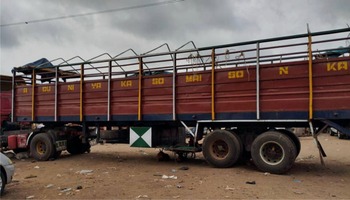
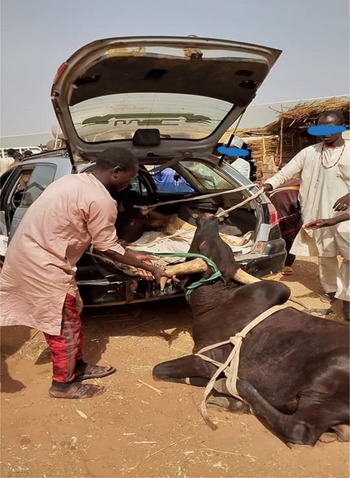
Section two contains more specific questions regarding the respondents’ occupation, designed to assess individual stakeholder’s experience and activity, i.e. each stakeholder faced a slightly different set of questions based on their specific occupation-related activities within the market. These questions focused upon specific activities and typical practices related to animals during transport and in markets. Most notably, it contains general questions covering experience in selling, buying, and driving, species of focus, and distances travelled to and from the market. Each respondent’s occupation was reflected in the questions asked, for example, different vehicles are often seen in the market, such as taxis (cars), buses, lorries, trucks, and trailer trucks (Figure 1). Trailer trucks are the biggest, mostly being used for travelling interstate and for the transport of large numbers of animals, whilst the car is the smallest and also used for transporting animals, even cattle (Figure 2). Regarding this, the drivers were asked the type of vehicles they use in transporting animals (‘What kind of vehicle do you drive?’); contrarily, buyers and sellers were asked the mode of transportation they employ in moving animals to or from the markets (‘What mode of transport do you use in transporting animals?’); these two questions are essentially the same as the expectations lie within the variety of vehicles aforementioned except for cases where buyers and sellers mention unexpected mode of transportation. Also, specific questions, such as the awareness of veterinary permit (‘Are you aware of veterinary permit?’), which was followed by querying whether they had ever obtained one, are specific to drivers only. According to the Animal Diseases Act, a veterinary permit is given to livestock transporters in markets, especially major markets. It is issued by a veterinary officer who can only issue said permit after having inspected the animals loaded into the vehicle. According to the Act, it is also required to be shown to officers at veterinary control posts or checkpoints on the trade routes.
Trailer trucks commonly used for transporting large numbers of livestock, including cattle, sheep, and goats, across long distances in Nigeria.

Use of a private car to transport two cattle from a market, with manual lifting employed instead of a loading ramp.

The third section includes general animal welfare questions that look into the Five Freedoms (FAWC 1992), the awareness of the Animal Diseases (Control) Act, and challenges and constraints.
The key focus of the questions was:
-
• Participants’ awareness of the concept of animal welfare and animal cruelty;
-
• Awareness of the Animal Diseases Act (Decree 10); and
-
• Barriers they may face in carrying out good practice
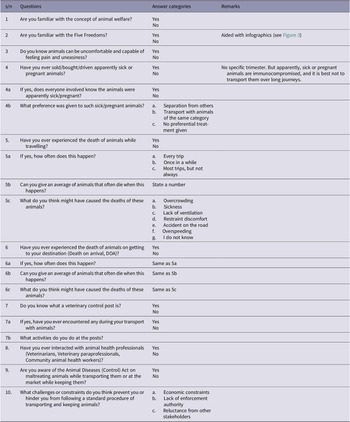
The general questions regarding the concept of animal welfare (Table 1) were administered to all respondents irrespective of occupation.
Structured questionnaire used to assess knowledge, attitudes, and practices regarding the welfare of transported livestock (goats, sheep, and cattle) among key stakeholders in three designated markets in Nigeria

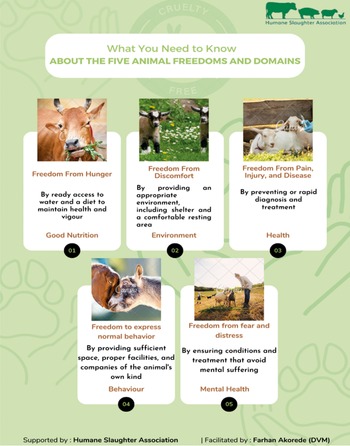
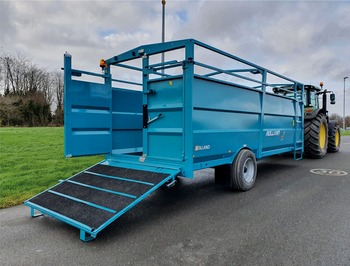
Posters (Figure 3) regarding animals’ Five Freedoms (FAWC 1992) and loading and unloading ramps (see Figure 4) were shared with them during the visitation to aid the interview process. Translators were also on hand to help eliminate the language barrier in certain locations since most respondents were unfamiliar with English.
Educational poster illustrating the Five Freedoms (FAWC 1992) referred to during respondent interviews.

A loading ramp attached to a truck to facilitate the safe movement of livestock during loading and unloading. This was shown to respondents to familiarise them with this practice.

Data analysis
The data collected were entered into a Microsoft Excel® 2016 (Microsoft Corporation®, Redmond, WA, USA) spreadsheet, sorted, and exported to IBM SPSS® Statistics 27 and the jamovi project (2024). (Version 2.5) for detailed analysis. The value of P < 0.05 was considered significant at a 95% Confidence Interval. Descriptive statistics were carried out to show the distribution of demographic details, experience in years of active practice, responses to questions on practices, level of awareness of animal welfare, Five Freedoms (FAWC 1992), legal frameworks, and challenges. The distribution of responses across all the questions were summarised before proceeding with further statistical tests. However, a number of questions were multiple choice, and respondents were invited to pick more than one option that they felt applied to them. For these questions, we reported the percentage of total responses rather than the percentage of cases, to avoid exceeding 100%.
A logistic regression model was used to analyse the association between AWA (yes, no) and the following fixed effects: occupation (driver, seller, buyer) and market location (Achida, Ikorodu Sabo, Amansea), awareness of the Animal Diseases (Control) Act (yes/no), awareness of the existence of veterinary control posts (yes/no), and have had an encounter with an animal health practitioner (yes/no).
Results
Demographic distribution of participants
A total of 280 respondents participated in the survey across the three selected major livestock markets. The distribution by markets was as follows: Ikorodu Sabo market in Lagos had the highest representation with 119 respondents (42.5%), followed by Achida market in Sokoto state with 81 respondents (28.9%), and Amansea market in Anambra state with 80 respondents (28.6%). Most participants across all locations were aged between 35 and 44 years (n = 120), with an average age of 39.8 years (min–max: 18–64 years). Regarding gender distribution, the study population comprised 82.1% males (n = 230) and 17.9% (n = 50) females. Our respondents held different roles in the markets, with sellers forming the majority at 67.1% (n = 188), buyers representing 22.2% (n = 62), and drivers accounting for 10.7% (n = 30). Regarding the species of animals our respondents focus on, cattle were the highest (63.9%; n = 179), followed by goats (48.2%; n = 135), then sheep (38.6%; n = 108), and lastly, other species, such as donkeys and camels (4.6%; n = 13).
Drivers’ practices
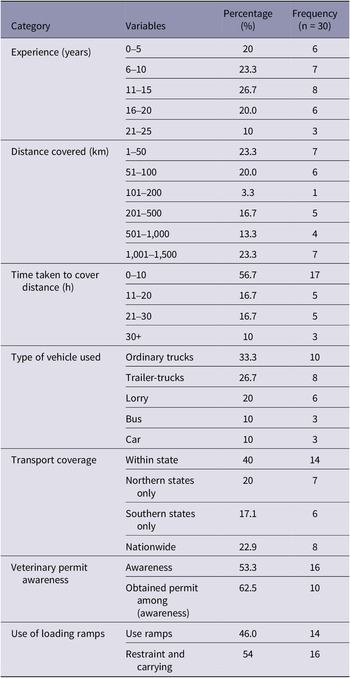
Most drivers had between 6–15 years of experience transporting livestock (50.0%), with 26.7% having 11–15 years and 23.3% having 6–10 years (Table 2). Regarding the average distances covered, 36.6% cover above 500 km, while 23.3% cover shorter distances (1–50 km). However, the time taken to cover these distances also varies, with the majority of the respondents, (irrespective of distance) covering within 0–10 h, although most of them are those covering distances within 200 km. Respondents also travel over 20– 30 h, but these are those covering above 1,000 km. Furthermore, ordinary trucks (33.3%) and trailer trucks (26.7%) were the most commonly used vehicles, while 40.0% of drivers operated within the state, and 22.9% covered the entire country.
Transportation practices and experience of livestock drivers (n = 30) involved in the movement of cattle, goats, and sheep across Nigerian states as obtained through the study questionnaire

Notably, 53.3% of respondents reported awareness of veterinary permits, yet only 62.5% of these had obtained one, which translates to 33.3% of all drivers. Heaps of sand (Figure 5), acting as improvised ramps for loading and unloading animals, were present in all the markets visited with 46% (n = 14) using it for such a purpose. The rest indicated a preference for restraining and carrying the animals while loading and unloading them into the vehicles.
Improvised heap of sand used as a loading ramp at livestock markets, with a seller guiding an animal during unloading. Here, a seller is using a rope to guide a cow down the sand ramp.

Sellers’ practices
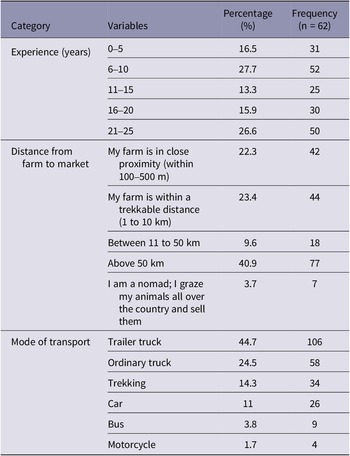
The majority of our respondents have over six years of experience, with 27.7% being those with 6–10 years and 26.6% those with 21–25 years of experience (Table 3). Regarding the distance from the farm to the market, the majority (40.9%) were relatively far away, i.e. approximately 50 km. Other respondents reported a variety of distances that were closer, within 10 km (23.4%), or even in close proximity to the market, within 100–500 m (22.3%). However, there are nomads that graze and sell their animals nationwide (Table 3). For transport from farms to the market or sourcing markets, trailer trucks were the most commonly used mode of transportation (44.7%), followed by ordinary trucks (24.5%). Other modes of transportation are also used (see Table 3), including the interesting use of motorcycles (1.7%). It is also worth noting that the majority of sellers source their animals from the north of the country, with Kano, Katsina, Sokoto, Jigawa, Taraba, and Zamfara ranking highest.
Livestock sellers’ practices regarding distance from farm to market, years of experience, and transport modes used for cattle, sheep, and goats in Nigerian livestock markets (n = 62 sellers) with information obtained through the study questionnaire

Buyers’ practices
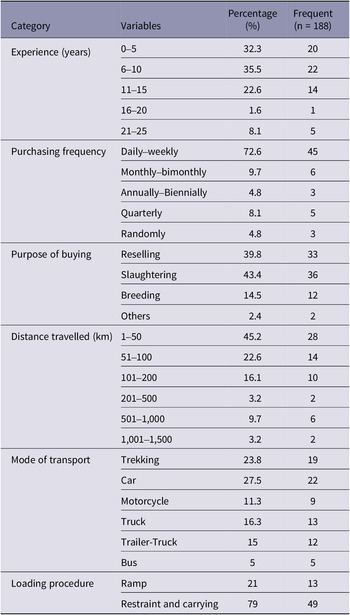
The majority of respondents who are buyers have between 6–10 years (35.5%) of experience, closely followed by those with 0–5 years (32.3%); the rest go as far as 25 years (Table 4). The most common purchasing frequency was daily to weekly (72.6%), with a smaller proportion buying monthly–bimonthly (14.5%) or quarterly (8.1%). The purpose of buying varied, with slaughtering being the most reported reason for buying animals (43.4%). Reselling (39.8%) and breeding (14.5%) were other reasons reported. Although respondents travel as far as 1,001–1,500 km (3.2%) after purchasing animals, the distance travelled by these set of respondents also varied, with respondents with the closest proximity covering 1–50 km (45.2%) being the highest (Table 4). Regarding the mode of transport used, the majority (27.5%) rely upon cars, while 23.8% reported trekking to their destination. However, the use of ordinary trucks (16.3%) and trailer trucks (15%) is common; respondents also report the use of motorcycles (11.3%) as a mode of transporting livestock. Like the drivers, most respondents also prefer the use of restraint and carrying (79%) over the use of ramp (21%).
Livestock buyers’ practices regarding purchasing frequency, transport choices, and loading procedures in Nigerian markets (n = 188) with information obtained through the study questionnaire

Animal welfare awareness (AWA)
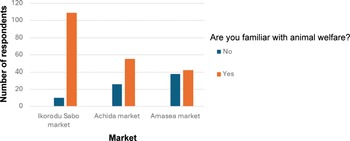
Awareness of the concept of animal welfare was relatively high, with 73.6% (n = 206) of respondents being familiar with the concept and 69.3% (n = 194) familiar with the notion of the Five Freedoms (FAWC 1992). However, through further open discussion and the use of posters (Figure 3), the majority only resonate with feeding and discomfort. Notably, the distribution of AWA across market locations (Figure 6) varies, with awareness highest in Ikorodu (91.6%) and lowest in Amansea (52.5%). Among occupational groups, sellers showed greatest familiarity (77.7%), followed by buyers (66.1%) then drivers (63.3%). Regarding the Five Freedoms (FAWC 1992), 69.3% of respondents were familiar with the concept, with higher awareness in Ikorodu (85.7%) compared to Achida (67.9%) and Amansea (46.3%).
Distribution of animal welfare awareness (AWA) among respondents across different livestock market locations in Nigeria. Differences may reflect disparities in exposure to information, education, enforcement of welfare regulations, or interaction with veterinary personnel.

Furthermore, 96.8% (n = 271) acknowledged that animals feel pain. All respondents were then asked whether they had ever sold, bought, or driven apparently sick or pregnant animals with n = 171 (61.1%) answering in the affirmative. However, 83% (n = 142) said everyone involved had been aware the animals were either sick or pregnant, and separation from others (56.7%; n = 97) was the most preferred treatment given to such animals. Another preferential treatment was transportation with animals of the same condition (13.5%; n = 23), while it had not occurred to a considerable proportion (29.8%; n = 51) to provide preferential treatment to animals that were apparently sick or pregnant.
Animal mortality during transportation was common, with 70.7% of respondents having experienced animal deaths en route (DDT), reportedly occurring on every trip (13.6%), most trips (22%) and occasionally (64.1%). The primary causes attributed to these deaths included overcrowding (27.8%), sickness (22.9%), lack of ventilation (15.7%), and restraint discomfort (13.9%). Accidents on the road (9%), overspeeding (5.5%), and unknown causes (5.1%) were also reported. Additionally, 56.8% reported experiencing deaths on arrival (DOA), with the frequency of occurrence varying — 25.8% encountered DOA on every trip, 23.3% on most trips and 50.9% occasionally. The leading causes cited were similar to those of DDT, with overcrowding (25.3%), sickness (22.8%), lack of ventilation (17.3%), and restraint discomfort (15.5%). Accidents on the road (9.6%), overspeeding (5%), and unknown causes (4.5%) were also mentioned.
More than half of the respondents (58.9%; n = 165) were aware of veterinary control posts, but only 46.4% (n = 130) had actually come into contact with one. Common activities conducted at these posts include, permit verification and animal checks. In addition, more than half of the respondents (65.7%; n = 184) had had interactions with animal health practitioners. In contrast, awareness of legal regulations regarding animal maltreatment during transport and at markets was lower, with only 44.3% being aware of the Animal Diseases (Control) Act.
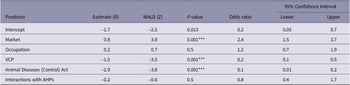
The logistics regression analysis examines factors associated with attitudes towards AWA (Table 5). The model’s intercept was significant (OR = 0.2, CI: 0.1–0.7; P = 0.013). Market location significantly increased the likelihood of being familiar with the concept of animal welfare (OR = 2.4, 95% CI: 1.5–3.7; P < 0.001). Familiarity with the existence of veterinary control posts was associated with lower odds of being familiar with animal welfare (OR = 0.2, 95% CI: 0.1–0.5; P < 0.001). Similarly, awareness of the Animal Diseases (Control) Act was also associated with lower odds of being familiar with animal welfare (OR = 0.1, 95% CI: 0.01–0.2; P < 0.001). However, occupation and interactions with animal health practitioners (AHPs) were not significant predictors of AWA.
Logistic regression analysis of predictors associated with livestock stakeholders’ awareness of animal welfare related to questionnaire study at three markets in Nigeria

* P < 0.05, ** P < 0.01, *** P < 0.001.
VCP: veterinary control post (being familiar with the concept, yes/no); AHP: animal health professional (having encountered one, yes/no).
Challenges in following standard procedure
Economic constraints (70.4%; n = 197) were the most frequently cited challenge in maintaining proper livestock handling and transporting standards. Additional barriers included a lack of enforcement authority (40.7%; n = 114) and reluctance from other stakeholders during transport (35.7%; n = 100).
Discussion
This study provides a critical insight into familiarity with the concept of animal welfare of primary stakeholders in selected major livestock markets in Nigeria and transport practices relevant to animal welfare. Significant transport-related challenges such as overcrowding and sickness were mentioned as the major contributing factors to death during transit (DDT) and upon arrival (DOA).
Stakeholder practices
Drivers play a critical role in ensuring safe livestock transportation. Most interviewed drivers had 6–15 years of experience and many reported covering long distances — including journeys in excess of 500 km — even though most travelled less than 500 km. Although this alludes to a certain familiarity with challenges associated with transportation, it does not necessarily translate to adherence to best practices for animal welfare. Although the majority of drivers in our study completed their journeys within 10 h, for trips of over 1,000 km the journey time would range from 20–30 h. Such prolonged transport times are associated with an increased risk of animals becoming non-ambulatory, lame, or dying in transit (González et al. Reference González, Schwartzkopf-Genswein, Bryan, Silasi and Brown2012).
However, even journeys of reduced duration can pose significant welfare challenges when transport conditions are poor. In Nigeria, studies have shown there to be specific factors that hinder animal welfare conditions during transportation, such as poor road access networks, vehicle breakdown, travel without rest, overcrowding, and inadequate ventilation (Ibironke et al. Reference Ibironke, McCrindle and Adejuwon2010). Factors such as these have led to animals transported over short distances displaying marked physiological stress responses (Minka & Ayo Reference Minka and Ayo2010). It has also been reported that journeys that should only take a day to complete can often become extended by a number of days due to various factors including poor road access, vehicle breakdown etc (Ibironke et al. Reference Ibironke, McCrindle and Adejuwon2010). In contrast, livestock transport in countries like the UK is subjected to stricter controls — including mandatory rest stops, fitness to travel assessments, and vehicle design requirements, all aimed at minimising animal stress, injury and drivers’ working conditions (Scientific Opinion Concerning the Welfare of Animals during Transport 2011). These systemic differences contribute to improved welfare outcomes in these countries, even for journeys of comparable duration.
Therefore, while journey length remains a considerable risk factor, the broader transport context, including vehicle condition, road quality, animal handling, and regulatory oversight, plays a critical role in determining animal welfare outcomes during transit.
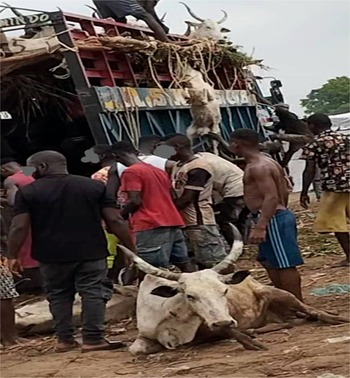
The present findings offer an insight into the types of vehicles used as well as loading practices. The long distance nature of the trade sees the most commonly used vehicles being ordinary trucks and trailer trucks; typically multi-purpose vehicles not specifically designed for protecting the welfare of animals during transport. Despite the presence of improvised loading ramps in all markets, less than half of the drivers made use of them, preferring instead to deploy manual lifting and restraint methods that carry the risk of causing stress and physical harm to the animals (Figure 7). While the interview questions did not directly address the reasons for this preference, it may be related to variations in vehicle types, whereby the available improvised ramps do not align with all loading conditions. Additionally, ramps are typically designed for unloading large numbers of animals from trailer trucks rather than for individual sales, which may make manual restraint a more practical choice for drivers, sellers and buyers, regardless of species. The moderate level of awareness regarding veterinary permits further emphasises the need for better regulation and enforcement to ensure compliance with transport health standards.
Unloading of livestock from a truck without a ramp, using manual lowering from the side of the vehicle.

Livestock sellers, who made up the majority of respondents, displayed wide ranges of experience, with an average of 12.9 years. A significant proportion operated within a single market, suggesting a strong local market dependence. However, transportation from farms to the markets varied, with most sellers transporting animals between 100 m and 50 km, primarily using trailer trucks.
Trailer trucks comprised the most common mode of transport used by the sellers; however, reports of motorcycles being used offers a shocking revelation since this mode of transport is clearly unsuitable for animal transportation due to potential instability and a lack of proper containment. Some sellers, particularly those closer to the markets, opted for trekking with their animals. While this mode of transport eliminates risks associated with vehicle transport, it may expose animals to environmental stressors, such as extreme heat and exhaustion (Majekodunmi et al. Reference Majekodunmi, Fajinmi, Dongkum, Picozzi, Thrusfield and Welburn2013).
Also, a small fraction of sellers were nomadic herders who continuously moved their livestock across regions. Supported by previous work (Turner & Schlecht Reference Turner and Schlecht2019), this highlights the diversity of animal sourcing and movement within the livestock trade, which has implications for disease transmission and biosecurity measures (Ali et al. Reference Ali, Al-Qarawi and Mousa2006). Additionally, most sellers sourced their livestock from northern states, such as Kano, Katsina, Sokoto, Jigawa, Taraba, and Zamfara, reinforcing the importance of these regions in terms of national livestock supply chains (Arinze Reference Arinze2021).
On the other hand, buyers described varying levels of experience, with an average of 12 years in purchasing. Most buyers engaged in frequent transactions, with the majority purchasing animals daily to weekly. This high turnover rate suggests a continuous demand for livestock, necessitating efficient and humane transportation methods. The primary reasons for purchasing livestock were slaughter and resale, indicating that most animals were destined for meat production (Ibironke et al. Reference Ibironke, McCrindle and Adejuwon2010). However, a smaller proportion purchased animals for breeding, emphasising the role of genetic improvement in livestock production systems.
Buyers reported travelling variable distances post-purchase, covering around 1–50 km, though some travelled as far as 1,500 km. Like sellers, buyers relied predominantly upon cars, trekking, trucks and even motorcycles. This reinforces the report on slaughtering being one of the significant reasons for purchasing, as many slaughterhouses are often located close to livestock markets (Strappini et al. Reference Strappini, Frankena, Metz, Gallo and Kemp2012). It also points to possible compliance with a subsection of the Animal Diseases Act that states that animals trekking on hooves for slaughter should not be transported over 30 km. Similarly to the sellers, most buyers (56.5%) also preferred manual lifting and restraint despite the availability of improvised loading ramps. This further emphasises the need for interventions to improve the working conditions of animal handlers (farmers, buyers, and drivers) leading to a subsequent improvement to animal welfare (Pinillos et al. Reference Pinillos, Appleby, Manteca, Scott-Park, Smith and Velarde2016). The data further revealed that only 30.6% of buyers had transported their animals on journeys lasting longer than 12 h. Among those who did, the majority reported stopping for a break — animal checks, feeding, rest, or water breaks were activities mentioned. While this suggests a degree of concern for animal welfare, the low percentage of those who stopped for rest and hydration indicates room for improvement in long-distance transport management.
Animal welfare awareness and regulatory challenges
The percentage of interviewees who responded that they were aware of the concept of animal welfare (AWA) was relatively high (73.6%), with 69.3% familiar with the Five Freedoms (FAWC 1992). However, upon delving deeper, it became apparent that most respondents associated welfare primarily with feeding and discomfort rather than broader concepts, such as freedom from pain and distress. This underscores the need for more comprehensive educational interventions to deepen understanding beyond basic welfare needs. The attitude and practices of stakeholders are central to animal welfare outcomes during transport especially since studies have shown a greater likelihood of poor handling practices, such as overcrowding, inadequate ventilation, and poor stocking from handlers with low awareness or concern for animal welfare (Hemsworth & Coleman Reference Hemsworth and Coleman2010).
In a study assessing the attitudes of stockpersons in Kenya regarding animal welfare, Wambui et al. (Reference Wambui, Lamuka, Karuri and Matofari2018), found that, despite there being adequate knowledge levels, this was not reflected in people’s actual practices. This discrepancy was influenced by factors such as age, gender, and experience. These findings mirror observations in Nigeria where many sellers operate without standardised welfare guidelines and have inadequate training, weak enforcement of transport guidelines, and limited awareness of animal welfare principles, all of which contribute to sub-optimal practices among market actors (Umaru Reference Umaru2020). This presents a sharp contrast to what is seen in developed countries such as the UK, and USA, where strict enforcement of animal welfare laws and stockperson training programmes have led to considerable improvements in transport conditions and outcomes (Lundmark et al. Reference Lundmark, Berg, Schmid, Behdadi and Röcklinsberg2014).
In terms of our study, respondents’ desire to ensure animals did not lack food and were subject to discomfort may not necessarily be linked to familiarity with animal welfare as a global concept or the notion of the Five Freedoms (FAWC 1992) as an ethical concept, instead it could be a function of the dichotomised intrinsic and instrumental values as suggested by Kauppinen et al. (Reference Kauppinen, Vainio, Valros, Rita and Vesala2010). The farmer could be either ‘a-reward-seeking’ or ‘an emphatic’ farmer. The former, identified by the instrumental values, sees animal welfare or taking care of the animals as a means of achieving good economic results — high production yield, increased weight, reduction in disease, etc. On the other hand, the ‘empathic farmer’ takes care of the animals to satisfy moral and ethical considerations in their production systems (Kauppinen et al. Reference Kauppinen, Vainio, Valros, Rita and Vesala2010). Thus, the average farmer in this study who recognised the need to free animals from hunger and sickness may be a reward-seeking farmer.
Furthermore, the findings suggest that while a considerable proportion of respondents were aware of veterinary control posts (VCPs), less than half had encountered one, indicating a gap between awareness and actual engagement. VCPs are designed to play a crucial role in ensuring compliance with animal health regulations (Ogundipe Reference Ogundipe2002; Oyeleye et al. Reference Oyeleye, Ezenduka and Okoli2022), but their effectiveness may be curtailed by inconsistent enforcement or a lack of accessibility. Interestingly, according to the only research that accounted for the VCPs available in Nigeria by Ogundipe (Reference Ogundipe2002), as of 2002, the country has 44 functional International Veterinary Control Posts (INVCP) in its entire 4,857-km border length, 111 Inter-State Veterinary Control Posts (ISVCP) and 905 State Veterinary Checkpoints (SVCP). The status of these posts is not currently known, however, taking into account our respondents’ responses, we may deduce that operating standards have either been reduced to merely collecting levies or have ceased functioning altogether. Further research into the status of the VCPs could shed more light on this.
Similarly, awareness of the Animal Diseases (Control) Act concerning animal cruelty was relatively low (44.3%), suggesting inadequate legal frameworks governing animal welfare dissemination. This aligns with previous research indicating that animal transportation in sub-Saharan Africa either lacks adherence to animal welfare laws or is subject to complete neglect (Ali et al. Reference Ali, Al-Qarawi and Mousa2006). Our study, most notably, found a strong negative association between awareness of the Animal Diseases (Control) Act and animal welfare awareness, suggesting that mere awareness of punitive measures does not necessarily translate to improved welfare practices. This may be a result of inadequate enforcement or a lack of direct engagement with the livestock sector regarding the practical implications of these laws. As stated in the Introduction, while the higher fines serve, theoretically, as an increased deterrent, enforcement remains inconsistent, with minimal oversight and prosecution of offenders. Many stakeholders in the livestock value chain remain unaware of the updated penalties, and weak regulatory monitoring continues to undermine the effectiveness of the law. As a result, violations, such as overcrowding of animals during transport and improper handling persist, suggesting that stronger enforcement mechanisms, rather than simply legislative amendments, are needed to improve compliance. This further reinforces that even when aware of the Animal Diseases (Control) Act, stakeholders may neglect it due to its weak punishment vis a vis reinforcement.
Factors influencing familiarity with animal welfare
Awareness varied significantly across locations, with the highest in Ikorodu (Figure 6) and the lowest in Amansea. This could be attributed to the location of these markets since the Ikorodu Sabo market is located in Lagos state, which is generally considered one of, if not the most, sophisticated state in Nigeria. This is due to its economic diversity and economic viability as regards all production value chains (Baldin Reference Baldin2023). Occupational differences in AWA were also notable, with sellers showing the greatest awareness, followed by buyers, then drivers. This could be a result of their prolonged interactions with livestock (Hemsworth & Coleman Reference Hemsworth and Coleman2010; Wambui et al. Reference Wambui, Lamuka, Karuri and Matofari2018; Losada-Espinosa et al. Reference Losada-Espinosa, Miranda-De la Lama and Estévez-Moreno2020). While the majority of respondents acknowledged that animals feel pain, a significant percentage admitted to having sold, bought, or transported sick or pregnant animals. Among them, the majority preferred to separate such animals from others, while others either transported them with similar animals or provided no special treatment. This behaviour highlights the complex relationship between acknowledging animal sentience and actual handling practices. Despite awareness of animal pain, economic pressures and operational demands often lead to compromised welfare standards (FAWC 2009). For instance, transporting sick or injured animals without appropriate care can exacerbate their condition and elevate stress levels, negatively impacting animal welfare and product quality (WOAH 2022).
Furthermore, the decision by some handlers to segregate sick or pregnant animals suggests an awareness of the need for special care. However, the lack of uniformity in these practices highlights the necessity for standardised guidelines and comprehensive training. Proper humane handling and transportation education is crucial to ensure the well-being of livestock and that legal and ethical obligations are adequately met.
Conversely, awareness of Veterinary Checkpoints (VCPs) and the Animal Diseases (Control) Act (ADA) both showed a significant association with a decreased likelihood of being aware of the concept of animal welfare. This counterintuitive finding may reflect scepticism or disillusionment with enforcement mechanisms, especially if these policies are perceived as punitive or inconsistently applied. It may also point to a disconnect between policy awareness and practical understanding or prioritisation of animal welfare principles among market actors. Neither occupation nor interactions with AHPs were significant predictors of AWA, emphasising the need for targeted education campaigns to bridge knowledge gaps.
Transport-related mortality and key influencing factors
One of the most notable findings was the high occurrence of death of animals during transport and death on arrival, although previous studies associated this with poor transportation conditions (Ibironke et al. Reference Ibironke, McCrindle and Adejuwon2010). Overcrowding, sickness, lack of ventilation, and improper restraint were the primary causes reported here, aligning with previous studies on transport stress and mortality in livestock (Adenkola et al. Reference Adenkola, Ayo, Sackey, Adelaiye and Minka2009; Schwartzkopf-Genswein et al. Reference Schwartzkopf-Genswein, Faucitano, Dadgar, Shand, González and Crowe2012).
Challenges and constraints in implementing welfare standards
Economic constraints emerged as the most significant barrier to maintaining proper livestock handling and transport standards. This is in accordance with previous studies indicating that financial limitations hinder the adoption of welfare-improving measures (Bist et al. Reference Bist, Bist, Poudel, Subedi, Yang, Paneru, Mani, Wang and Chai2024). Other stakeholders’ inadequate enforcement authority and resistance also challenge compliance with best practices. Addressing these constraints will require a multifaceted approach, including financial incentives, stricter enforcement, and community engagement to foster behaviour change.
Animal welfare implications
These findings reveal several critical gaps in animal welfare practices during transportation, including prolonged transport times, inadequate use of ramps, and limited awareness of veterinary permits. The preference for manual handling over appropriate, conventional loading ramps exposes animals to unnecessary stress and the potential for injury. Improving animal welfare in livestock transportation requires targeted interventions, including education and awareness programmes for drivers, sellers, and buyers. Adopting best practices, such as enforcing veterinary permit regulations, promoting the use of loading ramps, and ensuring adequate rest and hydration during long journeys, will reduce stress and enhance the well-being of transported animals. Moreover, policy efforts should focus on enforcing transport regulations, ensuring that vehicles used are appropriate for livestock transportation, and enhancing infrastructure, such as designated rest points and water stations along major transport routes.
Future research should explore the direct impact of these transportation practices on animal health and productivity and assess the effectiveness of interventions aimed at improving welfare standards. By addressing these critical issues, the livestock industry can move towards more humane and sustainable transportation systems that benefit animals and stakeholders.
Conclusion
The survey found that stakeholders (sellers, drivers, and buyers) at three Nigerian livestock markets were familiar with animal welfare and the Five Freedoms (FAWC 1992). However, most focused only on feeding and discomfort. Awareness of the Animal Diseases (Control) Act was notably low, indicating a need for increased sensitisation on regulatory frameworks. Mortality during and after transportation was common, with overcrowding, sickness, lack of ventilation, and restraint discomfort identified as primary causes.
Furthermore, the interviews uncovered a limited use of legally required veterinary permits to transport animals and veterinary control posts. Despite more than half of the stakeholders being aware of veterinary control posts, direct interactions with them remain limited. These findings underscore the need for targeted interventions, policy enforcement, and stakeholder education to improve livestock transport conditions and overall animal welfare.
Major barriers to improving transport practices were economic constraints and lack of authority to mandate standards.
Acknowledgements
We wish to thank the Humane Slaughter Association for funding this study.
Competing interests
None.


 Open access

