




Introduction
Water scarcity is one of the most important factors affecting plant growth and yield in agriculture (Ebrahimian et al., Reference Ebrahimian, Seyyedi, Bybordi and Damalas2019; Yeloojeh et al., Reference Yeloojeh, Saeidi and Sabzalian2020; Tutar et al., Reference Tutar, Er, Gönülal, Çelik and Farooq2025). Therefore, innovative approaches need to be developed to sustainably increase crop productivity (Romero et al., Reference Romero, Navarro and Ordaz2022; Ammeri et al., Reference Ammeri, Hidri, Souid, Simeone, Hajjaji, Moussa and Eturki2023; Çelik et al., Reference Çelik, Tutar, Gönülal and Er2024). Safflower (Carthamus tinctorius L.), from the Asteraceae family, is considered a medicinal and high-quality oil plant that can adapt well to arid conditions (Hudz et al., Reference Hudz, Ivanova, Brindza, Grygorieva, Schubertova and Ivanisova2017; Bijanzadeh et al., Reference Bijanzadeh, Moosavi and Bahadori2022). Safflower oil is used in various sectors for edible and dyes (Jia-Xi et al., Reference Jia-Xi, Chun-Xia, Ying, Meng-Han, Ya-Nan, Yue-Xin and De-An2019). Although safflower is considered a plant that can withstand environmental stress, including water stress, water restrictions and environmental stress factors in semi-arid and arid regions negatively affect the quality and yield of safflower (Istanbulluoglu et al., Reference Istanbulluoglu, Gocmen, Gezer, Pasa and Konukçu2009; Ghiyasi et al., Reference Ghiyasi, Rezaee Danesh, Amirnia, Najafi, Mulet and Porcel2023). Previous studies have shown that the highest yield is obtained when the plant’s water requirements are fully met, while yield decreases under insufficient irrigation conditions (Shareef et al., Reference Shareef, Gui, Zeng, Waqas, Zhang and Iqbal2018; Yavuz et al., Reference Yavuz, Seymen, Süheri, Yavuz, Türkmen and Kurtar2020; Hou et al., Reference Hou, Fan, Zhang, Hu and Xiang2024). In this context, environmentally friendly and innovative practices such as the use of treated wastewater for irrigation and deficit irrigation techniques are considered suitable solutions to both water conservation and contribute to agricultural sustainability (Lahlou et al., Reference Lahlou, Mackey and Al-Ansari2021; Perulli et al., Reference Perulli, Gaggia, Sorrenti, Donati, Boini, Bresilla and Morandi2021). In developing countries, irrigation with untreated or minimally treated wastewater is sometimes necessary to meet the water and nutrient needs of crops despite various risks of contamination (Hodomihou et al., Reference Hodomihou, Feder, Masse, Agbossou, Amadji, Ndour-Badiane and Doelsch2016; Feder, Reference Feder2021). Studies have shown that wastewater application increases yield (sometimes significantly) compared to controls, particularly when additional nutrients and water are provided (Elfanssi et al., Reference Elfanssi, Ouazzani and Mandi2018; Li et al., Reference Li, Cao, Guan, Li, Hao, Hu and Chen2019; Ammeri et al., Reference Ammeri, Hidri, Souid, Simeone, Hajjaji, Moussa and Eturki2023). Recent developments in agricultural biotechnology have revealed that a number of bacterial species living in the rhizosphere are beneficial for plant growth and development, yield, product quality, environment and sustainable agricultural production (Ullah et al., Reference Ullah, Ditta, Imtiaz, Li, Jan, Mehmood and Rizwan2021; Bouremani et al., Reference Bouremani, Cherif-Silini, Silini, Bouket, Luptakova, Alenezi and Belbahri2023). Such microorganisms are known as rhizobacteria that promote plant growth (PGPR) (Ipek, Reference Ipek2019). These beneficial microbes enhance plant development by facilitating nitrogen fixation, synthesising growth hormones and increasing the efficiency of nutrient absorption (Nagrale et al., Reference Nagrale, Chaurasia, Kumar, Gawande, Hiremani, Shankar and Prasad2023; Igiehon et al., Reference Igiehon, Babalola and Hassen2024). PGPRs have been shown to improve plant adaptation, particularly under abiotic stress conditions such as water stress (Ahmad et al., Reference Ahmad, Fiaz, Hafeez, Zahra, Shah, Gul and Wang2022; Chieb et al., Reference Chieb and Gachomo2023; Zhao et al., Reference Zhao, Yuan, Xing, Dao, Zhao, Li and Wang2023).
Although there are numerous studies on the abilities of PGPR to promote plant growth and development, plant hormone synthesis, N-fixation, P-solubility and mineral uptake, its effects as a method to conserve water resources in relation to wastewater use and deficit irrigation amount application strategies associated with bacterial inoculations have not yet been sufficiently researched. The aim of this study is to investigate the effects of applying recycled wastewater with plant growth promoting bacteria (PGPR) at different irrigation levels on important physiological and biochemical characteristics of the safflower (Carthamus tinctorius L.) under semi-arid conditions.
Materials and methods
Experimental site
The experiment was conducted in the experimental field of the Application and Research Center for Crop Production at Atatürk University, Erzurum, Türkiye during two growing seasons (2022 and 2023) (Fig. 1).
Location of the study area and aerial view of the experimental field (red square), captured by a drone during the growing season.

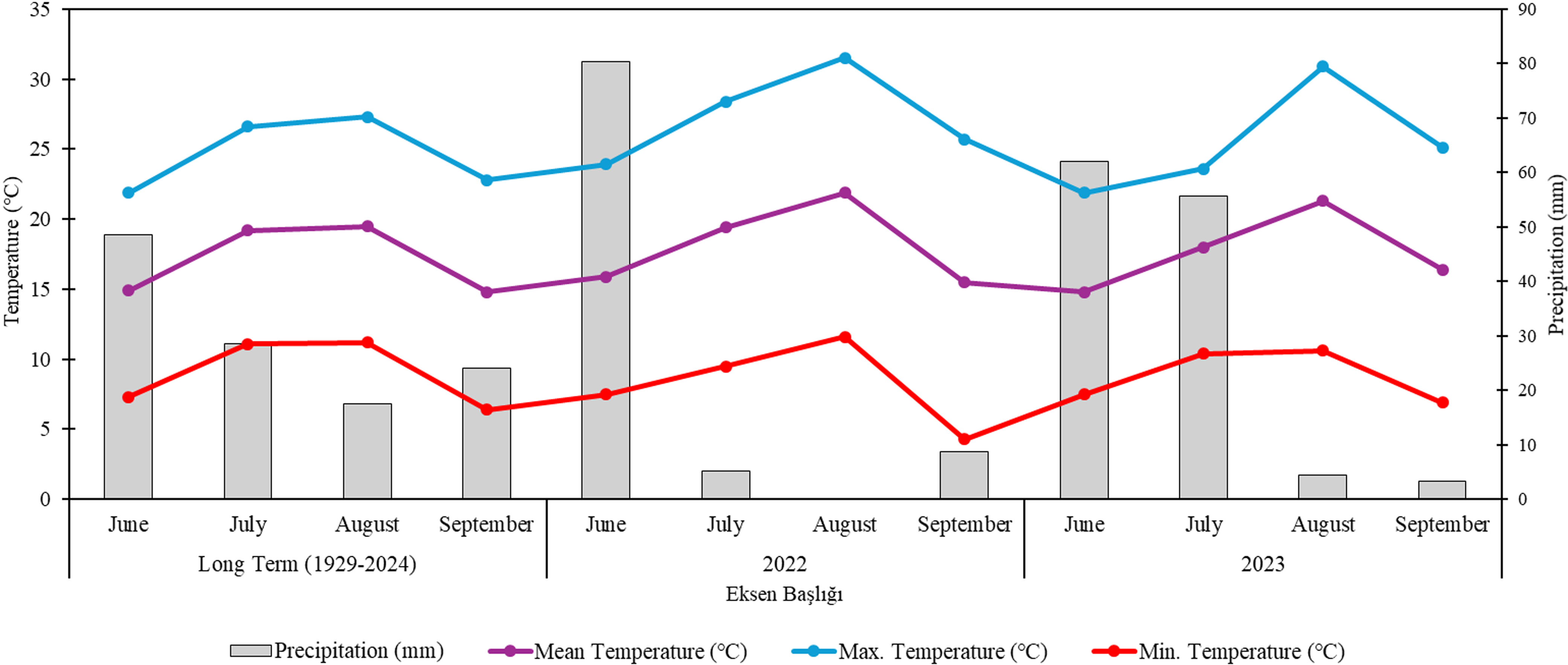
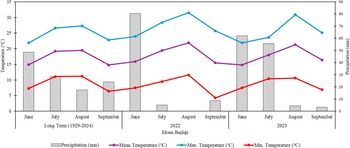
The site is located at 39.934◦N, 41.236◦E, with an elevation 1788 m. This region has a semi-arid climate with hot, dry summers, an average annual air temperature of 5.8 °C, and annual precipitation long-term average (1929 – 2024) of 430.9 mm. The basic meteorological data during the experiments are presented in Fig. 2.
Monthly climate data of the study area of the long-term and experimental year.
Soil sampling and analysis
All soil analyses presented in this study were carried out on soil samples taken under field conditions and standard methods were used during the analyses. Soil samples were collected at three depth intervals: 0 – 30 cm, 30 – 60 cm and 60 – 90 cm, using both disturbed and undisturbed methods. The average soil properties obtained as a result of the analyses and the references of the applied methods are as follows: pH 7.58 (Thomas, Reference Thomas1996), electrical conductivity 1.38 dS/m (Rhoades, Reference Rhoades1996), organic matter 1.30% (Nelson and Sommers, Reference Nelson and Sommers1996), CaCO3 content 1.39% (Loeppert and Suarez, Reference Loeppert and Suarez1996), total nitrogen 0.07%, available phosphorus (P2O5) 42.9 kg/ha and available potassium (K2O) 1360 kg/ha. The soil was classified as clay loam, with 36.2% clay, 30.4% silt and 33.4% sand (Gee and Or, Reference Gee and Or2002).
Field preparation and crop management
The safflower variety ‘Dincer’ (Carthamus tinctorius L.), which is known for its suitability to local environmental conditions, was used for the study. Seeds were sown at 20 kg/ha on May 13, 2022, and May 9, 2023. All plots received nitrogen and phosphorus fertilizers in the form of ammonium sulphate and triple superphosphate, respectively, at application rates of 60 kg/ha N and 40 kg/ha P2O5. Weed control was carried out during growing season using a hand hoe. The crop was harvested on 19 September 2022 and 15 September 2023. The experiment was designed with three replications. Each plot was measured 8 m long and 1.8 m wide, covered a total area of 14.4 m², and consisted of four rows spaced 0.6 m apart.
Experimental design and treatments
This study was designed with three replicates in a randomized complete block design. In the experiment, the main plots were arranged according to the water source, and two different types of water were used: recycled wastewater (RW) and freshwater (FW). The sub-plots were arranged according to irrigation levels (I) and the application of bacteria that promote plant growth (R). Five different irrigation levels were applied for each water source: 100% of full crop irrigation water requirement, CWR (I100), 25% water less than CWR (I75), 50% water less than CWR (I50), 75% water less than CWR (I25) and rain-fed only (I0) conditions. In addition, four different PGPR applications were conducted one controlled bacteria-free environment (R0), one bacteria application (R1), two bacteria applications (R2) and three bacteria applications (R3).
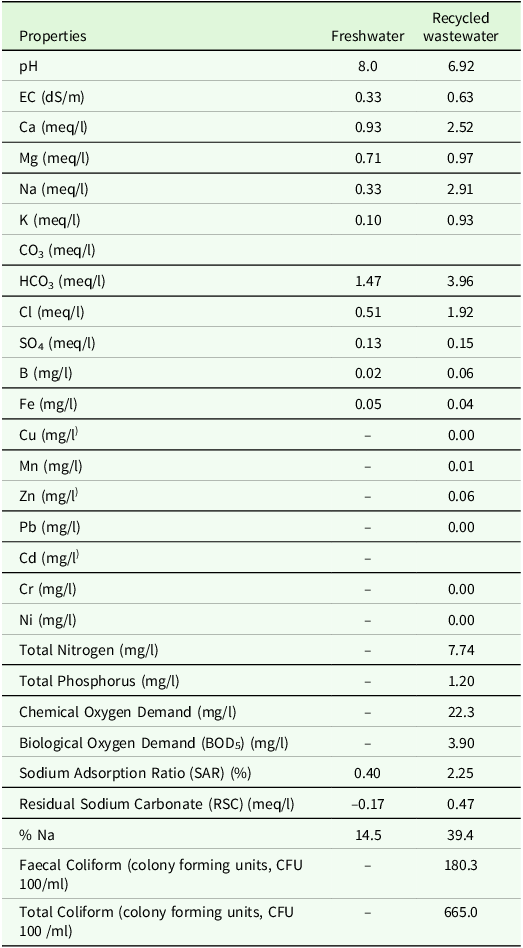
In the study, irrigation water was applied through a drip irrigation system consisting of drippers with a flow capacity of 4 l/h operating at an operating pressure of 100 kPa and the lateral pipes with a diameter of 16 mm. The diameter of the main pipe and lateral pipes was set at 50 mm. The fresh water used for irrigation was sourced from a deep well located in the research area. The recycled wastewater was supplied by the Erzurum Municipality Biological Wastewater Treatment Plant. Some of the chemical and physical properties of the wastewater used are as follows: pH 6.92, electrical conductivity (EC) 0.63 dS/m, chemical oxygen demand (COD) 22.3 mg/l, biological oxygen demand (BOD₅) 3.90 mg/l, sodium adsorption ratio (SAR) 2.25%, residual sodium carbonate (RSC) 0.47 meq/l and sodium percentage (%Na) 39.4%. The results of the analysis of fresh and recycled wastewater used in irrigation during the years of the study are given in Table 1. When these values are compared with the limits determined by Ayers and Westcot (Reference Ayers and Westcot1989) and Kanber and Ünlü (Reference Kanber and Ünlü2010), it is found that the wastewater used in this study is suitable for use in soil, plant growth and irrigation systems. Irrigation water requirement was based on the evaporation amount obtained using the Class A-pan evaporation method as follows:
 $$I\; = \;{E_p} \times {K_{cp}} \times A\;$$
where I: amount of irrigation water required (L), A: area of the plot (m2), Ep: cumulative amount of water that evaporated from the Class A-pan (mm), Kcp: plant-pan coefficient (K values for different irrigation levels were selected as 1, 0.75, 0.50 and 0.25)
The quality properties of recycled wastewater and freshwater

The actual evapotranspiration (ETa) was calculated using the water balance equation proposed by Allen et al. (1998).
 $$\rm ETa =I +P+Cr-Dw-Rf\pm\Delta S$$
where ETa: evapotranspiration (mm), I: amount of irrigation water (mm), Cr: capillary rise (mm), Dw: deep percolation (mm), Rf: amount of runoff (mm) and ∆S: changes in water content (mm).
The experimental field had a deep soil profile without drainage or salinity problems. As the influence of groundwater was negligible and there was no capillary rise, the Cr factor was excluded from the calculations. Any soil moisture exceeding the field capacity due to precipitation or irrigation was regarded as deep percolation. However, since irrigation remained within field capacity in all treatments limits, deep percolation was not considered. Moreover, as the drip irrigation system was accurately designed and operated, surface runoff did not occur, so the Rf factor was not considered in the calculations.
In this study, nine bacterial isolate mixture solutions consisting of Bacillus megaterium M-3, Bacillus megaterium KBA-10, Bacillus megaterium TV-3D, Bacillus megaterium TV-91C, Bacillus subtilis TV-17C, Bacillus subtilis TV-12H, Bacillus thuringiensis CP-1, Pantoea agglomerans RK-79, Pantoea agglomerans RK-92 were prepared and applied. The bacterial strains used in the study were obtained from the Culture Collection Unit, which is affiliated to with the Plant Protection Department of the Faculty of Agriculture at Atatürk University. The bacterial cultures were propagated on nutrient agar for routine applications; for long-term storage, they were stored at -80°C in Luria Broth medium with 15% glycerol. The properties of these isolates, such as phosphate solubilizing ability, nitrogen fixation, hormone and amino acid production and their effects on plant growth have been evaluated in previous studies (Kotan et al., Reference Kotan, Mohammadi, Karagoz, Dadasoglu, Gunes and Tozlu2014). Tryptic soy agar (TSA, Oxoid) and tryptic soy broth (TSB, Oxoid) served as the culture media in this study. All bacterial isolates were initially incubated on TSA plates at 27 °C for 24 hours. Following incubation, single colonies were transferred into 500 mL Erlenmeyer flasks containing TSB and cultivated aerobically on a rotary shaker at 150 rpm for 48 hours at 27 °C. The resulting bacterial culture was then diluted with sterile distilled water (sdH₂O) to achieve a final concentration of approximately 1 × 10⁸ cfu mL−1, which was verified using a turbidimetre. The prepared bacterial solution was stored at +4 °C until use. For field applications, the solution was applied using a backpack sprayer operating at 2 atmospheres with agitation. The first application was made directly to the seedbed, followed by two or three subsequent applications at 10-day intervals, depending on the treatment group, at a rate of 400 L/ha to ensure effective colonization and plant interaction. The prepared bacterial solution was first applied to the seedbed; then the application was repeated at 10-day intervals after the planting date to evaluate the effects on plant growth.
Data collection and measurements
Fifteen plants were randomly sampled from two rows located in the centre of each plot at harvest and seed oil and protein analyses were performed after harvest, while SPAD and stomatal conductance measurements were taken during the flowering stage. SPAD (Soil Plant Analysis Development) value is a parameter that measures the chlorophyll content of plants and is related to their health status, photosynthetic capacity, nitrogen status and yield. The SPAD metre, by measuring chlorophyll content, is particularly used for monitoring nitrogen nutrition, water stress and growth stages. SPAD readings are a reliable tool for assessing plant yield potential and stress conditions (Varga et al., Reference Varga, Pospišil, Iljkić, Markulj Kulundžić, Tkalec Kojić and Antunović2025). The seeds of the sampled plants were prepared for safflower oil analysis. Oil analyses were performed in according to AOCS method (AOCS, 1993; Shahrokhnia and Sepaskhah, Reference Shahrokhnia and Sepaskhah2016) by extracting 5 g of ground seeds in n-hexane for 8 hours using a Soxhlet apparatus. Additionally, the protein content of the seed samples from each plot was calculated by determining the nitrogen concentration using the Kjeldahl method. The determined nitrogen values were multiplied by a factor of 5.30 to represent the total protein content (Shahrokhnia and Sepaskhah, Reference Shahrokhnia and Sepaskhah2016). In the study, a porometer (DT Porometer AP4 DELTA-T Devices Cambridge, UK) was used to determine the stomatal resistance in the leaves of the sunflower plant. Measurements were taken in open air conditions between 12:00 and 14:00, exposing the plants to sunlight, covering the upper and lower surfaces of the fully developed top two leaves of five plants selected from the centre of each plot (Korkmaz et al., Reference Korkmaz, Uzunlu and Demirkiran2007). The chlorophyll content (SPAD index) of the safflower plants in each plot was determined using a SPAD metre. Measurements were taken between 9:30 and 10:00 a.m. using a portable chlorophyll device (SPAD-502, Minolta Co., Japan). For each selected leaf, the reading was recorded on one side of the main vein, in the central part of the leaf blade (Manvelian et al. Reference Manvelian, Weisany, Tahir, Jabbari and Diyanat2021).
Statistical analysis
The data obtained during the research was subjected to an analysis of variance using the SPSS Packpage programme and compared for differences between the mean values using the analysis of variance (ANOVA) and the Duncan multiple comparison test (Yildirim et al., Reference Yildirim, Ekinci, Sahin, Ors, Turan, Demir and Kotan2021).
Results
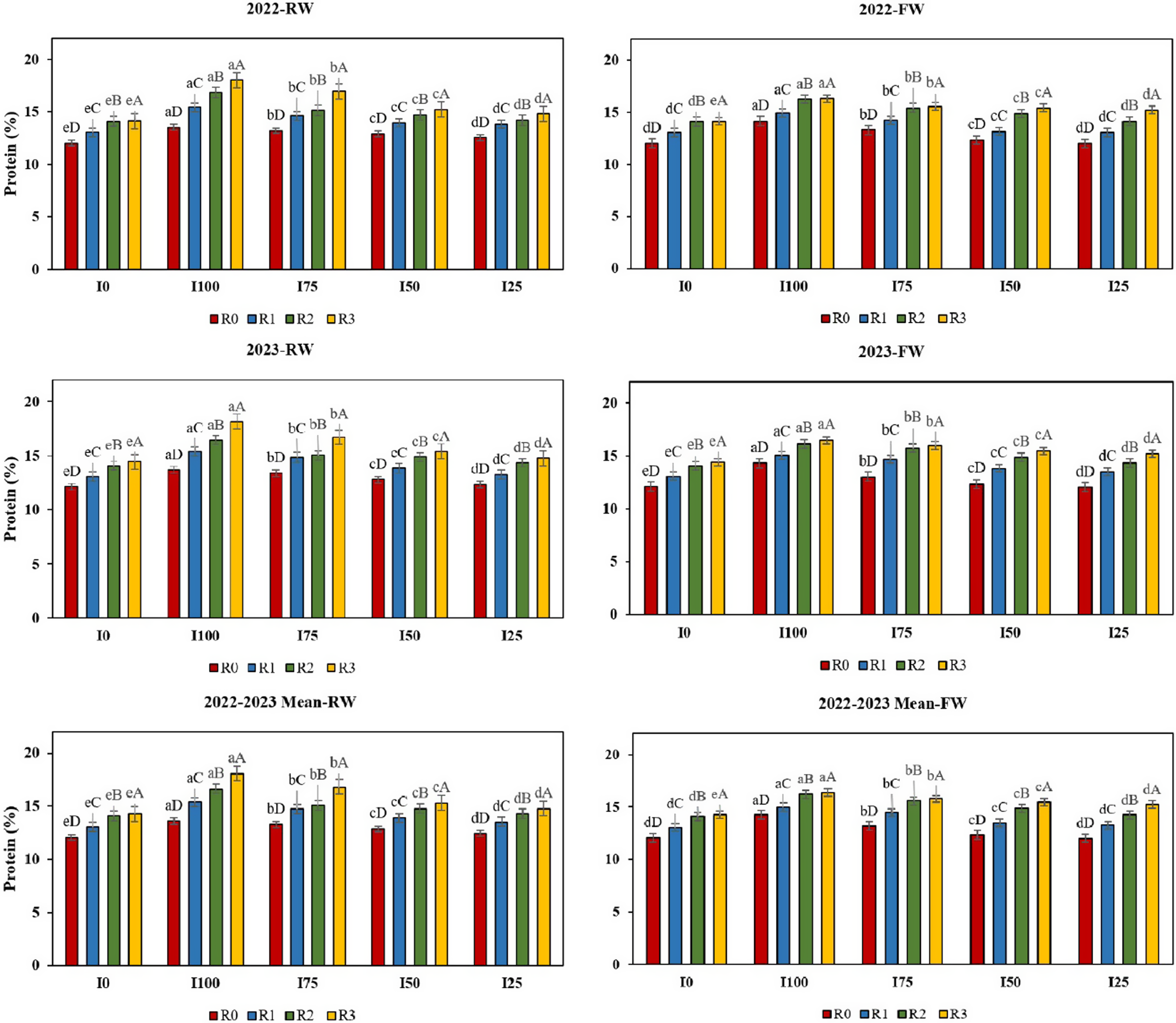
The mean average values of seed protein content and crude oil content of safflower plants grown under different irrigation levels, water qualities and bacterial applications in the experimental years are presented in Figure 3 and Figure 4, respectively.
Seed protein content (%) for all years and treatments of 2022 and 2023 growing seasons. Small letters indicate differences between irrigation levels, while capital letters indicate differences between bacterial treatments. Mean differences were tested at the level of p < 0.05. I100: 100% of crop water requirement (CWR), I75: 75% of CWR, I50: 50% of CWR, I25: 25% of CWR, and I0: rain-fed condition. R0: control (no bacterial inoculation), R1: single application at sowing, R2: two applications and R3: three applications.
Seed oil content (%) for all years and treatments of 2022 and 2023 growing seasons. Small letters indicate differences between irrigation levels, while capital letters indicate differences between bacterial treatments. Mean differences were tested at the level of p < 0.05. I100: 100% of crop water requirement (CWR), I75: 75% of CWR, I50: 50% of CWR, I25: 25% of CWR, and I0: rain-fed condition. R0: control (no bacterial inoculation), R1: single application at sowing, R2: two applications and R3: three applications.

Seed protein content
According to Fig. 3, the effect of irrigation with recycled wastewater and freshwater and the number of bacterial applications on protein content was statistically significant (p < 0.05). The letters on each bar reflect the results of Duncan’s multiple comparison test conducted at a significance level of p < 0.05. Specifically, lowercase letters (a, b, c, d, e) indicate statistical differences within the same irrigation level across different bacterial application frequencies (R0 – R3). That is, treatments sharing the same lowercase letter are not significantly different from each other. In contrast, uppercase letters (A, B, C, D, E) represent statistical differences between different irrigation levels for the same bacterial treatment. The double-letter labels on the bars in the graph (e.g., bD, bC, bB, bA) indicate the results of statistical comparisons. Lowercase letters (a, b, c, d, e) indicate differences between PGPR applications conducted under the same irrigation level. Values sharing the same lowercase letter show no statistically significant difference, while values with different letters indicate a significant difference (p < 0.05). Uppercase letters (A, B, C, D, E) indicate statistical differences between different irrigation levels within the same PGPR application. An upward ranking of letters (e.g., D < C < B < A) indicates a statistically significant increase in the relevant quality parameter as the irrigation level increases. This double-letter notation method facilitates easier and more accurate interpretation of findings by simultaneously reflecting the results of multiple comparisons made both horizontally (between different bacterial applications) and vertically (between different irrigation levels) on the graph (Fig. 3). In the experiment, the protein value ranged from 12.0% to 18.0% in the first year and from 12.1% to 18.1% in the second year.
The highest protein content was recorded in both years of the experiment in treatments R3 and I100, with values of around 19 – 20%. The lowest protein content was observed in plots where no bacteria were applied (R0) and rain-fed (I0), with values in the range of 13 – 14% range. This result indicates that the application of PGPR in combination with adequate irrigation has a positive effect on seed protein synthesis. In this study, higher protein ratios were obtained in plots treated with recycled wastewater (RW), especially in the R3 treatment, compared to fresh water (FW). It is thought that enhanced nutrients availability due to the bacterial application in the RW treatment, especially nitrogen and micronutrients, contributes to protein synthesis by supporting plant metabolism. However, in plots without bacterial application (R0), the difference between RW and FW was rather small, and at some irrigation levels, FW provided a higher protein ratio.
Seed oil content
As shown in Figure 4, the use of recycled wastewater (RW) and fresh water (FW) together along with different irrigation levels and bacteria application rates, had a significant effect on the oil content of the safflower seeds (p < 0.05). The letters above each bar represent the results of Duncan’s multiple range test at p < 0.05. Lowercase letters (a, b, c, d, e) indicate statistical differences between PGPR application frequencies (R0 – R3) under the same irrigation level. Treatments with the same lowercase letter are not significantly different. Uppercase letters (A, B, C, D) show differences between irrigation levels within the same bacterial treatment. For example, a sequence like D < C < B < A denotes a significant increase in the measured trait with increasing irrigation. This dual-letter system allows for clear interpretation of both horizontal (bacterial treatment) and vertical (irrigation level) comparisons in the graph (Fig. 4). In the first year of the experiment, the seed oil content of the seeds was between 26.0% and 38.6%, while in the second year, seed oil content was between 25.2% and 33.3%. In both years, the highest oil content was recorded in plots with full irrigation (I100) and three bacterial applications (R3), where the oil content reached about 42 – 43%. In contrast, the lowest oil content was observed in plots that were generally rain-fed (I0) and not treated with bacteria (R0), where values remained at 26 – 28%.
In the study, a regular increase in oil content was observed with increasing frequency of bacterial treatment from R0 to R3 at all irrigation levels. This trend was more evident at the I75 and I100 irrigation levels, suggesting that PGPR applications may enhance the plant’s physiological performance under sufficient water availability. The results indicate that PGPR inoculations in combination with an adequate water supply can significantly increase oil synthesis and accumulation in the safflower seeds. When evaluated by irrigation water quality, plots irrigated with recycled wastewater (RW) generally produced higher oil yields than those irrigated with fresh water (FW). This difference was particularly pronounced in the R2 and R3 treatments. This suggests that the additional nutrients contained in RW play a role in promoting oil synthesis in safflower.
Chlorophyll content (SPAD) and stomatal conductance
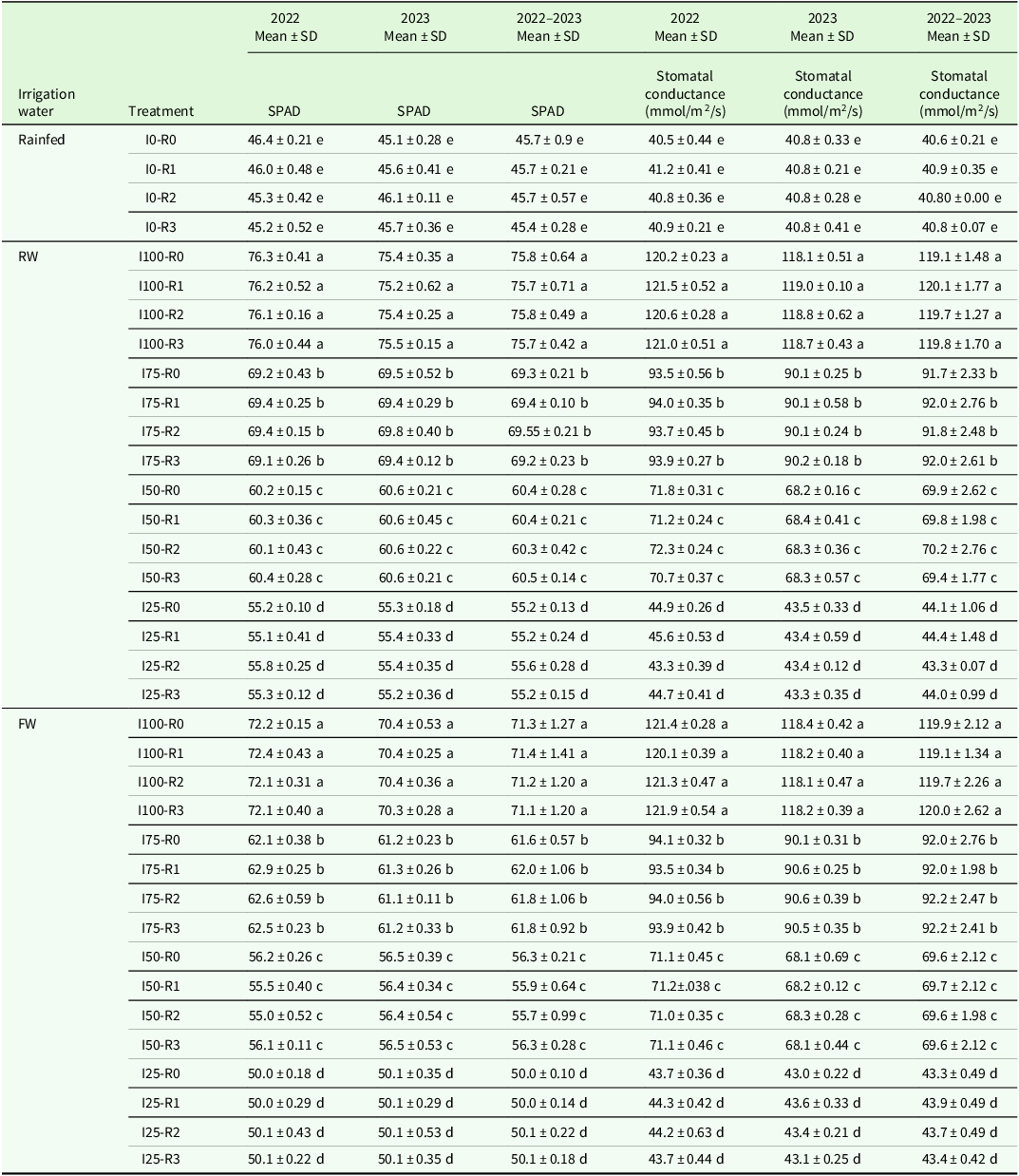
Chlorophyll is found in the chloroplasts, one of the basic components of the photosynthesis process, and there is a positive relationship between the amount of chlorophyll in the leaves and the rate of photosynthesis. The chlorophyll content (SPAD) and stomatal conductance values of safflower grown under different irrigation levels, water qualities and bacterial applications, based on the average values of 2022 and 2023, are presented in Table 2.
Mean chlorophyll content (SPAD) and stomatal conductance of safflower across all irrigation levels and bacterial treatments during the 2022 and 2023 growing seasons
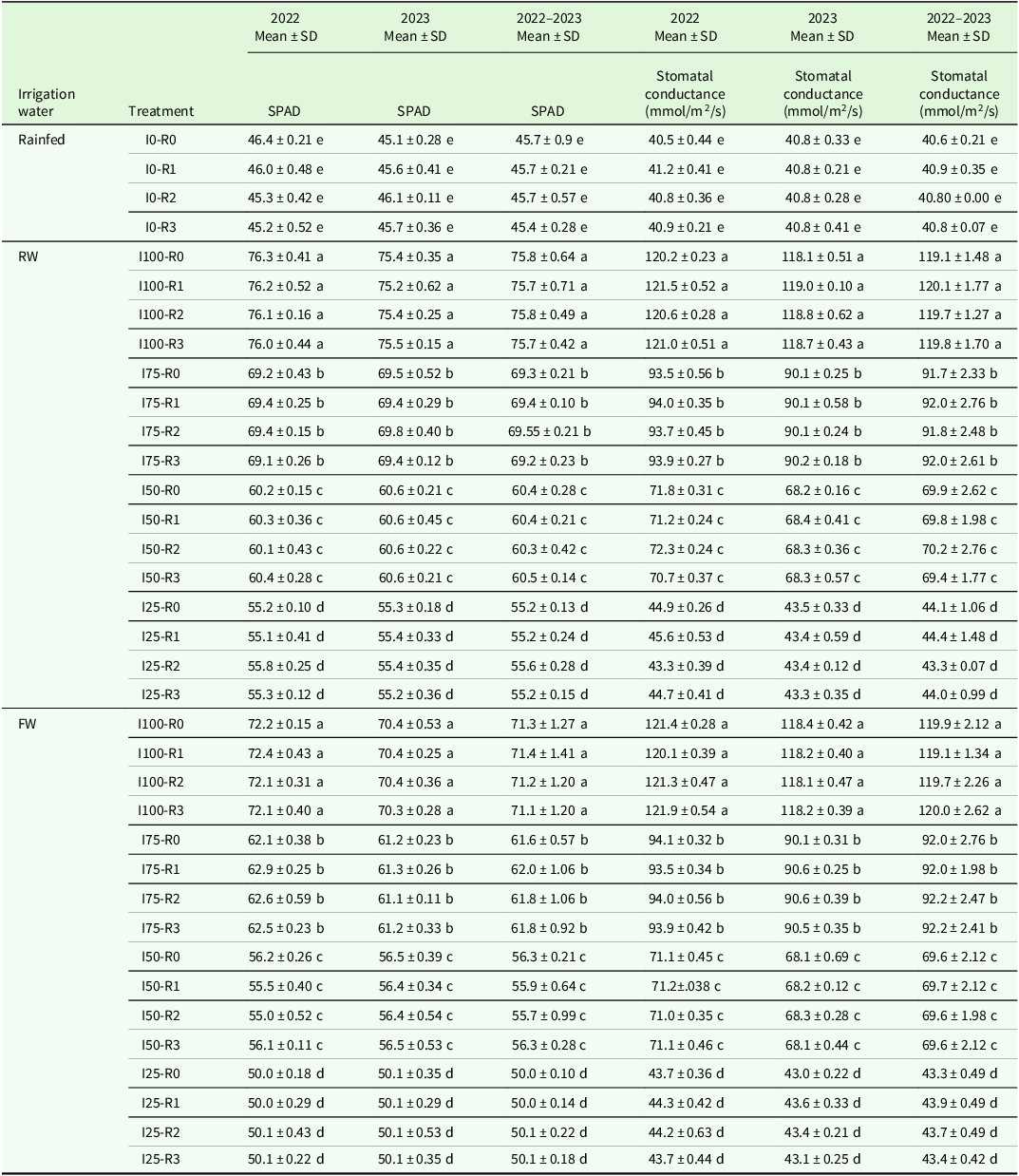
Small letters indicate differences between irrigation levels, while capital letters indicate differences between bacterial treatments. Mean differences were tested at the level of p < 0.05. RW: Recycled Wastewater, FW: Fresh water. R0: control (no bacterial inoculation), R1: single application at sowing, R2: two applications and R3: three applications. SD: standard deviation.
The data in Table 2 show the average SPAD (chlorophyll content) and stomatal conductance values for each application in 2022 and 2023. The small letters (a, b, c, d, e) next to the averages in the same column indicate statistical differences between applications. These letters were obtained as a result of the Duncan multiple comparison test (p < 0.05) and indicate that there is no statistically significant difference between values with the same letter, while there is a significant difference between values with different letters. For example, full irrigation (I100) applications are indicated by the letter “a” and have the highest values; these values are significantly higher than those of restricted irrigation applications (I75: “b,” I50: “c,” I25: ‘d’) and non-irrigated (I0: “e”) treatments. Additionally, capital letters were used to indicate the effects of bacterial treatments. However, such lettering was not shown when there was no statistically significant difference between bacterial applications. From the data presented in Table 2, it was determined that irrigation water quality (recycled wastewater and fresh water) and irrigation levels had a statistically significant effect on safflower leaf chlorophyll content (SPAD) based on the average values for 2022 and 2023 (p < 0.05). In contrast, the effect of the number of bacterial treatments on SPAD values was not statistically significant. In the first year of the experiment, SPAD values ranged from 45.2 to 76.3 and in the second year 45.1 to 75.5. In both years, the highest SPAD values were obtained with full irrigation (I100) using recycled wastewater (RW). In contrast, the lowest SPAD values were measured under rain-fed (I0) conditions without irrigation. The experimental results demonstrated that increasing the amount of irrigation water led to an increase in SPAD values.
Based on the average values for 2022 and 2023, the effect of irrigation levels on stomatal conductance was found to be statistically significant (p < 0.05). In contrast, the effect of the number of bacterial treatments and irrigation water quality on stomatal conductance was not statistically significant (Table 2). In the first year of the experiment, stomatal conductance values ranged from 40.5 to 122.0 mmol/m²s, and in the second year from 40.9 to 119.0 mmol/m²s. In both years, the highest stomatal conductance values were obtained in full irrigation (I100) treatments, while the lowest values were recorded in rain-fed (I0) treatments without irrigation.
Discussion
Seed protein content
The results of this study demonstrate that the seed protein content of safflower (Carthamus tinctorius L.) was significantly affected by both irrigation levels and the frequency of application of plant growth-promoting bacteria (PGPR). An increasing trend in protein content was observed with higher irrigation levels and more frequent bacterial inoculations. In contrast, there was a significant decrease in protein content when the irrigation level was decreased from I100 to I25, especially when no bacterial applications were made (R0). This pattern suggests that water stress has a negative effect on protein accumulation, but this negative effect can be mitigated by biological fertilizer treatments (PGPR). These results are consistent with previous studies. For instance, Nosheen et al. (Reference Nosheen, Bano, Yasmin, Keyani, Habib, Shah and Naz2016) and Saeidi et al. (Reference Saeidi, Yaghoub, Amini, Taghizadeh and Pasban-Eslam2018) reported that combining PGPR with chemical fertilizers significantly improved the protein content in sunflower seeds. Khademian et al. (Reference Khademian, Ghassemi and Asghari2019) and Mondani et al. (Reference Mondani, Khani, Honarmand and Saeidi2019) also demonstrated that PGPR applications under drought conditions had positive effects on the physiological and biochemical responses of oilseed crops, mainly by improving nitrogen uptake. In a similar context, Alharbi et al. (Reference Alharbi, Rashwan, Hafez, Omara, Mohamed and Alshaal2022) recommended the co-application of plant growth-promoting microorganisms (PGPMs) and K-humate a soil conditioner to improve protein accumulation in soybean under water-limited conditions.
In the current study, the use of recycled wastewater (RW) generally resulted in higher protein content compared to fresh water (FW), particularly in plots that were repeatedly treated with bacteria. This result emphasizes that the synergistic interaction between recycled wastewater and PGPR is crucial for improving protein accumulation. Notably, in the absence of PGPR (R0), the difference in protein content between RW and FW was less pronounced, and in some treatments, FW even yielded slightly higher values. Without bacterial inoculation (R0), FW sometimes produced higher protein content than RW. This can be explained by the fact that recycled wastewater (RW) contains nutrients such as nitrogen and phosphorus or other components (Khamisi et al., 2011; Chen et al., Reference Chen, Feng, Li, Wei, Zhao, Feng and Li2017). However, when PGPR were applied (R1 – R3), their beneficial effects, including nutrient solubilization, stress alleviation and improved nutrient uptake, enabled plants to overcome the potential stress of RW, resulting in a synergistic increase in protein content under RW compared to FW. In addition, the higher nutrient and micronutrient content of RW likely enhanced nitrogen uptake, which may ultimately have contributed to increased protein accumulation (Singh and Agrawal, Reference Singh and Agrawal2012; Quemada et al., Reference Quemada, Delgado, Mateos, Villalobos, Villalobos and Fereres2016). These observations indicate that the positive contribution of RW becomes particularly significant when supported by microbial inoculation. In line with these results Al-Khamisi et al. (Reference Alkhamisi, Abdelrahman, Ahmed and Goosen2011) reported that irrigating forage crop with treated wastewater increased the protein content (12.1%) compared to clean water (10.6%). GhassemiSahebi et al. (Reference GhassemiSahebi, Mohammadrezapour, Delbari, KhasheiSiuki, Ritzema and Cherati2020) also emphasized that the combination of treated wastewater with calcium-zeolite soil amendments resulted in the most significant improvements in plant protein content. As also noted by Marschner (Reference Marschner2011) and Quemada et al. (Reference Quemada, Delgado, Mateos, Villalobos, Villalobos and Fereres2016), the nutrient content of recycled wastewater - especially its nitrogen and micronutrient components - plays a critical role in supporting protein synthesis. These elements not only enhance direct nitrogen uptake but also stimulate enzymatic activities related to amino acid and protein biosynthesis, thereby improving the nutritional quality of oilseed crops under deficit irrigation conditions.
Seed oil content
Higher oil contents were observed under full irrigation (I100) combined with three bacterial applications (R3), while the lowest values occurred in rainfed plots (I0) without any bacterial treatment (R0). These results suggest that sufficient irrigation and repeated application of PGPR work together to increase oil production in safflower seeds. For example, Ekin (Reference Ekin2020), in his study investigating the effects of PGPR inoculations on the morphological characteristics, yield and seed quality of safflower plants, found that the oil content was in the control plots where no bacteria were applied was 30.7%, while this value increased to 32.9% by applying the OSU142 strain. Similarly, Saeidi et al. (Reference Saeidi, Yaghoub, Amini, Taghizadeh and Pasban-Eslam2018) in their study examining the effects of different fertilizer and bacteria combinations on safflower quality reported that the highest oil content was obtained when 30% chemical fertilizer + biological fertilizer was applied. Furthermore, studies by Nosheen and Bano (Reference Nosheen and Bano2014) and Sharifi et al. (Reference Sharifi, Namvar and Sharifi2017) emphasized that the lowest oil contents were observed in control plots where no bacteria were applied.
The effectiveness of recycled wastewater (RW) as a water source was also evident in this study. The oil content of plants irrigated with RW was generally higher than that of plants irrigated with freshwater (FW), especially at a higher frequency of bacteria application (R2 and R3). This suggests that the nutrient-rich profile of treated wastewater (including nitrogen and micronutrients) may improve plant metabolic functions in oil synthesis. Studies conducted on various plants in the literature are also consistent with these findings. For example, in a study conducted by Safi-Naz and Shaaban (Reference Safi-naz and Shaaban2015) on sunflower, oil yield was reported to be 39.6%, 43.8% and 41.2% using tap water, primary treated wastewater and secondary treated wastewater were reported, respectively. Similarly, Manas et al. (Reference Manas, Castro and de las Heras2017) reported that irrigation with tap water resulted in an oil content of 19.4%, while treated wastewater resulted in an oil content of 27.9% in Helianthus annuus L. In conclusion, it was determined that bacterial applications reduced the negative effects of water stress at low irrigation levels (I50 and I25) and that PGPRs played a buffering role under these conditions. Additionally, the integration of PGPR applications with recycled wastewater, which has a high nutrient content, could be an effective and sustainable strategy to increase oil content in sunflower plants. The results are consistent with similar studies conducted with both safflower and other oil crops and highlighting the importance of integrating biological fertilization and alternative water sources (Mondani et al., Reference Mondani, Khani, Honarmand and Saeidi2019; Zarei, Reference Zarei2022).
Chlorophyll content (SPAD) and stomatal conductance
The SPAD value is an important indicator of photosynthetic capacity and nutritional status as have reported that it reflects the chlorophyll density in the plant (Varga et al., Reference Varga, Pospišil, Iljkić, Markulj Kulundžić, Tkalec Kojić and Antunović2025). In various studies that have been conducted, the values for SPAD of safflower ranged between 35 and 79 (Dordas and Sioulas, Reference Dordas and Sioulas2008; Bonfim-Silva et al., Reference Bonfim-Silva, de Anicésio, de Oliveira, de Freitas Sousa and da Silva2015; Janmohammadi et al., Reference Janmohammadi, Amanzadeh, Sabaghnia and Ion2016), which is consistent with the values obtained in the present study. The SPAD index is widely accepted as a useful indicator of drought stress (Rahmani et al., Reference Rahmani, Sayfzadeh, Jabbari, Valadabadi and Masouleh2019), and several studies have shown that water stress significantly reduces SPAD values (Shahrokhnia and Sepaskhah, Reference Shahrokhnia and Sepaskhah2017; Manvelian et al., Reference Manvelian, Weisany, Tahir, Jabbari and Diyanat2021; Durusoy, Reference Durusoy2022). Similarly, Bonfim-Silva et al. (2021) reported that the highest SPAD values were obtained under full irrigation, while chlorophyll content decreased with water restriction. Pashang et al. (Reference Pashang, Weisany and Ghajar2021) found that SPAD values decreased by 14.4% under drought conditions, and attributed this decrease to either chlorophyll pigment degradation or reduced enzyme activity in chlorophyll biosynthesis (Rahmani et al., Reference Rahmani, Sayfzadeh, Jabbari, Valadabadi and Masouleh2019; Manvelian et al., Reference Manvelian, Weisany, Tahir, Jabbari and Diyanat2021). In the current study, SPAD values were higher in plots irrigated with recycled wastewater compared to freshwater, particularly under full irrigation conditions. This suggests that the nutrient-rich content of recycled wastewater can promote chlorophyll biosynthesis (Abdel Latef and Sallam, Reference Abdel Latef and Sallam2015; Yerli and Sahin, Reference Yerli and Sahin2022). Similar results were reported by Petousi et al. (Reference Petousi, Fountoulakis, Saru, Nikolaidis, Fletcher, Stentiford and Manios2015), Cakmakci and Sahin (Reference Cakmakci and Sahin2021) and Yerli and Sahin (Reference Yerli and Sahin2022), where higher SPAD values were found when irrigated with recycled wastewater compared to freshwater.
Stomatal conductance is considered an important physiological parameter reflecting the balance between transpiration and photosynthetic efficiency (Nazar et al., Reference Nazar, Akram, Saleem, Ashraf, Ahmed, Ali and Alyemeni2020). It also serves as an indicator of water stress and plant water-use efficiency (Moradi and Ehsanzadeh, Reference Moradi and Ehsanzadeh2015). The stomatal conductance values determined in this study are consistent with the literature, ranging from 30 to 120 mmol m−2 s−1 (Dordas and Sioulas, Reference Dordas and Sioulas2008; Shahrokhnia and Sepaskhah, Reference Shahrokhnia and Sepaskhah2017). In both experimental years, the highest stomatal conductance was measured under full irrigation (I100) treatments, while the lowest was observed under rain-fed (I0) conditions. The results indicate that increasing irrigation levels positively affects stomatal conductance. This is consistent with the results of Durusoy (Reference Durusoy2022), who reported the highest conductance under full irrigation, and Kazemeini et al. (Reference Kazemeini, Mohamadi and Pirasteh-Anosheh2015), who observed a decrease in conductance under increased drought. The studies by Lamaoui et al. (Reference Lamaoui, Chakhchar, Kharrassi, Wahbi and El Modafar2018) and Pirasteh-Anosheh et al. (Reference Pirasteh-Anosheh, Emam and Pessarakli2013) also confirm that water stress restricts the opening of the stomata and thus reduces the conductance. Although irrigation levels significantly influenced stomatal conductance, the number of bacterial applications did not lead to a statistically significant change in this parameter. This suggests that PGPR applications may only have an indirect effect on this physiological characteristic.
Conclusion
This study was conducted to evaluate the effects of different irrigation levels, water qualities (recycled wastewater and fresh water) and PGPR (plant growth-promoting rhizobacteria) applications on the quality parameters of safflower (Carthamus tinctorius L.). The highest protein and oil content was obtained in plots where PGPR was applied three times (R3) in combination with full irrigation (I100). In particular, it was found that the protein content of safflower grown under recycled wastewater treatment was 10.2% higher than that of safflower grown using fresh water. This result shows that, the use of recycled wastewater with its high nutrient content in combination with biological fertilizers in addition to an adequate water supply has a synergistic effect on the quality parameters.
Water stress negatively affected physiological parameters such as SPAD and stomatal conductance, while recycled wastewater increased SPAD values by 6.4% compared to fresh water. Overall, the integrated use of recycled wastewater and PGPR represents a sustainable and scalable strategy to enhance crop quality and resource efficiency under arid and semi-arid conditions
Acknowledgements
This study is based on the PhD thesis conducted by Hasan Er under the supervision of Prof. Dr. Yasemin KUŞLU. It was supported by Project No: FCD-2022-10339, funded by Atatürk University Scientific Research Coordination Unit, and by project number 125O450 under the TÜBİTAK 1002-B Rapid Support Programme.
Author contributions
All authors contributed equally to this work.
Funding statement
No external funding was received for this study.
Competing interests
The authors declare that they have no known competing financial interests or personal relationships that could have appeared to influence the work reported in this paper.
Ethical standards
Not applicable




 Open access

