


Institutional Review Boards (IRBs) provide a mechanism for ethical oversight for studies that involve human participants. Historically, IRBs were based in institutions, such as universities. With the movement of clinical research into community settings outside of academic health centers, IRBs emerged that are not affiliated with an individual institution. In an effort to provide uniform, non-conflicting standards across multiple IRBs that were responsible for an individual study that involved numerous entities and to improve efficiency and consistency, central IRBs and single IRBs of record began to emerge [Reference Massett, Hampp and Goldberg1–Reference Green, Goodman, Kirby, Cobb and Bierer4].
The National Institutes of Health (NIH) established a Single IRB (sIRB) Policy in 2016 to streamline the ethical review process for non-exempt multi-site research involving human subjects, with implementation beginning in January 2018 [5]. This policy mandates that all NIH-funded, non-exempt, multi-site studies conducted in the U.S. use a sIRB of record. A revised Common Rule (45 CFR 46) effective January 2020 [6] expanded the single IRB requirement to most federally funded cooperative research projects.
IRBs were originally designed to ensure ethical conduct in human subjects research. However, their responsibilities have since broadened to include compliance with institutional policies, federal regulations, and privacy protections such as compliance with the Health Insurance Portability and Accountability Act (HIPAA). When an institution cedes oversight to a sIRB, the relying institution must ensure that the reviewing IRB is aware of local context that could affect the conduct of the study. Local Context Review (LCR) ensures that site-specific factors are considered, such as compliance with HIPAA, local laws, and institutional requirements, community and cultural considerations, operational feasibility (e.g., pharmacy, radiology) and consent language requirements [Reference Burr, Johnson and Vasenina3,Reference Morain, Singleton, Tsiandoulas, Bollinger and Sugarman7,Reference Johnson, Kasimatis Singleton and Ozier8]. While the sIRB model aims to streamline ethics review and reduce delays, many institutions report increased burden and inefficiencies, such as new responsibilities for study teams, persistent duplicative review processes, and institutional variation in policies and practices across institutions [Reference Green, Goodman, Kirby, Cobb and Bierer4]. SMART IRB has become a cornerstone for implementing sIRB reviews in the United States, offering a scalable, flexible, and collaborative framework which provides a national standardized framework to simplify and accelerate the reliance process for multi-site research [Reference Cobb, Witte and Cervone9]. Continued efforts in harmonization and education are essential to fully realize its potential in improving the efficiency and consistency of multi-site research oversight [Reference Nichols, Kunkel and Baker2,Reference Green, Goodman, Kirby, Cobb and Bierer4,Reference Johnson, Kasimatis Singleton and Ozier8,Reference Cobb, Witte and Cervone9,Reference Hu, Holl and Raval10,Reference Onakomaiya, Pan and Roberts11].
Following inception in 2005 [Reference Gilbert, Williams and Rindal12] as a multi-regional practice-based research network (PBRN), the “National Dental PBRN” (“Network”) expanded nationwide in 2012 [Reference Gilbert, Williams and Korelitz13]. Since 2005 it has conducted 57 studies that have engaged more than 70,000 patients [Reference Gilbert, Fellows and Allareddy14]. Recognizing a need to better customize ethics reviews to the PBRN context and to optimize consistency across IRBs [Reference Gilbert, Qvist and Moore15], the National Dental PBRN Central IRB (CIRB) was created in 2014 to serve as the sIRB of record for network studies, with a mission to reduce administrative burden on regional and local institutions (LIs) and to ensure that local laws, policies, and community norms are respected through LCR.
The CIRB is based at the University of Alabama at Birmingham (UAB). UAB serves as the national administrative site and manages the network’s six regional sites via its Administrative and Resource Center (ARC). The ARC manages network interactions with the CIRB. The key advantages sought by establishing the CIRB were to streamline the process by providing a centralized review, providing an already-reviewed application and review packet to relying sites as part of the review for local context considerations, make the process easier if a protocol amendment or revision has to be made after an initial protocol has already been approved, and eliminate the requirement that relying sites submit annual renewals or amendments to their IRBs.
The objective of this report is to evaluate the operations of the National Dental PBRN CIRB through a process-focused, implementation-oriented case study, using descriptive metrics of review volumes, timelines, and post-approval submissions to derive operational lessons for multi-site research networks [Reference Green, Goodman, Kirby, Cobb and Bierer4,Reference Limbani, Goudge and Joshi16].
Methods
Administrative records from the National Dental PBRN Central IRB (CIRB) at UAB were systematically and retrospectively reviewed to identify and quantify CIRB activities from 2014 until 2025. Established CIRB processes were also documented in this paper. Data were extracted to count study reviews (exempt, expedited, full) and post-approval submissions, including revision amendments, continuing reviews, site amendments, prompt reports, and personnel amendments. We examined whether the CIRB model was successfully and efficiently implemented in practice, including workflow efficiencies, administrative burden shifts, and contextual factors like reliance agreements and staffing changes. “Success” was defined as appropriate support for multiple studies over the period; “efficiency” as approval and post-approval timelines and centralization of processes; and “benefit” as reduced duplicative local reviews post-initial approval. Quality assurance and validation checks were performed on administrative records by the first author. Investigator response-time data were only available for studies submitted after implementation of UAB’s electronic IRB system (2017), and complete response-time tracking was consistently retrievable only for a subset of studies submitted in 2021–2023. For studies submitted prior to the eIRB transition, administrative records captured submission and approval dates but did not reliably retain time-stamped back-and-forth communication intervals needed to calculate investigator response time. Descriptive statistics (counts, means, and standard deviations (SD)) were calculated to summarize approval timelines and administrative action frequencies, with investigation of time attributable to investigator response lag.
Results
Overview of CIRB Review and Approval Process
Establishment of reliance agreements for network studies
The National Dental PBRN CIRB reviews all study materials for its own region (the network’s South Central Region based at UAB) and for all relying LIs (the network’s five regions and any other institutions that participate in a network study). The CIRB determines the plan for reliance. Reliance Agreements, also called Authorization Agreements, are arrangements between institutions that allow the IRB of one institution to rely on the IRB of another institution for review of human subjects research. A reliance cannot begin until an agreement is reached and fully executed. The CIRB prefers to utilize the SMART IRB Institutional Profile form, SMART IRB Cede letter, and the SMART IRB Flex Agreement for reliance purposes [Reference Cobb, Witte and Cervone9,17,18]. The Network’s National Program Manager obtains copies of the reliance documents from the CIRB and sends them to the Directors of the network’s five non-UAB-based regional nodes and the contact person from other institutions that participate in a specific network study, who then share them with their respective LIs’ IRBs. The reliance documents are reviewed by the relying site IRBs and revised by each institution as needed until they are agreed on by both institutions. Fully executed reliance agreements between the network’s initial relying LIs (the five regional nodes) and the CIRB were obtained. A cede agreement documents that UAB will serve as the reviewing IRB and that the relying institution agrees to cede under the “SMART IRB Master Common Reciprocal ITB Authorization Agreement.” A “SMART IRB Acceptance and Flexibility Agreement” clarifies the terms of the SMART IRB Agreement that were designed to be flexible to accommodate the needs of the reviewing IRB and relying institutions and to document acceptance of the use of the SMART IRB as the reliance agreement. These agreements applied to all applicable network studies in which the UAB IRB serves as the IRB of record, obviating the need to repeat this process for each subsequent network study.
The times required to execute agreements with relying sites have varied substantially because of institutions’ negotiation processes, the potential to involve institutions’ legal counsel, and institutions’ experience with establishing reliance agreements. The Network’s CIRB agreements have taken from a few weeks to several months to be fully executed.
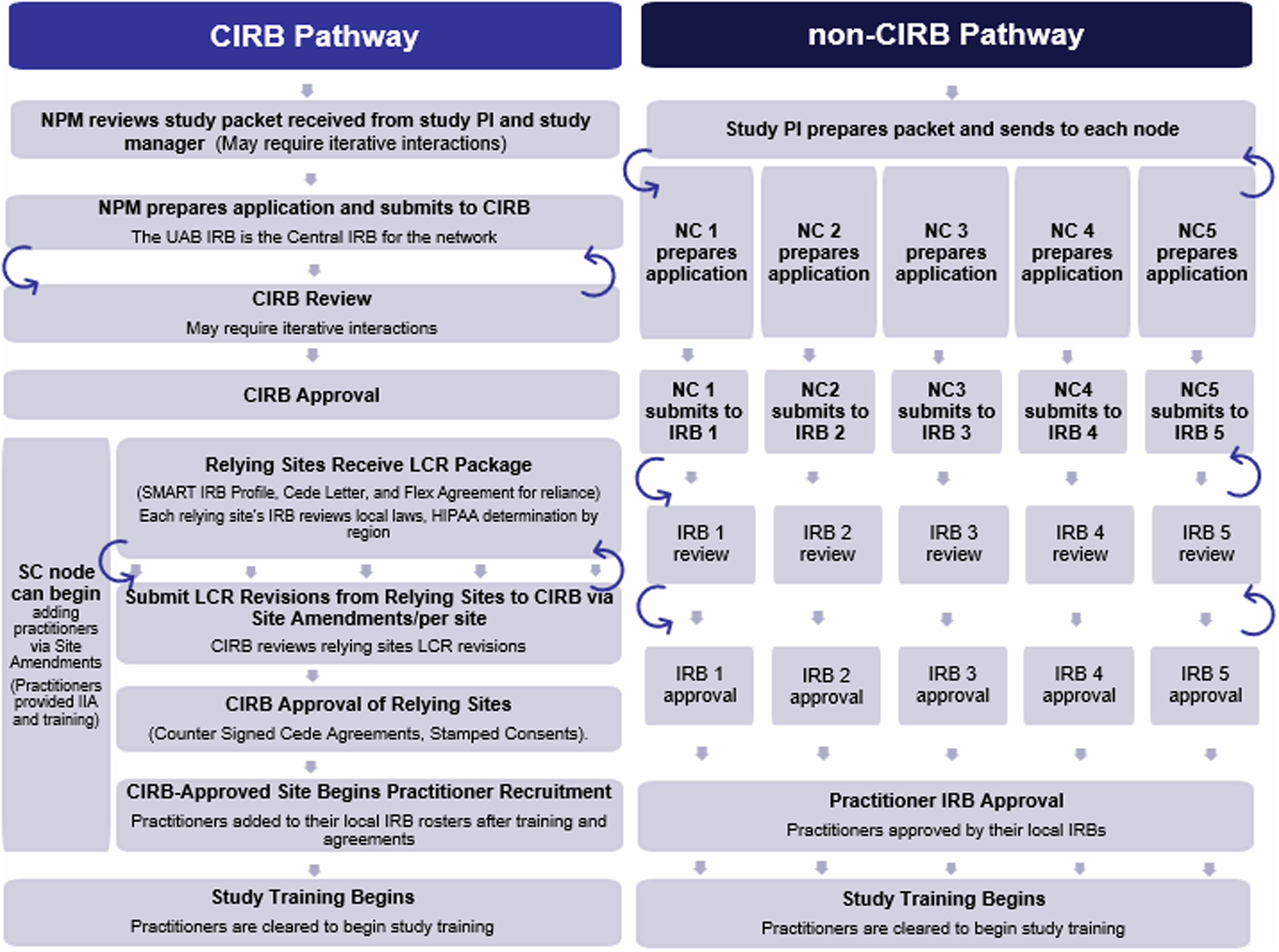
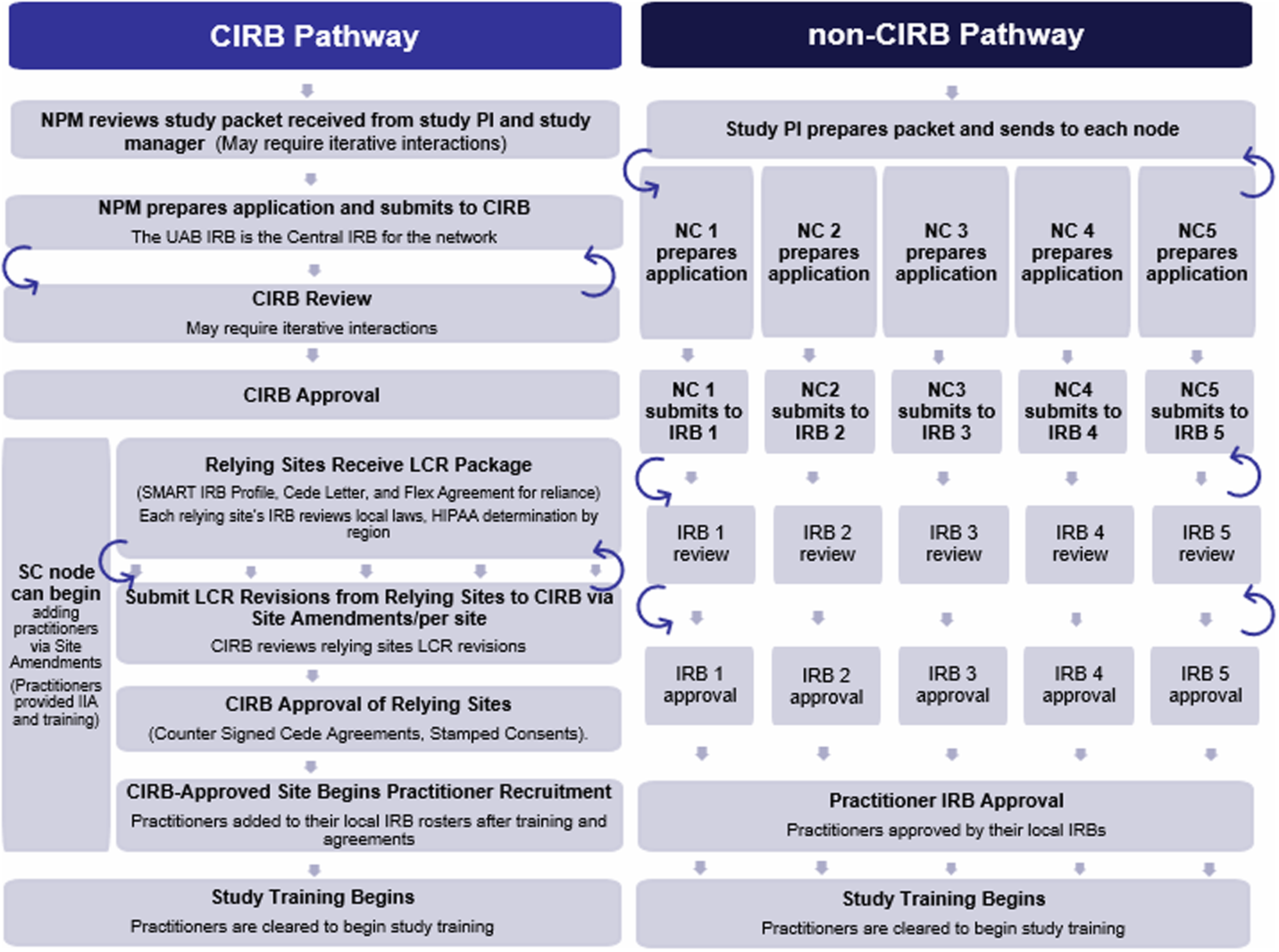
CIRB process for specific studies (Figure 1)
Review by National Program Manager (NPM). Human subjects approval for network studies is initially provided by the CIRB. The NPM, part of the ARC, serves as the CIRB liaison. The CIRB liaison acts as a central hub for communication among relying LIs and their IRBs. The NPM is responsible for making the submission to the CIRB, on behalf of all relying LIs, and is the primary contact between the CIRB, the relying IRBs, the Study Principal Investigator’s (PI) institution, and the network Data Coordinating Center (DCC). Relying IRBs conduct a LCR on a study-by-study basis for individual network studies, after CIRB initial approval has been completed.
NPM interactions with study teams before CIRB submission. For each network study, the Study PI, the Study PI’s coordinator, and the DCC study manager prepare the study submission packet that includes the protocol, questionnaires, surveys or interviews, recruitment materials, consent forms or information sheet, participant communications, etc., and share them with the NPM as described under the CIRB pathway in Figure 1. The NPM initiates the application submission process through the UAB IRB electronic application platform. During this process, the NPM reviews the study packet in detail, suggests revisions and makes improvements to the packet to smooth the CIRB submission process and reduce the potential for queries by the CIRB. The CIRB consent template is used without embedding HIPAA language in the body of the consent form. Instead, HIPAA authorization is provided as a standalone document, allowing LIs to make a determination and incorporate their own language and comply with site-specific policies. Typically, many communications occur between the NPM, Study PI, and the DCC study manager to ensure that changes are agreed on and the packet is ready for submission to the CIRB.
Comparison of CIRB and non-CIRB pathways for expedited/full reviews, from submission to initial approval. This figure illustrates the workflow differences between the CIRB pathway – where the (NPM) prepares and submits a single study packet for centralized review – and the traditional non-CIRB pathway, in which each participating node independently prepares and submits its own IRB application. The CIRB pathway includes centralized review of practitioner additions, site amendments, and relying-site consent revisions, while the non-CIRB pathway requires parallel IRB review and approval at each local institution. The diagram highlights efficiencies gained through centralized review, including coordinated site onboarding and streamlined approval steps for relying sites.
CIRB review of initial application. Following NPM submission of the application, CIRB staff begin the review process and send administrative pre-reviews to the NPM through the UAB IRB electronic platform. The NPM addresses the CIRB revisions and communicates questions if needed to the study team for further clarification and guidance. This may require several interactions and submissions to the CIRB until the CIRB approval is obtained.
Process for the South Central Region after CIRB approval. CIRB approval at this point permits one network region (South Central) to begin practitioner recruitment because this region is covered by the UAB IRB, which has simultaneously conducted the LCR for the South Central Region. South Central Region practitioners are then recruited to the study by providing their signed individual investigator agreement (IIA) and human subject training certificates, which are submitted to the CIRB by the NPM as a site amendment submission after CIRB initial approval of the study has occurred. South Central Region team members are also added to the study at this point.
Process for relying sites after CIRB approval. After obtaining the initial CIRB approval, the NPM forwards the CIRB approval letter, the approved study packet, and applicable reliance and LCR documents to the relying sites. The LCR contains a Microsoft Word® version of the consent forms with highlighted sections to be updated by the regional staff and their respective IRB. The highlighted sections the relying sites are asked to update are minor and not related to study content because the content has already been approved by the CIRB. The requested updates include site contact information, payment and injury sections. The relying LIs make a HIPAA determination for their sites. The Network’s Regional Directors and the Study PI and/or a designee share these documents with their IRBs for review. After these documents have been completed and if necessary, revised, they are sent to the NPM, who submits them to the CIRB as a site amendment submission, which then is approved by the CIRB. Relying sites do not communicate directly with the CIRB but instead do so through the NPM. Once the fully executed reliance documents are received from the CIRB, the NPM forwards fully executed documents and approvals to the Study PI and/or relying IRB and posts on a secure website hosted by the DCC to facilitate subsequent asynchronous access.
Network regional nodes are typically the recruiting sites for each study, so an approved and stamped consent form by the CIRB is required specific to each regional node. Any update to the consent form for the relying sites is submitted via a site amendment by the NPM as part of the LCR submission or separately. The Study PI’s site does not typically recruit study participants, so a reviewed consent is not required for that site.
As shown in the right column of Figure 1, the process used when a CIRB is not engaged is different from a process that does use a CIRB. The non-CIRB process engages all applicable IRBs at each stage of the approval process, instead of engaging local IRBs only for LCR and HIPAA review. The non-CIRB pathway does not involve reliance agreements or separate LCRs because each participating institution is responsible for its own IRB submission. In the non-CIRB pathway, each institution’s PI submits an application to the applicable IRB. Before the network transitioned to a CIRB pathway, each of the Network’s six main regional IRBs independently reviewed the same study packet, often issuing inconsistent revision requests across regions. In this pre-CIRB era, reaching agreement on a single version of the protocol so the study could be uniform at a national level was cumbersome and frequently led to approval delays while discrepancies were resolved.
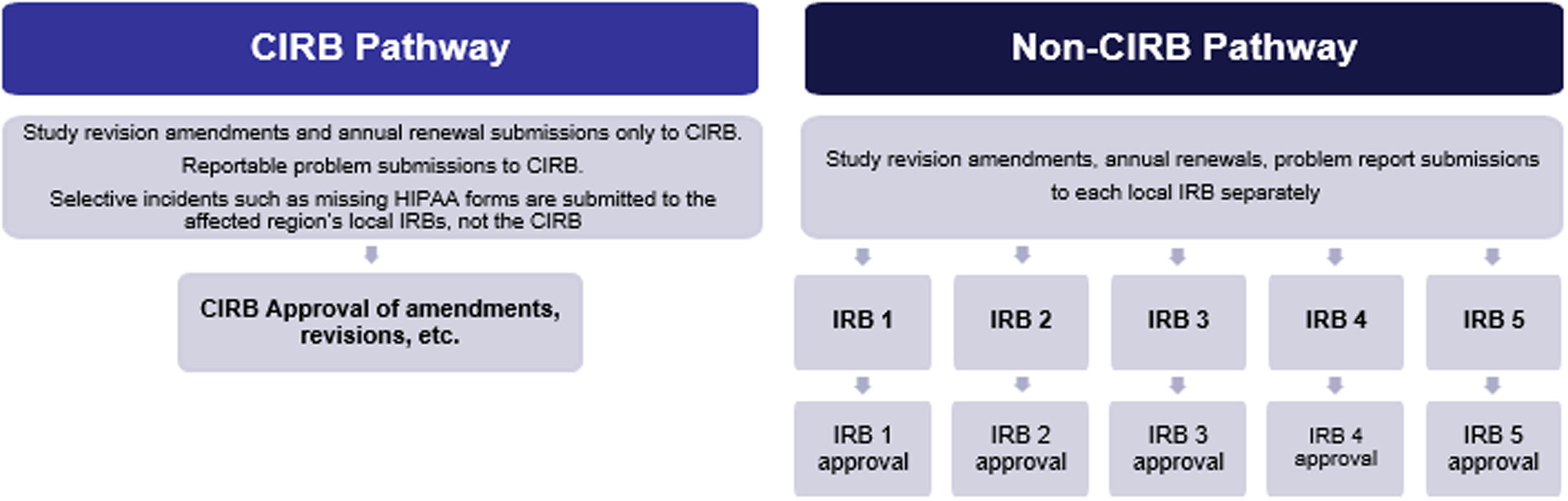
CIRB process after initial approvals have been received (Figure 2)
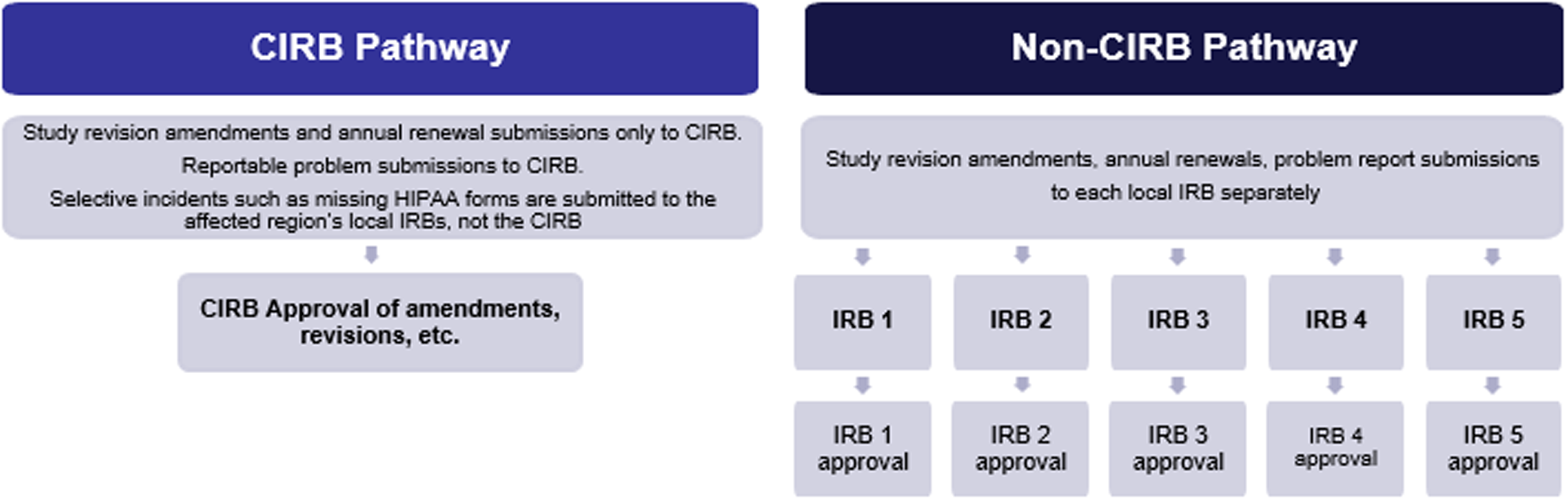
After CIRB approval and regional approvals have been obtained, it is very common (indeed, this has occurred for every study the network has ever conducted) for subsequent revisions to be needed. These may comprise revisions to the study protocol, study data forms, etc. As shown in Figure 2, study revision amendment requests are proposed by the study team and follow iterative review(s) by the NPM and the study team until they are submitted by the NPM for CIRB approval.
Comparison of CIRB and non-CIRB pathways for expedited/full reviews, after initial approvals. The figure compares centralized CIRB review – where amendments, renewals, and reportable events are submitted once – to the non-CIRB process that requires individual submissions and approvals by each local IRB.
If the change proposed also includes a change to the informed consent form, it must be made to the South Central Region consent form first. Once this approval has occurred, consent form changes are incorporated into each consent form for the other regions and then submitted to the CIRB as site amendments.
Annual renewal applications are also submitted through the CIRB and do not require regional IRB review. Problem report submissions to notify the CIRB of a “reportable” problem according to the CIRB criteria are submitted promptly as they arise. Instances include adverse events, serious adverse events, breach of confidentiality, protocol violations, and subject complaints. Regional coordinators share certain problem reports, such as missing HIPAA forms, with their LIs to facilitate appropriate regional determination.
Summary of administrative outcomes
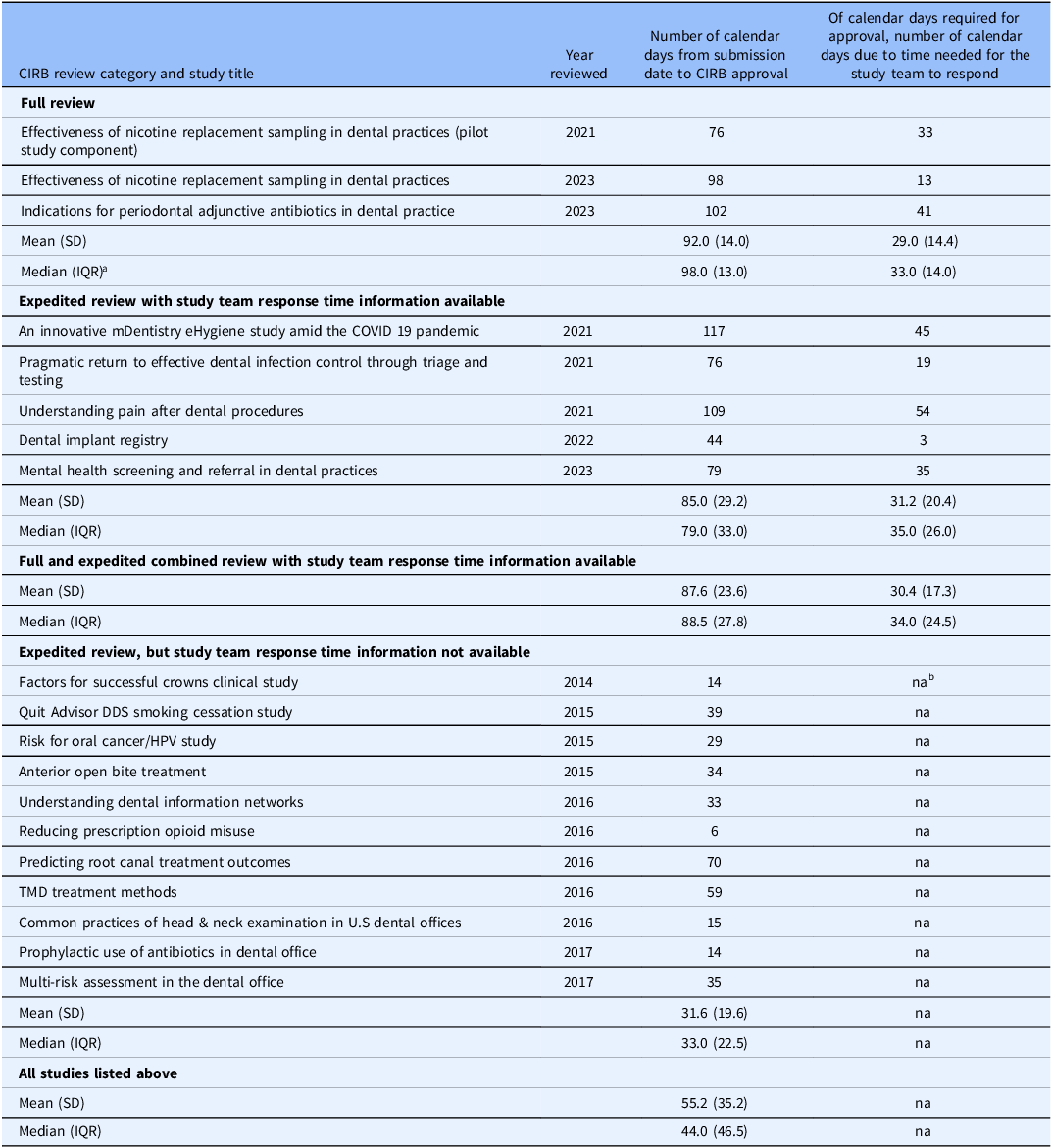
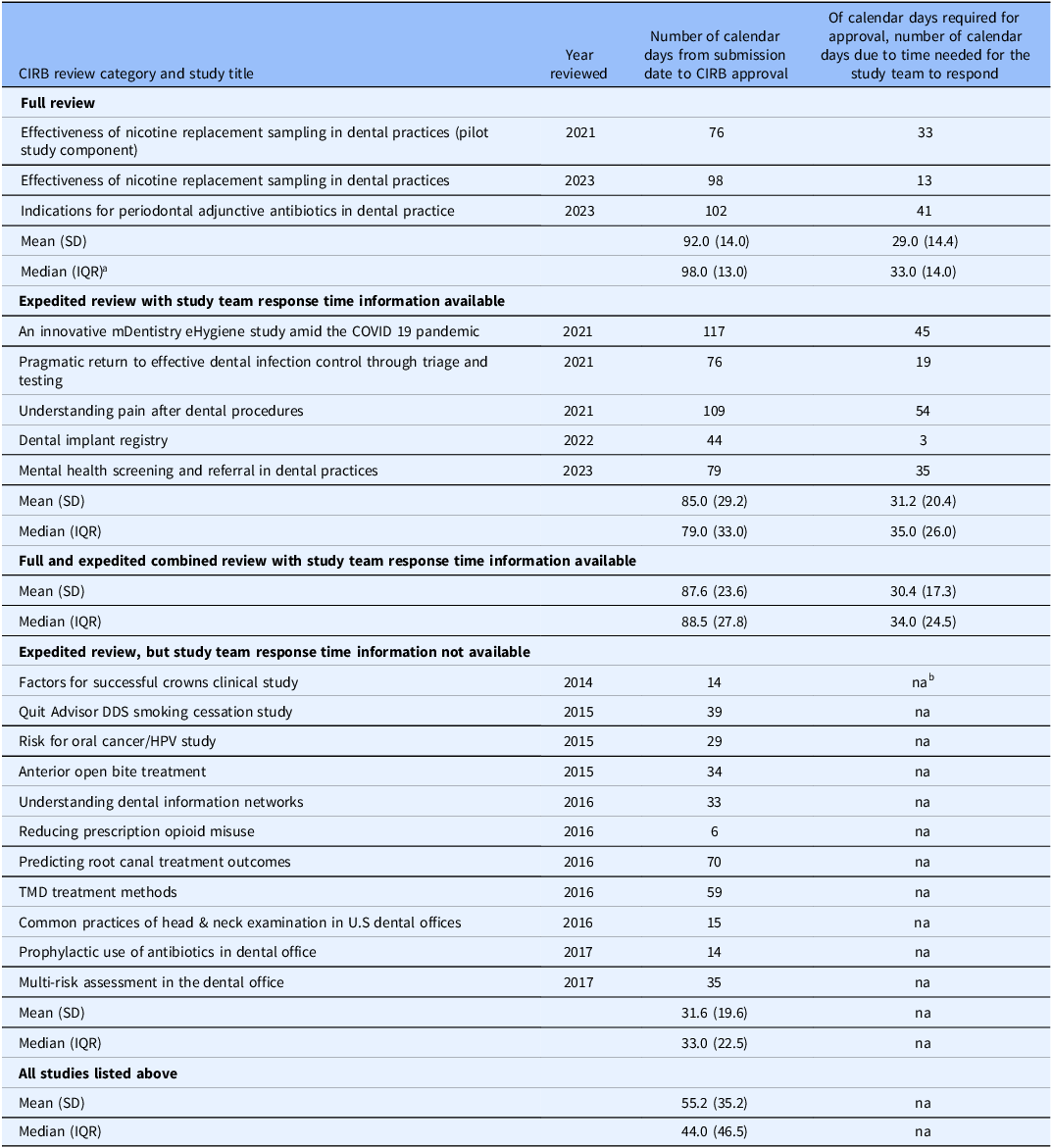
Table 1 lists the National Dental PBRN studies reviewed by its CIRB since 2014, along with their year of review, review category as declared by the CIRB, the number of days from submission to CIRB approval, and the number of these days that were due to time needed for study teams to respond to CIRB queries during its review. The CIRB reviewed 27 studies, but 8 were ultimately declared exempt and not reviewed by the CIRB. The remaining 19 were declared expedited or full review.
Number of calendar days until CIRB approval, among non-exempt national dental PBRN studies reviewed by its CIRB from 2014–2025
a IQR: Interquartile range.
b na: data not available.
As shown in Table 1, for all 19 studies combined, the mean (SD) number of calendar days from the date of first application submission to the date of CIRB approval was 55.2 (35.2). The table also shows that studies classified as “Full review” took a mean of 92.0 (14.0) days, compared to a mean of 85.0 (29.2) days for studies classified as “Expedited review” and for which study team response time information was available and 31.6 (19.6) days for studies classified as “Expedited review” but for which no study team response time information was available.
The number of iterations between the CIRB and the study team varied for each study, with a maximum of five iterations for one expedited study. Each CIRB iteration was first evaluated carefully by the NPM and then promptly shared with the study team to further address remaining queries collectively. The mean number of calendar days that the study team needed to address the CIRB reviews and prepare a proper response is shown in Table 1 for 8 studies. These are the 8 studies for which we had available data, comprising studies submitted between 2021 and 2023. The number of calendar days the study team needed to prepare responses for studies submitted prior to 2017 is not available, because the UAB IRB did not implement its electronic review system until 2017.
As shown in Table 1, for “Full review” studies, the mean (SD) number of calendar days for study team response time was 29.0 (14.4). For “Expedited review” studies that had study team response information available, it was 31.2 (20.4) calendar days. When the 8 full and expedited review studies were combined, the mean (SD) number of calendar days due to study team response time was 30.4 (17.3). When the 8 full and expedited review studies were combined, the number of calendar days from initial submission date to approval date was 87.6 (23.6) days, so the percentage of review time that was due to study response time was approximately 35% (30.4/87.6).
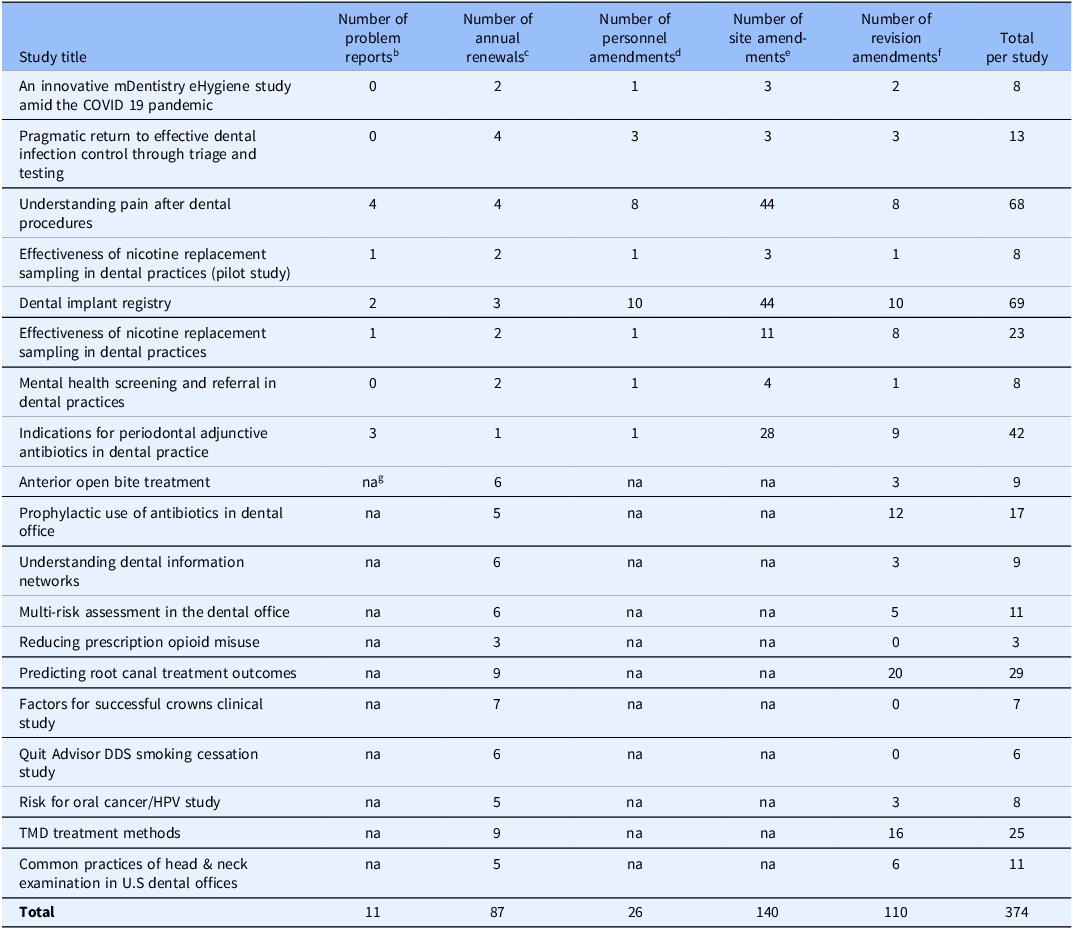
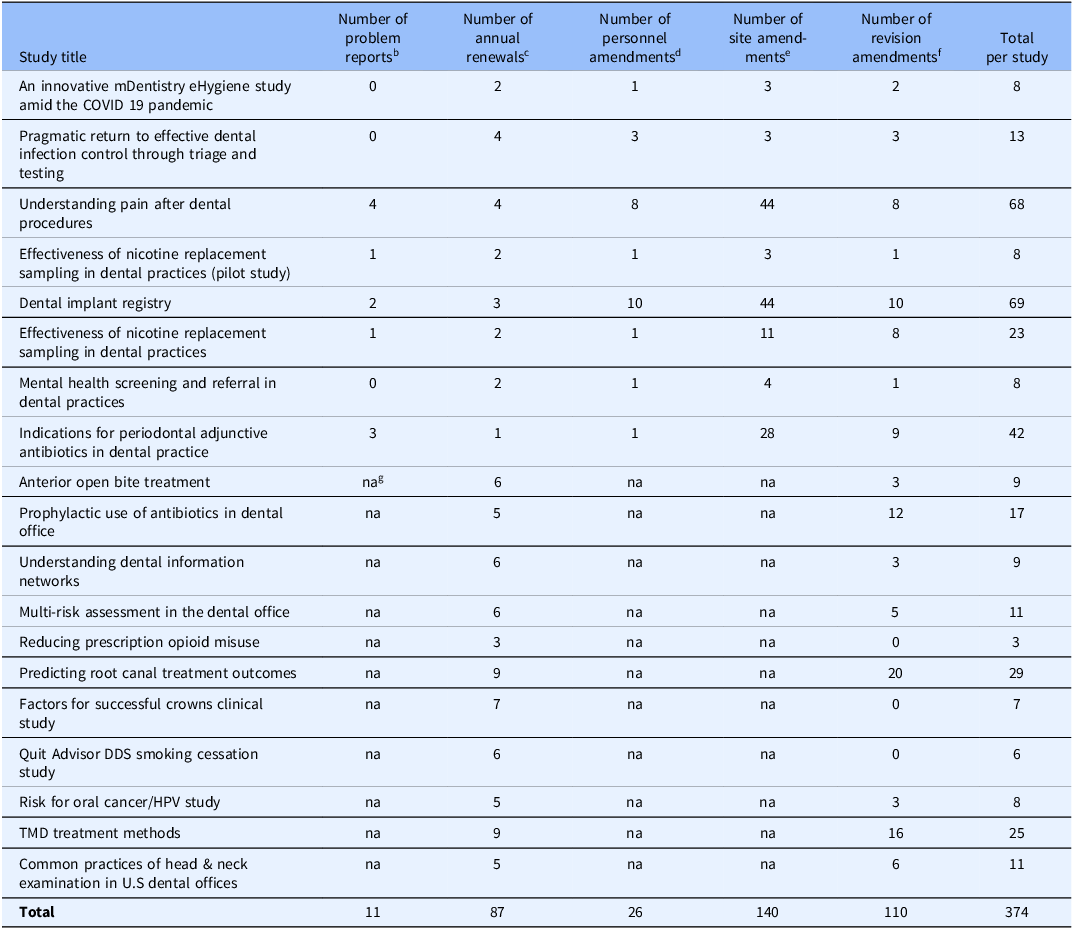
As a measure of post-approval review burden borne by the CIRB only (i.e., LIs were not involved in these components), Table 2 shows the number of study-related CIRB submissions that were needed after initial approval by the CIRB. The number of problem report submissions for 8 studies totaled to 11. These included reporting serious adverse events, protocol violations, breach of confidentiality, and non-compliance incidents (e.g., missing signed HIPAA forms in the South Central region). Most of these submissions were required to be reported to the CIRB but in some instances problem reports were reported to the LI IRB based on the terms and agreement signed at the LCR stage. The total number of annual review submissions for 19 studies was 87. Annual renewal submissions for each study included reports about recruitments status, demographic characteristics, participants withdrawals, protocol deviations, and problem reporting.
Counts of study-related CIRB submissions required after initial CIRB approvala
a Local institutions (LIs) are relieved from having to do any of these centralized tasks.
b Reports of protocol violations, other reportable events and serious adverse events.
c Annual renewals (annual reports for each study that include recruitment updates, problem reports, study deviations, scientific publications derived from the study, and final reports).
d Local study team additions and removals, training updates, adding practitioners to the protocol (South Central Region only; other regions’ practitioners are attached to LIs).
e To add relying LIs, adding revisions to informed consent forms at the LCR level, and for the South Central Region, adding individual participating practitioners to the study, which includes submitting their Individual Investigator Agreements and documentation of human participants training, as well as study personnel changes in the South Central Region.
f Study revisions (e.g., protocol modifications, revisions to the Informed Consent Form, participant communications).
g na: data not available.
Note: Higher amendment counts often reflect study complexity or multisite operations rather than inefficiency. In several studies, large totals were driven by site amendments, including adding South Central Region practitioners’ IIAs, LC submissions, and updating consent forms for relying sites after revision-related consent changes.
Table 2 also shows that the number of personnel amendments submitted to the CIRB totaled to 26 for 8 of these studies. A total of 140 site amendment submissions for 8 of these studies occurred after obtaining initial CIRB approval. Site amendment submissions included adding the relying site’s LCR documents to obtain CIRB approval, updating relying sites’ consent forms, and adding each participating South Central Region practitioner’s training and IIAs. The total number of study revision amendments, done after already having obtained initial CIRB approvals, comprised 110 submissions for 19 studies. Study revision amendments entailed requests such as protocol modifications, participant communications and data collection revisions, consent form updates, adding new documents, and study timeline changes. The total number of submissions to the CIRB for 19 studies was 374 submissions.
Discussion
The implementation and evaluation of the National Dental PBRN CIRB model underscore both the promise and the complexity of centralized ethical oversight in multi-site research. Although the CIRB was designed to streamline IRB review and reduce administrative burden, our findings indicate that initial approval timelines were not significantly shortened. This is consistent with conclusions made by other investigator networks [Reference Massett, Hampp and Goldberg1,Reference Burr, Johnson and Vasenina3,Reference Check, Weinfurt, Dombeck, Kramer and Flynn19]. Instead, the administrative workload shifted from local institutions to the NPM in the ARC at UAB, requiring substantial coordination across institutions. For example, the time for IRB approval was not significantly less between the shared IRB vs. the Individual IRB reported by Martin et al. [Reference Martin, Allman and Dugoff20]; their study reported total approval times of 41 vs 56 days, the difference in which was not statistically significant. The median time for Trial Innovation Network sIRB reviews of the main protocol and lead sites has ranged from 56 to 77.5 days over five years. [Reference Johnson, Kasimatis Singleton and Ozier8]. The median days required from submission of a complete protocol to approval date by the CIRB for various boards were as follows: adult late phase board, 39 days; adult early phase board, 54 days; pediatrics board, 48 days; and Cancer Prevention and Control boards, 87 days, and overall initial review timelines ranged between 39–87 days [Reference Massett, Hampp and Goldberg1].
The redistribution of effort from local institutions to the lead site highlights the need for robust infrastructure and dedicated personnel to support centralized IRB operations effectively [Reference Burr, Johnson and Vasenina3,Reference Green, Goodman, Kirby, Cobb and Bierer4]. The shift in submission responsibilities to the NPM required iterative communications with the Study PI and the DCC study manager. Detailed revisions and refinements of the study packet were frequently necessary to ensure consistency across documents and to conform to IRB application requirements. These efforts and communications occurred prior to the actual study submissions, after which calculation of the time required for review began as measured in Table 1. Additionally, after the initial IRB submission, the CIRB staff conducted an administrative pre-review before the packet was sent to the CIRB chair/committee for its review. These “pre-reviews” were returned to the NPM to address. Sometimes, questions raised by the CIRB could only be addressed by the Study PI or the DCC study manager – both of whom were external to UAB and unfamiliar with UAB-specific processes. As a result, they often needed to consult with the NPM to discuss the issues and reach a consensus response, which oftentimes involved extended back-and-forth communication. These challenges mirror those reported in other networks implementing CIRB or sIRB models, such as the Trial Innovation Network [Reference Johnson, Kasimatis Singleton and Ozier8].
The CIRB pathway centralizes oversight by involving the NPM, the ARC, the Study PI, and the DCC and their staff. In contrast, the non-CIRB pathway engages a broader network of personnel, including the Study PI, the same DCC, and six regional teams along with their respective LIs and IRBs. This non-CIRB decentralized approach often results in inconsistent feedback, lack of harmonization, extended timelines, and duplicative local reviews as each regional IRB and regional team independently reviews and revises study materials as our network observed during its 2005–2014 era, and which other groups have also reported [Reference Hu, Holl and Raval10]. Our metrics align with core implementation outcomes like RE-AIM such as efficiency (timeline and workload metrics), feasibility (NPM coordination challenges), and sustainability (umbrella reliance agreements across cycles) [Reference Proctor, Silmere and Raghavan21,Reference Glasgow, Vogt and Boles22].
The CIRB review process averaged 55.2 days, with approximately 35% of that time attributed to study team responses. Nonetheless, the centralized review of amendments and renewals yielded significant long-term efficiencies after the initial approval. Other CIRB models have also derived the greatest benefits post-approval, as a result of being able to minimize duplicative reviews and streamline amendment processes [Reference Burr, Johnson and Vasenina3,Reference Johnson, Kasimatis Singleton and Ozier8].
In this evaluation, we observed that more-recent reviews (2021–2023) took longer to receive approval as compared to those done during the 2014–2017 period, which may be attributed to challenges associated with the transition to a new electronic IRB submission system in 2017. This transition created difficulties for both IRB staff and university personnel, because the electronic platform was not user-friendly and required a steep learning curve. This electronic transition disrupted established workflows and contributed to delays in processing, similar to other reports about challenges during an early adoption phase [Reference Green, Goodman, Kirby, Cobb and Bierer4]. As part of the implementation context, the IRB operated with reduced staffing during and after the COVID period, which we view as a temporary environmental constraint rather than a persistent cause of delayed review times. Delays stemming from structural and external system factors – such as the transition from paper-based to electronic IRB submissions, administrative process changes, and staffing shortages – may initially appear non-modifiable, but all of these sources of delay improved over time as additional personnel were hired and staff became more proficient with the electronic system. Distinguishing these structural constraints from the modifiable delays associated with study team responsiveness, which can be addressed through improved coordination, clearer communication, and streamlined internal workflows, helps clarify how administrative processes, investigator actions, and external environmental conditions each contributed differently to shaping the overall review timeline [Reference Nichols, Kunkel and Baker2,Reference Johnson, Kasimatis Singleton and Ozier8,Reference Morain, Bollinger, Singleton, Terkowitz, Weston and Sugarman23].
While not prospectively guided by dissemination and implementation (D&I) frameworks, our operational metrics retrospectively map to key implementation outcomes: efficiency via quantified review processes and burden shifts; feasibility through descriptions of NPM workload and LCR redundancies; and sustainability via ongoing CIRB use post-policy changes [Reference Proctor, Silmere and Raghavan21,Reference Glasgow, Vogt and Boles22]. This process-oriented case study approach, emphasizing descriptive workflows and contextual barriers like institutional variation, mirrors D&I process evaluations that unpack “how” models function in real-world networks, rather than causal comparisons [Reference Green, Goodman, Kirby, Cobb and Bierer4,Reference Limbani, Goudge and Joshi16]. Future benchmarking could extend this using RE-AIM for broader Reach and Maintenance across networks.
The first study of the network’s third funding cycle (2019–2026 funding period) was submitted in 2021, marking a COVID-era period and several years after the previous CIRB submissions. During this time, multiple transitions occurred – including changes in personnel at both the IRB office and the network study team, as well as a shift to a new DCC. These changes contributed to uncertainty around processes for handling new studies and protocol modifications. While PIs are typically responsible for revising protocols, delays in their responses occasionally slowed subsequent steps in the review process. Consistent with a process-evaluation lens, we note that three study submissions coincided with the end-of-calendar-year holiday period, when staffing was limited across institutions, which contributed to at least two weeks of delay. We characterize this as a contextual implementation challenge that shaped the operating environment. Study team response time accounted for about 35% of the total duration from submission to approval, underscoring the notion that review delays can originate from both the study team and the CIRB internal review process.
The process of establishing reliance agreements between LIs and the CIRB was extensive, often involving legal departments to finalize terms. Once finalized, these agreements serve as “umbrella” arrangements for future studies, reducing administrative burden during study startup. By securing these agreements early, the CIRB model allows LIs to focus primarily on LCR once a study is funded, rather than re-negotiating cede terms for each new protocol. Nonetheless, we noticed that the LIs still conducted almost full review for studies despite the CIRB approval, comparable to findings reported by other investigators [Reference Nichols, Kunkel and Baker2,Reference Hu, Holl and Raval10].
Using a standardized consent template – agreed upon by all LIs – greatly streamlined the implementation of network studies within the CIRB pathway. This approach ensured consistency across sites while allowing for minor, site-specific modifications during LCR, also observed by other investigator networks [Reference Morain, Singleton, Tsiandoulas, Bollinger and Sugarman7,Reference Onakomaiya, Pan and Roberts11]. However, HIPAA determinations remained the responsibility of the IRB conducting the LCR, such as the IRB at a regional node. As the reviewing IRB, the CIRB does not make HIPAA determinations or perform any HIPAA-related actions. Each participating institution must determine the appropriate pathway under the HIPAA Privacy Rule for the use or disclosure of Protected Health Information (PHI) in the context of the study. Despite clear guidance in the Flex Agreement stating that HIPAA determinations fall under the purview of each institution, confusion frequently arose at LIs regarding these responsibilities. This detail was often overlooked or misunderstood during the review process, leading to delays and additional clarification efforts. These challenges underscore the need for ongoing education and clearer communication around institutional responsibilities within the CIRB framework. Face-to-face meetings with IRBs and administrators may be critical for resolving misunderstandings and streamlining approvals [Reference Nichols, Kunkel and Baker2,Reference Gilbert, Qvist and Moore15].
A key limitation is that investigator response time could be quantified only for a subset of studies, primarily those submitted after the eIRB transition when time-stamped workflow data became consistently accessible. As a result, the estimated contribution of study-team responsiveness may not generalize to earlier submissions, where similar delays could have occurred but were not measurable with the same granularity. Conversely, later studies were reviewed during periods affected by eIRB learning curves and COVID-era staffing constraints, which may inflate apparent “system-side” time compared with earlier years. Additionally, earlier studies did not differ in complexity or regulatory profile compared to later submissions. Although there were some changes in the network infrastructure and study-specific funding for the 2019-2026 funding cycle, these changes did not impact the IRB processes. Taken together, these data limitations suggest that comparisons across time should be interpreted as descriptive and context-dependent rather than as definitive evidence of changes in CIRB efficiency.
Several features of the National Dental PBRN CIRB model are specific to the network’s practice-based structure – such as reliance on regional recruiting nodes, frequent onboarding of community practitioners, and variability in site-specific HIPAA workflows. However, the core operational lessons are broadly transferable to other translational science networks. These include the predictable shift in administrative workload to a central administrative role (e.g., an NPM function), the value of standardized study packets and umbrella reliance agreements, and the finding that efficiency gains emerge primarily in post-approval activities such as amendments and renewals. Distinguishing structural delays from modifiable study-team responsiveness further provides a generalizable framework for interpreting review timelines across diverse multi-site research settings. The shift of responsibilities from LIs to the centralized CIRB infrastructure functions as a trade-off, requiring consistent effort from a dedicated NPM with regulatory expertise to manage submissions, pre-review coordination, and site-specific workflow elements. Successful CIRB operation depends on having adequate centralized staffing and operational capacity, as feasibility and scalability are influenced by the number of relying sites, the volume of post-approval changes, and external disruptions such as eIRB transitions or staffing shortages. Ultimately, the key question for networks considering CIRB adoption is not whether the overall workload decreases, but whether they possess the centralized infrastructure needed to handle the redistributed effort and transform it into meaningful downstream efficiencies.
The implementation and evaluation of the National Dental PBRN CIRB model underscore the promise and complexity of centralized ethical oversight in multi-site research, as illuminated through a descriptive process evaluation [Reference Limbani, Goudge and Joshi16]. Although initial approval timelines were not significantly shortened (mean 55.2 days, 35% due to study-team responses), substantial post-approval benefits emerged, including centralization of 374 submissions and relief for local institutions from amendments and renewals [Reference Green, Goodman, Kirby, Cobb and Bierer4]. In summary, implementing the CIRB model in the National Dental PBRN has shown that although centralization did not ensure shorter approval times, substantial benefits were realized later because subsequent amendments and annual reviews by reducing duplicative local processes. The experience highlights that effective centralized oversight requires substantial infrastructure, collaboration, and ongoing education for all stakeholders. Maximizing the benefits of centralized oversight depends on participating sites deferring to the CIRB’s initial review while avoiding redundant evaluations, and on study teams providing timely responses to information or revision requests, as delays in either area can extend overall approval timelines. Continued efforts to clarify roles, promote standardization, and facilitate communication will contribute to realizing the full benefits of a central IRB pathway while maintaining rigorous ethical oversight and research quality.
Acknowledgments
Opinions and assertions contained herein are those of the authors and are not to be construed as necessarily representing the views of the respective organizations or the National Institutes of Health. An Internet site devoted to details about the network is located at http://NationalDentalPBRN.org. We gratefully acknowledge the network’s Administrative and Resource Center, National Data Coordinating Center, and Regional investigators and staff.
Author contributions
Muna Anabtawi: Conceptualization, Data curation, Formal analysis, Investigation, Methodology, Resources, Writing-original draft, Writing-review & editing; Gregg H. Gilbert: Conceptualization, Data curation, Funding acquisition, Investigation, Methodology, Writing-original draft, Writing-review & editing; Joana Cunha-Cruz: Investigation, Methodology, Writing-review & editing; Vanessa Champigny: Data curation, Project administration, Resources, Writing-review & editing; Adam McClintock: Methodology, Project administration, Resources, Writing-review & editing.
Funding statement
This work was supported by NIH grant U19-DE-28717.
Competing interests
The authors declare that they have no known competing financial interests or personal relationships that could have appeared to influence the work reported in this article. Authors’ institutions receive funding from NIH to support network activities.
Ethical standard
The informed consent of all human subjects who participated in this investigation was obtained after the nature of the procedures had been explained fully. All Network studies and operations receive approval from the National Dental PBRN Central IRB or regional IRBs, depending on the activity.

 Open access

