


Introduction and Background
Translational research requires collaboration and engagement between researchers, clinicians, and the community to allow for the adoption of research findings into real-world settings. Such engagement can take a range of forms and perspectives, from engagement initiated by investigators to improve the relevance, quality, and success of their research [Reference Michener1] to that led by patients or communities themselves to focus research on understudied issues they find most pressing [Reference Woolley2].
Many academic health centers supporting translational research are working to increase ways for lay people to be involved in their research efforts beyond volunteering as participants [Reference Holzer and Kass3]. Examples include involvement through community-academic partnerships [Reference Michener1]; as grant reviewers [Reference Paberzs4], community co-investigators [Reference Holzer and Kass3], or community advisory board (CAB) members [Reference Wilkins5]; in study design, recruitment, and data collection [Reference Holzer and Kass3] and in building engagement capacity of researchers [Reference Coffey6]; and as community sites for research activities [Reference Holzer and Kass3].
In an effort to engage more Arkansas communities and increase community-researcher partnerships, the Translational Research Institute (TRI) at the University of Arkansas for Medical Sciences (UAMS) sought additional feedback from the TRI CAB on how to increase participation among community stakeholders. The TRI CAB, which advises our entire institute, recommended the development of an educational opportunity. One CAB member shared her experience participating in the Little Rock Citizen’s Police Academy [7], a community-based program viewed as a strategy for increasing understanding of and trust in the local police force. She felt that meeting for a few hours once per week for 7 weeks was an accessible format for the lay community targeted by the Police Academy and suggested we consider a similar schedule. The TRI, therefore, sought to explore the development of a community scientist academy (CSA) to assess the feasibility of using an educational intervention to increase community understanding of and involvement in research.
The CSA
The CSA was originally designed to engage community members and patients who may be less represented in research, have no research background, and who may lack trust or interest in participating in research. The objectives of this introductory course about research were: (1) to increase community members’ and patients’ understanding about the research process and (2) to increase access to opportunities for them to influence and participate in research.
Establishment and Role of Planning Committee
Development of the CSA began in 2016 with establishment of a planning committee charged with designing, implementing, and assessing the feasibility of the CSA. All CAB members were invited to participate on the committee. This committee included the 3 members of the UAMS TRI Community Engagement (CE) Core team and 3 TRI CAB volunteer members. Due to the geographic distribution of members across the state, the planning committee held weekly conference calls, meeting fairly consistently over the course of about 9 months. The CSA curriculum, content, implementation, and evaluation were discussed and refined during these planning meetings. Although CAB members receive honoraria and travel reimbursement to attend quarterly CAB meetings, funds were not available to compensate members for this new initiative as this was an unbudgeted activity so the time they invested showed their considerable commitment.
CSA Curriculum and Community Input
Before the development of the curriculum, the planning committee researched and reviewed several Web sites of academic health centers with Clinical and Translational Science Awards (CTSA) training community members about research. The Partners in Research Curriculum from the University of Minnesota [Reference Allen8] provided excellent background for the CSA. Community members of the CSA planning committee used this content to jumpstart their discussion of what they were most interested in and reiterated their desire for the CSA to provide a brief introductory, interactive training targeting individuals with limited to no previous exposure to research. The content chosen for the pilot CSA, therefore, included basic information in each of four sessions using slides and selected videos presented by the TRI’s CE director, CE staff, and one or more CAB members. The community members felt that this approach of presenting basic content with slides in addition to more interactive processes rather than an intensive training for research partnerships would be better suited for engaging the target audience of those with limited to no previous exposure to research.
Community members wanted the CSA to make research concepts more accessible and relevant for the lay community. They wanted to invite guest researchers to share about their research in a more intimate story-telling fashion in small groups rather than through formal, didactic presentations with slides. Because members of the committee had previously had positive experience together using liberating structures [9] in CAB meetings, they chose to integrate these preplanned interactive exercises into each session of the CSA. Liberating structures, comprising 33 options for structured interactions, provide an alternative to traditional facilitation approaches (e.g., presentations, managed discussions, brainstorming) that centralize rather than distribute control and often fail to involve all participants as contributors.
The planning committee co-developed both these process aspects of the CSA as well as the substantive content and format of the slides used for weekly didactic presentations. The committee also presented a sample of sessions for review by the full CAB for their feedback. In response to other CAB members’ input, the team added more images and photographs and reviewed terminology to assure it was lay friendly.
Curriculum content was delivered weekly and included the following topics:
Session 1
An overview of the CSA and its purpose, an introduction of the UAMS TRI, research definitions, the research process, different types of research, research partnerships (i.e., community-based participatory research and patient-centered outcomes research), and how research questions are formed. This session also included a brief discussion of research ethics, including the role of the Institutional Review Board (IRB). Guest presenters for this session included community and academic members of community-based participatory research teams. They spoke of the history of their partnerships and the importance of sharing power and decision-making, the benefits of partnership, the challenges related to institutional policies beyond their control, and the value of long-term relationships for improving their work. A senior IRB staff member also presented in this session for a later round of the CSA.
Session 2
An introduction to basic study design, including discussion of the justification for control or comparison groups. This session used straightforward educational YouTube videos to explain the concepts of randomization, bias, and phases of a clinical trial. Guest researchers included both clinical and community researchers talking about designs of their studies.
Session 3
Broad overview of aspects of study implementation and dissemination. This session covered content about the nuts and bolts of research such as members of the research team, study populations and sample design, recruitment, inclusion and exclusion criteria, and the process of obtaining informed consent.
Session 4
How to be involved in the research process. This session, which was suggested by community planning committee members, included a panel of community members who had previously or were currently involved in research such as serving on a community review board or CAB, being a pilot grant reviewer for the TRI, being a community co-investigator, or being a participant on a research study. After the panel, CSA participants were then offered opportunities to indicate their interest in being engaged in any of these ways or in becoming a part of the TRI’s volunteer research registry or serving on one of UAMS’ patient and family advisory councils.
All of the sessions were co-facilitated by the CTSA CE director, staff, and in the first pilot, by one of the CAB members with extensive community research partnership experience. Researchers were also recruited to be guest participants each week, to share and discuss their research. These guest researchers were oriented by a CE team member over the phone or in an email about their role and the process they should use to make their presentations lay friendly. They were asked not to use slides and to prepare a 10–15 minute talk to share about their research in a small group with Q and A discussion. Their topics included a faith-based nutritional intervention [Reference Yeary10], a diabetes prevention program implemented by coaches in senior centers [Reference West11], a pilot study comparing qualitative methods for talking about mental illness in rural African American communities [Reference Haynes12], cardiac disease symptoms in women [Reference McSweeney13], effectiveness of Tai-Chi in addressing pain in the elderly with osteoarthritis of the knee and cognitive impairment [Reference Tsai14, Reference Tsai15], and issues in implementing cancer drug trials. Each researcher was asked to emphasize the aspect of their study that was being presented in the CSA that session (e.g., study design, implementation, etc.). CSA participants were not given readings or other assignments to complete between classes because community planning committee members felt it would not be feasible to expect participants to do extra work outside of the sessions.
Previewing the CSA and Obtaining Community Feedback
Before implementing the CSA, the planning committee sought community feedback on the content, delivery modes, and duration of training (i.e., over a 4-week period). The committee hosted five 2-hour information sessions to solicit community input and also educate community members on different types of research and how to get involved in UAMS’ research process. Two were held in the more urban central Arkansas area and one in rural communities where CAB committee members reside. These information sessions were advertised through fliers left at local businesses, our community partners’ email list, and word of mouth. Dinner was also provided as they were held in the evening.
The information sessions were jointly led by researcher-community dyads with prior research experiences who also discussed their research in lay terms in smaller group activities. The team also invited selected researchers to discuss their research in small groups using lay terms. Researchers asked to come included those who had study findings they were comfortable discussing informally and who were available and willing to attend the evening sessions. The team initially recruited researchers they had pre-existing working relationships with but they also recruited members from TRI’s community-engaged researcher network and received suggestions from members of the TRI Leadership Council. In addition to information, the sessions were used as a recruitment tool, to gauge interest, and collect contact information from potential participants. A total of 38 participants from diverse backgrounds and with a range of research experience (from no research experience to working as research staff) participated in the sessions. The majority of information session participants were over 30 years of age (76%), over half were African American (55%), and 61% were women (Table 1). The planning committee received information to refine the curriculum and opted to proceed with implementation and pilot testing the CSA.
Characteristics of information session participants

Methods
We piloted 2 iterations of the CSA. The first one focused mainly on community-based research and the second included clinical researchers engaged with patients in research.
Participant Recruitment
In addition to the information sessions, participants were recruited through TRI social media outlets, referrals and word of mouth, interviews on the local morning news programs, the local newspaper, through presentations at UAMS Patient and Family Advisory Council meetings, personal connections of CAB members and other community partners, and TRI staff. Everyone who expressed interest was accepted into the pilot testing phase. Demographics and participant attitudes and research experiences were collected at initial registration.
Logistics
Both pilots of the CSA were held on the main campus of the UAMS. The first CSA pilot was held on Thursday evenings from 5:30 to 7:30 pm and the second one was held on Thursdays from 10 am to noon. The TRI reimbursed participants for parking but transportation was not provided other than for 2 participants who would not have otherwise been able to participate. Refreshments were provided for the 4 weekly sessions. Participants received participation certificates during week 5 and the graduation ceremony included a guest speaker and a hot meal.
Evaluation
A pre/post knowledge and feedback survey was administered at the beginning and end of each week.
Data Analysis
Percentages with correct answers on the pre and post knowledge surveys were calculated. Feedback and open-ended responses are summarized along with illustrative quotes.
The evaluation process was determined to be exempt by the IRB.
Results
Participant Demographics
In total, 24 community members or patients participated in at least one pilot session of the CSA though they did not all participate on any one day (Table 2). The average attendance across all sessions was 80%. While one participant chose not to return after 1 session because he misunderstood the objectives of the CSA and lacked interest, all other participants who missed sessions were highly motivated and consistently informed the CE team ahead of time of the reason they would be absent. Some of the main reasons participants missed sessions included sickness, out of state travel, work-related obligations, and doctor appointments.
Number of participants per session at each community scientist academy (CSA)

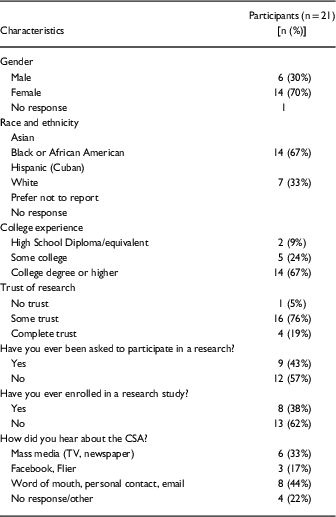
Demographics and other baseline data were collected on 21 participants (Table 3). In total, 15 attended multiple sessions and 9 had perfect attendance. Participants were diverse in terms of race and age and over half had never had an opportunity to participate in research. Many participants shared that they were personally affected by health issues and/or involved in organizations or efforts to address community health issues including rare diseases, heart disease in women, reproductive health, healthy eating, mentoring children and youth, chemical dependence, community development, transgender healthcare, and cancer.
Community scientist academy (CSA) participant characteristics, research experience, how they learned of CSA

Knowledge Change
Of the 24 participants, 20 (83%) completed both the pre and post knowledge surveys (Table 4). Though baseline knowledge on basic research definitions was fairly high, participants’ knowledge about the role of the IRB and the different types of research did improve. We were only able to assess knowledge change in the second pilot for session 2 on study design because the wrong instrument was mistakenly distributed in the first pilot for this session which precluded collection of this information from those participants. For this reason, the number with pre/post results for session 2 only includes the 6 who attended the second CSA pilot but the total that actually participated in session 2 across the 2 pilots of the CSA was 18 (Table 2). Among those assessed there was no or minimal knowledge improvement among that group for the session on study design. More improvement in knowledge was achieved in session 3 in relation to primary data and research teams. Participants had a good baseline understanding of ways of recruiting for research. In addition, at the end of session four, most participants (86%) could list at least one way they could become involved in research with UAMS.
Pre and post knowledge survey—key results from participants completing both surveys

IRB, Institutional Review Board; UAMS, University of Arkansas for Medical Sciences.
End of Training Feedback
All of the participants completing the end of training surveys indicated that they strongly agreed or agreed that their expectations of the sessions were met and that they had learned something new or relevant in each session with the exception of one person who was neutral about learning something new or relevant in the first session. Respondents also indicated that they valued having researchers as guest presenters each week and affirmed the value of having “real-life” examples of studies they shared. Most felt the time allotted each week was appropriate but several (4) wanted another week added to learn about how research is reviewed and funded. Twenty of the 24 (83%) expressed interest in participating in advanced training about research.
Suggestions for improvement included improving the session location to accommodate those with mobility issues and having breakout sessions in separate rooms to make it easier to communicate during small group discussions. Nevertheless, we received compliments about the sessions.
Post-CSA Involvement
Since attending the CSA, 8 of these CSA graduates have participated as pilot grant reviewers for the TRI. Two participants requested to take the online Collaborative Institutional Training Initiative training for human subjects research training. In addition, several graduates have been involved in nonresearch, programmatic activities (e.g., one participant with heart disease was asked to present in a cross-CTSA forum “Our Community, Our Health” on heart disease in women, 3 serve on Patient and Family Advisory Councils, and others gained more visibility for their organizations) as a result of the relationships that were developed through the CSA.
Discussion
Building trust between researchers and communities underrepresented in research is crucial to improving research relevance, participation, and outcomes [16]. Many of those most underrepresented in research and burdened by health disparities may feel intimidated by research, lack trust in researchers due in part to historical injustices, and lack control over their access to opportunities to partner or participate in research [Reference Yancey, Ortega and Kumanyika17–Reference Wendler21]. The goal of the CSA was to increase community members’ and patients’ understanding about the research process and increase their access to opportunities to influence and participate in research through new relationships and knowledge about ways to be involved.
We were successful in recruiting many CSA participants from racial and age groups that are underrepresented in research and in fact, the majority of participants had not previously participated in research. CSA participants were very enthusiastic about the academy and even though our numbers are insufficient to document statistical differences in this small pilot, our findings suggest there were some knowledge gains. This was especially true for topics participants had less baseline familiarity with including the role of the IRB, types of research, the concept of primary data, and members of the research team.
We included community members in the design and implementation of the CSA. This step was crucial as we wanted the development of an intervention to build community capacity to include community input from the outset. Input from community members on the planning committee, other CAB members, and CSA participants resulted in the following aspects or changes to the CSA: the interactive format, the panel of participants, the guest researchers, the schedule (short-term academy for 2 h/wk), the inclusion of short videos, and the addition of more photos and other images to the teaching slides. Other changes made based on input from CSA participants are outlined below. With the guidance of the planning committee and the information sessions in urban and rural communities in the state of Arkansas, we launched a product that was acceptable to the communities we seek to engage. The planning committee spent extensive time discussing what topics to cover as they did not have prior knowledge of the extent to which CSA participants would have research experience. We settled on an introductory curriculum that was basic enough to generate interest among community members to seek further information or participate in research. Based on participant feedback and reactions and discussions among implementing team members, we believe that by emphasizing discussion and structured interaction and providing key concepts with minimal lecturing, participants were able to steer the team leaders and guest researchers to drill down on content of most interest to them.
Including researchers and community members who have teamed up for research was also crucial. This made participants aware of their peers’ participation in research studies and understand the mutual beneficial nature of research. Guest researchers were able to share information in plain language, lay people were able to ask questions and get a better understanding of real-life research, and both groups developed a greater appreciation of each other. This aspect of the CSA was viewed as an essential aspect of the program.
Lessons Learned
The development of the CSA started in January 2016 and was piloted in Fall 2016 and Spring 2017. Conducting research on community training, including community members in the iterative process of developing a curriculum, and sharing the curriculum with community members before implementation took an extensive period of time. In addition, recruiting researchers to participate in the weekly sessions was initially challenging due to scheduling conflicts. However, having a faculty researcher involved on the implementing team to lead or co-lead content presentations was helpful since she could facilitate recruitment of investigators as guest speakers; address research-related questions requiring more in-depth knowledge and experience; make connections between presentations across the sessions; and raise the visibility of the importance of the CSA. The investments needed to organize and implement the program were also not insignificant. We needed to find community partners and investigators willing to share their experiences as guest speakers; communications support for participant recruitment; meeting space; materials for packets and interactive exercises; and a small budget for snacks and dinner at the graduation in session 5.
Improvements To and Dissemination of the CSA Curriculum
After the 2 pilot sessions, we presented the content of the CSA to the other members of the TRI CAB, which consists of community members with a wide range of research backgrounds, with some having spent a lot of time working with researchers on specific research projects and others having limited to no past research experience. Two of the more experienced members had feedback that we had not previously received in developing and implementing the CSA. Their feedback focused primarily on trying to make the slides more community friendly and engaging. Patient participants also provided us valuable information, most of whom had never participated in research before but wanted to learn more and suggested adding additional sessions.
Based on this feedback, we are making the following improvements to the curriculum:
1) Improving the readability and interactivity of the content by making it more “community friendly.” This will be done by reducing the text in slides, simplifying language and incorporating more multimedia.
2) Increasing information about IRB review of research and adding a session to provide the basics of research funding to give participants a fuller picture of what would be required of those who think they might want to serve as a community grant reviewer.
3) Implementing a 12-month post-CSA participation phone interview to assess the impact of the CSA on community member involvement and participation in research.
4) Developing video testimonials of participants and faculty researchers’ experiences with the CSA. We plan to use these videos to ease recruitment of other investigators to engage in the CSA in the future.
In addition to conducting a learning lab about implementing the CSA at a national CE conference, we are also creating a CSA dissemination toolkit including procedures and materials manual, content slides, and a webinar walking through the CSA process. We plan to make this toolkit available online to facilitate dissemination of this resource and in hopes that it will be useful to other academic health centers interested in engaging communities in research.
Conclusion
The CSA is highly relevant for building capacity for community-engaged research because of its potential for bridging the gap between researchers and those they seek to engage. Through personal contact with researchers and by creating a safe space for exposure to concepts presented in lay language using interactive exercises, this training can demystify a process that is often highly intimidating to those not involved in research. In addition to increasing the likelihood for future engagement as participants in research, the CSA can create a pool of community members and patients who can be called on to be involved in research in deeper ways (e.g., through community advisory and/or review boards, as community grant reviewers, in recruiting others to research, or as research partners or co-investigators). And, we hope that this will further improve trust between communities and researchers and build sustainable mutually beneficial relationships.
Acknowledgments
This work would not have been possible without the engagement and suggestions from the TRI’s CAB, especially the CSA planning committee members, and the participation of the community members and patients who volunteered their time to attend research information sessions in the community and/or the CSA. We are grateful for their willingness to participate and give us their feedback about their experiences with the CSA. The project described was supported by the TRI grant UL1TR000039 through the National Institutes of Health (NIH) National Center for Advancing Translational Sciences, by the National Institute on Minority Health and Health Disparities of the NIH under award number P20MD002329 and by cooperative agreement number 1U48DP005005 from the Centers for Disease Control and Prevention. The content is solely the responsibility of the authors and does not necessarily represent the official views of either the National Institutes of Health or the Centers for Disease Control and Prevention.
Disclosures
The authors have no conflicts of interest to declare.




 Open access

