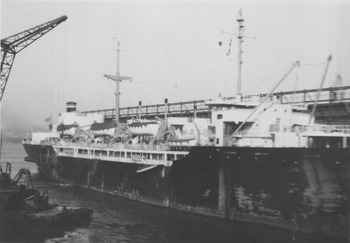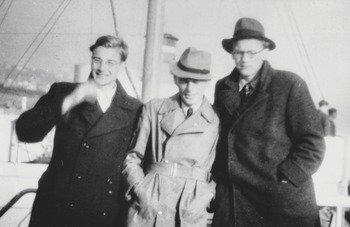


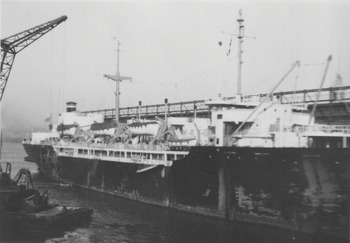
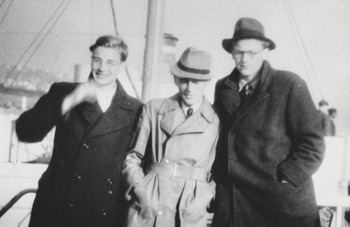
Peter and Dieter traveled to “America” on the Marine Shark, a US cargo ship (Figure 7.1). The trip, as Peter understood it, was to “visit their mother.” Peter had not seen his mother since he was six years old. Intermittent letters and the packages of food and gifts were the only contacts. Peter refused to make the trip without Dieter, whose approval by the US government was delayed because he had helped in the German Airforce. Richard and Charlotte prepared Dieter and Peter for their transit, putting together a photo album for the boys with childhood photos. Dieter and Peter arrived in Ellis Island at the end of 1948, shortly before Peter’s 18th birthday (Figure 7.2).
The first picture of Peter in the United States, at Ellis Island with his brother and unknown man, shortly after meeting his mother for the first time since he was six years old.
When Else and Richard had agreed years earlier that the boys would at some point reunite with their mother, no one realized this would take over a decade. Else and Richard both thought the opportunities for the boys in the United States were better than in Germany. By 1948 Else was particularly eager to get the boys to the United States because they were listed as dependents on her naturalization papers and US citizenship would be “automatic” for them if they resided in the United States as minors.
In a letter from Richard to Else in 1949, he wrote:
Thank you for the letters. They gave me a clear impression of the development of both boys in their new home because you can imagine that I have great worries about them and how they find their way and if they have the right relationship with you and your new husband. Both of them are really out of their impressionable age and can be regarded as adults. Both come from a country where youth was torn apart and they were very skeptical towards the rest of the world. Let the boys find their peace – and let them find their way to separate themselves from their past. Until now this is what had impressed their young lives. I am quite sure Dieter will get this understanding once he settles in the United States. And that the democratic freedom does not have to be expressed in bad behavior such as cigarette smoking but he can pursue intellectual work and be imaginative – if he wants to do it. He is an active football player – but I would not be in favor of him ignoring English and chemical studies and takes football instead.
Peter arrived in the United States and immediately enrolled in Lafayette High School in Buffalo, to learn English and complete his final semester of high school before attending university. Unbeknownst to Peter, his parents were working to expedite his US citizenship. It was not until years later that the family discovered how Peter became a US citizen. He was never naturalized. Documents show that, instead, in 1950 Richard gave up legal custody of Peter, then aged 19, to Else, who became his sole custodian. This was a requirement to enable the direct transfer of US citizenship to Peter from his mother.
It is not entirely clear when Peter first acquired US citizenship, although it is certain that it occurred before he turned 21. In 1950, congressman William l. Pfeifer from Buffalo lobbied on his behalf.
A telegram sent from the office of immigration to the congressman read as follows:
Extensive searching of US archives disclosed no other record of how or when Peter Huttenlocher actually became a US citizen. It just happened. Dieter turned 21 before the custody was legally settled between Richard and Else. He would return to Germany briefly, but then decided to make the United States his home, and was naturalized as a US citizen later.
For young men at that time, citizenship was very much a matter of both benefits and obligations. In later letters between Else and Richard, Else became increasingly agitated about the boys and the compulsory military service in the United States. As Peter predicted, the US engagement in wars continued after the Second World War. Richard wrote to Else:
Thus, the old saying still applies: small children – small worries, big children – big worries! Hopefully they do not burden you too much and you can cope with them, provided that the American military service does not put a spoke in your wheel. This is a looming specter for me, too. I had not reckoned with the possibility that the boys would be called up for military service before naturalization. It would certainly be a catastrophe. But let’s wait and see. They still have the possibility to come back here if the draft cannot be averted otherwise.
The University of Buffalo: Discovering Philosophy – and a Life Partner
Peter had arrived in the United States at age 17 and, for the first time, lived with his mother (endearingly called “moo coo” by Peter and Dieter) and his stepfather Max. He continued to live with them when he enrolled the following fall at the University of Buffalo. He studied philosophy and pre-medicine. Peter was grateful to Else and Max for taking them in and family members later remembered that he embarked on being good: a good person, a good student and good at whatever he was doing. He was no longer in a post-war country and the early 1950s was a time of prosperity and hope in the United States.
Peter’s first close friend in the United States was Joel Spiegelman. They met in summer school organic chemistry, several months after Peter’s arrival in the country. Joel, the son of Russian Jewish immigrants, was bold and “pretty radical” as a student at the University of Buffalo. After flailing through summer chemistry, Joel went on to become a talented composer, conductor and harpsichord performer both in the United States and Russia, and Peter’s lifelong friend.
In an interview in March 2019, Joel described Peter when they met. He was a “blond guy with an accent, from Koblenz, very nice; his English was ok; we shared an interest in music and philosophy. … [He told me how] his home was bombed; otherwise, he was a fresh immigrant and did not talk about it.” Joel immediately liked Peter. He had a strong “sense of inquiry and curiosity.” Joel also said: “I could say anything to Peter; you do not have many friendships like that in a lifetime.”
Joel further recalled: “Our culture was different, but we shared music and left-wing politics; we both wanted to change the world.” During their college years, they took philosophy together and attended basement anti-Stalin meetings. Peter attended an international Trotsky meeting in Buffalo with Joel to learn more about Trotskyism, a variant of Marxism. From his year living in the Russian zone, Peter was anti-Stalin. Joel was also anti-Stalin and, as Joel said, in those years he was “pretty radical.” Indeed, Joel’s college ”activities” earned him an interview with the CIA (Central Intelligence Agency).
Both Peter and Joel were heavily influenced by their philosophy professor and chair of the Department of Philosophy at the University of Buffalo, Dr. Marvin Farber. Interestingly, his brother, Sidney Farber, was a famous cancer researcher at Harvard Medical School and the namesake of the Farber Cancer Institute in Boston. It is likely that both Peter’s strong academic performance at the University of Buffalo and this connection with Sidney Farber later helped Peter gain acceptance to Harvard Medical School.
Marvin Farber was an influential philosopher, the founder and long-time editor of the journal Philosophy and Phenomenological Research, and is credited with introducing phenomenology to the United States. For a young man who had grown up with Nazism and lived in the Soviet and French occupied zone of Germany as Peter did, it was easy to become fascinated with phenomenology, the philosophy of experience. What is human consciousness and imagination? What is the situation of humans in society and history? How do you investigate phenomena as consciously experienced? It is hard for us to understand how a child consciously experiences a childhood in war and Nazism. What are the memories or imagined experiences that evolved from what Peter lived through as a child? The concepts of memory, consciousness and experience consumed Peter’s thinking at the time. This kind of thinking and immersion in philosophy helped to drive his future interests in understanding the development of the human brain.
During his immersion in philosophy and American college life Peter met his future wife, Janellen, in a philosophy seminar at the University of Buffalo. Joel knew “Jane” Burns from their grade school piano class. Jane also grew up in an eastern European immigrant family of Jewish descent. Her family never owned a house or a car, and she was determined to do well in school and grow up to live in one of the “nice old houses” in the wealthy neighborhood near her family’s rental apartment in Buffalo. At the start of university, Jane changed her name from Jane to Janellen, combining her first and middle names, because Jane seemed too “plain.” Janellen’s father Alan was one of 10 children and had to leave school at the age of 10 to work in a factory to help support his family after his father abandoned them. Alan, like Richard, had a knack for chemistry. Janellen recalled him experimenting with chemicals in the attic of their apartment building when she was a child, to make tanning lotion to sell for extra money during the depression. Janellen’s father worked as a linotype operator to print newspapers and lost his job during the depression. Unlike Richard, he did not have formal training as a chemist. One of his chemistry experiments caused an explosion in the attic of their apartment and the roof was demolished and had to be replaced. As Janellen tells it, “my father lost his hair in the explosion and it never grew back.” Janellen’s mother also came from an immigrant family; her mother’s father was a charismatic union organizer after immigrating to the United States. Janellen adored her maternal grandmother, her Oma, who had a thick German accent and cooked potato latkes and served German kuchen. She was from the borderlands of eastern Europe where people spoke both Yiddish and German. It was therefore not a surprise that Janellen immediately liked Peter and was intrigued by his accent and background.
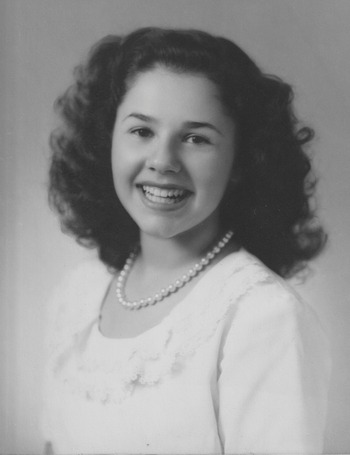
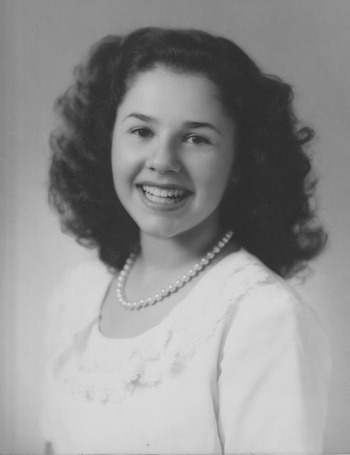
Janellen was chatty, an avid reader and smart as a whip. As a former teenage “beauty queen,” Janellen commanded Peter’s attention and interest (Figure 7.3). Janellen reported with a smile: “Suddenly Peter was there by my side – talking to me and following me around.” Peter invited Janellen for dinner at Joel’s apartment, to “talk about philosophy.” He was “gracious and lovely; he liked to talk about reality and philosophy.” They all started to gather at a coffee place near campus – “a nickel a cup” – and sit for hours with friends, talking about philosophy and ideas. Janellen said that Peter “was interested in what made people good, in how to be good, and thought that one could only be happy if one was good to others.” Then they would go to a nearby hot-dog stand on the edge of Buffalo and have “hot dogs with everything on them – always burned – grilled and delicious.” Joel, his girlfriend Gail, Janellen and Peter would venture out in Joel’s convertible and go to Crystal Beach in Canada, on the other side of the Peace Bridge. On one occasion, when Peter and Janellen were at a pizza parlor in a rough neighborhood, a group of thugs approached Janellen and said “get the girl.” Peter tried to reason with the thugs, but when one of them grabbed Janellen, the gentle and calm Peter responded with a swift left-handed punch. The surprised thugs fled. It turns out that Peter had learned to defend himself as a teenager in the Soviet and French post-war occupation zones. After this encounter Janellen knew that Peter was the guy for her, and that he would take good care of her. Years later, Janellen loved to tell the story about Peter and his left-handed punch.