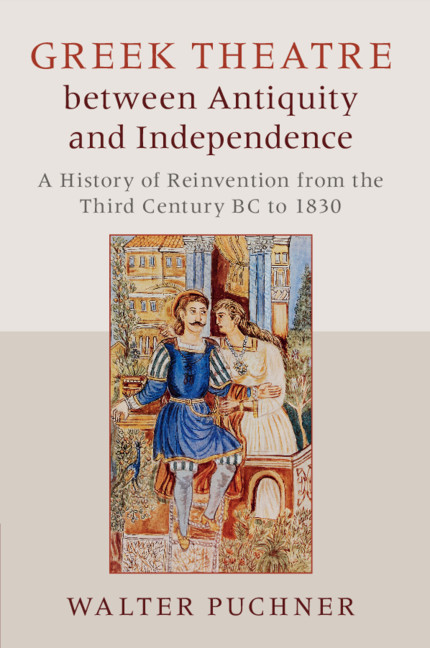

This first general history of Greek theatre from Hellenistic times to the foundation of the Modern Greek state in 1830 marks a radical departure from traditional methods of historiography. We like to think of history unfolding continuously, in an evolutionary form, but the story of Greek theatre is rather different. After traditional theatre ended in the sixth and seventh centuries, no traditional drama was written or performed on stage throughout the Greek-speaking world for centuries due to the Orthodox Church's hostile attitude toward spectacles. With the reinvention of theatre in Renaissance Italy, however, Greek theatre was revived in Crete under Venetian rule in the late sixteenth century. The following centuries saw the restoration of Greek theatre at various locations, albeit characterized by numerous ruptures and discontinuities in terms of geography, stylistics, thematic approaches and ideologies. These diverse developments were only 'normalized' with the establishment of the Greek nation state.
Loading metrics...
* Views captured on Cambridge Core between #date#. This data will be updated every 24 hours.
Usage data cannot currently be displayed.
This section outlines the accessibility features of this content - including support for screen readers, full keyboard navigation and high-contrast display options. This may not be relevant for you.
Accessibility compliance for the HTML of this book is currently unknown and may be updated in the future.
