





Plain language summary
Research objectives: The research aimed to demonstrate that Aesop’s fables are complex and profound literary works contrary to common perception that they convey simple moral lessons. We focused particularly on the final words spoken by characters at the end of each fable (ending speech), proposing that these concluding remarks do not simply deliver moral lessons but play a crucial role in encouraging readers to think more deeply.
Research methods: The research team analyzed 600 Aesop’s fables published by Oxford University Press using computational methods. We employed various machine learning and artificial intelligence technologies to extract and compare each fable’s narrative content, characters’ final words and explicitly stated morals. This was akin to reading all 600 fables simultaneously while identifying patterns, investigating differences in these text components and their speakers.
Key findings: Characters’ final words were not mere summaries of the story content. Instead, they contained more diverse meaning compared to the full story, carrying more unique meaning between them. Over three quarters of the final words operated independently from official moral lessons, directly conflicting them in more than one fifth of the cases. For example, in «The Eagle and the Fox», the fox advocates pragmatic actions despite the official moral emphasizing ethical duty. Such conflicts mean that readers must think and judge for themselves. The credibility and meaning varied significantly depending on who delivered the final words. The fox appeared most frequently with 34 instances, indicating that wisdom is valued more highly than physical strength in Aesop’s fables.
Research significance: This study confirmed that Aesop’s fables go beyond simple moral lessons, with characters’ final words playing an important function in this process. The reason why Aesop’s fables, created 2,000 years ago, can still be read in new ways lies precisely in this interpretive complexity and richness. The research also demonstrated new possibilities for digital humanities studies by discovering patterns that would have been difficult to identify through traditional literary research methods, thanks to large-scale computer-assisted analysis.
Introduction
Aesop’s fables constitute one of the oldest and most widely transmitted narrative genres in Western literary history, having been continuously retold across various languages and cultural contexts for over two millennia. Contrary to the common perception of fables as simple didactic tales, they are literary forms that pose interpretive challenges through complex narrative structures. The ending speech (ending speech), where the story concludes with direct utterances from characters, plays a pivotal role in the meaning construction of fables.
The ending speech shapes fable interpretation across several dimensions. First, the ending speech performs the paradoxical function of completing the narrative while simultaneously suspending it in an unresolved state, as it concludes through the subjective utterances of characters rather than the narrator’s objective statements. In «The Hares and the Frogs», when the hare declares, “Wait, there are creatures more cowardly than I am. Then life might be worth living after all,” the extreme situation is abruptly interrupted, but the fundamental problem remains unresolved. Readers must judge whether this constitutes a genuine solution or merely temporary consolation through comparison. Second, the ending speech functions as critical commentary on the events within the story. In «The Fox and the Goat in the Well», after deceiving the goat twice, the fox states, “If you had half as much sense as you have hairs in your beard, you wouldn’t have jumped into the well without first making sure you could get back out again.” This ending speech conveys a didactic message about reckless behavior while also functioning as a character expression that may reveal the shamelessness of a swindler who exploits others. Third, the ending speech reflects different values and worldviews depending on the speaker’s identity. Even identical content carries different authority and credibility when spoken by a fox versus a wolf.
However, existing scholarship has defined ending speech as endomythium, or “moral within the story,” understanding it as a simple tool for lesson delivery. This approach overlooks the complex functions of ending speech and reduces fables to unidirectional moral education. The lack of systematic research on ending speech in Aesop’s fables stems from several factors. Traditional philological studies focused primarily on textual criticism and transmission history, concentrating on microscopic interpretation of individual fables while failing to grasp macroscopic patterns across the entire corpus. Computational studies that emerged in the 21st century concentrated on technical methodologies without adequately addressing literary meaning and interpretation, mostly dealing with small fable collections that limited generalization. Most importantly, quantitative verification of the complex relationship between ending speech’s narrative function and moral teachings has not been conducted.
This study aims to empirically demonstrate through computational analysis of 600 Aesop’s fables that ending speech is not merely a simple conveyor of moral lessons but a narrative device that complicates the meaning structure of fables. This finding directly challenges the traditional endomythium classification, which subsumes ending speech under moral instruction. The core hypothesis is that ending speech maintains complex and tensional relationships with both the story content and its explicit moral teachings, thereby transforming fables into “open work” that pose interpretive challenges.
Analysis is conducted across three dimensions. First, the structural relationship between ending speech and story content is analyzed. If the ending speech was simply a summary of the story or extraction of moral lessons, it would show high semantic similarity with the story. However, if the ending speech performs complex narrative functions, it would form a distinct semantic domain separate from the story. Second, the relationship between ending speech and explicit moral teachings is examined. The core of this analysis is to understand what kind of relationship ending speech maintains with explicit moral teachings and how this relationship affects the interpretive complexity of fables. Third, the impact of ending speech speaker identity on fable meaning construction is analyzed. Divine beings, humans and various animals appear as speakers of ending speech, and we analyze how the nature and meaning of utterances change according to the speaker.
The analysis corpus consists of 600 Aesop’s Fables edited by Laura Gibbs (Oxford World’s Classics, Gibbs Reference Gibbs2002). This edition encompasses major sources from classical antiquity and medieval periods, including anonymous Greek collections, Phaedrus, Babrius, Aphthonius, Avianus and Syntipas, making it suitable for analyzing the diversity of the Aesopic tradition. While previous computational analysis studies dealt with small fable collections, this study’s analysis of a large corpus of 600 fables represents a significant methodological advantage.
This study attempts an integrated approach that combines digital humanities quantitative methodologies with traditional literary interpretation. Quantitative natural language processing (NLP) outputs are connected with literary interpretation to present a new understanding of ending speech’s narrative function. Through this, we aim to confirm that Aesop’s fables are not simple didactic tales but narrative forms with complex meaning structures, remaining open to new interpretive possibilities.
Related works
Traditional humanistic approaches to Aesopic studies
Academic research on Aesop’s fables began in the tradition of German philology in the late 19th century. Early studies primarily focused on textual criticism and transmission history, due to the characteristic of Aesop’s fables as collective traditions formed over centuries rather than works of a single original author. Émile Chambry’s (1925–1927) critical edition of Greek Aesop’s fables (Chambry Reference Chambry1927) analyzed 94 manuscripts to classify over 880 individual fables into approximately 350 types. Ben Edwin Perry’s Aesopica (Perry Reference Perry1952) systematically organized Greek and Latin sources to establish a standard numbering system of 557 fables, which remains the academic reference standard to this day.
Despite these philological achievements, the theoretical exploration of the narrative characteristics of fables remained relatively insufficient. Traditional research regarded fables as vehicles for moral instruction, understanding ending speech within the context of its didactic function. Laura Gibbs explained morals presented before the story as promythium, those after the story as epimythium and those within the story as endomythium, defining endomythium as “the witty last words spoken by one of the characters inside the fable itself.” This classification treats ending speech as a simple moral delivery mechanism. However, our analysis demonstrates that the ending speech functions as a structurally independent narrative layer that frequently conflicts with explicit moral teachings, thereby requiring redefinition beyond the endomythium framework.
The development of narratological theory provided new analytical frameworks for fable studies, but the unique narrative structure of Aesop’s fables was not sufficiently addressed. Vladimir Propp’s morphology of the folktale (Propp Reference Propp1968) and A. J. Greimas’ structural analysis of narrative (Greimas Reference Greimas1983) presuppose linear narrative progression from lack to resolution. However, Aesop’s fables focus on the revelation of truth or recognition of reality rather than problem resolution, and the ending speech captures precisely these moments of recognition. Mikhail Bakhtin’s dialogism theory provides important insights for understanding the speaker issue in ending speech (Bakhtin Reference Bakhtin and Holquist1981). His concept of polyphony – where multiple ideological voices coexist without authorial resolution – potentially applies to the diversity of ending speech speakers in Aesop’s fables. However, Bakhtin’s theory was primarily applied to the novel genre (Morson and Emerson Reference Morson and Emerson1990), and research on the polyphonic structure of fable texts has not been conducted. Similarly, Umberto Eco’s concept of the “open work” (Eco Reference Eco1989) and Wolfgang Iser’s reader-response theory emphasizing interpretive “gaps” (Iser Reference Iser1978) suggest frameworks for understanding how texts activate reader participation through structural incompleteness. Our study explores whether Aesopic fables exhibit such open structures through the relationships between ending speech and moral teachings.
Recent humanistic research on Aesop’s fables shows increasingly diverse perspectives. Kostaragkou (Reference Kostaragkou2024) compared various translations of «The Woodcutter and Mercury»fable to analyze how power relationships between gods and humans are adjusted according to cultural contexts. Katsadoros and Feggerou (Reference Katsadoros and Feggerou2021) viewed Aesop’s fables as a genre of folk literature, exploring the educational and cultural roles of fables and how utopian and dystopian social structures are reflected and critically reconstructed. From an ecocritical perspective, Tobias and Morrison (Reference Tobias, Morrison and Teng2021) analyzed the paradoxical nature of animal representation in Aesop’s fables between anthropocentrism and ecological balance through the concept of “zoosemiotic paradox.”
Computational approaches to Aesopic fables
With the rise of digital humanities research(Kwon Reference Kwon2025), computational analysis of Aesop’s fables began to be attempted. Early studies primarily focused on text structuring and annotation system development. Kwong (Reference Kwong2011) proposed an annotation scheme for fable corpora, systematically annotating components, such as events, frames, episodes and conclusions. While this research serves as foundational work for computational analysis of fable narrative structure, the ending speech was treated as a subsidiary element of episodes and did not receive attention. Regarding character identification, research by Hock-Neng Goh, Lay-Ki Soon and Su-Cheng Haw is noteworthy (Goh, Soon, and Haw Reference Goh, Soon and Haw2013). They proposed a method for automatically identifying protagonists in fables using verb-based techniques and experimentally analyzed the impact of anaphora resolution on identification performance. This research attempted to identify key characters in fables by combining NLP preprocessing techniques with rule-based approaches, but it did not address the analysis of characters’ speech characteristics or narrative roles. In narrative structure analysis, research applying the GOTSEC model to Aesop’s fables was conducted. This model structurally analyzes elements, such as goals, obstacles, tasks, side-effects and characters of each fable to visualize positive/negative paths. However, this research relied on manual analysis and did not conduct a systematic analysis of ending speech’s narrative function.
Recently, studies utilizing large language models have emerged. The TF1-EN-3M: Three Million Synthetic Moral Fables project generated millions of synthetic moral fables to construct datasets for story generation and ethical reasoning. While this research attempts to compensate for the small-scale limitations of the original Aesop corpus, it has limitations in adequately reflecting the subtle characteristics of traditional fables due to the nature of synthetic data. Yuetian Chen and Mei Si performed fable annotation and evaluation using an LLM-based dual-agent system (Chen and Si Reference Chen and Si2024). They considered the short and consistent length of Aesop’s fables as good experimental subjects for story understanding and generation research, evaluating LLM annotation quality through five representative fables. However, the analysis subject was very limited, making generalization difficult.
Two NLP techniques, topic modeling and embedding, are widely used in computational narrative research (Jockers Reference Jockers2013; Hamilton, Leskovec, and Jurafsky Reference Hamilton, Leskovec and Jurafsky2016). Latent Dirichlet allocation (LDA) is one of the most widely accepted forms of topic model (Kay et al. Reference Kay, Newman, Youtie, Porter and Rafols2014) due to its applicability to a wide range of document types (Wach et al. Reference Wach, Topcu, Jung, Sandman, Kulkarni and Salado2024), iteratively updating word–topic links to extract latent, or unlabeled, topics (Steyvers and Griffiths Reference Steyvers, Griffiths, Landauer, McNamara, Dennis and Kintsch2007). The LDA utilizes a set of word distributions to represent the ditribution of topics, each covering one of the provided documents. In this distribution-based topic definition, each latent topic can roughly be represented by accessing a list of words with high distribution.
Text embeddings on the other hand are fundamental techniques in NLP that transform a given text, from words to books, as dense numerical vectors in a high-dimensional space(Mikolov et al. Reference Mikolov, Chen, Corrado and Dean2013). This transformation is done to enable numerical calculations between texts, based on their similarities or distances using their respected vectors, or embeddings; semantic similarity is assumed in pair of texts in close proximity. Sentence-BERT (SBERT) is one of the representative embedding algorithms, especially optimized for short text units, such as sentences or short paragraphs (Reimers and Gurevych Reference Reimers and Gurevych2019). By fine-tuning BERT (Devlin et al. Reference Devlin, Chang, Lee, Toutanova, Burstein, Doran and Solorio2019) in a Siamese network architecture, SBERT generates fixed-length embeddings that preserve semantic meaning at the sentence level, enabling efficient comparison via cosine similarity.
Research gap
Synthesizing existing research, three major gaps exist in the study of ending speech in Aesop’s fables. First, a systematic analysis of ending speech’s narrative function is lacking. Traditional humanistic research has defined ending speech as endomythium and understood it only as a tool for moral instruction. Empirical analysis of structural differentiation between them is insufficient, shedding little light on the complex functions of ending speech. Second, quantitative verification through large-scale corpora was absent. Existing computational studies mostly dealt with small fable collections of fewer than 10 fables, focusing on story structure or character identification while overlooking the unique function of ending speech. Systematic analysis of how ending speech speaker identity affects utterance characteristics and meaning construction was also insufficient. Third, an empirical investigation of the relationship between ending speech and moral teaching systems was lacking. Quantitative analysis of what relationships promythium, epimythium and ending speech maintain, and how concordance or conflict among them affects fable interpretation, has not been attempted.
This study conducts integrated research that combines computational analysis of a large 600-fable corpus to quantitatively investigate ending speech’s narrative function and connect this with humanistic interpretation, aiming to fill these gaps.
Analysis – Methods and results
Dataset construction and preprocessing
Corpus selection and rationale
The analysis corpus for this study consists of 600 fables from Aesop’s Fables translated and edited by Laura Gibbs (Oxford World’s Classics, Gibbs Reference Gibbs2002). The rationale for selecting this edition is as follows. First, this edition encompasses major sources from classical antiquity to medieval periods, including anonymous Greek collections (Collectio Augustana, Vindobonensis and Accursiana), Phaedrus, Babrius, Aphthonius, Avianus and Syntipas, thus covering the diversity of the Aesopic tradition. Second, Gibbs’ editing follows the Perry numbering system while including variants omitted from existing translations, reconstructing the comprehensive picture of fables. Third, through consistent modern English translation, linguistic variables are controlled while preserving the narrative characteristics of the original texts. Fourth, the collection specifies both the promythium and epimythium of each fable, removing the necessity of reconstructing both morality statements. These are represented as an additional text to the fable itself, with promythium placed just after the title and epimythium at the end of the main text. Both were italicized for identification. Lastly, the scale of 600 fables represents an overwhelmingly large corpus compared to existing computational analysis studies, ensuring statistical significance.
The 600 fables are distributed by source as follows: anonymous Greek collections comprise 273 fables (45.5%), followed by Babrius with 105 fables (17.5%), Phaedrus with 122 fables (20.3%), other Greek and Latin literary sources with 64 fables (10.7%) and medieval Latin sources with 36 fables (6.0%). This distribution reflects the historical stratification of fable transmission while securing the representativeness necessary for analysis.
Text structurization and component extraction
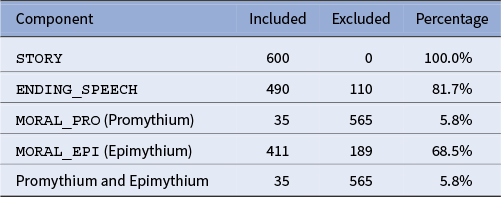
Each fable was parsed into the following structure: ID (unique number), TITLE (title), STORY (narrative content), ENDING_ SPEECH (ending speech), ENDING _SPEAKER (ending speech speaker), MORAL_PRO (promythium), MORAL_EPI (epimythium) and NOTE BY GIBBS (editor’s notes). Among these, the core analysis targets for this study are STORY, ENDING_SPEECH, ENDING_SPEAKER, MORAL_PRO and MORAL_EPI. Table 1 summarizes the descriptive statistics of the moral system in the 600 fables used in this research, where the core analysis targets’ extraction ratios are presented along with the detected frequencies.
Descriptive statistics on Aesop fables collected by Laura Gibbs (N = 600)
Ending speech extraction proceeded through a dual verification method. Stage 1 performed rule-based extraction using regular expressions. Patterns were constructed to identify direct utterances enclosed in quotation marks at the end of stories. Specifically, the regular expression  was used to detect quotation marks and speech markers at sentence endings. However, this method alone had difficulty accurately processing complex quotations or cases where speaker indication was omitted.
Stage 2 introduced a context inference method using Claude-3.5-Sonnet API. Five researchers provided 10 standard cases where ending speech and speakers were identified through discussion and consensus as few-shot examples, and prompts were constructed to identify ending speech and speakers in each fable. The prompt structure was designed to clearly present the definition of ending speech in Aesop’s fables, learn various patterns through 10 standard cases, and then apply them to the target fables.
Accuracy validation and quality control
To verify the accuracy of extraction results, five researchers constructed a validation set through consensus. Sixty fables (10% of the total dataset) were selected through random sampling, consisting of 50 fables with ending speech and 10 fables without ending speech. Validation results showed that for ending speech extraction, 52 fables achieved complete matches, 5 showed partial matches and 3 showed errors. This achieved 86.67 percent accuracy on a complete match basis, or 95.0 percent accuracy including partial matches. For speaker identification, all 57 partial matches resulted in positive speacker match, also achieving 95.0 percent accuracy. All 10 fables without ending speech were detected with 100 percent accuracy.
Partial match cases mainly occurred when the ending speech was divided in the middle within complex quotations, which were restored to complete the ending speech through subsequent manual work. Speaker identification errors arose from ambiguity in pronoun reference targets, but overall accuracy sufficient for analysis was secured. Error cases included problems where only the second utterance was extracted in complex quotations and cases where the reference target was unclear among multiple characters in the preceding context.
Data preprocessing and final configuration
The preprocessing process for computational analysis was performed as follows. First, all texts were standardized to UTF-8 encoding. Second, for the 490 fables with ending speech, comparison with original texts was conducted to check for sentences broken in the middle, and complete ending speech was manually verified and input. Third, missing values in each field were marked as “none” to explicitly distinguish them in subsequent analysis. Fourth, for consistency of analysis, notation of personal names, place names and divine names was standardized across all texts.
Finally, the ending speech was confirmed in 490 fables (81.7%) out of 600, while 110 fables (18.3%) were classified as having no ending speech. Examining the statistical characteristics of the 490 fables with ending speech, the average ending speech length was 196.8 characters (standard deviation 142.3 characters), with the shortest ending speech at 16 characters (“What does it matter?”) and the longest at 666 characters (Aesop’s explanation of Delphic history). The average word count was 44.2 words, and 249 unique speakers were identified.
Regarding moral distribution, 35 fables (5.8%) contained MORAL_PRO, while 411 fables (68.5%) contained MORAL_EPI. This asymmetric distribution confirms that epimythium was a general practice in Aesop’s fables, while promythium was a characteristic of specific editions. The preprocessed data were saved as structured CSV files, establishing an analytical foundation for systematically applying various computational methodologies, including SBERT embedding, LDA topic modeling and sentiment analysis in subsequent analysis stages. Both the LDA topic modeling and SBERT embedding followed default python implementation (Jung and Kwon Reference Jung and Kwon2025). The number of LDA topics was found by comparing the coherence scores of 2–20 LDA topics; SBERT embedding provides a single embedding for each input document therefore no additional consideration was given. Python implementations used during the experiment are shared in a repository (GitHub: https://github.com/raphael-jung/Aesops-Fables) for research reproducibility.
Once the initial text review was done, we performed a list of text data preprocessing on three text data columns STORY, ENDING_SPEECH and MORAL_EPI for embedding and topic modeling analysis. Standard NLP techniques were performed, including tokenization, lowercasing, stopword removal and lemmatization (Schütze, Manning, and Raghavan Reference Schütze, Manning and Raghavan2008) established python implementations were utilized. Punctuation, special characters and unnecessary spaces were removed. Outlier removal was not done for this data analysis to preserve the natural distribution of the corpus, consistent with recommendations for topic modeling in sparse text data (Blei, Ng, and Jordan Reference Blei, Ng and Jordan2003). These were generated for machine use and were expended during the embedding and topic modeling implementation running phase without long-term data storage.
The text preprocessing was not done on MORAL_PRO as the computer-based analysis in our research focused on analyzing possible semantic differences the ending speech have over epimythium.
Story–ending speech structural analysis
Conceptual framework and analysis methodology
The ending speech serves as the final utterance of characters responsible for narrative completion in Aesop’s fables, performing complex functions that transcend simple moral instruction. Contrary to existing research that defined ending speech as endomythium, this study focuses on the complex relationship ending speech maintains with story content. The ending speech performs the function of moral summary while simultaneously serving multiple dimensions including character expression, ironic commentary on situations and instigation or resolution of conflict situations. This multifunctionality stems from the paradox that ending speech completes the narrative while simultaneously suspending it in an incomplete state. Stories that end with characters’ words rather than narrator’s statements create an open structure that demands active interpretation from readers.
The analytical methodology was designed as follows. First, the semantic relationship between story and ending speech is quantified through semantic embeddings using SBERT models. Second, the respective latent topic structures are compared and analyzed through LDA topic modeling. Third, similarity-based clustering patterns are identified through network analysis. Through this multilayered approach, we aim to comprehensively understand the structural relationship between ending speech and story.
Semantic similarity analysis using SBERT embeddings
To analyze the structural relationship between story and ending speech, semantic embedding was performed using the “sentence-transformers/all-MiniLM-L6-v2” model. This model shows excellent performance in sentence-level semantic similarity measurement despite its relatively small size (22 MB). Additionally, being pre-trained on English texts, it is suitable for the linguistic characteristics of Aesop’s fables.
The analysis process proceeded as follows. All 600 STORYs and 490 ENDING_SPEECHs were individually embedded to convert each text into 384-dimensional vectors. Cosine similarity matrices were generated for all pairs within each category to calculate semantic distances between texts. Through similarity distribution analysis, a 90 percent threshold was set, and community detection and clustering were performed. The Louvain algorithm (Blondel et al. Reference Blondel, Guillaume, Lambiotte and Lefebvre2008) was selected for clustering implementation; agglomeratively generating clusters based on not only the modularity but also the consolidation ratio, it is one of the widely used clustering algorithms especially on exploratory research due to its domain-independent performance and low computational complexity.
Analysis results showed that the average similarity of stories was 0.3578, while the average similarity of ending speech was 0.1820. The remarkably lower similarity of ending speech indicates that the semantic diversity of ending speech is much greater than that of story content. This supports the core hypothesis that ending speech is not a simple summary or repetition of the story but forms a unique semantic domain. Stories formed seven clusters ( $C^{story}$
) based on the 90 percent threshold (0.5084) among 179,645 text pairs, with modularity of 0.2635. Ending speech formed six clusters (
$C^{story}$
) based on the 90 percent threshold (0.5084) among 179,645 text pairs, with modularity of 0.2635. Ending speech formed six clusters ( $C^{end}$
) based on the 90 percent threshold (0.3072) among 116,779 text pairs, with modularity of 0.2345. The clusters notation is
$C^{end}$
) based on the 90 percent threshold (0.3072) among 116,779 text pairs, with modularity of 0.2345. The clusters notation is $C^{part \, of \, text}(cluster \, id)$
.
$C^{part \, of \, text}(cluster \, id)$
.
Analyzing the clustering results reveals clear structural differences between story and ending speech. Table 2 summarizes the key characteristics of major clusters in story and ending speech, along with their key differences. $C^{story}$
tend to be classified by characters or situations. The largest cluster,
$C^{story}$
tend to be classified by characters or situations. The largest cluster, $C^{story}(2)$
(176 fables, 29.3%), consists of bird and flying creature-centered fables,
$C^{story}(2)$
(176 fables, 29.3%), consists of bird and flying creature-centered fables, $C^{story}(4)$
(112 fables, 18.7%) comprises plant and natural element fables and
$C^{story}(4)$
(112 fables, 18.7%) comprises plant and natural element fables and $C^{story}(3)$
(105 fables, 17.5%) consists of lion and large animal fables. In contrast,
$C^{story}(3)$
(105 fables, 17.5%) consists of lion and large animal fables. In contrast, $C^{end}$
are classified according to the utterance function and the speaker attitude.
$C^{end}$
are classified according to the utterance function and the speaker attitude. $C^{end}(4)$
(137 fables, 28.0%) consists of cause-and-effect explanatory ending speech,
$C^{end}(4)$
(137 fables, 28.0%) consists of cause-and-effect explanatory ending speech, $C^{end}(1)$
(108 fables, 22.0%) comprises criticism and reproach-type ending speech and
$C^{end}(1)$
(108 fables, 22.0%) comprises criticism and reproach-type ending speech and $C^{end}(0)$
(86 fables, 17.6%) consists of self-defense and justification-type ending speech. This difference suggests that the ending speech is structured by discursive function rather than content.
$C^{end}(0)$
(86 fables, 17.6%) consists of self-defense and justification-type ending speech. This difference suggests that the ending speech is structured by discursive function rather than content.
Key characteristics of major clusters in story and ending speech, and their key differences
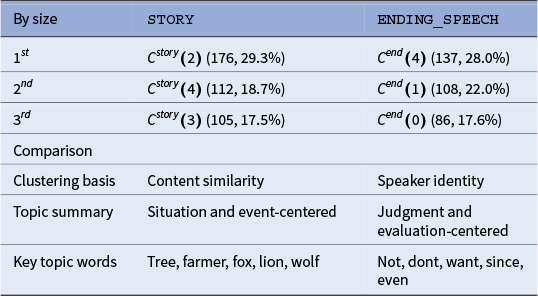
Note: Clusters are ordered by size, presented with (size, ratio).
Topic modeling analysis with dual approach
LDA topic modeling was performed using two approaches. The first involved direct LDA analysis on individual texts ( ${LDA}_{fable}$
), and the second performed LDA analysis on texts grouped by embedding clusters (
${LDA}_{fable}$
), and the second performed LDA analysis on texts grouped by embedding clusters ( ${LDA}_{cluster}$
). LDA topics are represented in the form
${LDA}_{cluster}$
). LDA topics are represented in the form ${LDA}^{part \, of \, text}_{source \, of \, text}(topic \, id)$
. The purpose of this dual approach was to solve the sparsity problem that occurs when applying LDA directly to 600 relatively short texts, while simultaneously comparing exploration of the latent topic structure of documents themselves with subtopics within semantically cohesive groups.
${LDA}^{part \, of \, text}_{source \, of \, text}(topic \, id)$
. The purpose of this dual approach was to solve the sparsity problem that occurs when applying LDA directly to 600 relatively short texts, while simultaneously comparing exploration of the latent topic structure of documents themselves with subtopics within semantically cohesive groups.
The optimal number of topics was determined based on coherence scores. For STORY column, seven ${LDA}_{fable}^{story}$
topics were selected as optimal in individual document analysis, while ENDING_SPEECH yielded 13
${LDA}_{fable}^{story}$
topics were selected as optimal in individual document analysis, while ENDING_SPEECH yielded 13 ${LDA}_{fable}^{end}$
topics. In cluster-based analysis, both STORY and ENDING_SPEECH converged to five topics each (respectively
${LDA}_{fable}^{end}$
topics. In cluster-based analysis, both STORY and ENDING_SPEECH converged to five topics each (respectively ${LDA}_{cluster}^{story}$
and
${LDA}_{cluster}^{story}$
and ${LDA}_{cluster}^{end}$
).
${LDA}_{cluster}^{end}$
).
Examining the results of individual document-based LDA analysis, story topics ${LDA}_{fable}^{story}$
are organized around characters and situations. Major keywords, such as “tree,” “farmer,” “fox,” “lion,” “wolf,” “water” and “dog,” were derived, showing that stories focus on concrete situations and characters. In contrast, ending speech topics
${LDA}_{fable}^{story}$
are organized around characters and situations. Major keywords, such as “tree,” “farmer,” “fox,” “lion,” “wolf,” “water” and “dog,” were derived, showing that stories focus on concrete situations and characters. In contrast, ending speech topics ${LDA}_{fable}^{end}$
concentrate on judgment and evaluation. Major keywords showed high frequency of negative and evaluative words, such as “not,” “dont,” “want,” “since,” “even” and “right.” The keywords show that ending speech focuses on interpretation rather than representation of preceding narrative events.
${LDA}_{fable}^{end}$
concentrate on judgment and evaluation. Major keywords showed high frequency of negative and evaluative words, such as “not,” “dont,” “want,” “since,” “even” and “right.” The keywords show that ending speech focuses on interpretation rather than representation of preceding narrative events.
In cluster-based LDA analysis, even clearer structural differences emerge. Cluster-based topics of stories ${LDA}_{cluster}^{story}$
differentiate around characters and situations, showing a pattern where each topic clearly corresponds to one cluster. Major keywords, such as “mother,” “wolf,” “eagle,” “tree” and “city,” appear, confirming clustering based on content similarity. In contrast, cluster-based topics of ending speech
${LDA}_{cluster}^{story}$
differentiate around characters and situations, showing a pattern where each topic clearly corresponds to one cluster. Major keywords, such as “mother,” “wolf,” “eagle,” “tree” and “city,” appear, confirming clustering based on content similarity. In contrast, cluster-based topics of ending speech ${LDA}_{cluster}^{end}$
are organized around emotional states and discursive functions. Keywords, such as “blame,” “die,” “put” and “yourself,” predominate, with the phenomenon that one topic corresponds to multiple clusters being observed.
${LDA}_{cluster}^{end}$
are organized around emotional states and discursive functions. Keywords, such as “blame,” “die,” “put” and “yourself,” predominate, with the phenomenon that one topic corresponds to multiple clusters being observed.
Structural relationship patterns between story and ending speech
Synthesizing embedding-based analysis and LDA analysis, three major structural relationship patterns are confirmed between story and ending speech. First is the semantic differentiation aspect. The fact that the average similarity of ending speech (0.1820) is significantly lower than that of story (0.3578) empirically demonstrates that ending speech is not a simple summary or repetition of the story. This semantic differentiation shows that ending speech maintains a complex relationship with story and increases the interpretive complexity of fables. Second is thematic functional differentiation. While story topics ${LDA}_{fable}^{story}$
are distributed around situations and events (seven topics), ending speech topics
${LDA}_{fable}^{story}$
are distributed around situations and events (seven topics), ending speech topics ${LDA}_{fable}^{end}$
concentrates on judgment and evaluation (further subdivided into 13 topics). Stories focus on “what happened,” while ending speech focuses on “how to accept and react to it.” Third is the tendency toward discursive structuring. In cluster analysis, stories are clustered according to content similarity, while ending speech shows a tendency toward clustering by speaker. The formation of ending speech clusters by specific speakers, such as fox, lion and wolf, shows that ending speech reflects the character and perspective of speakers rather than simple moral instruction.
${LDA}_{fable}^{end}$
concentrates on judgment and evaluation (further subdivided into 13 topics). Stories focus on “what happened,” while ending speech focuses on “how to accept and react to it.” Third is the tendency toward discursive structuring. In cluster analysis, stories are clustered according to content similarity, while ending speech shows a tendency toward clustering by speaker. The formation of ending speech clusters by specific speakers, such as fox, lion and wolf, shows that ending speech reflects the character and perspective of speakers rather than simple moral instruction.
These structural relationship patterns show that ending speech maintains a complex and mutually complementary relationship with story content. Rather than restating story content, ending speech provides new interpretive perspectives on it, thereby multilayering the meaning structure of fables.
Ending speech and moral teachings relationship analysis
Multi-layered moral system in Aesopic fables
The didactic message of Aesop’s fables has a complex structure. Traditionally, scholars have classified fable morals into three forms: promythium as pre-story moral, epimythium as post-story moral and endomythium as intra-story moral referring to ending speech. However, this classification requires reconsideration in that it performs different discursive functions rather than simply being various ways of moral instruction.
Among the 600 fables, 411 (68.5%) contain MORAL_EPI, comprising the overwhelming majority. Among these, only 35 fables (5.8%) contain MORAL_PRO, which is mainly a characteristic of the Phaedrus edition. The 35 fables with both MORAL_PRO and MORAL_EPI recorded simultaneously serve as key data for analyzing the functional differences between the two moral systems. Linguistic analysis of the 35 dual-moral fables reveals clear functional differentiation between MORAL_PRO and MORAL_EPI. Promythium favors meta-descriptive expressions: “A story about $\ldots $
” appears 21 times (60%), and “This fable
$\ldots $
” appears 21 times (60%), and “This fable $\ldots $
” appears three times (8.6%). Reader-oriented expressions include “urging us” used 9 times (25.7%) and “Listen to a fable” used five times (14.3%). Promythium thus provides prophetic guidance, previewing themes and lessons for the reader attention. The key differences between the two moral systems are summarized in Table 3.
$\ldots $
” appears three times (8.6%). Reader-oriented expressions include “urging us” used 9 times (25.7%) and “Listen to a fable” used five times (14.3%). Promythium thus provides prophetic guidance, previewing themes and lessons for the reader attention. The key differences between the two moral systems are summarized in Table 3.
Functional differentiation between promythium and epimythium in 35 dual-moral fables, acquired through linguistic analysis
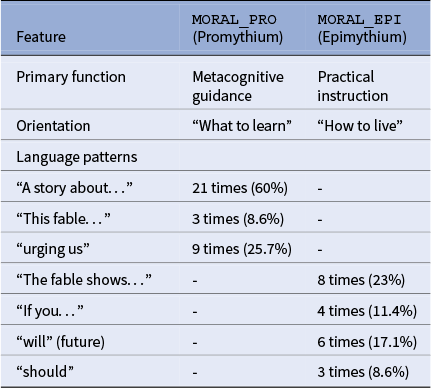
“The fable shows $\ldots $
” appears eight times (23%) and “Hence the saying
$\ldots $
” appears eight times (23%) and “Hence the saying $\ldots $
” appears three times (8.6%), performing conclusive functions. Conditional structures “If you
$\ldots $
” appears three times (8.6%), performing conclusive functions. Conditional structures “If you $\ldots $
” appear four times (11.4%), future-oriented expressions “will” appear six times (17.1%), and obligation/recommendation expressions “should” appear three times (8.6%), being used to present specific behavioral guidelines or life principles, serving an executive role. This differentiation shows that promythium provides metacognitive guidance on “what to learn,” while epimythium provides practical guidelines on “how to live.”
$\ldots $
” appear four times (11.4%), future-oriented expressions “will” appear six times (17.1%), and obligation/recommendation expressions “should” appear three times (8.6%), being used to present specific behavioral guidelines or life principles, serving an executive role. This differentiation shows that promythium provides metacognitive guidance on “what to learn,” while epimythium provides practical guidelines on “how to live.”
Quantitative analysis of epimythium corpus
SBERT embedding analysis and topic modeling were performed on 411 epimythia to identify their structural characteristics. In embedding analysis, the average similarity of epimythia was 0.3134. This is higher than ending speech (0.1820) but lower than story (0.3578), meaning that explicit morals show more consistent themes than ending speech but do not reach the concreteness of stories.
In clustering analysis, epimythia formed substantially five major $C^{epi}$
clusters from a total of 411 fables based on the 90 percent threshold (0.5301). Table 4 summarizes the themes and keywords of the three largest epimythia clusters. The largest cluster
$C^{epi}$
clusters from a total of 411 fables based on the 90 percent threshold (0.5301). Table 4 summarizes the themes and keywords of the three largest epimythia clusters. The largest cluster $C^{epi}(0)$
consists of 86 fables with main keywords “people,” “obstinate” and “insubordinate,” containing warnings about stubbornness and disobedience.
$C^{epi}(0)$
consists of 86 fables with main keywords “people,” “obstinate” and “insubordinate,” containing warnings about stubbornness and disobedience. $C^{epi}(1)$
consists of 77 fables centered on “alliance,” “mighty” and “poor folk,” dealing with power relationships and social underclass issues.
$C^{epi}(1)$
consists of 77 fables centered on “alliance,” “mighty” and “poor folk,” dealing with power relationships and social underclass issues. $C^{epi}(2)$
comprises 60 fables warning about the dangers of speech and action through “penalty,” “speaking” and “silent.”
$C^{epi}(2)$
comprises 60 fables warning about the dangers of speech and action through “penalty,” “speaking” and “silent.”
Themes and keywords of major epimythia clusters from 411 fables
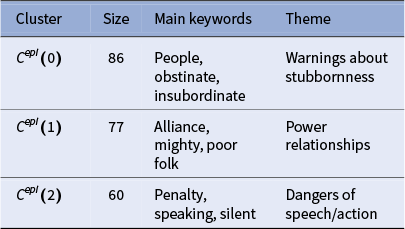
Note: The embedding clusters are calculated identical to $C^{story}$
and
$C^{story}$
and $C^{end}$
.
$C^{end}$
.
In LDA analysis, 13 epimytia topics ( ${LDA}_{fable}^{epi}$
) were derived, and analyzing major topics clearly reveals the didactic nature of epimythia.
${LDA}_{fable}^{epi}$
) were derived, and analyzing major topics clearly reveals the didactic nature of epimythia. ${LDA}_{fable}^{epi}(0)$
is centered on “people,” “fable” and “shows,” accounting for 18.2 percent and performing general moral presentation functions.
${LDA}_{fable}^{epi}(0)$
is centered on “people,” “fable” and “shows,” accounting for 18.2 percent and performing general moral presentation functions. ${LDA}_{fable}^{epi}(2)$
consists of “shows,” “fable” and “story,” accounting for 14.3 percent and handling meta-didactic statements.
${LDA}_{fable}^{epi}(2)$
consists of “shows,” “fable” and “story,” accounting for 14.3 percent and handling meta-didactic statements. ${LDA}_{fable}^{epi}(3)$
is centered on “people,” “enemies” and “while,” accounting for 12.8 percent and presenting lessons about hostile relationships and vigilance.
${LDA}_{fable}^{epi}(3)$
is centered on “people,” “enemies” and “while,” accounting for 12.8 percent and presenting lessons about hostile relationships and vigilance.
The topic distribution of epimythia converges into three main categories. First are topics presenting general principles of human behavior, with keywords, such as “people” and “shows” as the center. Second are topics containing moral judgments and warnings, with “wicked” and “foolish” as major keywords. Third are topics dealing with social relationships and power, with “enemies” and “alliance” as core terms. This shows that epimythia has the presentation of universal ethical principles as its main function.
Complex relationship between ending speech and epimythium
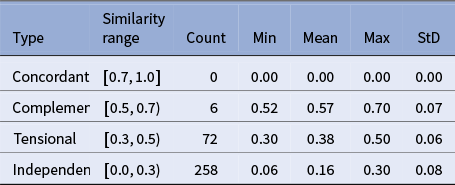
The analysis method involved embedding each fable’s ending speech and epimythium with the SBERT model, calculating cosine similarity, and classifying relationship types according to similarity distribution. The thresholds (0.3, 0.5 and 0.7) were determined through iterative exploration of the data and represent analytical constructs rather than natural categories. Simultaneously, semantic concordance and message directionality were qualitatively evaluated through content analysis. Table 5 summarizes the definition of relational types and their descriptive statistics between ending speech and epimythium.
Descriptive statistics of relationship categories between ending speech and epimythium in 336 fables (2dp)
Note: Threshold boundaries are analytical constructs based on distributional patterns.
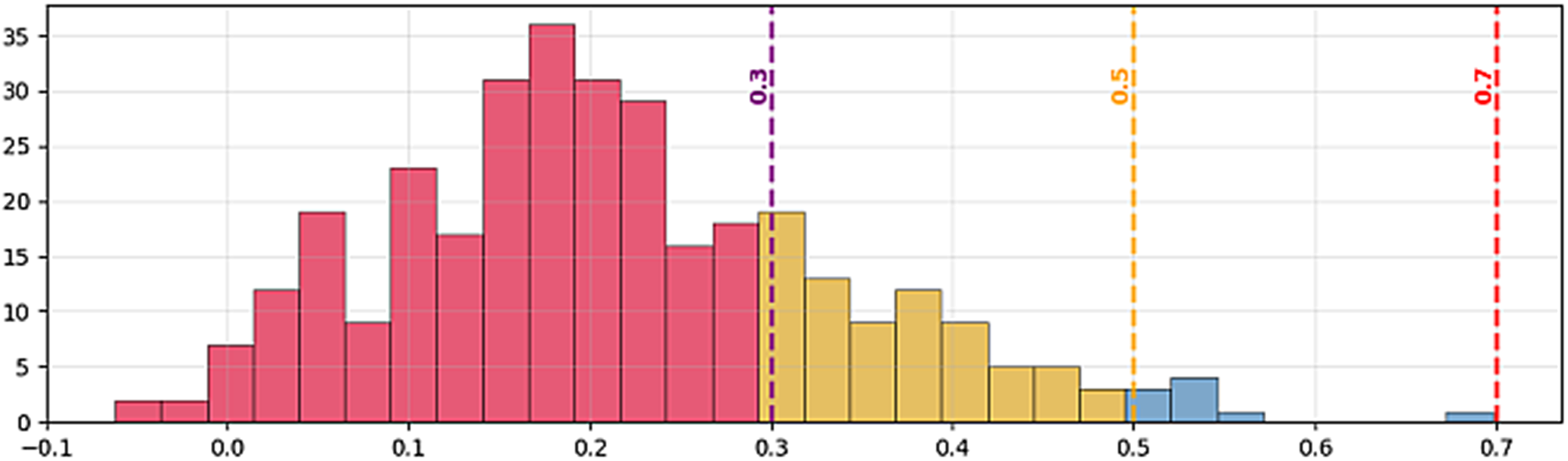
Figure 1 summarizes how the 336 fables are distributed across similarity ranges and relationship types. The independent relationships were the overwhelming majority (76.8%), followed by tensional relationships (21.4%) and complementary relationships (1.8%). A direct concordance relationship was entirely absent. This provides empirical evidence that ending speech is not a mere reinforcement or repetition of the epimythium, but rather establishes an independent narrative domain.
Overview of ending speech and epimythium cosine similarity distribution, with colored relationship types (Independent = red, Tensional = yellow and Complementary = blue). Threshold boundaries at 0.3, 0.5 and 0.7 represent analytical divisions. The Y-axis shows the count of fables in each similarity bin (N = 336).
In independent relationships (76.8%), the ending speech fulfills its own function separate from the epimythium. Ending speech expresses immediate reactions to specific situations or conveys personal emotions, while epimythium focuses on general moral lessons. For example, in «The Monkey and the Camel», the camel’s ending speech – “I still have to carry a saddle anyway, so what difference does it make who the master is?” – expresses resigned acceptance, while the epimythium – “This fable shows that the harm done by outsiders is no less terrible than that inflicted by relatives.” – offers a warning about familial betrayal on an entirely different level.
In tensional relationships (21.4%), the ending speech and the epimythium present opposing perspectives or values. In «The Eagle and the Fox», the fox’s ending speech – “You should have given the rabbit to the first master, so your wings would not be clipped when caught again.” – advocates Machiavellian pragmatism, whereas the epimythium – “This fable shows that one should properly thank benefactors and avoid wrongdoers.” – emphasizes moral obligation. Such conflicts provoke readers to deliberate between pragmatism and morality, thereby maximizing the interpretive complexity of the fable.
Complementary relationships are exceedingly rare (1.8%), limited to cases where speakers with exceptional moral authority, such as Socrates or Heracles, offer philosophical reflection. In «Socrates and His Friends», Socrates’ ending speech – “Ah, if only one could fill one’s house with true friends!” – and the epimythium – “The term ‘friend’ is often used, but true friends are difficult to find.” – convey the same message about the scarcity of genuine friendship, though articulated at different levels of abstraction.
Comparing the structural characteristics of ending speech and epimythium reveals fundamental differences. While ending speech tends to cluster by speaker, epimythium tends to cluster by topic. Ending speech depends on speaker identity and situational context, while epimythium aims to present universal principles. In conclusion, the ending speech is not a subsidiary means of epimythium but a narrative element that maintains complex and sometimes tensional relationships.
Speaker identity analysis of ending speech
Significance of speaker identity in Aesopic narratives
The identity of ending speech speakers has a decisive impact on the meaning construction of fables. Even with identical moral content, the impression readers receive varies greatly depending on whether the speaker is divine, human or animal. The narrator of Aesop’s fables is an extremely taciturn being who avoids making direct conclusions, delegating interpretive authority to characters’ utterances. This characteristic makes ending speech speaker identity a key variable in fable interpretation.
Analysis of 490 ending speech speakers identified a total of 249 unique identities. Among these, the fox appears most frequently with 34 occurrences, followed by the lion with 19, wolf with 18, dog with 11 and donkey with 9. Among human speakers, Aesop himself appears 15 times. Categorizing by ontological dimension reveals four categories: animals (272, 55.5%), humans (166, 33.9%), divine beings (31, 6.3%) and others (21, 4.3%). We interpret this distributional pattern – particularly the fox’s dominance despite its physical weakness – as suggesting that wisdom and cunning are valued over physical strength in Aesopic discourse.
Classifying speakers by ontological dimension reveals four categories. Animals comprise 272 occurrences (55.5%), accounting for over half of the total, followed by humans with 166 occurrences (33.9%), divine beings with 31 occurrences (6.3%) and others (plants, inanimate objects and natural phenomena) with 21 occurrences (4.3%). The fact that animal speakers account for over half confirms a fundamental characteristic of Aesop’s fables. The anthropomorphic expression of animals is not merely a rhetorical device but the core structure of fable discourse. Summary of speaker distribution is presented in Figure 2.
Overview of ending speaker distribution, by identities and/or ontological categories (N = 490).
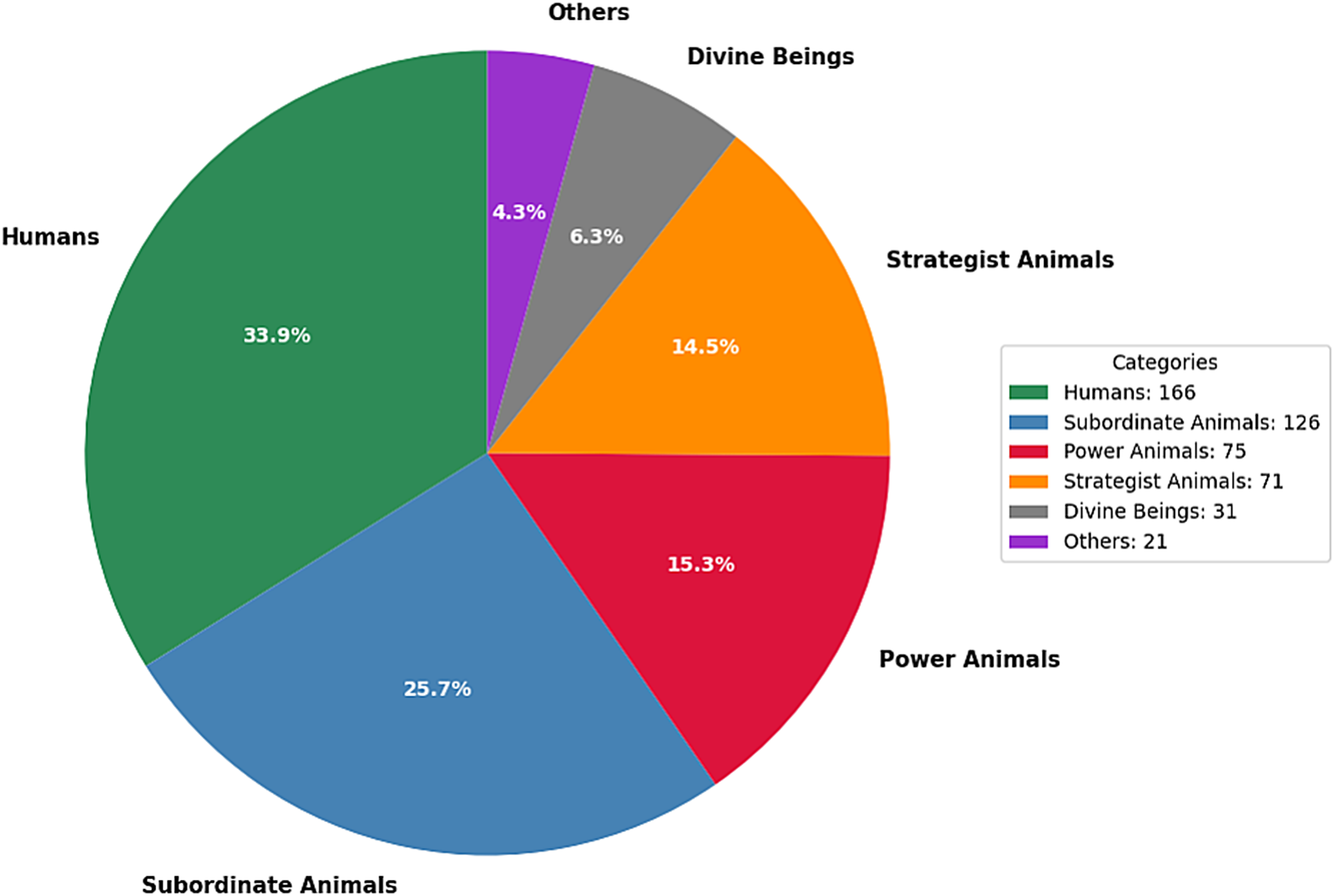
Animal speakers were classified into three categories based on the classification system suggested in existing research. Lefkowitz (Reference Lefkowitz2014) analyzed that animals in Aesop’s fables perform different narrative roles according to the physical hierarchy and symbolic authority of the natural world. Based on this, this study classified animal speakers into three categories: power animals, strategist animals and subordinate animals. Power animals comprise 75 occurrences (27.6%), including animals that occupy predatory or dominant positions in nature, such as lions, wolves, eagles, bulls and hawks. Strategist animals comprise 71 occurrences (26.1%), including animals that survive through cunning and wisdom, such as foxes, crows, monkeys, snakes and cats. Subordinate animals comprise 126 occurrences (46.3%), including animals that serve as victims or sacrificial roles, such as dogs, donkeys, mice, sheep and rabbits.
Sentiment and discourse analysis by speaker categories
To identify speaker-specific utterance characteristics, VADER sentiment analysis (Hutto and Gilbert Reference Hutto and Gilbert2014) and DistilRoBERTa-based multidimensional emotion classification were performed (Sanh et al. Reference Sanh, Debut, Chaumond and Wolf2019). VADER was selected because it specializes in sentiment analysis of short texts and is suitable for capturing subtle emotional expressions in literary texts like Aesop’s fables. DistilRoBERTa, as a transformer-based model, can detect more complex emotional patterns, complementing VADER’s results. However, these methods have inherent limitations for literary analysis: they capture surface-level emotional tone but may misinterpret ironic utterances or morally ambiguous statements where explicit sentiment diverges from contextual meaning. Our sentiment scores should therefore be understood as indicators of expressed emotional valence rather than comprehensive evaluations of moral or narrative function.
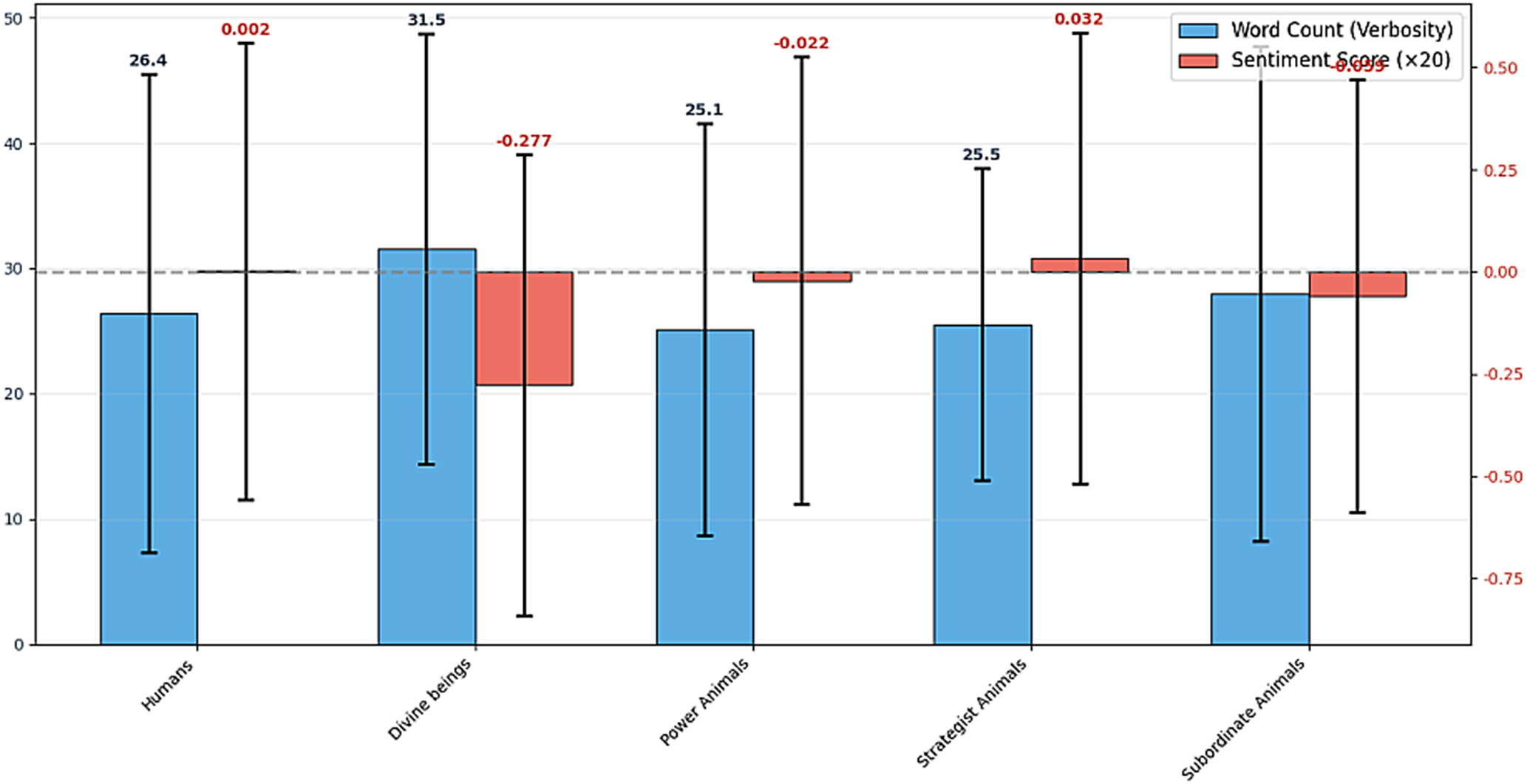
Figure 3 reveals an interesting finding in sentiment analysis results, which is the positive emotional score of strategist animals. With an average sentiment score of 0.032, the highest among all groups, this is because they enjoy their success and cleverness. The appearance of mockery and wisdom as main emotions shows their tendency to ridicule opponents while displaying intellectual superiority. In contrast, divine beings recorded the lowest sentiment score ( $-$
0.264). This is because gods primarily serve as judges or punishers, making stern evaluations of human or animal behavior. The negative sentiment score of subordinate animals (
$-$
0.264). This is because gods primarily serve as judges or punishers, making stern evaluations of human or animal behavior. The negative sentiment score of subordinate animals ( $-$
0.059) indicates that they primarily make utterances of an excusatory and appealing nature. The appearance of resignation and regret as main emotions reflects their subordinate status. However, the fact that standard deviations exceed 0.5 in all speaker categories means considerable emotional diversity exists within each group. This suggests that speakers in Aesop’s fables are not fixed character types but complex beings showing diverse emotional spectrums. The high variance also reflects limitations of sentiment analysis in detecting literary irony: a fox’s ostensibly positive statement may carry negative moral implications when considered narratively, which computational methods cannot fully capture. Power animals do not always win, strategist animals are not always moral and subordinate animals are not always innocent victims – these points show the realistic perspective of Aesop’s fables.
$-$
0.059) indicates that they primarily make utterances of an excusatory and appealing nature. The appearance of resignation and regret as main emotions reflects their subordinate status. However, the fact that standard deviations exceed 0.5 in all speaker categories means considerable emotional diversity exists within each group. This suggests that speakers in Aesop’s fables are not fixed character types but complex beings showing diverse emotional spectrums. The high variance also reflects limitations of sentiment analysis in detecting literary irony: a fox’s ostensibly positive statement may carry negative moral implications when considered narratively, which computational methods cannot fully capture. Power animals do not always win, strategist animals are not always moral and subordinate animals are not always innocent victims – these points show the realistic perspective of Aesop’s fables.
Relationship between speaker verbosity and sentiment score separated by speaker categories (N = 469). The left Y-axis shows the average word count (Verbosity) for blue boxes, while the right Y-axis shows the average sentiment compound score for red boxes.
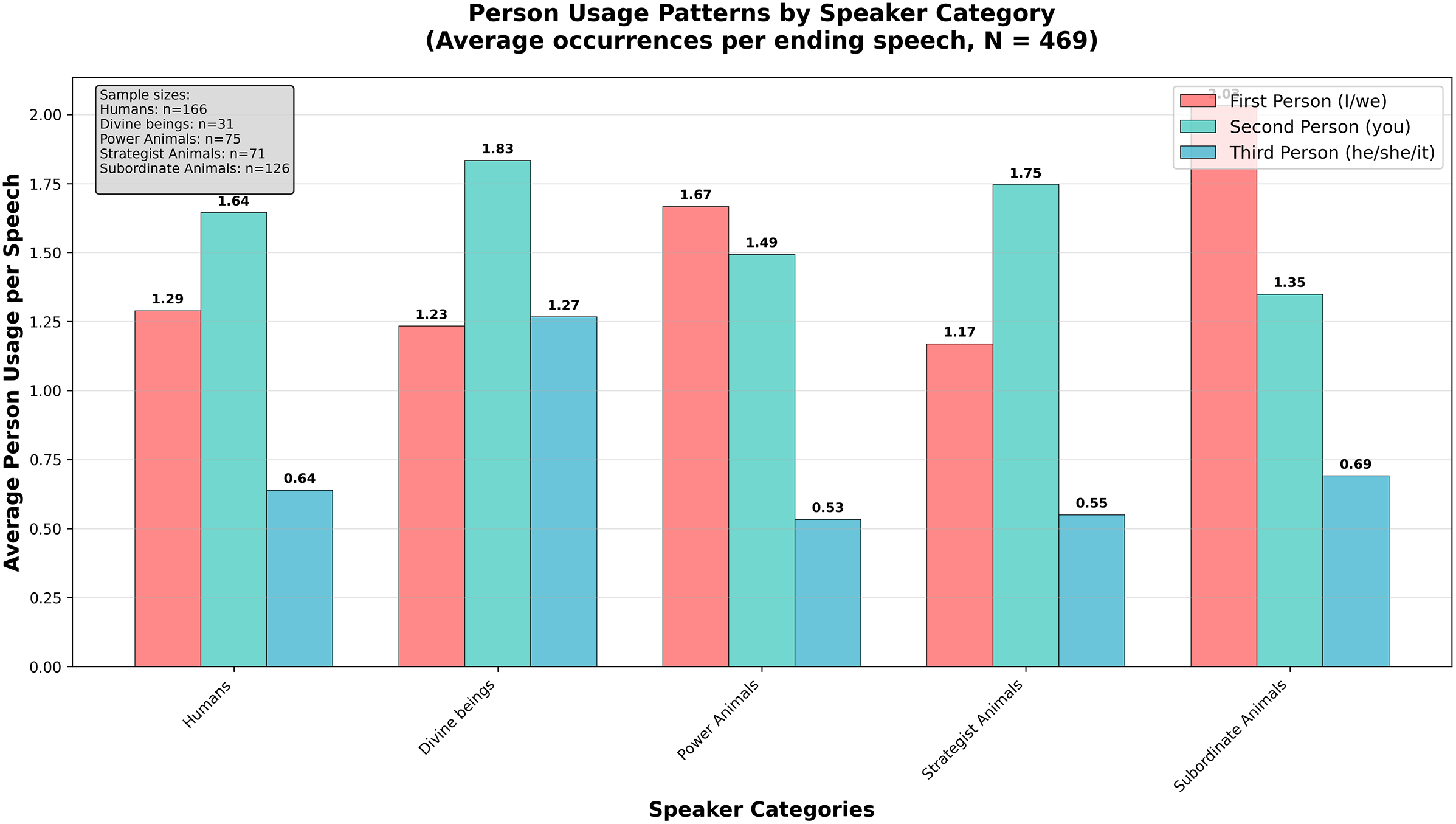
In discourse analysis, we examined differences in speaker-specific speech strategies focusing on pronoun usage patterns. Figure 4 represents the average frequency of each personal pronoun used (times/fable) by speaker categories. Divine beings showed significantly higher use of second-person pronouns (1.83 times) compared to first-person (1.23 times) or third-person (1.27 times), while also displaying relatively high third-person usage compared to other speaker categories. Strategist animals likewise showed markedly higher second-person usage (1.75 times) than other pronouns. In contrast, subordinate animals demonstrated overwhelmingly high first-person usage (2.03 times). These differences in pronoun usage patterns reflect the unique speech strategies and discursive functions of each speaker category.
Average 1st, 2nd and 3rd personal pronoun usage frequency by speaker categories.
Interpreting power dynamics and wisdom hierarchy
The distributional data show a clear pattern: strategist animals (especially foxes) appear as ending speech speakers more frequently than their physical strength would predict. We interpret this as evidence that wisdom overwhelms physical strength in Aesop’s fables. However, this “supremacy of wisdom” is not a simple positive value but reflects complex power relationships and discursive strategies. The data show the fox’s high frequency (34 occurrences) and the strategist animals’ prominence (26.1% of animal speakers). Our interpretation is that this pattern reveals a value system prioritizing cunning over strength, though the ambivalent nature of fox wisdom – often combined with exploitation – complicates this hierarchy.
Analyzing fox speakers’ ending speeches suggests their wisdom often appears combined with mockery or exploitation of others. The relatively positive sentiment score of foxes (0.032) within the strategist animal group reflects surface-level celebratory language rather than moral evaluation – a limitation of sentiment analysis that cannot detect the gap between expressed satisfaction and ethical judgment. This illustrates how ironic utterances require interpretive reading beyond computational sentiment detection. This suggests that the “wisdom” presented in Aesop’s fables is survival-based cleverness distinct from moral wisdom in the modern sense. In «The Fox and the Goat in the Well», the fox’s mockery of the goat’s foolishness shows the typical logic of perpetrators who avoid responsibility for their fraudulent acts while blaming victims. Such ending speech conveys moral lessons while simultaneously exposing the moral problems of the speaker who utters those lessons.
The emotional characteristics appearing in power animals’ ending speeches show interesting aspects. The case of wolves is particularly noteworthy. While wolves are clearly strong in physical strength, they are mostly portrayed as failing or being in predicaments in Aesop’s fables. Wolf ending speeches primarily take on characteristics of self-reproach, regret and excuses, showing that genuine problem-solving is impossible with physical power alone. This aspect reflects the core values of Aesop’s fables, which value wisdom and cunning more highly than simple violence or threats.
Meta-fictional function of Aesop as speaker
A separate analysis was performed on the 15 fables where Aesop directly appears as the speaker. These fables show the unique structure of the author appearing as a character within the work and can be interpreted across two dimensions. The 10 fables (66.7%) with “Aesop” specified in the title highlight the duality of author and character, while 9 fables (60.0%) including first-person utterances show subjective intervention, and 12 fables (80.0%) including second-person utterances show direct communication with readers.
The first interpretive dimension is the meta-fictional perspective. Aesop’s direct appearance forms a circular structure where “the creator of fables speaks within fables,” intentionally blurring the boundary between reality and fiction. Unlike other speakers, Aesop employs five different rhetorical techniques. He criticizes self-praising authors through irony and mockery, reproaches opponents through direct expression, demonstrates wit by diverting hooligans to other targets, presents philosophical lessons through the metaphor of bow and string and provides detailed commentary on Greek history and mythology. This diversity shows that the Aesop speaker is not a simple character but a meta-being representing the entire fable genre.
The second interpretive dimension is historical context. Aesop’s fables were originally utilized as rhetorical persuasion tools in the oral tradition of ancient Greece. The practice of politicians and orators strengthening their arguments by borrowing the authority of “as Aesop said $\ldots $
” was also reflected in fable texts. Aesop’s lengthy explanation of the Delphic people’s slave origins or his commentary on sexual identity issues through Prometheus and Bacchus myths demonstrates the encyclopedic authority that Aesop held as an intellectual of his time.
$\ldots $
” was also reflected in fable texts. Aesop’s lengthy explanation of the Delphic people’s slave origins or his commentary on sexual identity issues through Prometheus and Bacchus myths demonstrates the encyclopedic authority that Aesop held as an intellectual of his time.
The average length of Aesop’s ending speeches (196.8 characters) is significantly longer than the general average, reflecting his special status as a meta-fictional speaker. Aesop’s ending speeches perform various functions, including immediate problem-solving, historical commentary, philosophical reflection and social criticism, functioning as experimental devices that demonstrate the multifaceted possibilities of the fable genre.
Understanding ending speech in Aesopic fables
Beyond endomythium: Ending speech as independent narrative layer
Our computational methods reveal distributional patterns and structural relationships but cannot directly detect irony, assess speaker reliability or fully verify polyphonic complexity. Where we discuss such features, our interpretations extend beyond the quantitative evidence and should be understood as hypotheses rather than proven conclusions.
The analysis results of this study demand a reconsideration of existing perceptions of Aesop’s fables. The traditional endomythium classification treats ending speech as embedded moral instruction, assuming functional equivalence with promythium and epimythium. Our findings refute this assumption: ending speech operates as a structurally independent layer, showing semantic differentiation from stories (similarity 0.1820 vs. 0.3578) and predominant independence or tension with epimythia (98.2% combined). However, the actual function of ending speech revealed through computational analysis shows considerable distance from this perspective. Ending speech is not an independent element but maintains multilayered relationships with story and its moral teaching, increasing the interpretive complexity of fables.
Embedding analysis reveals a key finding: ending speech shows significantly lower similarity (0.1820) than stories (0.3578). This empirically demonstrates that ending speech is not a simple summary of the story or direct conveyance of moral lessons. Ending speech forms a unique semantic domain distinct from story content, meaning that ending speech adds a new interpretive dimension to the story. However, this differentiation does not imply complete independence from story content. Rather, ending speech functions as a relational element that complicates the overall meaning structure of fables while interacting with the story.
This complex relationality becomes even clearer in LDA topic modeling. While stories converge into seven topics, ending speech differentiates into 13 topics, showing a much more complex meaning structure. More importantly, the nature of the topics themselves is fundamentally different. Story topics are organized around situations and events, while ending speech topics concentrate on judgment and evaluation. This difference means that ending speech focuses on interpretation and reaction to narrative events rather than representation of narrative events. Ending speech operates in the dimension of “how to understand it” rather than “what happened,” thereby forming a mutually complementary yet tensional relationship with the story.
As confirmed in cluster analysis, stories are clustered according to content similarity, while ending speech shows a tendency toward clustering by speaker. This suggests that ending speech reflects specific speakers’ character and perspective rather than abstract moral instruction. The formation of ending speech clusters by specific speakers, such as fox, lion and wolf, means that ending speech has a speaker-dependent structure. This signifies that ending speech and story follow different structuring principles while constructing integrated meaning within a single fable.
This complex relationality of ending speech demonstrates structural openness theorized in modern literary frameworks. Eco’s (Reference Eco1989) “open work” describes texts that deliberately create interpretive indeterminacy, activating reader participation. Our findings provide empirical evidence for such openness: the predominant independence and tension between ending speech and epimythium (98.2% combined) systematically prevents singular moral closure, creating what Iser (Reference Iser1978) terms interpretive “gaps” that readers must negotiate. Similarly, Bakhtin’s (Reference Bakhtin and Holquist1981) polyphony – unmerged ideological voices within a single text – finds structural support in our speaker clustering analysis, where 249 distinct speakers form identity-based rather than content-based communities, suggesting multiple interpretive centers without hierarchical resolution. Through these mechanisms, ending speech transforms fables from univocal didactic instruments into open works requiring active reader interpretation.
Multilayered moral system and hermeneutic tensions
Analysis of the moral teaching system in Aesop’s fables reveals that fables do not convey single, clear messages but possess multilayered and sometimes contradictory structures. The three-tier structure of promythium, epimythium and ending speech each performs different educational functions, and the complex relationships among them reveal the complexity of fable interpretation. This multilayering shows that Aesop’s fables go beyond simple moral tales, promoting ethical thinking through interpretive complexity.
The functional differentiation of promythium and epimythium confirmed in the analysis of 35 dual-moral fables demonstrates the educational sophistication of fables. Promythium provides metacognitive guidance on “what to learn” through meta-descriptive language. In contrast, epimythium presents practical guidelines on “how to live” through conditional structures and future-oriented expressions. This differentiation shows that promythium and epimythium are in a complementary relationship, handling different stages of the educational process.
However, the ending speech performs a different role within this educational system from these two elements. Independence of ending speech from the epimythium is the most notable discovery found during analyzing their relationships. The absence of direct concordance, accompanied with the rarity of complementary relationships (1.8%), indicates that the ending speech rarely aligns with epimythium. This is supported by the predominant ratio of independent (76.8%) and tensional relationships (21.4%). These research findings indicate that ending speech frequently introduces fissures into the story–epimythium moral framework, heightening interpretive complexity. Aesop’s fables provide a moral system in multiple perspectives rather than providing a single, clear answer; this prompts readers to either select one of the options or to generate new interpretations.
The intermediate-level average similarity (0.3134) of epimythium revealed in embedding analysis shows that explicit moral teachings are more consistent than ending speech (0.1820) but not as concrete as stories (0.3578). This means that epimythium is positioned in the middle ground between abstract principles and concrete applications. The fact that major keywords of epimythium in LDA topic modeling are generalization-oriented vocabulary confirms epimythium’s pursuit of universality. In contrast, the fact that ending speech keywords are language of negation and mockery shows that ending speech focuses on reactions to specific situations rather than generalization. This linguistic difference reflects the fundamental nature difference between the two moral teaching systems. While epimythium attempts to present “what is right,” the ending speech is more interested in pointing out “what is wrong.” This suggests that the didactic function of fables emphasizes criticism and warning of negative behavior rather than presenting positive examples. The critical nature of the ending speech shows that fables are learning processes through vigilance against wrong judgments and reflection rather than the transmission of completed wisdom.
Discourse dynamics of power and wisdom: Speaker identity and narrative authority
The most noteworthy finding in speaker identity analysis is that wisdom overwhelms physical strength in Aesop’s fables, supported by dominating occurrences of fox speakers. The fables often portray the ambivalent nature of the wisdom where foxes thrive, reflecting “wisdom” as survival-based cleverness distinct from moral wisdom in the modern sense.
The data reveal distributional patterns: strategist animals show positive sentiment (0.032) and high second-person pronoun usage (1.75), while subordinate animals show negative sentiment (-0.059) and high first-person usage (2.03). We interpret this as reflecting discourse structures where cunning speakers dominate through mockery while weak speakers internalize subordination. The lowest sentiment score of divine beings (-0.264) shows that they primarily serve as judges or punishers, but the longest utterance length (31.4 words) simultaneously reflects the necessity of comprehensive explanation through divine authority. The negative emotions and appealing utterances of subordinate animals reflect their subordinate status, but their appeals are not always justified.
The pronoun usage patterns revealed in discourse analysis expose fundamental differences in speaker-specific speech strategies. Divine beings’ high second-person usage (1.83 times) indicates the nature of commands or judgments through direct address, demonstrating characteristics of authoritative moral instruction, such as “you should have done ~~” or “you should not have done ~~.” Simultaneously, their relatively high third-person usage reflects the characteristics of divine authority that seeks to present general lessons transcending personal experience.
Strategist animals’ high second-person usage (1.75 times) shows a similar pattern to divine beings, but the meaning is entirely different. Their ending speeches, mostly from the fox, are characterized primarily by mockery and displays of superiority toward others, where second-person pronouns serve as tools for critical ridicule rather than authoritative instruction. This demonstrates that identical discourse strategies can carry completely different meanings depending on the speaker’s identity.
Subordinate animals’ overwhelming first-person usage (2.03 times) reflects speech characteristics centered on regret and self-reproach. Their ending speeches focus on self-reflection and lamentation about their circumstances rather than external instruction or mockery, revealing an inward-directed discourse strategy arising from their subordinate status. These discursive differences indicate that speakers’ social positions and power relations have a decisive influence on their modes of expression.
The 249 different ending speech speakers each represent unique voices and perspectives, creating conditions for polyphonic interpretation. The fox’s mocking wisdom, the lion’s authoritative declarations, the wolf’s excusatory sophistry and the gods’ judgmental warnings reflect different values and worldviews. None of these monopolizes absolute truth, and readers must construct their own interpretations among these voices. This polyphonic structure shows that Aesop’s fables are meaning construction processes through competition and negotiation of complex values rather than transmission of single moral lessons.
Conclusion
This study systematically investigated the narrative function of ending speech through computational analysis of 600 Aesop’s fables. The complex relationships among ending speech, story content, explicit moral teachings and speaker identity were quantitatively verified with topic modeling and sentiment analysis. Three core findings emerge from this analysis.
First, ending speech demonstrates semantic independence from story content. SBERT similarity analysis reveals that ending speech (average similarity: 0.1820) exhibits significantly lower internal coherence than stories (0.3578), while LDA topic modeling shows ending speech organizing around evaluative themes (13 topics) versus stories’ situational themes (seven topics). This empirically confirms that ending speech constitutes a distinct interpretive domain rather than merely summarizing narrative events. Second, ending speech creates hermeneutic hierarchy within the moral system. Analysis of 336 fables containing both ending speech and epimythium reveals independent (76.8%) and tensional (21.4%) relationships demonstrate that ending speech problematizes rather than reinforces explicit moral teachings. This transforms fables from vehicles of consistent moral instruction into texts that provoke ethical deliberation. Third, speaker identity determines discursive authority through polyvocal structure. The 249 unique ending speech speakers create competing interpretive voices, with foxes dominating discourse (34 occurrences) and sentiment analysis revealing speaker-dependent emotional patterns. This establishes a speaker-dependent meaning system where “who speaks” becomes as crucial as “what is spoken” in constructing fable interpretation.
The scholarly contributions of this study can be evaluated across three dimensions. First, as a methodological contribution, a comprehensive analysis of a 600-fable corpus was performed focusing on ending speech. This overcame the limitations of existing computational studies that were limited to small-scale analysis and established a multilayered analytical system integrating SBERT embedding, LDA modeling and sentiment analysis. Second, as a theoretical contribution, it was quantitatively demonstrated that ending speech is not simple endomythium but a narrative device that maintains complex relationships with story and epimythium. The independent $\cdot $
tensional relationships between ending speech and epimythium and the clustering patterns of ending speech by speaker are significant findings showing the polyphonic structure of fables. Third, as a genre-theoretical contribution, empirical grounds were established for viewing Aesop’s fables not as simple didactic tales but as complex narratives exhibiting polyphonic features. In summary, through this study, it was confirmed that ending speech is a key device that makes fables open structures, and that Aesop’s fables are living texts that can still be newly interpreted.
$\cdot $
tensional relationships between ending speech and epimythium and the clustering patterns of ending speech by speaker are significant findings showing the polyphonic structure of fables. Third, as a genre-theoretical contribution, empirical grounds were established for viewing Aesop’s fables not as simple didactic tales but as complex narratives exhibiting polyphonic features. In summary, through this study, it was confirmed that ending speech is a key device that makes fables open structures, and that Aesop’s fables are living texts that can still be newly interpreted.
However, this study has several important limitations. First, methodological limitations. While SBERT embedding models are useful for measuring sentence-level semantic similarity, they cannot sufficiently capture ironic expressions or speaker reliability issues, which are core characteristics of Aesop’s fables. LDA topic modeling also relies on word co-occurrence patterns and may miss contextual meanings or pragmatic implications. Second, technical limitations of ending speech extraction and speaker identification. Regular expression-based extraction could not completely handle complex quotations or cases where speaker indication was omitted, and LLM-based speaker identification showed errors in pronoun reference target ambiguity. Although 95 percent accuracy was achieved in the 60-fable validation set, the 5 percent error rate may create systematic bias in specific speakers or specific types of ending speech. Third, the subjectivity problem in interpreting analysis results. Thematic interpretation of clustering results depended on researchers’ subjective judgment, lacking verification of consistency and reproducibility of such interpretations. The similarity thresholds classifying relationships between ending speech and epimythium (0.3, 0.5 and 0.7) represent analytical constructs rather than natural boundaries. While these thresholds effectively capture distinct patterns in our corpus, alternative schemes might yield different proportions while preserving the overall trend of predominant independence and tension.
These limitations suggest directions for future research. First, the development or application of more sophisticated NLP models that can detect irony and pragmatic meanings is needed. The contextual understanding capabilities of the latest large language models could be utilized to analyze the complex functions of ending speech more accurately. Second, to enhance objectivity and reproducibility in interpreting clustering results, verification using multiple independent evaluators or the development of more systematic annotation schemes is needed. More sophisticated criteria and validation methodologies for classifying relationships between ending speech and moral teachings are also required. Third, research is needed to construct larger validation sets to improve the accuracy of ending speech extraction and speaker identification, and to identify and correct systematic bias in specific speakers or ending speech types. Fourth, an analysis of relationships between ending speech speakers and story protagonists is needed. In Aesop’s fables, speakers and protagonists may or may not coincide, and this is an important factor creating the complexity and dynamism of stories.
Acknowledgements
The authors wrote the initial draft in a foreign language, then utilized a generative AI model to translate the draft into English. The authors performed post-translation revision, which went throughout the last of the analysis stage. The authors take full responsibility for the content of the publication.
Data availability statement
Replication data can be found in GitHub: https://github.com/raphael-jung/Aesops-Fables.
Disclosure of use of AI tools
No AI was used to generate content or conduct any part of the research.
Ethical standards
The research meets all ethical guidelines, including adherence to the legal requirements of the study country.
Author contributions
Conceptualization: H.K.; Data curation: H.K. and S.J.; Formal analysis: H.K. and S.J.; Funding acquisition: S.J.; Investigation: H.K.; Methodology: H.K. and S.J.; Project administration: H.K.; Visualization: H.K. and S.J.; Writing original draft: H.K. and S.J.; Writing review and editing: H.K. and S.J. Both authors approved the final submitted draft.
Funding statement
This research was supported by grants from the Korea Aerospace University, 2025 Korea Aerospace University Faculty Research Grant (202501290001).
Competing interests
The authors declare none.
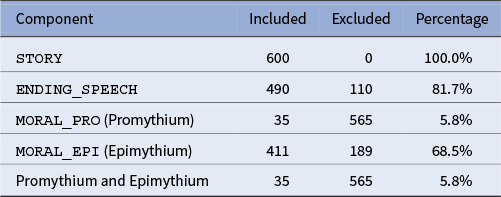
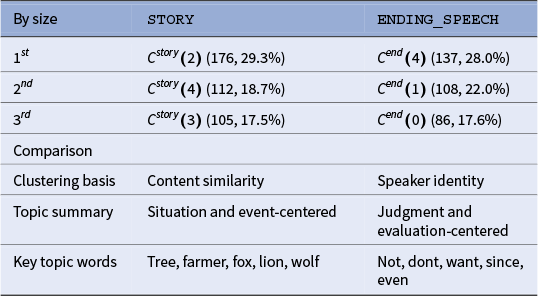
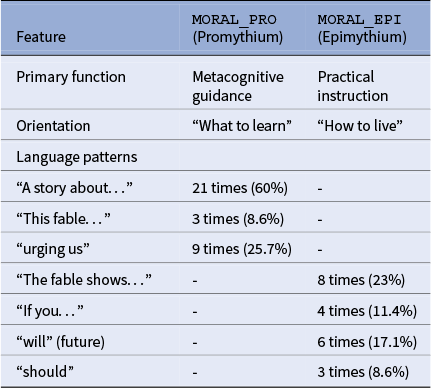
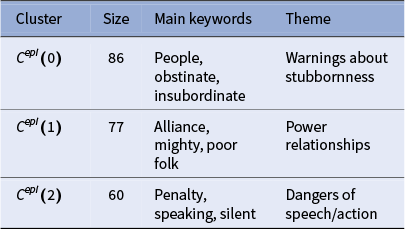
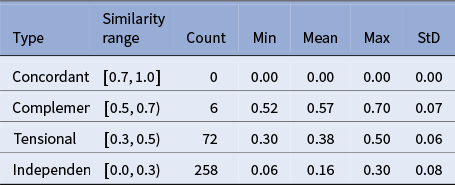
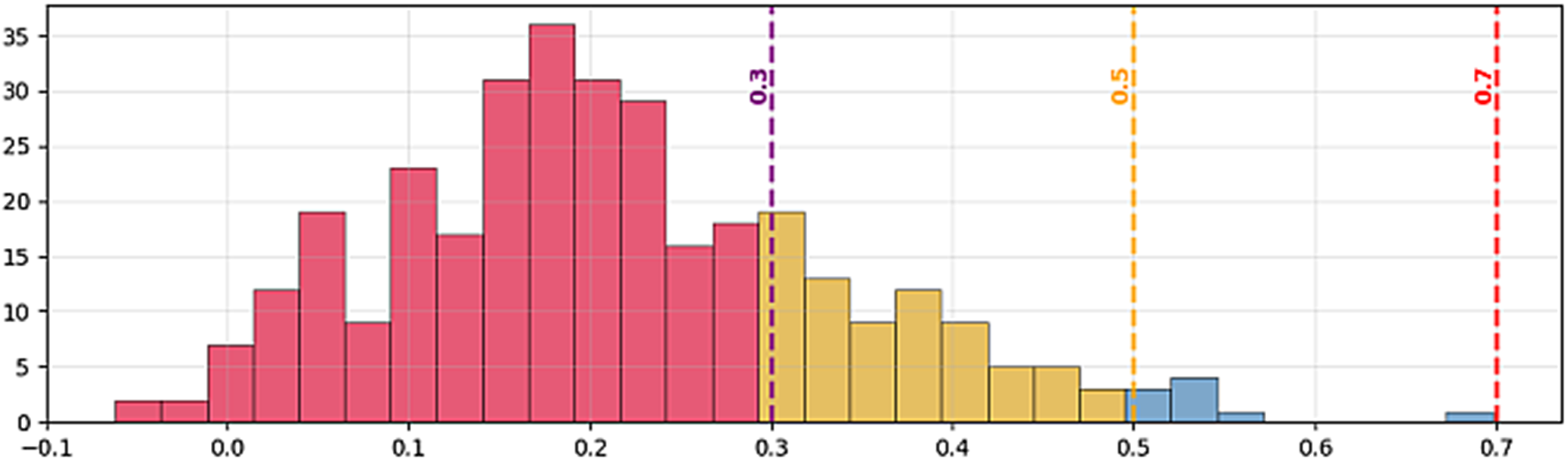
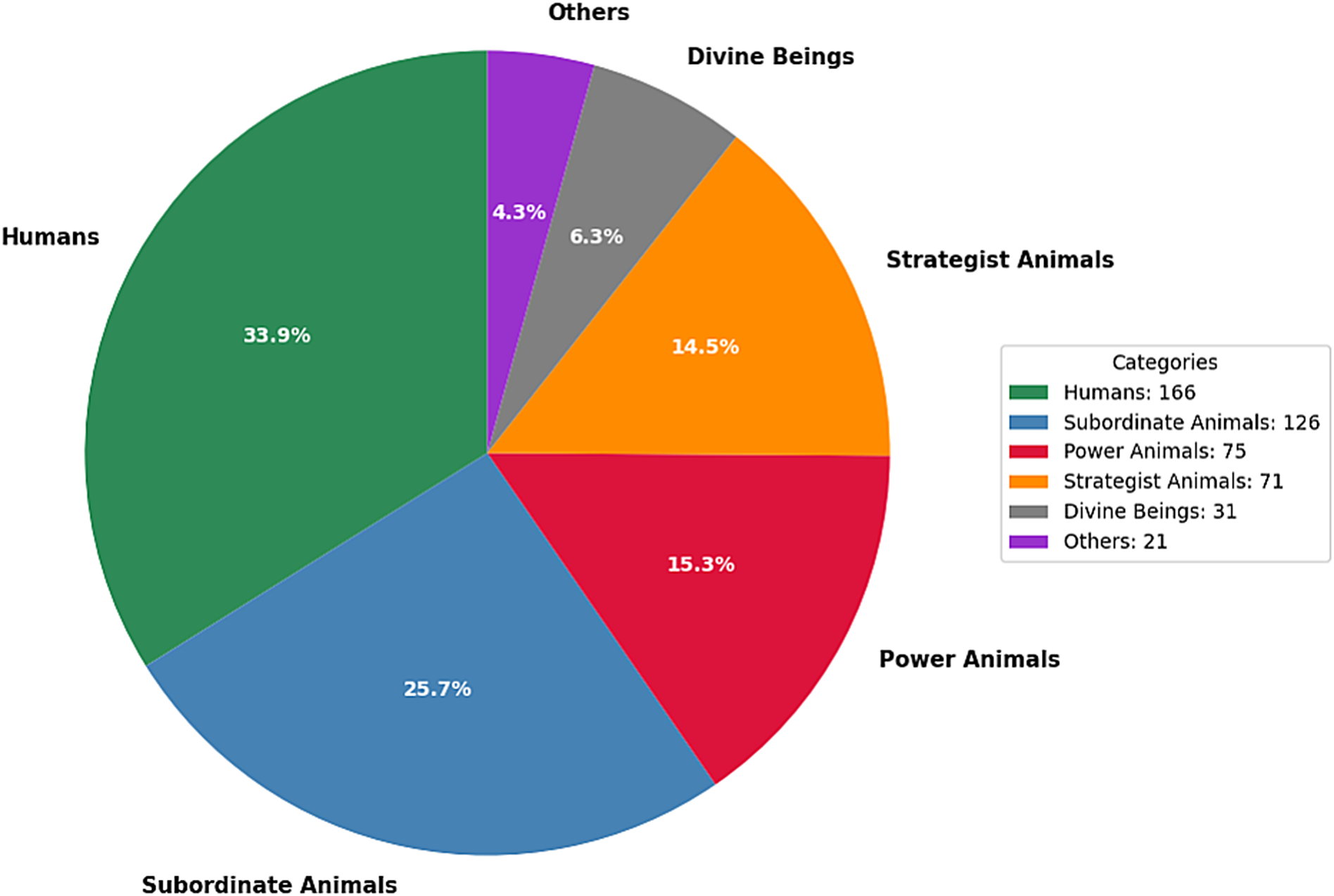
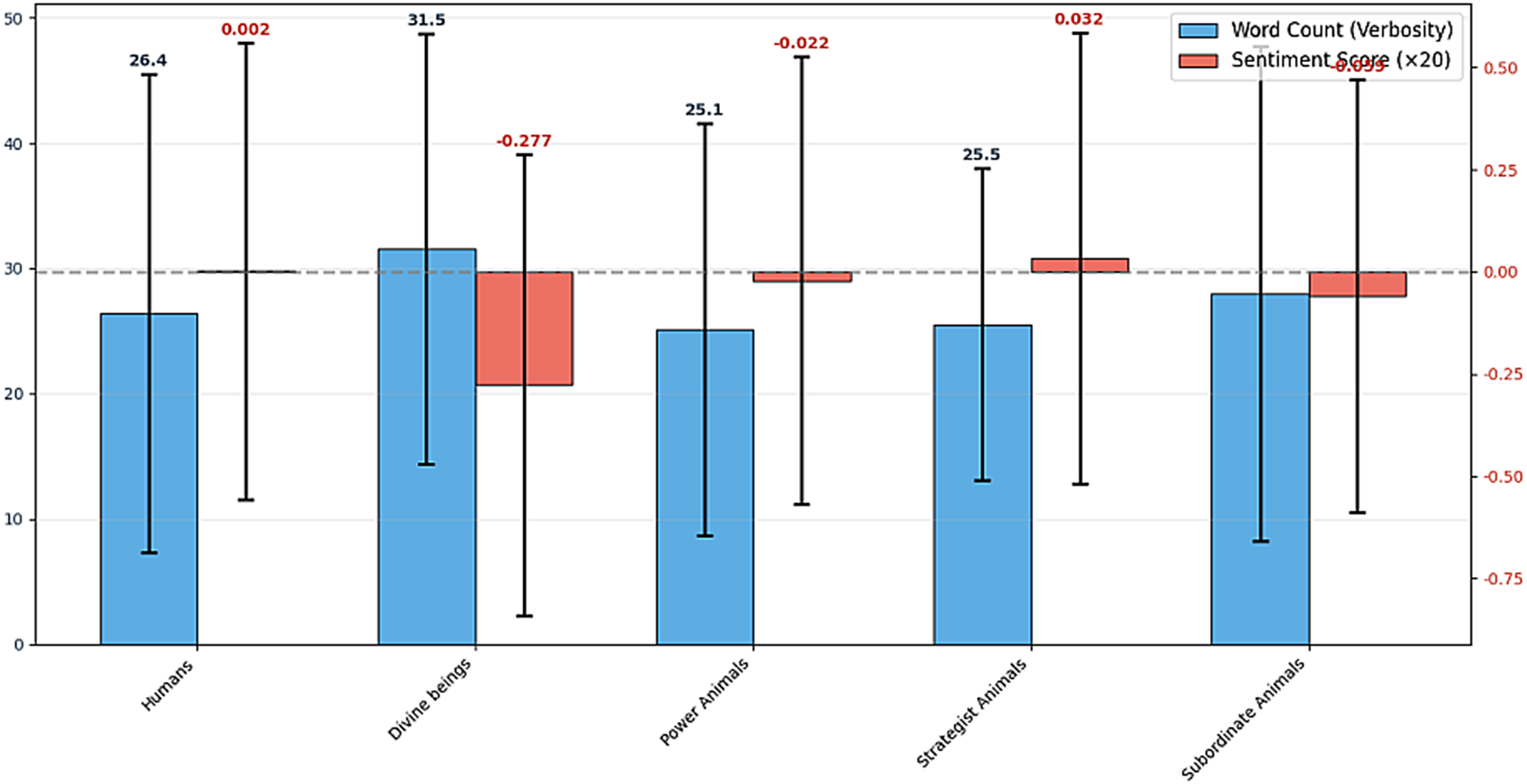
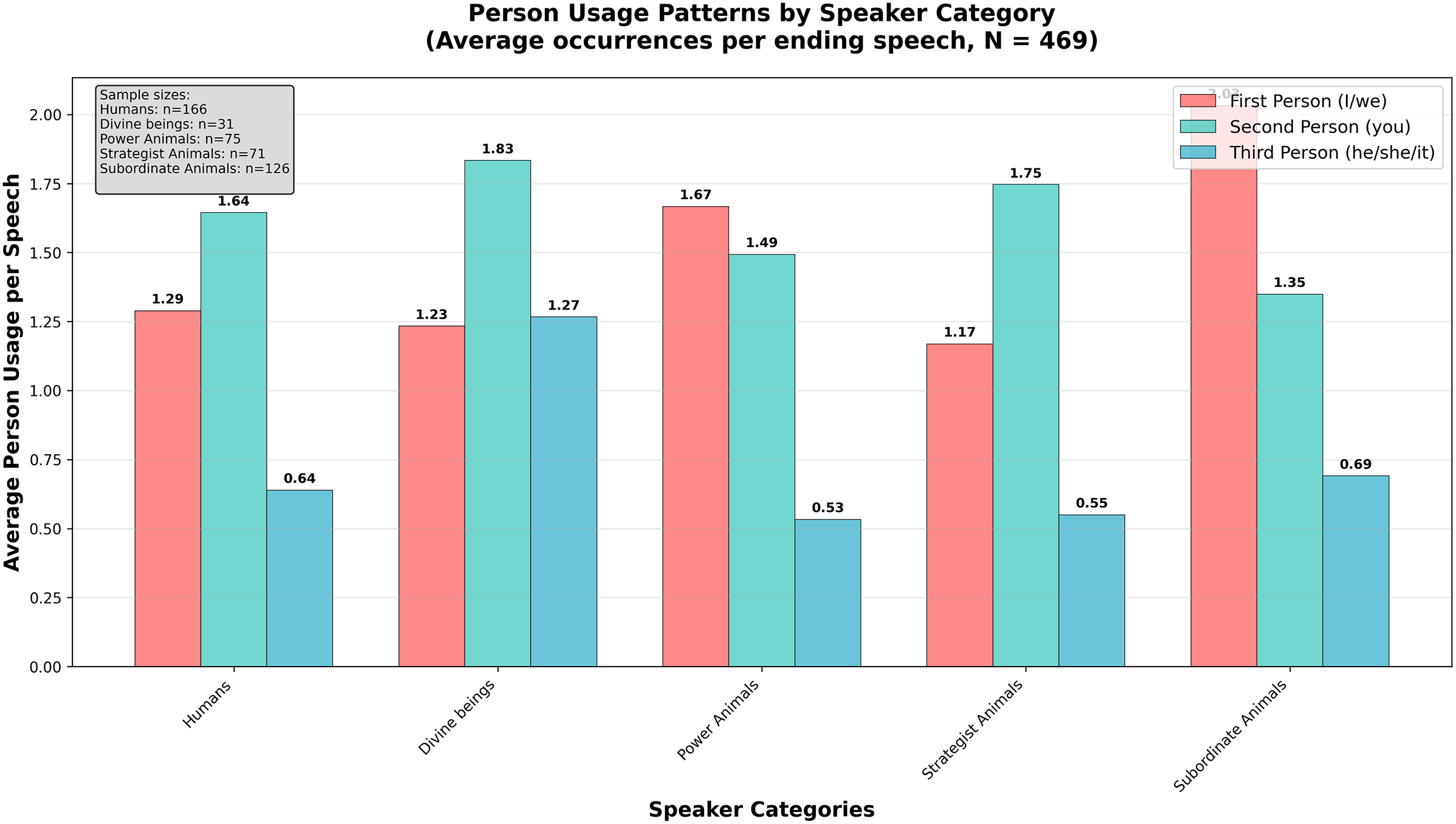

 Open access


Rapid Responses
No Rapid Responses have been published for this article.