


INTRODUCTION
Limited access to justice is a well-known and significant weakness in most if not all legal systems. Access to justice refers to individuals' ability to approach, initiate, and navigate legal disputes in a world in which legal proceedings are complex, lengthy, costly, and often require specialized knowledge and skills (Reference RhodeRhode, 2004). Decades ago, a movement to improve access to justice began by focusing on legal aid and increasing the availability of effective legal representation for the indigent (Reference Cappelletti and GarthCappelletti & Garth, 1978). Later, this movement expanded its focus to additional barriers relating to non-monetary costs, including language and framing, the complexity of proceedings, and psychological burdens, all of which work to prevent people from pursuing or defending their rights in court (Reference Albiston and SandefurAlbiston & Sandefur, 2013; Reference BlasiBlasi, 2009; Reference CappellettiCappelletti, 1993; Reference GalanterGalanter, 2010; Reference RhodeRhode, 2014). Despite growing awareness of the access-to-justice gap and the diverse means deployed to date to address it, the problem persists, suggesting a need for new diagnoses, reforms, and resources.
In this vein, the arrival of advanced digital communications technology has succeeded in shifting the access-to-justice debate in a new direction. The recent introduction of online technology into legal proceedings underscores its potential to reduce the physical, economic, and psychological costs of going to court (Reference Bulinski and PrescottBulinski & Prescott, 2016; Reference Cabral, Chavan, Clarke, Greacen, Hough, Rexer, Ribadeneyra and ZorzaCabral et al., 2012; Reference Rabinovich-Einy and KatshRabinovich-Einy & Katsh, 2017; Reference SchmitzSchmitz, 2019; Reference SchmitzSchmitz, 2020; Reference SelaSela, 2016; Reference ThompsonThompson, 2015), a development buoyed by COVID-19 (Reference Bannon and KeithBannon & Keith, 2021; Reference Sourdin, Li and McNamaraSourdin et al., 2020; Reference ThornburgThornburg, 2020). Given the pandemic era's embrace of video calls, many may assume that typical online proceedings are real-time video hearings, but asynchronous, text-based procedures are ubiquitous and long precede COVID-19. These proceedings aim in significant part at overcoming stubbornly resistant barriers to the fair resolution of disputes. The structured process guides parties through a sequence of questions designed to collect the information necessary for accurate judicial decision-making, much like in-person hearings.
By offering online proceedings, courts can spare parties the need to attend court sessions physically, and when the resolution process proceeds asynchronously and in writing, parties can engage with it at their own pace and at a time and place of their choosing. This latter option eliminates the need to take time off work, travel to a courthouse, and arrange for childcare. It also helps parties feel more comfortable and confident by allowing them to communicate from a familiar environment, in writing, as opposed to relying on real-time verbal interaction at a courthouse before a judge (Reference Bulinski and PrescottBulinski & Prescott, 2016; Reference Mentovich, Prescott and Rabinovich-EinyMentovich, Prescott, & Rabinovich-Einy, 2020; Reference SchmitzSchmitz, 2019). Furthermore, the communication guardrails, easy-to-use online tools, and tailored information that are typically available in asynchronous online court processes can help parties frame their arguments and make their case effectively without relying on legal representation or knowledge of how the law or the legal system work (Reference Bulinski, Prescott, Katz, Dolin and BommaritoBulinski & Prescott, 2021; Reference Prescott and EngstromPrescott, 2023; Reference SelaSela, 2016; Reference SusskindSusskind, 2019).
At the same time, the very features that create opportunities for better access, in particular the remote and asynchronous nature of online communication, may detract from how parties perceive the quality of their interpersonal treatment by the court (and the system) during online proceedings (Reference Mentovich, Prescott and Rabinovich-EinyMentovich, Prescott, & Rabinovich-Einy, 2020). The opportunity for rich, real-time communication among parties and the judge, which includes ongoing dialogue, body language, and tone of voice, is supplanted by thin, one-directional written communication (Reference SternlightSternlight, 2020). The consequence may be an impoverished experience of procedural justice in online proceedings, which may, in turn, come at a cost to the system's perceived legitimacy.
In the current study, we are the first to explore the antecedents of system legitimacy in the novel arena of online court proceedings. We begin with a traditional legitimacy model (e.g., Reference Lind and TylerLind & Tyler, 1988), which centers on procedural-justice perceptions. We then supplement the model with a novel consideration: party perceptions of access to justice, which we base on the unique characteristics of online proceedings and the primary motivation for their adoption (e.g., easy remote access). In our analysis, we find that access-to-justice perceptions are strongly associated with a litigant's views of the system's legitimacy. Procedural-justice concerns also remain an important predicate of legitimacy in online proceedings, but access-to-justice concerns have a larger predictive relationship with legitimacy among lower-income litigants relative to their higher-income counterparts.
We explore the antecedents to legitimacy in legal proceedings using real-world online traffic disputes. While traffic cases are not representative of all legal disputes, they are attractive for this research for several reasons. First, traffic cases constitute the large majority of online proceedings today, and online traffic cases typically use what appears to be the preferred format of written, asynchronous communication (as opposed to real-time video interaction; see Reference Mentovich, Prescott and Rabinovich-EinyMentovich, Prescott, & Rabinovich-Einy, 2020; Reference Rabinovich-EinyRabinovich-Einy, 2021; Reference SelaSela, 2021). Second, traffic cases make up a majority of all legal cases in the United States, and they are the archetypal scenario in which individuals resolve a legal dispute in court (Reference JohnsonJohnson, 2004). Finally, traffic cases embody a more general category of legal cases in which individuals confront government officials (e.g., tax appeals, administrative proceedings) in what is supposed to be a government-provided, neutral forum. Consequently, we believe studying online traffic proceedings can afford important insight into the consequences of the shift online for court legitimacy.
In the following section, we provide an overview of the standard legitimacy model in the traditional court setting, discussing the role of normative (procedural-justice) and instrumental (outcome-favorability) concerns in predicting legitimacy. We then summarize the few studies that empirically examine procedural justice and access to justice in online settings, none of which explore legitimacy. Next, we suggest that access-to-justice perceptions may serve as an additional antecedent to legitimacy and propose that the relationship of such perceptions to legitimacy may depend on a litigant's socioeconomic status. We follow with an examination of our revised model of legitimacy using survey data from online court users in real traffic cases. We conclude with a discussion of our findings and their implications for the emerging phenomenon of governments choosing to dispense justice online.
PROCEDURAL JUSTICE AND LEGITIMACY IN THE TRADITIONAL FACE-TO-FACE SETTING
Legitimacy is a fundamental attribute of legal institutions. It implies that legal authorities are worthy of their institutional role and therefore individuals in society should follow their direction (Reference FaganFagan, 2008; Reference TylerTyler, 2003; Reference Tyler and JacksonTyler & Jackson, 2014). Absent legitimacy, legal authorities endure resistance from the public and must base compliance on costly, and often ineffective, enforcement measures, such as penalties designed to deter (Reference Bottoms and TankebeBottoms & Tankebe, 2012; Reference Mentovich, Prescott and Rabinovich-EinyMentovich, Prescott, & Rabinovich-Einy, 2020; Reference NagelNagel, 1987). When legal institutions enjoy high levels of legitimacy, people obey laws because compliance seems like the right thing to do, not out of fear of legal sanctions (Reference Jackson, Bradford, Hough, Myhill, Quinton and TylerJackson et al., 2012; Reference MearesMeares, 2002). Since legitimacy represents the internalization of the institutional role of legal authorities, many characterize legitimacy as a cornerstone of the rule of law in democratic societies (Reference RosenfeldRosenfeld, 2001; Reference TylerTyler, 2003).
Ample scholarship attempts to explore and understand legitimacy's antecedents. Initially, researchers conjectured that legitimacy is likely grounded in instrumental concerns, like outcome favorability or experiencing a better distribution of resources (Reference Kelley and ThibautKelley & Thibaut, 1978; Reference Komorita, Chan and ParksKomorita et al., 1993; Reference MacCoun, Allan Lind, Hensler, Bryant and EbenerMacCoun et al., 1988; Reference WilliamsonWilliamson, 1993). According to this perspective, people assign legitimacy to an institution that maximizes their desired outcomes. An alternative perspective soon emerged, however, that shifted the focus to other normative bases (Reference Tyler, Degoey and SmithTyler et al., 1996). This perspective posited that people assign legitimacy to institutions when their operation aligns with the principles of what scholars term “procedural justice.” This hypothesis spurred a large body of theoretical and empirical research and gave rise to a new model that emphasizes the centrality of party perceptions of procedural-justice characteristics for understanding legal behavior and beliefs (Reference Lind and TylerLind & Tyler, 1988).
The procedural-justice model emphasizes the administration of proceedings rather than their outcome. The term “procedural justice” encompasses three interrelated elements. First, the quality of interpersonal treatment captures how parties perceive that they are treated by legal authorities during legal proceedings. In a courtroom context, this element focuses on whether parties perceive their treatment as respectful and cognizant of their dignity (Reference TylerTyler, 1989; Reference Tyler and BladerTyler & Blader, 2003). Second, the quality of the procedure relates to parties' perceptions of the fairness of the decision-making mechanism. In courts, this idea translates into whether parties perceive the adjudication process as neutral, principled, and consistently applied (Reference Hollander-BlumoffHollander-Blumoff, 2011). Last, the significance of voice and participation entails whether parties perceive the process as one that offers them an opportunity to tell their story and whether they feel heard by decision makers (Reference TylerTyler, 2007; Reference WelshWelsh, 2017).
These three components of procedural justice are interrelated and overlapping, and together they form general perceptions of procedural justice. Nonetheless, research implies the predominance of the first component, quality of interpersonal treatment, relative to features of the decision-making procedure, including the opportunity to be heard (Reference Blader and TylerBlader & Tyler, 2003). People appear to care more about courts treating them respectfully than about whether the process is neutral. This possibility is particularly noteworthy for how parties experience online legal proceedings, as elements of interpersonal treatment, usually understood to be synonymous with in-person interaction, may be difficult to establish in an online, asynchronous process. Still, elements that are less prominent in face-to-face interaction may become more salient online, and people may also construe the basic idea of fairness differently online, reorienting toward quality of platform design and user interface (Reference SelaSela, 2019) or ease of use (Reference Hou, Lampe, Bulinski and PrescottHou et al., 2017). According to the fairness heuristic model (Reference Lind, Kulik, Ambrose and de Vera ParkLind et al., 1993), people draw on the quality of treatment they receive from legal institutions to make inferences about the fairness of outcomes they obtain from such institutions. To make inferences about fairness in online settings, parties to a proceeding may rely more heavily on other features of the legal process as opposed to the quality of interpersonal interaction.
Citizen encounters with police inspired the initial development of the procedural-justice model (Reference Hinds and MurphyHinds & Murphy, 2007; Reference Nagin and TelepNagin & Telep, 2017; Reference Reisig and LloydReisig & Lloyd, 2009; Reference Sunshine and TylerSunshine & Tyler, 2003), but scholars subsequently generalized the framework to evaluate legal institutions more broadly (Reference Hollander-Blumoff and TylerHollander-Blumoff & Tyler, 2011; Reference TylerTyler, 2007). Research shows that procedural-justice perceptions predict reported satisfaction with legal proceedings and their outcomes. Most significantly, measures of procedural justice predict perceived legitimacy of the legal system as a whole, and legitimacy, in turn, shapes people's future compliance with the law (Reference TylerTyler, 2008). In fact, connections among procedural justice, legitimacy, and compliance illuminate the age-old question of “why people obey the law” (Reference TylerTyler, 2006b). Unlike traditional accounts that emphasize deterrence through penalties or other incentives, procedural-justice research maintains that compliance is substantially achievable through greater legitimacy. Moreover, with respect to legitimacy's determinants, procedural-justice perceptions appear to be dominant and often the exclusive predictor relative to instrumental concerns, such as outcome favorability (Reference TylerTyler, 2006a). Ultimately, a positive procedural experience, irrespective of whether parties receive the outcome they seek, will shape their deeper views on law and legal institutions.
Research offers several accounts for procedural justice's effect on perceptions of legitimacy. According to one view, comportment with procedural-justice principles is more reflective of the values of the group or the institution than information about outcomes. Institutions that provide procedural justice are thus more likely, under such a view, to perform in a reliable and fair manner (Reference Bradford, Murphy and JacksonBradford et al., 2014; Reference Lind and TylerLind & Tyler, 1988). Another explanation grounds the significance of procedural-justice information in people's evaluation of their own status within a group. By treating people in accordance with procedural-justice principles, authorities signal to individuals that they are valued members, satisfying people's intrinsic interest in belonging (De Reference De Cremer and BladerCremer, 2006; Reference Tyler and BladerTyler & Blader, 2003; Reference van Prooijen, van den Bos and Wilkevan Prooijen et al., 2004). As an explanatory theory, the procedural-justice model appears to be robust across a wide array of contexts, ranging from courts (Reference TylerTyler, 2007) and alternative-dispute-resolution processes (Reference Creutzfeldt and BradfordCreutzfeldt & Bradford, 2016; Reference Hollander-Blumoff and TylerHollander-Blumoff & Tyler, 2011; Reference WelshWelsh, 2001) to police practices (Reference Hinds and MurphyHinds & Murphy, 2007; Reference Sunshine and TylerSunshine & Tyler, 2003), extending even to other decision-making environments, such as workplaces (Reference Blader and TylerBlader & Tyler, 2003; Reference Greenberg and TylerGreenberg & Tyler, 1987) and healthcare (Reference Mentovich, Rhee and TylerMentovich et al., 2014; Reference Tyler, Mentovich and SatyavadaTyler, Mentovich, & Satyavada, 2014). In each setting, research indicates the importance of procedural justice and its implications for legitimacy. At the same time, all such settings have in common some sort of face-to-face interaction or encounter with a decision maker in a physical setting, like a courthouse.
EXISTING RESEARCH ON PROCEDURAL JUSTICE IN ONLINE COURTS
Few empirical studies examine user perceptions of procedural justice in online court proceedings, and none explores the relationship of these perceptions to views about system legitimacy. (Reference SelaSela 2016) deploys a lab experiment to study online party perceptions of procedural justice when the party and the decision maker use different modes of asynchronous online communication—that is, text-based messages versus pre-recorded videos. Sela shows that participants report the highest level of procedural justice when they communicate with decision makers in writing but receive pre-recorded video communications from decision makers. This finding highlights the importance of procedural design in online dispute resolution and raises concerns regarding the mode of online communication decision makers typically employ today, namely text-based messages. (Reference SelaSela 2016), however, does not consider the connection between procedural-justice perceptions of online proceedings and system legitimacy.
We know of only one study that directly investigates procedural-justice perceptions in real online traffic court cases. (Reference Hou, Lampe, Bulinski and PrescottHou et al. 2017) probe actual party perceptions of online, asynchronous, written court proceedings, analyzing the relative roles of outcome favorability, ease of use, and technological literacy. They discover that actual outcomes and ease of use of the online process are positively associated with procedural-justice perceptions, and that procedural justice, in turn, is associated with fewer negative emotions (e.g., frustration, anger, etc.) toward court officials. The study also draws on qualitative data to show that some online court users prefer synchronous communication with more in-person cues and face-to-face interaction with a judge. Other studies, exploring non-legal contexts (e.g., remote learning and remote health services) also show that asynchronous communication results in lower levels of interpersonal engagement, positive affect, and cooperation than real-time interchange (Reference Kebede and WangKebede & Wang, 2022; Reference Peterson, Dumont, Lafuente and LawPeterson et al., 2018).
While this research provides some insight into the possibility (and challenges) of experiencing procedural justice in online proceedings, it neglects any relationship between procedural justice and views about legitimacy in this setting. Existing work does not speak to whether the shift to online proceedings and related access-to-justice improvements may transform the determinants of legitimacy perceptions. Online processes may alter how the traditional models of procedural justice and legitimacy (i.e., those developed in face-to-face settings) function in practice, and we postulate that adding access-to-justice considerations to a more comprehensive model may reveal they carry new and significant weight in predicting and understanding legitimacy perceptions in the online context.
LEGITIMACY PERCEPTIONS: ADDING ACCESS TO JUSTICE AND SOCIOECONOMIC STATUS
How does a change in communication medium alter our understanding of the determinants of legitimacy? In face-to-face settings, procedural justice is a chief normative concern and often the best predictor of legitimacy perceptions. Existing research suggests that the significance of procedural justice emanates from interpersonal elements of communication, such as the showing of respect and dignity (Reference Blader and TylerBlader & Tyler, 2003). Dispute resolution that relies on asynchronous and written online proceedings—thus obscuring body language, facial cues, and tone of voice, and eliminating real-time, back-and-forth exchanges—might impede the same procedural-justice “experience” that is familiar and expected from the face-to-face adjudication context. Thus, the use of online proceedings might naturally reduce legitimacy perceptions. But parties might also respond to the new medium by effectively down-weighting the role of procedural justice—in its new “impersonal” form—in arriving at their legitimacy judgments, a possibility current models do not contemplate.
With the limited availability of interpersonal cues online, parties may focus more on the information that happens to be readily available in online proceedings, such as the outcome of their dispute. Outcomes are an instrumental concern that usually appear as either insignificant or substantially less important in shaping legitimacy perceptions relative to normative concerns like procedural justice (Reference TylerTyler, 2008). In online proceedings, though, the prospect of obtaining a quick resolution—with substantially less effort and personal involvement—might dovetail with parties assigning more weight to outcome favorability and less weight to traditional normative concerns, like procedural justice, in assessing system legitimacy. Although possible, research in the informal online-dispute-resolution (ODR) arena offers little support for this idea. For instance, outcome favorability does not appear to affect users' subsequent levels of engagement in online settings (Reference RuleRule, 2012).
In this paper, we go further by arguing that online legal proceedings may tap an additional source of system legitimacy, one that existing studies of legitimacy have yet to examine: perceptions of access to justice. While online courts are a recent development, access-to-justice reformers are very familiar with the many hurdles that keep people from lower socioeconomic groups from realizing their rights in courts (Reference Cappelletti, Garth and KochCappelletti et al., 1978). What started in the “first wave” as a reform agenda focused on increasing traditional legal aid expanded in “second” and “third waves” to a call for a multi-pronged strategy—including procedural improvements to the formal system and the development of informal dispute resolution (Reference Cappelletti, Garth and KochCappelletti et al., 1978), recognizing that justice can occur “in many rooms” (Reference GalanterGalanter, 1981). Thus, creating an “online room” where justice can take place seems like an obvious next step.
The literature on access to justice offers a typology of barriers that stand in the way of access, including economic, geographic/physical, and psychological barriers (Reference Bulinski and PrescottBulinski & Prescott, 2016; Reference Johnson, Cappelletti, Garth and KochJohnson, 1978). Economic barriers include direct and indirect resource costs associated with legal proceedings—for example, court fees plus income loss, childcare burdens, and other opportunity costs incurred while preparing one's case and attending hearings. Geographic barriers refer to complications related to the location of courts and their physical existence and design, which are most pronounced for individuals who reside in remote areas or who live with disabilities. Finally, psychological barriers to access derive from an individual's lack of familiarity with legal proceedings, language mismatch, and the fear and confusion that accompany “mysterious legal machinations” (Reference Johnson, Cappelletti, Garth and KochJohnson, 1978), especially among those from disadvantaged outgroups (Reference Mentovich, Prescott and Rabinovich-EinyMentovich, Prescott, & Rabinovich-Einy, 2020). Subsequent research has refined and tailored this typology to various contexts, without distracting from the significance of these basic types of barriers (Reference MorMor, 2017; Reference SandefurSandefur, 2014).
Today, access to justice is a principal goal of policymakers and a central metric for evaluating the legal system. The prospect of expanding access undergirds advocacy for various procedural reforms as well as technological innovations, including the adoption of ODR platforms in recent years. Indeed, online proceedings may improve access across most key barriers by reducing out-of-pocket costs, removing geographic and physical barriers, and possibly mitigating psychological difficulties (Reference Bulinski and PrescottBulinski & Prescott, 2016; Reference SchmitzSchmitz, 2020). Empirical research bears out this potential. For instance, studies suggest that online proceedings mitigate case delay on an individual and aggregate level (Reference PrescottPrescott, 2017), reduce the frequency of default judgments (Reference Prescott, Sanchez and ChangPrescott & Sanchez, 2019), and allow parties more temporal flexibility in resolving their legal matters (Reference PrescottPrescott, 2017).
Even so, the implications of improving access to justice through online proceedings for the perceived legitimacy of the legal system remain unknown. The access-to-justice literature's sociolegal outlook underscores structural barriers to justice, group power dynamics, and the development of legal consciousness (Reference SandefurSandefur, 2008), and empirical work in the field typically draws on objective indicators of the number and types of litigants in various legal disputes, the legal avenues members of different social groups pursue, and the outcomes they obtain across different dispute types (Reference Albiston and SandefurAlbiston & Sandefur, 2013; Reference EnglerEngler, 2010; Reference Miller and SaratMiller & Sarat, 1980; Reference Niblett and YoonNiblett & Yoon, 2017). In the spirit of calls for measuring the “effectiveness” of access-to-justice reforms, several studies explore perceptions of access in traditional court settings (e.g., Reference Albiston and SandefurAlbiston & Sandefur, 2013). For the most part, this research serves as a means of assessing specific policy arrangements or designing novel policy approaches (Reference Franklyn, Budd, Verrill and WilloughbyFranklyn et al., 2017; Reference HernandezHernandez, 2008; Reference Pleasence and BalmerPleasence & Balmer, 2018). By contrast, we study subjective access-to-justice perceptions in an effort to better account for the perceived legitimacy of online proceedings.
Perhaps more surprisingly, the procedural-justice literature, which typically does target user perceptions, does not forthrightly address perceptions of access to justice. A possible explanation is that procedural-justice research tends to center on the psychological rather than the structural elements of users' experiences. Accordingly, even the scant procedural-justice literature that stresses the importance of access to a litigant's experience does so through the traditional procedural-justice lens (Reference Jones, Heuer, Penrod and UdellJones et al., 2019; Reference Zimerman and TylerZimerman & Tyler, 2010). To a degree, this recognition of access likely reflects the overlap that exists between the two concepts (e.g., legal representation affects both access and voice), but there are unique elements of access to justice not captured by the procedural-justice tradition (e.g., convenience of proceedings), and these features are notably absent in the procedural-justice literature.
By combining the structural insights of the sociolegal tradition with the psychological emphasis on party perceptions of the procedural-justice tradition, we postulate that access-to-justice perceptions serve as a unique and central element in an individual's experience of the legal system and therefore in their legitimacy assessments. In doing so, we view access-to-justice perceptions as neither normative nor instrumental but instead as structural. The normative perspective examines experiences of justice processes by drawing on an individual's internal values, needs, and motivations. Access-to-justice elements do not correspond with such deep-seated core motivations but instead relate to an individual's capabilities, knowledge, preferences, resources, and constraints (Reference Felstiner, Abel and SaratFelstiner et al., 1980). At the same time, access-to-justice elements are not instrumental in the sense that they are not rooted narrowly in someone's rational self-interest. Instead, access-to-justice perceptions stem from a looser, more inclusive interaction between characteristics of the design and structure of legal institutions and proceedings, on one hand, and people's capabilities, knowledge, preferences, resources, and constraints on the other (Reference Kauffman, Cornett, Gramatikov, Núñez, Barendrecht and BrouwerKauffman et al., 2021).
In part for these reasons, system-provided “access,” unlike procedural justice, almost surely affects different groups of actual and potential court users differently. Access to justice links to core social structures (Reference SandefurSandefur, 2014), and commentators critique lack of access as perpetuating existing social inequities because the same people who cannot realize their legal rights also belong to the economically disadvantaged echelons of society (Reference SandefurSandefur, 2008). Efforts to increase access therefore typically concentrate on individuals who come from disadvantaged socioeconomic backgrounds (Reference Cappelletti and GarthCappelletti & Garth, 1978). Indeed, early access-to-justice initiatives sought to increase legal aid for the poor and reduce court fees and other costs (Reference RhodeRhode, 2004), while later reforms took aim at non-financial barriers that nonetheless disproportionally burden marginalized populations (Reference Colman and HirschColman & Hirsch, 2014; Reference MorMor, 2017).
The practical significance of access to justice for those facing barriers implies that access-to-justice perceptions may matter more in shaping legitimacy perceptions among people from lower socioeconomic groups. Existing research on legitimacy, which relies on procedural-justice perceptions as legitimacy's major antecedent, finds that such perceptions tend to be universal. Consequently, scholars use socioeconomic data (together with other demographic variables, such as gender and race) only to eliminate any confounding associations with procedural-justice measures, with no theory for why one's income, for example, would alter how procedural-justice perceptions influence assessments of system legitimacy (Reference Factor, Castillo and RattnerFactor et al., 2014; Reference TylerTyler, 1989). By contrast, access-to-justice concerns may vary considerably across the socioeconomic spectrum, and for this reason, we hypothesize that there may be differences by income level (or other relevant measures) in the relative importance of access to justice as a predictor of legitimacy perceptions.
RESEARCH QUESTIONS, HYPOTHESES, AND EMPIRICAL APPROACH
Our research examines both the applicability of the traditional procedural-justice model to the novel setting of online courts and the potential role of access-to-justice perceptions in predicting legitimacy. We provide empirical evidence on three questions: (a) What are the roles of normative (procedural-justice) and instrumental (outcome-favorability) concerns in predicting legitimacy online? (b) What is the empirical relationship between perceived access to justice and litigant views of system legitimacy in online proceedings? (c) Does litigant income level change the respective roles of access to justice and procedural justice in accounting for the perception of legitimacy online, and, if so, how? More tentatively, we also explore the role of perceived legitimacy—as well as procedural justice, access to justice, and outcome favorability—in predicting future compliance with the law.
We hypothesize that existing legitimacy models will require amendment when applied in the online context because litigants are likely to experience online and offline proceedings differently. First, we predict that procedural-justice concerns will continue to shape legitimacy perceptions in online proceedings as they do in face-to-face proceedings. However, given the diminution in the richness of interaction in asynchronous written communications, the link between procedural justice and legitimacy may be weaker than in a typical courtroom context (H1). Second, we do not anticipate that outcome favorability, as an instrumental concern, will be a useful predictor of online court legitimacy perceptions. We ground this prediction in existing research that finds, at best, a weak association between outcome favorability and legitimacy in traditional proceedings (Reference TylerTyler, 2006a) and no evidence of any relationship between outcome favorability and behavior in the online context (Reference RuleRule, 2012) (H2). Third, given the access-to-justice motivations that drive the design and adoption of online proceedings, we expect access-to-justice perceptions will predict legitimacy perceptions online (H3). We also hypothesize that access-to-justice perceptions will predict legitimacy perceptions more strongly among people with lower incomes (H4) but that procedural-justice concerns will appear to matter equally across income levels (H5). Finally, we conjecture that legitimacy perceptions, as shaped by experience with online proceedings, will relate to future behavioral intentions with respect to compliance—that is, the more people view the legal system as legitimate, the more likely they will report willingness to comply with the law in the future (H6).
Methods
We draw our online sample from the Matterhorn platform, which handles online court proceedings in over 100 state courts in the United States. The data come from five courthouses that make up two district courts in Michigan. Online traffic proceedings substitute for in-person proceedings in these courts if the parties choose to participate using the online platform (Reference Mentovich, Prescott and Rabinovich-EinyMentovich, Prescott, & Rabinovich-Einy, 2020). The online platform requires parties to assume responsibility but allows them to litigate the specific outcome (Reference Bulinski, Prescott, Katz, Dolin and BommaritoBulinski & Prescott, 2021). Parties make their case in writing and asynchronously. Specifically, after choosing from predetermined and structured options, parties have the opportunity to make a free-form written statement. As in face-to-face hearings, parties explain their preferred outcome and the reasons for their request (albeit without a real-time exchange with the judge). The system conveys submissions and other information about the case to a prosecutor for their review and possible recommendation and then routes the case to a judge for what is typically a final determination. After considering all relevant information, the judge delivers a decision (usually in the form of the final fine amount and charge). The system then informs the defendant of the judge's decision and requires that the defendant comply in order to resolve the case.
Participants
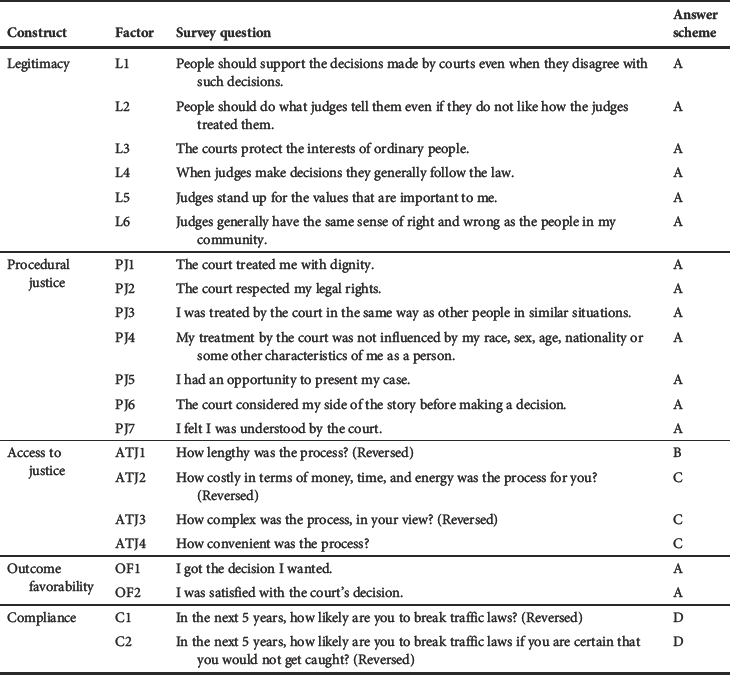
Our sample comprises parties in online traffic proceedings between December 2019 and August 2020. We collaborated with Matterhorn's developers to distribute a survey to litigants through its online court software; each litigant received an email 3 days after the conclusion of their case informing them of the opportunity to participate anonymously in academic research for compensation. Participants who completed the survey received Amazon gift cards with a value of $15–30. Interested participants clicked an anonymous link, which directed them to the survey site. Out of 934 people who participated in online proceedings in these jurisdictions within our sample time frame, 216 completed the survey, a response rate of 23%, which is comparable to and even higher than the rate of similar studies (e.g., Reference Creutzfeldt and BradfordCreutzfeldt & Bradford, 2016; Reference Hou, Lampe, Bulinski and PrescottHou et al., 2017). The sample age ranges from 16 to 86 (M = 36.02, SD = 14.81). Of the sample, 127 are men and 89 are women. In Table 1, we present the final sample's demographics, including descriptive statistics across income groups (lower versus higher). We note that, though the COVID-19 pandemic began during our sample period, it did not disrupt the operation of these online proceedings, and furthermore, did not have a discernable effect on our findings (see Tables A5 and A6).
Sample self-reported descriptive statistics.

Note: Percentages in parentheses are column percentages of the total sample or respective income sub-sample.
Materials
In the survey, we ask all participants questions about their experience with the online court proceeding they recently completed as well as about their perceptions of the legal system more generally. Respondents answer several questions using a five-point scale; we then create a measurement of each construct by taking a simple mean of each respondent's answers to all questions that relate to that construct. We follow this procedure to create construct measurements for perceptions of procedural justice, access to justice, outcome favorability, legitimacy, and compliance. Table 2 displays the survey questions we use to create each construct, and we explain the reasoning behind our approach to each variable below.
Construct measurement.
Note: Answer schemes: A: 1 = Disagree; 2 = Somewhat disagree; 3 = Neither agree nor disagree; 4 = Somewhat agree; 5 = Agree. B: 1 = Not at all; 2 = A little bit; 3 = Somewhat; 4 = Lengthy; 5 = Very lengthy. C: 1 = Not at all; 2–4 unlabeled; 5 = Very much. D: 1 = Unlikely; 2 = Somewhat unlikely; 3 = Possibly; 4 = Somewhat likely; 5 = Likely.
Independent variables
Procedural justice: We ask respondents about their treatment by the court during their online proceeding, exploring topics like dignity, respect, equal treatment, and the opportunity to be heard. Following other empirical studies of procedural justice (e.g., Reference Bradford, Murphy and JacksonBradford et al., 2014; Reference Tankebe, Reisig and WangTankebe et al., 2016; Reference Tyler, Fagan and GellerTyler, Fagan, & Geller, 2014; Reference Wolfe, Nix, Kaminski and RojekWolfe et al., 2016), we adapt the specific components of our procedural-justice variable and the precise language we use in our questions from important work on perceptions of procedural justice in legal contexts by Tyler and (Reference Tyler and JacksonJackson 2014) (itself firmly grounded in the literature—see, e.g., Reference Hough, Jackson, Bradford, Body-Gendrot, Hough, Kerezsi, Lévy and SnackenHough et al., 2013a, Reference Hough, Jackson, Bradford, Tankebe and Liebling2013b; Reference Jackson, Bradford, Hough, Kuha, Stares, Widdop, Fitzgerald, Yordanova and GalevJackson et al., 2011; Reference Sunshine and TylerSunshine & Tyler, 2003; Reference TylerTyler, 2006a). Importantly, our construct covers the three well-known dimensions of procedural justice: interpersonal treatment, quality of the process, and voice.
Outcome favorability: We focus on two dimensions of outcome favorability: whether the respondent receives their desired outcome (specifically, the “decision I wanted”) and whether the respondent is satisfied with the court's decision. As with our measure of procedural justice, we rely on related literature on perceptions of outcome favorability in legal contexts to define the relevant components of our variable and the specific language and scales we use in our survey questions (e.g., Reference Tyler and JacksonTyler & Jackson, 2014).
Access to justice: We create a novel measure of access-to-justice perceptions in online proceedings by drawing on the literature's theoretical typology of access barriers while keeping in mind the novel characteristics of online communication (Reference CreutzfeldtCreutzfeldt, 2021). Specifically, we begin with economic, geographic/physical, and psychological barriers (Reference Bulinski and PrescottBulinski & Prescott, 2016). These categories are very likely to span a litigant's primary access concerns. Then we adapt how we describe these issues in the survey so that they make sense in a context in which court users are unrepresented and communicate asynchronously from some remote location through an online process that aims to translate complex rules and “legalese” into structured processes in everyday language (Reference SalterSalter, 2017; Reference SusskindSusskind, 2019). Consequently, our measure of perceptions of access to justice includes the following dimensions:
(a) Costs (direct and indirect)—Money is often necessary to reduce other barriers to justice—for instance, through hiring an attorney. Costs and fees remain a significant barrier in traditional legal proceedings, but even when a court can waive these expenses, face-to-face litigants need resources simply to arrive at a courthouse—for example, parties face transportation costs and the opportunity costs that come from missing work during business hours. Online proceedings eliminate or reduce many of these costs. Accordingly, we ask respondents how costly they perceive their online proceedings to be in “money, time, and energy.”
(b) Duration—Lengthy proceedings not only increase costs, but they also detract from parties' resilience and determination in pursuing/defending their rights and could have significant “health and emotional wellbeing” consequences (Reference SalterSalter, 2017). Online proceedings can eliminate the need to communicate in real time and often the need to schedule and reschedule hearings, which comes with the related burden of schedule uncertainty. The structured nature of ODR processes not only streamlines case processing but can also reduce the cognitive burden of ongoing litigation, thereby reducing economic and psychological barriers. We therefore include a measure of parties' perceptions of the length of the proceedings.
(c) Complexity—People often fail to realize or protect their rights due to the difficulty and uncertainty in deciphering the law and legal language, especially when unrepresented and walking into a courthouse where in-person support from the court is minimal. Online proceedings explicitly seek to make court processes and the law easier to navigate and understand, to reduce the need for professional assistance, and to empower lay users to pursue redress (Reference SusskindSusskind, 2019). To the extent that careful design can make progress on these goals, online court processes can reduce psychological and economic barriers. We capture this dimension of access by soliciting parties' perceptions of the complexity of their proceedings.
(d) Convenience—By eliminating the need to convene physically at a given time and place, online proceedings aim to remove what commenters and scholars recognize as geographic and physical barriers to access. These barriers fall disproportionately on individuals who live in remote areas or with disabilities. Online proceedings can also alleviate psychological concerns linked to the formality of the courtroom and having to face an authority figure in person. Easy-to-use online proceedings that guide parties through the resolution process with straightforward language also reduce barriers for participants with varying “legal and digital capabilities” (Reference CreutzfeldtCreutzfeldt, 2021). We account for these access dimensions by inquiring about the degree of convenience afforded by the proceedings.
Income: We measure a respondent's income using their self-reported annual income range, which we view as a rough but easy-to-ascertain indicator of socioeconomic status. Possible responses begin with “less than $20,000” and include each $10,000 interval above $20,000, ending with “$90,000 and above” (nine categories). We recode these responses into lower income (income of up to just under $40,000) and higher income ($40,000 and above). We base this income cutoff on our previous work in a similar setting (Reference Mentovich, Prescott and Rabinovich-EinyMentovich, Prescott, & Rabinovich-Einy, 2020). In that work, we derive the same cutoff by assuming full-time work (2000 h per year) for double the minimum wage at the time of the survey (~$10.00 per hour). Notably, many studies of human behavior in different contexts (e.g., public health, tourism) also use the same threshold of $40,000 to distinguish between lower-income and higher-income participants (e.g., Reference Gordon-Larsen, Adair and PopkinGordon-Larsen et al., 2003; Reference Hearne and NiñoHearne & Niño, 2022; Reference Kim, Cheng and O'LearyKim et al., 2007). We use this coding strategy to create two groups of roughly similar size: lower-income (N = 122, 56.2%) and higher-income (N = 95, 42.8%). We also verify the robustness of our proposed income cutoff by examining the effects of using alternatives (see Tables A7 and A8).
Controls: Our survey also asks respondents to disclose certain demographic information, including race/ethnicity, gender, age, and education level. We use this information to reduce any omitted variable bias and to improve the efficiency of our estimates. In our analysis, we code race/ethnicity as a binary variable (Black or Hispanic respondents = 1), gender as a binary variable (women = 1), age as a continuous variable, and education level as a categorical variable with eight mutually exclusive groups (base category = less than high school).
Dependent variables
Legitimacy: Our legitimacy construct taps into a respondent's felt obligation to obey legal authorities and, in line with recent scholarship on legitimacy (e.g., Reference Jackson, Bradford, Hough, Myhill, Quinton and TylerJackson et al., 2012; Reference Tyler and JacksonTyler & Jackson, 2014), a respondent's sense of normative alignment (i.e., shared values between legal authorities and the public). Again, we borrow our specific questions and metrics from existing studies of legitimacy in the legal context (e.g., Reference Tyler and JacksonTyler & Jackson, 2014). Our questions inquire, in particular, about a respondent's beliefs about court decisions and judicial orders—specifically, whether “people” ought to adhere to these pronouncements, even if they are wrong or if the person in question is mistreated, and whether judges and courts support the respondent's values and the interests of “ordinary people.”
Compliance: We base our measurement of compliance on reported behavioral intentions regarding respondents' future willingness to engage in law-breaking behavior in the same substantive legal domain as the current online proceeding (i.e., the violation of traffic laws). We ask not only whether respondents consider themselves “likely” to break the same or related laws again, but also whether respondents are likely to break traffic laws even in a situation where there is no possibility of detection or punishment (i.e., respondents are “certain” of their hypothetical legal immunity). Our approach differs from the strategy of other studies that pose a variety of specific traffic offense scenarios to create their future-compliance measure (e.g., Reference Bradford, Hohl, Jackson and MacQueenBradford et al., 2015; Reference HertoghHertogh, 2015). Rather, in our exploratory analysis of compliance, we ask participants to make a judgment about their future compliance in very direct terms. Admittedly, our approach is explicit and simple, and therefore any results require a careful and tentative interpretation.
RESULTS
To identify the antecedents of legitimacy in an online court setting, we fit OLS regressions, a method that is appropriate for our data and hypotheses and is consistent with the approach and specifications in related studies that use survey data to explore the empirical determinants of legitimacy (e.g., Reference Jackson, Bradford, Hough, Myhill, Quinton and TylerJackson et al., 2012; Reference MurphyMurphy, 2005; Reference Sunshine and TylerSunshine & Tyler, 2003). We investigate the significance and role of three potential predictors of legitimacy: perceptions of procedural justice, perceptions of outcome favorability, and perceptions of access to justice. We also investigate whether and how the relative weight accorded to each predictor changes as a function of a participant's reported income level. We present descriptive statistics of our outcome variables in Table 3. Participants generally report a positive experience with online proceedings. Procedural-justice perceptions, perhaps surprisingly given the remote medium, display the highest positive evaluation level by respondents, although our descriptive mean estimates do not differ from each other in a statistically meaningful way.
Descriptive statistics of model constructs.

We estimate six models of legitimacy perceptions. In all models, we adjust for race, gender, age, education level, the adjudicating courthouse, and a main effect for our reported income level variable. In our first model, we investigate procedural-justice and outcome-favorability perceptions as possible predictors of legitimacy, as these two factors stand at the center of legitimacy research in face-to-face settings. The remaining models add additional variables of interest and interactions to isolate the impact of adding new predictors on the estimates we obtain in earlier models—that is, to check whether additions alter the earlier relationships we estimate. In Model 2, we add our novel measurement of access-to-justice perceptions to the specification in Model 1. In Models 3, 4, and 5, we incorporate interactions between the income-group variable and perceptions of procedural justice, outcome favorability, and access to justice, respectively. Model 6 includes all independent variables simultaneously, including all interaction terms. We present the results of this analysis in Table 4.
Perceptions of legitimacy.

Note: The table reports results from OLS regressions in which the outcome variable is our constructed measure of legitimacy (1 = Low; 5 = High) that a defendant ascribes to the legal system following an online traffic court proceeding. We report standard errors in parentheses, including heteroskedasticity-robust standard errors for Columns (1), (2), (4), and (5). We control for courthouse, race/ethnicity, gender, age, and education level in all models. The symbols *, **, and *** represent significance at the 10%, 5%, and 1% level, respectively.
In Model 1, controlling for differences in litigant characteristics, we find that experiencing procedural justice online positively predicts perceptions of legitimacy, which is consistent with what others document in analyses of face-to-face hearings (Reference Hollander-Blumoff and TylerHollander-Blumoff & Tyler, 2011; Reference Tyler and JacksonTyler & Jackson, 2014). Thus, the relationship between procedural-justice and legitimacy perceptions appears to transcend court medium. For every one-point increase in our procedural-justice construct, we estimate a statistically significant increase in legitimacy perceptions of 0.46 on our five-point scale (see Table 2). Also consonant with existing studies of in-person interaction with legal authorities (Reference Sunshine and TylerSunshine & Tyler, 2003; Reference Tyler and JacksonTyler & Jackson, 2014), we detect no relationship between perceptions of outcome favorability and perceptions of legitimacy in the online-court context, hinting that instrumental concerns may carry little weight in shaping perceptions of legitimacy both online and offline.
In Model 2, we find that our measure of access-to-justice perceptions is also a significant, positive predictor of perceived legitimacy, even when controlling for procedural-justice and outcome-favorability perceptions. Likewise, accounting for access-to-justice perceptions does little to alter the relationship between procedural-justice perceptions and litigant views about legitimacy that we estimate in Model 1. We note that the content and scale of our independent variables of interest make it difficult to draw firm conclusions about the importance of access-to-justice perceptions relative to procedural-justice perceptions because unit increments of access-to-justice and procedural-justice scores are not necessarily comparable. Nevertheless, our evidence of a statistically significant and nontrivial relationship between access-to-justice perceptions and perceived legitimacy points to an important connection previously missing in scholarly work on legitimacy in legal systems.
In Model 6, we include interaction terms of our higher-income status indicator and all other variables of interest, that is, procedural-justice, outcome-favorability, and access-to-justice perceptions, respectively. By including all predictors and their higher-income interactions, and comparing the results to Model 2's estimates, we can test whether procedural-justice perceptions and/or access-to-justice perceptions relate to perceptions of legitimacy differently for the lower- and higher-income groups in our data. As we argue in Section 3, there are good reasons to hypothesize that socioeconomic status may affect how strongly access-to-justice perceptions (and possibly procedural-justice perceptions) predict perceived legitimacy.
To begin, our results indicate that the predictive relationship between procedural-justice perceptions and views about system legitimacy varies with income. While our positive estimate on procedural-justice perceptions (0.407) in Model 2 implies that, on average, a more positive procedural-justice experience in an online proceeding may augment perceptions of the legal system's legitimacy, our estimate (0.251) in Model 6, describing the relationship for only our lower-income sample of respondents, indicates a weaker relationship. By contrast, the coefficient we estimate on our interaction between higher-income status and procedural-justice perceptions (0.393), which denotes the marginal difference in the relationship for the higher-income group, is positive and statistically significant. Thus, while higher procedural-justice perceptions are associated with higher legitimacy perceptions for everyone in our sample, including lower-income respondents, the empirical association is statistically stronger and larger for higher-income respondents.
Our findings are starker when it comes to access-to-justice perceptions as a predictor of perceived legitimacy. As with procedural-justice perceptions, Model 2 shows that access-to-justice perceptions are a significant indicator of perceived legitimacy across all income groups on average, suggesting that, in general, the more parties experience better access through the online platform, the more they attribute legitimacy to such proceedings. However, Model 6 reveals a drastic divergence by income in how strongly access-to-justice perceptions predict legitimacy. The predictive relationship we estimate for lower-income respondents (0.42) is larger than the average effect in Model 2 (0.173), but the difference in the strength of the relationship for higher-income respondents (−0.512) is even larger, negative, and highly statistically significant. These estimates imply that higher access-to-justice perceptions positively predict perceived legitimacy only among lower-income respondents. In fact, we find a net-negative relationship between access-to-justice perceptions and perceived legitimacy for higher-income respondents (by adding the access-to-justice coefficient to the interaction coefficient), though our estimate is statistically indistinguishable from zero.
To summarize, our analysis uncovers evidence of heterogeneity across socioeconomic status in two key determinants of perceived legitimacy. First, we estimate a significant coefficient on our procedural-justice-by-income interaction variable, which translates to procedural justice being more weakly related to legitimacy perceptions on average for participants in the lower-income group versus the higher-income group. Second, we estimate a significant access-by-income interaction coefficient for the higher-income group that offsets the main positive access relationship, implying that access-to-justice perceptions are a stronger predictor of legitimacy for the lower-income group. For the sake of completeness, we add that our estimated outcome-favorability-by-income interaction coefficient is small and statistically insignificant. Overall, these patterns are consistent with our hypothesis that lower-income individuals place greater relative weight on access-to-justice considerations in their evaluation of the legitimacy of the legal system relative to higher-income individuals.
We stress that the interpretation of our results is subtle. Because our independent variables are ordinal in nature, it is helpful to assume that individuals from different income groups interpret our measures in similar ways and set similar thresholds to move up or down in their responses. Relatedly, while we interpret our results in terms of the weight that individuals put on procedural-justice and access-to-justice perceptions in forming their views about legitimacy, individuals from different income groups may conceive of procedural justice and access to justice differently in ways that we do not capture in our measures. These groups may also differ in how they weight distinct features of these concepts. We also concede that some unobservable omitted variable that is correlated with reported income may be doing the work, so it is more appropriate to interpret income as a proxy capable of distinguishing groups for which procedural-justice and access-to-justice perceptions relate differently to views about legitimacy. Notwithstanding these caveats, the empirical relationship between perceived procedural justice and legitimacy and between perceived access and legitimacy, using our measures, is notably different for individuals from lower- versus higher-income groups.
We turn now to an analysis of the possible underpinnings of behavioral intentions to comply with law in the future. To that end, we estimate seven OLS regression models and a path model. The first six regression models match our specifications in Table 4 but use intentions toward future compliance as the outcome variable. In regression Model 7, we consider all of our predictors and income interaction terms, and we add our prior outcome measure—legitimacy perceptions—as an independent variable. Table 5 displays the results. We find no evidence of a main-effect connection between either procedural-justice perceptions or outcome-favorability perceptions and reported compliance intentions in any of our models. By contrast, access-to-justice perceptions correlate positively with compliance intentions across specifications and are statistically significant in every model that includes an access-by-income interaction term—even in our final model, which includes legitimacy perceptions as a separate independent variable. We advise caution in interpreting these tentative findings, but the persistent, positive relationship between access-to-justice perceptions and compliance intentions in our data calls for future research to explore this possible connection.
Future compliance with traffic laws.

Note: The table reports results from OLS regressions in which the outcome variable is our constructed measure of future legal compliance (1 = Low; 5 = High) following an online traffic court proceeding. We report heteroskedasticity-robust standard errors in parentheses. We control for courthouse, race/ethnicity, gender, age, and education level in all models. The symbols *, **, and *** represent significance at the 10%, 5%, and 1% level, respectively.
We observe two other compliance-related patterns in our data. First, we estimate a statistically significant coefficient on our outcome-favorability-by-income interaction coefficient (Models 4, 6, and 7), indicating that better outcomes are associated with relatively more reported willingness to comply with traffic laws among those in the lower-income group. We do not detect evidence of instrumental concerns shaping legitimacy judgments for everyone, but these tentative results raise the possibility that outcome favorability may shape compliance intentions in a way that interacts with income status. Second, according to Model 7 in Table 5, legitimacy perceptions may link to reported intentions to comply with traffic laws, such that the more parties report attributing legitimacy to the legal system, the more they declare that they are likely to comply with traffic laws in the future.
To explore the relationship between legitimacy and compliance intentions further, we estimate a path model to examine any indirect links between potential predictors of legitimacy and compliance. Legitimacy may serve as a mediator between our baseline predictors—namely, procedural-justice, outcome-favorability, and access-to-justice perceptions, as well as their interactions with income—and compliance. We present our findings in Figure 1. The model shows good fit indices (χ2(13) = 31.220, CFI = 0.99, RMSEA = 0.069). The results indicate an indirect relationship between both procedural-justice and access-to-justice perceptions—as well as their interactions with income—and compliance intentions, with perceptions of legitimacy serving as an important conduit. (We note that while our outcome-favorability-by-income interaction has a statistically significant relationship with compliance in Table 5, the path model results we depict in Figure 1 report only the indirect relationship via legitimacy, which is statistically insignificant.) This analysis comports with existing theory and research on legitimacy in which procedural-justice judgments shape legitimacy, and legitimacy in turn shapes compliance (Reference MurphyMurphy, 2005; Reference Sunshine and TylerSunshine & Tyler, 2003).
Mediating role of legitimacy in predicting future compliance (We estimate this path model using AMOS 27. We report unstandardized coefficients with standard errors in parentheses. To maximize model fit statistics, we control for race/ethnicity but not for courthouse, gender, age, and education level because the latter are not statistically significant. Coefficient patterns remain the same when including all controls. The symbols ** and *** represent significance at the 5% and 1% level, respectively. The full set of estimates is available upon request.)

Finally, in our Appendix A, we describe and report a number of robustness checks that explore potential limitations to our analysis. We begin by reconsidering how we measure and control for court outcomes, and we incorporate new data on actual outcomes (as opposed to reported outcome-favorability responses we collect from respondents). We also examine alternative measures for both procedural-justice perceptions and access-to-justice perceptions to reduce concerns about measurement error and other biases. Finally, given the importance of socioeconomic status and income to our paper's contributions, we scrutinize how we define and analyze income groups, testing other plausible approaches. These exercises, plus a few others, produce results that are substantively consistent with our key findings. We report most of our robustness analysis in our Appendix A Tables.
DISCUSSION
This study is the first to assess potential sources of legitimacy in online courts by examining the applicability of the procedural-justice model to the online (traffic) court context and by exploring the role of access-to-justice perceptions as a novel antecedent of legitimacy. We still have much to learn about procedural justice, access to justice, and legitimacy in online settings. However, our work makes distinct theoretical and empirical contributions to the literature by incorporating access-to-justice perceptions and the moderating role of income level in explaining how people come to view online proceedings, courts, and the law as legitimate. We conclude that our data are consistent with several (but not all) of our hypotheses regarding the dynamics underlying the perceptions of system legitimacy.
First, despite the thin nature of online communication, we find that procedural-justice perceptions are a strong predictor of legitimacy perceptions even in online proceedings. This result may tie to particular traits of online communication (Reference Ebner and GreenbergEbner & Greenberg, 2020). While some lament the lack of rich, real-time physical communication when interacting online (Reference SternlightSternlight, 2020), certain features of online exchanges may actually enhance a party's experience and thus their procedural-justice perceptions. For example, limiting physical interaction also mitigates negative features of in-court proceedings, such as long waits and a rushed process, which can convey disrespect and inhibit voice. In addition, some litigants may find it uncomfortable to address a judge face to face and would prefer to “voice” their story in writing. Indeed, rather than a “second-class” procedural scheme, online asynchronous proceedings may amply serve litigant procedural-justice needs and, for some people, even be an improvement. Another explanation may lie in people having different expectations for online proceedings—that is, people may experience proceedings in light of what is possible given the medium, and no one expects rich, physical interaction in an easy-to-access forum for written exchanges. Expectations, preferences, and values underlying procedural-justice experiences may be undergoing transformation (Reference TurkleTurkle, 2011). Future research should explore the precise components of procedural-justice experiences in online settings (and indeed in each type of online setting).
Second, consistent with our hypothesis, we find no evidence that instrumental concerns in the form of outcome-favorability perceptions predict legitimacy perceptions in online proceedings. This finding may be surprising because online spaces may seem especially conducive to instrumental motivations. Our results nevertheless mirror research in face-to-face settings that show, at most, the marginal importance of instrumental concerns to legitimacy. Perhaps the explanation lies in legitimacy perceptions being rooted in deep-seated psychological needs and motivations that are unlikely to be satisfied by news of a favorable outcome.
Third, our study adds a new angle to the familiar normative versus instrumental lens on legitimacy by incorporating access to justice, a more structural dimension of the legal system. Online dispute resolution seems like a natural setting to examine the role of access in generating legitimacy because increasing access has been one of the driving forces behind the design and adoption of online proceedings. Our data confirm the potential importance of access-to-justice perceptions in predicting legitimacy perceptions. Thus, accessibility may not only be a core consideration in how to design online proceedings but also in how users experience those proceedings. One important question is whether access-to-justice perceptions, which may naturally attach to the unique features of online proceedings, will also prove central to how people experience traditional procedures, a possibility future research should explore.
Fourth, we present tentative evidence of a connection between access-to-justice perceptions and intent to comply with traffic laws, hinting that innovations in access may offer an additional route toward improving compliance. We also detect some indication that, for lower-income parties, higher outcome-favorability perceptions may positively correlate with compliance intentions. Both patterns appear to hold even when accounting for legitimacy perceptions. We also uncover a connection between perceived legitimacy—as shaped by procedural-justice and access-to-justice perceptions—and intentions to comply. However, we advise against relying on these results without corroborating studies using better data and measures—after all, we measure compliance using self-reported intentions, which are susceptible to social-desirability bias and may not be useful predictors of actual behavior. However, we hope these patterns will motivate future rigorous work on compliance, including attempts to replicate these patterns—testing, for example, whether access-to-justice perceptions predict compliance and whether people with below-average incomes place some weight on instrumental concerns in their compliance behavior, possibly a function of relative economic disadvantage.
Many outstanding questions remain. While our research documents the potential importance of access-to-justice perceptions in accounting for legitimacy judgments, it does not explain why access-to-justice perceptions may matter, assuming any causal relationship exists at all. Research provides several empirically supported explanations for why experiencing procedural justice matters to individuals when they draw conclusions about system legitimacy (Reference Tyler and BladerTyler & Blader, 2003; Reference Tyler and JacksonTyler & Jackson, 2014). Future research should likewise explore the reasons that access to justice might matter to legitimacy perceptions. One possible explanation relates to the structural nature of access to justice. Specifically, people may place value on access because it reflects the system's principles and the degree to which the system respects an individual's legal rights and innate worth. Access-oriented design may also address the same needs that the procedural-justice literature emphasizes—such as the importance of being shown respect. Indeed, elements of procedural justice and access to justice can overlap, as we show in our alternative model of access to justice in our Appendix A. Thus, for example, allowing parties more time to contemplate next steps as part of an asynchronous procedure could translate into enhanced access, but it could also fulfill parties' need for respect and voice. Future research should investigate the distinctions and overlap between the concepts of access to justice and procedural justice as predictors of legitimacy.
Given the unique attributes of online proceedings and the importance of access to justice for people with few resources, the potential role of socioeconomic status in moderating the relationships that access-to-justice and procedural-justice perceptions have with legitimacy perceptions requires more attention. We find some evidence that access-to-justice perceptions have a stronger empirical relationship with legitimacy perceptions among lower-income online litigants than higher-income litigants. At the same time, procedural-justice research suggests that such perceptions predict legitimacy more-or-less uniformly across income levels. We do not corroborate this claim: procedural justice in our data appears relatively more important among people from higher socioeconomic backgrounds. Moreover, some research shows that minorities typically place greater weight on procedural-justice considerations (Reference Mentovich, Ben-Porat, Levy, Goff and TylerMentovich, Ben-Porat, et al., 2020; Reference Sunshine and TylerSunshine & Tyler, 2003), but we do not observe this pattern with our lower-income group. Income may operate differently from other social-identity features, perhaps generating group-based consciousness in a different way or not at all. Alternatively, access to justice, a structural factor, may be more important to those who encounter significant barriers early in disputes. It may be only after lower-income parties overcome these barriers that they reorient toward the more expressive and symbolic concerns associated with procedural justice.
The findings regarding the role of socioeconomic status in altering the relative importance of legitimacy's antecedents are significant for several reasons. For one, socioeconomic status typically serves as a mere control variable in legitimacy studies, with any function it may carry out as a moderator left unclear. Second, even in work that foregrounds socioeconomic status, researchers use measures like income to predict procedural-justice perceptions, not legitimacy perceptions (e.g., Reference Tyler, Lind, Sanders and Lee HamiltonTyler & Lind, 2002). However, overall, research generally does not identify any link between a party's socioeconomic status and their procedural-justice perceptions (Reference TylerTyler, 1994). By contrast, we explore the different and distinct idea that, even if it does not alter perceptions, socioeconomic status may change the relative weight given to these perceptions in accounting for legitimacy views.
Our research also has implications for the connection between dispute system design and party perceptions. While design questions are not limited to online proceedings, the online setting lends itself to “design thinking” and gives rise to more design options than typical face-to-face justice settings (Reference Schmitz and ZeleznikowSchmitz & Zeleznikow, 2022; Reference SelaSela, 2021). Thus, we should understand our findings in the context of the design of the proceedings we study. The impact of the change in medium on party perceptions is likely to be multi-directional and highly dependent on the precise design choices of the specific online proceeding in question. To understand procedural-justice, access-to-justice, and legitimacy perceptions in online legal proceedings, we should systematically study a wide-range of online court processes and explore how variations in system design influence party perceptions.
Our study has several limitations. First, we draw on one particular set of online traffic proceedings. Questions of generalizability arise with respect to the platform and the type of case. Future research should examine a wider array of online proceedings. We admit that traffic cases are not broadly representative of all legal disputes—they are simple cases that carry low stakes, concern almost uniformly unrepresented defendants, and involve an imbalance of power between individuals and the state as parties to the dispute. Still, because of their simplicity, traffic cases are a natural candidate for online proceedings and have been the most prominent example of case resolution occurring online. More importantly, traffic cases are the quintessential and sometimes the only legal disputes for many people—they make up a majority of cases in the United States—and they involve the government accusing an individual of misconduct in a governmental tribunal. Thus, how someone experiences traffic court may have a significant impact on how they view the legitimacy of courts, law enforcement, and the legal system (O'Reference O'Neil and PrescottNeil & Prescott, 2019).
Second, our access-to-justice construct is specific to the characteristics of the setting we study: unrepresented parties who participate in online proceedings. Research on access to justice often focuses on the need for an attorney, a concern that relates to costs, but not exclusively (Reference RhodeRhode, 2001; Reference SandefurSandefur, 2014). While representation eases some access barriers, such as the complexity of proceedings and fear of participation, it also raises certain challenges (Reference Zimerman and TylerZimerman & Tyler, 2010). To the extent that online proceedings expand to include proceedings with legal representation, measures of access to justice will need to be revised accordingly.
Third, we concede that our measure of access-to-justice “perceptions” is distinct from objective indicators of access. The latter category looks to actual performance metrics (such as the number of court users that belong to lower socioeconomic strata and the actual costs incurred by different categories of court users), while the former revolves around subjective evaluations of one's individual experience. Indigent parties might experience court procedures as accessible even when objective indicators suggest otherwise, perhaps diverting attention from objective structural barriers that are more resistant to change (Reference BlasiBlasi, 2004). This type of critique against relying on party perceptions is not new; indeed, some worry that focus on procedural-justice perceptions might lead to “sham procedures,” particularly when members of disempowered groups are involved (Reference WelshWelsh, 2017). Nevertheless, structural changes that do not produce positive subjective perceptions are unlikely to succeed, and given their significance for legitimacy and compliance, researchers should collect and study subjective access-to-justice perceptions alongside other objective and subjective indicators (Reference Kulp and SchmitzKulp & Schmitz, 2020).
Fourth, we study only the responses of litigants who participate in online proceedings—that is, people who overcome various obstacles to resolve their dispute online. At a minimum, our respondents recognize some of their legal risks and opportunities and successfully invoke a legal avenue of redress (Reference SandefurSandefur, 2014). First-generation digital-divide concerns over technological infrastructure and internet access (Reference CreutzfeldtCreutzfeldt, 2021) have given way to second-generation concerns over differences in the “willingness and ability to use the internet” (Reference Denvir and SelvarajahDenvir & Selvarajah, 2022). Studies reveal not only group-level differences in online behavioral patterns but also the many ways by which social and economic disparities shape users' understanding of online information (Reference FairlieFairlie, 2017). Fortunately, the design of online proceedings can address some of these concerns (Reference Bulinski, Prescott, Katz, Dolin and BommaritoBulinski & Prescott, 2021). For example, asynchronous, text-based processes offer litigants more flexibility and make receiving support from family and friends easier (Reference SusskindSusskind, 2019). Of course, traditional proceedings erect many access barriers of their own, and many people “access the Internet much more easily and comfortably than they do traditional justice institutions and processes” (Reference SalterSalter, 2017, p. 123).
Fifth, we collect litigant responses from only five courthouses comprising two districts in a single US state, which may limit the generalizability of our results. Moreover, even within this specific area's population, our sample may not be representative of those who use online proceedings because participants volunteer to take part in the study. Selection bias may drive our results if, for example, only participants with extreme experiences choose to participate in research like ours. To mitigate these concerns, we control for participant demographics and education levels and consider income explicitly in our analysis.
Finally, because our study uses survey responses and we have no access to exogenous variation in access-to-justice and procedural-justice perceptions, we are unable to draw causal inferences about the connection between these perceptions and views about legitimacy. We see procedural justice and access to justice as antecedents of legitimacy, but the relationship may run in the opposite direction or turn on factors we do not observe. For example, those who view the legal system as more legitimate may also ascribe greater fairness and accessibility to their online experience for unknown reasons. Nevertheless, our approach is the commonly accepted methodology for investigating the legitimacy of the legal system due to the difficulty of deploying experimental designs in such contexts, and at a minimum, our results present provocative descriptive correlations that we hope will drive future research.
CONCLUSION
Despite the rapid growth in online court proceedings, research into how users experience these proceedings is just beginning. Analysis of legitimacy perceptions and their determinants online is almost nonexistent. This study is the first to provide empirical insight into how changes from centuries-old, face-to-face hearings to novel online proceedings may matter for the underpinnings of legal legitimacy. We find that positive assessments of access to justice and procedural justice in online proceedings predict more robust legitimacy perceptions. We also find that access-to-justice perceptions appear relatively more important in explaining legitimacy views among lower-income litigants. Our results suggest that technology can generate novel procedural options that are at least compatible with and may advance access to justice, procedural justice, and system legitimacy. Technology is no panacea, but thoughtful design choices accompanied by careful attention to litigant experiences may give rise to new and exciting opportunities for justice while enhancing the legitimacy of our legal institutions.
ACKNOWLEDGMENTS
We are grateful to Tom Tyler and participants of the 2022 Conference on Empirical Legal Studies at the University of Toronto for helpful comments and to German Marquez Alcala for excellent research assistance. This research was supported by the Israeli Science Foundation, Grant No. 492/17. Disclosure: Prescott founded Court Innovations Inc., which developed Matterhorn, an ODR platform that operates in many states. Prescott no longer has an equity interest in Court Innovations or its parent company, but he may benefit from a licensing arrangement the companies have with the University of Michigan.
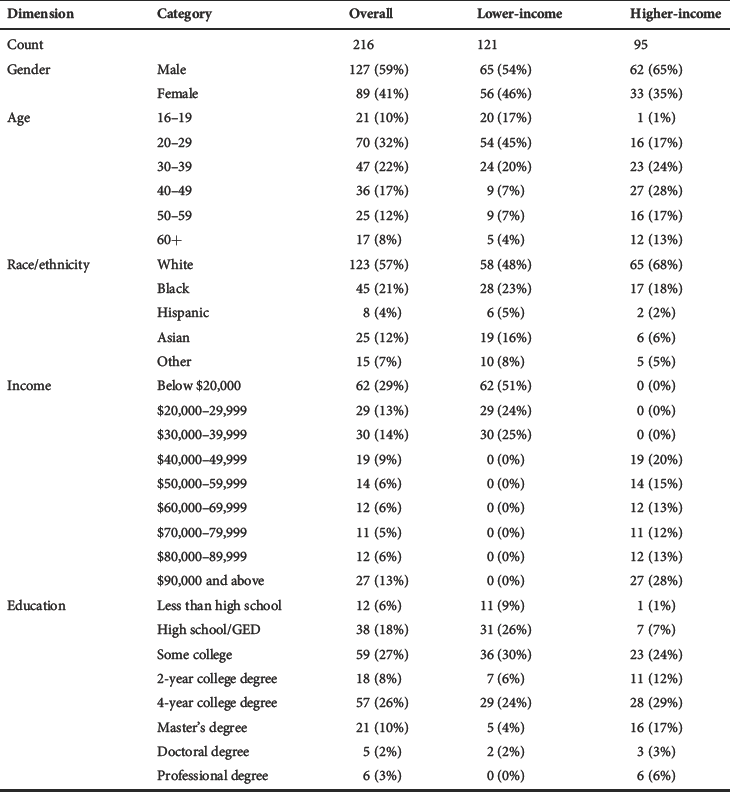
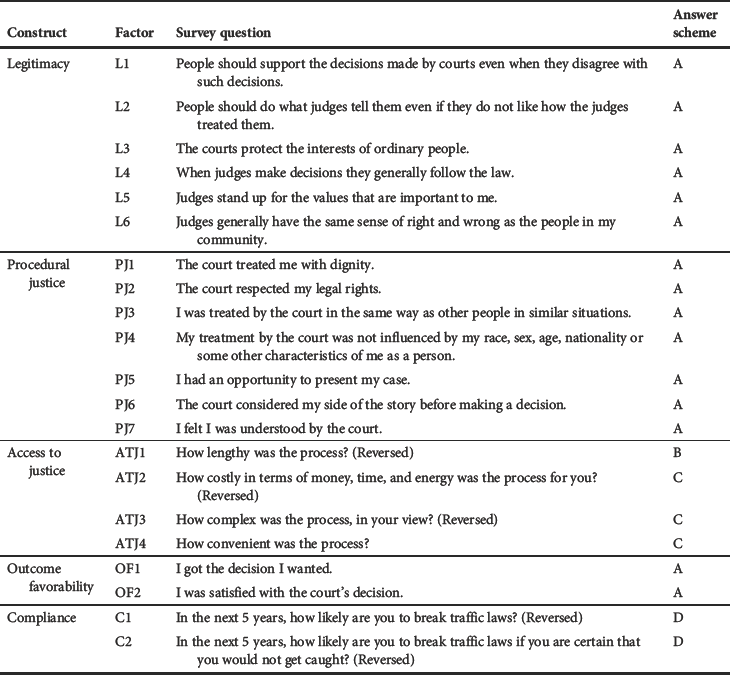
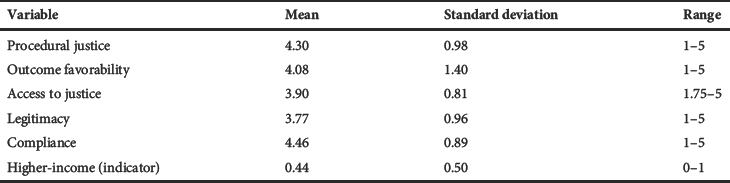
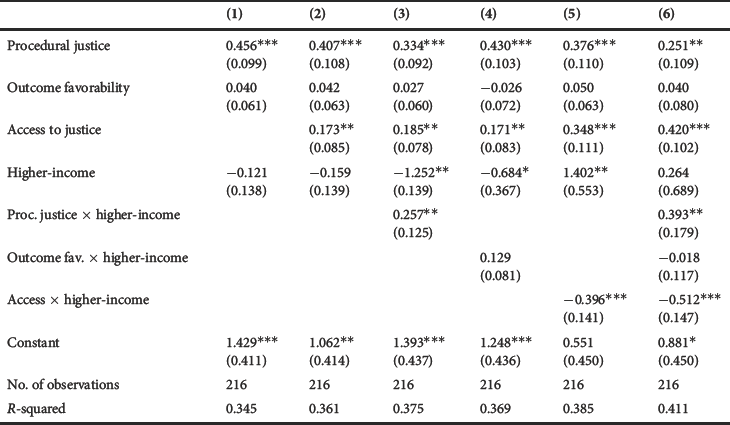
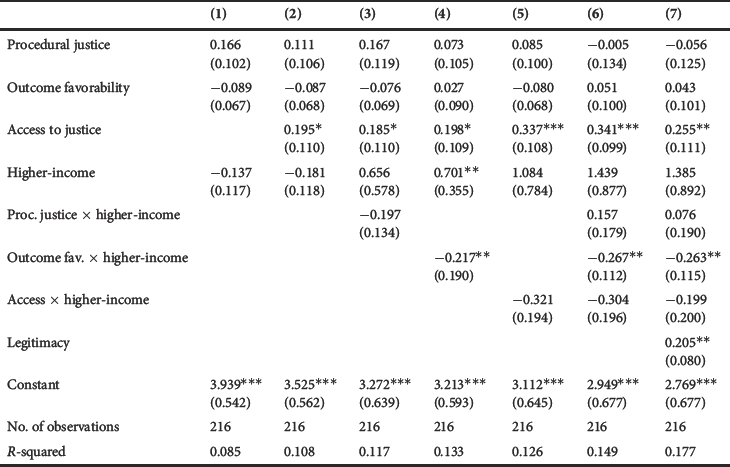
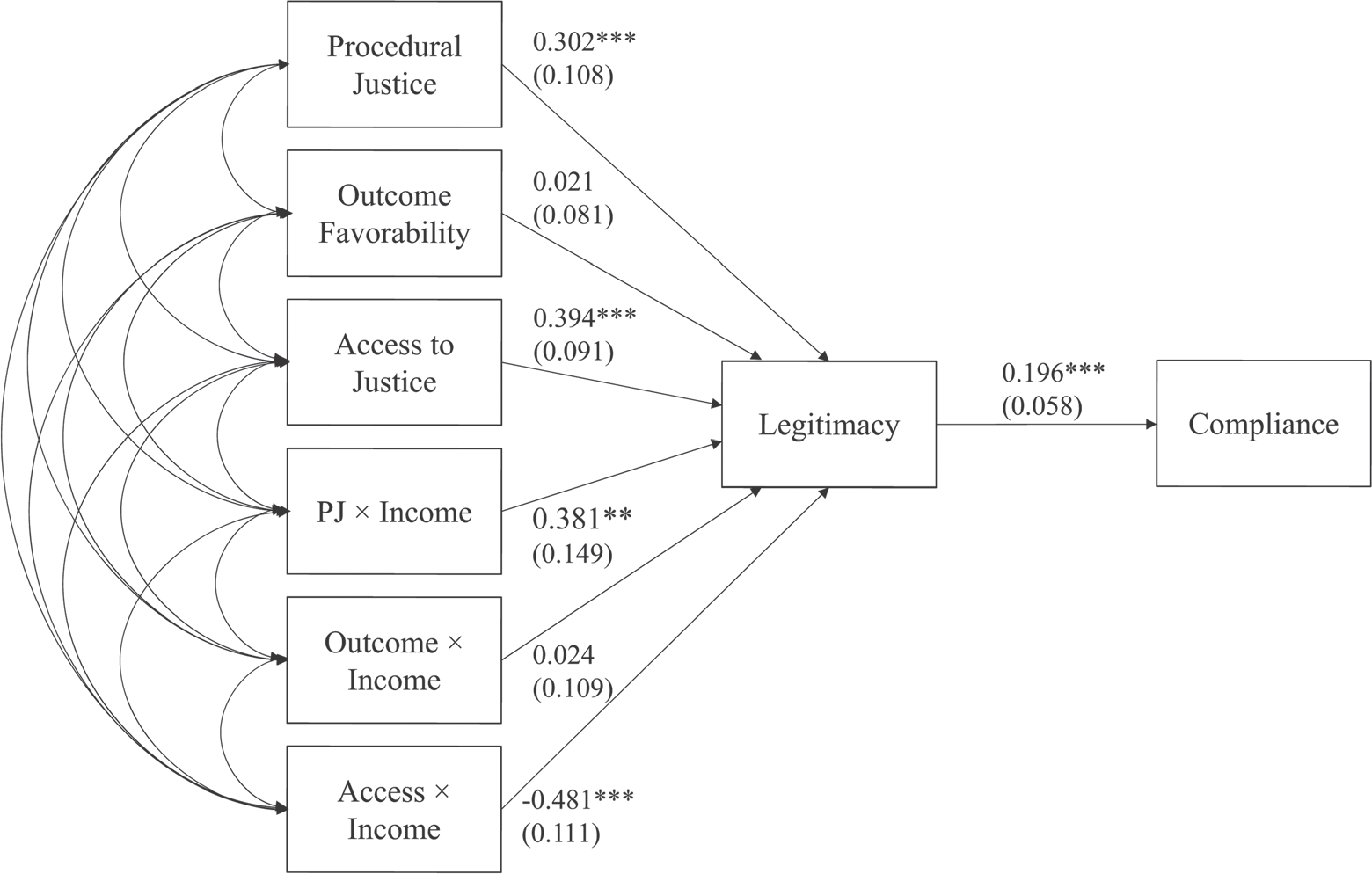


 Open access

