





Street-level bureaucrats and other front-line workers play an essential role in mediating law on the books and law in action. Examples range from case managers implementing social welfare law (Soss et al. Reference Soss, Fording and Sanford2011) to home inspectors implementing disaster recovery law (Raker Reference Raker2023) to pharmacists implementing healthcare law (Chiarello Reference Chiarello2024). One of the most important groups of street-level bureaucrats is the police. Existing scholarship is overwhelmingly concerned with who the police label a “criminal” and how criminal justice contact undermines people’s ability to exercise democratic citizenship, feel connected to the law and its priorities, and receive social support (Bell Reference Bell2017; Brayne Reference Brayne2014; Lerman and Weaver Reference Lerman and Weaver2014; Miller and Stuart Reference Miller and Stuart2017; Powell and Phelps Reference Powell and Phelps2021; Soss and Weaver Reference Soss and Weaver2017; Stuart Reference Stuart2016b). We know less about how policing affects who is seen as an innocent crime victim and what this means for victims’ access to resources provided by law.
Synthesizing past research, I theorize three ways the police can affect recognition of victims: criminalization, minimization, and legal estrangement. I then test the extent to which these processes affect access to public benefits provided under victim compensation law. Subsidized by the federal government, every state in the country has laws that are supposed to compensate innocent crime victims for medical bills, lost wages, funeral expenses, and counseling costs stemming from their victimization. These laws stipulate resources can only go to innocent crime victims, and state bureaucrats rely on the police to help translate what “innocence” means in practice. Recognition as an innocent victim by the police therefore entails direct access to financial resources; denial, conversely, entails economic hardship, and material inequality.
Drawing on never-before-analyzed administrative data from 18 U.S. states, I estimate police account for more than half of all victim compensation program denials. Regression analysis reveals police are significantly more likely to minimize the victimization of women of color, especially Black women, and significantly more likely to criminalize and be estranged from male victims of color, especially Black men, relative to other racial and gender groups. Additional difference-in-differences analyses of policy changes in Illinois show how Black victims were significantly more likely to be ruled eligible for compensation when the state limited the use of police reports to determine victims’ eligibility. Qualitative data from Florida triangulate and help interpret the quantitative findings. Cumulatively, the evidence suggests police view Black male victims as not truly innocent and Black survivors of gender-based violence as not truly victims – costing tens of thousands of crime victims and their families tens of millions of dollars in public benefits each year.
This study advances several areas of scholarship. First, I add to research on the ways front-line workers translate the law into practice. By relying on the police to determine what constitutes “innocence” under victim compensation law, states expand the role of police in society, blur the boundary between social welfare and social control, and exacerbate inequality. The results carry additional implications for legal estrangement theory. Most research investigates how being perceived as a “criminal” by the police produces estrangement from the law – an experience felt acutely by racially marginalized groups due to structural inequality. Here, I point to a consequence and potential source of estrangement: crime victims from legally estranged communities are less likely to be compensated by the state, and experiences seeking compensation may reinforce their anomie about law. Finally, these findings support Miller’s (Reference Miller2015) theory of racialized state failure and the politics of punishment. Mass criminalization of Black people obscures recognition of their disproportionate victimization, reinforcing the symbiotic relationship between overpunishment and underprotection.
Policing innocent victimhood
The police are a formidable force of racial stratification. Overwhelmingly and across history, people of color – especially Black men – have been disproportionately the targets of law enforcement (Hinton and Cook Reference Hinton and Cook2021; Muhammad Reference Muhammad2011). Police are more likely to pull over Black drivers, stop and detain Black pedestrians, and kill Black, Native, and Latino denizens relative to people from other racial and ethnic groups (Baumgartner et al. Reference Baumgartner, Epp and Shoub2018; Edwards et al. Reference Edwards, Lee and Esposito2019; Lerman and Weaver Reference Lerman and Weaver2014). Contact with the police has additional effects on health and civic engagement, from obesity and high blood pressure to voter turnout and trust in government (Ben-Menachem and Morris Reference Jonathan and Morris2023; Lerman and Weaver Reference Lerman and Weaver2014; Sewell Reference Sewell2017).
Policing also affects people’s understanding of the law, institutional engagement, and access to resources. Theories of legal cynicism and estrangement describe the conditions that create fraught relationships between the police and communities of color, leading to distrust. A key finding is that Black Americans, as a group, do not trust the police because they feel ostracized from the law’s ideals (Bell Reference Bell2017; Kirk and Papachristos Reference Kirk and Papachristos2011; Sampson and Bartusch Reference Sampson and Bartusch1998; Tyler and Fagan Reference Tyler and Fagan2008). This fraught relationship with law enforcement fuels several responses in addition to distrust. For example, police contact is associated with what Brayne (Reference Brayne2014) calls “system avoidance,” whereby justice-involved people avoid surveilling institutions such as hospitals, banks, and schools (see also Haskins and Jacobsen Reference Haskins and Jacobsen2017). Additionally, Stuart (Reference Stuart2016b) shows how poor urban residents change their behaviors and movements to limit contact with the police. “Cop wisdom,” as Stuart puts it, entails avoiding the places where officers are most likely to surveil, including “the neighborhood’s major service providers, community organizations, and public toilets” (Stuart Reference Stuart2016b: 297). These social processes encompass “criminalized subjectivity,” theorized by Clair (Reference Clair2021: 290) as “the unique understandings and visions attendant to being a person, or part of a community, routinely subject to legal control and exploitation sanctioned by the criminal law.” Criminalized subjectivity is “a kind of legal consciousness specific to the criminal law and its enforcement” (Clair Reference Clair2021: 297), and this orientation has significant consequences for social interactions and legal envisioning.
Yet police powers do not end with enforcing laws on the street; the police are embedded in interorganizational networks and exercise legal authority far beyond what is typically assumed by the public. Schools, hospitals, social service providers, and welfare offices all enlist the police to criminalize people deemed unworthy of public resources. Police officers investigate welfare recipients, track down child support payments, patrol schools, and stand guard in public emergency rooms in order to separate deserving denizens from “cheats,” “deadbeats,” “delinquents,” “drug-seekers,” and other criminalized social categories (Drake Reference Drake2022; Edwards Reference Edwards2019; Fong Reference Fong2023; Haney Reference Haney2022; Headworth Reference Headworth2021; Lara-Millán Reference Lara-Millán2021; Seim Reference Seim2020; Stuart Reference Stuart2016a). Policing is additionally fundamental to the maintenance of urban space. In the absence of social service spending, municipal governments and business owners strategically rely on the police to protect property values and govern marginality (Beck and Goldstein Reference Beck and Goldstein2018; Bell Reference Bell2020; Gordon Reference Gordon2022; Herring Reference Herring2019; Neil and Legewie Reference Neil and Legewie2024; Wacquant Reference Wacquant2001). New models of community policing have ironically empowered the police to suppress dissenting voices in local politics. Rather than serve as a democratic check, legally mandated community meetings can be used by the police to filter out and ignore critiques (Cheng Reference Cheng2022b; Rocha Beardall Reference Rocha Beardall2022). Marginalized groups are labeled “security threats” and excluded from participation, while “virtuous citizens” who support police repression are empowered and protected (Gonzalez and Mayka Reference Gonzalez and Mayka2023).
These studies theorizing how the police mediate law in action focus more on who is seen as a criminal suspect than who is seen as an innocent crime victim, leaving a gap in our knowledge of policing and its consequences. Below, I theorize three mechanisms by which the police may affect the recognition of innocent victimhood: criminalization, minimization, and legal estrangement.
Criminalization
The first possible way police may influence who is seen as an innocent crime victim mirrors the process of mass criminalization. In Black Reconstruction, Du Bois argued that police perceptions of victimhood are conditional on race and associated perceptions of criminality. “If a white man is assaulted by a white man or a Negro the police are at hand,” he wrote. “If a Negro is assaulted by a white man, the police are more apt to arrest the victim than the aggressor” (Du Bois Reference Du Bois2013 [1935]: 625). The root of the problem may lie in police culture. Officers’ preoccupation with fear and violence, what Sierra-Arévalo (Reference Sierra-Arévalo2024) terms the “danger imperative,” makes it impossible to “reliably parse suspects from innocents” (Sierra-Arévalo Reference Sierra-Arévalo2024: 213).
Misrecognition of victims, as Du Bois and Sierra-Arévalo describe, relates to the fact that people who have committed crimes in the past are more likely to be victims of crime in the future, and vice versa (Lauritsen and Laub Reference Lauritsen and Laub2007). The so-called “victim-offender overlap” affects officers’ views of victims’ moral worthiness such that “officers will view victims…who are criminals in other contexts as undeserving” (Klinger Reference Klinger1997: 291). In this sense, prior criminal history can be misattributed as a proximate cause of victimization. Misattribution is especially apparent in perceptions of Black victims of police violence (Israel-Trummel and Streeter Reference Israel-Trummel and Streeter2022; Moody-Ramirez and Cole Reference Moody-Ramirez and Cole2018). For example, when Michael Brown was killed by Officer Darren Wilson in Ferguson, Missouri, reports of his criminal behavior transformed him “from a victim of law enforcement into a Black suspect whose death was probably justified” (Taylor Reference Taylor2016: 22).
Scholars of gender-based violence present similar evidence. Survivors – especially women of color – report being treated more like aggressors than victims when interacting with the police (Campbell and Fehler‐Cabral Reference Campbell and Fehler‐Cabral2018; Powell and Phelps Reference Powell and Phelps2021; Richie Reference Richie2012; Ritchie Reference Ritchie2017). For human trafficking victims and commercial sex workers who are assaulted, the line between victim and “criminal” is especially blurry and subject to law enforcement discretion (Farrell et al. Reference Farrell, Dank, de Vries, Kafafian, Hughes and Lockwood2019; Haynes Reference Haynes2004). Calling the police for help can even result in penalties. When domestic violence victims are perceived as calling 911 too often, the police can cite their homes as nuisances, putting them at risk of eviction (Desmond and Valdez Reference Desmond and Valdez2013). Victims cease to be seen as victims and become perceived as criminal suspects.
Minimization
In addition to criminalization, scholarship on gender-based violence finds survivors are often disregarded or doubted by the police. For example, Spohn et al. (Reference Spohn, White and Tellis2014) draw on Black’s (Reference Black1980) theory of law to demonstrate how officers recategorize assaults as “unfounded” when they question victims’ credibility, stripping victims of their victim status altogether. Similarly, in a study asking why a significant number of sexual assault kits had not been submitted for DNA testing in Detroit, Michigan, Campbell and Fehler‐Cabral (Reference Campbell and Fehler‐Cabral2018) find law enforcement relied on gendered stereotypes to question victims’ credibility and justify minimal investigative effort (see also O’Neal Reference O’Neal2019; Venema Reference Venema2019).
Theories of intersectional sexism suggest women of color are more likely to be doubted by police (Richie Reference Richie2012; Ritchie Reference Ritchie2017; Robinson and Chandek Reference Robinson and Chandek2000). Survivors of color do not fit the mold of “the ideal victim” and are less likely to receive attention in the news or be honored in laws named after victims (Kulig and Cullen Reference Kulig and Cullen2017; Slakoff Reference Slakoff2020). As Beth E. Ritchie (Reference Ritchie2017: 189–190) reminds us, “Black women, Indigenous women, and other women of color are defined as inherently existing outside the bounds of womanhood – rendering the status of ‘good victim’ unattainable.” Women of color do not fit cultural schemas of victimhood, and as a result, the police may overlook or ignore their suffering.
Legal estrangement
While not explicitly focused on crime victims, Bell’s (Reference Bell2017) theory of legal estrangement offers additional insights. Legal estrangement moves beyond the important but limited theory of legal cynicism, defined as a cultural orientation by which people – especially marginalized groups – do not trust police officers to ensure public safety (Campeau et al. Reference Campeau, Levi and Foglesong2021; Kirk and Papachristos Reference Kirk and Papachristos2011; Sampson and Bartusch Reference Sampson and Bartusch1998). The cynicism framework foregrounds attitudes about police, suggesting subjective feelings about the police affect people’s willingness to cooperate and comply with the law. Legal estrangement theory, by contrast, combines the attitudinal emphasis of legal cynicism theory with a stronger stance on what marginalized communities are cynical about: “objective structural conditions (including officer behavior and the substantive criminal law)” (Bell Reference Bell2017: 2066–2067).
As Bell theorizes, Black people are structurally estranged from the law’s priorities, leading to group-level distrust even if some individuals have never had negative experiences with law enforcement themselves. Most importantly, legal estrangement refers to broken social bonds and fractured social relationships between communities of color and the police rather than individually held beliefs. The relational aspect is key: trust is multidirectional and endogenous to group-level structural exclusion under the law. Treating inclusion/exclusion as the relevant outcome of interest “implies concerns not only about how individuals perceive the police and the law (and thus whether those individuals cooperate with the state’s demands), but about the signaling function of the police and the law to groups about their place in society” (Bell Reference Bell2017: 2087–2088). Estrangement is therefore reciprocal and mutually reinforcing. Communities of color do not trust the police partly because the police view those same communities with suspicion, distrust, and hostility – and vice versa.
Qualitative research suggests a link between Bell’s depiction of broken social bonds and police perceptions of crime victims. In interviews, Black people report experiencing mistreatment, distrust, and excessive scrutiny from the police, even when they are seeking protection as victims (Bell Reference Bell2017; Powell and Phelps Reference Powell and Phelps2021). Conversely, police ethnographies show officers distrusting Black crime victims and their experiences of victimization (Moskos Reference Moskos2009; Gross Reference Gross2023).
According to legal estrangement theory, denizens’ downstream behaviors and attitudes about the law – such as trust, cooperation, obedience, and compliance – are symptoms of structural exclusion and the strength of groups’ social bonds with legal institutions like the police. Moreover, by taking social relationships as the unit of analysis, the theory forces scholars to focus on both sides of the relationship: marginalized communities and agents of the law. In other words, Black people are estranged from the law, and the law (and its enforcers) are estranged from Black people. Legal estrangement will therefore affect victims’ trust and cooperation with law enforcement, on the one hand, as well as officers’ trust and perceptions of victims’ cooperation, on the other.
Summary
Front-line workers like the police mediate law in action. While most scholarship focuses on who the police label a “criminal,” less attention has been paid to the construction of innocent crime victims. The literature points to three mechanisms by which the police, acting as institutional intermediaries, may affect the recognition of innocent victimhood – and how recognition may fall along racial and gender lines. First, to the extent people of color are criminalized relative to other racial groups, perceptions of criminality can lead police officers to systematically misrecognize crime victims as criminal suspects or misattribute past criminalized behavior as a proximate cause of victimization, challenging notions of innocence. Second, Black feminist theory and scholarship on gender-based violence suggest officers may overlook or dismiss injuries sustained by women of color victims and minimize their victimization. Third, the police may be estranged from victims of color. Legal estrangement theory suggests structural inequities in the law disrupt the social bond between the police and people of color. If the police do not trust communities of color to be honest and truthful, victims of color may experience greater difficulty establishing their innocence.
Case, data, and methods
Origins of the study
This study empirically tests the extent to which the three theorized mechanisms of policing – criminalization, minimization, and estrangement from victims – affect access to benefits provided under victim compensation law. It started with a personal experience. In 2014, while attending an academic conference as a graduate student, I was shot in the leg by a stray bullet in the Tenderloin neighborhood of San Francisco, an area known for high levels of poverty and housing precarity (I was walking through the neighborhood to get brunch). After the shooting, I was questioned by two police officers. One officer approvingly called me a “gangster” after asking to peek at the open wound. When I told him I didn’t know who shot me, he jokingly asked if I was “a crackhead” looking to “score” illegal drugs in the Tenderloin. Before leaving my hospital room, he mentioned – almost as an afterthought – that my medical bills could be covered by a public program. This was the first time I had ever heard of victim compensation.
I didn’t know it at the time, but my eligibility for the program was largely being determined during that brief interaction. Lucky for me, the officers did not think I was a “gangster.” Nor did they believe I was shot while attempting to buy illegal drugs – though I very well could have been, for all they knew. And they unquestionably believed my claim that I had no idea who shot me. As a social scientist, I wondered if my race and gender as a white man played a role in the officers’ perceptions. Later, after submitting my application for compensation, I came across news articles suggesting police officers disproportionately questioned Black victims’ innocence, leading to victim compensation claim denials.
From this experience and preliminary investigation, I developed my research questions related to police, victim compensation law, and the role of front-line workers translating law into action. I followed Rubin’s (Reference Rubin2021: 48–49) “mix and match” approach, starting with an intuition that the topic of victim compensation was both interesting and important, then an observation that the police appeared to mediate who is an “innocent crime victim” under the law, and finally a search for relevant theories from law and society scholarship to motivate an empirical investigation of group-based differences. I moved dialectically from data to the literature and back to data, engaging with existing theories iteratively along the lines described by Small (Reference Small2009: 205).
Data coverage and descriptive statistics
Data collection began in 2020. I requested individual-level data on victim compensation decisions from 2015 to 2019 from every U.S. state, relying on a combination of formal freedom of information (FOI) requests and informally asking government officials nicely.Footnote 1 Each state is required to complete an annual report to the federal government that includes aggregated demographic and decision statistics, and with a research assistant, we emailed the contact person listed on the reports and politely asked for the underlying individual-level data. Twelve statesFootnote 2 responded to those emails by providing data and another twoFootnote 3 responded by helpfully pointing me to an FOI application portal or treating my email as a formal FOI request. An additional three statesFootnote 4 provided data only after I submitted formal FOI requests, and data from one state, Oklahoma, were publicly posted in Google Sheets by a journalist.Footnote 5 Eight states ignored all communication and requests, 13 states formally denied my FOI requests, and 10 states provided critically flawed data or responded that they did not have the capacity to extract individual-level data.Footnote 6 Finally, one state, South Dakota, quoted a price for data that was out of my research budget at the time.Footnote 7
To understand how administrative codes correspond with the letter of the law, I additionally catalogued the language of each state’s compensation law using Casetext, a free legal database maintained by Thomson Reuters.
In total, I was able to acquire usable data from 18 states. While I initially planned to study the 5-year period between 2015 and 2019, during my informal conversations with state officials, most offered additional data through 2020, 2021, or 2022. Table 1 lists the states included in the analysis as well as the years of coverage and total number of claims from each state. I note average and maximum payments for states that provided these data. The average payment was for several thousand dollars, consistent with the nationwide average. Overall, the sample states illustrate notable geographic, political, and demographic variation.
Coverage of data and average payment amounts

Notes: Data from California include the first 6 months of 2022 and data from Texas include the first 9 months of 2022.
The data include the race/ethnicity and gender of victim; type of crime; some form of geography such as the county where the crime occurred; date of application and/or decision; and the award decision or denial reason for each claim. Race and ethnicity are self-reported by claimants. Options generally include white, Black, Hispanic or Latino, Asian or Asian/Pacific Islander, American Indian, and some “other” race. I use a composite category of Asian-American/Pacific Islander/Native Hawaiian (AAPINH) for consistency across states.Footnote 8 Similarly, because only some states include a separate category for people who identify with multiple races, the analysis combines people in this category with those who chose “other” race. California is the only state that includes an option for “nonbinary” in addition to “male” and “female” gender categories. Between 2015 and 2021, only 153 claimants in California identified as nonbinary (0.04% of the state’s total applicants), so I drop these claims from the analysis. Florida lists up to 12 crimes associated with each claim; in the analysis, I use the first crime listed.Footnote 9
To contextualize the individual-level data, I collected and digitized seven fiscal years of aggregated data from states’ annual performance reports which are posted (and subsequently deleted) each year on the Office for Victims of Crime (OVC) website.Footnote 10 Table 2 reports descriptive statistics for the data used in this study alongside these nationwide, aggregated data as well as estimates of violent crime victimization from the National Crime Victimization Survey (NCVS). The states that provided individual data roughly align with nationwide compensation program figures for gender and approval rates. The inclusion of California and Texas, however, appears to skew the data toward an oversample of Latino victims and undersample of white victims. Relative to national estimates of violent crime victimization, fewer white victims apply for compensation. This may be driven by survey response error in the NCVS, racial differences in the severity of crime victimization (leading to fewer white victims applying), or the correlation between race, income, and insurance coverage (leading to more victims of color applying).
Descriptive statistics
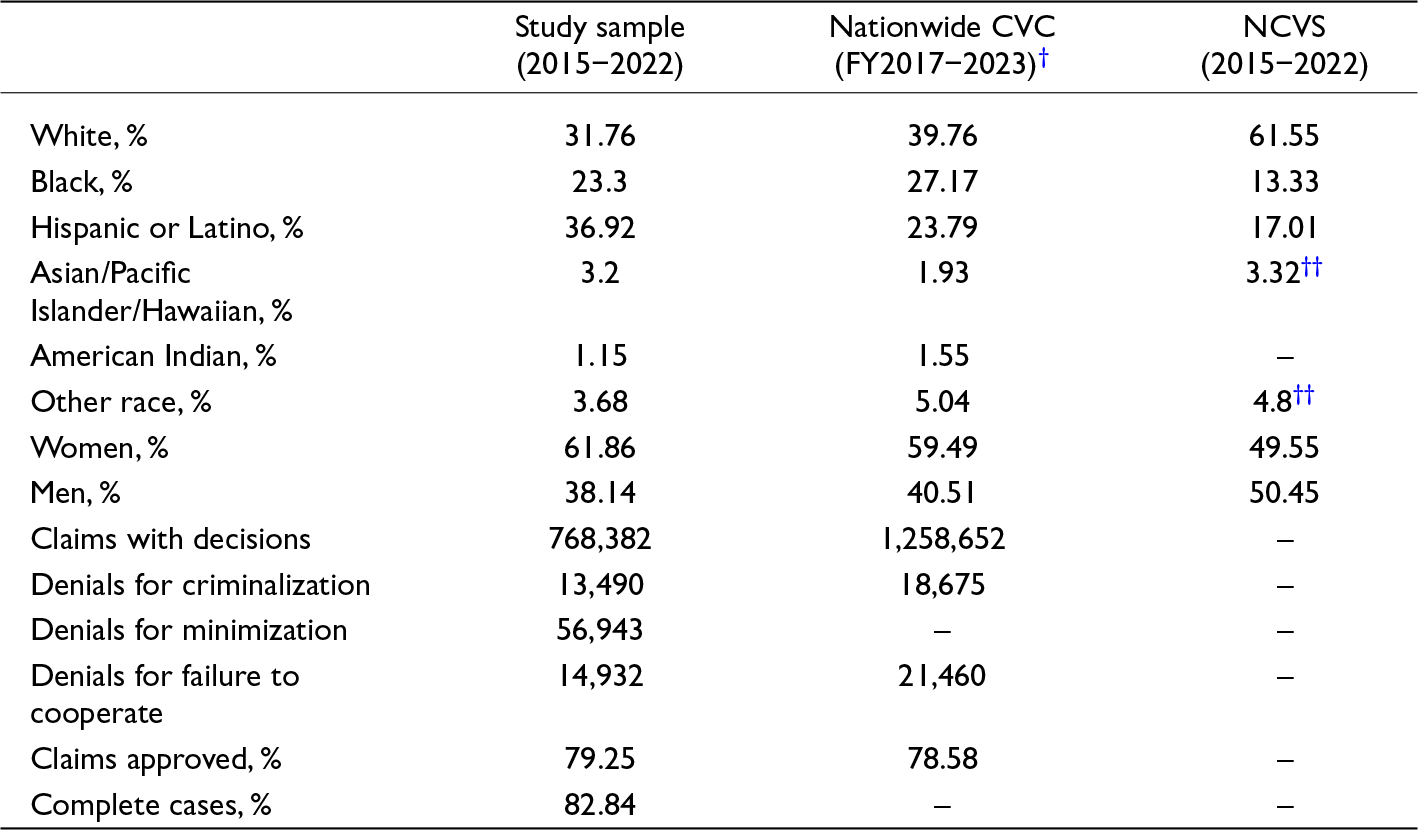
Notes: Race and gender percentages for the data used in this study and nationwide OVC data do not include cases with missing values. Minimization denials are not separated by the OVC.
† Excludes 34 state-years due to missing demographic or decision data.
†† The 2015–2019 NCVS combines Native Hawaiians, Pacific Islanders, American Indians, Alaska Natives, and persons of two or more races in the “other race” category. In the 2020–2022 surveys, Asian, Native Hawaiian, and Pacific Islander respondents are grouped together. The numbers are substantively similar across survey years.
In addition to the quantitative data described earlier, Florida provided qualitative descriptions of eligibility and, if applicable, denial reasons for all claims that were submitted in 2015 and 2016.Footnote 11 These 2–4 sentence paragraphs were inputted by administrators and describe each case in broad strokes.
Victim compensation law: overviewFootnote 12
Victim compensation is an ideal setting to analyze how the police affect the construction of innocent victimhood. Compensation programs reimburse out-of-pocket hospital bills, mental health counseling, funeral expenses, lost wages, and other related expenses for crime victims or families of victims. States manage programs, often through offices of the Attorney General, with up to 75% of program costs covered by a federal subsidy. Victim compensation law sits at the intersection of social welfare and criminal justice policy: it is a bureaucratically administered public benefit that relies on information from the police to assess claimant eligibility. Crucially, it takes the form of either reimbursements for claimants or direct payments to service agencies and medical providers; it is a “payment of last resort” intended to cover remaining costs after insurance or other welfare benefits are applied (Levine and Russell Reference Levine and Russell2023).
Victim compensation law can be contextualized as one space in a much larger arena where victim resources and recognition are negotiated (Corrigan and Shdaimah Reference Corrigan and Shdaimah2016). It is related to, but distinct from, other measures of crime victims’ worth: media coverage, laws named after victims, crowdfunding campaigns, civil judgments to victims of police brutality, court-ordered restitution, criminal investigations, convictions at trial, and homicide clearance rates (see, e.g., Burgess and Carlson, Reference Burgess and Carlson2024; Campbell and Fehler‐Cabral Reference Campbell and Fehler‐Cabral2018; Cook and Mancik Reference Cook and Mancik2024; Kulig and Cullen Reference Kulig and Cullen2017; Slakoff Reference Slakoff2020; White et al. Reference White, Stuart and Morrissey2021). Unlike nonmonetary forms of recognition, victim compensation more closely resembles Zelizer’s classic study of pricing “priceless” children in life insurance policies (Zelizer Reference Zelizer1985). The money received, while “economic,” represents victims’ cultural and sentimental value rather than their market value. Yet unlike restitution or civil settlements, receipt of compensation is a bureaucratic process. Lawyers are not required to apply, and there is no financial cost to submit a claim. Decisions thus invoke bureaucratically embedded beliefs of deservingness – who the state sees as deserving of financial assistance (Soss et al. Reference Soss, Fording and Sanford2011).
States cap benefits as low as $10,000, though a plurality set caps at $25,000; higher payments may be available for catastrophic injuries requiring long-term care (Evans Reference Evans2014). Property losses are not reimbursed unless the property is medically essential for daily life. Hawaii and Tennessee run the only programs in the country that include pain and suffering benefits (i.e., cash payments for emotional distress).Footnote 13 Around three-quarters of all claims are approved annually. Between 2015 and 2020, a total of $2.23 billion was awarded to 1.23 million victims or their families, averaging $1,801.84 per claim (Office for Victims of Crime 2017a; 2017b; 2017c; 2018; 2019; 2020). Eligibility does not depend on a criminal suspect being known, found, tried, or sentenced.
State officials and law enforcement decide claimant eligibility. There are three general clusters of denial reasons, summarized in Table 3. The first cluster, what I call structural reasons, includes restrictions written into states’ statutes with little to no bureaucratic discretion. This cluster also includes eligibility restrictions tied to previous contact with the criminal legal system; some states automatically deny compensation to victims with past felony convictions, victims who were incarcerated at the time of their victimization, victims who have pending warrants, or victims who are on parole or probation. The second cluster includes administrative paperwork burdens (Herd and Moynihan Reference Herd and Moynihan2019), such as requirements to complete claim forms, report the crime to police, furnish bills to establish economic loss, and respond to administrators’ queries.
Victim compensation denial reason clusters
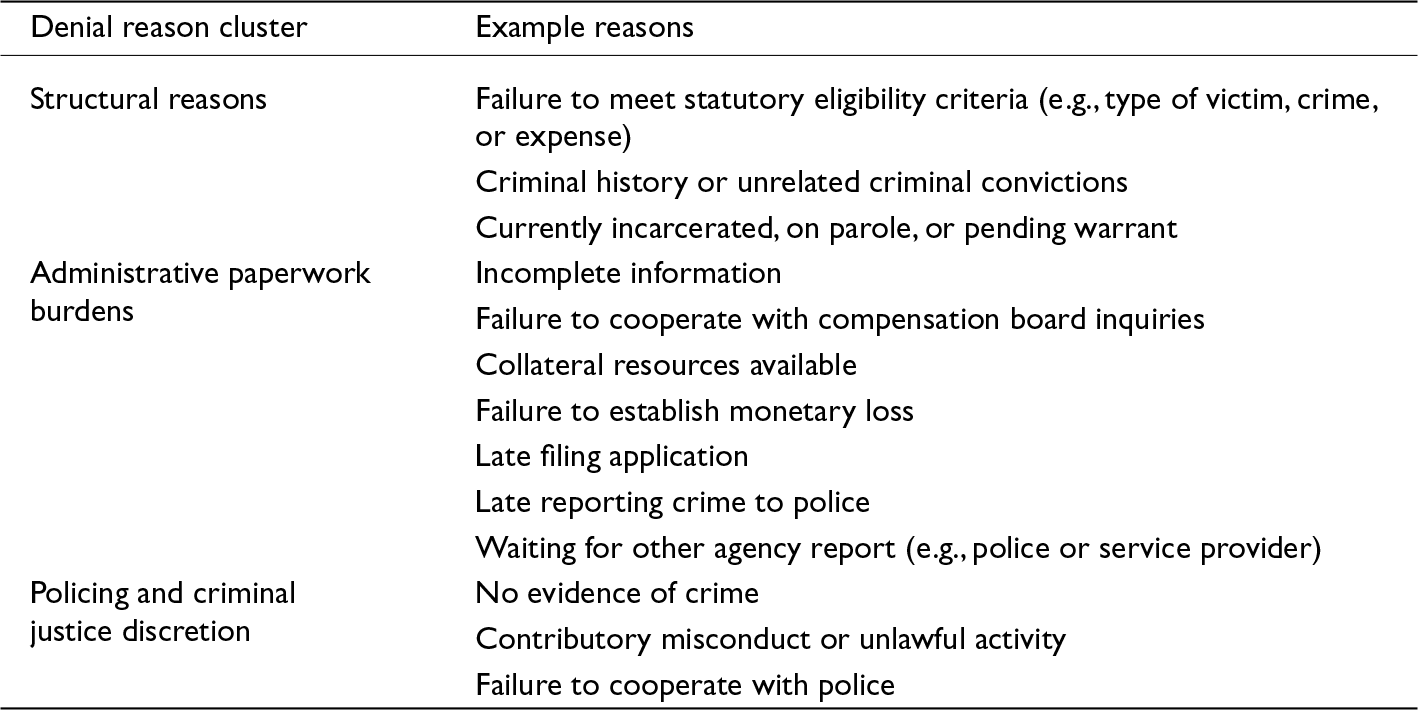
For the remainder of eligibility criteria, states rely on police discretion to translate the law’s requirements into practice. Police-related criteria include officers’ perceptions that (a) a crime occurred; (b) the victim was innocent (e.g., did not engage in any misconduct that contributed to their victimization); and (c) the victim cooperated with the investigation. Police officers and detectives are typically given standardized questionnaires to confirm these criteria of victim eligibility. Officers do not know what victims are requesting when they fill out these forms, only that a victim filed a claim. To provide one illustrative example, Figure 1 displays Section Five of Florida’s law enforcement reporting form, documenting how the police are directly tasked with assessing victim innocence and cooperation.
Section five of the Florida bureau of victim compensation law enforcement reporting form. Source: Florida Administrative Code & Florida Administrative Register (2021)

State laws use similar language and allow for notable officer discretion in terms of what counts as contributory misconduct (see Appendix A). Administrative rules, however, can vary in terms of whether specific behaviors are listed as possible examples of misconduct, whether states require a subjectively determined “causal connection” linking the behavior to the victimization, or if any exceptions are made explicit (Hussemann et al. Reference Hussemann, Dusenbery, Yahner, Dembo, Navarro, Ray and Fording2024; Newmark et al. Reference Newmark, Bonderman, Smith and Liner2003).
New York’s law is instructive. Contributory misconduct is defined as “culpable conduct logically and rationally related to the crime by which the victim was victimized and contributing to the injury suffered by the victim” (N.Y. Comp. Codes R. & Regs. tit. 9 § 525.3). The administrative rules provide more detail: Information regarding misconduct is “indicated by law enforcement in the investigation of the claim” and claims will be denied if law enforcement finds evidence the victim was engaging in “felonies or misdemeanors involving violence.” Violence “shall include, but not be limited to: gang activity, the dealing of illegal drugs, being the initial aggressor, and the use or brandishing of illegal firearms or other dangerous instruments at or near the time of the crime.”Footnote 14 Administrators have some discretion to override the law enforcement assessment but only if “the victim was a minor, a victim of human trafficking, a sex worker, or a victim of sexual assault” (N.Y. Comp. Codes R. & Regs. tit. 9 § 525.12). Thus, even when rules provide more guidance beyond broad state statutes, police officers are still responsible for applying their own discretion as to what counts as misconduct. Moreover, New York’s law does not require the state to adjudicate victims’ alleged misconduct beyond an officer’s initial assumptions. An officer can say a victim was selling illegal drugs when they were victimized and the victim can be denied compensation for their injuries even if they are never formally investigated, charged, or found guilty of selling illegal drugs.
States’ reliance on the police to determine victim innocence has been controversial. A report from the Alameda County Grand Jury found that the misconduct and cooperation criteria rely on “subjective judgments of law enforcement compared to other reasons for denial. As a result, there is a greater risk that overt and implicit bias will affect these determinations to the applicant’s detriment.” State officials do not independently investigate crimes and instead defer to the police. “If applicants disagree with information provided by police…the claims group personnel generally do not weigh in on the question,” the Grand Jury wrote (Alameda County Grand Jury 2021). In February 2024, the federal Office for Victims of Crime (OVC) issued a proposed rule associated with the federal subsidy for compensation programs, hoping to incentivize states to eliminate the misconduct and cooperation criteria. In the Notice of Proposed Rulemaking, the agency stated that “certain populations” face “unjustified disparate treatment in the criminal justice system” which can result in “unjustifiably disproportionate denial of claims for those populations” (Federal Register 2024). Policymakers and legal watchdogs are thus clear that policing processes affect compensation decisions and have expressed concerns that bias in policing may create unequal outcomes for victims – though these concerns have not been tested empirically.
Operationalizing the theorized mechanismsFootnote 15
Given the police mechanics discussed earlier, a key empirical challenge in this analysis is distinguishing police assessments from state bureaucrats’ decision-making. An additional issue is that administrative data on police determinations are racialized public records; that is, the records themselves – what’s included and what’s not – are filtered through racially discriminatory processes (Cheng Reference Cheng2022a). Defining outcome variables in this context thus requires careful consideration and theorizing.
To capture the criminalization of victims, I use denials for “contributory misconduct” and “unlawful activity,” where applicable. Historically, these eligibility criteria were intended to deny claims from people who were injured during the commission of a crime, such as a person who is shot by a clerk while robbing a store. However, the statutory language is broad and covers any criminalized conduct that officers conclude may have led to the victimization (see Appendix A). Crucially, these denials are made solely at officers’ discretion, do not entail independent investigations by compensation programs, and do not involve formal legal adjudication. Denials for “contributory misconduct” therefore reflect an acknowledgement that a crime occurred, and a claimant was victimized, but also an officer’s belief that the victim was engaged in criminalized behavior at the time of their victimization.
Second, I operationalize officers minimizing victims with denials for “no evidence of a crime” or “no proof of a crime.” It could be a concern that “no evidence of a crime” decisions conflate minimization with fraudulent claims – that is, cases where no crimes occurred and claimants fraudulently sought benefits – or people who misunderstood the law and are victims of accidents, not crimes. I address these issues in several ways. First, I limit my analysis to relevant claims with decisions and remove accidents. Moreover, each claim represents an individual who is applying for reimbursement; claimants are applying to pay service providers, hospitals, therapists, and funeral homes, not themselves. Because of these policy features, fraud is exceedingly rare.Footnote 16 As noted earlier, eligibility does not require the underlying crime to be prosecuted or even investigated; all that is required is for the police to suspect a crime causing injury – felony or misdemeanor – may have been committed. Thus, when a claim is denied for “no proof of a crime,” there is good reason to believe it reflects an officer’s minimizing and doubting the severity of the victim’s injuries rather than an entirely objective assessment that no prosecutable incident occurred.
Finally, I use denials for “failure to cooperate with law enforcement” as a window into the process of legal estrangement. As described by legal estrangement theory, police determinations of victim cooperativeness reflect the social bond between the police and victims. When communities of color are estranged from the law, victims of color will distrust the police, and conversely, officers will be skeptical that victims are being truthful and honest about the circumstances of their victimization. While I cannot distinguish how much police perceptions of victims’ cooperation are rooted in victims’ objective behavior or officer assumptions that victims are lying even when they are trying to cooperate in good faith, some evidence suggests Black people will set aside their cynicism and cooperate with the police under certain circumstances – one relevant situation being when they are seeking victim’s services (Bell Reference Bell2016: 335). This would suggest “failure to cooperate” denials are at least partially driven by officer bias. At the same time, Black Americans’ distrust of the police is well documented (for a recent example, see Alston Reference Alston2024). Yet either interpretation would be consistent with legal estrangement, which provides a framework to interpret perceptions of cooperation as a symptom of structural inequality in the criminal legal system and the fractured relationships between people of color and the police.
Analytical approach
As a result of idiosyncrasies inherent in state-level administrative data, I approach the analysis from multiple angles, both quantitative and qualitative. First, I pooled the individual-level data and fit three logistic regression models predicting criminalization, minimization, and estrangement, respectively.Footnote 17 Each model includes a race–gender interaction term to see which applicants are most likely to be denied compensation. I include a dummy control variable for the victim’s state to account for state-level administrative variation (such as state-level differences in what is counted as contributory misconduct), as well as a control for the year claims were filed to account for secular trends. I additionally standardize and control for crime type across states by creating 14 crime categories using the Uniform Crime Classification Standard (Choi et al. Reference Choi, Kilmer, Mueller-Smith and Taheri2023).Footnote 18
I report predicted probabilities in these quantitative analyses because logistic regression coefficients are difficult to interpret (Mize Reference Mize2019). The results can be understood as the probability of being denied or approved compensation, conditional on applying and net of controls. I limit my analysis to compensable cases with decisions, excluding accidents, crimes occurring out-of-state, withdrawn applications, and submitted claims without decisions (totaling 3.6% of all cases in the data). I use listwise deletion (complete case analysis) for missing data because of the large sample sizes and high percentage of cases with complete information (Allison Reference Allison Paul2014).
Second, I analyze qualitative denial descriptions from 2015 and 2016 in Florida to reveal the social processes underlying the logistic regression results. I limited the analysis to cases that included victim race, gender, and crime type. The final sample included 14,755 total summaries, with 1,753 associated with denials for the three mechanisms under study. I developed an abductive codebook (Vila-Henninger et al. Reference Vila-Henninger, Dupuy, Van Ingelgom, Caprioli, Teuber, Pennetreau, Bussi and Gall2024), beginning with theoretically derived deductive codes and subsequently generating inductive codes as I read the brief descriptions. I coded the summaries by hand for themes to help explain the quantitative findings.
Third, I compare police-related denials alongside paperwork denials (missing filing deadlines, failing to establish economic loss, etc.), which rely more on case-by-case bureaucratic discretion, and structural denials (e.g., statutory eligibility). I additionally fit a multinomial logistic regression model comparing police and non-police denial categories, which sheds light on the unique role of the police relative to routine bureaucratic discrimination (e.g., Soss et al. Reference Soss, Fording and Sanford2011).
Finally, Illinois presents a unique opportunity to see what happens when a state substantially reduces how much the police can mediate eligibility under the law. In 2019, progressive Attorney General Kwame Raoul vowed to reform the state’s compensation program when he began his first term. According to a statement by his office, he “relaxed some of the state’s strict rules for who qualifies” after observing racial inequality among beneficiaries (Chavis Reference Chavis2021). The changes focused on police-generated denials, including denials for “contributory misconduct,” which fell 80.7% by the end of this first term in 2022, and denials for “failure to cooperate,” which were effectively eliminated. Illinois therefore offers an opportunity to further isolate the role of police determinations by modeling how programmatically reducing police-related denials affects inequality in terms of who the state sees (and compensates) as an innocent crime victim.
I transformed the data into a state-year panel and conduct difference-in-differences analyses, using the first day Attorney General Raoul’s took office – January 1, 2019 – as the treatment. In a strict sense, then, these results illustrate the effect of Attorney General Raoul’s administration rather than a narrower program or policy evaluation. Specifically, the analysis compares the differences in claim approval rates in Illinois vs. all other states before and after Attorney General Raoul took office.Footnote 19 Whereas the other quantitative results point to racial inequality in terms of police-related denials, this analysis shows how reducing racialized eligibility criteria affects the probability that victims are compensated. I model the effect of Raoul entering office on the overall approval rate, the approval rate for Black victims, and the approval rate for Black male victims. Each of these models includes state- and year-fixed effects to account for time-invariant unobservable variables across states and state-invariant unobservable variables across time, respectively.
Limitations and robustness checks
There are two main limitations of this study. The first is omitted variables: The data do not include information on victims’ income, employment, or sexual orientation; responding officer demographics; or information about the person suspected of committing the crime. Important work documents how officer race or victim–suspect racial differences affect the likelihood that officers arrest a suspect (Brendan et al. Reference Brendan, Wenger and Craig2023; O’Neal Reference O’Neal2019; Spohn et al. Reference Spohn, White and Tellis2014), and these dynamics may play a role in other laws that benefit victims, such as victim compensation. Additionally, the data do not allow me to test whether requests for higher amounts or certain categories of reimbursement (such as hospital bills, counseling, or relocation costs) are more likely to be denied than others.
A second, and related, limitation is interpreting the outcome variables and results. It may be the case that subjective police determinations are in fact objective. This would mean a literal interpretation of the findings: Black women are more likely to submit embellished or fraudulent claims for victim compensation because they are not actually victims, and Black male victims are more likely to lie to the police and engage in criminalized misconduct during their victimization (such as starting fights, selling and purchasing illegal drugs, and so on) than other groups.
In this article, I follow recent work pushing scholars to look beyond the face value of administrative records (Cheng Reference Cheng2022a; Knox et al. Reference Knox, Lowe and Mummolo2020). If data are generated from racially discriminatory processes (such as police investigations), we must incorporate this potential bias into our theoretical interpretation of the findings. In addition, my mixed methods research design helps mitigate bias from omitted variables as much as possible, including using open-ended qualitative data to make sense of quantitative results. While it is reassuring that the evidence from cross-sectional, qualitative, and causal analyses all point in the same direction, future research could help bolster or refine the conclusions.
Results
Descriptive quantitative results
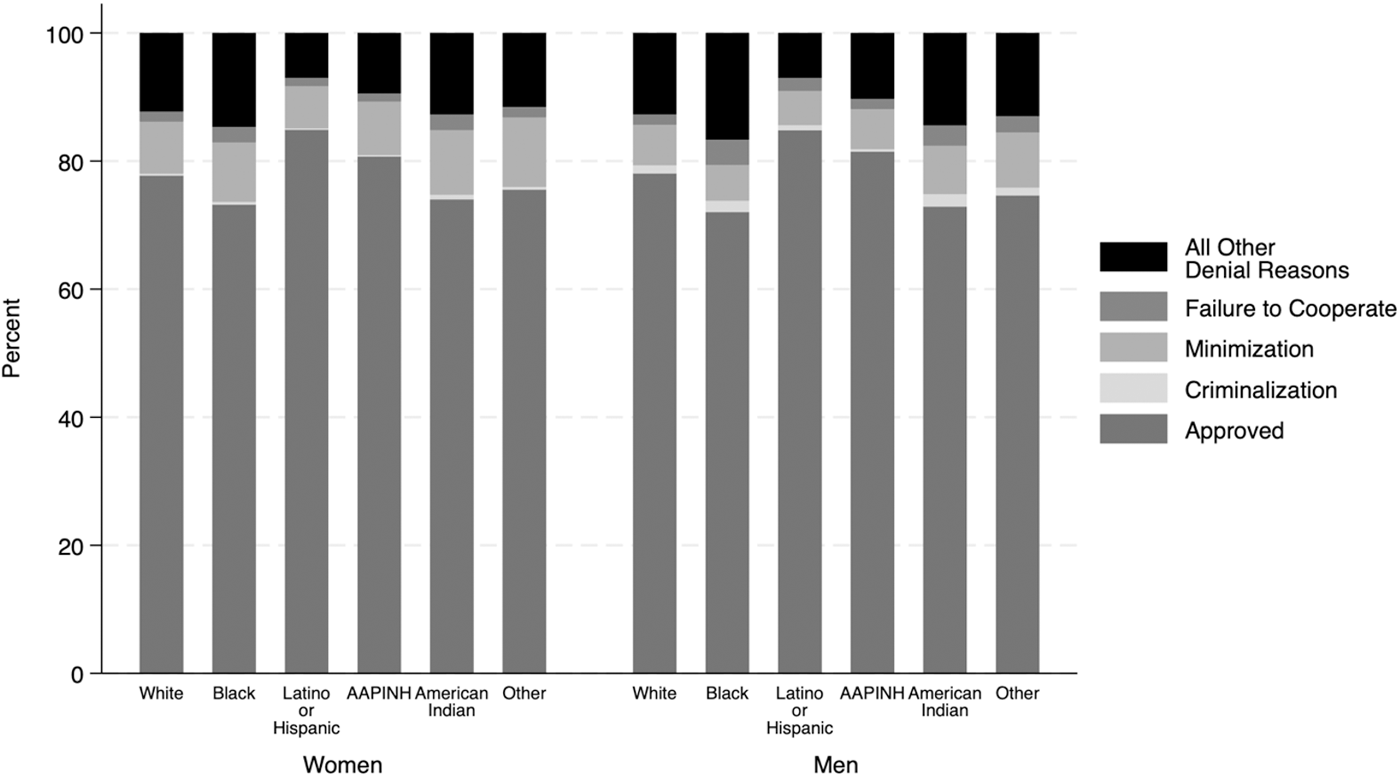
Figure 2 presents a descriptive analysis of possible claim outcomes. The police are responsible for a significant proportion of victim compensation denials: more than 1 out of every 10 submitted claims (11.12%) were denied due to the police criminalizing, minimizing, or being estranged from victims. These police-related denials account for more than half (52.5%) of the total denials. They are also unevenly distributed by race and gender, as shown in Figure 3. Without any statistical controls, Black and Indigenous victims have lower approval rates and higher rates of denials for each denial reason than all other groups.
Sankey diagram of claims and decisions.

Proportion of each claim outcome by race and gender.
Criminalization
I first present results related to criminalization. Figure 4 displays the predicted probability a victim will be denied compensation because the police surmise they engaged in criminalized misconduct, controlling for crime type, state, and application year. The police are more likely to criminalize male victims than female victims, controlling for victim racial group. Black male victims have the highest probability of being denied compensation due to criminalization. Net of controls, the police are 28.66% more likely to criminalize Black men than white men. Among women, the police are most likely to criminalize Black women than women from other racial and ethnic groups. In Table 4, I test whether the police are statistically more likely to criminalize Black male victims than victims from other social groups. The results indicate the police are significantly more likely to criminalize Black male victims than nearly every other group with only one exception: men who identify with some “other” race.
Predicted probability of criminalization denials.

Differences in predicted probability of police criminalization with Black men

* Notes: Standard errors of the predictions in parentheses. P < 0.05, **P < 0.01, ***P < 0.001, two-tailed tests; N = 635,626.
Illuminating these quantitative relationships, the qualitative data from Florida reveal two themes: The police tended to claim victims of color, particularly Black men, were the “primary aggressors” or “mutual combatants” in physical assaults and may have been involved in illegal drug transactions that the police argued contributed to their victimization. By contrast, officers were less likely to assume white crime victims instigated physical altercations or were involved in selling or consuming illegal drugs, despite some evidence they may have.
Consider three applications from white victims who were approved for reduced awards because officers did not conclude they were the main instigators in fights resulting in injuries. In the first case, a white man from Port Lucie requested compensation for medical bills and missed work due to an assault that caused “injuries to his nose and left thigh.” According to the police, he “invited the offender over to his home with the intent to fight, and then confronted the offender in his driveway” (Case #2016-006313). In the second, a white female victim of battery in Seminole County sought compensation for medical bills after she “followed the offender in her car and started an argument which escalated the incident” (Case #2016-004313). Finally, another white woman from Rockledge sought compensation for medical expenses when she broke her hand in a fight after “going back inside the residence and lunging at the offender” (Case #2016-001820). Because none of these victims were described by police as “the primary aggressor” who threw the first punch, all were approved for reduced awards.
In situations where guilt may have been difficult to assign, the police sometimes gave white victims the benefit of the doubt. For example, a white male battery victim in Fort Meyers was originally denied compensation for medical expenses because the police said he “advanced toward the offender and followed him around the car.” Officers at the scene additionally recorded “contradictory statements from victim, suspect, and witness.” Yet the denial was subsequently reversed when the man claimed he didn’t start the fight. “Recent follow-up through [law enforcement agency] resulted that victim was not the aggressor contributing to his injuries,” the case notes read (Case #2016-000981).
Police were also less likely to assume white victims had engaged in illegal drug transactions. For instance, when a white man from Fort Lauderdale requested disability assistance after being assaulted and robbed, the police initially recorded it as a drug deal gone bad. However, in follow-up reporting from the police, they decided to believe his explanation and concluded he wasn’t buying drugs after all. The case notes read:
Reconsideration: The claim was originally denied on [date] based on unlawful activity and contribution. On [date], [Victim Compensation] received the victim’s [Law Enforcement Report] stating that the victim and his friend were walking through the park after shopping at a liquor store, and that they were not in the park participating in an unlawful activity at the time of the crime. As a result of robbery, the victim sustained unspecified injuries. The offender is unknown and no arrest has been made…(Case #2016-006437).
Here, the police second-guessed their initial assessment of the situation and did not assume the white victim had engaged in any criminalized behavior.
Victims of color, especially Black victims, were not afforded the same presumption of innocence. Several examples are consistent with Du Bois’s discussion of victim misrecognition, that the police systematically perceive victims of color as criminal suspects. For instance, a Black man was battered in Tallahassee, but according to the police, the victim was “the primary aggressor of the altercation” (Case #2015-004846). In a similar case, a Black woman in Fort Lauderdale was battered, but her compensation claim was denied because “the victim is also listed as the suspect” in the law enforcement reporting form (Case #2016-005987). Both victims were presumed guilty of criminalized behavior by the police and denied benefits under the law, even though neither had been found guilty of any crime in the context of their victimization.
Other victims of color were criminalized despite the police admitting they had not broken any laws. Consider a Black woman in Pensacola who was battered in a fight. Her claim for unspecified expenses was denied because, according to the police, “there are conflicting statements provided by all participants and there are no independent witnesses to refute the victim’s contribution to the crime” (Case #2017-000220). But if there were no independent witnesses to refute her contribution, then there were no independent witnesses to confirm her contribution, either. In a related example, the family of a black homicide victim in Miami was denied because “[t]he officer cannot confirm if the victim was involved in unlawful activity” (Case #2016-006665). Unlike the previously described cases of white victims, these victims were presumed guilty rather than innocent even when the officers admitted they did not know if either had engaged in any unlawful activity. Police suspicion of possible criminality – or even just the absence of exculpatory information – was enough to deny victims of color’s innocence, and by extension, financial compensation for victims and their families.
With respect to illegal drugs, any suspicion that victims were seeking drugs was enough to prompt police officers to blame victims for their victimization, even when they denied seeking drugs or were harmed before receiving any drugs. For instance, the police surmised a Black shooting victim in Miami Gardens “was driving around in the area attempting to purchase some illegal narcotics when he was shot by unknown offenders.” His compensation claim was denied for “unlawful activity and contribution” (Case #2016-001594). Another Black man was murdered in Jacksonville and his family filed a claim to pay for his funeral. The state originally approved the claim before receiving the police reporting form. The approval was later rescinded after the police claimed, “the victim was purchasing drugs at the time of the crime” (Case #2016-007672). Neither victim completed a purchase nor consumed any drugs, according to the police. Yet police perception that victims had intent to buy or consume illegal drugs – perceptions that have been empirically shown to be biased (Braga et al., Reference Braga, Brunson and Drakulich2019; Beckett et al. Reference Beckett, Nyrop and Pfingst2006) – was sufficient to paint victims as guilty, or at least not entirely innocent. It is important to reiterate that these judgments did not involve any formal adjudication process. Claims were denied based on what the officers perceived and did not require the victims’ alleged criminal behavior to be independently proven.
Minimization
The second theorized mechanism affecting victim recognition under the law was minimization. Figure 5 shows minimization is gendered and racialized. Overall, female victims are more likely than male victims to be minimized, net of controls for crime type, state, and application year. But minimization is most acutely experienced by Black women, who have an 8.73% probability of being minimized by the police and thus denied recognition and compensation as victims. In Table 5, I report the differences in probabilities of being minimized between Black female victims and other social groups. The differences are statistically significant for all social groups except between Black women and people who identify as some “other” race.
Predicted probability of minimization denials.

Differences in predicted probability of police minimization with Black women

* Notes: Standard errors of the predictions in parentheses. P < 0.05, **P < 0.01, ***P < 0.001, two-tailed tests; N = 636,264.
What explains these racialized and gendered relationships? The qualitative data from Florida points to the theme of gender-based violence: Officers tended to doubt claims from women who said they were sexually assaulted or victims of domestic violence. Moreover, the evidence suggests differential treatment of these victims by race. In cases of gender-based violence that could theoretically be perceived as ambiguous – such as victims suffering from “emotional trauma” rather than physical injuries or presenting insufficient evidence to support a prosecution – Black women tended to be doubted, while white women who submitted similar claims were more likely to be seen as crime victims by police.
For example, a white woman from Belleview was compensated for mental health expenses after being the victim of lewd and lascivious conduct even though the defendant was “not prosecuted as the case was dropped…due to insufficient evidence to prove guilt” (Case #2016-001620). Another white sexual assault survivor from Broward County was believed to be a victim and awarded compensation for mental health expenses despite the defendant being “acquitted as the result of a jury trial” (Case #2016-000919). Finally, consider a white woman in Lee County who was believed to be a victim of domestic violence even though she “got into an argument” and displayed “[no] visible injuries at the time of report.” The case notes read:
As a result of a battery, the victim was struck on the side of the face by the offender’s hand. No visible injuries at the time of report was visible. The offender and victim got into an argument which escalated when victim was struck. The victim is requesting assistance with unspecified expenses. Offender has been arrested and [domestic violence] trial is set for [date]…All eligibility criteria have been met (Case #2016-000030).
Police believed the domestic violence victim and the case went to trial, even though the victim did not display visible injuries – a factor that could have prompted the police to doubt her victimization, resulting in a denied compensation claim.
For women of color, similar circumstances prompted officers to check the box indicating no crime had occurred, minimizing their victimization. Consider the following case notes about a Black sexual assault survivor in Miami:
According to the [Law Enforcement Report] no crime had occurred. The victim believed she had been sexually assaulted, but further investigation revealed no crime had been committed. It is recommended that this claim be denied as no crime had occurred (Case #2016-003344).
While the woman is referred to as “the victim,” officers discredited her claim by stating she merely “believed” she had been sexually assaulted. Because the police did not believe she was a crime victim, the state refused to reimburse her medical bills.
In other instances, the police sometimes believed criminal suspects’ denials over gender-based violence victims’ accusations, especially in the absence of corroborating physical evidence or witnesses. For example, a Black woman who said she was sexually assaulted in Miami Gardens was denied compensation “due to conflicting statement between the victim and suspect and a lack of memory on the part of the victim” (Case #2016-004654). Several additional sexual assault cases were described as “information reports” or “unfounded,” tactics employed by police departments to reclassify rapes and manipulate crime data based on “the common but erroneous belief that rape is prone to false allegations and unfounded complaints” (Eckhouse Reference Eckhouse2022: 392; see also Spohn et al. Reference Spohn, White and Tellis2014).
Sometimes the police did not necessarily doubt an altercation had unfolded, but a lack of sufficiently traumatic injuries or witnesses prompted officers to doubt a crime had occurred when the victim was not white – thus minimizing women of color’s claims and denying their status as legitimate victims. For example, a Black domestic violence victim in Jacksonville was “punched and flipped over a small fence.” But because “the police report states there were no physical injuries,” her claim was denied (Case #2016-008588). In another similar case, a Black woman was battered in Sanford, but because the officers at the scene did not make note of any physical injuries, her claim was denied. The case notes read:
As a result of a Battery, the victim advised law enforcement that she was punched in her face, slapped her in the face and bit her in the arm. However, there is no indication that law enforcement observed any physical injuries. Therefore, it is recommended that this claim be denied based on no proof of physical injuries (Case #2016-001256).
The woman described specific injuries, but officers either overlooked them or did not find them sufficiently harmful to warrant mention, thereby minimizing her victimization. Here, consistent with prior research (Corrigan and Shdaimah Reference Corrigan and Shdaimah2016; Richie Reference Richie2012; Ritchie Reference Ritchie2017; Sweet Reference Sweet2021), police responded differently to women of color’s expressed trauma.
Legal estrangement
I now turn to legal estrangement – that is, a fractured social relationship between the police and communities of color, leading to group-level distrust. Using police perceptions of victim cooperation as a downstream signal of estrangement, Figure 6 shows how Black male victims stand out. Black men who apply for compensation have a 4.34% probability of being denied benefits because police perceive them as uncooperative – 2.5 times higher than the probability for white men. Among women, Black and Indigenous victims are more likely to be perceived as uncooperative by the police than white, Asian, Latina, and other women of color victims. Table 6 shows the probability that the police perceive Black male crime victims as uncooperative is higher than the probability for any other group.
Predicted probability of “failure to cooperate” denials.

Differences in predicted probability of “failure to cooperate” denials with Black men

* Notes: Standard errors of the predictions in parentheses. P < 0.05, **P < 0.01, ***P < 0.001, two-tailed tests; N = 635,626.
In the qualitative data from Florida, the overwhelming theme among denials reflecting legal estrangement (as seen through police perceptions of uncooperativeness) was that officers simply concluded Black men were lying about the circumstances of their victimization. In separate cases, police officers claimed Black men “provided inconsistant [sic] and misleading information” (Case #2016-001852); “[provided] partially and inaccurate information” (Case #2016-003063); and “did not provide enough information” (Case #2015-002209). Other Black men were perceived by officers as “not truthful or transparent (Case #2016-002859)”; “not forthcoming as to what happened (Case #2015-005124)”; and “witholding [sic] information (Case #2016-006091). All were designated “uncooperative” by police and denied compensation as a result. There was no question the police believed these men were physically harmed by someone else. The only issue was the extent to which the police trusted the victims to fully explain the circumstances of their victimization.
If victims disagreed with officers’ determinations, officers’ perceptions were the final word. Consider a Black assault and battery victim in Orange County. The police labeled him “uncooperative” because he signed a form stating that he had no intent to prosecute the person who assaulted him. His reason: He did not know who did it. But the officers did not believe him; the case notes indicate the victim’s explanation was “not sufficient” (Case #2016-007066). In these instances of conflict between what a victim said he knew and what a reporting officer thought he knew, it was the reporting officer who was believed, not the victim. When officers did not trust victims to be truthful, there was little, if anything, victims could do to prove their innocence.
It is difficult to provide empirical evidence of the lack of distrust. As Figure 1 (Florida’s law enforcement reporting form) shows, officers were prompted to explain why victims were “uncooperative” but did not elaborate when checking the box for “cooperative” victims. What is clear from the qualitative data, however, is that non-Black victims appear more likely to have been taken at their word – even when victims said they did not know who caused them harm. Consider a white woman who was assaulted in St. Petersburg and awarded compensation for medical and mental health expenses. The police said she was cooperative even though “the case was [dropped] on [date], due to the victim not being able to remember much of the incident” (Case #2015-001611). In similar circumstances described above, when Black men said they did not know who harmed them, they were not extended the same assumption of truthfulness.
Comparing police-related and other denial reasons
How do patterns of criminalization, minimization, and estrangement compare to other reasons for denial, such as missing filing deadlines and failing to establish economic loss? In Figure 7, I show how the denial clusters described previously in Table 1 are racialized. The figure shows disproportionate denials by each racial group – that is, whether groups are overrepresented or underrepresented in each denial cluster relative to their overall proportion among compensation claims. Each black horizonal line represents the percentage of total claimants from that group, and bars represent the group’s proportion in each denial cluster. Bars extending above the line indicate overrepresentation and bars falling below the line indicate underrepresentation. The figure shows that Black victims are overrepresented in each denial cluster, relative to their overall representation; Black victims represent approximately 23.3% of all claims, but 28.7%, 34.4%, and 34.7% of policing, paperwork, and structural denials, respectively. However, white victims are also overrepresented in the paperwork and structural denial clusters. Thus, police-related denials stand out as a cluster in which Black victims – and to a lesser extent Indigenous victims and victims who listed their race as “other” – are uniquely overrepresented relative to other groups.
Disproportionate denials relative to overall proportion among claimants, by race/ethnicity and denial cluster.

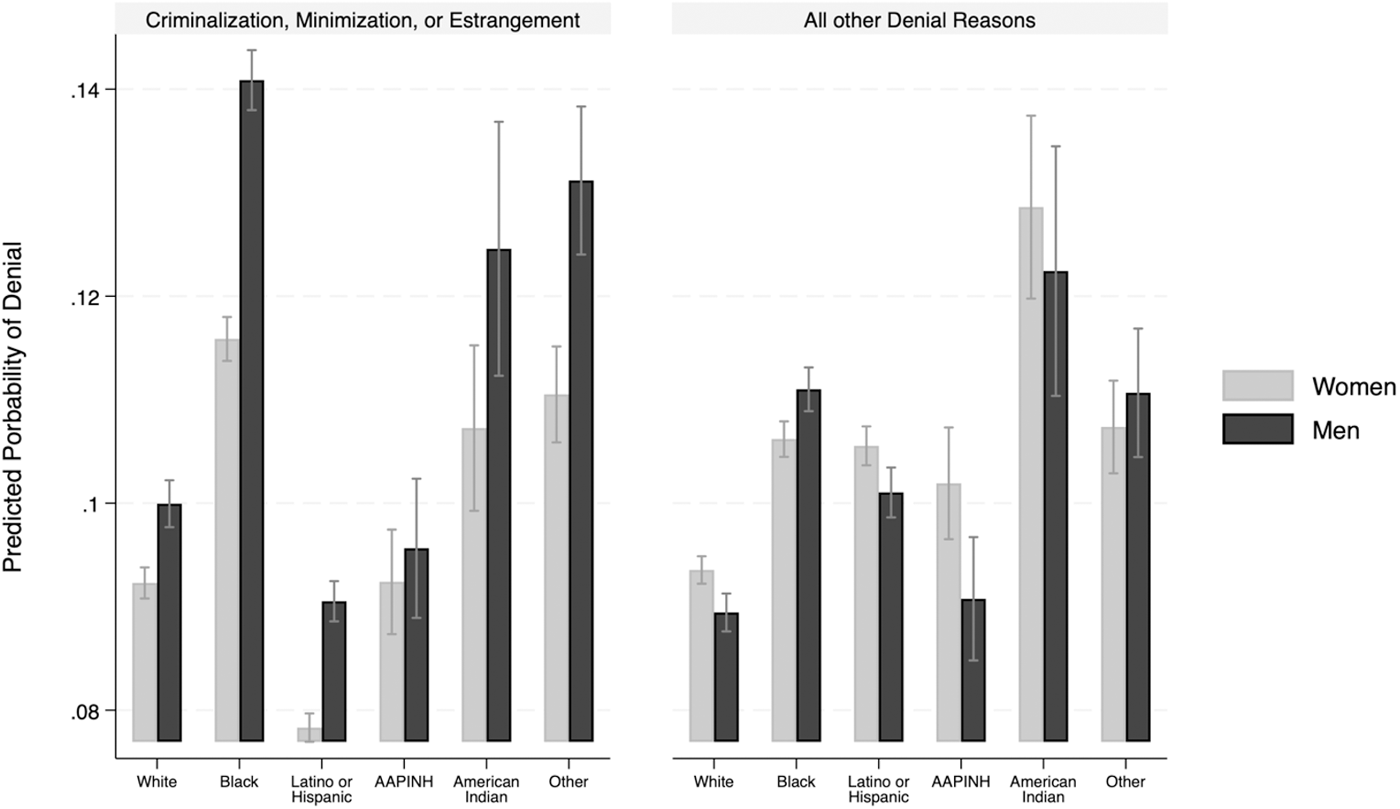
Figure 8 explores these patterns with regression methods, showing results from a multinomial regression model comparing racial and gender inequality in police-related denials (left panel) with all other denial reasons (right panel). Controlling for crime type, state, and application year, Black and Indigenous men, as well as men who listed their race as “other,” are more likely to be denied for police-related reasons than other denial reasons. The same is true for Black women and, to a lesser extent, white men. Racial disparities between Black and white victims are also more pronounced for police-related denials than all other denial reasons. The results suggest police-related challenges to victimhood are disproportionately experienced by people of color, especially Black, Indigenous, and other men of color, as well as Black women.
Predicted probability of policing related denials vs. All other denial reasons.
Effect of Raoul term in Illinois
What happened when Illinois limited how much the police could mediate the meaning of “innocence” under victim compensation law? Figure 9 shows there was a significant drop in denials for misconduct (criminalization) and cooperation with the police (estrangement) beginning in 2019 when Attorney General Kwame Raoul entered his first term and pledged to relax the state’s strict guidelines for compensation. Whereas 4.37% of all claims were denied for criminalization in 2018, only 1.07% were in 2022 – a 9-year low. Denials for non-cooperation – a signal of estrangement – similarly declined from 5.5% before Raoul took office to a single denial in all of 2022.
Proportion of all claims denied for criminalization, minimization, or estrangement, Illinois 2015–2022.

In Table 7, I report coefficients from difference-in-differences analyses modeling the effect of these changes on claim approval rates, using the beginning of Raoul’s term as the treatment. Model 1 tests the effect on the overall approval rate; Model 2 tests the effect on the approval rate for Black victims; and Model 3 tests the effect on the approval rate for Black male victims. In all models, Raoul’s term as Attorney General had a positive and statistically significant effect on claim approval rates. Figure 10 shows the linear trend of the total approval rate, comparing Illinois to the control states. We see parallel trends before Raoul took office, where approval rates in both Illinois and the control states were steadily decreasing. However, beginning in 2019, approval rates in Illinois sharply increased while rates in the control states continued to fall.
Linear trends model of approval rates.

Difference-in-differences analysis
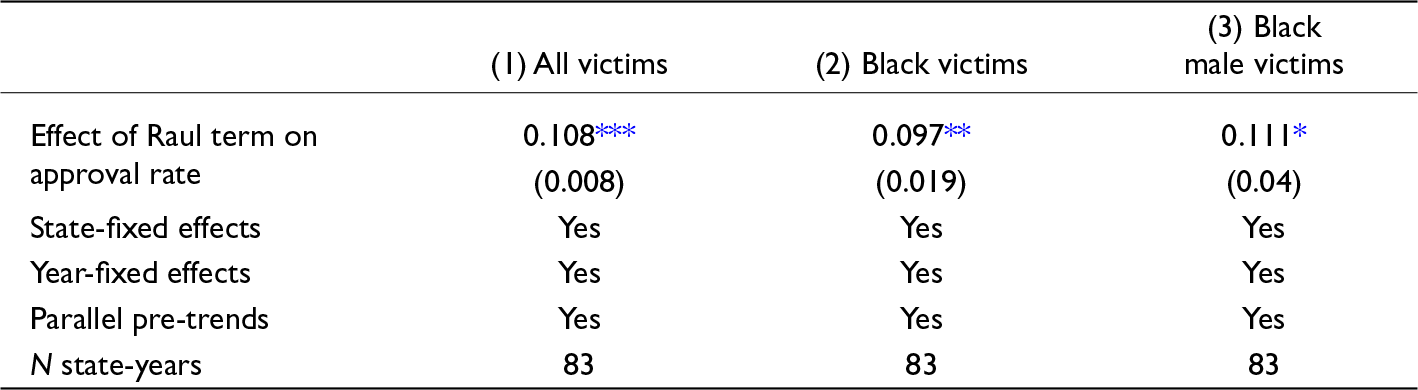
* Notes: Standard errors of the predictions in parentheses. P < 0.05, **P < 0.01, ***P < 0.001, two-tailed tests.
In Figure 11, I plot the annual effect for Black victims’ approval rates. Relative to Black victims in other states, Black victims in Illinois experienced a steady increase in the rate of eligibility approval as the state cut back on denials for criminalization and estrangement.
Effect of Raoul term on Black victims’ approval rates.

Overall, these results comparing Illinois to other states provide strong evidence that, as criminalization and non-cooperation denials were reduced, victims who might otherwise have been denied were instead ruled eligible for compensation. Additionally, Black victims’ probability of approval rose significantly relative to the approval rates of Black victims in other states. Beyond confirming the previous results, this analysis suggests the racialization of criminalization and estrangement-based denials are not simply artifacts of bureaucratic discrimination. That is, when directed to reduce denials for “contributory misconduct” and “failure to cooperate with police,” state officials in Illinois do not appear to have increased other denial reasons to keep overall approvals low or to discriminate against Black victims.
Discussion
The police are an important group of front-line workers who translate law into action (Grattet and Jenness Reference Grattet and Jenness2005; King and Kutateladze Reference King and Kutateladze2023). Whereas most scholarship analyzes the causes and consequences of being labeled a “criminal” by the police, we know less about who the police see as an innocent crime victim and what this means for victims’ access to resources provided by law. I theorize three paths by which the police can affect recognition of victims, building on existing research in sociolegal studies: criminalization, minimization, and estrangement from victims.
Drawing on a novel dataset of victim compensation claims from 18 U.S. states, I find police are significantly more likely to minimize female victims of color, especially Black women, and significantly more likely to criminalize and be estranged from male victims of color, especially Black men. Black victims are more likely to be denied compensation for police-related reasons than other possible denial reasons, and evidence from Illinois’s policy changes illustrates how Black victims are significantly more likely to be ruled eligible for compensation when police no longer determine victim innocence. Qualitative data from Florida points to underlying social processes whereby police surmise Black men bring violence on to themselves and lie about the circumstances of their victimization, while Black women and other women of color overstate the extent of their injuries. Overall, when determining who is an innocent crime victim, police systematically perceive Black men as not truly innocent and Black women as not truly victims.
Theoretical contributions
This article adds to recent scholarship documenting the expansive role of the police as legal intermediaries in society. A persistent theme from the literature is that police define the contours of democratic citizenship and mediate the rights of denizens (Soss and Weaver Reference Soss and Weaver2017). Police officers do not only investigate crimes; they play a central role in the administration of child welfare, healthcare, education, social services, urban development, and participatory democracy (Beck and Goldstein Reference Beck and Goldstein2018; Cheng Reference Cheng2022b; Drake Reference Drake2022; Edwards Reference Edwards2019; Fong Reference Fong2023; Gordon Reference Gordon2022; Headworth Reference Headworth2021; Lara-Millán Reference Lara-Millán2021; Rocha Beardall Reference Rocha Beardall2022; Stuart Reference Stuart2016a). Here, I extend our purview to the case of victim compensation, an area of civil law where the police are nevertheless tasked with translating the law’s eligibility restrictions into bureaucratic practice. Notably, the consequences of racialized and gendered policing practices are not only injustice, as other studies illustrate, but material inequality as well: Mothers are denied compensation for their children’s funerals, shooting victims are denied compensation for hospital bills, and sexual assault survivors are denied compensation for mental health counseling. Under the law, victimization pays – but only for those who can convince the police of their innocence and worthiness.
I also extend our understanding of legal estrangement by demonstrating a critically important downstream consequence: the loss of financial benefits ostensibly afforded to crime victims. Legal estrangement theory describes fractured social relationships between marginalized groups and the law; Black people are estranged from the law, and conversely, the people charged with implementing the law are estranged from Black people (Bell Reference Bell2017). The strength of social bonds will affect behaviors like cooperation, trust, and obedience to the law – and even more so, perceptions of cooperation and compliance by agents of the law. To date, scholars applying the concept mostly emphasize the theory’s attitudinal component to explain the behaviors of estranged communities, but future work can take a more expansive view of estrangement’s effects, as I do here. Additionally, the findings suggest another possible source of estrangement for future investigation: Black people’s structural exclusion from victim benefits may contribute to anomie about law, fueling a vicious cycle of distrust and disengagement.
Relatedly, these findings have implications for understanding what Clair (Reference Clair2021) terms criminalized subjectivity, a type of legal consciousness specific to criminal law. How victims of color feel treated by law enforcement affects how they see themselves in the subjective racial order. Politically, contact with the criminal legal system has the potential to be both mobilizing and demoralizing (Ben-Menachem and Morris Reference Jonathan and Morris2023; Lerman and Weaver Reference Lerman and Weaver2014; Walker Reference Walker2020), and denial of victim benefits may add to other forces causing disillusionment with state institutions. While most scholars focus on the experiences of people accused or suspected of crime, more work should explore how experiences with the law as victims contribute to racialization processes and Black people’s collective consciousness regarding race (see e.g., Powell and Phelps Reference Powell and Phelps2021).
Finally, we can view these findings through the lens of Miller’s (Reference Miller2015) theory of racialized state failure. Miller (Reference Miller2015) argues that violence is part of a cluster of social risks alongside imprisonment and economic marginalization. The state fails to protect people of color from disproportionate violence while subjecting them to disproportionate punishment. The case of victim compensation law shows how these processes are self-reinforcing: Mass criminalization renders criminalized populations less visible when they become victims of violence. When the state systematically sees people of color as “criminals” rather than victims, they are under-protected and exposed to disproportionate violence – and thus become targets for over-punishment (Miller Reference Miller2010).
Policy implications
Several states have recently amended their victim compensation laws to reduce the reliance on police as intermediaries. These efforts have been led by a mix of progressive policymakers and social movement organizations. For instance, Ascend Justice and the Alliance for Safety and Justice partnered with Illinois Attorney General Kwame Raoul to propose SB3713 in 2024. The legislation formally removed the contributory misconduct criteria for families of homicide victims and waived the cooperation requirement for victims who sought medical care at a hospital.Footnote 20 New York’s Fair Access to Victim Compensation Law (S.214A/A.2105A) was spearheaded by Common Justice, a New York-based advocacy group. The law, which goes into effect in December 2025, removes the requirement that victims report crimes and cooperate with police and expands eligibility to victims who are referred by victim service providers. Finally, in Maryland, the Victim Compensation Reform Act of 2024 (HB575) similarly ended the use of police reports and removed the cooperation requirement. A coalition of local organizations led by the ROAR Center at the University of Maryland–Baltimore helped formulate the legislation and push it over the finish line.
In early 2024, the federal Office for Victims of Crime (OVC) proposed new rulemaking that urged all states to limit or remove the contributory misconduct and cooperation criteria. Although the Department withdrew the proposed rule in 2025 in anticipation of resistance from the new presidential administration, the Director continued to encourage states to reform their practices and limit the impact of the police on program implementation (Office for Victims of Crime 2025). Alongside recent state-level legislation, the empirical evidence presented in this article – revealing how police-related compensation denials are racialized and gendered – underscores the need for policymakers to adopt these recommendations nationwide and establish alternative mechanisms for establishing eligibility that do not rely on law enforcement.
Future research
Future research can extend the analyses presented here in several directions. First, while I focus on the police as intermediaries, we can also explore how criminalization, minimization, and estrangement affect access to resources provided by law in other domains, such as social welfare (Soss et al. Reference Soss, Fording and Sanford2011), education (Drake Reference Drake2022), Title IX (Reynolds, Reference ReynoldsForthcoming), disaster recovery (Raker Reference Raker2023; Simington Reference Simington2023), and healthcare (Chiarello Reference Chiarello2024; Van Natta Reference Van Natta2023). In addition, victim compensation law is an understudied area in sociolegal research (Levine and Russell Reference Levine and Russell2023; Montanez and Donley Reference Montanez and Donley2024), and there are many more questions to ask. For instance, scholars can investigate state, program administrator, or police department variation in implementation and outcomes. Typologies of state laws and programs can be used to investigate how institutional design affects the unequal distribution of compensation. And interviews with police officers can explore how they make sense of their interactions with victims. Beyond new empirical investigations, scholars may also propose alternative theories to better understand this important area of law and society. In general, greater attention to crime victims would not only expand our theoretical knowledge but can also offer new insights into racial and gender injustices in America, as well.
Supplementary material
The supplementary material for this article can be found at https://doi.org/10.1017/lsr.2025.10046.
Acknowledgements
I thank Chalem Bolton and Catalina Anampa Castro for diligent research assistance. Thanks to Chiara Affatigato, Sarah Brayne, Tony Cheng, Matt Clair, Maggie Frye, Jake Hays, Sasha Killewald, Joe LaBriola, Trenton Mize, Corey Moss-Pech, Davon Norris, Hannah Walker, and participants at the 2023 Justice and Injustice Conference held at Rutgers University as well as the Economic Sociology Workshop at the University of Michigan for excellent feedback. Thanks to Claudia Lauer for tips and assistance during data collection.
Conflict of interests
The author declares no competing interests.
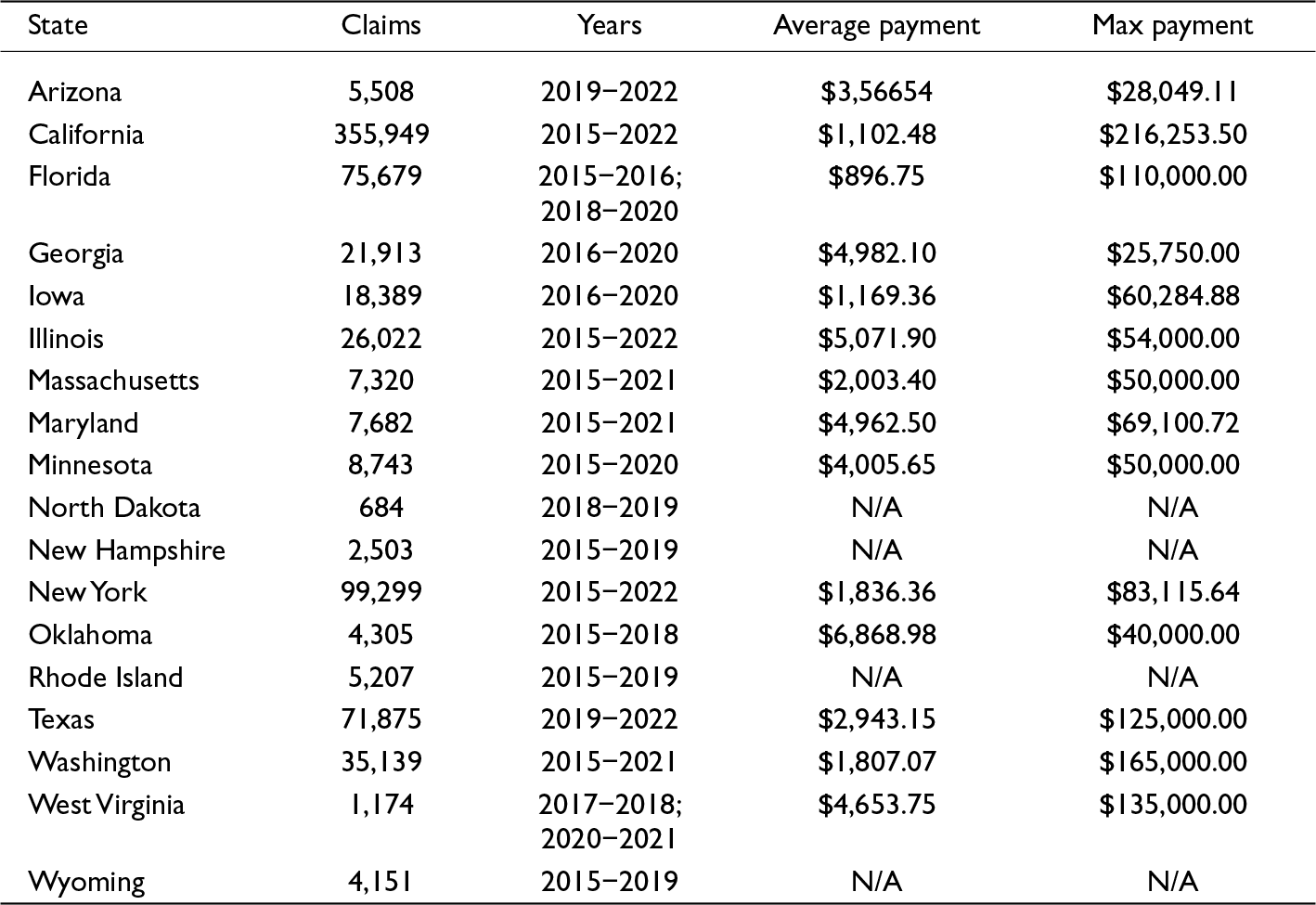
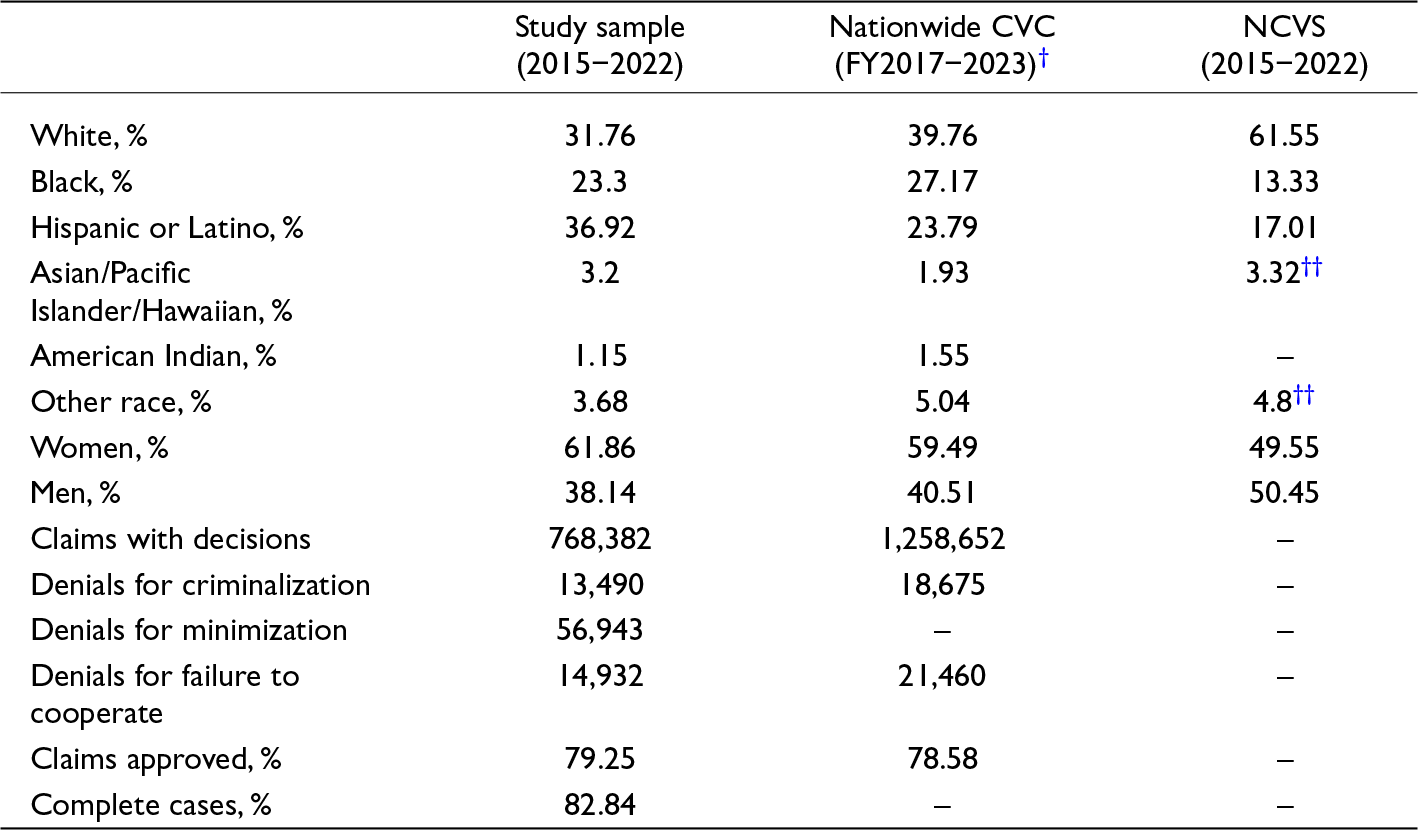
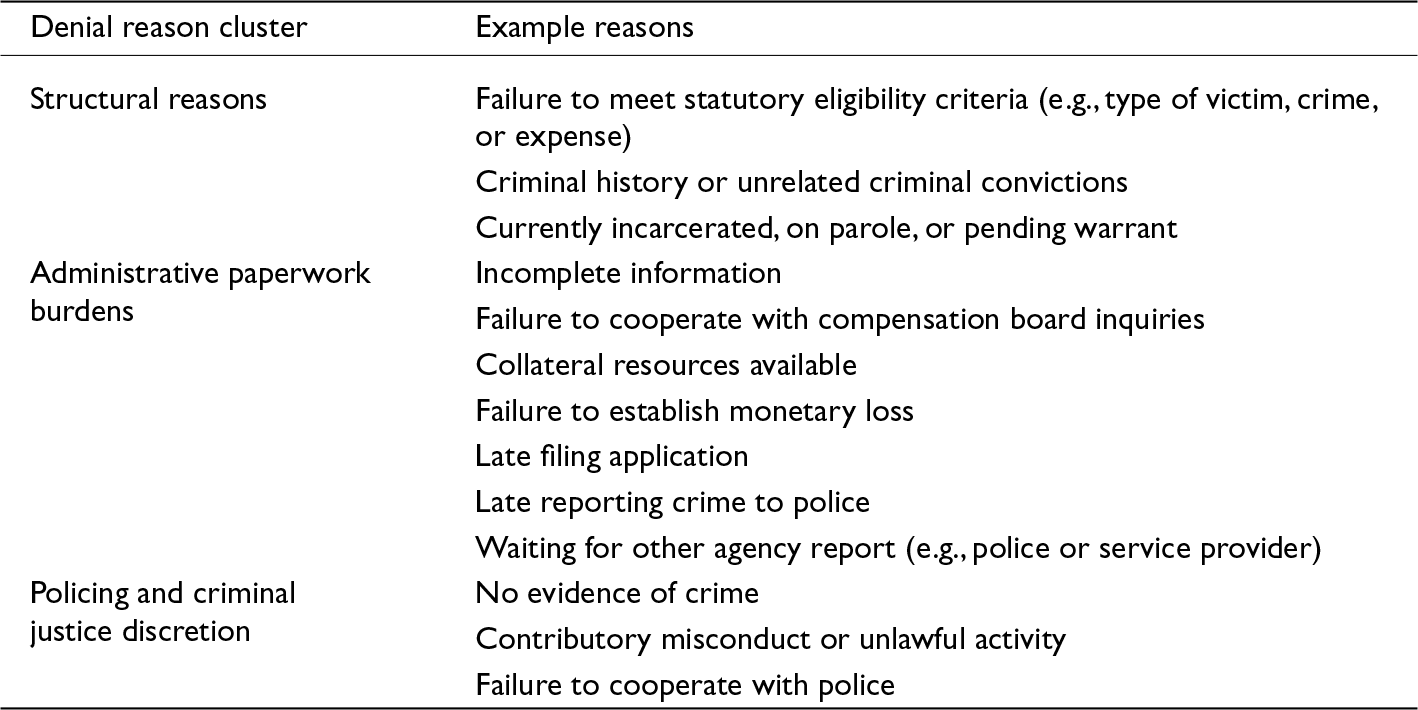
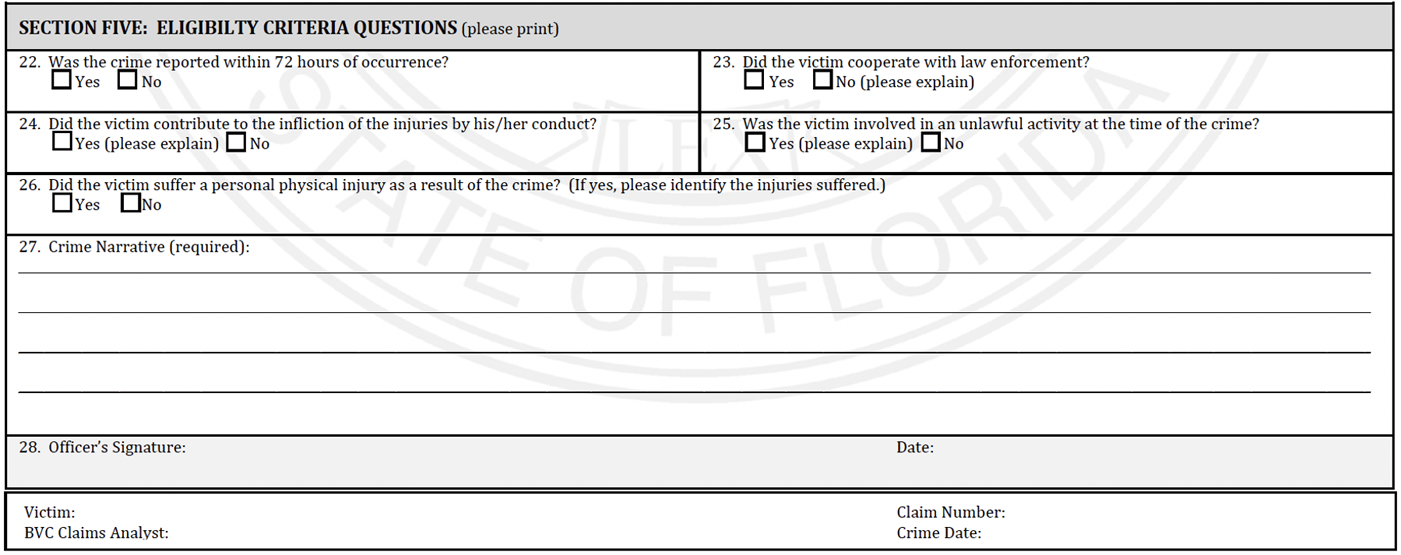
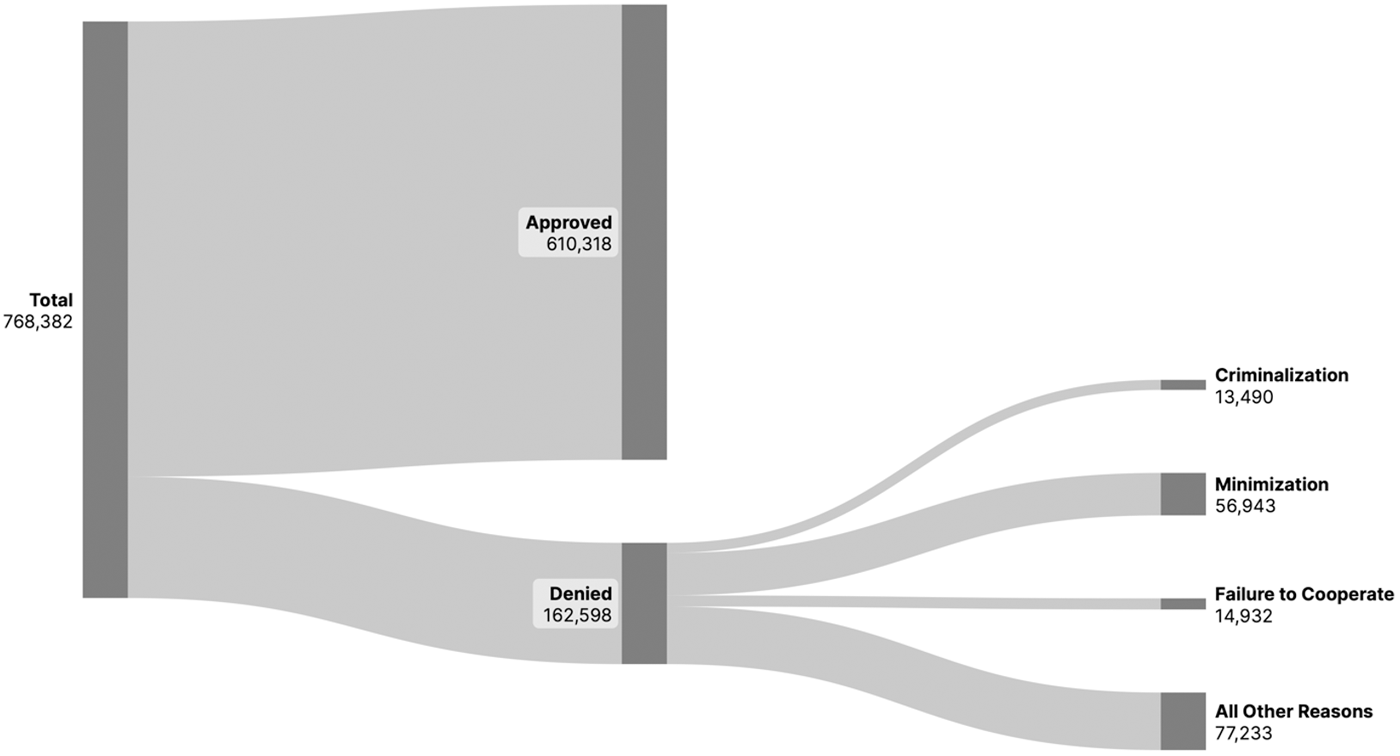
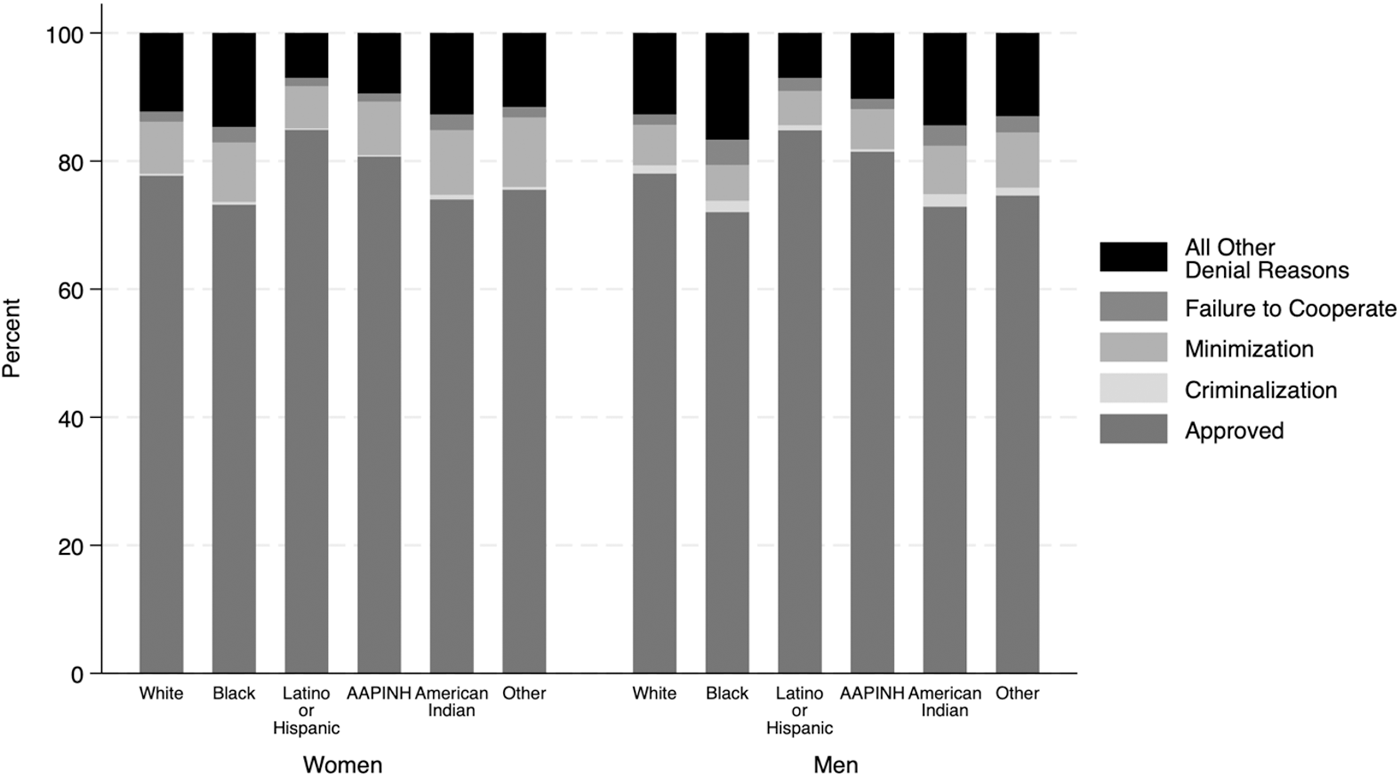
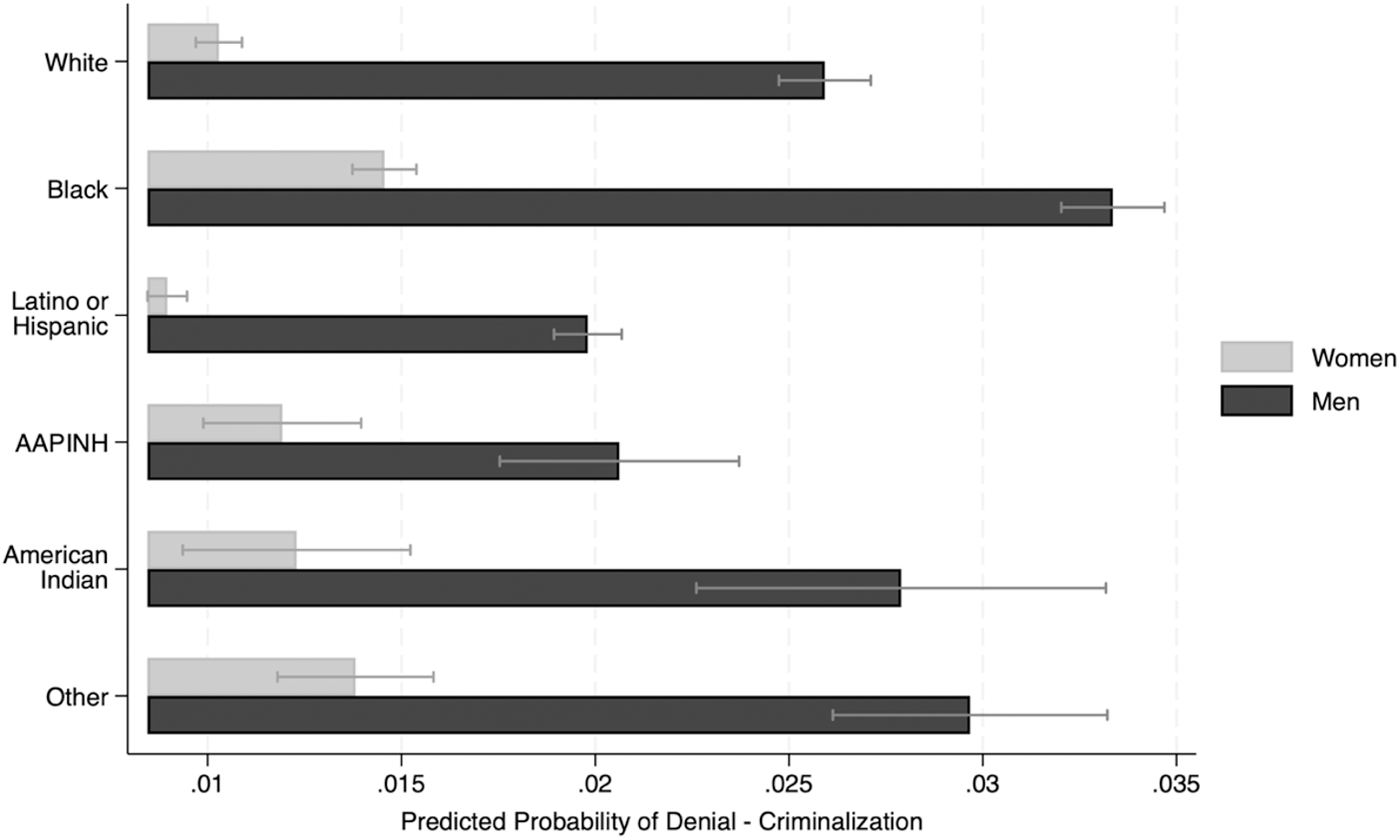
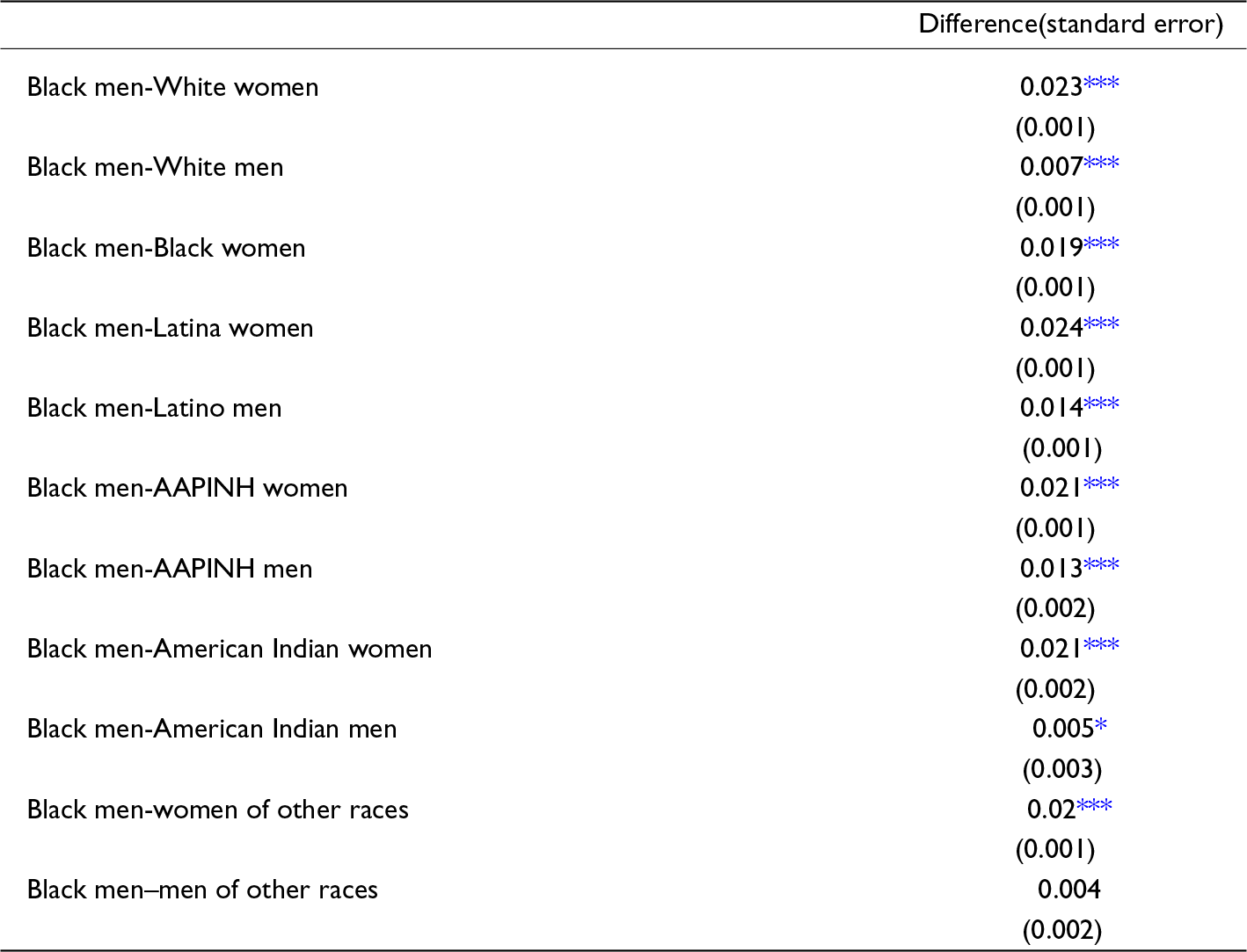
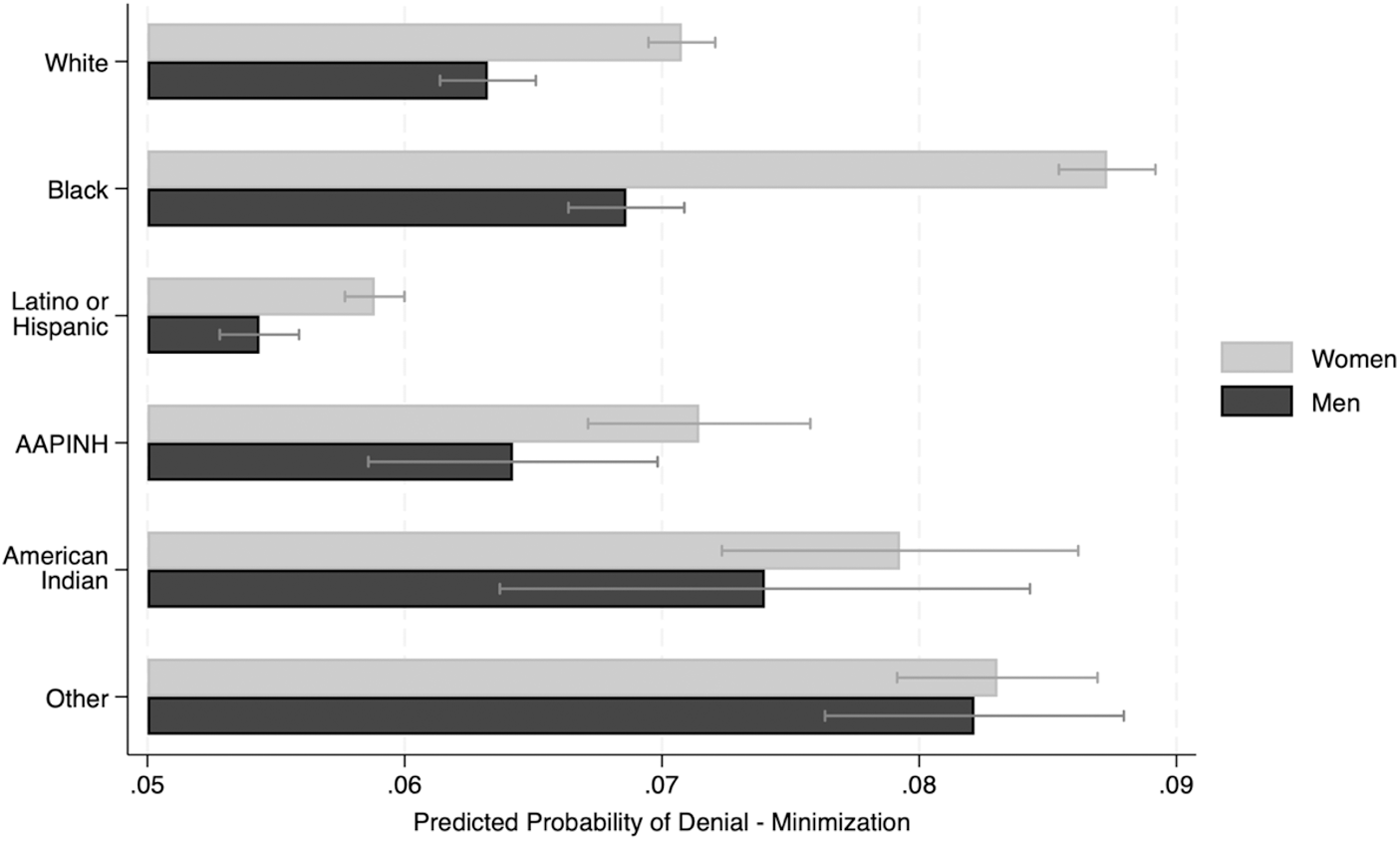
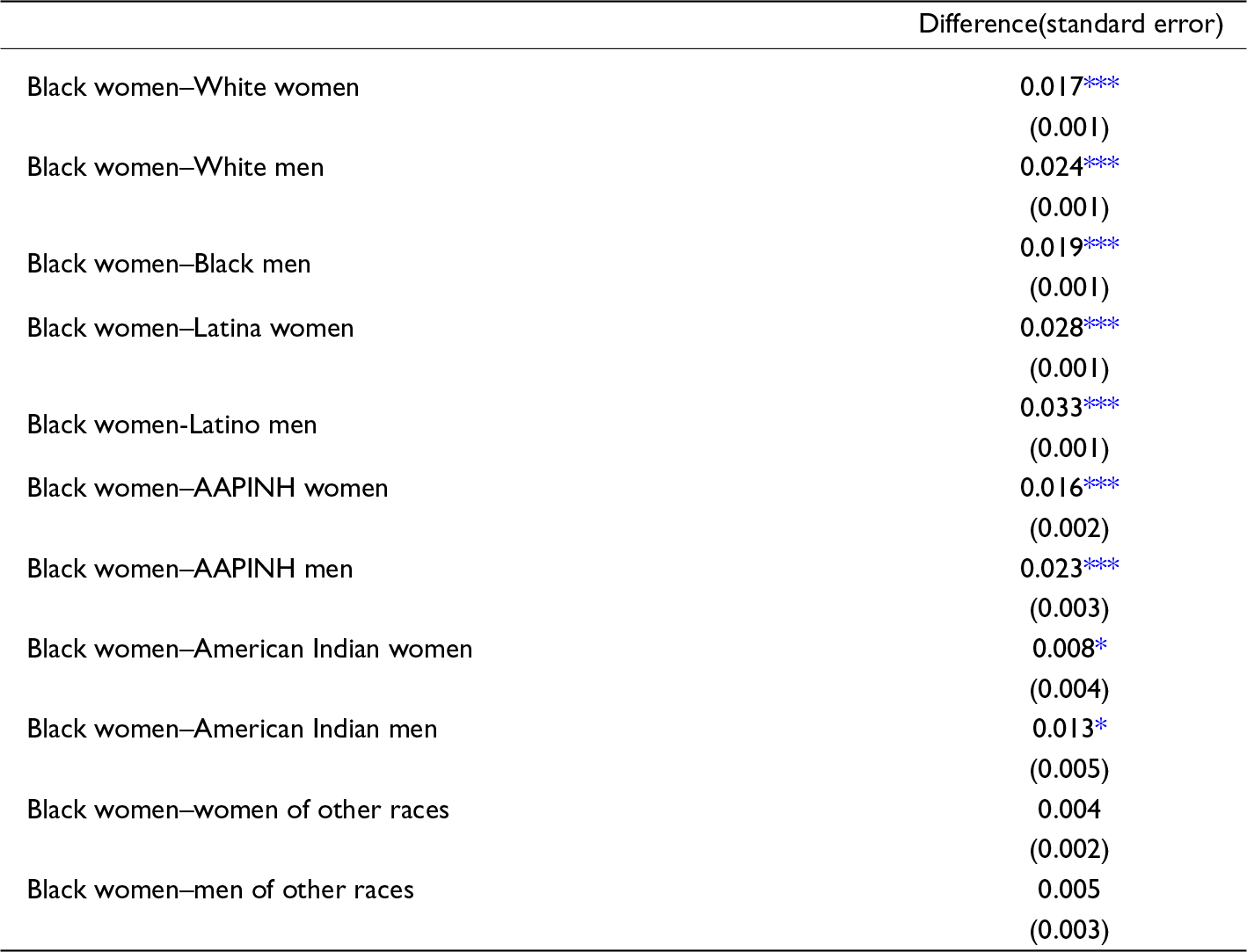
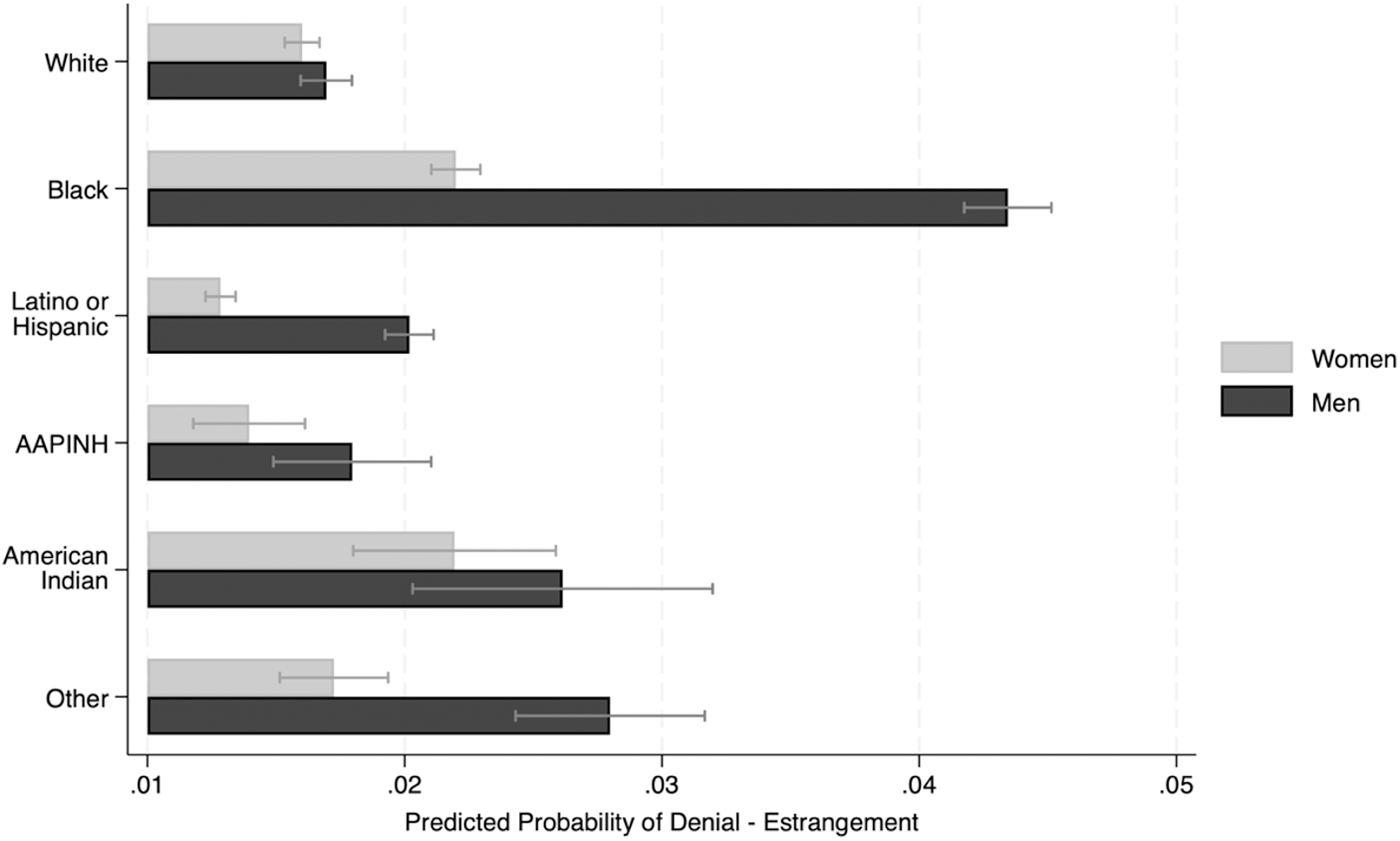
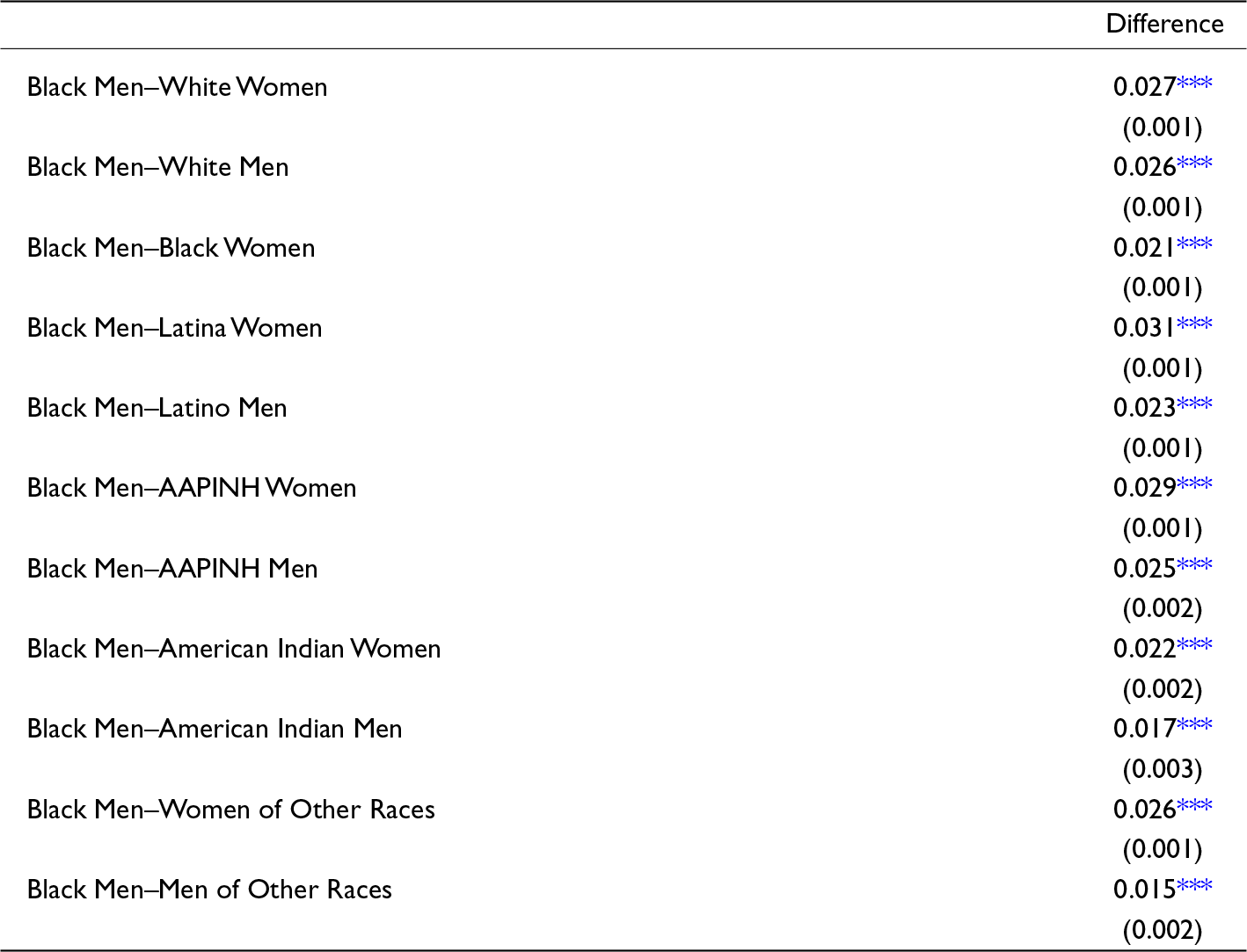
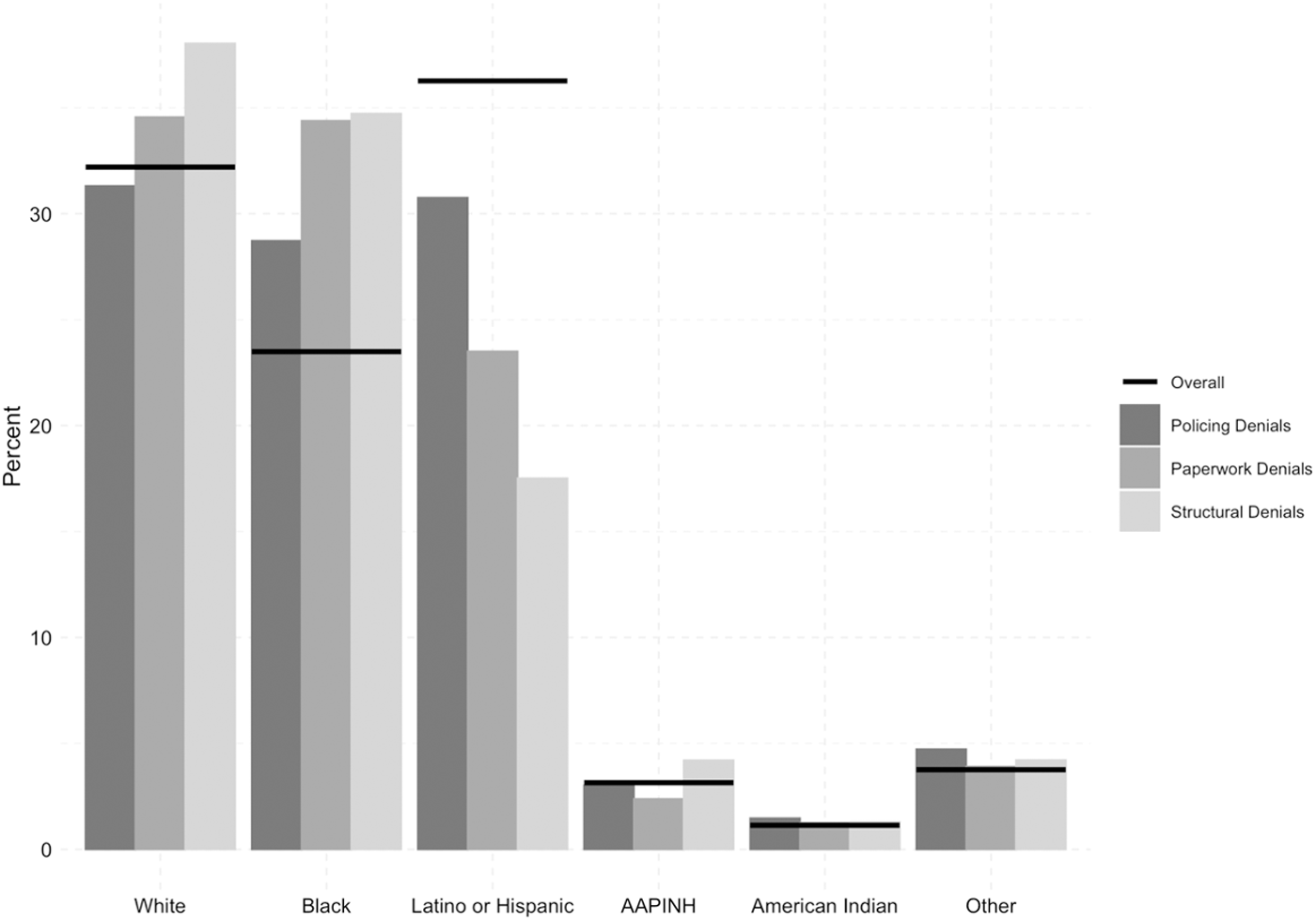
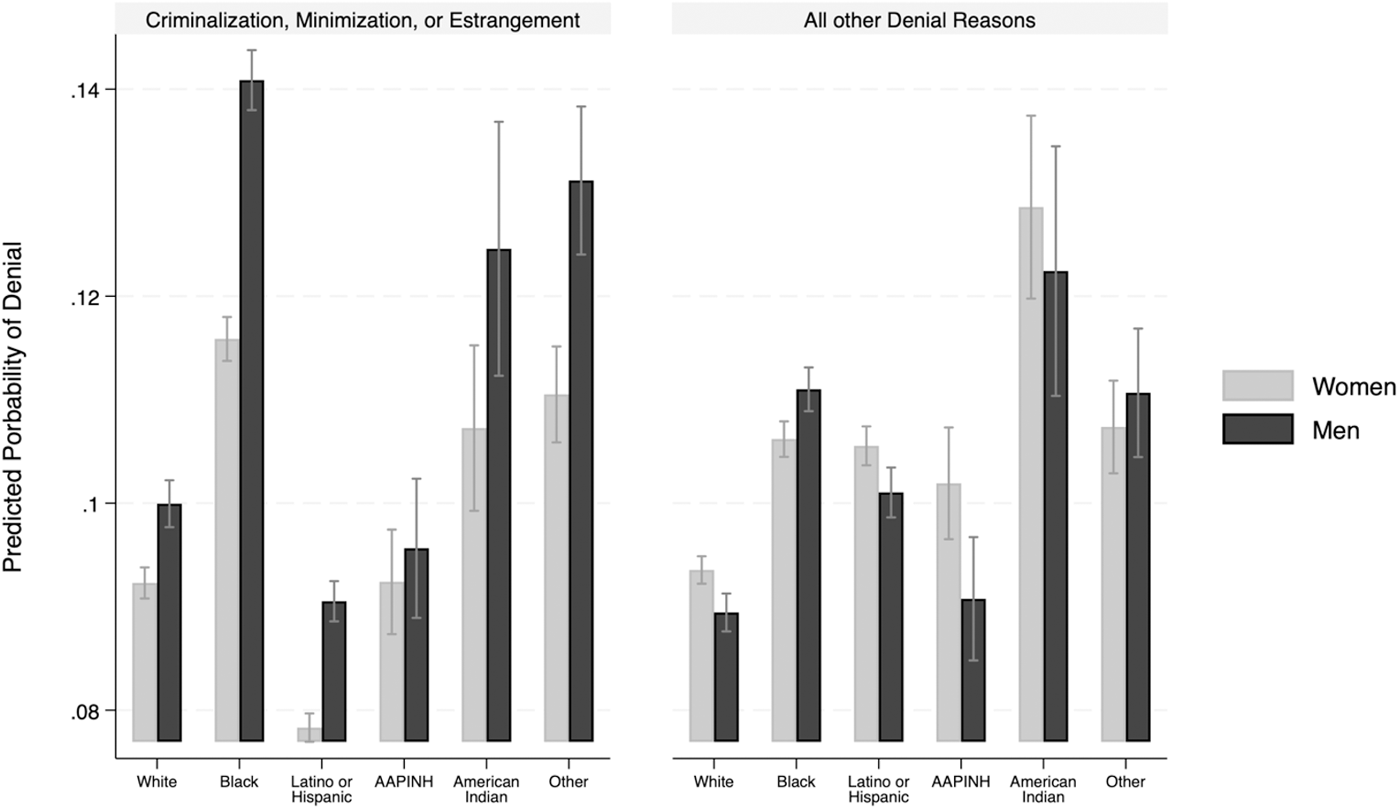
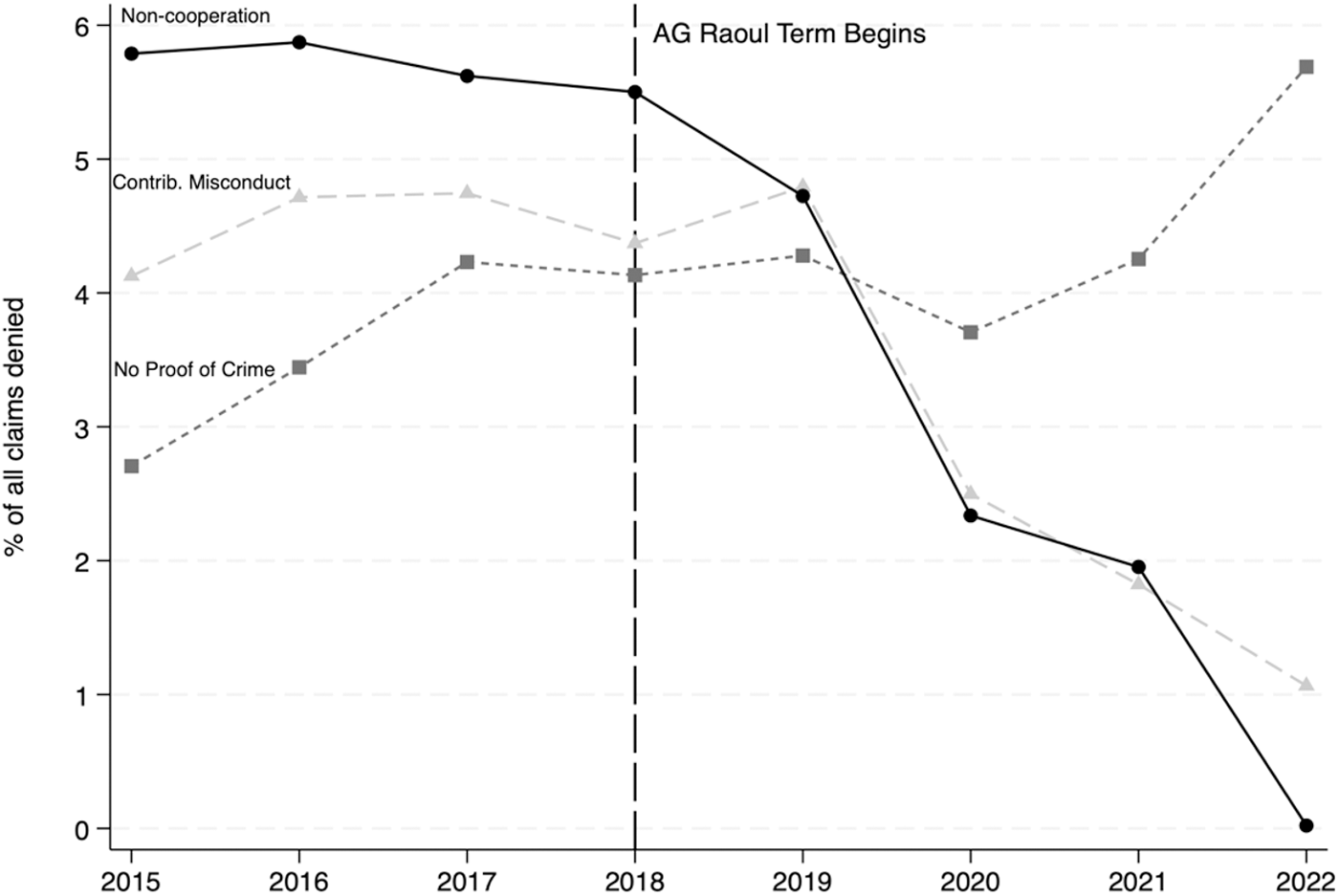
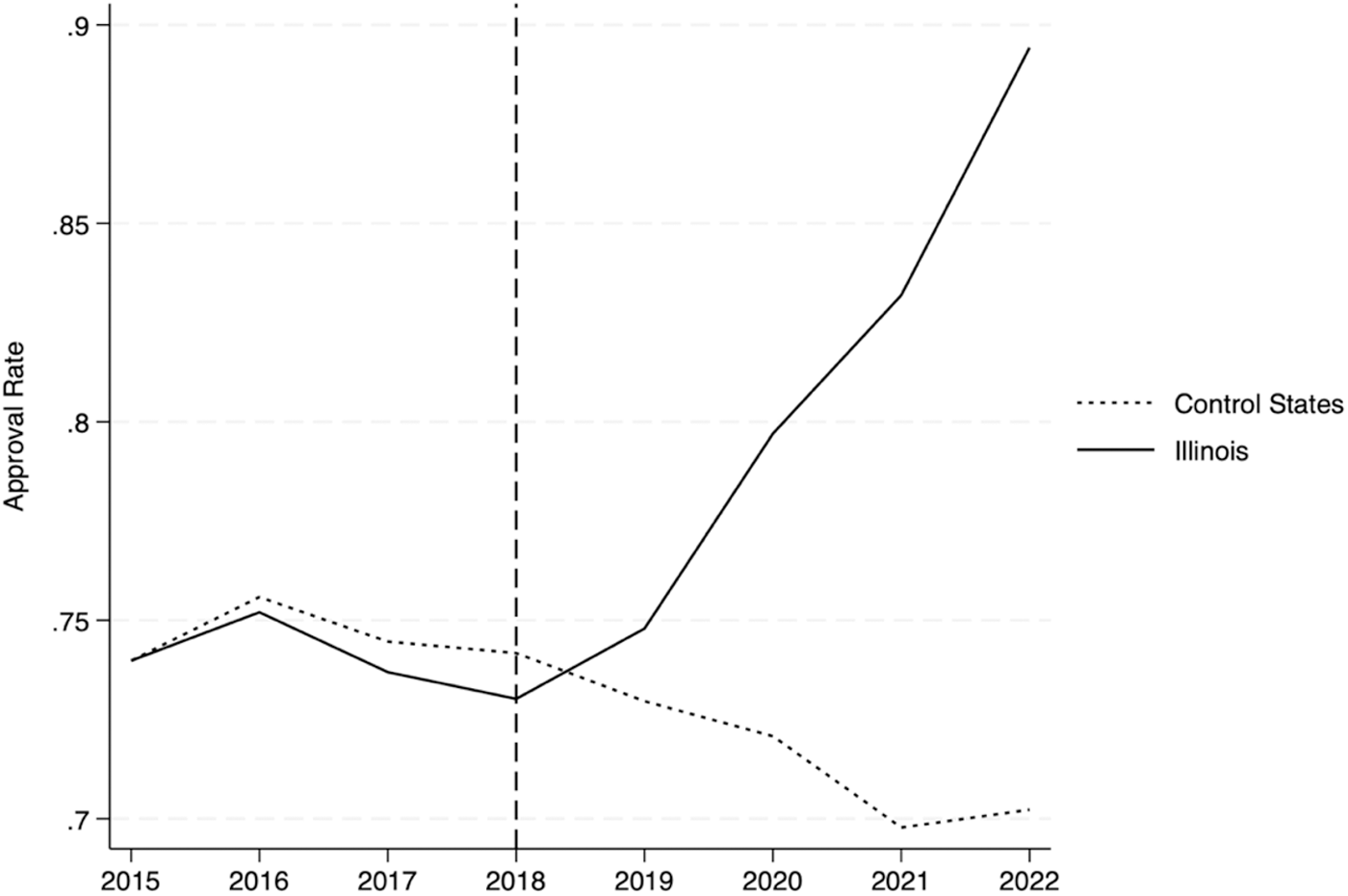
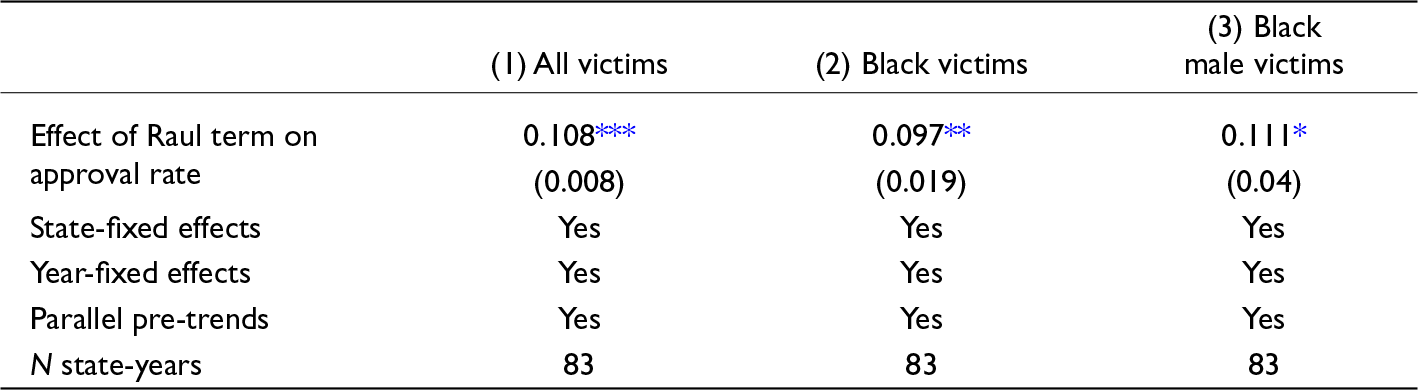
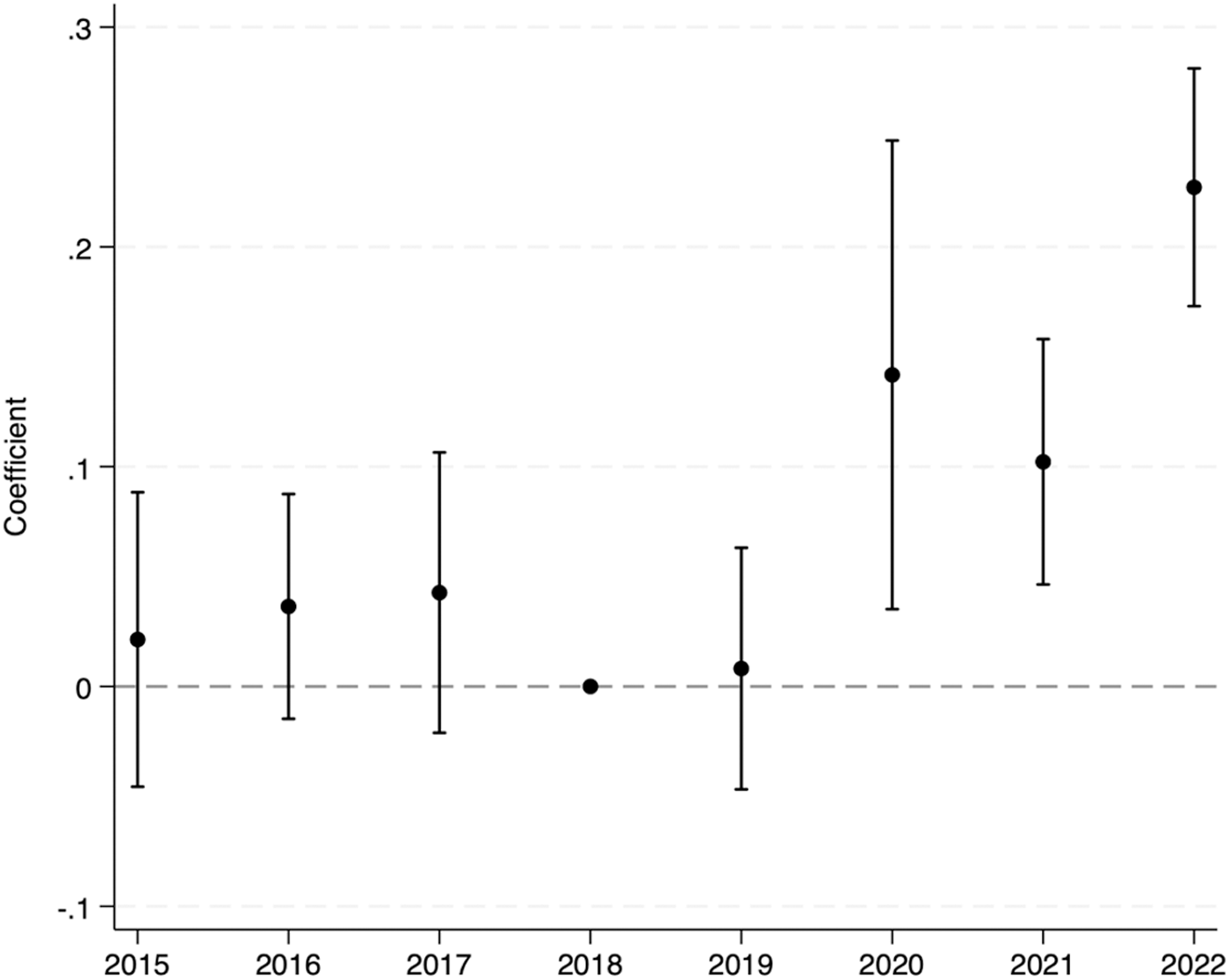


 Open access

