


Personality disorders are common conditions Reference Coid, Yang, Tyrer, Roberts and Ullrich1 with high morbidity, Reference Skodol, Gunderson, McGlashan, Dyck, Stout and Bender2 high unmet needs Reference Hayward, Slade and Moran3 and high healthcare costs. Reference Bender, Skodol, Pagano, Dyck, Grilo and Shea4 People with personality disorders are at higher risk of other mental disorders, substance misuse and suicide. Reference Pompili, Girardi, Ruberto and Tatarelli5,Reference Zanarini, Frankenburg, Dubo, Sickel, Trikha and Levin6 Concerns have been expressed about the quality of services for people with personality disorder, Reference Crawford, Price, Rutter, Moran, Tyrer and Bateman7 and the evidence base for the effectiveness of interventions is weak. Reference Bateman, Gunderson and Mulder8,Reference Levy9 Evidence for effective treatment of borderline personality disorder remains sparse. To date there is little evidence for the efficacy of psychopharmacological treatments. Reference Lieb, Völlm, Rücker, Timmer and Stoffers10 Among psychosocial treatments, dialectical behaviour therapy has demonstrated a beneficial effect in several randomised trials at more than one centre. Reference Kliem, Kroger and Kosfelder11 Mentalisation-based therapy has demonstrated beneficial effects when delivered as part of a day programme Reference Bateman and Fonagy12 or out-patient weekly individual and group psychotherapy. Reference Bateman and Fonagy13 Novel approaches such as dialectical behaviour therapy and mentalisation-based therapy may be replacing more established approaches to the treatment of borderline personality disorder.
In the UK one of the most widespread interventions has been democratic therapeutic communities (DTC), which have provided specialist services for people with personality disorders for over 50 years. Reference Whiteley14 DTC is a form of psychosocial treatment based on a collaborative and deinstitutionalised approach to staff–patient interaction; particular emphasis is placed on empowerment, personal responsibility, shared decision-making and participation in communal activity. Reference Campling15 Much background work has been completed that paves the way for an experimental evaluation of DTC: the mechanism of action of the intervention has been extensively studied Reference Hirst and Paget16,Reference Pearce and Pickard17 and observational evidence for possible benefits of the intervention have been established. Reference Dolan, Warren and Norton18–Reference Chiesa, Fonagy, Holmes and Drahorad20 Although the limitations of such studies are widely acknowledged, high-quality randomised controlled trials (RCTs) have not been conducted. A systematic review concluded that such studies were now required, Reference Lees, Manning and Rawlings21 a conclusion in keeping with recommendations for the evaluation of complex interventions. Reference Craig, Dieppe, Macintyre, Michie, Nazareth and Petticrew22 We report here the results of the first RCT of DTC treatment for people with personality disorder, the Therapeutic Community Intervention Trial (TaCIT, trial registration: ISRCTN57363317).
Method
Trial design
Participants were recruited from referrals to an established personality disorder service. The study was approved by the local National Health Service ethics committee in Oxford, ethics number 08/H0605/87. Informed consent was obtained from all participants. The study protocol and consent forms were discussed in all four therapeutic communities in which participants were to be treated in order to obtain consent from the communities for potential study participants to participate in their therapy. This was done because of the uniquely consent-based nature of the DTC intervention, in which any changes to treatment or the running of the community is discussed with the members. The three trial assessors (G.A., S.P., L.S.) were all clinicians experienced in working with personality disorder, and trained in the use of the Structured Clinical Interview for Axis II disorder (SCID-II), Reference First, Spitzer, Gibbon and Williams23 which was used to establish personality disorders diagnosis. Comorbid mental illness was assessed independently from a review of medical records. After consent was obtained and personality disorders status confirmed, baseline measures were collected by the assessor. Participants were then seen between 2 and 4 weeks later and their randomisation status communicated to them. Those randomised to DTC were immediately put on the waiting list for the preparatory DTC groups, and those randomised to TAU received their first session of crisis planning.
Joint crisis planning was chosen as the TAU condition as it is valued by patients, but may have little impact on patient outcomes. Reference Borschmann, Barrett, Hellier, Byford, Henderson and Rose24
Recruitment and randomisation
Participation in the trial was offered to all patients referred to the Oxfordshire Complex Needs Service who were allocated to one of the trial assessors and met inclusion criteria. Inclusion criteria were: resident in the catchment area of the personality disorder service; aged between 16 and 65; and having a diagnosis of personality disorder, assessed using the SCID-II. Reference First, Spitzer, Gibbon and Williams23 Exclusion criteria mirrored those commonly used in clinical practice when offering DTC treatment: (a) a primary diagnosis of a psychotic disorder, alcohol or drug dependence (those with a history of transient psychotic symptoms and non-dependent substance misuse were included); (b) a degree of learning disability, or intellectual impairment, that prevents engagement in DTC services. Independent remote randomisation was conducted at the Centre for Mental Health, Imperial College London. We used a computer-generated random scheme to allocate participants to DTC and TAU in a ratio of 1:1. We used stratification to balance potential confounding variables (age – above or below 30, gender and baseline service utilisation – previous history of admission to a mental health unit or presentation to an emergency department in crisis) across study groups. The local DTC and community mental health team were then informed of the patient's randomisation status.
Interventions
DTC treatment
Participants randomised to DTC entered the normal treatment process for patients entering DTC treatment in the Oxfordshire Complex Needs Service. This consists initially of attendance at a DTC preparatory group meeting weekly for 2 h per week, for up to a year. The DTC preparatory group incorporates the core elements of DTC practice described below in a brief format. After a minimum of 3 months' attendance at this group, participants are able join the DTC via a democratic selection process in which current members and staff vote. Four DTCs hosted participants in the study, based around Oxfordshire. DTCs ranged in size from 14 to 18 members. Participants received DTC therapy for a maximum of 18 months. DTC treatment consisted of between 5 and 15 h per week of mixed structured and unstructured group therapy adhering to the following DTC principles.
-
(a) Democratisation: shared decision-making around group matters, when necessary involving transparent voting procedures. Staff retain responsibility for maintaining safe and effective treatment. Members chair and record meetings, and make decisions that have substantive effects on the way the community runs. This has the effect of promoting responsible agency. Reference Pearce and Pickard17
-
(b) Permissiveness: a wide range of behaviour is tolerated, as long as it does not harm another member or impede another member's treatment. Behaviour is understood and discussed rather than condemned or forbidden. The principle of responsibility without blame Reference Pickard25 is used to inform this process.
-
(c) Reality confrontation: members and staff challenge one another around behaviour and attitudes, and feedback to one another about their impact. This is done in a compassionate rather than judgemental manner.
-
(d) Communalism: there is an element of shared living in DTC. Staff and members eat together, undertake tasks together and share leisure activities as far as is allowed by the programme. During such informal group activity staff and members practice authenticity with one another. Situations that arise in the shared life of the community (the milieu) are used by staff and members to inform the process in the formal groups, a process known as the ‘living learning experience’. These four principles were noted by Rapoport in 1960 at Belmont Hospital. Reference Rapoport26
-
(e) A culture of enquiry. Reference Main27 All events in the DTC are available for consideration by the members and staff, and a questioning attitude is encouraged.
-
(f) Milieu approach/a therapeutic environment. Reference Filstead, Rossi, Rossi and Filstead28 In addition to informal interactions informing group process, the entirety of the community atmosphere and activity, including the involvement of members in administrative tasks, is held to be therapeutic.
The DTCs taking part in this study were members of the Association of Therapeutic Communities. The service is accredited by the Royal College of Psychiatrists Centre for Quality Improvement. Reference Hirst and Paget16
Treatment as usual
Participants randomised to TAU were offered three sessions of joint crisis planning by the clinician who assessed them. This consisted of the collaborative construction of a crisis plan identifying triggers for deterioration in mental state, and practical steps that can be taken to get support or to maintain stability. Other elements of TAU varied depending on patient needs and local service organisation but included out-patient monitoring, consideration of psychotropic medication, and the option of referral to out-patient psychotherapy treatment and in-patient psychiatric treatment at times of crisis. These elements were delivered by local primary care services or community mental health teams.
Baseline and outcome measures
Eligibility was assessed by examining case notes for clinical diagnosis and completion of the SCID-II, Reference First, Spitzer, Gibbon and Williams23 the Fast Alcohol Screening Test, Reference Hodgson, Alwyn, John, Thom and Smith29 and Drug Abuse Screening Test. Reference Gavin, Ross and Skinner30 For those who met inclusion criteria, data collection on baseline measures was completed prior to randomisation, using an examination of paper and electronic medical records to quantify use of in-patient psychiatric services (primary outcome) and contacts with emergency medical services in the previous 6 months, and patient interview using:
-
(a) the 12-item General Health Questionnaire – a measure of general mental health; Reference Goldberg31
-
(b) the Social Functioning Questionnaire – an eight-item validated measure of social functioning that is sensitive to change; Reference Tyrer, Nur, Crawford, Karlsen, MacLean and Rao32
-
(c) extent of any self-harm or aggressive behaviour towards others during the preceding 4 weeks using the Modified Overt Aggression Scale; Reference Sorgi, Ratey, Knoedler, Markert and Reichman33
-
(d) satisfaction with care using the eight-item Client Satisfaction Questionnaire; Reference Larsen, Attkisson, Hargreaves and Nguyen34
-
(e) frequency of suicidal acts and acts of self-harm collected via a self-report questionnaire developed specifically for the study;
-
(f) utilisation data on visits to primary care and emergency departments were collected via a self-report questionnaire developed specifically for the study.
Follow-up interviews were conducted 12 and 24 months after randomisation using the measures (a) to (f) listed above combined with an examination of hospital records to obtain information on psychiatric admissions. Rater masking was maintained by specific instructions to participants and clinical teams not to disclose treatment details. Patient data were held securely and all personal identifiers removed, with randomisation details held separately and password protected. Patients completing follow-up interviews were offered a £25 honorarium in recognition of any inconvenience caused to them by participation in the study. Researchers were asked to state if they believed they had become aware of a participant's allocation status in order to monitor the extent to which rater masking was maintained.
Data analysis
The sample size estimate was based on our primary outcome. A previous observational study found that patients treated in DTCs have a mean number of 45 days (s.d. = 71) of in-patient psychiatric treatment in the year prior to referral and 12 days (s.d. = 22) in the year following referral. Reference Davies and Campling19 A sample of 76 patients (38 DTC and 38 TAU) would be required to have 80% power and 5% level of statistical significance to demonstrate a reduction in the mean number of in-patient days of this magnitude. As information on use of in-patient psychiatric services was to be extracted from hospital records we estimated that loss to follow-up would be low (10%) and therefore aimed to randomise 85 people into the trial. We conducted a complete-case analysis according to the treatment to which participants were randomised (intention-to-treat). We used descriptive statistics to examine baseline characteristics of study participants. For continuous variables we present the number of observations (n), with either the mean and standard deviation, for normally distributed variables, or the median and interquartile range (IQR) for non-normally distributed variables. For categorical variables we used counts and percentages. We then calculated differences in outcomes between baseline and 12 and 24 months using appropriate univariate statistics. Finally, we examined differences in outcomes between those randomised to DTC and TAU adjusted for baseline level, age and gender using binary logistic regression for categorical variables and linear regression for normally distributed continuous variables.
Results
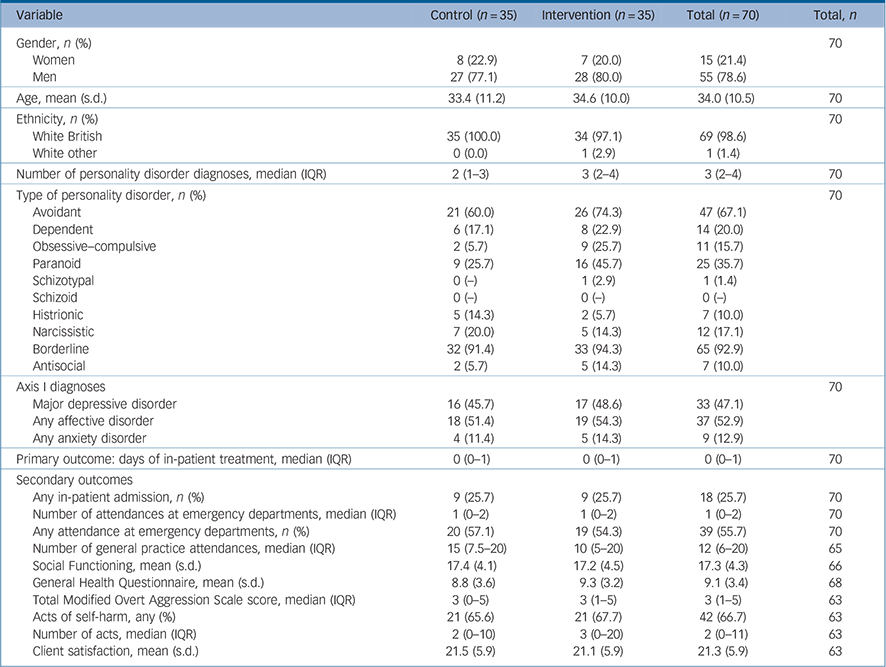
Study recruitment commenced in February 2009. Between February 2009 and November 2012, 121 people were assessed for participation in the study. Of these 70 (57.9%) were eligible and were randomised. Reasons for non-participation were: unwilling to provide consent (n = 34, 27.0%); no personality disorder (n = 15, 12.4%); and comorbid dependence on alcohol or drugs (n = 5, 4.1%). One person was excluded because they had a primary diagnosis of psychosis (see flow diagram – Fig. 1). Age, gender and ethnicity of those who did and did not take part in the study are presented in Table 1. Of the 70 people who took part in the study, equal numbers (n = 35) were allocated to each arm of the trial. Sociodemographic and clinical characteristics of participants by study group are presented in Table 2.
Study flow chart at 2-year follow-up.
DTC, democratic therapeutic community.

Age, gender and ethnicity of participants and non-participants

| Variable | Participants (n = 70) | Non-participants (n = 51) | Total (n = 121) |
|---|---|---|---|
| Gender, n (%) | |||
| Women | 55 (78.6) | 33 (64.7) | 88 (72.7) |
| Men | 15 (21.4) | 18 (35.3) | 33 (27.3) |
| Age, mean (IQR) | 34.03 (10.54) | 31.37 (9.54) | 32.91 (10.17) |
| Ethnicity, n (%) | |||
| White British | 69 (98.6) | 45 (88.2) | 114 (94.2) |
| White other | 1 (1.4) | 3 (5.9) | 4 (3.3) |
| Black and minority ethnic | – | 3 (5.9) | 3 (2.5) |
Sociodemographic and clinical characteristics of study participants at baseline
| Variable | Control (n = 35) | Intervention (n = 35) | Total (n = 70) | Total, n |
|---|---|---|---|---|
| Gender, n (%) | 70 | |||
| Women | 8 (22.9) | 7 (20.0) | 15 (21.4) | |
| Men | 27 (77.1) | 28 (80.0) | 55 (78.6) | |
| Age, mean (s.d.) | 33.4 (11.2) | 34.6 (10.0) | 34.0 (10.5) | 70 |
| Ethnicity, n (%) | 70 | |||
| White British | 35 (100.0) | 34 (97.1) | 69 (98.6) | |
| White other | 0 (0.0) | 1 (2.9) | 1 (1.4) | |
| Number of personality disorder diagnoses, median (IQR) | 2 (1–3) | 3 (2–4) | 3 (2–4) | 70 |
| Type of personality disorder, n (%) | 70 | |||
| Avoidant | 21 (60.0) | 26 (74.3) | 47 (67.1) | |
| Dependent | 6 (17.1) | 8 (22.9) | 14 (20.0) | |
| Obsessive–compulsive | 2 (5.7) | 9 (25.7) | 11 (15.7) | |
| Paranoid | 9 (25.7) | 16 (45.7) | 25 (35.7) | |
| Schizotypal | 0 (–) | 1 (2.9) | 1 (1.4) | |
| Schizoid | 0 (–) | 0 (–) | 0 (–) | |
| Histrionic | 5 (14.3) | 2 (5.7) | 7 (10.0) | |
| Narcissistic | 7 (20.0) | 5 (14.3) | 12 (17.1) | |
| Borderline | 32 (91.4) | 33 (94.3) | 65 (92.9) | |
| Antisocial | 2 (5.7) | 5 (14.3) | 7 (10.0) | |
| Axis I diagnoses | 70 | |||
| Major depressive disorder | 16 (45.7) | 17 (48.6) | 33 (47.1) | |
| Any affective disorder | 18 (51.4) | 19 (54.3) | 37 (52.9) | |
| Any anxiety disorder | 4 (11.4) | 5 (14.3) | 9 (12.9) | |
| Primary outcome: days of in-patient treatment, median (IQR) | 0 (0–1) | 0 (0–1) | 0 (0–1) | 70 |
| Secondary outcomes | ||||
| Any in-patient admission, n (%) | 9 (25.7) | 9 (25.7) | 18 (25.7) | 70 |
| Number of attendances at emergency departments, median (IQR) | 1 (0–2) | 1 (0–2) | 1 (0–2) | 70 |
| Any attendance at emergency departments, n (%) | 20 (57.1) | 19 (54.3) | 39 (55.7) | 70 |
| Number of general practice attendances, median (IQR) | 15 (7.5–20) | 10 (5–20) | 12 (6–20) | 65 |
| Social Functioning, mean (s.d.) | 17.4 (4.1) | 17.2 (4.5) | 17.3 (4.3) | 66 |
| General Health Questionnaire, mean (s.d.) | 8.8 (3.6) | 9.3 (3.2) | 9.1 (3.4) | 68 |
| Total Modified Overt Aggression Scale score, median (IQR) | 3 (0–5) | 3 (1–5) | 3 (1–5) | 63 |
| Acts of self-harm, any (%) | 21 (65.6) | 21 (67.7) | 42 (66.7) | 63 |
| Number of acts, median (IQR) | 2 (0–10) | 3 (0–20) | 2 (0–11) | 63 |
| Client satisfaction, mean (s.d.) | 21.5 (5.9) | 21.1 (5.9) | 21.3 (5.9) | 63 |
Flow of participants through the trial
The CONSORT diagram (Fig. 1) summarises the flow of participants through the trial. Routine data on attendance at emergency medical services and admission to hospital were obtained for all 70 participants. Data on secondary outcomes from interviews with participants were obtained from 45 (64.3%) participants at 12 months and 38 (54.3%) at 24 months. Of the 32 (45.7%) participants who were not followed up at 2 years, 1 died, 5 formally withdrew from the study and the other 26 either could not be traced or did not take up repeated offers to be assessed through letters and phone calls. Two participants asked to cross over from the TAU arm of the study to the DTC arm, one of whom also formally withdrew.
Uptake of allocated treatments
In total, 35 participants were allocated to the DTC intervention, of whom 28 (80%) attended at least one preparatory DTC group. Of those who attended a preparatory group the mean attendance was 46 weeks (range 2 to 75) and 21 (60%) were still attending the programme at 12 months. Ten (29%) of those in the active arm of the trial also attended sessions on the DTC programme. Mean length of attendance was 47 weeks and all were still attending the programme when 12-month follow-up data were collected.
Main and secondary outcomes
Primary and secondary outcomes at 12- and 24-month follow-up are presented in Tables 3 and 4, respectively. Although small numbers in both arms of the trial presented to emergency medical services and were admitted to hospital, none of these was judged to be a serious adverse reaction related to study treatment. In both arms of the trial the median number of in-patient days was nil. Researchers reported five occasions when they became aware of a participants' allocation status at 12-month follow-up, and three occasions at 24-month follow-up. Although fewer people in the active intervention arm had an admission to hospital 12 months after randomisation, the difference was not statistically significant (difference 11.4%, 95% CI −10.1 to 31.6%). DTC showed significant advantages over TAU in aggression and self-harm measured by the Modified Overt Aggression Scale, and satisfaction with treatment, measured by the Client Satisfaction Questionnaire. There were no significant differences in other outcomes between those randomised to DTC and TAU.
Analyses of outcome scores: summary statistics for baseline and 12-month data (N = 45), analyses of changes from baseline within each treatment group and comparisons of changes from baseline between treatment groups a

| Treatment as usual | Democratic therapeutic community treatment | ||||||
|---|---|---|---|---|---|---|---|
| Summary Statistics | Difference
a,b
(P) |
Summary Statistics | Difference
a,b
(P) |
Difference
a,b
(P) |
|||
| Measures | Baseline | 12 months | Baseline | 12 months | |||
| Number of days of in-patient treatment, median (IQR) | 0 (0–1) | 0 (0–1) | 0 (0.77) | 0 (0–1) | 0 (0–1) | 0 (0.22) | 0 (0.24) |
| Any in-patient treatment, n (%) | 9 (25.7) | 13 (37.1) | 11.4 (0.303) | 9 (25.7) | 9 (25.7) | 0 (1.0) | −11.4 (0.44) |
| Any emergency department attendance, n (%) | 20 (57.1) | 8 (66.7) | 9.6 (0.562) | 19 (54.3) | 2 (18.2) | −36.1 (0.036) | 48.5 (0.019) |
| Number of attendances at emergency departments, median (IQR) | 1 (0–2) | 0 (0–0.5) | −1.0 (0.30) | 1 (0–2) | 0 (0–1.5) | −1 (0.64) | 0 (0.494) |
| Number of general practitioner attendances, median (IQR) | 15 (7.5–20) | 10 (3–15) | −5.0 (0.080) | 10 (5–20) | 7 (3.5–17.5) | −3 (0.83) | −2.0 (0.925) |
| Social functioning, mean (s.d.) | 17.36 (4.4) | 14.41 (7.9) | −2.95 (0.044) | 16.05 (4.7) | 13.95 (5.01) | 2.10 (0.026) | −0.85 (0.866) |
| General Health Questionnaire score, mean (s.d.) | 8.74 (4.1) | 5.78 (4.7) | 2.96 (0.022) | 8.67 (3.65) | 6.43 (4.12) | −2.24 (0.066) | −0.72 (0.752) |
| Total Modified Overt Aggression Scale score, median, IQR | 3.79 (3.9) | 4.00 (3.8) | 0.21 (0.751) | 2.71 (3.05) | 2.86 (2.85) | 0.15 (0.83) | −0.06 (0.468) |
| Acts of self-harm, any (%) | 5 (20.8) | 4 (16.7) | 4.1 (0.680) | 5 (23.8) | 5 (23.8) | 0 (–) | −4.1 (0.838) |
| Client satisfaction, mean (s.d.) | 20.90 (6.0) | 22.19 (7.04) | 1.29 (0.518) | 20.57 (5.996) | 23.38 (6.029) | 2.81 (0.066) | 1.52 (0.535) |
a. Results in bold are significant.
b. Mean/median or proportions.
c. Adjusted for baseline level, age and gender.
Analyses of outcome scores: summary statistics for baseline and 24-month data (N = 38), analyses of changes from baseline within each treatment group and comparisons of changes from baseline between treatment groups a

| Treatment as usual | Democratic therapeutic community treatment | ||||||
|---|---|---|---|---|---|---|---|
| Summary Statistics | Difference
a
(P) |
Summary Statistics | Difference
a
(P) |
Difference
a,b
(P) |
|||
| Measures | Baseline | 24 months | Baseline | 24 months | |||
| Number of days of in-patient treatment, median (IQR) | 0 (0–0) | 0 (0–0) | – | 0 (0 – 1) | 0 (–) | – | – |
| Any in-patient treatment, n (%) | 2 (11.1) | 0 (0) | −11.1 (0.144) | 3 (15.0) | 0 (0) | −15.0 (0.072) | − |
| Any emergency department attendance, n (%) | 11 (61.1) | 4 (22.2) | −38.9 (0.018) | 10 (50.0) | 8 (40.0) | −10.0 (0.522) | 28.9 (0.162) |
| Number of attendances at emergency departments, median (IQR) | 1 (0–2.5) | 0 (0–0.25) | −1.0 (0.070) | 0.5 (0–2.5) | 0 (0–1) | −0.5 (0.041) | −0.5 (0.393) |
| Number of general practitioner attendances, median (IQR) | 20 (10–21) | 10 (5–20) | −10.0 (0.028) | 10 (7.5–21) | 5 (3–14) | −5.0 (0.209) | 5 (0.105) |
| Social functioning, mean (s.d.) | 16.94 (4.82) | 15.13 (7.17) | −1.81 (0.229) | 17.11 (4.94) | 12.16 (5.38) | −4.95 (<0.001) | 3.14 (0.138) |
| General Health Questionnaire score, mean (s.d.) | 8.76 (4.00) | 6.18 (4.53) | −2.59 (0.083) | 9.15 (3.30) | 3.40 (2.78) | −5.75 (<0.001) | 3.16 (0.071) |
| Total Modified Overt Aggression Scale score, median, IQR | 4.06 (3.40) | 3.50 (3.62) | 0.55 (0.525) | 3.40 (2.78) | 1.35 (1.69) | −2.05 (<0.01) | −2.60 (0.037) |
| Acts of self-harm, any (%) | 3 (16.7) | 3 (16.7) | 0 (1.00) | 2 (10.0) | 4 (20.0) | 10.0 (0.79) | 3.30 (0.323) |
| Client satisfaction, mean (s.d.) | 23.27 (6.53) | 21.07 (6.30) | −2.20 (0.351) | 22.39 (5.24) | 26.72 (7.00) | 4.33 (0.03) | 6.53 (0.029) |
a. Results in bold are significant.
b. Mean/median or proportions.
c. Adjusted for baseline level, age and gender.
Although participants receiving DTC showed a significant improvement in social functioning (Social Function Questionnaire) and mental health (General Health Questionnaire), participants receiving TAU showed a non-significant improvement on these measures, and the difference between conditions was not statistically significant. Online Fig. DS2 illustrates these results from Tables 3 and 4 in graphical form.
Discussion
Although concerns have been raised about the feasibility of experimental studies of DTC treatment, Reference Rutter and Tyrer35,Reference Pearce and Autrique36 we have shown that an RCT of DTC treatment is possible. Therapeutic communities evolve and change according to the wishes of their members. This and the fact that DTC is a milieu-based intervention make it difficult to devise an adherence instrument. We addressed the problem of ensuring adherence to the model through service accreditation. Reference Shaw37,Reference Worrall38 Accreditation ensures adherence to the core processes and values of DTC practice and involves a detailed examination of the technique and environment. Reference Haigh and Tucker39 The trial failed to support the primary hypothesis, that the active treatment would reduce use of in-patient services more than TAU. Levels of use of in-patient psychiatric services were lower among all participants in the study compared with those reported in the previous observational study we used for the sample size calculation. Reference Davies and Campling19 It is possible that this reflects differences in severity of personality disorder among people in the previous study, which was based in an in-patient therapeutic community, and changes in the organisation and delivery of acute care in the UK during the intervening period. Greater emphasis is now placed upon providing intensive community support at times of crisis in an attempt to reduce use of in-patient services. As all participants in the study had low levels of in-patient mental health treatment we were unable to properly explore the impact of the intervention on this outcome. Caution needs to be exercised in interpreting differences in secondary outcomes in the study because of loss to follow-up. The results of the complete-case analysis suggest that DTC is superior to TAU in reducing self-harm, violence and aggression, and improving satisfaction with care.
Following randomisation, treatment received by study participants receiving DTC was identical to that received by patients receiving DTC treatment who were not taking part in the study. By ensuring that the treatment received by the study participants reflects precisely the treatment routinely available we aimed to increase the generalisability of the study findings. The service was oversubscribed during the study period, so there was a waiting time prior to joining the DTC preparatory group. For this reason, by the 24-month follow-up point, just under a third (29%) of participants received full DTC treatment, and 80% received DTC preparatory work. The preparatory groups run as brief DTCs, and include all the major elements of the DTC intervention. As a result of the emphasis on empowerment in DTC treatment, transparency and involvement of members is promoted. This raises concerns that a randomised trial, which although based on consent involves decision-making about access to treatment (in this case randomised allocation) that is administered by a professional, might damage the autonomy of the members of a DTC participating in the trial. We addressed this first by obtaining consent from the participating therapeutic community, as well as individual participants, and second by measuring elements of group function in the therapeutic communities involved in the trial, and comparing it with the functioning of two DTCs in a neighbouring county. Autrique et al Reference Autrique, Pearce, Vanderplasschen and Haigh40 compared the DTCs involved in the TaCIT trial with two DTCs not involved on the Community Oriented Environment Scale, Reference Moos41 and did not find any deleterious effects on therapeutic culture.
Strengths and limitations of the study
The study has a number of strengths. It is an effectiveness study of patients referred to a real-world personality disorder service subject to the normal difficulties and pressures involved in the routine delivery of mental healthcare, including delays in access to treatment. As in other specialist treatment services for people with personality disorder, most study participants had more than one personality disorder and most had comorbid Axis I mental disorders. Reference Bateman and Fonagy13,Reference Crawford, Price, Gordon, Josson, Taylor and Bateman42 There is a well characterised control group, who did not differ significantly from the intervention group. There were very few exclusion criteria, and the levels of comorbidity were high, which mirrors normal clinical practice. Reference Skodol, Gunderson, McGlashan, Dyck, Stout and Bender2 Personality disorders diagnosis was made using a formal interview (the SCID-II). The DTC intervention is well established, widely available Reference Lees, Manning and Rawlings21,Reference Pearce and Haigh43 and well described. Reference Hirst and Paget16 The study is of treatment of any DSM-IV personality disorder, and borderline, avoidant and paranoid personality disorder were all present in over a third of participants. However, the fact that over 90% had a DSM-IV borderline personality disorder may limit the applicability of the conclusions to patient groups with personality disorder without comorbid borderline personality disorders.
The small sample size limits the power of the study to detect effects of the intervention. The participants lost to follow-up at both 12- and 24-month follow-up is high. Although characteristics of those who were and were not followed up are similar, caution needs to be exercised when interpreting the results of the study. The study was unfunded, and all masked raters were volunteers, who moved on regularly; this is likely to be one of the reasons for the low rate of follow-up. Four out of five participants attended at least one DTC preparatory group, for an average of almost a year (46 weekly sessions). A total of 29% of participants had received full DTC treatment by the 24-month follow-up point, a level likely to have been influenced by waiting times both to start treatment in the DTC preparatory group, and the 3- to 12-month period spent in the preparatory group prior to treatment in the DTC proper. In total, 80% received a weekly DTC intervention (the preparatory group). These groups incorporate the essential elements of DTC, but at lower intensity.
In order to address the limitations of the study, a longer follow-up period is required. Personality disorders are long-term conditions, and trials with short follow-ups have been criticised. Reference Levy9 At 2 years, this trial demonstrates a benefit at longer follow-up than most. Reference Levy9 The authors are currently carrying out a 5-year follow-up study. A larger trial would address the possibility that this study was too small to detect all the potential effects, and future work should be multicentre to demonstrate the effectiveness of the intervention delivered by different teams. Although this study has found evidence of clinical effectiveness, future research should examine the costs and cost-effectiveness of this treatment approach.
Implications
DTCs place an emphasis on peer support and challenge, and Mahlke & Bock Reference Mahlke and Bock44 found an effect for peer support in a range of mental disorders including personality disorders in a randomised trial. The promotion of belongingness, which is likely to be a substantial feature of integrated treatments for personality disorder, has an independent effect on well-being and mental health, Reference Baumeister and Leary45 and is prominent in DTC. Reference Pearce and Pickard17 Similarly, the promotion of responsible agency has beneficial effects on impulsivity, self-efficacy and the ability to make good choices. Reference Pearce and Pickard17
Other elements of DTC functioning are likely to have benefits that are less easy to quantify. The National Institute for Health and Care Excellence recommends that in borderline personality disorder ‘Specialist personality disorder services should involve people with personality disorders and families or carers in planning service developments, and in developing information about services … people with personality disorders may also provide services, such as training for professionals, education for service users and families or carers, and facilitating peer support groups’. 46 Therapeutic communities base their practice on the assumption that patients will be fully involved not only in planning service developments, but also in planning the details of their own care, and encourages members to act in a mentoring capacity to other members. In the DTCs involved in this trial, members and ex-members are involved in recruiting and training professionals, facilitating groups, producing literature about the service and providing carer education. This is why the consent of the four therapeutic communities was sought for their participation in the trial, in addition to individual consent from the participants.
This trial is the first randomised study of DCT treatment for people with personality disorder. It provides preliminary data demonstrating beneficial effects compared with a control condition at 2-year follow-up. We have also demonstrated that it is possible to overcome the obstacles previously identified to carrying out an RCT of therapeutic community treatment. It is thus now possible to build on these results with a longer-term follow-up study to confirm the sustainability of these benefits, which is underway, and a larger multicentre trial of DTC treatment for personality disorder, which is now required to confirm these results.
Acknowledgements
M.C. and K.S. are supported by the National Institute for Health Research (NIHR) Biomedical Research Centre based at Imperial College Healthcare NHS Trust and Imperial College London. The views expressed are those of the authors and not necessarily those of the NHS, NIHR or the Department of Health. K.D. is supported by a Wellcome Strategic Award Collaborative Network in Bipolar Disorder to Improve Outcomes and a NARSAD Young Investigator Award.




eLetters
No eLetters have been published for this article.