

1. Introduction
In most developing economies, agriculture is the main source of income for most rural dwellers; hence, increasing agricultural productivity can enhance incomes and reduce poverty among rural households. Land ownership is vital in agriculture, especially crop production in Ghana, where traditional technologies are more prevalent among most farm households. Land ownership offers crop farmers the opportunity to invest in productivity-enhancing technologies which have the potential to increase crop productivity, incomes and welfare of smallholder farmers (Diagne et al., Reference Diagne, Demont, Seck and Dia2013; Koirala et al., Reference Koirala, Mishra and Mohanty2016). Globally, land is a vital natural resource, with 38% used for agriculture, of which only 10% is used for crop production (Lunine, Reference Lunine2021; FAOSTAT, 2020). It is a major source of wealth, constituting 50 to 75%, and contributes about 73% of most countries’ gross domestic product (Human Security Centre, 2005). Land is important to agrarian communities and is regarded as the main pillar for measuring economic growth in capital and wealth (Paaga, Reference Paaga2013).
There has been varying evidence of the relationship between land ownership and agricultural productivity across the globe (Bellemare, Reference Bellemare2013; Koirala et al., Reference Koirala, Mishra and Mohanty2016; Lee, Reference Lee2011; Manjunatha et al., Reference Manjunatha, Anik, Speelman and Nuppenau2013; Mitra et al., Reference Mitra, Khan, Nielsen and Rahman2021), and this is reflected some extent by the influence of land policies in the various countries. Whereas some studies have found positive effects of land ownership on productivity (Bellemare, Reference Bellemare2013; Koirala et al., Reference Koirala, Mishra and Mohanty2016; Manjunatha et al., Reference Manjunatha, Anik, Speelman and Nuppenau2013; Ngango and Hong, Reference Ngango and Hong2021), others associate land ownership with negative productivity (Mitra et al., Reference Mitra, Khan, Nielsen and Rahman2021). Secure land ownership may be associated with lower agricultural productivity because it can impede labor and land mobility, leading to resource misallocation (Gollin, Reference Gollin2023); it may also encourage over-investment in tenure-signaling assets rather than yield-enhancing inputs (Zmyślona et al., Reference Zmyślona, Sadowski and Pawłowski2024); and in many African contexts, formal land titling frequently fails to boost productivity often because customary tenure provides adequate security or because credit, input markets, and farm-size constraints limit the benefits of formal ownership (Singirankabo and Ertsen, Reference Singirankabo and Ertsen2020). These findings affect land use policies in these countries because access to land and agricultural productivity are closely related. For instance, the existence of property rights reduces uncertainty and inertia regarding investments on the land, hence motivating farmers to make long-term investment decisions on the land, including productivity-improving investments such as the adoption of best practices and improved production technologies (Bellemare, Reference Bellemare2013; Koirala et al., Reference Koirala, Mishra and Mohanty2014, Reference Koirala, Mishra and Mohanty2016). Additionally, land title empowers farmers to use the land as collateral and, hence, can easily access loans and credit facilities to improve their productivity.
Furthermore, in the wake of increasing population pressure and its attendant demands for land for other uses, such as roads, buildings and infrastructural development, there is an increasing decline in the availability of arable lands for crop production. This situation is often aggravated by the land tenure arrangements available to farmers. Evidence shows that ownership of land is one of the sure ways farmers can invest in the land and, hence, has the potential to increase productivity and farm revenues (Koirala et al., Reference Koirala, Mishra and Mohanty2016). In Ghana, the total land area is 238,539 sq. km, with 57% as an agricultural land area, of which 24% is under crop cultivation, and 21% is under irrigation (FAOSTAT, 2020). Land ownership in Ghana is mostly linked to customary law (Kameri-Mboti, Reference Kameri-Mboti2005), which defines ownership as the possession of land and its related resources with approximately 80% of land held under customary tenure vested in stools, skins, clans, or families, while approximately 20% falls under statutory or state control (Nchanji et al., Reference Nchanji, Chagomoka, Bellwood-Howard, Drescher, Schareika and Schlesinger2023; Ehwi and Mawuli, Reference Ehwi and Mawuli2021). Land ownership statusFootnote 1 comprises customary arrangements either owned with the deed, owned without a deed, or not owned and purchased, inherited or family-owned through unwritten or informally recorded evidence (Arko-Adjei, Reference Arko-Adjei, de Jong, Zevenbergen and Tuladhar2010).
Apart from the land ownership-productivity nexus, several studies examine ways of enhancing productivity and efficiency in developing countries by identifying technologies, practices, and policies that boost the capacity of farm households to improve productivity while ensuring sustainable crop production (Peprah et al., Reference Peprah, Koomson, Sebu and Bukari2021; Bravo-Ureta, Reference Bravo-Ureta2014; Koirala et al., Reference Koirala, Mishra and Mohanty2016; Temoso et al., Reference Temoso, Villano and Hadley2016; Villano et al., Reference Villano, Asante and Bravo-Ureta2019; Abdulai et al., Reference Abdulai, Nkegbe and Donkoh2013). However, studies investigating the relationship between land ownership and agricultural productivity are limited (Abdulai et al., Reference Abdulai, Owusu and Goetz2011; Donkor and Owusu, Reference Donkor and Owusu2014; Goldstein and Udry, Reference Goldstein and Udry2008; Grega et al., Reference Grega, Ankomah and Darkwah2015; Place and Otsuka, Reference Place and Otsuka2002). A study by Abdulai et al. (Reference Abdulai, Owusu and Goetz2011) found that insecure land ownership greatly reduces investment in land fertility, thus resulting in low productivity.Footnote 2
In Ghana, land tenure systems have been identified as directly influencing productivity, resulting in poverty and low standards of living for farmers (Grega et al., Reference Grega, Ankomah and Darkwah2015). Previous studies on productivity and efficiency in crop production have captured land ownership as a binary concept, where the contextual variable is depicted as “own” or “not own” (Abdulai et al., Reference Abdulai, Owusu and Goetz2011; Donkor and Owusu, Reference Donkor and Owusu2014; Grega et al., Reference Grega, Ankomah and Darkwah2015) but land ownership statuses come in different forms. Furthermore, none of these studies has examined the heterogeneities in productivity stemming from the different land-ownership statuses as well as the land-ownership structure.Footnote 3
In addition, the literature on how land ownership influences crop productivity is still diverse. This situation makes it imperative to understand these dimensions, particularly in the African context, where land access is highly vested in the socio-cultural settings, largely owned communally along ethnic, tribal and family lines and managed by traditional rulers. Consequently, the different land ownership categories could have varying consequences on productivity and may require unique policy dimensions. To the best of our knowledge, no study has investigated the performance of crop farmers under different land ownership statuses, and land ownership structure using a single framework that allows for the investigation of productivity differences to identify the key drivers for improving farm outputs across these land ownership statuses.
The importance of land access resonates through the realm of investments, particularly within the sphere of agriculture, where the use of productivity-enhancing technologies such as improved seed varieties, irrigation systems, or mechanized equipment plays a pivotal role. The ownership of land emerges as a key in this dynamic, having a profound influence on agricultural outcomes. Previous studies (Koirala et al., Reference Koirala, Mishra and Mohanty2014, Reference Koirala, Mishra and Mohanty2016; Manjunatha et al., Reference Manjunatha, Anik, Speelman and Nuppenau2013; Ngango and Hong, Reference Ngango and Hong2021) have underscored the pronounced productivity advantages held by landowners. This phenomenon could be attributed to the inherent security that ownership presents to farmers, allowing them to make informed investment decisions that, in turn, bear direct implications on improving the productivity of the land (Manjunatha et al., Reference Manjunatha, Anik, Speelman and Nuppenau2013; Bellemare, Reference Bellemare2013). For instance, farmers who do not own land tend to be limited in terms of the investment decisions they can make on the land because of uncertainties surrounding the future use of the land. Such decisions have the tendency to reduce their productivity. For those who own land without a deed, although they have control and access to the land, they still face the risk of losing the land if they are unable to complete the deed process or face litigation issues, hence, these could hamper the kinds of productivity-enhancing investments they can make on the land, defining the kind of production technology they could be faced. However, about ownership with deed, farmers have full access and control over the land and so are entirely free to make such investment decisions that appropriately lead to increased crop productivity. Likewise, in terms of land ownership structure, farmers operating on family lands are less likely to make huge investments in the land because they have the tendency to release the land for use by other members of the family or could lose the land to the head of the family head.
This paper contributes to the literature by examining the performance of farmers operating under the same environment but on different land ownership classifications. Our paper addresses the policy question of whether there are opportunities for improving smallholder farmers’ performance associated with different land ownership statuses and land ownership structure and further investigates ways of enhancing managerial performance across these land ownership categories. We extend the literature on land ownership and productivity to evaluate the production technologies of three land ownership statuses – with deed, without deed and do not own. To understand the heterogeneity in land ownership, we explore the performance of farmers operating under three major specific land ownership structure – purchase, family-owned and inherited land – and, in both scenarios, measuring differences in productivity and quantifying the opportunities for improving performance. These findings are expected to provide valuable information to policymakers to formulate appropriate policies for improving access to arable land titles through the various ownership statuses and their implications on boosting crop productivityFootnote 4 and welfare of resource-poor farmers. The findings will further strengthen access to land and its tenure systems to increase crop productivity in Ghana through appropriate targeted policy orientations. Thus, to enhance crop productivity and reduce food insecurity, such land ownership statuses and ownership structure would need to be targeted and promoted.
2. The land ownership situation in Ghana
Ghana’s land ownership is typically grouped into customary and state (statutory). The customary land system is concerned with the norms, customs, and traditions surrounding land ownership and rights within a society and has been in existence since colonial days (Yeboah and Shaw, Reference Yeboah and Shaw2013). On the other hand, the state or statutory ownership system focuses on the government policies involving legislative arrangements including the registration and land-use planning system. However, land in Ghana has been described as the survival of the fittest. Thus, one can take land belonging to another through influence and capital (Kugbega, Reference Kugbega2018). Under the customary system, the control and ownership of land are vested in a stool (traditional leaders) within a community, although the property rights are vested in the individual.Footnote 5 Moreover, both deed and title registrations are observed in Ghana. The deed registration is concerned with the process of registering all instruments affecting land via the Land Registry Act 1962 (Act 122) (Ehwi and Asante, Reference Ehwi and Asante2016). Deed registration is often helpful in settling conflicts involving lands (Cittie, 2006), subsequently, title registration was introduced to replace deed registration to provide certainty of proof of title to land and improve the environment for land transactions.
Historically, there have been variations in land ownership across different ethnic groups. However, the governing laws are legally binding. Land can be acquired and owned by individuals or groups either with the deed or without deed as ownership status, and could also be purchased, family-owned or inherited as ownership structure. In Ghana, most individuals also own and control land and land-related properties through inheritance. Previously, Ghana’s land ownership systems were grouped into three categories: customary, state, and private lands. Recently, land ownership systems have been grouped into five: state lands, vested lands, stool lands, family lands, and individual/privately owned lands. About 80% of the land in Ghana is under the customary ownership system (Kasanga and Kotey, Reference Kasanga and Kotey2001). The stool land in Ghana indicates how the customary authority, thus, tribal chiefs claimed and controlled the rights of property within the community and granted access to and regulated any form of land transfer (Gyamera et al., Reference Gyamera, Duncan, Kuma and Arko-Adjei2018). Individual or private ownership can be explained as formal ownership of land titles in Ghana. The land is mostly demarcated to show ownership transparency (Deininger, Reference Deininger2003). However, family lands are possessed by a particular family, operated by the head of that family and extends obligations to family members. All these land ownership systems can be inherited or transferred with or without sanctions. Thus, there is the flexibility to switch the methods of land access, levels of equality of land holdings, and levels of individual rights with ownership statuses and ownership structure.
Subsequently, farmers operating on the latter have limited control over the land and such differences result in differences in production technology across the land ownership statuses and land ownership structure. We postulate that the production technologies under land ownership statuses and ownership structure differ. This is, because farmers who purchase land are likely to invest more on the land compared with those who operate on family lands and inherited lands. For instance, such farmers can afford to increase the area cultivated, with corresponding increase in the quantities of other inputs such as planting materials, labor, and capital than farmers operating on inherited lands and family lands for which they usually do not have full access, hence, they tend to use less of these inputs and are expected to have relatively low productivity. As shown in Section 4.2, farmers differ significantly in cultivated area, labor, and input use, which likely affects productivity.
3. Methodological framework
Figure 1 illustrates how the performance of smallholder crop farmers is influenced by different land ownership categories. To estimate the production technologies and analyze the technical efficiency of farmers, the following steps were considered. Firstly, following equations (1) and (2), we estimate separate stochastic production frontiers for the different groups under “Land Ownership Status” (i.e., ownership with deed, ownership without deed, and don’t own). Similarly, under “Land Ownership Structure,” separate production frontiers are estimated using the stochastic frontier analysis (SFA) methodology to obtain the technical efficiencies for purchased land, family land, and inherited land. Secondly, a stochastic metafrontier model, which an envelopes the group frontiers, is estimated to compare the respective performances (Battese, Rao, and O’Donnell, Reference Battese, Rao and O’Donnell2004; O’Donnell, Rao, and Battese, Reference O’Donnell, Rao and Battese2008; Huang, Huang, and Liu, Reference Huang, Huang and Liu2014; Amsler, O’Donnell, and Schmidt, Reference Amsler, O’Donnell and Schmidt2017). We follow the estimation procedures by the Amsler et al. (Reference Amsler, O’Donnell and Schmidt2017) where the metafrontier truly envelopes the group frontiers. The metafrontier framework has been applied in agricultural production systems in various contexts (e.g., Asante et al., Reference Asante, Temoso, Addai and Villano2019; Villano et al., Reference Villano, Bravo-Ureta, Solis and Fleming2015; Villano, Asante, and Bravo-Ureta, Reference Villano, Asante and Bravo-Ureta2019). This approach is used because farmers operating under each of these land ownership statuses and land ownership structure have varied levels of control over the land and investment interests and such variations result in differences in the production technology. This framework allows us to answer two central questions. First, do some land ownership categories provide access to better technologies, in the sense of higher attainable output for given inputs? Second, within each category, how efficiently do farmers use the technology available to them? The ensuing paragraphs present details of the methodology and analyses used.
Conceptual framework linking land ownership statuses and modes to farm productivity.

Figure 1 Long description
A conceptual framework diagram illustrating the relationship between land ownership statuses, modes, and farm productivity. The diagram includes several labeled components: Land ownership statuses, Mode of land ownership, Sociodemographic factors, Institutional Quality, Mediating Mechanisms, and Farm productivity. Land ownership statuses include ownership with deed, ownership without deed, and do not own land. Mode of land ownership includes purchased land, family land, and inherited land. Sociodemographic factors include age, education, gender, household size, work experience, and others. Institutional Quality includes gender norms and farm size. Mediating Mechanisms include investment decisions, access to credit, adoption of technology, and labor allocations. Farm productivity includes crop yield per capita, total output, and input-use efficiency. Arrows indicate the flow from land ownership statuses, mode of land ownership, and sociodemographic factors to mediating mechanisms, which then flow to farm productivity, with institutional quality influencing mediating mechanisms.
3.1. SFA framework and model specification
To measure the technical efficiency and technology ratios in production systems and across groups, we employ the stochastic frontier approach because it has been widely adopted in the empirical literature on efficiency studies in agriculture and also allows us to separate random noise from inefficiency (Asante et al., Reference Asante, Temoso, Addai and Villano2019; Battese, Reference Battese1992; Moreira and Bravo-Ureta, Reference Moreira and Bravo-Ureta2010; Villano et al., Reference Villano, Asante and Bravo-Ureta2019). For each land ownership groups, we estimate separate stochastic production frontiers for each of the sub-groups under the two main categories (land ownership statuses and land ownership structure) and then for the pooled groups, and test the null hypothesis that the production elasticities are the same for the different sub-groups. Prior to estimating the frontiers, we tested the null hypothesis that the Cobb-Douglas functional form is an adequate representation of the data, given the specification of the translog production frontier. However, the Cobb-Douglas frontier was rejected for the sub-groups under the land ownership categories (Appendix 1 ).
For each k-th land ownership group (k = 1, 2, 3), we specify a stochastic production frontier model for farmer i as:
 $$lnY_{i}=\beta _{0}^{k}+\sum _{j=1}^{3}\beta _{j}^{k}\,ln\,X_{ij}+{1 \over 2}\sum _{j=1}^{3}\sum _{s=1}^{3}\beta _{js}^{k}\,ln\,X_{ij}^{k}\,ln\,X_{is}^{k}+\sum _{l=1}^{4}\beta _{l}^{k}D_{l}+V_{i}^{k}-U_{i}^{k}$$
where Y i is the total value of outputFootnote 6 ; X 1 is cultivated land in hectares; X 2 is total labor used in production in man-days; X 3 is total capital Footnote 7 of purchased inputs in Ghana Cedis; D 1 is the coastal dummy variable that is equal to 1 for farmers from the coastal agroecological zone, and 0, otherwise; D 2 is the forest dummy variable that is equal to 1 for farmers from the forest agroecological zone, and 0, otherwise; D 3 is the savanna dummy variable that is equal to 1 if the farmer is living in the savanna agroecological zone, and 0, otherwise; and D 4 is the rural dummy variable that is equal to 1 if the farmer is living in a rural area, and, 0 otherwise. These basic production variables, labor, land and capital, have been used extensively in several studies in agricultural productivity assessing performance of different production technologies and have been found to have positive influence on productivity (Julien et al., Reference Julien, Bravo-Ureta and Rada2019; Quiroga et al., Reference Quiroga, Suárez, Fernández-Haddad and Philippidis2017; Asekenye et al., Reference Asekenye, Bravo-Ureta, Deom, Kidula, KaluleOkello, Okoko and Puppala2016; Martinho, Reference Martinho2017). In addition, the agroecological zone of domicile of the farmers is likely to influence the kind of land ownership available for farming. For instance, in the forest agroecological zone, because the lands are used for mostly the cultivation cash crops, ownership arrangements such as purchasing, and family ownership are more likely to be dominant while the same can be said for ownership with or without deed. Similar arguments can be made for farmers living in rural areas where most of the ownership statuses are without deed and dominated by family lands.
3.2. The inefficiency model
Following Battese and Coelli (Reference Battese and Coelli1995), the technical inefficiencyFootnote 8 model for the k-th land ownership group has the mean parameter, μ i k , defined by:
 $$\mu _{i}^{k}=\delta _{0}^{k}+\sum _{j=1}^{9}\delta _{j}^{k}\,Z_{ji}$$
where the δ j k (j= 0, 1, …, 9) are unknown parameters; Z 1 is the sex dummy variable that has a value of 1 if the farmer is a male, and 0, otherwise; Z 2 is the off-farm income dummy variable that has a value of 1 if the farmer engaged in off-farm activities, and 0, otherwise; Z 3 is the account dummy variable that has a value of 1 if the farmer has a bank account, and 0, otherwise; Z 4 is the extension dummy variable that has a value of 1 if the farmer received extension visits or had extension contacts during the production period, and 0, otherwise; Z 5 is the credit dummy variable that has a value of 1 if the farmer obtained credit for his agricultural expenses, and 0, otherwise; Z 6 is the education status dummy variable that has a value of 1 if the farmer had formal education, and 0, otherwise; Z 7 is the age of the farmer; Z 8 is the household size; and Z 9 denotes the average per capita asset value of farmers.
These variables have been found to influence productivity and efficiency of farming systems in Africa. The age of farmers could have a negative or positive effect on technical inefficiency. With less experience, younger farmers could be more willing to learn and explore new technologies and, hence, may be more efficient (Asante et al., Reference Asante, Villano and Battese2014; Qushim et al., Reference Qushim, Gillespie, Bhandari and Scaglia2018; Villano, Asante, and Bravo-Ureta, Reference Villano, Asante and Bravo-Ureta2019). On the other hand, older farmers have more experience and, thus, may be more productive. Typically, formal educational training is expected to improve the performance of farmers and, thus, have a positive effect on technical efficiency. It enables farmers to better appreciate, understand and apply improved production techniques that could enhance productivity (Onumah et al., Reference Onumah, Onumah, Al-Hassan and Bruemmer2013; Qushim et al., Reference Qushim, Gillespie, Bhandari and Scaglia2018; Asante et al., Reference Asante, Temoso, Addai and Villano2019). This is further enhanced, especially when education is appropriately modeled (Onumah et al., Reference Onumah, Onumah, Al-Hassan and Bruemmer2013; Prah et al., Reference Prah, Asante, Temoso and Villano2025; Villano et al., Reference Villano, Asante and Bravo-Ureta2019). In most farming households in Ghana, male farmers tend to have greater influence in household production decisions and, hence, have increased access to production inputs such as land, labor and credit (Asante et al., Reference Asante, Temoso, Addai and Villano2019; Awunyo-Vitor et al., Reference Awunyo-Vitor, Wongnaa and Aidoo2016).
Off-farm work has been argued to reduce productive efficiency because of its potential to reduce the labor available for farming activities whereas the income received may not necessarily be channelled into supporting farm activities (Solís et al., Reference Solís, Bravo-Ureta and Quiroga2009; Chavas et al., Reference Chavas, Petrie and Roth2005; Bempomaa and Acquah, Reference Bempomaa and Acquah2014). Others argue that the additional income generated by other household members, who engage in off-farm income activities, could enable farmers to purchase relevant inputs to enhance farming activities (Asante et al., Reference Asante, Temoso, Addai and Villano2019; Tesfay et al., Reference Tesfay, Ruben, Pender and Kuyvenhoven2005), hence, improving technical efficiency. Access to credit enhances farmers’ working capital, which, in turn, empowers them to purchase the right quantities of essential production inputs such as seeds, fertilizers, pesticides and hired labor to improve their productivity. Hence, credit is expected to have a positive effect on technical efficiency of production (Issahaku and Abdulai, Reference Issahaku and Abdulai2020; Nchare, 2007; Kuwornu et al., Reference Kuwornu, Amoah and Seini2013; Peprah et al., Reference Peprah, Koomson, Sebu and Bukari2021). The extension variable is expected to have a positive effect on productive efficiency. Consistent contacts with extension officers enhance the adoption of improved technologies and improved production techniques (Asante et al., Reference Asante, Temoso, Addai and Villano2019; Issahaku and Abdulai, Reference Issahaku and Abdulai2020; Abdulai et al., Reference Abdulai, Nkegbe and Donkoh2013; Kuwornu et al., Reference Kuwornu, Amoah and Seini2013; Onumah et al., Reference Onumah, Onumah, Al-Hassan and Bruemmer2013).
3.3. Stochastic metafrontier framework
Following Amsler, O’Donnell, and Schmidt (Reference Amsler, O’Donnell and Schmidt2017), we implement the stochastic metafrontier in a few clear steps. First, the farmers were grouped into technology groups (under land ownership categories, i.e., land ownership statuses and land ownership structure) and, for each group, we estimate a stochastic frontier. Second, we evaluate the stochastic metafrontier which envelopes these stochastic group frontiers by simulation for each land ownership categories. Consequently, at any input bundle we draw many realizations of each group frontier from its estimated distribution, take the pointwise maximum across groups in each draw, and use the average (and quantiles) of these maxima as the expected metafrontier and its predictive interval. For observed farmers, we condition the draw for the farmer’s own group on its realized composite error to sharpen the estimates. Third, we compute efficiency and gap measures such as output-oriented technical efficiency relative to the group frontier (OTE), the output-oriented metatechnology ratio comparing the group frontier to the metafrontier (OMR), and the residual efficiency within the chosen technology (ROTE), which satisfy OTE = OMR × ROTE (O’Donnell, Reference O’Donnell2018). This stochastic approach avoids treating noise as inefficiency and reduces bias relative to deterministic envelopes.
In this paper, production possibilities refer to a collection of input–output combinations comprising all physically feasible options (O’Donnell et al., Reference O’Donnell, Fallah-Fini and Triantis2017). Production technology refers to techniques, methods, and systems (such as land ownership statuses and ownership structure) that facilitate the transformation of inputs (such as labor and capital) into outputs (such as crops and livestock). Firms operating in various industries, regions, and countries may encounter a variety of production possibilities (Kerstens et al, Reference Kerstens, O’donnell and Van de Woestyne2019). Disparities in production possibility sets can be attributed to differences in accessible technologies, which refer to the various methods available for converting inputs into outputs (Amsler et al., Reference Amsler, O’Donnell and Schmidt2017; O’Donnell, Reference O’Donnell2018; Kerstens et al., Reference Kerstens, O’donnell and Van de Woestyne2019). Differences in production environments, such as geography, climate, and economic infrastructure, can also contribute to these disparities (Battese et al., Reference Battese, Rao and O’Donnell2004; O’Donnell et al., Reference O’Donnell, Rao and Battese2008). To account for these potential heterogeneities, farmers in a given sample can be classified into several groups based on their production technologies or systems, and a metafrontier approach (Hayami and Ruttan, Reference Hayami and Ruttan1971; Battese et al., Reference Battese, Rao and O’Donnell2004; O’Donnell et al., Reference O’Donnell, Rao and Battese2008; Amsler et al., Reference Amsler, O’Donnell and Schmidt2017; O’Donnell, Reference O’Donnell2018) can be used to measure their technical efficiency and productivity.
Secure property rights encourage long term investments such as soil fertility improvement, irrigation, and better seed and fertilizer use, and they also make it easier to use land as collateral for credit (Feder, Reference Feder1987; Feder and Onchan, Reference Feder and Onchan1987; Manjunatha et al., Reference Manjunatha, Anik, Speelman and Nuppenau2013; Lawry et al., Reference Lawry, Samii, Hall, Leopold, Hornby and Mtero2017). Farmers who own their land have more incentives and financial resources to invest, resulting in higher variable input use and higher output per unit of land (Feder, Reference Feder1987; Lawry et al., Reference Lawry, Samii, Hall, Leopold, Hornby and Mtero2017). Farmers who own secure lands are more likely to use them as collateral for loans and credit to invest in their lands, resulting in improved technical efficiency and productivity (Feder and Onchan, 1987; Manjunatha et al., Reference Manjunatha, Anik, Speelman and Nuppenau2013). Unlike earlier work in sub Saharan Africa that used deterministic metafrontiers (Battese et al., Reference Battese, Rao and O’Donnell2004; O’Donnell et al., Reference O’Donnell, Rao and Battese2008; Asante et al., Reference Asante, Temoso, Addai and Villano2019; Temoso et al., Reference Temoso, Villano and Hadley2016), this study follows Amsler et al. (Reference Amsler, O’Donnell and Schmidt2017) and applies a SFA metafrontier. The stochastic metafrontier envelopes group specific stochastic frontiers and separates random shocks from true inefficiency, which avoids treating noise as inefficiency, avoids mechanical bias in technology gap measurement, and allows formal statistical inference.
The metafrontier is evaluated by simulation: For any input bundle x, we draw R Footnote 9 realizations from the estimated distribution of each group frontier f i k + U i k , compute the pointwise maximum across groups for each draw, and average these maxima to obtain the expected metafrontier; quantiles from the simulated distribution provide predictive intervals. We implement both unconditional evaluation (at representative x) and conditional evaluation at observed farmers by conditioning the draw for the farmer’s own group on its realized composite error, which improves precision.
Let OTEi output technical efficiency relative to the metafrontier, OMRi the output oriented metatechnology ratio that compares the group frontier to the metafrontier, and ROTEi the residual output oriented technical efficiency relative to the group frontier. Following O’Donnell (Reference O’Donnell2018), these measures satisfy:
 $$OTE_{i}=OMR_{i}+ROTE_{i}$$
The metatechnology ratio OMRi measures how close the group frontier is to the metafrontier for the given inputs and captures the technology gap associated with land ownership categories. The residual efficiency ROTE_i measures how efficiently individual farmers use their chosen technology, holding technology choice fixed.
We report farmer and group level averages of OTE, OMR, and ROTE with 95 percent predictive intervals from the simulations. We also report, at representative input bundles, the probability that each group attains the metafrontier (the share of simulation draws in which that group is best practice). This shows how often each land ownership category provides the best technology and how much of the observed productivity differences are due to technology gaps and how much are due to residual inefficiency.
Because our data are cross sectional, we interpret the metafrontier as a static envelope of technologies in the survey year and abstract from technical change over time. We assume that noise terms are independent across groups, as the data do not contain sufficient information to identify cross group correlations. If there are common shocks, our estimates of technology gaps can be interpreted as upper bound measures.
3.4. Data and variables
The data used for this study were extracted from the seventh round of Ghana Living Standard Survey (GLSS7) which were collected in 2016/17 by the Ghana Statistical Service (GSS, 2018). The data for the smallholder farmers were obtained based on the land size holdings. In Ghana, smallholder farmers are those who cultivate on less than five hectares of land (Kwapong et al., Reference Kwapong, Ankrah, Anaglo and Vukey2021). The data were extracted for smallholder crop farmers across the country who were involved in the GLSS7. The data contain information on smallholder farmers, their input combinations and outputs produced. Major crops produced include roots and tubers, cereals, legumes and vegetables. The data also contain information on farm- and household-level characteristics and socio-demographic characteristics.
The survey also contains information on land ownership statuses such as ownership with deed, ownership without deed, as well as those who don’t own land. Furthermore, information on land ownership structure, including purchased, family owned, and inherited lands, were also captured. After merging the files from various sections of the survey, we obtained 7,459 observations suitable for our empirical analysis involving 1,491 famers who own land with deed; 3,168 farmers who own land without deed; and 2,800 farmers who do not own land. However, we obtained data for 187 farmers who operated purchased land; 2,715 farmers on family-owned land; and 4,557 farmers on inherited land for the analyses on land ownership structure groupings.
3.5. Descriptive statistics
Tables 1 and 2 present the summary statistics of production and inefficiency variables by land ownership statuses and ownership structure, respectively. Typically, the value of outputFootnote 10 obtained varied significantly across land ownership statuses, with the highest value of output obtained by farmers who own land with deed (GHSFootnote 11 3,223). With regard to the structure of ownership, the value of output was greatest among farmers with purchased land (GHS 5,158). Similar trends were found with the total capital used for crop production, particularly for ownership statuses, where the greatest amount of capital was also found with farmers who own land with deed (GHS 85,221). This is because ownership with deed conveys full access and control, hence, releasing farmers to full capacity in terms of productivity-enhancing investments including capital expenditures. For both ownership statuses and ownership structure, there were minimal variations in labor use among the farmers under each sub-category. Under land ownership statuses, the highest capital investments were made by famers operating on lands owned with deed whereas for land ownership structure, those operating on inherited land tended to invest the most capital. Under land ownership statuses, the maximum mean area cultivated for farmers who own land without deed was 2.7 hectares whereas for ownership structure, those operating on purchased lands cultivated the largest area (2.9 hectares).
Summary statistics of production variables across land ownership statuses and ownership structure
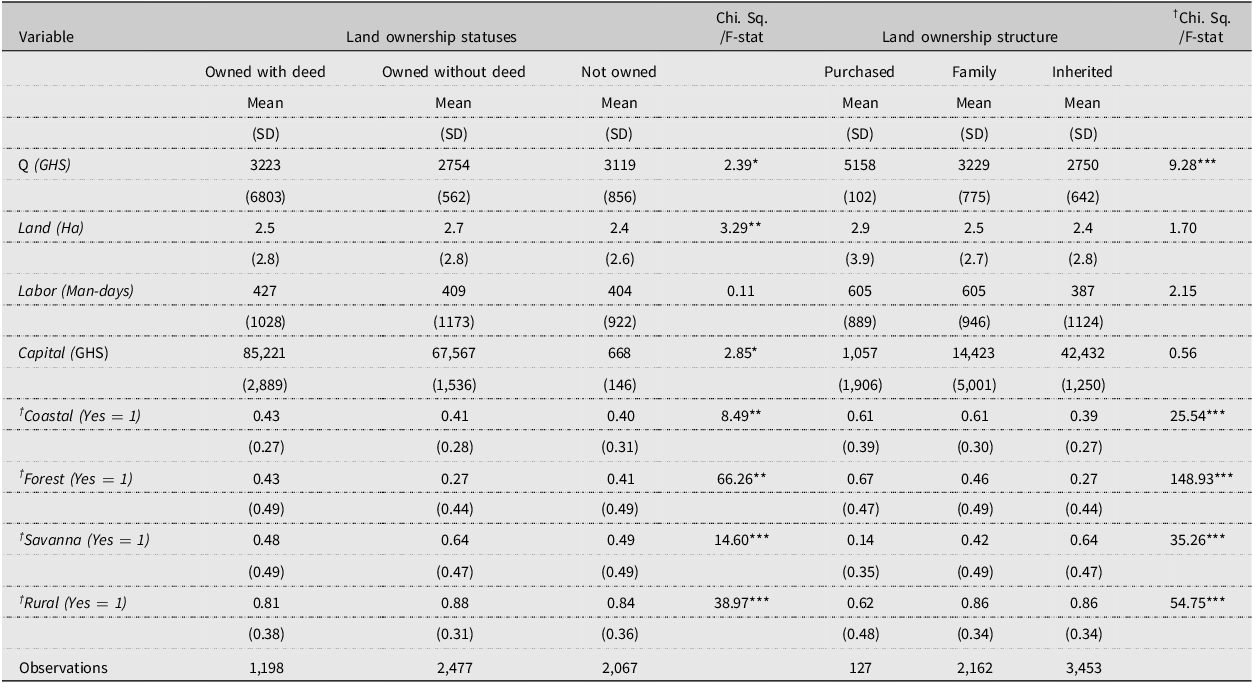
Table 1 Long description
The table presents summary statistics of production variables across different land ownership statuses and ownership structures. It includes data on variables such as Q (GHS), Land (Ha), Labor (Man-days), Capital (GHS), Coastal (Yes = 1), Forest (Yes = 1), Savanna (Yes = 1), and Rural (Yes = 1). The table is divided into two main sections: Land ownership statuses and Land ownership structure. Each section provides mean values and standard deviations (SD) for the variables. The Land ownership statuses section includes categories: Owned with deed, Owned without deed, and Not owned. The Land ownership structure section includes categories: Purchased, Family, and Inherited. Each row lists the mean and standard deviation for each variable under the different categories. Notable trends include higher values of output and capital for farmers who own land with a deed and those with purchased land. The table also shows minimal variations in labor use among the farmers under each sub-category.
†measured as dummy variables; SD denotes standard deviations of the variables involved. †The asterisks, *** and **, denote that the F-statistics of the ANOVA or chi square statistic-tests for difference in means among the land ownership statuses/means are significant at the 1 and 5% levels, respectively.
Summary statistics of inefficiency variables across land ownership statuses and land ownership structure
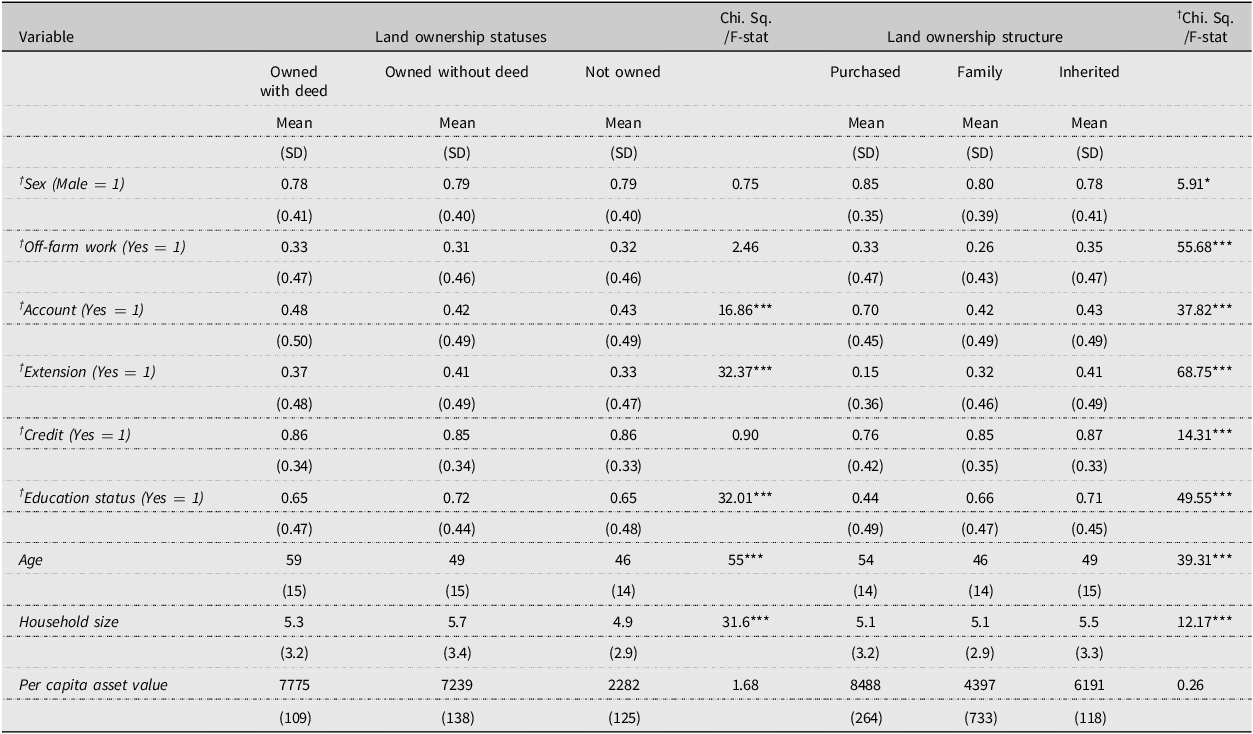
Table 2 Long description
The table presents summary statistics of production and inefficiency variables by land ownership statuses and ownership structure. It has 12 rows and 10 columns. The columns are labeled as Variable, Owned with deed, Owned without deed, Not owned, Purchased, Family, Inherited, Chi. Sq. /F-stat, Chi. Sq. /F-stat. The rows are labeled with variables such as Sex, Off-farm work, Account, Extension, Credit, Education status, Age, Household size, and Per capita asset value. Each cell contains the mean and standard deviation (SD) values for each variable across different land ownership statuses and structures. Notable trends include variations in the value of output and capital investments based on land ownership statuses and structures. For instance, farmers who own land with a deed tend to have higher capital investments and output values. The table also shows minimal variations in labor use among farmers under each sub-category.
†measured as dummy variables; SD denotes standard deviations of the variables involved. †The asterisks, *** and **, denote that the F-statistics of the ANOVA or chi square statistic-tests for difference in means among the land ownership status/structure are significant at the 1 and 5% levels, respectively.
In terms of agroecological zones, in the coastal zone, 43% are farmers own lands with deed, whereas in terms of ownership structure, a majority of the farmers operated on purchased lands (61%) and family-owned lands (61%). However, in the savanna zone, 64% of farmers own land without deed whereas 48% own land with deed and 49% do not own lands. Finally, 67% of farmers in the forest zone operate on purchased lands (Table 1).
These differences in land ownership across agroecological zones reflect how land markets and tenure systems operates across the agroecological zones. In the coastal zone, rapid urbanization, tourism, port and other industrial projects make land scarce and valuable, so farmers gravitate toward formal purchases and deeds or rely on family land in order to reduce displacement risk. In the savanna, land is more extensive and governed by strong customary rules, so many households farm lineage-allocated plots without registering deeds and a sizable share operate as non-owners. In the forest belt, perennial tree crops (notably cocoa) require long-term, secure control and attract migrants, so purchasing land is common to protect investment and harvest rights, consistent with the higher share of purchased/deed holdings there compared with the savanna.
For the inefficiency variables in Table 2, across the land ownership categories, the majority of the farmers were males and this varied substantially across land ownership structure with the highest proportion found among farmers operating on purchased lands. With regard to off-farm work, 33% of farmers operating on purchased lands as well as land owned with deeds are involved in off-farm income-generating activities. Almost half of the farmers (48%) who own land with deed have a bank account whereas account ownership was 70% among those who own land through purchase.
Access to extension and credit is greatest among farmers who own land without deed as well as those cultivating on inherited lands. The values of the age variable varied significantly across groups under land ownership statuses and ownership structure, with the highest found among farmers cultivating on land owned with deed (59 years). The oldest farmers were found among those who operate on purchased lands (54 years).
Typically, the mean household size and the proportion of farmers who had formal education are greater for farmers who own land without deed (5.7 persons and 72%, respectively) and are operating on inherited lands (5.5 persons and 71%, respectively). The mean value of assets per capita was highest for farmers who own land with deed with respect to ownership statuses (GHC 7,775) whereas, for ownership structure, the highest average was found among farmers operating on purchased lands (GHC 8,488). This confirms the fact that ownership enhances investments in assets on the land which has implications for improvement in productivity.
3.6. Tests of hypotheses and estimation procedures
Various tests of hypotheses were conducted and the results presented as supplementary information to this paper (Appendix 1 ). The hypotheses involving the specifications of the stochastic frontier with inefficiency effects (Battese and Coelli, Reference Battese and Coelli1995) were conducted for the ownership statuses and land ownership structure models and the null hypothesis was strongly rejected. This indicates that the Cobb-Douglas production function does not adequately represent the data, given the assumptions of the stochastic frontier translog production function models.Footnote 12
Further, we tested the null hypothesis that the explanatory variables included in the technical inefficiency models defined in equation (2) do not influence technical inefficiency in crop production which is also strongly rejected for all the sub-groups under the ownership statuses and ownership structure frontiers, signifying that at least one or more of the explanatory variables in the inefficiency models influence the technical inefficiency effects in crop production. Lastly, we test the null hypothesis that the stochastic frontiers for crop production were the same for farmers in each of the sub-groups under each of the land ownership categories which is also strongly rejected, hence, the estimated stochastic frontiers for the three sub-groups in each of the land ownership categories were significantly different. These results indicate the appropriateness of the use of the metafrontier for comparing the technical efficiencies of farmers in different sub-groups for the land ownership categories.
The estimation of the metafrontier production function from the different land ownership statuses and ownership structure follows the methods presented in Amsler et al. (Reference Amsler, O’Donnell and Schmidt2017). Amsler et al. (Reference Amsler, O’Donnell and Schmidt2017), compare three metafrontier estimators (naïve, unconditional, conditional-on-epsilon), we adopted the conditional-on-epsilonFootnote 13 estimator to estimate the metafrontier.
4. Results and discussion
This section presents the estimates of frontiers for the different land ownership statuses and ownership structure, their associated ROTEs and OMRs, together as well as the inefficiency effects in crop production. The stochastic frontier models for the land ownership statuses and ownership structure were significantly different from each other, thus, confirming the appropriateness of using metafrontier analysis to compare productivity and production technologies across the land ownership statuses and ownership structure.
4.1. Group production frontiers and metafrontier estimates
Tables 3 and 4 present the maximum-likelihood estimates of the parameters of the translog stochastic frontiers for the land ownership statuses and land ownership structure, respectively, (equation 1), however, the estimates for the parameters of the inefficiency effects (equation 2) in the stochastic frontier models are presented and discussed in later tables. Tests of hypotheses indicate that the estimated parameters are not the same across the three sub-groups under each of the land ownership categories. The values of the explanatory variables in the translog stochastic frontier models were mean corrected, hence, the coefficients of the input variables estimate the partial output elasticities for each input at mean input values.Footnote 14
Estimates of parameters of translog stochastic frontiers of crop production in land ownership statuses
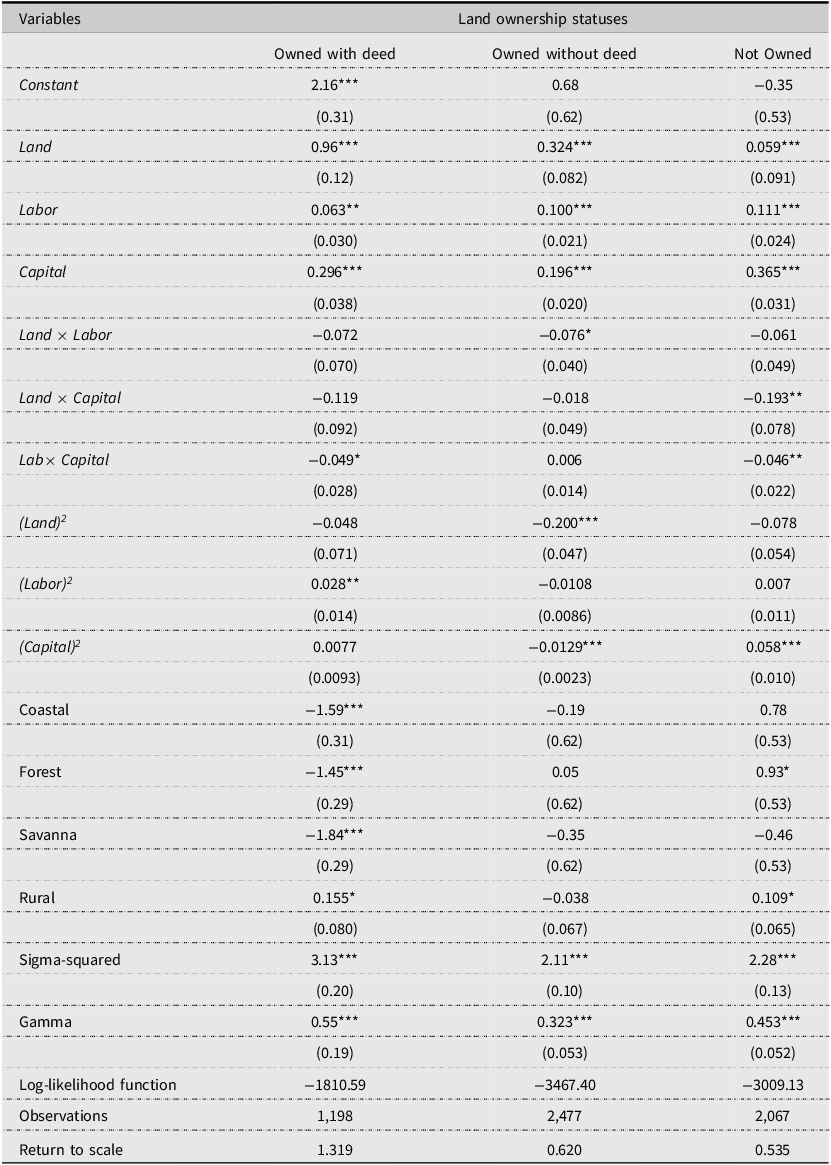
Table 3 Long description
The table presents estimates of parameters of translog stochastic frontiers of crop production across different land ownership statuses. It includes three main columns: Owned with deed, Owned without deed, and Not Owned. Each column lists various variables and their corresponding estimates. The variables include Constant, Land, Labor, Capital, Land x Labor, Land x Capital, Lab x Capital, (Land)^2, (Labor)^2, (Capital)^2, Coastal, Forest, Savanna, Rural, Sigma-squared, Gamma, Log-likelihood function, Observations, and Return to scale. Each row provides the estimated values and standard errors for these variables under different land ownership statuses. Notable trends include significant positive and negative estimates for various variables, indicating differences in production parameters based on land ownership status.
1The inputs in the SFA production function model of equation (1) are referred to as land, labor and capital. However, in Table 3, the production variables involved are the logarithms of these respective inputs which are first normalized by the area cultivated. For convenience, we do not specifically refer to the logarithms of these inputs. The asterisks, ***, **, and *, indicate statistical significance at the 1, 5 and 10% levels, respectively.
Estimates of parameters of translog stochastic frontiers of crop production in land ownership structure
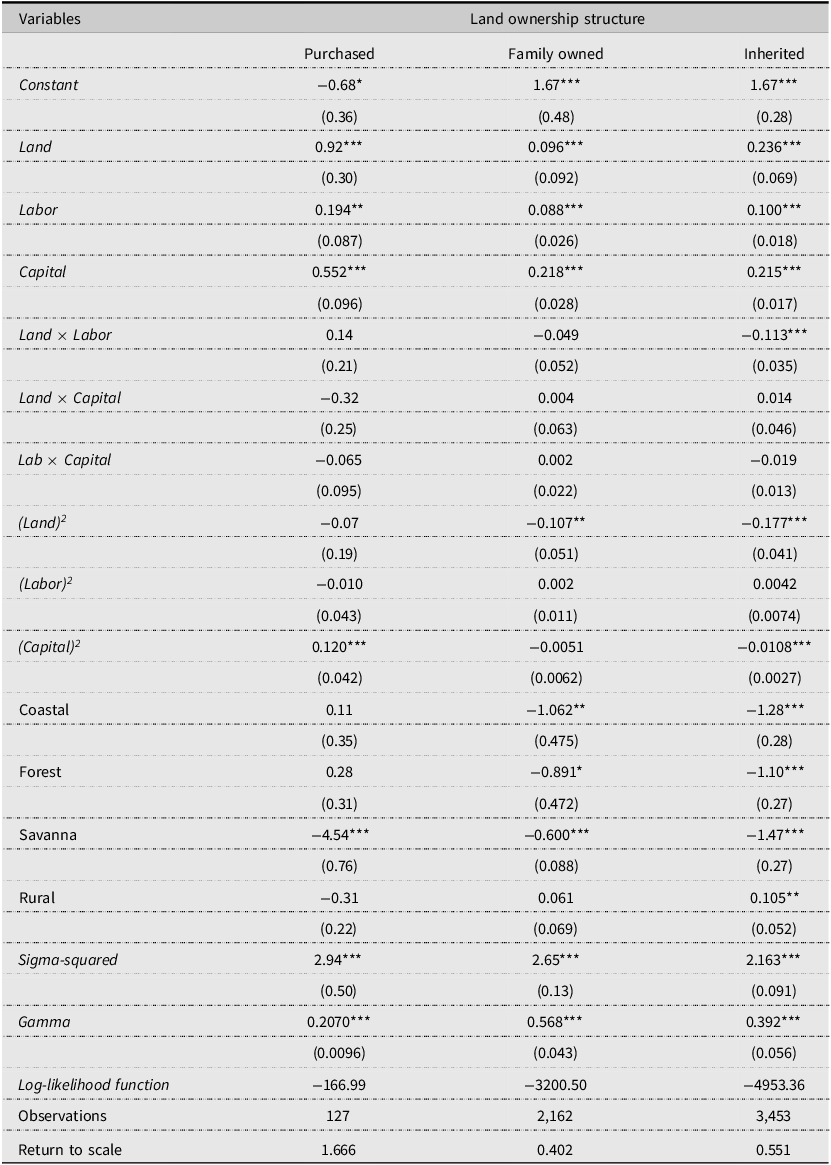
Table 4 Long description
The table presents estimates of parameters of translog stochastic frontiers of crop production across different land ownership structures. It includes three main columns: Purchased, Family owned, and Inherited. Each column lists various variables such as Constant, Land, Labor, Capital, and their interactions, along with squared terms and regional dummies like Coastal, Forest, Savanna, and Rural. The table has 25 rows and 3 columns. Each row provides the estimated values and standard errors for each variable under the different land ownership structures. Notable variables include Land, Labor, Capital, and their interactions, as well as squared terms and regional dummies. The table also includes statistical measures like Sigma-squared, Gamma, Log-likelihood function, Observations, and Return to scale.
1The inputs in the SFA production function model of equation (1) are referred to as seed, labor and capital. However, in Table 4, the production variables involved are the logarithms of these respective inputs which are first normalized by the area cultivated. For convenience, we do not specifically refer to the logarithms of these inputs. The asterisks, ***, **, and *, indicate significance at the 1, 5 and 10% levels, respectively.
The parameter estimates for all the inputs in the translog stochastic frontiers fall between zero and one across land ownership statuses and land ownership structure. This satisfies the monotonicity condition which indicates that all marginal products are positive and diminishing at the mean input values. Furthermore, significant estimates are obtained for the gamma parameterFootnote 15 across the land ownership statuses and ownership structure which implies that technical inefficiency effects are a significant component of the total variability in crop outputs across the land ownership statuses and land ownership structure. All the coefficients of the primary variables were positive and significant for the metafrontiers. Also, there are significant differences in the magnitude of the estimates of the metafrontiers and those of the group frontiers.
For land ownership statuses, the results in Table 3 show that land, labor, and capital are significant factors in increasing the total value of crop production across the different groups of farmers having ownership with deed, ownership without deed, and do not own. For instance, the results on land ownership statuses indicate that, generally, the coefficient for land is significant for farmers who own land with deed, own without deed and farmers who do not own land with elasticities of 0.96, 0.324 and 0.059, respectively. This implies that, generally, land contributes significantly to total crop output among farmers who own land, but the effect is greater for farmers owning land with deed. Similar estimates were found with maize production for farmers in Ghana (Awunyo-Vitor et al., Reference Awunyo-Vitor, Wongnaa and Aidoo2016) and Ethiopia (Mango et al., Reference Mango, Makate, Hanyani-Mlambo, Siziba, Lundy and Elliott2015) with elasticities of 1.145 and 0.215, respectively, and Zimbabwe (Tenaye, Reference Tenaye2020) with elasticity of 0.42 for smallholder mixed crop production hence, implying that our land elasticities are consistent with for African smallholders.
This implies that land is a strong determinant of output of crop production in Ghana, followed by capital for farmers who own land with and without deed, respectively. However, the situation is different for farmers who do not own land. For instance, for such farmers, crop output is most highly determined by capital, followed by labor, then land, where these corresponding elasticities are: 0.365, 0.111, and 0.059, respectively.
Consistent with Abdulai, Nkegbe and Donkoh (Reference Abdulai, Nkegbe and Donkoh2013) and Temoso, Villano, and Hadley (Reference Temoso, Villano and Hadley2016), land is found to be a vital resource playing an essential role in enhancing crop output. Another important determinant of crop output among the ownership status is labor. Labor has positive and significant effects on output across all three land ownership statuses thus, increasing labor use enhances the overall crop output by 0.063, 0.100 and 0.111, respectively, for farmers who own land with deed, owned without deed, and those who do not own the land used for crop production.
Crop output was positively influenced by capital, among farmers who own land with deed, without deed, and those who do not own land, where the corresponding elasticities are 0.296, 0.196, and 0.365, respectively. Access to capital has been found to enhance or boost sustainable crop productivity as it empowers framers to acquire relevant inputs and resources to increase crop production (Asante et al., Reference Asante, Temoso, Addai and Villano2019; Schut et al., Reference Schut, van Asten, Okafor, Hicintuka, Mapatano, Léon and Kagabo2016, Villano et al., Reference Villano, Asante and Bravo-Ureta2019). Savanna zones have highly significant and negative effects on crop outputs among farmers cultivating on lands owned with deed with corresponding coefficient of −1.84. Generally, in rural settings, crop output was positively affected for farmers operating on lands owned with deed, and those who do not own.
Given the parameter estimates for the frontier models for land ownership structure (in Table 4), the land variable has positive and significant effects on crop outputs for purchased, family-owned land, and inherited land with estimated coefficients of 0.92, 0.096 and 0.236, respectively. This suggests that land has the greatest effect on crop outputs of farmers cultivating on purchased lands. Similar results have been found in previous studies (Abdulai, Nkegbe and Donkoh, Reference Abdulai, Nkegbe and Donkoh2013; Asante et al., Reference Asante, Temoso, Addai and Villano2019). Farmers operating on purchased land obtain full access and control and have greater flexibility to make productivity-enhancing investment decisions on the land which increases crop productivity (Place and Otsuka, Reference Place and Otsuka2002).
The labor variable also had a significant positive effect on crop output for farmers cultivating on purchased land, family-owned land and inherited lands with partial elasticities of 0.194, 0.088 and 0.100, respectively. This indicates that increasing labor use has increasing effects on crop output. Labor is required to carry out basic crop production practices such as land clearing, lining and pegging, planting, fertilizer and herbicide application (Alem et al., Reference Alem, Lien, Hardaker and Guttormsen2019; Asante et al., Reference Asante, Temoso, Addai and Villano2019; Bellemare and Novak, Reference Bellemare and Novak2017).Footnote 16 Capital was found to have a positive relationship with crop output for farmers producing on purchased land, family-owned and inherited land, with coefficients of 0.552, 0.218 and 0.215, respectively. Given the maximum access and control over investment decisions, access to capital empowers farmers to effectively implement such investments in their production process and, hence, increasing crop outputs, especially on purchased lands. The results further indicate that farmers operating under land ownership with deeds and purchased lands exhibit increasing returns to scale.
Conversely, farmers who operate on family-owned land may not have flexibility to take decisions on investments in productivity-enhancing technologies, including the acquisition and use of such inputs to increase crop output (Alem et al., Reference Alem, Lien, Hardaker and Guttormsen2019; Koirala et al., Reference Koirala, Mishra and Mohanty2016). Consistent with several studies, the positive effects of these variables have been found with technical efficiency of crop production (Alem et al., Reference Alem, Lien, Hardaker and Guttormsen2019; Binam, Gockowski, and Nkamleu, Reference Binam, Gockowski and Nkamleu2008; Khanal et al., Reference Khanal, Wilson, Shankar, Hoang and Lee2018; Bempomaa and Acquah, Reference Bempomaa and Acquah2014; Addai and Owusu, Reference Addai and Owusu2014; Tefaye and Beshir, Reference Tefaye and Beshir2014).
For the location variables and with regard to structure of ownership, farmers in the savanna agroecological zone experienced significant negative effects on crop outputs from cultivating on purchased lands, family-owned land and inherited lands, with elasticities of −4.54, −0.600 and −1.47, respectively. However, for farmers operating on family-owned land, the major determinant of output is capital.
4.2. Factors affecting inefficiency in crop production in land ownership categories
The maximum-likelihood estimates of the factors influencing technical inefficiency in crop production across land ownership statuses and land ownership structure are presented in Tables 5 and 6, respectively. The results show that the inefficiency factors are very consistent in both models, thus, justifying the specification of the SFA model. For both land ownership status and land ownership structure models, the inefficiency factors in crop production had similar effects across all three frontiers with varying magnitudes. Generally, young male farmers with large household sizes, educated, have high value of assets, engaged in off-farm income-generating activities, having a bank account, have access to extension and credit had significantly lower technical inefficiencies in crop production across the land ownership statuses and ownership structure sub-groups.
Factors affecting inefficiency in crop production across land ownership statuses
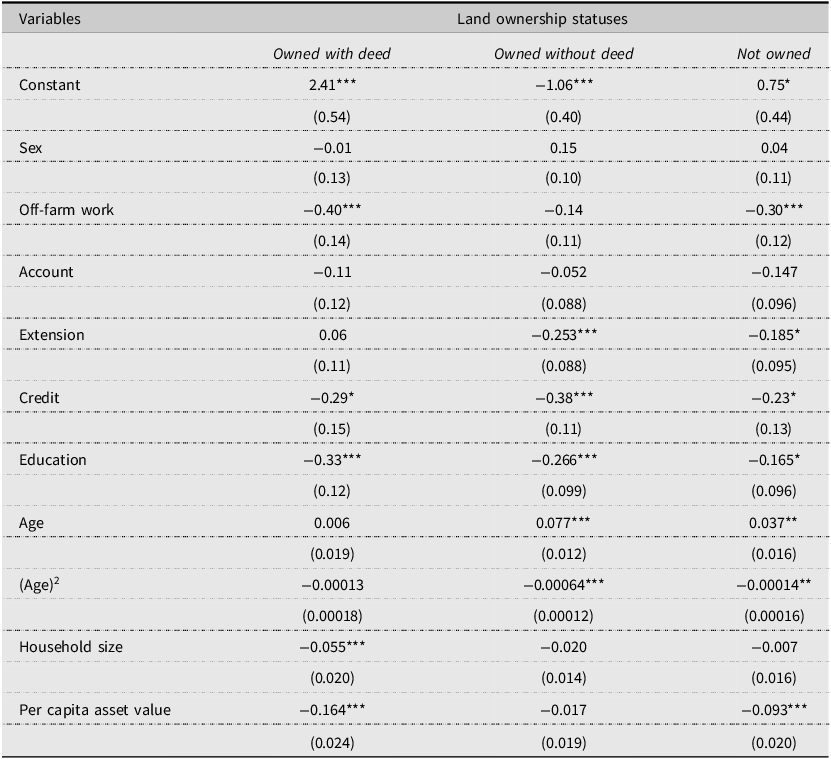
Table 5 Long description
A table comparing factors affecting inefficiency in crop production across different land ownership statuses. The table has 12 rows and 4 columns. The columns are labeled as Variables, Owned with deed, Owned without deed, and Not owned. The rows are labeled as Constant, Sex, Off-farm work, Account, Extension, Credit, Education, Age, Age squared, Household size, and Per capita asset value. Each cell contains numerical values and standard errors in parentheses. Notable trends include significant negative effects of off-farm work, account, extension, credit, education, and per capita asset value on technical inefficiency across different land ownership statuses.
aFigures in parenthesis are standard errors (SEs) and are reported to two-significant digits and the estimated coefficients are presented to the same number of digits behind the decimal point as the corresponding SE. b The asterisks, ***, **, and *, on the coefficients denote statistical significance at the 1, 5 and 10% levels, respectively.
Factors affecting inefficiency in crop production across land ownership structure
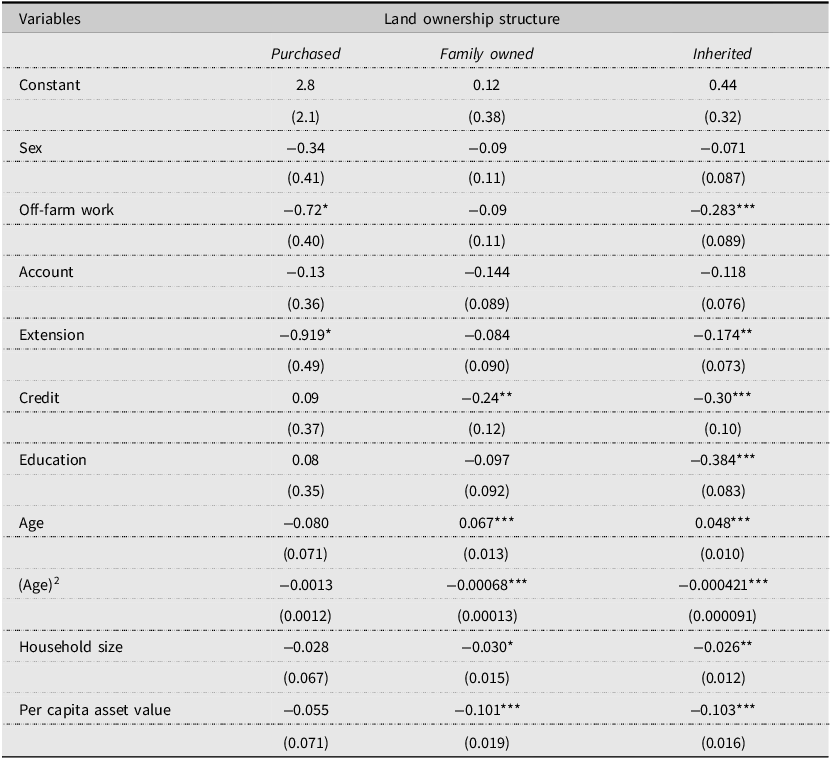
Table 6 Long description
A table comparing factors affecting inefficiency in crop production across land ownership structure. The table has 12 rows and 4 columns. The columns are labeled as Variables, Purchased, Family owned, and Inherited. The rows are labeled as Constant, Sex, Off-farm work, Account, Extension, Credit, Education, Age, Age squared, Household size, and Per capita asset value. Each cell contains numerical values and standard errors in parentheses. Notable trends include significant negative effects of off-farm work, extension, and education on inefficiency in crop production for purchased and inherited land, and significant positive effects of age on inefficiency for family-owned and inherited land.
aStandard errors (SEs) are reported to two-significant digits and the estimated coefficients are presented to the same number of digits behind the decimal point as the corresponding SE. b The asterisks, ***, **, and *, on the coefficients denote statistical significance at the 1, 5 and 10% levels, respectively.
Off-farm work reduces the technical inefficiencies in crop production for farmers in both land ownership frontiers, especially for farmers who owned land with deed and for those who do not own land. However, for the land ownership structure, off-farm work reduces technical inefficiencies for farmers producing under purchased and inherited lands. Although off-farm work reduces the available family labor for farm activities, incomes from off-farm economic activities may be used to support farm activities (Chavas, Petrie, and Roth, Reference Chavas, Petrie and Roth2005; Solís, Bravo-Ureta, and Quiroga, Reference Solís, Bravo-Ureta and Quiroga2009; Bempomaa and Acquah, Reference Bempomaa and Acquah2014; Gramzow et al., Reference Gramzow, Seguya, Afari-Sefa, Bekunda and Lukumay2018). For instance, off-farm income can be used to purchase important farm inputs to enhance productive efficiency among farm households (Asante et al., Reference Asante, Temoso, Addai and Villano2019; Gramzow et al., Reference Gramzow, Seguya, Afari-Sefa, Bekunda and Lukumay2018; Tesfay et al, Reference Tesfay, Ruben, Pender and Kuyvenhoven2005).
Extension contacts have a negative significant effect on technical inefficiency for farmers who own land without deed and those who do not own land, whereas, under the structure of ownership, extension reduced technical inefficiency for farmers operating on purchased land and inherited land. Accordingly, having contacts with extension reduces inefficiencies in crop production within these land ownership sub-groups. This is particularly so when such extension trainings and advisory services are tailored to address specific and appropriate crop production techniques relevant for enhancing productive efficiency (Binam et al., Reference Binam, Gockowski and Nkamleu2008; Prah et al., Reference Prah, Asante, Temoso and Villano2025; Abdulai et al., Reference Abdulai, Nkegbe and Donkoh2013; Asante et al., Reference Asante, Villano and Battese2017, Reference Asante, Temoso, Addai and Villano2019; Onumah et al., Reference Onumah, Onumah, Al-Hassan and Bruemmer2013). Given the generally low level of education of crop farmers in Ghana (Abdulai, Nkegbe and Donkoh, Reference Abdulai, Nkegbe and Donkoh2013; Onumah et al., Reference Onumah, Onumah, Al-Hassan and Bruemmer2013), direct policy implications would be to increase extension contacts and experience which is suitable to complement efforts at improving education.
Access to credit had a negative effect on technical inefficiency in crop production among all sub-categories under land ownership statuses, except for farmers who purchased land under land ownership structure. Access to credit increases the availability of funds for crop production, thus, is more likely to reduce inefficiencies in crop production (Asante et al., Reference Asante, Temoso, Addai and Villano2019; Issahaku and Abdulai, Reference Issahaku and Abdulai2020; Kuwornu et al., Reference Kuwornu, Amoah and Seini2013). Farmers are able to obtain the requisite inputs when required for timely use on farm activities, hence, reducing inefficiencies in production (Nchare, Reference Nchare2007; Abdulai et al., Reference Abdulai, Nkegbe and Donkoh2013). Consistent with other studies (Asante et al., Reference Asante, Villano and Battese2014; Etwire et al., Reference Etwire, Dogbe and Nutsugah2013; Qushim et al., Reference Qushim, Gillespie, Bhandari and Scaglia2018; Villano et al., Reference Villano, Asante and Bravo-Ureta2019), our findings suggest that educated farmers are able to appreciate and, hence, easily adopt improved production technologies such as improved seeds (Asante et al., Reference Asante, Villano and Battese2014) and improved agronomic practices, as well as increased interest in participating in training programs that enhance productive efficiency (Onumah et al., Reference Onumah, Onumah, Al-Hassan and Bruemmer2013; Asante et al., Reference Asante, Temoso, Addai and Villano2019).
Age of farmers has a decreasing effect on technical inefficiency of crop production, because of the negative coefficient of (Age) for almost all cases of land ownership statuses and land ownership structure. However, these effects are significant among farmers who own land without deed and those who don’t own land under ownership statuses, and also for farmers operating on family land and inherited land under structure of ownership.
Household size was found to have a significant decreasing effect on technical inefficiency in crop production among farmers cultivating on land owned with deed (Table 5) and on family-owned and inherited lands (Table 6). This signifies that, indeed, farmers with large households tend to be less technically inefficient in crop production. This could be as a result of the availability of family labor through large household sizes which can be used in crop production activities to enhance productive efficiency (Asante et al., Reference Asante, Temoso, Addai and Villano2019; Etwire et al., Reference Etwire, Dogbe and Nutsugah2013; Villano et al., Reference Villano, Asante and Bravo-Ureta2019).
Furthermore, consistent with similar studies (Issahaku and Abdulai, Reference Issahaku and Abdulai2020; Prah et al., Reference Prah, Asante, Temoso and Villano2025; Qushim et al., Reference Qushim, Gillespie, Bhandari and Scaglia2018), the results show that access to formal education reduces technical inefficiency for farmers producing in all sub-groups under land ownership statuses (Table 3a), and farmers operating on inherited lands regarding land ownership structure (Table 3b).
Value of assets per capita has a decreasing significant effect on technical inefficiency in crop production among farmers who own land with deed and those who do not own land; however, among those who own land, the effect was significant for farmers operating on family-owned land and inherited land. This implies that farmers with more assets per capita have lower technical inefficiencies in crop production (Tesfay et al., Reference Tesfay, Ruben, Pender and Kuyvenhoven2005; Bempomaa and Acquah, Reference Bempomaa and Acquah2014; Asante et al., Reference Asante, Temoso, Addai and Villano2019; Temoso et al., Reference Temoso, Villano and Hadley2016). For instance, famers can use their assets as collaterals to access credit for their crop production activities, hence, having more assets per household member can increase their ability to obtain more productive resources and, hence, increase productivity. However, among farmers who own land, this is more significant for farmers using inherited land and family-owned land.
4.3. Technical efficiency and the metafrontier
In this section, we compare productivity among land ownership statuses and ownership structure by examining the OMRs and the TEs relative to the metafrontier (OTE) (equations 3 – 6). We follow the Amsler et al. (Reference Amsler, O’Donnell and Schmidt2017) approach in estimating the ROTEs, OMRs and OTE. The summary of the results of the ROTEs, OMRs and OTE in crop production across the land ownership statuses and land ownership structure are presented in Tables 7 and 8, respectively. Productivity across land ownership status and ownership structure are compared using the OMRs. Our analysis is based on a single cross section, so we cannot observe farms over time or control for time varying shocks and learning dynamics. This raises the possibility that unobserved time varying factors, such as gradual adoption of new technologies or evolving credit conditions, may still influence differences in OTE, OMR, and ROTE across land ownership categories
Estimates of metatechnology ratios and technical efficiencies using crop production frontiers across three land ownership statuses
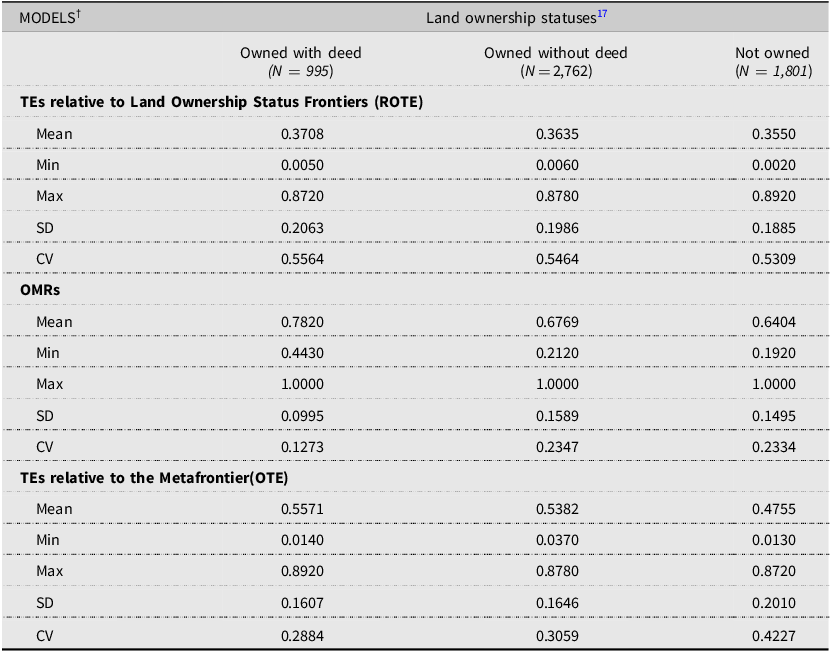
Table 7 Long description
The table compares productivity metrics across three land ownership statuses: Owned with deed, Owned without deed, and Not owned. It includes data on TEs relative to Land Ownership Status Frontiers (ROTE), OMRs, and TEs relative to the Metafrontier (OTE). The table has 12 rows and 4 columns. Column headers are Models, Owned with deed (N = 995), Owned without deed (N = 2,762), and Not owned (N = 1,801). Row labels include Mean, Min, Max, SD, and CV for each of the three categories: TEs relative to Land Ownership Status Frontiers (ROTE), OMRs, and TEs relative to the Metafrontier (OTE). Row 1: TEs relative to Land Ownership Status Frontiers (ROTE), Mean, 0.3708, 0.3635, 0.3550. Row 2: TEs relative to Land Ownership Status Frontiers (ROTE), Min, 0.0050, 0.0060, 0.0020. Row 3: TEs relative to Land Ownership Status Frontiers (ROTE), Max, 0.8720, 0.8780, 0.8920. Row 4: TEs relative to Land Ownership Status Frontiers (ROTE), SD, 0.2063, 0.1986, 0.1885. Row 5: TEs relative to Land Ownership Status Frontiers (ROTE), CV, 0.5564, 0.5464, 0.5309. Row 6: OMRs, Mean, 0.7820, 0.6769, 0.6404. Row 7: OMRs, Min, 0.4430, 0.2120, 0.1920. Row 8: OMRs, Max, 1.0000, 1.0000, 1.0000. Row 9: OMRs, SD, 0.0995, 0.1589, 0.1495. Row 10: OMRs, CV, 0.1273, 0.2347, 0.2334. Row 11: TEs relative to the Metafrontier (OTE), Mean, 0.5571, 0.5382, 0.4755. Row 12: TEs relative to the Metafrontier (OTE), Min, 0.0140, 0.0370, 0.0130. Row 13: TEs relative to the Metafrontier (OTE), Max, 0.8920, 0.8780, 0.8720. Row 14: TEs relative to the Metafrontier (OTE), SD, 0.1607, 0.1646, 0.2010. Row 15: TEs relative to the Metafrontier (OTE), CV, 0.2884, 0.3059, 0.4227.
†SD denotes Standard Deviation; CV represents Coefficient of Variation.
Estimates of metatechnology ratios and technical efficiencies using crop production frontiers across land ownership structure
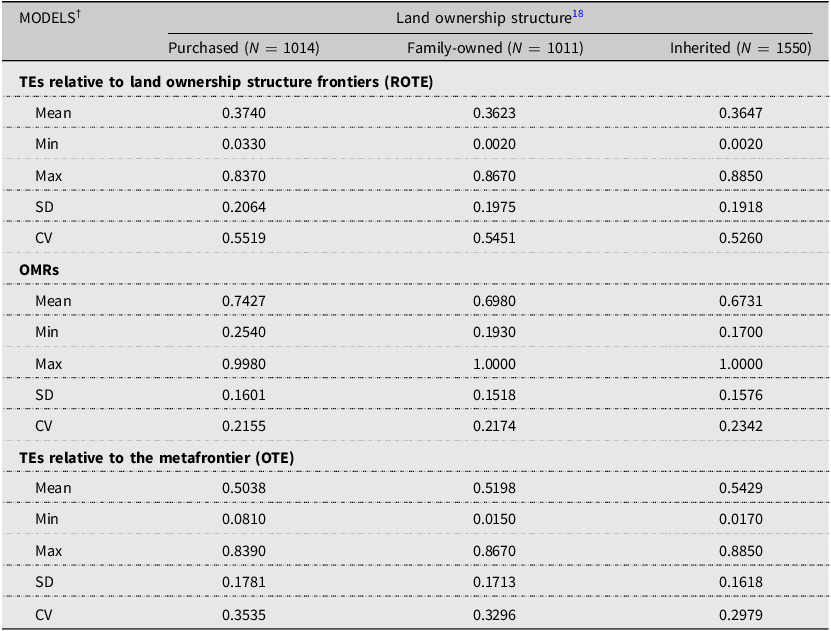
Table 8 Long description
The table presents data on technical efficiencies (TEs) and metatechnology ratios (OMRs) relative to land ownership structure frontiers (ROTE) and the metafrontier (OTE). It is divided into three main sections: TEs relative to land ownership structure frontiers (ROTE), OMRs, and TEs relative to the metafrontier (OTE). Each section includes mean, minimum, maximum, standard deviation (SD), and coefficient of variation (CV) values for three land ownership structures: Purchased, Family-owned, and Inherited. The table has 15 rows and 10 columns. Column headers include Mean, Min, Max, SD, and CV for each of the three land ownership structures. Row labels include TEs relative to land ownership structure frontiers (ROTE), OMRs, and TEs relative to the metafrontier (OTE). Notable trends include variations in mean values, with Purchased land showing higher mean values in some categories compared to Family-owned and Inherited land. The data highlights differences in productivity and efficiency across different land ownership structures.
†SD denotes Standard Deviation; CV represents the Coefficient of Variation.
In Table 7, the average estimated TEs with respect to land ownership status frontiers (ROTEs) are 0.371 0.355 and 0.365 for owned with deed, owned without deed, and not owned, respectively. This indicates that, in the short run, given the available production resources and technology for the respective land ownership status frontiers, there is potential for increasing crop productivity by 63%, 65.5% and 64.5% for farmers cultivating on lands owned with deed, owned without deed, and not owned, respectively, by adopting the best production practices and improved crop technologies as well as addressing relevant inefficiencies in crop production. However, the OTEs are larger than those obtained relative to their respective land ownership status frontiers, the values being 0.4755, 0.5571 and 0.5382 for farmers producing on lands owned with deed, owned without deed and on lands not owned, respectively. This confirms that the only stochastic frontier estimator that guarantees that estimated metafrontiers will envelop group frontiers is the estimator of Amsler et al. (Reference Amsler, O’Donnell and Schmidt2017).
We note that, on average, crop farmers who do not own the land they cultivate are much less technically efficient than those who own their land with deed or without deed, but they could improve their productivity if they could possibly adopt the best practices of other farmers who produce on their own lands with or without deed. It is interesting to note that, whereas the lowest mean ROTE with respect to the land ownership status frontier was obtained by farmers who own land with deed (0.381), the lowest mean OTE (0.349) was achieved by farmers who do not own land.
The differences in the results are expected because we hypothesized that farmers have different land ownership statuses and might perform differently due to the different production environments and land tenure arrangements (Asante et al., Reference Asante, Temoso, Addai and Villano2019; Villano et al., Reference Villano, Asante and Bravo-Ureta2019). Furthermore, the coefficient of variation (CV) for the group frontiers shows no difference between ownership with or without deed but are more variable for farmers who do not own land. This is consistent with previous studies which have shown that there are productivity differences between farmers who own and do not own their land and whether they own their land with or without deed (Bellemare, Reference Bellemare2013; Koirala et al., Reference Koirala, Mishra and Mohanty2014, Reference Koirala, Mishra and Mohanty2016; Mitra et al., Reference Mitra, Khan, Nielsen and Rahman2021; Ngango and Hong, Reference Ngango and Hong2021). However, clear differences also exist in the CVs for the OMRs and TEs between farmers who own land with deed and those who own land without deed. For instance, the CV for the OMRs for ownership with deed (0.058) is far lower than that for those who own land without deed (0.185).
Considering the land ownership structure, the average estimated TEs with respect to individual land ownership frontiers (ROTEs) are 0.791, 0.397, and 0.437 (Table 8), for purchased, family-owned, and inherited lands, respectively. This points to the potential for increasing crop production by up to 20.97%, 60.3%, and 56.3%, respectively, for purchased, family-owned, and inherited lands through the adoption of best practices and improved technologies in crop production in the short run. The mean OTE estimates were 0.396, 0.372, and 0.374 for purchased, family-owned and inherited lands, respectively. Our results further accede to the fact that estimations solely from the technical efficiency with reference to the frontiers for comparison across land ownership structure may be misleading (Battese et al., Reference Battese, Rao and O’Donnell2004; O’Donnell et al., Reference O’Donnell, Rao and Battese2008; Asante et al., Reference Asante, Temoso, Addai and Villano2019).
4.4. Crop production technologies in Ghana
A higher OMR generally structure that the group frontiers are closer to the metafrontier for land ownership categories involved. A farm that has an OMR of one indicates that the farm is at a point of tangency for the metafrontier involved. For the land ownership statuses, the average estimated OMRs are 0.782, 0.677 and 0.640 for land ownership with deed, without deed, and do not own, respectively. In addition, the average estimated OMRs for land ownership structure are 0.743 0.698 and 0.673 for farmers who operate lands that are purchased, family-owned, and inherited, respectively.
For all three land ownership statuses and ownership structure, some farmers attained OMR values of unity. This suggests that the activities of these farmers operating under the different land ownership statuses are on the metafrontier involved. The results show that, given the available resources, farmers who own land with deed are closer to the metafrontier than those who own land without deed and those who do not own land. Likewise, farmers who operate on purchased land are closer to the metafrontier than the other two land ownership structure (Table 8) with their available resources.
Subsequently, with all factors unchanged, crop farmers in Ghana who own land with deed are likely to produce closer to their maximum potential output for land ownership statuses, earlier than the other two sub-groups. Similarly, farmers who farm on purchased land have the potential to produce nearer to their maximum potential output earlier than farmers in the other two sub-groups under land ownership structure.
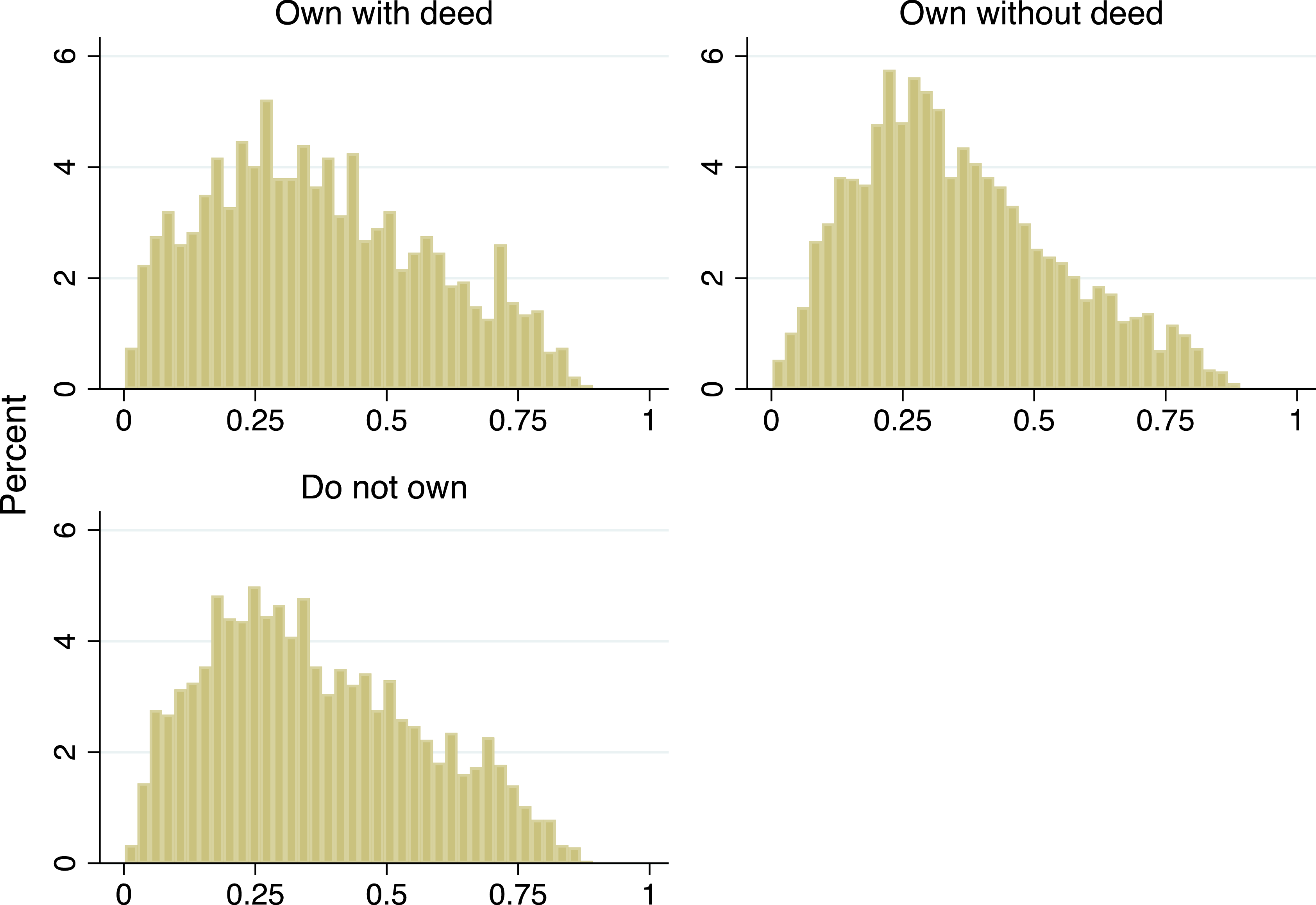
Figures 2 and 4 depict the distributions of the TEs for the farmers within the different groups (ROTEs) of land ownership statuses and land ownership structure, respectively. These distributions of the TEs are generally positively skewed for the farmers within their different ownership statuses (owned with deed, owned without deed, and not owned) and land ownership structure (purchased, family-owned, and inherited). However, these distributions of the TEs show greater dispersion for the farmers with land do not own land for the land ownership status frontiers, and the farmers who operated land that was purchased for the land ownership structure frontiers.
Distributions of ROTEs for land ownership status frontiers..
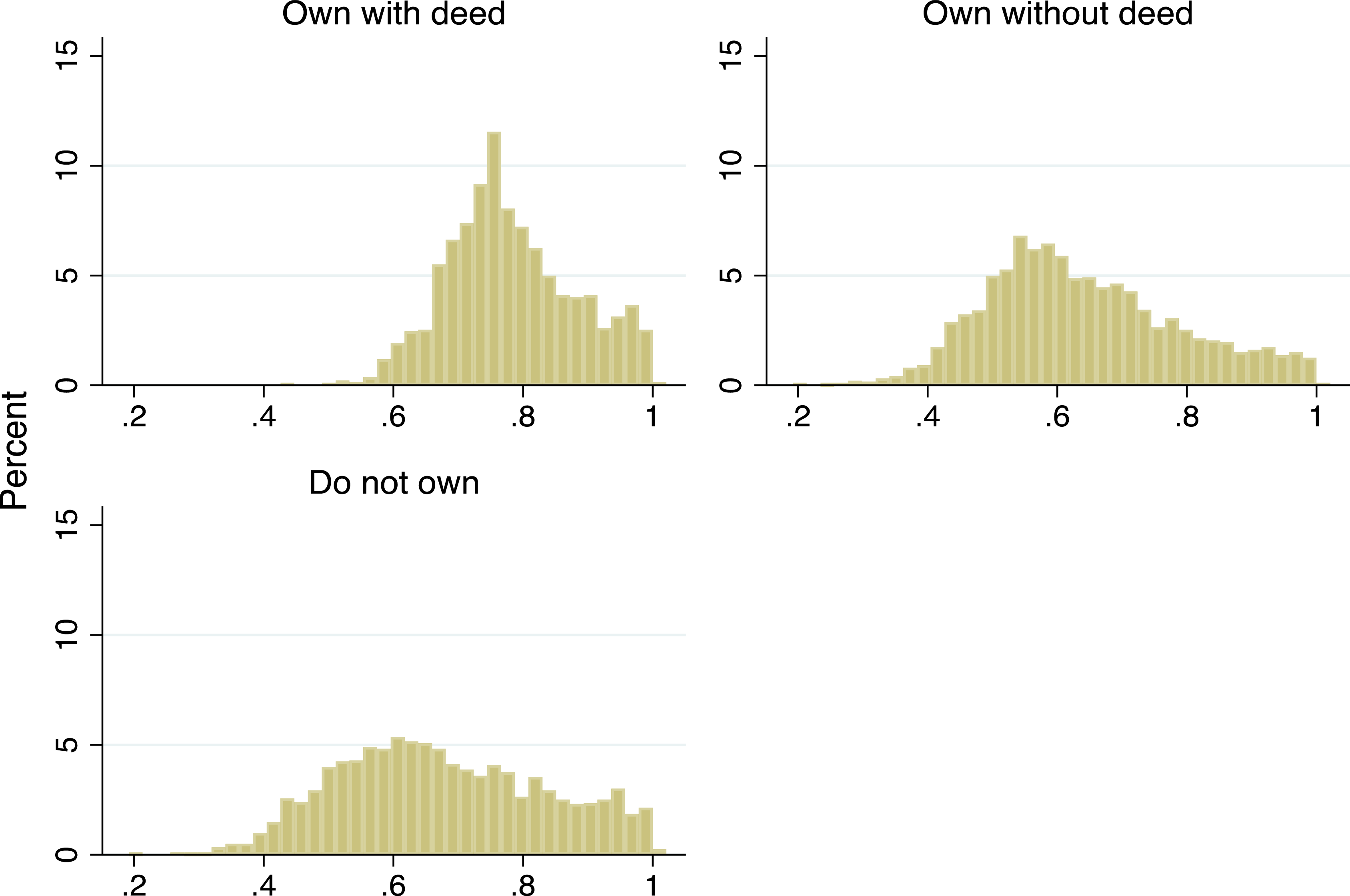
The distributions of the OMR estimates for the different sub-groups for land ownership status and land ownership structure are presented in Figures 3 and 5, respectively. These distributions are generally negatively skewed, especially for farmers who operated inherited or family-owned land in the analysis of land ownership structure and for farmers who own the land they operated with deed in the analysis of the land ownership status. However, the distribution of the OMRs shows greater dispersion for farmers who operated purchased lands and for farmers who owned land with deed.
Distributions of OMRs for different land ownership status frontiers.
Distributions of ROTEs for land ownership structure frontiers.

Distributions of OMRs for different land ownership structure frontiers.

4.5. Potential for increasing the metatechnology ratios for farmers in land ownership categories
The metafrontier analysis allows the performance across the land ownership statuses and land ownership structure to be directly compared and provide us with the ability to identify existing land ownership-metatechnology ratios in crop production in Ghana. This gives insight into how much productivity gain is attainable by increasing TE in crop production across land ownership statuses and land ownership structure (Battese, Rao and O’Donnell, Reference Battese, Rao and O’Donnell2004; O’Donnell et al., Reference O’Donnell, Rao and Battese2008; Asante et al., Reference Asante, Temoso, Addai and Villano2019). This is very crucial especially, given that, in the short run, TE can be directly increased by factors such as training on farm resource utilization (farms could reduce the use of certain inputs without any reductions in yield), as well as improved technologies, and good agronomic practices. Our results show that there is an opportunity to bridge the land ownership-metatechnology ratios in both land ownership statuses and land ownership structure particularly, among farmers producing on purchased lands and those producing on lands they do not own. These results suggest a comparatively high potential for farmers who operate on purchased land and non-owned lands to improve their performance in crop production than farmers in the remaining ownership sub-groups (Abdulai et al., Reference Abdulai, Nkegbe and Donkoh2013; Asante et al., Reference Asante, Temoso, Addai and Villano2019; Battese et al., Reference Battese, Rao and O’Donnell2004).
Consequently, such farmers could improve their productivity by adopting prevailing relevant production practices similar to those who operate on own lands with deed as well as those operating on purchased lands. Such practices include; the use of improved seeds and planting materials, and improved agronomic, harvesting and post-harvest practices. Consistent results were obtained by Asante et al. (Reference Asante, Temoso, Addai and Villano2019) and Abdulai et al., (Reference Abdulai, Nkegbe and Donkoh2013) where good agronomic practices enhanced agricultural productivity. However, the differences in TE among the land ownership statuses and ownership structure might also flow from inflexibility in productivity-enhancing technologies due to limitations resulting from the land ownership statuses and land ownership structure not only farmers’ practices. The maximum MTR of one occurred in all land ownership status and structure, suggesting that; there is still the possibility of closing and/or substantially narrowing the land ownership-technology gap in crop production (Asante et al., Reference Asante, Temoso, Addai and Villano2019; Villano et al., Reference Villano, Asante and Bravo-Ureta2019; O’Donnell et al., Reference O’Donnell, Rao and Battese2008). This might be possible by exploiting the relevant productivity-enhancing technologies in the production systems available across the different land ownership statuses and structure.
Adopting and adapting productivity-enhancing production technologies across land ownership statuses and structure could also allow farmers to move towards the metafrontier, thus, becoming more efficient (Asante et al., Reference Asante, Temoso, Addai and Villano2019; Mariano et al., Reference Mariano, Villano and Fleming2011; Moreira and Bravo-Ureta, Reference Moreira and Bravo-Ureta2010; Villano et al., Reference Villano, Asante and Bravo-Ureta2019). The results indicate that such adoption could be possible, predominantly among farmers who do not own land and those who operate on family-owned land who are considerably far from the metafrontier.
5. Conclusions and policy implications
This study examines the link between land ownership and agricultural productivity in Ghana by investigating the productivity and efficiency differentials across different land ownership categories. We examine three land ownership statuses – owned with deed, owned without deed, and not owned; and further assessed the differences in performance under specific structure of land ownership – purchased, family-owned, and inherited.
The results provide evidence of crop productivity differences across land ownership statuses and ownership structure. Under different land ownership statuses and land ownership structure, both crop productive performance and crop production technologies varied greatly. For instance, with regard to the ownership statuses, farmers who operated on lands owned with deed have higher productivity than those who own land without deed as well as those who do not own land. Similarly, the highest productivity in terms of land ownership structure was obtained by farmers operating on purchased lands. Generally, some farmers failed to achieve the highest possible output with regard to the metafrontier. For instance, apart from farmers who own land with deed and those operating on purchased lands, farmers operating on other categories of land ownership statuses and structure have the potential to improve their crop productivity.
Our results provide evidence-based information on specific ownership statuses and ownership structure for improving general crop productivity. The result implies that farmers producing under different land ownership statuses and land ownership structure are faced with different challenges which has serious implications on their performance. The implication is that there are some underlying restrictions and constraints with land ownership statuses and ownership structure which tend to collectively define the underlying technology For instance, farmers who own land with deed will be able to use the title as collateral to obtain loan/credit to finance farm-investment decisions which has the potential of enhancing productivity. Farmers who do not own land have more restrictions in terms of access and control as well as the limitations of not being able to use the land title as collateral for accessing funds. Similarly, farmers who own land without deed do not have access to title, hence, are limited in terms of the ability to use the land as collateral for accessing funds and are also faced with some inertia in making investments on their land.
With regard to structure of ownership, farmers who purchase the land have the highest level of flexibility in terms of access and control hence are able to undertake productivity-enhancing investments on the land. However, farmers operating on purchased land, have the flexibility to use the title as collaterals for assessing loans/credit for financing crop production activities. Farmers who operate on inherited lands have some degree of flexibility. If the inherited land has title, then they can use it as collateral to access loans/credit. Furthermore, even in situations where the title is available, this flexibility lies with the kind of inheritance. For instance, if the farmer inherited the land together with their siblings as joint owners, then access and control is also limited unless with permission from the parties to the inheritance. This also influences the kinds of productivity enhancing investment decisions that can be made on the land. For family-owned land, there is almost no flexibility to invest on the land because it does not belong to the farmer alone and this has implications on farmers’ performance.
There is the need for specific policy actions targeted at farmers with specific land ownership status and ownership structure to improve individual performance in crop production. However, the recent agricultural policies in Ghana do not make room for such differences. To improve overall crop productivity across the country, interventions and policies should take into consideration the differences in land ownership statuses as well as the structure of ownership that can impede crop productivity to achieve the desired impacts. This will require the existing land policy in Ghana to recognize and consider policies on agricultural land use particularly, with the aim of promoting access to ownership with or without deed for agricultural lands. Mostly, farmers who own land with deed and those who operate on purchased could improve crop productivity through a shift in the production frontier for the crop production sector through innovation or technological advancement. Thus, policies that promote land ownership with deed particularly purchased ownership need to be pursued since they have potential to enhance overall crop productivity
Also, the formulation of agricultural policies in Ghana focused on enhancing farmers access to proper land ownership systems with or without deed as well as customary system of ownership such as the inherited and family-owned land needs to be promoted as it has the tendency to increase overall crop productivity. Accordingly, farmers who do not own the land as well as those operating on family-owned land, characterized by a production technology with the high MTR with low TE, could improve crop productivity through adoption of improved production and crop management techniques currently being used by farmers operating on land owed with or without deed, and those under purchased or inherited lands. In addition, such farmers can increase crop productivity by benchmarking for the existing crop production technology being used by farmers who own land with deed, and purchased lands, respectively.
The study underscores the need for targeted policy interventions that address the challenges faced by farmers under different land tenure systems. Current agricultural policies in Ghana do not adequately account for these variations, limiting their effectiveness in improving smallholder productivity. To enhance agricultural sustainability and food security, land tenure policies should facilitate access to secure ownership with or without a deed, ensuring that farmers – regardless of their land status – can make long-term investments in their farms. Additionally, customary land systems, including inherited and family-owned land, should be better integrated into formal land policies to remove barriers to investment. Farmers on less secure land tenure arrangements can also improve productivity by adopting best practices from those with formal ownership through benchmarking and improved crop management techniques. Achieving sustainable agricultural development in Ghana requires a comprehensive land tenure reform that enhances access to land, encourages responsible investment, and promotes innovative farming technologies. Addressing land security challenges will not only improve crop yields and farmer livelihoods but also contribute to broader environmental sustainability, rural development, and national food security goals. Our study used cross sectional dataset, hence were unable to account for differences in productivity over time. Future research should use panel data or quasi-experimental designs to separate land-ownership effects from farmer experience and risk behavior and to track changes in OTE, OMR, and ROTE over time.
Data availability statement
Data used for this research will be made available upon reasonable request.
Acknowledgements
We thank the Ghana Statistical Service for making available the Ghana Living Standard Survey (GLSS) round 7 dataset which was used in this paper.
Author contribution
Conceptualization, B.O.A and I.K; Methodology, B.O.A. and R.A.V; Formal Analysis, B.O.A. and R.A.V.; Data Curation, B.O.A and I.K.; Writing – Original Draft, B.O.A and I.K., Writing – Review and Editing, I.K and R.A.V.; Supervision, R.A.V.
Financial support
There was no funding associated with this research
Competing interests
Authors: Bright O. Asante, Isaac Koomson and Renato A. Villano, declare none.
Appendix 1
The basic empirical findings that supports various tests of hypotheses
The first hypothesis, H 0: δ s k s = 0, γ = 0, states that the inefficiency effects don’t exist in the models. The critical value is obtained from the Kodde & Palm Table A1 for 11 degrees of freedom, and this is strongly rejected for all the land ownership statuses and the pooled. This indicates that, indeed inefficiency effects are significant in. the models. The next hypothesis, H 0: β ij k = 0, test that the C-D is adequate, given the assumptions of the TL model, the ln[L(H1)] values are for the TL frontier model. The critical value is obtained from the regular chi-square distribution with 6 degrees of freedom. This hypothesis is also strongly rejected for all. The land ownership statuses sub-group frontiers. Signifying that the translog production frontier is an adequate representation of the data.
Tests of hypotheses for land ownership status models
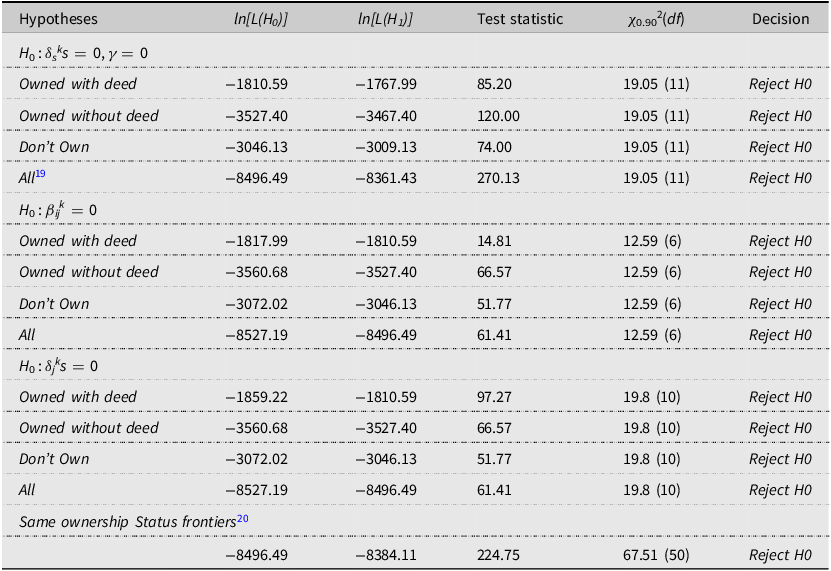
Table A1 Long description
A table comparing hypotheses tests for land ownership status models. The table has 12 rows and 6 columns. The columns are labeled Hypotheses, ln[L(H0)], ln[L(Hj)], Test statistic, χ20.902(df), and Decision. The rows are grouped under different hypotheses and ownership statuses. The first group of rows tests the hypothesis H0: δks = 0, γ = 0 with different ownership statuses: Owned with deed, Owned without deed, Don't Own, and All. The second group tests the hypothesis H0: βjk = 0 with the same ownership statuses. The third group tests the hypothesis H0: δks = 0 with the same ownership statuses. The final row tests the hypothesis with the same ownership status frontiers. Each row provides values for the log-likelihood of the null hypothesis, log-likelihood of the alternative hypothesis, test statistic, critical value, and decision to reject or not reject the null hypothesis.
Table A2 presents the tests of hypotheses for the models used in the paper. The first hypothesis, H 0: δ s k s = 0, γ = 0, states that the inefficiency effects don’t exist in the models. The critical value is obtained from the Kodde & Palm Table A1 for 11 degrees of freedom, and is strongly rejected for all the land ownership means frontiers and the pooled. This suggests that, inefficiency effects are significant in the estimated frontiers.
The next hypothesis, H 0: β ij k = 0, test that the C-D is adequate, given the assumptions of the TL model, the ln[L(H1)] values are for the TL frontier model. The critical value is obtained from the regular chi-square distribution with 6 degrees of freedom. This hypothesis is also strongly rejected for all the land ownership means sub-group frontiers implying that the translog production frontier is an adequate representation of the data.
The third hypothesis tests that the coefficients of the inefficiency variables are all zero. This hypothesis is also strongly rejected for all the sub-group frontiers, indicating that at least one of the inefficiency effect variables significantly influence inefficiency in crop production under the three sub-group frontiers.
Lastly, we test the null hypothesis that the stochastic frontiers for crop production were the same for farmers in each of the sub-groups under each of the land ownership means which is also strongly rejected, hence, the estimated stochastic frontiers for the three sub-groups in each of the land ownership categories were significantly different. Hence, justifying the appropriateness of the use of the metafrontier for comparing the technical efficiencies of farmers in different sub-groups for the land ownership means.
Tests of hypotheses for land ownership means models
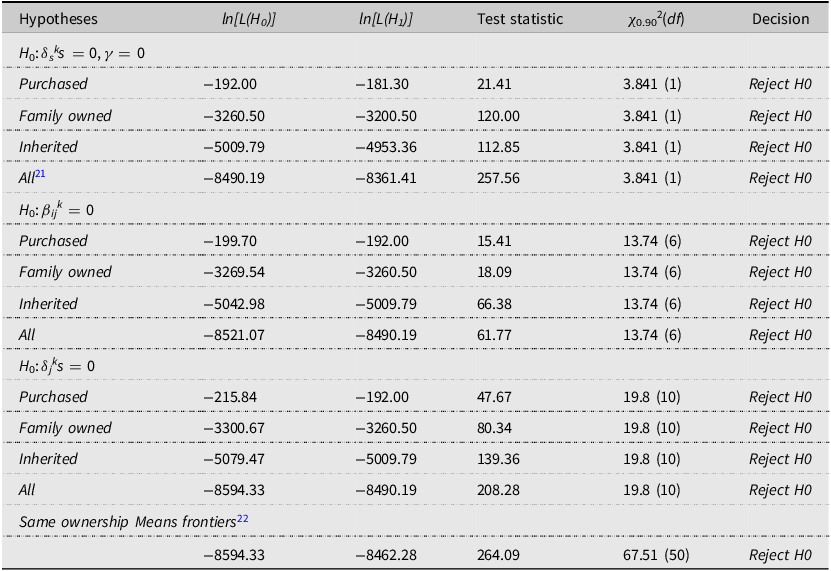
Table A2 Long description
The table presents tests of hypotheses for land ownership status models. It includes hypotheses, log-likelihood values under null and alternative hypotheses, test statistics, critical values, and decisions. The table has 12 rows and 6 columns. Column headers are Hypotheses, ln[L(H 0 )], ln[L(H 1 )], Test statistic, 0.90 2(df), and Decision. Row labels include different hypotheses and land ownership statuses. Each row provides specific values for each column, indicating whether the null hypothesis is rejected or not. The table shows that all hypotheses are rejected, suggesting significant inefficiency effects and the adequacy of the translog production frontier model.
The third hypothesis tests that the coefficients of the inefficiency variables are all zero. This hypothesis is also strongly rejected for all the sub-group frontiers, indicating that at least one of the inefficiency effect variables significantly influence inefficiencies in crop production for the three land ownership statuses.
Lastly, we test the null hypothesis that the stochastic frontiers for crop production were the same for farmers in each of the sub-groups under each of the land ownership categories which is also strongly rejected, hence, the estimated stochastic frontiers for the three sub-groups in each of the land ownership statuses were significantly different. Hence, justifying the appropriateness of the use of the metafrontier for comparing the technical efficiencies of farmers in different sub-groups for the land ownership statuses.
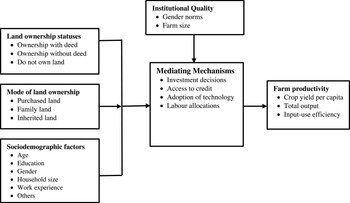
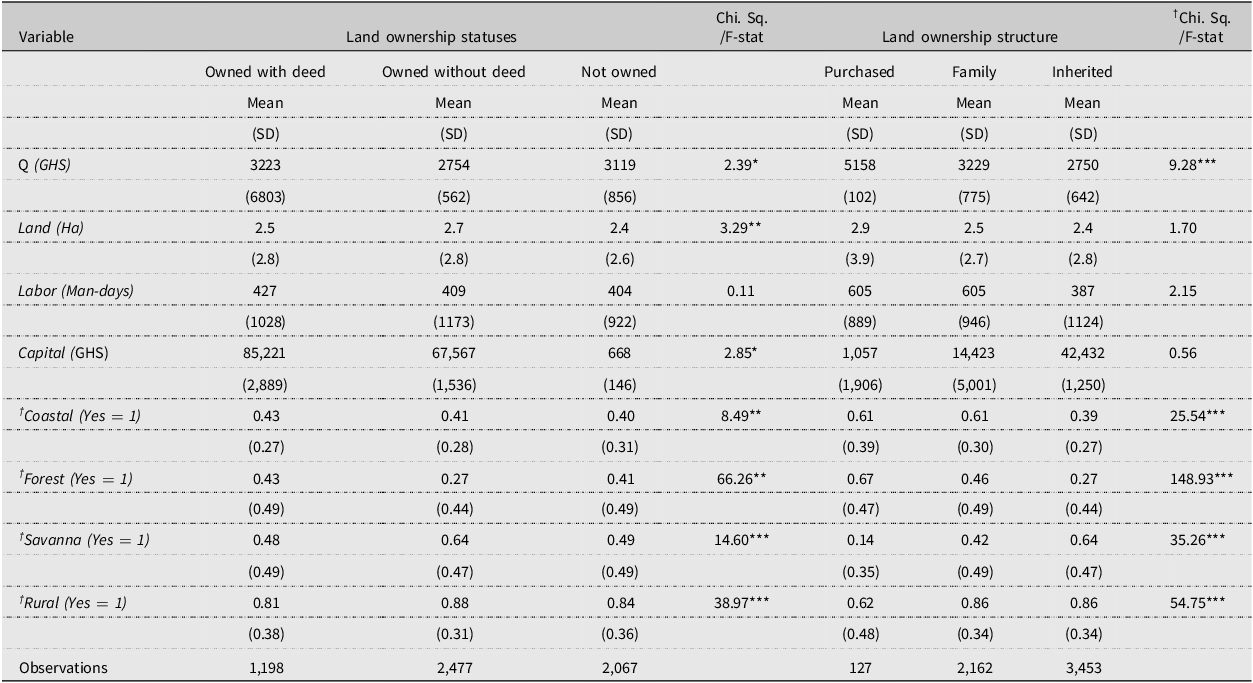
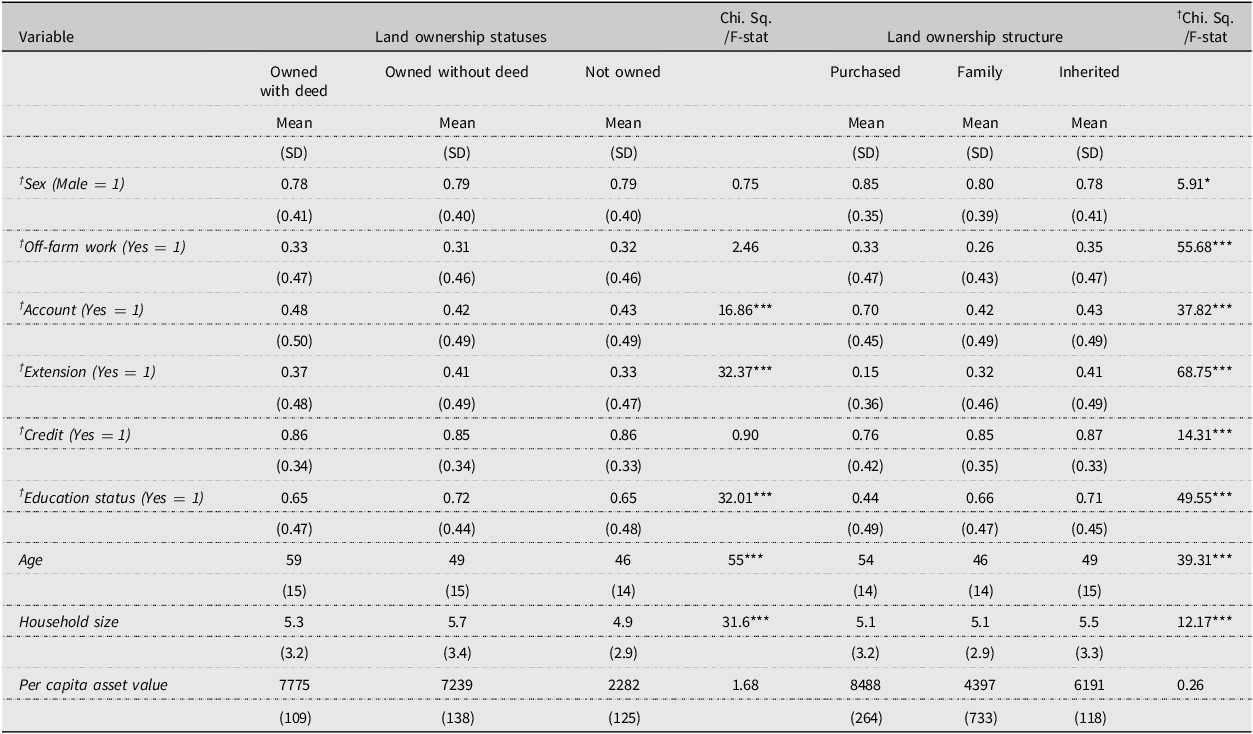
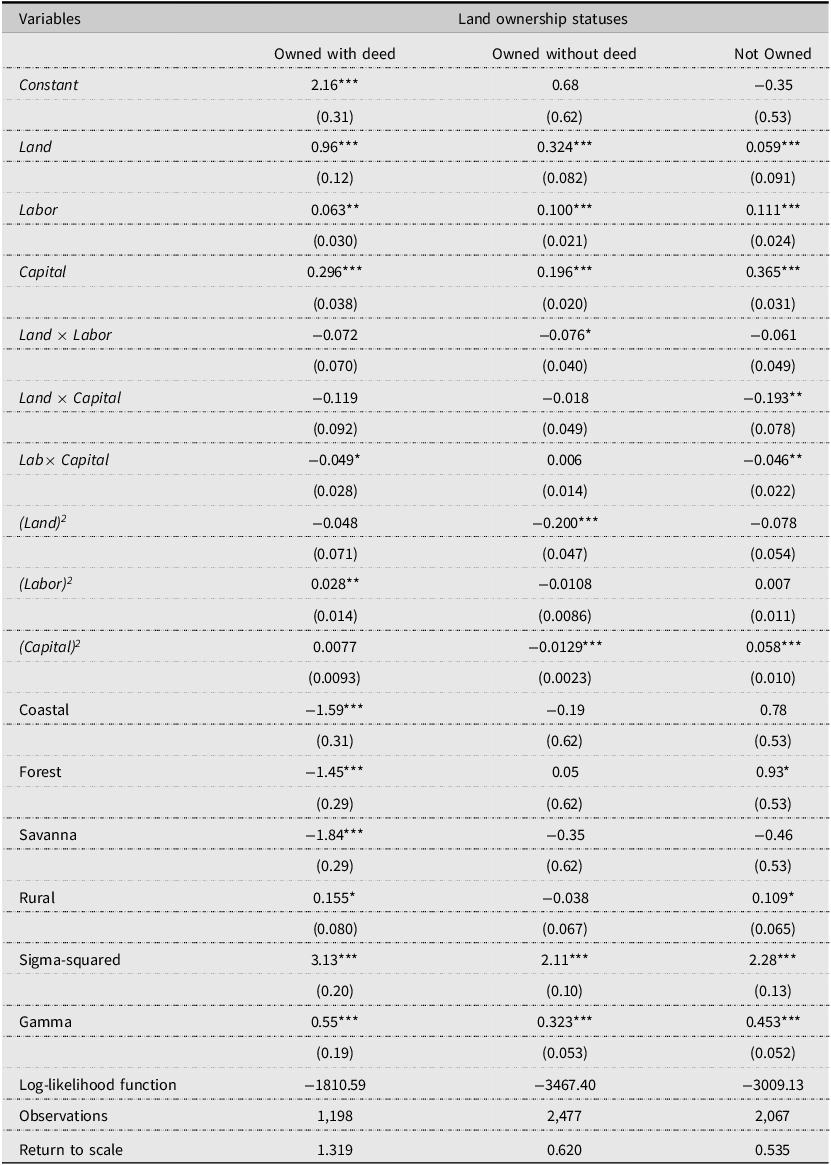
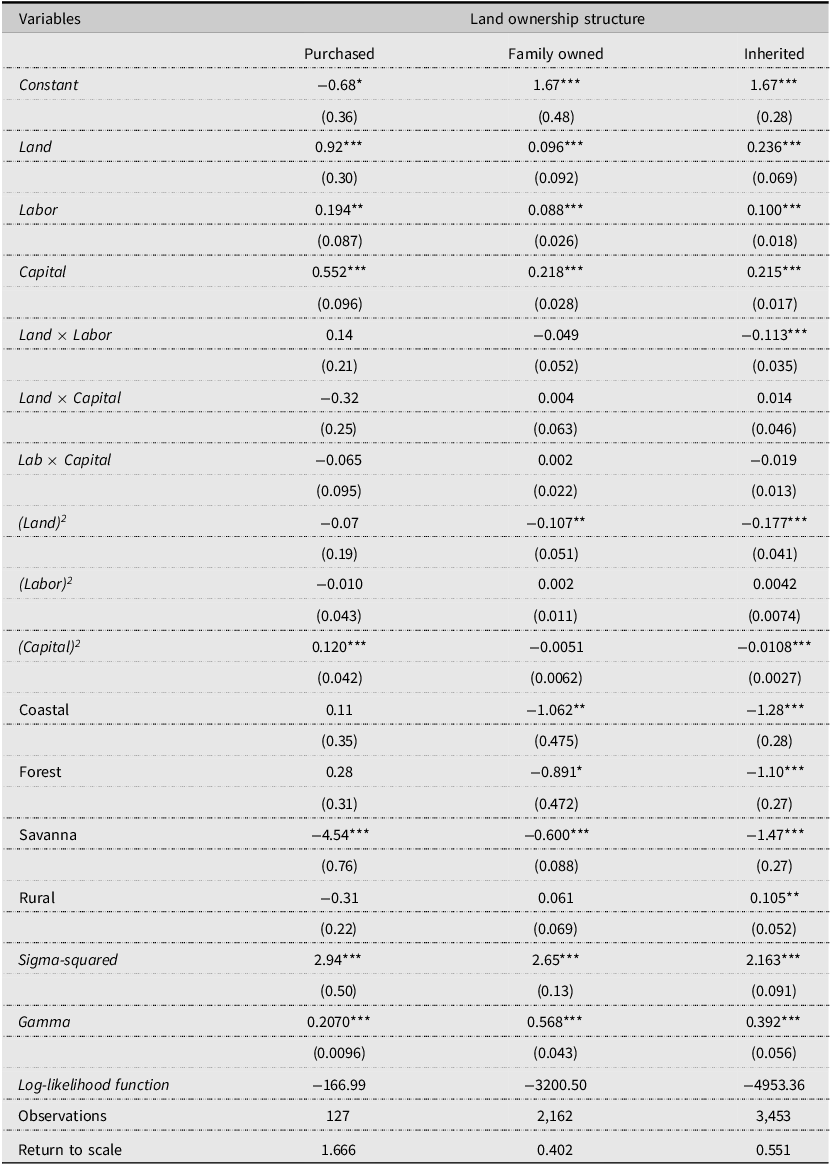
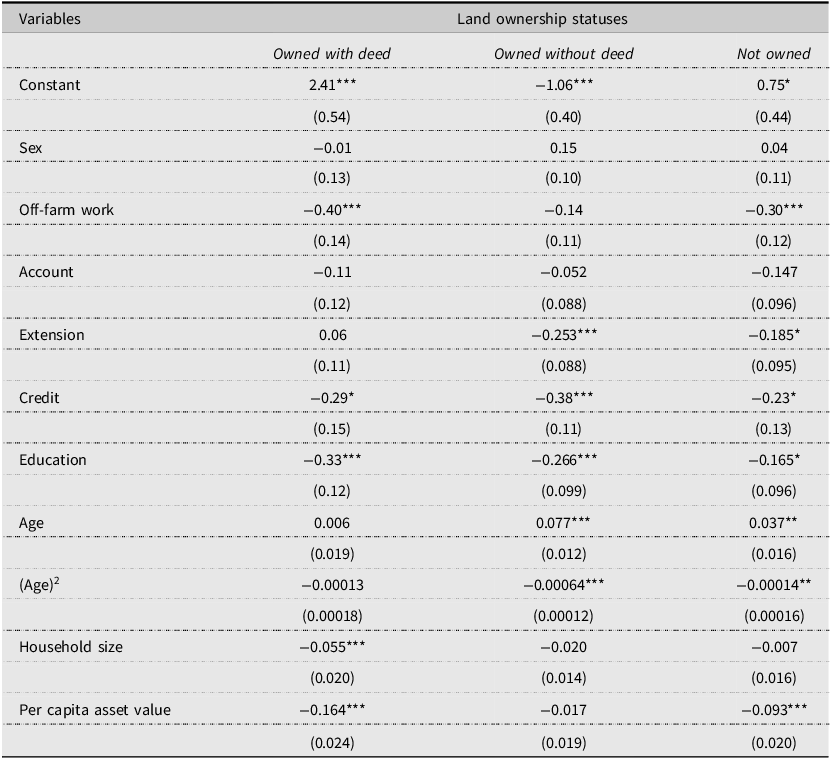
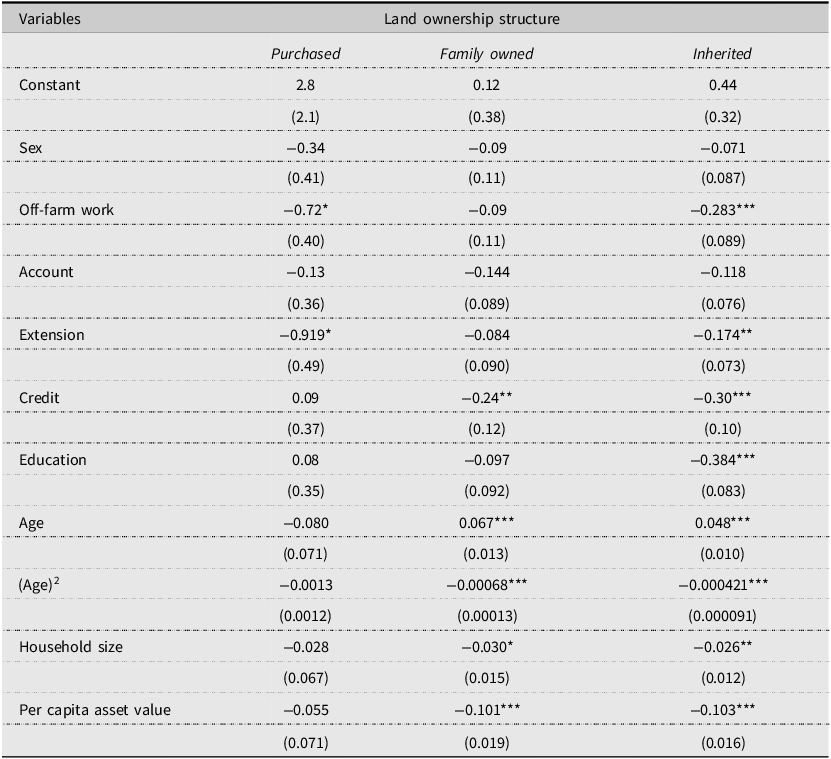
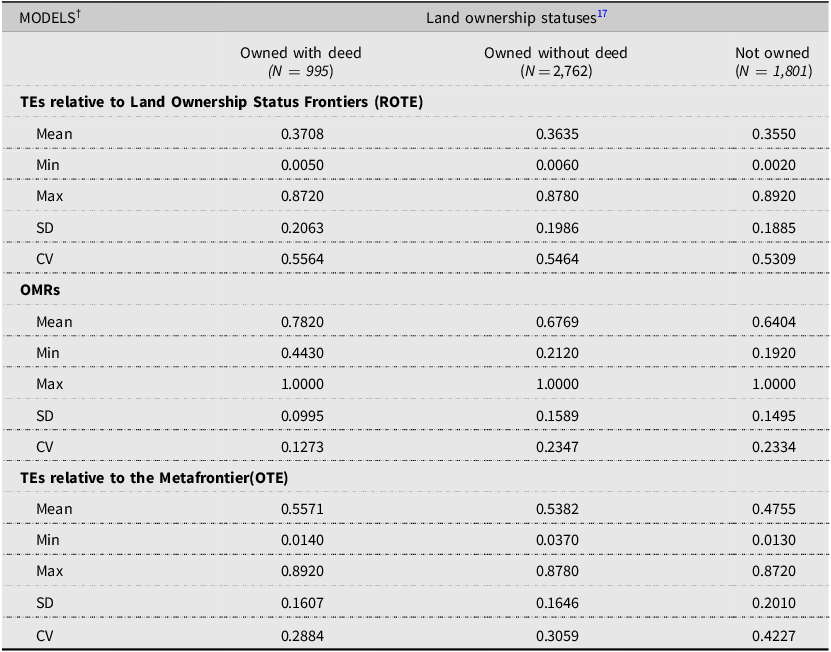
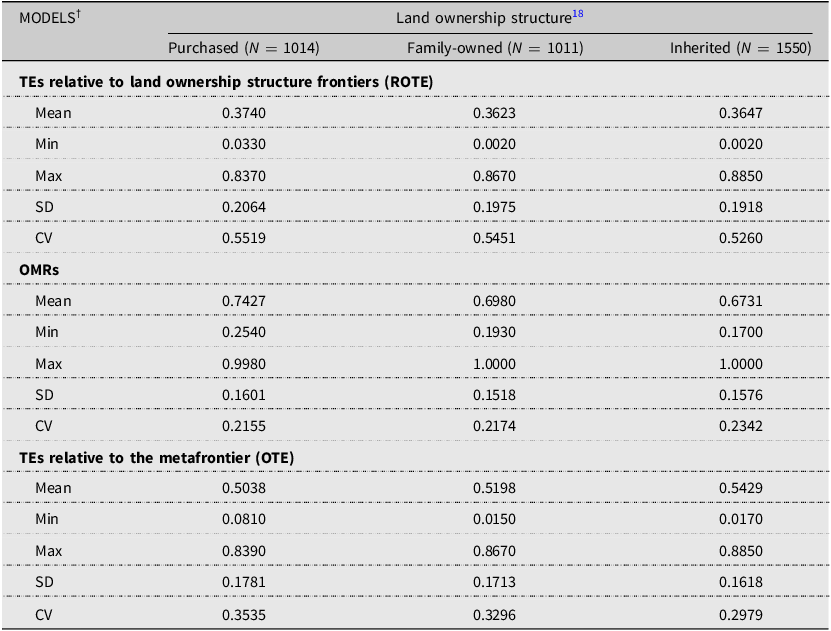
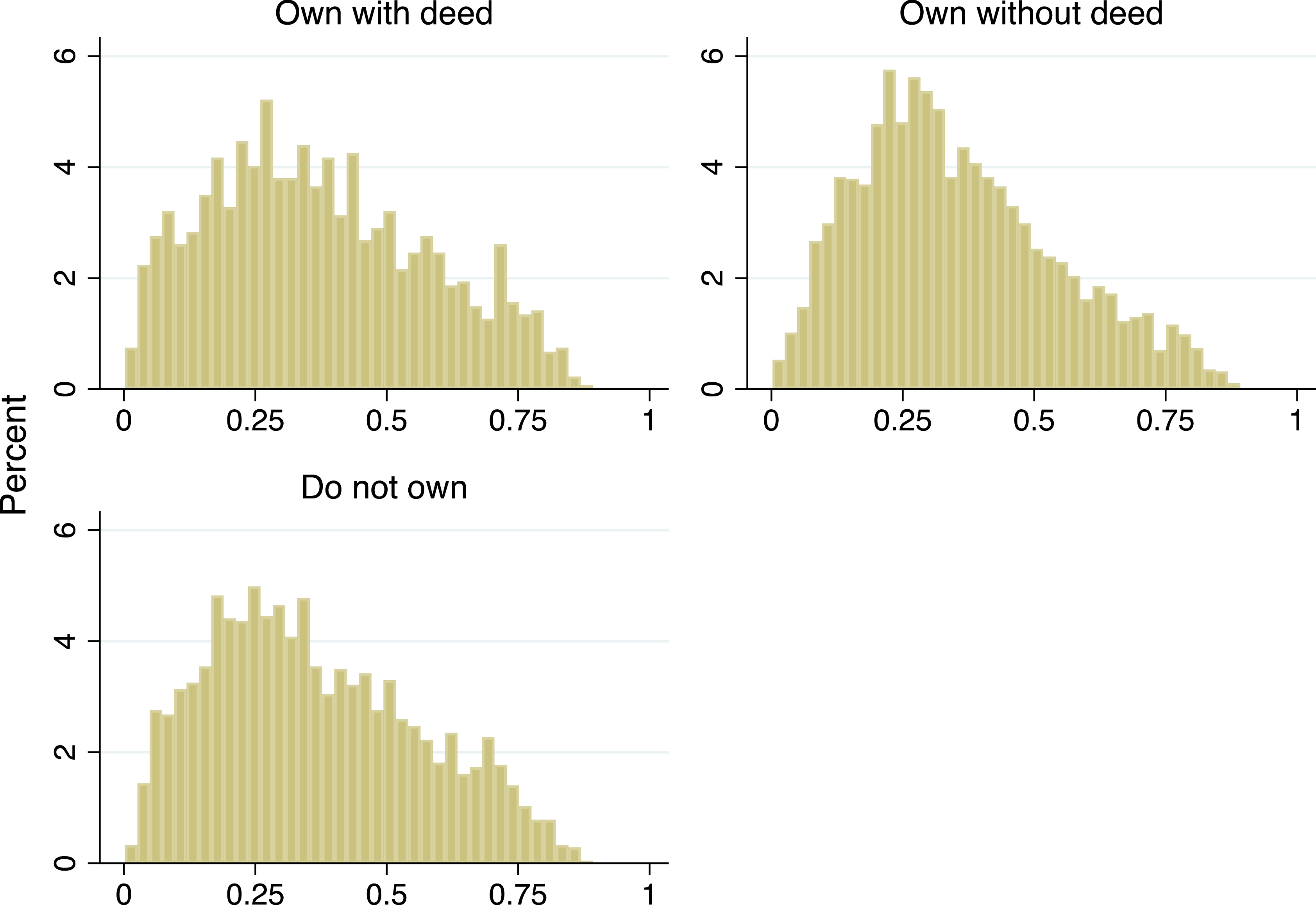
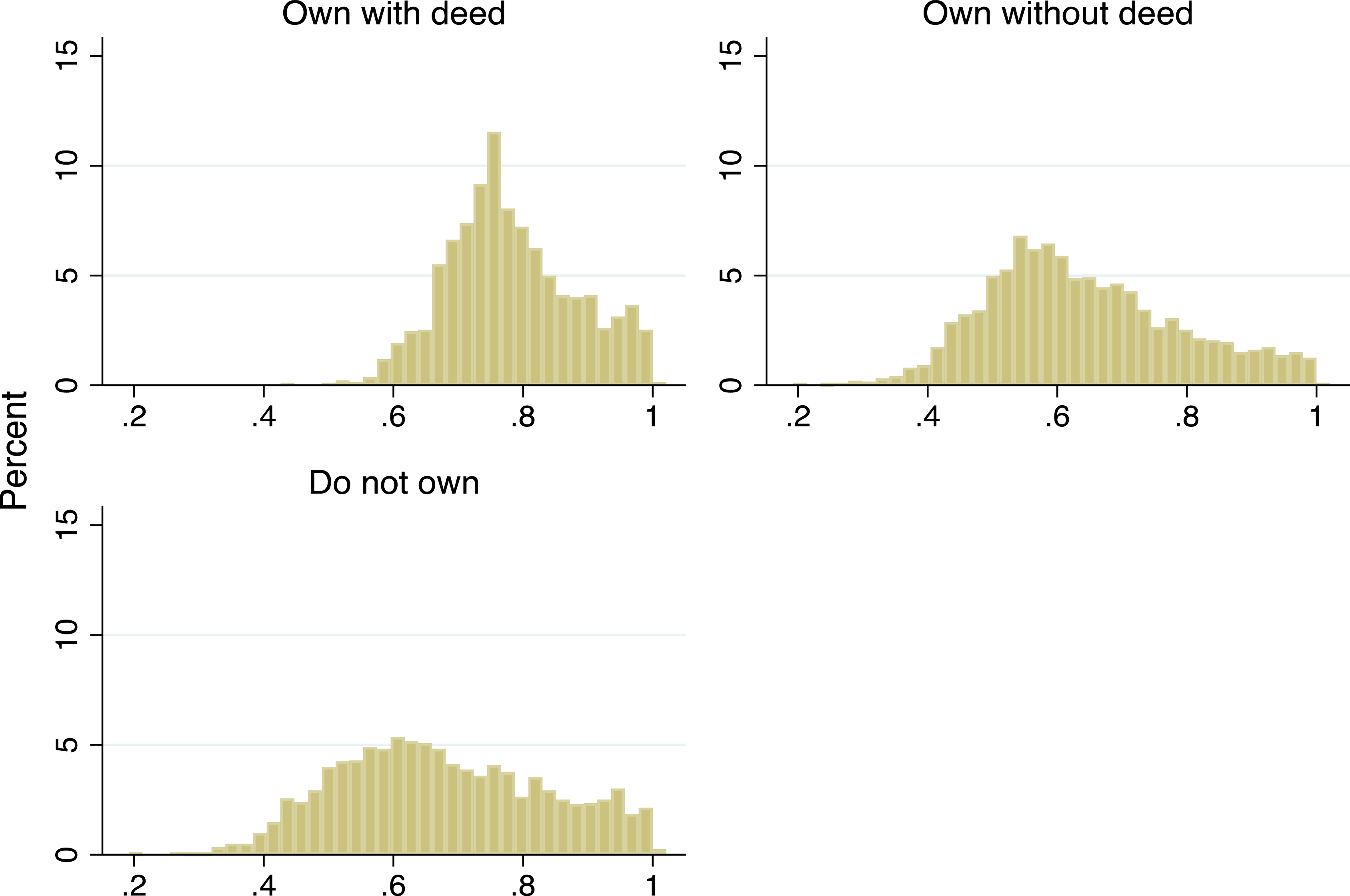
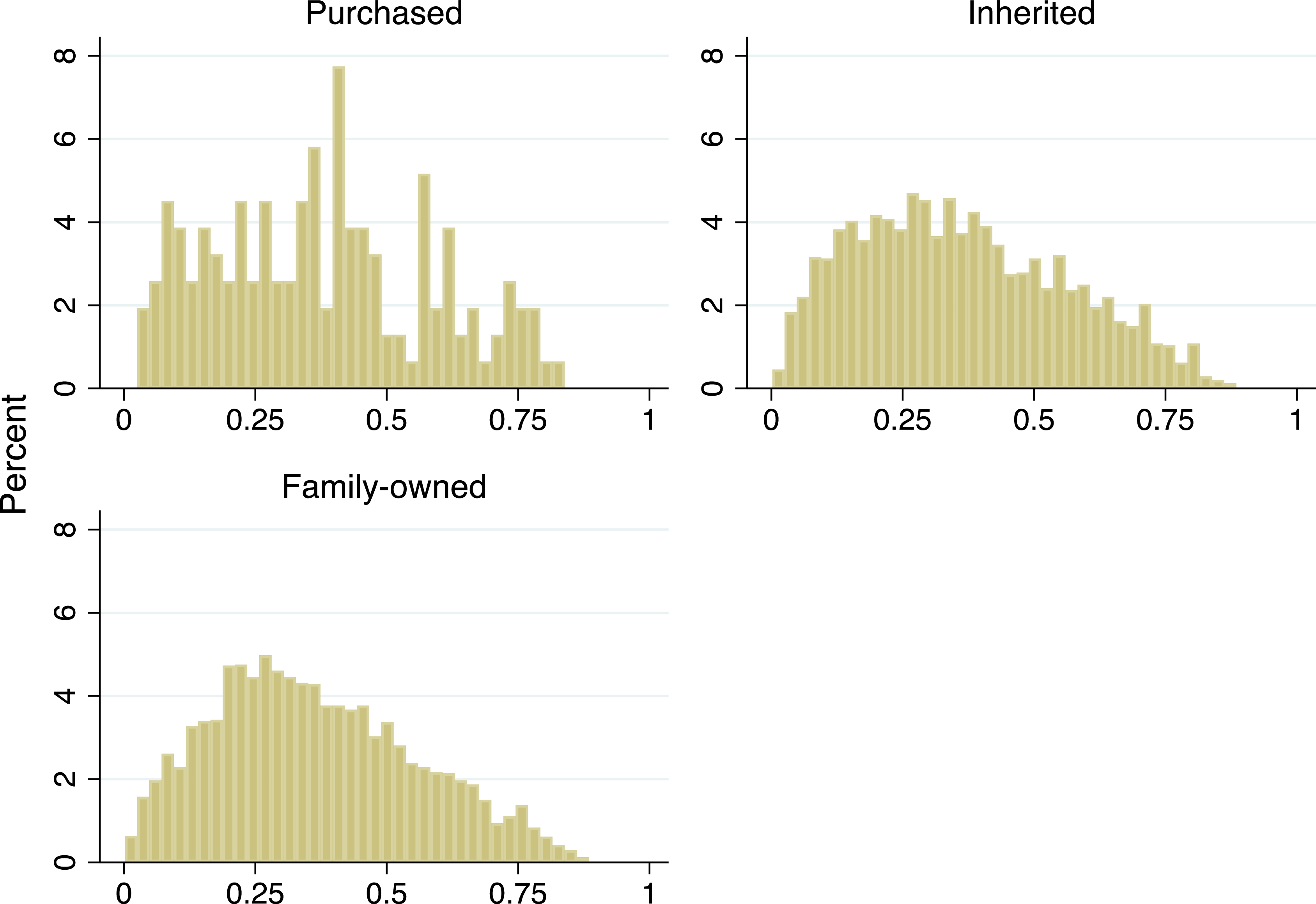
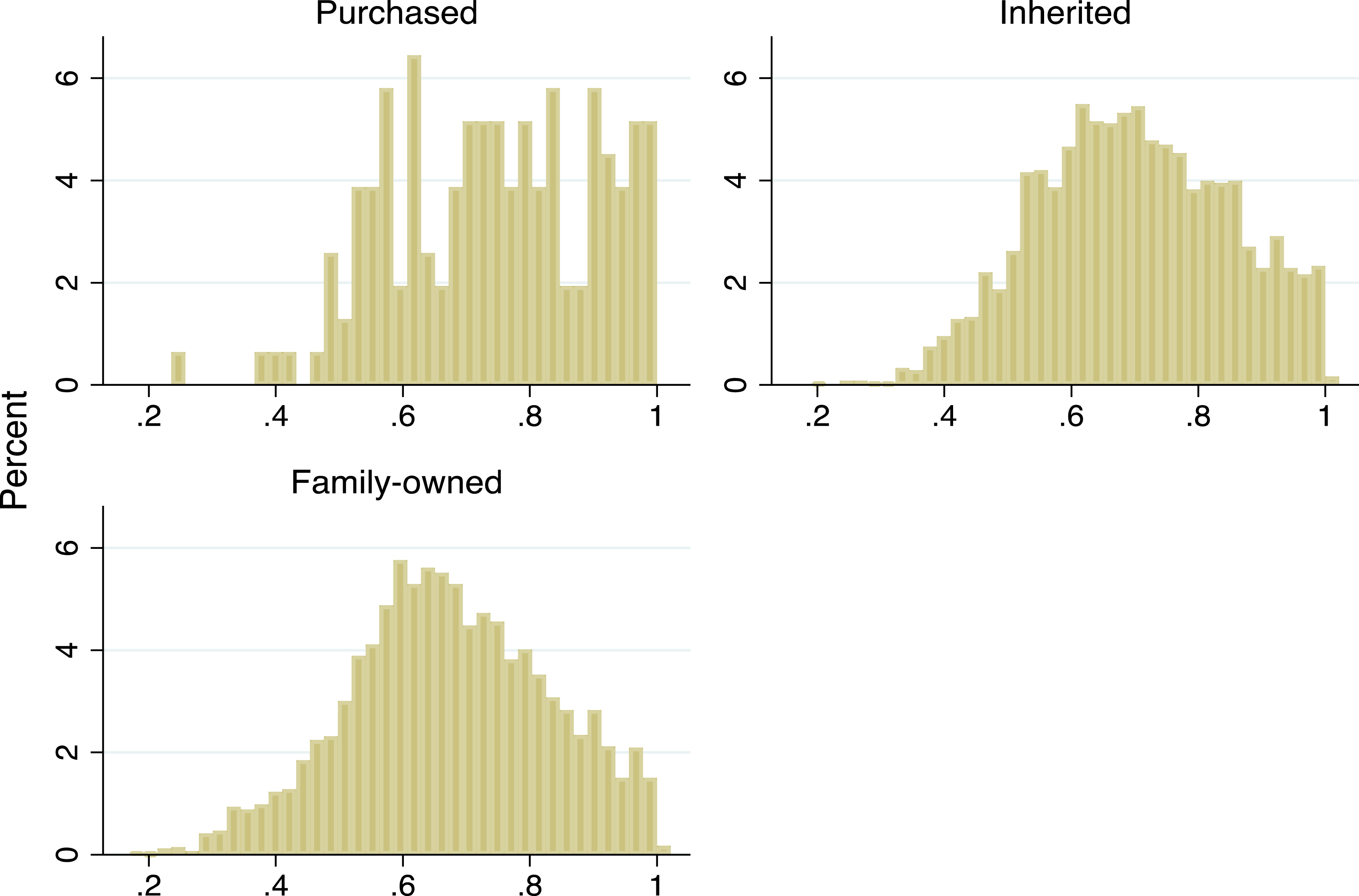
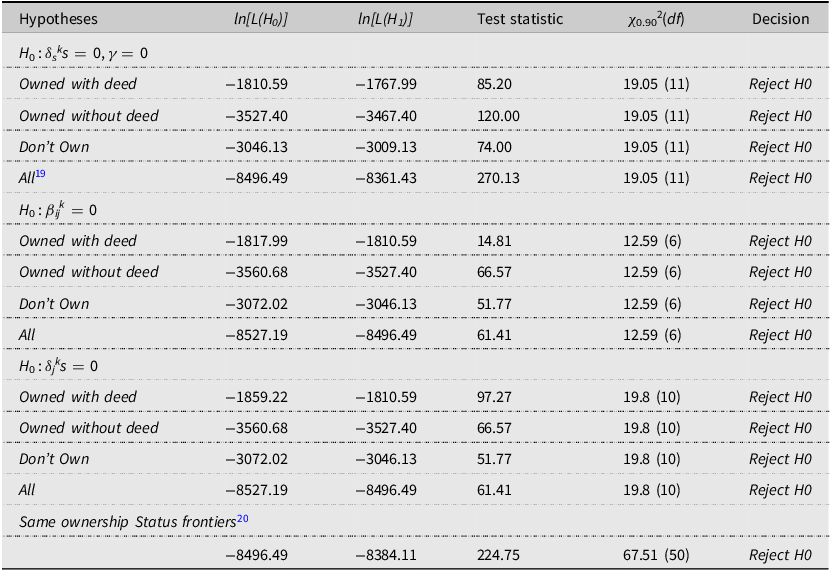
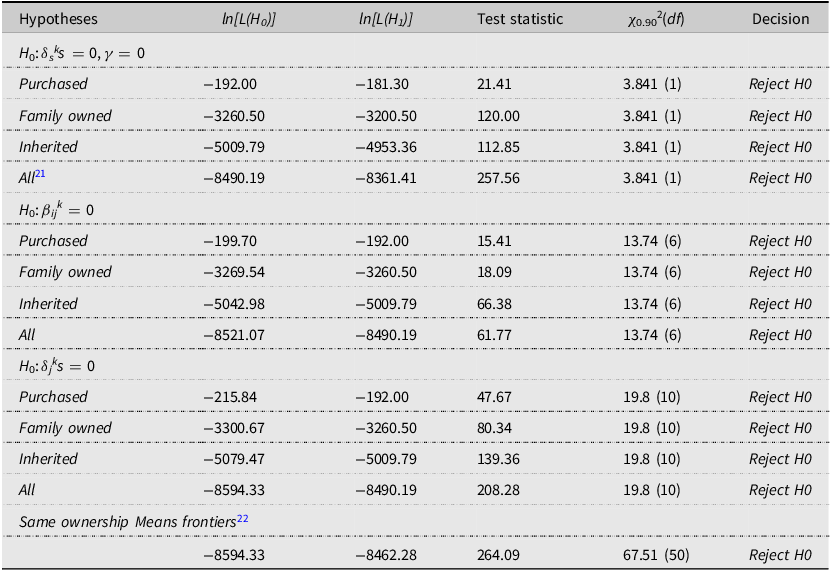

 Open access

