

Introduction
In Latin America and beyond, there has been a noticeable rise in the opposition of progressive gender, reproductive, and sexuality-based (GRAS) rights. Resistance to the increase in GRAS-based rights in the past decade has sharply grown in countries globally, reflected as much in politics as in hate groups (Shaw Reference Shaw2023). These anti-rights actors do not operate alone, rather they are forming a transnational network of anti-rights mobilization with varying degrees of involvement in the international backlash against GRAS rights. Evidence suggests that the power of anti-GRAS movements has further increased through these transnational connections and consequently the network, increasing the likelihood that they will affect legislation and human rights (Datta Reference Datta2021). Despite this, few existing analytical tools exist to understand this phenomenon. To date, moreover, there are few empirical studies of the transnational network such groups have formed.
This study fills those gaps. It presents a description and analysis of the database of groups active in Latin America that attempt to mobilize against GRAS-based rights.Footnote 1 In these findings, a network of groups has emerged which connects and makes alliances with each other. Comprising of desk-based research, the findings outline the scale of publicly visible anti-GRAS groups, their connections across Latin America and beyond, who the anti-GRAS groups are, where they originate, and what their aims are.
First, I present the theoretical framework that underpins this study, drawing on literature from social movement studies, anti-gender movements studies, and the rise of conservative anti-GRAS movements in Latin America. I then outline my methodology, comprised of desk-based research including database construction, database analysis, and social network analysis of the findings. I present the findings from the database, which reveals the network of transnational anti-GRAS mobilization. I then analyze this database by focusing on three main areas of their mobilization: 1) mobilization strategies and tactics, 2) the geography and origin of the groups, and 3) their motivations. Finally, I present a social network analysis of connections among anti-GRAS groups within the network, and I advance an initial theory that explains the phenomenon of anti-rights groups oriented toward anti-GRAS mobilization. While there is growing investigation into the network of anti-gender globally, these tend to either focus on groups active or originating in the Global North, with less investigation of the connections to broader anti-rights ideologies. Through this article, I develop a theory for analyzing and understanding the mechanisms of this broad network across the Global North or South.
Due to the overlap between anti-rights groups that are opposed to reproductive and LGBTQIA+ rights, and the connections I will reveal in this analysis, I suggest that this analysis illuminates the contemporary wave of anti-rights mobilization which focuses on these rights. Indeed, scholars emphasize the significance of these connections in their influence (Mariani Reference Mariani2025; von Bülow Reference Von Bülow, Cristina Buzasu, Hafsa Halawa, Maureen Kademaunga, Marczewski, Vijayan, Natalia Shapovalova and Zihnioglu2021; Datta Reference Datta2021; Corrêa et al. Reference Corrêa, Paternotte and Kuhar2018; Smith Reference Smith, della Porta and Diani2014; Tarrow Reference Tarrow2012). As this study will show, there is a clear network of anti-GRAS actors that are tied together through various forms of connections. Therefore, I refer to these tracked anti-GRAS actors and their connections when referring to “the network.”
Finally, this article is part of a formative stage of a broader study of the impact of the anti-GRAS network on human rights, with case studies in Latin America and beyond. It is informed by my own doctoral study, which will include qualitative fieldwork with human rights defenders and those affected by the contemporary backlash against GRAS-based rights.
In this article, I seek to answer the following questions:
-
• How does the anti-GRAS database reflect current knowledge of anti-rights movements?
-
• How does the anti-GRAS network communicate and mobilize together?
-
• How connected or loosely organized is the network? Does it center around some highly influential actors or is the network strong throughout?
-
• Do anti-GRAS groups actively aspire to form part of the network, and if so, why?
A Note on Terminology
I have developed the term “GRAS,” which I will use when referring to: anti-LGBTQIA+ rhetoric (equally encompassing homophobia, transphobia and queerphobia, including limiting education in schools and support for LGBTQIA+ young people, particularly trans*Footnote 2 youth), anti-abortion and reproductive rights for women, and the “protection” of the so-called “natural family” (Butler Reference Butler2024a, 48.25). While GRAS can theoretically be applied to studies in other regions, it has been particularly designed for the context of Latin America where reproductive and sexual rights have had as much recent backlash as gender or LGBTQIA+ rights, arguably not the case in regions such as Europe (Anderson Reference Anderson2020; Ramm Reference Ramm, Ramm and Gideon2020).
This acronym has been developed in order to highlight the connections between these actors. When delving further into these groups and their aims, it shows that many of these groups can be categorized under one umbrella term. First, when considering “gender,” I consider both inequalities experienced by women, as well as anti-“gender ideology” groups. As several groups have expressed calls for a return to traditional (often justified by religion) gender roles, the banning of abortion, as well as a return to the traditional nuclear heteronormative family unit, they also mobilize against so-called “gender ideology,” expressing transphobic views and condemning the advancement of trans* rights and access to gender-affirming healthcare. While “gender” may also present complications, it is included in the acronym because many groups deny the notion of “gender” at all, let alone the definition affirmed by feminist and gender scholars. While they claim to defend womanhood at the expense or denial of the rights of trans* people, I include them in the anti-“gender” category as these groups deny the existence of “gender,” and see it as an ideology. While tracked in this study as opposing LGBTQIA+ rights, there is a large focus particularly on anti-trans* rhetoric, and as such I include anti-LGB rights in the “sexuality” part of the acronym.
While some scholars have used “anti-gender” as terminology in referring to these groups, I aim to use anti-GRAS to highlight the connection these groups make between these aims, that includes a condemnation of homosexuality, trans* identities, and reproductive rights under their broader aim to achieve a nuclear family model for society, as these groups believe that all of these rights are promoted by “gender ideology” (Corrêa et al. Reference Corrêa, Paternotte and Kuhar2018). Therefore, groups that are anti-“reproductive” refers to groups that oppose the rights of women to control their reproductive freedoms, while finally “sexuality” refers to the aims of these groups to roll back LGBTQIA+ rights. It is important to note that within Latin America, there has been particular resistance towards abortion as opposed to LGBTQIA+ rights such as same-sex marriage (Anderson Reference Anderson2020), and therefore these issues have often been considered separately because of the region’s relationship to reproductive rights. However, I argue that GRAS is particularly pertinent to Latin America, as both the literature and the database shows a distinct weight to all issues contained in this acronym (gender, reproductive, and sexuality-based rights). Therefore, as the aims of many groups overlap in these areas, the term GRAS allows for a comprehensive grouping of the organizations included in this study.
As this article shows, the groups in this study are working together, creating alliances, and reflecting similar tactics. Therefore, by quantifying these groups together under “GRAS,” it allows us to investigate the connections between the groups under this umbrella, including why they form these connections and how. It also allows us to understand their shared similar tactics and compare motivations. While this may be criticized for offering a perspective that is too broad to encompass the specific details of certain groups within the transnational network, this will be mitigated by including in-depth analyses of examples of anti-GRAS actors, their actions and tactics in Latin America.
As such, this article aims to understand these groups from the broader perspective of their network. However, that is not to say that individual analyses of their actions and motivations are not crucial: rather, these individual analyses will inform an understanding of the network as a whole, improving upon our ability to tackle its negative impact on GRAS-based rights.
Understanding the Anti-rights Network: Towards an Analytical Framework
This project draws upon literature with four main foci: first, on transnational social movements, particularly on pro-rights social movements that operate across borders.Footnote 3 This first set of literature highlights the dynamics of transnational social movements, what their tactics typically involve, and how they are successful in achieving their aims. This offers a framework for understanding social movements which can be very usefully applied to anti-rights group tactics (particularly their transnational connections), in order to compare them and therefore uncover their methods of working. I have drawn upon this to develop a framework that considers the established understanding of transnational social movements, while applying the differences of anti-rights groups and the anti-rights network as a whole.
Second, I draw upon transnational anti-rights movements, of which there is a scant but growing body of literature that evaluates the tactics and contentions that arise between pro- and anti-rights movements, as well as the term “human rights” (Kane et al. Reference Kane, Moragas, Stallone, Leigh, Zulver and Escoffier2023; Russell Reference Russell2019; Bob Reference Bob2013; Poletta and Gardner Reference Polletta, Gharrity Gardner, della Porta and Diani2014; Alimi Reference Alimi, della Porta and Diani2014). This is particularly relevant for this project as the data collection includes the “rights defended” of each group in the network, showing that they do indeed purport to defend a selection of human rights (the right to life, freedom of expression, freedom of religion, etc.), and mirror other social movements in their tactics. These theories have formed part of the framework for analyzing the anti-GRAS transnational network, and are used to test my hypotheses in the findings in this article.
Third, this article turns to literature on the global anti-gender movement, which has received significant attention in recent years following contemporary anti-gender backlash (Butler Reference Butler2024a, Reference Butler2024b, Reference Butler2019; Graff and Korolczuk, Reference Graff and Elżbieta2021; Céspedes-Báez Reference Céspedes-Báez2017; Paternotte and Kuhar Reference Paternotte, Kuhar, Kuhar and Paternotte2017; Holzberg Reference Holzberg, Holvikivi, Holzberg and Ojeda2024; Ahmed Reference Ahmed2000; Corrêa et al. Reference Corrêa, Paternotte and Kuhar2018; Datta Reference Datta2021). This literature mostly focuses on actors in the Global North, namely North America and Europe (Butler 2024, Reference Butler2019; Paternotte and Kuhar Reference Paternotte, Kuhar, Kuhar and Paternotte2017; Holzberg Reference Holzberg, Holvikivi, Holzberg and Ojeda2024). The work that touches upon the network in Latin America calls for a more developed framework to understand the nuances of the network in this region (Corrêa et al. Reference Corrêa, Paternotte and Kuhar2018; Céspedes-Báez Reference Céspedes-Báez2017), which my framework and findings offer.
Finally, I draw on gains made in literature on anti-rights movements in Latin America, which also examines the tactics and impact of anti-rights groups that operate transnationally (Corrêa et al., Reference Corrêa, Paternotte and Kuhar2018; Mesquita and Ritholtz Reference Mesquita, Ritholtz, Leigh, Zulver and Escoffier2023; Ramm Reference Ramm, Ramm and Gideon2020). Other literature has focused on anti-rights groups in particular countries (Corredor Reference Corredor, Leigh, Zulver and Escoffier2023; González Cabrera Reference González2022), or a specific area of rights, such as trans* rights (Carbajal Reference Carbajal2022), often missing the context of the international network they operate within. What this project contributes is unique in its offerings on the impact of the transnational network of anti-GRAS movements that are active in Latin America. This project offers an original conceptual framework, drawing on this existing literature and filling the gaps within it.
First, I review literature on transnational social movements to establish the insights they might provide for a framework for the anti-GRAS network. This literature covers the transnational communication of this network, which focuses on the transnational movement of anti-GRAS groups (Smith Reference Smith, della Porta and Diani2014; Keck and Sikkink Reference Keck and Sikkink1998), their tactics (Keck and Sikkink Reference Keck and Sikkink1998; DeMars Reference DeMars2005), and motivations (Scott Reference Scott2017; Passy and Monsch Reference Passy and Monsch2013; Keck and Sikkink Reference Keck and Sikkink1998; Jasper and Poulsen Reference Jasper and Poulsen1993). The dynamics of transnational communication between social movement actors have also been highlighted by Marisa von Bülow (Reference Von Bülow2010, Reference Von Bülow, Cristina Buzasu, Hafsa Halawa, Maureen Kademaunga, Marczewski, Vijayan, Natalia Shapovalova and Zihnioglu2021). Von Bülow has shown a rise in informal activism since the beginning of the pandemic, which is attributed to the legitimized actions taken by civil society groups during the pandemic which are seen as a replacement of traditional state-centric injunctions rather than transnational networks which may be unaffiliated with national governments (von Bülow Reference Von Bülow, Cristina Buzasu, Hafsa Halawa, Maureen Kademaunga, Marczewski, Vijayan, Natalia Shapovalova and Zihnioglu2021, 2). She argues that the pandemic played a role in this, as these groups emerged with improved ties to governments and increased legitimacy, displaying their strength as networks while formal organizations struggled to cope with the pandemic’s challenges (Von Bülow Reference Von Bülow, Cristina Buzasu, Hafsa Halawa, Maureen Kademaunga, Marczewski, Vijayan, Natalia Shapovalova and Zihnioglu2021, 3). Sidney Tarrow’s work has also made a significant contribution by examining the ways in which social movements may find further empowerment and support by forming transnational connections beyond their national borders (2012). The importance of globalization as a reason for the recent rise of transnational groups has been noted by Jackie Smith, who argues that increased “flow” of communication across borders has encouraged international social movements (2014, 607). She argues that the impact of globalization on transnational groups has also extended to their grievances, which have become more globally-focused (Smith Reference Smith, della Porta and Diani2014, 607). Smith argues that globalization has changed not only the behavior of social movements (such as anti-GRAS groups), but also the international nature of their grievances (2014, 607). Keck and Sikkink (Reference Keck and Sikkink1998) provide a historical context for the emergence and rise of social movements in promoting human rights in Latin America. What this shows is the ambition of anti-GRAS groups to transcend their borders and have influence and impact on human rights abroad. In the analysis of the database of anti-GRAS groups, I will test this claim by evaluating the motivation of groups to make alliances abroad or to self-identify as “international.”
Keck and Sikkink also develop theories on tactics of transnational movements, including “framing” issues to make them “comprehensible to target audiences” (Keck and Sikkink Reference Keck and Sikkink1998, 12). Attempts to persuade and apply pressure are also described in four types:
(1) information politics, or the ability to quickly and credibly generate politically usable information and move it to where it will have the most impact; (2) symbolic politics, or the ability to call upon symbols, actions, or stories that make sense of a situation for an audience that is frequently far away; (3) leverage politics, or the ability to call upon powerful actors to affect a situation where weaker members of a network are unlikely to have influence; and (4) accountability politics, or the effort to hold powerful actors to their previously stated policies or principles. (Keck and Sikkink Reference Keck and Sikkink1998, 23)
This framework for understanding the tactics of transnational networks can also be applied to the anti-GRAS network. I hypothesize that several anti-GRAS actors mimic these tactics, particularly information, symbolic, and leverage politics. This can partially be tested by the findings of the database, which I will analyze in this article. The true motivations behind this apparent mimicry will be uncovered through qualitative field research at a further stage of this study.
Writing on pro-human rights groups, William DeMars’ work on the tactics of transnational NGOs examines various methods used by pro-human rights NGOs, specifically: a moral compass, normative claims, a representative mandate, and a modular technique (writing letters, creating petitions, joining marches, etc.) (DeMars Reference DeMars2005, 7–12). This work provides a foundation for the comparative analysis between various anti-rights groups in the network, which has not yet been undertaken. By understanding the tactics of social movements as a whole, this article aims to hypothesize on the ways in which anti-GRAS movements mirror the tactics of other social movements.
In terms of motivations, Keck and Sikkink also stipulate that network actors serve to “bring new ideas, norms, and discourses into policy debates, and serve as sources of information and testimony” (Keck and Sikkink Reference Keck and Sikkink1998, 12). They suggest that transnational actors try to influence public policy, as well as change the terms of a particular debate (Keck and Sikkink Reference Keck and Sikkink1998, 12). I hypothesize that the network of anti-GRAS actors also aim to have this influence, particularly in influencing broader public debate. The ways in which this can be applicable to a rights backlash will be shown in the analysis of the anti-GRAS database.
Turning to the network structure of transnational movements, the literature suggests that networks are only one factor in participation in contentious or process politics (Jasper and Poulsen Reference Jasper and Poulsen1993). These networks are suggested to be just one factor among many others, that social networks are “not the main process at work” when it comes to protests (Passey and Monsch Reference Passy and Monsch2013, 41). Additionally, social movement literature suggests that because of the connected knowledge of actors within the networks, the “multiplicity of actions taking place in any period is unlikely to be that intended by any of the participants” (Scott Reference Scott2017). However, due to the similarity of tactics within the studied network, I argue that this theory suggests that all actors in the network may not be fully aware of the true scale of their network, and act in a way that reflects this.
While there are some contributions to the study of anti-rights movements, there is limited research on the transnational network of anti-GRAS (and broadly anti-rights) groups. This project will make a significant contribution. Additionally, this literature tends to focus on one geographical area, and on far-right groups with a link to a political party or government, rather than those that act independently of government or political institutions (Anievas and Saull Reference Anievas and Saull2023, 717). This focus also often overlooks anti-gender or anti-LGBTQIA+ groups. However, there is a significant overlap found in this study’s results between politically far-right groups and anti-GRAS rights groups.
Clifford Bob’s work on tensions between right- and left-wing advocacy movements has established some knowledge in this field, particularly by highlighting similarities and conflicts between them (2013). Bob’s work highlights different conflicts between advocacy networks, including the less-studied and arguably overlooked transnational anti-rights networks, which Bob highlights to have been highly effective in “distorting, blunting or blocking progressive initiatives” (2013, 71). One source of contention that is highlighted by Bob is the controversy within the term “human rights” (2013, 74). Indeed, all of the groups identified in this project as anti-human rights groups do in fact state that they fight for “human rights” despite aiming to undermine LGBTQIA+ and reproductive rights. While Bob’s work explores some of the mechanisms and tactics of anti-rights advocacy groups, it does not analyze several key elements which I aim to answer, including the ways in which the network operates and communicates internally and the origins, background, and motivations of these groups.
Turning to tactics, there is some literature that highlights methods of anti-rights groups, but this lies outside the context of the transnational network that I aim to study. Bob suggests that individual anti-rights groups may mobilize internationally if they feel they are restricted in “achieving […] goals at the national level” and may find more sympathetic ideologies internationally (2013, 78). This forms the basis of one of my hypotheses, that groups tend to move across borders in order to strengthen themselves and maximize their impact. This is proven in the database analysis section of this article, in which the identity, motivations, and geography of the groups in the network are identified.
Bob also offers insight into the R-TAN tactics of “framejacking” (2012, 30), defined as when groups “hijack their foe’s cherished frames, manoeuvring them in contradictory ways” (Bob Reference Bob2013, 29). “The use of already existing social movement language for an entirely different—even opposite—purpose” has been noted by Kane et al., who highlight the impact of these tactics on human rights groups on Latin America (2023, 130). This narrative tactic, highlighted by Bob and Kane et al. as instrumental to individual anti-rights groups, also provides a basis for my analysis, which I extend to the methods used by the anti-GRAS network. Narratives can be defined as a sequence of events that are set to make a point, and in which the audience feel an emotional connection to one of its central characters (Poletta and Gardner Reference Polletta, Gharrity Gardner, della Porta and Diani2014, 535). Indeed, the emotional element of these tactics have also been noted by Eitan Alimi, in which they argue that the narratives:
Invoke moral rage, pride, honor, courage, and other emotions, and are linked to past memories and histories that serve as a pool to draw from in order to further consolidate collective identity, justify specific actions, and define adversaries. (2014, 412)
Payne also highlights these narrative tactics used by anti-rights groups, stating that actors “legitimize myths” in order to discredit adversaries and dissociate from negative stigma if it is necessary (2023).
The literature on anti-rights TN mobilization also highlights the tactic of creating “community ideology” among individual anti-rights groups, meaning the ways in which groups stipulate that their views are the majority view of their community, and the moral element of transnational anti-rights discourse, that “a persuasive and emotionally moving origin story” can “serve[s] in part to mask an underlying causal claim about how the world works” (Russell Reference Russell2019, 190; DeMars Reference DeMars2005, 8). Building on this, I hypothesize that groups aim to develop this “community ideology” through various tactics, such as educational programs. This is partially tested in the findings of the database analysis, but would be strengthened by fieldwork in future study.
Turning to literature on anti-gender movements, this tends to focus on two areas: (1) the origins and tactics of the anti-LGBTQIA+ movement, and (2) groups that are active in North America and Europe. I fill in these gaps by extending my study to include the significant overlap between groups who oppose LGBTQIA+ rights alongside women’s/reproductive rights (“GRAS”), as well as by taking a transnational perspective on groups that are active in Latin America. I also analyze the anti-GRAS groups within the context of the broader network. The literature on anti-gender movements discusses tactics and motivations (Butler Reference Butler2024b, 2019, 2004; Graff and Korolczuk Reference Graff and Elżbieta2021; Céspedes-Báez Reference Céspedes-Báez2017; Paternotte and Kuhar Reference Paternotte, Kuhar, Kuhar and Paternotte2017; Ahmed Reference Ahmed2000; Holzberg Reference Holzberg, Holvikivi, Holzberg and Ojeda2024), and connections within the anti-gender movement (Ojeda et al. Reference Ojeda, Holzberg, Holvikivi and Holvikivi2024; Holzberg Reference Holzberg, Holvikivi, Holzberg and Ojeda2024; Corrêa et al. Reference Corrêa, Paternotte and Kuhar2018).
Judith Butler has made crucial contributions to theories on the motivations and tactics behind anti-LGBTQIA+ movements, without exploring the specific dynamics of the anti-GRAS network. Butler has established that the term “gender ideology” is defined by anti-rights groups when “gender is understood as a single “ideology” that refutes the reality of sexual difference and that seeks to appropriate the divine power of creation for those who wish to create their own genders” (2019, 957), in order to “legitimize myths” that anti-rights groups may fabricate against the LGBTQIA+ community (Payne Reference Payne, Leigh, Zulver and Escoffier2023). Paternotte and Kuhar have also shown that anti-rights groups have created the concept of so-called “gender ideology” as a tactic to cause panic, and to oppose the advancement of GRAS-based human rights:
It is crucial to bear in mind that “gender ideology” does not designate gender studies, but is a term initially created to oppose women’s and LGBT rights activism […] “Gender ideology” however, is not only regarded as an anthropological and epistemological threat but also as a covert political strategy, a sort of conspiracy aimed at seizing power and imposing deviant […] values to average people. (2017, 56)
Butler also argues that the notion of so-called “gender ideology” threatens the masculinity of the nation, adding to existing literature on the connection between traditional gender roles and the construction of the nation (2024b).
Butler also theorizes on the use of morality as a tactic for the anti-LGBTQIA+ movement, and coined the term “the good life” to refer to “the natural family, including gender hierarchies […] a world they understand themselves to have lost” (2024a, 48.25–49.17). Butler describes the aim of some anti-GRAS groups to restore “the good life,” as a “step beyond backlash,” meaning attempts to roll back rights that go beyond a simple reactionary response, but actively work to dismantle the rights won by marginalized communities (Butler Reference Butler2024a, 49, 50). Moreover, Butler argues that children become a symbol of suffering at the hands of progressive politics for anti-GRAS groups, as “the martyred figure of an ostensibly selfish or dogged social progressivism” (Butler Reference Butler2004, 110). The connection to doing “good” and the “moralized right” that Butler refers to (Butler Reference Butler2004, 50–58) is also present in the literature, as anti-GRAS movements view those who promote progressive rights as “morally corrupt” (Graff & Korolczuk Reference Graff and Elżbieta2021, 167). The literature on anti-gender movements provides an understanding of the use of morality and so-called “gender ideology” among anti-LGBTQIA+ groups. However, it focuses more on the tactics of groups that oppose LGBTQIA+ rights specifically, without encompassing the wider range of overlapping and connected anti-GRAS groups that I analyze.
Delving further into framing and tactics, the literature also highlights the tactic of “gender panic” created by anti-LGBQTIA+ groups (Céspedes-Báez Reference Céspedes-Báez2017, 187). Butler argues that debates about gay marriage have also been used to create “sites of intense displacement for other political fear” (2004, 110). Sara Ahmed argues that constructing the “other” is a tactic that is used to consolidate the identity of a dominant group, which can include the construction of the nation through the demonization of the “other” (2000, 21). Billy Holzberg argues that the creation of a “deep story,” a “narrative that crystallizes an emotional truth people hold about the world around them” is core to the tactics of anti-gender politics (2024, 185):
The core building blocks of this deep story—the constructed fear of a declining populus and increased migration, the aggrieved entitlement over female sexuality, and alarmist calls for the protection of the white nuclear family […] They are transnational narratives that reach far into the mainstream and that increasingly animate not only public discourse but also political decision-making focused on reproductive policies. (2024, 185)
While other examples of hate have succeeded in creating a “stranger,” it is notable that among anti-GRAS-based groups in this database, the “stranger” is shared across many different countries, regions, and continents. This work seeks to understand the connections between groups that share the same aim, despite geographic, ideological, religious, or cultural backgrounds. Ojeda et al. express the importance of challenging binary distinctions of the Global North and South, “developed,” or “developing” countries when discussing the transnational nature of these groups, as it may reduce the transnational perspective on these groups to a mere mapping exercise of listing different geographies of various anti-gender struggles (2024, 5).
A further consideration could be attempts to link anti-GRAS rhetoric to other kinds of hate. According to the Southern Policy Law Centre (SPLC), the growth of anti-LGBT groups has increased in the past few decades. Previously, racist and white supremacist groups had a peak, while anti-Muslim hate groups increased in 2001 (Southern Poverty Law Centre 2025). This may imply that this wave of anti-LGBT groups will follow a similar trajectory. Billy Holzberg argues that anti-GRAS rhetoric is also connected to ideas of white supremacy and power, and is used to justify replacement theory:
The conspiracy ideology proclaims not only the decline of Western civilization through engineered mass migration from the Global South. It also targets feminist and queer movements as responsible for the destruction of the nuclear family and the decline of white birth rates in Europe, making the often-implicit link between calls for the defence of the heterosexual nuclear family and the white nation in right-wing discourses explicit and intelligible (Holzberg 2024, 184).
Finally, the work of Sonia Corrêa, David Paternotte, and Roman Kuhar, examines the global anti-gender network in Europe and Latin America (2018). They call for the development of a sophisticated framework in which to understand the complex relationships and formations of the network of anti-gender actors on the ground (Corrêa et al. Reference Corrêa, Paternotte and Kuhar2018). This article aims to work towards this framework.
Building on the “gender panic” theme in previous literature, there is growing literature on the rise of R-TANs in Latin America, however there is little on the global perspective of the transnational network active within Latin America. This literature also delves into the motivations of anti-rights groups in Latin America (Corrêa et al. Reference Corrêa, Paternotte and Kuhar2018; Mesquita & Ritholtz, Reference Mesquita, Ritholtz, Leigh, Zulver and Escoffier2020; Enloe Reference Enloe1993; Ramm Reference Ramm, Ramm and Gideon2020), and their tactics and aims (Payne Reference Payne2000; González Cabrera Reference González2022; Corredor Reference Corredor, Leigh, Zulver and Escoffier2023; Paternotte and Kuhar Reference Paternotte, Kuhar, Kuhar and Paternotte2017; Carbajal Reference Carbajal2022).
Sonia Corrêa, David Paternotte, and Roman Kuhar describe Latin America as “both a key target and a production hub of anti-gender campaigns” (2018). Mesquita and Ritholtz have contributed significant work on the impact of anti-LGBTQIA+ movements in the region, particularly focusing on examples from Brazil, Colombia, and Peru (2023, 101). Their work highlights the motives behind anti-LGBTQIA+ movements as a direct result of frustrations around economic crises, and became a powerful tool of political mobilization against any kind of target (2023, 103). Their work highlights the emphasis on the framing of the “family” and “innocent child” as tied into the concept of the “nation” (2023, 105), echoing Cynthia Enloe’s term “womenandchildren,” the emotive language used to homogenize those in apparent need of protection against the “other” by the masculinized nation (1993, 166). The anti-GRAS groups “frame[d] social progress as a direct threat to children, the future of any nation, and the family, the foundation of any nation” (Mesquita & Ritholtz, Reference Mesquita, Ritholtz, Leigh, Zulver and Escoffier2020, 101), while Alejandra Ramm states that in conservative discourse in Latin America “families are seen as an antidote […] to social conflict” (2020, 22).
Leigh Payne highlights the tactics of anti-rights groups in Latin America, terming “naming [the grievance], blaming [identifying a culprit], aiming [at a particular system that has supposedly disadvantaged them], claiming [victories and successes]” (2000, 22–24). However, more in-depth comparative studies are needed to identify the impact of the transnational anti-GRAS network on human rights in the Global South.
While the literature has made significant contributions to knowledge on anti-rights movements within Latin America, the application of the global context of the transnational network is scant. However, these frameworks remain useful in their application to the anti-GRAS network identified in this study, particularly in the analysis of their tactics. In this analysis, these frameworks allow me to develop hypotheses on the motivation, behaviors, and tactics of anti-GRAS groups in the context of their global network.
Methodology
This project comprised of desk-based research with two main components: the creation of an original database of anti-GRAS R-TANs; and an analysis of this database including a social network analysis of these findings.Footnote 4 From this database, I extracted specific forms of anti-GRAS mobilizations and looked for transnational connections between them, and also to secondary literature to identify this. By using this framework, it allows for a broad understanding of the phenomenon of the rise of groups that operate in opposition to progressive rights. I have then specifically situated anti-GRAS groups within this wider context.
The creation of the database involved web searching using keywords—“gender ideology,” “woke,” “pro-life,” and their equivalents in Spanish. Groups are then identified through their online presence or media coverage of their activities. I also analyzed existing literature that has already tracked groups that operate within a limited geographical region or area (Salvi Reference Salvi, Payne, Zulver and Escoffier2023; Escoffier and Vivaldi Reference Escoffier, Vivaldi, Payne, Zulver and Escoffier2023; Mesquita & Ritholtz, Reference Mesquita, Ritholtz, Leigh, Zulver and Escoffier2020; Maier Reference Maier2020). To find further groups and determine their partnerships, data was collected from public websites and social media accounts. The partnerships will form part of the social network analysis methodology detailed below. The groups from this database have had their names anonymized, for safety and ethical concerns.Footnote 5
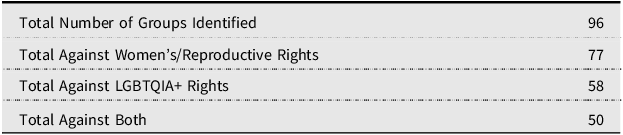
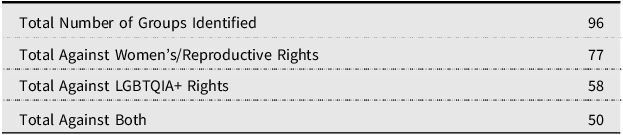
Ninety-six transnational groups have been identified that attack the broader set of rights included in this study, of which 83 specifically mobilize against either LGBTQIA+ rights, women’s and reproductive rights, or both. For the purposes of this article, ‘transnational’ is taken as meaning any group that has activity beyond the borders of its origin country. Thus, this analysis includes countries beyond those included in the ‘transnational’ column of the database, but also those with international presence.Footnote 6 Of these, 77 attacked reproductive rights, 58 attacked LGBQTIA+ rights, and 50 groups were identified that attacked both categories. Additionally, 31 groups have been identified in the initial research stage that seem to be interested in reaching a transnational status, but have not managed to do so. These groups form part of a developing secondary database, and will be continually monitored to identify if their statuses change. I have identified a further 19 groups that operate transnationally that I am currently investigating to determine whether they are active in Latin America.
The database analysis section of this chapter forms two components: first, a quantitative evaluation of the different elements monitored and measured in this study when tracking the groups. These findings have been analyzed and presented to show patterns or anomalies among the network. Second, I turn to social network science to begin to reveal the network, connections, and communication between transnational anti-GRAS groups. Social networks (such as anti-GRAS movements) can be understood as “complex systems,” meaning that the network of groups holds certain characteristics: it is composed of several different elements that interact with each other in different ways and change over time (Thurner et al. Reference Thurner, Hanel and Klimekl2018, 23). In the case of anti-GRAS groups, this may consist of: the organization of in-person marches, meetings or conferences; the sharing of online petitions or social media posts; or the exchange of funding support, among other tactics.
When analyzing the database of tracked groups, I draw on Cesar Hidalgo’s link formation theory in social networks and the three hypotheses group link formation: shared social foci, triadic closure, and homophily (2016, 5). Shared social foci is defined as “social, psychological, legal, or physical entity around which joint activities are organized” (Feld in Small Reference Feld, Mario, Brea, Pescosolido and Edward2021). Triadic closure is the fact that when two nodes share another node, they are more likely to interact with one another (Easley and Kleinberg Reference Easley and Kleinberg2010, 44). Finally, homophily is the concept that “a contact between similar people occurs at a higher rate than among dissimilar people” (McPherson et al. Reference McPherson, Smith-Lovin and Cook2001, 416). During my database analysis, I have drawn upon these theories to hypothesize upon the findings.
According to Latora et al., networks that form clusters and exchange information at an intermediate level are known as having a “community structure” (2017, 332). Johnson et al.’s work on smaller clusters to large-scale mobilization has formed an essential part of my database analysis of the network.
Hate thrives globally through self-organized, mesoscale clusters that interconnect to form a resilient network-of-networks of hate highways across platforms, countries, and languages. (2019, 1)
I analyze ties within the network using strong- and weak-tie theory, highlighting bridges between intermediate level links and the larger structure of the network, as “it is through these networks that small-scale interaction becomes translated into large-scale patterns” (Granovetter Reference Granovetter1973, 1360). Once the strength of the links between communities in a network have been determined, a “weighted network” can be measured (Latora et al. Reference Latora, Nicosia and Russo2017, 374). By presenting these ties in my database creation, I present the ways in which these groups mobilize transnationally. By analyzing the weighted network through my database analysis, I present the strengths and weaknesses of these links.
As “the patterns of a group can have a huge impact on their behavior,” I also look for these patterns of behavior and the ways in which they mobilize with each other (Newman Reference Newman2018, 7). I studied the centralization of the “node” (a certain group) within the network that I tracked, to determine whether the groups revolve around one or several groups, or whether the network has broadened to centralize many different groups (Howe Reference Howe2001, 21). I also record the communications between groups to determine how, and in what way, information and ideas are passed between groups to form the transnational network (Howe Reference Howe2001, 20). I use whole network analysis to determine whether there is structure to the network, and if so, how it is structured (Howe Reference Howe2001, 23).
Finally, I have developed a strength of ties scale that measures the strength of connections between different groups as part of the network. This is underpinned by literature on social networks and social network theory. I draw upon “small-world network” theory, which Scott suggests are networks which have many connections between groups, but only at a specific range, leaving some actors to have a relatively high degree of connections, while others have few (2017). The literature also builds on ideas of strength of ties, with a strong tie being “one in which the lines that make up the paths are aligned in a continuous chain without any change of direction” representing a “set of agents among whom such resources can easily and freely flow,” such as “money, power, or information” (Scott Reference Scott2017). The ties in this project’s social network analysis are defined as “strong” not in the intensity of their contact with one another, but in their ability to influence others within the network (Borgatti and Lopez-Kidwell Reference Borgatti, Lopez-Kidwell, Scott and Peter2011, 41).
Building on this theory, I suggest that the network of anti-GRAS groups can be seen as a “small-world” network, as some of the groups remain less connected to the main clusters of the network as opposed to others. Further, I have used these theories to develop a four-tiered points system that measures the strength of connection of the groups included in this project. This offers an insight into the strength of connections that form between groups that seem to be different in their backgrounds or motivations.
Strength of ties scale:
-
0. No known connection.
-
1. Mentions of vocal or visible support for another group in the network.
-
2. Shared mobilization between groups (i.e., shared participation in conferences, protests, etc.).
-
3. Shared mobilization and shared organization (i.e., leaders active in two or more groups, shared organization of network-level events, funding, etc.).
Database Analysis
I now turn to an analysis of the findings of this stage of desk-based research, in which a database has been createdFootnote 7 . I present these findings and offer a comprehensive analysis, offering an overview of the data, an analysis of common mobilization strategies, geography of groups and their transnational spread, and their motivations. I then delve into their connections with one another, offering an analysis of the social network that these findings have uncovered. These findings are drawn from the broad database of 96 anti-rights actors active in the region, with a focus on the anti-GRAS groups within these.
How?
As I will show, the findings of the database show common mobilization strategies between groups in the network. I hypothesize that this could mean several things: firstly, it shows a desire for groups to imitate each other in order to strengthen their connections to more successful groups, as well as a desire to imitate the tactics of others which may be seen as successful (Bob Reference Bob2013, 78).
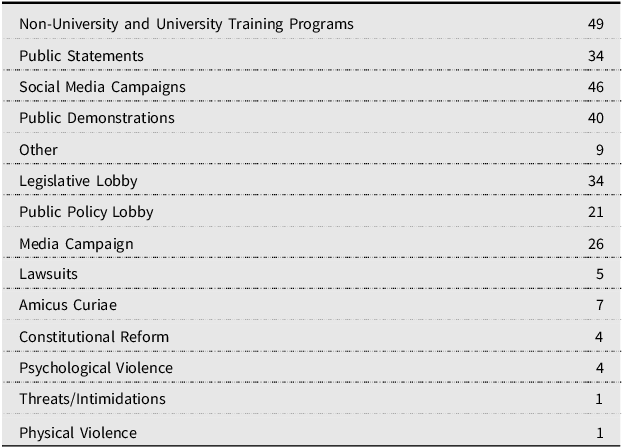
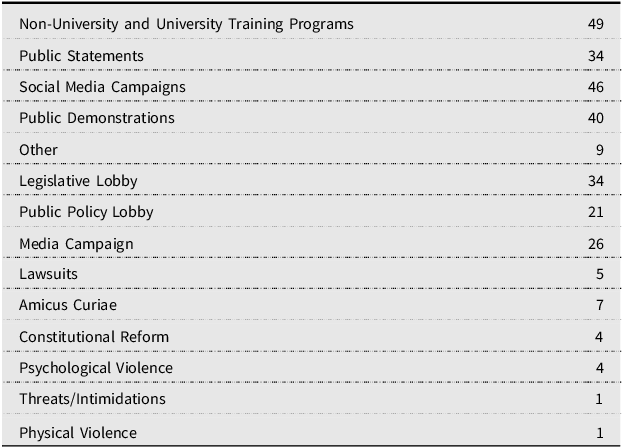
Of the mobilization strategies, the most common mobilization tactic of anti-GRAS groups were training programs. Some groups in the database specifically targeted young people by running internships, “Training Programs,” or “Academies,” or camps for children and teenagers, in which they advertise that young people can learn the core ideas of the group. One of these groups had huge international reach, with opportunities for young people active on each continent. The organization encourages young people to join them by claiming that they may be able to be involved in high-level discussions and policy briefings.
In environments where discontent among young people around limited opportunities is rising (Marelli and Signorelli Reference Marelli and Signorelli2022), this tactic acts as a response. It may also serve the purpose of creating an atmosphere of “gathering an army,” rallying together, spreading a message of community and connectedness against a supposed threat by developing a “community ideology,” meaning the ways in which groups stipulate that their views are the majority view of their community (Russell Reference Russell2019, 190).
Social media campaigns were the second most popular among anti-GRAS groups, for example, social media campaigns that encourage mobilization through rousing videos with strong images. One group encourage the sharing of petitions on social media, and mobilizing in-person, and donating towards their perceived shared values. Additionally, other methods of mobilization have been recorded, such as attempted public policy lobby (21), legislative lobby (34) and media campaigns (26). Another common mobilization tactic was the use of public statements (34). This was particularly used by individuals or figures with influence, such as writers, columnists, or social media influencers, as well as and think tanks. Groups may also receive other forms of public platforming, such as interviews on national radio stations. While these findings show these patterns of behavior in Latin America, further research will show the way in which these patterns may be true globally.
As I hypothesized, these findings show a desire within the network to imitate others, as well as utilize tactics that are perceived as successful. Additionally, the two most preferred mobilization tactics (training programs, public demonstrations) are each highly public. This also indicates a desire to be seen and noticed, perhaps by others in the network in order to solidify a “community ideology” and receive benefits of membership of this community (Russell Reference Russell2019, 190).
Who? Where?
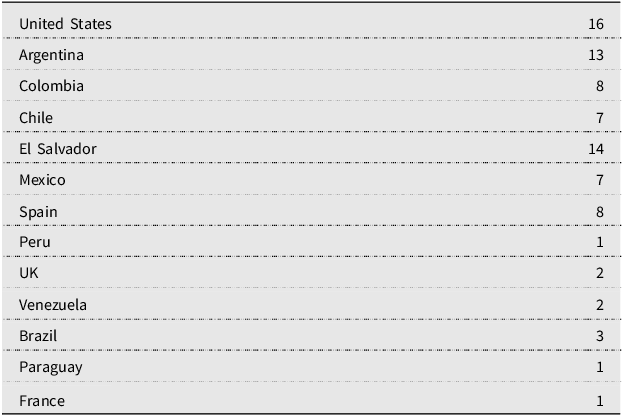
Another finding has been the prevalence of anti-GRAS groups that have their origins in Latin America, in addition to those that move into the region from elsewhere. Fifty-five groups in the initial findings have their origins within Latin America. However, the United States had the highest number of anti-GRAS groups active in Latin America (16).
Of the identified groups, origin countries are included in Table 3:
The countries in which the groups in the database are active include those above, as well as 65 others covering East Asia, West Asia, and Africa (full list in Appendix 1b). Some groups seem to only travel between their country of origin and one other, while some have been found to travel as far as West Asia, East Asia, and Africa (see Figure 1).
Origins and Transnational Activities of Anti-GRAS Groups.
Red nodes = Origins of groups
Blue lines = Transnational activity

While this shows the extent of the geographical spread of transnational influence of anti-GRAS groups, this is not simply about geography. It also demonstrates an ability to spread despite cultural or linguistic differences across Global North/South divides and from within and outside Latin America. It raises questions: why do these groups share these aims? Why do they develop these connections and how do they maintain them? How do groups that originate within Latin America adapt to other regions, and how do groups from outside the region establish themselves in Latin America?
The Anti-GRAS Network
For example, a group based in one country may publicly show support or solidarity with a perceived grievance in another country. One anti-reproductive rights group typically uses public statements in the form of published articles as part of their mobilization tactics (alongside amicus curiae). These articles reflect news related to their aims across the world. Employing this tactic may be an attempt to create a joined struggle against an “Other,” taking the “Other” to an international scale. Butler argues that anti-GRAS groups in non-English speaking countries:
claim that gender is the intrusion of a “foreign” term, an imperialist intrusion […] Some of these opponents of gender have argued that “gender” does not belong in their language, and for this reason should not be taught in their schools or be incorporated into their public policies. It goes against the nation. Or it threatens the nation. It is another foreign thing entering and impurifying the country: expulsion is in order. However, if those nations have been subject to imperial powers, the resistance is not just to gender but to the history of imperialism itself. (Butler Reference Butler2024b, 89).
This is particularly relevant to Latin America, due to the history of colonialism and imposition of gender by Europe and the United States. As Haraway’s Cyborg Manifesto claims, the consciousness of gender is an imposition as a result of the experience of colonialization (Reference Haraway, Striker and Whittle2006, 295–96). Anne McClintock highlights that the gender binary, normative gender roles and patriarchal hierarchies are impositions of colonialism, that these hierarchies are enforced to impose racial hierarchies and a site of colonial conquest (1995, 5). “Constructing women and colonized people as a riddle … allows privileged European men to answer the riddle in terms of their own interests” (McClintock Reference McClintock1995, 193). “The representation of male national power depends on the prior construction of gender difference” (ibid, 353).
Latin America’s relationship to the rest of the world, particularly its history as a colonized region, is crucial to take into account. Progressive rights, framed as “gender ideology” are seen by some contemporary anti-GRAS groups in Latin America as a further redefinition of gender by a colonial power. Butler asserts that this argument can be used flexibly depending on the aims of the actor:
The anti-gender position takes several forms that are not necessarily consistent with one another. Nor do they require consistency to be effective […] gender can be figured as Marxist or capitalist, tyranny or liberatarianism, fascism or totalitarianism, a colonizing force or unwanted migrant. (Butler Reference Butler2024b, 64)
This plays on anti-imperial, particularly anti-US sentiment in the region, as the “natural order” understood historically by US governments, in which the United States leads and its neighbors follow, rooted in colonial racial structures that link social evolution and development to white supremacy, is being resisted (Fillingam Reference Fillingim2025; Williams Reference Williams, Domínguez and Covarrubias2014). “But during these times, the former empires […] are among the countries where anti-gender ideology is circulating quite fiercely” (Butler Reference Butler2024b, 89). However, they share their motives with anti-GRAS groups from the countries that they are claiming to be exporting their ideas.
This shows an interest of groups to find connection with each other, motivated by a desire to enter into the community structure of the network and share in its benefits (funding, resources, legitimacy) (Latora et al. Reference Latora, Nicosia and Russo2017, 332; Bob, Reference Bob2013). They also attempt to create “community ideology” with each other, noting the impact of consolidating collective identity and creating causal claims (Russell Reference Russell2019, 190; DeMars Reference DeMars2005, 8; Alimi Reference Alimi, della Porta and Diani2014, 412).
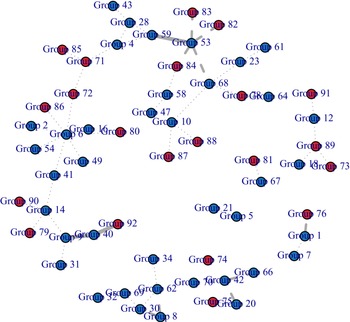
This article also examines some of the network between these groups, analyzed as part of this project’s social network analysis. The groups have been monitored via their online presence (social media, websites) for any sign of communication, kinship, or shared activities with other groups. Additionally, secondary literature has been reviewed for any further monitored evidence of partnerships between groups, such as activities or shared leadership. If no connections were found at this stage, then the group can be found in Table 1 of the appendix, but not in Figure 2 where the network analysis has taken place. Table 2 shows the proportion of strategies tracked in the database.
Summary of Database Statistics
Most Common Mobilization Strategies
Origin Countries of Anti-GRAS Groups

Using these methods, this analysis shows connections between 63 groups. In this social network graph (see Figure 2), these connections can be seen with their level of connection displayed between each node. The thicker the line connecting nodes, the stronger is their connection on the scale (1 = small dots, 2 = longer dots, 3 = solid).
Social Network Graph of Anti-GRAS Groups, with Weighted Ties.
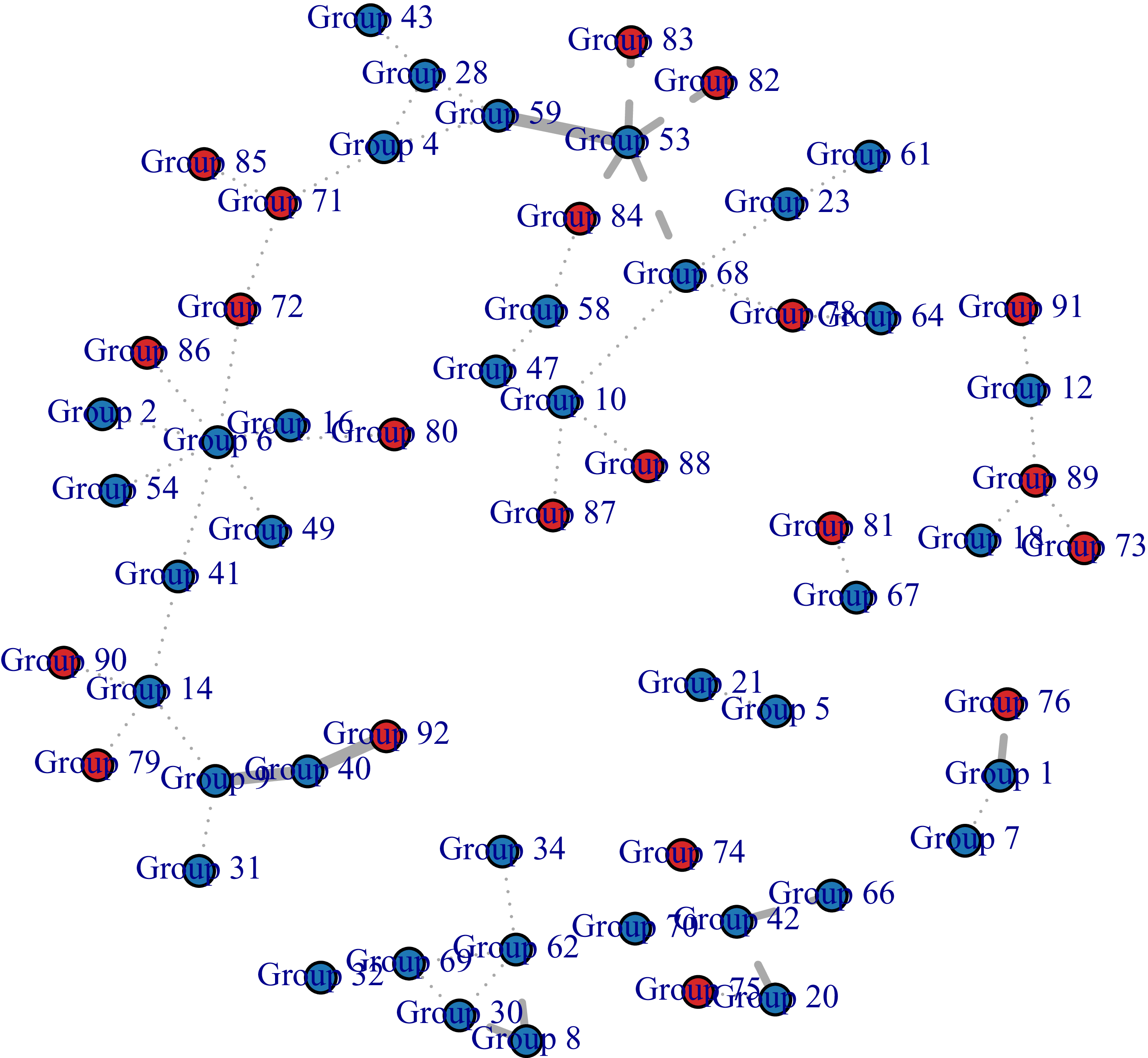
These connections are defined by communication between these groups that are in relation to furthering their aims. As Figure 2 shows, some groups have much stronger links than others, which may imply a stronger influence over the network than other groups. However, the weaker ties are also influential in creating a “small-world network” (Scott Reference Scott2017), and a broader pattern of anti-GRAS connections (Granovetter Reference Granovetter1973).
Self-identification: Religious/Non-religious Groups, “Network” and “Alliances”
Connections can be found between groups that cross cultural and linguistic borders, as well as motivations. For example, it is interesting to note that there are direct connections between groups that have religious motivations, and those that do not. From the groups in the database, only 25 were identified as religious, with only 5 identified as non-religious. The rest (55) were categoried as Not applicable/Don’t know. This suggests a move away from publicly displaying religion as their motive.
For example, Group 20, and Group 42 share the mobilization tactic of developing training programs, but one presents itself as a religious group, and the other as a secular “think tank.” This raises questions about the nature of their international spread, suggesting that the motivations and cultural background (Global North/South) are less important than their shared aims, and that they may employ the same mobilization tactics.
This project seeks to understand how the phenomenon of anti-GRAS groups operates as a whole, crossing ideological, geographical, and cultural divides (Corrêa et al. Reference Corrêa, Paternotte and Kuhar2018). Grzebalska, Kováts, and Pető argue that “gender” has become “symbolic glue [that] has also allowed the Right to create broad alliances and unite various actors that have not, necessarily, been eager to cooperate in the past” (2017). By drawing on these theories, and the results of this initial study, I challenge the notion that anti-GRAS groups in Latin America are mostly religious when considering the motivation—the why—element of this puzzle. This phenomenon may be explained by an increase in influence and funding from non-religious actors into a network with historically religious roots.
That is not to say that the influence of the Catholic Church on anti-GRAS movements can be totally separated: to be sure, the phrase “gender ideology” has its roots in Catholicism, and has insisted that secular law respect “natural” and “moral” law as a “necessary basis” for secular law (Vaggione Reference Vaggione2020). Pope Francis referred to gender ideology as both a threat to human rights, and as part of a process of imposition and cultural colonization that sought to undermine national autonomy and sovereignty, implying that to fight “gender ideology” was a form of resistance from colonial powers (Vaggione Reference Vaggione2020). Vaggione suggests that this secularization is strategic and tactical. A strategic mutation has been taking place whereby religious activism takes a form characteristic of civil society organizations, in a kind of “reactive politicization” (Vaggione Reference Vaggione2005, 233). These religious groups react and organize by mirroring pro-GRAS activist movements, ironically also becoming global and modern in their reach, even if this is “merely strategic” (2005, 238).
This reaction has contributed to a transformation of religious anti-GRAS groups through strategic secularization, as Vaggione terms it. This includes increased articulation of secular discourses, scientific and legal, in their defense of the natural family, mirroring the tactical secularization of feminists and activists for sexual minorities (2005, 242). Religious actors are also becoming part of lawmaking processes, particularly by using judicial mechanisms, turning the “natural family” into a social and legal principle, beyond just a moral or religious issue (2005, 244–45). Indeed, groups in my study sometimes bridge the gap between religious and secular, such as Group 59, which sometimes claims to have Christian sympathies, while also supporting secular messages and groups. Materials disseminated by some anti-GRAS groups have been noted by Datta to be “a secularised version of Catholic social dogma” (2021).
It has long been established that religious groups have led anti-GRAS movements in the region, however I posit that this view must be reframed. I agree with the work of Vaggione, Morán Faúndes and Peñas Defago, that long-standing forms of distinct analysis for analyzing religious and secular discourses as separate are insufficient for the current climate of anti-GRAS mobilization, in which the religious and secular often overlap (Faúndes et al., Reference Faúndes, Manuel and Angélica Peñas Defago2016).
Without a broad lens encapsulating secular groups, we risk missing the full picture of anti-GRAS rhetoric that includes, and targets those outside the religious sphere. My findings show a majority of groups that do not publicly identify as explicitly religious. As this was found through desk-based research, these findings support my argument that their image and impact is another consideration beyond their background. While they may have religious roots, I argue that when considering the effect of these groups on rights, shifting focus from their backgrounds and instead towards their outcome or effect is crucial to developing knowledge to protect GRAS rights. As these groups are not using religious language to drive their message, they also achieve success in gaining support from broader secular society. Additionally, it shows that in doing so, they connect the Latin American anti-GRAS movement to the global network, strengthening their connection with secular Global North groups as well as religious ones. This is crucial to their influence as in doing so they gain more power, funding support, and are more likely to have influence in secular multinational and international organizations such as the IACHR and the United Nations (UN). In other examples, the groups monitored in this study claim to have international spread through their connections to international organizations. For example, the Group 47 (connected to Group 58) also claims to have connections to the UN.
Organizations such as the UN and the EU can serve as areas of cluster for these groups (Caiani and Tranfic Reference Caiani and Tranfić2024, 423). The inclusion of “Alianza/Alliance” and “Red” also implies a self-identification as a group with connections and network.
How?
I will now delve further into three specific examples from the social network analysis, each with an explanation of the level of tie between them. The first examines the tie between Group 53 and Group 59 with the strongest tie of 3 (see Table 4 below). The second strongest tie is between Group 53 again, and Group 68 (see Table 5). Finally, tie strength 1 is analyzed between two groups. These cases were chosen for the diverse range of examples they provide for this analysis, from geographical variation to religious/secular divide, and the different ways in which groups within the network form connections. The cases are paradigmatic in that they display examples of patterns of behavior seen across the network, and thus these examples can help us to develop a framework to understand these ties (Flyvberg Reference Flyvberg2006, 34).
Example 1

Example 2

These groups have been classified as sharing a “3” on the strength of tie scale. This is because of their shared organization of activities and cooperation of leadership at international events, such as the World Congress of Families.
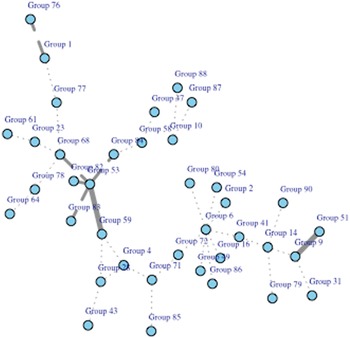
Drawing on the theory of triadic closure, in which it is suggested that when two nodes share another node, they are more likely to interact with one another (Easley and Kleinberg Reference Easley and Kleinberg2010, 44), it is clear from the findings that this is displayed in this example, further strengthening the connection between Group 53 and Group 59. As the graph below shows (see Figure 3), this expands the network of each group from the smaller clusters, creating larger patterns within the network (Johnson et al. Reference Johnson, Leahy, Restrepo, Velasquez, Zheng, Manrique, Devkota and Wuchty2019, 3; Granovetter Reference Granovetter1973, 1360).
Largest Cluster of Groups (39) in Database.

Group 68 and Group 53 share a group tie strength of “2.” This connection is due to their visible support for each other—Group 53 (themselves connected to Group 59, 82, 83, and 84) has published support for Group 68 on their own media. Group 68 also emphasized this on their platforms, showing a reciprocal connection.
In social network theory, homophily between groups strengthens their connection, and thus the reciprocal support shown for the shared aims of each other displays this homophily and willingness to support each other (Hidalgo Reference Hidalgo2016, 5). Analyzing the way in which these groups communicate with each other allows us a perspective on their mobilization tactics: for example, the impact of a mobilization tactic such as a protest is strengthened by a reciprocal arrangement to publish and re-post it, further strengthening the impact of each group in the agreement (Howe Reference Howe2001, 20).
As shown in Table 6, Group 14 has published visible support for Group 41 (also connected to Group 6, who in turn are connected to at least seven transnational anti-GRAS groups in the database). They have done this by publishing an event run by Group 41 on their website encouraging their supporters to visit it and displaying their support for the group. However, there is not yet evidence of the reciprocation of this, or shared activities, hence its classification as level “1” on the tie strength scale.
Example 3

There can be no doubt that this support, even at level “1” on the tie scale, helps to integrate a group into the wider network, thus strengthening its impact (Granovetter Reference Granovetter1973; Borgatti and Lopez-Kidwell Reference Borgatti, Lopez-Kidwell, Scott and Peter2011, 41). While a weaker strength of tie, I hypothesize that this still has impact on the success or failure of each group to achieve their aims. This also shows that the network still forms even if it is made up of a network of smaller clusters (Johnson et al. Reference Johnson, Leahy, Restrepo, Velasquez, Zheng, Manrique, Devkota and Wuchty2019, 1). Additionally, I believe this shows a clear motivation from groups with weaker ties to the network to expand and ally themselves with stronger groups (attempting to integrate into the “community structure” of other groups [Latora et al. Reference Latora, Nicosia and Russo2017, 332]), seeing the success of other groups and the benefits that may be offered to them in terms of resources.
Groups also display a desire to demonstrate their connections within the network. Group 61 proudly displays its connections in different countries across the region, by highlighting their international reach on a map on their website.
Not only do they display this on their website’s home page in map form, but they also list the 24 members of their “alliance,” as well as further lists of affiliated organizations (not included in this article). The groups that Group 61 claims to be united with are national actors, actors across Latin America, and beyond. This example supports my hypothesis that the groups in this network actively seek to promote themselves within the network. The motivations behind this, however, can only be hypothesized on without undertaking fieldwork at this stage.
This displays a desire to depict themselves as strongly international and allied with others within the network. Other examples of this desire to display a public image of international reach is Group 1 (2025), which publicly advertises their global spread on their website, Group 2 (2025), and Group 6 (2025).
Why?
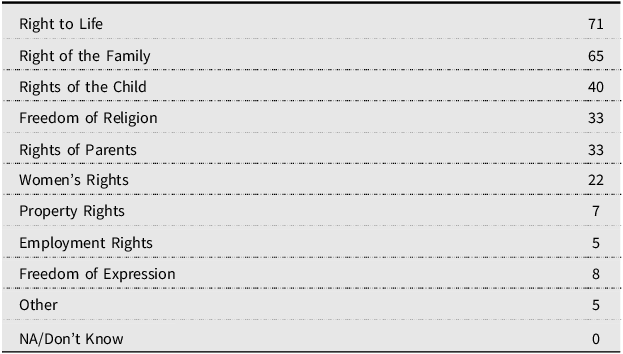
To understand the motivation of these groups, I draw on theory as well as the data collected in the “rights defended” question of the database creation (see Table 7). In reference to the database, the groups identified in it frequently state that they defend particular “human rights” despite aiming to undermine rights for LGBTQIA+ communities and reproductive rights such as abortion and bodily autonomy (e.g., Group 1, 2022, Group 53, 2024) referenced in the analytical framework of this study based on Bob’s assertion of the tensions within the term “human rights” (2013, 74).
Rights “Defended” by Anti-GRAS Groups
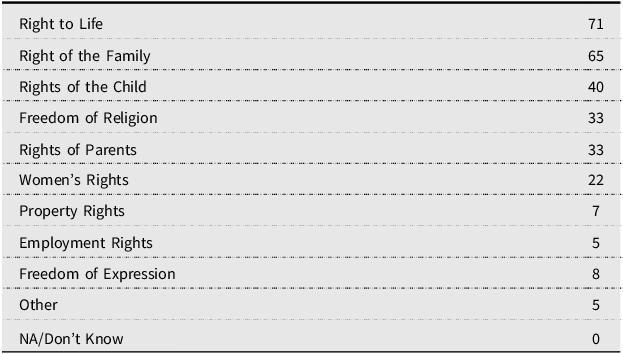
The most popular reason given by anti-GRAS groups was defending the “right to life” (73 groups), such as Group 54 which discusses an “inalienable right to life”.
This shows the appropriation of human rights-based language, mirroring pro-GRAS activists. One group explicitly states that it is strictly not connected to any religious belief, and is nonpartisan, while others may use secular language (“dignity” or “LGBT agenda” while otherwise being aligned with the teachings of the Catholic Church. They also express a desire to be active at policy level in international institutions such as the UN.
Sixty-six of the groups identified the “right of the family,” 40 the “right of the child,” and 33 “the rights of parents.” Many of these groups employ a defensive, action-like rhetoric, in which they claim they are protecting the family from harm: “to defend life” and “defend the family”. This defensive language was utilized as a justification for anti-LGBTQIA+ mobilization, such as the rights of the child (to be protected from “gender ideology”), the rights of parents (to have control over their children’s education and consumption of sexual and reproductive resources), and women’s rights (which are cited as a justification to mobilize against the trans* community). Group 54 states that parental rights are under “attack” from agendas that reduce a parent’s ability to protect their child from physical “harm,” such as gender-affirming care.
Defense of the traditional family is particularly tied to notions of peace and stability in Latin America, where motherhood has been seen as the “social antidote” to conflict (Ramm, Reference Ramm, Ramm and Gideon2020). The inclusion of women’s rights tended to be around the right to motherhood, or the right to safety from the supposed threat of trans identities. Group 28 regularly uses women’s rights rhetoric in order to mobilize against reproductive rights and LGBTQIA+ rights, speaking again of “dignity” of motherhood that has been stripped away by international institutions that support LGBTQIA+ rights.
While this language refers to identity and empowerment, other language points to health. Group 62 claims to defend the “health of a pregnant woman”, while Group 64 claims they help women accept their pregnancies, and protect the women’s “dignity”. “Other” included men’s rights activists, defending the right to “dignity,” among other motivations.
Perhaps surprisingly, freedom of religion and freedom of expression were some of the less popular motives within the groups in this study. I argue that this shows an inclination towards moving away from religion and freedom of expression (less contemporarily discussed issues) to utilizing “gender” as a scapegoat and tool with which to counteract progressive rights. For them, “gender ideology” symbolizes a broader problem with society in which families, identities, and the structure of the state as a whole is threatened. This comes in tandem with recent years of advancement in GRAS rights. “Other” included men’s rights activists, defending the right to “dignity,” among other motivations.
Finally, it is worth noting the proportion of groups that claimed to defend “property” and “employment” rights. These groups were mostly neoliberal in their message and criticized state influence over the choices of individuals, often also defending the right to “freedom” in various forms, or using “freedom” and “liberation” as their core message. Paradoxically, they also condemned LGBTQIA+ equality and the right to abortion. For example, Group 54 describes “attacks on marriage” and outrage that sexual rights are supposedly given more precedence over rights such as freedom of religion. Other groups also defend property rights and the rights of the individual (Group 12, 29).
Drawing on my analytical framework, the defense of these rights can also be interpreted as an attempt to posit one kind of community as the “morally good” (Butler Reference Butler2004, 50–58). By claiming to defend these rights, groups can also spread “fear” (Butler Reference Butler2004, 110) by implying that these particular rights are threatened by other progressive social rights. The anti-rights shown by these groups in general may also be used as an attempt to justify hate, including other forms of hate and supremacist ideologies, that by demonizing the “other,” the dominance of one group can be solidified (Holzberg Reference Holzberg, Holvikivi, Holzberg and Ojeda2024, 184; Ahmed Reference Ahmed2000, 21).
Conclusion
First, the database findings show that inclusion in the network does increase the likelihood that a group will have impact on achieving its aims, which is also reflected in my analytical framework drawn from existing literature. Due to these findings, I suggest that those groups without as many connections—or indeed, groups that are outliers of the network generally—also aspire to form part of the network. Alongside achieving their own aims, they see (as the results are visible) that forming part of the network bolsters their mobilization potential, providing them with increased resources and support. They hope to form smaller clusters that may have a connection to a larger, more powerful cluster of groups, and in doing so create a resilient network of anti-rights groups across Latin America (Johnson et al. Reference Johnson, Leahy, Restrepo, Velasquez, Zheng, Manrique, Devkota and Wuchty2019, 3).
While desk-research has been sufficient for this analysis, there is a limit on information that can be found publicly. Additionally, attempting to gauge the true reach, engagement, and impact of these groups can present problems to researchers due to the tendency of these groups to exaggerate their network membership. Further studies would benefit from research methods that have not been possible due to time and resource constraints, particularly interviews with impacted groups or with members of the network themselves (such as elite interviews with group leaders). This would help to uncover further mechanisms of the network which may be more hidden from public view, as well as interviews with those who have left these groups in order to access less inhibited information.
As I hypothesize that groups external to the network have a desire to enter the network, it would also be beneficial to conduct an analysis of the secondary and tertiary database of groups that have not yet achieved this. This will form part of my DPhil project at a later stage, which looks at the impact of these transnational groups on GRAS-based rights at the national level, when resources allow. Finally, further studies could also investigate examples of groups that have been successful or unsuccessful in achieving their aim of affecting legislative change and changing the window of discourse on public attitudes towards GRAS rights.
This article presents the findings of a database of anti-GRAS groups, which have been mapped and analyzed to show the extent of the connections between different groups. Their spread, connections, and influence upon each other has also been highlighted through a social network analysis of the data uncovered in the first stage of this research. The findings show a full transnational network of anti-women’s, reproductive, and LGBTQIA+ rights groups, as well as others that have aspirations to join this network. Many of the groups in the network imitate the tactics of others, citing the same motivations for their mobilization. I have shown that the groups in this network often imitate each other, sharing common mobilization tactics and motivations. I also suggest that groups in this network (and those outside it) desire to consolidate themselves as part of the network, in order to benefit from the resources and support offered to them as part of their allyship.
Through a study of the ties within this network, I have shown groups mobilize publicly and visibly together despite linguistic, cultural, or religious differences. This suggests that similarity in background or belief is a less significant factor in the development and growth of this network. When considering these factors, this article suggests that anti-GRAS groups are strengthened by their transnational connections, and as a result are more likely to negatively impact legislation, public opinion, and human rights.
The actors in this network have shown themselves to be capable of causing real harm to GRAS-based rights across the world. Not only has real legislation been passed, but hate crimes have risen against LGBTQIA+ people, with hateful criminals encouraged by their rhetoric. This climate makes the results of this database and its analysis immediately relevant and important. These results offer a unique contribution to contemporary understanding of the transnational anti-GRAS network. Adding to this knowledge, this study aims to arm researchers and policy makers with the tools to mitigate the negative impacts of these groups on national and international GRAS-rights legislation, and wider human rights protections internationally. By shedding more light on this network, being exposed may mean they are easier to tackle.
Supplementary material
To view supplementary material for this article, please visit https://doi.org/10.1017/lap.2026.10058
Data availability statement
Data for this study can be accessed via the following URL: https://dataverse.harvard.edu/dataset.xhtml?persistentId=doi:10.7910/DVN/DRNBAK
Acknowledgments
I would like to thank the Right Against Rights team for all of their work on creating the database, as well as my supervisors Professor Leigh Payne and Professor Laura Sjoberg for their support.
Competing interests
The author declares she has no competing interests.






 Open access

