1.1 Beer + Law = ?
Is there any connection between beer and law? And can we speak of ‘beer law’ as a distinct field of law? These two questions are clearly related. But they will not necessarily generate the same answer.
The answer to the first question is clearly ‘yes’; beer and law are connected in many ways. The production, distribution, and sale of beer have, of course, been regulated in most parts of the world and for long periods in history. In the most extreme of cases, brewing and drinking beer has been illegal, and in that way, the law has aimed to stop the production of beer. Just think of ‘Prohibition’ in the US in the early 1900s, or the Icelandic ban on beer lifted as recently as 1 March 1989.
Even though the law has failed to prevent the consumption of beer (even during times of prohibition), the very fact that the law has sought to regulate this product to such a degree is rather strong evidence of the connection between law and beer. But there are many others, as we will demonstrate and discuss throughout this book. Tax law, for example, has an obvious impact on beer production and has indeed led to certain styles being favoured over others. Put simply, tax law has played a major role in deciding what beer you drink. The law also affects matters such as the design of beer glasses and bottles, as well as how and where beer is marketed and sold, and so on.
What we have said so far has focused on how law impacts beer. But there is also reason to consider the reverse; that is, how beer impacts law. Court decisions on beer-related disputes have advanced the law in several fields, such as competition law and intellectual property. Furthermore, societal concerns about the consumption of beer have driven legal developments in public health law, and the law in some states has changed to accommodate changes in the beer industry – primarily the so-called craft brew revolution. These are merely some examples. Others are discussed throughout the book.
So, what about the second question raised above: can we really speak of ‘beer law’ as a distinct field of law? The answer to this – in a typically lawyer-like manner – is that it depends. Determining what is seen as a distinct area of law is not a particularly scientific exercise. Rather it is highly subjective. Is it justified to speak of ‘internet law’ as a separate area of law? What about ‘sports law’, ‘space law’, and ‘food law’? You can decide for yourself, but for us it is obvious that ‘beer law’ can be approached as a distinct field of law.
Beer is a distinct and prominent product and there is a long tradition of specific laws for beer, such as the world-famous German Reinheitsgebot, or ‘(Beer) Purity Law’ dating back to 1516.Footnote 1 Indeed, this means it has been applicable for over half a millennium. How many other laws can you think of that can make such a claim?
But beer laws are much older than that. For example, while slightly more famous for other reasons, the Magna Carta of 1215 addressed the issue of a standardization of beer and wine quantification.Footnote 2 Furthermore, brewing ordinances aiming at consumer protection, security of supply, organization of the brewing industry, beer trade, and means of beer inspections date back to 1156 for Augsburg and 1268 for Paris.Footnote 3 Indeed, the Code of Hammurabi (a set of 282 laws inscribed in stone by the Babylonian king Hammurabi (r. 1795–1750 BCE)) provides specific rules for the serving of beer. In essence, ‘Law 108 had to do with those tavern keepers who poured “short measures” of beer in return for cash instead of grain (which could be weighed and held to a measure) to cheat their customers; they would be drowned if caught doing so’.Footnote 4
Importantly, some laws on beer have had societal implications going far beyond beer. For example, one of the functions of the beer ordinances noted above was to prioritize the use of grains for baking over brewing at certain times, such as during famine. Indeed, Meussdoerffer observes that ‘[d]uring severe famines brewing was interdicted altogether, as in London during the great famine of 1315’.Footnote 5 Thus, beer laws have doubtless saved lives in more than one way. Further, the Beer House Act 1830, that we discuss in more detail later in this book (Chapter 12), has been described as ‘one of the most extraordinary pieces of all nineteenth-century legislation’Footnote 6 and as potentially ‘more revolutionary in its immediate social consequences than any other of the reform age’.Footnote 7 All this suggests that it is useful to study beer law as a distinct field.
There are already books and university courses on ‘wine law’ so why not ‘beer law’? And if we have ‘food law’, then surely ‘beer law’ is a sub-discipline of that? Sceptics may here intervene that in that case we might also speak of ‘coriander law’, ‘bacon law’, and ‘cos lettuce law’. But such an objection arguably lacks sting as it is conventional to delineate legal fields along the lines of distinct major industries; that is, while speaking of beer law is justifiable by reference to the size and nature of the beer industry, the same does not necessarily hold for the coriander, bacon, and cos lettuce industries.
Having said that, we would not necessarily be ‘up in arms’ should anyone want to write a book about ‘coriander law’ or ‘the law of pickled herring’, and ultimately, the question of whether a given topic can be described as a distinct field of law ought to be determined by reference to whether doing so provides any value. And with this book, we seek to demonstrate that beer law not only can be approached as a distinct field of law, but that doing so provides value.
1.2 About Beer, Brewing, and the Ingredients
There are already many books that discuss the brewing process, and the common (and not so common) ingredients in beer. Some of them are highly technical,Footnote 8 and others emphasize accessibility. We do not seek to compete with any such books. But we do not presume that the reader has already spent time on such literature and, in our view, a book about beer law needs to start with a discussion of beer and brewing.
Sure, most of us may already be well acquainted with beer, its smell, its taste, how it looks; and if you are picturing one right now, you are probably getting quite thirsty. But a surprisingly large proportion of beer drinkers seem to have little more than a cursory knowledge of beer ingredients and the brewing process. It is consequently our aim to introduce beer as a product, the brewing process, and the ingredients used. However, we also use this section to hint at the important economic and societal roles of beer and brewing and we do so while linking into, and flagging, the legal issues that are discussed in detail in the rest of the book.
At its core, (modern) beer consists of four ingredients: malted barley, hops, yeast, and water. Sounds simple or even simplistic, right? But even where brewers stick to just these four ingredients, they can create a highly diverse range of styles of beer with flavours varying from full-bodied Doppelbocks, Irish Extra Stouts, and American Barleywine at one end of the spectrum, to the most flavourless and watery light beers at the other end.
The brewing techniques used may, as discussed below, significantly impact how the beer tastes, smells, and looks. However, the other key reason that these four ingredients can generate such diversity is found in the diversity within each type of ingredient. Just as there are many different types of malt, there are many different types of hops and of yeast. As most people probably are already aware, even water tastes different in different locations. The mineral composition obviously impacts the beer as well. So let us now look briefly at each of the four key ingredients of modern beer before turning to all the other things that brewers may put into their products.
Interestingly, of the four ingredients, only three are essential, two have been banned, and one was unknown until relatively recently.
1.2.1 Malt
Malt is perhaps both the most well-known and the least understood ingredient in beer. Everyone knows that beer is made from grains. Grains could be said to be the main characteristic ingredient in beer just as grapes are the main characteristic ingredient in wine, apples are the main characteristic ingredient in cider, and honey is the main characteristic ingredient in mead. So far so good. But what then is malt?
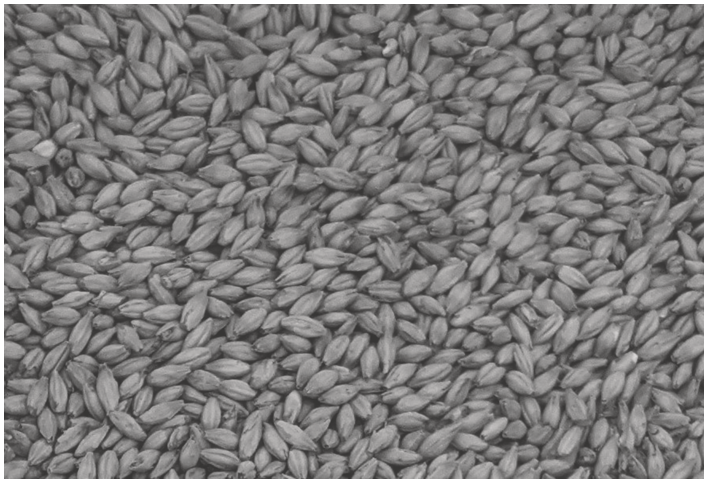
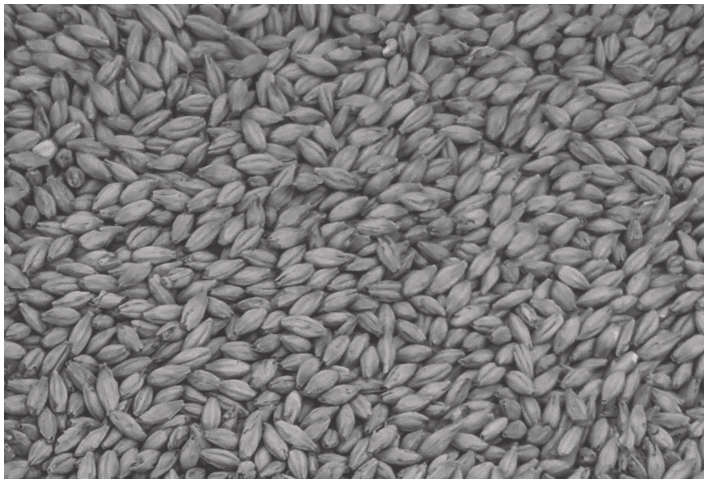
To make possible the use of grain for beer brewing, the grains must be ‘malted’ (Figure 1.1). The complex malting process involves several steps. First, the grains are soaked in water to initiate germination. This step – ‘steeping’ – hydrates the grains and activates enzymes. Second, the soaked grains are spread out in a controlled environment with set temperature and humidity. During this step – ‘germination’ – enzymes are produced, converting the starches stored in the grain into fermentable sugars. The grains start to sprout during this stage. Third, the germinated grains are dried in a kiln to stop the germination process. The temperature and duration of this third step of ‘kilning’ varies, affecting the malt’s colour and flavour profile. Fourth, after kilning, the malt undergoes cleaning to remove rootlets and other impurities. It is then graded based on colour, size, and quality – ‘cleaning and grading’.
Barley malt.
The term ‘grist’ refers to the milled malt and other cereal ingredients of the mash. The standard type of grain used in the grist for beer is barley, and more precisely two-row, or six-row, varieties. There is a range of reasons why barley has come to be the dominant grain for beer production, including its genetic traits and ability to grow well in large parts of the world. However, other types of grains are also used depending on style.
Wheat beers – such as German Weissbier and Belgian ‘witbier’ – unsurprisingly use wheat as part of the grist. Laws, or at least style guides, may regulate the percentages of wheat that must be included in such styles. For example, under German law a beer sold as a ‘Hefeweizen’, ‘Weizenbier’, or ‘Weissbier’ must include at least 50 per cent wheat.Footnote 9 Wheat is also commonly used in a range of other ‘modern’ styles, such as Pacific Ale and XPA.
Rye is a key ingredient in some styles, including German Roggenbier, with the flavour of the malted rye often described as ‘spicy’. Further, oat is a typical key ingredient in modern ‘hazy’ beers such as New England Indian Pale Ales (NEIPAs), as well as some more traditional styles such as oatmeal stout. A range of other grains – for example, rice commonly found in Asian beers – may also be used in beer brewing.
The malt performs many different roles in beer. Most importantly, it is the sugars from the malt that the yeast converts into alcohol (‘dizziness’) and carbon dioxide (‘fizziness’), and the malt also contributes significantly to the flavour and aroma of the beer. Furthermore, the choice of malt has a strong impact on the beer’s colour. The colour density of beer is measured either in Standard Reference Method (SRM) or European Brewery Convention (EBC), where a higher number indicates a darker beer.
In the most basic form, malts may be separated into two different categories: that is, ‘base malts’ and ‘speciality malts’. However, when brewers discuss malt, they commonly place the speciality malts within at least three categories: caramel and crystal malts, toasted malts, and roasted malts.
Base malts are the primary malted grains used in beer brewing. They typically provide the majority of fermentable sugars needed for the brewing process. Base malts are lightly kilned, resulting in a relatively light colour and a subtle or neutral flavour profile. Common types of base malts include pale malt, pilsner malt, Vienna malt, and Munich malt. Brewers use the base malts as a foundation and may add speciality malts to achieve specific flavour, colour, and aroma characteristics in the final beer.
Caramel and crystal malts are kilned with a higher degree of moisture to allow the sugars in the malt to partially dissolve and caramelize inside the grain. This process results in malts with a range of colours and flavours, from light caramel to dark toffee. Caramel and crystal malts contribute sweetness, body, and caramel-like notes to the beer, and may be used in various beer styles to enhance flavour, mouthfeel, and colour.
Toasted and roasted malt undergo a longer and more intense kilning process compared to base malts. This extended kilning imparts a range of flavours, and results in darker colours to the malt. They can contribute to the beer’s roasted, caramel, chocolate, or coffee-like flavours and aromas, and are often used in stouts, porters, and other dark beer styles to add complexity and depth to the beer’s flavour profile.
In addition to these widely used types of speciality malts, there are other – less common – types. For example, some beer styles – most famously so-called Rauchbier – utilize smoked malt. Such malts pick up the smoke character of the wood it is kilned with, and the character is then transferred into the beer. The types of the wood used may vary, but some common types include beechwood, oak, maple, and manuka. Some malt is peat smoked. While only a very small percentage of beers sold today utilize smoked malt, historically malt was kilned over an open fire and all beers would have had a degree of smoke flavour.
Before leaving our discussion of malts, we wish to emphasize something that is implied in the above – that is, there are several ways to categorize malt. We may primarily do so by reference to type of grain, variety, terroir, brand, and malting process.
1.2.2 Hops
Prior to the use of hops, ‘brewers used a large variety of herbs, known as gruit [or “grut”, discussed in more detail in Chapter 2] in medieval Europe, as well as strange items such as oxen gall, soot, bark, and mushrooms to spice their beers and sometimes to cover up off-flavors’.Footnote 10 But today, we take for granted that beer contains hops.
The exact history of the use of hops for beer is somewhat controversial and partly shrouded in mystery.Footnote 11 Furthermore, in some places at some points in time, brewers have been banned from using hops. We will get to all that, but let us first look at what hops are and the functions that they fulfil in beer.
Hops (Humulus lupulus) provide the bitterness that we are familiar with in beer. While the level of bitterness varies greatly between different styles of beer, the presence of hop-derived bitterness is typically seen as a crucial component as it balances out the sweetness of the malt.
A beer’s bitterness is commonly measured, and expressed, in International Bitterness Units (IBUs)Footnote 12 – an internationally agreed-upon standard for measuring bitterness in beer. The IBU expresses the measurement of the number of specific bittering compounds (isomerized and oxidized alpha acids, polyphenols, and other select bittering chemicals), that contribute to making beer taste bitter. Very bitter beers have a high IBU while beers with low bitterness have a low IBU.
But bitterness is not the only flavour derived from hops. Hops also provide many other flavours, such as the citrus and tropical fruit flavours of many India pale ales (IPAs) and the grassy, spicy, herbal notes of many lagers.
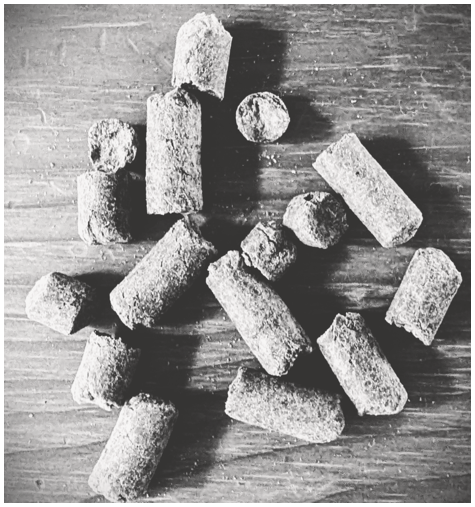
While the focus so far has been on the flavours provided by hops, the first contact beer drinkers typically have with hops is in the beer’s aroma. Hops – typically sold in pellets, as hop cones, or extracts – are critical for, and dominant for many styles of, beer aroma.
In addition to the impact hops have on the beer’s flavour and aroma, there is another strong reason why they are added to beer: hops are antiseptic, making beer resistant to microbial infection. In fact, few other food products are safer from this perspective. This has seemingly had a direct impact on beer styles. For example, it has been argued that the characteristic hoppiness of IPA stems from the aim of making the beer safe for the long voyage involved in exporting it from England to India and elsewhere in the 1800s.
Before moving on to consider the hop varieties and some legal issues, we may also note how hops impact the visual appeal of beer – while foam stability is also affected by other factors (such as the type(s) of malt used) – hops significantly contribute to foam stability.
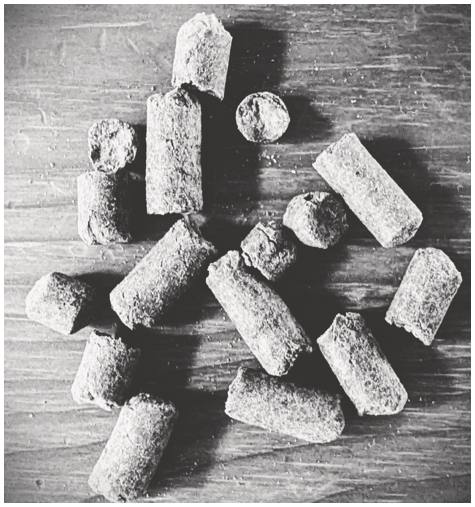
When brewers speak of hop varieties, they typically divide them into three categories: bittering hops, aroma hops, and dual-use hops (Figure 1.2). However, as is discussed below when we turn to the brewing process, hops may also be categorized based on how they are used rather than on what the hop variety is primarily grown for; that is, even when a hop variety is grown primarily to be used as an aroma hop, it may still be added early in the boil with the aim of imparting bitterness.
Hops in pellet form.
Another way in which hops are commonly categorized is by reference to their origin. While different types of hops may be grown in all regions of the world, continental European hops – predominantly grown in Germany and Czechia – are often described as earthy, spicy, peppery, and woody.Footnote 13 English hops are associated with descriptors such as minty, floral, grassy, and tea-like.Footnote 14 American hops are commonly characterized as being citrusy, pine-like, floral, and producing stone fruit aromas.Footnote 15 Beyond these regions covered in the book, the only other significant hop-producing region is Australia and New Zealand. Hops from Australia and New Zealand are associated with intense tropical fruitiness, including characteristics such as passion fruit, peach, orange, mandarin, lime, lychee, melon, and gooseberry.Footnote 16
As we will come back to throughout this book, the law has directly impacted hops in very different ways over time and place. The French King Louis IX issued a decree in 1268 stipulating that only malt and hops could be used for beer making in his realm.Footnote 17 Henry VIII – perhaps best known for his habit of executing his wives – has been said to have decided to ban the use of hops in ale, thus maintaining a separation between unhopped ‘ales’ and hopped ‘beers’.Footnote 18 Around the same time (from the 1400s), growing hops was a legal obligation in Sweden – one that lasted until 1860.Footnote 19
To all this may be added that some hop varieties, as well as the names under which they are sold, are protected under intellectual property laws. We discuss this further in Chapter 5.
1.2.3 Yeast
There is an often repeated, but somewhat misleading, saying that ‘brewers make wort, yeast makes beer’. In many ways this is like saying that bakers make dough and yeast (combined with heated ovens) makes bread. However, the saying still has merits in the way that it emphasizes the central role that yeast plays in beer-making. And the yeast is, after all, the only living organism involved in the brewing process apart from the brewer.
As noted, yeast converts sugars derived from the carbohydrate of the malt (or adjuncts) into alcohol and carbon dioxide. The simple reality is then that, without yeast, there will be no beer. So given this great importance, yeast must obviously always have been the brewers’ treasure, no doubt protected by the law? Wrong. In fact, the world’s most famous beer law – the previously mentioned Reinheitsgebot – actually banned the use of yeast (at least implicitly) when taken literally.
It is commonly said that yeast was ‘unknown at the time’ the Reinheitsgebot was drafted, and the result is that in prescribing that only the ingredients known at the time – malt, hops, and water – were allowed in beer, the world’s most famous beer law bans the use of yeast. Funnily enough, then, a law aimed at regulating the production of beer actually – if complied with – would have made beer-making impossible. Perhaps modern lawmakers – not least those working with technology-related law – may wish to take onboard some lessons from this. For example, at the minimum, it highlights the risks of making laws in relation to something we do not fully understand from a technical perspective.
While this book is focused on beer law and not brewing techniques as such, it is worthwhile to pause and consider the mystery of why the Reinheitsgebot does not mention yeast. Writers such as Lars Marius Garshol have pointed to convincing evidence suggesting that yeast was intentionally added in the beer production well before the Reinheitsgebot was introduced.Footnote 20 Strong support for the existence of a very conscious use of yeast at the time is also found in the inter-guild Munich Baker–Brewer Dispute between 1481 and 1517.Footnote 21 This conflict stemmed from the fact that bakers bought their yeast from the brewers and when brewers started brewing ‘Bohemian beer’ (hoppier beers based on lager yeast), the harvested yeast that was delivered to the bakers required a lower active temperature, resulting in longer rise times for bakers, and thus making it less efficient for bread-baking than top-fermenting yeast was. Adding to this, the harvested yeast from the ‘Bohemian beer’ was intermixed with more hop matter than the yeast from the lower-hopped top-fermented beer. This added hop matter resulted in greater bitterness, which, the bakers claimed, had a detrimental effect on the taste of their bread.Footnote 22 So, while they may not have been getting along so well, clearly both brewers and bakers actively and consciously worked with yeast. Indeed, in parts of Germany, there was a specific ‘yeaster guild’, or in German ‘Hefener guild’ (and no, it has nothing to do with ‘Playboy’ apart from the founder’s surname, Hefner, stemming from the job Hefener).Footnote 23
The mystery of the lack of reference to yeast in the Reinheitsgebot seems to stem from a matter of definition – how very lawyerly! It has been suggested that yeast, although well-known and understood from a functional perspective, was not regarded as an ingredient at the time that the Reinheitsgebot was drafted:
‘The yeast is in fact not mentioned; that is correct.’ Trum, who studied history while earning his brewing degree at Weihenstephan, points out that brewers of the day were well aware of yeast’s existence. ‘In the Middle Ages, they had a profession called the “hefener”, so they knew exactly. The purity law lists ingredients, right? Yeast I put in there and I get more out of it. I harvest the yeast at the end and I put it into the next batch. And that was actually the job of the hefener.’ It’s actually hard to imagine how they couldn’t have known about it. Why? Because after you brew, you end up with a fluffy layer of stuff at the bottom of the fermenter: ‘Zeug. Zeug was the German word, which is “stuff”. The hefener’s job was to harvest the yeast from the batches, to press out as much remaining beer as possible, which was sold at a low price to the poor, and then the yeast was added to the next batch. You started with a smaller amount of yeast and then you ended with a bigger amount of yeast.’ An ingredient, Wilhelm’s logic went, was something that stayed in the beer.Footnote 24
But also this explanation might be incomplete.
The documents surrounding the dispute [the Munich Baker–Brewer Dispute] help dispel the persistent notion that since yeast wasn’t mentioned in the Reinheitsgebot of 1516, Central Europeans had little idea about yeast before Pasteur. But if we have documentary evidence that Bavarians already knew about yeast, why did the Reinheitsgebot of 1516 omit any discussion of yeast? Aside from speculation that brewers and lawmakers viewed yeast more as a result of the brewing process than as an ingredient in its own right, the answer lies with numerous city ordinances from the fourteenth and fifteenth centuries that fed into the Bavarian law code (Landesordnung) of 1516. What we now call the Reinheitsgebot is but a small section in this compendium. In a word, the authorities didn’t need to reinvent the wheel of previous ordinances. The law code of 1516 was a set of ordinances for an entire duchy that had only recently been reunited. Brevity in particular matters covered (like brewing) was likely a virtue. And besides, the nascent brewing industry was already familiar with the essence of the brewing prescriptions contained in the 1516 compendium.Footnote 25
In other words, the fact that the 1516 Reinheitsgebot, applying to all of Bavaria, builds on previous law is argued to have affected the wording adopted. This obviously makes logical sense and is fully in line with how laws generally develop. In fact, Dredge states that, when making the law that includes the Reinheitsgebot, ‘Wilhelm IV is thought to have compared his father’s Munich purity law [of 1447] to the more extensive Landshut one [Biersatzordnung of 1493] and had to pick one of them: he went with his father’s simpler one, and this became the new Bavarian law’.Footnote 26 Interestingly, while the more detailed Biersatzordnung of 1493 also excluded yeast from the list of ingredients, it did make reference to how brewers could sell their yeast, and it specifically distinguished between beer yeast and wine yeast!Footnote 27
This allows us to conclude that, at the time the 1516 Reinheitsgebot was drafted:
1. Brewers did not understand the physiology of yeast, such as that it is a living organism.
2. Brewers did, however, understand the function of yeast in brewing (and baking).
3. Brewers were also aware of different yeast types.
4. Brewers intentionally and systematically added yeast as part of the brewing process.
5. Yeast might not have been regarded as an ‘ingredient’ in brewing.
6. There were already local laws addressing the ingredients to be used in brewing.
7. The 1516 Reinheitsgebot was developed based on the local laws that preceded it.
8. In 1551 yeast was added in an updated version of the Bavarian Reinheitsgebot.
At any rate, the types of yeast used in brewing today fall into two main categories; ale yeasts (Saccharomyces cerevisiae) and lager yeasts (Saccharomyces pastorianus).Footnote 28 We discuss this distinction when delving deeper into the discussion of ales versus lagers.
These days, breweries add a carefully calculated amount of yeast cells to the wort to make beer. However, that was not always the case. As noted by Bamforth:
the ancients learned empirically that the addition of fruit to the brew would trigger the fermentation process … as would the transferring of the brew to containers that had previously been used to store fruit. More importantly, they realized that mixing a little of the old brew with a new one would kick the process into life. Some people refer to this by the somewhat unpleasant term ‘back slopping’.Footnote 29
In other words, the way yeast is introduced into the wort has varied, but yeast has always been a necessity for beer production. As a side note, it may be pointed out that the unpleasant sounding practice of back-slopping remains a useful cost-cutting tool for homebrewers.
While hops cannot be reused and spent grains are disposed of, for example as animal feed, breweries commonly harvest yeast from one batch, and reuse it for the next. Despite this, to maintain quality, new yeast is normally used after five or six successive fermentations. Once no longer reusable in the brewing process, the yeast may still have value. It is, for example, used in products such as Australia’s Vegemite and the UK’s Marmite.
1.2.4 Water
What is the main ingredient in beer? Well, given the heading here it is not too difficult to figure out the answer to that question. However, despite clearly being the main ingredient in beer, the reality is that water is often overlooked as an ingredient. Yet the importance of the water cannot be overstated. First of all, proximity to a water source was one of the traditional essentials for choosing a brewery location. Huge quantities of water are required both as an ingredient, as we discuss here, and for cleaning brewery equipment. Furthermore, before the steam engine, breweries often relied on water power for the operation of the brewery.
The profile of the water is key for giving beer its characteristics. Indeed, several of the world’s most famous beer types are strongly associated with the character of the water used. For example, the famous Czech pilsner needs to be brewed with very soft water, while some of the most distinctive English ales are brewed with the very hard water of Burton-upon-Trent. Hard water contains more minerals (such as calcium and magnesium) than soft water, while soft water may have higher salt concentrations.
While minerals occur naturally in water, brewers commonly add brewing salts, such as calcium sulphate and calcium chloride, to manipulate the water chemistry according to the style they are brewing. For example, the ‘chloride to sulphate ratio’ is an important aspect of a beer recipe, with more chloride giving a softer body and more sulphate accentuating hop bitterness. It is, of course, true that these minerals can be seen as adjuncts and should thus be discussed in the relevant section below rather than here. However, since even the strict German Reinheitsgebot allows the addition of some minerals, it seems more logical to note them here.
1.2.5 Traditional, and Non-traditional, Adjuncts
The idea of adding adjuncts – ingredients beyond the quartet of malt, hops, yeast, and water – in the brewing process may seem unappealing. Purity is attractive and purity sells. This is so also beyond Germany’s strict purity regime.
Nevertheless, the reality is that many of the most popular beer styles from around the world not only benefit from, but depend upon, the use of adjuncts. American Lager commonly contains adjuncts such as rice and corn, and you cannot brew a Belgian witbier without adding spice (commonly coriander and bitter orange zest). Autumn beers maintain a respectable position despite containing various spices, and a Fruit Lambic would not be possible without, well, fruit. Indeed, for anyone who has been following the ‘craft beer scene’, one thing is clear; you can put just about anything in beer.
Looking at the most common adjuncts, we may usefully start by observing that some adjuncts are only adjuncts from a certain point of view. While a beer must contain malted grains (unless mashing enzymes are addedFootnote 30), it may also contain unmalted grains. Such unmalted grains are typically seen as an adjunct. Whether viewed as an adjunct or not, unmalted grains may contribute in a variety of ways. For example, unmalted wheat may add a strong grain flavour, create a cloudiness, and improve head formation.
Another adjunct that we may not instinctively think of as an adjunct is CO2. At least for the bigger beer brands, it is an almost universal practice in many countries to add carbonation to beer before packaging. Strictly speaking, CO2 added in that manner is an adjunct. Those seeking to truly comply with the Reinheitsgebot must rely on natural carbonation; that is, they must capture the CO2 produced during fermentation and use that to carbonate their beer.Footnote 31
Sugar may be added to a range of beers. Some styles are the way they are due to a clever use of added sugars. This is particularly the case with a range of strong Belgian beers (such as Duvel, and many of the Trappist beers) that get their higher alcohol level, dryness, and thinner body in large parts due to the added sugars. Indeed, in the case of darker beers using caramelized sugars, the sugar also adds colour and contributes to the distinct flavours.
Before leaving the topic of sugar, it should be noted that not all sugars are the same and the different sugars have different impacts on the beer. Many of the Belgian styles referred to above utilize so-called candi sugar or candi sugar syrups. Another specific type of sugar that has its particular effect on the beer is lactose, used for example in milk stouts. Since lactose is not fully fermentable by beer yeast, it leaves a residual sweetness in the beer.
Looking at additives, it has also been noted that ‘small amounts of inorganic and organic materials used as preservatives (e.g. sulphur dioxide) or for preventing turbidity (e.g. papain, a proteolytic enzyme)’Footnote 32 may be added to the beer. In this context, reference may also be made to substances such as isinglass used for fining and stabilizing the beer.
Rice is used as an adjunct, or indeed the primary ingredient, in some beers, not least in many Japanese and Taiwanese beers, but also in the well-known American Lager beer like Budweiser. In fact, ‘[t]he single biggest use for rice in the United States is for the production of Budweiser products’.Footnote 33 Where rice is used instead of barley, the beer may be gluten-free.
Maize, or corn, may also be used as the primary source of carbohydrates. This is the case in some traditional beer-like alcoholic beverages, particularly in Latin America and Africa. More commonly, corn may also serve as an adjunct for mass-market beer production throughout the world. Finally, many native African ‘beers’ are produced with malted sorghum and millets as key ingredients.
Before leaving the topic of adjuncts, one final point must be made: the addition of adjuncts is one way in which the beer industry shows innovation – innovation that commonly clashes with tradition (a theme we explore further throughout the book). To take one example, ‘Phantasm’ is a powder made from sauvignon blanc grape skins from the Marlborough region of New Zealand. It is rich in the ‘thiol precursors’ (also found in certain types of hops) that help create tropical or citrus aromas in beer.Footnote 34 Particularly when used in combination with certain types of yeast (so-called thiolizing yeasts), the Phantasm powder can provide a strong tropical or citrus aroma. This is a great example illustrating that, despite its long history, real innovations still occur.
1.3 The Brewing Process
The brewing process is, of course, something one should experience rather than read about. But now that we are familiar with the ingredients, let us look at the brewing process. Before doing so, however, it must be understood that different styles of beer require different processes. This is no doubt unsurprising and similar to how baking sourdough bread involves a different process to baking a traditional baguette. Thus, here we will primarily focus on describing the ‘standard’ brewing process used for most beers so that later on – throughout the book – we can make some remarks about variations of this process used to produce what somewhat imprecisely may be termed non-standard styles of beer.
Some view the malting of the grains as the first step in the brewing process, but assuming that the malting has been completed, the first step in the standard brewing process involves crushing the malt (the term ‘milling’ is often used). This makes possible the extraction of the sugars in the grains that otherwise would be inaccessible due to the hard surface of each grain.
In the second step, warm water and the milled grains are added in a vessel referred to as a ‘mash tun’ creating what is referred to as the ‘mash’. Predictably the mash looks a lot like porridge. The ratio of water to grain may vary, but two to four litres of water per kilogram of grain is a common guide, at least for small-scale brewing. The water is then typically recirculated through the ‘grain bed’ for a period of time. The duration of this step depends on what type of mashing process the brewer has adopted. While there are others, the three standard types of mashing processes are:
Step mashing – the mash temperature is progressively increased through a series of so-called rests. For example, by holding the mash at 35–45°C the brewer may carry out what is known as an ‘acid rest’ aimed at lowering the mash pH and to break down glucans, while holding the mash at rest at a higher temperature range (61–71°C) – the ‘saccharification rest’ – is necessary for converting starch into sugars.
Infusion mashing – the mash is kept in the ‘saccharification rest’ for the entire mash process. With the quality of malts available today, this simple mash type has become prevalent for many styles.
Decoction mashing – the brewer takes out a portion of the thicker part of the mash and brings that part to a boil. The boiled portion of the mash is then returned to the mash tun. This creates the Maillard effect. Decoction mashing is relatively rare these days but is an essential component in the making of a traditional pilsner.
The temperature of the mash impacts several things, including the fermentability of the resulting wort – a higher mash temperature may result in sweeter and more full-bodied beer, while a lower mash temperature provides a drier, crisper, and thinner beer.
After the mashing, in step three, the liquid – called ‘wort’ – is separated from the grains (now referred to as ‘spent grains’) and warm water is sprayed onto the grains to further extract the remaining sugars. This process is referred to as ‘sparging’, and after the sparging, the spent grains may then be used, for example as animal feed.
In step four, the wort is boiled in a so-called brew kettle.Footnote 35 Again, the duration may vary but a boil duration of 60 minutes is relatively common. During the boil, hops are typically added, but both the amounts of hops added and the timing of adding the hops vary based on style. As the oils in the hops are highly volatile, hops added early in the boil will typically only add bitterness, while hops added later in the boil may add both aroma and flavour (as well as bitterness, but at a lower rate than hops added early). The boil fulfils several important functions. Apart from being an opportunity to add the flavour and aroma contribution of the hops to the wort, the boil stops enzyme action, coagulates some proteins, sterilizes the wort, and adds a degree of Maillard effect.
Once the boil is completed, the whirlpool process in step five commences. This process relies upon the ‘tea leaf paradox’. The ‘tea leaf paradox’ refers to the fact that, while one may expect that the spiral centrifuge caused by stirring a cup of tea would result in the tea leaves gathering on the sides of the cup, they instead gather in the centre and bottom of the cup due to friction causing the water to slow down there. In the context of the whirlpool process, this means that the spiral centrifuge in the wort helps separate hop substance and sediment from the grains (known as ‘trub’) from the wort.
The whirlpool also represents an opportunity to add additional hops. Hops added at this stage contribute limited bitterness but significant aroma and flavour. Beers styles such as American pale ales (APAs), IPAs, and Pacific Ales commonly rely on very large amounts of hops added in the whirlpool.
Step six is to cool the wort. This needs to be done quickly since the hops continue to impart bitterness for as long as the wort is warm. The wort is then transferred to a ‘fermentation vessel’.
Step seven involves aerating the wort, thereby creating a more hospitable environment for the yeast which is added (‘pitched’) as step eight. In step nine, fermentation occurs. Fermentation involves the yeast eating the sugars and thereby producing alcohol and carbon dioxide (CO2). But the yeast does a lot more than that during fermentation. Yeast metabolites add to the flavour and aroma of the finished beer.
It is during the fermentation that the wort is turned into beer. So, from that point of view, fermentation is the last step in producing beer. However, while some beer styles are served – and taste their best – as soon as possible after fermentation is complete, most beers go through a maturation and clarifying process either before (such as ‘lagering’) or after (cask beers) packaging.
A key consideration during fermentation, and also during lagering, is the temperature. Where beer is fermented at a lower temperature than the yeast can handle, fermentation slows down and eventually stops. And where fermentation takes place at a higher temperature than suits the yeast strain in question, off-flavours ranging from sour to grassy may be created. Too high a fermentation temperature may also result in the production of fusel alcohols (alcohols with more than two carbons), which can make the beer taste ‘harsh’, ‘alcoholic’, and ‘hot’. This is perhaps the most common indicator of too high a fermentation temperature and is different to the ‘softer’ alcohol flavour that may be appropriate in some styles such as a Belgian Golden Strong Ale or a Baltic Porter.
The alcohol strength of beer is typically expressed as alcohol by volume (ABV). This may be measured with sophisticated instruments. But by measuring the density of the wort before fermentation commences (so-called original gravity (OG)) and comparing that to the density of the beer after fermentation (so-called final gravity (FG)), brewers can also calculate the alcohol level of the beer. An alternative to the OG–FG system is to focus on the percentage by weight of sucrose in the water measured in degrees Plato (°P).
Before packaging, the beer may also – depending on style and brewer – be either sterile-filtered or pasteurized. And here we get to a frequently overlooked fact, as noted by Bamforth, that it is the bottle that is the most expensive component of a bottle of beer!Footnote 36
1.3.1 Designing Beer Recipes
The discussion of the ingredients used in beer, not least when combined with that of the brewing process, highlights that possible variations in the design of beer recipes are almost endless. The combination of the choice of malts and how they are mashed, the amount and type of hops and when they are added, the choice of yeast strain and the temperature of the fermentation all open up radically different result. Looking at hops, for example, a paper from 2021 notes: ‘There are more than 250 catalogued varieties of hops, and among the main attributes that differ from each other are alpha-acids, beta-acids, and essential oils. Those components give the beer a unique combination of characteristics and may even influence its category.’Footnote 37 To this may be added that new types of malts, hops, and yeasts are constantly developed.
In fact, when it comes to designing beer recipes, the main limitation seems to be our imagination. And with increasing use of generative artificial intelligence (GenAI), this is perhaps also becoming less of a limitation. Several breweries have now turned to GenAI to come up with new beers. In part, this is no doubt a gimmick. However, it does open up the fast creation of lots of new recipes that it could take a skilled brewer some time to come up with. Importantly for what we cover in this book, the use of GenAI to design beers also opens up some legal issues. But before briefly looking at those legal issues, it is worth saying a few words about the key question of how good GenAI is at generating beer recipes.
We tested this by asking GenAI to ‘write a recipe for brewing a 40-litre batch of Irish red ale meeting the BJCP [Beer Judge Certification Program] guidelines’.Footnote 38 ‘Irish red ale’ is a beer style best known due to the famous ‘Kilkenny Irish Beer’, and the BJCP guidelines are – as discussed in more detail below – beer style guides used by judges in brewing competitions.
To start with the positive, all the recipes generated would represent a good starting point for brewing an Irish red ale. However, all were associated with issues ranging from serious to minor flaws that an experienced brewer could easily work around.
One of the recipes generated by GenAI misrepresented vital statistics from the BJCP guidelines. While the acceptable colour of an Irish red ale ranges from 9 to 14 SRM under the current BJCP guidelines, the GenAI recipe claimed that the acceptable colour range per the BJCP guidelines is 10–18 SRM. Here, GenAI was simply incorrect. Further, while the acceptable range of alcohol for an Irish red ale under the current BJCP guidelines is 3.8–5.0 per cent ABV, one of the GenAI recipes made clear that the resulting beer would be expected to be in the range of 5.4–6.1 per cent ABV. Thus, the recipe put forward did not meet the criteria for complying with the BJCP guidelines as requested in the instructions.
Turning to smaller, yet relevant, concerns, it may also be noted that one recipe was based on using 40 litres of water. But due to the loss of water, through evaporation during the boil for example, using 40 litres of water as the starting point will not produce a 40-litre batch as requested in the instructions provided.
So, what can we learn from the above? Well, most obviously we can see that GenAI can be factually incorrect. That alone should be enough to warn brewers not to rely on GenAI as the only source. Second, the experiment highlighted GenAI’s inability to comply with the instructions. Third, as could be expected, GenAI makes obvious mistakes due to failing to understand context – important in legal writing.
It is easy to be impressed by GenAI and to assume that perfection is just around the corner. But when it comes to AI, the step between impressively close to perfect and actual perfection is large indeed. To see that this is so, just do some research as to how many times we have been told that we are ‘two to three years’ away from fully self-driving cars.
Leaving aside these technical brewing issues, brewers tempted to use GenAI may also wish to consider the legal issues involved, even though most of the legal issues may not directly affect the brewer using such a tool.
To ‘work its magic’, GenAI needs to be trained on large volumes of data. How that data is acquired is often a closely guarded secret, but one thing is clear – the quality of the data impacts the quality of the output. This means that providers of GenAI have an interest in acquiring high-quality datasets that may be protected in various ways – for example, sitting behind a paywall, and protected by terms-of-use agreements. Furthermore, copyright protection – a topic we address in Chapter 5 – must obviously also be considered in this context. This is true both in the context of how training data is acquired, and in relation to the output generated by GenAI, such as a beer recipe. At the time of writing, one relevant matter before the court is how the location of training is defined.Footnote 39 Another is whether an AI model could qualify as an infringing copy of its training data.Footnote 40 All this will clearly impact the future use of GenAI in the design of beer recipes.
Before concluding this section, one additional legal issue ought to be noted. Where a brewer uses GenAI to generate a beer recipe and the resulting beer turns out to be harmful to consume, complex liability issues may arise. However, we will not go into them in detail here.
1.4 A Very Brief History of Beer and Brewing
The making and consumption of beer has a long history. A history we are here planning to summarize in less than two pages. Unrealistic? Yes, but the aim is just to provide a bit of a context. The discussions throughout the rest of the book talk more about the history of beer and law. Some chapters do so from the perspective of a selection of areas of law, and others – the country chapters – do so from a broader persecutive. Here we merely wish to say a few words about the older history of beer and beer drinking.
The birth of beer is placed around 4000 BCE and it is generally the Mesopotamians that get credited with the honour of being the true beer pioneers.Footnote 41 This claim may no doubt build on a Mesopotamian hymn to Ninkasi – the Sumerian goddess of brewing – dating back to at least 1800 BC that is regarded as the world’s earliest recorded ‘beer recipe’. It is comprehensive in its details and covers both the malting process, how the wort is inoculated with both honey and wine to start the fermentation, and filtering of the finished product.Footnote 42
Recent research suggests that rice was the first cereal used to produce beer (although it was what we may now term a fruit beer). McGovern points to ‘a complex beverage consisting of a grape and hawthorn-fruit wine, honey mead, and rice beer’ dating back 9,000 years to the village of Jiahu in the Henan province of present-day China.Footnote 43 Then again, there are even more recent findings pointing to beer brewing in a cave in present-day Israel some 13,000 years ago, making beer – even if a very different beer to what we drink today – the oldest recorded man-made alcohol in the world.Footnote 44 But then again that may depend on how we define ‘man-made’, since there is also circumstantial evidence for the production of mead, fermented honey, in Border Cave (now in South Africa) as early as 40,000 years ago.Footnote 45 Perhaps the conclusion is that we are unlikely to ever know who brewed the first beer and where.
What we do know is that the understanding of, and appreciation for, beer and brewing does not have a single source from which it spread to the rest of the world. Rather, the discovery of alcohol in general and beer in particular happened as independent discoveries at different times and locations.Footnote 46 Regardless of who is currently credited as the first documented inventor of beer, other peoples of other times were also equally inventors of beer, only a bit later, and at a different location.
To give a proper account of the history of beer we actually have to take a step back to a time prior to the production of beer and focus on a specific key component of beer – namely alcohol. And to do that properly, we have to go back approximately 10 million years. Dunbar has highlighted that, back then, ‘ancestors of the African apes (the gorillas, chimpanzees and humans) evolved a pair of enzymes that allowed them to convert alcohol back into useable sugars’.Footnote 47 This allowed our distant ancestors to consumer fermenting fruits from the forest floor, and this obviously provides an additional food source, giving an evolutionary advantage. Incidentally, the fruit in question is of about the same alcohol strength as beer (around 4 per cent ABV).
This thought is mindboggling. But it merely represents the start of alcohol consumption of our more direct predecessors. The history of alcohol is much, much older than that; it has been observed: ‘Some four billion years ago, primitive single-celled microbes are hypothesized to have dined on simple sugars in the primordial soup and excreted ethanol and carbon dioxide. A kind of carbonated alcoholic beverage would thus have been available right from the beginning.’Footnote 48
It is generally accepted that the reason humans started to settle down in year-round settlements in the Neolithic period was tied in part to the domestication of wild barley. This has been seen as the start of ‘civilization’. The question then is what was the domesticated barley used for? After all, there is evidence that humans were both brewing beer and baking bread (around 13,000 years ago) before becoming farmers. Many scholars have suggested that barley bread was the driving force for this Neolithic revolution. However, since the 1950s a debate has been ongoing over whether perhaps rather than a hunger for bread, it was a thirst for beer that was the reason humans stopped being hunter-gatherers and settled down, creating so-called civilization. The 1953 symposium ‘Did Man Once Live by Beer Alone?’ gives a fascinating insight into the debate that continues today.Footnote 49
Intuitively, we may think that overcoming hunger takes priority over any desire to become intoxicated. This, of course, speaks in favour of bread as the driving force. However, recent scholarship has pointed out that ‘high labour inputs, low yield and easily ruined crops of early cultivation would have made cereals unsuitable for a sustenance diet, while the social, cultural and ritual importance of beer “was likely a major motivating factor for cultivating and domesticating cereals in the Near East”’.Footnote 50 Put simply, while early farming could not produce enough barley to be a reliable main source of food, it could produce enough to be a reliable source of beer. The debate will no doubt go on.
So, to conclude this very brief history of beer and brewing, it is possible that our species would not have become dominant had we not been able to consume alcohol, and it is possible that our thirst for beer was a key driving force in one of humanity’s most important ‘civilizing’ developments – the creation of permanent settlements. Cheers to that!
1.5 Beer as a Product
If you think about the word ‘beer’, what images comes to mind? Sparkling amber liquid in sunlight with a large frothy head of white foam? A velvety brown foam on top of black beer in front of a fire? Or perhaps drunk teenagers surrounded by squashed-up beer cans throwing up in a park? Beer as a product can evoke many and varied responses.
Perhaps the first thing we need to recognize when discussing beer as a product is that it naturally contains alcohol and that therefore it has been treated differently to many other products throughout history. The alcohol aspect of beer has sometimes placed it alongside magic and mystery, and at other times – as mentioned – resulted in it being seen as such a harmful product that it must be banned. But measured in volume of consumption throughout history, it seems reasonable to suggest that there are reasons other than alcohol’s effect as such that have prompted the consumption. Much of the beer that has been consumed throughout history has been relatively low in alcohol and the consumption has been driven by the fact that beer was the safest accessible drink. Thus, while alcohol is a natural aspect of beer, the desire to get drunk has only ever been one – arguably subordinate – reason why beer has been the preferred drink. And today, the production of low- or no-alcohol beers is a booming market. We discuss this further throughout the book.
1.5.1 Beer Styles and Classifications
Categorizing beers into styles is not as easy as it may sound. First, most things in brewing are matters of degree rather than binary. Second, the style landscape is not set in stone; rather it is constantly evolving as new styles are created and become popular, and other styles fall out of favour. For example, the current Beer Judge Certification Program ‘2021 Beer Style Guidelines’Footnote 51 used to assess beers in most amateur brewing competitions contains more than 130 different styles delineated by reference to factors such as alcohol strength, colour, fermentation profile, region of origin, style family, era, clarity, mouthfeel, body, bitterness, aroma, and flavour. The Brewers Association’s ‘2023 Beer Style Guidelines’ – used in many competitions for commercial brewers – are even more comprehensive, delineating over 160 beer styles.Footnote 52
Nevertheless, the style distinction that most beer drinkers have heard of – although may not fully have understood – is between lagers and ales. It is often noted that fundamentally the difference between ales and lagers is that, while ales rely on top-fermenting yeast, lagers use bottom-fermenting yeast. This is correct in that, when it comes to bottom-fermentation the yeast tends to sink to the bottom of the brewing vessel at the end of fermentation while the yeast in top-fermentation tends rise to the top of the fermentation vessel after fermentation. For anyone who is careful about terminology (as lawyers tend to be), the terms ‘bottom-fermentation’ and ‘top-fermentation’ are highly misleading. As has been pointed out, if you ‘[o]bserve an active fermentation for any length of time … you immediately notice that yeast activity is distributed throughout the liquid’.Footnote 53 In other words, beer fermentation – whether for ales or lagers – takes place both at the top and at the bottom, and indeed, in between the top and the bottom. The better view is that we need, at least, a two-factor test to distinguish ales from lagers; first we ask what type of yeast was used, and second we ask at what temperature the fermentation took place.
As discussed above, ales are fermented using yeast strains of Saccharomyces cerevisiae. Lagers are fermented using yeast strains of Saccharomyces pastorianus. Ales are fermented warm (generally 16–24°C) which results in an increased creation of by-products, including esters and phenols, affecting both flavour and aroma – a desirable result in an ale but typically a fault in a lager. Lagers are fermented cold (generally 7–13°C), which suppresses many of the by-products of yeast fermentation. Interestingly, there is a link to the law here in that Duke Albrecht V of Bavaria, via a 1553 decree, prohibited summer brewing, causing brewers to unknowingly select cold-tolerant yeasts, driving the evolution of lager yeasts.Footnote 54
If you either ferment warm with yeast strains of Saccharomyces pastorianus, or cold with yeast strains of Saccharomyces cerevisiae, you get a ‘hybrid beer’. One of the most well-known examples of such a hybrid is the style now referred to as ‘California Common’ made famous by San Francisco’s ‘Anchor Steam beer’. It is a hybrid beer fermented with a lager yeast at the temperature range of an ale.
But we are not quite done with the distinction between ales and lagers. Lagers are called lagers for a reason. The origin is found in the German verb Lagern which means ‘to store’. Lagering is a form of beer maturation, at or near-freezing temperatures, lasting weeks or even months. It takes place after fermentation but before filtration and packaging of the beer. While any traditional lager is lagered, ales are typically not. But also in this context, we can find interesting and much-loved hybrids. For example, Cologne’s famous Kölsch beer is fermented with an ale yeast but is then lagered.
To conclude, arguably the best approach to distinguishing between ales and lagers is to adopt a three-factor test focused on:
1. Type of yeast strain;
2. Fermentation temperature; and
3. Lagering.
Looking beyond the lager vs ale distinction, the beer style landscape is – as demonstrated above – rich indeed. So, what if anything does law have to do with beer styles? Well, the answer is that law may impact beer styles in many different ways. Perhaps most obviously, where a brewery claims that its beer is of a particular style, the claim may be held to be misleading if the beer does not correspond with that style; such cases are, however, seemingly rare. But from a legal point of view, these issues may be particularly serious where matters such as alcohol level or the presence of potential allergens are misrepresented. It is also likely that a consumer buying a can of ‘Imperial Stout’ would feel deceived if the can contains a light lager. We discuss issues such as these throughout the book.
Another aspect where the law impacts beer styles is in relation to so-called geographical indication (GI). Such issues are discussed further in Chapter 5. Relatedly, but more generally, domestic laws may specify that to be allowed to be marketed as a specific beer style, certain conditions, for example as to percentages of ingredients need to be met. Some such situations are discussed throughout this book.
1.5.2 Mass-Market Beer vs Craft Beer
Writing in 2008, Professor Bamforth claimed that, for beer, ‘[t]here is no concept of vintage’Footnote 55 and argued that ‘Beers might fairly be marketed on the basis of hop “varietal” just as much as is a wine on a grape varietal. Invariably they aren’t’.Footnote 56 These are interesting observations, and ones that doubtless hold true for the mainstream mass-market beers. Such beers are primarily sold by brand. However, if we turn to the craft beer sector, the packaging and other promotional materials often emphasize the types of hops used, just as grape varietals are highlighted in the sale of wines.
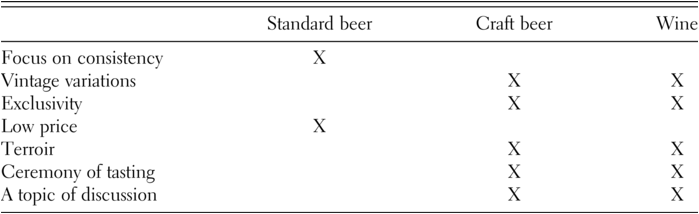
More broadly, it is interesting to consider just how different the craft brewing sector is to the ‘normal’ mass-market brewing industry. In fact, in most regards, the craft brewing sector is more similar to the wine industry than it is to the beer industry.Footnote 57 This is illustrated, in a somewhat oversimplified manner, in Table 1.1.
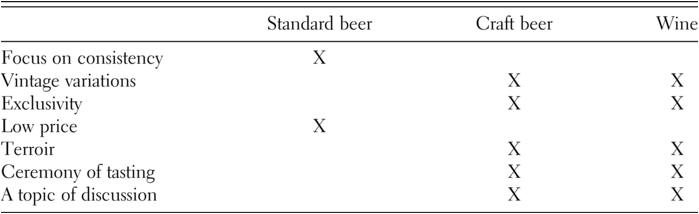
Table 1.1 Long description
The table has five columns and 13 rows. The column headers are country, beer, wine, spirits, and other. Mexico, 85.3, 3.8, 10.5, 0.4. Iceland, 56.2, 27.6, 16.2, less than 0.1. Czechia, 52.7, 21.8, 25.4, less than 0.1. Germany, 50.5, 29.9, 19.6, less than 0.1. Belgium, 47.6, 37.0, 12.0, 3.4. Finland, 47.2, 20.3, 16.8, 15.7. Ireland, 45.5, 26.4, 20.6, 7.6. United States of America, 44.9, 18.2, 36.9, less than 0.1. Canada, 44.3, 25.7, 26.0, 4.0. Norway, 43.8, 36.6, 16.5, 3.0. Denmark, 37.2, 44.9, 17.9, less than 0.1. Sweden, 37.0, 47.2, 14.0, 1.8. United Kingdom of Great Britain and Northern Ireland, 35.4, 34.6, 23.6, 6.4, respectively.
While the producers of both wine and craft beer commonly emphasize – and indeed take pride in – the variations from batch to batch (we can stick with the term ‘vintage’), consistency is the guiding principle for mass-market beer producers. Each batch of the beer needs to taste the same, smell the same, and look the same. In relation to such beers, the consumer knows what they will get, and successful producers ensure that they deliver just that.
The ‘vintage focus’ of the craft beer industry is partly driven by the need to constantly produce something new that will excite the consumers. It is also a tool to create scarcity and exclusivity. Consumers feel they must buy the newly released oak lagered banana and chocolate sour, or whatever the new beer may be, because it is part of a limited release and if they do not have it now, they will miss out. But there is also a more pragmatic reason for the craft beer industry’s vintage focus – consistency in beer brewing is expensive and hard to achieve. Thus, the vintage focus is to no small degree a result of the brewers’ inability to produce beer with the consistency of the mass-market breweries. Doing so requires the tools and skill to adjust the process and recipe based on differences between different batches of ingredients. For example, even assuming that a small brewer manages to ensure a consistent acquisition of the hops it uses (which may be a great challenge in itself), important characteristics of the hops may vary from harvest to harvest. Consequently, adding 8 grams of Saaz hops per litre for a 60-minute boil may create a different level of bitterness from one time to another unless the hops come from the same harvest (and even then, the result may vary based on how old the hops are at the time they are used).
The focus on exclusivity, scarcity, and vintage variations also links into the product pricing. There are several reasons that craft beer is more expensive than mass-market beers. Most importantly, it is more cost-effective to brew larger batches and the mass-producers’ efficiencies, for example in packaging and distribution, also allow them to sell at lower prices. But many craft beer enthusiasts might be sceptical of craft beers sold at a low price. Perhaps having paid a higher price creates an expectation of the product being superior and more interesting.
The concept of terroir is hotly debated in wine circles. At the same time, in most countries, it is nearly impossible to imagine drinkers of the standard beers debating terroir in relation to the products they consume.Footnote 58 That is not to suggest that it is wrong to discuss terroir in relation to beer – all the ingredients in beer may be discussed from that perspective. But we just do not do that for standard beers. Also in this context, craft beer is then more similar to wine than it is to the mass-market beers. Craft beers and wine are often the topic of conversation while they are being consumed, but that seems relatively pointless if you drink the same mass-produced beer all the time – successfully produced, it will taste exactly the same each time. For the same reason, beer tastings have become popular in relation to the craft beer scene but remains rare for the mass-market beers.
The law has shaped the craft brew scene in each country to a large degree. Most obviously, tax laws strongly impact the viability of a craft brew scene. However, that is not all. Countries adhering to strict ‘purity requirements’ may be leaving less scope for creativity and may, as a result, stifle innovation. More broadly, it has been noted that:
Interestingly, in countries with strong brewing industries, the craft beer market is developing slowly … The production of conventional beers (and the number of breweries) and craft beers is not proportional and the number of microbreweries is not as important as their size because it directly influences production. Czech Republic with more than 410 craft breweries in 2019 and Ireland with 75 craft breweries had a market share of 2% in 2019 … and 2.8% in 2017 … respectively. On the other hand, in countries such as Belgium, large beer companies tend to absorb craft breweries and the products become just another variety in the catalogue … This affects interest in craft beers and their research, as consumers believe they are industrially produced. In China, craft beer production is limited because it is difficult to acquire quality local ingredients, so imports significantly increase production costs … In addition, since there are no laws designed specifically for craft breweries, microbrewers must follow the stringent regulations for industrial producers … Similarly, Mexican government measures such as the application of a 26.5% special tax on the production and sale of beer regardless of the size of the brewery blocked the growing production of craft beer.Footnote 59
As is made clear in the above, craft beer has a certain attractiveness and typically sells at a considerably higher price than does its mass-market sibling. This clearly makes it attractive to portray a product as a craft beer. But before leaving the topic of the difference between mass-market beer and craft beer, it is interesting to pause to consider what exactly we mean by ‘craft beer’.
In a generic – non-legal – sense it may perhaps be said that there are three key characteristics associated with those brewing craft beer: small-scale, independent, and ‘craftsmanship’. But craft breweries are often also associated with other characteristics such as a local engagement, local distribution, local taproom, the use of local ingredients, unique batches, seasonal ranges, an aim for distinctiveness, and an innovative spirit.
On some markets, ‘genuine’ craft breweries are certified by some organization such as an industry association. For example, in 2017 the Brewers Association launched ‘The independent craft brewer seal’ in the US.Footnote 60 To be classed as an American craft brewery and be granted this seal, three requirements must be met:
Annual production of 6 million barrelsFootnote 61 of beer or less (approximately 3 percent of U.S. annual sales). Beer production is attributed to a brewer according to rules of alternating proprietorships. Has a TTB Brewer’s Notice[Footnote 62] and makes beer. Small
Independent
Brewer
The ability to issue such ‘seals of approval’ provides great power, and in some markets, competing – or at least overlapping – bodies have been formed. That was, for example, the case in Australia some years ago when there were two national bodies aiming to represent Australia’s craft brewers, and it was noted that there was a risk of a situation similar to the comical scene in Monty Python’s classic ‘Life of Brian’ with competing factions being more focused on each other than on the common enemy, the Roman occupiers.Footnote 63
At any rate, we will have reason to return to the matter of what amounts to a ‘craft beer’ on several occasions throughout the book.
1.6 What Does the Law Recognize as Beer?
Above, we discussed matters such as beer styles, beer ingredients, and the brewing process. But there is a fundamental issue we have avoided: How do you know that what you are drinking is a ‘beer’? The answer to this question is actually less straightforward than most beer drinkers might have imagined. The answer depends on both time and place – and most importantly for our book, it depends on the law. Beer laws – like all laws – vary depending on place, as each country makes its own laws. Indeed, laws may vary on a regional basis within some countries, as, for example, was the case in Germany.
Further, beer laws, like other laws, have varied over time and something recognized as ‘beer’ at one point in time might not qualify as beer in another time with a different regulatory framework. We may here think of the situation for brewers before and after the introduction of the German Reinheitsgebot.
But while the impact time and location might have on the definition of what is classed as ‘beer’ might have been predictable, it should also be noted that what counts as beer may depend on context. For example, the law may define beer in a particular way for tax purposes, but in a different way in the context of food standards. That is perhaps not as strange as it may first sound. As we elaborate on below, tax laws might be targeting the consumption of alcohol, which may explain why, for example, beer needs to contain more than 1.15 per cent of alcohol by volume to be classed under Australia’s excise law.Footnote 64 At the same time, food standards laws aim to meet other objectives, which in turn explains why the Australia New Zealand Food Standards Code will not recognize a product as beer unless it is ‘characterised by the presence of hops or preparations of hops’.Footnote 65 This means that we may have a product that is commonly thought of as beer – such as a low- or no-alcohol beer – that is beer under one legal definition but not another. Particularly in the case of exports, where the producer may be unfamiliar with the law of the receiving country, these definitional differences may cause a considerable headache.
Looking at some of the countries included in our study, we find a range of definitions of beer, the most famous being the already discussed German Reinheitsgebot and its focus on beer being made only using barley malt, hops, and water (and yeast). The Swedish Alkohollag (2010:1622) (Alcohol law) defines beer as:
Beer refers to a beverage produced by fermentation with dried or roasted malt as the main extract-providing substance.
Beer with an alcohol content that exceeds 2.25 but not 3.5% by volume is called folköl [people’s beer] and beer with an alcohol content that exceeds 3.5% by volume is called starköl [strong beer].Footnote 66
Thus, while beer with an alcohol content that is lower than 2.25 per cent by volume is commonly sold as lättöl [light beer], in legal terms it is not really beer. Instead, the Alkohollag states that ‘Drinks that are alcohol-free or that have an alcohol content of no more than 2.25% by volume are called lättdryck [light drink]’.Footnote 67
Under Czech law, namely Art. 16(1) of the Decree of the Ministry of Agriculture No. 248/2018, beer is defined as:
an alcoholic beverage produced by the fermentation of wort prepared from malt, water, untreated hops, treated hops or hop products which contains, in addition to the ethanol and carbon dioxide produced by the fermentation process, a certain quantity of unfermented extract; malt may be substituted for up to one-third by weight of the total extract of the original wort by an extract of, in particular, sugar, cereal starch, unmalted cereals or rice; in the case of flavoured beers, the alcoholic strength may be increased by the addition of spirits or other alcoholic beverages.
It is noteworthy that this rather detailed definition does not set any lower level of alcohol in the beer as long as it contains ethanol. It is also interesting to note the focus on malt, and the associated restriction of adjuncts, such as sugar, replacing malt.
Under Canadian law, an even more detailed definition is provided of ‘beer’:
(1) Beer
(a) shall be the product of the alcoholic fermentation by yeast, or a mixture of yeast and other micro-organisms, an infusion of barley or wheat malt and hops or hop extract in potable water;
(c) may have added to it during the course of manufacture any of the following ingredients:
(i) cereal grain,
(ii) honey, maple syrup, fruit, fruit juice or any other source of carbohydrates,
(iii) herbs and spices,
(iv) salt,
(v) flavouring preparations,
(vi) pre-isomerized hop extract,
(vii) reduced isomerized hop extract, and
(viii) food additives to which a marketing authorization applies and that are set out in the Lists of Permitted Food Additives published on the Health Canada website.Footnote 68
There are several interesting features of this definition. First of all, it gives barley and wheat malt a central position and beers brewed exclusively with other grains would not seem to qualify as beer. It is also interesting to note that the definition specifically acknowledges the practice of fermenting with a mixture of yeast and other micro-organisms. Further, a great deal of attention is directed at the hops, with specific definition provided of ‘hop extract’,Footnote 69 ‘pre-isomerized hop extract’,Footnote 70 and ‘reduced isomerized hop extract’.Footnote 71
Against the background described above, the reality is that it is not always easy to know whether you are truly drinking beer! But then again, as long as it tastes good, perhaps it does not generally matter whether the law regards it as a true ‘beer’ or not?
1.7 A Few Words about This Book
Hopefully you have now got a feel for what this book seeks to achieve. But just to be (overly) clear, there are a few things we want to emphasize.
This book is an introduction to beer law. It does not aim to be comprehensive in any sense. The book draws attention to and explains key issues in the intersection of law and beer. The aim has been to write something accessible – and hopefully entertaining – that still is informative and meets the standards of academic works. Where possible, we have sought to use interesting ‘stories’ from the world of beer law to guide the reader through the often quite complex legal issues that arise.
In the book, we predominantly draw on examples and illustrations from a small number of different jurisdictions: Belgium, the Czech Republic, Germany, the Nordic countries,Footnote 72 North America,Footnote 73 and the United Kingdom and Ireland. This selection is admittedly somewhat arbitrary, and it obviously fails to capture the wide diversity of beer cultures from around the world. However, while doubtless there are many other jurisdictions that could usefully have been included in the book, we hope that the reader will agree that all the jurisdictions included add value to the stories we seek to tell. They are all ‘beer countries’ and have all contributed to shaping the world of beer and beer law. The Czechs drink more beer per capita than any other country. Germany has its world-famous Reinheitsgebot. Beer culture in Belgium is included in UNESCO’s ‘Intangible Cultural Heritage of Humanity’. North America revolutionized the beer world by driving the craft brew movement. The United Kingdom and Ireland, pub culture and Guiness – no need to say more. And then there are the Nordic countries – Carlsberg, Viking drinking habits, sobriety movements, and an Icelandic ban on beer lasting to 1989.
So, which of these ‘beer countries’ is the most beer-focused? Which is the standout beer country? Well, there are of course different ways to measure that. But one way to look at it is through the lens of the percentage of beer consumed, measured in litres of pure alcohol, compared to other alcoholic beverages. According to a 2024 WHO report, the situation is as shown in Table 1.2.Footnote 74
Looking at the book’s structure, we have sought to blend the ‘heavier’ beer law chapters with ‘lighter’ chapters giving insights into the beer culture of the noted jurisdictions. Consequently, each chapter addressing topics such as health law and beer, tax law and beer, and so on, is followed by a country-specific chapter that partly expands on the theme of the chapter that precedes it and partly gives a more general insight into the country’s beer culture and broader beer law issues.
We sincerely hope that the book can provide value for as many readers as possible, from brewers with no legal background and beer drinkers more widely, to legal scholars and lawyers practising specifically in beer law. Perhaps the book may even make you look differently, and with a deeper level of appreciation, at the fascinating, and both technically and legally complex, product that is beer. If so, we will be very pleased.