



INTRODUCTION
The rapid development of a market economy and the changing attitudes towards sex in China have been accompanied by a marked increase in sexually transmitted infections (STIs) and an evolving epidemic of human immunodeficiency virus (HIV). As of 2009, ~740 000 people were infected with HIV in China, for a prevalence rate of 0·057% in adults aged 15–49 years [1]. Shanghai is China's largest city and is not untouched by the HIV epidemic. However, HIV prevalence appears to be lower than the national average [Reference Cai2]. Assuming the rates of HIV testing and reporting are similar in Shanghai to the rest of China, this yields an estimate of 11 000 HIV-infected persons and a prevalence of 0·08% in Shanghai.
Although HIV prevalence and incidence have been historically lower in China than in many other countries, due to changing sexual patterns, there has been a marked increase in HIV infection in some populations in China, especially men who have sex with men. Female sex workers (FSWs) in some regions have also been affected, especially in the context of injection drug use. Nevertheless, only limited epidemiological studies have been conducted in this population in Shanghai, the most populous city in China. One study conducted in 1998–1999 in Guangzhou found a high prevalence of STIs [Reference van den Hoek3].
Although suppressed and relatively unknown until recently, there has been a rapid increase in commercial sex work in the large urban centres of China. An estimated 100 000–250 000 women engage in commercial sex work in Shanghai, representing about 1–2% of women. Commercial sex is illegal but openly tolerated in China. However, sex workers are sometimes subject to administrative penalties such as official warnings, administrative fines, short-term detention or longer-term incarceration [Reference Tucker, Ren and Sapio4]. Many women who engage in commercial sex work in other occupations either as a pretext for sex work or as an opportunity to engage in commercial sex work. Thus, not all women in China engaging in commercial sex are readily identifiable as such.
To respond the increase in STIs and the HIV epidemic, the Shanghai Municipal Government Office announced a systematic HIV/AIDS control and prevention action plan in 2006, including prevention programmes targeting FSWs [5]. Outreach workers from district centres for disease control and prevention (CDCs) routinely visit entertainment venues to distribute educational materials and condom (free or low cost), and provide free STI screening and counselling. If a STI is identified during regular screening, the FSW will be referred to hospital for treatment at their own expense or through private insurance. However, such programmes have not been rigorously evaluated.
The Canada–China AIDS collaborative programme is a multidisciplinary multi-stakeholder programme of action research engaging government and non-governmental organizations and members of vulnerable populations in Shanghai. In the FSW component reported here, we aimed to measure the prevalence of HIV and STIs and examine the correlates of these infections. We also independently implemented a preventive intervention and measured its impact. The results of the intervention component will be reported in a forthcoming paper. Ethical approval of the study was obtained from ethics committees at the Shanghai Municipal CDC and the University of Toronto.
Shanghai had a population of about 23 million in 2009 and is divided into 19 administrative districts, each with a centre for disease control responsible for administering public health programmes within their district.
METHODS
We recruited 750 FSWs in six districts within Shanghai (two in the central urban core and four in the suburban/rural areas). Each district serves 300 000 to 1·5 million people and has over 2000 FSWs. The selected six districts represent about 32% of population and about 37% of FSWs in Shanghai. The districts were assigned to pairs based on similarity in population, population density, area and STI rates. The selection of intervention vs. control district in each pair was randomly determined. As noted above, the details of the preventive intervention will be presented in a forthcoming report.
Women working as commercial sex workers in Shanghai work in a number of different types of venues. These may be classified as larger [karaoke bars (KTV), night clubs] and smaller (barbershops, beauty salon, foot massage, bathhouses, massage parlours, ear cleaning establishments) venues. We selected 1–2 contiguous neighbourhoods within each district and then randomly selected 125 FSWs to ensure that 30% of participants were from large and 70% from small venues.
Personnel from the district health centre trained for this purpose recruited participants for our study. Women were invited to participate if they reported engaging in commercial sex and were willing to complete a questionnaire and provide specimens at baseline and at two follow-up visits at 3 and 6 months. Only data from the baseline component of the study are presented in the present study.
We approached 196 of the 347 establishments in the selected neighbourhoods in the six participating districts, of which 141 (72%) agreed to participate. Of the 1283 FSWs in the 141 establishments, 848 FSWs who were present at their venue at the time of the research personnel's visit were approached and 750 (88%) s agreed to participate.
Information on demographic characteristics, sexual history, number of clients, use of condoms and HIV knowledge, condom use, condom self-efficacy and stigma were collected in a questionnaire which lasted for an average of 50 min. The questionnaire was administered in Mandarin by trained interviewers from the district health centre.
At the first visit and at subsequent visits, specimens were collected to measure the presence of STI. Blood was collected by venepuncture and tested for HIV and syphilis, and urine was tested for gonorrhoea and chlamydia using the Roche Amplicor LCR assay (Roche, USA). Anti-HIV IgG antibody was detected using an EIA technique (Zhu Hai Livzon Diagnostics Inc., China). If reactive, the sample was tested by Western blot (MP Biomedicals Co., USA). Syphilis infection was detected using the particle agglutination test for the detection of antibodies to Treponema pallidum (TPPA; Fujirebio Inc., Japan) and a rapid plasma reagin (RPR, Kehua Bio-engineering Co. Ltd, China). Samples were considered positive if positive by TPPA and reactive on RPR at a titre of ⩾1:8. STI infection was defined as any test positive for gonorrhoea, chlamydia, or syphilis.
If positive for an STI, the participants were referred to a designated STI clinic for diagnosis and treatment. The local CDC reimbursed the costs of diagnosis and treatment. If positive for HIV, the participant was referred to a designated speciality HIV/AIDS clinic for counselling and treatment, which is freely provided at government clinics.
We examined the characteristics of participants in a univariate analysis. We also derived prevalence with 95% exact binomial confidence intervals (CIs). We tested associations between categorical variables using the χ 2 test. We also examined the correlates of chlamydia and any STI including chlamydia and/or gonorrhoea and/or syphilis in two separate logistic multivariate regression models (demographic factors model and behavioural factors model including age) incorporating predictor variables that were found to be significant at the P < 0·05 level in the univariate analysis. Statistical analyses were performed using SAS v. 9.2 for Windows (SAS Institute Inc., USA).
RESULTS
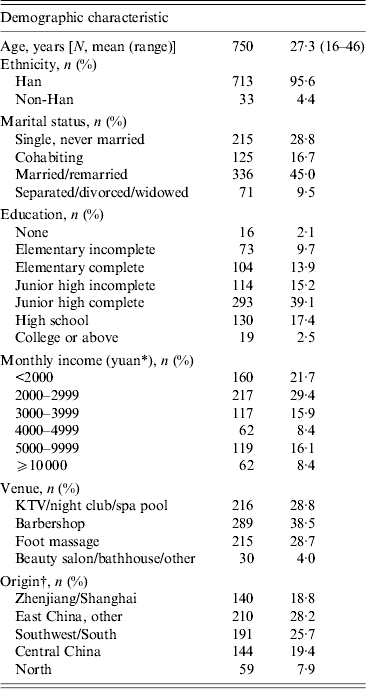
The demographic characteristics of participants in the Shanghai FSW study are presented in Table 1. These results include participants in all six districts in both the intervention and control groups. All subsequent analyses in this report will examine the study population as a whole since the results presented are based on data collected at baseline before the intervention was performed.
Demographic characteristics in female sex workers in Shanghai
KTV, Karaoke bar.
* 1 Chinese yuan = ~ $US 0·16
† East China, other includes Jiangsu, Anhui, Fujian, Jiangxi and Shandong; Southwest/South includes Southwest (Sichuan, Chongqing, Yunnan, Guizhou) and South China (Guangxi); Central China includes Henan, Hubei and Hunan; North includes North China (Beijing, Hebei, Shanxi, Neimenggu), Northeast (Liaoning, Jilin, Heilongjiang) and Northwest (Gansu).
As shown in Table 1, most (>95%) women were of Han ethnicity and were born outside Shanghai. The mean age was 27 years (range 16–46 years). There was a relatively strong representation from all venues except for beauty salons/bathhouses/other. The provinces were aggregated across contiguous jurisdictions where STI prevalence results were relatively homogeneous in our study.
The median age at the time of sexual debut was 19 years (range 10–27 years), with a median duration of sex work of 12 months [interquartile range (IQR), 5–24 months]. The median number of times of having sex with clients during a normal week was six (IQR 3–10). Regarding sexual services provided to clients during the previous months, most participants reported providing vaginal sex (90·5%, 674/745), oral sex (23·7%, 170/716), anal sex (4·1%, 29/708), and manual masturbation (57·4%, 413/720). The median average amount paid per sexual service by clients after deductions from pimps or others in the previous month was 100 yuan (~US$16) [IQR 60–300 yuan (~US$10–49)]. Regarding drug use, 5·7% (42/738) of FSWs reported having ever used and 0·54% (4/746) reported having ever injected recreational/illicit drugs.
The prevalence of STIs varied considerably. We found only one woman positive for HIV, for a prevalence of 0·13% (1/750) (95% CI 0·0–0·74). The prevalence of the other three STIs tested were: chlamydia [14·7%, 110/750 (95% CI 12·2–17·4)], gonorrhoea [3·5%, 26/750 (95% CI 2·3–5·0)] and syphilis [1·3%, 10/750 (95% CI 0·64–2·4)]. Overall, 17·7% [133/750 (95% CI, 15·1–20·7)] of participants had at least one STI, of which the majority was chlamydia. Ten percent of participants with an STI had two STIs.
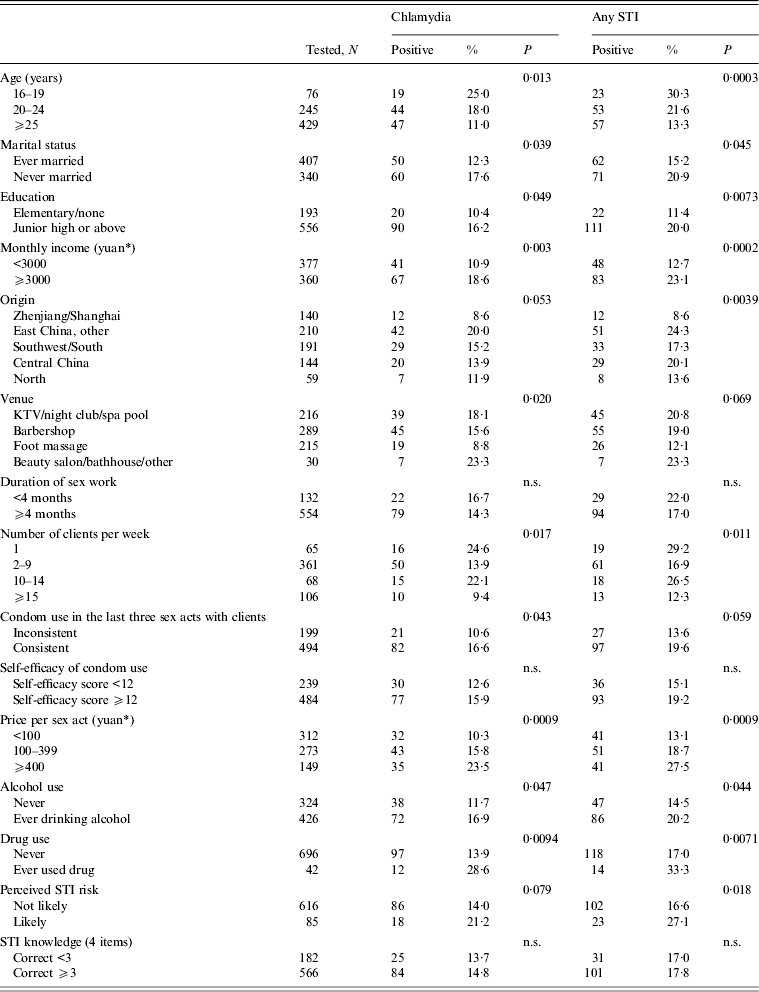
We examined the correlates of chlamydia and any STI, in particular the demographic and the social and sexual behavioural covariates (see Table 2). Chlamydial infection and any STI were significantly greater in younger woman, with chlamydial and STI prevalence consistently decreasing with increasing age. Both chlamydia and STI prevalence were higher in those who had never been married and those with both higher education and monthly income. The prevalence of chlamydia and STI varied by province of origin, being lower in neighbouring Zhenjiang and the Northern provinces, intermediate in Sichuan and Central South and highest in the other provinces.
Demographic, social and sexual behavioural covariates of chlamydia infection and any STI
STI, Sexually transmitted infection; n.s., non-significant.
* 1 Chinese yuan = ~ $US 0·16.
Prevalence of chlamydia and of any STI was greater in women with fewer clients per week, those who always used a condom, and those paid more per sex act. Those who had used alcohol or drugs were at higher risk for both chlamydia and STI; both chlamydia and any STI were higher in those who felt they were likely at risk of STI but only statistically significant for any STI.
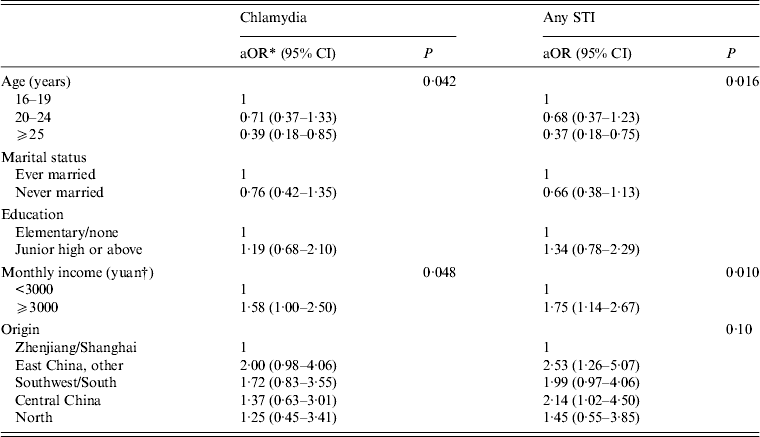
The results of the multivariate analysis using demographic covariates are presented in Table 3. Younger age remained a strong predictor of chlamydia and any STI as did higher monthly income. STI prevalence was somewhat higher in women from most of the other provinces compared to Zhenjiang and Shanghai taken together.
Multivariate analysis of demographic covariates for chlamydia infection and any STI in 729 female sex workers
aOR, Adjusted odd ratio; CI, confidence interval; STI, sexually transmitted infection.
* Adjusted for the remaining variables in the table.
† 1 Chinese yuan = ~$US 0·16.
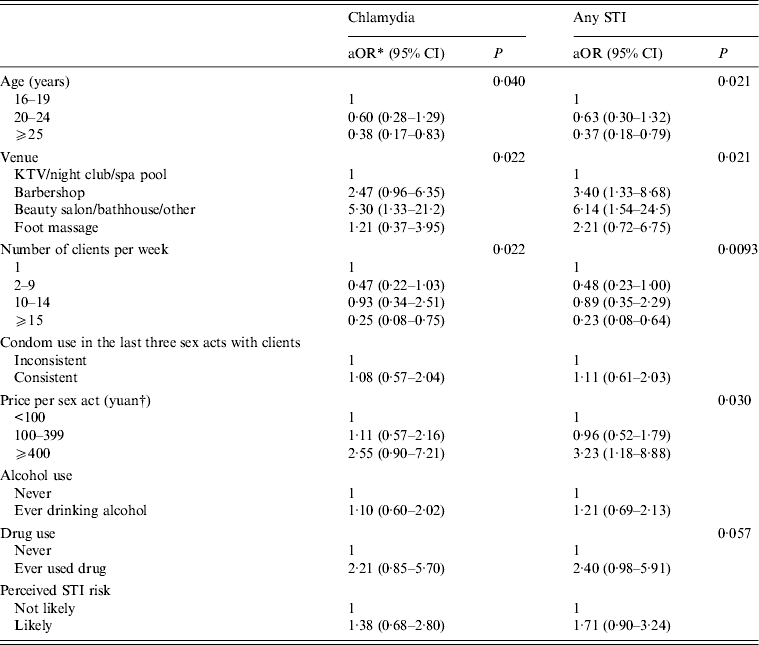
Table 4 summarizes the results of the analysis of the sexual and behavioural covariates but also including age examining any STI in particular revealed a higher rate of STI for all venues compared to KTV/night clubs/spa pool as the referent. The number of clients remained significant with a higher risk in those with fewer clients per week for both STI and chlamydia. Condom use was not associated positively or negatively with chlamydia or STI, but price per sex act remained significant and drug use was borderline significant in the multivariate analysis for any STI.
Multivariate analysis of social and sexual behavioural covariates for chlamydia infection and any STI among 527 female sex workers
aOR, Adjusted odd ratio; CI, confidence interval; STI, sexually transmitted infection; KTV, karaoke bar.
* Adjusted for the remaining variables in the table.
† 1 Chinese yuan = ~$US 0·16.
DISCUSSION
In a study of FSWs in Shanghai China in 2009, we examined the prevalence and correlates of STIs. HIV, syphilis and gonorrhoea were relatively infrequent but chlamydial infection was common, especially in younger women. The rate of chlamydia in this vulnerable subgroup is high and warrants special attention, given the serious sequelae of pelvic inflammatory disease and infertility caused by this often asymptomatic infection; moreover, Chlamydia trachomatis can cause mucosal inflammation and thus enhance HIV susceptibility and infectivity [Reference Galvin and Cohen6].
There are several limitations to our study. The selection of participants was not truly random but selected from six of the 19 Shanghai health districts for logistic reasons. Nevertheless, based on population, population density and urbanicity as well as reported rates of STI, these six districts were reasonably representative of Shanghai as a whole. Our study participants were a venue-based sample but did not include FSWs who worked on the streets or who recruited clients by telephone. It is also difficult to know whether the women who participated in the study were representative of sex workers in these districts. We did not have data on the characteristics of women who refused but, based on reports from the six district health centres, refusal rates were low. Therefore, the generalization of our findings to all sex workers in Shanghai could potentially be limited by selection bias. Moreover, due to budget limitations, specimen collection took place mostly at venues and not at a healthcare clinic, we were unable to perform gynaecological examinations and assess other sexually associated bacterial and viral pathogens such as Trichomonas vaginalis, bacterial vaginosis, herpes simplex virus, human papillomavirus, and hepatitis B virus. All these conditions are important in assessing the sexual health of a FSW population.
The results of our laboratory analyses are likely to be highly accurate since we used state-of-the-art assays to measure them. However, the sexual and perhaps even demographic characteristics of the women were self-reported and this may have introduced bias into the study. Commercial sex work is stigmatized in Shanghai and women may have underrepresented risky sexual behaviours and, in particular, the number of clients.
The finding of a low rate of HIV in this population is extremely encouraging. HIV rates in FSWs vary greatly across China but are generally low in areas where injection drug use is infrequent both in the sex workers and their clients. For example, high rates of HIV have been observed in the southern province of Yunnan where injection drug use is quite common. The low rate of HIV presents a strategic opportunity for Shanghai public health authorities to control and prevent the spread of HIV into this population since only very limited spread has occurred and this single infection may reflect an unusual set of circumstances. Nevertheless, there is no guarantee that this might not change, therefore clearly intensified efforts to help these women protect themselves from HIV and other STIs would be extremely beneficial.
The infection rates we observed were generally within the range of those reported in previous studies, in accord with Poon et al. [Reference Poon7]. Since the situation is evolving and varies by geography, we compared our results to laboratory-confirmed results of studies from larger cities in China conducted most recently. For HIV, prevalence was generally around 10% in Yunnan Province [Reference Chen8–Reference Wang10] but 0·0–1·0% in other provinces of China. The prevalence of gonorrhoea in FSWs varied greatly but in most studies was higher than that observed in our study, varying from 2% to 38% [Reference Chen8, Reference Wang11–Reference Rou14]. Chlamydia prevalence in FSWs varied from 3% to 46% [Reference Xu9–Reference Li12, Reference Chen15, Reference Wang16] and was highest in some studies in Yunnan Province [Reference Chen8, Reference Xu9]. Finally, syphilis prevalence was higher than in Shanghai in almost all other studies examined, from 3% to 16% [Reference Chen8–Reference Ruan13, Reference Wang16–Reference Yang24]. Interestingly, a repeated cross-sectional study from neighbouring Zhejiang found a marked decrease in syphilis prevalence over the four years examined: 2006, 13·5%; 2007, 0·8%; 2008, 0·0%; 2009, 0·5% [Reference Hong, Xu and Zhang21]. Yang et al. conducted a survey of 793 FSWs in two central health districts in Shanghai in 2008–2009 [Reference Yang24], and found no HIV infections and a syphilis prevalence of 4·5%.
We compared our results to large study of 3099 FSWs in eight cities in eastern and southern China in 2009, the same year as our study [Reference Chen25]. The rate of HIV and chlamydia were very similar to the rates we observed but their rate of syphilis was about fivefold greater and gonorrhoea about double what we observed. Although the measures of condom use were somewhat different in the two studies, it appears that consistent condom use was higher in our study population (72% for condoms with the last three clients vs. 52% consistent condom use in the previous month in their study) which may in part explain the difference in prevalence observed.
Clearly, some FSWs in Shanghai are engaging in risky sexual behaviour and are at risk of STI and potentially of HIV. We found areas of suboptimal HIV knowledge and risk perception (data not shown) that could form the basis for intensified educational activities in this population. Further, although the use of condoms was high, there is still substantial room for improvement: 71% of women used a condom in all three of their last sexual acts with clients. A detailed analysis of condom use and its correlates will be presented in a forthcoming report. With respect to chlamydia, the rate of 25% in women aged <20 years and 18% in those aged 20–24 years represents a clear opportunity for intervention. Given that this infection is often asymptomatic in women, a more intensified programme of routine screening in this population would likely be cost-effective [Reference You26].
We identified several independent predictors of STI in our analysis, summarized in Table 4. Thus, the risk of STI in this population is not homogeneous: several subgroups appear to be at increased risk of STI. Several of these covariates could be useful in targeting higher risk populations, in particular according to venue type (e.g. barbershops, beauty salons, bathhouses) and younger age.
Interestingly, we found that FSWs in Shanghai did not consider themselves to be at significant risk for STI nor did they appear to appreciate the potential for its sequelae to cause infertility (data not shown). Many of these women were young and expressed a desire to return to their villages to start families once they had saved sufficient money. Thus, increased sensitization about the risk and consequences of STIs could be an important motivation for insisting on condom use. In our study, women appeared to enter sex work at a young age. It is possible that women were involuntarily forced into such line of work through trafficking or other means, although we have no direct information about this.
As reported above, only one FSW in our study was HIV positive. Intensive preventive efforts may help to limit future spread in this high-risk population.
ACKNOWLEDGEMENTS
The authors thank the researchers in the Shanghai Health District Research Group: Yanfeng Cha from Songjiang, Guozheng Shi from Jiading, Xiaofeng Liu from Baoshan, Xiuhong Tian from Minhang, Huili Fan from Luwan and Yinqing Ni from Changning Centres for Disease Control and Prevention. This study received funding from the Global Health Research Initiative Teasdale-Corti Team Grants from the Canadian Institutes of Health Research, Canadian International Development Agency, Health Canada, and International Development Research Centre (IDRC), Canada, (IDRC:103460–045).
DECLARATION OF INTEREST
None.



