


Introduction
There is a large amount of scholarly debate about the diffusion of technology and modernization in the twentieth century. Much of this scholarship looks at innovation as a largely urban phenomenon, driven by dynamic and high-income cities and the advent of electrification. In contrast, a very particular form of American manufacturing and consumerism developed in rural areas, with two principal drivers: high rural incomes and a technological mix in which suppliers of agricultural equipment could position themselves at the forefront of a new domestic consumer good. Between 1900 and 1920, real farm incomes increased by 40 percent, and farm values tripled; farmers reacted by purchasing machinery and consumer goods to improve material conditions for their families.Footnote 1 At the same time, several established agricultural machinery companies found themselves with excess production capacity for part of the year, as farm and barn equipment tended to sell best in June and July. These companies chose to produce labor-saving equipment that was not tied to the summer months: hand-powered, and later, gas-powered or electric, washing machines for their rural customers.
Before the invention and proliferation of washing machines, washday was an unusually unpleasant and physically demanding task. Despite the name, it would often take two or more days per week. Households in the United States and Canada typically tried to find a way to hire out at least some of the wash, if they could in any way afford to do so. Those who could afford it would have full-time maids, hire laundresses by the day, or send their laundry out to either individual washerwomen or—as of the 1850s—industrial steam laundries. These services were expensive: in 1905, a single full-time maid cost around $300 to $400 per year, a dedicated laundress about $1.20 to $3.00 per week, and sending the bulk of the family wash out cost around $1.00 to $1.50 per week. The median American adult man working in manufacturing earned $10 to $12 per week and white-collar professionals earned roughly $1,000 to $1,500 per year.Footnote 2
Early washing machines offered a clear alternative to this practice. Steam-powered industrial machines were much more efficient than doing the wash by hand, although nineteenth-century households were often skeptical of the idea that clothes could be cleaned by using steam to open the fibers of the clothing without friction. Hand-powered machines from ca. 1900 worked on the principle of leverage and saved little time but much of the drudgery of doing the wash by hand.Footnote 3 The largest change came from the invention and rapid spread of household-sized gas- and electric-powered washing machines in ca. 1907–1910. Literature discussing the rise of washing machines in America or Canada focuses on these electric-powered washing machines and looks at the rise of washing machines as part of a broader story of electrification and urbanization.Footnote 4 Some of the largest manufacturers of washing machines began as general electrical goods companies. “Modernization”—even if contested, as many authors argue—is shown as a function of the inexorable spread of electricity and electric appliances. More broadly speaking, industrial development is portrayed as a fundamentally urban phenomenon.Footnote 5
The focus on electrification and urbanization obscures two critical elements of the development of household washing machines, with broader implications for all of American and Canadian industry. First, the early washing machine companies were dispersed. Local companies served their immediate communities, and the market was heavily regionalized, with no nationally dominant manufacturer. Any company with a skilled engineer on the payroll and the ability to manufacture simple machines could set up a workshop or a factory to build a leveraged washing machine. This meant that many companies gave it a try. Farm machinery companies in rural areas in the Midwest and Ontario were therefore surprisingly well-placed to begin manufacturing washing machines. They were already set up to build machinery, had working sales relationships among local farmers, had experienced engineers on staff, and initially faced little competition from urban manufacturers. As farming machinery faced a large amount of seasonal variance, manufacturing washing machines allowed these companies to remain productive and profitable during the offseason—profitable enough that most dropped their farming lines altogether within a few years. Many companies that later grew to influence or even define the North American washing machine industry throughout the middle of the twentieth century began as farming machinery manufacturers.
Second, many of these early powered machines were not electric; they were powered by gasoline. Electrical washing machines had essentially taken over the Canadian and American markets by the mid-1920s, leaving alternatives to fade within popular and scholarly imagination. However, powered washing machines did not need to rely on electricity. The small farm-machinery companies in the Midwest and rural Ontario produced gas-powered washing machines as well as the increasingly popular electric washing machines throughout the 1910s and 1920s, gradually fading out afterward. These machines were meant for their local markets: prosperous farming communities that already owned gas-powered motors, or who could easily fit modern gas-powered appliances into their daily living patterns. The gas-powered machines were wildly popular within rural markets and allowed the small rural companies of the 1910s to consolidate and grow to a regional or national scale alongside their urban counterparts. Gas-powered washing machines were an underappreciated aspect of the broader process of rural Midwestern communities engaging with modernization on their own terms. These machines allowed rural households to lessen the drudgery of washday, without needing to accept other economic or lifestyle changes that accompanied electrification of the farm.Footnote 6
The role of rural consumers in the development and dissemination of washing machines is therefore critical in two distinct ways. It demonstrates a parallel pathway of modernity, in which rural households were able to access labor-saving appliances on their own terms—and without needing to conform to modernizers’ wishes for rural electrification if they did not wish to do so. It also demonstrates that the rural and urban markets, while parallel, were not disconnected. During the 1920s, companies that had been based in the rural Midwest and Ontario grew to have a nationwide presence. Ideas developed in rural Iowa percolated to companies based in urban Syracuse, Binghamton, and Chicago.Footnote 7 Although recent scholarship has studied rural consumer culture and household life, less has been said about the role of rural nonfarm manufacturing and its impact on both rural and urban markets. I argue that these firms were central to the industry, challenging the narrative of urban technologies and conveniences gradually finding their way to the countryside. The rise of washing machines throughout the United States and Canada therefore serves as a case study of both rural modernity and understudied forms of capitalist economic development.
Nineteenth-Century Washday
Before the proliferation of washing machines, washday in the late nineteenth and early twentieth century US and Canada (often known as “Blue Monday,” although in households with young children laundry was not limited to a single day of the week) was arguably the most time-consuming and arduous task that a typical housewife would have to complete. The task was virtually always completed by the women of the house, or by hired female help. Most households lacked indoor plumbing and nearly all lacked electricity, with only 8 percent of homes electrified by 1907.Footnote 8 Doing the laundry therefore required hauling water from a communal pump or tap, or from a stream. Then it had to be boiled on the stove, which may have been little more than an open flame and typically would have produced an oppressive heat in the cramped kitchen. This was followed by a long and physically demanding routine of soaking, physically scrubbing clothes against a washboard, wringing damp, bluing, bleaching, repeating for a second or third or even fourth round if needed, starching clothing articles such as blouses and shirt collars, and then hanging up to dry.Footnote 9 Different fabrics needed to be washed separately, and different types of clothing required wildly varying treatments to be properly washed.Footnote 10 Households generally needed to make their own solutions for starch, soap, and bluing. One recipe for soap included cooking a mixture of lye, cold water, melted fat, borax, and ammonia until it reached the right consistency, and then setting it aside to harden.Footnote 11 This entire process could easily take a full day to two days, depending on the number of articles to be washed and how soiled they were. The gray water, which weighed upward of 40 pounds per tub, then had to be poured out. If it was winter or raining, the clothes would need to dry indoors, leaving the entire apartment or house damp and mildewed. In some cases, women were then expected to iron the clothing, with heavy flat irons that had to be heated over the fire. It was considered such an unpleasant task that all households, including working-class households, tended to send out at least some of their laundry if they could afford to.Footnote 12
Early industrial washing machines existed: they were designed in the mid-to-late nineteenth century for institutions like laundries, hotels, and hospitals. Early steam laundries offered urban households the option of sending their wash out in bulk. The machines designed by the American Steam Washing Machine Manufacturing Company in 1855 used steam to open the fibers of the clothes and then washed them in suds, arguing that this would clean them without needing to use rubbing or friction.Footnote 13 The Hospital Supply Company in 1892 built industrial-sized machines that turned an oversized cylinder through a combination of hand crank and steam power. The company did not claim to avoid wear and tear on clothing by avoiding the use of friction.Footnote 14 Some higher-end industrial washing machines even offered the ability to connect directly to plumbing, removing the need to manually haul water.
These machines were all designed to reduce work by making machines do the most arduous part of the laundry process: scrubbing the clothes against the washboard. Commercial steam laundries were designed around the idea of families sending out their weekly wash to a centralized location, where it would be washed alongside roughly 100 other articles of clothing, dried, ironed, and returned for a fee. One pricing list from the 1890s from Troy Laundry of New York City priced family laundry at $1.00 per dozen articles, with specific prices for individual articles of clothing if needed.Footnote 15
These large commercial steam laundries were popular for hotels, boarding houses, and single men sending out “bachelor bundles” of shirts, collars, and cuffs.Footnote 16 Many households were skeptical, believing that machines could not adequately clean their laundry, and distrusting the idea of getting their clothing back in good condition if it was washed in a batch with dozens of other articles.Footnote 17 Steam-powered laundries were prolific and popular throughout the late 19th and early 20th centuries but never made up more than a small segment of the overall demand for laundry services. In 1909, power laundries grossed over $100 million; at prevailing rates, this would have been enough for roughly one million households to send their wash out across the entire year, out of 20 million households across the United States. Over half of the population lived in rural areas, where industrial laundries had never been an option. Within the Midwest, this divide was even starker: taking Iowa as an example, in 1900 the population was classified as 74 percent rural.Footnote 18 Steam laundries, although offering an alternative to doing the wash by hand, were not a comprehensive solution for a typical household, especially in rural areas.
Early Household Machines in the United States and Canada
Before the introduction of household washing machines around the turn of the century, the vast majority of households were either doing their own wash by hand or sending the wash out to be done by hand. In 1905, an urban Northeastern or Midwestern family sending out the bulk of their laundry could expect to pay about $1.00 to $1.50 per week, depending on the region and whether the work was done by an individual washerwoman or a laundry (or a combination of both, for steam cleaning).Footnote 19 For a household of more modest means, it would cost five to ten cents per week to send out a man’s shirt collars and cuffs, plus occasional bulky linens; the woman of the house would need to do the rest by hand.Footnote 20 A single full-time maid could cost around $300 to $400 for a year in wages and board, about half of a blue-collar laborer’s yearly wages and a fifth to a third of a white-collar salary.Footnote 21 A dedicated laundress coming in one to two days per week could expect to earn around fifteen cents per hour for one to two eight-hour days per week, or about $60 to $120 per year.Footnote 22 Rural families had fewer options depending on their region, although it was still usually possible to hire help if desired.Footnote 23
The assumption of hand-washed laundry was sufficiently strong that household guides of the era, which assumed a relatively wealthy audience, were designed around the idea that work was to be done manually by either the woman of the house or a maid. One of the better-known guides from 1906, Mary Beals Vail’s Approved Methods for Home Laundering, gave an exhaustive account of the best ways to get the wash done. She argued that washing machines “are very helpful for heavy clothes and where large washings are the rule,” but in general assumed that washing would be done traditionally in tubs. Washing machines were helpful, but a portable rubbing board was necessary.Footnote 24
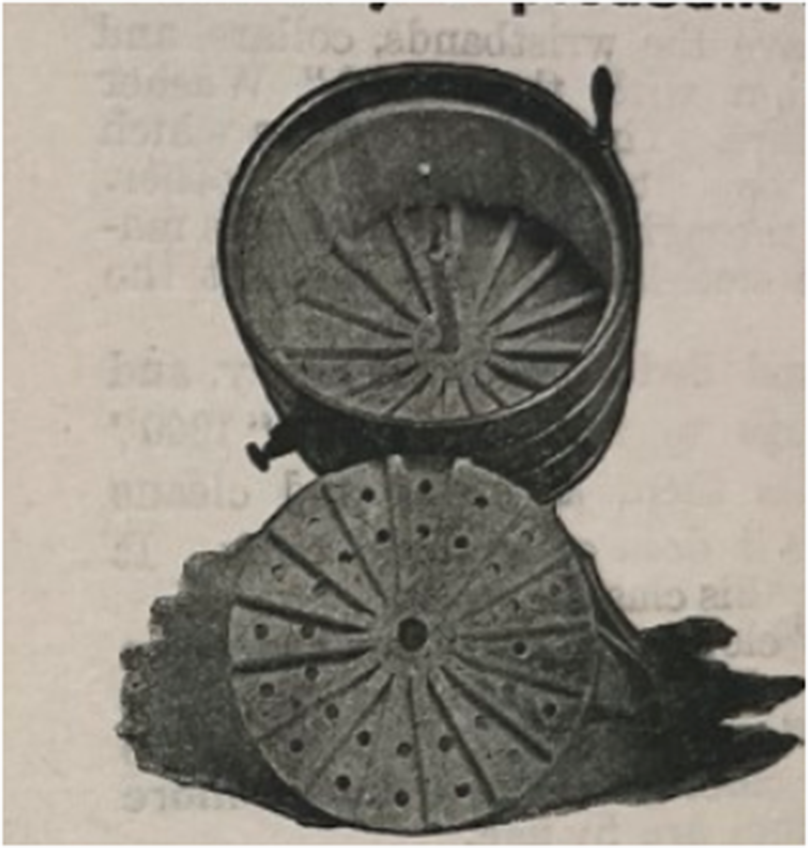
A change began in the first few years of the twentieth century: simple hand-powered machines became reasonably available and affordable to individual households, and some companies and hardware dealers offered a free trial of their machines to convince people that they were just as effective as a laundress for cleaning clothing and cheaper over time.Footnote 25 Hand-powered washing machines generally use an agitator. Instead of rubbing clothes against a board, these tubs had ridges on the inside (see Figure 1).Footnote 26 Turning a hand crank would make the washboard move, rubbing the clothes against the ridges in the tub. Then the wet clothing would be pulled through a hand-cranked wringer to get most of the water out, before being hung to dry. These machines were less technologically advanced than the grand industrial steam-based or cylinder machines that could wash hundreds of articles per hour. They were not connected to plumbing and had to be manually filled and drained. The user would still need to follow the entire process of making soap and starch, washing, rinsing, rerinsing, bluing, and drying. However, the strenuous act of rubbing clothes directly against the washboard for hours on end could be offloaded to one of these simple machines, and women made much less direct hand contact with the harsh chemicals and soaps used for washing clothes.
“1900” Washer, ca. 1900, produced by the Nineteen Hundred Company of Binghamton, N.Y. This popular machine cost $11 and was available to purchase on installment.

The early American hand-powered machines could cost as little as $2.50 to $6.00 for a cheap model in around 1900, or one-third to half of a manufacturing worker’s weekly wage.Footnote 27 In Canada, sparser population centers and lower disposable income made it more expensive to produce and sell washing machines. Canadian machines were therefore more expensive, with low-end models beginning at roughly $4 to $8 depending on the city.Footnote 28 Very few washing machine companies were based out of Canada in this era; they were mostly American companies that sold stock to larger Canadian hardware or department stores, rather than trying to organize their own distribution. However, even Canadians were typically able to afford these machines if they wanted to: pricing structures were set up with a small down payment followed by weekly payments, meaning that any family that was already spending at least fifty cents per week on laundresses could afford to shunt fifty cents toward washing machine payments.
Manufacturing one of these machines took very little proprietary knowledge, making it relatively feasible for a group of investors to put up some capital and begin producing wooden washing machines. A wide variety of companies produced the early machines, and none held a significant percentage of the market. Before World War I, companies tended to produce and sell their machines locally: Altorfer Bros served parts of Illinois, American Manufacturing Company in Ohio, Acme Washing Machine Company originally in Ohio, American Washer Company in St. Louis, Blackstone Washing Machine Manufacturing Company in upstate New York, and so on.
Critically, there was an existing industry that already had much of the necessary infrastructure to produce washing machines: Midwestern farming machinery companies, which were already set up to produce structurally similar labor-saving machinery for the farm. Many of these companies began selling washing machines to earn an income in the farming offseason.Footnote 29 Barn equipment like horse carriers or cow and horse stalls tended to sell best in June and July while washing machine sales peaked between March and May; companies could produce washing machines primarily in the winter and early spring, when sales for barn equipment were low.Footnote 30 Farming families, enjoying substantially higher incomes than they had in the late eighteenth century, frequently used their excess income to purchase furnishings, kitchen devices, or hand pumps for their kitchen.Footnote 31 Hand-powered washing machines fit into this paradigm well, especially as rural households had fewer opportunities than urban households to send the wash out.
The simple, repetitive action of an agitator was relatively straightforward to mechanize. The cranking mechanism could be attached to a motor, further reducing the strenuous components of the work. Midwestern farming machinery companies already built a wide range of farming machines that operated using gas-powered motors; it was no large change to their production processes to build washing machines that ran similar principles. The first mechanized washing machines were electrical washing machines, produced in 1907 by Thor.Footnote 32 However, most of the earliest mechanized washing machines—notably those produced by burgeoning Iowa manufacturers Dexter and Maytag—were “power” machines, operated by gasoline in areas where electricity was not available. In 1907, only 8 percent of households and a negligible percentage of rural households were electrified.Footnote 33
Dexter, Maytag, and Beatty
The years 1907–1910 saw an explosion of mechanized washing machines as dozens of small companies began producing their own all at once. Three of these companies offer an illustrative case study of how the industry worked in these early years: Dexter of Iowa, Maytag of Iowa, and Beatty of Ontario. The Dexter Corporation was founded in 1901 as Excelsior Thrasher Tooth Company, a farming machinery company based in Dexter, Iowa, a small farming town.Footnote 34 It was a family company, primarily owned by the Gaines family, the related Hunt family, and inventor and engineer W. H. George, who owned several patents on various parts for washing machines, which he would assign to the company.Footnote 35 The majority of initial financing came from Louis Gaines (1867–1949) and Ed Hunt (1847–1916).Footnote 36 The company first started selling washing machines (and renamed itself) in around 1908 to keep sales up during the farming offseason, selling hand-powered machines under a license granted from the Iowa Washing Machine Company. Under the license, the royalties cost thirty-five cents per unit and Dexter was required to maintain a price point set by Iowa Washing Machine Company.Footnote 37
In 1910, Dexter created its first machine out of its own intellectual property, the hand-powered “Sunny Monday.”Footnote 38 Sunny Monday was a very popular machine, and it sold well enough to justify Dexter’s expansion. Like nearly all hand-powered machines, the tub was made of wood and the machine was finished with wood, which meant that it needed to be carefully wiped down and left to dry between uses. Nothing about the machine was unique to Dexter: it used a patented double lever to add leverage to the wash (which was supposed to be less fatiguing than a single lever), reducing the amount of effort required to agitate the clothing against the ridges in the tub—just like many other companies were producing across the country.Footnote 39
Following the success of Sunny Monday, Dexter realized that washing machines had the potential to be a significantly more lucrative business than farm machinery. The company raised $10,000 ($315,000 in 2023 dollars) to construct a new building in the larger farming town of Fairfield, Iowa.Footnote 40 At this point, farming machinery still made up the bulk of Dexter’s business; when trying to raise money for the new building, Hunt directed George to take out a loan to cover the bank overdraft “until threshing time,” and a series of letters discussing the building fund also went into detail on the logistics of rice farming.Footnote 41 However, this would soon change. Dexter’s new stockholders believed that washing machines, a locally untapped market, had the potential to be hugely lucrative. After the fundraising done between 1911 and 1913, the company reorganized and reincorporated in Fairfield at a value of $60,000 ($1.9 million in 2023 dollars) in capital stock.Footnote 42
Seventy miles away, the Parsons Band Cutter and Self Feeder Company and the Parsons Hawkeye Manufacturing Company of Newton, Iowa were undergoing the same process. They emerged under the leadership of farmer and thresherman F. L. Maytag 1857–1937 as The Maytag Company under a consolidated catalog that increasingly focused on washing machines. Maytag used the same type of language to advertise washing machines as they had to advertise threshing machines, with claims focusing on getting the work done faster and with less effort. Customer testimonials, included within the catalog, discussed how Maytag’s machines made their lives and work easier: “I would not think of getting along without one,” or “we would not think of threshing without it.”Footnote 43
This structure of expansion was common across the washing machine companies in the years between 1908 and 1914. Within the nascent industry where no company had achieved even regional market dominance, there were abundant opportunities for new entrants. The Thor Electric Washing Machine was the first electric machine, but other companies quickly followed, and all fell into the pattern of offering pairs of machines powered by electricity for the mostly urban households that had power, and powered by gas for the rural and urban homes that did not.Footnote 44 Although the percentage of electrified households was rising rapidly (doubling from 8 percent in 1907 to 15.9 percent in 1912), it did not exceed one-third until 1920. In farming households, the situation was even starker, with only 1.6 percent of households electrified in 1920; rural households did not achieve one-third electrification until 1941.Footnote 45 The gas-powered machines were therefore necessary to reach the majority of the market and were practically the only machines that sold in rural regions.
In both cases, the powered motor was used to operate both the agitator and the wringer, although clothes still needed to be passed through the wringer one at a time by hand. The Meadows Improved Power Washer, built by the Meadows Manufacturing Company in the small farming town of Pontiac, Illinois, advertised that it could be run by a gasoline engine, costing less than 2 cents per hour, or a one-fifth horsepower electric motor, costing 2 to 4 cents per hour; the ABC Power Washer of Roanoke, Illinois advertised a two to three cent price per wash.Footnote 46 Meadows’ five pages of glowing testimonials from its dealers about the number of machines sold suggest that the company was undergoing some meaningful degree of expansion in 1911–1912.Footnote 47 ABC sold their machines by word of mouth, then by a salesman traveling the countryside on horseback, then by mail orders, and by 1911 expanded into a proper factory. They went from producing 2,000 power washers in 1911 to 4,000 in 1912 to 7,000 in 1913.Footnote 48
A similar process, albeit with several years’ delay regarding the introduction of washing machines, took place in Ontario. During the Depression of 1873, the small Ontario village of Fergus attempted to rejuvenate its economy by offering a five-year tax exemption for new businesses.Footnote 49 Brothers George (1845–1921) and Matthew (1838–1884) Beatty took advantage of the opportunity, and started up a business selling farm and barn equipment; George’s wife Martha (1851–1940) managed the office and bookkeeping. The business was moderately successful for thirty years, primarily selling barn equipment to farmers throughout rural Ontario. In 1901, George was joined by his sons William (1877–1957) and Milton (1879–1940), who had just finished studies at the University of Toronto. Will had trained as an engineer, while Milton took over the sales force.
This new iteration of Beatty’s was considerably more successful than its predecessor. Over the next decade, the company expanded to $58,000 in annual sales in 1908–9, $124,000 in 1909–10, and $205,000 in 1910–11. In 1911, the company had $75,000 in working capital, with land and plant worth $24,300 and about 60 employees. The village of Fergus continued to support the expansion of Beatty Brothers, passing a bylaw to loan them $25,000 without interest for 15 years as well as providing further tax incentives to prevent them from moving to a larger town with better preexisting facilities. By this point, Fergus was becoming a company town. With about sixty direct employees, the company was responsible for the welfare of somewhere between 200 and 300 of the village’s 1,500 inhabitants. The factory hours were standardized at six days working ten-hour shifts, with factory workers typically earning $8 to $12 per week and office workers averaging $11 per week.Footnote 50 In 1912, the company was incorporated with $2 million in capitalization. This provided the capital it needed to make its first major acquisition: Wortman and Ward of London, a company that sold mechanical farm and barn equipment—as well as hand-powered washing machines.Footnote 51 Hand-powered washing machines became popular in Canada several years after they did in the United States, largely because they were more expensive to manufacture and sell on a per-unit basis. This would serve as the largest core difference between Beatty, Dexter, and Maytag: Beatty was already a large company when it began producing washing machines and therefore maintained its identity as a farming machinery company for much longer.
Beatty began producing thousands of hand-powered washing machines per year as early as 1912–13. Adding the Wortman and Ward lines massively increased Beatty’s sales, rising another 50 percent between 1911–12 and 1912–13. Company assets now stood at $435,000, and the company had four plants: Fergus and London in Ontario, and Winnipeg and Brandon in Manitoba.Footnote 52 Noting the success of their new Wortman lines and believing in its potential for rapid expansion, Beatty developed their own electric- and gas-powered washing machines in 1914. Unfortunately for Beatty, expansion would need to wait. The roughly four-year gap between Canadian companies and American companies introducing powered washing machines meant that Canadian companies were generally not introducing powered washing machines until 1914, and were quickly blocked by wartime restrictions on usage of critical raw materials. Washing machines still made up a negligible percentage of Beatty’s business until after World War I.Footnote 53 During the war, farm tools and implements were considered critical goods, leading Beatty to continue to manufacture them instead of shifting toward munitions. The washing machine lines were largely paused.Footnote 54
World War I and Expansion
Beatty, Maytag, and Dexter all faced the beginning of World War I in excellent financial positions, albeit for very different reasons. Maytag was continuously expanding, hiring more workers, and producing a wider range of products. The company and its president F. L. Maytag semiregularly featured in local newspapers in Iowa, Indiana, South Dakota, and Ohio. Beatty, although unable to expand their production of washing machines due to the beginning of the war, still produced 1,784 hand-powered washing machines in its 1914–15 fiscal year, selling them for $13,034—a little over 2 percent of the company’s total sales for the year.Footnote 55 Dexter’s new factory was fully operational by 1914, and the company was able to sell 13,673 machines for a total value of $112,935.03.Footnote 56
The new factory allowed Dexter to offer a full line containing 28 different washing machines.Footnote 57 Timesheets from 1914 show that a typical workweek was 54 to 59 hours (9 hours Sunday, 10 hours Monday to Friday, Saturday off, with occasional half days), with nonunionized pay rates typically between 17 and 22 cents per hour or $10 to $12 per week.Footnote 58 This contrasts with the typical wage for union machinists in Midwestern cities, which was 25 to 35 cents per hour depending on the city, allowing Dexter to have a cost advantage when manufacturing their washing machines.Footnote 59 Dexter positioned themselves within the market as a low-cost, low-frills option designed to make washing machines accessible to rural and small-town Midwestern families. Their cheapest power washing machine cost $18.50, versus Maytag’s minimum price of $21.50. Like all washing machine companies, Dexter offered their machines for sale on installment.Footnote 60
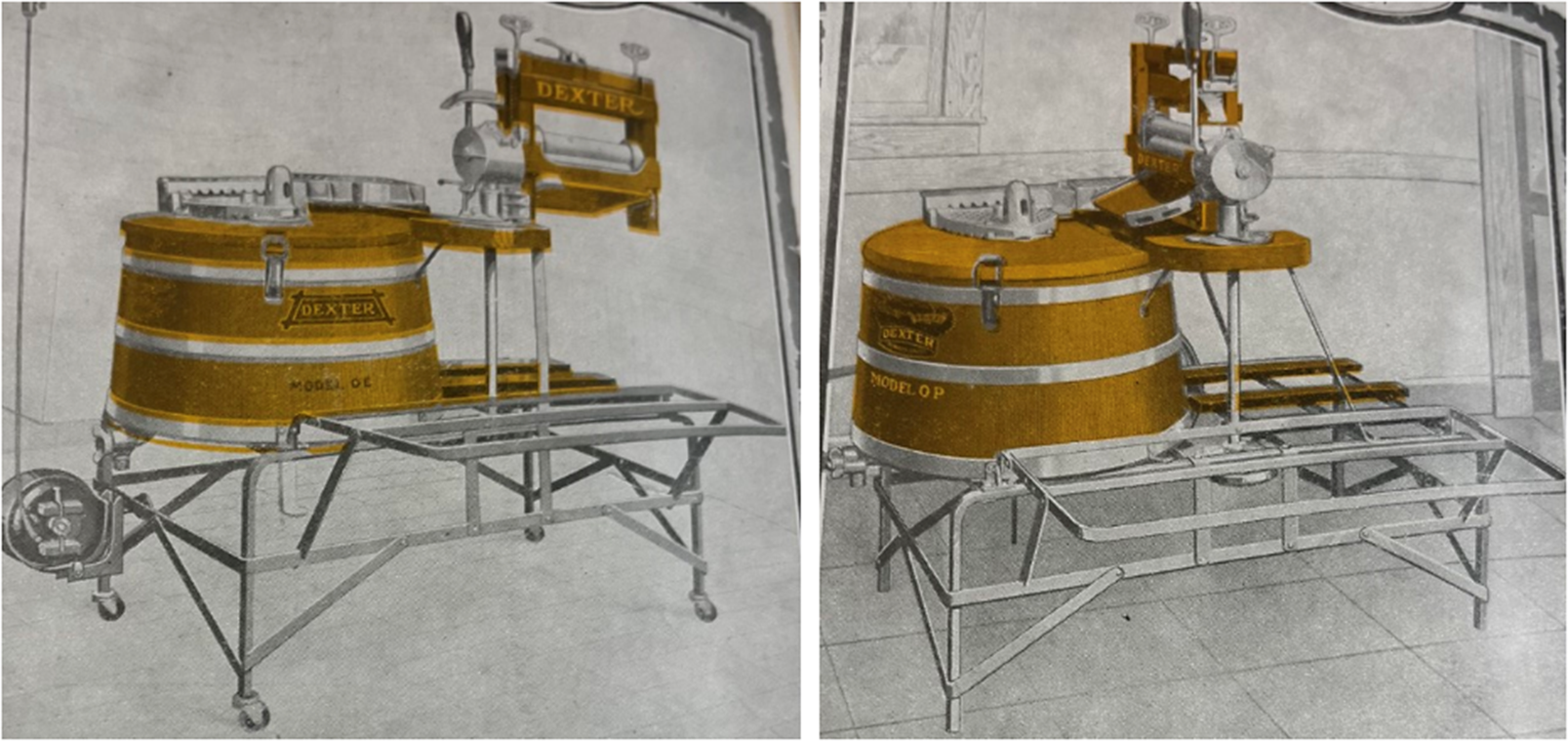
These machines were increasingly technologically sophisticated. Dexter’s gas-powered and electric-powered machines—which were designed and functioned nearly identically, other than the source of the motor—were constructed as a frame with one or two tubs attached, and room for one to two standalone rinse tubs (see Figure 2). Clothes were first washed within the wash tub, and then mechanically wrung out into the rinse tub; the adjustable wringer could then pivot to wring clothing between rinse tubs if needed. Some of the tubs were designed to be self-draining, angled steeply enough to allow wastewater to flow out when a spigot opened. The tubs still needed to be manually filled with water, and women still needed to go through the process of the washing, rinsing, and bluing cycle. The washing machines themselves needed to be washed and left to dry after every use, and the gearing needed to be oiled and looked after. However, the number of tasks required—and the strength and energy required to complete them—were beginning to meaningfully decrease.Footnote 61
Dexter Platform Washer, models OE (electric, left) and OP (gas power, right), ca. 1913.Footnote 63

Dexter did not keep data on the ratio of gas-powered to electric-powered machines sold before 1920, but in 1914 roughly half of their powered machines likely used gasoline motors.Footnote 62 In its catalogs and pamphlets, Dexter advertised their power washing machines “for use on farms or where electricity is not available,” and enclosed instructions for proper speeds to operate the drive pulley with one’s own gasoline engine. Their gas-powered washing machines were typically somewhat discounted relative to the electric machines because the consumer was expected to already own or supply their own engine.Footnote 64
Gas-powered washing machines were quick to gain consumer acceptance.Footnote 65 Advertisers worked to convince consumers that washing machines would improve their lives. Advertising pamphlets would spend the first several pages discussing how laundry machines were emancipatory for housewives and farm women, arguing that mechanization had come to the farm and the factory to save men’s labor; why shouldn’t it come into the home to save women’s labor too?Footnote 66 At the same time, rural reformers published editorials on modernizing farming homes, arguing that rural households would benefit from using mechanical aids to reduce women’s drudgery.Footnote 67
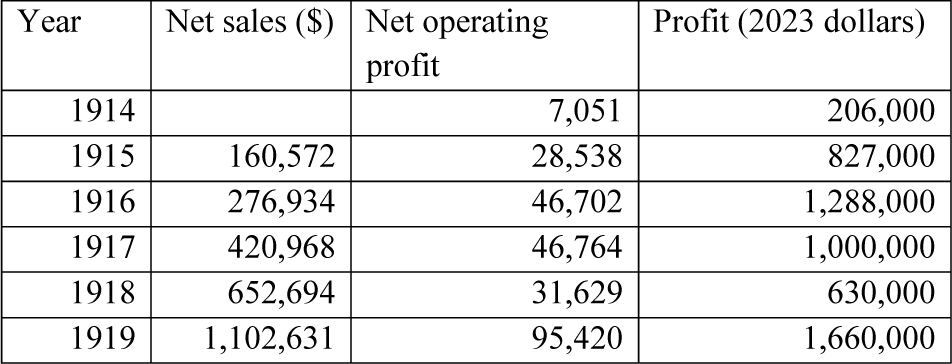
These appeals were generally successful, and local companies generally experienced increased production and sales throughout the second half of the 1910s, other than a short blip in 1917–18. In the United States, World War I did not create a large decline in washing machine sales and profits. Dexter’s net operating profit rose from $7,051 in 1914 to $28,538 in 1915 to $46,702 in 1916 before temporarily plateauing in 1917 (see Figure 3). Wartime restrictions on production limited washing machine manufacturers to 75 percent of their average 1917 business as of August 1, 1918. The lack of lead time meant that sales expenses and overhead on this restricted number were largely unchanged, leading to Dexter’s decline in profits in 1918.Footnote 69 Wartime restrictions also led to demand outstripping supply, leaving Dexter in an excellent position among both rural and small-town customers for 1919.
The company continually reinvested in its own growth in addition to paying dividends, choosing to arrange for more capital to put in a tub plant in 1917 and authorizing nearly $50,000 in loans for further expansion.Footnote 70 Dexter was somewhat concerned about whether their rapid growth was sustainable, and what would happen to the business after the war ended. High wages for war work had drawn women out of domestic service, which led to what Dexter worried might have been unusually high wartime demand for home washing machines. However, these fears were entirely unfounded; their 1919 sales and profits were roughly double and triple what they had been in 1918, respectively.Footnote 71
Dexter net sales and profit, 1914–1919.Footnote 68

The war years were also productive years for the rest of the washing machine industry—partly because households increasingly struggled to find paid help, and partly as households continued to electrify and the cost of electricity went down.Footnote 72 Articles in Ladies’ Home Journal by 1914 were universally in favor of washing machines, arguing that it was common sense to save on labor wherever possible—it was pointless to do things as one’s mother had done out of some misplaced sense of pride, and economy was a virtue.Footnote 73 Entry-level powered machine prices held firm at around $25 to $35, still two to three weeks’ wages for a typical worker.Footnote 74 One of the main column authors for Ladies’ Home Journal, National Secretary of Associated Clubs of Domestic Service Christine Frederick, claimed that her electric machine “costs considerable, but mine has more than paid for itself in three years. My clothes are no longer worn through in spots, but after long service go gracefully to pieces.”Footnote 75 By 1916, some of the articles assumed that their readers had washing machines, and looked at the best ways to manage the wash given their existence.Footnote 76 Increased access to electricity was a large part of the increase in sales, but Midwestern companies like Dexter were still producing large numbers of gas-powered washing machines—over one-third of their powered washing machines were powered by gas. Ladies’ magazines and rural modernizers like the Country Life Movement recognized this consumer segment, recommending gas-powered washing machines for their readers who lacked access to electricity.Footnote 77
In Canada, very little washing machine expansion took place during World War I, but some farming machinery companies were able to expand overall production capacity to leave themselves poised for the postwar washing machine boom. During the war, Beatty’s sales on their farm and barn lines increased substantially. The war had created a labor shortage, increasing farmers’ demand for labor-saving machines. Farmers tended to have more disposable income, due to high food prices. Beatty also benefited from an authorization to import pig iron due to the essential nature of their products, giving them a major advantage over any smaller competitors who did not have the ability to secure raw materials. Beatty’s farm and barn lines gave them the capital they needed to open new washing machine branches across the country, opening new sales branches at St. John, Montreal, Winnipeg, and Edmonton.Footnote 78 These early washers were largely sold to power companies and electric equipment dealers, not directly to consumers.Footnote 80 By this point, Beatty had nearly 500 employees across Canada and had the capital and desire to attempt to sell washing machines as a major product line in earnest.Footnote 81
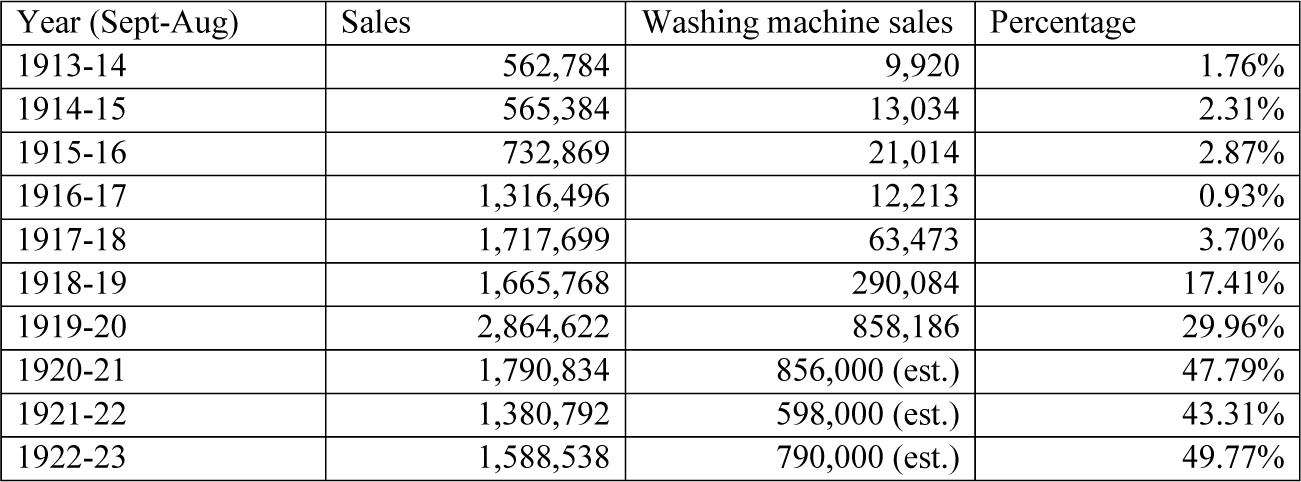
As soon as the war ended, Beatty’s washing machine sales began to rise at a faster rate than their other product lines.Footnote 82 The company replaced its original power washer with a new model, the Time Saver, which was designed for cheap mass production.Footnote 83 During the 1918–19 fiscal year, Beatty’s made $1.7 million in total sales, of which $290,000 were for washing machines. In 1919–20, the company sold $726,000 in washing machines on $2.9 million of total sales (see Figure 4).
Beatty Bros. Ltd sales, 1913–23.Footnote 79

The company started a new policy of opening retail washer stores. This served as another key difference between Beatty and their American counterparts: American washing machine companies did not sell their products directly to the consumer at any point, and instead served as manufacturers to wholesalers and retailers. Beatty found that scaling up manufacturing was only profitable to a point since Canada’s population was so much smaller and was spread out over such vast areas of land. Instead, as washing machines made up a larger percentage of their total sales, they intensified a focus on retail stores in larger population centers.Footnote 84 The company continued to use local dealers to sell their machines in places without a retail store, as well as dedicated traveling salesmen. Beatty sold to both rural and urban markets, mass-producing nonpowered and powered washing machines to be sold in bulk through their retail stores, as well as traditionally in towns, villages, and rural areas through traveling salesmen. As with Dexter and Maytag, their rural roots had provided them with the base and capital to expand into a broader consumer market.
Industry Expansion, Rural Contraction, and Urbanization in the 1920s
The American washing machine industry emerged from World War I in an excellent position, despite the short depression of 1920–21. Demand was high, factories were permitted to shift production fully back to consumer purposes, households were rapidly electrifying under cheaper rates (24.3 percent in 1917 to 34.7 percent in 1920 to 40 percent in 1922), and both urban and rural households had more disposable income. Manufacturing was booming.Footnote 85 One dataset estimated that American households went from roughly 1 percent market penetration of washing machines in 1916 to 20 percent in 1922 among households with electrical power.Footnote 86 However, the focus within datasets on households with electricity obscures the rise in gas-powered washing machines among rural households without access to power. Midwestern states were predominantly rural in 1920: Iowa was 64 percent rural, Kansas 65 percent, and Minnesota 56 percent.Footnote 87
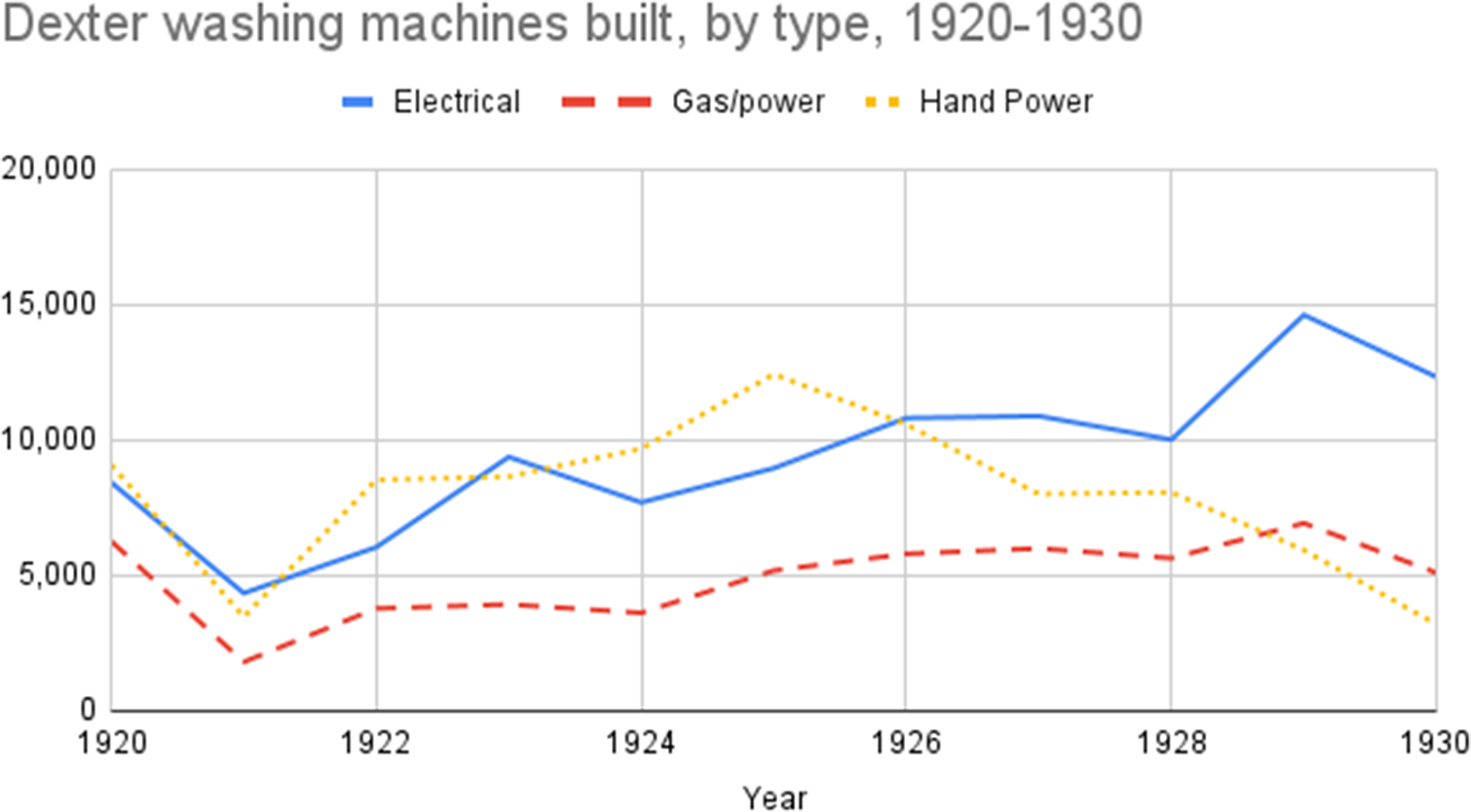
Although electric washing machines were being produced and sold at a higher rate than gas-powered machines, and by a growing margin, companies like Dexter sold a slowly increasing number of gas-powered washing machines between 1921 and 1929 (see Figure 5).Footnote 88 Electric washing machines had essentially taken over the market for washing machines by the late 1920s by the percentage of total machines sold, but rural-oriented companies continued to be relevant for two main reasons. First, many companies continued to produce paired models of washing machines well into the 1940s, offering gas-powered washing machines for any rural customer who might want one; these machines enjoyed continued popularity among their target market, albeit in small numbers. Second, the 1920s were an era of industry consolidation. Small local and regional companies expanded to a national scope. Companies with rural roots like Maytag and Beatty expanded to dominate the market, creating massive factories within small-town Iowa, Ohio, or Ontario.
Dexter’s annual washing machine production. Note that, although Dexter’s production of electric washing machines was rising more rapidly, gas-powered washing machines still made up a significant percentage of Dexter’s total production.Footnote 89

The more successful of the local and regional companies had begun to expand to a national (or even international, with Canada) scope, and the less successful were swallowed up or shut down. Maytag extensively licensed patents for its swinging wringer, with dozens of manufacturers paying fees of 50 cents per machine.Footnote 90 Dexter’s expanding sales of electric washing machines show that the company was expanding into more urbanized parts of the Midwest and keeping pace with Midwestern electrification. Larger companies like Maytag, ABC, Hurley, and the Nineteen Hundred Company advertised in national settings like Good Housekeeping and Ladies’ Home Journal and in newspapers across the country, while smaller companies like Dexter continued to advertise locally and regionally. By 1919, Hurley (Thor) was advertising branches in New York, Chicago, Boston, Kansas City, St. Louis, San Francisco, Los Angeles, Flint, and Toronto, selling washing machines, home ironers, and electric cleaners.Footnote 91 Maytag had branches in Philadelphia, Indianapolis, Minneapolis, Kansas City, Portland, and Winnipeg.Footnote 92 ABC had three factories, with a total of 365,000 square feet of manufacturing space.Footnote 93
These geographic expansions were tied to the mass production of a narrowing array of product lines. In the early 1920s, successful washing machine companies nearly exclusively sold washing machines and related products like ironers; the old farming machinery companies had long since stopped producing their less lucrative farm lines, although they did continue to provide gas-powered appliances for rural households. In 1922, Maytag developed its new Gyrafoam washer, which was gentler on clothing and could therefore be used to launder more types of fabrics.Footnote 94 It was popular enough that Maytag discontinued all other models, and Maytag’s sales rose from 33,000 units at $318,000 profit in 1922 ($5.7 million in 2023 dollars) to 137,000 units at $2.27 million profit in 1924 ($40 million in 2023 dollars)—roughly one-quarter of the entire domestic market.Footnote 95 In 1926, the Nineteen Hundred Corporation had reached $760,000 in net earnings, allowing it to heavily reinvest in itself; the company’s net worth was roughly $2 million.Footnote 96
The expansion of the industry overall led to an expansion in advertising and marketing efforts. American and Canadian machines in the 1910s and 1920s were primarily sold via an expanding dealership system, not direct mail-order catalogs. Each company either divided its sales area into distinct territories and assigned internal dealers that worked for only one company or sold directly to hardware stores that stocked multiple brands, or some combination of the two. The dealer arrangement worked similarly to franchising. The regional company would pay for advertisements in larger newspapers and national women’s magazines, and possibly radio advertisements. Dealers were then responsible for the minutiae of local advertising. The companies would create their own advertising material, which they would either offer or resell at a discounted fee to their dealers. Dealers could advertise independently, or they could take advantage of promotional materials designed by their manufacturers. Dexter produced their “Dexternary” catalog, a sixty-page book for dealers offering comparative information on every model sold.Footnote 97 In the 1920s, the Cinderella Corporation offered price lists to dealers for various types of promotional materials “below our actual cost.”Footnote 98
The dealership system, with heavy use of traveling salesmen, meant that companies continued to follow two marketing strategies as they expanded, one for urban customers and one for rural ones. Consumer demand for washing machines was very high in the mid-to-late 1920s, and both the Canadian and American industries saw steady growth. In the United States, regional companies looked to expand to national prominence. Maytag, by this point the industry leader, expanded to a factory with thirteen acres of floor space, seven and a half acres of grounds, and 1,700 employees on a payroll of over a quarter million dollars per month. This factory could produce roughly 2,200 machines per day.Footnote 99 The home office employed over 100 people and managed branch offices in Philadelphia, Indianapolis, Minneapolis, Kansas City, Atlanta, and Winnipeg, as well as franchises in the Western states.Footnote 100 ABC had multiple factories adding up to 365,000 square feet of floor space, and a full line of electric and gas machines—including a new damp-drying spinner model—sold by 2,000 active salesmen to 4,200 merchants.Footnote 101 Cinderella had expanded to a national audience, fulfilling a market niche of offering entry-level machines designed for apartment homes, small families, single women, and summer homes at a retail price of $47.50.Footnote 102 Dexter had 100,000 square feet of floor space and an annual capacity of 75,000 machines. They sold through 4,500 electric appliance and hardware dealers throughout the United States and Canada.Footnote 103
The 1920s also marked a boom for Canadian washing machines, as well as a large degree of consolidation of the small companies that had dotted the prewar landscape. Mirroring the American landscape, Canadians had increasing access to electric power, with Canada now recognized as a world leader in the use of hydroelectricity for industrial and municipal purposes.Footnote 104 The Canadian industry grew rapidly during the 1920s, with the proportion of American imported machines dropping from roughly one-quarter of the market in the early 1920s to one-tenth in 1930 and Canadian exports quadrupling in size.Footnote 105 Like in the United States, companies offered two models of their powered machines: a slightly cheaper gas model where the customer was expected to supply their own motor, and a standalone electric model.
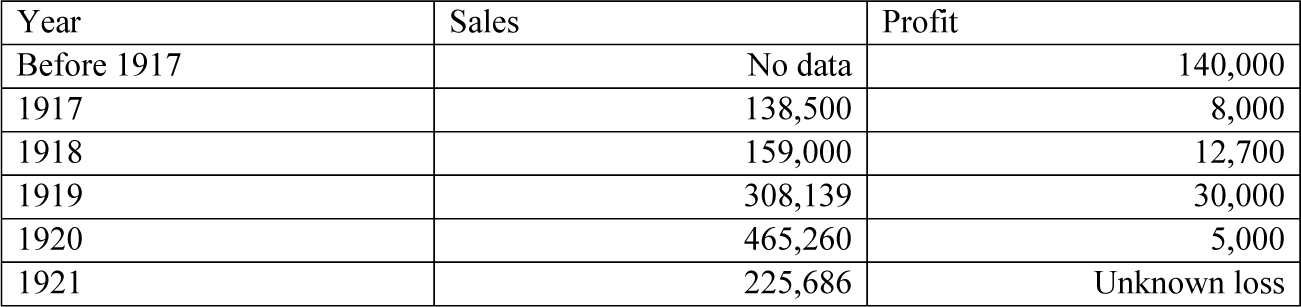
Beatty’s acquisition of 1900 Canada is the most notable example of both growth and consolidation. The 1900 Washer Company had met with moderate success in the Canadian market between 1907 and 1919, with their highest sales in the period until roughly 1915 when theirs was the primary powered washing machine on the Canadian market (see Figure 6). The parent company had not invested a large amount of money or resources in the Toronto branch, had not purchased any Canadian real estate, and had not made a concerted effort to expand Canadian business outside of Toronto and the surrounding areas, choosing instead to focus on the much larger and more lucrative market of the United States.Footnote 107 During the war, profits dropped significantly. Without any other war-critical lines to fall back on, the branch would have needed significant support from the American parent company to have continued to invest in improvements.
Nineteen Hundred Corporation Canada sales and profit, 1917–21.Footnote 106

The company might have rebounded with help from the Americans, but it did not get the chance. In December 1920, owner Thomas Crary died suddenly. His brother wanted to liquidate the estate, giving Beatty the opportunity to make an offer to buy out the Canadian branch.Footnote 108 Although the branch as of 1921–22 was in a poor position financially, since 1900 it had begun its Ontario operations before any other major washing machine company, and the advertising manager noted that “there are many towns where the best dealer… is the 1900 dealer, has been for years and will not turn over to us… In Gananoque, in Whitby, in Oshawa, in Midland, in Orillia, in Barrie, the most desirable dealer is the 1900 dealer and will not switch.”Footnote 109 1900, therefore, would be an excellent asset as part of Beatty’s postwar boom.
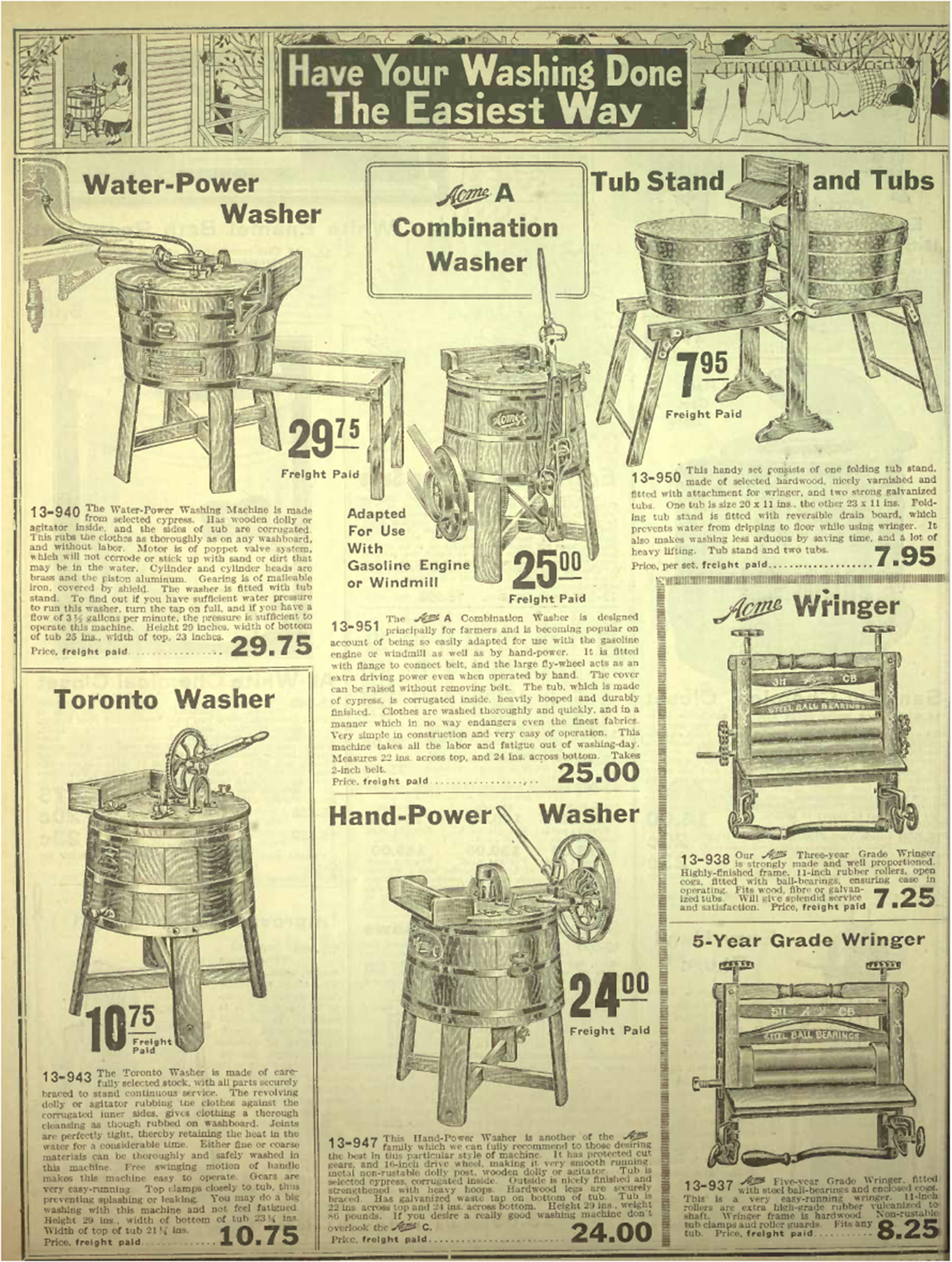
Other nascent Canadian washing machine companies were also experiencing their own postwar booms. During the immediate interwar years, many companies were selling electric washing machines in larger cities like Toronto, and paired models of gas-powered washing machines in rural areas without electricity. While urban newspapers nearly exclusively advertised electric machines, in rural areas pamphlets, catalogs, and department stores offered a wider array of washing machines. Eaton’s, one of the largest department stores in Canada, offered a two-page selection of Acme-produced washing machines for sale in their 600-page 1920–21 catalog. Alongside a selection of hand-powered washing machines and one $110 electric machine, Eaton’s also offered a $25 combination washer: a hand-powered machine that could quickly and easily be fitted with a gasoline engine or windmill via a connecting belt (see Figure 7).Footnote 110
1920–21 Eaton’s Catalogue, p. 540.Footnote 111

In the United States, companies like Maytag and Dexter had already shifted production toward washing machines around 1910 when they saw high demand. In Canada, the major shift in priorities did not happen until the Depression of 1920–21. The Depression harmed farmers more than workers in cities and towns, and sales fell more sharply in rural than in urban areas.Footnote 112 Milton Beatty noted that “the main falling off is on the lines we sell the farmers. Electric washers sold in the cities and towns is our best line, nearly half our sales in December were in this line.”Footnote 113 In a company bulletin, executive D. R. Potter announced the need to depend on their electric washers for the bulk of their 1922 business and noted that washer sales now made up more than half of total sales, even with prices cut. He believed that the reason was that the war reshuffled the distribution of wealth, creating a new class of people who had disposable income and preferred to spend it on “personal indulgences.”Footnote 114 Beatty therefore shifted energy and resources toward manufacturing washing machines, albeit with a focus on electric machines. The company’s proportion of sales for washing machines rose from 17 percent in 1918–19 to 48 percent in 1920–21.Footnote 115
Both Beatty and Dexter saw their sales of gas-powered washing machines drop catastrophically in 1921: Dexter by 71 percent and Beatty by 83 percent, versus 49 percent and 18 percent for electric machines respectively.Footnote 116 Dexter, with a long history of selling gas-powered washing machines in the Midwest, quickly recovered; production and sales of gas-powered washing machines more than doubled by 1922, although it took the rest of the decade to restore 1920 production levels. Beatty, on the other hand, focused increasingly on urban sales. Despite its origins as a rural farming machinery company, the depression caused the company to pivot. Between 1921 and 1926, Beatty produced a total of 745 gas-powered washing machines: less than the 1,161 produced in 1920 alone. Beatty’s farm and barn lines had given the company the necessary capital to focus extensively on selling washing machines, but their post-1921 washing machine sales strategy was increasingly dependent on urban retail stores and therefore on urban buyers.
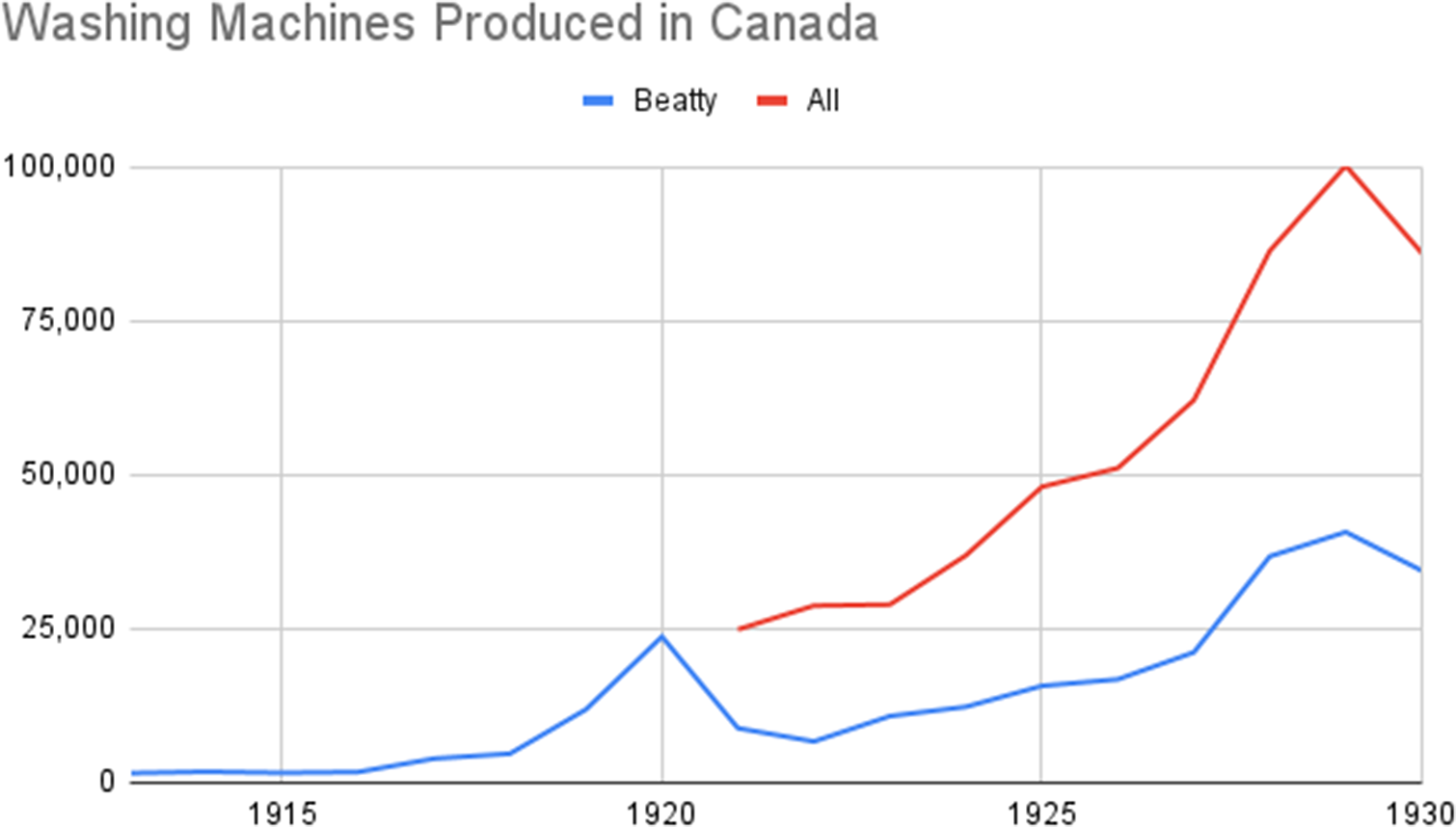
Beatty was unusually well-positioned to take advantage of the Canadian economic turmoil of 1914–1922: it had farm and barn lines to take advantage of increased sales to farmers during wartime and then had the ability to pivot into primarily selling washing machines when farm and barn sales plummeted postwar. Their excellent farm sales in 1914–18 gave them the resources to effectively regroup. Under these circumstances, the acquisition of the 1900 Washer Company proved to be a very good deal, primarily because of goodwill and other intangible assets: across Ontario, many consumers and dealers preferred to stick with the 1900 machines they already knew. The terms of the sale included exchanges of patent rights and shared advertising campaigns, giving Beatty access to American technical expertise.Footnote 117 When the Canadian economy recovered during the mid-1920s, Beatty saw a resurgence in sales and production, aided by 1900’s robust Ontario-wide sales network.Footnote 119 By this point, they were producing and selling roughly one-third of all washing machines in Canada, and washing machines made up as much as 85 percent of the company’s total sales (see Figure 8).
Washing machines produced in Canada, 1921–30.Footnote 118

In the early 1920s, Beatty was in an excellent position relative to other Canadian washing machine companies. The company was extensive enough that they had the luxury of controlling their own sales organization, rather than relying on jobbers or manufacturers’ agents. By having a sufficient number of lines and a sufficiently broad scope, Beatty was able to sell directly to the trade or even directly to the consumer, negating any dependence on intermediaries. In addition to providing more control, this policy meant that Beatty-trained sales representatives tended to be much more knowledgeable about their products, and were capable of providing better service—factors that caused Beatty to have higher consumer approval than other companies. Milton Beatty noted that “fully 90% of the business which we do is… by our travelling salesmen and the percentage is tending to increase. Having decided on this definite policy as our basis of securing business, we need to do everything in our power to make it effective. We believe it is the cheapest way in the world to do business because in this way we can render better and more efficient service.”Footnote 120
Other Canadian washing machine companies experienced their own booms to a lesser extent. Coffield advertised their electric washing machines starting as low as $95.00 (on sale) at $5 down, and—as 1900 had pioneered—ensured that the weekly payment cost as little as $1.75, less than sending the weeks’ wash out to a laundress.Footnote 121 Average wages during the 1920s were about $20 per week for a factory worker, meaning that a new electric washing machine would still cost about five weeks’ wages, and a gas machine would be a bit cheaper.Footnote 122 Coffield displayed their washer at exhibitions and offered free in-home washings as a trial run for prospective customers.Footnote 123 By the late 1920s, the company had branches and warehouses in Toronto, Montreal, Ottawa, Winnipeg, Regina, Edmonton, Calgary, and Vancouver.Footnote 124 They did not have their own chain of retail stores as Beatty did; they sold through a variety of hardware dealers and electric stores, as well as public utility commissions in smaller towns. By the late 1920s, Coffield had fifteen dealers in Toronto alone, and roughly 100 throughout Ontario.Footnote 125
Even as these companies were expanding and reorienting toward national consumer bases, rural customers were not ignored. Gas-powered washing machines were readily available to farm households well into the 1940s or even the 1950s. The companies with roots in rural areas maintained systems of traveling salesmen and small-town dealers, meaning that rural households could continue to expect reasonably local access to the newest models of washing machines.
Conclusion
Within both the United States and Canada, technological innovation did not need to be reliant on urbanization. The case study of rural washing machine production shows an alternative form of rural economic development.
Washing machines dramatically shifted household life within the early- to mid-twentieth century in both the United States and Canada. They allowed households to offload an unusually labor-intensive and unpleasant task onto machines, freeing up time and energy for other tasks. Powered washing machines eased the burden of laundry even further, reducing time spent on a week’s wash to one-eighth to one-quarter of what it had been before. Between roughly 1910 and 1950, a steadily increasing proportion of households had access to washing machines, and increasingly considered them an essential feature of modern life. In prior scholarship, this modernity has been linked to urbanization and electrification: to access modern conveniences, rural households needed to electrify and emulate urban economic and household patterns.
I argue that the diffusion of washing machines did not wholly follow this pattern. While electrified households tended to buy washing machines at significantly higher rates than nonelectrified farm households, washing machines did not need to rely on either urbanization or electricity. Modernity did not necessarily spread from urban to rural regions; rural regions developed their own forms of modern economic development. Midwestern farming machinery companies were well-placed to manufacture and sell washing machines in rural areas, and they used their expertise in building gas-powered farming equipment to produce gas-powered washing machines. Washing machine production allowed companies like Maytag, Dexter, and Beatty to smooth out seasonal sales variations, which made it lucrative; then their rural customers purchased enough washing machines to justify Maytag and Dexter dropping their agricultural lines altogether. Rural customers purchased and used washing machines, slotting gas-powered washing machines into the structure of their everyday lives.
Rural communities were more than just an ancillary market for nonelectric goods. Beatty, Maytag, and Dexter all used preexisting agricultural customer bases to expand into urban areas during the 1920s. When the industry underwent mass consolidation, all three emerged as medium to major players. High-income rural markets of the 1910s gave them a chance to develop as companies, testing out manufacturing techniques and product lines; this expertise was later applied to broader national markets.
Toward the late 1920s, electric washing machines had essentially taken over the market. Most companies still offered Paired lines of electric and gas-powered washing machines, and rural households could buy a gas-powered washing machine if they wished. But the old farming machinery companies had left a dramatic impact on the washing machine industry overall. Beatty was now the dominant washing machine manufacturer across all of Canada, and Maytag was the largest American manufacturer. Dexter was somewhere around the tenth to twentieth largest washing machine manufacturer in the United States, depending on the year. Designs pioneered by Maytag and Beatty, and even by Dexter, majorly shaped industry trends. As the industry grew, these companies gained prominence. If any household in the late 1920s bought a washing machine anywhere in the United States or Canada, the odds were good that it was a Beatty or Maytag machine; if not, it was nearly certain that Beatty, Maytag, or Dexter had influenced its design and features. Rural manufacturers were central to the industry, challenging the idea that electrification spread urban technologies to the countryside.

 Open access

