


INTRODUCTION
A surveillance organization, which is responsible for animal health surveillance in a livestock production chain, such as a food safety authority (FSA), could have multiple hazards to survey with limited surveillance resources (i.e. budget). Therefore, the allocation of the scarce surveillance resource should be optimized from the perspective of a surveillance portfolio rather than a single hazard. To avoid terminology ambiguity, we present the following terms that have been defined in [Reference Guo1] at the beginning of this paper:
-
• Single-hazard surveillance system (SHSS): a surveillance system that aims to detect a single microbiological or chemical hazard in a livestock production chain (detection used in a broad sense also includes prevalence estimation), such as classical swine fever (CSF) or Salmonella surveillance.
-
• Surveillance system component (SSC): a specific surveillance activity within a SHSS; for example, clinical diagnosis and routine serological tests in slaughterhouses. Hence, each SHSS consists of one or more SSCs.
-
• Surveillance set-up of a SHSS is the combination of SSCs with their respective levels of intensity, e.g. sampling frequency and size.
-
• Surveillance portfolio (SP): the collection of a group of SHSSs coordinated by one single organization, e.g. a FSA or a private slaughterhouse.
The terminologies defined in this framework, take the terminologies from the Pre-International Conference on Animal Health Surveillance (Pre-ICAHS) Workshop 2012 into account and adapt them to fit the aim of this research. For example, since our research especially wants to distinguish the situations of surveillance for a single hazard and surveillance for multiple hazards, we use the terms ‘single hazard surveillance system’ and ‘surveillance portfolio’. The term ‘single hazard surveillance’ has some similarity to the term ‘hazard-specific surveillance’ and the term ‘surveillance portfolio’ is similar to the term ‘portfolio’ described by the Pre-ICAHS Workshop 2012.
Many studies have been conducted to analyse the performance of SHSSs (e.g. [Reference Feld2–Reference Durr9]). By contrast, only two studies on SPs are available (i.e. [Reference Prattley10, Reference Prattley11]). These studies presented an approach of risk-based resource allocation for surveillance on exotic livestock diseases in New Zealand. The authors demonstrated the potential of portfolio theory for prioritizing between various surveillance options and optimizing resource allocation between these options. They also identified issues for further research, such as the risk attitude of decision makers, weighting of risks and impacts, and the problem of increasing the complexity of decision support with increased portfolios. However, they did not offer a suggestion for how these issues should be tackled in a consistent way. Moreover, the authors restricted their attention to exotic livestock diseases only, not including other types of hazards (e.g. endemic diseases, chemical hazards). To the best of our knowledge, there is no other literature on economics of SPs.
The aim of this paper is to build further on Prattley's studies [10, 11] and present a conceptual approach for SP optimization that provides a consistent conceptual basis for the development of quantitative tools for decision support, aimed at the economic optimization of a SP. The end users of this conceptual framework are all different types of surveillance organizations that are responsible for multiple livestock surveillance ranging from public bodies (e.g. FSAs) to private utilities (e.g. food companies).
The SHSS framework that has been elaborated in [Reference Guo1] serves as the basis of the SP optimization framework: the analytical results of each SHSS are used as the inputs of the SP optimization model. The SHSS framework includes a Monto-Carlo simulation model that mimics the hazard development within the animal population as well as the surveillance activities to investigate the cost-effectiveness of the SHSS. It also includes a multi-criteria analysis model that incorporates stakeholders’ preferences to conduct cost-benefit analysis of the surveillance system.
The remainder of the paper is organized as follows: The next section briefly puts the role of surveillance organizations into perspective, and is followed by a description of hazard categorization. This is followed by elaborations for the framework of SP optimization and finally, a Discussion.
SURVEILLANCE OPTIMIZATION AS A MULTI-CRITERIA, MULTI-STAKEHOLDER PROBLEM
The primary role of a public surveillance organization is to allocate resources to surveillance activities which provide information on health status in the animal population to facilitate follow-up intervention strategies. Since the aim of hazard intervention is to maximize social welfare or minimize lack of social welfare, in this sense surveillance also indirectly contributes to social welfare optimization. The private surveillance organizations have their social responsibilities which are beyond profit maximization especially with respect to the highly socially relevant livestock hazard surveillance. Trade-offs can exist between public and private resources (e.g. when the public body monitors the surveillance activities of the private organization instead of directly conducting surveillance) and can also exist in an asymmetric distribution of these resources between stakeholders. The latter is even more prominent when the benefits of improved surveillance are concerned. For example, a reduced impact of an avian influenza (AI) epidemic because of ‘early detection of the virus’ includes mitigated human health burden, fewer animals being culled, a reduced impact on animal welfare and socio-ethics, and less disruption of social life [Reference Longworth, Mourits and Saatkamp12, Reference Longworth, Mourits and Saatkamp13]. All of these criteria are evaluated by the stakeholders involved [Reference Mourits, van Asseldonk and Huirne14]. Hence, there is a large asymmetry between stakeholders regarding both resources (i.e. costs) and benefits, which could cause conflicts of interest. The prime decision-making role of a surveillance organization is to allocate the surveillance resources to achieve collective welfare optimization given practical constraints.
HAZARD CATEGORIZATION
Surveillance organizations operate SHSSs for various hazards, all of which have specific features with regard to hazard types, surveillance objectives and occurrence possibilities. Figure 1 presents an overview of a hazard categorization.
Single hazard surveillance system categorization scheme. HRP, High-risk period.

Starting with all hazards that can, in principle, be surveyed, an initial distinction can be made between biological (viruses, bacteria, prions, etc.) and chemical (contaminants, toxins, etc.) hazards. The main reason for this distinction is the different dynamics of these hazards in an animal population. Biological hazards in principle multiply and spread between infected animals, resulting in an increasing number of affected animals over time. Most chemical hazards dilute after entering the livestock production chains (assuming only one entrance, such as a contaminated batch of feed): once entered, the concentration will reduce due to growth of the animal and/or through vertical dilution (e.g. dioxin from a sow to its offspring).
A subsequent categorization feature is prevalence. Biological hazards can be either absent in normal conditions (i.e. epidemic or zero-prevalence hazards such as CSF and foot-and-mouth disease), while prevalence cannot be excluded but is extremely low (i.e. close-to-zero prevalence hazards, such as bovine spongiform encephalopathy; BSE) or have a higher prevalence (e.g. endemic hazards such as Salmonella). For chemical hazards, higher prevalence is assumed to be non-hazardous and hence disregarded, leaving zero-prevalence (i.e. not allowed, such as added hormones) and low-prevalence (i.e. having a very low threshold, such as residuals of pesticides) hazards. However, it is noteworthy that this difference is partially artificial, caused by the current technical inability to detect.
From the prevalence situation, the ultimate surveillance objective can be derived, together with the associated technical surveillance performance indicator (TSPI) (the TSPI values are designated technical surveillance performance parameters; TSPPs). The aim of zero-prevalence hazard surveillance is to detect hazards such as CSF or foot-and-mouth disease as soon as possible from the moment of introduction in the population. This is reflected by minimizing the so-called high-risk period (HRP). Therefore, important TSPIs are the length of the HRP and the number of infected farms at the end of this HRP (as a measure for disease spread during the HRP). For close-to-zero hazards, detection of all existing cases before they pose a danger to the general public or cause significant losses for the industry (e.g. BSE) is the main objective; hence, the detection probability is an important TSPI. Higher-prevalence hazards are and will be endemic for some time. Therefore, reliable trend monitoring could be a main goal, e.g. to monitor the impact of control and reduction measures. Hence, the time lag until detection of important changes in prevalence levels and trends in this area, as well as the reliability and accuracy of this detection (i.e. sensitivity and specificity of the surveillance system), are important TSPIs. Similar objectives and TSPIs can be defined for both zero- and low-prevalence chemical hazards.
A CONCEPTUAL FRAMEWORK FOR ECONOMIC OPTIMIZATION
Surveillance organizations operate various SHSSs with limited resources. The (economically) optimal SP includes (1) those SHSSs with (2) their respective set-ups that combine to achieve maximum surveillance performance as well as the economic values of surveillance with limited resources and other constraints. Hence, a surveillance organization must make choices at two levels: (1) between SHSSs and (2) between surveillance set-ups of a SHSS. Figure 2 illustrates this decision problem. Including a SHSS in the SP automatically implies that a particular set-up, either existing or potential, must be chosen.
The conceptual framework for surveillance portfolio optimization. SHSS. Single hazard surveillance system.

This choice of a certain surveillance set-up for each SHSS results in the TSPP. Given a certain TSPP (ensured by the selected surveillance set-up), the consequential impacts of the hazard (under a given intervention strategy) can be calculated by the hazard impact simulation model or estimated by relevant experts (if the impact simulation model is missing). These impacts can be of various types (e.g. economic losses, animal welfare impacts, human health impacts, etc.) which are captured by different hazard impact indicators (HIIs). For example, for the epidemic disease AI, based on the TSPP ‘the duration of the HRP’ (under a given intervention strategy), the economic losses and annual human infections because of the AI outbreak can be estimated. The same also applies to other types of hazards. After obtaining the TSPP ‘detection probability’ for the close-to-zero disease BSE in The Netherlands, annual human deaths because of BSE infections and the level of public unease can also be calculated.
Of course, hazard impacts are not only determined by the quality of surveillance but also by the quality of intervention [Reference Howe, Häsler and Stärk15], and therefore from a comprehensive point of view, a joint analysis of surveillance and intervention is preferred [Reference Hoinville16]. However, this research's focus is on the surveillance component (i.e. we want to conduct cost-benefit analysis on surveillance only) and addressing surveillance from a portfolio perspective has already been very complex. Hence, we assume the intervention strategy is fixed (i.e. taking the default intervention strategy as given). Thus, all the differences of the avoided losses are caused by the surveillance systems, which allow us to focus on our key concern.
Moreover, surveillance costs are incurred from applying this set-up. Similarly, other hazards (i.e. SHSS) must be considered, as well as the subjective valuation by the stakeholders.
In order to elaborate the optimization problem, the following problems must be solved:
-
• the various impacts each hazard has must be made comparable and additive;
-
• differences in valuation of stakeholders of different impacts must be allowed, as well as interest differences between stakeholders.
Below, an attempt has been made to solve this problem in a conceptual manner in order to enable economic optimization of a SP.
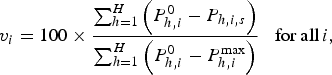
Step 1. Each SP consists of a set of SHSSs, so a list of potential hazards and associated SHSSs must first be identified. Next, for each SHSS the efficient set of surveillance set-ups must be identified (details presented in [Reference Guo1]. Thereafter, for each HII i, the standardized portfolio performance should be calculated using equation (1):
 $${v_i} = 100 \times \displaystyle{{\mathop \sum \nolimits_{h = 1}^H \left( {P_{h,i}^0 - {P_{h,i,s}}} \right)} \over {\mathop \sum \nolimits_{h = 1}^H \left( {P_{h,i}^0 - P_{h,i}^{{\rm max}}} \right)}}\,\,\,\,\,{\rm for\,all}\,i,$$
where only one or no surveillance set-up for each hazard h is implemented;v
i
denotes the standardized portfolio performance (SPP) on HII i, which is actually the performance deviation on HII i, compared to the performance of the maximum portfolio performance on HII i; P
h,i,s
denotes the impact parameter (e.g. disease costs, number of human deaths) for hazard h, on HII i, for implementing surveillance set-up s; $\; P_{h,i}^0 \; $
denotes the baseline performance for hazard h, on HII i;
$\; P_{h,i}^0 \; $
denotes the baseline performance for hazard h, on HII i; $\; P_{h,i}^{{\rm max}} \; $
denotes the maximum performance technically possible (or artificially set by the relevant expert) for hazard h on HII i;
$\; P_{h,i}^{{\rm max}} \; $
denotes the maximum performance technically possible (or artificially set by the relevant expert) for hazard h on HII i;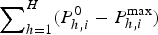 $\; \mathop \sum \nolimits_{h = 1}^H ( {P_{h,i}^0 - P_{h,i}^{{\rm max}}} )\; $
denotes the theoretical maximum portfolio performance on HII i.
$\; \mathop \sum \nolimits_{h = 1}^H ( {P_{h,i}^0 - P_{h,i}^{{\rm max}}} )\; $
denotes the theoretical maximum portfolio performance on HII i.
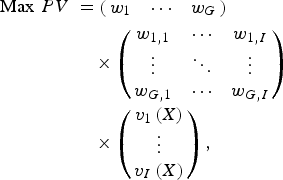
Step 2. Having obtained the overall performance of the entire SP for each HII i, two subjective weightings must be performed: (1) the differences in preference between the stakeholders involved, and (2) the differences in importance of the various stakeholders viewed by the final decision maker. This ‘double weighting’, as well as the final optimization statement, is expressed in equations (2)–(5):
 $$\eqalign{{\rm Max\;} PV{\rm \;} & = \left( {\matrix{ {{w_1}} & \cdots & {{w_G}} \cr}} \right) \cr & \quad \times \left( {\matrix{ {{w_{1,1}}} & \cdots & {{w_{1,I}}} \cr \vdots & \ddots & \vdots \cr {{w_{G,1}}} & \cdots & {{w_{G,I}}} \cr}} \right) \cr & \quad \times \left( {\matrix{ {{v_1}\left( X \right)} \cr \vdots \cr {{v_I}\left( X \right)} \cr}} \right),}$$
s.t. various constraints, such as
 $$\sum\nolimits_{s = 1}^{{S_h}} {{x_{h,s}} \le 1} \,\,\,\,{\rm for\,all}\,h,$$
 $$\sum\nolimits_{h = 1}^H {\sum\nolimits_{s = 1}^{{S_h}} {{c_{g,h,s}}{x_{h,s}} \le {B_g}}} \,\,\,\,{\rm for\,all}\,g,$$
 $${x_{h,s}} \in (0,\; 1)\,\,\,\,{\rm for\,all}\,h,s,$$
where PV is the overall weighted portfolio performance (OWPP); (w
1 ··· w
G
) is the weights the decision maker places on the various stakeholders 1 to G;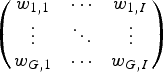 $\left( {\matrix{ {{w_{1,1}}} & \cdots & {{w_{1,I}}} \cr \vdots & \ddots & \vdots \cr {{w_{G,1}}} & \cdots & {{w_{G,I}}} \cr}} \right)$
are the preference weights stakeholders 1 to G place on HII 1 to I.
$\left( {\matrix{ {{w_{1,1}}} & \cdots & {{w_{1,I}}} \cr \vdots & \ddots & \vdots \cr {{w_{G,1}}} & \cdots & {{w_{G,I}}} \cr}} \right)$
are the preference weights stakeholders 1 to G place on HII 1 to I. $\left( {\matrix{ {{v_1}\left( X \right)} \cr \vdots \cr {{v_I}\left( X \right)} \cr}} \right)\; $
is the SPP on each HII from equation (1);
$\left( {\matrix{ {{v_1}\left( X \right)} \cr \vdots \cr {{v_I}\left( X \right)} \cr}} \right)\; $
is the SPP on each HII from equation (1);
X is the decision variable matrix of x h,s . x h,s denotes the binary decision variable to judge whether, for hazard h, surveillance set-up s is selected to compose the SP. S h denotes the number of the alternative surveillance set-ups for hazard h. B g denotes the total annual budget available for stakeholder group, g (g = 0, 1, …, G), to carry out the surveillance activities (to simplify the formulation, the decision maker (the surveillance organization, e.g. FSA) is treated as a stakeholder group, g = 0). c g,h,s is the annual surveillance costs for stakeholder group g, when, for hazard h, surveillance set-up s is implemented.
The set of constraints [equation (3)] ensures that a maximum of one surveillance set-up for each hazard will be included in the SP; constraints [equation (4)] ensure that the total annual surveillance costs for stakeholder group g cannot exceed the annual available surveillance budget available; and definitions [equation (5)] define x h,s as binary variables. Additional constraints can be included to establish more complex models according to the specific situation; such as the minimum required surveillance performance for some hazards.
To derive the weight matrix that reflects shareholders’ preferences, a stakeholder panel, analogous to the consumer panel in marketing (e.g. [Reference Dynan17–Reference Booth19]) is established to elicit stakeholder preference.
Quantitative elaboration of the concept of SP optimization
To illustrate the concept of optimization of a SP, we use a hypothetical numerical example. Three different hazards were selected as potential surveillance targets within the portfolio: CSF, AI, and Salmonella. Impact parameters for Dutch conditions were assumed referring to previous studies (AI [Reference Backer20, Reference Koopmans21], and Salmonella [Reference Valkenburgh22]). These impact parameters, which mimic the results of SHSS analysis, are presented in Table 1.
Impact parameters, Phis, for hazard h, on indicator i, for implementing surveillance setup s, as well as weights for inidcators and stakeholders

FSA, Food safety authority.
Impact parameters are fictively generated referring to the works of Backer et al. [Reference Backer20], Koopmans et al. [Reference Koopmans21], Mangen et al. [Reference Mangen23], and Valkenburgh et al. [Reference Valkenburgh22] under the non-vaccination and pre-slaughter control strategy.
Four surveillance set-ups are included for each hazard. For each, respective surveillance costs for an FSA and the impact on disease costs and human health are listed according to the framework in Figure 2. Table 1 lists the weights for each HII and for farmers and citizens. The impact parameters on each HII are fictively generated, given the aim of this research is simply to demonstrate the rationale of the framework. Some of the data refer to [Reference Backer20–Reference Valkenburgh22] which are assumed to reflect some impacts of the default surveillance situation. In this way, we try to make the whole data fall in a relatively reasonable range. For example, the costs due to a CSF outbreak in the default situation (i.e. surveillance set-up 1) are according to [Reference Mangen23] (see also the appendix of [Reference Guo1]). The information we use from [Reference Backer20, Reference Koopmans21] is that there is one human death caused by AI since 2003, and therefore the annual death rate is approximately 0·1. The information we use from [Reference Valkenburgh22] is that in 2004 the number of human salmonellosis cases was 35000, and an estimate that 39 people eventually died. The cost-of-illness because of human salmonellosis was estimated as €7 million per year.
Step 1. Table 2 lists the SPPs, v i , of the possible SPs. It is assumed here that one surveillance set-up must be selected for each hazard, which means there are a total of 64 SPs available. For ease of demonstration, only four of these SPs are explicitly shown in Table 2.
Standardized portfolio performance per indicator

FSA, Food safety authority.
Step 2. Through the ‘double weighting’ on v i , the OWPP for all 64 possible SPs are obtained and graphically depicted in Figure 3.
Overall weighted portfolio performances (OWPPs) with three different sets of decision makers’ weights on two stakeholder groups. FSA, Food safety authority.

The horizontal axis represents the annual surveillance costs for Dutch FSAs to operate the SP and the vertical axis represents the OWPP. Each SP is defined by (1) the annual surveillance costs and (2) the OWPP. Clearly, there is no proportional relationship between the OWPPs and the costs, which articulates the need for economic optimization of surveillance resource allocation. Figure 3(a–c) present the results with three different settings of decision makers’ weights on farmers and citizens. Two levels of budget constraints (X1 = €36 million or X2 = €100 million) are considered and only the SPs that expend less than the budget are feasible options. Similarly, two minimum performance constraints (Y1 = 60% or Y2 = 90%) are also considered to ensure an acceptable level of OWPP; in other words, only those SPs that guarantee the minimum OWPP are feasible.
Figure 3a shows the results solely from a citizen's point of view, where the decision makers’ weights on farmers and citizens are 0 and 1 under the budget constraint. In terms of cost-effectiveness, and taking into account only the preference of the citizens, SP-a is to be preferred if case budget constraint X1 is considered. An increase of this budget to X2 results in a switch in preference to SP-b. A subsequent step could be to treat the cost-effective SPs (i.e. SP-a and SP-b) as a starting point for cost-efficient analysis. For budget constraint X1, from the cost-efficient perspective, SP-d can also be an attractive option because it delivers slightly lower overall OWPPs than SP-a but saves on surveillance costs. For budget constraint X2, SP-c is even more attractive than SP-b because it saves almost one-third on surveillance costs but still ensures almost the same OWPPs as SP-b. Such an analysis has practical implications for decision makers to efficiently allocate surveillance budgets. Another approach could be to take the minimum performance as a constraint. For example, if the minimum required OWPP is Y1, SP-d is the cheapest choice to fulfil the requirement, while if the minimum required OWPP increases to Y2, the least expensive SP to fulfil that requirement becomes SP-c.
Conducting the same analysis purely from a farmer's standpoint (Fig. 3b ) produces different results. Considering budget constraint X1, SP-e is preferred over SP-a. Moreover, the OWPP under SP-a becomes smaller, indicating that farmers have a lower overall preference for this surveillance set-up. Similarly, with constraint Y1, SP-f rather than SP-d is the cheapest SP for ensuring the minimum performance, while with Y2, SP-g rather than SP-c is the cheapest SP. Only with budget constraint X2 do both farmers and citizens prefer SP-b.
Figure 3c shows the results from a simultaneous viewpoint of both stakeholder groups based on the level of importance judged by the decision makers. The preferred SP-a and SP-b under budget constraints X1 and X2 are the same as in Figure 3a because the decision maker assigns a larger weight on citizens, which means that their preference is relatively dominant. Moreover, the cheapest SP under minimum performance constraint Y1 is SP-a, which is different from its counterparts in Figure 3a (SP-d) and Figure 3b (SP-g). As in Figure 3a , SP-c is the cheapest option for satisfying constraint Y2. This compromise-based result provides the scientific basis for decision makers to arrive at their decisions.
For surveillance organizations such as a FSA, it should be realized that the complexity of the SP optimization problem increases with (1) the number of hazards, (2) the level of surveillance set-ups for each hazard, and (3) the number of stakeholder groups involved.
DISCUSSION
Decision making on hazard surveillance in livestock production chains is a multi-hazard, multi-stakeholder, and therefore multi-criteria problem between different surveillance alternatives. Therefore, the resource allocation should be tackled from a SP point of view. Currently, a suitable conceptual basis for such a SP is not available. Hence, this paper presents such a conceptual approach for the economic optimization of a SP. The approach was elaborated from a purely theoretical point of view, with the intention of addressing the resource allocation problem for a surveillance organization.
In order to judge whether this approach is a credible tool for economic optimization of a SP, two issues should be addressed: (1) the scientific credibility of the concept, and (2) the practical use of the approach.
The scientific credibility of the concept
Conceptual validity
As presented in Figure 2, the concept builds further on SHSS analysis [Reference Guo1] with the aim of tackling the multiple hazards surveillance problem. Using the SHSS analysis approach, for each SHSS in the SP, an efficient set of surveillance set-ups can be obtained, accompanied by the corresponding TSPP, surveillance costs, and the impact parameters on a list of HIIs. The surveillance costs and impact parameters are used as the inputs of a multi-criteria portfolio optimization model described in equation (2) to derive the optimal SP that maximizes the OWPP. The multi-criteria optimization model has been widely applied in the area of resource allocation optimization (e.g. [Reference Hallerbach24–Reference Ballestero27]).
Hence, the concept synchronizes the SHSS analysis approach [Reference Guo1] and the existing multi-criteria portfolio optimization model. Furthermore, expertsFootnote † in this field were consulted to validate the concept, and concluded it to be relevant and reasonable.
Data needs
The proposed approach requires different types of data, particularly: (1) data for each SHSS analysis (i.e. the data for hazard spread and expression and the data for impact parameters) and (2) the data for weighting different HIIs. The way to derive the data for SHSS analysis has been described in [Reference Guo1]. In general, such kind of data are difficult to derive, especially for the emerging hazards where little information about the hazards themselves and the population they affect are available. However, for some well-studied hazards, the difficulty level of obtaining the data is lower. Obtaining stakeholders’ preferences to weight the HIIs is important. The stakeholder panel method could be used to elicit stakeholders’ preferences. This method can refer to the consumer panel approach, which is predominantly used in the marketing field to analyse consumer preference (e.g. [Reference Dynan17–Reference Booth19]). Compared to the single-interview approach, the consumer panel approach has two advantages: (1) it provides a more accurate measure and (2) it lowers the probability of omitting relevant information from analysis [Reference Frank and Strain28]. Hence, although laborious, varied and valuable data can be obtained using the stakeholder panel approach to parameterize the models.
Operational validity
An illustrative example was elaborated to reveal the operational validity of the approach. Because there is no published research for comparing results, we can only justify the operational validity of the approach based on rational reasoning on the observed results in the illustrative example. The example shows that the proposed approach can discriminate the cost-effectiveness of different SPs based on the mitigated impacts and the corresponding surveillance costs, subject to various practical constraints. Moreover, it has also been shown that different stakeholders can have different preferences on the same SP, which fulfils the intended purpose of the approach; namely, to show the impact of stakeholders’ subjectivity on SP selection.
The practical use of the approach
To apply the proposed approach (i.e. build the decision support models upon the concept), it is essential to have two types of data available. First, the data for the inputs of the SHSS simulation models and for the impact parameters on HIIs are required and can be obtained using the SHSS analysis approach [Reference Guo1]. Such data are available for some well-studied hazards (e.g. CSF, AI, Salmonella); however, they are difficult to obtain for some less studied hazards. Second, the data for stakeholders’ preferences is required as the inputs of the multi-criteria SP optimization model. As mentioned above, the second type of data can be derived using the stakeholder panel approach.
Depending on the availability of these data, the approach can be applied on three levels accordingly. First, if all required data are available for the hazards in the SP, the full model can be completely formulated to optimize the SP in a quantitative way. Second, if part or all of the data is missing for some hazards in the SP, expert knowledge can be used to estimate the missing data so that the approach can still be used in a semi-quantitative way. Third, in case the SP consists of so many hazards for which the two types of data are missing, the concept of the approach can still be used as a guideline for qualitative reasoning or applied to a certain subset of the portfolio. The SP needs to be reassessed when new hazards are included, new surveillance technologies are available and when the preferences of the stakeholders have changed a lot. We realize the difficulty of obtaining such data could be great due to the lack of relevant biological and epidemiological research that can provide the data for many less well-known hazards. Therefore, surveillance organizations must invest more resources in conducting such research to collect the necessary data to apply our approach.
In addition to data availability, applying the approach requires extensive use of operations research techniques. First, the Monte Carlo simulation technique will be applied to derive the TSPPs of different surveillance setups in various SHSSs. Second, to elicit the stakeholders’ preferences, the analytical hierarchy process [Reference Saaty29] and conjoint analysis techniques (e.g. [Reference Green and Srinivasan30]) are required. Third, solving the SP optimization problem with the proposed model requires the application of optimization techniques. As shown here, for the reasonably small numerical example as presented, it is already laborious to obtain the results through a numeration approach (Fig. 3). As the number of hazards involved and the associated levels of surveillance set-ups increases, finding the optimal SP could become computationally complex. Therefore, optimization techniques such as linear programming should be applied to solve the problem.
Finally, in practice, decision makers may not want to express their real preferences regarding different stakeholder groups for political reasons, which could have a huge impact on the final selection of a SP (see Fig. 3). This implies that one must carefully use the obtained decision maker's weights on stakeholders, and sensitivity analysis may be necessary to test the sensitivity of the results corresponding to the decision maker's weights.
Future extension
First, although the framework is intended to be generically applicable, currently, it only considers the hazards with a limited number of surveillance objectives. Hence, a direction for future extension is to make the framework also applicable to hazards with other surveillance objectives other than those considered in this research. Since the major modules that mimic the hazard dynamics (the three-dimensional population matrix) and surveillance set-ups (the sampling on the three-dimensional population matrix) are quite generic, the adaption of the framework to other surveillance objectives should be feasible.
Second, the framework developed in this paper uses the Dutch livestock production chain as the starting point; however, it has the potential to be extended to other situations. Since the framework is developed for any surveillance organization which is responsible for multiple livestock hazard surveillance, it should first be used in the area of livestock hazard surveillance. For example, applying the framework to optimize the livestock hazard SP of FSAs in different countries or applying the framework to livestock hazard SPs of various food companies. Then the framework can be further extended to analyse the surveillance system for companion animals or sports animals. In addition, although the framework is targeted at livestock hazard surveillance (therefore, animal health related), it also has the potential to be applied in areas such as human health surveillance.
Third, another limitation of this research is that in order to focus on elaborating the main objective of this paper, i.e. addressing the economics of hazard surveillance in livestock production chains from the SP perspective, we took the intervention strategy as given to allow us to investigate the effects of surveillance only. This assumption implies that we neglected the possible effects of differences in intervention on hazard impact mitigations when comparing different surveillance scenarios. It was pointed out by [Reference Häsler, Howe and Stark4] and [Reference Howe, Häsler and Stärk15] that the mitigated impacts caused by the hazard do not only depend on the quality of surveillance but also on the quality of intervention. In other words, surveillance and intervention should be considered simultaneously. However, as shown by the research, only addressing the aspects of surveillance per se (by assuming a fixed default intervention strategy) has already made the study very complicated; it is not feasible to investigate the joint effects of surveillance and intervention in this paper. Hence, one possible extension of the current research in the future is to relax the assumption of the fixed intervention strategy (i.e. treat the intervention strategy as a decision variable).
Concluding remarks
This paper presents a novel approach to improve multi-hazard surveillance assessment. It investigates all relevant aspects that must be taken into account when addressing the food hazard surveillance problem at the SP level. Although its practicability is more restricted by data availability, compared to existing approaches (e.g. [Reference Häsler, Howe and Stark4, Reference Prattley11]), the proposed approach makes the following important improvements: (1) it makes conceptual contributions to SP optimization, and (2) it provides a credible basis for quantitative modelling.
APPENDIX
The impact parameters (Table 1) on each HII are fictively generated, given the aim of this research is simply to demonstrate the rationale of the framework. Some of the numbers refer to previous studies [Reference Backer20–Reference Mangen23] which are assumed to reflect some impacts of the default surveillance situation. In this way, we attempted to make the whole data fall in a relatively reasonable range.
The costs due to the CSF outbreak in the default situation (i.e. surveillance set-up 1) are according to Mangen et al. [Reference Mangen23] and Guo et al. [Reference Guo1]. The annual costs for farmers and society under the default surveillance set-up are estimated as follows: first, according to Mangen et al. [Reference Mangen23], the costs for farmers (including the preventive slaughter costs and consequential costs for farmers) is €120 million per epidemic. We assume the annual introduction probability of CSF to The Netherlands is 0·1. Therefore, the annual costs for farmers due to CSF are 120 × 0·1 = €12 million. Second, according to Mangen et al. [Reference Mangen23], the total direct costs and direct consequential costs are €590 million per epidemic. Moreover, there are also the costs caused by the trade ban due to CSF. Hence, we assume the same amount of trade-loss costs (€590 million per epidemic) are incurred. Therefore, the annual costs because of CSF for society are about €118 million [(590 + 590) × 0·1].
The information we used from Backer et al. [Reference Backer20] and Koopmans et al. [Reference Koopmans21] is that there was one human death caused by AI since 2003, and therefore the annual death rate is ~0·1. The information we used from Valkenburgh et al. [Reference Valkenburgh22] is that in 2004 the number of human salmonellosis cases was 35 000, and an estimate of 39 people who eventually died. The cost-of-illness because of human salmonellosis was estimated as €7 million per year.
ACKNOWLEDGEMENTS
The authors gratefully acknowledge the experts from the NVWA (Netherlands Food and Consumer Product Safety Authority), PVE (Dutch Product Boards for Livestock, Meat and Eggs), CVI (Central Veterinary Institute) and VION Food Group. This study is part of the EU project SafeGuard, which is financed within the INTERREG IV A programme Deutschland-Nederland by the European Regional Development Fund.
DECLARATION OF INTEREST
None.



