


Worldwide estimates in high- and upper middle-income countries suggest that up to 12% of suicides involve the railways or metro/underground transportation systems.Reference Mishara and Bardon1 The related emotional costs and the financial implications are substantial. For example, in Britain alone, the cost to the rail industry is estimated to be £60 million per year.2 There are also major psychological and economic costs associated with the even greater number of suicide attempts on the railways. In 2017/18, 310 people are thought to have died by suicide on the British railways, and 3345 individuals attempted suicide or were physically stopped from doing so.3 However, even if not among the most frequently used methods of self-harm, railway suicide could be highly preventable.Reference Ladwig, Lukaschek, Erazo and Baumert4–Reference Etzersdorfer and Sonneck6 Measures such as changes to media guidelinesReference Etzersdorfer and Sonneck7 and platform screen doorsReference Ueda, Sawada and Matsubayashi8–Reference Law, Yip, Chan, Fu, Wong and Law10 have been shown to reduce railway/subway suicides by as much as 60–80%, with no apparent displacement to other methods.Reference Barker, Kolves and De Leo5 Interventions to prevent more common suicide methods, such as self-poisoning, have been found to be relatively less effective (e.g. restricting access to toxic analgesics has been associated with a 43% reduction in number of deaths), and little evidence is available on the prevention of hanging.Reference Zalsman, Hawton, Wasserman, van Heeringen, Arensman and Sarchiapone11
Previous research on railway suicide has predominantly focused on the characteristics of those who have died or attempted suicide by this method, and on describing the epidemiology of these events by temporal and geographical factors.Reference Mishara and Bardon1 Much less is known about why people consider taking their lives on the railways, with only two published studies reporting on the views of those who survived a suicide attempt by train (both involving small samples),Reference O'Donnell, Farmer and Catalan12, Reference Chowdhury, Dutta and Chowdhury13 and no recent research exploring this question.Reference Mishara14 The related question of why people choose not to attempt suicide on the railways can also generate some important insights into the processes that lead to suicidal behaviour on the rail, with key implications for preventative initiatives.
The aim of this study was to investigate why individuals consider, use or disregard a rail suicide method, and what factors might influence their decision.
Method
Study design
We carried out two interrelated studies: (a) an online survey to understand people's choices of suicide methods and locations in a range of settings, and (b) qualitative interviews to explore in more depth the lived experiences of considering and/or attempting suicide specifically by train. Unless otherwise specified, this included suicidal thoughts and behaviours involving walking, jumping or lying in front of a train (at stations, level crossings, railway bridges and on open tracks). Underground/metro examples were included in the research for completeness and for enriching the overall picture of suicide on the railway networks.
Online survey
Participants
The survey was available via the project website between July 2015 and July 2016 for anonymous online completion. We invited people to share their experiences of suicidal thoughts and attempts via an advertisement circulated through the website of the UK suicide prevention charity Samaritans, online forums, social networking sites (e.g. Twitter) and special interest groups. Study posters and leaflets were also placed on university bulletin boards, at local branch offices of relevant charities, in the National Suicide Prevention Alliance newsletter and were mailed out to supporters of the charity Campaign Against Living Miserably (CALM).
Materials and procedures
Following informed consent, participants completed a 16-item survey (see Supplementary Online Appendix available at https://doi.org/10.1192/bjp.2018.303), available online through Qualtrics (Provo, US). First, respondents were asked if they had ever experienced suicidal thoughts and, if so, whether these involved a particular method or methods, which they were then asked to describe in an open-text format. A second open-text question asked them to expand on why these methods had been chosen. Next respondents were asked if their suicidal thoughts involved a particular location and, if so, whether this was a private or public place (the latter choice led to further response options, including ‘train/tube station or railway’). An open-ended question followed asking why this particular location or locations was chosen, and then what might be done to prevent suicide at this/these or similar locations. A second block of questions followed the same format, but in relation to suicide attempts. At the end of the survey, participants answered open-ended questions about their sociodemographic details and had the opportunity to record any further comments or suggestions in an open-text box. All questions were optional and no word limit was imposed on responses. Links to further information about the study and to support services for those experiencing suicidal thoughts were available both at the beginning and the end of the survey.
Analysis
Descriptive statistics were used to explore the characteristics of respondents. Open-ended survey data were analysed inductively for content,Reference Elo and Kyngäs15 using a multi-stepped approach. Approximately 10% of the responses were coded by three coders, with interrater reliability assessed using Kraemer's extension of the kappa statistic.Reference Kraemer16 Across all coding categories, the calculated value of kappa was 0.774, which is typically judged to be a ‘substantial’ or ‘excellent’ level of agreement (see Supplementary Online Appendix for a full description of the coding protocol and details of interrater reliability in relation to individual code categories).
Survey data are presented as frequencies or percentages, as appropriate. Coded data were used to calculate descriptive statistics, with denominators varying in relation to individual variables because of missing information. Most of the codes used were not mutually exclusive, allowing for multiple codes in relation to individual responses (e.g. where a participant reported multiple reasons for considering an attempt by train).
Interviews
Participants
Eligible participants included UK-based males and females over the age of 18 who had either: survived a suicide attempt on the railways (‘group 1’), survived a suicide attempt by another method, having considered but rejected a rail suicide (‘group 2’) or experienced thoughts of rail suicide but not made a suicide attempt (‘group 3’). Recruitment occurred via the online survey (respondents who indicated suicidal thoughts and/or behaviour involving the railways were invited at the end of the survey to leave their contact details should they wish to discuss their experiences in an interview) and the British Transport Police (BTP) (subject to the terms of a Privacy Impact Assessment, BTP sent potential group 1 participants a brief letter containing information about the research, a link to the study website and an invitation to contact the research team if interested in taking part).
Materials and procedures
A semi-structured interview schedule was designed to elicit participants' experiences of attempting and/or considering suicide on the rails, including motivations, social influences and trigger events, as well as barriers against railway suicide which influenced their decision-making (where applicable). Interviews with group 1 and 2 participants included specific questions about the cognitive, affective and visual imagery processes that lead up to rail suicidal thoughts and/or behaviour, including their state of mind and behaviours while planning or preparing for the act, the precautions taken (if any) and their reasons for the specific timing and location of their attempt. A modified version of the Beck Suicide Intent Scale checklist,Reference Beck, Schuyler, Herman, Beck, Resnik and Lettieri17 a 15-item measure of severity of suicidal intent, was also administered to ensure that all key points had been discussed (see Supplementary Online Materials for copies of the three interview schedules).
All interviews were conducted by an experienced suicide researcher (J.-M.M. or J.B.). Some group 1 interviews were conducted face to face in a private room at a local Samaritans branch or at the researchers' universities (n = 6). Where convenience or desire for anonymity suggested this would be more appropriate, we conducted interviews via telephone (n = 17) or online (n = 11, including all group 3 interviews), with participants receiving and responding to questions via email. All participants gave written informed consent.
Analysis
All interviews were taped, transcribed verbatim and anonymised. A coding frame was developed to facilitate coding of interview transcripts using NVivo 10 (for Windows). An inductive thematic analysis was carried out following the six stages of analysis recommended by Braun and Clarke (2006):Reference Braun and Clarke18 (a) becoming familiar with the data, (b) generating initial codes, (c) searching for themes, (d) reviewing themes, (e) defining and naming themes and (f) write-up.
Final identification of themes was based on consensus discussion between two members of the research team (J.B. and J.-M.M.). Main themes and subthemes were first identified in relation to separate participant groups and then across the whole sample.
Combining the analyses
The final stage of the analysis involved the wider research team integrating interview findings with those from the survey (analysed by L.M., I.K. and B.F.). This involved an iterative, ‘following a thread’ approach,Reference Moran-Ellis, Alexander, Cronin, Dickinson, Fielding and Sleney19 with key themes from the online survey being followed across the interview study. Any complementary or discrepant findings from the interview study were noted and, by team consensus, were included in the final write-up where deemed to add to the understanding and prevention of railway suicide.
Ethics
All research materials and procedures were reviewed and approved by the Psychology Department Research Ethics Committee at Middlesex University (ethical approval reference: ST019-2015; see Supplementary Online Appendix for further details).
Results
We analysed 353 survey responses (19.6% of 1804 responses relating to a range of suicide methods and locations) from individuals who reported having had thoughts of suicide relating to rail locations (including railway stations and bridges, open tracks and level crossings) or discarded a rail-specific method (such as walking, jumping or lying in front of a train), and 34 survey responses from individuals who had attempted suicide at or near rail stations or tracks (4.5% of the 754 respondents who reported having made at least one suicide attempt) (Table 1). In 11 cases, this involved attempts by methods such as cutting or self-poisoning, carried out at rail locations, which were therefore excluded from the analysis. The remaining 23 cases involved walking, jumping or lying in front of a train.
Sociodemographic characteristics of survey respondents

In addition, we conducted 34 in-depth qualitative interviews: 10 with group 1 participants (7 males and 3 females), 14 with group 2 (3 males and 11 females) and 10 with group 3 (2 males and 8 females). Participants' ages ranged from 18 to 72 years, with the majority describing themselves as white British (with the exception of two British Indian, one Irish, one ‘mixed’, one Arab, one European and one US-born participant). Beck's scores for group 1 and 2 participants were high (mean 20.0, s.d. = 3.94, range 14–28), indicating high suicidal intent at the time of carrying out the attempt discussed in the interview.
Perceptions of certain and quick lethality, influence of media and station announcements, accessibility and familiarity of rail locations and poor likelihood of intervention emerged as key motivations for attempting suicide on the railway networks. Each of these themes is discussed below, followed by factors identified as deterring individuals from this method.
Certain and quick lethality
Perceptions of high, virtually automatic, lethality were a strong theme across both studies, frequently associated with the idea that a rail attempt would not only be certain, but also result in a quick, therefore painless and ‘no going back’ death. These were, by far, the two most common responses among survey responders who had thoughts about a rail attempt (mentioned respectively by 82 and 77 of the 259 participants, who commented on their reasons for considering a rail attempt (see Table 2), with over half the sample (140/259, 54%) citing either or both) and a common theme among those who had actually attempted suicide on the railways (both in the survey and interview findings). Surprisingly few participants reported worry that a rail attempt may ‘fail’ or cause them severe injuries:
‘I thought it would be definite for sure, because trains when they're coming really quickly, they're not going to stop. That's why I think it's one of the most easy, quick methods, because it's just going to hit you.’ (interview group 2: B7)
Survey respondents' stated reasons for considering or using a rail method
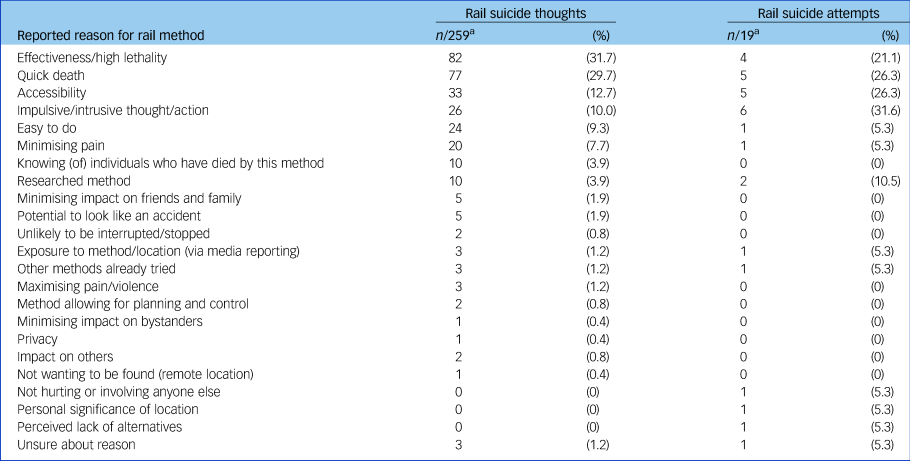
Overall percentage is >100 as some participants gave multiple responses.
a. Not all participants who reported having considered (N = 353) or attempted (N = 23) suicide by train provided a reason for this.
‘It would be final if you jumped in front of a train.’ (interview group 2: B14)
The desire for a quick death was a particularly recurrent theme among male participants (mentioned by 32 (48%) of the 67 male respondents who commented on their reasons for having had thoughts of a rail suicide – versus 41/173 (24%) of females).
Influence of the media
Participants' accounts suggest that perceptions of high, automatic lethality of rail methods may be reinforced and partly ‘primed’ by the media:
‘Somebody when I was younger they had done the same. Every report said it was quick.’ (survey respondent 562)
‘When things like that happen they do tend to publicise it a bit, don't they.’ (interview group 2: B3)
Twelve survey participants specifically mentioned researching suicide online as a key reason for contemplating or attempting to take their lives on the railways. This was also a common theme in the interview data:
‘All you have to do is just Google it… you can find out where people have done it, how they've done it and things like that… I do think the media have a bit of an influence… I wanted to know whether it was going to work or not.’ (interview group 2: B3)
Station announcements
In some interviewees' accounts, station announcements were reported to influence decision-making around rail suicide, particularly when asking commuters to ‘stand away from the edge. This train is not stopping’. One participant described this as ‘a severe trigger for impulsive thoughts’ and another spoke of tying herself to a chair when a fast train is announced to resist the ‘urge’ to jump from the platform. Importantly, this also implies that clear – and preventable – triggers and antecedents may be identified even in relation to suicidal thoughts and attempts described as intrusive and/or impulsive (as were 10% of the rail suicidal thoughts and 31% of rail attempts reported in the online survey; Table 2).
Familiarity with and accessibility of rail locations
Interview participants were often people who frequently used trains or were familiar with railway locations. Some spoke of knowing about fast trains. Interestingly, many participants described prior intrusive thoughts and urges to jump in front of trains even if they were not suicidal. This could have played a role in their later thoughts of the railway:
‘It's there, it's easy’; ‘I was 2 minutes away.’ (interview group 1: A2)
‘[When I was a child] a lot of my life was travelling to and from this hospital, on this railway… And it was then I really started thinking about the railways as a place for suicide.’ (interview group 1: A6)
In comparison to other locations, the railways were also frequently remarked to be generally easy to access. This was also the most common response among survey participants when commenting on their motivation(s) for thinking about or actually attempting suicide at specific rail locations (mentioned by respectively 62/186 (33%) and 8/21 (38%) respondents). The accessibility of (some) rail locations appeared to be a particularly important factor for men (mentioned by 22 (46%) of the 48 men who commented on their reasons for considering a rail location versus 36/122 (30%) of female respondents).
Further factors in the decision to attempt suicide at (specific) rail locations were the desire for a place that felt anonymous and private – either because it was remote and isolated, or because it was perceived to be so busy, impersonal and unfriendly as to make one feel more alone:
‘I wanted to be somewhere anonymous and there is something about the tube station that is busy but you can be completely alone.’ (survey respondent 144)
Poor likelihood of intervention
A common theme in the interview data was the perception that many easily accessible rail locations are also places where intervention is relatively unlikely (i.e. being stopped while attempting suicide) and where it is also unlikely to involve or be witnessed by family and friends. This included locations such as railway tracks and bridges (as opposed to main station platforms), which may feel both remote and relatively easy to access:
‘There are bridges that are unmonitored and no cameras around. There were loads of places we used to go where I fantasised about jumping in front of a train. It was essentially no one could see you and that was quite practical.’ (interview group 1: A1)
‘I didn't want to be stopped or talked to so yeah, that's why I sort of chose where it was.’ (interview group 1: A7)
Yet five group 2 participants reported that they had discounted the railway because of the high likelihood of intervention:
‘When I'm in a really busy railway station, I wouldn't think of it that much, because a lot of people there do put you under pressure and put you off it.’ (interview group 2: B7)
‘I was very keen not to be seen or not to interfere with people. That's another reason why I don't think I would have chosen the railway station. Too many people about.’ (interview group 2: B1)
Deterring factors
Uncertainty of dying using this method
Interview and survey participants spoke of a number of factors that deterred them from choosing a railway method or location. This included feeling ‘uncertain of success’, which in turn appeared to be influenced by fears of being interrupted (‘There's always people working on railway lines, and then if a train comes the other way and sees you there's always the fact that you could be spotted and then it's kind of over type thing’ interview group 2: B3), a lack of fast trains and related concerns about survival (‘There's no fast trains; they're all stopping services’ interview group 2: B1; ‘sadly it's quick and instant to jump in front of a fast train’ survey respondent 81).
Availability of other methods
Other people spoke of choosing a method that was easier or closer for them to access (‘it was too far to walk there… I certainly didn't want to get in my car at that time’ interview group 2: B8), or described being more ‘comfortable’ or ‘fixated’ with other methods, and therefore discounting the railways as not being the right method for them, despite its high lethality (‘once I'd discounted the station and I'd fixated on the building that was it; everything else was pushed out’ interview group 2: B1).
Negative impact on others
Above all, a major concern for the majority of participants who rejected a railway location was the potential impact their suicide could have on railway staff or members of the public. This was mentioned by almost one in five (50/259) survey respondents who had had suicidal thoughts relating to the railways as a specific reason for deciding not to attempt suicide on the railways (or at least to delay one's attempt, for example to avoid children having to witness the event) (Table 3):
‘I think railways are quite traumatic on other people.’ (interview group 2: B10)
Survey respondents' stated reasons for disregarding a rail suicide method
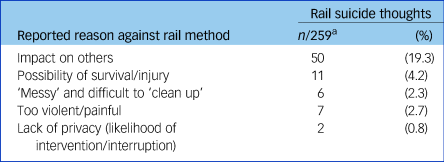
a. Not all participants who reported having considered suicide by train (N = 353) provided a reason for disregarding this method.
This was an interesting point of contrast with the accounts of participants who had acted on their thoughts of suicide by train. Three group 1 participants remarked that a railway location would minimise the impact on others, particularly their family and friends (as they would not be witnessing their attempt or finding their body). One participant felt that station staff would be able to cope better than ‘other’ people because they are trained to deal with the issue and have support in place. In this respect, these participants appeared to consider railway locations more attractive than other locations (‘…the [train] driver will be able to get some help in recovery. Whereas if you were to jump in front of a random car driver, they may be completely traumatised.’ interview group 1: A1). Two other participants said that they were aware of the potentially traumatic impact on railway staff and bystanders, but did not consider this at the time of their attempt due to desperation:
‘It can be very traumatic, so I was kind of put off by it really. But after just thinking about in that short of period of time where things were really bad, I didn't care and I just went for it.’ (interview group 1: A5)
Discussion
Notwithstanding the importance of wider (e.g. socioeconomic) factors, understanding the motivations and triggers that may be specific to rail methods, and the factors that may discourage people from using the railways to attempt suicide, can inform the development of effective prevention programmes. Our analysis suggests that exaggerated perceptions of lethality are an important element in the choice to use the railway for suicide. This is consistent with an earlier study of individuals contemplating suicide in the Montreal metroReference Bardon and Mishara20 and research with survivors of metro attempts in Calcutta.Reference Chowdhury, Dutta and Chowdhury13 In the UK, the average lethality rate on the railways is around 80%, whereas attempts on the London underground have a lower fatality rate.3 Although clearly high, these figures do not support the false perception that being hit by a train will almost inevitably – and quickly – result in a relatively painless death.
Countering the common perception of rail methods as being highly lethal – and the related tendency to underestimate the likelihood of survival or serious injury – may therefore help deter people from a rail setting, especially in locations that are perceived to be impersonal, easy to access and private. This would clearly require a careful and sensitive approach, but might help deter both individuals who describe forming – and in some cases researching – rail suicidal plans over long periods of time and those reporting more immediate, impulsive thoughts and behaviour (e.g. triggered by fast train/train-approaching announcements while standing on a platform). Our survey findings suggest that one in three suicide attempts by train is impulsive. Although this is a smaller percentage than previously reported,Reference O'Donnell, Farmer and Catalan12 it clearly underscores the need for preventative measures that may restrict or delay impulsive behaviour in railway settings.Reference Bhui, Chalangary and Jones21
Tackling other key factors contributing to the decision, planned or impulsive, to attempt suicide by train may also help reduce railway suicides. Examples include increasing the likelihood (and/or perceived likelihood) of intervention (e.g. via enhanced monitoring, ready access to social support and awareness campaigns/gatekeeper training for rail staff and bystanders such as the recent Small Talk Saves Lives campaign (https://www.samaritans.org/media-centre/our-campaigns/small-talk-saves-lives) in the UK) and the presence of physical barriers, both at stations and on open tracks and level crossings (British estimates suggest that between 39 and 70% of rail suicides occur at stations,Reference Ryan22 but in some countries this proportion is significantly lowerReference Mishara and Bardon1). Indeed, restricting access to lethal means has been shown to be effective in reducing suicide,Reference Sarchiapone, Mandelli, Iosue, Andrisano and Roy23 particularly at ‘hotspots’,Reference Pirkis, Too, Spittal, Krysinska, Robinson and Cheung24 but may not always be feasible or cost-effective in relation to (large) rail networks.Reference Too, Milner, Bugeja and McClure25
As also shown by other UK and international research, the availability of fast trains and familiarity with rail environments appear to be further risk factors for rail suicide, but these are also difficult to reduce or modify. However, promoting responsible reporting and portrayal of rail suicides may contribute to reducing deaths in this setting. This could involve efforts to disseminate (positive) stories of those who have survived a rail attempt.Reference Niederkrotenthaler, Voracek, Herberth, Till, Strauss and Etzersdorfer26 Stories focusing on the effects of rail suicide on train drivers and others may also discourage the use of rail suicide methods (these were a commonly cited reason for not attempting suicide by train), as might rail signs and announcements (at stations and via news and social media) highlighting that severe injuries (as well as death) may result from being hit by a train. There is some evidence that modifying signage and announcements to decrease the attractiveness of the railways as a lethal method may have contributed to reducing suicides by train in Germany,Reference Lukaschek, Baumert, Erazo and Ladwig27 but to date there have been no formal evaluations of the effectiveness and potential risks of this and related strategies.
Limitations and future directions
In-depth qualitative interviews can offer novel and nuanced insights into suicidal thoughts and behaviour, but there are issues regarding the generalisability of findings based on a relatively small number of cases. Survey findings were based on a much larger sample of free-text responses (i.e. with no prompting, structure or limit to the answers that could be provided), with strong interrater reliability. Although the initial coding scheme for the latter was influenced by preliminary analyses of the interview data, each study was then analysed independently, with both coding schemes substantially revised following an inductive process. However, the fact that survey (and interview) participants were mostly recruited via organisations such as Samaritans, and using online means, limits the extent to which they may be claimed to be representative of all individuals attempting suicide on the railways, or indeed those who have died by this method. Although a recent analysis of suicide notes and ‘life statements’ by individuals who took their lives on the railways in the UK similarly concluded that ‘the main reasons for choosing the railway are because it is perceived as being lethal, pain free and less of a burden on loved ones’,Reference Duddin and Rayns28 it may be that those who die by this method have additional or different reasons from those contemplating or surviving a rail attempt. Although inevitably less amenable to direct and in-depth examination, these should also be considered in planning measures to reduce railway suicides.
Given the exploratory nature of this study, we did not systematically examine the role of psychiatric history, proximity of mental health services or other risk and protective factors for rail suicide. As self-report data are susceptible to poor and distorted recall, they are usefully complemented by analyses of objective, observable data, including of behaviour immediately preceding a rail suicide,Reference Mackenzie, Borrill, Hawkins, Fields, Kruger and Noonan29 and of statistical associations between factors such as specific media content and actual suicidal behaviour. Crucially, more trials are needed evaluating the feasibility efficacy and cost-effectiveness of rail suicide prevention measures and multi-level strategies.Reference Havârneanu, Burkhardt and Paran30
Supplementary material
Supplementary material is available online at https://doi.org/10.1192/bjp.2018.303.
Funding
Network Rail, on behalf of the rail industry.




eLetters
No eLetters have been published for this article.