


In mainland China, there is a massive internal Chinese migrant population (i.e., Chinese rural-to-urban migrants). Megacities such as Guangzhou have undergone rapid economic development and changes in population composition, and an increasing number of migrants may experience a mental health burden. For the general population, studies showed the 12-month prevalence for depression was 1.1% to 3.3% (Chen, Cheng, Huang, Liu, & Luo, Reference Chen, Cheng, Huang, Liu and Luo2012; Lee et al., Reference Lee, Tsang, Zhang, Huang, He, Liu and Kessler2007; Lu et al., Reference Lu, Ruan, Huang, Yao, Dang and Gao2008; Ma et al., Reference Ma, Xiang, Cai, Li, Xiang, Guo and Ungvari2009; Zhang et al., Reference Zhang, Jiang, Wang, Liu, Liu, Yu and Pan2008), while the lifetime prevalence was between 0.5% and 6.1% in China (Lee et al., Reference Lee, Tsang, Zhang, Huang, He, Liu and Kessler2007; Lee et al., Reference Lee, Tsang, Huang, He, Liu, Zhang and Kessler2009; Li et al., Reference Li, Cui, Cui, Jiang, Shi, Wu and Zhao2008; Lu et al., Reference Lu, Ruan, Huang, Yao, Dang and Gao2008; Ma et al., Reference Ma, Xiang, Cai, Li, Xiang, Guo and Ungvari2009; Wei et al., Reference Wei, Chen, Feng, Pang, Chen, Huang and Li2010; Zhang et al., Reference Zhang, Jiang, Wang, Liu, Liu, Yu and Pan2008; Zhao et al., Reference Zhao, Huang, Li, Deng, Huang, Su and Mei2009). Furthermore, in a meta-analytic review, it was shown that the prevalence of depressive symptoms in China was 2.3% for 12-months and 3.3% for lifetime respectively (Gu et al., Reference Gu, Xie, Long, Chen, Chen, Pan and Su2013). In comparison, Chinese migrants were more vulnerable to depression, with a prevalence between 12.8% to 21.4% (Mou et al., Reference Mou, Cheng, Griffiths, Wang, Hiller and Zhang2011; Qiu et al., Reference Qiu, Caine, Yang, Chen, Li and Ma2011; Wong, He, Leung, Lau, & Chang, Reference Wong, He, Leung, Lau and Chang2008).
Migrant communities are exposed to social and environmental factors that may lead to poor mental health (Ismayilova et al., Reference Ismayilova, Lee, Shaw, El-Bassel, Gilbert, Terlikbayeva and Rozental2014; Li et al., Reference Li, Stanton, Fang, Xiong, Yu, Lin and Wang2009; Lu, Hu, & Treiman, Reference Lu, Hu and Treiman2012; Mou et al., Reference Mou, Cheng, Griffiths, Wang, Hiller and Zhang2011; Qiu et al., Reference Qiu, Caine, Yang, Chen, Li and Ma2011). Among the multiple factors affecting mental health, migrant status appears to be associated to depression substantially and uniquely in China due to the household registration system, or ‘hukou’ system. The hukou is a system of household registration that binds residents to their rural or urban area of birth (Chan & Buckingham, Reference Chan and Buckingham2008). The system divides people into two kinds of citizenship: ‘agricultural’ and ‘non-agricultural’ (Wu & Treiman, Reference Wu and Treiman2004). Although people from rural areas are able to move to urban areas for economic advantages, jobs, and increased chances for social mobility, they might be exposed to risk factors such as interpersonal violence and perceived discrimination that lead to poorer mental health (Teng, Hall, & Li, Reference Teng, Hall and Li2014; Lin et al., Reference Lin, Li, Wang, Hong, Fang, Qin and Stanton2011).
Several studies conducted in China and elsewhere suggest that when people migrate to other cities or countries they are at increased risk for poor mental health (Ismayilova et al., Reference Ismayilova, Lee, Shaw, El-Bassel, Gilbert, Terlikbayeva and Rozental2014; Li et al., Reference Li, Stanton, Fang, Xiong, Yu, Lin and Wang2009; Lu et al., Reference Lu, Hu and Treiman2012; Mou et al., Reference Mou, Cheng, Griffiths, Wang, Hiller and Zhang2011; Qiu et al., Reference Qiu, Caine, Yang, Chen, Li and Ma2011). Aside from individual-level risk factors such as gender, marital status, age, education level, and employment status (Li, Stanton, Fang, & Lin, Reference Li, Stanton, Fang and Lin2006; Li et al., Reference Li, Stanton, Fang, Xiong, Yu, Lin and Wang2009), the lack of adequate social network supports are implicated in poor mental health following numerous life adversities, including migration (Záleská, Brabcová, & Vacková, Reference Záleská, Brabcová and Vacková2014). Social connectedness and reliance on social support is important to migrants as this may mitigate experiences of discrimination on mental health (Veling, Hoek, Wiersma, & Mackenbach, Reference Veling, Hoek, Wiersma and Mackenbach2009) and an enhanced the ability to obtain valuable resources from local people and peers to handle adverse situations (Caplan, Reference Caplan1974). Thus, social network supports are considered to be an important resource for information, emotional care, and direct instrumental assistance (Van den Akker-Scheek, Stevens, Spriensma, & van Horn, Reference Van den Akker-Scheek, Stevens, Spriensma and van Horn2004; Whittmore, Rankin, Callahan, Leder, & Carroll, Reference Whittmore, Rankin, Callahan, Leder and Carroll2000).
Social capital has emerged as an important predictor of health and mental health. The construct symbolises the resources available through social networks and supports (Bourdieu, Reference Bourdieu and Richardson1986). There are two commonly measured dimensions of social capital: cognitive and structural (De Silva, McKenzie, Harpham, & Huttly, Reference De Silva, McKenzie, Harpham and Huttly2005; Murayama, Fujiwara, & Kawachi, Reference Murayama, Fujiwara and Kawachi2012). Largely motivated by Putnam's (Reference Putnam2007) theorising, cognitive social capital refers to beliefs in community trust and social reciprocity, and structural aspects of social capital are related to participation in social groups and organisations. Higher levels of social capital are associated with better physical health (Kim, Subramanian, & Kawachi, Reference Kim, Subramanian, Kawachi, Kawachi, Subramanian and Kim2008) and mental health (Almedom & Glandon, Reference Almedom, Glandon, Kawachi, Subramanian and Kim2008; Hall, Bonanno, Bolton, & Bass, Reference Hall, Bonanno, Bolton and Bass2014).
A related concept, of particular importance to migrant communities, is the role of social cohesion (Bollen & Hoyle, Reference Bollen and Hoyle2001; Kawachi & Berkman, Reference Kawachi, Berkman, Kawachi and Berkman2000). Social cohesion is defined as ‘. . . a state of affairs concerning both the vertical and the horizontal interactions among members of a society, as characterized by a set of attitudes and norms that include trust, a sense of belonging, and the willingness to participate and help, as well as their behavioral manifestations’ (Chan, To, & Chan, Reference Chan, To and Chan2006, p. 290). One of the most convincing studies showing the beneficial relationship of social cohesion on mental health was conducted with nearly 11,000 people in the United Kingdom. This study showed that neighbourhood social cohesion counteracted economic deprivation to protect against ill mental health (Fone, Dunstan, Llyod, Williams, & Watkins, Reference Fone, Dunstan, Llyod, Williams and Watkins2007). For internal Chinese migrants, living in environments where they feel a low sense of belonging may pose a significant risk to mental health.
According to the conservation of resource (COR) theory (Hobfoll, Reference Hobfoll1989), people are motivated to obtain and maintain valued resources (self-value, property, social relationships), which aid in survival; lacking valuable resources along with losses or the threat of losses increases stress and leads to poor mental health (Alarcon, Edwards, & Menke, Reference Alarcon, Edwards and Menke2011; Gorgievski & Hobfoll, Reference Gorgievski, Hobfoll and Halbesleben2008; Hall, Murray, Galea, Canetti, & Hobfoll, Reference Hall, Murray, Galea, Canetti and Hobfoll2015; Halbesleben, Neveu, Paustian-Underdahl, & Westman, Reference Halbesleben, Neveu, Paustian-Underdahl and Westman2014; Health, Hall, Canetti, & Hobfoll, Reference Heath, Hall, Canetti and Hobfoll2013; Hobfoll, Reference Hobfoll1989). According to the model, resource lack, resource losses or the threat of loss would be a critical source of stress, which may in turn lead to increased depression (Beiter et al., Reference Beiter, Nash, McCrady, Rhoades, Linscomb, Clarahan and Sammut2015). As social support may be lost during migration, we expect that COR theory can guide our prediction that lacking social support would correlate with depression among migrants. Indeed, previous studies demonstrated that lacking social support was associated with depressive symptoms among migrants (Jaremka et al., Reference Jaremka, Andridge, Fagundes, Alfano, Povoski, Lipari and Kiecolt-Glaser2014). Furthermore, migrants who have social connections and networks with others could prevent depression from negative incidents such as victimisation and social stress (Cheung, Reference Cheung2013, Reference Cheung2014; Teng et al., Reference Teng, Hall and Li2014).
Contrary to the COR model, the ‘Healthy Migrant’ hypothesis (Abraído-Lanza, Dohrenwend, Ng-Mak, Turner, Reference Abraído-Lanza, Dohrenwend, Ng-Mak and Turner1999) holds that those who are able to migrate might be more skilled, healthier and have more family or community support in their migration process. According to this hypothesis, migrants who stay in non-local countries may begin to have similar levels of poor health as the local receiving community (Nolan, Reference Nolan2012). Evidence supporting the Healthy Migrant hypothesis demonstrated that migrants are not more vulnerable compared with non-migrants (Dai et al., Reference Dai, Zhong, Xiang, Chiu, Chan, Yu and Caine2015; Leong, Park, & Kalibatseva, Reference Leong, Park and Kalibatseva2013; Lu & Qin, Reference Lu and Qin2014; Wu & Schimmele, Reference Wu and Schimmele2005). One study showed that individuals could choose to migrate or not according to their own will, and showed that migrant status had a positive effect on health (Lu & Qin, Reference Lu and Qin2014); also, migrants demonstrated a lower risk of developing depression and suicidal thoughts within a year of their migration (Dai et al., Reference Dai, Zhong, Xiang, Chiu, Chan, Yu and Caine2015).
The current study aimed to establish the relationships between social level risks (social network supports, social capital, and social cohesion) on depressive symptoms among migrants and local residents living in Guangzhou, China. Contradictory predictions were made by the COR theory and the Healthy Migrant hypothesis: COR theory suggests that moving to another city might affect people's mental states negatively (Li et al., Reference Li, Stanton, Fang, Xiong, Yu, Lin and Wang2009), while the Healthy Migrant hypothesis predicts better or equal psychological health for migrants compared to native residents (Cheung, Reference Cheung2013; Jin, Wen, Fan, & Wang, Reference Jin, Wen, Fan and Wang2012; Li et al., Reference Li, Wang, Ye, Jiang, Lou and Hesketh2007; Wen et al., Reference Wen, Fan, Jin and Wang2010), at least in the early phase of migration. This study, therefore, is proposed to evaluate the application of the COR theory and the Healthy Migrant hypothesis in Chinese migration.
In the current study, three major hypotheses were made:
-
1. According to the prediction of the COR theory, we expected that fewer resources would be held within the migrant population than among locals. This relative lack of resources, in turn, would be associated with poorer mental health among migrants compared to non-migrants;
-
2. Based on the Healthy Migrant hypothesis, however, it was hypothesised that migrants would be less depressed than local residents.
-
3. We further evaluated whether the time since migration affected the mental health status of migrants, expecting that the longer period of time migrants lived in their new community, the worse depression they would report.
Methods
Procedure
The sampling followed a two-step process. We selected Yuexiu and Tianhe, out of the 12 districts of Guangzhou, because of the high proportion of migrants living in the two districts. The population of age 18–59 years old was selected by stratified cluster sampling method within these two districts. Data was collected between May 2014 and October 2014.
Data were collected during household face-to-face interviews, which were conducted by Chinese interviewers using electronic tablet devices. All verbal portions of the interviews were conducted in the participant's Chinese language, either in Mandarin or in Cantonese.
Spatial epidemiological methods were utilised to identify participants. The participants were selected by geographic information systems (GIS), which could randomise and produce the longitude and latitude within the two districts. After selecting the randomised geographic coordinates within the GIS, we used Google Earth images to locate the nearest residential building according to the randomised geographic coordinates. In order to minimise the correlation among participants, only one eligible participant within a household was selected for participation within one building. If there were more than one person within a household eligible for the study, the person with earliest birthday date would be selected for participating the study. For multi-story buildings with multiple households per floor, we randomly selected a floor, and if there was more than one household, we randomly selected a household. The randomisation was done in the field utilising a mobile phone random number generator application. If a potential interviewee in a household refused to participate, or did not have any eligible interviewees in that household, we moved to the next randomised location for no more than three times in total within the same building. If we were refused three times within one building, we moved to another building. We would visit the same household not more than three times if no one responded or the selected individual was not at home. When we were unable to establish contact more than three times within one geographic coordinate, we would mark this coordinate as a non-response. After finishing the study, interviewees were debriefed and received a 50 RMB (~8USD) mobile phone prepaid card as compensation for their participation. Both the Institutional Review Board at Guangdong Provincial Skin Diseases and STIs Control Center and University of North Carolina at Chapel Hill approved the study protocol.
Participants
In total, there were 1,215 attempted surveys, with 14 partial completions, 368 refusals, and 82 uninhabited locations, resulting in a sample of 751 complete surveys and a response rate of 66%. For the present study, we excluded individuals who said they were students, yielding a total sample of 688 participants (383 migrants and 295 non-migrants).
Measures
Depression
The Patient Health Questionnaire (PHQ-9; Spitzer, Kroenke, & Williams, Reference Spitzer, Kroenke and Williams1999) is a nine-item inventory used to measure depression severity. Participants rated how frequently depressive symptoms occurred in the past 2 weeks. Responses were made on a 4-point Likert scale (0 = not at all, 1 = several days, 2 = more than half the days, 3 = nearly every day), and the total score was the sum of all nine items, with higher scores indicating greater depression. The internal reliability of the scale was between 0.86 and 0.89 (Kroenke, Spitzer, & Williams, Reference Kroenke, Spitzer and Williams2001). In the current survey, the reliabilities were 0.87 for migrants and 0.88 for non-migrants.
Social resources
For the current study, we utilised seven items from the Social Support Rating Scale (SSRS; Xiao & Wang, Reference Xiao and Wang1999) to measure the social resource dimensions. The original SSRS is a 10-item inventory that measures three aspects of social support: subjective support (emotional support), objective support (financial help) and support-seeking behavior (active or passive). The scale has high reported internal reliability of 0.92 (Xiao & Yang, Reference Xiao and Yang1987).
Social network supports: Friends. One item assessed the total number of friendship social network supports (0 = none, 1 = 1–2, 2 = 3–5, 4 = >6).
Social network supports: Emotional. One item measured the total number of sources of emotional support (e.g., from friends, family members, colleagues range 0–7).
Social network supports: Financial. One item measured the number of available financial supports (e.g., from friends, family members, colleagues; range 0–7).
Relationship quality. Two items measured the closeness of the relationship with (1) neighbors and (2) colleagues (scored from 1 to 4).
Family emotional support quality. One item measured the quality of emotional support from family members (rated from 0 = none, to 3 = high; range 0–15).
Structural social capital. Joining community activities (rated from 0 = never to 4 = actively participate).
Community belonging (social cohesion). In addition, we added one item to evaluate community belonging, an aspect of social cohesion (Bollen & Hoyle, Reference Bollen and Hoyle2001; Chan et al., Reference Chan, To and Chan2006; Kawachi & Berkman, Reference Kawachi, Berkman, Kawachi and Berkman2000) with the extent of agreeing to the item ‘I feel welcome here in Guangzhou by the people who live here’ (scored from 1= strongly disagree to 5= strongly agree).
Sample characteristics
Data on participant characteristics were obtained for age, biological sex, marital status, education level, personal income, employment status (0 = no, 1 = yes), the length of time living in Guangzhou (0 = less than one year, 1 = one year or longer), and migrant status (location of their hukou, and permanent household registration).
Analysis
We first examined the bivariate differences between migrants and non-migrants with regard to their social resources, depression severity, and participant characteristics using independent sample t tests and chi-square tests. Effect sizes for the mean differences were established using Cohen's d, and interpreted such that 0.20 = small effect, 0.50 = medium effect, 0.80 = large effect (Cohen, Reference Cohen1992).
We next stratified correlational and hierarchical multiple variable regression analyses to assess correlates of depression for migrants and non-migrants separately. Our regression analysis proceeded such that in the first block we included demographic characteristics that were theoretically related to depression and social resources, which might confound the association between social resources and depression. In the second block we included the social resource variables. We interpreted the change in model R 2 to indicate the increase in variance explained by the addition of social resources to the model. We conducted preliminary analysis to insure that our regression estimates were not influenced by multicolinearity. The variance inflation factors (VIF) for the models were below critical values indicating multicolinearity was not a significant concern in our analyses (individual VIF all lower than 1.7 and mean VIF was 1.3 for migrants and non-migrant models.).
Results
T-test results (see Table 1) between migrant and non-migrant groups for social resource characteristics and depression showed significant differences in community belonging (i.e., social cohesion); (migrant: n = 386, M = 3.51, SD = 0.79; non-migrant: n = 291, M = 3.90, SD = 0.68), t(675) = −6.89, p < .001, Cohen's d = .53; neighbour relationship quality (migrant: n = 384, M = 1.30, SD = 1.21; non-migrant: n = 297, M = 1.56, SD = 1.11), t(679) = −2.94, p < .01, Cohen's d = .22; colleagues’ relationship quality (migrant: n = 380, M = 2.1, SD = .99; non-migrant: n = 292, M = 2.30, SD = .83), t(670) = −2.76, p < .01, Cohen's d = .22; emotional support from family (migrant: n = 391, M = 2.94, SD = 1.54; non-migrant: n = 297, M = 3.41, SD = 1.59), t(686) = −3.85, p < .001, Cohen's d = .31; and joining community activities (migrant: n = 387, M = 1.00, SD = .87; non-migrant: n = 296, M = 1.25, SD = .86), t(681) = −3.78, p < .001, Cohen's d = .29. No significant differences, however, were found in friend social network size (migrant: n = 388, M = 1.93, SD = 0.90; non-migrant: n = 297, M = 2.01, SD = 0.83), t(683) = −1.20, p =.23, Cohen's d = .09; financial support network (migrant: n = 391, M = 2.66, SD = 1.48; non-migrant: n = 297, M = 2.87, SD = 1.60), t(686) = −1.77, p = .08, Cohen's d = .19 and depressive symptoms (migrant: n = 383, M = 2.92, SD = 3.88; non-migrant: n = 295, M = 2.99, SD = 3.95), t(676) = −0.23, p = .82, Cohen's d = .02, between the two groups.
Independent Samples t Test Results for Differences Between Migrants and Non-Migrants Social Resource Characteristics
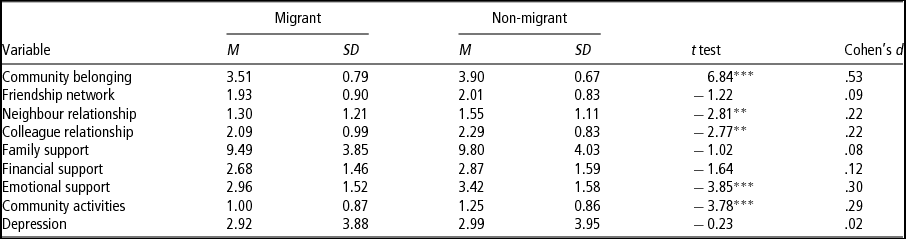
Note: M = mean, SD = standard deviation, Cohen's d: 0.20 = small effect, 0.50 = medium effect, 0.80 = large effect.
**p < .01. ***p < .001.
Sample characteristics that differed between the two groups included age (migrant: n = 386, M = 31.09, SD = 9.52; non-migrant: n = 296, M = 38.32, SD = 10.98), t(680) = −9.20, p < .001, Cohen's d = .70; personal income (migrant: n = 384, M = 4650.91, SD = 6833.49; non-migrant: n = 288, M = 7015.13, SD = 14896.95), t(670) = −2.75, p < .01; sex, χ2(df = 1) = 8.33, p = .004, 45.43% of migrants were women compared to 56.61% non-migrants; marital status, χ2(df = 1) = 18.99, p < .0001, 62.30% of migrants were married or cohabitating compared to 77.98% of non-migrants; educational status, χ2(df = 1) = 65.70, p < .0001, 63.87% of migrants had at least junior high school or above, compared to 90.85% of non-migrants; length of time living in Guangzhou (Fisher's exact test, p < .0001), 12.01% of migrants lived in Guangzhou less than one year compared to just 0.34% of non-migrants. No differences were noted with regard to employment status, χ2(df = 1) = 0.49, p = .48, as 87.70% of migrants and 85.82% of non-migrants reported being employed; and, ethnicity, χ2(df = 1) = 0.48, p = .49, with 97.07% of migrants and 97.93% of non-migrants reported being Han Chinese.
The results of stratified correlation analyses on all study variables are presented in Table 2 and Table 3. The results show that in the migrant group age (r = −0.12, p < .05), community belonging (r = −0.15, p < .01) and family support (r = −0.12, p < .05) were significantly and negatively correlated with depressive symptoms, whereas in the non-migrant group, age (r = −0.207, p < .001), family support (r = −0.17, p < .01), and social network size (r = −0.144, p < .05) was significantly and negatively correlated with depressive symptoms.
Correlation Matrix for Demographics, Depression, and Social Support Variables Among Migrants (n = 352)
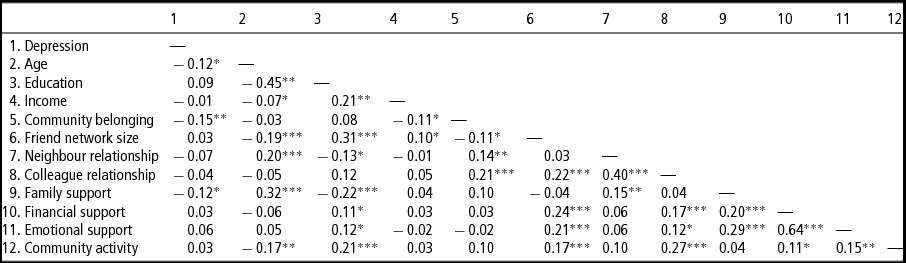
Note: *p < .05. **p < .01. ***p < .001.
Correlation Matrix for Demographics, Depression, and Social Support Variables Among Non-Migrants (n = 273)
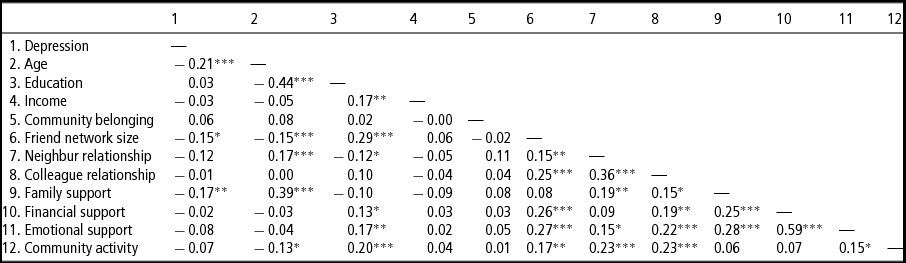
Note: *p < .05. **p < .01. ***p < .001.
Regression analyses stratified by migration status demonstrated that depression was predicted by different risk factors for migrants and local residents (see Table 4). In the migrant group, the first model block including only demographic characteristics were significant, but no individual variable was significant. In the second block, community belonging (i.e., social cohesion) significantly predicted decreased depressive symptoms, β = −0.79, p < .01. This means that for every one unit increase in community belonging, migrant depression decreased by .79 points. A significant increase in the R2 model indicated that social resources uniquely contributed .044 to the variance explained in migrant depression. The overall R2 model was .062.
Regression Analyses for Variables Predicting Migrants’ and Non-Migrants’ Depression
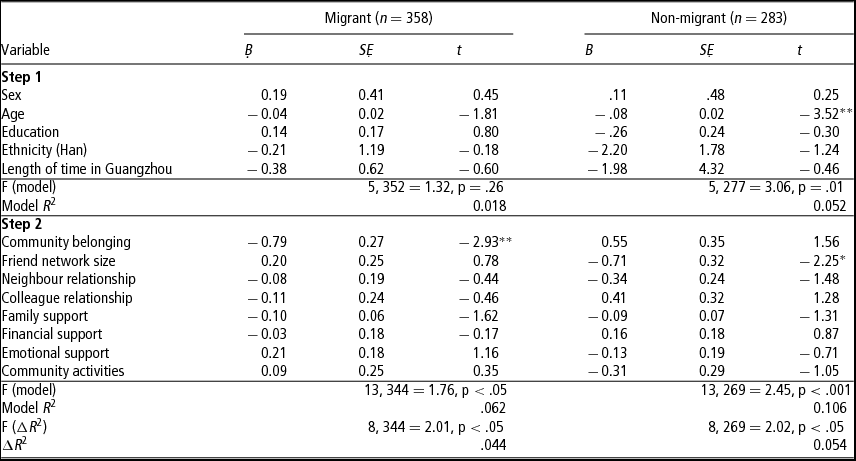
Note: B = beta coefficient. SE = standard error. *p < .05. **p < .01.
For the non-migrant group, in the first block, age (β= −0.08, p < .01) was significantly and negatively associated with decreased depression symptoms. In the second block, social network size (β= −0.71, p < .05) was significantly and negatively associated with depressive symptoms. Together, these findings suggest that for every one year increase in age, and for every one unit increase in friend social network, non-migrant depression decreased by .08 and .71 points respectively. A significant increase in the R2 model indicated that social resources uniquely contributed .054 to the variance explained in non-migrant depression. The overall R2 model was 0.106.
Discussion
The current analysis was designed to evaluate dimensions of social resources (social networks, relationship quality, emotional support, structural social capital and community belonging), on depressive symptoms for migrants and non-migrants in mainland China. Face-to-face interviews were conducted in two districts in Guangzhou. Based on two paradoxical theories, the COR theory and the Healthy Migrant hypothesis, we tested three possible hypotheses in our analysis: (1) according to the prediction of COR theory, we expected that fewer social resources would be held by migrants compared to local residents, and lacking these resources would be associated with greater depressive symptoms; (2) based on the Healthy Migrant hypothesis, however, it was hypothesised that migrants would be less depressed than locals; and, finally, that (3) the time spent living in Guangzhou would be associated with increased depression among migrants.
Our data indicated a significant relative lack in nearly all social resources among the migrants, specifically including community belonging (i.e., social cohesion), closeness with neighbours and colleagues, number of available family emotional supports, and structural social capital (joining in community activities). The lack of community belonging was associated with poorer mental health among migrants, consistent with our predictions based on COR theory (Hobfoll, Reference Hobfoll1989). However, the other social resources we examined were not associated with depression.
Further, we found that depressive symptoms for migrants and non-migrants were associated with different protective factors. For the migrants, the lack of community belonging could increase the chance of being depressed, which is consistent with previous research studies (Dalgard & Thapa, Reference Dalgard and Thapa2007; Reblin & Uchino, Reference Reblin and Uchino2008). One reason might be that if a migrant could not integrate with the existing communities, he/she will feel isolated and his/her social needs will not be met. Wang and Fan (Reference Wang and Fan2012) showed that migrants who did not possess a resident hukou felt inferior and tended to identify less with the group than others. These social factors, in turn, are associated with poorer mental health among migrants (Sani, Herrera, Wakefield, Boroch, & Gulyas, Reference Sani, Herrera, Wakefield, Boroch and Gulyas2012).
For local residents, their friendship social network was protective against depressive symptoms. Having larger friendship networks for local residents may indicate their positive ability to develop and maintain social bonds, which confers mental health benefits. For local residents, a sense of belonging in their community may be less salient than for migrants, since local residents are from Guangzhou and are not attempting to adjust to a new social environment. Older age was also protective against depression symptoms among non-migrants. This is consistent with studies showing an onset of depression among younger adults (Kessler, Berglund, Demler, Jin, Merikangas, & Walters, Reference Kessler, Berglund, Demler, Jin, Merikangas and Walters2005) and the older age of the non-migrant participants in the current study.
Depression was not significantly different between migrants and local residents. This partially supports the Healthy Migrant hypothesis, suggesting that migrant communities are equally healthy, or in some cases, more healthy than people living in the local communities that receive them. Previous studies showed that in some cases, migrants who have a rural hukou and lower social affiliation do not necessarily have higher stress level (Chen, Reference Chen2011). We attempted to also account for length of time in Guangzhou as a possible key factor that would increase depressive symptoms. However, the present study found no differences between migrants who had lived in Guangzhou over one year than to those who were newly arrived.
The results of our study seem to be contradictory to previous large-scale studies done in China that suggested migrants were more vulnerable to depression than non-migrants (Lu et al., Reference Lu, Hu and Treiman2012; Mou et al., Reference Mou, Cheng, Griffiths, Wang, Hiller and Zhang2011; Qiu et al., Reference Qiu, Caine, Yang, Chen, Li and Ma2011). Our data, however, found that the migrants and non-migrants generally did not differ in depressive symptoms even though they had received significantly different levels of social support and resources. There are several possible explanations for this result. First, previous studies utilised convenience samples of the most at-risk migrant communities whereas the current study utilised a population representative sampling approach. Relatedly, previous studies targeted rural-to-urban migrants (Lu et al., Reference Lu, Hu and Treiman2012; Mou et al., Reference Mou, Cheng, Griffiths, Wang, Hiller and Zhang2011; Qiu et al., Reference Qiu, Caine, Yang, Chen, Li and Ma2011), while the present study was conducted in areas with a high proportion of migrants without emphasising the specific type of migrants studied. Second, different scales were used to measure depression in the current study. Previous studies commonly used the Center for Epidemiologic Studies Depression Scale (Lu et al., Reference Lu, Hu and Treiman2012; Mou et al., Reference Mou, Cheng, Griffiths, Wang, Hiller and Zhang2011; Qiu et al., Reference Qiu, Caine, Yang, Chen, Li and Ma2011), while The Patient Health Questionnaire measures specific diagnostic symptoms of depression, was used in the current study.
In terms of practical implications, our study results imply that clinicians might consider adjusting their approach to treatment according to the migrant status of the patient. Social support interventions, including group interventions with social skill training and social support provision, and individual interventions with self-help and peers (Hogan, Linden, & Najarian, Reference Hogan, Linden and Najarian2002), might be worthwhile. Moreover, dyadic interventions, social network interventions, mutual aid groups, and community interventions (Hernández-Plaza, Alonso-Morillejo, & Pozo-Muñoz, Reference Hernández-Plaza, Alonso-Morillejo and Pozo-Muñoz2006) might be considered. These intervention programs might be able to help new migrants gain support from others, and hence increase their social resources, in order to ease their stress integrating with the community. For local residents, interventions that enhance social support networks may be beneficial, as this was a key determinant of lower depression scores in this sample.
Results of the previous studies on social support interventions provided evidence for its possible adaptation in China (Hernández-Plaza et al., Reference Hernández-Plaza, Alonso-Morillejo and Pozo-Muñoz2006; Hogan et al., Reference Hogan, Linden and Najarian2002). Intergroup interventions that can encourage migrant integration within host communities are indicated. These interventions may involve intergroup contact or public messaging that highlights the important economic and social contributions migrants make in their receiving communities. However, it may not be local residents who provide the best chance of finding a supportive home in their new city. Fostering social bonds and cohesion within newcomer communities might prove most useful to protect mental health (Veling et al., Reference Veling, Hoek, Wiersma and Mackenbach2009).
Limitations
There were several limitations in this study. First, as it was a cross-sectional, it was not possible to conclude any clear causal relationship between the variables. Indeed, studies have emerged that demonstrate the dynamic nature of social resource variables and their associations with mental health (Hall et al., Reference Hall, Bonanno, Bolton and Bass2014; Hall, Tol, Jordans, Bass, & de Jong, Reference Hall, Tol, Jordans, Bass and Jong2014). Therefore, a longitudinal study addressing a similar topic should be carried out in future. Moreover, participants may under-report their symptoms due to fear of stigma. The current study focused on local Chinese and internal Chinese migrants, so the results might not be able to be generalised to other migrant communities, including international migrants. We also acknowledge the limitation of using a single-item indicator to measure belonging (i.e., social cohesion), which can naturally limit reliability. Future studies should utilise a more robust measurement of this construct.
In conclusion, limited findings are reported for classifying risk or protective factors among internal migrants in China (Lu & Qin, Reference Lu and Qin2014; Qiu et al., Reference Qiu, Caine, Yang, Chen, Li and Ma2011), so additional research on this issue is warranted. This study aimed to identify different factors that may affect the mental health status among Chinese with different migrant status. The current results suggest that migrant social cohesion is an important social-level target for community intervention.
Declaration of Interest
The authors declare no conflicts of interest.
Acknowledgments
This project was funded by the Fogarty Global Health Fellows Program Consortium comprised of the University of North Carolina, John Hopkins Bloomberg School of Public Health, Morehouse and Tulane (5R25TW009340-02, 1R25TW009340-01, awarded to Hall and Chen). Dr Hall received additional support from grant SRG2014-00001-FSS awarded by the R&DAO, University of Macau, and Mr Hoi received funding from the University of Macau R&DAO Summer Research Experience Program to participate in study data collection and study management. This current analysis is a result of Mr Hoi's undergraduate thesis and he presented portions of this work at the Association of Regional Union of Psychological Science Conference in Singapore in March 2015. We thank the Faculty of Social Sciences, University of Macau for providing funding to attend the conference. We thank all the study participants and the team of interviewers from Sun Yat-sen University and the University of Macau. Finally, we thank Professor Carl Latkin, PhD, for his comments on an earlier draft of this manuscript.



