

Introduction
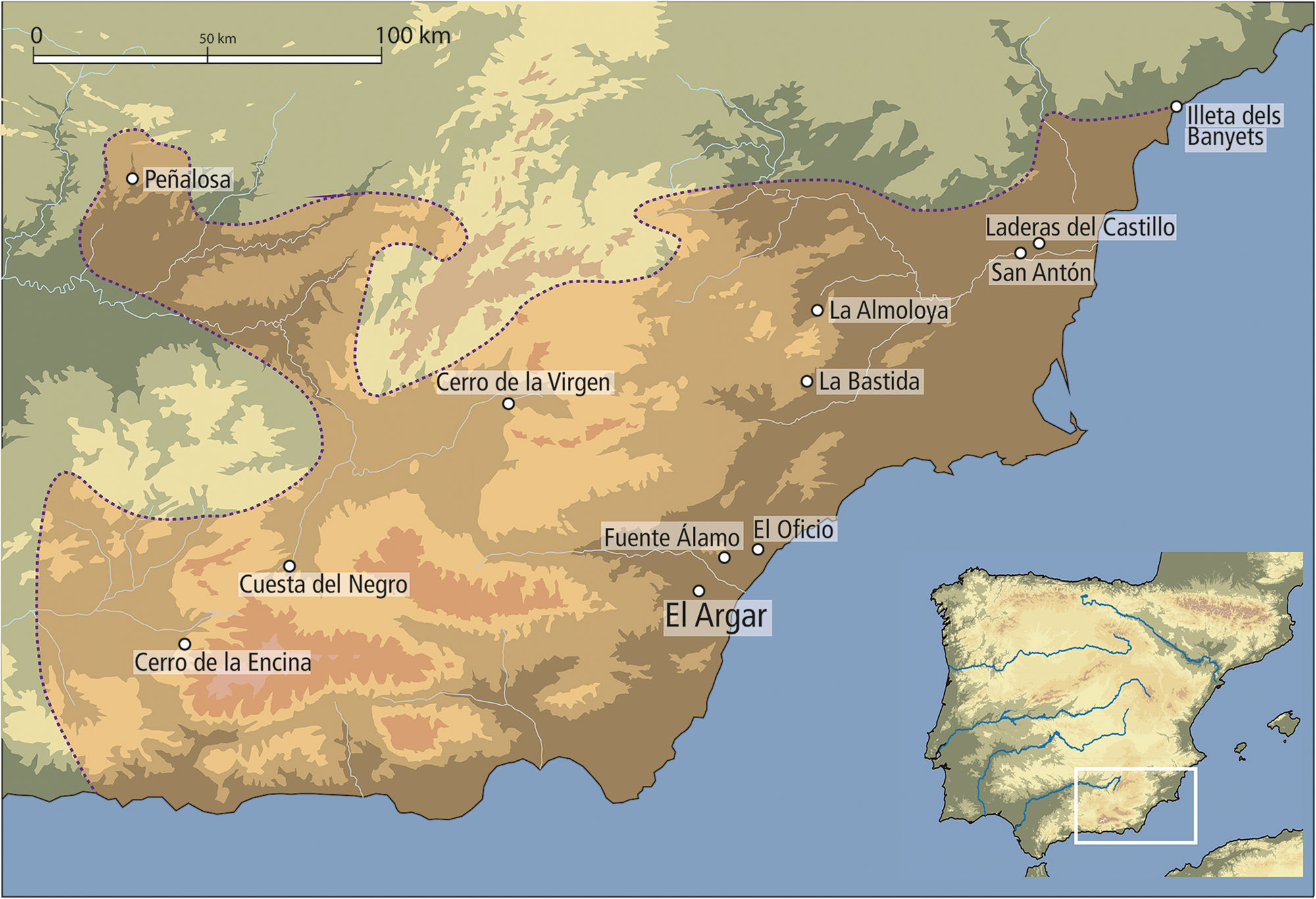
In the Iberian Peninsula, as in the rest of the European continent, priests, engineers and geologists carried out the first research in prehistory. Referring to the Bronze Age, the brothers Henri and Louis Siret (1890) stated the basis for the study of El Argar culture. However, during the early years of the twentieth century, other less significant figures also made notable contributions in this field. Special mention is due to the excavations of Jesuit priest Julio Furgús in the site of San Antón (Orihuela, Alicante, Spain), located at the northeastern end of the Argaric territory (Fig. 1), where nearly 800 tombs were excavated (Furgús Reference Furgús1902). Such a high number of graves led him to consider San Antón as a cemetery, without realizing that the burials were located under the floors of dwellings.
Argaric territory in the southeast of the Iberian peninsula (c. 1700 bc) (according to Lull et al. Reference Lull, Micó, Rihuete and Risch2015), and the main settlements mentioned in the text.
Furgús died suddenly in 1909, and never published a detailed inventory of the tombs. We have only one accurately described burial, including details about the disposition and sex of the deceased and the whole set of grave goods.
The tomb was described by Furgús as a medium-sized ‘tumulus’, with an oval-shaped, excavated inner chamber well delimited by stones where the large stones of the lid rested. Inside there was the skeleton of a woman, lying on her right side in a flexed position, with her skull facing west. The surfaces of the arm and forearm bones were coloured in red and black, and the skull was ‘completely black smeared’ (Furgús Reference Furgús1905, 367; 1906, 238).
This wealth of detail allows us to evaluate this tomb within the framework of what we currently know about Argaric burial practices (López-Padilla et al. Reference López-Padilla, De Miguel-Ibáñez, Arnay De La Rosa, Galindo-Martín, Roldán-García and Murcia-Mascarós2012).
An outstanding Argaric burial in San Antón
Stone slab boxes, masonry cists, large storage pottery vessels and pits or small hypogea dug in the ground are the most common Argaric burial containers. The ‘tumuli’ described by Furgús have long been categorized as an example of masonry cists. The lids often collapsed over the burial chamber, giving a ‘tumular’ appearance to the assemblage (Lull Reference Lull1983, 337; Siret Reference Siret1905, 377). In any case, their grave goods are like the rest of known Argaric burials (Jover Maestre & López Padilla Reference Jover Maestre and López Padilla1997, 83).
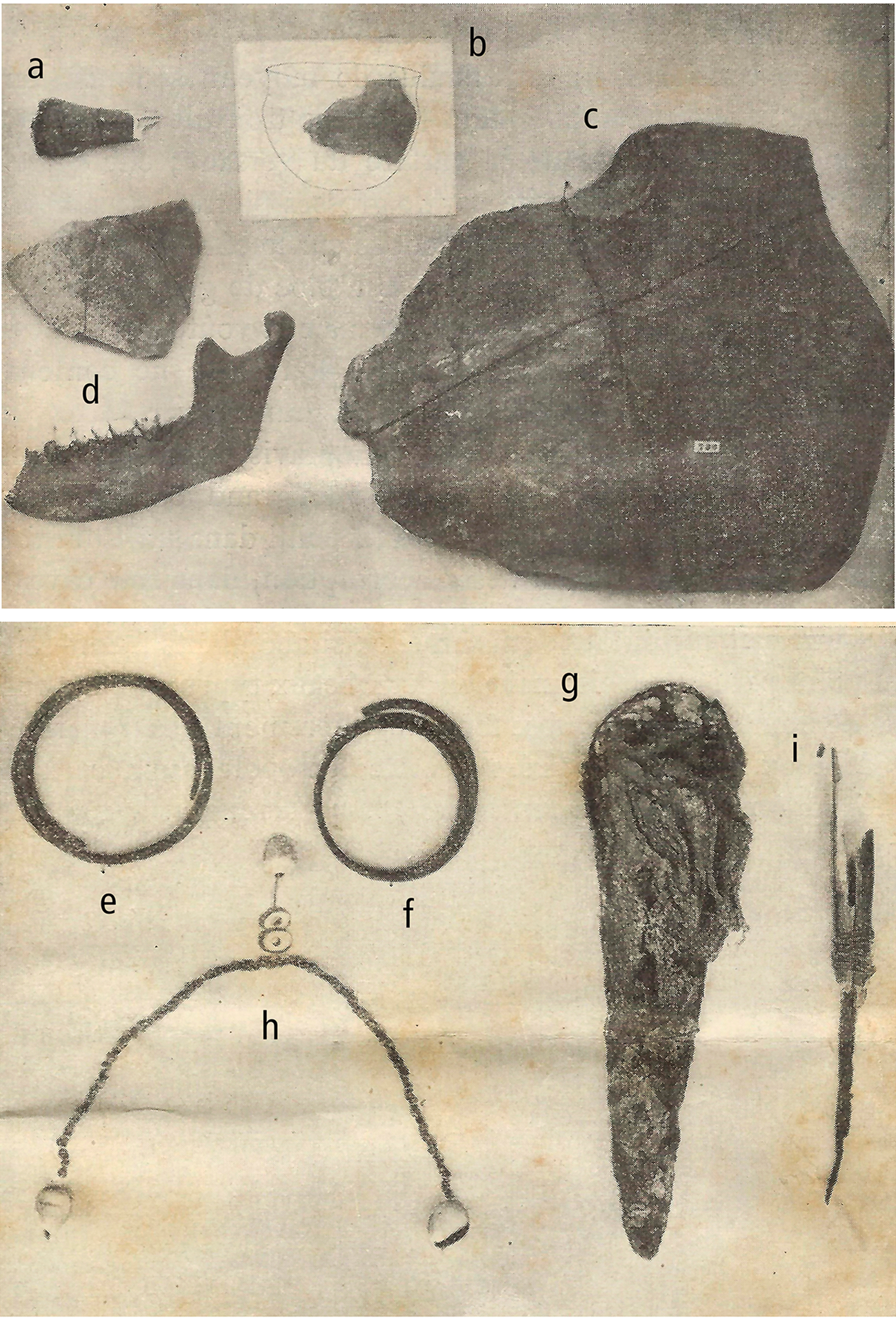
There are two photographs reproducing the set of grave goods at San Antón (Furgús Reference Furgús1905, 368, fig. 4; 369, fig. 5; 1906, 239) (Fig. 2). The two large silver spirals found on each side of the skull remain intact (Fig. 3a, b), but the ceramic vessel found next to the skull is missing. Furgús provided a small sketch of the complete vessel (Fig. 2b) based on a single large piece (Fig. 2c), which clearly shows the typical mid-height ridge line of a carinated Form 5,Footnote 1 albeit with a wide mouth diameter.
Grave goods published by Furgús (Reference Furgús1905). (a) Bone awl (?); (b) Sketch of the ceramic vessel; (c) Piece of ceramic vessel; (d) Skull fragment and part of the jaw; (e, f) Silver earrings (sic); (g) Bronze dagger or knife wrapped in a cloth; (h) Necklace (sic) of gold cones, three seashells and two small perforated ivory discs; (i) Metal awl with bone handle.
San Antón preserved grave goods. (a, b) Silver spirals; (c) Perforated gold cones; (d) Arsenic copper dagger with fabric remains attached.
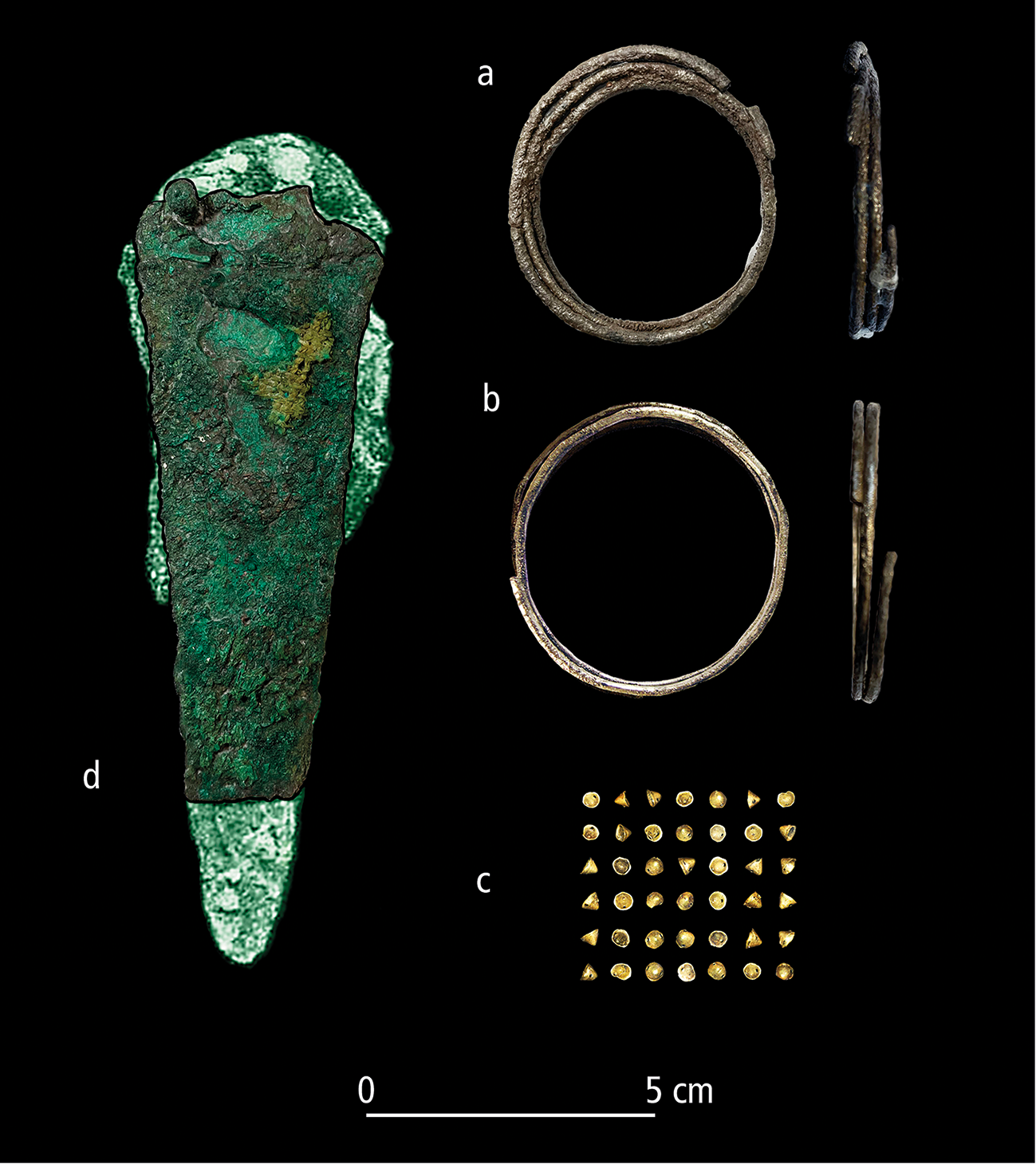
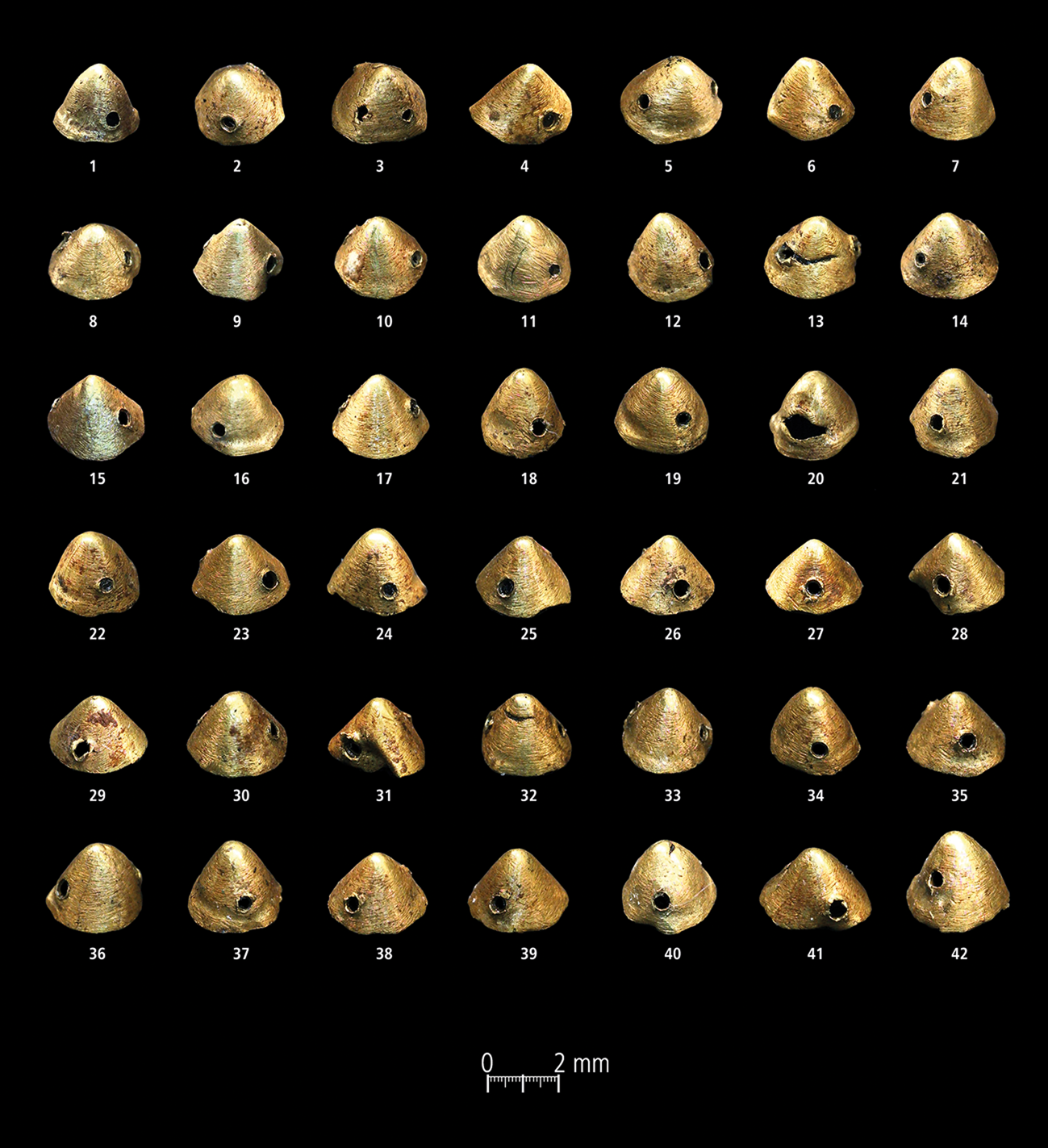
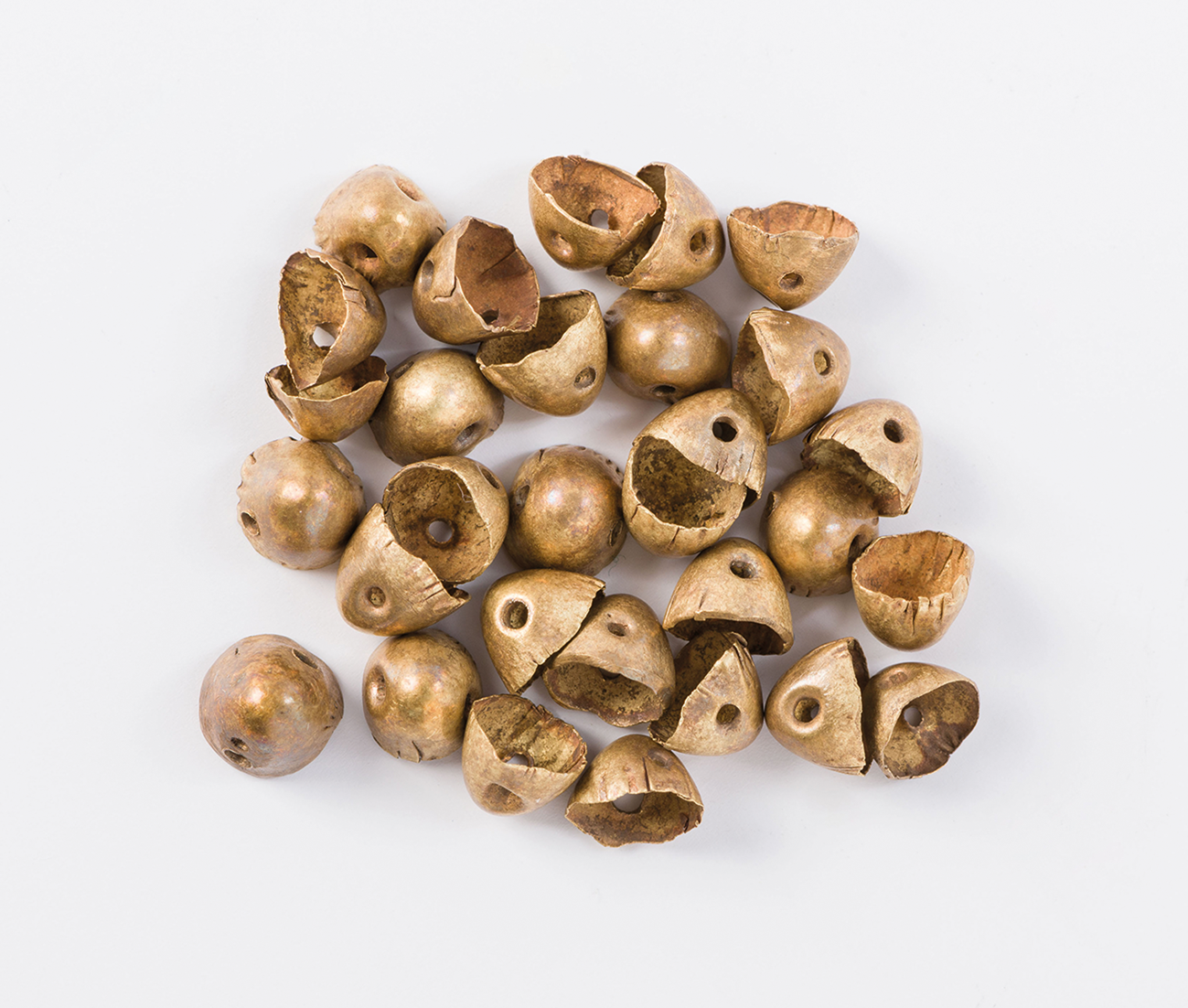
A set of tiny hollow gold perforated cones was found on the chest (Fig. 2h). Furgús recovered a total of 73, but some of them were lost during the excavation. Thus, the real exact number of pieces remains unknown. Nowadays, only 42 of these are still preservedFootnote 2 (Fig. 3c).
Three seashell beads and two small perforated ivory discs were also recovered (Fig. 2h). Unfortunately, these items cannot be identified or have been lost. A copper knife was found on the skeleton's waist, wrapped in a piece of cloth (Fig. 2g). It was considered lost, but it has been recently identified, although in a very poor state of preservation (Fig. 3d).
Near the knife, a copper awl still inserted into a bone handle was found (Fig. 2i), although both are also missing. Furgús mentions a poor-quality bone awl too (Fig. 2a), but it is more likely to be remains of the foreleg of a bovid or goat, that were often included as part of the grave goods in Argaric tombs (Andúgar et al. Reference Andúgar, Celdrán, Fregeiro, Lull, Micó Pérez, Oliart and Rihuete-Herrada2021; Siret & Siret Reference Siret and Siret1890, 497).
The set of 20 ‘walnut-sized pebbles’ located ‘at the foot of the grave’ (Furgús Reference Furgús1905, 370; 1906, 239) probably were not among the grave goods but stored in the dwelling in which the burial was placed.
Archaeological context and chronology
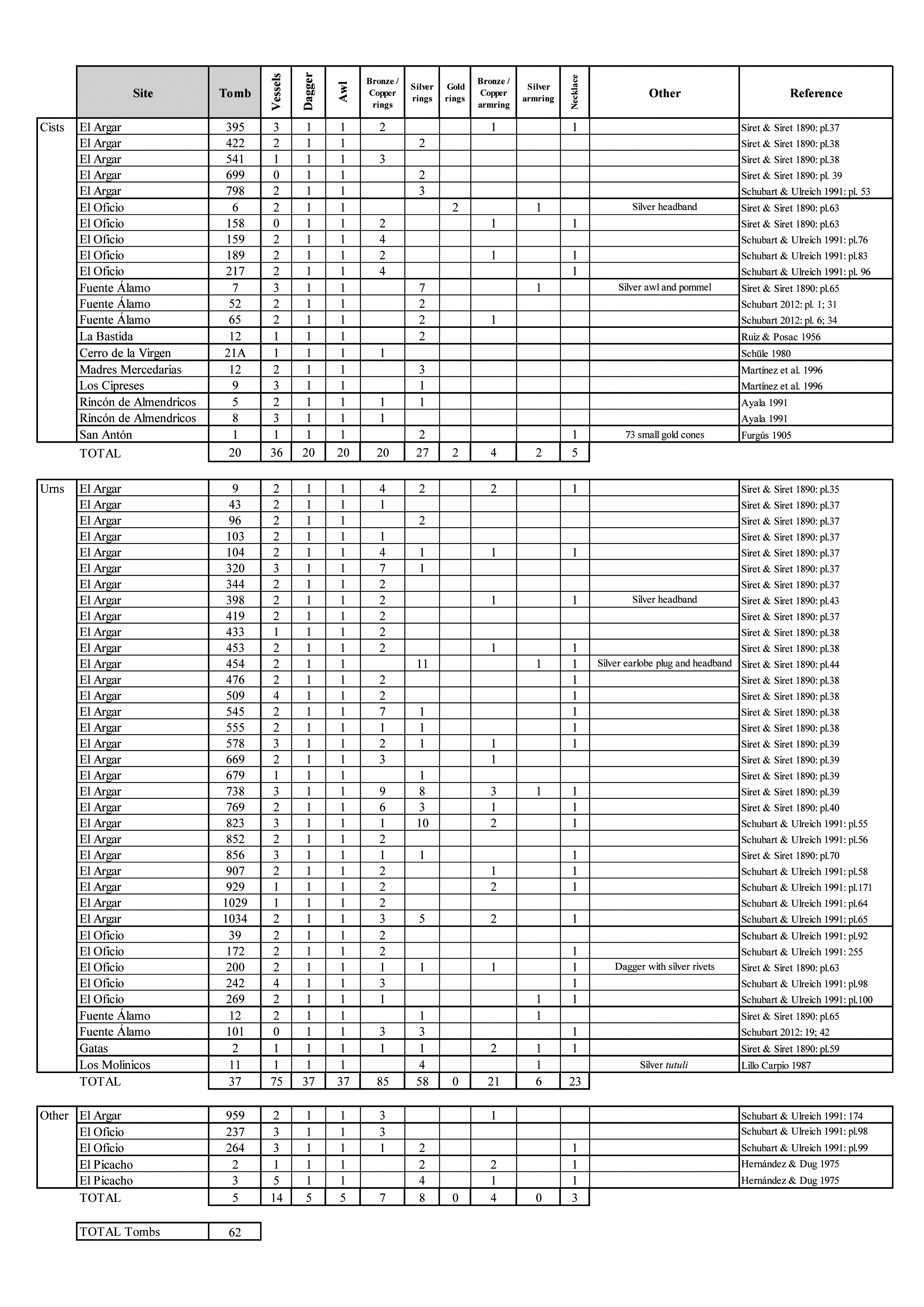
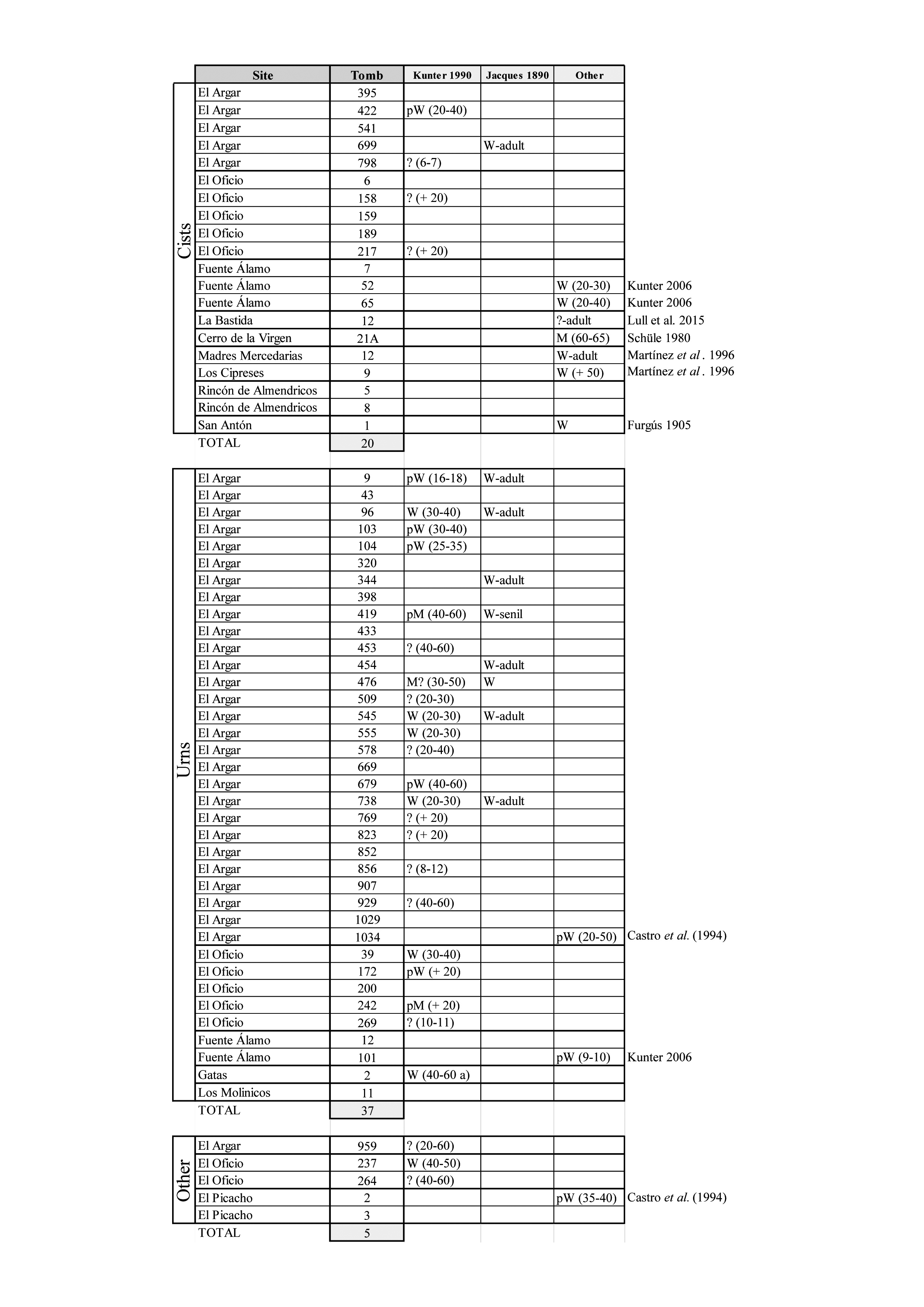
We have compiled published data from 62 single tombs, all with grave goods comparable to that of San Antón: at least one earring and/or spiral of either gold, silver, copper, or bronze, a dagger or knife, and an awl (see Supplementary material).
Data indicate no association with any specific form of grave structure and a scarce presence of gold objects (two spirals from El Oficio cist 6 and the cones of San Antón). Yet silver is abundant, but only in the most outstanding tombs are singular silver objects, such as awls, awl handles, knife rivets and pommels, or headbands. More than 95 per cent of these burials contain at least one ceramic vessel, while 70 per cent of the cists and 81.1 per cent of the urns include two or more vases. Form 5 is the most frequent vessel type recorded in cists (45.9 per cent), while the biconical vessel of Form 6 was only identified in three cists (Fig. 4).
Percentage distributions of ceramic types found in the cist and urn analysed burials.
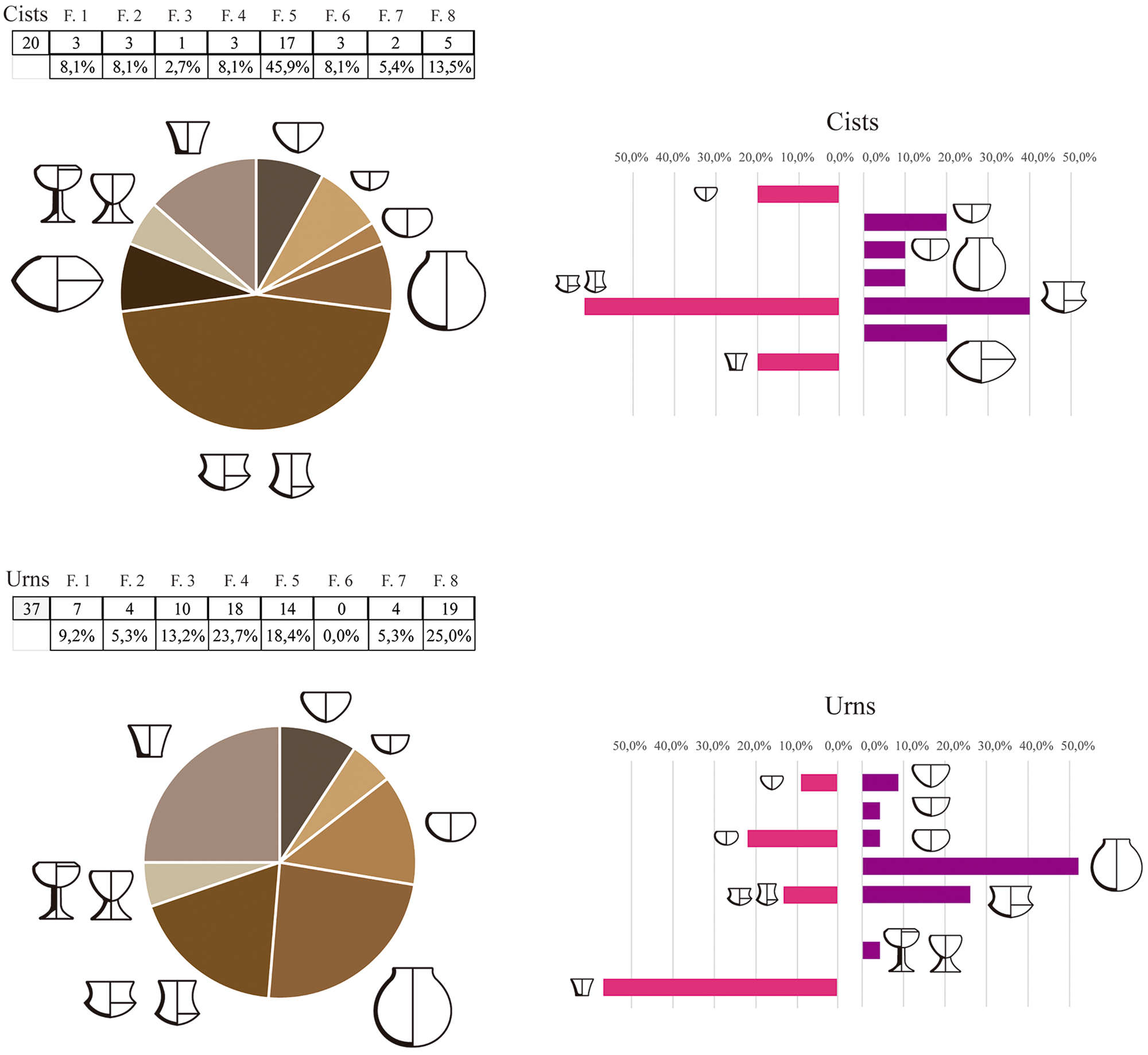
According to Lull and Estévez (Reference Lull, Estévez, Olmedo and Almanzora1986, 450), 60 per cent of the cists and 51.4 per cent of the urns would belong to members of the Argaric ruling class. The others, without silver objects, but furnished with dagger/knife and awl, as well as some copper or bronze ornaments instead, would be ‘full members’ of the Argaric communities (Lull et al. Reference Lull, Micó, Rihuete, Risch, Hansen and Müller2011, 400).
We have data on the age of approximately two-thirds of the individuals, but barely less than half have provided information about sex. Among these, the predominance of women is unquestionable, as 92.6 per cent are female or probably female (Fig. 5).
Percentage representation of the age and sex data of the 62 analysed burials.
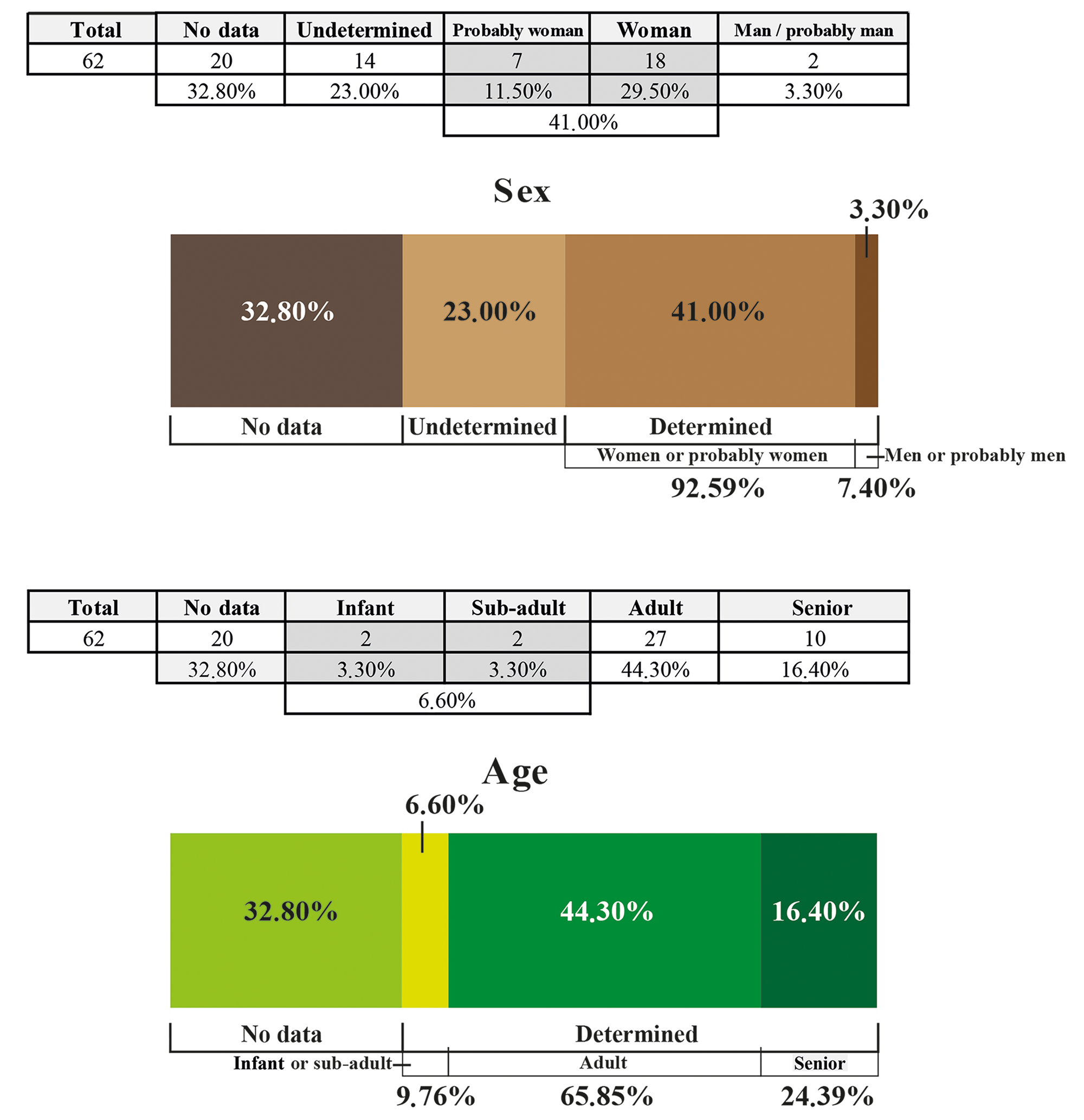
Other data available (41 cases) expose the association of these grave goods set with adult women. Around 90 per cent are over 20 years of age at death, while women between 20 and 40 years old is certainly the largest group (44.3 per cent).
The skeleton from the tomb of San Antón has been lost. From a photograph of a piece of the skull and part of the jaw, we can deduce that the person buried was probably older than 12 and not of advanced age.Footnote 3 As far as sex determination is concerned, the lack of skeletal remains is a major handicap that we can only overcome by relying on a series of clues: the presence of a metal awl (already mentioned by the Siret brothers as typical for female burials: Siret & Siret Reference Siret and Siret1890, 181; and later confirmed by strong data: Castro Martínez et al. Reference Castro Martínez, Chapman and Gili Suriñac1994); the silver spirals on both sides of the skull; the colouring of the bones and, above all, the position of the body, lying on its right side, which is common in Argaric female burials (Lull et al. Reference Lull, Micó, Rihuete-Herrada and Risch2016, 45; Schubart Reference Schubart2004) but which was ignored by scholars at the time.
To all this we can add the sex determination published by Furgús, probably provided by the physician of the College of Santo Domingo.Footnote 4 He was the only person trained in the study of the human skeleton who was able to examine the skeletal remains from the tomb. The coincidence of his diagnosis with the sum of the other evidence mentioned leads us to attribute a female identity to the buried individual with a high degree of probability.
Only three of the 62 tombs compiled have radiocarbon dates: Fuente Álamo cist 52, Cerro de la Virgen cist 21A and El Picacho pit 2 (Castro et al. Reference Castro Martínez, Chapman and Gili Suriñac1994, 82, table 1; Molina González et al. Reference Molina González, Cámara-Serrano, Afonso Marrero and Nájera Colino2014, 124, fig. 2). The tomb of San Antón could fit well into the chronological interval of 1900–1650 bc that these three burials point to.
The colouring of the skeletal bones (Furgús Reference Furgús1906, 238) is a feature that the tomb of San Antón also shares with many other Argaric burials. The Siret brothers put it in relation to the cinnabar used to dye the deceased's clothing or their shrouds (Siret & Siret Reference Siret and Siret1890, 200). Subsequent studies further explored this issue (López-Padilla et al. Reference López-Padilla, De Miguel-Ibáñez, Arnay De La Rosa, Galindo-Martín, Roldán-García and Murcia-Mascarós2012) and in the last years the use of cinnabar impregnations has been reported for the preparation process of the burial container itself (Schubart & Liesau Von Lettow-Vorbeck Reference Schubart and Liesau Von Lettow-Vorbeck2018).
Hence, a woman of the Argaric ruling class was buried in the tomb of San Antón, along with all the typical elements of her high social status. But the tiny and perforated gold cones still represent today a unicum in the Argaric archaeological record.
A unique Bronze Age gold jewellery in Early Bronze Age Iberia
The scarcity of gold objects at El Argar is unusual compared to the extraordinary abundance of silver (Siret & Siret Reference Siret and Siret1890, 499). Fewer than 30 Argaric gold artefacts are currently known, mostly from less than 20 tombs, which is an extremely low quantity compared to all known Argaric tombs—about 1500—or even only to those with silver artefacts recorded (Lull et al. Reference Lull, Micó, Rihuete and Risch2014, 573; Murillo-Barroso Reference Murillo-Barroso2013, 403).
The simplicity in design and manufacture of the artefacts is remarkable. Most Argaric gold and silver jewellery consists of wires, mainly of circular or oval section, twisted and bent on themselves until their ends join or overlap to form a spiral (Fig. 6a–f).
Silver and gold Argaric jewellery. (a, b) Silver and gold bracelets; (c, d) Silver and gold rings; (e, f) Silver and gold spirals; (g, h) Silver and gold ear-lobe dilator earrings, with silver hoops inside; (i, j) Silver and gold diadems with discoidal attachment.
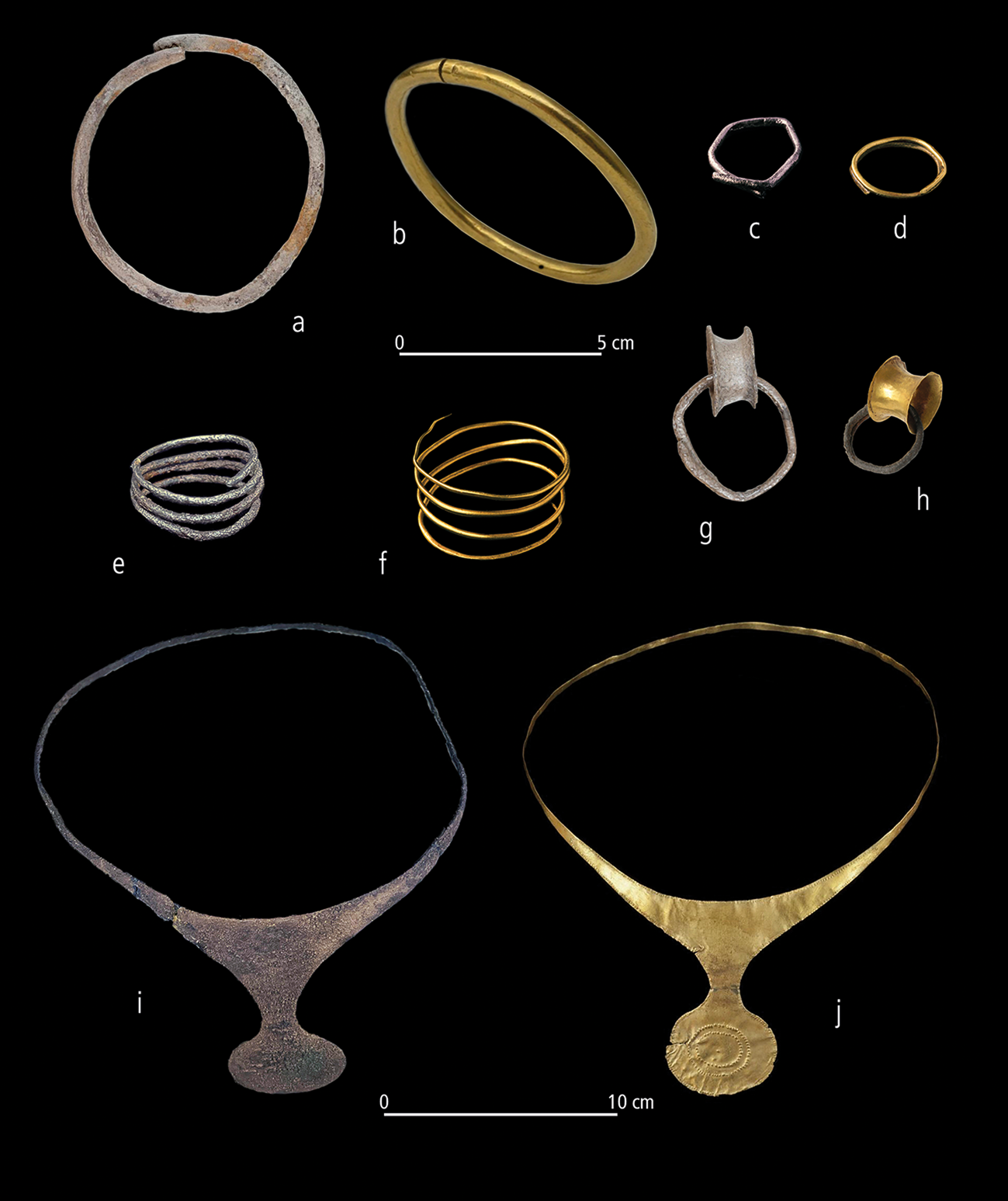
Very few objects required greater technical skills in their production process: the bracelet from tomb 75 of Fuente Álamo (Pingel Reference Pingel1992a, 8, fig. 6d); some small spools with flared ends (Fig. 6g–h) (Perea Reference Perea1991, 60) and the diadem found at Cerro de Plaza de Armas, in Caravaca, made from a large, hammered gold sheet, cut-out following the same design like other similar Argaric diadems, but made of silver (Pingel Reference Pingel1992a, 16) (Fig. 6i–j).
However, the tiny, perforated cones from this tomb at San Antón (Fig. 7) are the only known Argaric jewellery made using the stuffing technique (Perea Reference Perea1991, 87; Simón García Reference Simón García1998, 308) and, so far, the only known with no silver equivalent, which becomes the most remarkable feature.
Set of 42 gold hollow perforated cones from San Antón (Orihuela, Alicante, Spain).
They were once related to the gold and silver earlobe-plug earrings from El Argar and to the southwest Bronze Age ‘tutuli’ (Pingel Reference Pingel1992b, 43, 45 n. 217, 48). However, besides their big differences in shape and size, recent research indicates that the typical Argaric earlobe-plug gold earring later became the ‘trumpet’-shaped ‘tutuli’, dated to post-Argaric times, in the so-called Late Bronze Age (Hernández-Pérez et al. Reference Hernández-Pérez, García-Atiénzar, Barciela-González, Meller, Risch and Pernicka2014, 603).
Thus, unequivocal associations between the small, perforated cones from San Antón and other gold objects of contemporary chronology in the Iberian peninsula are still questionable.
An extraordinary assemblage of gold objects
Dirk Brandherm (Reference Brandherm1996, 52) was the first researcher to point out the close resemblance of the San Antón golden cones and the Kápolnahalom hoard in northeastern Hungary, where 30 small gold perforated cones were found (Fig. 8) (Csányi et al. Reference Csányi, Stanczik and Tárnoki2000, 154).
Hollow perforated gold cones from the Jászdozsa-Kápolnahalom hoard (diam. 4–5 mm). Damjánich János Múzeum (Szolnok, Hungary). (Photograph: Péter Makrai.)
The use of a wide variety of gold and bronze objects sewn into textiles to decorate clothing is a long tradition in the Bronze Age of central and southeastern Europe (Wels-Weyrauch Reference Wels-Weyrauch1989) dating back at least to the fifth millennium bc (Leusch et al. Reference Leusch, Pernicka, Armbruster, Meller, Risch and Pernicka2014) and surviving until the Late Bronze Age (Szabó Reference Szabó2019, 69).
These objects are described as ‘buttons’ (Knöpfe), ‘humps’ (Buckeln) or tutuli (Găvan Reference Găvan2015, 120). All of them have a hemispherical or conical shape as well as two small opposite perforations on the base, near the rim, to attach them to clothing. There are a wide range of references. In the burial site of Nagybátony, north of Hungary, a large quantity of that kind of small pieces were probably stitched to the garments of the buried (Gimbutas Reference Gimbutas1965, 287, 294, fig. 201.21). A similar set of copper items was found in Pötréte, Hungary, in 1967, which were considered from clothing lost or thrown into the swamp (Müller Reference Müller1972, 72). An assemblage of 70 bronze hemispherical, perforated small plates, found in Periam, in Romania, was considered as ‘dowry’ used to ornament clothing for a marriage or a burial (Gogâltan Reference Gogâltan1999, 173–4, 348, fig. 36).
These objects are frequently present in hoards from sites dating to the Otomani-Füzesabony cultural complex and particularly to the so-called ‘Koszider Horizon’ (end of the Middle Bronze Age in Hungarian terminology). In some cases, their small number and larger size do not match with the tiny cones from San Antón (Găvan Reference Găvan2015, 323, pls 40.1–21, 41.1–17). In others, their dimensions are similar, but their number is much larger. This is the case of Včelince, where more than 500 small bronze cones were hidden inside a ceramic vessel (Găvan Reference Găvan2015, 120).
The Kápolnahalom hoard is linked to the end of the Hatvan-Kultur classic period and the rise of the typical elements of the Füzesabony complex on the site, dating approximately to 2000 bc (Csányi et al. Reference Csányi, Stanczik and Tárnoki2000, 158). In Spišský Štvrtok, a fortified settlement of the Otomani-Füzesabony complex in Slovakia, a total of 11 hoards were found within the dwellings. Some of these included tiny gold cones identical to those recovered from Kápolnahalom (Oravkinová & Vladár Reference Oravkinová, Vladár, Fischl and Kienlin2019). Unfortunately, these contexts cannot shed light concerning the way gold cones were used in relation to personal ornament. Other sources are needed for that purpose.
Some clay figurines from Lower Danube show the hems of skirts and sleeves and part of hats or headscarves decorated with this type of small cones (Schumacher-Matthäus Reference Schumacher-Matthäus1985). However, the best information came from single graves at some Carpathian Basin sites (Szabó Reference Szabó and Havassy1997, 61, 65, figs 7–8). Yet the Nižná Myšl'a cemetery, in Slovakia, has provided the most valuable information at this regard.
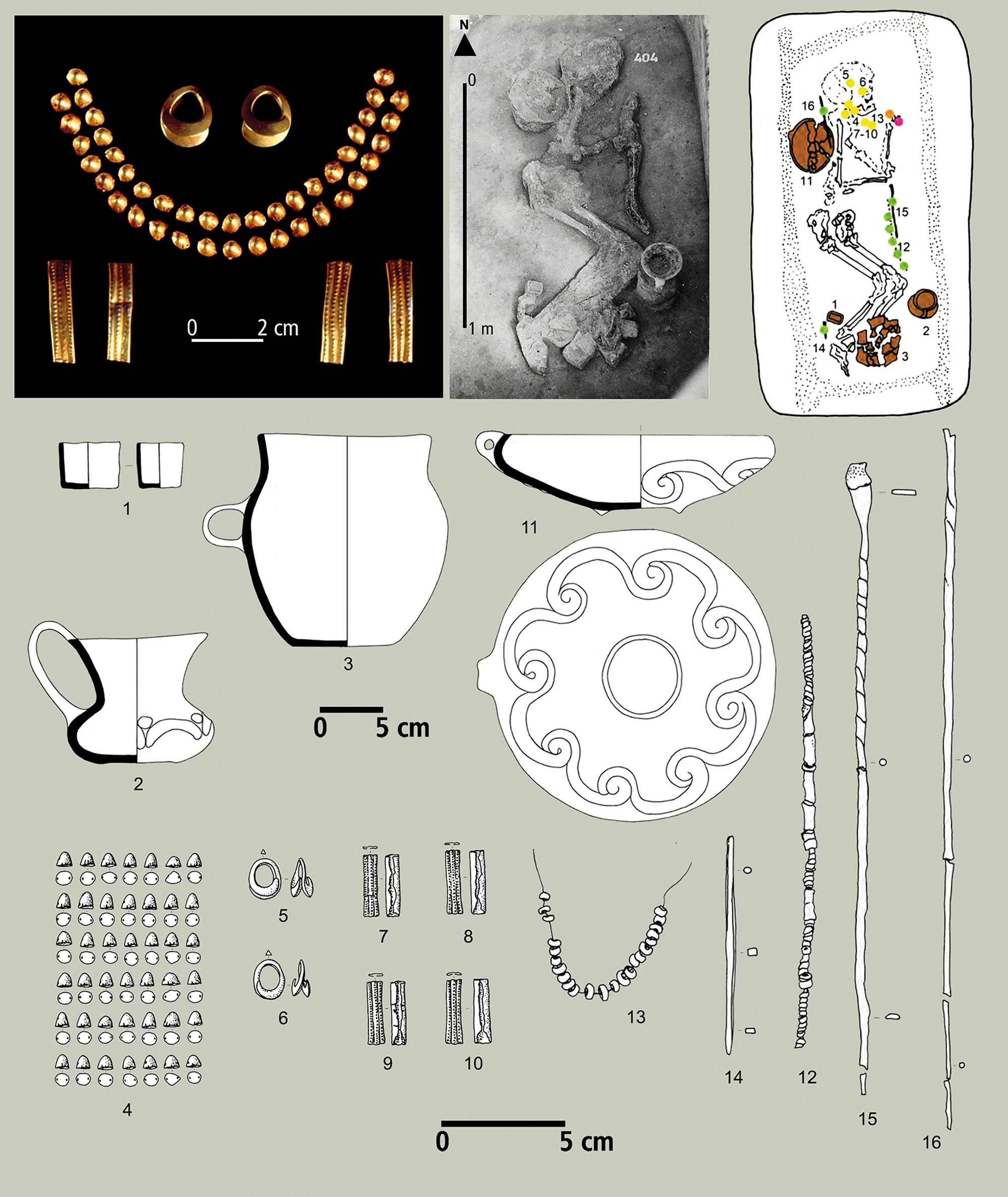
According to the published information (Olexa & Nováček Reference Olexa and Nováček2013), 30 of almost 800 excavated burials at this Otomani-Füzesabony site included more than 300 small semispherical or conical pieces with perforations on the sides, more than 80 per cent of them found in female burials. Nearly 200 of those were made of bronze and 144 of gold, but the gold ones came from only six female burials whose grave goods indicate a high social class.
The gold cones were mainly located on the collarbones (Fig. 9); only one of the women wore one of them decorating the top of a hat or headdress (Nováček Reference Nováček2010, 38). In burials 123 and 330 the cones were in parallel rows, likely sewn to the hem of the dress neck (Nováček Reference Nováček2017, 45, tab. 59.3; 122, tab. 160.4). Obervation through electronic microscope reveals the use of stuffing from a moulded sheet, discarding wrought technique (Mihok et al. Reference Mihok, Olexa and Briančin1998, 80).
Gold objects from the grave goods of Nižná Mysl'a tomb 404 (photographs: Institute of Archaeology in Nitra; Slovak Academy of Sciences) and sketch of the burial with the distribution of the grave goods (adapted from Nováček Reference Nováček2017).
There are undoubtedly resemblances with the San Antón burial in both design and manufacture of the cones, and their distribution on the skeleton. In addition, the chronology is similar, as the Otomani-Füzesabony complex runs contemporary to Argaric society, based on radiocarbon dates (Jaeger et al. Reference Jaeger, Stróżyk and Olexa2022).
Consequently, it is worth posing new questions about this unique burial from San Antón, found more than a hundred years ago 2000 km further away from the Carpathian Basin, where the most numerous and analogous references are observed.
Discussion: a Bronze Age Carpathian ‘princess’ in the Argaric far west?
The six female burials from Nižná Myšl'a clearly share some outstanding features with that of San Antón: they are all adult women of the highest social status, buried with small gold cones sewn into the collars of their dresses. The 40 gold cones from grave 404 in Nižná Myšl'a are about 6 mm in diameter and the total weight is approximately 3.45 g (Nováček Reference Nováček2017, 95),Footnote 5 while the 42 cones from San Antón are just 4 mm in diameter and weight just 1.5 g (Simón García Reference Simón García1998, 29). But we know that Furgús initially collected 73, and it is sure that more were lost during the excavation. So, it is likely that there were twice as many gold cones in the tomb of San Antón as in grave 404 at Nižná Myšl'a, and the amount of gold used could have been the same.
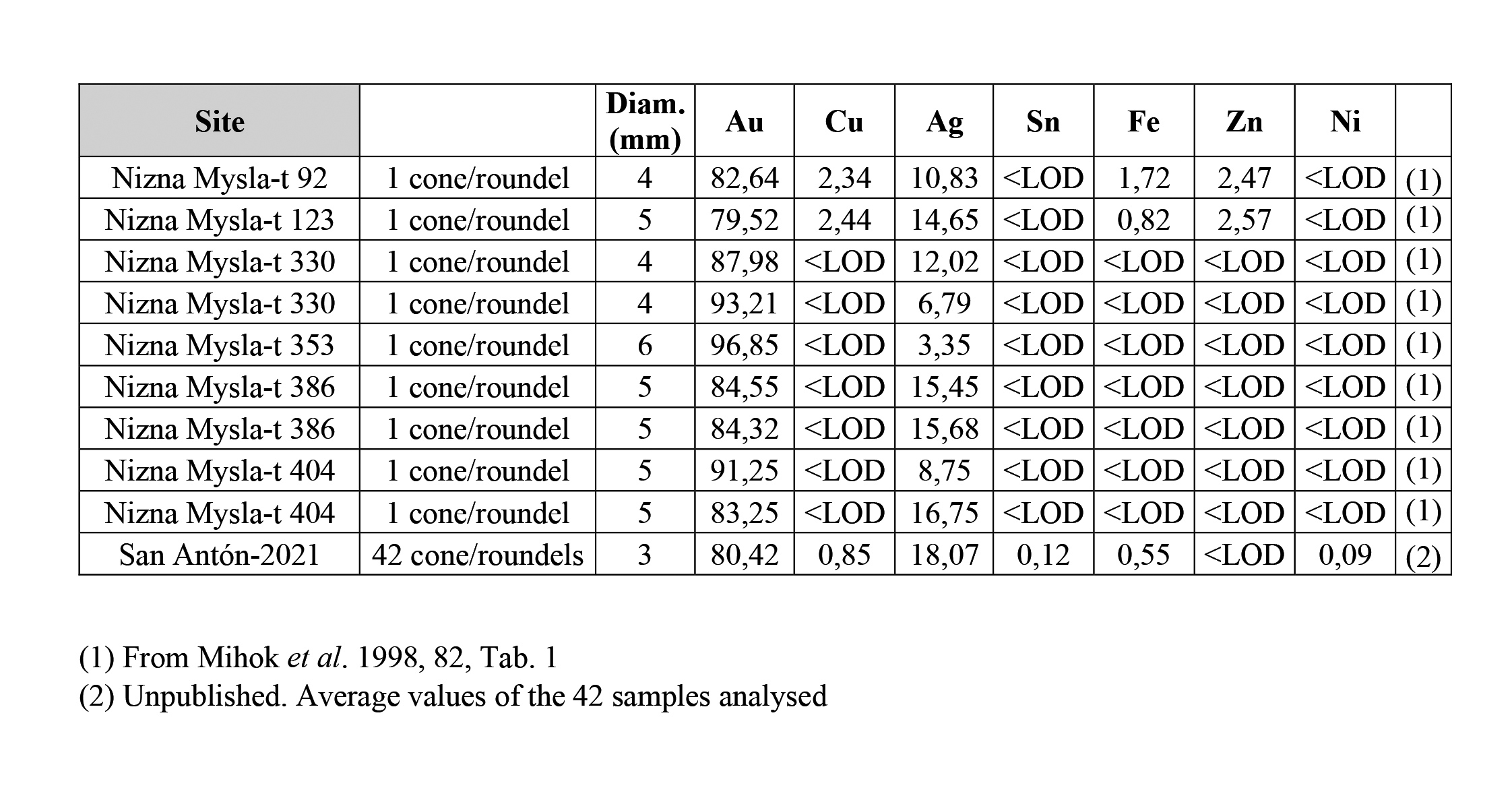
Preliminary metallographic composition analysis of the small gold cones from San Antón shows a marked homogeneity. All of them have an almost identical gold:silver ratio, with values of 80 per cent Au:18 per cent Ag, which points to one and the same single gold–silver alloy (electrum). This does not differ too much from the Nižná Myšl'a cones analysed (Mihok et al. Reference Mihok, Olexa and Briančin1998, 82, table 1), although there the gold content seems to be slightly higher and diverse (see Supplementary material).
At present, data on the metallographic composition of Early Bronze Age gold artefacts, both Argaric and from the Carpathian Basin, are still scarce. For the Iberian peninsula, there is little more information than that provided long ago by Hartmann (Reference Hartmann1982), and most of it comes from the site of San Antón itself (Simón García Reference Simón García1998). Hartmann already pointed out that the two gold wires from the El Argar site analysed by him (Au 1795 and 1796) had in common a high silver content—around 25 per cent—and a low or non-existent presence of tin. These characteristics defined his A3 gold type, which was very widespread in the Danube area and in central and northern Europe (Hartmann Reference Hartmann1982, 10). The lack of evidence in the intermediate areas between these regions and the Iberian Peninsula—particularly southern France—prevented him from proposing any hypothesis as to their possible relationship.
Perhaps the gold bracelet found by the Siret brothers in tomb 1 of Fuente Álamo could be added to the same type A3. This was one of the few gold objects they analysed, and its composition also showed a high percentage of silver—25.74 per cent—although we do not know its tin content (Siret & Siret Reference Siret and Siret1890, 296). In any case, the archaeological value that can be attributed today to the gold types identified by Hartmann is questionable, and the data obtained from the spectrographic analyses of the San Antón and Nižná Myl'a gold cones show that in neither case do they reach silver and tin contents within the values established by Hartmann for his type A3.
The latest research on the origin, production and circulation of Copper and Bronze Age gold artefacts in the Carpathians is still awaiting publication (Dani et al. Reference Dani, Kertész, Szathmári, Tarbay, Szikszai and Kiss2019; Reference Dani, Kertész, Tarbay, Angyal, Szikszai and Kiss2022). In any case, it has been shown how difficult it can be to determine the origin of the veins from which the gold used to make ancient artefacts came (Pernicka et al. Reference Pernicka, Meller, Risch and Pernicka2014).
Regarding the rest of the grave goods and burial rite, they are consistent with the funerary practices of each of these societies. Nevertheless, while garments decorated with gold cones on the chest and neck are common and distinctive among Otomani-Füzesabony high-class women—and perhaps specifically, married women—for the Argaric culture, the case of the San Antón tomb is unique and extraordinary.
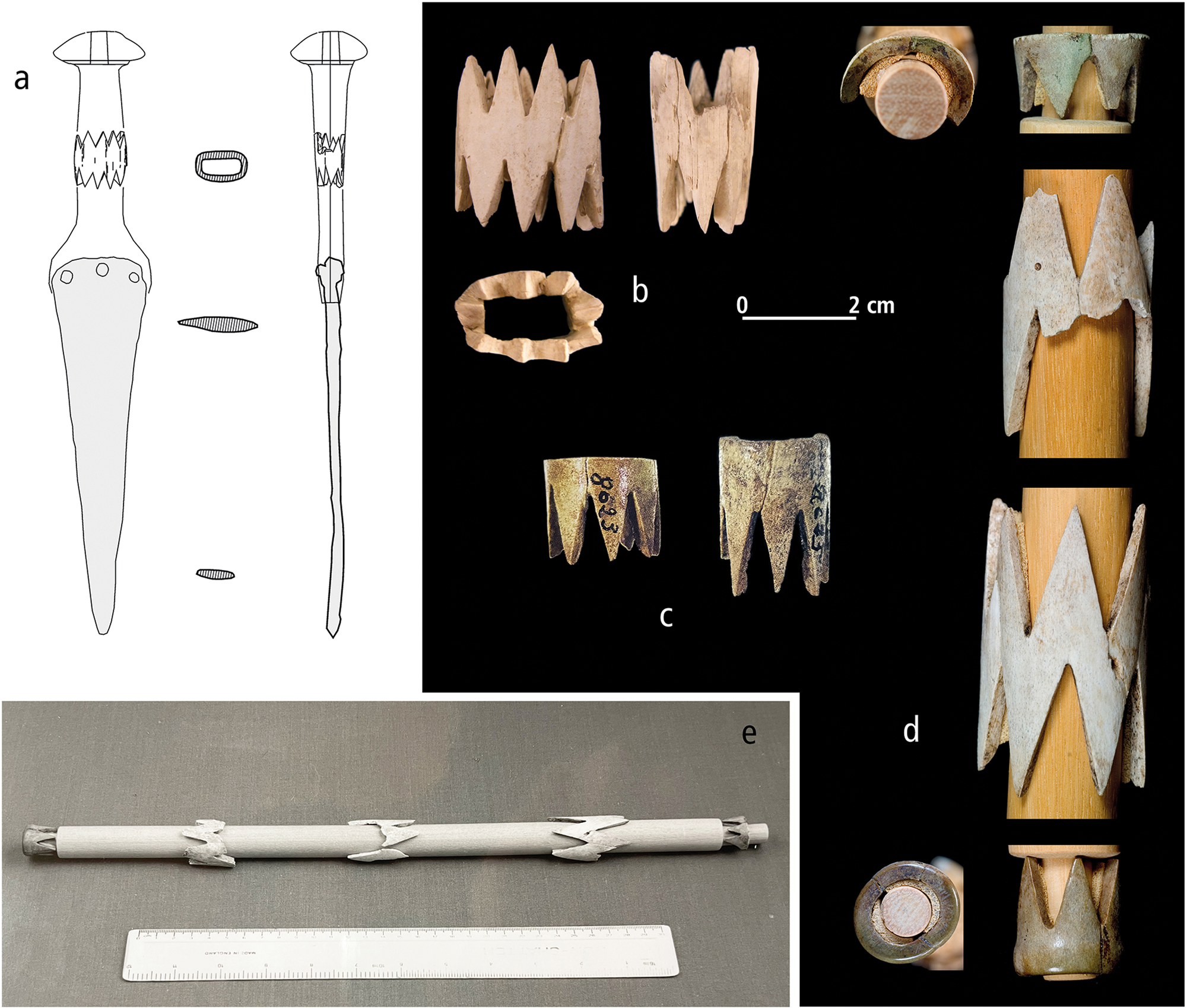
When we first dealt with this exceptional set of gold objects, we related it with an interconnected local and regional exchange circuit (López-Padilla Reference López-Padilla2006, 43). This could explain other extraordinary finds in the region, like the ivory mount from Illeta dels Banyets, in Alicante, whose design is reminiscent of some others from both Mycenaean Greece (the tomb iota from Circle B of Mycenae) and the southeast of Great Britain (Bush Barrow mound, Wessex) (Brandherm Reference Brandherm1996, 50–51). So far, the evidence seems to point to the eastern Mediterranean area as the most likely origin (López-Padilla Reference López-Padilla2011, 463–4, fig.V.2.116–117) (Fig. 10).
Bronze Age bone and ivory settings in Europe. (a, b) Ivory setting for a copper dagger hilt, Illeta dels Banyets (Alicante, Spain); © Bone setting for a wooden pole or staff, Iota tomb, Circle B, Mycenae (Argolid, Greece); (d, e) Bone setting for the handle of a ceremonial mace, Bush Barrow (Normanton Down, England).
In the early 1970s, the existence of Argaric ‘Mediterranean relationships’ in the second quarter of the second millennium bc was proposed (Schubart Reference Schubart1976). Now, recent archaeogenetic studies point out that the Argaric populations show a small but significant genetic material contribution of Mediterranean origin, among a genetic Central European base shared by the entire Bronze Age population of Iberia—although its weight in the Argaric society was remarkable but not paramount (Villalba-Mouco et al. Reference Villalba-Mouco, Oliart and Rihuete-Herrada2021). Although this contribution could have taken place in Neolithic times and remain in the genetic profile of the Copper Age populations of the southeast, it can also be explained by the arrival—or occasional arrivals—of populations from the central Mediterranean. This hypothesis is becoming increasingly plausible due to data showing close genetic ties to populations from the central Mediterranean and North Africa of one of the men buried in the Argaric settlement of Lorca, in Murcia (Villalba-Mouco et al. Reference Villalba-Mouco, Oliart and Rihuete-Herrada2021, fig. 5C).
This study also invites qualification, if not rethinking, of the stated hypothesis about matrilocality in Argaric society (Lull et al. Reference Lull, Micó, Rihuete-Herrada and Risch2016, 38), since preliminary results point to the opposite (Villalba-Mouco et al. Reference Villalba-Mouco, Oliart and Rihuete-Herrada2022). The movement of women between settlements, rather than men, is much more consistent with what is known so far in the European Bronze Age framework (Frei et al. Reference Frei, Villa and Jørkov2017; Knipper et al. Reference Knipper, Mittnik and Massy2017), including the Carpathian Basin, particularly in the case of women of high social status (Cavazzuti et al. Reference Cavazzuti, Hajdu and Lugli2021; Jaeger et al. Reference Jaeger, Stróżyk, Olexa and Nováček2021).
It is unlikely that a Carpathian goldsmith would have travelled to the southeast of the Iberian peninsula to make this type of gold ornament for a dress. It is also unlikely that a local goldsmith would have copied them for the Argaric elites, because of the obvious lack of tradition in both their production and use in this part of western Europe. The fact that no silver equivalent has ever been found, so far, is very significant evidence in this sense. This also makes it unlikely that the dress was a gift sent from the far side of Europe for an Argaric ‘princess’, although this cannot be ruled out in light of the growing evidence of Bronze Age textile trade and exchange (Bergerbrant Reference Bergerbrant, Sabatini and Bergerbrant2019). Argaric funerary practices meet strict criteria, and the apparent differences in the choice of gold and silver jewellery between Argaric men and women has been frequently discussed (Perea Reference Perea and Prados Torreira2012, 92).
Although few, there are examples of gold used as hair ties in some individual burials of women and as earrings in others of men, but, above all, there are many examples of male burials with silver jewellery (Lull et al. Reference Lull, Micó, Rihuete and Risch2014, 573; Murillo-Barroso Reference Murillo-Barroso2013, 414). The record points to more complex patterns, which considered both the type and material of each object. For the time being, the scarce data indicate that it is gold bracelets—and probably also ivory ones (López Padilla Reference López-Padilla2011, 459)—which were forbidden in female tombs (Perea Reference Perea and Prados Torreira2012, 91).
Therefore, all the Argaric funerary rules—type of burial, arrangement of the body and grave goods—typical of the highest social hierarchy were strictly observed in the tomb of this young woman, buried in San Antón, wearing a dress decorated in the ‘eastern’ style of the Danubian area sewn with small gold cones.
It seems reasonable to assume that, in accordance with the Argaric practice of exogamy and patrilocality, as in other parts of Bronze Age Europe, women arriving from other communities would have been forced to integrate fully into the social practices of their husbands’ community. This would have been the case for this woman, and undoubtedly the only reason that her exotic dress could have accompanied her to the grave is that this gold jewellery did not contravene any Argaric rules about its use in high-ranking female burials.
The bejewelled clothing of this woman probably then would have been as exotic as it is still today in the Iberian Bronze Age record. If it accompanied the woman in her tomb as a testimony of her remote place of origin, certainly the other grave goods would denote her fulfilling integration as a prominent member of the Argaric society. If that was the case, her role in developing relationships and social interactions between elites from both ends of the Mediterranean throughout the first half of the second millennium bc is undeniable.
Conclusion
The work we present here reinforces, with new arguments, the hypothesis that suggested some kind of inter-social relations between the southeast of the Iberian peninsula and the eastern area of Europe, based on these unique tiny gold jewels found in the Argaric territory. This hypothesis was launched at the end of the last century, but work on it did not continue in the following decades. The existence of Mediterranean contacts and ‘influences’ in the shaping of the Argaric culture from 1800 bc onwards was by no means a new idea. It dates back to classic works from the 1970s, in which a foreign origin for some genuinely Argaric elements —such as the silver diadems with disc-shaped appendix, high foot cups and even the practice of burial inside large ceramic jars—was proposed (Schubart Reference Schubart1976). In the last 40 years, additional evidence, mentioned here, has been sporadically collected, and we have to add other supposed ‘imports’ such as certain decorated bronze daggers, foreign to the Argaric metallurgical tradition, for which a Central European origin has been suggested (Montero et al. Reference Montero, Murillo-Barroso and Hook2019, 20). All this, however, speaks only of potential ‘imports’, with no news so far of Argaric ‘exports’ of any kind outside the peninsula. Undoubtedly, circulation of raw Argaric silver to eastern Europe, in exchange for manufactured products, is a perfectly plausible hypothesis that, however, leaves open the question of how these transactions were actually carried out and who the agents involved might have been.
The possibility that such exchanges were under the cover of arranged marriages between prominent members of Argaric society and other European Bronze Age societies—such as those of the Carpathian area—is, obviously, mere speculation; at least until we have access to verifiable evidence, which fortunately seems more and more plausible every day. Until that happens, we must keep the question mark in the title of this paper.
Acknowledgements
We would like to thank Roberto Risch and Mateusz Jaeger for their accurate and welcome comments on this manuscript, which have contributed to improving it. In any case, any errors or omissions in the text are our sole responsibility. We would also like to thank the two anonymous reviewers, whose thoughtful comments have also contributed to the improvement of this work, and Mercedes Murillo Barroso for providing us with the data on the metallographic composition of the San Antón gold cones.
Supplementary material
Online material may be found at https://doi.org/10.1017/S0959774324000027



 Open access

