





Introduction
Recent decades have seen a surge of interest in ‘democratic innovations’ – processes or institutions ‘developed to reimagine and deepen the role of citizens in governance processes by increasing opportunities for participation, deliberation and influence’ (Escobar and Elstub Reference Escobar, Elstub, Elstub and Escobar2019: 14). In countries across the globe and on various administrative levels, governments have experimented with a broad range of instruments and measures to revitalise and improve democratic government by means of mini-publics, collaborative governance, participatory budgeting, referenda, and citizens’ initiatives (Elstub and Escobar Reference Elstub and Escobar2019). Inspired mainly by participatory and deliberative democratic thought, the thrust of these efforts has been to find new ways of activating and engaging citizens in politics between elections. The goals are to improve political inclusiveness and popular control, ensure transparency, and enable citizens to develop and utilise their capacity for considered judgement (Smith Reference Smith2009).
Citizen-oriented movements have promoted concepts of ‘participatory’ or ‘strong’ democracy (Barber Reference Barber1984; Pateman Reference Pateman1970) for decades. Unlike these earlier citizen-oriented movements, contemporary democratic innovators aim not to replace but to complement representative government (Fung Reference Fung2006: 66). The objective of public meetings, investigated in this article as one of the most widespread and enduring organised arenas for citizen participation, aligns with the ambition of recent innovations to directly engage citizens to complement representative government. However, despite substantial efforts devoted to developing participatory frameworks and empirically analysing how citizens are involved and empowered by these processes and institutions (Elstub and Escobar Reference Elstub and Escobar2019; OECD 2020; Reuchamps, Vrydagh and Welp Reference Reuchamps, Vrydagh and Welp2023; Smith Reference Smith2005), little is known about how politicians – the actors on the receiving end of all participatory efforts, whose decisions are supposed to be influenced by citizens – engage with these democratic arrangements, both empirically and normatively (Thompson Reference Thompson, Elstub and Escobar2019).
This gap in knowledge is regrettable – after all, many participatory efforts would likely come to naught if politicians were neither present nor inclined to listen. However, the presence of attentive politicians cannot be taken for granted. It is for instance well known that politicians may be sceptical to citizen participation and sometimes avoid interactive arenas because they expect negativity and do not see the benefit of citizens’ inputs (Hertting and Kugelberg Reference Hertting, Kugelberg, Hertting and Kugelberg2018; Lees-Marshment Reference Lees-Marshment2015; Rangoni, Bedock and Talukder Reference Rangoni, Bedock and Talukder2023; Sønderskov Reference Sønderskov2019). Furthermore, since the politically active tend to be unrepresentative of the population in terms of wealth, education, and other markers of resourcefulness (Pattie, Seyd and Whiteley Reference Pattie, Seyd and Whiteley2004: 14; Smith Reference Smith2009), politicians may fear that interactive arenas jeopardise democratic equality, potentially undermining the elected mandate to represent the whole population on an equal basis (McComas Reference McComas2001: 201). Our theoretical point of departure, however, is that citizens’ participation is in fact not only conceptually and empirically congruent with representative government; participation is a prerequisite for the continuing viability of representative institutions. Following Mansbridge’s (Reference Mansbridge2003) idea of anticipatory representation, we assume that shifting voter preferences make it necessary for politicians to engage with voters to align policy decisions. We thus adopt a different perspective from most existing studies on citizen participation. A key contribution of this study is its focus on political participation and the interaction between voters and elected representatives from the viewpoint of politicians, rather than from that of the citizens. Drawing on representative theory, the question explored is, what may motivate elected representatives to engage with citizens on arenas organised for the purpose of citizen participation?
Empirically, we investigate how politicians engage in public meetings. A ‘public meeting’ may be defined as ‘nonrestricted gatherings of three or more people for purposes that include providing information, discussing issues, obtaining information, reviewing projects, evaluating options, developing recommendations, and making decisions’ (McComas Reference McComas2001: 36–37). The term encompasses open houses, dialogue meetings, town hall meetings, and other formats where attendance is open to any member of the public. Public meetings can be organised to facilitate citizen engagement more generally or to engage consumers who have experience as service users (Degeling, Rychetnik, Street et al. Reference Degeling, Rychetnik, Street, Thomas and Carter2017; Wiloth, Kiefer, Wittek et al. Reference Wiloth, Kiefer, Wittek, Arroyo y Villora, Obermeier, Schmitt and Kruse2022). Unlike town meetings, a format dating back to antiquity that is often described as an iconic form of direct citizen democracy (Field Reference Field2019; Neblo, Esterling and Lazer Reference Neblo, Esterling and Lazer2018) and well known from de Tocqueville’s visit to the United States in the early 1830s (Robinson Reference Robinson2011), public meetings are usually not venues to allow citizens to govern their communities. Those present cannot vote on proposals or otherwise exercise direct democratic governance. In public meetings citizens’ influence is indirect, because the power to decide lies with the elected representatives, not with the people (Field Reference Field2019). Similar to town hall meetings in the United States, public meetings are civic events where ‘legislators explain positions and share priorities while the public airs their support or grievances’ (Gibson and King Reference Gibson and King2024: 745). Public meetings are based on the same fundamental principle as democratic innovations in the sense that they offer citizens the opportunity to contribute to policymaking between elections. Unlike recent innovations, public meetings offer the advantage of familiarity to almost all politicians, making them an ideal case for examining what might motivate elected representatives to engage with citizens in organised arenas.
Whereas previous empirical research on political participation and citizen–politician interaction has predominantly relied on surveys or interviews with citizens, the present study makes a distinctive contribution by drawing on data obtained from interviews with elected politicians. Data on politicians’ actual motivations for participating in public meetings were collected through in-depth interviews with 30 local councillors in Norway. The country’s decentralised political system grants local governments a central role in delivering welfare services, providing infrastructure, and managing land use planning (Ladner, Keuffer and Bastianen Reference Ladner, Keuffer and Bastianen2023). Thus, Norwegian local councillors operate within political systems granting them substantial power and facilitating direct engagement with citizens.
The article is structured as follows. First, drawing on theories of democratic representation, we explore why elected politicians might be motivated to interact with citizens between elections and develop assumptions about these potential motivations. Next, we outline our empirical design and analytical strategy. In the ‘findings and analysis’ section, we present our empirical observations and assess the validity of our assumptions. Finally, we conclude by connecting these observations to prior research and draw implications for current knowledge about politicians’ wants and needs for citizen interaction.
Politicians’ motivations for engaging with citizens between elections
Why would politicians want to engage with their constituents – and if they do, how much and in what ways? Conventional theory would suggest that such engagement is strategic: politicians interact with citizens to enhance their prospects for re-election, increase their party’s control over office, or maximise the party’s influence on public policy (Strom Reference Strom1990). In line with ‘formalistic’ perspectives on representation (Castiglione and Warren Reference Castiglione, Warren, Disch, van de Sande and Urbinati2019: 26; Pitkin Reference Pitkin1967, ch. 4), where voters authorise representatives to act on their behalf and subsequently hold them accountable at election time, politicians have a strategic incentive to interact with citizens to ensure their policy decisions sufficiently align with voter preferences. Consequently, intimate knowledge of constituents’ preferences stands out as a key determinant of political success.
Since the seminal study by Miller and Stokes (Reference Miller and Stokes1963) – which found that decisions in Congress often correspond significantly with popular opinion – empirical research has continued to examine the relationship between public opinion and public policy under labels such as policy correspondence, consistency, covariation, and congruence (Wlezien and Soroka Reference Wlezien and Soroka2021). While findings are mixed, the literature overall lends support to the view that representative democracy, to some extent, does function as ‘popular rule,’ with public opinion influencing actual policy – although this influence tends to be biased towards the wealthy and well-informed (Bartels Reference Bartels1991; Gilens Reference Gilens2012). Since citizens do not actually decide in most matters, a likely implication of observed correspondence between opinion and policy is that politicians make efforts to stay informed about public opinion and make policy decisions at least in part based on this information (Soontjens and Walgrave Reference Soontjens and Walgrave2023: 500).
Assessing to what extent policy decisions actually concur with earlier campaign pledges constitutes retrospective control, as representatives face re-election or defeat based on voters’ assessment of their adherence to policy commitments (Downs Reference Downs1957). As Mansbridge (Reference Mansbridge2003) points out, however, the fact that voters make their assessments during the next election means that politicians seeking re-election will strive to anticipate future voters’ preferences – their ‘potential preferences’ (Arnold Reference Arnold1990: 10) – rather than merely keeping past campaign promises. This shift from a ‘promissory’ to an ‘anticipatory’ approach to representation (Mansbridge Reference Mansbridge2003: 517) would be insignificant if voters’ preferences remained stable from one election to the next, as assumed by earlier theorists (Downs Reference Downs1957: 47). However, in a context of rapid changes in the ‘national mood’ (Kingdon Reference Kingdon1984), unstable political agendas (Baumgartner and Jones Reference Baumgartner and Jones1993), and shifting economic and social contingencies, the assumption of static voters’ preferences is unrealistic. Rapidly changing voter preferences put politicians in a tight spot, as the assessments of voter preferences in the next election become increasingly uncertain. A key implication of anticipatory representation and dynamic voter preferences, therefore, is that politicians seeking re-election must be increasingly attentive to public opinion on a continuous basis, to ensure that policy decisions align with future preferences.
The assumption that elected politicians emphasise getting acquainted with public opinion is supported by empirical studies. In a study of US state legislators, Maestas (Reference Maestas2003: 447) found that most politicians spend from 6 to 15 per cent of their time on collecting information about their constituents’ preferences. Similarly, Soontjens and Walgrave (Reference Soontjens and Walgrave2023: 508) reported that Flemish legislators spend on average about 14 hours a week interacting with citizens, with those feeling unconfident about re-election dedicating more time than their confident colleagues. In the same study, US legislators were found to spend, on average, as much as 23% of their time collecting information about their constituents’ opinions (ibid., 510).
Although both theory and empirical evidence indicate that politicians are incentivised to keep track of public opinion, they can obviously do so without direct interaction with voters – for instance by consulting opinion polls, or by reading letters to the editor. Even so, there is much to suggest that two-way interaction with citizens is essential. Mansbridge (Reference Mansbridge2003: 519) noted that although representatives ‘could in theory accurately anticipate the desires of the voter at Time 3 [the upcoming election] without any mutual communication’, they, in practice, ‘usually initiate and welcome the opportunity to communicate with voters, both to anticipate their preferences at Time 3 and to influence them’. Alignment between policies and future voters’ preferences can be achieved through direct engagement with voters between elections in at least three ways. First, direct engagement enables politicians to grasp voters’ preferences more precisely by actually listening to what they say. Second, direct engagement allows politicians to ‘influence the voter’s preferences by the time of the next election’ (ibid., 525), rather than merely receiving opinions passively. In other words, convincing voters may motivate politicians to engage with citizens. Third, institutions that facilitate direct engagement can serve as ‘vehicles of mutual learning’ (ibid., 520), providing forums for deliberation and joint opinion formation. Therefore, the need for deliberation is also likely to motivate politicians to engage interactively with citizens.
Several classical studies conclude that politicians may engage in direct interaction with voters for other strategic purposes than aligning policy with public opinion, however. Fenno (Reference Fenno1978: 57–59) found that congressmen met with voters less to achieve congruence on political issues, as the theory predicts, and more to build trust by demonstrating qualifications, identification, and empathy with the constituency. In the same vein, Kingdon (Reference Kingdon1968: 139–140) found that personal contact is valued less for deep issue discussion than for signalling attentiveness, accessibility, and respect – qualities that, in candidates’ eyes, voters reward at the polls. Mayhew (Reference Mayhew1974: 147–148), portraying congressmen as ‘single-minded seekers of reelection,’ likewise concluded that their main goal in interacting with constituencies was advertising – building a ‘brand name’ that conveyed personal qualities such as experience, knowledge, sincerity, and so forth – rather than discussing specific issues. Although recent research is scarce, there is consequently reason to believe that policy alignment is not the sole purpose of direct engagement with citizens. Nor does the strategic, interest-maximising perspective on politicians’ motivation necessarily explain everything: one study concluded that politicians to some extent feel a moral obligation to be attentive to their constituents’ opinions (Soontjens and Walgrave Reference Soontjens and Walgrave2023). A long-standing insight is that popular political participation may be driven by a sense of citizen duty – that one ought to participate in the political process regardless of whether it is seen as efficacious (Campbell, Gurin and Miller Reference Campbell, Gurin and Miller1954: 194). Perhaps politicians, conversely, tend to see it as their duty to interact with citizens.
Regardless of purpose, direct interaction between politicians and citizens does not necessarily require face-to-face encounters. Recent studies of ‘Telephone town halls’ (Abernathy, Esterling, Freebourn et al. Reference Abernathy, Esterling, Freebourn, Kennedy, Minozzi, Neblo and Solis2019), online town halls (Minozzi, Neblo, Esterling et al. Reference Minozzi, Neblo, Esterling and Lazer2015), and online ‘Deliberative town halls’ (Neblo, Esterling and Lazer Reference Neblo, Esterling and Lazer2018) indicate that not just listening but also convincing and deliberation can be facilitated by technological means. Whereas these and other formats certainly deserve attention, our focus here is on the far more common and long-standing format of personal interaction: the public meeting. As noted in the introduction, this designation includes various meetings known by names such as open houses, dialogue meetings, and town hall meetings, all characterised by being open to the public and serving a consultative-deliberative rather than decision-making function. Public meetings are particularly interesting since they bring representatives in direct, mostly unfiltered personal interaction with a self-selected sample of their constituencies. Furthermore, we assume that the largely informal character of public meetings – because of the absence of decision-making, which would otherwise likely impose stricter procedural requirements – sets a comparatively low bar for speaking up in plenary sessions, or for initiating person-to-person interaction, for example, during breaks. Because public meetings tend to centre around tangible issues of concern to the locality, discussions should be relatable to the audience, further boosting the potential for engaging with citizens.
Extant literature offers surprisingly little empirical evidence about how and to what extent politicians regard public meetings as appropriate and useful venues for interacting with their constituencies. Even so, there is at least indirect evidence that elected politicians may not always expect public meetings to be ideal venues for earnest interaction with their constituencies. Public meetings have been described as ritualistic, symbolic activities without much impact on real decisions (Heberlein Reference Heberlein1976; McComas, Besley and Black Reference McComas, Besley and Black2010). A study of ‘area assemblies’ in North London, based on recorded audio, revealed that audiences who participate in political discourse in public meetings often engage in disruptive or even offensive discursive practices (Llewellyn Reference Llewellyn2005). Congressional town hall meetings in the United States have at times come off as ‘raucous and hostile’ (Clarke and Markovits Reference Clarke and Markovits2024). A pertinent dilemma is that whereas informal public meetings without a contentious issue tend to attract few participants, meetings addressing difficult and controversial issues often see ‘attendance soars to standing room only and attendees engage in long, angry harangues directed at well-meaning public employees’ (Halvorsen Reference Halvorsen2006: 155). Even so, some politicians see public meetings as useful venues to explain how they voted on a key issue, either to reinforce choices that concur with constituent preferences or to compensate for voting against constituent preferences by noting other actions that they have taken that would support their constituents’ cause (Grose, Malhotra and Parks Van Houweling Reference Grose, Malhotra and Parks Van Houweling2015: 726). Some officials see public meetings as useful for providing information, for allowing opposing groups to ‘blow off steam’ (Heberlein Reference Heberlein1976: 200), to legitimate decisions that have already been made (Checkoway Reference Checkoway1981: 571), but also – in fortunate cases – to enable real interaction with the public about the issue at hand (McComas Reference McComas2001: 39). One recent study notes both ‘promise and peril’ of town hall participation by US congress members (Gibson and King Reference Gibson and King2024: 748–749): While participation allows politicians to signal attentiveness, to informing themselves about public preferences, and to obtaining media coverage, they also risk encountering lack of civility, further alienation of opponents, and even safety concerns.
In sum, the limited literature on public meetings highlights several reasons why politicians might be sceptical about using these gatherings as organised arenas for engaging with citizens. At the same time, however, there seems to be numerous motivations for politicians to turn up. To reiterate, we assume that politicians interact with citizens to enact anticipatory representation by listening to better understand voters’ preferences, by convincing voters to shape their preferences in alignment with those of the politicians, and by deliberating to ensure alignment between policy and public opinion through joint policymaking. The realism of these assumptions is however an empirical question, and one that we approach without strong expectations in one direction or another. We will also keep an open ear to alternative motivations, as suggested by earlier studies.
Research context and methods
The 357 municipalities play a pivotal role in Norway’s two-tiered system of sub-national government. Municipal budgets comprise about 16% of GDP, around half of total public spending (Vabo Reference Vabo, Rasch, Haugsgjerd Allern, Braut-Hegghammer and Kolltveit2025). Whereas most municipal tasks are mandatory by law, municipalities are also at liberty to take on tasks on their own initiative. In a comparative perspective, Norwegian local councils enjoy a relatively high level of autonomy (Ladner, Keuffer and Bastianen Reference Ladner, Keuffer and Bastianen2023).
Elections to local councils are held every four years. Candidates are nominated predominantly by local branches of national political parties. The mayor is chosen by the majority parties in the council and is not directly elected as in the ‘strong mayor’ model which is common in other European countries (Heinelt, Hlepas, Kuhlmann et al. Reference Heinelt, Hlepas, Kuhlmann, Swianiewicz, Heinelt, Magnier, Cabria and Reynaert2018). The investigated municipalities are organised in accordance with the alderman model, where the members of the executive board are chosen according to the proportional representation principle, reflecting the party composition of the municipal council. Although in practice some councils are characterised by a clear division between the majority and the opposition, the fundamental principle of proportional representation in the alderman model is to ensure support for decisions from all parties within municipal councils (Vabo Reference Vabo, Rasch, Haugsgjerd Allern, Braut-Hegghammer and Kolltveit2025).
Whereas political party membership is marginal, many citizens choose to engage in politics in other ways. Between one-third and one-tenth of the voters in local elections report to have engaged politically by signing a petition, contacting a local councillor or attending a meeting in the local council (Winsvold, Rose and Klausen Reference Winsvold, Rose, Klausen, Christensen and Saglie2017). Participation is legally required in municipal spatial planning processes, often organised as public meetings. In 2024, 76% of municipalities reported holding public meetings also for issues where participation is not mandatory (Danielsen, Kårtvedt, Monkerud et al. Reference Danielsen, Kårtvedt, Monkerud, Tvedt and Legard2024: 65). When municipalities organise public meetings, politicians are not required to attend. We do not have quantitative data on attendance, but all 30 councillors we interviewed had attended at least one meeting, despite not being selected for this reason. If representative, this indicates that most councillors participate at some point. Hence, public meetings are a staple of participatory democratic practices in Norwegian municipalities. Although the procedures and practices may vary greatly depending on local traditions and the topics on the agenda of the gatherings, we have focused on public meetings that have at least three common criteria: (1) the meetings were publicly announced and open to all citizens, (2) the municipality was involved in organising the meetings, which gave them some formal status, and (3) the meetings were attended by local politicians and addressed local issues relevant to the current debates in the municipal councils. Furthermore, all meetings were referred to by our interviewees as public meetings, using the Norwegian word folkemøter (literally: ‘people’s meetings’), which in Norwegian denotes public gatherings that fulfil the above criteria.
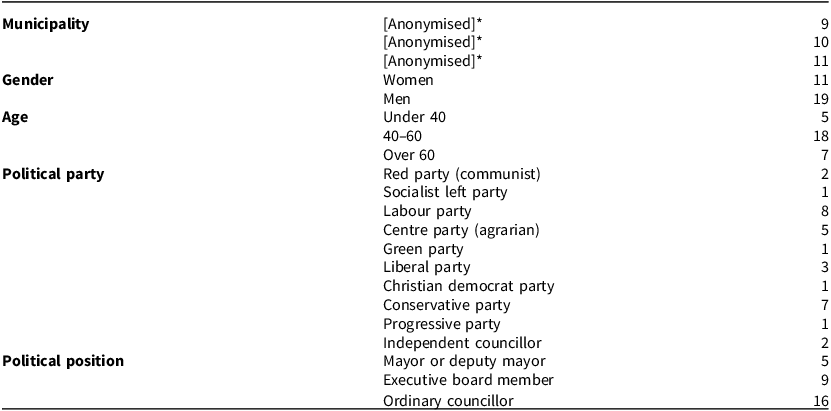
Most research on public meetings originates in the United States, yet the institutional setting differs markedly from that of Norway. American studies of representation reflect a two-party system and single-member districts, where legislators build personal relationships with constituents and where practices such as gerrymandering shape electoral competition. In contrast, Norway’s proportional representation system and multiparty councils produce weaker individual accountability and stronger collective decision-making. While US congressional town hall meetings typically feature a single representative engaging with voters from one district, Norwegian municipal meetings bring together several representatives from different parties. Consequently, American politicians may face greater personal exposure – both in opportunities to demonstrate individual qualities and build trust and in risks such as becoming targets of hostility. These structural differences limit the relevance of US findings and reveal a gap in comparative research on representation. Our study contributes to filling this gap by exploring anticipatory representation within a multi-party, high-trust local context. The meetings were identified and investigated through a total of 30 semi-structured in-depth interviews with local politicians from a cross-section of political positions and political parties from three different Norwegian municipal councils. The three municipalities selected for the study vary in size: one small (<5000 inhabitants), one medium-size (20,000–30,000), and one large by Norwegian standards (100,000<). An overview of the respondents is provided in the Appendix below. The three municipalities have all recently experienced major community developments that can be expected to increase the need for responsive policy, for example, municipal mergers, major industrial developments, and restructuring of municipal services. The strategic selection of municipalities provides contexts in which the need for responsive policy development is likely to have been recently invoked.
With a qualitative study, our aim was not to achieve statistical generalisability but rather to select interviewees that represent a wide range of experience with the phenomena under investigation – aiming for maximum variation (Maykut and Morehouse Reference Maykut and Morehouse2005: 52) in political affiliation, political position, and municipality size. Respondents were recruited from the full list of elected councillors in the three municipalities, obtained via publicly available council records and party websites. We contacted councillors by email and telephone, and all 30 councillors asked to participate agreed to be interviewed.
Table 1 summarises the distribution of respondents by municipality, gender, age group, party affiliation, and political role.
Distribution of respondents by municipality, gender, age group, party affiliation, and political role

* The identity of the municipality is withheld for reasons of research ethics and respondent confidentiality.
With a qualitative study, we had no ambition of systematically analysing the data statistically based on contextual variables but will highlight and comment on certain contextual factors when they emerge as significant in our qualitative analysis of the data.
The interviews followed a thematic and flexible interview guide, where the interviewees were asked both about their general practices for engaging directly with citizens and specifically about their recent experiences with public meetings. As with all interview-based research, our data may be affected by biases such as social desirability – respondents portraying themselves in a favourable light – and post hoc rationalisation, where motives are reconstructed after the fact. To mitigate these risks, we asked councillors to recount specific recent public meetings and describe their specific actions and interactions before reflecting on their motivations. This sequencing encouraged detailed accounts rather than abstract justifications. In addition, interviews were conducted under assurances of anonymity, which likely reduced incentives to provide socially desirable answers. While these steps cannot eliminate bias entirely, they increase the reliability of the material. All interviews were recorded and averaged about one hour. While 27 of the interviews were conducted in-person, with one or more of the authors present, three of the interviews were conducted over telephone or digital video call. Interviews were conducted in May 2023, four months before the election and prior to the campaign period. Some interviewees already knew they would not seek re-election, which may have influenced their responses, though no clear effect was observed.
The interviews and subsequent analysis followed an interpretive research approach, aimed at gaining an understanding of how informants subjectively interpreted and made sense of their own, and their compatriot´s, political practices and actions (Geertz and Darnton Reference Geertz1973; Reed Reference Reed2011; Rhodes Reference Rhodes2017). During the interviews, councillors were asked to recount specific public meetings they had recently attended and to describe their experiences, the roles they assumed and what they found useful – whether listening, persuading, or deliberating (see Appendix 1 for the translated interview guide).
We chose an interpretive design because our research question concerns how councillors themselves interpret and ascribe meaning to their participations. Furthermore, thematic analysis offers a systematic yet flexible way of identifying patterns of meaning across interviews while remaining grounded in participants’ own framings (Braun and Clarke Reference Braun and Clarke2006). Alternative approaches, such as content analysis, often seek to quantify manifest features of the text, but they are less suited to uncovering rationales, implicit meanings, and contextually embedded understanding.
Our thematic analysis of the interviews was guided by two overarching analytical questions derived from the theories of political representation outlined above, which served to initially sort our data and structure our presentation of findings below. These were as follows: (1) To what extent are public meetings perceived as suitable for listening, convincing, or deliberating? (2) In what ways are public meetings considered helpful for anticipatory representation? Following Braun and Clarke’s (Reference Braun and Clarke2006) six phases of a thematic analysis, we familiarised ourselves with the data, coded the material, generated and refined themes, defined and named them, and integrated them into the analytical narrative. This enabled us to uncover both explicit and implicit themes, linking councillors’ accounts to broader theoretical concepts. Credibility was strengthened through independent coding by multiple researchers, iterative discussions of theme definitions, and the use of verbatim quotations to illustrate key points.
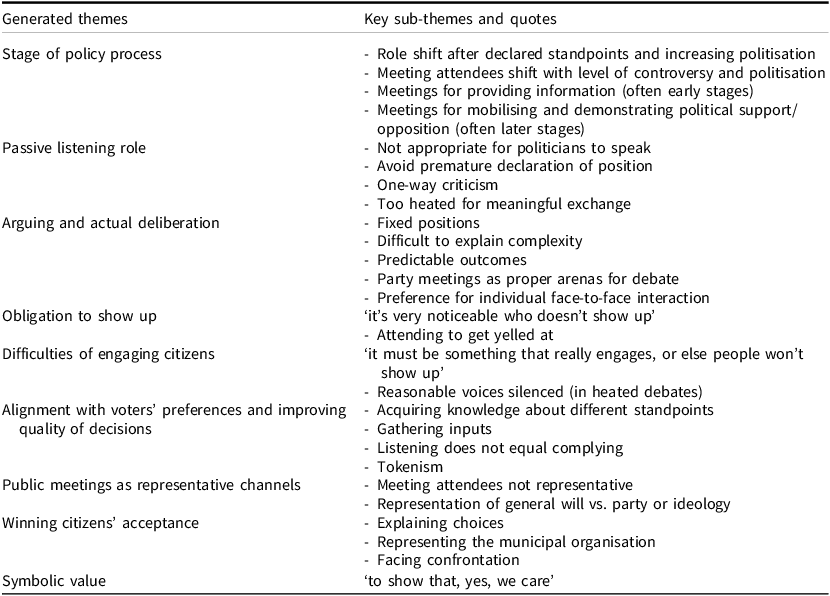
Table 2 provides an overview of the themes generated from the interviews, outlines the coding logic, and illustrates how the analysis was carried out. As the following section shows, the two overarching questions largely overlap, and most of the themes generated relate to both.
Themes generated in councillors’ reflections upon own participation and the role they play in public meetings

Findings and analysis
Public meetings as participatory arenas for listening, convincing, or deliberating with citizens
A general finding is that when describing their participation in public meetings in terms of listening, convincing, or deliberating, the interviewed local politicians rarely expressed any stable perception of norms or appropriate behaviour general to all public meetings. Rather, when describing their own behaviour in such terms, most of the interviewees emphasised context, and particularly, stage of policy process as determining for how they acted during public meetings.
For example, public meetings arranged at the early stages of policy processes, before political parties and individual politicians had formulated and declared political positions, were by most informants looked upon as arenas for listening and gathering information. In most cases accounted for by our interviewees, information was provided not only by the administration but also by citizens commenting and asking questions in response to the information provided by the administrative actors. As one informant explained: ‘It really depends on how early in the process you’re attending a public meeting’, as the meetings early in a process are often characterised by being ‘information meetings, you are there to listen, to see the different viewpoints, with the administration and others providing inputs to the case’ (Respondent 01).
In such meetings, local politicians explained that while they were typically expected to attend, they often found it difficult to actively engage in the discussions. Instead, they felt normatively confined to a more passive, listening role in relation to administrative actors and participating citizens. This sense of constraint was not necessarily due to a lack of willingness or capacity to contribute but rather stemmed from prevailing expectations about their appropriate role in these settings. As one local politician recounted after attending a public meeting on municipal planning, they had ‘really wanted to speak up’ during a heated debate between local property owners and administrative representatives, but ultimately remained silent, explaining: ‘I didn’t think it appropriate. It was not my arena’ (Respondent 06). Similarly, another politician emphasised the importance of refraining from declaring standpoints, even if asked directly:
It’s not like I attend these meetings to tell people what they should think. (…) There were indeed good inputs there, both from businesses and from associations, as well as from individuals. So, what’s important in such contexts is primarily to be there to listen, right? It’s to gather input. And, like, if they ask what I think we should do about this or that issue, I say yeah, but now we’re here to gather input, right? The role of elected officials in such meetings is to be present and listen (Respondent 07).
Nevertheless, the role elected politicians play out in public meetings can dramatically shift at the later stages in policy processes, when political parties and individual politicians have declared political positions on the matters at hand. Then, our informants explained, the public meetings would in themselves become highly politicalised arenas, often initiated and demanded by one of the opposing sides to mobilise for or against the matter at hand. A commonly expressed sentiment among the interviewed politicians was a dislike for attending such meetings, which they described as arenas where they were expected to defend and argue their positions, often in contentious and emotionally charged settings:
I’ve looked back at a meeting related to schools that made such an impression on me. Half of the people in attendance stood up and left. Because the dialogue was so uncomfortable. And it was just one-way criticism (Respondent 08).
Despite this unease, a recurring theme was also a felt obligation to show up at such meetings, as well as negative remarks on opposing politicians who did not attend. As one politician put it: ‘all political parties attend, because it’s very noticeable who doesn’t show up’ (Respondent 02). In other words, citizens – and possibly voters – are expected to impose sanctions if one does not show up.
Although discussing and arguing were described as integral, and even desirable, aspects of political life, our interviewees regarded attempts at convincing participants about a given policy position or proposal as neither meaningful nor productive in the context of a public meeting. A main reason given was that most people who come to such meetings are motivated by strong opinions and cannot be swayed in either direction. Accordingly, public meetings were generally considered to have little value as arenas for meaningful political debate and the formation of political opinions. As the politicians interviewed emphasised, people without fixed positions would rarely take part in such meetings, which makes arguments pointless.
Then you knew exactly who was coming, you knew exactly who was going to say something, and you knew exactly what they were going to say. So, it’s very… The outcome of a public meeting is often predictable (Respondent 15).
For much the same reasons, very few of our informants provided any real-life examples of public meetings where actual deliberation had taken place, in terms of developing new policies based on interaction between viewpoints and ideas. Rather, as another local politician put it, public meetings ‘have a certain ability to become very … well, standardized monologues from someone. Not much concrete comes out the other end’ (Respondent 17).
Particularly among politicians from large political parties, party meetings among members, rather than public meetings, were considered the proper arena for developing policy proposals and political standpoints. In part, this observation provides some explanation for the careful avoidance of (pre-maturely) declaring political positions in the early stages of policy development, and for why many politicians preferred to take the role of listener in public meetings. By contrast, politicians from smaller parties tended to express a more normative interest in public meetings as arenas for policy development. This was partly due to their parties’ limited administrative capacity to organise internal meetings and partly reflected broader frustration with decision-making processes perceived as opaque and authoritarian within the larger parties. In this sense, party size shaped not only the practical opportunities for internal deliberation but also the perceived legitimacy of public arenas as sites for political engagement.
Nevertheless, local politicians from both small and large parties emphasised that a main reason public meetings so rarely become arenas for actual deliberation is the difficulty of engaging citizens in debate before those debates become polarised and heated. More than political pacification and the described unwillingness to take a stand, public meetings at the early stages were also characterised by a low level of interest and attendance from citizens outside the usual political milieu. While public meetings at later stages could mobilise much larger crowds, these were more often associated with protests and heated debates, understood by most of our informants as too polarised, too superficial and too short-term-oriented to facilitate any proper and meaningful debate. Consequently, a recurring theme among the interviewed politicians was a preference for more informal, prolonged, and individual face-to-face interactions. Settings of these kinds were seen as offering greater space for explaining complexity and fostering mutual learning – qualities they felt were often lacking in public meetings. As one local politician described public meetings:
Someone with some extreme interest simply picks up two numbers and then blows them up. And then everyone responds like, yes, of course, we agree with that. And then you really have nothing, then it’s completely futile to explain the depth of the issue. Our argument that our solution will be better for the municipality in four to ten years’ time, is difficult to explain to people (Respondent 12).
Public meetings as participatory arenas for anticipatory representation?
While public meetings were seldom experienced as productive in terms of actively engaging with citizens, the interviewed politicians were more inclined to view such meetings – particularly in the early stages of policy development – as suitable arenas for listening to citizens and gaining insights to diverse viewpoints. This sentiment can, to some extent, be interpreted as suggesting that public meetings could be used to improve anticipatory representation – either by improving the alignment of policy with voters´ preferences through better understanding of those preferences, or by improving the quality of decisions by considering a broader range of citizen inputs. The latter interpretation appeared particularly salient in a few cases, where local politicians described attending public meetings focused on issues outside their usual scope of attention and encountering citizens with localised or otherwise specialised knowledge. Yet, accounts of actually changing or adjusting previously held political positions based on inputs from public meetings were surprisingly rare in our material. Many of our respondents also emphasised that listening to citizens’ concerns does not necessarily equal complying with their wishes. In some cases, public meetings were described as token events, since the political parties had already decided their positions on the issue before the meeting was held.
In a more general sense, however, the potential for public meetings to support anticipatory representation was constrained by the perception that such meetings did not constitute representative channels in themselves. As one politician put it: ‘Is it representative? If you are in a district with 5000 inhabitants, do the 200 who turned up represent them?’ (Respondent 11). The key problem in using public meetings to enact anticipatory representation by convincing or deliberating, as explained by our informants, is that citizens are difficult to engage in early stages of decision-making: few bother to engage before decision-making processes have reached a point where specific interests are at stake: ‘It must be something that really engages, or else people won’t show up’ (Respondent 04). At this point however, as previously indicated, engagement tends to take the form of protest, which means that dialogue becomes more difficult: ‘I meet people who have different views, and I encourage them to attend the meetings. But at some of these meetings it gets too heated, and they avoid talking’ (Respondent 22). If citizens refrain from expressing their opinions because of an excessively contentious atmosphere, public meetings may offer limited value for politicians seeking to anticipate voters’ preferences. Another consequence of a heated meeting atmosphere is that the scope for aligning policies with present or future voters’ preferences by gradually building shared problem definitions and goal conceptions becomes limited or non-existent.
Again, political party meetings were generally regarded as more appropriate representative channels, and several interviewees expressed doubt about the ability of public meetings to effectively serve this role. One interviewee argued: ‘You will never get the whole of public opinion on an issue through direct contact. That´s why we have a party system, right?’ (Respondent 05). Some also argued that, as local politicians, they were not necessarily obliged to represent a cross-section of the entire population, regardless of whether such a representative constituency is accessible through public meetings. Rather than public opinion, the elected representatives were rooted in ideologies and certain positions, associated primarily with their political party and its members.
Some politicians, however, viewed public meetings as useful venues for attempting to win citizens’ acceptance and support after controversial decisions had been made in the municipal council. As some of the politicians explained, they were likely to be confronted with such decisions in the local community anyway and therefore chose a proactive approach rather than simply making the decision and leaving it at that. Interestingly, the politicians who expressed this approach were mainly from the smallest municipality in our sample, where councillors are in close contact with their constituencies on a daily basis, making the same politicians likely targets for unpleasant confrontations following unpopular decisions.
Yet, the direct justifications for attending public meetings relate primarily to the potential of these meetings as a source for gathering information about future preferences – in other words, for listening. For example, as stated by one interviewee: ‘I attend when I know there are public meetings. Then I show up to hear what’s on people’s minds’ (Respondent 06). Some politicians also described their motivation in terms of defending positions, meaning that they try to convince potential voters of their positions after their position has already been settled (often by their party). As discussed, some also described the main purpose of public meetings as political handling: trying to calm people and create understanding after decisions have been made in the council. However, the real-life accounts of such meetings that we collected in the interviews suggest that political positions were seldom changed and that the attempts made to influence positions, opinions, and resentments were rarely experienced as successful. Accordingly, attending meetings, whether to listen or to defend positions, appeared to have mainly symbolic value. As one put it: ‘Why do I attend? Well, it’s really to show interest. To show that, yes, we care’ (Respondent 17).
Concluding discussion
In this article, we explore what may motivate elected representatives to engage with citizens in arenas organised for the purpose of interaction. This question is pivotal, as democratic innovations – which involve interaction and deliberation between elected representatives and citizens – can only bolster representative democracy if elected representatives respond adequately. We depart from representative theory and draw on Mansbridge’s (Reference Mansbridge2003) arguments, which highlight the benefits for elected representatives in engaging with citizens in participatory arenas by listening, convincing, and deliberating. These interactions enable policymakers to align their decisions with voter’s preferences, thereby strengthening their position in upcoming elections. Consequently, we hypothesised that politicians might find public meetings beneficial for anticipatory representation. However, we also referred to findings from previous studies that suggest other motivations for attending public meetings. It is possible that politicians are more concerned with presenting themselves as trustworthy and responsive and less focused on discussing specific issues. And in addition to the anticipated strategic reasons to turn up, politicians may also feel morally obliged to attend.
Fortunately, the public meetings described by our informants did not concur with ‘the stereotypical images of public meetings, including chair-throwing participants, tearful supplicants, and stoic government officials’ (McComas Reference McComas2001: 52). However, our data suggest that local councillors rarely perceive public meetings as appropriate for convincing or deliberating with citizens, and that they perceive such meetings as appropriate for listening only to a limited extent. Few of our respondents found these citizen participation arenas to be conducive to productive debate or deliberative discourse, as the attending citizens often possess strong and entrenched opinions. Generally, the councillors use public meetings organised in an early stage of a policy process to listen and gather input. This is particularly true for representatives of small parties in the council who lack a party group and the capacity to organise meetings to discuss and develop policies. For most politicians, however, public meetings are not providing any new information and are not considered as productive for policy development.
Thus, based on politicians’ experiences with public meetings, the opportunity to listen to citizens could indeed provide motivation for participating. The usefulness of public meetings for enabling anticipatory representation is somewhat limited for two reasons, however. First, it is often challenging to engage citizens in the early stages of the policymaking process, particularly on less controversial issues. Conversely, more contentious issues, typically addressed in public meetings during the later stages of the policy process, often attract participants who aim to protest – making it difficult to use these meetings to gauge voter preferences. It follows, second, that the information obtained at both types of meetings is not considered representative by politicians, since the meetings are either attended by only a small group of the usual suspects or are dominated by protesters representing a limited range of viewpoints. These patterns are consistent with earlier studies, which indicate that participants in public meetings are often perceived as unrepresentative (Halvorsen Reference Halvorsen2006; McComas Reference McComas2001). Furthermore, politicians representing a political party do not necessarily feel that they must or should listen to the views of ‘everybody’. To be re-elected, responsibility towards their party members, voters and potential voters is key. Thus, in practice, it seems difficult to use public meetings to align policies with voters’ preferences by gradually building shared problem definitions and goal conceptions before future elections.
Although the public meetings had limited use in improving policy and did not serve as an arena for swaying political opinion through convincing voters or deliberating with them, politicians still attend because it is expected of them or deemed appropriate. This behaviour can be interpreted as a strategic effort by politicians to strengthen their position – or, at the very least, to avoid weakening it by being absent. This strongly reflects the concept of optimising one’s position vs. the voters by demonstrating responsiveness, as suggested by earlier studies (Fenno Reference Fenno1978; Kingdon Reference Kingdon1968; Mayhew Reference Mayhew1974).
Thus, our study suggests that participatory arenas like public meetings may serve politicians in their role as responsive representatives, but not necessarily in the way assumed by theory on anticipatory representation. The gain is only to a limited extent substantial in bringing in new information, enabling effective deliberations, or convincing voters to change their opinions. Politicians may even develop a dislike for attending public meetings, particularly when these meetings are organised in the later stages of the policy process and become politicalised arenas where opposing parties have mobilised.
Despite these limitations, public meetings are not without value. They may serve an important purpose by signalling to voters that politicians are willing to listen to them and address their concerns. Furthermore, there may be intrinsic value in the enduring nature of public meetings. The consistent and familiar format of public meetings, coupled with the fact that almost all political systems have experience with them, make these meetings an easy and reliable option for elected officials seeking to engage with citizens. The institutionalised nature of public meetings may reinforce their symbolic and practical role in maintaining trust between elected representatives and the public.
Furthermore, the fact that politicians find it important to attend even contentious public meetings, just to be present, can be seen as a demonstration of accountability. Departing from the framework of representation focused on retrospective control, the obligation to justify decisions and account for (broken) election promises appear to motivate engagement with citizens between elections. However, this form of responsiveness – explaining to voters why one chooses not to follow public opinion on a difficult or contentious issue – can also be regarded as a mode of anticipatory representation. As Mansbridge (Reference Mansbridge2003: 517) observes, ‘anticipatory representation encourages us to think of voters at Time 3 as educable’ and moreover, that the voters can be ‘educated’ by the representative, who seeks and formulates ‘explanations’ for his votes. Alternatively, the experienced importance of attending may be interpreted as tokenism, as pointed out by some of the politicians we interviewed. When the outcome of the issue at hand is in fact predetermined by party-internal decision-making, citizen inputs voiced in the meeting will in reality fall on deaf ears. Retrospective control would presuppose that political standpoints are openly declared for public meetings to function as true arenas for holding politicians accountable. Paradoxically, however, many politicians find it uncomfortable to defend and argue their positions in heated circumstances.
On a deliberation continuum – with the most deliberative and information-rich events at one end and the least deliberative and informational events at the other end (Geissel Reference Geissel, Geissel and Joas2013: 11) – public meetings can be categorised as belonging to the latter group. Therefore, in terms of enhancing deliberative democracy, public meetings offer little, while democratic innovations that provide high-quality deliberative procedures, including representative citizenry and well-organised, facilitated processes, present a better alternative. However, another paradox emerges: the limited literature on how politicians experience deliberative arenas suggests that such forums are often not valued. When citizen interactions are organised, questions about power sharing arise, and politicians frequently struggle to determine the roles they should assume (Rangoni, Bedock and Talukder Reference Rangoni, Bedock and Talukder2023; Sønderskov Reference Sønderskov2020). Thus, even if participatory arenas were better designed to foster genuine communication than public meetings currently are, this would not necessarily motivate politicians to engage more actively with citizens.
The Norwegian context undoubtedly has a significant impact on the evidence and reflections presented in this article. Norwegian local governments are vital political systems, and unlike in many European countries, representative institutions in Norway are still trusted by citizens, as is also the case in other Nordic countries (DFØ 2024; OECD 2024). Although party membership is low, most councillors may feel responsive to their constituents through the party system. While the literature on democratic innovations focuses on establishing arenas for citizen interaction based on an idea of anticipatory representation, a well-functioning party system may be better suited for elected politicians to align policymaking with voter preferences and strengthen their position in upcoming elections – in accordance with the idea of retrospective control.
Although the Norwegian context impacts the evidence presented, our primary findings align with existing literature on public meetings. Despite the limited scope of this literature, this suggests that the findings from our analysis of three Norwegian municipalities can be generalised. To strengthen generalisability, however, additional research should be conducted across more cases and in different countries. The political-administrative model in Norway is distinct, with an emphasis in elections on party lists and a consensus-oriented alderman model with a cross-party executive board. This may be one of the reasons why politicians primarily use public meetings to listen to what the residents have to say. Given a different political-administrative system, such as the strong mayor model which is the most common in Europe (Heinelt, Hlepas, Kuhlmann et al. Reference Heinelt, Hlepas, Kuhlmann, Swianiewicz, Heinelt, Magnier, Cabria and Reynaert2018), the need to confront own positions on relevant issues with residents would likely be different and the arena for citizen participation that public meetings represent could be perceived in a different way. Additionally, to better understand the motivation of elected representatives for engaging with citizens in organised arenas, further theoretical development is necessary. While this article has taken departure from a specific theory on representation, future studies could consider additional or alternative approaches including democratic theory and political leadership theory.
Data availability statement
Because of the sensitive and potentially identifiable nature of the qualitative data collected for this study (ie transcripts from individual interviews), the supporting data cannot be made publicly available.
Acknowledgements
The authors wish to express their gratitude for comments on earlier versions of this article received during presentations at the Research Center on Democratic Innovations, Goethe University Frankfurt, at the International Conference on Urban Affairs in New York, and at the Norwegian National Political Science Conference in Bergen.
Author Contributions: CRediT Taxonomy
Jan Erling Klausen: Conceptualization-Equal, Funding acquisition-Equal, Investigation-Equal, Methodology-Equal, Writing - original draft-Equal, Writing - review & editing-Equal.
Christian Lo: Conceptualization-Equal, Data curation-Lead, Funding acquisition-Equal, Investigation-Equal, Methodology-Equal, Writing - original draft-Equal, Writing - review & editing-Equal.
Signy Irene Vabo: Conceptualization-Equal, Funding acquisition-Equal, Investigation-Equal, Methodology-Equal, Project administration-Lead, Writing - original draft-Equal, Writing - review & editing-Equal.
Marte Slagsvold Winsvold: Conceptualization-Equal, Funding acquisition-Equal, Investigation-Equal, Methodology-Equal, Writing - original draft-Equal, Writing - review & editing-Equal.
Funding statement
The research was funded by the Research Council of Norway for the project ‘Democratic innovations and responsive politicians’ (grant # 336256).
Competing interests
The authors have no conflict of interest to declare.
Ethical standards
Research carried out in this study has been assessed and approved by Sikt – Norwegian Agency for Shared Services in Education and Research. All interviewees provided informed consent, responses were anonymised, and data are stored securely on password-protected servers compliant with GDPR.
Appendix 1
Public Meetings Interview Guide. Municipal Council Members, May 2023 (translated)
-
1. In what ways do you have contact with citizens in your role as an elected representative?
-
2. Which forms of contact with citizens do you prefer?
-
3. Describe an important municipal decision-making process you have been part of in the past four years. What were the main political disagreements?
-
4. Did you get a sense of what citizens thought about the matter? How?
-
5. Was there any organised dialogue with citizens during the process?
-
6. Do you think the process you described is typical for how political opinions are formed in the municipality? Why or why not?
-
7. Public meetings are arranged about political plans and issues. Please describe the last public meeting you attended.
-
8. Who attended, and who stayed away? Why?
-
9. Was there a fixed agenda, or could citizens raise their own issues? Should citizens be able to set the agenda?
-
10. How did you experience the dialogue with citizens?
-
11. Did people understand what they could achieve, and how much influence they could realistically expect?
-
12. What did you consider your role to be at the meeting – representing your party or the municipality?
-
13. Politicians can engage in public meetings in at least three ways:
-
Mainly listening to citizens’ views
-
Speaking to promote their own position
-
Encouraging two-way discussion to seek agreement Thinking about this specific meeting, which role best describes you?
-
-
14. [If mostly listening]: Did you change your mind or learn something new?
-
15. [If mostly leading]: Did you manage to convince people or justify your position?
-
16. [If aiming for dialogue]: Did you achieve meaningful discussion? Did you reach agreement?
-
17. How did the other elected representatives participate, based on these models?
-
18. Do you see differences between parties in this regard?
-
19. Are there differences between new and experienced politicians? Any other distinctions?
-
20. What did you gain from meeting citizens at the public meeting? Did it help in your role as an elected representative?
-
21. Are some issues better suited than others for public meetings?
-
22. Overall, did you like or dislike taking part in the meeting?

 Open access

