


Childhood anxiety and depression are highly prevalent and comorbid internalizing conditions affecting a large number of children and adolescents from the age of 6 (Bitsko et al., Reference Bitsko, Holbrook, Ghandour, Blumberg, Visser, Perou and Walkup2018). In this context, anxiety disorders stand out as the most widespread mental health condition worldwide, impacting over 80 million children and young people (Kieling et al., Reference Kieling, Buchweitz, Caye, Silvani, Ameis, Brunoni, Cost, Courtney, Georgiades, Merikangas, Henderson, Polanczyk, Rohde, Salum and Szatmari2024), with longitudinal studies reporting that nearly 10% of individuals experience an anxiety disorder at some point during childhood or adolescence (Steinsbekk et al., Reference Steinsbekk, Ranum and Wichstrøm2022). Additional longitudinal data also indicate that more than 7% of children and adolescents develop a depressive disorder before the age of 16, which subsequently increases the risk of developing anxiety disorders (Copeland et al., Reference Copeland, Alaie, Jonsson and Shanahan2021).
In this regard, the presence of anxiety or depression increases the likelihood of the co-occurrence of these conditions, which, in turn, is associated with significant negative impacts beginning in childhood (Bitsko et al., Reference Bitsko, Holbrook, Ghandour, Blumberg, Visser, Perou and Walkup2018). Moreover, the presence of anxiety and depressive symptoms during childhood may persist or worsen over time, leading to impairment and becoming a risk factor for the development of future disorders and other health and social issues (Copeland et al., Reference Copeland, Alaie, Jonsson and Shanahan2021; Morken et al., Reference Morken, Viddal, Ranum and Wichstrøm2021; Steinsbekk et al., Reference Steinsbekk, Ranum and Wichstrøm2022; Zhong et al., Reference Zhong, Niu, Chen, Lee and Zhang2024). Accordingly, longitudinal studies indicate that internalizing symptoms such as anxiety and depression follow heterogeneous developmental trajectories, with patterns of stability or increasing symptom levels often observed over time, suggesting that they do not necessarily resolve across development. Therefore, it is crucial to develop early interventions during childhood that effectively address early symptoms of anxiety and depression to reduce their progression and thus mitigate their short- and long-term impact on child and adolescent development (e.g., Morken et al., Reference Morken, Viddal, Ranum and Wichstrøm2021; Steinsbekk et al., Reference Steinsbekk, Ranum and Wichstrøm2022). Comprehensive review studies have highlighted the potential of preventive interventions based on cognitive-behavioral therapy (CBT) aimed at addressing childhood anxiety and/or depressive symptoms, as they can have small but positive effects on reducing these symptoms and preventing mental disorders (e.g., Werner-Seidler et al., Reference Werner-Seidler, Perry, Calear, Newby and Christensen2017, Reference Werner-Seidler, Spanos, Calear, Perry, Torok, O’Dea, Christensen and Newby2021). Additionally, given the high comorbidity between anxiety and depressive symptoms, as well as their shared etiological processes and risk factors, the potential efficiency of transdiagnostic interventions has been emphasized and developed to address symptoms of both problems through a single protocol (Garber et al., Reference Garber, Brunwasser, Zerr, Schwartz, Sova and Weersing2016).
The Super Skills for Life (SSL) program (Essau & Ollendick, Reference Essau and Ollendick2013) is a promising preventive intervention based on CBT and a transdiagnostic approach, with growing support over the past several years for addressing childhood emotional difficulties related to anxiety or depressive symptomatology. This program consists of a manualized protocol of eight 45-minute sessions, originally designed for indicated samples of school-aged children presenting early emotional or internalizing symptoms (i.e., anxiety and/or depression), and it can be delivered in a school setting and in a group format. SSL is an innovative protocol integrating various CBT-based strategies as part of the intervention to help improve the understanding and management of emotions and enhance coping with stressful situations. These strategies include education on emotions and feelings, self-monitoring, behavioral activation, cognitive restructuring, relaxation, social skills, and problem-solving training, along with the use of video feedback with prior cognitive preparation (Essau et al., Reference Essau, Olaya, Sasagawa, Pithia, Bray and Ollendick2014; Essau & Ollendick, Reference Essau and Ollendick2013). It has shown positive and lasting results in reducing anxiety and depressive symptoms, including immediate outcomes (post-test) and follow-ups of up to 6 and 12 months in trials with samples of primary school-aged children (6–12 years old) from different countries and cultures, such as the United Kingdom, Spain, and Malaysia (Chen et al., Reference Chen, Ting, Ghazali and Ling2024; Essau et al., Reference Essau, Olaya, Sasagawa, Pithia, Bray and Ollendick2014; Fernández-Martínez et al., Reference Fernández-Martínez, Morales, Espada, Essau and Orgilés2019; Orgilés, Fernández-Martínez, et al., Reference Orgilés, Fernández-Martínez, Espada and Morales2019).
Among the studies focusing on the SSL program, the randomized controlled trial (RCT) by Fernández-Martínez et al. (Reference Fernández-Martínez, Morales, Espada, Essau and Orgilés2019) stands out as the first RCT of the SSL program, incorporating an intervention group (IG) and a waitlist control group (WLC), with school-aged children between 6 and 8 years old with early emotional symptoms (i.e., anxiety and/or depression). This school-based RCT showed positive between-subject effects of the program at post-intervention, showing that children in the IG significantly improved their anxiety and depressive symptoms compared to the WLC (Fernández-Martínez et al., Reference Fernández-Martínez, Morales, Espada, Essau and Orgilés2019). After 12 months of follow-up, compared to the WLC, the IG showed that, overall, the between-subject effects observed at post-intervention were maintained and that the intervention had a significant impact on a larger number of outcomes, including reductions in overall anxiety and depressive symptoms, as well as symptoms of panic/agoraphobia, specific fears, social phobia, and anxiety-related interference (Fernández-Martínez, Orgilés, et al., Reference Fernández-Martínez, Orgilés, Morales, Espada and Essau2020). Moreover, these results were consistent with previous SSL school-based studies with children aged 8–12 years exhibiting early emotional symptoms and conducted without a control group. These studies showed that positive short-term within-subject effects tended to be maintained over time, or that a broader range of outcomes improved at 6- or 12-month follow-ups, including symptoms of overall anxiety, different anxiety types (e.g., separation anxiety, social phobia), depression, and anxiety-related interference (e.g., Essau et al., Reference Essau, Olaya, Sasagawa, Pithia, Bray and Ollendick2014; Orgilés, Fernández-Martínez et al., Reference Orgilés, Fernández-Martínez, Espada and Morales2019).
Furthermore, existing evidence underscores the importance of continuing to evaluate the impact of interventions aimed at childhood anxiety and depression through studies with long-term follow-ups. In this regard, findings suggest that these interventions yield benefits in the short term (post-test) and medium term (6–12 months), with some studies indicating that the effects may be greater at least up to 12-month follow-up period compared to the short term. Regarding long-term follow-up periods beyond 12 months, studies show that positive effects on anxiety and depressive symptoms can be found over time while also reflecting that this long-term period remains less frequently examined (Werner-Seidler et al., Reference Werner-Seidler, Perry, Calear, Newby and Christensen2017, Reference Werner-Seidler, Spanos, Calear, Perry, Torok, O’Dea, Christensen and Newby2021). In this direction, previous research on interventions targeting childhood emotional problems, including extended follow-ups ranging from around 6–7 years, or even longer, has provided evidence of lasting benefits and the maintenance of intervention gains in anxiety and depression outcomes (e.g., Barrett et al., Reference Barrett, Duffy, Dadds and Rapee2001; Benjamin et al., Reference Benjamin, Harrison, Settipani, Brodman and Kendall2013; Kendall et al., Reference Kendall, Safford, Flannery-Schroeder and Webb2004). This emphasizes the importance of evaluating and understanding the long-term outcomes of psychological interventions in this population. However, regarding the SSL program, to our knowledge, the longest follow-up period examined has been 12 months post-intervention (Fernández-Martínez, Orgilés et al., Reference Fernández-Martínez, Orgilés, Morales, Espada and Essau2020; Orgilés, Fernández-Martínez et al., Reference Orgilés, Fernández-Martínez, Espada and Morales2019), and no data are currently available beyond that period. Therefore, gathering additional data on the long-term impact of the SSL program, with follow-ups beyond 12 months, would be valuable.
Thus, the primary aim of the current study was to evaluate, for the first time, the long-term effects of the SSL program at a 6-year follow-up, extending beyond the 12-month period. The intervention was initially implemented in a sample of Spanish-speaking children aged 6–8 years with emotional symptoms, as part of a cluster RCT (Fernández-Martínez et al., Reference Fernández-Martínez, Morales, Espada, Essau and Orgilés2019). This study focused exclusively on participants from the IG, who were reassessed 6 years after completing the SSL program (average follow-up of 6.4 years). Specifically, this study sought to examine within-group changes across all assessments conducted throughout the trial, including immediate post-intervention (short-term effects), the 12-month follow-up (medium-term effects), and the 6-year follow-up (long-term effects), compared to baseline. The effects were examined in the primary outcomes (anxiety and depressive symptoms), which the intervention was specifically designed to target, as well as in secondary outcomes related to anxiety interference in the children’s and their parents’ daily lives. It was hypothesized that the significant reductions in symptoms observed from pretest to post-test would be maintained—or extended to a broader range of outcomes—at the 12-month follow-up. Moreover, these improvements were expected to persist at the long-term follow-up, demonstrating sustained effects in terms of reductions in symptom levels among participants previously exposed to the SSL program, particularly in anxiety and depression, when compared to baseline.
Method
Participants
In the original trial, participants were recruited from ten primary schools in southeastern Spain, randomly assigned to either the IG or the WLC, with five schools allocated to each condition (Fernández-Martínez et al., Reference Fernández-Martínez, Morales, Espada, Essau and Orgilés2019). Eligible children were those aged 6–8 years (Grades 1–3) whose parents reported elevated emotional symptoms, as indicated by a score of at least 4 on the Emotional Symptoms subscale of the Strengths and Difficulties Questionnaire—Parent version (SDQ-P; Goodman, Reference Goodman2001), which captures a combination of anxiety and depressive symptoms and was used as a screening tool in the initial study. This cutoff is recognized as an indicator of increased risk for anxiety and/or depression. Exclusion criteria included the presence of learning or developmental difficulties or the receipt of concurrent psychological or psychiatric treatment. A total of 123 Spanish-speaking children (M age = 6.89, SD = 0.79) and their parents, who served as informants (one mother or father per child; 78.9% female), participated in the baseline assessment, comprising the IG, which included a total of 67 children (M age = 6.88, SD = 0.80; 50.7% girls) (Fernández-Martínez et al., Reference Fernández-Martínez, Morales, Espada, Essau and Orgilés2019).
The present study reports the 6-year follow-up of this trial, focusing exclusively on the IG, as the WLC had already received the intervention after the 12-month follow-up. In addition to the short-term (post-intervention) and medium-term (12-month follow-up) assessments, participants in the IG were reassessed an average of 6.4 years after completing the intervention (range: 6.0–6.75 years post-intervention). Of the 67 children originally allocated to the IG at baseline, 34 (50.7%) were assessed at the 6-year follow-up (see Results section for further details).
Measures
Primary Outcomes
Depression. The Mood and Feelings Questionnaire-Parent version (MFQ-P) was created by Angold et al. (Reference Angold, Costello, Messer, Pickles, Winder and Silver1995) and serves as a 34-item unidimensional tool designed to screen for depressive symptoms in children and adolescents. Parents are asked to evaluate their child’s behaviors and emotions over the past two weeks using a 3-point Likert scale: 0 (not true), 1 (somewhat true), and 2 (true). The total score for the MFQ-P, which ranges from 0 to 68, is calculated by summing the responses, with higher scores indicating greater severity of depression. The instrument has demonstrated strong validity and reliability (Daviss et al., Reference Daviss, Birmaher, Melhem, Axelson, Michaels and Brent2006), including the Spanish version (Fernández-Martínez, Morales et al., Reference Fernández-Martínez, Morales, Espada and Orgilés2020). In the current study, the reliability coefficient was .96.
Anxiety. The Spence Children’s Anxiety Scale—Parent version (SCAS-P) was developed by Nauta et al. (Reference Nauta, Scholing, Rapee, Abbott, Spence and Waters2004). It is a 38-item scale that measures the intensity of several anxiety disorder symptoms in children aged 6–18. Parents rate each item on a 4-point scale ranging from 0 (never) to 3 (always), where higher scores reflect more severe anxiety symptoms. The instrument includes six subscales with the following score ranges: Panic Attack/Agoraphobia (0–27), Separation Anxiety (0–18), Physical Injury Fears (0–15), Social Anxiety (0–18), Obsessive-Compulsive Disorder (0–18), and Generalized Anxiety Disorder (0–18). A total anxiety score is derived from the aggregate of all items (score range: 0–114). The SCAS-P has been validated and has demonstrated reliability, with a total scale Cronbach’s alpha of .89 and subscale alphas ranging from .80 to .90 (Nauta et al., Reference Nauta, Scholing, Rapee, Abbott, Spence and Waters2004). The Spanish version has also shown good psychometric properties (Orgilés, Rodríguez-Menchón et al., Reference Orgilés, Rodríguez-Menchón, Fernández-Martínez, Morales and Espada2019). For this study, the reliability coefficient was .86 for the total score, with subscale alphas ranging from .60 to .72.
Secondary outcomes
Child anxiety-related interference in the child’s and parents’ lives. The Child Anxiety Life Interference Scale—Parent report (CALIS-P; Lyneham et al., Reference Lyneham, Sburlati, Abbott, Rapee, Hudson, Tolin and Carlson2013) is a 16-item scale that evaluates the disruption caused by child anxiety in the lives of both children and their parents, as perceived by parents. Each item is rated on a 5-point Likert-type scale ranging from 0 (not at all) to 4 (a great deal). The measure assesses three domains of interference: in the child’s life at home (0–16), in the child’s life outside the home (0–20), and in parents’ lives (0–28). A total score is calculated by summing all item scores (score range: 0–64), with higher scores reflecting greater overall interference. Originally, the scale exhibited good psychometric properties and internal consistency for reports from both mothers (α = .90) and fathers (α = .88), with subscale alphas ranging between .75 and .87 (Lyneham et al., Reference Lyneham, Sburlati, Abbott, Rapee, Hudson, Tolin and Carlson2013). The psychometric properties of the Spanish version have also been supported (Orgilés et al., Reference Orgilés, Melero, Fernández-Martínez, Espada and Morales2022). In the current study, the reliability coefficient was .91 for the total score, with subscales ranging from .74 to .87.
Procedure
In this study, the 6-year follow-up assessment was conducted by contacting the families who had participated in the initial implementation of the European-Spanish version of the SSL program when their children were 6–8 years old. Therefore, parents of IG participants who had served throughout the trial (i.e., baseline, post-test, and 12-month follow-up) as the primary informant (i.e., the same mother or father) were contacted by e-mail with comprehensive information about the follow-up study and a direct link to access the online assessment battery. The online survey took approximately 15 minutes to complete. To ensure that all eligible participants were adequately informed about the follow-up study, a follow-up telephone reminder was conducted for those who did not initially respond. All data were collected through parent-reported measures to ensure methodological consistency across study stages. Families did not receive any financial compensation for participating in the study. The Ethics Committee of the authors’ institution approved the study, and parental informed consent was obtained from all participants.
In this trial by Fernández-Martínez et al. (Reference Fernández-Martínez, Morales, Espada, Essau and Orgilés2019), participants received the SSL program intervention over eight weekly sessions, each lasting 45 minutes, implemented at the participants’ school as an after-school activity (see Supplementary Table S1 in the supplementary material). The intervention was delivered in small groups (four to six children) by psychologists with a master’s degree in psychology, who were trained as facilitators of the SSL program. To ensure implementation fidelity, weekly meetings were held with the facilitators during the intervention to monitor the implementation process, provide any necessary materials, and exchange relevant information. In addition, at the end of each session, facilitators recorded key information about each group (e.g., attendance, content covered, and observations), which allowed verification that the program was progressing as planned. Readers interested in further details about the SSL program content and implementation fidelity can refer to previous studies (e.g., Essau et al., Reference Essau, Olaya, Sasagawa, Pithia, Bray and Ollendick2014; Fernández-Martínez et al., Reference Fernández-Martínez, Morales, Espada, Essau and Orgilés2019, Reference Fernández-Martínez, Orgilés, Espada, Essau and Morales2021; Orgilés, Fernández-Martínez et al., Reference Orgilés, Fernández-Martínez, Espada and Morales2019).
Statistical Analysis
Analyses were conducted using SPSS v.28. The individual served as the primary unit of analysis, with all analyses controlling for the school variable. Prior to assessing the intervention’s efficacy, logistic regressions were used to examine whether attrition was associated with sociodemographic variables or any baseline measures (depression and anxiety). Descriptive statistics were used to characterize the sample of this trial. There were no missing data in the outcome measures, as the online assessment platform required participants to complete all items before submission and automatically prompted them if any responses were left unanswered. Therefore, no imputation procedures were necessary.
For this study, the within-group effects of the intervention at post-test, the 12-month follow-up, and the 6-year follow-up were evaluated using generalized estimating equations (GEE), which account for longitudinal repeated measures on participants clustered in schools (Liang & Zeger, Reference Liang and Zeger1986). The analyses adopted an intent-to-treat approach, including data from all participants irrespective of the number of sessions attended or data-collection sessions completed. Adjustments were made for baseline scores, age, sex, and school. Three pre-specified hypotheses were tested in this study: (1) a comparison of post-test effects with baseline scores (i.e., short-term effects), (2) a comparison of 12 months post-intervention effects with baseline scores (i.e., medium-term effects), and (3) a comparison of 6 years post-intervention effects with baseline scores (i.e., long-term effects). Parameter estimates are reported as unstandardized regression coefficients (B) with robust standard errors and Wald 95% confidence intervals. To facilitate the interpretation of the magnitude of intervention effects, standardized effect sizes (Cohen’s d; Cohen, Reference Cohen1988) were calculated for changes from baseline to post-intervention, 12-month follow-up, and 6-year follow-up. Effect sizes were interpreted according to conventional criteria, whereby values of 0.20, 0.50, and 0.80 represent small, medium, and large effects, respectively. Finally, clinically elevated depressive symptoms were defined using a cut-off score of ≥ 27 on the MFQ-P total score (Daviss et al., Reference Daviss, Birmaher, Melhem, Axelson, Michaels and Brent2006), and clinically elevated anxiety symptoms were defined using cut-off scores of ≥ 26 for boys and ≥ 28 for girls on the SCAS-P total score (www.scaswebsite.com). Dichotomous variables were created for each assessment point, and the proportion of participants with clinically elevated symptoms over time was calculated using valid cases.
Results
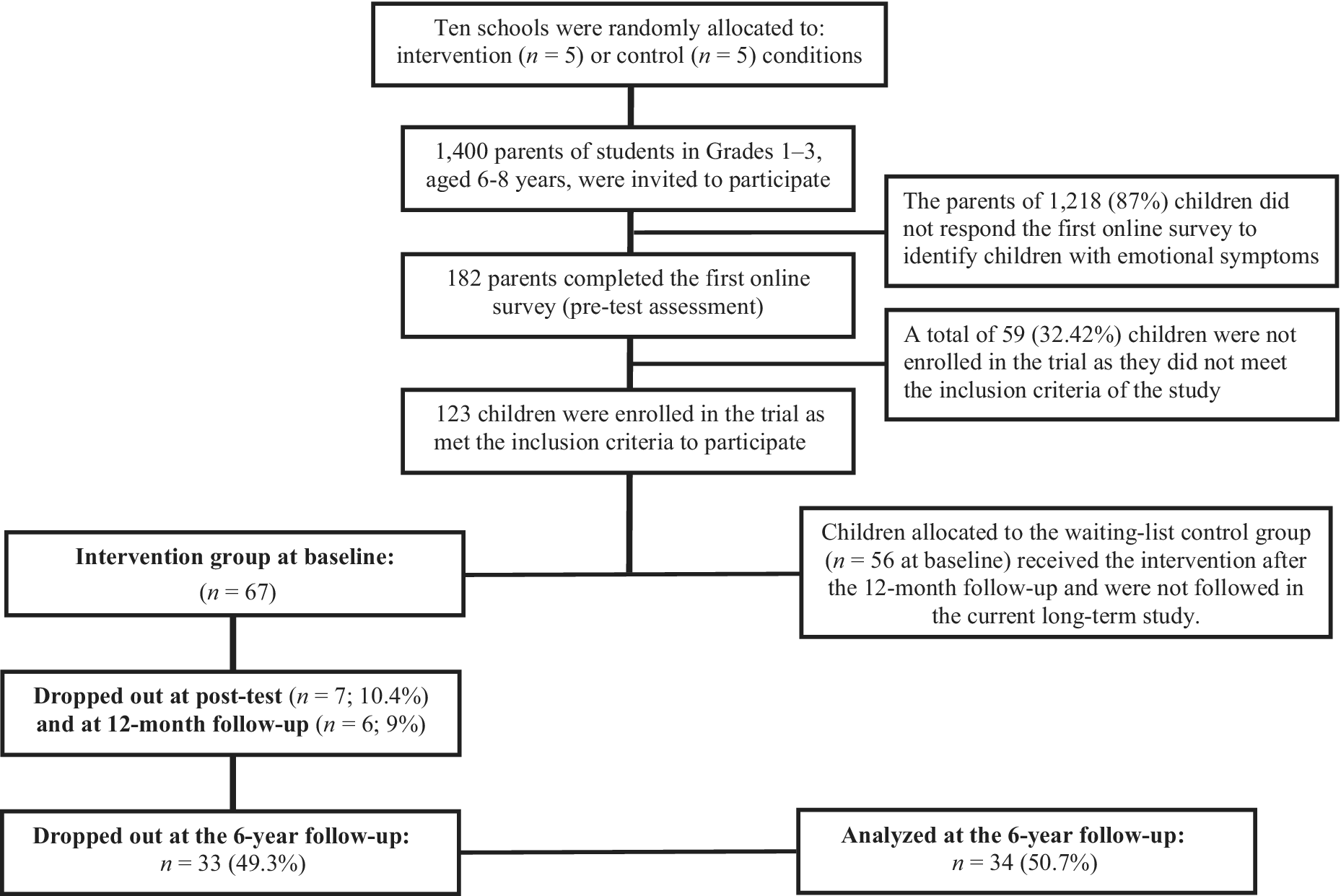
Figure 1 shows a CONSORT diagram illustrating the flow of participants from baseline to the 6-year follow-up. The retention rates were notably high, with 89.6% (n = 60) of participants completing the post-test and 91% (n = 61) returning for the 12-month follow-up assessment. A moderate retention rate was obtained for the long-term follow-up (50.7%, n = 34). Sample attrition across the different assessment stages was due to parents not completing the evaluation when requested. Although the specific reasons for non-response remain largely unclear, this may partly reflect the fact that some families could no longer be reached through the contact information originally provided, particularly during the long-term follow-up conducted several years after the intervention. Regression analysis revealed no significant association between dropout rates and sociodemographic variables such as age and sex, nor between dropout rates and key outcomes such as depressive and anxiety symptoms (p ≥ .05). To further examine potential attrition bias, baseline comparisons were conducted between participants who completed the 6-year follow-up (n = 34) and those who were lost to the long-term follow-up (n = 33). No statistically significant differences were found between groups in sex distribution (χ2 = 0.13, p = .71), baseline age (t = -0.61, p = .54), or baseline levels of anxiety symptoms, depressive symptoms, and anxiety-related life interference, including their respective subscales (all ps > .05). These findings suggest that the retained sample was broadly representative of the original IG.
CONSORT flow diagram of study participants at baseline, 12-month follow-up, and 6-year follow-up.

Figure 1. Long description
The flowchart begins at the top with ten schools randomly allocated to intervention n = 5 or control n = 5 conditions.
Below this, 1,400 parents of students in Grades 1-3, aged 6-8 years, were invited to participate. A branch to the right shows that parents of 1,218 (87%) children did not respond to the first online survey.
The main path continues to 182 parents who completed the first online survey (pre-test assessment). A branch to the right indicates 59 (32.42%) children were not enrolled as they did not meet inclusion criteria.
Next, 123 children were enrolled. A horizontal split divides them into two groups. To the right, children allocated to the waiting-list control group (n = 56 at baseline) received the intervention after the 12-month follow-up and were not followed in the current long-term study.
To the left, the intervention group at baseline (n = 67) is tracked. Below this, 7 (10.4%) dropped out at post-test and 6 (9%) dropped out at 12-month follow-up.
At the final stage, 33 (49.3%) dropped out at the 6-year follow-up, leaving a final box on the right stating that 34 (50.7%) were analyzed at the 6-year follow-up.
The attendance data indicated robust engagement in the SSL sessions, with an average attendance score of 7 (SD = 1.11). Remarkably, 82.1% of the participants attended seven to eight sessions, effectively participating in all or nearly all of the scheduled sessions. In addition to attendance, several indicators of adherence and participant engagement were collected, including homework completion, satisfaction ratings, and perceived usefulness of the sessions. Children completed most of the assigned tasks (M = 5.13 out of 7, SD = 1.63) and reported very high levels of satisfaction (M = 9.60 out of 10, SD = 0.59) and perceived usefulness (M = 9.59 out of 10, SD = 0.60). This high level of engagement and positive evaluation further underscored the feasibility, acceptability, and adequate implementation of the intervention. Detailed analyses of implementation fidelity and its association with outcomes have been reported elsewhere (Fernández-Martínez et al., Reference Fernández-Martínez, Orgilés, Espada, Essau and Morales2021).
Sample Characteristics
At baseline, the 34 children in the IG involved in the 6-year follow-up were between the ages of 6 and 8 (Grades 1–3 of the Spanish Primary School system), with an average age of 6.97 years (SD = 0.76). All children were Spanish-speaking, and were born predominantly in Spain (97.1%), except for one child born in Sweden. Concerning sex, 52.9% (n = 18) of the children were girls, and 79.4% (n = 27) of the informants were mothers. The sample primarily consisted of children from middle- and high-socioeconomic backgrounds. At the long-term follow-up, the mean age of the children assessed was 13.76 years (SD = 0.92; age range = 12–15 years), and they were attending Grades 1–4 of the Spanish Compulsory Secondary Education system.
Effects of Intervention
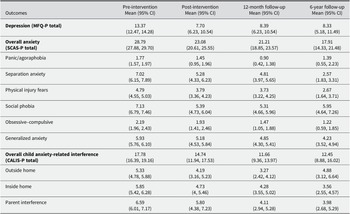
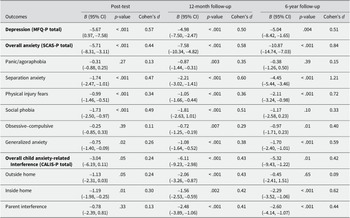
The marginal means for outcomes at baseline, post-intervention (post-test), 12 months, and 6 years post-intervention are detailed in Table 1. GEE models and standardized effect sizes (Cohen’s d) are detailed in Table 2.
Estimated marginal means of the outcomes at pre-test, post-test, 12-month, and 6-year follow-ups

Table 1. Long description
The table consists of five columns: Outcomes, Pre-intervention Mean (95 percent C I), Post-intervention Mean (95 percent C I), 12-month follow-up Mean (95 percent C I), and 6-year follow-up Mean (95 percent C I).
Key data points include:
* Depression (M F Q - P total): Decreases from 13.37 (12.47, 14.28) at pre-intervention to 7.70 (6.23, 10.54) at post-intervention, remaining stable at 8.33 (5.18, 11.49) after 6 years.
* Overall anxiety (S C A S - P total): Shows a steady decline from 28.79 (27.88, 29.70) at pre-intervention to 17.91 (14.33, 21.48) at the 6-year follow-up.
* Anxiety subscales (Panic, Separation, Physical injury, Social, Obsessive-compulsive, and Generalized): All show general decreases from pre-intervention to the 6-year follow-up, with Separation anxiety showing the largest drop from 7.02 to 2.57.
* Overall child anxiety-related interference (C A L I S - P total): Decreases from 17.78 (16.39, 19.16) at pre-intervention to 12.45 (8.88, 16.02) at the 6-year follow-up.
* Interference subscales (Outside home, Inside home, and Parent interference): All show a downward trend over the 6-year period, with Parent interference dropping from 6.59 to 3.98.
Note: CI = Confidence Interval; MFQ-P = The Mood and Feelings Questionnaire-Parent version; SCAS-P = The Spence Children’s Anxiety Scale—Parent version; CALIS-P = The Child Anxiety Life Interference Scale—Parent report. Higher scores denote greater symptomatology.
Generalized estimating equations (GEE) models examining intervention effects on outcomes at post-test, 12-month, and 6-year follow-ups compared with baseline
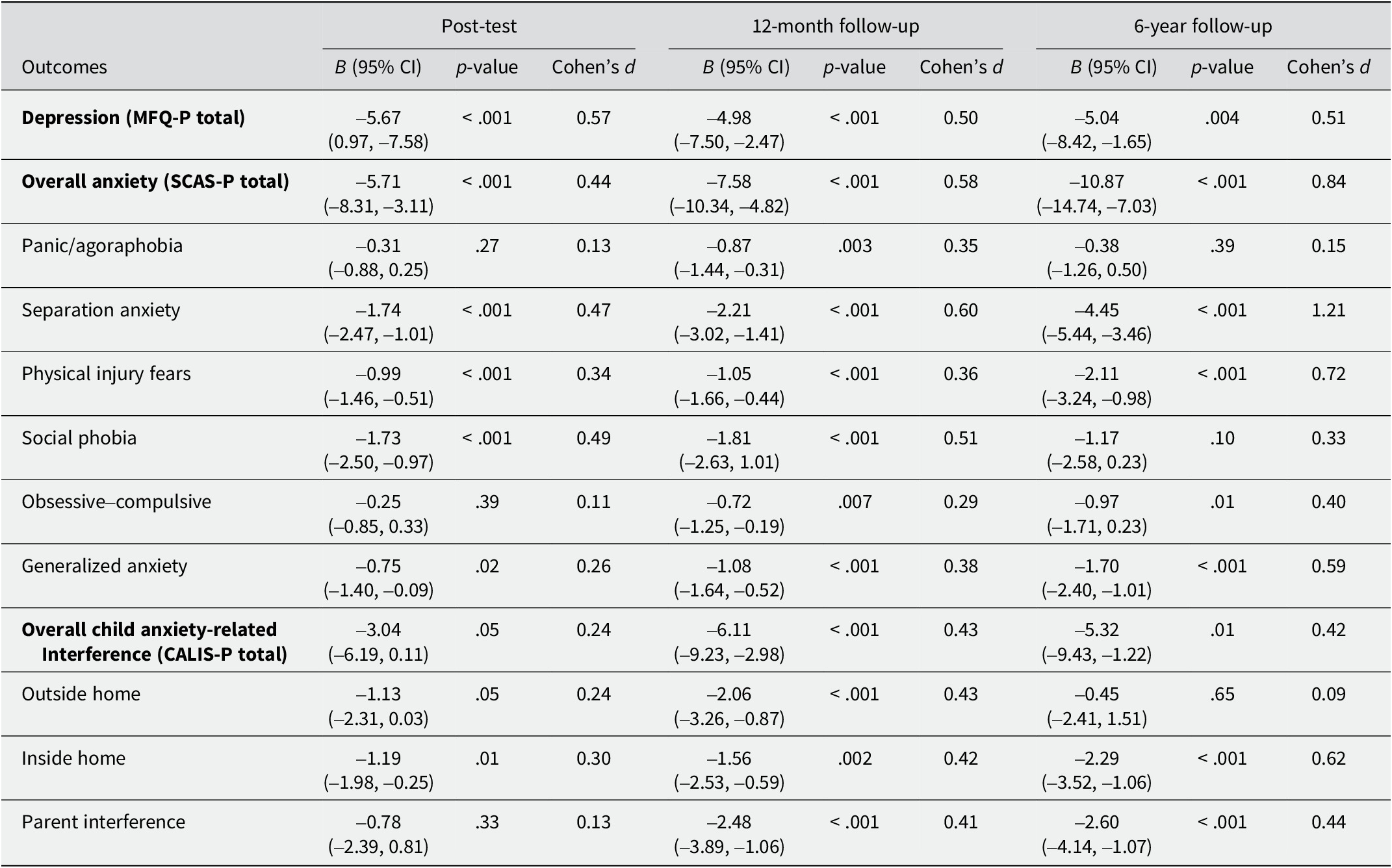
Table 2. Long description
The table is organized into ten columns. The first column lists Outcomes, followed by three main sections: Post-test, 12-month follow-up, and 6-year follow-up. Each section contains three sub-columns: B (95% C I), p-value, and Cohen’s d.
Key data rows include:
* Depression (M F Q - P total): Post-test B is -5.67 (p < .001, d = 0.57); 12-month B is -4.98 (p < .001, d = 0.50); 6-year B is -5.04 (p = .004, d = 0.51).
* Overall anxiety (S C A S - P total): Post-test B is -5.71 (p < .001, d = 0.44); 12-month B is -7.58 (p < .001, d = 0.58); 6-year B is -10.87 (p < .001, d = 0.84).
* Separation anxiety: Shows a significant decrease over time with B moving from -1.74 at post-test to -4.45 at 6-year follow-up (all p < .001).
* Physical injury fears: B is -0.99 at post-test and -2.11 at 6-year follow-up (all p < .001).
* Social phobia: B is -1.73 at post-test (p < .001) but becomes non-significant at 6-year follow-up (p = .10).
* Generalized anxiety: B is -0.75 at post-test (p = .02) and -1.70 at 6-year follow-up (p < .001).
* Overall child anxiety-related Interference (C A L I S - P total): Post-test B is -3.04 (p = .05); 12-month B is -6.11 (p < .001); 6-year B is -5.32 (p = .01).
Sub-scales for Panic/agoraphobia and Obsessive-compulsive show smaller effect sizes and varying significance levels across the time points.
Note: B = unstandardized regression coefficient from generalized estimating equations; CI = Confidence Interval. Each analysis was adjusted for the baseline measure, sex, age, and school-level. MFQ-P = The Mood and Feelings Questionnaire—Parent version; SCAS-P = The Spence Children’s Anxiety Scale—Parent version; CALIS-P = The Child Anxiety Life Interference Scale—Parent report.
Short-Term Effects
As shown in Table 2, significant improvements were observed in 9 of the 12 outcomes at post-test compared with baseline. In particular, significant reductions were found for symptoms of depression, overall anxiety, separation anxiety, physical injury fears, social phobia (p < .001 for all outcomes), and generalized anxiety (p = .02). These improvements were associated with small-to-moderate effect sizes, ranging from d = 0.26 (generalized anxiety symptoms) to d = 0.57 (depressive symptoms).
Additional significant improvements were also observed for the overall child anxiety-related interference (p = .05), as well as anxiety-related interference inside (p = .01) and outside the home (p = .05), with small effect sizes (d = 0.24–0.30).
In contrast, changes in the child’s anxiety-related interference in the parents’ lives domain, panic/agoraphobia symptoms, and obsessive–compulsive symptoms were not statistically significant (ps > .05) (see Table 2).
Medium-Term Follow-Up Effects
One year after the intervention, significant improvements relative to baseline were observed across all 12 outcomes (Table 2). Significant reductions were found for symptoms of depression, overall anxiety, separation anxiety, physical injury fears, social phobia, and generalized anxiety (ps < .001), as well as panic/agoraphobia and obsessive-compulsive symptoms (ps < .01). The magnitude of these effects was generally small-to-moderate, with effect sizes ranging from d = 0.29 (obsessive–compulsive symptoms) to d = 0.60 (separation anxiety symptoms).
Significant reductions were also found in the overall child anxiety-related interference (p < .001) and across all domains, including interference inside the home (p < .01), as well as outside the home and in parents’ lives (ps < .001), with small-to-moderate effect sizes (d = 0.41–0.43).
Long-Term Follow-Up Effects
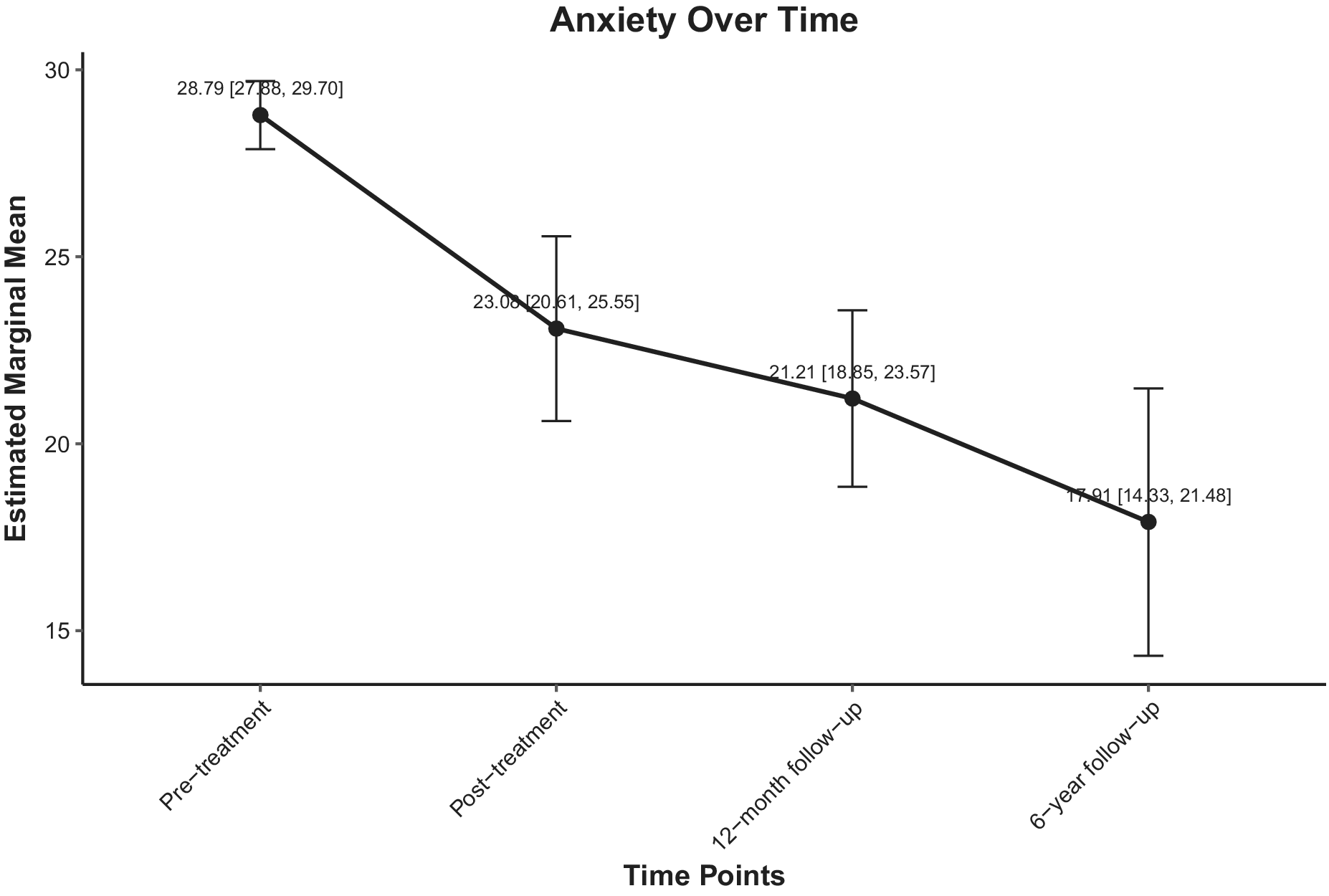
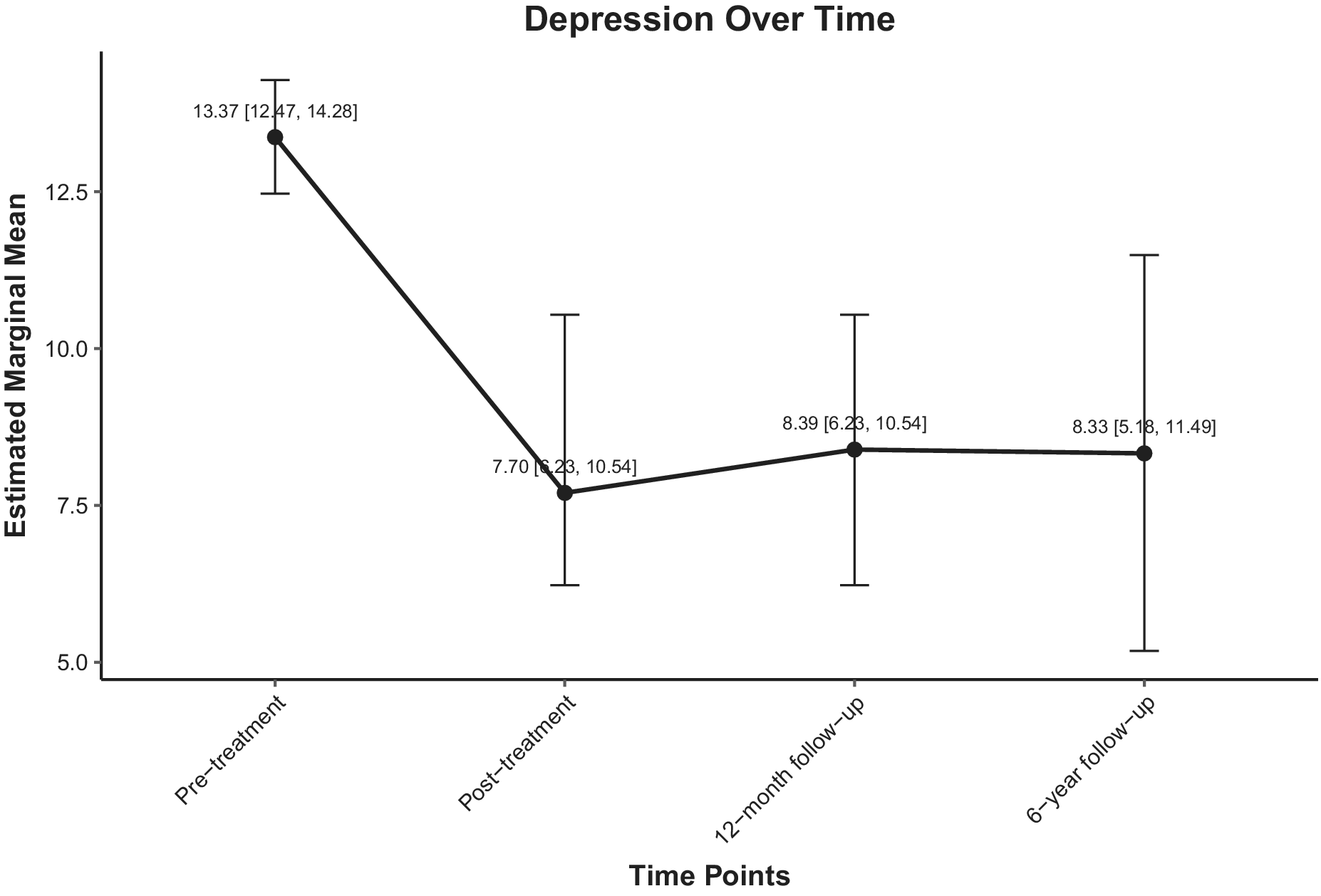
Six years after the intervention, the program continued to show significant benefits for 9 of the 12 outcomes among participants previously exposed to the SSL program (Table 2), including the primary outcomes of overall anxiety (Figure 2) and depression (Figure 3). Specifically, significant reductions relative to baseline were observed for symptoms of depression, overall anxiety, separation anxiety, physical injury fears, obsessive–compulsive symptoms, and generalized anxiety (p ≤ .01 for depressive and obsessive–compulsive symptoms, and p < .001 for the remaining outcomes). The magnitude of these effects ranged from small-to-moderate to large, with effect sizes between d = 0.40 (obsessive-compulsive symptoms) and d = 1.21 (separation anxiety symptoms).
Estimated marginal means of SCAS-P total scores, illustrating changes in anxiety symptoms over the study’s time periods.
Note: SCAS-P = Spence Children’s Anxiety Scale—Parent version. Values represent the mean with 95% confidence intervals.

Figure 2. Long description
The Y-axis is labeled Estimated Marginal Mean with a scale from 15 to 30. The X-axis is labeled Time Points and includes four intervals. A single black line connects four data points, each with vertical error bars representing 95 percent confidence intervals.
* Pre-treatment: The mean is 28.79 with a confidence interval of 27.88 to 29.70.
* Post-treatment: The mean decreases to 23.08 with a confidence interval of 20.61 to 25.55.
* 12-month follow-up: The mean decreases to 21.21 with a confidence interval of 18.85 to 23.57.
* 6-year follow-up: The mean reaches its lowest point at 17.91 with a confidence interval of 14.33 to 21.48.
The graph illustrates a continuous linear decrease in anxiety symptoms over the six-year period, with the width of the confidence intervals increasing at later time points.
Estimated marginal means of MFQ-P total scores, illustrating changes in depression symptoms over the study’s time periods.
Note: MFQ-P = Mood and Feelings Questionnaire–Parent version. Values represent the mean with 95% confidence intervals.

Figure 3. Long description
A line graph titled Depression Over Time. The y-axis is labeled Estimated Marginal Mean with values ranging from 5.0 to 12.5. The x-axis is labeled Time Points and includes four intervals.
* Pre-treatment: The mean score is 13.37 with a 95 percent confidence interval of 12.47 to 14.28.
* Post-treatment: The line shows a sharp linear decrease to a mean of 7.70 with a confidence interval of 6.23 to 10.54.
* 12-month follow-up: The line shows a slight increase to a mean of 8.39 with a confidence interval of 6.23 to 10.54.
* 6-year follow-up: The line remains nearly horizontal with a mean of 8.33 and a wider confidence interval of 5.18 to 11.49.
Each data point is marked with a black dot and vertical error bars representing the 95 percent confidence intervals.
Additionally, significant reductions were also found in overall child anxiety-related interference (p = .01), as well as in the specific domains of interference inside the home and in parents’ lives (ps < .001), with small-to-moderate effect sizes (d = 0.42–0.62).
The improvements observed at the 12-month follow-up were largely maintained at the 6-year follow-up. However, changes in panic/agoraphobia, social phobia, and the child anxiety-related interference outside the home did not maintain statistical significance (ps > .05), although mean scores at the 6-year follow-up remained lower than those observed at baseline (see Table 1 and Table 2).
Reduction of Clinically Elevated Anxiety Symptoms
Clinically elevated anxiety symptoms were examined using established cut-off scores for the SCAS-P (≥ 26 for boys and ≥ 28 for girls). At baseline, 52.2% of participants (n = 35/67) presented elevated anxiety symptoms. This proportion decreased to 31.7% (n = 19/60) at post-test, 23% (n = 14/61) at the 12-month follow-up, and 20.6% (n = 7/34) at the 6-year follow-up. Overall, these findings indicate a progressive reduction over time in the proportion of children with anxiety symptoms within the clinical range.
Reduction of Clinically Elevated Depressive Symptoms
Clinically elevated depressive symptoms were examined using the established cut-off score for the MFQ-P (≥ 27). At baseline, 11.9% of participants (n = 8/67) presented elevated depressive symptoms. This proportion decreased to 1.7% (n = 1/60) at post-test, 8.2% (n = 5/61) at the 12-month follow-up, and 8.8% (n = 3/34) at the 6-year follow-up. Overall, these findings indicate that the proportion of children with depressive symptoms within the clinical range remained below baseline levels over time.
Discussion
This study aimed to evaluate, for the first time, the long-term effects of the SSL program at a 6-year follow-up (6.4 years on average), extending beyond the 12-month period. The SSL intervention was initially delivered to a sample of Spanish-speaking children aged 6–8 years presenting emotional symptoms, within the context of the original school-based RCT (Fernández-Martínez et al., Reference Fernández-Martínez, Morales, Espada, Essau and Orgilés2019). In particular, the current research examined reductions in symptom levels among participants from the IG of the original trial at three time points—short term (post-intervention), medium term (12-month follow-up), and long term (6-year follow-up)—assessing both primary outcomes (i.e., anxiety and depressive symptoms) and secondary outcomes (i.e., interference of anxiety in children’s and parents’ daily lives) through within-group comparisons over time. To our knowledge, this represents the longest follow-up of the SSL program to date, providing a valuable opportunity to explore the durability of the program’s effects across time.
The results of the present study supported our hypothesis that the significant reductions in symptoms observed from pretest to post-test would be maintained—or even extended—at the 12-month follow-up. A favorable progression was observed across all outcomes evaluated at the medium-term follow-up. Specifically, statistically significant reductions were found not only in the primary outcomes (overall anxiety and depressive symptoms) but also in the secondary outcomes (e.g., child anxiety-related interference), including outcomes that had not reached significance at post-test, such as panic/agoraphobia symptoms, obsessive-compulsive symptoms, and anxiety interference in parents’ lives. These findings suggest that the effects of the intervention were sustained over time and extended to a broader range of symptom domains. Consistent with previous research showing that the benefits of preventive interventions for emotional problems in childhood can be maintained or even increase up to at least 12-month follow-up (Orgilés, Fernández-Martínez et al., Reference Orgilés, Fernández-Martínez, Espada and Morales2019; Werner-Seidler et al., Reference Werner-Seidler, Perry, Calear, Newby and Christensen2017, Reference Werner-Seidler, Spanos, Calear, Perry, Torok, O’Dea, Christensen and Newby2021), the present results highlight the stability of the SSL program’s effects during the first year after the intervention. Consistent with previous SSL research (Orgilés, Fernández-Martínez et al., Reference Orgilés, Fernández-Martínez, Espada and Morales2019), these improvements at the 12-month follow-up were observed across depressive symptoms and different types of anxiety symptoms, including those that may involve particularly intense episodes (e.g., panic-related symptoms), possibly reflecting the continued practice and consolidation of the skills learned during the program.
Regarding the long-term (6-year) follow-up, the findings indicated within-group effects of the program on 9 out of the 12 outcomes assessed, most notably including symptoms of anxiety and depression, suggesting sustained reductions in these core symptoms among participants who received the SSL program. In this regard, the maintenance of improvements over time in the core internalizing symptoms targeted by the SSL program is consistent with previous research reporting long-lasting effects of CBT-based interventions for children’s emotional problems beyond 12 months (Barrett et al., Reference Barrett, Duffy, Dadds and Rapee2001; Benjamin et al., Reference Benjamin, Harrison, Settipani, Brodman and Kendall2013; Kendall et al., Reference Kendall, Safford, Flannery-Schroeder and Webb2004; Werner-Seidler et al., Reference Werner-Seidler, Spanos, Calear, Perry, Torok, O’Dea, Christensen and Newby2021). Overall, our study showed small-to-moderate effect sizes across all assessment points, with some anxiety outcomes reaching large effects at the 6-year follow-up. These results align with reviews focused on school-based preventive interventions reporting variability in effect sizes for anxiety symptoms, ranging from small to large (Neil & Christensen, Reference Neil and Christensen2009; Werner-Seidler et al., Reference Werner-Seidler, Perry, Calear, Newby and Christensen2017, Reference Werner-Seidler, Spanos, Calear, Perry, Torok, O’Dea, Christensen and Newby2021). Notably, the SSL program showed a stable moderate effect size for depressive symptoms, which appears to be higher than the small effect sizes often reported in the literature (Luttinen et al., Reference Luttinen, Watroba, Niemelä, Miettunen and Ruotsalainen2025; Werner-Seidler et al., Reference Werner-Seidler, Perry, Calear, Newby and Christensen2017, Reference Werner-Seidler, Spanos, Calear, Perry, Torok, O’Dea, Christensen and Newby2021). Nonetheless, to further strengthen the evidence on the SSL program, future research should continue to consistently report effect sizes across short-, medium-, and long-term follow-up assessments in school-based trials involving children. This would also enhance the comparability of effect sizes between SSL studies. Despite these favorable results, our hypothesis regarding the long-term follow-up was only partially supported, as some specific outcomes—such as symptoms of social phobia, panic/agoraphobia, and child anxiety interference outside the home—did not maintain statistically significant improvements compared to baseline, suggesting that program effects were maintained over time for most outcomes, with a few exceptions.
The reasons for the absence of significant long-term improvements in these outcomes remain unclear. However, it is worth noting that symptoms of social anxiety and panic/agoraphobia tend to show increasing prevalence during adolescence, a developmental period marked by significant cognitive and emotional changes, as well as social transitions and novel contextual demands (e.g., greater autonomy from parents, increased influence and complexity of peer relationships, and academic pressure). These changes may heighten sensitivity or vulnerability to various factors (e.g., social evaluation and comparison, external or internal threat-related cues—such as social fears, worries, or fear of physiological arousal—catastrophic misinterpretations, and anxiety-related impairment in school and social settings) (Alves et al., Reference Alves, Figueiredo and Vagos2022; Baker et al., Reference Baker, Hollywood and Waite2022; Beesdo et al., Reference Beesdo, Knappe and Pine2009; Rapee et al., Reference Rapee, Oar, Johnco, Forbes, Fardouly, Magson and Richardson2019). As a result, these symptoms may become increasingly frequent and challenging to manage over time during the adolescence period, potentially reducing the long-term impact of skills acquired earlier in childhood. Furthermore, uncontrolled factors in this study, such as stressful life events, may also have hindered long-term improvement in outcomes that did not reach significance. Overall, this lack of sustained effects may suggest that the SSL program, originally designed for childhood, may not fully equip children to cope with developmental changes or contextual demands that emerge during adolescence. In this context, incorporating booster sessions over time could help maintain the medium-term benefits (Gearing et al., Reference Gearing, Schwalbe, Lee and Hoagwood2013). Accordingly, future developments of the SSL program might also consider the inclusion of additional or targeted modules addressing these specific anxiety domains, as well as booster sessions informed by periodic reassessment of individual needs across developmental stages.
Remarkably, the proportion of children with elevated symptoms based on established cut-offs for the study’s primary outcomes of overall anxiety and depressive symptoms, measured with the SCAS-P and MFQ-P, respectively, decreased following the SSL program. In particular, the proportion of children presenting elevated anxiety symptoms decreased substantially and progressively from baseline to the 6-year follow-up, while the proportion of children with elevated depressive symptoms showed a marked reduction after the intervention and remained, although somewhat higher than at post-test, below baseline levels at follow-up. Taken together, the findings of this study underscore the potential of the SSL program as a CBT-based transdiagnostic intervention capable of yielding long-lasting effects over 6 years post-intervention, not only on its primary targets (anxiety and depressive symptoms) but also on anxiety-related interference across various life domains affecting both children and their caregivers. Additionally, the present results further support previous research on the follow-up effects of the SSL intervention and contribute, for the first time, new evidence of its sustained impact on emotional symptoms 6 years after the intervention, beyond the commonly studied 6- or 12-month follow-up periods (e.g., Essau et al., Reference Essau, Olaya, Sasagawa, Pithia, Bray and Ollendick2014; Orgilés, Fernández-Martínez et al., Reference Orgilés, Fernández-Martínez, Espada and Morales2019).
Limitations
This study has several limitations that should be considered. First, the sample size at long-term follow-up was relatively small, reflecting the inherent difficulties of retaining participants over extended periods. Future longitudinal studies could consider additional engagement strategies to mitigate attrition over time, such as maintaining more frequent contact with families beyond assessment waves, encouraging them to update their contact details if they change, and providing incentives. Second, the sample was geographically limited to participants from the southeastern region of Spain, which may affect the generalizability of the findings to other populations and cultural contexts. Third, outcomes were assessed exclusively through parent-report measures to ensure consistency across time points, as the original participants were aged 6–8 years and self-reports were not collected at baseline. Nevertheless, parents may not always be optimal informants of children’s internalizing symptoms, particularly because these symptoms may be less observable to caregivers, and discrepancies between parent and child reports can be observed (De Los Reyes & Kazdin, Reference De los Reyes and Kazdin2005). It should also be noted that, in this trial, the results reflect changes at the symptom level and should be interpreted on the basis of parent reports. Fourth, no comparison or control group was included in this long-term follow-up, as the original WLC group had already received the intervention and, therefore, could no longer serve as a control. Future trials could consider alternative designs, such as maintaining a comparison condition different from a WLC group (e.g., alternative intervention modalities) to examine long-term effects by comparing more than one intervention condition. Finally, an individual-level reliable change index was not computed, which limits the ability to determine whether observed symptom reductions reflect clinically meaningful change at the individual level.
Conclusion
Despite these limitations, the present study extends the follow-up period commonly examined in previous evaluations of the SSL program (i.e., 6 or 12 months) and, to our knowledge, represents the longest follow-up to date. It indicates that, in general terms, the program has a lasting positive impact 6 years after participants completed the intervention. Specifically, this impact was observed as reductions in emotional symptoms (i.e., anxiety and depression) and anxiety-related interference compared to baseline. Thus, the symptom reductions observed in the short and medium term during childhood appear to be maintained into the adolescent years of these participants in most outcomes, despite the typical changes that may occur during this period (e.g., developmental changes related to adolescence, contextual shifts, and new challenging situations). Moreover, the study contributes new evidence to the field of transdiagnostic preventive interventions targeting emotional problems in children by including a follow-up period that tends to be less frequently explored than the shorter time frames commonly used in this type of research (e.g., Werner-Seidler et al., Reference Werner-Seidler, Spanos, Calear, Perry, Torok, O’Dea, Christensen and Newby2021). In addition, this study warrants further investigation into the long-term effects of the SSL program, including the potential role of specific factors in sustaining its long-term benefits.
Supplementary material
The supplementary material for this article can be found at http://doi.org/10.1017/SJP.2026.10044.
Acknowledgments
The authors gratefully acknowledge the families of the children who participated in this study for their valuable contribution.
Author contribution
Conceptualization: M.O.; Data curation: I.F.M.; Formal analysis: A.M.; Investigation: I.F.M. and M.O.; Methodology: A.M.; Supervision: M.O.; Visualization: I.F.M. and A.M.; Writing – Original draft preparation: I.F.M. and A.M.; Writing – Review and Editing: M.O. All authors have materially participated in both the research and the article preparation.
Funding statement
This work was supported by the Ministry of Education, Culture and Sport of Spain [IFM, grant number FPU14/03900].
Competing interests
None.


 Open access

