

Introduction
Institutions of higher education belong in some respects to the most international institutions. Knowledge is universal in some disciplines, and in many other disciplines we aim at getting to know the academic progress worldwide. Scholars consider international academic reputation superior only to national reputation. Finally, many scholars harbour cosmopolitan values. In other respects, however, higher education tends to be national: for example, funding, staff policies, institutional types, study programmes and degrees. Thus, ‘internationalisation’ – understood as a trend or policies to increase border-crossing knowledge transfer and various related activities as well as possibly understood as a trend and policy to increase the similarity of higher education across countries (often also called ‘globalisation’) – is by no means just a matter of procedure, but rather quite a challenge.
The issue most frequently addressed in the discourse on internationalisation of higher education is that of physical mobility. In this framework, prime attention is paid to international student mobility. Mobility of academics, i.e. persons active at higher education institutions and other research institutions, has been less in the limelight, but is viewed as very important for academic progress in general, for international understanding, comparative analysis and as a counterbalance to parochial thinking in general.
Internationalisation and, in this framework, international mobility of students and academics have been key issues of analyses on higher education and sciences as well as key issues of policy for quite a while. For example, this theme was widely discussed after the Second World War. It was hoped at that time that increasing international activities would help overcome the hatred and mistrust between countries and contribute to mutual understanding and readiness to cooperate. The strong emphasis placed on this theme is visible, for example, in the activities of the Council of Europe during the 1950s. We might argue, however, that issues of internationalisation of higher education really had a breakthrough in the 1990s. Student mobility expanded substantially during that period; it was not anymore seen as an exceptional choice, but as one of the normal options. Internationalisation was ‘mainstreamed’ at higher education institutions in terms of support for international activities becoming an important issue, with substantial professional support and with most strategic key decisions reflecting what general policies mean for internationalisation and what internationalisation means for the general development of higher education. This further intensified in the first decade of the 21st century when similar patterns of study programmes and degrees across Europe were sought in the so-called Bologna Process with the prime argument that this was beneficial, when increasing expenditures for research were called for in the so-called Lisbon Process for making Europe the ‘most competitive economy’ in the world, and when increased attention paid to global ‘rankings’ of ‘world-class universities’ was supported by the spreading belief that academic progress depended on successful world-wide competition of the most excellent universities.
Given the prominence of the theme of internationalisation and the specific emphasis on physical mobility for more than two decades, it is surprising to note that the state of actual knowledge on border-crossing mobility is rudimentary. There are masses of statistical reports, notably on students in these areas, but they are often based on questionable definitions and a limited quality of data. As regards mobility of academics, information is so deplorably scarce that the respective policy documents mostly do not even refer to any data.
In this analysis on the state of knowledge on the mobility of academics, we, first, will provide a brief account on the discourse of mobility in order to put the relevance of data into perspective. Second, we will provide a short overview on the state of information on student mobility in order to show that in this domain at least some improvement of information is visible. Third, we will explain the state of statistical information about the mobility of academics. Fourth, we will present the approaches and findings of a few studies that aim at providing more in-depth information than tends to be provided by statistical sources. In conclusion, we will address possible means of improvement of the knowledge base.
Mobility: Contexts, Rationales and Definitions
Higher education and science are international more or less by definition in adhering to the principle of borderless generation, dissemination and search of/for new systematic knowledge. However, they tend to be national in governance, curricula, degrees and provisions of quality control.Reference Teichler1 As there are many other national, regional and local contexts and mechanisms, targeted efforts are needed to ensure that systematic knowledge flows across borders with ease, if internationalisation is viewed as one of the priority goals of higher education and research policy. Both the high appreciation of internationality and the tensions between national and international thrusts are by no means new, but ‘internationalisation’ only became a key issue in the higher education and science policy discourse in Europe in the 1990s.
The more ‘internationalisation’ became such a key issue, the more inflationary became the use of this or related terms. Various analyses have shown that ‘international’ and ‘internationalisation’ in higher education may comprise a broad range of issues.Reference Kerr2–Reference Teichler7 The author of this contribution argues that notably five themes are on the agenda.Reference Knight8
∙ Physical mobility, notably of students, but also of academic staff and occasionally administrative staff as well, is obviously the most visible international activity and it is in the forefront of programmes aiming to promote internationalisation. Thereby, a broad range of activities is made up e.g. student mobility for a short period or the whole study programme as well as scholars’ mobility for attending conferences, visiting research partners abroad and longer stays in other countries for research purposes, and even migration and international professional mobility.
∙ Recognition of study achievements across borders is a second major theme which, naturally, is clearly linked to the first one: are the results of learning in one country accepted as equivalent to that expected to be learned in another country?
∙ Other modes of transfer of knowledge across borders have been less in the focus of recent public debates, but have altogether a stronger weight than physical mobility of students and scholars: e.g. international knowledge transfer through media (printed publications, patents, virtual communication for varied purposes, and ‘trans-national education’ as modes of transporting study programmes across borders).
∙ Internationality in the substance of higher education, paradoxically, is least often discussed, but possibly the most salient issue: for example foreign language learning, comparative analysis, analysis of border-crossing phenomena (e.g. international law) and ‘international education’.
∙ Finally, international orientations and attitudes of the policy actors, students and academics are major issues: growing ‘global understanding’, more favourable views of the partner country, a growing empathy with other cultures, etc.
In addition, two other themes are often referred to, though they are only loosely related to ‘internationalisation’:
∙ The similarity or heterogeneity of national systems of higher education plays an ambivalent role in this respect. On the one hand, a variety of national higher education systems is considered beneficial, for example in order to provide mobile students with the opportunity to learn from contrasts and thus to develop a more reflective mind. On the other hand, for example, the Bologna Declaration called for a structural convergence of higher education systems in Europe notably as a means of facilitating intra-European student mobility.
∙ Finally, internationalisation is underscored as an argument for almost any reform in higher education and science. Improvement should be striven for in steering and management as well as in quality, relevance and efficiency in order not to fall behind in worldwide competition and to be successful according to ‘international standards’. Top quality is called ‘world class’ and efforts for quality enhancement are viewed as part of ‘global competition’, although some experts claim that the divides between ‘regional’, ‘national’ and ‘global’ are vanishing.
Altogether, we do not note a public discourse on ‘internationality’, but rather on ‘internationalisation’, i.e. on a trend towards ‘more’. This trend tends to be viewed as positive – signalling that there was a problem in the past, there is an opportunity for improvement, and there are trends facilitating the grasping of this opportunity. In the European debate, intensified since the 1990s, it even was viewed as a leap forward: for example, student mobility in Europe is not anymore an exotic option, but has become one of the normal options, and international policies on country or institutional levels are not anymore marginal in addressing separate activities, but have become central or ‘mainstream’ in paying attention to how general policies and activities affect international dimensions and how international policies and activities affect dimensions of higher education as a whole.Reference Teichler9–Reference Wächter11
Actually, the phenomena referred to above are characterised by three different key terms: internationalisation, Europeanisation and globalisation.Reference De Wit4, Reference Teichler12, Reference Blumenthal, Goodwin, Smith and Teichler13 The terms are employed similarly in reference to border-crossing phenomena and related challenges.Reference Van der Wende5, Reference Waechter14, Reference Knight15 They are used, however, differently in two respects. First, they vary in their main meanings: internationalisation means an increase of cross-border activities amidst more or less persistent national systems of higher education and science, while globalisation implies that borders and national systems as such get blurred or might even disappear. Europeanisation is the regionally oriented version of these terms. Second, specific issues tend to be linked to the respective terms: internationalisation is often discussed in relation to physical mobility, academic cooperation and academic knowledge transfer, as well as in relation to international education. Europeanisation is frequently addressed with reference to cooperation and mobility as well as integration, convergence of contexts, structures and substance, or to segmentation between regions of the world (‘fortress Europe’). Globalisation is often associated with competition and market-steering, trans-national education, and finally with commercial knowledge-transfer.Reference Scott16 The last term has been increasingly employed since the late 1990s, whereby it seems to be used without any concern as to whether these trends and policies are really related to a blurring of borders. Often, ‘global’ could be replaced with ‘supra-national’, ‘worldwide’, or ‘world competition society’.
Thereby, internationalisation and, notably, mobility have a strong positive undercurrent: they are expected to serve peace and mutual understanding, quality enhancement, a richer cultural life and personality development, the increase of academic quality, technological innovation, economic growth and societal well-being. This does not mean, however, that negative elements are not also visible, e.g. additional burdens and costs for the individuals and higher risks as far as success is concerned, more efforts for academic and administrative support on the part of the institutions, misunderstandings and new mistrust, chauvinistic attitudes and – last but not least – ‘brain drain’.Reference Sadlak17
Altogether, internationalisation and its related terms are used with so much positive connotations that growth of what they refer to seems to be desirable without any explicit reasoning of what are the ‘ends’ of these ‘means’. Yet, an intensive debate about the impact of internationalisation emerged. This is linked to the fact that it became a popular issue just at a time of an increase of ‘evaluation’ activities, growing pressures for ‘accountability’, increased ‘strategic’ reasoning and activities, etc. – i.e. altogether a growth of ‘output and outcome awareness’ in higher education and science.
In analyses of the intended results in the domain of research, often a rapid transfer of academic knowledge is mentioned, or a borderless collaboration of the best scholars of the world for the purpose of generating breakthroughs in new knowledge. In the area of student mobility, visible international competences are expected, as well as the enhancement of international understanding, the strengthening of communication skills, and the increase of comparative reasoning. A closer view suggests that we might distinguish between direct international results, e.g. understanding of other countries, and general results – see the comparisons of the competence level of mobile students in general as compared to non-mobile students and the publications of mobile scholars as compared to non-mobile scholars.Reference Knight8, Reference Wächter18, Reference Kehm and Teichler19 However, there is not always a clear borderline: for example, enhancing communication skills can be viewed as a general objective, but might be more in demand and more successfully fostered in relation to international communication.
As regards physical border-crossing as the most frequently addressed phenomenon of the internationality of higher education and science, we note various key terms or groups of terms.
∙ The first group of terms address citizenship and its link to the physical location of the persons addressed. Students study abroad, and while they do so, they are foreign students in the country of study. Academics teaching in country other than that of their citizenship are often named foreign staff or occasionally expatriates.
∙ The term mobility refers to border-crossing, and in this context border-crossing for a purpose: for study and for work. Often, mobility means a non-permanent border-crossing: for temporary study, for study of a whole programme, for mid-career international experience or employment in another country for a while. But we also talk about professional mobility, if the academics do not return to the country of origin. Mobility can be described as outward, i.e. related to the country of origin, and as inward, with reference to the country of destination.
∙ Migration, in contrast to mobility, underscores the permanence of border-crossing: a person may have parents who emigrated from the country of citizenship and immigrated into the country where the respective person lives before this person was born. Or such a border-crossing change of domicile may have taken place in the early years of this person, so that she or he had already lived and learned in a country different from his or her citizenship (or previous citizenship if this was changed in the meantime) prior to study or prior to academic work.
∙ Finally, the term international, i.e. international student or international academic, is employed in this context. This is clearly the fuzziest of the terms used, because one does not know precisely what is meant by it, and often various activities are lumped together under it. It may in fact refer to anything otherwise discussed regarding citizenship and location, mobility and migration.
It might be added here that mobility is occasionally also employed as an umbrella term for all these activities. This holds true for the headline of this article as well.
A Glance at the State of Knowledge on Student Mobility
In-depth analyses of both concepts and frequencies of student mobility have shown that four distinctions have to be made to understand the character and the possible impact of student mobility:Reference Teekens and de Wit20–Reference Teichler, Ferencz and Wächter23
∙ ‘foreign students’ and ‘study abroad’ versus student mobility,
∙ temporary mobility versus mobility for the whole degree programme,
∙ ‘horizontal’ versus ‘vertical’ mobility, and
∙ inward versus outward mobility.
First, most available studies employ the term ‘student mobility’, but actually provide information about students whose citizenship (nationality, ‘passport’, etc) is different from that of the country where they study. And even many experts on student mobility ignore the difference between foreign and mobile students when they refer to statistics.Reference Teichler24–Reference De Wit26 However, many foreign students have already lived and learned in the country before they eventually undertake their studies there; moreover, some mobile students have lived and learned abroad prior to study and return to the country of their citizenship for the purpose of study. Therefore, a distinction has to be made between foreign students and study abroad on the one hand and student mobility on the other. As already pointed out, the term ‘international students’ is often used to evade this distinction.
Second, the majority of students going to another country for the purpose of study do this with the intention to be eventually awarded a degree there, and thus spend the whole study period in that other country. But temporary student mobility, possibly for a semester or an academic year, is by no means an infrequent phenomenon. Temporary mobility is clearly distinct from mobility for the whole study programme, because studying at different universities during a study programme is essential for the former – thus handling contrasting learning environments and studying at various places is eventually recognized as having contributed to successfully having completed a whole study programme.
Third, there is an important distinction that never will show up in official statistics: that between ‘vertical’ and ‘horizontal’ student mobility. In the former, students move from an academically and often economically less favourable country or institution to a more favourable country and institution: This is based on the hope that the quality of one’s competences is substantially enhanced by such a leap upwards, and adaption to the host country and institution is the imperative. In the latter case, students are mobile between countries and institutions of a similar academic level: learning from valuable contrasts is the aim rather than a leap upwards. Available information suggests that most upwardly mobile students study abroad the entire study programmes, whereas most horizontally mobile students opted for temporary study in another country.
Fourth, we make a distinction between the directions in the actual description of mobility. For example, a temporarily mobile student can be viewed as outward mobile from the perspective of the university where she or he has studied previously and as inward mobile from the perspective of the host university during the study period in another country. This distinction certainly plays a role for the universities that are busier taking care of the inward mobile students from other countries than of those who have left the university for a while. And it plays a role for national policies: as regards inward mobile students, the individual country might reflect on how it serves students most of whom eventually will go on to live and work afterwards in another country, often their country of origin. As regards outward mobility, one may ask how ‘our’ students’ (and subsequently graduates’) competences may change and hopefully be enhanced as a consequence of experiencing life and study in another country for a while.
Europe-wide statistics relevant to understanding the frequency of international mobility of students are provided collaboratively by the UNESCO Institute for Statistics (UIS), Montreal, the OECD, Paris and EUROSTAT (the statistical agency of the European Union), Luxembourg. These three supranational agencies, briefly called UOE, address the national agencies in charge of the national collection of educational data and ask them to deliver national statistics according to a common set of definitions and operational guidelines that is updated annually. As national agencies may have definitions and practices of their own, UOE have to decide whether the information provided more or less fits the guidelines or is treated as ‘missing information’.
We often read publications reporting high absolute numbers of foreign students worldwide. It looks impressive to note that this figure has risen from some 300,000 in the 1950s to more than 4 million in the 2010s. However, the total number of students has increased similarly; thus, the rate of foreign students as compared to all students worldwide did not increase much beyond 2%.
Although student mobility is so high on the political agenda, the quality of international data collection is deplorable.Reference Banks and Bhandari27 Three weaknesses are most salient in this context:
∙ dominance of data of foreign students and study abroad,
∙ no distinction is made between temporary mobility and mobility for the whole study programme, and
∙ exclusion of most temporarily mobile students.
First, international student statistics have focused solely on nationality until recently, i.e. foreign students and study abroad. For a long time the United Kingdom was the only country that delivered statistics on mobility to UOE (based on the location of the domicile as compared with the location of study). A recent study, comparing the data on foreign and mobile students in those countries where both types of information is available, came to the conclusion that only about three quarters of foreign students in Europe are mobile for the purpose of study; one quarter of foreign students has already lived and learned before in the country of study. In addition, the authors of the study estimated that one tenth of mobile students in Europe are not foreign; one tenth of mobile students either had lived abroad prior to study and returned to their country of citizenship or had held another citizenship and had lived somewhere else and later took on the citizenship of the country of study.Reference Teichler and Ferencz28
To illustrate this for two countries with data available for 2007: 13.6% of all students in the United Kingdom – a country with many foreign and inward mobile students – were foreign mobile students, 5.9% foreign non-mobile students, and 1.3% incoming students with home nationality. Thus, the total number of mobile students (the first and the third figure) was 14.9% and the total number of foreign students (the first and the second figures) was 19.5%. 1.8% of all students in Spain – a country with few foreign and inward mobile students according to the international statistics – were foreign mobile students, 1.6% foreign non-mobile students, and 0.0% incoming students with home nationality. Thus, the total number of mobile students was 1.8% and the total number of foreign students was 3.4%.Reference Teichler and Ferencz28
Second, no distinction is made in the statistics between temporarily mobile students and those mobile for the whole study programme. This holds true for the international statistics as well as for most national statistics. In many publications, statistics of ERASMUS students were provided as a proxy for temporary student mobility in Europe. In the meantime, however, this approach is employed less frequently, because experts estimate that ERASMUS students comprise fewer than one third of all temporarily mobile students in Europe.
Third, the UOE even recommends the national agencies not to include students of foreign countries and mobile students that are temporarily mobile for up to one year in the statistics. Actually, the above-named study estimates that about half of the temporary mobile students in Europe are included in the international statistics on foreign and mobile students.
In fact, available analyses of temporary mobility show that there is a need to define a threshold period of mobility: should student mobility only be considered to be a meaningful experience if a certain minimum period of time is spent in another country? Often, a semester or a trimester is considered to be such a minimum. Further, one has to determine the activities to be included: mobility for regular study or also for internships, summer schools, language courses, etc. Some studies available have shown that an analysis based on a very wide definition might comprise twice as many students as an analysis only including those mobile for regular study.
As a consequence of the weaknesses of the available statistical sources, it is impossible to establish the extent to which the introduction of a bachelor and master system of study programmes and degrees and related measures in the Bologna Process has really led to increasing mobility. Under these conditions, most respective analyses are based on the international statistics, i.e. they refer to foreign students and only include some temporary mobile students. For example, a study focusing on 32 European countries (notably EU and EFTA) shows that the number of foreign students increased from about 827,000 in 1999 to about 1,118,000 in 2003 and eventually 1,516,000 in 2007, i.e. by more than 80% in eight years. As the overall number of tertiary education students grew in these countries from more than 15 million to almost 22 million, i.e. by about 40%, the rate of foreign students increased only from 5.4% in 1999 to 5.8% in 2003 and eventually to 7.0% in 2007. Thereby, the number of foreign students from outside Europe has slightly more than doubled. Though half of this growth is due to the worldwide increase of the student population, the relative increase by about one half suggests that higher education in Europe has become more attractive for students from other parts of the world. Actually, the rate of foreign students from outside Europe (and unknown nationality) among all students of these European countries has increased from 2.4% to 3.7% during that period. In contrast, the number of foreign students from other European countries in these 32 European countries in 2007 was only about one and a half times as high as in 1999. As the total number of tertiary education students in these countries increased by about 40% during this period, the rate of foreign students being citizens of other European countries grew only from 3.0% in 1999 to 3.3% in 2007.Reference Teichler, Ferencz and Wächter23 Thus, we do not note any acceleration of intra-European mobility in comparison to the prior growth trend. However, as already pointed out, these data do not exclude the possibility that short-term mobility within Europe has increased to a higher extent recently, because a substantial proportion of short-term mobile students are not included in these statistics.
In the meantime, the number of European countries collecting information both on foreign students and foreign mobile students has increased substantially, and the international agencies active in collecting educational statistics ask the national agencies to deliver data according to the two definitions. However, they still recommend excluding temporarily mobile students while actually tolerating data delivered from some countries that include these students. Recently, the European Commission – in using indices on European educational developments – has started providing information not only on foreign students and study abroad, but also on foreign inward mobile students in selected countries where such information is available;29, 30 the Commission does not mention, though, that a substantial proportion of temporarily mobile students are not included in these statistics. The OECD had also changed their data source; while they presented data on foreign students in the past, they now refer to ‘international/mobile students’, with – depending on availability – data on foreign mobile students and otherwise foreign students.31
So far, the analysis has focused on absolute numbers of students who were foreign or mobile at a certain point in time. In the meantime, the ministers involved in the Bologna Process have opted for another approach. Their 2009 Leuven Communiqué called for a 20% margin of European students who have studied in another country during their course of study for the year 2020; some European countries set even more ambitious targets according to the same logic.32 In fact, the real aim of temporary student mobility is not to achieve that a certain rate of students has to be in another country at a certain moment in time. Rather, a certain rate of students should have the experience of studying while in another country during the overall course of study. As a first step towards measuring the event of mobility during the course of study, a respective secondary analysis of graduate surveys in ten European countries was undertaken.Reference Schomburg and Teichler33 This study shows that the proportion of students who had studied temporarily in another country during their course of study varied in the first decade of the 21st century between substantially more than 20% in Austria and the Netherlands on the one hand and less than 5% in Poland and the United Kingdom on the other (a few percent would be added if figures on studying the whole degree programme abroad would be available). Thus, the target of 20% for 2020 set in the Leuven Communiqué has a different meaning for the various European countries: some of them have already surpassed that rate, others may view it as a realistic aim, and yet others may consider it completely out of reach in the foreseeable future.
Definitions and the Statistical Data Base on Academic Mobility
As already pointed out, academic staff and researchers’ mobility has been less in the limelight of the public debate on internationalisation of higher education than student mobility. Many reasons may explain this phenomenon. First, the absolute numbers may play a role; estimates made some years ago put the number of students at about 13 times the number of full-time equivalent researchers.34 Then, the process of international mobility becoming a normal option for academics was slower: an overview published in 2001 concluded: ‘Academic labor markets in Europe … are far from international’ in most economically advanced countries.Reference Enders35 Further, reports on the internationalisation of higher education and science mostly concentrated on output measures such as internationally collaborative publications, citations or patents.Reference Vincent-Lancrin36–Reference Marginson and van der Wende39 Finally, we note that mobility of academics was not as highly emphasised in higher education and science; this is often explained as at least in part reflecting a less favourable view of academic mobility in light of the danger of brain drain.
Obviously, however, mobility of academics and researchers is not considered to be a less important element in the public discourse than student mobility in the process of internationalisation and globalisation of higher education. There are many indications that the higher education and research systems have adapted more readily to traditional modes of academic staff mobility than to student mobility. Moreover, one notes, if one is not overwhelmed by absolute figures, that mobility among academics is relatively more frequent than student mobility. In fact, there is a wealth of support programmes for the mobility of academic staff and researchers. The European Commission has been supporting the mobility of junior researchers since the 1960s under changing names (from ‘Sectoral Grants’ initially to finally ‘Marie Curie’ grants), and in the framework of the Lisbon Process calling for the establishment of a European Research Area by 2010, the mobility and cooperation of researchers has obviously been one of the key issues.Reference Liberali40 Finally, international mobility of academic staff plays some role in the rankings of ‘world class universities’, whereby one of the major rankings puts an equal weight (5% each) on the ‘percentage of international staff’ and the ‘percentage of international students’.Reference Kehm and Stensaker41–Reference Shin, Toutkoushian and Teichler43
Undoubtedly, academic staff mobility is such a frequent and such a relevant phenomenon that transparency of the frequency of its major modes would be desirable. However, the available information base on academic staff mobility is more problematic than that on student mobility. In a report on ‘Tertiary Education for the Knowledge Society’ the OECD wrote: ‘By contrast with student mobility which is fairly well documented, data are scarce when it comes to the international mobility of academic staff. The situation is further complicated by the multiple forms of academic mobility, from short-term moves of a few days/weeks to longer movements of over one year’.Reference Santiago, Tremblay, Basri and Arnal44 In 2011, an account of available information came to the following conclusion with an ironic undercurrent: ‘… factual information available on academic staff mobility and related issues is incomplete and incoherent. In comparison and in spite of certain gaps and methodological weaknesses as well as the present study, information on foreign students, study abroad and student mobility seems to be abundant’.Reference Teichler45
Altogether, we note that the definitions, classifications and measurement of numbers of foreign and mobile academics and researchers are quite varied. Any analysis has to define the aims of such an analysis and the persons to be addressed according to the following dimensions:
∙ the target group of analysis as a whole, for example, academic staff at higher education institutions, researchers, etc.,
∙ major sectors of employment and work, for example higher education institutions, universities, public research institutes, private R&D, or other types of institutions,
∙ major classifications of specialisation, for example fields of study or science and technology sectors,
∙ major stages of learning/training and career, for example doctorate holders, junior academic staff, etc., and
∙ frequent modes of mobility, as well as changes of citizenship and residence.46
A quantitative analysis on the mobility of academic staff has to cope first of all with the fact that the available resources vary substantially as far as the definition of staff is concerned. As a consequence, it is difficult to compare the data available from different sources.
In many national governments and most supra-national organisations, we note a divided administrative responsibility for the higher education system, often viewed as part of the educational system, on the one hand and for the research system on the other hand. In the former sector, person-related statistics are collected primarily on students and only additionally on academic staff at higher or tertiary education institutions, while in the latter sector ‘researchers’ or ‘scientists’ are the prime categories of person-related data collection.
In the framework of educational statistics and surveys on academic staff, the definition of the sub-system matters. Some data collections focus on universities only, i.e. institutions in charge of both teaching and research. Many national data collections consider higher education as the usual unit, i.e. they include academics not only at institutions in charge of both teaching and learning, but also at institutions predominantly in charge of teaching, which are officially recognized in the individual countries as institutions of higher education. Finally, some data collections cover tertiary education, i.e. they also include shorter and more practically oriented programmes (ISCED 5b in the UNESCO statistics) below the bachelor level.
In addition, data may vary according to the inclusion or exclusion of some categories of academics in the respective national data: e.g. academics employed part-time, having a second employment, work on a fee basis rather than as employees, or are active regularly but without remuneration. In some countries, many doctoral candidates are included in staff statistics, but rarely in others. Some countries include academics active in higher education being paid through funds originating from research contracts or consultancy work, while others do not. Practices vary as well with regard to ‘auxiliary staff’. Finally, high-level administrators (rectors, deans, etc) and higher-education-trained administrators and higher-education professionals (i.e. persons in charge of service and management-support functions directly linked to teaching and learning, for example guidance counsellors) may or may not be included. According to UNESCO, the overall teaching staff in all EU countries was 1.3 million,Reference Le Mouillour, Lenecke and Schomburg47 but the figure may double or even triple if all the categories named above were included.
In the broader area of research and development, various efforts have been made by supra-national bodies to establish generally accepted classifications: notably the International Classification of Occupations (ISCO) put forward by the International Labour Office in 1987, that includes researchers in larger categories of managers and professionals; the Frascati Manual, developed by the OECD in cooperation with other supra-national agencies, that aimed at defining R&D personnel; the Canberra Manual, jointly developed by EUROSTAT and OECD in 1995, that aims to measure the ‘Human Resources devoted to Science and Technology (HRST)’. Yet many individual countries continue to count the number of researchers according to other categories.48 According to the international research and development statistics, the figures for the EU countries altogether in 2006 ranged from 1.3 million full-time equivalent researchers to 34.5 million ‘HRST Core’, i.e. including possibly associate professionals and technicians.49
Recently, the European CommissionReference Moguéro and di Pietrogiacomo50 suggested subdividing researchers according to ‘first stage researchers’ (up to the point of PhD), ‘recognised researchers’ (PhD holders who are not yet fully independent), ‘established researchers’ (researchers who have developed a level of independence) and ‘leading researchers’. Available information suggested that the number of researchers in the EU was about 2.4 million persons and 1.6 FTE in 2010, whereby slightly more than half were active in the academic system and slightly less than half in industry.
As a consequence, the terms used for the academics and researchers vary. In the area of research, some experts considered eight categories as useful: scientists, qualified personnel, highly skilled workers, human resources in science and technology (HRST), brains, engineers, R&D personnel, and researchers.51 Similarly, it is customary to use at least four categories in the area of higher education: academics, academic staff, scholars, and teachers. Thereby, the categories differ according to the range of disciplines, the sectors of the employment system, the occupational groups, the career stages, the professional functions, and finally according to the employment and work conditions included.Reference Teichler52
The diversity of terms and types suggested in various analyses of academic staff, scholars and researchers indicates that mobility in this domain is a more complex phenomenon than the mobility of students. This might be illustrated by some examples.
Some efforts have been made to define mobility in this framework in a clear and simple way. For example, a study published by the European Commission53 defined a ‘mobile researcher’ as ‘someone who works as a researcher in a country where s/he is not a citizen or permanently resides’. Various other publications employ the term ‘mobile’ as a synonym of ‘foreign’ as well. Moreover, we note various other studies employing the terms ‘foreign’, ‘international’ and ‘mobile’ without any clear distinction. Obviously, these definitions are not helpful.
An expert study conducted jointly by various consulting firms and research institutes54 offers a more complex typology:
∙ major sectors of employment and work, for example. higher education institutions, universities, public research institutes, private R&D, or other types of institutions,
∙ major classifications of specialisation, for example fields of study or science and persons ‘recruited in one country to work on local terms and conditions for specific periods of time in another’ country: as a rule, these persons are employed at home and sent abroad by their employers for some period,
∙ persons who ‘move to live and work in a foreign country either long term … or short term … but always with the intention of returning “home”’: temporary academic employment abroad,
∙ persons who ‘commute across borders’: i.e. as a rule, work abroad with residence at home,
∙ finally, the expert study names two types of border-crossing academic workers not linked to ‘physical mobility’: the ‘virtual worker … not needing to relocate’ and the ‘teleworker’,
∙ major classifications of specialisation, for example fields of study or science and technology sectors.
In a report on the Bologna Process, written for Education International, CraddenReference Cradden55 classified academic staff mobility, first, according to types of individual mobility, whereby the terms employed refer partly to individual and partly to institutional and societal perspectives: traditional academic exchange (e.g. short visits), early career training and experience (e.g. doctoral training abroad), import of cheap academic labour (i.e. recruitment of academic staff from abroad), and targeting the international labour market (i.e. employment abroad). Second, Cradden classified academic mobility according to its institutional anchoring into the following categories:
∙ major classifications of specialisation, for example fields of study or science and technology sectors,
∙ visits, exchanges and sabbaticals, grants and fellowships,
∙ untenured employment, and
∙ tenured employment (whereby one could make a distinction between stays of a temporary nature and ‘indefinite migration’).
In a recent study, scholars from various countries have pointed out that a comprehensive analysis of the mobility of academics, first, has to take a life-course approach, thereby addressing the country of birth, completion of secondary education, award of higher education degree or degrees, award of doctoral degree, early-career employment for some period, subsequent professional path, etc. Thereby, the type of movement will be viewed differently according to the starting point and endpoint of the moves; the authors employ the terms migration, mobility and circulation respectively.Reference Huang, Finkelstein and Rostan56 Some authors of this studyReference Huang, Teichler and Galaz-Fontes57 suggest selecting among the various possible combinations of moves five types of migration and mobility
∙ early immigrants,
∙ doctoral immigrants,
∙ study mobile academics,
∙ doctoral mobile academics, and
∙ professional migrants.
There are also various studies that put the emphasis on the motives of mobile scholars. For example, Daneher et al.,Reference Danaher, Danaher and Danaher58 in classifying decision-making as regards the purpose and notably the duration of mobility, point out that it is appropriate to distinguish between ‘teleological’ and ‘ateleological’ decision-making. In another study undertaken by a consulting firm59 to summarise the available information on international mobility linked to academic research in the United Kingdom, the following typology is presented, which primarily reflects the motives of the mobile scholars: ‘intellectual tourists’, ‘career opportunists’, ‘expatriates and exiles’, ‘mature returners’ and ‘international networkers’.
Finally, Dervin and DirbaReference Dervin and Dirba60 differentiate between ‘solid’, ‘liquid’ and ‘fizzy strangers’. ‘Solid strangers are people who have moved to a different country and plan to stay there’ (for example persons getting employed abroad and becoming ‘attached’ abroad); ‘liquid strangers are just passing and they usually have a scheduled return home’ (they refer in this context to temporary arrangements); ‘fizzy strangers may be just passing and/or staying’ (for example degree-mobile students who may wish to stay in the host country).
A Glance at Major Reports and Available Data on Academic Mobility
A methodological critique of the state of knowledge regarding academic mobility has summarized the situation around 2010.Reference Santiago, Tremblay, Basri and Arnal44 As no major change has occurred thereafter, we present here the key findings of that account.
As pointed out above with respect to student mobility, three supranational organisations – UNESCO, OECD and the European Union through EUROSTAT – jointly collect educational statistics. In this framework, no information is collected on the citizenship and the mobility of academic staff. As a consequence, citizenship and mobility other than student mobility are hardly mentioned in the statistical overviews and in other reports based substantially on educational statistics.
The European Commission is involved in various ways with the collection and dissemination of data on academic staff mobility. Some examples of publications in the latter half of the first decade of the 21st century can be mentioned.
∙ In various reports, teaching staff mobility supported within the ERASMUS sub-programme (part of the SOCRATES programme and, since 2007, of the Lifelong Learning programme) is featured prominently – in some instances as the only measure of the mobility of academics and researchers. The Commission publishes annual statistics on mobile teachers, subdivided among others by country of origin and country of destination. In the academic years 2008/89, more than 36,000 teachers – more than 2% of the total teaching staff in tertiary education – spent a period in another country. One has to bear in mind, though, that the average period in another country was just six days.Reference Teichler61
∙ In the framework of EU science policies, the single largest activity of promotion of researchers’ mobility is the Marie Curie Programme for the mobility of young researchers. Therefore, it is often mentioned in EU reports on higher education and science policy. Statistics on Marie Curie recipients (from ‘early-stage’ to ‘very experienced’) are not easy to read because they are often not clearly subdivided by year of start, but obviously more than 1,000 persons are newly supported every year over an average period of more than three years.Reference Teichler62
∙ Among the most prominent types of reports published by the European Commission on the development of higher education and science are those on the Lisbon indicators or on the Lifelong Education indicators in the area of education and training. Over the years, they have given figures of foreign students, ERASMUS students and ERASMUS teaching staff mobility, but they have not provided any further information on the mobility of academic staff and researchers.63
∙ The report ‘The Bologna Process in Higher Education in Europe: Key Indicators on the Social Dimension and Mobility’, jointly produced by EUROSTAT and the EUROSTUDENT project team and published in 2009 contains data on mobility in the framework of the Bologna Process. The only data on the mobility of scholars in this report are on teaching staff mobility in the ERASMUS Programme.64
∙ Most detailed statistical information regarding researchers’ mobility was provided in the EU report: ‘A More Research-intensive and Integrated European Research Area’.46 However, apart from the Marie Curie programme, all data referred not to mobility, but rather to citizenship: the absolute numbers and percentages of ‘non-nationals’ among ‘human resources in science and technology core (HRSTC)’ (cf. the explanation of the definition below), the numbers and percentages of foreign doctoral candidates as well as the percentages of foreign citizens among ‘doctorate holders’.
Given the paucity of the data available, an expert group set up by the European Commission suggested in 2009 taking the following as the single indicator for mobility of researchers and research careers: the ‘percentage of doctoral degree holders who obtained their doctorate in another EU country and/or have worked in another EU country’.65
Figures on mobility among those awarded a doctoral degree are in fact very interesting in this framework. First, data on citizenship suggest that doctoral training is more frequently taken abroad than earlier study or subsequent academic and research work:Reference Auriol66, Reference Auriol67 About one fifth of doctoral degrees in economically advanced countries are conferred to foreigners. The OECD presented the following data for 2010 for the OECD member states with the highest rates of ‘advanced degrees’ among the corresponding age group:68 A rate of 3.6% in Switzerland, of which 1.6% were foreign international; the respective data were 3.2% and 3.1% in the Slovak Republic, 2.8% and 2.2% in Sweden, 2.6% and 2.2% in Germany, 2.3% and 1.3% in the UK and, as an example of low rates, 1.1% and 0.9% in Japan.
Second, the data on doctoral awards abroad – in contrast to the data on study abroad – can be viewed as a proxy to mobility: according to citizenship and mobility data available for select European countries, more than 95% of the foreign persons awarded a doctoral degree actually were mobile, i.e. came to the country for doctoral education and training (possibly including prior study).Reference Teichler, Ferencz and Wächter23 This is illustrated for some countries in Table 1.
Doctoral degrees conferred to foreign and foreign mobile persons in select European countries 2007
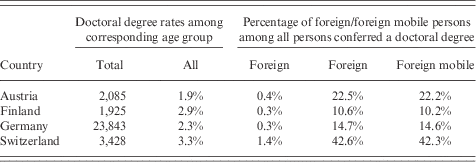
Source: National educational statisticsReference Teichler, Ferencz and Wächter23
Complex Patterns of International Mobility and of the Activities of Mobile Scholars – Findings of Comparative Surveys
Available international statistics on academics active at institutions of higher education and also on researchers active at other institutions provide very limited information on international mobility. This comes as a surprise, as mobility of scholars is so highly regarded and is so high on the agenda of higher education and research policy. Often, we lack complete information, and, if some relevant information is provided, this is confined to citizenship, location of learning and location of academic and research work, i.e. on foreigners and on study and work abroad, which, as a rule, cannot be viewed as more or less identical with mobility, i.e. border-crossing for – in this case – learning and work in academia and research.
In order to get an in-depth picture of international mobility patterns, we have to turn to surveys. Surveys cannot only describe the patterns of mobility more thoroughly, but they can also elicit information on general views and activities of scholars as well as views and activities directly linked to other major issues of the internationality of higher education and research, for example international cooperation, use of foreign language and international values. However, surveys have other limitations as compared to international statistics: their coverage of countries, disciplines, etc, may be limited; there may be biases in the responses of those responding as compared with the target population; surveys only in exceptional cases are undertaken regularly. These surveys also absorb so much energy of those conducting the them and cost so much that they are not likely to be undertaken on a regular basis.
Three large-scale surveys addressing the mobility of scholars will be introduced here. These studies are addressed here for two purposes. First, as cases – or should one say, as islands? – of knowledge. Second, as methodological experiments, that might generate ideas on how the information base on the mobility of academics and researchers can be improved.
The GlobSci Survey
In 2011, the authors of academic publications from 16 countries in four fields (biology, chemistry, earth and environmental sciences, and materials) were asked with the help of a web-based questionnaire to provide information on matters of international mobility. Actually, the analysis of the GlobSci SurveyReference Franzoni, Scellato and Stephan69 is based on 16,827 complete responses, yielding an impressive complete response rate of more than one third. The survey addressed scholars living at the time of their recent publications in Australia, Belgium Brazil, Canada, Denmark, France, Germany, India, Italy, Japan, the Netherlands, Spain, Sweden, Switzerland, the United Kingdom and the United States. The survey and the analysis were undertaken by a small number of scholars from two of the 16 countries addressed, i.e. Italy and the United States.
According to the publication of the GlobSci Survey referred to here,Reference Franzoni, Scellato and Stephan69 the study collected information relevant for patterns of mobility about:
∙ the country of current work or study (actually gathered as country of email address named in recent publication),
∙ the country of domicile at the age of 18,
∙ international experience during the periods between these points in time (the report does not indicate what additional information is collected for this purpose).
In addition, the report proposes three questions addressing causes and intentions for mobility.
∙ How important was each of the following factors behind your choice to take a postdoc, employment or academic job in a country different than that in which you resided at the age of 18?
∙ Is it possible that you return in the future?
∙ How important was each of the following reasons behind your decision to return to the country where you lived when you were 18?
Thus, the GlobSci Survey has opted for a single key measure of international mobility, a difference between the country of domicile at the age of 18 and the country of study and work at the time the survey was conducted. This change of location approach is not consistently maintained in the text as a whole. The title of the publication is ‘foreign born scientists’. Occasionally, the country of domicile at the age of 18 is called ‘country of origin’ in the text, and those respondents who lived in another country at the age of 18 rather than the country of current work occasionally are termed ‘foreign scientists’, ‘foreign-raised scientists’ or ‘immigrants’. This indicates that the authors ideally consider the domicile at the age of 18 as the real starting point of citizenship, cultural and educational background and as the real beginning of mobility. However, the difference between citizenship and location, early immigration, schooling outside the country of the family’s domicile, and early start of student mobility at the age of 17 or 18 altogether may lead to a difference of up to one tenth between the country of domicile at the age of 18 and various understandings of the ‘country of origin’ (among others, the citizenship at birth or the domicile at birth).
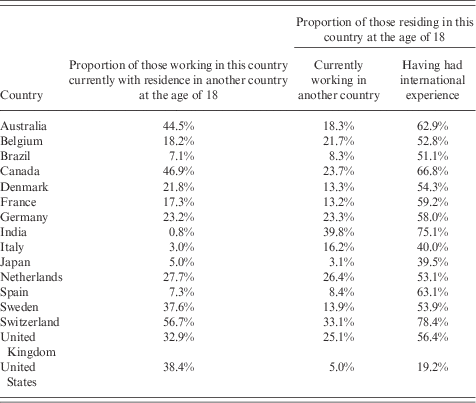
Actually, the report does not address overall mobility rates, neither in terms of the totality of respondents nor in terms of a country means. If they had taken the latter measure, the authors could have written that at the age of 18 about one quarter of scholars had been in a country other than that they were in when they recently published. Rather, they point at the variations between countries. According to these two key measures, more than half of the respondents from Switzerland have been mobile, more than four tenths from Canada and Australia, and more than three tenth from the US, Sweden and the UK; in contrast, very few of those currently working and studying in three countries had been mobile: those from India (0.8%), Italy (3.0%) and Japan (5.0%).
Looking in the reverse direction – what percentage of the respondents lived in one of the 16 countries at the age of 18 and work and study now in a different country? – the authors show again a striking variety between countries but a clearly distinct country pattern. In India and Switzerland more than three tenths are now in a country different from that of their domicile at 18, and about a quarter in the Netherlands, the United Kingdom, Canada and Germany. In contrast, few have changed country since the age of 18 coming from Japan (3.1%) and the US (5.0%). The share of international experience altogether was more than half of persons from all countries except for the US (19.2%) and Japan (39.5%) (see Table 2).
Mobility between the country of residence at the age of 18 and the country of current work in select countries (percentage)

Source: Adapted from GlobSci SurveyReference Franzoni, Scellato and Stephan69
The reports summarise the findings as follows:
The survey finds a high rate of foreign-raised talent studying and working in a number of countries. To put it bluntly, the United States is not that atypical when it comes to a strong reliance on foreign talent, but there are a number of countries – including India, Italy, Japan, Brazil and Spain – where foreign scientists and engineers are extremely rare. The survey also shows considerable variations in emigration patterns across countries. Swiss and Indian scientists are the most mobile; those from the United States the least mobile. The survey also documents that, for virtually all the core countries studied, the United States is the dominant destination country. Policy levers appear to be extremely important in attracting scientists to work or study abroad. Regardless of country, opportunities to improve one’s future or the availability of outstanding faculty, colleagues or research teams prove the most important reasons for immigration. But policy levers appear to have played little role in pulling returning emigrants back to their home country. For these returners, and regardless of country, ‘personal or family reasons’ are the most important factor influencing the decision to return. It does not follow, however, that countries have no ability to influence the return decisions of emigrants living abroad. As noted above, emigrant scientists from a handful of countries report that whether or not they return in the future will depend in part on job market conditions. (Ref. Reference Danaher, Danaher and Danaher58, pp. 14–15]
Altogether, this 2012 report about the findings of the GlobSci Survey is cautious. It focuses on the magnitude of inflows as compared to outflows measured by the relationships between location at the age of 18 and the current location of study and work. A strong conventional normative undercurrent shapes both the description and interpretation of data that might be described as ‘brain gain is beautiful’. On that basis it is shown that the US is not the only winner and India is clearly a loser, and the policy implications suggested ask what can be done to have higher inflow and what can be done to have more returners. Other Anglo-Saxon countries as well as Sweden could be mentioned as having more inflow than outflow on the one hand and Italy as the European country surveyed with more outflow than inflow on the other hand. One could have imagined a wider typology of the patterns of mobility. Accordingly, Switzerland could be viewed as by far the most open society for international mobility, countries such as the Netherlands as semi-open societies with balanced flows, and countries such as Japan, Brazil and Spain as relatively closed societies both regarding inflow and outflow. In that case, the normative undercurrent of ‘brain gain is beautiful’ would at least be complemented with ‘high international mobility is beautiful’.
The CAP Survey
In 2007 and 2008, the largest international comparative study on academics employed at higher education institutions was undertaken. 18 countries and the special administrative unit of Hong Kong participated in the study ‘The Changing Academic Profession (CAP)’. Altogether, 25,282 academic staff of all disciplines employed in Argentina, Australia, Brazil, Canada, China, Finland, Germany, Hong Kong, Italy, Japan, Republic of Korea, Malaysia, Mexico, the Netherlands, Norway, Portugal, South Africa, the United Kingdom and the United States responded to the nationally representative surveys at institutions providing bachelor and possibly advanced programmes. A master questionnaire was employed allowing the individual country to opt for some alternative questions and formulation. The ways of administering the questionnaire varied by country; the average response rate of about 30% is viewed by the participants of the study as satisfactory given the quite long questionnaire. A national team of scholars in each of the participating countries raised the necessary funds, administered the survey and was responsible for publication in an overall federated research project. Up to 2014, more than 100 members of the national research team have authored and edited more than 500 publications. The CAP study addressed a broad range of themes, among them the biography and career of academics, the range of academic activities and work time, issues of teaching and research, governance and administration, etc.Reference Teichler, Arimoto and Cummings70 The CAP survey was inspired by a predecessor study, the Carnegie Study on the Academic Profession undertaken in 1992,Reference Altbach71 and thus could measure changes over time in some areas with the help of this study, but it referred to recent developments as well and in the this framework selected the increase of the power of university management, the growing of evaluation activities and the trend towards internationalisation.
The CAP survey questionnaire addressed patterns of international mobility thoroughly by asking information on:
∙ both citizenship and country of residence at birth,
∙ citizenship and country of residence at the time of the first degree,
∙ citizenship and country of residence currently,
∙ country in which the first degree was awarded,
∙ country in which the second degree was awarded,
∙ country in which the doctoral degree was awarded,
∙ country in which the postdoctoral degree was awarded, and
∙ the number of years spent since the award of the first degree in the country of the first degree,
∙ the number of years spent since the award of the first degree in the country of the current employment, and
∙ the number of years spent since the award of the first degree in other countries.
In addition, the CAP survey addressed the use of language:
∙ the first language/mother tongue,
∙ the language primarily employed in teaching, and
∙ the language primarily employed in research.
Moreover, the CAP survey addresses various features of international activities:
∙ emphasising international content in teaching,
∙ teaching many international graduate students,
∙ having taught abroad recently,
∙ international scope/orientation in research,
∙ collaborating internationally in research,
∙ having recently raised research funds abroad or from international sources,
∙ publishing jointly with foreign colleagues, and
∙ publishing abroad.
Thus, the CAP Survey could identify multiple steps of mobility in the life course. Actually, such a variety of mobility patterns could be observed that the scholars involved in the project felt a need to bundle various steps of mobility into a limited number of types.Reference Rostan and Höhle72
The participating scholars in the CAP Survey opted for different typologies. One was already mentioned above: early immigrants, doctoral immigrants, study mobile academics, doctoral mobile academics, and professional migrants.Reference Huang, Teichler and Galaz-Fontes57 Another may be mentioned simply to show the variety of scopes: circulating for study: short term, circulating for work: short term, circulating for work: long term, migration for study: long term, and migration for work: long term.Reference Rostan and Höhle72
Such an in-depth study of various ways of mobility identifies ways that are overlooked otherwise. As a consequence, it shows that the proportion of scholars mobile in one way or another is altogether higher than one could expect on the basis of other sources of information. Actually, among all respondents in the CAP survey, 42% have been mobile in one way or other. Among them, more than one third can be classified as long-term mobile or migrating scholars.Reference Rostan and Höhle73
The CAP Study aimed at covering a broad range of international mobility, which includes, for example, a single semester of study in another country or a single month of academic work in another country. Obviously, the concept could have been even broader by including, as discussed, short visits for research, for example in the framework of collaborative research projects, or short visits for teaching, as with most of the teaching staff exchanges in the framework of ERASMUS. According to the definitions chosen in the CAP Survey, more than one third of all academics surveyed had international experience in one way or other. In looking at the mean of the seven European countries surveyed (see Table 3), we note that on average one fifth of the academics surveyed across countries had been mobile, while at the same time the CAP survey – like other studies – confirms enormous differences between the individual countries. Half of these internationally experienced scholars – about one tenth of all academics surveyed – in Europe spent part or all of their period of study or working on a doctoral dissertation in another country while spending more or less all their life in the country where they are currently professionally active and of which in most cases they are citizens. About 4% were early migrants, and only 6% can be viewed as persons having moved on the international labour market, i.e. the ‘PhD immigrants’ and the ‘professional migrants’.
Various types of mobility and migration of academics in select Asian, European and North American Countries (percentage)
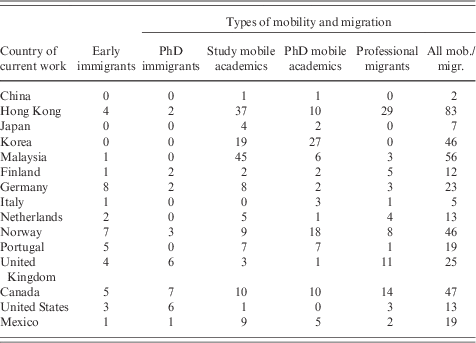
Source: Adapted from the survey ‘The Academic Profession’Reference Huang, Teichler and Galaz-Fontes57
One could consider the different modes of international mobility in the life-course of academics as too heterogeneous to be discussed within a common framework. For example, we could argue that the rationales and consequences are completely different, first, according to length and second between early migrants (primarily determined by parents’ choices as regards their own life), temporary learners abroad, and international mobility on the academic labour market. In the CAP Study, however, this variety of activities was jointly discussed in a special volumeReference Huang, Finkelstein and Rostan56 trying to establish the value of international experience for academic activities with an international emphasis as well as for academic activities in general.
The CAP Study confirms what other studies have pointed out on smaller information bases:Reference Hoffman74 International activities of academics are by no means a coherent bundle of activities, but some academics put more emphasis on what is occasionally called ‘internationalisation at home’, while others are more strongly engaged in border-crossing activities.Reference Finkelstein and Sethi75 Moreover, the CAP study shows that certain types of international mobility have a stronger impact on international activities. While the early immigrants are least internationally active, the late migrants, i.e. the professional migrants, are most internationally active.Reference Rostan and Höhle72 ‘It is likely that moving to another country, when having deeper intellectual and personal roots in the country of origin and having successfully started one’s career there, increases academics’ ability to be very internationally active, while moving at an early stage of life does not offer the same potential’.Reference Rostan and Höhle76
The MORE2 Survey
In 2012, a consortium of consultant firms and research institutes analysed available statistics and undertook surveys on career paths and international mobility of more than 10,000 researchers at higher education institutions in 33 European countries.77 The survey, called MORE2, addressed domestic and foreign researchers employed in these countries. Consequently, researchers from these 33 countries who were not professionally active in these countries at the time the survey was undertaken were not covered. The report of the survey results does not specify the definition of mobility; the description of the findings, however, suggests that being in country other than that of one’s citizenship is taken as a measure of mobility.
The survey addressed relatively shorter periods of mobility than the other surveys. Thus, an impressive frequency of short-term academic mobility surfaced.
∙ In addition to 14% who had obtained their doctoral degree in another country, 18% of the current and recent doctoral candidates moved to another country for a period of their doctoral work and obtained their doctoral award ‘at home’.
∙ About 15% of the respondents working are currently ‘mobile’ (there is no explanation how this is defined), but the figure is as high as 31% if one includes all researchers who had been mobile for three months and more in the last ten years after the award of a doctoral degree, and even 41% if one includes a shorter period of mobility than three months.78
∙ In addition to the 31% who had been mobile within the recent ten years for more than three months, another 17% had been mobile more than 10 years ago for a period of three months and more. Thus, altogether 48% of the scholars at higher education institutions holding a doctoral degree in the 33 European countries surveyed had been internationally mobile for three months and more after the award of the doctoral degree.
∙ In taking into account all periods of short, long-term and permanent mobility, one observes that only 31% of academics at higher education institutions in the 33 European countries surveyed had not been mobile after the award of the doctoral degree.79
All these figures vary substantially according to country. For example, two-thirds of the respondents from Poland and almost half of them from Latvia had not been mobile according to the final information presented, but fewer than 15% from Iceland, Luxembourg and Switzerland.
The mobile researchers were asked in the MORE2 study to assess the impact of their international mobility experience. Of all the academics having been mobile three or more months after the award of the doctoral degree, many reported an impact on the internationality of their academic work:
∙ 74% noted a development of international contacts and networks and 19% a respective decrease;
∙ However, only about 40% noted an increase as compared with about 40% who note as well a decrease of their ability to obtain international research funding.
There was also a majority who observed a positive effect on their academic work in general.
∙ 60% on average report a positive effect of mobility on various dimensions of research output and slightly less than 20% on average a negative effect (25% as regards quality of output),
∙ 80% note an advancement of research skills and only 9% a decrease due to international mobility.
However, the effects on employment and careers are not consistently seen as positive:
∙ 55% believe that overall career progression has increased due to mobility experiences, while 31% note a respective decrease.
∙ 45% see an increase of recognition in the research community and 40% a decrease.
∙ 33% perceive an increase of job options in academia, but 48% a decrease due to their mobility experience. The respective figures regarding job options outside academia are 27% vs. 47%.
∙ Finally, the effect of mobility experience on progression in remuneration is more often seen negatively (43%) than positively (17%).
The authors of the study offer the following explanation: ‘One possible explanation for the share of researchers who feel that mobility has a negative impact may lie in different motives and push factors for mobility. A researcher who is “forced” into mobility because there are no other opportunities in the home country (push) may benefit less from the international research environment and collaboration than others who “choose” their destination for the benefit of their career (pull)’.80
Concluding Observations
The internationalisation of higher education is generally viewed as one of the major forces of change in higher education. Most attention is paid to physical mobility. International student mobility has been more strongly in the limelight of policy debates than the mobility of scholars and researchers, but the latter is generally assumed to have profound effects on the generation and dissemination of systematic knowledge in society as well.
Given the high relevance usually attributed to internationalisation and international mobility of students and scholars, it is astounding to note how deficient is basic statistical information on international mobility. There have been critical voices about the limits of information on student mobility and some limited steps towards improvement. Yet, information on the mobility of academics and researchers is clearly even more deplorable. Most data used refer, if at all, to the proportion of foreigners without any specification of whether border-crossing for the purpose of undertaking academic activities in another country has happened.
There is a need for clarification of what ought to be included when one tries to establish the international mobility of academics and researchers: One could for example differentiate between:
∙ early migration (as usually caused by the parental generation),
∙ mobility for some time during the years of learning and early phases of academic work,
∙ long-term mobility of academics, and finally
∙ visits and sabbaticals in other countries in the course of professional work.
Probably, different modes of statistical data collection would be the most suitable way of collecting information on these different types of mobility.
Surveys are an important tool of obtaining information on the international mobility of academics and researchers. In spite of their typical limitations of incomplete and possibly biased coverage, they are the most promising approach for getting a picture of the variety of modes of international mobility. Beyond that, surveys can address, on one hand, what factors contribute to the decision to be mobile: i.e. why are they internationally mobile? On the other hand, they can establish how different modes of mobility affect international activities as well as the general professional activities of academics and researchers: what is the impact of international mobility? Such analyses are important, first, because one cannot expect a long-lasting ‘hype’ of mobility seen as desirable without clear evidence that indeed it is so, and, second, because internationalisation of higher education shows so many different faces that physical mobility plays only a relative role.
Ulrich Teichler was professor at the International Centre for Higher Education Research (INCHER-Kassel), University of Kassel (Germany) from 1978 to 2013, and he served for 16 years as the Centre’s Director. He studied sociology, earned his Dr. phil. with a dissertation on higher education in Japan, and spent his junior career at the Max Planck Institute for Educational Research, Berlin. He has had extended research periods in Japan and the Netherlands, was visiting professor or had other teaching arrangements in nine countries, amongst others at Northwestern University (USA) and the College of Europe (Belgium), and academic visits to more than 80 countries. His major research areas are higher education and the world of work, comparison of higher education systems, international mobility in higher education, and the academic profession. He authored more than 1000 publications. Honours include many years of chairmanship of the Consortium of Higher Education Researchers (CHER), membership and key functions in the Academia Europaea and the International Academy of Education, the Comenius Prize of UNESCO and the Dr. h.c. of the University of Turku (Finland).



 Open access

