





Introduction
The COVID-19 pandemic profoundly impacted the lives of healthcare workers (HCWs) worldwide; many HCWs faced challenges such as longer shifts, staff shortages, elevated patient death rates, social isolation, and insufficient access to personal protective equipment (Ahmed et al. Reference Ahmed, Ramadan and Refay2021; Ghosh and Ghosh Reference Ghosh and Ghosh2020; Mogassabi et al. Reference Mogassabi, Mogassabi and Saliba2020). Left to confront these challenges while providing quality care, HCWs experienced increased burnout and psychological distress since the onset of the pandemic (Søvold et al. Reference Søvold, Naslund and Kousoulis2021). Studies investigating the impact of the pandemic on HCWs’ mental health show increased anxiety, depression, and/or insomnia levels across countries, including China, the United States, Egypt, and Saudi Arabia (Ahmed et al. Reference Ahmed, Ramadan and Refay2021; Al Ammari et al. Reference Al Ammari, Sultana and Thomas2020; Guerrini et al. Reference Guerrini, Storch and McGuire2020; Young et al. Reference Young, Kolcz and O’Sullivan2021). High levels of work-related stress directly impact HCWs’ wellbeing and can negatively affect the quality of care they provide, ultimately affecting patient safety and increasing health system costs because of mishaps (West et al. Reference West, Dyrbye and Shanafelt2018).
Palliative care providers, who offer symptom management, pain relief, and comprehensive support for the chronically ill and dying, have been especially affected by the COVID-19 pandemic and related restrictions. The pandemic affected 80% of palliative care providers’ ability to continue their usual work (Pastrana et al. Reference Pastrana, De Lima and Pettus2021). Social distancing restrictions and bans on patient visitors, volunteer programs, and gatherings, including celebrations of life, hindered palliative care work and forced providers to reconceptualize traditional methods of care (Pastrana et al. Reference Pastrana, De Lima and Pettus2021). Palliative care providers in the United Kingdom described how increased workloads forced teams to prioritize clinical care over supporting families or comforting the dying, a moral dilemma that went against providers’ standards of care (Mitchinson et al. Reference Mitchinson, Dowrick and Buck2021). Evidence of moral distress was also found in the United States, where increased demand for hospice and palliative care services was met with staffing deficiencies, leaving providers overwhelmed and unable to provide high-quality care (Kates et al. Reference Kates, Gerolamo and Pogorzelska-Maziarz2021). Additionally, many governments did not support palliative care in their pandemic response. A survey of palliative care providers from 40 different countries found that nearly half of respondents’ governments did not include palliative care in their COVID-19 response plans (WHPCA 2020).
Few studies have examined the impact of the pandemic on palliative care providers’ mental health. Little data exists on the pandemic’s impacts on providers in Uganda, specifically, nor on the resources available to support providers’ psychosocial wellbeing. This study describes the prevalence of depression, anxiety, and psychological distress among palliative care providers in Uganda during the pandemic. It also captures providers’ perceived level of social support and the mental health resources available through their workplace.
Methods
Data was gathered via an online survey using Qualtrics. Based on a total population of 294 palliative care providers in Uganda and the Krejcie and Morgan Sample Size Table, the survey was sent to 160 providers (Krejcie and Morgan Reference Krejcie and Morgan1970). For the purpose of this study, a palliative care provider is defined as any member of the clinical staff at a hospice or palliative care unit who has direct patient contact, including doctors, clinical officers, nurses, and social workers. Potential participants were identified using the Palliative Care Association of Uganda’s database and were purposively sampled to ensure geographic representation from each region (north, central, east, west) and inclusivity of providers from public and private facilities. Participants were recruited via email and follow-up phone calls. Electronic consent was obtained, and no names were collected to ensure anonymity. Data was collected between 6 December 2021 and 8 February 2022.
The survey collected demographics followed by 3 mental health screening tools: the Patient Health Questionnaire (PHQ-9), the Generalized Anxiety Disorder (GAD-7) questionnaire, and the Self-Reporting Questionnaire (SRQ-20). The PHQ-9, GAD-7, and SRQ-20 assessed the prevalence of depression, anxiety, and psychological distress, respectively. The SRQ-20 was included to identify respondents with mild symptoms of mental health disorders who may not qualify for a moderate to severe diagnosis on the PHQ-9 and/or GAD-7. The Multidimensional Scale of Perceived Social Support (MSPSS) determined providers’ level of perceived social support. These tools were chosen based on best practices in the existing literature and because of previous validation and use in Uganda (Abbo et al. Reference Abbo, Ekblad and Waako2008; Akena et al. Reference Akena, Joska and Obuku2013; Mugisha et al. Reference Mugisha, Byansi and Kinyanda2021; Nakigudde et al. Reference Nakigudde, Musisi and Ehnvall2009, Reference Nakigudde, Tugumisirize and Musisi2008; Nakimuli-Mpungu et al. Reference Nakimuli-Mpungu, Mojtabai and Alexandre2012, Reference Nakimuli-Mpungu, Musisi and Katabira2011; Nakku et al. Reference Nakku, Rathod and Kizza2016; Vancampfort et al. Reference Vancampfort, Byansi and Kinyanda2021). The survey included 2 optional questions on the mental health resources available to participants at their workplace and the need for additional support. Participants were given the contact information of a clinical psychologist for support and received compensation for their time.
Data analysis
Survey data were cleaned, leaving a sample of 123 responses for a 76.8% response rate. Frequencies were calculated on participants’ gender, age, marital status, religion, years working in palliative care, and position. Based on the respondent’s workplace, the facility type (private versus public) and region (north, central, east, west) were added as variables. Participants who did not indicate their facility were listed as “no response.” The PHQ-9, GAD-7, SRQ-20, and MSPSS were scored according to their scoring guidelines (Beusenberg and Orally Reference Beusenberg and Orally1994; Kroenke et al. Reference Kroenke, Spitzer and Williams2001; Spitzer et al. Reference Spitzer, Kroenke and Williams2006; Zimet et al. Reference Zimet, Dahlem and Zimet1988). Participants were excluded from analysis if more than 2 questions were left unanswered on the PHQ-9, GAD-7, SRQ-20. Otherwise, unanswered questions were scored as a 0, the least severe response. Participants who left any questions on the MSPSS unanswered were excluded from analysis. Results showing fewer than 123 participants are due to incomplete surveys. To prepare for logistic regression, PHQ-9 and GAD-7 scores of 10 and above indicated moderate to severe depression or anxiety (Levis et al. Reference Levis, Benedetti and Thombs2019; Spitzer et al. Reference Spitzer, Kroenke and Williams2006). SRQ-20 scores of 6 and above indicated psychological distress (Abbo et al. Reference Abbo, Ekblad and Waako2008). The MSPSS assesses perceived social support from 3 subcategories: significant other, family, and friends. Scores for total perceived social support and each subcategory were determined. Scores at or above the median score for total social support and each subcategory indicated high support and scores below the median indicated low support (Kim et al. Reference Kim, Jung and Cho2019). Data were analyzed using IBM SPSS Statistics, Version 27. Logistic regression models identified variables (facility type, facility region, position, years in palliative care, religion, gender, age, and marital status) associated with moderate to severe depression, moderate to severe anxiety, psychological distress, and high total social support. Odds ratios and 95% confidence intervals were calculated. Results with p-values < 0.05 were determined to be statistically significant. Significant variables were run in a reduced logistic regression model to ensure factors remained significant. Correlation analysis was conducted using the quantitative scores from each tool.
Responses from the 2 optional questions were analyzed by frequency of Yes/No responses to each question, and open-ended questions were analyzed using thematic analysis.
This study was approved by the University of Notre Dame Institutional Review Board (21-11-6907) and by the Hospice Africa Uganda Research and Ethics Committee (HAU-2021-10).
Results
Survey demographics
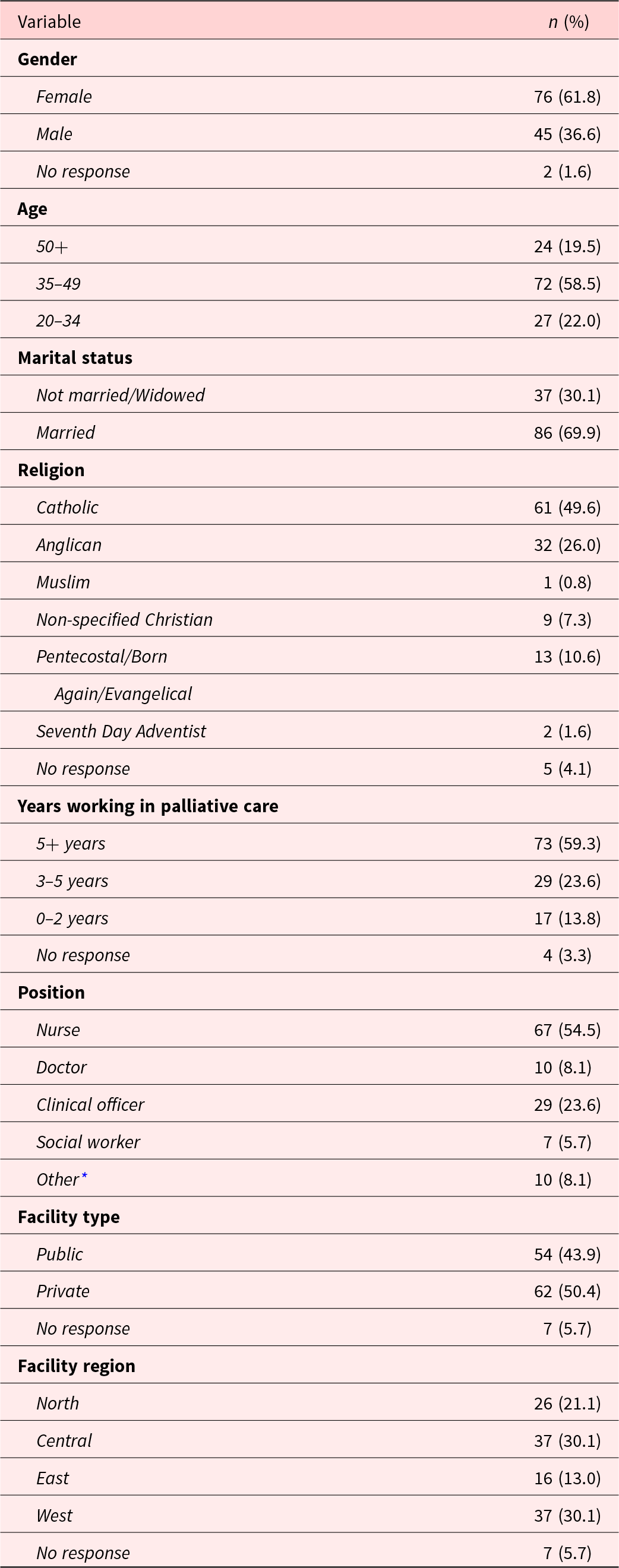
The majority of respondents were female (61.8%), between the ages of 35 and 49 (58.5%) and married (69.9%) (Table 1). A variety of religions were represented, the most common being Catholic (49.6%). Over half of respondents had over 5 years of experience working in palliative care (59.3%) and the majority were nurses (54.5%). Private (50.4%) and public (43.9%) facilities were represented. Respondents from all main geographic regions were represented with 30.1% of respondents from facilities in the central region, 30.1% in the west, 21.2% in the north, and 13.0% in the east. For 5.7% of participants, their facility type and region were unknown.
Survey demographics (total n = 123)

* Respondents in this group self-identified as clinical administrators, public health officers, unspecified clinicians, clinical coordinators, and palliative care specialists.
Depression among palliative care providers
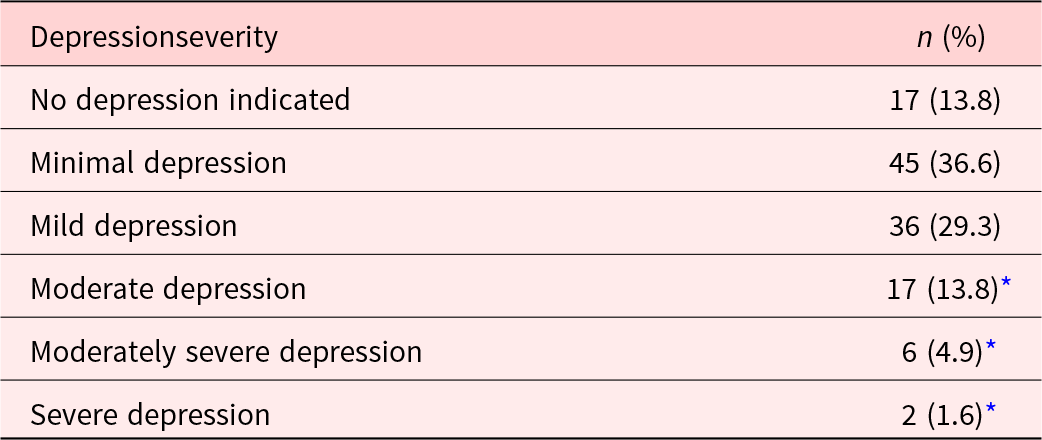
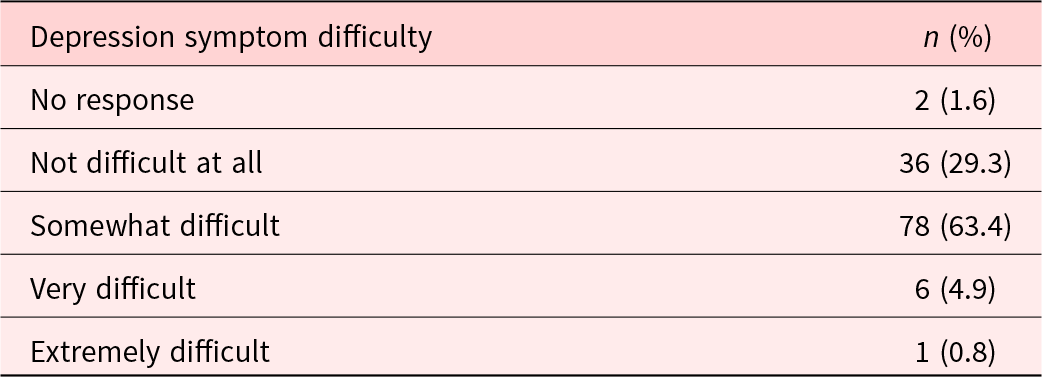
Half of respondents (50.4%) had PHQ-9 scores indicative of no depression or minimal depression (Table 2). However, when asked how difficult the listed symptoms made it for participants to do their work, take care of things at home, or get along with other people, nearly 70% responded that their symptoms made it somewhat, very, or extremely difficult (Table 3). Moderate to severe depression was indicated based on the PHQ-9 scores of 20.3% of respondents (Table 2). Multiple logistic regression determined any significant associations between the risk factors of gender, age, marital status, religion, years working in palliative care, position, facility type, and facility region, and the outcome variable, moderate to severe depression. The results suggested that working in the northern region was a risk factor associated with more severe depression (p = 0.02), and providers in the central region were less likely than those in the north to be moderately to severely depressed. Providers in the central region had a 95% decrease in the odds of being classified with moderate to severe depression when controlling for the effect of other risk factors (OR = 0.05; 95% CI: 0.01, 0.36). The number of years working in palliative care was a significant risk factor for moderate to severe depression. Compared to those with over 5 years of experience, participants with 3–5 years of experience had a lower risk of moderate to severe depression. Specifically, those with 3–5 years of experience had an 88% decrease in odds of being classified as moderately to severely depressed when controlling for the effect of the other risk factors (OR = 0.12; 95% CI: 0.20, 0.74). Other risk factors in the model were not significant (Supplemental Material).
Depression severity (total n = 123)

* Indicates the group was included in the moderate to severe depression category used as the outcome variable for logistic regression.
Difficulty of depression symptoms in the last week (total n = 123)

Generalized anxiety disorder among palliative care providers
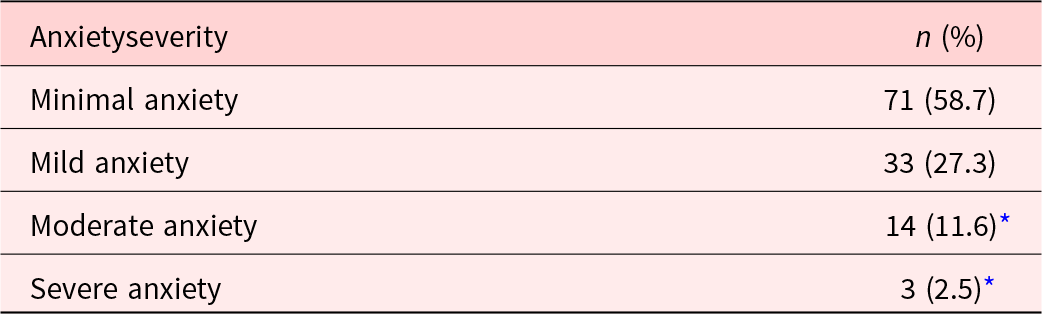
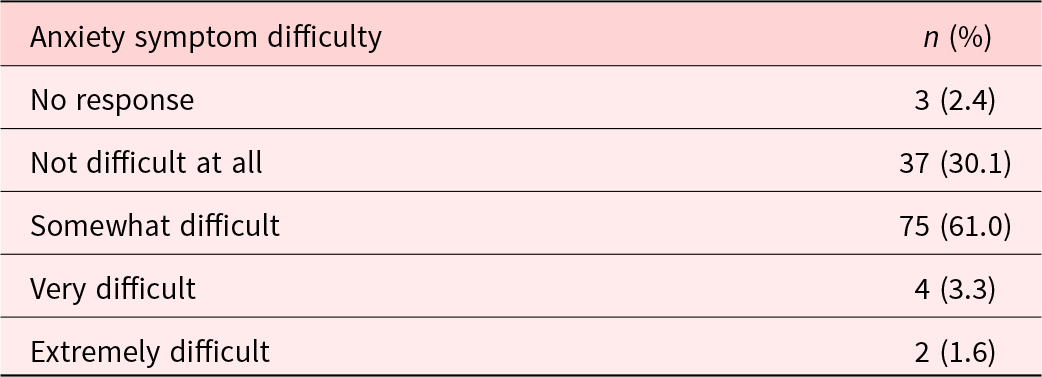
A majority of respondents, 58.7%, had GAD-7 scores indicative of minimal generalized anxiety disorder (Table 4). Over 65% of respondents indicated that the anxiety symptoms listed made it somewhat, very, or extremely difficult for them to do their work, take care of things at home, or get along with other people (Table 5). Moderate to severe anxiety was indicated in 14% of respondents based on their GAD-7 score (Table 4). The results of the multiple logistic regression suggested that, compared to those working in the northern region, palliative care providers in the central region were less likely to be moderately to severely anxious. Providers in the central region showed a 94% decrease in the odds of being classified as moderate to severely anxious when controlling for the effect of other risk factors (OR = 0.06, 95% CI: 0.01, 0.60). Compared to those who had over 5 years of experience in palliative care, those with 3–5 years were less likely to show signs of moderate to severe anxiety. Providers with 3–5 years of experience showed an 89% decrease in the odds of being classified as moderately to severely anxious when controlling for the effect of other risk factors (OR = 0.11; 95% CI: 0.15, 0.78). Compared to providers over the age of 50, providers aged 20–35 were more likely to show signs of moderate to severe anxiety. The odds of being classified as moderate to severely anxious were 31.25 times higher for participants ages 20–35 when controlling for the effect of the other risk factors (OR = 31.25; 95% CI: 1.60, 610.83). Other risk factors in the model were not significant (Supplemental Material).
Anxiety severity (total n = 121)

* Indicates the group was included in the moderate to severe anxiety category used as the outcome variable for logistic regression.
Difficulty of anxiety symptoms in the last week (total n = 121)

Psychological distress among palliative care providers
Nearly one-third of participants showed signs of psychological distress given their SRQ-20 score (Table 6). The results of the multiple logistic regression suggested that compared to those with over 5 years of experience, those who worked in palliative care for 3–5 years were less likely to show signs of distress. Providers with 3–5 years of experience had an 85% decrease in odds of being classified as distressed when controlling for the effect of the other risk factors (OR = 0.15; 95% CI: 0.37, 0.59). Participants aged 50 and above showed a significant increase in the probability of being distressed when controlling for the effect of the other risk factors (p = 0.045). Compared to providers 50 and above, younger providers in both the 35–49 and 20–34 age categories were more likely to show signs of psychological distress, with the risk being greatest in the youngest age group. The odds of being classified as distressed were 5.9 times higher for those aged 35–49 compared to those aged 50 and above when controlling for the effect of the other risk factors (OR = 5.93; 95% CI: 1.41, 24.92) and 7.9 times higher for those aged 20–34 (OR = 7.88; 95% CI: 1.37, 45.30). Other risk factors in the model were not significant (Supplemental Material).
Distress level (total n = 122)

Perceived social support among palliative care providers
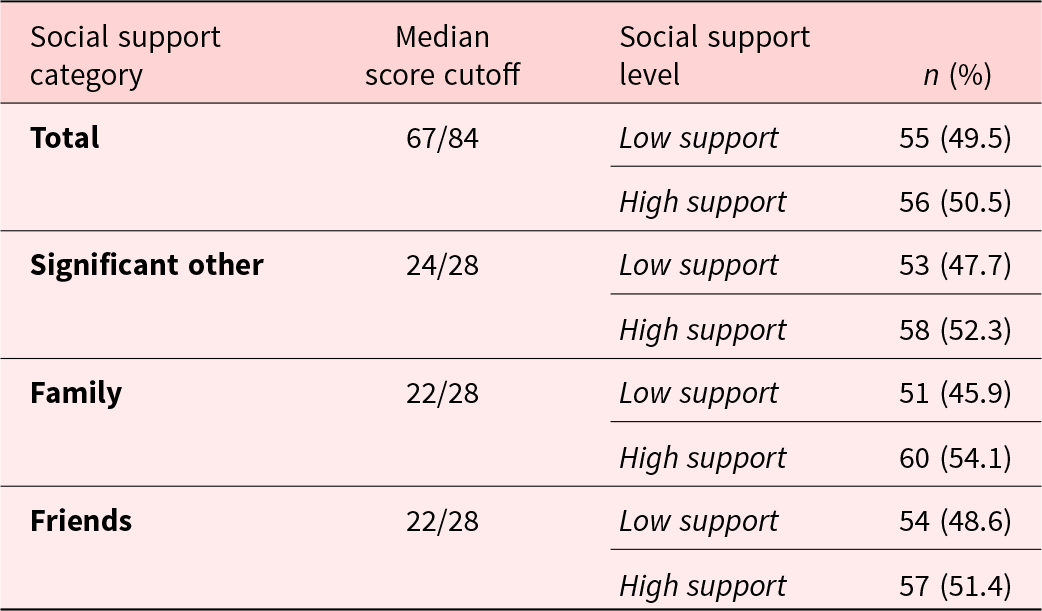
The median scores for total perceived social support and each subcategory determined the cut-off point for high versus low perceived social support (Table 7). Nearly half of participants indicated a low level of total (49.5%), significant other (47.7%), family (45.9%), and friends (48.6%) perceived social support (Table 7). For logistic regression, only total perceived social support was considered. The results of the multiple logistic regression suggested that compared to those working in the northern region and controlling for other risk factors, providers in the west and central regions reported higher social support. The odds of having high perceived social support were 6.56 times higher for those working in the western region (OR: 6.56; 95% CI: 1.42, 30.14) and 4.01 times higher for those working in the central region (OR: 4.01; 95% CI: 1.002, 16.06).
Perceived social support (total n = 111)

Compared to those ages 50 and above, those ages 20–34 were less likely to perceive high social support. Providers ages 20–34 had an 85% decrease in the odds of being classified with high perceived support when controlling for the effect of the other risk factors (OR = 0.15; 95% CI: 0.03, 0.94). Married providers perceived higher social support. The odds of being classified with high social support were 4.0 times higher for those who were married than those who were single or widowed when controlling for the effect of the other risk factors (OR = 4.08, 95% CI: 1.26, 13.24). Other risk factors in the model were not significant (Supplemental Material).
Correlational analysis for depression, anxiety, psychological distress, and perceived social support
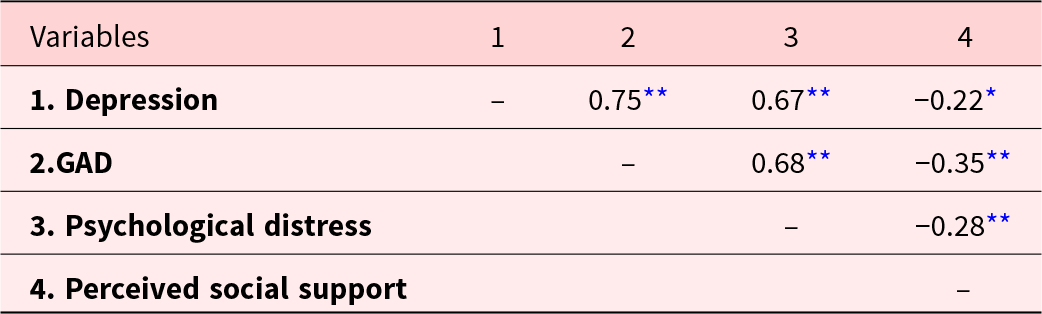
Correlational analysis was performed using participants’ quantitative scores on all 4 assessment tools, the PHQ-9, GAD-7, SRQ-20, and MSPSS (Table 8). There was a significant positive correlation between depression score and anxiety score (r = 0.75, p = 0.00), suggesting that those with higher depression also show signs of higher anxiety. Similarly, a significant positive correlation was found between depression score and distress score (r = 0.67, p = 0.00) and between anxiety score and distress score (r = 0.68, p = 0.00), suggesting those with higher anxiety and depression are likely those with higher symptoms of psychological distress.
Correlation coefficient for depression, generalized anxiety disorder, psychological distress, and perceived social support

* p < 0.05 (2-tailed), **p < 0.01 (2-tailed).
A significant negative correlation was found between depression score and total perceived social support (r = −0.22, p = 0.02), anxiety score and total perceived social support (r = −0.35, p = 0.00), and psychological distress score and perceived social support (r = −0.28, p = 0.00). This suggests that those with greater perceived social support were less likely to have symptoms of depression, anxiety, and psychological distress.
Access to workplace resources for mental health
Nearly 40% of respondents reported their workplace did not offer mental health resources. Of the 49.6% of respondents who indicated their workplace provided mental health services, the majority cited access to a mental health professional or unit. Additional services offered included time off, access to medication, peer/spiritual support groups, or access to services that reduced personal stress, such as health insurance coverage. About 5% of respondents reported access to some services but indicated the resources were insufficient to meet their needs, and 6.5% of respondents did not answer.
Of those who answered, 63.2% desired access to additional mental health support. Those who elaborated suggested improved access to counseling services or workshops that provide tools to manage stress. The remaining 36.8% did not desire additional mental health resources.
Discussion
Our study found concerning levels of moderate to severe depression (20.3%) and moderate to severe anxiety (24%) among palliative care providers in Uganda. Colleagues at the Palliative Care Association of Uganda (PCAU) report palliative care workers are perceived to be better equipped to handle the emotional demands of their work compared to other healthcare providers (PCAU 2022, personal communication). Despite this, our study demonstrates that this population could benefit from improved access to mental health care and resources.
Compared to studies with general HCWs in high-income countries like Saudi Arabia and the United States, we found a similar prevalence of moderate to severe depression and a lower prevalence of moderate to severe anxiety (Al Ammari et al. Reference Al Ammari, Sultana and Thomas2020; Young et al. Reference Young, Kolcz and O’Sullivan2021). The positive correlation found between depression and anxiety scores is indicative of the common comorbidity between the 2 mental health disorders (Kalin Reference Kalin2020). Moderate to severe depression and anxiety were found in 20% and 14% of participants, respectively, and demonstrates a need for improved mental health support in this population.
Of concern is how participants rated the impact of the depression and anxiety symptoms listed in the PHQ-9 and GAD-7 on their daily lives. The majority reported that these symptoms made it somewhat, very, or extremely difficult for them to do their work, manage things at home, or get along with others. The imbalance between the lower percentage of providers with scores indicative of moderate to severe depression and/or anxiety and the comparatively high percentage of providers whose daily life was affected by depression and/or anxiety symptoms shows that even mild symptoms of mental disorders impacted providers. This is in line with prior research suggesting that subclinical levels of depression can negatively affect work performance (Martin et al. Reference Martin, Blum and Beach1996) and that the co-occurrence of subclinical depression and anxiety can lead to functional impairment (Roy-Byrne et al. Reference Roy-Byrne, Katon and Broadhead1994).
The percentage of providers with symptoms of psychological distress was higher than the percentage with moderate to severe depression or anxiety. This finding highlights the need for mental health support and intervention during times of increased stress before more severe disorders develop.
Especially troublesome is that nearly half of participants perceived low levels of social support from family, friends, and significant others. It is known that the pandemic forced less in-person interaction, which likely impacted individuals’ mental health given that high social engagement has been associated with lower perceived depression (Luo Reference Luo, Ding and Bauman2020). The observed negative correlations between all 3 conditions and perceived social support scores indicate how essential social support is during times of increased stress and isolation. Prior research suggests high perceived social support may act as a protective factor for depression and anxiety disorders (Roohafza et al. Reference Roohafza, Afshar and Keshteli2014), a finding supported by the inverse correlations observed in our study.
Certain personal and workplace demographics placed participants at higher risk of moderate to severe depression, moderate to severe anxiety, psychological distress, and low perceived social support. Participants living in northern Uganda were more likely to be moderately to severely depressed which may be connected to the history of war in the northern region and the recent influx of refugees fleeing instability in the neighboring countries of South Sudan and the Democratic Republic of the Congo. As a result of the prolonged conflict in the region, core family units were disrupted, and individuals separated from their communities. Prior literature documents a high prevalence of post-traumatic stress disorder and depression in the northern Uganda population 7 years post-conflict (Mugisha et al. Reference Mugisha, Muyinda and Malamba2015a, Reference Mugisha, Muyinda and Wandiembe2015b). Significant levels of psychological distress were still present among northern Ugandan adults and adolescents during COVID-19, demonstrating the ongoing mental health challenges within the region (Clarke-Deelder et al. Reference Clarke-Deelder, Rokicki and McGovern2022; Wipfli et al. Reference Wipfli, Guy and Kim2023). Appropriate mental health support should be directed to palliative care providers in populations that have already been identified as vulnerable, such as those in northern Uganda.
Palliative care providers in central Uganda were less likely to be moderately to severely depressed and anxious and more likely to perceive high levels of social support. Providers in western Uganda were also more likely to perceive high social support. The central and western regions have higher concentrations of mental health resources and professionals (Kaggwa et al. Reference Kaggwa, Harms and Mamun2022). There are also more accredited palliative care facilities in these regions to share the burden of the work (Kagarmanova et al. Reference Kagarmanova, Mwesiga and Sisk2022), which may decrease work-related stress among providers. Additionally, prior literature suggests that urban populations in Uganda are more likely to view mental illnesses as treatable with Western medicine versus traditional healers (Wallace et al. Reference Wallace, Boardman and Walsh2007). This may place less stigma on individuals with mental health disorders, leaving those in the central region more willing to seek help before their depression and/or anxiety worsens.
The finding that palliative care providers with an intermediate level of work experience were significantly less likely to be moderate to severely depressed and anxious and show signs of psychological distress compared to providers with more experience may be indicative of the demanding nature of palliative care work and the burnout that can set in over the length of one’s career. Whereas those just starting their career may be experiencing the stress that comes with beginning a new job, those with more years of experience may be approaching burnout. In an investigation of burnout among healthcare providers in the Middle East before the COVID-19 pandemic, more work experience was associated with the highest burnout levels (Chemali et al. Reference Chemali, Ezzeddine and Gelaye2019). Burnout among palliative care workers is a concern globally, especially following the emotional and physical toll of the COVID-19 pandemic. Before the onset of the pandemic, burnout rates among palliative nurses in Uganda were over 60% (Nabadda Reference Nabadda2012). An updated assessment of burnout levels among palliative care providers following the pandemic is necessary to assess how the mental health challenges outlined in this study affected occupational burnout.
Participants ages 20–34 years old had higher odds of being moderately to severely anxious and showed lower perceived social support compared to those ages 50 and older. Additionally, each age category was progressively more likely to display symptoms of psychological distress with decreasing age. Younger providers may still be developing healthy and supportive relationships and thus perceive lower social support than their older peers. Older adults may also have higher resilience and more effective coping mechanisms compared to younger adults (Na et al. Reference Na, Yang and Mezo2022). Furthermore, younger adults may have experienced more severe anxiety during the pandemic due to being less financially or socially settled going into quarantine. This aligns with the World Health Organization’s finding that the COVID-19 pandemic disproportionately affected the mental health of young people (WHO 2022).
Married individuals perceived higher social support. Given that these individuals have a spouse to turn to for support, this finding highlights the importance of social support and cohesion outside of the workplace.
Given that a majority of participants expressed a desire for additional mental health support, it is necessary to implement interventions and resources to better support palliative care provider mental health, especially during times of crisis. In an examination of strategies to avoid burnout among hospice and palliative care physicians, Swetz et al. (Reference Swetz, Harrington and Matsuyama2009) found that physical wellbeing, talking to others, hobbies outside of work, and personal relationships were highly cited by their participants. Regarding the COVID-19 pandemic, Greenberg et al. (Reference Greenberg, Docherty and Gnanapragasam2020) acknowledge the importance of early support and recommend using teamwide discussions to give HCWs a safe place to discuss emotional and social concerns. They also call on team leaders to reach out to staff who avoid these discussions or seem overly distressed and refer them to professional counseling. Evidence also suggests that supportive supervisors and colleagues can greatly protect individuals’ mental health (Mohindra et al. Reference Mohindra, Ravaki and Suri2020). Meditation practices, strengthening communication skills, peer coaching, and art therapy were also found to reduce symptoms of burnout among palliative care providers specifically prior to the COVID-19 pandemic (Dijxhoorn et al. Reference Dijxhoorn, Brom and van der Linden2021). Following a period of crisis, reflection and meaningful conversation are recommended (Greenberg et al. Reference Greenberg, Docherty and Gnanapragasam2020). As our study demonstrates, there is a range in the severity of mental health challenges faced by Ugandan palliative care providers. Implementation of these strategies in the workplace and improved access to resources like counselors and psychiatrists may better support palliative care providers’ mental health during future global health crises and could be an opportunity to intervene before more severe disorders develop.
Limitations
No baseline data on the prevalence of depression, anxiety, and distress in Ugandan palliative care providers is available from before the COVID-19 pandemic. Therefore, this study captures a snapshot of mental health difficulties among this population during the height of the pandemic, but it cannot be concluded that the pandemic alone caused these observations. The scoring methodology erred on the side of caution to not overestimate severity in the population, therefore these results may underestimate the severity of the studied disorders. Lastly, the power of the study could be improved with a larger sample size.
Supplementary material
The supplementary material for this article can be found at https://doi.org/10.1017/S1478951524000889.
Acknowledgments
Thank you to our participants for completing our survey and for your work providing palliative care to patients. Thank you to the palliative care providers and Ugandan leaders who participated in a workshop to discuss the results of our study and next steps.
Author contributions
MH, SK, LCI, MDM, and LA designed the study and facilitated data collection. MH, RG, and SK led data analysis. MH prepared the draft with input and edits from all authors.
Funding
The Kellogg Institute for International Studies at the University of Notre Dame supported this work.
Competing interests
The authors declare no conflict of interest.



 Open access

