

Introduction
Nicotine poisoning is well described in the pediatric population, and even small oral doses may result in toxic effects. The source of nicotine is usually tobacco products and nicotine replacement products such as gum and patches. With the more frequent use of novel products such as e-cigarettes, concern has arisen regarding liquid nicotine. We present and discuss a case of this nature.
Case Report
A 2-year-old girl presented to our pediatric emergency department (PED) with a complaint of sudden-onset vomiting and irritability, both of which were resolving at the time of presentation. She had been well previously, with a normal appetite and no complaints of abdominal pain. While playing, she was noted by her parents to suddenly start crying and vomit several times. Purple discolouration of her mouth and lips was also reported by her parents. Her father noted that she had a small bottle of liquid in her hand, with the lid off and some of the liquid spilled on her shirt. He reported smelling the liquid on her breath. The approximately 60 mL bottle was still more than three-quarters full, although it remained unclear how much she had actually been in contact with.
The bottle had a colorful label on it depicting a cartoon monkey holding a bunch of grapes. It was noted to have a pleasant grape fragrance and was bright orange in colour. The bottle was similar in shape to an eye dropper container, and had no child safety cap. The substance was identified as e-cigarette nicotine liquid.
The patient continued to vomit and be irritable over a period of about 30 minutes, stopped vomiting en route to our PED, and subsequently gradually returned to her baseline demeanor. Upon arrival in the PED, she was noted to be quiet and observant, with no irritability or vomiting. Her initial triage vitals were a temperature of 35.5°C (95.9°F), heart rate 137 beats/minute, respiratory rate 36/minute, oxygen saturation 96% on room air, and blood pressure of 161/78 mm Hg, which was measured again and found to be 114/60 mm Hg. The patient weighed 13.5 kg, which is an average weight for a 2-year-old female, according to the CDC (Centers for Disease Control and Prevention) growth charts. The suspected ingestion had taken place approximately one hour prior to her being seen. She partook in normal toddler activities while being observed, was playful, and tolerated oral fluids in the PED. She remained well without any intervention, in spite of the rapid onset of her initially concerning presentation.
The bottle label indicated that the product contained 24 mg/mL of nicotine. After discussion with the regional poison control center, it was decided to discharge the patient once she had been observed to be at her at her baseline for some two hours. She did not have any laboratory investigations or other diagnostic testing, nor did she receive any treatment. Her vital signs remained within normal limits. The parents were advised to return to the ED if she again developed any sudden-onset vomiting, difficulty breathing, or mental status changes.
Discussion
Nicotine poisoning is well described in the pediatric population, and even small oral doses may result in toxic effects. There has been a dramatic increase in nicotine poisoning related to the use of e-cigarettes over the past year, with a reported increase of 300% in exposure to highly concentrated liquid nicotine in the United States.Reference Miller 1 Of calls to poison control centers in the United States, e-cigarettes now comprise 42% of the nicotine-related calls.Reference Chatham-Stephens, Law and Taylor 2 Despite there being no recent deaths from nicotine ingestion, reports of less serious cases of accidental poisonings, especially among young children, are rapidly increasing.Reference Richtel 3 Nicotine is readily absorbed through mucous membranes, skin, the gastrointestinal tract (GI), and respiratory alveoli. Numerous studies have investigated nicotine toxicity in infants and toddlers. The source of this nicotine is usually tobacco products and, more recently, nicotine replacement products such as gum and patches. Connolly and colleagues found that over 70% of such ingestions involve infants, and that smokeless tobacco products were the second most commonly ingested after cigarettes.Reference Connolly, Richter and Aleguas 4 With the more frequent use of novel products such as e-cigarettes, concerns have arisen surrounding liquid nicotine (Figures 1 and 2). It has been reported that e-liquids are much more dangerous than tobacco, as the liquid is absorbed more quickly, even if in a dilute concentration.Reference Richtel 3 As there are no regulations regarding child-proof bottling or packaging, it appears that there may be potential for unintentional ingestion of these colorfully and appealingly packaged products by children.
Example of a nicotine liquid bottle.

Example of a delivery device for liquid nicotine.

Nicotine is a plant derivative that functions as a nicotinic acetylcholine receptor agonist in the autonomic ganglia, adrenal medulla, neuromuscular junction and brain. Nicotine thus increases the levels of several neurotransmitters, including acetylcholine, beta-endorphin, dopamine, norepinephrine, and serotonin. It is metabolized in the liver by cytochrome P450 and has a half-life of one to two hours. 5
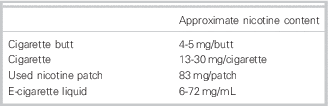
The toxic effects of nicotine result from overstimulation of the nicotinic receptors. This often results in inhibition of receptor action following initial stimulatory effects. The toxic dose depends on whether or not the patient is habituated to the effects of nicotine, but in a child it may be as low as 1 to 4 mg orally. A lethal dose has not been established, but it is estimated that an oral dose of 40 to 60 mg may be fatal. Reports indicate that ingestion of one to three cigarette butts can cause adverse effects in children, and a cigarette butt is estimated to have 4 to 5 mg of nicotine (Table 1). Signs and symptoms of ingestion appear to be dose-related. One study found that children ingesting 0.5 mg/kg of nicotine remained asymptomatic, while 0.8 mg/kg resulted in mild symptoms and 1.4 to 1.9 mg/kg resulted in severe toxicity. 5
Concentrations of nicotine in various products
The Canadian Pharmacists Association report that <1 mg/kg can be a lethal dose in adults, and an even lower dose may pose the same risk in children. 6 Standard textbooks and safety sheets typically cite a lethal dose for adults as between 30 to 60 mg (LD50 of 0.8 mg/kg). After several detailed reviews, Mayer has argued that a careful estimate suggests that a lower limit causing fatal outcomes is 0.5 to 1 g/kg of ingested nicotine, corresponding to an LD50 of 6.5 to 13 mg/kg.Reference Mayer 7 In the case we report, if our patient ingested the entire bottle of liquid nicotine, she would have consumed approximately 1.4 grams of nicotine, or 107 mg/kg, an amount over 50 times the dose reported to result in severe toxicity.
The toxic effects are dose-dependent. Symptoms of mild to moderate toxicity may include nausea, vomiting, dizziness, headache, tremor, diaphoresis, tachycardia, pallor, and hypertension. Of these, the most commonly seen symptoms are GI upset with nausea and vomiting, as well as pallor, diaphoresis, and mental confusion. 5 , 6 The commonly seen initial vomiting can help to reduce absorption and is usually self-limited; treatment with anti-emetics is not recommended, but maintaining adequate hydration in the form of intravenous fluids may be necessary in severe cases. The onset of symptoms is usually within two hours, with the exception of delayed-release products such as patches. 5
Overstimulation of the nicotinic receptors can cause receptor inhibition after the initial stimulatory effects. More severe toxicity can result in seizures, confusion, weakness, bradycardia, hypotension, and respiratory muscle paralysis. 5 , Reference Singer and Janz 8 , Reference Oberst and McIntyre 9 Initial hypertension, tachycardia, and tachypnea can be followed by hypotension, bradycardia, and bradypnea.
The treatment of nicotine toxicity is primarily symptomatic and supportive. 5 , Reference Woolf, Burkhart and Caraccio 10 In cases of dermal exposure to a nicotine solution such as the one in this case report, contaminated clothing should be removed and affected areas should be washed thoroughly with mild soap and copious amounts of cold water to reduce absorption. Activated charcoal is recommended if patients present shortly after ingestion, owing to the possibility of nicotine-induced seizures, provided the risks do not outweigh the anticipated benefits. 6 If a patient is vomiting, seizing, or has a decreased level of consciousness, there is a risk of pulmonary aspiration with charcoal administration. Enhanced elimination techniques, such as multiple-dose charcoal or dialysis, are theoretically useful, but have not been described owing to the rarity of life- threatening toxicity. 5 Supportive treatment is directed toward the specific presenting complaint. For example, hypotension should initially be treated with intravenous fluid boluses to avoid cardiovascular collapse, seizures should initially be treated with benzodiazepines, atropine can be administered for excessive bronchial secretions or diarrhea, and respiratory support should be provided for bradypnea.
Recently, electronic cigarettes and nicotine liquid cartridges have been marketed and have become widely available in Canada. Most are shaped to appear like real cigarettes, often with a glow at the tip, and produce a vapor that resembles smoke. The liquid mixture may contain varying amounts of nicotine, propylene glycol, and other chemicals, and is vaporized in the e-cigarette by a battery-powered delivery system. 11 Some websites even allow denser concentrations of nicotine (up to 72 mg/mL) for heavy smokers.
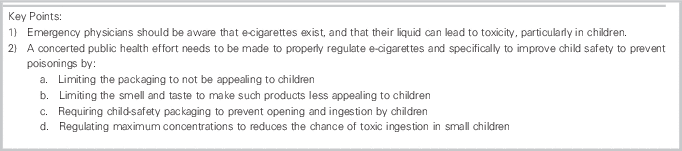
Our report prompts the consideration of a number of key points (Table 2). Currently, Health Canada advises Canadians to not purchase or use electronic smoking products, as they have not been fully evaluated for safety, quality, and efficacy, and may pose unknown health risks. Health Canada also explicitly states that nicotine cartridges and electronic smoking products should be kept out of reach of children at all times, both because they are a choking hazard and because they present a risk for nicotine poisoning. However, there are no laws regulating the sale of these products, and they can readily be found over-the-counter in convenience stores as well as through Internet purchase. 11 As there is currently a disconnect between the legality and regulation of e-cigarette nicotine products and their availability to the general population, children are at particular risk, as such products are not child-proofed and under the protection of Health Canada.
Liquid nicotine exposure
We suspect that many parents are unaware that e-cigarette nicotine liquid is toxic. The American Association of Poison Control Centers recommends always protecting skin when handling e-liquid products, following disposal instructions on the label, and always keeping e-cigarettes and liquid nicotine locked and out of reach of children.Reference Picard 12 It is imperative to educate the public on the serious risks these liquids pose to the pediatric population. If a child has been exposed to an e-cigarette or liquid nicotine, the local poison control center should immediately be contacted for management advice.
Conclusions
The case we present and discuss illustrates the potential for nicotine toxicity from e-cigarettes in the pediatric population. We feel that emergency physicians should be aware of this new mode of poisoning, and public health efforts should be made to minimize such exposures.
Competing Interests: None declared.



