

I. Introduction
Authoring publications in the leading journals of an academic’s chosen discipline is the highest form of symbolic capital in the academy. It is key to obtaining a permanent job. Publishing involves an allocation of institutional research time and it is a determining factor in obtaining grant funding – that all important “track record”. It is the bedrock of any promotion case and provides an accumulative advantage across one’s career. For those without publications, there is a vicious circle of non-advancement.Footnote 1 Women publish less than men in refereed journals across many disciplines; or to express this in a way which signals that women are not in control of the publication process or of the structures of the academy in which the process sits, women are not published as frequently in refereed journals as men. Women are also under-represented in citations, in senior job roles, wait longer for promotion and are subjected to bias in student evaluations. The focus of this article is firmly on publication disparity, whilst acknowledging that there is some cross over with issues of citation and the conditions for advancement within the academy.Footnote 2
There are numerous studies which highlight publication disparity particularly, but not exclusively, in science, technology, engineering and mathematics (STEM).Footnote 3 It has been identified as a concern in the fields of political science,Footnote 4 sociology,Footnote 5 economicsFootnote 6 and management.Footnote 7 Individual journals have highlighted it.Footnote 8 In situations where disciplines compete with each other (e.g. grant funding) or where they can be compared with each other (e.g. research evaluation exercises), the disciplines that are considered the weakest are the ones where there are more women academics than men; two obvious examples are nursing and education.Footnote 9 Gender publication disparity in law (including in the acknowledgement sections of law review articles)Footnote 10 has yet to be considered outside the US, where its tenure systemFootnote 11 and its “home advantage”Footnote 12 in largely student-run law journals make replication and comparison with the UK impossible. Within law as a discipline, there has been engagement with how citation measures are constructed,Footnote 13 how citation patterns workFootnote 14 and the gender dimensions at play there which suggests that women are cited less than men.Footnote 15 The research in this article is the first attempt to measure the gender disparity in publishing in law in the UK. It considers which of the leading UK law journals publish the work of women authors; how many of their authors are women; and the range of women’s participation in these journals. We find interesting discrepancies in women’s participation in legal publishing. It is these discrepancies that we explore in more detail in the text that follows.
In Section II, we set women’s publishing activities in the context of employment patterns in the modern law school. Women are more numerous than men, but they also tend to be junior to them. Section III explains which journals we drew our data from and the rationale for choosing those journals from the large suite of law journals. The criteria for journal choice are absent in most studies of gender publication disparity. However, explaining the reasons behind journal choice aids the replicability of this study across disciplines and adds to the robustness of findings from an infra-discipline perspective. Each of the journals we have chosen has played a central role in the development of law as an academic discipline. This further supports their selection as an appropriate focus for the inquiry which we are pursuing. We describe in Section IV how the dataset was assembled. It is here that we identify the limitations of our study. Our dataset is comprehensive – but it cannot tell us everything. It is in this section that we engage with the peer-review process and the role of journal editors. In Section V, we present our findings before moving in Section VI to consider what changes could be made to the publication process and by whom. These changes may alter the gender patterns we identify in women’s publishing.
II. A Picture of the Law School in the UK
The data on publications and authorship used in this article were collected from the years 2016–20. To set out the gender dynamics of the academy generally, and more specifically within law schools, we use Higher Education Statistics Agency (HESA) data for 2018–19. This is because 2018–19 is the mid-point year for our sample.Footnote 16 HESA data tell us that there were 21,520 staff working at professorial grade in the UK’s universities during this period. Of this number, 5,750 or 27 per cent were women.Footnote 17 At the law discipline level,Footnote 18 there were 545 full-time law professors in the UK. Of those, 195 (36 per cent) were women. There are two other employment levels which HESA reports: “senior managers” and “other contracts”. There were 55 full-time women “senior managers” in law.Footnote 19 This number represents 41 per cent of the total at senior manager level. For “other contracts”, there were 2,240 full-time women, representing 58 per cent of the total. In the part-time field of the “other contracts” data, there were 1,540 women, representing 63 per cent of the total. These figures follow a similar pattern to those produced by Duff and Webley, who worked on 2015–16 HESA data.Footnote 20 Women were then, and are still, disproportionately represented in both the non-professorial category of “other contract level” and in the part-time staff cohort. The UK, whilst being able to report improvements,Footnote 21 has the same glass ceiling for female staff seeking to advance to the higher echelons of the law school as other jurisdictions, notably the USFootnote 22 and Australia.Footnote 23
Duff and Webley concluded that the ongoing differentials between the career trajectories and work status of women and men were at “least partly associated with the way in which we in the academy assess and value excellence, merit, and contribution”.Footnote 24 The unequal amount of “emotional labour” and “care work” in relation to both interactions between staff and interactions between staff and students, as well as so-called “glue-work”, which keeps departments together, is not typically recognised in promotion exercises and is work that is typically done by women.Footnote 25 When it comes to service work in general, both research and autobiographical accountsFootnote 26 suggest that women perform not only more service work in academia but also more gendered service work.Footnote 27 Or, in other words, men in general pursue more esteemed service work, such as the chairing of key committees, while women are disproportionately involved in working groups and student-facing work.Footnote 28 A recent qualitative study used the concepts of relational work to explain how academics balance, and are allowed to balance, “the pursuit of individual interests” (i.e. more research time) against “collective interests” (i.e. academic citizenship/service work).Footnote 29 Men were able to balance individual interests with collective interests successfully, negotiating for roles with higher esteem but also requiring less time, consequently leaving themselves more time for research. Mobility for work is a factor in academic progressionFootnote 30 but is not equally available to all. Those with domestic responsibilities, most often women, are not as mobile as those without. While all academics grapple with a lack of time to do research, particularly if that research is being conducted without the support of increasingly scarce external funding, these structural and systemic inequalities may explain why women as a group, as compared with men, experience this in a more pronounced way, with consequent implications for their careers.
The role of gender within the law school is characterised by a series of differential understandings. Cownie’s hugely important work on legal academics revealed that few of her interviewees saw gender as a factor in forging a successful career unless she asked them “directly about the position of women legal academics, [then] two-thirds of her respondents indicated that women are disadvantaged in pursuing a career as a legal academic, when compared with men (emphasis in original).”Footnote 31 She concluded that “awareness of gender issues is not very deeply embedded into the culture of academic law” and that “academic lawyers have to be specifically direct[ed] to the subject before they readily identify gender as problematic”.Footnote 32 The findings of Hunter add to this point; she shows that women are very rarely aware of gender statistics that show discrimination.Footnote 33 However, at roughly the same time as these pieces of work were being conducted in the early 2000s, the Women Law Professors Network was set up by Celia Wells to try to deal with gender issues in the legal academy such as progression, management styles and management opportunities and hostility.Footnote 34 This bifurcation of views on gender might well depend on one’s position and lived experience in the academy.Footnote 35 The context in which legal academics work has changed significantly since the early years of the 2000s. Gender consciousness has been raised by feminist legal scholarship and by the Athena Swan programme, even if there is a view that its transformative potential has lost out to neoliberal performativity.Footnote 36 Feminist scholarship has been recognised within the law school as institutionally useful in research assessment exercise terms, even if it is still not considered mainstream.Footnote 37 The effect of this is to raise both the profile and the problems of the research–gender nexus.Footnote 38 The neoliberal reforms to university structures which have ushered in practices such as performance management and academy quality assurance and have increased market orientation have brought work intensification for everyone,Footnote 39 but there are clear gender disparities in how that intensification is distributed and experienced.Footnote 40
III. Our Sample
We examine the authorship statistics by gender in five law journals in the UK: the Cambridge Law Journal, the Journal of Law and Society, Legal Studies, the Modern Law Review and the Oxford Journal of Legal Studies.Footnote 41 These are generalist journals that aim to cover all substantive areas of law. We have selected these particular journals for two reasons. First, as established authors within the legal academy, we consider them to be “high status” and “locations of choice” for authors and we would suggest that many others within the legal academic community also perceive them in this way as journals of central importance. They offer an opportunity for authors to present field-defining positions to a broad audience within the discipline over and above that offered by specialist sub-field journals. Second, this group of journals conform to the norms of journal organisation seen in the journals of other disciplines. This conformation is lacking in some other “leading” law journals. We have selected journals that are clear that they use two blind peer reviews and have an open, rather than invite-only, submission policy. We elaborate on what these norms are in more detail in Sections IV and VI . Here, it is sufficient to say that conformity is important for the purpose of replicating and comparing results across disciplines.
We can also point to additional objective justifications for selecting these journals. There are two methods of ascertaining journal profile and status: impact factors assembled from citation frequency and reputation determined by expert commentators. Law, as a discipline, has declined opportunities to engage with a metric approach to research which would inevitably result in some form of journal rankingFootnote 42 – something it shares with the fields of political science, but not economics or business management.Footnote 43 Law sits firmly in the reputation camp, taking the view that research quality and publication place are not necessarily correlated.Footnote 44 If we are prepared to accept that institutions have submitted the best work of legal academics participating in the UK’s research assessment exercises from 1992 to 2021, we can read across from the performance of individual law schools to the importance of particular journals.Footnote 45 Analysis undertaken by Johnson and GibsonFootnote 46 suggests that the journals we have chosen are also the journals of choice for academics working in law schools that do well in the RAE/REF;Footnote 47 they are high-status and high-quality journals in the eyes of other legal scholars.
The selected journals can also be tied to the evolution of legal education and the law school within the academy. This is the second reason for selecting them. The titles of two of these journals point to their respective institutional homes. For the others, the Modern Law Review has its home at the London School of Economics and the Journal of Law and Society at Cardiff University. The fifth, Legal Studies, is linked to the Society of Legal Scholars, with the editorial team being appointed from the society’s members.
The Cambridge Law Journal was founded in 1921. In the foreword, H.D. Hazeltine remarked that the “return of teachers and studentsFootnote 48 has been accompanied everywhere by an awakened sense of the vital importance of law and justice in the affairs of nations”,Footnote 49 reflecting, no doubt, the foundation of the League of Nations in 1920.Footnote 50 There was an intention to mimic journals found elsewhere in the common-law world, notably the Harvard Law Review.Footnote 51 The journal sought to “serve as one of the links of Empire”Footnote 52 and “contribute in some measure to the fostering of closer intellectual and personal relations between the law schools and lawyers of England and the law schools and lawyers of America”.Footnote 53 Whatever the journal’s grand aims, English legal education at the time was largely regarded as preparation for practice and its contents reflected this.Footnote 54
The Modern Law Review was founded 16 years later in 1937 under the editorship of Theo Chorley who held the role for some 34 years. Otto Kahn-Freund described the journal’s purpose as being “to stimulate the study of law as a social science and to pay the closest attention to the social forces which make the law and to law itself as a social force” – a task at which he believed the journal was extremely successful.Footnote 55 Through a partnership between what Cyril Glasser calls the “refugees” and the “radicals”,Footnote 56 the Modern Law Review represents the first move, confined largely in his view to the University of London,Footnote 57 towards liberal legal education founded in an “explicit articulation of modes of legal reasoning and … the treatment of law as a method of social engineering”.Footnote 58 Today, the objective of the journal is described as “to publish the best and most innovative, significant and insightful legal scholarship from whatever area of law”.Footnote 59
The Journal of Law and Society (or the British Journal of Law and Society as it was originally titled) began life in 1974. The first editorial, presumably written by Phil Thomas, who remains the editor 50 years on, made express reference to “socio-legal studies” and the journal’s aim of “establishing a sound theoretical basis for the study of law in society”.Footnote 60 Its establishment came hot on the heels of the creation of the Socio-Legal Group of the Society of Public Teachers of Law (now the Society of Legal Scholars) in the early 1970s.Footnote 61 The journal was the first outlet exclusively for legal research that sought to engage the ideas of other disciplines.
Legal Studies was first published in 1981 as the journal of the Society of Public Teachers of Law (now the Society of Legal Scholars). The evolution of Legal Studies as a journal tells the story of the evolution of legal research within the academy. The contents of the journal under its first editor, John Andrews, were unashamedly doctrinal, but today, Legal Studies aims to include “doctrinal, conceptual and socio-legal analyses and seeks to publish work which truly represents the broad range of interests across all legal scholarship”.Footnote 62
The Oxford Journal of Legal Studies was founded in 1981 – the same year as Legal Studies. No editorial is published in the first volume, so it is difficult to be entirely sure about the motivations behind its establishment. One might speculate that it was a desire to move away from the doctrinal and historical focusFootnote 63 of its “sibling” publication, the Law Quarterly Review.Footnote 64 The Economic and Social Research Council-funded Oxford Centre for Socio-Legal Studies was established in 1972, but it was an entity very distinct from the Law Faculty, both geographically and intellectually.Footnote 65 The journal was not an attempt to embrace socio-legal studies, but it might well have been an attempt to showcase the depth and quality of – and the commitment to – philosophicallyFootnote 66 and comparatively oriented legal scholarship within Oxford. The presence of, inter alia, Tony Honoré and Peter Cane on the first editorial board speaks to this.
IV. Our Data
To create the dataset, we identified each article published in the Cambridge Law Journal, the Journal of Law and Society, Legal Studies, the Modern Law Review and the Oxford Journal of Legal Studies over a five-year period. The dataset begins in 2016 and runs to 2020. 2020 is chosen as the end date for this study because it marks the onset of the COVID-19 pandemic in March 2020. It is recognised, however, that most of the articles contained in the 2020 cycle of publishing would have been written, reviewed and queued for publication prior to 2020. It has been shown that women’s (and especially early-career women’s) publishing has been adversely impacted by the pandemic.Footnote 67 There are a variety of reasons for this impact. They include the substantial and rapid change in the roles in the academy that women already disproportionally undertake around teaching and student support (as discussed above), the increase in caregiving and domestic work thrust upon them by the isolation and lock-down aspects of the pandemicFootnote 68 and the absence of services in the community that women frequently rely upon to support their working lives, such as, inter alia, childcare, schools and other related services.Footnote 69
Each journal article is broken down such that the dataset includes the authors of the article. Single authors and co-authors are included, with each receiving the same weighting. The articles were gender coded using Excel by first name and, if required, a follow-up Internet search was conducted to assign authors to the “men”, “women” and “other” categories. This appears to be the most common method used in the literature on ascertaining gender statistics in publishing.Footnote 70 Great care has been taken with non-binary and unisex names, such as Alex or Jean, and for those who publish under their initials as opposed to their full names. In those cases where their gender was not clear from their first name, the author’s biography has been examined individually to ensure that the author has not been misgendered by the automated system. It is still possible that there may be latent misgendering within the dataset. For example, authors who published a piece in 2016 may have subsequently changed genders, may identify differently or may use different pronouns. Each author does not have his, her or their unique identifier in the dataset. Our categorisation is static and binary.Footnote 71 It is based on the information given at the point of publication.Footnote 72 An author’s name appears in this dataset as it was written on the journal article at the time of publication. This also means if that one author publishes in each of the five journals, his, her or their name would appear five times in the dataset.
While these five journals carry a variety of items – articles, case notes, review articles and book reviews – we examined only articles. The reason for this is that articles will, generally speaking, be subjected to a common process: peer review. However, the processes for the other forms of publication will differ from journal to journal, sometimes quite significantly. Review articles and book reviews are not traditionally peer reviewed, with book reviews often being suggested by doctoral supervisors as an ideal first publication for PhD students. For both of these forms of output, the relevant editor(s) may play a stronger role in commissioning by actually selecting and approaching the author and/or later in the process assuming a larger editorial role over control of the content. Case notes may be solicited or unsolicited submissions and they may or may not be subjected to review outside the editor(s).
We recognise that there are limitations to the data that we have extracted and limitations in the data available to us for extraction. We have an incomplete picture of the publication pipeline for each journal. We did not set a field for the geographical location of the institution or institutions to which an author affiliates. This means that although we have focused on journals that were founded in the UK and have only UK-affiliated editors, we must acknowledge that our sample is likely to contain women working in academia outside the UK higher education system. We know nothing about how many article manuscripts each of these journals receives or their policies on desk rejection by editors, and so we also do not know the acceptance rate. Four of our journals share two publishers, namely Wiley and Cambridge University Press. Oxford University Press is the third publisher involved. Each journal, however, is likely to have bespoke arrangements with its publisher surrounding issue length and yearly volume page numbers. None of the journals provides information on when a manuscript was submitted and when it was accepted. This makes it impossible to tell what use the individual journals make of the “revise and resubmit” processes and how reviewing works in relation to those processes. It might be that quick publication is more important to an author than publication location, or that the revisions requested are not acceptable to them. In both cases, they are likely to withdraw their paper and submit it elsewhere. We do not know where the leak is within the publication pipeline. It might be at the submission stage, or it might be at peer-review or post-peer-review stage. This matters because the solutions for fixing the leak are different depending on where it is. These are matters we address in Section VI.Footnote 73
Articles in our selected journals will go through a process of peer review. The majority of academic journals in the UK across all disciplines use this process for selecting articles. It is seen globally within the academy as a marker of quality and an indication that the piece is deemed by others, in the same academic community or a subset thereof, to be of an appropriate scholarly standard.Footnote 74 Adhering to the norm of peer review was a key criterion for selecting the journals involved in this study. Despite the recognition that it is a common process, how it actually operates is something of a “black box”,Footnote 75 with there being no universal system for how journals use it and no disciplinary traditions that dictate a particular methodology. Some editorial teams work collectively, while other editors behave independently and autonomously. Editorial boards can play an active role in reviewing and making decisions on manuscripts for some journals pre- or post-review. Other journals use a wider editorial board to both review particular manuscripts and suggest external reviewers. Others only commission external reviewers. Journal editors rarely reveal how they operate and there is no guarantee that a journal maintains the same process when its editors change.
At the level of the article itself, there is often no clarity around how many reviews are sought or how many rounds of review there will be. Most journals operate closed and blind peer review, in that there is anonymity on both sides of the process and reviews are not published alongside the manuscript. This is intended to guarantee that the reviewer can speak freely and that the author(s) is/are not prejudged by the reviewer(s) on the basis of their identity. However, in a small academic community with a lively conference circuit, double-blind peer review does not necessarily guarantee the anonymity of the author or the reviewer. Network analysis of pairings of reviewers and authors suggest that the more distant a reviewer is from an author’s network (constructed by looking at direct connections, co-authors and co-authors of co-authors),Footnote 76 the more likely a review is to be negative and the editors advised against publication.Footnote 77 The selection of peer reviewers by editors is key to the success of an author’s manuscript, and yet selection is tied to the editor’s network and their knowledge of the author’s network. This will often provide challenges for editors of general journals if they wish to see the authorship base of the journal move beyond their own orbit. It also presents a challenge for those authors working in smaller or emerging fields. This challenge is potentially exacerbated by academics declining a request to review from an editor that they do not know or a journal they have not published in themselves as the plethora of unpaid service tasks in the academy increases.Footnote 78 The rise of commercial publishing for peer-review articles, in the form of article-processing fees and subscription costs, facilitated by free academic labour in the form of peer review,Footnote 79 raises questions about the sustainability and ethics of the system.Footnote 80 These questions are only very partially offset by the possibility of CV enhancement and career advancement through the recognition of “being a reviewer”.Footnote 81
The identity of journal editors is a matter of public record through the journal publisher’s website and the hard copy of the journal itself. In selecting peer reviewers, editors are exercising control over what is published. Whether they recognise their agency or not, the reality is that they engage in a tacit process which acts to set the norms, standards and methodological approaches that will be used to gauge quality.Footnote 82 Academic journal editorships are rarely remunerated by publishers above token level, but holding these positions in high-quality journals is significant both in terms of career progression and in terms of how a discipline is shaped. It is a position of significant responsibility within the community. Potential editorial bias can be seen in the finding that pre-existing relationships between editors and authors can speed up the publication process considerably.Footnote 83 The editor(s) will also have a role in interpreting the reviewer(s) comments for themselves and often for the author, in that the editor can offer a steer through contradictory reviews or can choose to remain silent. This is another tacit process that can act as encouragement or discouragement for a potential author. Journal editors can choose whether to send to authors comments made by reviewers that are ad hominem, aggressive or facile. Their choice on this sets the tone for the journal and its processes. There are suggestions that reviews of this type disproportionately discourage under-represented groups.Footnote 84 The opacity of the peer-review process means that it is difficult to determine whether the gender of a reviewer impacts on eventual publication or not, both in our five journals and more broadly.Footnote 85 The point here, which we elaborate in Section VI, is that more clarity around this process might be an incentive for an author to submit a manuscript. We now turn to examine the authorship of those articles which did pass successfully through this process and were published in our selected journals.
V. Our Results
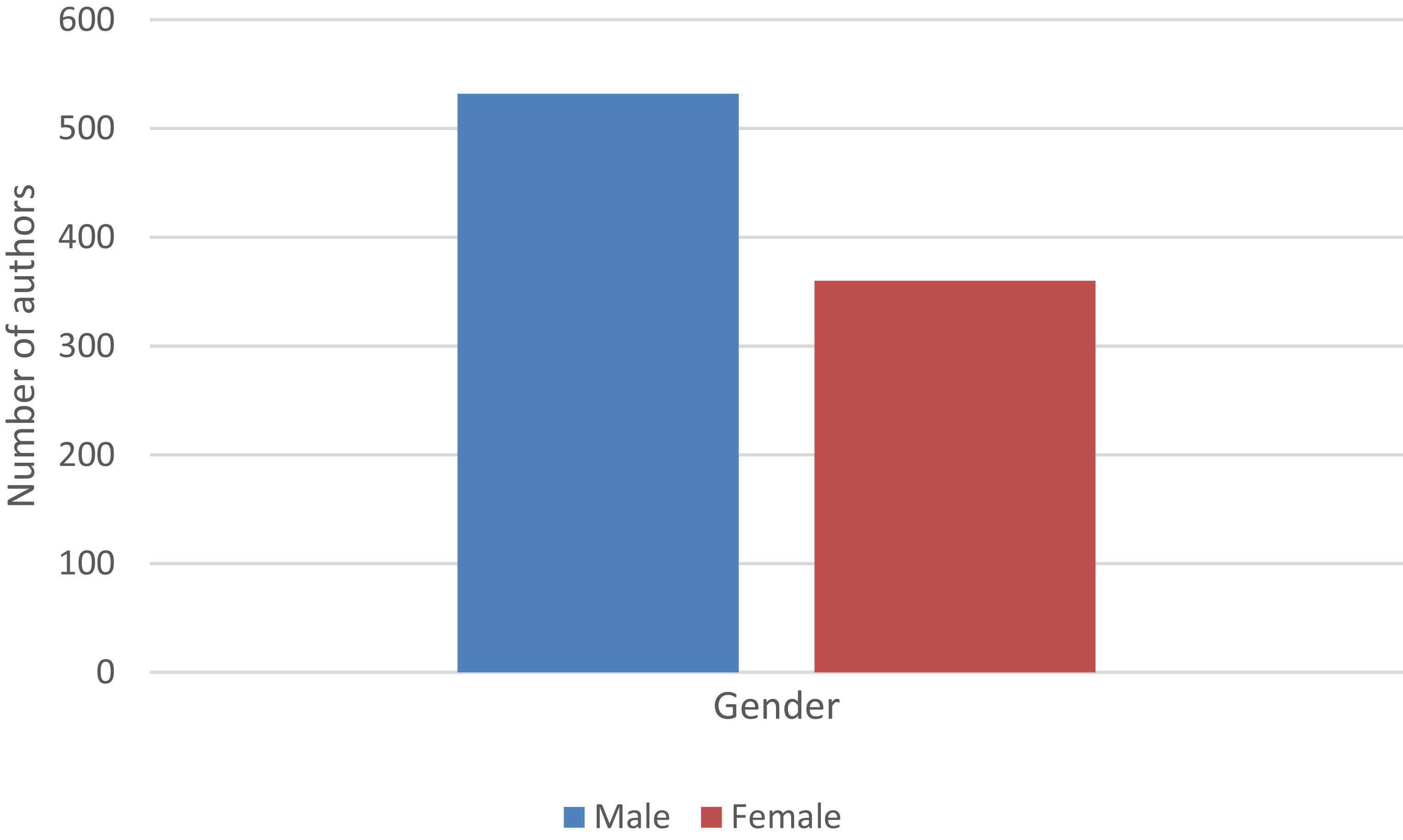
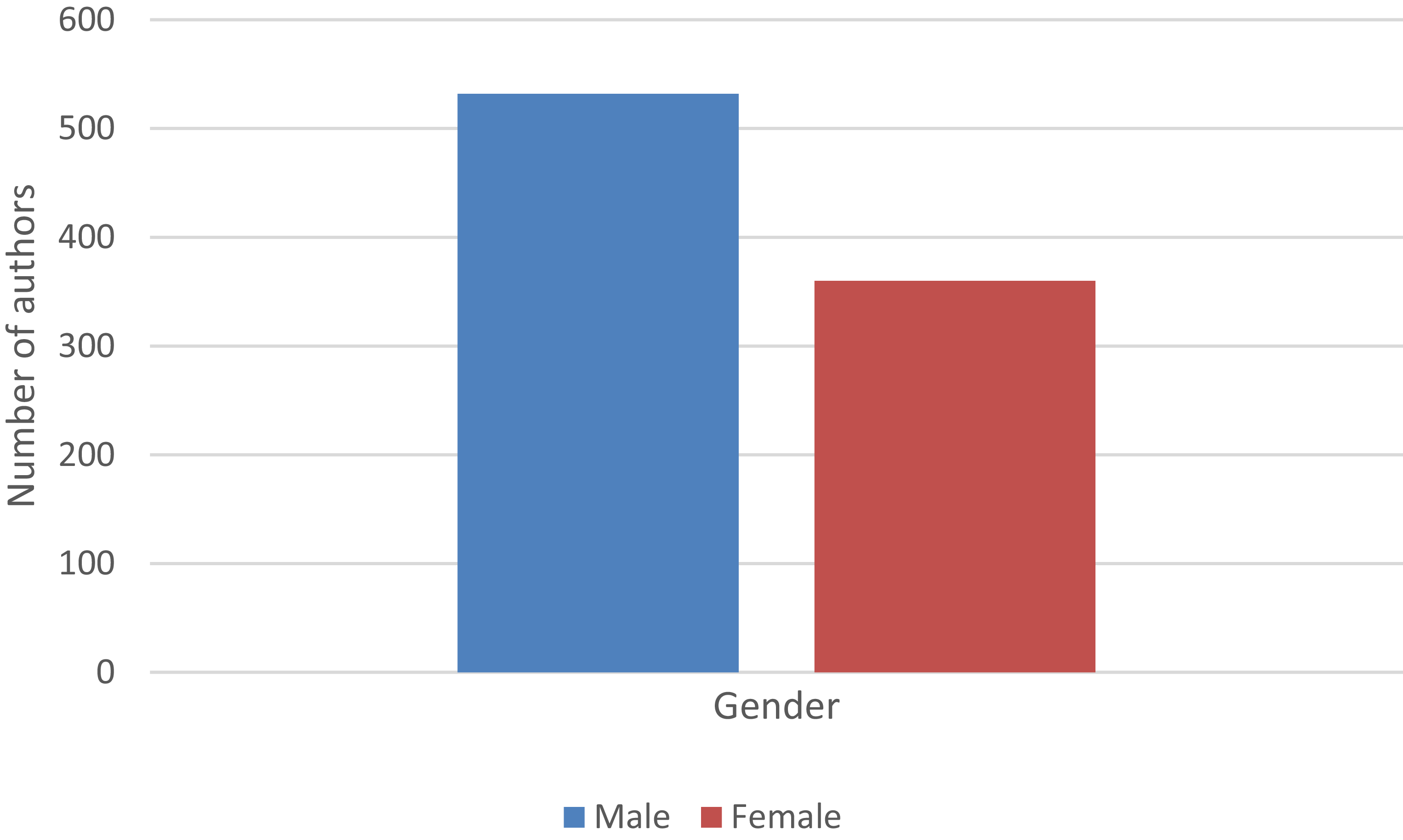
Between 2016 and 2020, around 900 authors published over 700 articles in these five journals. This section examines the articles published in these five journals and the gender of the authors. The analysis of these results reveals discrepancies in women’s participation in legal publishing. Some journals have a balanced gender profile, while others do not. The headline is that in this study women comprise less than half the authorship base despite, as Section II showed, being numerically superior in the academic staff population of UK law schools. This information is represented in Figure 1, which shows the numbers of authors divided by gender. Men appear in Figure 1 in the pillar on the left and women authors in the pillar on the right. Women authored or co-authored around 40 per cent of the articles published. In addition to this, we also have one “other” author: the Productive Margins Collective is listed as a named author on a piece in the Oxford Journal of Legal Studies in 2018.
The total number of authors.
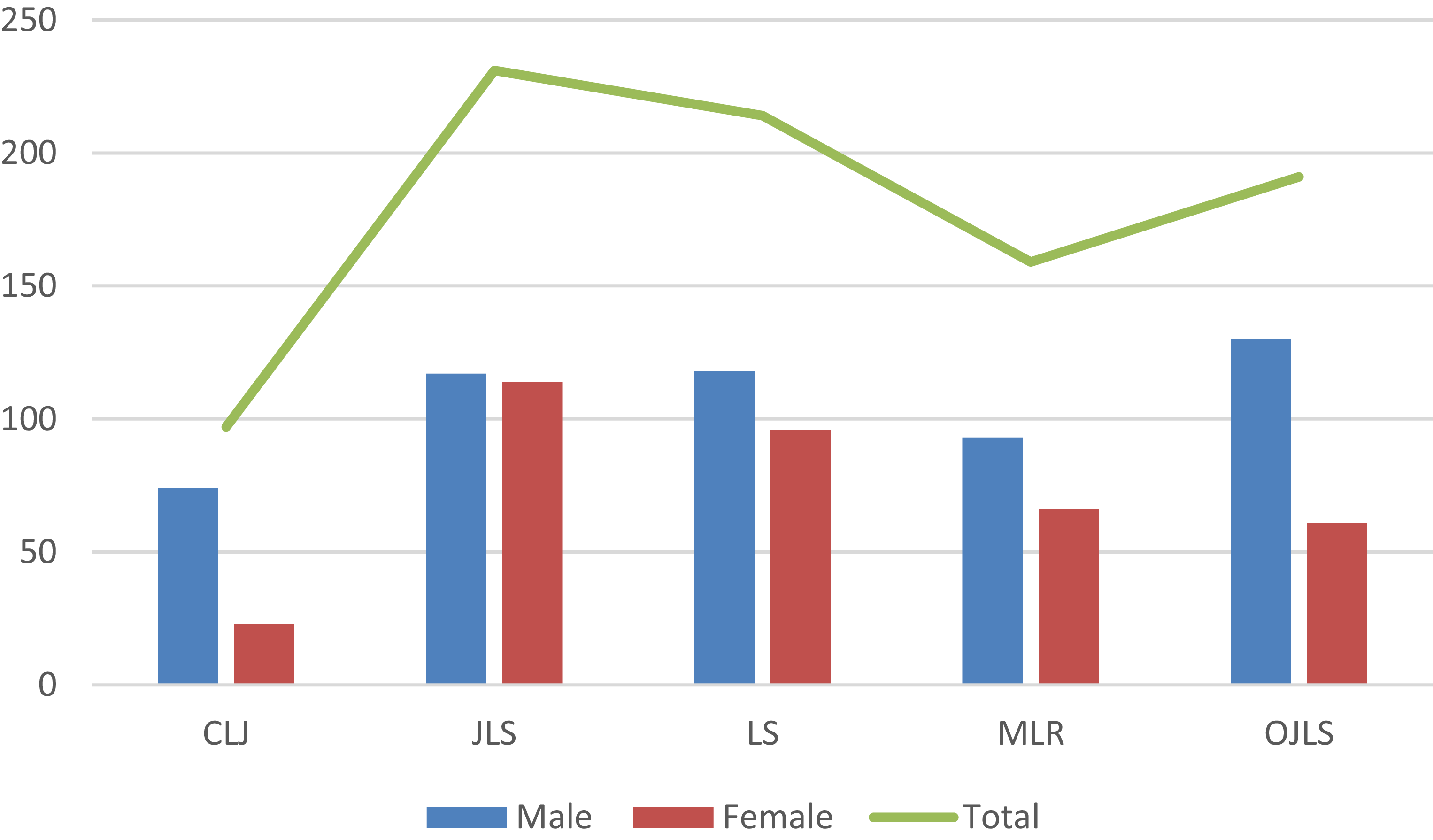
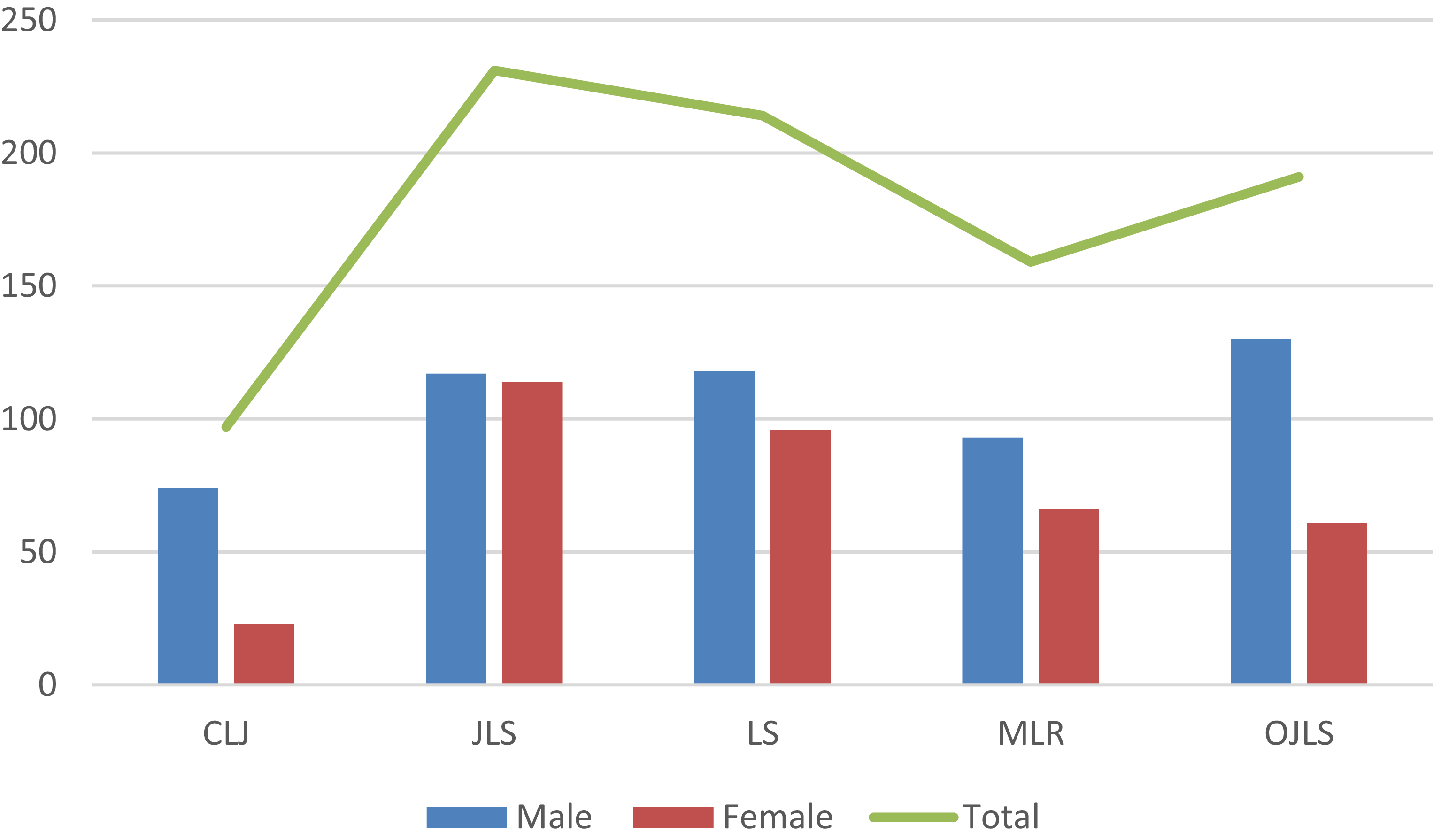
The general trend of around 60 per cent of the publications having been authored by men and 40 per cent by women was not, however, observed universally across the five journals. Each journal has a very different author profile. Figure 2 shows the gender ratios in each of the five journals for the whole five-year period examined. The clearest differences can be seen between the Journal of Law and Society, Legal Studies and the Modern Law Review on the one hand, and the Oxford Journal of Legal Studies and Cambridge Law Journal on the other. The Journal of Law and Society came closest to gender parity with around half of its authors of articles being women. Legal Studies was also close to parity with 45 per cent of its authors in this period being women. The Modern Law Review echoed the division found in the sample as a totality; 58 per cent of its authors were men and 42 per cent women. In comparison, in the Oxford Journal of Legal Studies, only 32 per cent of the authors were women. The Cambridge Law Journal had the fewest woman authors, with only 23 per cent women. A trend line for the total number of authors can be seen in grey in the graph below.
The numbers of authors per journal.
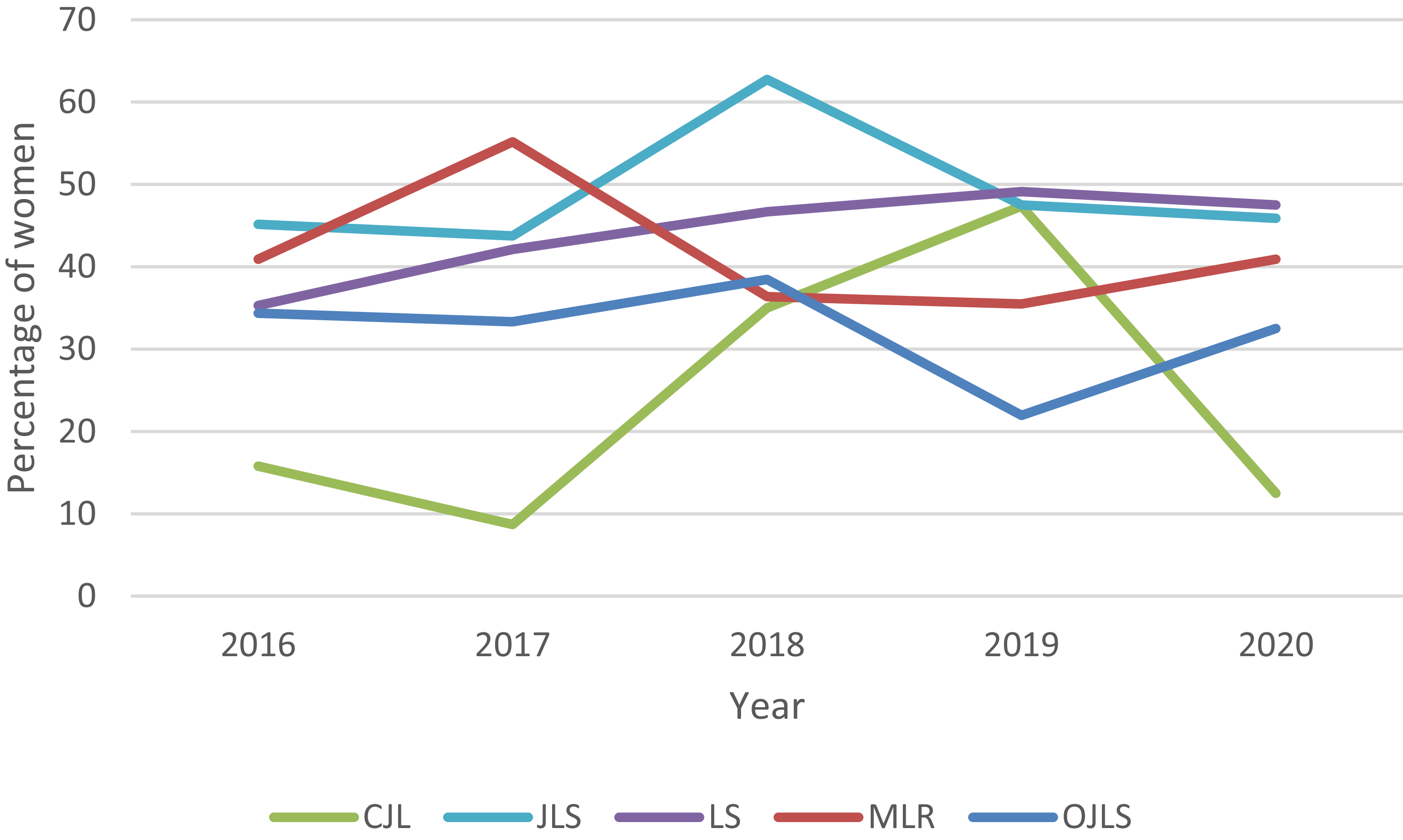
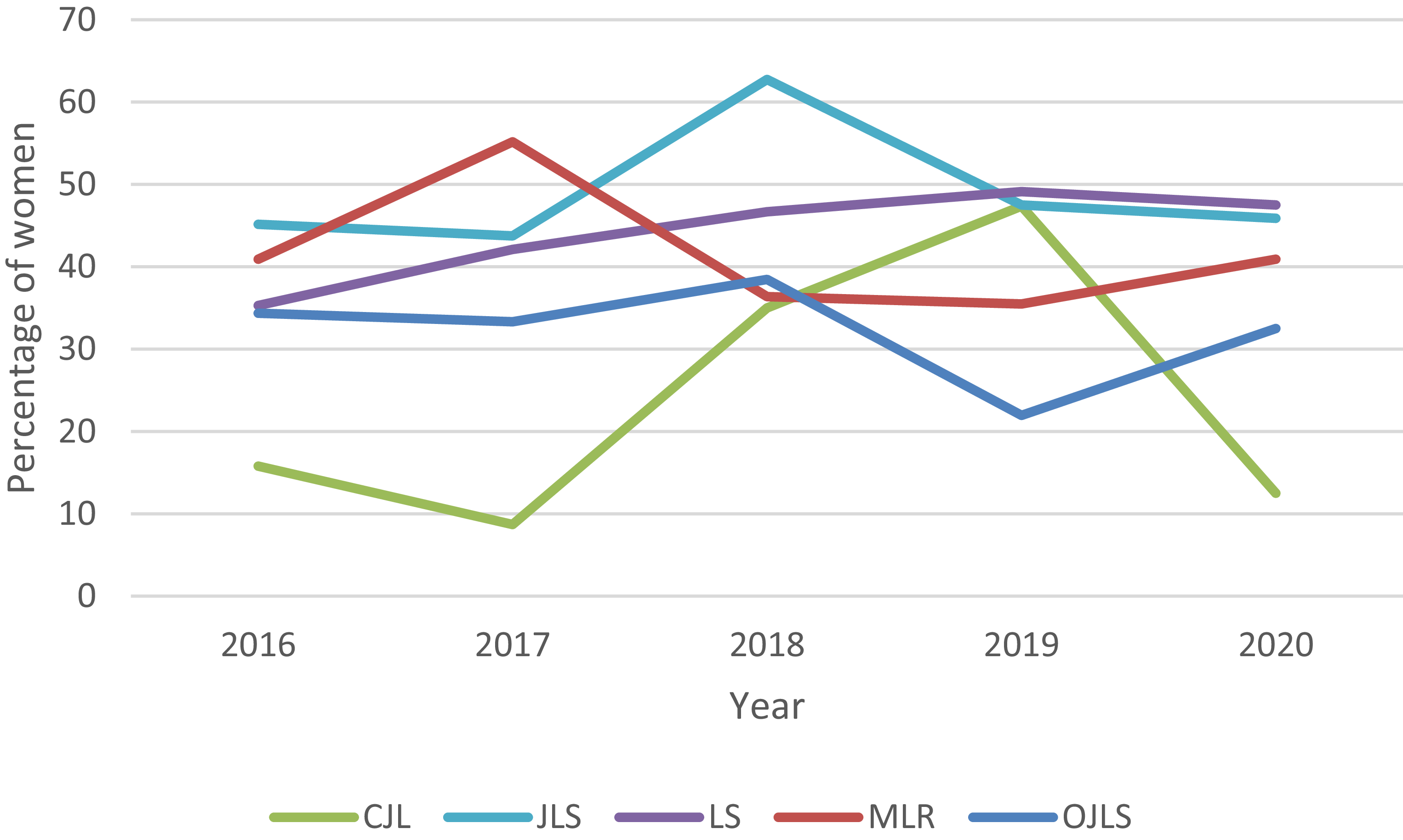
When the results are broken down by journal and by year, a more nuanced set of patterns emerges. This is shown in Figure 3. Again, the Journal of Law and Society provides the highest percentage of women, with 63 per cent of authors in 2018. The percentage of women in the Journal of Law and Society does not dip below 40 per cent in the period under examination. Legal Studies shows a steady and stable level of women’s participation. For both the Modern Law Review and the Oxford Journal of Legal Studies, there appears to be a general trend towards a decline in women’s participation in total. The Cambridge Law Journal, the journal with the lowest number of women authors overall, has extreme variation year on year. In 2016 and 2017, fewer than 20 per cent of the authors in this journal were women, but in 2019, this figure jumps to around 50 per cent. For example, in 2019 and when measured by percentage, there are more women authors in the Cambridge Law Journal than in Legal Studies. The following year, in 2020, the percentage of women in the Cambridge Law Journal falls to its more usual figure of fewer than 20 per cent.
The percentage of women authors per journal per year.
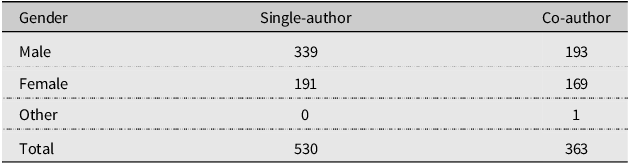
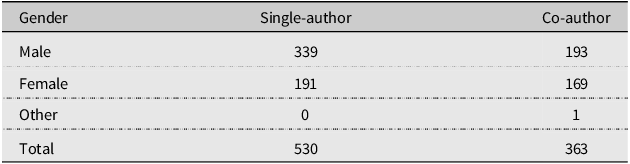
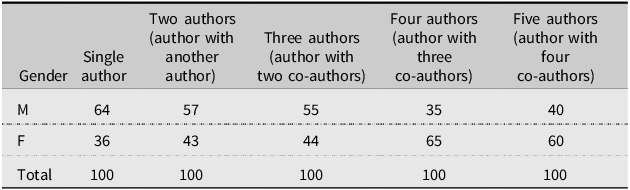
Women disproportionately participate in co-authoring as a publishing methodology. Tables 1 and 2 show the number of authors who have written single-authored pieces and co-authored pieces.Footnote 86 Table 1 uses the raw numbers and it shows that the number of women publishing as sole author is almost equal to the numbers of women co-authoring. There are no articles with more than five co-authors in this dataset. Men, as single authors, outnumber the men presenting as co-authors by almost twofold. As shown by Table 2, when this analysis is extended to show research teams of three, four and five co-authors, another gendered pattern emerges. As the number of authors increases, so does the percentage of women authors. For articles with four or five authors, the women outnumber the men. Since there is only one “other” author, this does not equal a percentage and has not been carried over from Table 1 to Table 2.
Numbers of authors with single-author or co-author status
Percentage of authors with single-author or co-author status
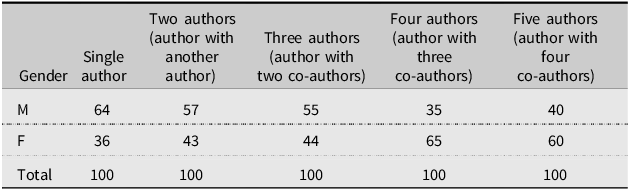
Not all journals follow the trend identified when the dataset is considered as a whole. The Cambridge Law Journal – the journal with the fewest women authors published across the sample years – does not have more women as authors when the co-authorship pool for an article increases. Of the two articles in the Cambridge Law Journal involving three co-authors, all six are male. There are no articles with four or more authors. For single authors in the Cambridge Law Journal, 78 per cent are men and only 22 per cent women. The Oxford Journal of Legal Studies has similar figures. Of its single-authored journal articles, 71 per cent are authored by men and 29 per cent women. When moving to two co-authors and three co-authors, the percentage of women gradually increases.
The Journal of Law and Society, with its even balance of men and women authors, follows the general trend – except that the gap between single male authors and single woman authors is low. In the dataset as a whole, this stands at 64 per cent of men authors and 36 per cent of women authors. For the Journal of Law and Society, 52 per cent of single authors are men and 48 per cent are women. Legal Studies and the Modern Law Review follow the general trend, but the figures are erratic when it comes to two co-authors and three co-authors respectively. For Legal Studies, in the case of articles with three authors, 67 per cent are men and only 33 per cent are women. In the case of the Modern Law Review, in the case of articles with two co-authors, 70 per cent are men and 30 per cent are women. Subject to these exceptions, the data show that women generally publish in these journals using co-authorship.
There is a possible link between disciplinary orientation and co-authoring. Those using pluralistic or socio-legal methodology are perhaps drawn towards co-authorship. For example, data collection and data analysis can be straightforward to divide between authors. With any interdisciplinary writing, individual disciplinary expertise can be shared positively across a team.Footnote 87 Explaining why women co-author more than men is something for future empirical work to unpack. In the absence of that work, two possible explanations suggest themselves. One, women can be seen as more collaborative than men,Footnote 88 as they are socialised to act in a more relationship-oriented way.Footnote 89 The second returns to the idea of gendered labour practices within the law school and the academy more generally, explored in Section II. Within the academy, women perform disproportionately greater amounts of pastoral and administrative duties, which consequently reduces the time available for research-related activities. We could add to this the domestic situation of many women, where they still perform more unpaid domestic labour in the form of housework and care work.Footnote 90 Collaborative work in these conditions might be the only way that some women can publish and collaborative projects can also alleviate the pressure to publish. Notwithstanding the quality and importance of the project being researched, support for co-authorship should not be seen as necessarily a positive move towards supporting women authors. It does little to address the underlying conditions in which many women work and there are suggestions that co-authored work does not serve women well in promotion exercises.Footnote 91
This section has identified the journals with the most inclusive authorship. As well as identifying general trends, this section has shown peaks and troughs within those journals. The Journal of Law and Society has the highest number of women authors and over the last five years it has consistently been close to gender parity. Other journals have struggled to achieve such consistently high numbers of women authors or have had consistently low numbers of women authors. The data also indicate that women have different levels of participation in articles as co-authors.
VI. What Could Change?
This section offers a number of suggestions for achieving gender balance in the authorship of journal outputs. Given that in 2018–19 women comprised 57 per cent of academic staff (in terms of full-time equivalent rolesFootnote 92 in the legal academy), increasing the number of manuscripts submitted and improving the process by which they are reviewed should have an effect on the number of women authors published. We make some suggestions for journal editors to think about in terms of processes and practices in manuscript handling and author relationships. We offer some ideas for curating the external profile of a journal in order to widen the pool of authors that might consider submitting manuscripts to that journal. The possibility of changing the publication statistics for women rests largely with journal editors, even though we recognise that this requires more unpaid labour from them. We give some consideration to how changing the format of journals in an era of commercial publishing might increase the number of women published, but might also have deleterious effects on journal reputation and quality for other contextual reasons.
A. Journal Editors
Some law journals already undertake monitoring of their authorship through hand-collected data and have sounded alarm bells about the position of women as authors.Footnote 93 We suggest that it is good practice for the editors of the journals in our sample, indeed for all journals, to monitor gender and, where possible, race and ethnicity across their editorial boards, peer reviewers, submitted authors, published authors, book reviewers and books reviewed. The information that journal editors need for this monitoring is routinely collected by both the commercial and not-for-profit publishers of our sample journals and many others. It would be a relatively simple task for this information to be made available on these journals’ websites. The results of monitoring should give indications of whether action needs to be taken to address under-representation. Unaddressed under-representation sends passive signals about what is valued and what is not in a particular context. Role models are of significant importanceFootnote 94 – in popular parlance, it is hard to be what you can’t see – although we should be clear that, in line with the findings of other disciplines on gender disparity, we are not suggesting that correcting gender imbalances at various stages of the publication process alone will close the gender authorship gap.Footnote 95
Journal editors might like to consider whether the peer-review process offers opportunities to increase the representation of women. As Section IV explained, this is a process shrouded in mystery for both manuscript authors and journal readers. Peer reviewers are treated as gatekeepers for quality control. There is little incentive for them, without formal encouragement from editors, to offer reviews that are developmental for an author or for them to support work that asks novel questions, examines a new area or uses methodologies that are outside the dominant paradigm. Exclusion on the ground of novelty can have a disproportionate effect on under-represented groups as they are more likely to undertake work that falls into these categories.Footnote 96 Peer reviewers could receive training from journal editors, who might consider drawing on the skills of other professionals such as coaches and counsellors, organised and possibly funded through professional associations or by publishers. Such training would put reviewers in a position to offer developmental feedback on manuscripts; to consider, without unconscious bias, approaches that are different from their own; and to communicate constructive feedback. These are skills that are quite different from those required to be a successful researcher.Footnote 97 A starting point might be found in the Ethical Guidelines for Peer Reviewers, promulgated by the Committee on Publication Ethics.Footnote 98 Alternatively journal editors could be more instructive when seeking peer reviews about the type of review they are looking for.
Journal editors in some disciplines have embraced open peer-review processes as a way of increasing transparency and building trust with potential authors. At its most extreme, open peer review means that the author and reviewer are known to each other. There are steps on the way to this position, such as review reports published alongside an accepted manuscript, known as open reports, and open participation, where the wider academic community can contribute to the review process. Open peer review sits well alongside other processes to improve access to research, such as open data and open-access publishing. Research to dateFootnote 99 shows that whilst reviewers are nervous about open identities,Footnote 100 they are increasingly comfortable with open reports and do not see them as a disincentive to review. There is some supporting confirmation from editors that the quality of peer reviews improves if reports are published.Footnote 101 An open report process offers potential authors an educative window on the publication process and also allows suspicions of bias, lack of engagement and conflict of interest to be put to one side.Footnote 102 This can only increase submissions to journals which adopt it. The community’s familiarity with, and acceptance of, open peer review can only occur if individual journal editors adopt and promote it.
B. Mission Description and Outreach Activities
Most academic journals offer a statement on their webpage that describes how they position themselves within their discipline and the type of work that they are looking to publish. These statements are often refined or developed by journal editors as they assume their role for the first time. The first issue under new editorship might contain an editorial that further expands on this “mission”.Footnote 103 This is an opportunity to communicate with potential authors and to create clarity about what kind of submission that is likely to pass the desk reject threshold. Lack of “fit” with the “substantive content of the journal” or “intellectual focus of the journal” is revealed to be the primary reason for desk rejection in studies of editorial practices.Footnote 104 An expansive narrative mission statement from editors would reduce the submission of inappropriate manuscripts and improve acceptance rates.
The journals in our sample with the highest level of women authors are the ones with the most expansive mission statements, statements that link overtly to particular communities within law both in a disciplinary sense and through socialisation. The Journal of Law and Society is linked to socio-legal studies and Legal Studies is linked to a large scholarly association, namely the Society of Legal Scholars. The Journal of Law and Society has a clear mission statement: it publishes theoretical and empirical work which has an interdisciplinary focus. It is interested in work with an international reach that is challenging and topical.Footnote 105 This is not to say that other journals, within and outside of our sample, do not publish socio-legal research; they do. However, the Journal of Law and Society is clear that this is where work in socio-legal studies belongs. The mission statement of Legal Studies is also cast in broad terms: it seeks “doctrinal, conceptual and socio-legal analyses” in terms of work and “those who wish to reach a broad international and UK readership” in terms of authors.Footnote 106
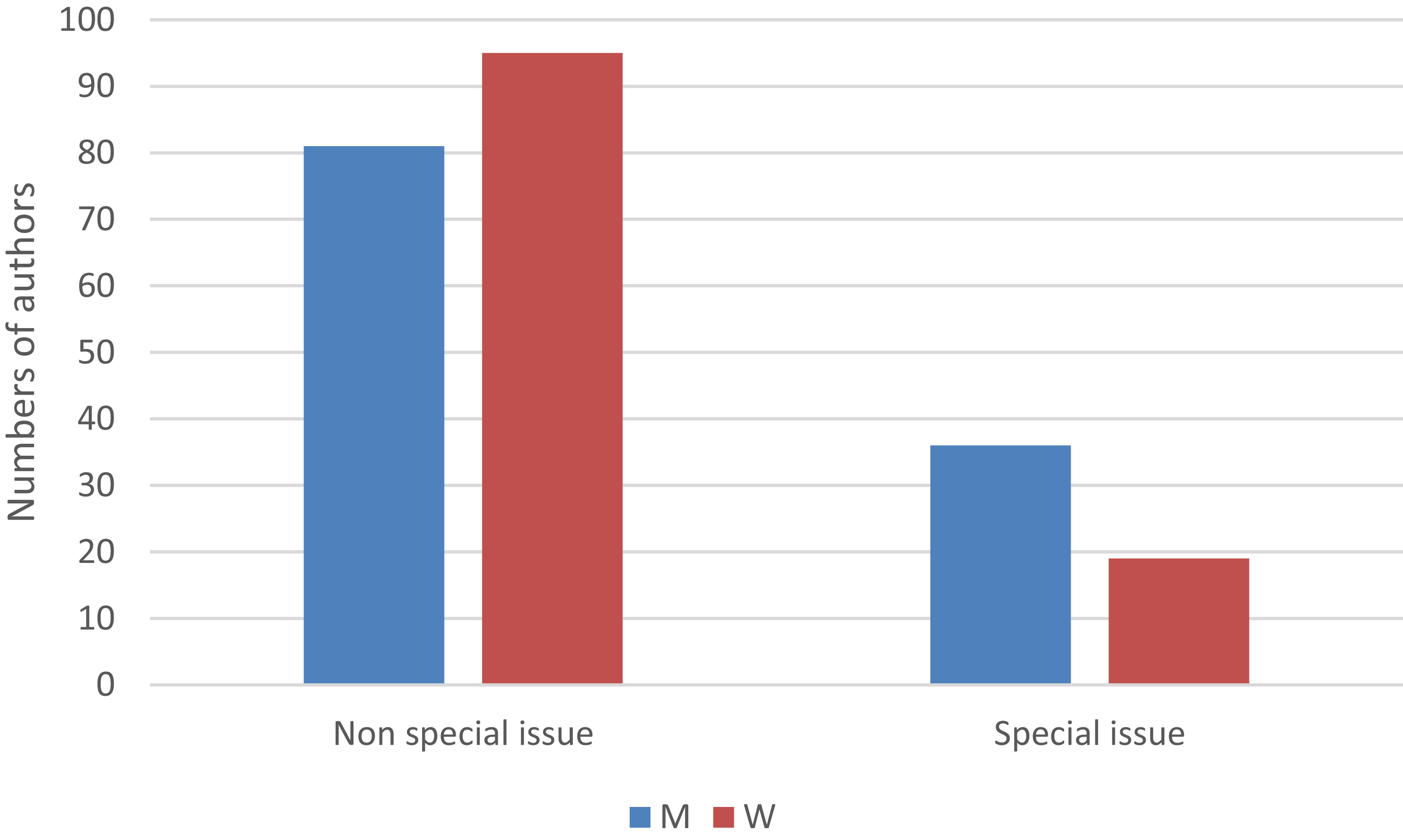
Additionally, both these journals either run or have access to outreach activities. The Society of Legal Scholars runs a large annual conference and financially supports other scholarly activity throughout the year on foot of merit-based applications. These offer potential authors networking opportunities to share their ideas and also suggests to them Legal Studies as a potential publication outlet.Footnote 107 Through its sponsoring body, Legal Studies has a strong and positive connection with its academic community. The Journal of Law and Society editorial board elicit papers for submission and encourage potential authors at conferences, such as the Socio-Legal Studies Association and the Research Committee for the Sociology of Law. The use of technology, through online or hybrid conferences, now offers a partial solution to mobility inequalityFootnote 108 and environmental concerns related to overseas travel. Special issues can play a significant role in widening the pool of authors, reviews and editors involved in a journal, reaching out on a subject basis to those who would not otherwise think of publishing there. Out of the five journals studied, only the Journal of Law and Society publishes special issues. These take the form of two issues a year channelled through the Centre for Law and Society at Cardiff University, “with which the journal has a strong working relationship”.Footnote 109 It is clear from our dataset that these special issues do not serve to boost the number of women publishing in the Journal of Law and Society. Women are a core group of authors in their regular issues. This is shown in Figure 4.
The gender of authors in ordinary and special issues of the Journal of Law and Society.

In contrast, the Cambridge Law Journal has a very much smaller footprint. It describes itself as interested in “contemporary developments” and also jurisprudence and legal history. It refers to contributions from the “Cambridge Law Faculty” and describes itself as seeking to appeal “to practitioners, students, teachers, judges or administrators”.Footnote 110 Researchers and research are notably absent from its requirements. This presents as a rather closed setting with low visibility, the polar opposite of the Journal of Law and Society and Legal Studies. It does not suggest broad appeal. It is indicative of a path dependency that struggles to acknowledge the current breadth and depth of law as an academic subject. References to “the progress of legal reform” and “new legislation” suggest that doctrinal work is the preferred milieu for published work. This alone is unlikely to be the explanation for its low number of women authors, but it might be a contributory factor. It seems facile to suggest that women write weaker doctrinal work that does not pass the test of peer review for publication. There is no evidence to support this as a proposition. There is also no evidence to suggest that women adopt different manuscript submission practices to men. The propositions that women do not aspire to be published in the leading journals of the discipline, submit their work only to journals that they think are most likely to accept it, or do not, as a matter of course, send their work to the top journals in the field first before looking elsewhere are all assumptions that could be tested empirically.Footnote 111 A more likely explanation is that women favour producing work that has, inter alia, a clear gender dimension, a feminist lens and a methodology that is not purely doctrinal, and/or that women focus their work on different areas, such as health, family and education. It is not evident, however, that the journal welcomes work of this sort.
A more expansive declaratory missionFootnote 112 for the Cambridge Law Journal and other journals with low numbers of women authors rests with the editors. The development of an outreach strategy, which creates links to the wider legal academic community, is possible. It might increase the number of woman authors by, for example, funding and publishing the papers from sponsored workshops. Small, focused conferences require support from the editors and from their publishers in the form of funding and possibly also in an organisational capacity.
C. Questions of Publishing Format
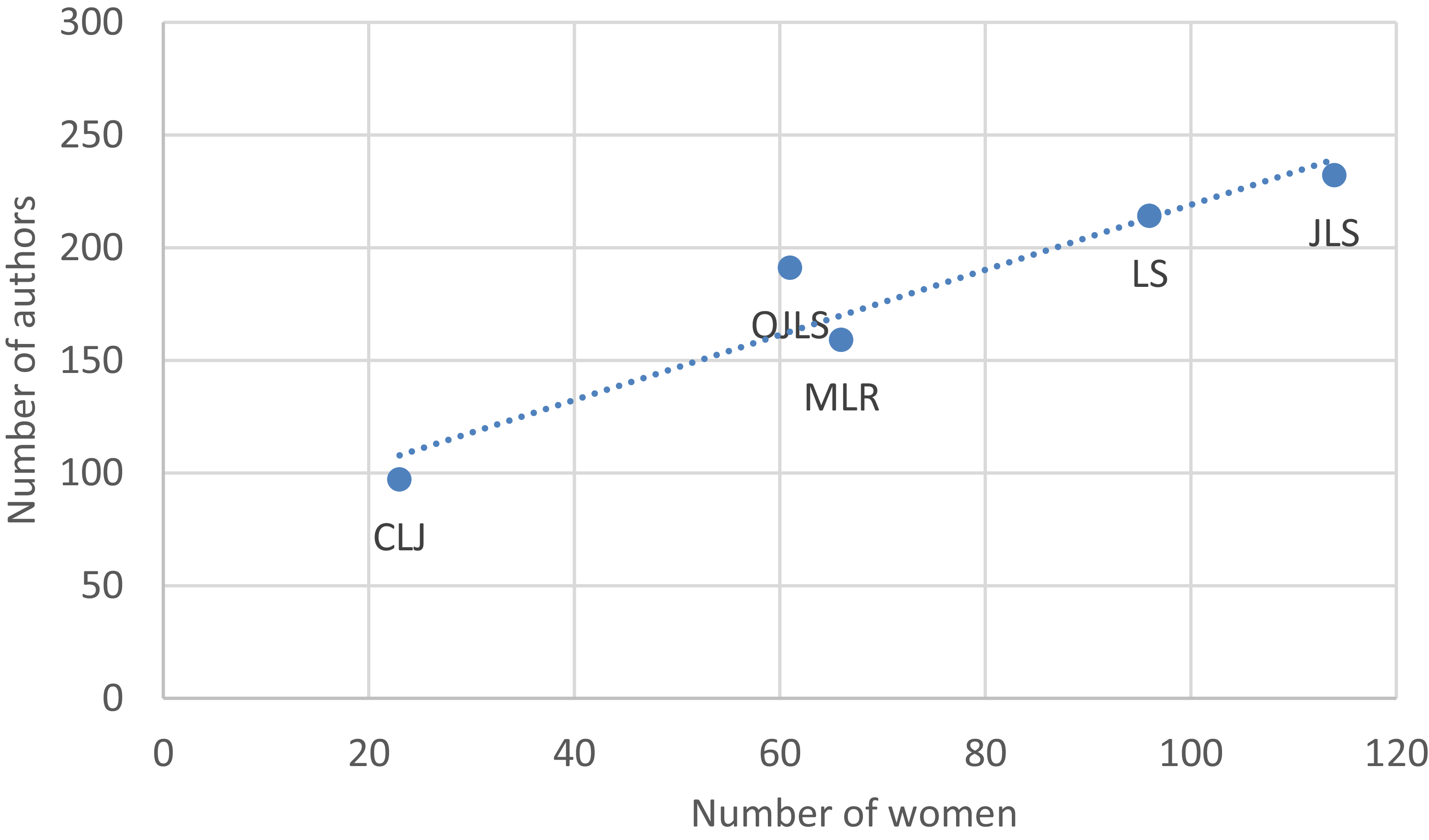
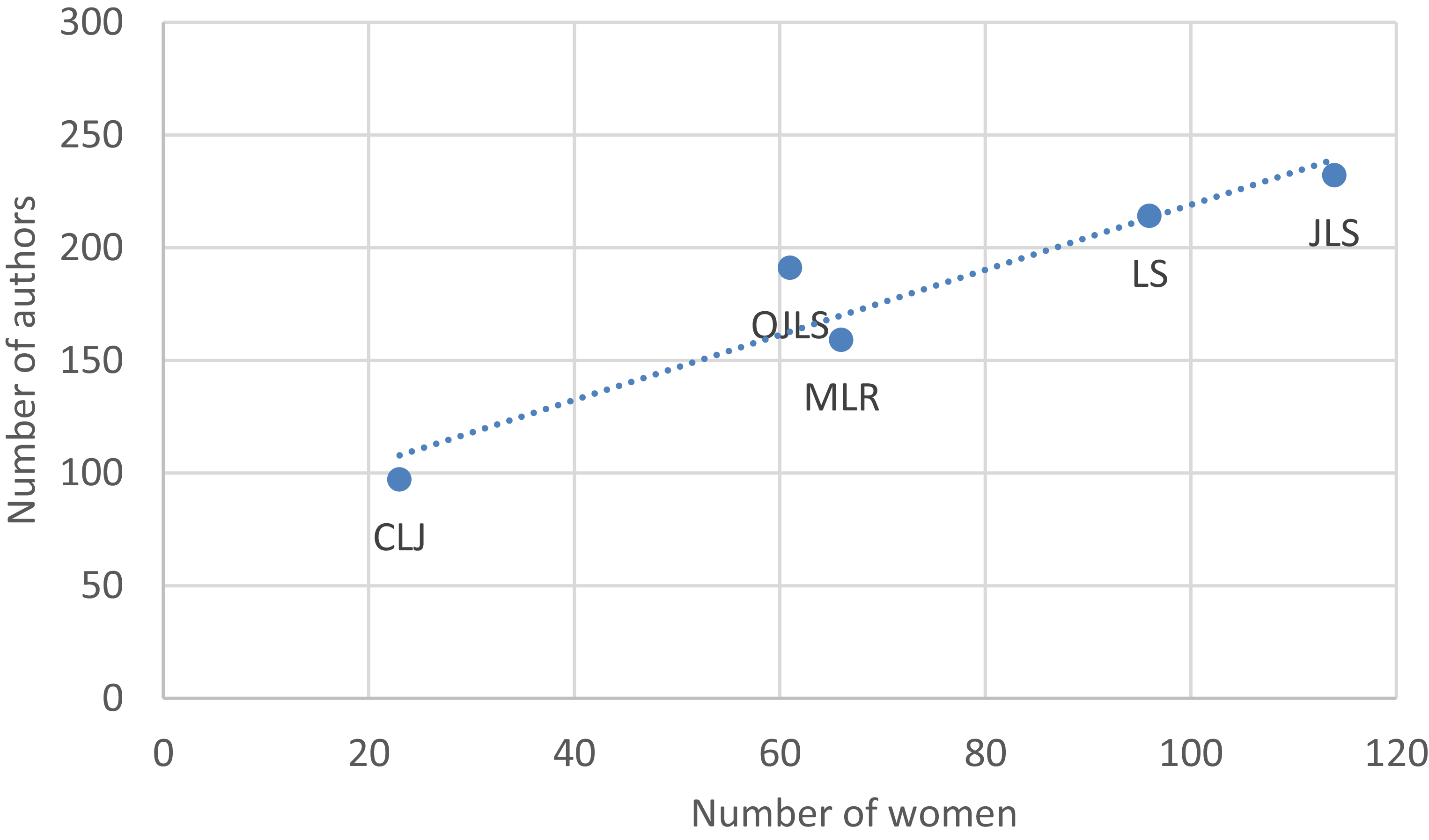
Here we examine what actions publishers might take, beyond resourcing outreach activities, to increase women’s authorship, as well as whether those actions are desirable. Our dataset suggests that those journals with higher numbers of authors tend to include more women as authors. The relationship between the number of authors and the number of women can be seen in Figure 5. The trend line on this graph is anchored by the top and bottom results in the dataset. The Cambridge Law Journal had the fewest number of authors and the fewest woman authors. The Journal of Law and Society had the highest number of authors and the highest number of woman authors.
Total numbers of authors against the numbers of women authors.
Altering the format of a journal through increasing its page numbers, adding additional issues or reducing the word limits on articles might produce an effect on the gender balance of authors by increasing the number of potential authors who could be included. Most publishing houses are looking to move to an online-only format to facilitate open access. There is a decrease in paper subscriptions, linked to the rise in electronic as opposed to physical libraries and to the push towards environmentally friendly policies. Adding an extra issue to an electronic journal, unlike to a paper-based journal, does not increase production costs significantly. An argument against increasing the size of a journal might be that quality cannot be maintained. This argument is perhaps a difficult one to sustain on two levels. First, it makes the implicit assumption that women, who contribute the additional pieces in journals with a greater number of authors, offer lower-quality manuscripts. The second is that for most readers, quality assurance takes place through peer review – a process in which the broader academic community currently has no involvement, yet they still trust the journal and consider it to be reputable. Sounder arguments against extra issues or issues with increased pages might be the considerably increased labour for editors and peer reviewers and that there is no evidence that manuscripts are rejected for publication on the grounds of lack of space. In any event, online publishing mitigates some space constraints.
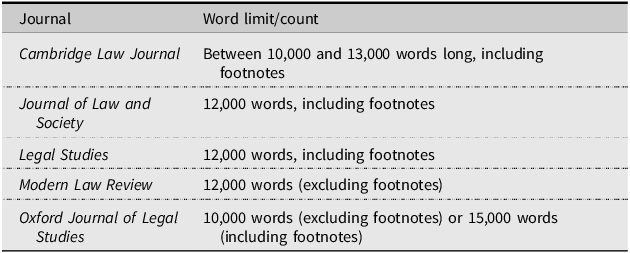
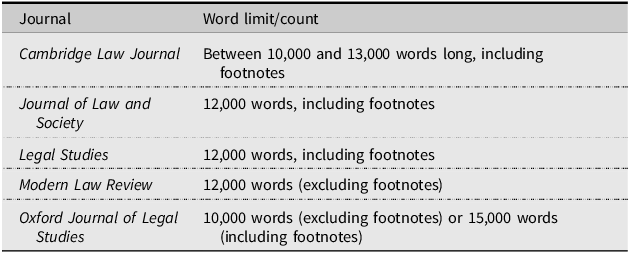
Reducing the word limit for articles would also create space for additional manuscripts to be published. Table 3 shows that the journals in our sample give an upper limit of about 12,000 words. The average length of articles across the dataset is 25-published pages, which broadly suggests that the journals stick to these word limits and most articles are of around 12,000–14,000 words.
Word limits/counts of the generalist law journals
Source: journal websites, instructions for author.
For editors, instructions from publishers to take an increased number of shorter pieces creates additional work – there is more desk processing time involved and additional peer reviewers have to be identified and managed. There are also established disciplinary norms that do not sit well with lowered word limits for manuscripts. For example, the research assessment exercises in the UK from 1992 to 2021 required an evaluation of individual papers against the criterion of “originality, significance and rigour”, at least in the field of law.Footnote 113 These criteria might be difficult to demonstrate in any meaningful sense in a shorter piece. Shorter articles may not be recognised internationally, especially in those jurisdictions where there are different norms and expectations in terms of length. The average length of an article is much longer in a traditional American law review in comparison to the UK law journal format. US law reviews are willing to accept and often actively encourage the submission of manuscripts in excess of 25,000 words.
VII. Conclusion
This article has examined the gender of authors of journal articles in the Cambridge Law Journal, the Journal of Law and Society, Legal Studies, the Modern Law Review and the Oxford Journal of Legal Studies over the course of a five-year period. It has shown that there are considerable variations in the numbers of women authors in these five journals. The Journal of Law and Society and Legal Studies have a strong profile when it comes to the gender equality of their authors. Other journals do not achieve similar results. The Cambridge Law Journal has been identified as the worst performer: in one annual cycle, only 9 per cent of its authors were women. This article has also suggested a number of practical ways that journal editors might increase the number of women authors, such as using peer review in a more directed fashion and adopting innovative methods of peer review, broadening journal public-facing mission statements and conducting outreach activity supported by publishers. This study gives food for thought for those who edit law journals, but it should also concern those who publish in them and who work in higher education more generally.
One view of law is that it is a discourse focused on equality, justice and fairness and that these are its central guiding principles. Legal institutions have a role in upholding these values. Courts are one such institution and in the academic world, law journals are another. Journals are an important mechanism in legal knowledge production. If those producing, collating and organising legal knowledge can be shown to be unconcerned with issues of equality, justice and fairness, then their position can be seen as illegitimate. A top law journal cannot be truly “top” if it does not demonstrate a commitment to openness and fairness in how it accepts manuscripts. As Malleson puts it, it is “self-interest that generally drives institutional change”.Footnote 114 The results shown in our study should be a cause for concern.
Our aim in this paper has been to make more visible the gender inequality that exists in publishing in law. In writing it we hope to open up conversations around this issue, leading to more transparent engagement with these types of questions. Indeed, this study raises many further questions. We have purposefully tried to engage with issues relevant to editors. However, it may very well be that many of the explanations for the phenomena described here lie wholly outside editorial practices. Further research is needed to engage more fully with, and to better understand, gendered patterns of authorship and publishing. What is certain, even now, is that there is a need in the legal academy to examine more seriously, take account of, challenge and act upon the many gendered inequalities that persist in our field.

 Open access

