


Compared with White patients, African–Caribbean and Black African patients in the UK are likely to access mental health care more often through criminal justice agencies and less often through general practitioner referral (Reference Bhui, Stansfeld and HullBhui et al, 2003). However, as with compulsory admission, the reasons for this remain unclear, primarily because of methodological limitations characterising much previous research (Reference Morgan, Mallett and HutchinsonMorgan et al, 2004). Few studies have investigated ethnicity and the pathway to first contact with mental health services. Those that have suggest the pattern observed in most general studies, i.e. low levels of general practitioner referral and high levels of criminal justice referral, is not evident at initial contact. For example, both Harrison et al (Reference Harrison, Holton and Neilson1989) and Cole et al (Reference Cole, Leavey and King1995) found no ethnic difference between general practice and criminal justice agency referrals at first presentation. The previous studies, however, have been restricted in their capacity to examine this thoroughly because of the small sample sizes involved.
Using data from a large, multicentre epidemiological study of first-onset psychosis, we sought to test the hypothesis that African–Caribbean and Black African patients would come into contact with mental health services less often through their general practitioner and more often through a criminal justice agency, independent of potential confounders such as socio-demographic characteristics and diagnosis.
METHOD
This research forms part of the Aetiology and Ethnicity in Schizophrenia and Other Psychoses (ÆSOP) study, a population-based study of first-episode psychosis. Details of the study and the methods used to collect data relating to pathways to care have been set out in a companion paper (Reference Morgan, Mallett and HutchinsonMorgan et al, 2005, this issue), and consequently we restrict ourselves here to emphasising or noting additional relevant points regarding the methods used.
Data collection and study variables
For the purposes of this part of the investigation the same socio-demographic variables were used as in the analysis of compulsory admissions: ethnicity, gender, educational level, employment status, living circumstances and relationship status. The two primary clinical variables used in the analysis were duration of untreated psychosis, and diagnosis. For the analysis, patients were grouped into three categories according to ICD–10 diagnostic criteria (World Health Organization, 1992): broad schizophrenia and other psychoses (ICD–10 codes F20–29), manic psychosis (F30–31) and depressive psychosis (F32–33). Data relating to the pathway to care were derived from a slightly modified version of the Personal and Psychiatric History Schedule (PPHS; World Health Organization, 1996). For this study, data were collected that focused on two key points on the route to care: the person who initiated help-seeking, and the source of referral to mental health services. In addition, the involvement of family and friends, criminal justice agencies (police, courts, prisons) and general practitioners at any point on the route to care was recorded.
Ethnicity
Patients assigned to one of the following four ethnic groups were included in the analysis:
-
(a) White British: all White patients with at least one parent born in the UK;
-
(b) African–Caribbean: all Black patients born in the Caribbean or born in the UK with at least one parent of Caribbean origin;
-
(c) Black African: all Black patients born in sub-Saharan Africa or born in the UK with at least one parent of sub-Saharan African origin;
-
(d) other White: all White patients with no parent born in the UK.
There was no patient of mixed Caribbean–African parentage in the study, and patients of other ethnicities were excluded from the analysis. The procedure followed for assigning ethnicity is set out in Morgan et al (Reference Morgan, Mallett and Hutchinson2005).
Analysis
Univariable analyses were conducted using chi-squared tests and odds ratios with 95% confidence intervals, and multivariable analyses were conducted using logistic regression. The multivariable analyses focused on two primary outcomes: general practitioner referral and criminal justice agency referral. For each outcome a logistic regression model was constructed using a forward fitting procedure. Briefly, this involved first fitting a model that included the primary outcome, exposure (ethnicity) and a variable for study centre, and second, adding other variables crudely associated with the outcome (either general practitioner referral or criminal justice referral) one by one, starting with the strongest. If appropriate, interaction terms were also fitted. For each new variable or interaction term fitted, a likelihood ratio test was conducted by checking each nested model against the new potential model. Variables and interaction terms were retained in the model if the P value for the likelihood ratio test was <0.10. All analyses were conducted using STATA version 8 (Stata, 2003).
RESULTS
A total of 462 patients were included in the univariable analyses. Data relating to the two main outcomes of interest – general practitioner referral and criminal justice agency referral – were not available for three patients, and these were excluded from the multivariable analyses of these outcomes. The small number of patients for whom other data were missing were included and the missing values are noted in the relevant tables. Where data were missing this was primarily due to absence of clear information in case notes. There was no evidence that the proportion of missing values varied systematically between key groups in the sample.
Pathways to care
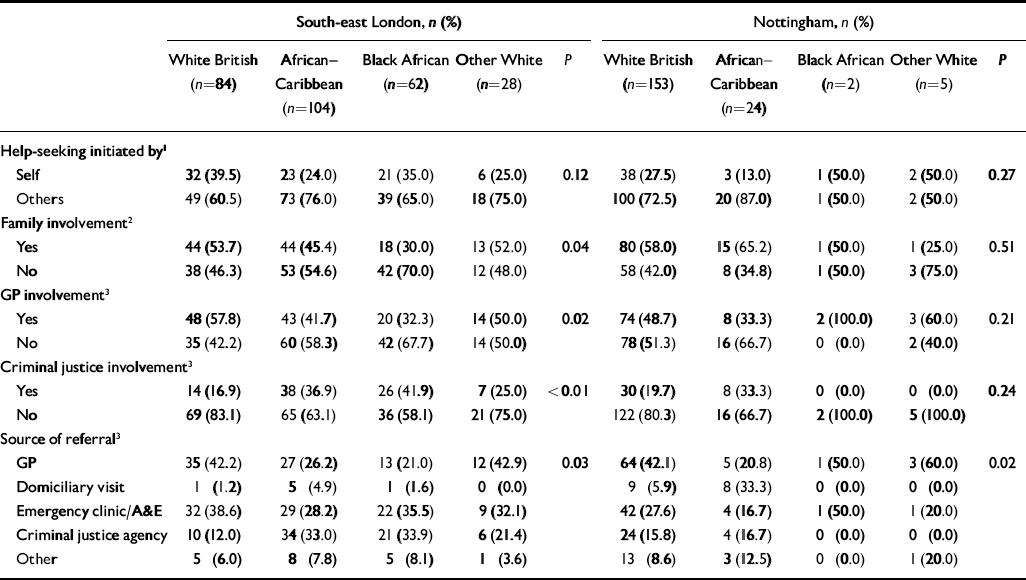
There were notable differences between ethnic groups in pathways to mental health care (Table 1). In south-east London, only 26% of African–Caribbean and 21% of Black African patients were referred to services by their general practitioner compared with over 40% of patients from both White ethnic groups. The proportions were remarkably similar in Nottingham, with 42% of White British patients being referred by their general practitioner compared with 21% of African–Caribbean patients. These differences are reflected in the relative lack of general practitioner involvement at any point on the pathway to care. Conversely, levels of criminal justice agency involvement in the pathway to care were higher among African–Caribbean patients in both centres, and among Black African patients in south-east London. Overall, criminal justice agencies were involved in less than 20% of White British patients’ contacts compared with over 35% of African–Caribbeans’ and over 40% of Black Africans’ contacts. Although the difference between White British and African–Caribbean patients in the Nottingham sample does not reach statistical significance, the similarity to the south-east London data suggests the same effect. Intriguingly, when police involvement in the pathway to care is considered in terms of the person who initiated help-seeking, African–Caribbean family and friends were more likely to have sought help from the police than White British family and friends: White British n=13 (13.3%) v. African–Caribbean n=11 (26.5%); χ2=3.46, d.f.=1, P=0.06.
Pathways to care by study centre and ethnicity
| South-east London, n (%) | Nottingham, n (%) | |||||||||
|---|---|---|---|---|---|---|---|---|---|---|
| White British (n=84) | African—Caribbean (n=104) | Black African (n=62) | Other White (n=28) | P | White British (n=153) | African—Caribbean (n=24) | Black African (n=2) | Other White (n=5) | P | |
| Help-seeking initiated by1 | ||||||||||
| Self | 32 (39.5) | 23 (24.0) | 21 (35.0) | 6 (25.0) | 0.12 | 38 (27.5) | 3 (13.0) | 1 (50.0) | 2 (50.0) | 0.27 |
| Others | 49 (60.5) | 73 (76.0) | 39 (65.0) | 18 (75.0) | 100 (72.5) | 20 (87.0) | 1 (50.0) | 2 (50.0) | ||
| Family involvement2 | ||||||||||
| Yes | 44 (53.7) | 44 (45.4) | 18 (30.0) | 13 (52.0) | 0.04 | 80 (58.0) | 15 (65.2) | 1 (50.0) | 1 (25.0) | 0.51 |
| No | 38 (46.3) | 53 (54.6) | 42 (70.0) | 12 (48.0) | 58 (42.0) | 8 (34.8) | 1 (50.0) | 3 (75.0) | ||
| GP involvement3 | ||||||||||
| Yes | 48 (57.8) | 43 (41.7) | 20 (32.3) | 14 (50.0) | 0.02 | 74 (48.7) | 8 (33.3) | 2 (100.0) | 3 (60.0) | 0.21 |
| No | 35 (42.2) | 60 (58.3) | 42 (67.7) | 14 (50.0) | 78 (51.3) | 16 (66.7) | 0 (0.0) | 2 (40.0) | ||
| Criminal justice involvement3 | ||||||||||
| Yes | 14 (16.9) | 38 (36.9) | 26 (41.9) | 7 (25.0) | <0.01 | 30 (19.7) | 8 (33.3) | 0 (0.0) | 0 (0.0) | 0.24 |
| No | 69 (83.1) | 65 (63.1) | 36 (58.1) | 21 (75.0) | 122 (80.3) | 16 (66.7) | 2 (100.0) | 5 (100.0) | ||
| Source of referral3 | ||||||||||
| GP | 35 (42.2) | 27 (26.2) | 13 (21.0) | 12 (42.9) | 0.03 | 64 (42.1) | 5 (20.8) | 1 (50.0) | 3 (60.0) | 0.02 |
| Domiciliary visit | 1 (1.2) | 5 (4.9) | 1 (1.6) | 0 (0.0) | 9 (5.9) | 8 (33.3) | 0 (0.0) | 0 (0.0) | ||
| Emergency clinic/A&E | 32 (38.6) | 29 (28.2) | 22 (35.5) | 9 (32.1) | 42 (27.6) | 4 (16.7) | 1 (50.0) | 1 (20.0) | ||
| Criminal justice agency | 10 (12.0) | 34 (33.0) | 21 (33.9) | 6 (21.4) | 24 (15.8) | 4 (16.7) | 0 (0.0) | 0 (0.0) | ||
| Other | 5 (6.0) | 8 (7.8) | 5 (8.1) | 1 (3.6) | 13 (8.6) | 3 (12.5) | 0 (0.0) | 1 (20.0) | ||
There was no ethnic difference in either centre in the proportion of patients accessing care through accident and emergency departments or (in south-east London) the Maudsley Hospital emergency clinic. Overall, very few patients accessed care through domiciliary visits. However, in Nottingham there was a marked difference between the two main ethnic groups in the proportions accessing care by this route: over 30% of African–Caribbean patients accessed care through a domiciliary visit compared with less than 6% of White British patients (χ2=17.85, d.f.=1, P<0.01). Of the 17 domiciliary visits in Nottingham, the police were involved in 6 (35.3%), which suggests that such visits were often crisis referrals. With regard to patterns of help-seeking, African–Caribbean patients in both south-east London and Nottingham were less likely to seek help themselves (Table 1). Conversely, for the Black African group in south-east London, levels of family or friend involvement in help-seeking were low compared with the White British group.
Taken together, these findings all point in the same general direction: that is, they are suggestive of more negative routes to care for African–Caribbean and Black African patients than for White British patients. Focusing on source of referral, the question to be answered is why Black patients access care less often through general practitioners and more often through criminal justice agencies. The next stage of the analysis sought to address this by controlling for a number of potential confounding factors that might explain the association between ethnicity and these two sources of referral. Data for south-east London and Nottingham were combined for the multivariable analyses, and a variable for study site included in each model to control for any effect of location or service setting.
General practitioner referral
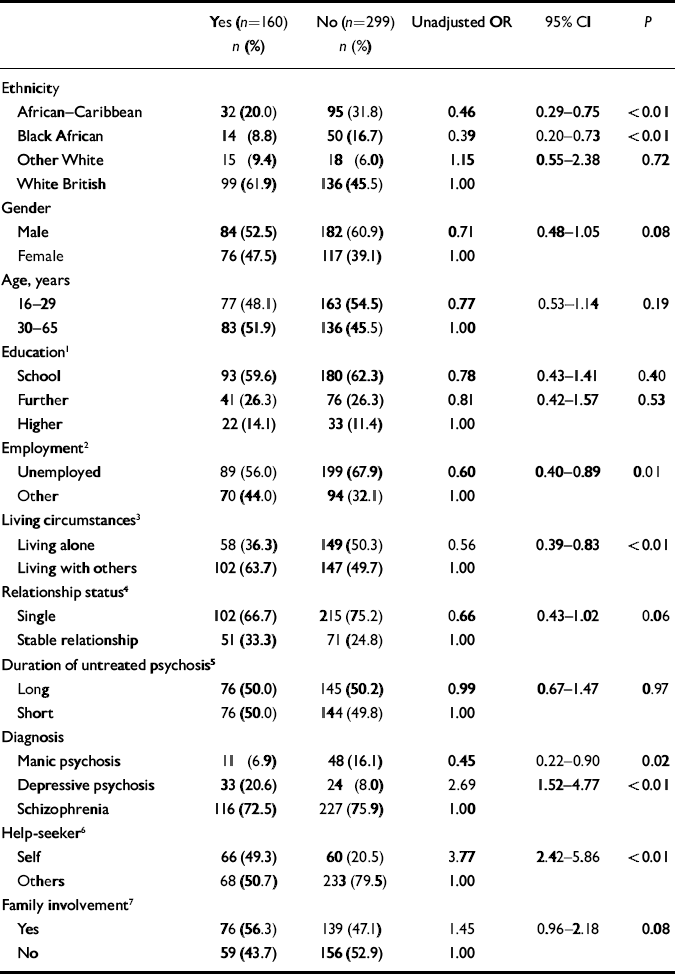
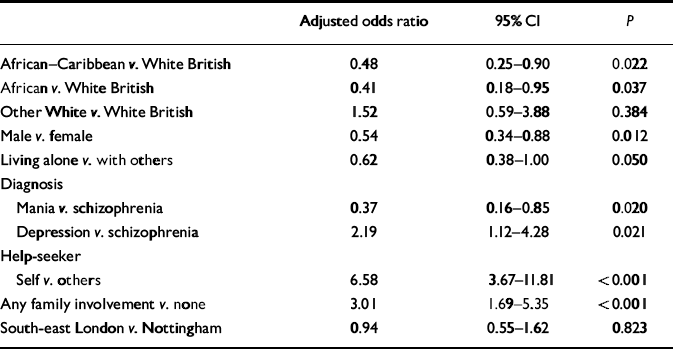
Table 2 presents the unadjusted odds ratios for general practitioner referral by each independent variable. There was no evidence of effect modification between general practitioner referral, ethnicity and any other variable. In addition to ethnicity, seven variables were associated with an increase or decrease in the odds of general practitioner referral at P<0.10. A logistic regression model was fitted, as detailed above. Following this procedure, five of the seven variables crudely associated with general practitioner referral were selected for inclusion: male gender, living alone, diagnosis, self-initiated help-seeking and family involvement in the pathway to care. The final logistic regression model (Table 3) shows that, when adjusting for the other variables in the model, the odds of general practitioner referral for both African–Caribbean and Black African patients are less than half those for White patients, with little attenuation of the unadjusted odds ratios. This provides strong evidence that, compared with White British patients, levels of general practitioner referral are lower for African–Caribbean and Black African patients independent of diagnosis, living circumstances, gender, and whether help was sought by the patient or with the involvement of family and friends. Each of these other variables was also independently associated with an increase or decrease in the odds of general practitioner referral, suggesting that multiple factors influence who accesses care through a general practitioner. There is no evidence of a difference in the odds of such referral between the two study centres. It should be noted, moreover, that 95% of patients in all ethnic groups were registered with a general practitioner (total number registered 440).
Unadjusted odds ratios for general practitioner referral
| Yes (n=160) n (%) | No (n=299) n (%) | Unadjusted OR | 95% Cl | P | |
|---|---|---|---|---|---|
| Ethnicity | |||||
| African—Caribbean | 32 (20.0) | 95 (31.8) | 0.46 | 0.29-0.75 | <0.01 |
| Black African | 14 (8.8) | 50 (16.7) | 0.39 | 0.20-0.73 | <0.01 |
| Other White | 15 (9.4) | 18 (6.0) | 1.15 | 0.55-2.38 | 0.72 |
| White British | 99 (61.9) | 136 (45.5) | 1.00 | ||
| Gender | |||||
| Male | 84 (52.5) | 182 (60.9) | 0.71 | 0.48-1.05 | 0.08 |
| Female | 76 (47.5) | 117 (39.1) | 1.00 | ||
| Age, years | |||||
| 16-29 | 77 (48.1) | 163 (54.5) | 0.77 | 0.53-1.14 | 0.19 |
| 30-65 | 83 (51.9) | 136 (45.5) | 1.00 | ||
| Education1 | |||||
| School | 93 (59.6) | 180 (62.3) | 0.78 | 0.43-1.41 | 0.40 |
| Further | 41 (26.3) | 76 (26.3) | 0.81 | 0.42-1.57 | 0.53 |
| Higher | 22 (14.1) | 33 (11.4) | 1.00 | ||
| Employment2 | |||||
| Unemployed | 89 (56.0) | 199 (67.9) | 0.60 | 0.40-0.89 | 0.01 |
| Other | 70 (44.0) | 94 (32.1) | 1.00 | ||
| Living circumstances3 | |||||
| Living alone | 58 (36.3) | 149 (50.3) | 0.56 | 0.39-0.83 | <0.01 |
| Living with others | 102 (63.7) | 147 (49.7) | 1.00 | ||
| Relationship status4 | |||||
| Single | 102 (66.7) | 215 (75.2) | 0.66 | 0.43-1.02 | 0.06 |
| Stable relationship | 51 (33.3) | 71 (24.8) | 1.00 | ||
| Duration of untreated psychosis5 | |||||
| Long | 76 (50.0) | 145 (50.2) | 0.99 | 0.67-1.47 | 0.97 |
| Short | 76 (50.0) | 144 (49.8) | 1.00 | ||
| Diagnosis | |||||
| Manic psychosis | 11 (6.9) | 48 (16.1) | 0.45 | 0.22-0.90 | 0.02 |
| Depressive psychosis | 33 (20.6) | 24 (8.0) | 2.69 | 1.52-4.77 | <0.01 |
| Schizophrenia | 116 (72.5) | 227 (75.9) | 1.00 | ||
| Help-seeker6 | |||||
| Self | 66 (49.3) | 60 (20.5) | 3.77 | 2.42-5.86 | <0.01 |
| Others | 68 (50.7) | 233 (79.5) | 1.00 | ||
| Family involvement7 | |||||
| Yes | 76 (56.3) | 139 (47.1) | 1.45 | 0.96-2.18 | 0.08 |
| No | 59 (43.7) | 156 (52.9) | 1.00 |
Adjusted odds ratios for general practitioner referral: final logistic regression model (34 missing cases)
| Adjusted odds ratio | 95% CI | P | |
|---|---|---|---|
| African—Caribbean v. White British | 0.48 | 0.25-0.90 | 0.022 |
| African v. White British | 0.41 | 0.18-0.95 | 0.037 |
| Other White v. White British | 1.52 | 0.59-3.88 | 0.384 |
| Male v. female | 0.54 | 0.34-0.88 | 0.012 |
| Living alone v. with others | 0.62 | 0.38-1.00 | 0.050 |
| Diagnosis | |||
| Mania v. schizophrenia | 0.37 | 0.16-0.85 | 0.020 |
| Depression v. schizophrenia | 2.19 | 1.12-4.28 | 0.021 |
| Help-seeker | |||
| Self v. others | 6.58 | 3.67-11.81 | <0.001 |
| Any family involvement v. none | 3.01 | 1.69-5.35 | <0.001 |
| South-east London v. Nottingham | 0.94 | 0.55-1.62 | 0.823 |
Criminal justice agency referral
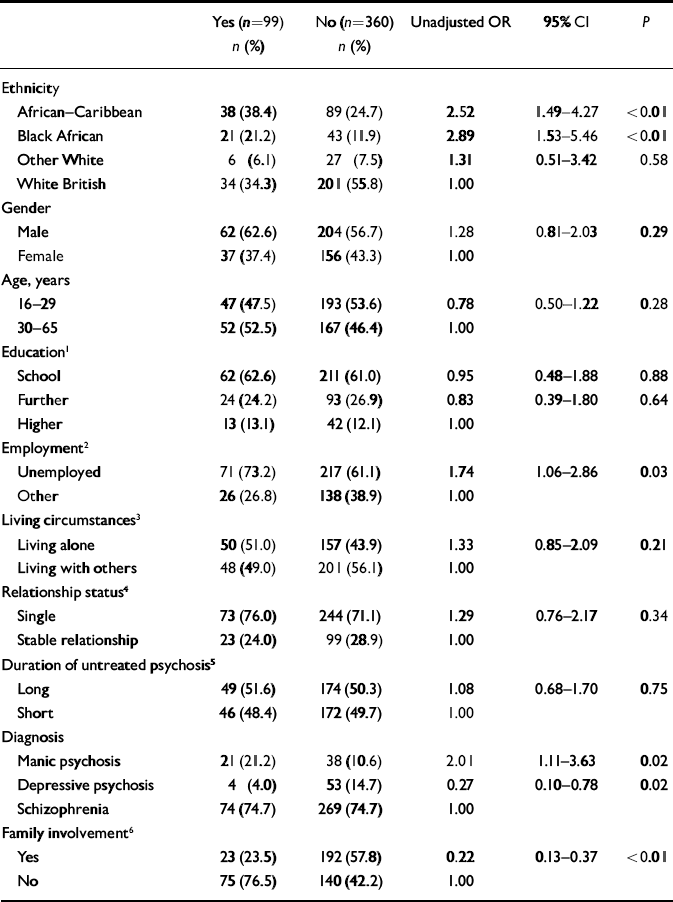
Table 4 presents the unadjusted odds ratios for criminal justice agency referral by each independent variable. At this point self-initiated help-seeking was not considered, because (not surprisingly) no patient sought help directly from a criminal justice agency. There was no evidence of effect modification between criminal justice referral, ethnicity and any other variable. In addition to ethnicity, three variables were associated with an increase or decrease in the odds of criminal justice agency referral at P<0.10. A logistic regression model was fitted, as detailed above. Following this procedure, all variables crudely associated with criminal justice agency referral were selected for inclusion: being unemployed, diagnosis and family involvement in the pathway to care. The final logistic regression model is presented in Table 5.
Unadjusted odds ratios for criminal justice agency referral
| Yes (n=99) n (%) | No (n=360) n (%) | Unadjusted OR | 95% CI | P | |
|---|---|---|---|---|---|
| Ethnicity | |||||
| African—Caribbean | 38 (38.4) | 89 (24.7) | 2.52 | 1.49-4.27 | <0.01 |
| Black African | 21 (21.2) | 43 (11.9) | 2.89 | 1.53-5.46 | <0.01 |
| Other White | 6 (6.1) | 27 (7.5) | 1.31 | 0.51-3.42 | 0.58 |
| White British | 34 (34.3) | 201 (55.8) | 1.00 | ||
| Gender | |||||
| Male | 62 (62.6) | 204 (56.7) | 1.28 | 0.81-2.03 | 0.29 |
| Female | 37 (37.4) | 156 (43.3) | 1.00 | ||
| Age, years | |||||
| 16-29 | 47 (47.5) | 193 (53.6) | 0.78 | 0.50-1.22 | 0.28 |
| 30-65 | 52 (52.5) | 167 (46.4) | 1.00 | ||
| Education1 | |||||
| School | 62 (62.6) | 211 (61.0) | 0.95 | 0.48-1.88 | 0.88 |
| Further | 24 (24.2) | 93 (26.9) | 0.83 | 0.39-1.80 | 0.64 |
| Higher | 13 (13.1) | 42 (12.1) | 1.00 | ||
| Employment2 | |||||
| Unemployed | 71 (73.2) | 217 (61.1) | 1.74 | 1.06-2.86 | 0.03 |
| Other | 26 (26.8) | 138 (38.9) | 1.00 | ||
| Living circumstances3 | |||||
| Living alone | 50 (51.0) | 157 (43.9) | 1.33 | 0.85-2.09 | 0.21 |
| Living with others | 48 (49.0) | 201 (56.1) | 1.00 | ||
| Relationship status4 | |||||
| Single | 73 (76.0) | 244 (71.1) | 1.29 | 0.76-2.17 | 0.34 |
| Stable relationship | 23 (24.0) | 99 (28.9) | 1.00 | ||
| Duration of untreated psychosis5 | |||||
| Long | 49 (51.6) | 174 (50.3) | 1.08 | 0.68-1.70 | 0.75 |
| Short | 46 (48.4) | 172 (49.7) | 1.00 | ||
| Diagnosis | |||||
| Manic psychosis | 21 (21.2) | 38 (10.6) | 2.01 | 1.11-3.63 | 0.02 |
| Depressive psychosis | 4 (4.0) | 53 (14.7) | 0.27 | 0.10-0.78 | 0.02 |
| Schizophrenia | 74 (74.7) | 269 (74.7) | 1.00 | ||
| Family involvement6 | |||||
| Yes | 23 (23.5) | 192 (57.8) | 0.22 | 0.13-0.37 | <0.01 |
| No | 75 (76.5) | 140 (42.2) | 1.00 |
Adjusted odds ratios for criminal justice agency referral: final logistic regression model (35 missing cases)

| Adjusted odds ratio | 95% CI | P | |
|---|---|---|---|
| African—Caribbean v. White British | 1.98 | 1.04-3.77 | 0.036 |
| African v. White British | 1.87 | 0.86-4.05 | 0.115 |
| Other White v. White British | 1.17 | 0.41-3.35 | 0.770 |
| Unemployed v. other | 1.62 | 0.94-2.81 | 0.085 |
| Diagnosis | |||
| Mania v. schizophrenia | 2.81 | 1.44-5.48 | 0.003 |
| Depression v. schizophrenia | 0.33 | 0.11-0.98 | 0.046 |
| Any family involvement v. none | 0.22 | 0.12-0.38 | <0.001 |
| South-east London v. Nottingham | 1.14 | 0.61-2.13 | 0.684 |
When adjusting for other variables in the model, there is some attenuation of the odds ratios for criminal justice referral for both African–Caribbean and Black African patients. The adjusted odds ratio for African–Caribbean patients is 1.98 (P=0.036) compared with an unadjusted odds ratio of 2.52 (P<0.001), which suggests some confounding by diagnosis, unemployment and family involvement. However, even after adjusting for these variables, there remains fairly strong evidence of an association between African–Caribbean ethnicity and criminal justice agency referral. The evidence for an independent association between Black African ethnicity and criminal justice referral, after adjusting for the other variables, is weaker, the adjusted odds ratio being 1.87 (P=0.115) compared with the unadjusted odds ratio of 2.89 (P<0.001). It may be that differences in diagnosis, levels of family involvement and unemployment are sufficient to explain the excess of criminal justice agency referrals in the Black African group. However, these do not fully explain the excess for the African–Caribbean patients, which suggests that additional factors might be at work which increase the odds of criminal justice referral for this group. Of the other variables included in the final model, lack of family involvement has the strongest relationship with criminal justice referral, suggesting a key role for family and friends in facilitating a route to care that does not necessitate intervention from criminal justice services. As with general practitioner referrals, there was no evidence of notable differences between the two study sites.
DISCUSSION
The key respects in which this study overcomes some of the methodological limitations of previous research are its large sample size and the comparison of two centres. It is these features of the study that have allowed the determinants of source of referral at first contact with mental health services to be considered in more detail than before.
Ethnicity and source of referral at first contact
Most previous research has suggested that African–Caribbean and Black African patients are less likely to access care through a general practitioner and more likely to access care through a criminal justice agency in the UK. However, studies that have included data relating to source of referral at first presentation have not found statistically significant ethnic differences (Reference Harrison, Holton and NeilsonHarrison et al, 1989; Reference Cole, Leavey and KingCole et al, 1995; Reference Burnett, Mallett and BhugraBurnett et al, 1999). Our study, therefore, is the first to unequivocally find marked ethnic differences in the pathway to care at first presentation.
In both south-east London and Nottingham, African–Caribbean patients were significantly less likely to access care through a general practitioner than were White British patients: in both centres, less than 30% of African–Caribbean patients accessed care in this way. In south-east London a similar pattern was evident for Black African patients, with only 21% being referred to services by a general practitioner. These proportions of general practitioner referral are at the low end of the spectrum reported in previous research. Indeed, although some studies have reported similar proportions to those presented here (e.g. Reference Harrison, Ineichen and SmithHarrison et al, 1984), albeit in very different patient samples, others have reported higher proportions for African–Caribbean patients. Burnett et al (Reference Burnett, Mallett and Bhugra1999), for example, in a study in a similar area of south-east London to that used for our study, reported that 37% of African–Caribbean patients had been referred by a general practitioner compared with 50% of White patients. The study by Harrison et al (Reference Harrison, Holton and Neilson1989) of first-onset psychosis in Nottingham reported a much higher level: 60% for African–Caribbean patients compared with 76% for a general population sample. In both the latter studies, proportions of general practitioner referral were lower for African–Caribbean patients than for Whites, although not significantly so. The fact that these differences were not statistically significant may simply be a function of small sample sizes.
In south-east London over 30% of referrals for African–Caribbean and Black African patients were made through a criminal justice agency, usually the police. In both centres, criminal justice agency involvement in the pathway to care was over 35% among African–Caribbean and Black African patients. These are similar to previously reported findings. Burnett et al (Reference Burnett, Mallett and Bhugra1999), for example, found that 34% of African–Caribbean patients accessed care through a criminal justice agency compared with 21% of White patients, although the small numbers involved again meant this difference was not statistically significant.
The other major difference between ethnic groups in terms of the pathway to care was in the person who initiated, and who was involved in, help-seeking from professional health services. In both south-east London and Nottingham, levels of self-initiated help-seeking were lower for African–Caribbean patients compared with White British patients, although levels of family involvement were similar. In contrast, in south-east London levels of self-initiated help-seeking were similar for Black African and White British patients, although levels of family involvement were lower for Black African patients. Few studies have considered these features of the pathway to care and so it is difficult to draw comparisons with previous research. Burnett et al (Reference Burnett, Mallett and Bhugra1999) did distinguish between those who sought help from a general practitioner themselves and those whose family sought help from a general practitioner on their behalf, and found that self-initiated help-seeking was significantly lower among African–Caribbean patients compared with White patients.
Together, these findings point to marked differences in the pathway to care between different ethnic groups at first presentation. This suggests that there are processes operating prior to first presentation that increase the risk of more negative pathways to care for African–Caribbean and Black African patients.
Explaining the differences
Clinical disturbance
In one of the earliest studies of ethnicity and pathways to care, Rwegellera (Reference Rwegellera1980) suggested that low proportions of general practitioner referral and high proportions of police referral for West Indian patients were a function of greater clinical disturbance. The only clinical variables on which we had data that could be considered in the analyses of referral source and ethnicity were duration of untreated psychosis, and diagnosis. The former variable was not associated with either general practitioner or criminal justice agency referral; diagnosis was associated with both outcomes. However, whereas multivariable analyses showed that a diagnosis of manic psychosis, in particular, was independently associated with decreased odds of general practitioner referral and increased odds of criminal justice referral, diagnosis did not fully account for ethnic differences in source of referral. It remains possible that other important clinical factors not measured for our study might explain, at least partly, the ethnic differences in source of referral.
Social context and the role of significant others
The social context within which a psychotic illness develops is likely to have an important bearing on how it is interpreted and managed. Significant others within an individual's social network have been shown to have a major role in shaping how, when and what type of help is sought. Psychosis is often other-defined, in that the resulting disturbance is first considered abnormal or unusual by people close to the individual with the disorder, and it is these others who often initiate help-seeking. This is borne out in our findings, which show that only around 30% of patients initiated help-seeking themselves. It is no surprise that those who seek help themselves are more likely to access care through their general practitioner and to do so voluntarily. Where this does not happen, family and friends can have a key role in facilitating access, again as borne out in the data. After controlling for other factors, family involvement in the pathway to care remained strongly associated with general practitioner referral and absence of criminal justice referral. Again, however, self-initiated help-seeking and/or family involvement did not fully account for the ethnic differences in source of referral, but adjusting for these and other variables did lead to a weakening of the associations between ethnicity and path of referral.
The potential role of significant others in easing the pathway to care may also underpin and help to explain the association between living alone or being unemployed and source of referral. Those who live alone and/or are unemployed may, for example, have more restricted social networks. That said, once again the variables used to approximate different social circumstances did not fully account for all the ethnic differences in pathways to care observed. Both African–Caribbean and Black African patients, for example, remained significantly less likely to access care through a general practitioner after adjusting for, among other factors, living alone and family involvement. One possible explanation for this is that the variables used were too crude to fully capture patients’ social support networks, an issue to be addressed in future research.
A further intriguing finding from this study is the observation that more African–Caribbean family and friends initially sought help directly from the police than did other ethnic groups. Similar findings were reported by Owens et al (Reference Owens, Harrison and Boot1991). Harrison et al (Reference Harrison, Holton and Neilson1989) argued that a tendency to heavily stigmatise mental illness in the African–Caribbean community might act as a barrier to help-seeking until crises develop, at which point the risk of police involvement and formal intervention were substantially increased. There are some indications that African–Caribbean communities do stigmatise mental illness more heavily (Wolff et al, Reference Wolff, Pathare and Craig1996a ,Reference Wolff, Pathare and Craig b ). This could result in African–Caribbean families interpreting early symptoms and behavioural disturbance in legal rather than medical terms, leading them to call on the police more often as a first resort. Such possibilities certainly merit further research.
Limitations and future research
Although this study has a number of advantages over previous research, there remain a number of limitations. It was not possible to interview all patients and their relatives, which meant that more data were missing relating to information not readily elicited from case notes, for example family involvement. We also faced a problem that has been encountered in the past in measuring level of disturbance at presentation to services. This means that it is still not known with any certainty whether there are differences in how patients from different ethnic groups present to services. Further, although data relating to living circumstances, relationship status and employment provide crude proxies for social networks, they remain just that – proxies. Consequently, the data can only hint at the potential role of social contexts and networks in influencing the pathway to care.
Future research has to take account of such limitations. Indeed, the task of future research is to understand these processes more fully as a basis for clear proposals for reforms to make services more accessible and acceptable to ethnic minority patients. In this much can be learnt from sociological and anthropological approaches to the study of illness behaviour, in which the role of significant others and the importance of culturally shaped understandings of mental illness in shaping help-seeking have been extensively studied (Reference Morgan, Mallett and HutchinsonMorgan et al, 2004). It is only then that we will overcome what Harrison termed ‘a sea of ignorance’ (Reference HarrisonHarrison, 2002: p. 199) and develop workable proposals for reform that will break the cycle of negative experiences, coercion, disengagement and relapse that often characterises Black patients’ experience of mental health care in the UK.
Clinical Implications and Limitations
CLINICAL IMPLICATIONS
-
▪ African–Caribbean and Black African patients are less likely to access care through a general practitioner and more likely to access care through a criminal justice agency at first presentation.
-
▪ The involvement of significant others within a patient's social network in the pathway to care increases the likelihood that referral will be by a general practitioner and reduces the likelihood that referral will be by a criminal justice agency.
-
▪ Ethnic variations in pathways to care are not fully explained by differences in diagnosis, social circumstances and the involvement of others.
LIMITATIONS
-
▪ Limitations include the use of case notes, lack of direct measures of clinical variables and the small size of the African–Caribbean patient sample in Nottingham.
-
▪ The reliance on case notes for a proportion of the sample meant that data on family involvement in the pathway to care were not available for all patients.
-
▪ The indicators of social circumstances and family involvement used were limited proxies that can only hint at the potential role of significant others in shaping the pathway to care in different ethnic groups.
Acknowledgements
We are grateful to mental health services and patients in Bristol, Nottingham and south-east London for their cooperation and support with this. study, and to the UK Medical Research Council and the Stanley Medical Research. Institute for funding. We are also grateful to Morven Leese for statistical. advice.
Members of the ÆSOP Study Group are as follows: Bristol: G. Harrison, F. Muga and J. Holloway. Cambridge: A. Fung, J. Mietunen, M. Ashby and H. Hayhurst. London: J. Leff, R. Murray, T. Craig, R. Mallett, P. Fearon, C. Morgan, K. Morgan, P. Dazzan, J. MacCabe, C. Samele, M. Sharpley, S. Vearnals, G. Hutchinson, R. Burnett, J. Boydell, K. Orr, J. Salvo, K. Salvo, K. Greenwood, M. Lambri, S. Auer, P. Rohebak and L. McIntosh. Nottingham: P. Jones, G. Doody, J. Tarrant, S.Window, P.Williams, T. Lloyd, H. Bagalkote, B. Dow, D. Boot, A. Farrant, S. Jones, J. Simpson, R. Moanette, S. Suranim, M. Ruddell, J. Brewin and I. Medley.




eLetters
No eLetters have been published for this article.