





Social media summary
This scoping review explores the application of the capability approach to health and well-being research, interventions and policies for Indigenous Peoples.
Impact statement
This scoping review explores the potential for the capability approach (CA) to contribute to health and well-being research, interventions and policies for Indigenous Peoples. It provides an overview of the dimensions of health and well-being identified as important to Indigenous Peoples around the world, such as harmony in territorial management, community-based sustainable development and culturally sensitive healthcare services. This review contributes to the ongoing debates around the application of the CA to health and well-being, foregrounding how different researchers have applied the contrasting perspectives of leading CA theorists Amartya Sen and Martha Nussbaum. This analysis reveals the tensions between individual and collective capabilities and the challenges in realising positive health and well-being in the face of systemic constraints, diminishing cultural knowledge and limitations on self-determination. At the same time, this review illustrates the extent to which participatory approaches that promote agency, self-governance and decision-making capabilities within Indigenous Peoples have been adopted in research. Findings from this review emphasize the need for research to promote culturally responsive and sustainable strategies that support the health and well-being capabilities and aspirations of Indigenous Peoples globally.
Introduction
Indigenous Peoples around the world often face significant health disparities and inequities compared to their non-indigenous counterparts (Harfield et al., Reference Harfield, Davy, McArthur, Munn, Brown and Brown2018). These disparities can stem from historical and/or ongoing processes of colonization, marginalization and discrimination. Limited access to healthcare services, resources and culturally sensitive care further compounds these challenges (World Health Organization, 2022). Furthermore, Indigenous Peoples across the globe are disproportionately affected by inadequate health and well-being policies and programmes. Policies often fail to align with specific community needs, values and expectations. Moreover, they frequently overlook the Indigenous local practices and capabilities that could be leveraged to address those needs and strengthen healthcare systems (Prout, Reference Prout2012; Rametsteiner et al., Reference Rametsteiner, Pülzl, Olsson and Frederiksen2009).
The exclusion of Indigenous perspectives from health and well-being policies and programmes is maintained in several ways. Often, Indigenous Peoples are treated as passive recipients or subjects of policy initiatives, service delivery and/or research studies, rather than active participants or collaborators in these endeavours. Approaches to Indigenous health and well-being policies and programmes are frequently shaped by assumptions rooted in biomedical health perspectives and oppressive historical practices that neglect Indigenous conceptualizations (Prout, Reference Prout2012; Torri, Reference Torri2012). This lack of a culturally contextualized approach to health and well-being can have detrimental effects resulting in misdirected policies and allocation of resources that fail to produce appropriate actions and positive well-being outcomes for Indigenous Peoples (Sterling et al., Reference Sterling, Filardi, Toomey, Sigouin, Betley, Gazit, Newell, Albert, Alvira, Bergamini, Blair, Boseto, Burrows, Bynum, Caillon, Caselle, Claudet, Cullman, Dacks and Jupiter2017).
There is growing consensus that health and well-being policies must incorporate Indigenous perspectives and self-determination capacities of local populations in order to achieve equity, social justice and democracy (Indigenous and Tribal Peoples Convention No. 169, 1989; del Val et al., Reference del Val, Rodríguez, Rubio, Sánchez García, Zolla and Cunningham2008; United Nations, 1992; United Nation, 2006; Sustainable Development Goal 3: Good health and well-being, 2022; Robeyns, Reference Robeyns2017). These approaches emphasize mutual respect and equitable recognition of Indigenous and biomedical knowledge systems that transcend conventional biomedical models of health and healthcare, embracing more holistic strategies that can address diverse aspects of well-being, including control over resources and the preservation of cultural knowledge (Aguilar-Peña et al., Reference Aguilar-Peña, Blandón and García-Perdomo2023; Torri, Reference Torri2012).
In the last three decades, the CA (Sen, Reference Sen1983) has gained recognition as a valuable social justice framework (Ruger, Reference Ruger2010; Venkatapuram, Reference Venkatapuram2013; Robeyns, Reference Robeyns2006). Its relevance to Indigenous health and well-being has generated considerable interest primarily owing to (i) its participatory ethos, (ii) the ability to recognize communities’ context-specific challenges and strengths (United Nations, 2015) and (iii) its potential to advance the realization of Indigenous rights and self-determination (Acosta, Reference Acosta2013; Bertin, Reference Bertin2005). Notably, the CA has been applied to inform the development of intercultural health policies and primary care programmesFootnote 1 providing opportunities to shift understanding about well-being away from an over-emphasis on materialistic ways of determining development, to value traditional knowledge and cultural identity (van der Boor et al., Reference van der Boor, Molina-Bulla, Chiumento and White2022).
According to the CA, examining what a person is able to do and be, rather than focusing on the resources they possess, can provide a deeper understanding of people’s quality of life (Nussbaum, Reference Nussbaum2012, Sen, Reference Sen1999). Sen describes this in terms of functionings – the valuable activities and states that makeup people’s well-being (i.e. being healthy), capabilities – the substantive freedoms individuals have to choose a life considered valuable (i.e. having access to traditional food) and conversion factors – that bridge the gap between resources (such as income, education or healthcare services), and the real opportunities and choices that people have to achieve their desired functionings and capabilities (Sen, Reference Sen1999). There are three categories of conversion factors that can inhibit or encourage the transformation of resources into capabilities and functionings (Sen, Reference Sen2004): (a) personal characteristics; (b) social characteristics and (c) environmental characteristics (Sen, Reference Sen1999). Conceptually, social/collective capabilities are also considered as the functionings a person can only obtain by virtue of their engagement in collective actions (e.g., traditional rituals). These collective actions require a nuanced understanding within each cultural context and can significantly impact levels of well-being (Ibrahim, Reference Ibrahim, Chiappero-Martinetti, Osmani and Qizilbash2020, Gigler, Reference Gigler2015).
The existing literature on applying the CA to health and well-being has primarily focused on non-Indigenous Peoples (Mitchell et al., Reference Mitchell, Roberts, Barton and Coast2017). Moreover, the available literature applying the CA to Indigenous Peoples health and well-being has not been analysed comprehensively. The aim of the current scoping review is to address this gap by exploring the application of the CA to Indigenous People’s health and well-being in different settings. This review has four objectives: 1) summarize the geographic locations and contexts where the CA has been used to understand Indigenous conceptualizations of health and well-being; 2) identify the dimensions of the CA (capabilities, functionings and conversion factors) that are important for the health and well-being of Indigenous Peoples within their specific contexts; 3) describe the similarities and differences in CA dimensions related to health and well-being across the various Indigenous settings identified and 4) identify any capability-based assessment tools/approaches that have been used with Indigenous Peoples (van der Boor et al, Reference van der Boor, Molina-Bulla, Chiumento and White2022).
Methods
Protocol and registration
This mixed method scoping review followed a published protocol (van der Boor et al., Reference van der Boor, Molina-Bulla, Chiumento and White2022) designed in accordance with the “PRISMA extension for scoping reviews” reporting guidelines (https://www.ncbi.nlm.nih.gov/pmc/articles/PMC9772624/) and registered with the Open Science Framework (PMC9772624).
Eligibility criteria
The review considered peer-reviewed literature and “grey” literature (non-peer-reviewed book chapters, theses and policy reports) that focused on Indigenous Peoples, as determined by the community themselves or the authors of the source. Studies could be conducted in any setting and could be conceptual or qualitative, quantitative or mixed-methods empirical examinations of the application of the CA to understand and/or measure health and/or well-being. To be included in the review, the source full text had to be available and written in English, Spanish, French or Portuguese, languages that the authorship team were sufficiently competent in. Systematic reviews were excluded, but reference lists were checked for further inclusions.
Search strategy
A pragmatic search strategy was adopted to identify both peer-reviewed articles and grey literature. Several peer-review databases were searched (Web of Science, PsycINFO, EMBASE, OVID MEDLINE, ECONlit, LILACS, Aboriginal and Torres Strait Islander health bibliography, SCIELO, ADOLEC, BVS MTCI and IBECS. PubMed) alongside grey literature sources (Department of Economic and Social Affairs Indigenous Peoples United Nations resources, World Bank e-Library, Pan American Health Organisation e-library, Opengrey and Social Care Online). For all included articles, onward citation chaining was conducted. Finally, experts from the Human Development and Capabilities Association’s “Indigenous Peoples” thematic group were consulted to identify additional sources.
The detailed search strategy is provided as a supplementary file to the protocol paper (van der Boor et al., Reference van der Boor, Molina-Bulla, Chiumento and White2022). Briefly, the search strategy comprised two main components: 1) Indigenous Peoples and 2) CA terms. A combination of free text searches using keywords, Medical Subject Heading (MeSH) or filter terms were used to search the bibliographic databases. For grey literature, searches involved the use of keywords combined where possible or where this was not feasible by hand-searching relevant sub-sections of sites.
Screening
Sources from academic databases were uploaded to Endnote bibliographic software, and duplicates were removed automatically before uploading to Rayyan systematic review software (Ouzzani et al., Reference Ouzzani, Hammady, Fedorowicz and Elmagarmid2016). Grey literature sources were manually imported into Excel and shared across reviewers for screening and full-text review, following Levac et al. (Reference Levac, Colquhoun and O’Brien2010).
CvdB independently screened all English titles, abstracts and subject descriptions for each source against the inclusion and exclusion criteria, while CIMB did the same for Spanish, Portuguese and French sources. For English language sources, 20% of the titles were double-screened by AC. Articles rated as potential candidates for inclusion by either the first or second reviewer were added to a preliminary list for each language. The lists were compared across the two reviewers of each language, and any discrepancies were resolved through discussion or further review by a third person (RW, GCSD and LJGM) to identify a final list of included papers.
Data extraction
We first summarized and mapped the geographical locations and Indigenous settings where the CA has been applied and the level of participation of Indigenous Peoples in each study, following Wright & Lemmen (Reference Wright and Lemmen2012). Secondly, we identified and explored the relevant dimensions of the CA for the health and well-being of Indigenous Peoples and their similarities and differences across diverse Indigenous settings, using thematic analysis (Thomas & Harden, Reference Thomas and Harden2008). Finally, we summarized key features of capability-based assessment tools that have been developed or used specifically for Indigenous health and well-being studies.
Authors CIMB and LJGM extracted the data for all sources against an extraction pro-forma (see van der Boor et al., Reference van der Boor, Molina-Bulla, Chiumento and White2022 for details). To ensure consistency, a calibration exercise was conducted with 20% of the sources extracted by a second reviewer (AC, MPBV and PEDLC). This extracted data was drawn upon to address review objectives 1 and 4.
Thematic analysis
Following Thomas & Harden (Reference Thomas and Harden2008) thematic analysis approach for literature reviews, LAChR inductively coded the data. This analysis was deepened by LAChR, AC, PEdlC and RW, to identify emerging descriptive themes that capture core capabilities, functionings and conversion factors prioritized by Indigenous populations for the promotion of their health and well-being. The qualitative synthesis also drew attention to areas of convergence and disagreement across the included studies, addressing objective 3 of the review.
The “participation level” within the studies refers to the extent to which the conduct of research applying the CA prioritized principles of involvement and participation by communities (Wright & Lemmen, Reference Wright and Lemmen2012). Participation ranged from levels where communities are told what problems they have and what help they need, to levels where all major aspects of research and/or health policy or service planning and implementation are decided by the communities themselves.
Results
This section presents the results of the scoping review on the application of the CA to the health and well-being of Indigenous peoples.
Characteristics of sources of evidence
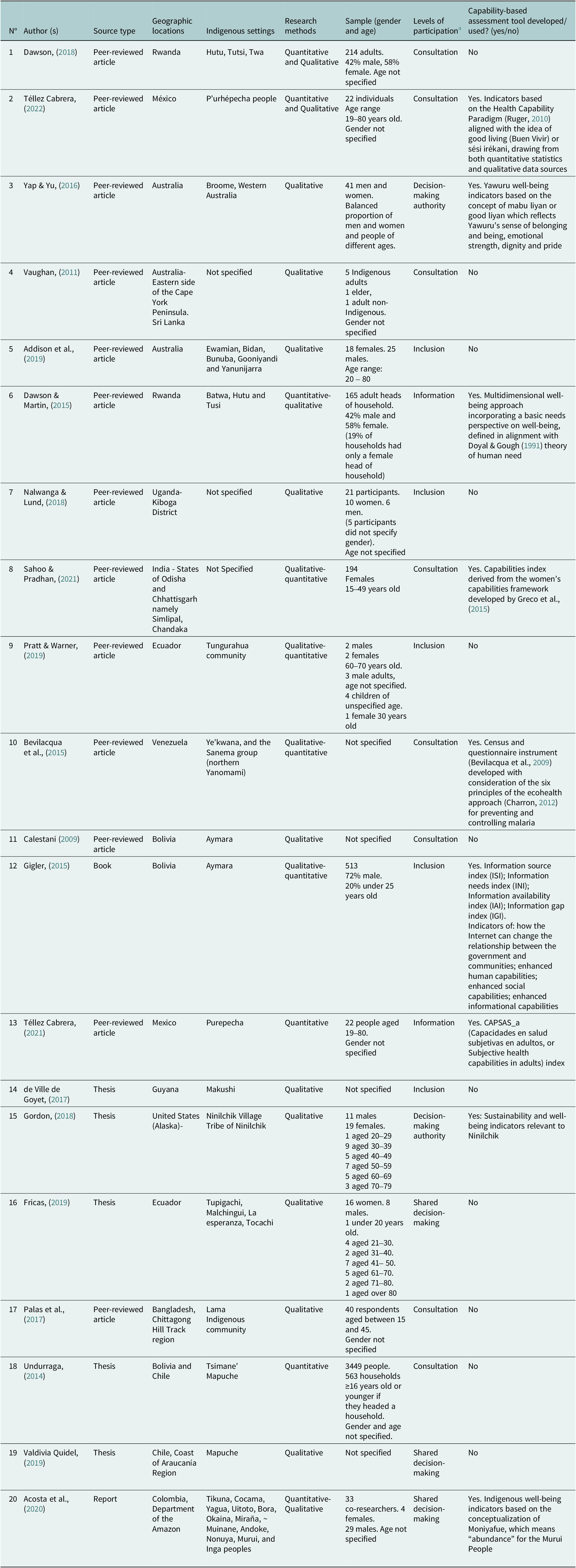
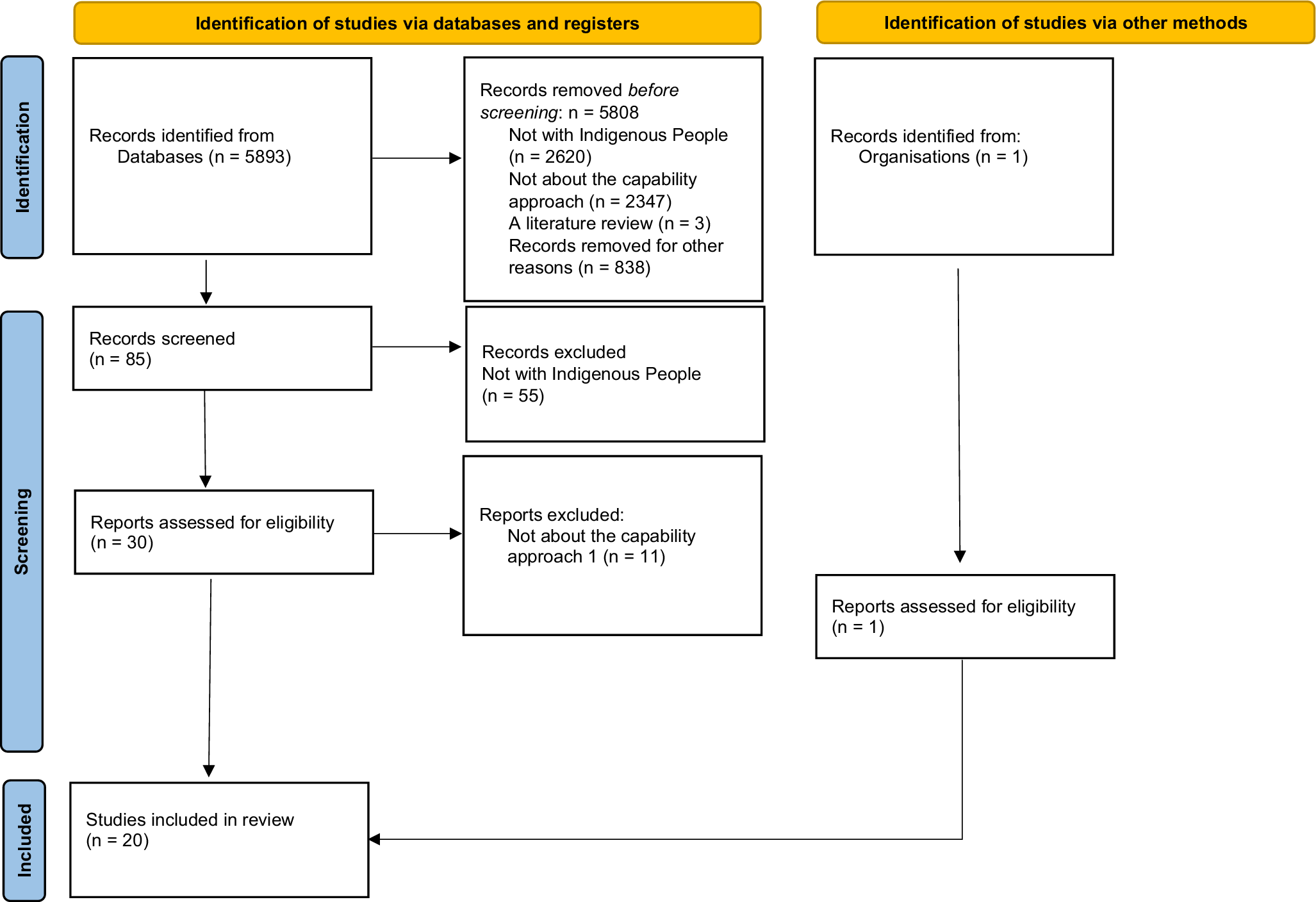
Twenty sources from diverse geographical contexts applied the CA to the health and well-being of Indigenous Peoples including 13 peer-reviewed articles, 5 theses, 1 book and 1 report (Table 1). No Portuguese or French articles were found, and only one Spanish report was included.
Characteristics of sources of evidence where the CA has been applied
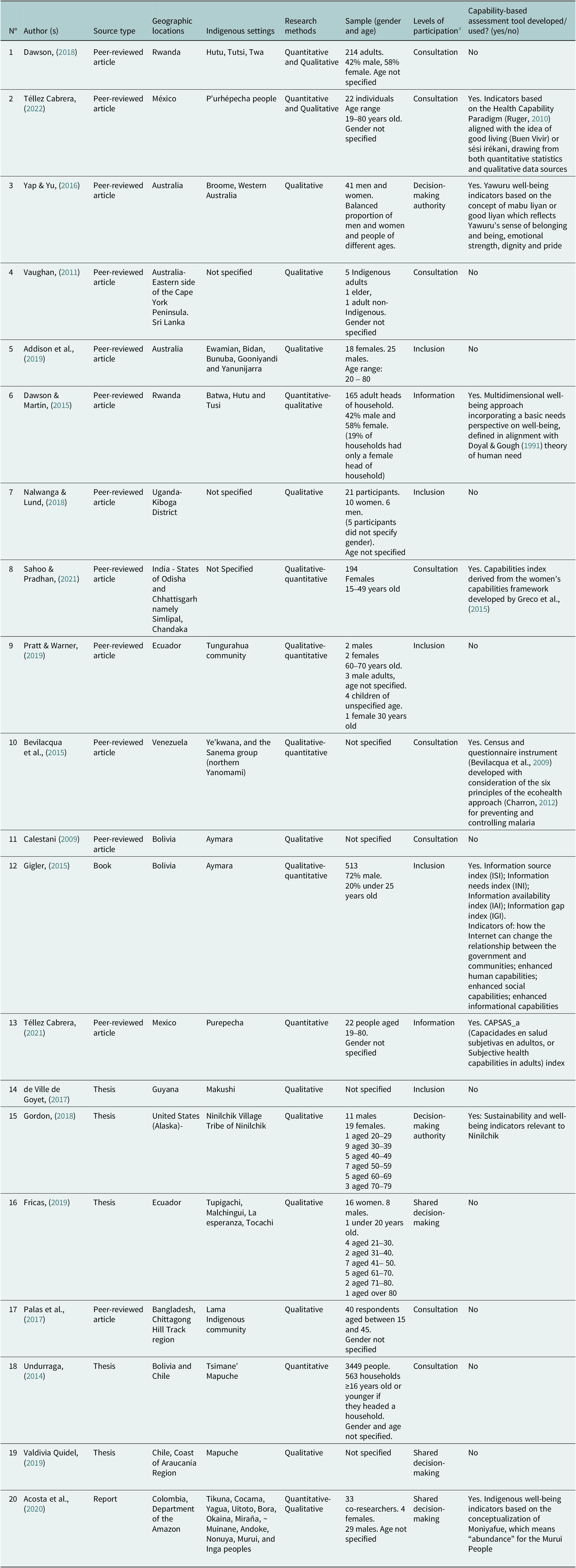
a Levels of participation (Wright & Lemmen, Reference Wright and Lemmen2012):
Information: Decision-makers (professionals) tell the beneficiaries what problems they have and what help they need. Various behaviors and actions are recommended by the professionals. The professionals explain their actions. The perspective of the beneficiaries is taken into account in order to maximize the acceptance of the messages developed by the professionals.
Consultation: The professionals take an active interest in the perspectives of the beneficiaries. Beneficiaries are passively consulted (for example, by way of questionnaires)
Inclusion: The professionals seek active consultation on the part of the beneficiaries (for example by entering a dialogue with certain people from the beneficiary group).
Shared decision-making: The professionals routinely consult with beneficiaries. Decisions are made in terms of negotiating solutions between professionals and beneficiaries. Beneficiaries have a formal right to be heard in decision-making processes
Decision-making authority: All major aspects of planning and implementation are decided by the beneficiaries themselves. There exists a partnership between all stakeholders (including the beneficiaries). Beneficiaries receive active support from professionals for their actions.
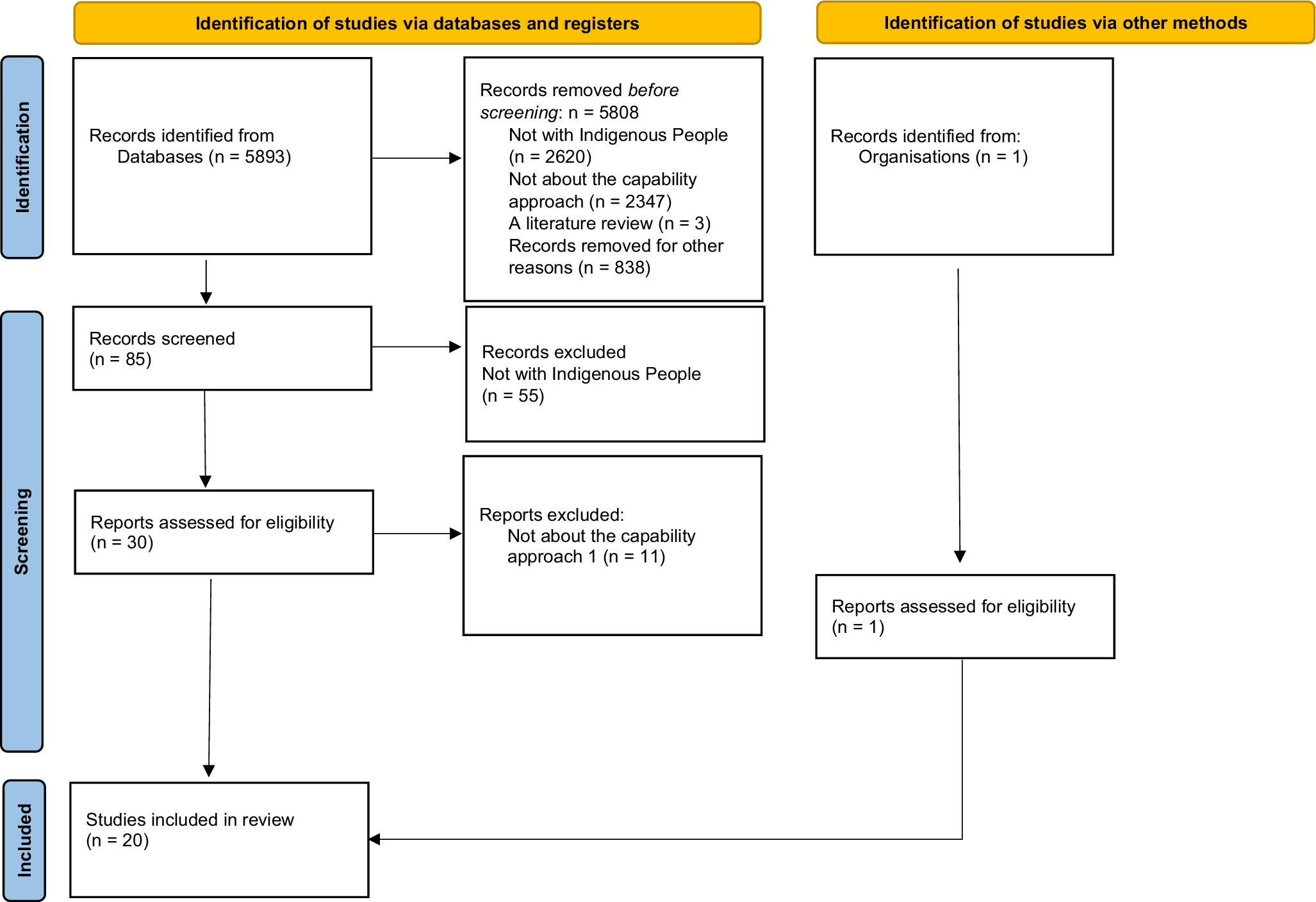
PRISMA 2020 flow diagram for new systematic reviews which included searches of databases, registers and other sources.
From: Page MJ, McKenzie JE, Bossuyt PM, Boutron I, Hoffmann TC, Mulrow CD, et al. The PRISMA 2020 statement: an updated guideline for reporting systematic reviews. BMJ 2021;372:n71. doi: 10.1136/bmj.n71.
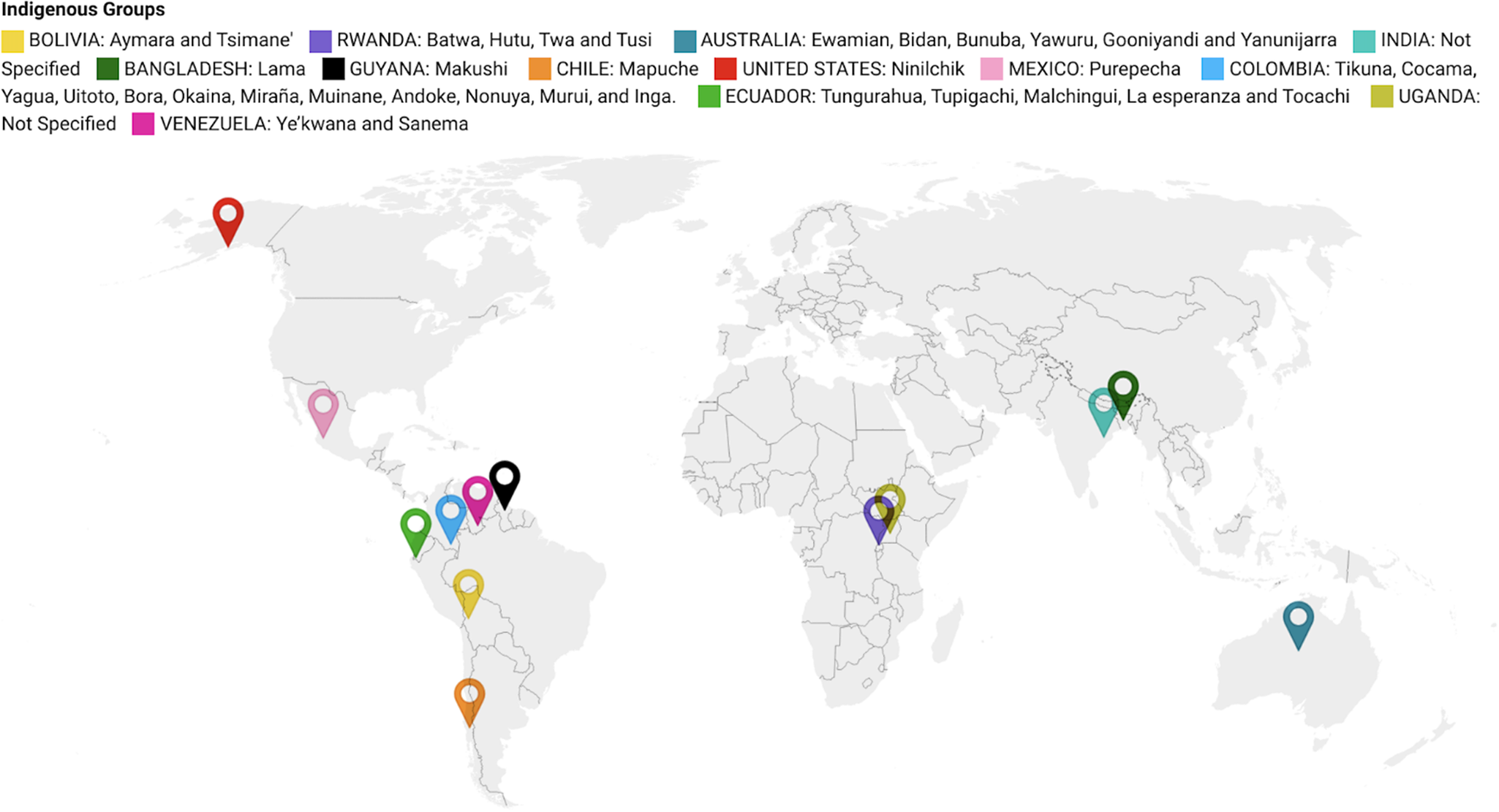
Geographical locations where the CA has been integrated with indigenous conceptualizations of health and well-being
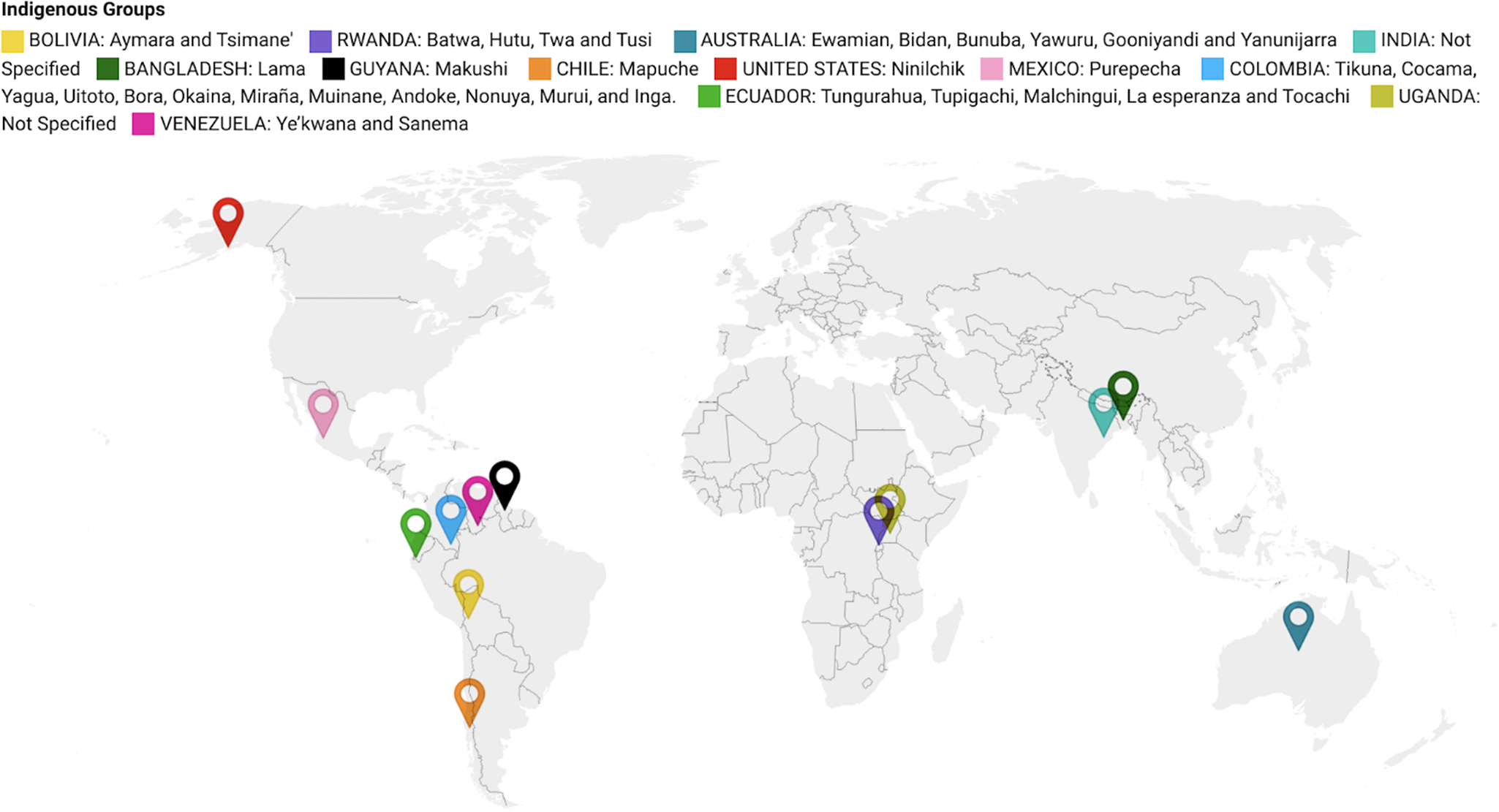
Thirty-seven Indigenous groups were represented in the included studies. The majority are from the Global South (Colombia, Bolivia, Guyana, Chile, Ecuador, Venezuela, Mexico, Uganda, Rwanda, Bangladesh, Sri Lanka and India), with two from Global North countries (Australia and United States). Studies from South American countries (Colombia, Bolivia, Guyana, Chile, Ecuador and Venezuela) included a total of 1,175 participants from 22 Indigenous groups – 7 Andean and 15 Amazonian. Those from North American countries (United States and Mexico) included a total of 52 participants, from 2 Indigenous groups; African countries (Uganda and Rwanda), a total of 400 participants, including 4 Indigenous groups; Asian countries (Bangladesh, Sri Lanka and India), a total of 234 participants, including 4 Indigenous groups; and Oceania (Australia), with a total of 84 participants, from 7 Indigenous groups. Key participant demographics within each study are summarized in Table 1 (including gender and age), and the Indigenous groups represented in the included studies are summarized in Figure 2.
Map illustrating the geographical distribution of countries and Indigenous groups where the capability approach has been implemented to health and well-being.
In the present review, not all studies evidenced the same level of Indigenous communities’ participation (Table 1). Two studies were assessed at the “Information” level (Téllez Cabrera, Reference Téllez Cabrera2021; Dawson & Martin, Reference Dawson and Martin2015) and eight at the “Consultation” level (Téllez Cabrera, Reference Téllez Cabrera2022; Sahoo & Pradhan, Reference Sahoo and Pradhan2021; Dawson, Reference Dawson2018; Palas et al., Reference Palas, Ashraf, Quazi, Grunfeld and Hasan2017; Bevilacqua et al., Reference Bevilacqua, Rubio-Palis, Medina and Cárdenas2015; Undurraga, Reference Undurraga2014; Vaughan, Reference Vaughan2011; Calestani Reference Calestani2009). Four studies were reported at the “Inclusion” level (Addison et al., Reference Addison, Stoeckl, Larson, Jarvis and Esparon2019; Gigler, Reference Gigler2015; de Ville de Goyet, Reference de Ville de Goyet2017; Nalwanga & Lund, Reference Nalwanga and Lund2018). Further along the spectrum of participation, three studies were considered to indicate participation at the “Shared decision-making” level (Acosta et al., Reference Acosta, Mendoza, De La Cruz and Murcia García2020; Fricas, Reference Fricas2019; Valdivia Quidel, Reference Valdivia Quidel2019) and two studies at the “Decision-making authority” level (Gordon Reference Gordon2018, Yap & Yu, Reference Yap and Yu2016).
Dimensions of the CA that are important for the health and well-being of indigenous peoples
Eight descriptive themes of the CA were identified as important for the health and well-being of Indigenous People: Social cohesion; Environment and community-based natural resource management; Indigenous cultural identity; Sustenance autonomy; Rights and self-governance; Services provision; Sustainable economic development and Health and Well-being. Three overarching themes were identified as being relevant to the health and well-being of Indigenous settings. Two of them: harmony in territorial management and community-based sustainable development emphasize the comprehensive representation of well-being in Indigenous settings. The third one: culturally sensitive health care resulted from the focus of this review on literature relating to health and healthcare.
Harmony in territorial management
Territorial management was conceptualized to achieve valued approaches to harmony with the natural environment, ensuring the delivery of resources for sustenance and promoting health and well-being through self-determination and governance. An interviewee in the study conducted by Gordon (Reference Gordon2018) emphasized Alaska’s Indigenous governance of natural resources as relevant to attain important capabilities to meet community subsistence, and thus health and well-being, needs:
“The state and the federal government need to step out and let the tribe do what the tribe does. They’ve managed that resource since the beginning of time. They understand it. They understand the reproductive cycles. They understand the lifespan. They understand the climates that are going to be involved. They have history, and they can look back and they can see those cycles… The tribe recognized the problem [low counts of clams, fish, and animals] a long time ago, 90% of the time. They don’t get surprised. They see it coming. You hear the Elders whispering about it and talking about it and nobody listening to them. You got to listen to the Elders. They’re the memory in the room” (Gordon, Reference Gordon2018, 135).
This quote highlights structural barriers to achieving equitable resource management, in part due to diminishing the capability of being listened to as traditional knowledges are silenced by national authorities. These are framed within a broader conceptualization of reproductive cycles, echoing the cycles of nature and animal and human reproduction that arise across the literature as a core component of achieving harmony with the natural world, with living in harmony with nature consistently identified as essential to Indigenous health and well-being (Acosta et al., Reference Acosta, Mendoza, De La Cruz and Murcia García2020, Sahoo & Pradhan, Reference Sahoo and Pradhan2021, Fricas, Reference Fricas2019, Pratt & Warner, Reference Pratt and Warner2019, Adisson et al., Reference Addison, Stoeckl, Larson, Jarvis and Esparon2019, Dawson, Reference Dawson2018, de Ville de Goyet, Reference de Ville de Goyet2017, Yap & Yu, Reference Yap and Yu2016, Dawson & Martin, Reference Dawson and Martin2015, Vaughan, Reference Vaughan2011).
Yap and Yu (Reference Yap and Yu2016) explored an interviewee’s perspective on the connections between self-identity and the management of sites of natural resources for the Yawuru people in Australia:
“Once upon a time we used to have access to go down to the beach to our favourite fishing grounds or camping grounds. But you can’t do it anymore. It is blocked off. We are Yawuru people, saltwater people. We have fished in this area for hundreds of years. They come along and tell you that you are not allowed to throw your net there”. (Yap & Yu, Reference Yap and Yu2016, 326)
This quote connects the physical restrictions to achieving the valued Yawuru capability of freedom to hunt fish enacted by government authorities that are fundamental to self-identity and expression of a community of saltwater peoples. These access barriers have deep implications for individual and collective health and well-being, limiting opportunities for achieving valuable functionings such as sharing food with friends and family or maintaining the connection to country and culture (Yap & Yu, Reference Yap and Yu2016). According to the authors, at the core of the Indigenous philosophy of the Yawaru people is their definition of well-being “mabu liyan” which is “both an instrument and an outcome of wellbeing” (Yap & Yu, Reference Yap and Yu2016, 324), permeating all aspects of Yawaru well-being across relational, spiritual and resilient conceptions of well-being that help the Yawaru to adapt whilst staying true to their Indigenous identity.
Active negotiations between Indigenous communities and dominant social groups are highlighted in the existing unequal power dynamics and oppressive historical relationships with governments and wider society. The conversion factors of self-determination and autonomy in attaining land rights appear as relevant for achieving an integrated governance that promotes Indigenous communities’ autonomy, human rights and well-being. It is notable that collective territorial management as an element of Indigenous well-being is addressed by 12 of the studies (Téllez Cabrera, Reference Téllez Cabrera2021; Sahoo & Pradhan, Reference Sahoo and Pradhan2021; Acosta et al., Reference Acosta, Mendoza, De La Cruz and Murcia García2020; Gordon, Reference Gordon2018; Adisson et al., Reference Addison, Stoeckl, Larson, Jarvis and Esparon2019; Fricas, Reference Fricas2019, Pratt & Warner, Reference Pratt and Warner2019; Dawson, Reference Dawson2018; Yap & Yu, Reference Yap and Yu2016; Dawson & Martin, Reference Dawson and Martin2015; Bevilacqua et al. Reference Bevilacqua, Rubio-Palis, Medina and Cárdenas2015; Vaughan, Reference Vaughan2011).
Community-based sustainable development CA models of decision-making and leadership indicate collective capabilities of community and family sustenance, income generation and economic enterprise as dimensions of well-being. These collective capabilities are related to opportunities for partnership development and the preservation of cultural knowledge and languages. Sixteen studies examine the economic foundations of Indigenous well-being by analysing the vulnerability of Indigenous identities and the effects of cultural change resulting from marginalization (Acosta et al., Reference Acosta, Mendoza, De La Cruz and Murcia García2020; Sahoo & Pradhan, Reference Sahoo and Pradhan2021, Téllez Cabrera, Reference Téllez Cabrera2021, Gordon, Reference Gordon2018, Adisson et al., Reference Addison, Stoeckl, Larson, Jarvis and Esparon2019, Fricas, Reference Fricas2019, Pratt & Warner, Reference Pratt and Warner2019, Valdivia Quidel, Reference Valdivia Quidel2019, Dawson, Reference Dawson2018, Nalwanga & Lund, Reference Nalwanga and Lund2018, de Ville de Goyet, Reference de Ville de Goyet2017, Yap & Yu, Reference Yap and Yu2016, Dawson & Martin, Reference Dawson and Martin2015, Gigler, Reference Gigler2015, Vaughan, Reference Vaughan2011, Calestani, Reference Calestani2009). De Ville de Goyet (Reference de Ville de Goyet2017) explored the economic well-being of the Makushi Indigenous community through the valued capability of autonomy over development initiatives for Surama village in North Rupununi, Guyana. The author cites the Ecolodge business declaration:
“We will develop, own and manage a community-based ecotourism business by constructively [using] the natural resources and our traditional culture in a socially appropriate manner; we will provide opportunities for our people through research, training and employment; we will work with our partners for mutual respect and benefits.” (de Ville de Goyet, Reference de Ville de Goyet2017, 166)
Embedded within this vision are valued functionings of community cohesion and mutually respectful partnerships. Importantly, ecotourism is identified as a means to generate income and promote cultural knowledges to those from and outside the community. For Indigenous participants, the promotion of traditional culture is seen as essential to economic benefit and thus their own well-being. However, as noted by de Ville de Goyet (Reference de Ville de Goyet2017), development in the form of information community technology (ICT) resources can lead to negative impacts on community cohesion. De Ville de Goyet (Reference de Ville de Goyet2017) found that if collective political and economic freedoms are enhanced by ICT resources facilitating access to information on government policies, these freedoms can also be perceived as exclusionary for elder generations who do not access such resources.
Across the diverse Indigenous settings included in this review, sustainable development is conceptualized under rights of self-governance and cultural perspectives of well-being. Included studies described community-based initiatives seeking to ensure economic capabilities for future and younger generations (Acosta et al., Reference Acosta, Mendoza, De La Cruz and Murcia García2020, Gordon, Reference Gordon2018; Fricas, Reference Fricas2019; Yap & Yu, Reference Yap and Yu2016). Some studies approach social cohesion and the provision of health services to achieve partnership in initiatives that promote sustainable development (Téllez Cabrera, Reference Téllez Cabrera2022; Téllez Cabrera, Reference Téllez Cabrera2021; Pratt & Warner, Reference Pratt and Warner2019; Nalwanga & Lund, Reference Nalwanga and Lund2018, Bevilacqua et al. Reference Bevilacqua, Rubio-Palis, Medina and Cárdenas2015, Calestani, Reference Calestani2009), while others offer examples of initiatives in cross-cultural education and cultural recognition as valuable conversion factors to understand how Indigenous Peoples preserve their culture while adapting to contemporary changes (Gordon, Reference Gordon2018; De Ville de Goyet, Reference de Ville de Goyet2017; Dawson, Reference Dawson2018; Gigler, Reference Gigler2015; Vaughan, Reference Vaughan2011). Recovering the memories of older generations is seen as strengthening cultural identities, intergenerational ties and community capabilities for partnership in development.
Culturally sensitive health care
The CA highlights the critical role of listening to community needs when developing, implementing and evaluating public health policies (Tellez Cabrera Reference Téllez Cabrera2021; Sahoo & Pradhan, Reference Sahoo and Pradhan2021; Acosta et al., Reference Acosta, Mendoza, De La Cruz and Murcia García2020; Adisson et al., Reference Addison, Stoeckl, Larson, Jarvis and Esparon2019; Pratt & Warner, Reference Pratt and Warner2019; Dawson, Reference Dawson2018, Palas et al., Reference Palas, Ashraf, Quazi, Grunfeld and Hasan2017; Dawson & Martin, Reference Dawson and Martin2015, Vaughan, Reference Vaughan2011). This is reinforced by the literature on Indigenous Peoples, which consistently points to the need for comprehensive healthcare strategies, interventions and models that are grounded in Indigenous conceptualizations of health and well-being (Téllez Cabrera, Reference Téllez Cabrera2021; Sahoo & Pradhan, Reference Sahoo and Pradhan2021; Valdivia Quidel, Reference Valdivia Quidel2019; Pratt & Warner, Reference Pratt and Warner2019; Palas et al., Reference Palas, Ashraf, Quazi, Grunfeld and Hasan2017; Bevilacqua et al., Reference Bevilacqua, Rubio-Palis, Medina and Cárdenas2015; Dawson & Martin, Reference Dawson and Martin2015; Undurraga, Reference Undurraga2014). A prime example is Bevilacqua et al. (Reference Bevilacqua, Rubio-Palis, Medina and Cárdenas2015), who developed an adaptive management and ecohealth framework to eliminate malaria in Indigenous communities of the Ye’kwana and Sanema groups of the Venezuelan riparian forest. Their model incorporated the environmental, sociocultural and economic dimensions of malaria, recognizing the importance of the CA:
“Different people need different resources, income, and assets to achieve the same level of well-being, at individual, household, and community level. The capability approach helps us to identify the likelihood that two persons will have very different substantial opportunities even when they apparently have exactly the same set of means and tools. This can mean the difference between success and failure of a malaria intervention” (Bevilacqua et al. Reference Bevilacqua, Rubio-Palis, Medina and Cárdenas2015, 263).
Regarding health and healthcare services, ten studies included in this review explore reproductive health, alcohol consumption and forced displacement and underscore the lack of data collection from Indigenous Peoples and their exclusion from these dimensions of well-being (Téllez Cabrera, Reference Téllez Cabrera2021, 2021; Sahoo & Pradhan, Reference Sahoo and Pradhan2021; Valdivia Quidel, Reference Valdivia Quidel2019; Pratt & Warner, Reference Pratt and Warner2019; Palas et al., Reference Palas, Ashraf, Quazi, Grunfeld and Hasan2017; Bevilacqua et al., Reference Bevilacqua, Rubio-Palis, Medina and Cárdenas2015; Dawson & Martin, Reference Dawson and Martin2015; Undurraga, Reference Undurraga2014; Vaughan, Reference Vaughan2011).
Téllez Cabrera (Reference Téllez Cabrera2021) addressed the health governance of P’urhépecha people in Mexico, emphasizing the integration of both traditional and biomedical health perspectives as a vital condition for health capabilities, empowering the community to make informed health choices and preserve self-identity by achieving the valued individual capabilities of being healthy that is attained through adherence to traditional beliefs (Téllez Cabrera, Reference Téllez Cabrera2021). One interviewed member of the P’urhépecha community explained:
“Here we had an opportunity. The state government, the federal, was offering us a hospital and we got ready, we have like four, five hectares above and ready for that (…). We had planned to divide that hospital, in one part with people who work with traditional medicine and the other half, well, using patent medicines.” (Téllez Cabrera, Reference Téllez Cabrera2021, 13)
Health resource allocations present an opportunity for Indigenous communities to mobilize politically and collaborate with governments in designating land resources and traditional knowledge and practices for healthcare services. In this context, participatory deliberation and self-governance are crucial for the community’s ability to establish the governance healthcare services, manage hospitals and choose medical treatments. Political mobilization is conceptualized by Téllez Cabrera (Reference Téllez Cabrera2021) as a key conversion factor in the articulation of Indigenous community development plans within government policies.
Fifteen studies oriented by Sen’s perspective describe political mobilization as how Indigenous communities have responded to policy inconsistency in services and social programmes. This mobilization seeks more equitable and inclusive forms of governance by empowering communities to advocate for their needs, challenge existing power structures and participate in decision-making processes that affect their lives (Téllez Cabrera, Reference Téllez Cabrera2021; Adisson et al., Reference Addison, Stoeckl, Larson, Jarvis and Esparon2019; Pratt & Warner, Reference Pratt and Warner2019; Valdivia Quidel, Reference Valdivia Quidel2019; Fricas, Reference Fricas2019; Dawson, Reference Dawson2018; Nalwanga & Lund, Reference Nalwanga and Lund2018; Gordon, Reference Gordon2018; Palas et al., Reference Palas, Ashraf, Quazi, Grunfeld and Hasan2017; De Ville de Goyet, Reference de Ville de Goyet2017; Yap & Yu, Reference Yap and Yu2016; Dawson & Martin, Reference Dawson and Martin2015; Gigler, Reference Gigler2015; Vaughan, Reference Vaughan2011; Calestani, Reference Calestani2009). Nussbaum’s perspective of CA is preferred in studies that seek to address barriers to social inclusion and equitable access to resources, on the assumption that human dignity can be achieved by covering specifically defined conditions of life (Sahoo & Pradhan, Reference Sahoo and Pradhan2021; Nalwanga & Lund Reference Nalwanga and Lund2018). These studies demonstrate that applying Nussbaum’s 10 capabilities (Life; Bodily Health; Bodily Integrity; Senses, Imagination, and Thought; Emotions; Practical Reason; Affiliation; Other Species; Play; Control over One’s Environment) as a minimum threshold can be useful as an evaluative tool. However, for some authors, this approach was found to be overly narrow and failed to harmonize local perspectives with broader policy frameworks effectively (Vaughan, Reference Vaughan2011). Nevertheless, its focus on the quality of life and the unequal status in capabilities, such as reproductive health care status, can reduce vulnerabilities and articulate demands for government (Sahoo & Pradhan, Reference Sahoo and Pradhan2021).
Sahoo & Pradhan (Reference Sahoo and Pradhan2021) approached the healthcare capabilities of Indigenous women in post-displacement settings established by the government of India in three wildlife sanctuaries. The authors discuss Nussbaum’s list of ten capabilities in a context of extreme inequality where Indigenous Peoples have lost control over natural resources and self-governance. The study interviewed Indigenous Women who had arrived at the rehabilitation colonies and who explained:
“We get all kinds of facilities in the rehabilitation colony; we get access to market and other things. Education and health facilities in the rehabilitation colonies are better which we didn’t get in our old place. But we don’t have forest and good cultivable land here (TD FG.5 and JD FG.2).” (Sahoo & Pradhan, Reference Sahoo and Pradhan2021, 20)
In this quote, interviewees acknowledge how the community’s access to markets, education and health services in the “rehabilitation colony” has expanded their capabilities. However, they emphasize that these resources cannot replace the territorial integrity they have lost. This may also reflect a concern that the education and health services provided may not align with their traditional knowledge and identities, potentially leading to the erosion of these cultural elements in the future. Sahoo & Pradhan (Reference Sahoo and Pradhan2021) interpreted the importance of restoring an emotional bond with the land as being central to attaining the tribe’s collective capabilities of adequate shelter and health and well-being (19-20). Participants also described increasing domestic violence and substance abuse:
“Many of us face domestic violence in the rehabilitation colony and it is increasing day by day, the main reason is the increase in consumption of alcohol. There was a consumption of alcohol in the old village, but after displacement, the consumption has increased and we are facing more domestic violence. (JD FG.2).” (Sahoo & Pradhan, Reference Sahoo and Pradhan2021, 19)
For the authors, the structural violence described here signals the lack of choices and decision-making power that Indigenous Women have under the circumstances of displacement, which has not only disrupted the physical territorial integrity of the community but has also undermined their social and cultural well-being.
Similarities and differences in CA dimensions related to health and well-being across indigenous settings
Authors of the included studies approached the CA from three perspectives. These include viewing it as an integrative well-being framework including dimensions relevant to health and well-being that measure people’s capacity to meet basic needs and that serve as an informational basis for public policy (Sahoo & Pradhan, Reference Sahoo and Pradhan2021; Dawson, Reference Dawson2018; Nalwanga & Lund, Reference Nalwanga and Lund2018; Palas et al., Reference Palas, Ashraf, Quazi, Grunfeld and Hasan2017; Bevilacqua et al. Reference Bevilacqua, Rubio-Palis, Medina and Cárdenas2015; Dawson & Martin, Reference Dawson and Martin2015; Undurraga, Reference Undurraga2014; Vaughan, Reference Vaughan2011); as an approach to measure Indigenous well-being and what constitutes a “good life” or a “good place” in their own terms (Addison et al. Reference Addison, Stoeckl, Larson, Jarvis and Esparon2019; Pratt & Warner, Reference Pratt and Warner2019; Valdivia Quidel, Reference Valdivia Quidel2019; Yap &Yu, 2016; de Ville de Goyet, Reference de Ville de Goyet2017; Acosta et al., Reference Acosta, Mendoza, De La Cruz and Murcia García2020; Gordon, Reference Gordon2018; Gigler, Reference Gigler2015; Calestani, Reference Calestani2009); and as a framework that can be complemented by the “health capability paradigm” (Ruger, Reference Ruger2010), which argues that the goal of public health policy should be people’s freedom to achieve the health states they value (Téllez Cabrera, Reference Téllez Cabrera2021).
There are distinctive patterns emerging between geographies and Indigenous settings. Conversion factors related to inclusive development initiatives are discussed in Australia, South America and North American countries, illuminating Indigenous communities’ demands for recognition and negotiation with governments. Land titles and the effects of the Stolen Generation in Australia are linked with well-being functionings, such as maintaining a connection to country and culture, and with capabilities in cross-cultural education and being able to choose where to live (Adisson et al. Reference Addison, Stoeckl, Larson, Jarvis and Esparon2019, Yap & Yu, Reference Yap and Yu2016, Vaughan, Reference Vaughan2011). Indigenous communities in South America and North American settings also prioritize the preservation of their cultural heritage, territorial management and self-determination (Gordon, Reference Gordon2018, Acosta et al., Reference Acosta, Mendoza, De La Cruz and Murcia García2020).
In these contexts, the maintenance of cross-cultural and cross-generational knowledge are also relevant capabilities to participate in decision-making processes, articulated with the promotion of sustainable economic activities to prevent isolation and to expand the knowledge, markets and services for achieving collective well-being (Pratt & Warner, Reference Pratt and Warner2019, Fricas, Reference Fricas2019, Gigler, Reference Gigler2015, Calestani, Reference Calestani2009), or through ecotourism (De Ville de Goyet, Reference de Ville de Goyet2017). Likewise, in Australia, South America and North American settings, there is a notable concern about the engagement of younger generations in traditional Indigenous community activities as key aspects of their functionings and adaptation to contemporary changes. The adult’s concerns are about their inclusion in the job market, participation in communal activities, alcohol and drug consumption, external cultural influence and decisions to live in urban areas (Téllez Cabrera, Reference Téllez Cabrera2021; Acosta et al., Reference Acosta, Mendoza, De La Cruz and Murcia García2020; Gordon, Reference Gordon2018; Pratt & Warner, Reference Pratt and Warner2019; Fricas, Reference Fricas2019; Valdivia Quidel, Reference Valdivia Quidel2019; De Ville de Goyet, Reference de Ville de Goyet2017; Gigler, Reference Gigler2015; Calestani, Reference Calestani2009).
Across the literature, social justice, self-determination and harmonization with nature are repeatedly discussed in relation to the attainment of health and well-being capabilities of Indigenous Peoples. Although significant differences arise from the specific situations and needs of Indigenous Peoples who have been displaced (Sahoo & Pradhan, Reference Sahoo and Pradhan2021) and those who live on ancestral lands (Dawson, Reference Dawson2018; Palas et al., Reference Palas, Ashraf, Quazi, Grunfeld and Hasan2017; Nalwanga & Lund, Reference Nalwanga and Lund2018), interviewees highlight similar capabilities, such as community and family cohesion to care for illness (Sahoo & Pradhan, Reference Sahoo and Pradhan2021; Nalwaga & Lund, 2018; Palas et al., Reference Palas, Ashraf, Quazi, Grunfeld and Hasan2017) and their deep cultural and ancestral ties to the land, highlighting its importance in shaping their health, well-being and identities (Sahoo & Pradhan, Reference Sahoo and Pradhan2021; Dawson, Reference Dawson2018; Palas et al., Reference Palas, Ashraf, Quazi, Grunfeld and Hasan2017).
Studies from Rwanda, Uganda, India and Bangladesh reveal tensions between governments orientation and Indigenous health and well-being (Dawson, Reference Dawson2018; Sahoo & Pradhan, Reference Sahoo and Pradhan2021; Palas et al., Reference Palas, Ashraf, Quazi, Grunfeld and Hasan2017; Nalwanga & Lund, Reference Nalwanga and Lund2018), highlighting the risks of policies that imply the loss of Indigenous cultural integrity and community cohesion for the well-being of Indigenous Peoples. In contrast, studies from communities in Ecuador, Bolivia, Canada and Australia manifest approval and benefits approval of certain government initiatives, especially those related to technological and infrastructural development, as well as efforts to revitalize cultural identity (Pratt & Warner, Reference Pratt and Warner2019; Yap & Yu, Reference Yap and Yu2016; Gigler, Reference Gigler2015; De Ville de Goyet, Reference de Ville de Goyet2017; Gordon, Reference Gordon2018).
Some studies interrogate the suitability of the CA for capturing Indigenous Peoples’ health and well-being perspectives and guaranteeing their cultural freedoms (Téllez Cabrera, Reference Téllez Cabrera2021; Fricas, Reference Fricas2019; Yap & Yu, Reference Yap and Yu2016; Gigler, Reference Gigler2015; Vaughan, Reference Vaughan2011). In these studies, Sen’s approach is preferred for encouraging agency and context-specific definitions of health and well-being (Téllez Cabrera, Reference Téllez Cabrera2021; Yap & Yu, Reference Yap and Yu2016; Gigler, Reference Gigler2015). Sen’s orientation questions the narrow frame in which policies and measurements are stated, seeking to incorporate dimensions of well-being beyond socio-economic indicators (Yap & Yu, Reference Yap and Yu2016; Gigler, Reference Gigler2015). Furthermore, it is argued that aligning CA concepts of individual and collective capabilities with Indigenous ontologies is a challenging endeavour (Vaughan, Reference Vaughan2011). For instance, the notion of substantive freedom as defined within the CA is not perceived to be equivalent to the dominance of collective values over personal aspirations in Indigenous communities (Calestani, Reference Calestani2009). Moreover, the CA is not regarded as a strong political tool for marginalized groups to achieve redistribution of resources because it is unable to capture historical social struggles and structural power relationships (Gigler, Reference Gigler2015; Fricas, Reference Fricas2019).
Capability-based assessment tools for indigenous health and well-being
Nine out of 20 studies use or develop capacity-based assessment tools for Indigenous health and well-being. These tools include both indicators and indexes. Examples of indicators include the Indigenous well-being indicators in the Colombian Amazon that highlight the relevance of traditional medicines in preventive and curative health care in Indigenous territories (Acosta et al., Reference Acosta, Mendoza, De La Cruz and Murcia García2020) and the P’urhépecha people indicators which cover diseases such as diabetes, hypertension and cancer, as well as broader aspects such as literacy, access to health services, social security and material conditions (Téllez Cabrera, Reference Téllez Cabrera2022). In terms of indexes, the Women Capabilities Index for displaced Dampara and Achanakma women captures domestic violence, access to desired contraceptives, use of modern health facilities and access to agricultural land and forest resources (Sahoo & Pradhan, Reference Sahoo and Pradhan2021). The CAPSAS (Subjective health capabilities in adults) index is a health capabilities indicator created with the P’urhépecha people in Mexico (Téllez Cabrera, Reference Téllez Cabrera2021). Other tools include questionnaires and census instruments to measure the effectiveness and long-term viability of technical solutions to local malaria control that show the relevance of individual knowledge, skills and community practices (Bevilacqua et al., Reference Bevilacqua, Rubio-Palis, Medina and Cárdenas2015) and the multidimensional well-being approach utilized by Dawson & Martin (Reference Dawson and Martin2015) which emphasizes meeting basic needs such as food, shelter, health care and social relationships.
Discussion
This scoping review has synthesized 20 studies that discuss the application of the CA to Indigenous health and well-being. Our discussion explores key findings, including the variability in participation levels across studies, tensions between individual and collective capabilities and the integration of Indigenous conceptualizations of health and well-being. Furthermore, we will consider the structural constraints faced by Indigenous communities, the policy implications of these constraints and the critiques of the CA’s adequacy in addressing these issues. By examining these findings, we aim to provide insights into the current state of CA application in Indigenous contexts and identify crucial areas for future research and policy development.
While most studies applied community-driven definitions of capabilities for operationalization in Indigenous settings, in line with Sen’s perspective, a minority followed the approach developed by Nussbaum (Sahoo & Pradhan, Reference Sahoo and Pradhan2021; Nalwanga & Lund, Reference Nalwanga and Lund2018). The analysis indicates that there is considerable variation in the level of participation, with very few examples of high levels of participation ("Shared decision-making," and “Decision-making authority”) such as seeking dialogue with Indigenous conceptualizations of health and well-being and operationalizing these for public policy (Fricas, Reference Fricas2019; Valdivia Quidel, Reference Valdivia Quidel2019; Acosta et al., Reference Acosta, Mendoza, De La Cruz and Murcia García2020; Yap & Yu, Reference Yap and Yu2016; Gordon, Reference Gordon2018). Those studies that engaged in dialogue with Indigenous conceptualizations of health and well-being integrated both specific and universal capabilities and functionings emerging from the Indigenous context, indicating a nuanced understanding of well-being unique to these communities. Some studies included disaggregated CA-based indicators that provide valuable insights into Indigenous livelihoods aligned with the traditional knowledge and values of the Arctic (Gordon, Reference Gordon2018), Yawuru (Yap & Yu, Reference Yap and Yu2016) and Amazonian Indigenous communities (Acosta et al., Reference Acosta, Mendoza, De La Cruz and Murcia García2020). These conceptualizations such as Moniyafue (Acosta et al., Reference Acosta, Mendoza, De La Cruz and Murcia García2020), sési irékani (Téllez Cabrera, Reference Téllez Cabrera2022), mabu liyan (Yap & Yu, Reference Yap and Yu2016) and Arctic Well-being (Gordon, Reference Gordon2018) may indicate more radical alternatives to re-think structural injustices by addressing the levels of participation and agency of Indigenous communities to achieve the life they desire.
The divergent perspectives spark debate surrounding top-down and bottom-up approaches to applying the CA in Indigenous settings. These discussions highlight power imbalances between the Indigenous communities addressed in these studies, and the policies and paradigms of well-being and health proposed by approaches that run the risk of entrenching biomedical hegemonies (Josewski et al., Reference Josewski, De Leeuw and Greenwood2023). This further highlights the need for innovative solutions that take into account high levels of participation in decision-making processes to promote negotiation and monitoring of policy implementation, while strengthening freedom of self-determination and governance (Téllez Cabrera, Reference Téllez Cabrera2021; Acosta et al., Reference Acosta, Mendoza, De La Cruz and Murcia García2020; Gordon, Reference Gordon2018; Yap & Yu, Reference Yap and Yu2016).
The results highlight significant tensions between individual and collective capabilities, as well as systemic constraints for Indigenous communities to access health care. The discussion extends to culturally sensitive healthcare services, emphasizing the need for comprehensive policies grounded in Indigenous conceptualizations of health and well-being. Studies show how a narrow focus on health system considerations overlooks dimensions of well-being important to Indigenous communities desired capabilities (Gordon, Reference Gordon2018; Yap & Yu, Reference Yap and Yu2016). Therefore, studies underscore the importance of listening to community needs, integrating traditional and biomedical health perspectives, and empowering communities in healthcare decision-making. Challenges such as displacement, unequal access to resources and the impact of colonial legacies persist, necessitating a critical approach to policy interventions and resource allocation.
Key to achieving health capabilities is the preservation of traditional livelihoods, strengthening Indigenous governance, territorial control and cultural recognition, which are structurally constrained or limited by government interference and restrictions on community self-determination and diminishing cultural knowledge (Téllez Cabrera, Reference Téllez Cabrera2021; Acosta et al., Reference Acosta, Mendoza, De La Cruz and Murcia García2020). Moreover, governmental priorities focused solely on wealth maximization often result in initiatives that undermine Indigenous rights and disregard cultural integrity and community cohesion. For instance, modern infrastructure and economic development projects can disrupt longstanding cultural practices, creating additional challenges in preserving cultural integrity and fostering community cohesion. However, in some included studies, community members also express the desire for modern infrastructure to connect rural and urban activities, as well as to access internet and technology facilitating access to education and employment opportunities. These capabilities are seen as integral to fostering Indigenous community resilience and self-reliance (Gigler, Reference Gigler2015; Gordon, Reference Gordon2018). These tensions illustrate how Indigenous communities are responding to the encroachment of Western liberal economic orders into their lives and are responding in ways that are economically productive while retaining important cultural values.
Important critiques have been raised regarding the insufficient attention given to collective capabilities and the unresolved conflicts between the capability aspirations of Indigenous and non-Indigenous groups (Téllez Cabrera, Reference Téllez Cabrera2021; Fricas, Reference Fricas2019; Yap & Yu, Reference Yap and Yu2016; Gigler, Reference Gigler2015; Vaughan, Reference Vaughan2011). Similarly, included sources emphasize the difficulty of balancing Indigenous communities’ individual capabilities that affect their quality of life with collective capabilities that sustain their culture and overall well-being (Gigler, Reference Gigler2015; Fricas, Reference Fricas2019, Calestani, Reference Calestani2009). This reveals a research gap: exploring how Indigenous health and well-being transform as communities incorporate individual capability needs, like integration into public health systems, while maintaining collective capabilities that preserve cultural integrity and social cohesion. Progress concerning conflict resolution and the promotion of capabilities would benefit both Indigenous groups and society at large.
Study limitations
This scoping review has limitations that should be acknowledged. Methodological limitations were faced in categorizing participatory approaches (as shown in Table 1), stemming from the limited information available in study reports. Another key limitation is the breadth of the search, which is both a strength and a weakness. By defining health and well-being broadly, we have included a wide range of studies covering various dimensions of health and well-being which are difficult to compare and may not capture the specific nuances of different regions or communities. The search terms, with their focus on health and well-being concepts, may have inadvertently missed broader framings that overlap with these concepts but do not necessarily refer directly to health and well-being. Additionally, the search may have included philosophical or anthropological framings that engage with the CA in different ways. Therefore, caution is needed when generalizing the results to a broader context. While the Thomas and Harden (Reference Thomas and Harden2008) approach offers a rigorous synthesis method when applied considering the theoretical orientation of the CA to elucidate capabilities, functionings and conversion factors, and considering health and well-being broadly, challenges were faced in developing an analysis that did justice to the breadth and depth of findings. We have sought to mitigate this through reflexive discussion of the organization and presentation of the results between team members and the key messages arising from the included studies.
Unanswered questions invite further investigation: A fundamental question is whether the application of the CA represents an appropriate methodology for addressing structural injustices faced by Indigenous communities, particularly when participants may indicate more radical alternatives, such as the creation of politically autonomous indigenous collectives to share experiences, provide mutual support and address societal discrimination (Gigler, Reference Gigler2015). Furthermore, within the capabilities framework, an imperative question arises: how can policies be effectively implemented that account for the ontological specificities of health and well-being in Indigenous communities? To what extent is it possible to embrace and integrate the particularism and the concurrent individual and collective capabilities inherent in Indigenous ontologies relating to health and well-being into broader frameworks, navigating the tensions and conflicts that arise between Indigenous perspectives and more hegemonic visions? These questions outline the challenges and highlight potential opportunities for developing inclusive and culturally sensitive policies that uphold the diverse capabilities within Indigenous contexts.
Conclusions
This scoping review emphasizes how the CA can transform interventions and policies for Indigenous communities by incorporating culturally sensitive strategies. The CA enables the methodological and theoretical integration of Indigenous perspectives, viewing health and well-being holistically within the context of land ties, cultural traditions, spirituality and collective priorities. Our review raises important questions about the CA’s potential to address structural injustices and enhance capabilities for Indigenous Peoples. It’s clear that the prevalent “conventional” capabilities-based approach often confines solutions within existing systems, despite indications from stakeholders for more transformative strategies.
Although the CA is solution-oriented, it can unintentionally limit our imagination within current norms. This emphasizes the ongoing need the develop and enhance reflective and inclusive methodologies in Indigenous health research. When coupled with participatory methods, the CA presents opportunities for inclusive health and well-being research and policymaking that respects the diverse capabilities valued by Indigenous communities. Innovations such as participatory indicators and detailed variables can better capture each community’s unique circumstances and expressed needs. Future research should explore how to integrate Indigenous perspectives into policy frameworks effectively while navigating the complexities between Indigenous and non-indigenous viewpoints.
Open peer review
To view the open peer review materials for this article, please visit http://doi.org/10.1017/gmh.2025.11.
Data availability statement
The data that support the findings of this study are openly available from the sources identified through the pragmatic search strategy adopted, including peer-reviewed articles from databases such as Web of Science, PsycINFO, EMBASE, OVID MEDLINE, ECONlit, LILACS, Aboriginal and Torres Strait Islander health bibliography, SCIELO, ADOLEC, Biblioteca Virtual en Salud Medicinas Tradicionales Complementarias e Integrativas (BVS MTCI), and IBECS, as well as grey literature sources like the United Nations Department of Economic and Social Affairs Indigenous Peoples resources, World Bank e-Library, Pan American Health Organisation e-library, Opengrey and Social Care Online. Additional sources were identified through citation searching and expert consultation with members of the Human Development and Capabilities Association’s “Indigenous Peoples” thematic group.
Acknowledgements
Universidad Externado de Colombia, Queen’s University Belfast, University of Liverpool, University of Edinburgh, and the Kankuama IPS (Indigenous Health Service Provider) within the project “Participatory Construction of an Intercultural Epidemiological Profile in Mental Health, Coexistence and Peace Building of the Kankuamo People for Governance in Times of COVID-19”.
Author contribution
Laura Andrea Chaparro Rojas: Data curation, Formal Analysis, Writing – original draft, Writing – review & editing; Pablo De La Cruz: Data curation, Formal Analysis, Visualization, Writing – original draft, Writing – review & editing; Anna Chiumento: Conceptualization, Methodology, Data curation, Formal Analysis, Supervision, Writing – original draft, Writing – review & editing; Catharina Van der Boor: Conceptualization, Methodology, Data curation, Writing - review and editing; Carlos Iván Molina-Bulla: Funding acquisition, Conceptualization, Methodology, Data curation; Maria Paula Baquero Vargas: Data curation, Formal Analysis, Visualization; Giovanna Catalina Sánchez Díaz: Data curation, Formal Analysis; Diana Marcela Agudelo-Ortiz: Data curation, Formal Analysis; Luisa Juliana Guevara Morales: Data curation, Formal Analysis; Ross White: Conceptualization, Funding acquisition, Methodology, Supervision, Writing – review & editing; Mauricio Aponte: Funding acquisition, Writing – review & editing.
Financial support
This work was supported by the CALDAS NEWTON CALL 2020: Ministry of Science and Technology of Colombia and United Kingdom Research and Innovation (UKRI). Ref. 865 2020.
Competing interest
There were no conflicts of interest in this research.

 Open access


Comments
Dear Editors,
We are pleased to submit our manuscript entitled “Exploring the Application of the Capability Approach to the Health and Wellbeing of Indigenous Peoples: A Scoping Review” for consideration in Cambridge Prisms: Global Mental Health. Our multidisciplinary team, representing institutions across Colombia, the United Kingdom, and Chile, offers a unique perspective on the intersection of health, wellbeing, and Indigenous knowledge systems.
This scoping review explores how the Capability Approach (CA), as conceptualized by Amartya Sen and Martha Nussbaum, can inform health and wellbeing research, interventions, and policies relevant to Indigenous Peoples. By analyzing research across various Indigenous contexts, we highlight the dimensions of health and wellbeing that are most significant to these communities, including harmony in territorial management, sustainable development, and culturally sensitive healthcare. The review also delves into the tensions between individual and collective capabilities, systemic challenges, and the importance of promoting agency and self-governance in Indigenous health strategies.
Our findings underscore the need for culturally responsive, participatory approaches that support Indigenous Peoples' health capabilities and aspirations, which we believe aligns well with the scope and mission of your journal. We hope this article contributes to the global discussion on health equity and the application of the Capability Approach in mental health research, particularly within underserved and marginalized populations.
Thank you for considering our manuscript. We look forward to your feedback and the possibility of contributing to your esteemed publication.
Sincerely,
Pablo De La Cruz, PhD
Queen’s University Belfast
pedelacruzn@gmail.com
On behalf of the co-authors:
Laura Andrea Chaparro Rojas, Anna Chiumento, Catharina Van der Boor, Diego Carlos Iván Molina-Bulla, Maria Paula Baquero Vargas, Giovanna Catalina Sánchez Díaz, Diana Marcela Agudelo-Ortiz, Luisa Juliana Guevara Morales, Mauricio Aponte-Canencio, Ross White