


The English National Health Service (NHS) currently faces an immense financial challenge in having to generate up to £20 billion of efficiency savings by 2014–2015. Mental health has been identified as one of the areas where provider-driven savings are expected to contribute to 40% of the total efficiency gains (National Audit Office 2011). Mental health services account for the largest proportion of programmed expenditure in the English NHS, at nearly 11% of the healthcare budget (Department of Health 2011a).
A new financial regime, payment by results (PbR), is now being rolled out in mental health services and will be the single biggest change in the way NHS psychiatric and related services are financed. But what are the incentives generated by this type of financing approach? How has it been implemented in acute physical care and what is the evidence for PbR? And what will the key challenges be for mental health services as policy makers seek to implement this payment reform?
Healthcare financing and incentives
Retrospective reimbursement
At present, NHS mental health services are primarily funded through block contracts agreed between commissioners and providers of care, or on the basis of levels of existing ‘inputs’ such as the number of beds (Reference Mason, Goddard and MyersMason 2011a). This method of financing, often termed retrospective reimbursement, offers little incentive for providers to deliver an efficient level of care (Reference Mason, Goddard and MyersMason 2011a) because it does not encourage them to control costs or increase output (activity levels). This is because an agreed fixed sum is paid regardless of the number of patients treated. Budgets are typically notionally fixed and renegotiated on the basis of past expenditure.
Retrospective payment typically allows the provider to receive funding for each day of care, each diagnostic test, or each procedure which is conducted (e.g. fee for service) and the full cost of each patient is therefore shifted to the payer (e.g. the insurer or the state). There is a clear link for the provider between their revenue and the use of resources per case. Under retrospective reimbursement, the payer refunds the actual costs incurred by each provider, which shifts risk to the payer.
Prospective reimbursement: payment by results
An alternative method of finance is when the price the provider is paid is set prospectively. The price paid per unit of healthcare activity is fixed in advance, giving an incentive for the provider to control their unit costs and increase the amount of service and activity levels provided, with a view to generating provider efficiency savings. PbR is a prospective payment system which was introduced into the English NHS in 2003–2004, beginning with acute healthcare providers.
Under prospective payment, the provider receives a lump-sum payment or fixed price which is set equal to the national average cost for patients with a particular condition or undergoing a particular procedure. This is often termed case-mix or activity-based funding and the lump-sum payment is set on the basis of case-mix- and resource-homogeneous groupings called diagnosis-related groups (DRGs) or the NHS variant, healthcare resource groups (HRGs). These should classify patients into a grouping with an approximately similar case mix, who should consume an approximately similar amount of treatment resources (e.g. bed days, staff time, theatre time).
An example might be ‘major hip procedures category 1 for trauma without complications and comorbidities’ (Department of Health 2012a: p. 17). Under a prospective system, if the actual cost of treating a patient is greater than the fixed lump-sum payment, which is set equal to the national average cost for patients with a hip fracture (category 1 for trauma without complications and comorbidities), then the hospital will make a loss. On the other hand, if the actual cost of treating the patient is less than the national average cost (e.g. the hospital can reduce the patient’s length of stay, use generic drugs, insert a less expensive prosthesis), then the hospital will make a surplus. On average, if a hospital is treating a group of patients who are representative of the population as a whole, then it should break even. Prospective reimbursement’s use of expected costs shifts risk to the treatment provider.
Table 1 summarises the incentives associated with each payment system in terms of their implications for efficiency, quality and equity. Other possible (but undesirable) incentives of prospective reimbursement include ‘upcoding’, whereby patients are classified into a more expensive DRG or HRG (attracting a higher level of reimbursement) (Reference O'Reilly, Busse and HakkinenO’Reilly 2012). Coding patients as having ‘comorbidities or complications’ when they do not would illustrate how ‘DRG creep’ or ‘HRG creep’ can occur.
Advantages and disadvantages of retrospective and prospective payment systems

Prospective funding can also lead to cross-subsidisation across service lines, whereby case-mix groups that make a surplus compensate for other service areas that make a loss (PriceWaterhouseCoopers 2012).
Summary
Retrospective payment systems may thus be characterised as safeguarding quality, but at the risk of increases in healthcare expenditure, whereas prospective systems may generate efficiencies, but if unchecked, also risk triggering unintended consequences.
Implementation of PbR in the acute sector
Payment by results, the prospective payment system in England (Department of Health 2002), has run for a decade in acute physical care and was introduced to achieve three objectives (Reference Farrar, Yi, Boyle, Mays, Dixon and JonesFarrar 2011: p. 67), to:
-
• ‘enable […] commissioners to focus on the quality and volume of services provided’ (a fixed price would negate the need for price negotiations between commissioners and providers)
-
• ‘incentivise NHS Trusts to manage costs efficiently’ (providers would have the incentive to retain surpluses and increase the volume of activity)
-
• ‘create greater transparency and planning certainty in the system’ (when combined with other concurrent English healthcare reforms such as patient choice, these objectives would be realised because the money would follow the patient).
Even though block contracts had proved to be effective at containing costs, they were abandoned in favour of a more transparent prospective funding approach which was consistent with the prevailing political commitment to objectives such as patient choice (Reference O'Reilly, Busse and HakkinenO’Reilly 2012).
Payment by results was introduced in a phased manner, first covering only elective care in foundation trusts for 15 HRGs. The tariff was subsequently extended across all providers of NHS care (public, private and voluntary) in England, to cover all in-patient and out-patient care and accident and emergency (A&E) attendances. This transition period was important to give providers time to adjust to the new national tariff. The Department of Health set up transitional arrangements in which gains and losses were mitigated within a local health economy over a period of 4 years. Transitional arrangements will be equally (if not more) important in the roll-out for mental health services, to ensure a smooth implementation for both providers and commissioners as they adapt to new fixed pricing structures.
Currency, costing and tariffs
The three key building blocks of PbR are a currency, reference costs and tariffs.
Currency
The currency is the nationally agreed unit of activity attracting payment. It can take a number of forms covering different time periods, from an out-patient attendance or a stay in hospital (e.g. an HRG) to a year of care for a long-term condition, or in the case of mental health, a care cluster. The HRG currency in acute care is based on procedure codes (OPCS-4) and diagnosis codes (ICD-10). Clinical coders translate the patient’s notes into codes, which are then translated into HRGs.
Care clusters
Importantly, mental health services have taken a very different approach to currency development based on the Mental Health Clustering Tool (MHCT), which generates 21 case-mix clusters.Footnote † The MHCT is based on the 12 items comprising the Health of the Nation Outcome Scales (HoNOS) (Reference Wing, Curtis and BeevorWing 1996) and 6 additional items comprising the Summary of Assessments of Risk and Need (SARN) (Reference Self, Rigby and LeggetSelf 2008). The MHCT does not use ICD-10 codes, but is based on the characteristics and needs of the patient. Consequently, patients with the same diagnosis could be assigned to different clusters. Considerable variation within and between clusters in terms of case mix may therefore be evident.
Research is still required to establish the reliability, validity, and case-mix and resource homogeneity of the proposed clusters, as there is little independent research in support of their use. Nevertheless, they were mandated for use from 2012 for working-age adults and older people. Patients must be assessed and assigned to a cluster and then regularly reviewed according to set review periods (Department of Health 2013).
Evidence from a national data assurance audit found that 40% of the clusters audited had at least one error (Capita 2013). The main reasons for errors were: failure to follow MHCT guidance; poor quality of the medical records used to justify cluster decisions; and inaccurate recording of the dates that patients start care, change clusters or are discharged. Thus, continued efforts should be made to train and retrain clinical teams in the effective use of the MHCT, and regular audit of the process is needed.
Reference costs
The reference costs are a schedule each provider submits to the Department of Health detailing how much it costs them to provide each unit of the currency (Box 1). Reference costs for mental health services have been collected by cluster since 2010–2011. Costs are collected for three types of activity: admitted (in-patient) and non-admitted (out-patient) care, and initial assessments.
Hypothetical example of a national schedule of reference costs for mental health clusters

| Cluster 1 costs, £ | Cluster 2 costs, £ | etc. | |
|---|---|---|---|
| Trust A | 800 | 8000 | |
| Trust B | 700 | 8500 | |
| Trust C | 900 | 9000 | |
| Trust D | 1000 | 7500 | |
| etc. | |||
| National average = tariff | 850 | 8000 | |
It costs Trust A £800 to provide Cluster 1 services and £8000 to provide Cluster 2, which is a more costly activity. It costs Trust B £700 and £8500 respectively to provide these same services. These are provider-specific costs that take into account both clinical costs (e.g. costs of diagnostics and monitoring interventions) and non-clinical costs (e.g. capital charges, food, cleaning and maintenance). All provider trusts submit these costs to the Department of Health, which calculates the national average cost for each cluster across all provider trusts. This is turned from a retrospective cost into a prospective fixed price – the tariff – the payment that all trusts will subsequently receive from commissioners. So Trust A will make a surplus on Cluster 1 because the tariff (£850) is higher than their cost to provide it, and they will break even on Cluster 2, whereas Trust C will make a loss on both clusters as their unit costs exceed the national tariff for both activities.
Reference costs are collected from NHS providers only. Private providers do not submit such costs, even though PbR applies to them when they provide care for NHS patients (Reference Mason and GoddardMason 2009a). A large proportion of mental health activity is carried out by private providers and their cost structures may look very different from those of the NHS (e.g. contributions to employees’ pension schemes).
The tariff is based on the national average of all NHS provider reference costs for a given currency, which is then turned into the prospective national fixed price. Whether the public and private sectors should face the same tariffs is a matter of some debate (Reference Mason, Street and MiraldoMason 2009b), but in England a uniform tariff is set for provision for NHS patients.
Table 2 shows the maximum review period for each of the 21 mental health clusters (determining when reassessments should occur), the indicative cluster unit costs and cluster costs per review period, and the number of patients in each cluster. As expected, the unit costs per cluster increase as illness severity and patient need increase for particular conditions. Commissioners will pay providers monthly for each patient in each cluster.
Mental health clusters, cluster review periods, indicative costs and patient numbers for 2011–2012a
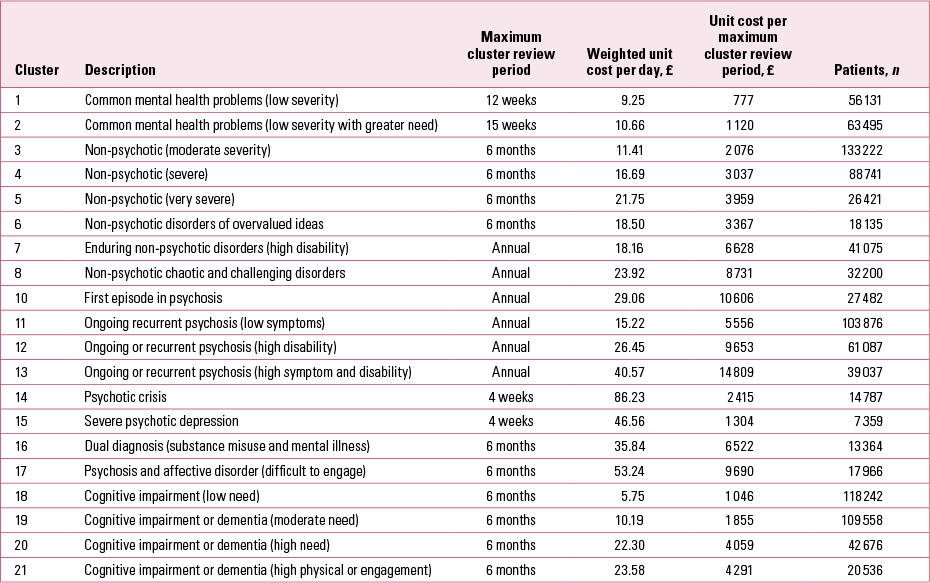
Although mental health services do not yet have a fixed tariff, these costs provide an indication of the data that will be used and the method that will be applied to generate the tariff.
Tariff
The tariff, which has been delayed, will be calculated annually as a weighted average of admitted and non-admitted care and initial assessments. The clusters are designed to be independent of setting, thus providing an incentive to treat people in the least restrictive but also the most cost-effective setting. This strengthens incentives to shape care pathways and to keep patients out of hospital, since providers will only be able to make a surplus if they minimise the more expensive inpatient costs relative to treating more patients in an out-patient setting.
Acute services had a decade of collecting and refining their costing processes before tariffs were introduced. For mental health the timescales of moving towards a national tariff have been considerably shorter and this may ultimately prove to be unwise with respect to the implementation of PbR. To date, there is evidence of very wide variation in costs at cluster level both within and across providers (Healthcare Financial Management Association 2012), suggesting that validation of the costing processes and consideration of the appropriateness of the clusters for costing purposes are required. There will inevitably be variation in data quality due to variations in provider efficiency, differences in service delivery models, the quality of services, the level of local authority input, as well as historical and procedural factors. There is also significant variation between providers in information technology (IT) systems, which adds complexity. Very few mental health providers, compared with acute providers, underpin the costing data with patient level information costing systems (PLICS) (PriceWaterhouseCoopers 2012), which can generate more detailed information on cost drivers (Reference Street and MaynardStreet 2007) and provide an important understanding of the relationship between cost and price. Setting prices on the basis of poor-quality cost data could significantly compromise PbR.
As there is a long time lag between submission of reference costs by providers and the publication of the tariff in acute services, a number of adjustments are made to the reference costs, including a general inflationary uplift (applied each year reflecting assumptions about price pressures), and a national efficiency requirement to encourage performance improvement (Reference Mannion, Marini and StreetMannion 2008) (giving a net tariff uplift which in recent years has resulted in negative real growth in tariff prices) (Table 3).
Tariff uplifts and efficiency requirements

The national tariff is adjusted by a market forces factor (MFF) to account for unavoidable differences in costs across the country (e.g. regional variation in wages and land and building costs). It generally costs more to run a hospital in London than it does in the north of England. The MFF is nationally determined and unique to each provider, and adds about 8% to the value of the tariff (Department of Health 2012a). A basic formula for the income of a provider is:

Summary
Before implementation in mental health services, it is essential that the three key building blocks of PbR (currency, reference costs and tariff) are thoroughly tested and that they are scrutinised by evaluators who are independent of the architects of the system. If the objective is to create a reimbursement system that incentivises implementation of national policy and strategies such as the Mental Health Strategy (Department of Health 2011a), and it is important that the system generates the right incentives for quality and service improvement alongside delivering efficiency improvements, then a thorough evaluation of the impact of PbR in mental health is needed.
What about quality?
It should be noted that ‘payment by results’ is something of a misnomer. Aside from a few initiatives such as best-practice tariffs (BPTs) to incentivise quality, payment is only for activity and does not take into account the undeniably important and rapidly developing area of routine outcome measurement in healthcare.Footnote ‡ With BPTs, an extra top-up payment is made for efficient provision of high-quality care (Department of Health 2010). For example, in 2011–2012 the base tariff for fragility hip fracture was £5323 (Department of Health 2012a: p. 17). An additional top-up BPT of £1335 was payable if care demonstrably complied with clinical characteristics of best practice, notably surgery within 36 hours of arrival in A&E and expert care under a consultant geriatrician with a multidisciplinary care team.
In acute physical care, the collection of patient-reported outcome measures (PROMs) data before and after certain elective procedures (such as unilateral hip replacements, knee replacements, groin hernia and varicose vein surgery) has been mandatory since 2009 (Department of Health 2009), but there has as yet been no move to incorporate these, or any other outcomes, routinely into PbR, although opportunities clearly exist to do so.
Work has been ongoing in mental healthcare to develop a range of quality indicators and outcome measures which can be used alongside the currency model to eventually enable payment linked to quality and outcomes (Department of Health 2011b). The intention is for clusters to be associated with quality and outcome measures:
-
• a set of quality indicators (e.g. the percentage of people on the care programme approach who have had an annual review; the percentage of patients with a valid ICD-10 diagnosis recorded; the completeness of ethnicity recording)
-
• clinician-rated outcome measures (CROMs) (based on HoNOS individual items and total scores using a four-factor model developed to show overall change and change specific to personal, emotional and social well-being and severe disturbance (Reference Speak and HaySpeak 2012))
-
• patient-reported outcome measures (PROMs) (e.g. the Warwick–Edinburgh Mental Well-being Scale (Reference Tennant, Hiller and FishwickTennant 2007))
-
• patient-reported experience measures (PREMs) (e.g. use of a ‘friends and family’ question); PREMs are likely to be derived from the Care Quality Commission’s (CQC’s) patient survey questions (Department of Health 2013).
The website of the Industry and Mental Health Service Collaborative (IMHSeC) (www.mednetconsult.co.uk/imhsec) provides guidance on care packages and best practice for each cluster, including National Institute for Health and Care Excellence (NICE) guidance. However, more evidence is still needed on how to operationalise high-quality services for care pathways. Quality payments can be incentivised through Commissioning for Quality and Innovation (CQUIN) funding. Ultimately, commissioners would pay in accordance with the number of people in a particular cluster with a given outcome and level of care quality.
Evidence on PbR in England
Although PbR has been operating for a decade for acute physical care in England, surprisingly few studies have evaluated its impact, perhaps because it is challenging to disentangle PbR from other policy reforms over this period (Reference O'Reilly, Busse and HakkinenO’Reilly 2012). A few studies (Reference Farrar, Yi and SuttonFarrar 2009, Reference Farrar, Chalkley and Yi2010) have used the fact that in the acute sector, PbR was rolled out first to foundation trusts. They have compared NHS trusts and foundation trusts in the period when PbR applied only to the latter. Farrar et al (2010) also took advantage of the fact that PbR was not introduced in Scotland and compared the performance of the English and Scottish systems to avoid the difficulty of assessing PbR against the background of other changes in the NHS.
What is the evidence for the impact of PbR in England to date? In short, it has generally had a positive influence on hospital activity and efficiency, with no deterioration in the quality of care provided (Reference Mason, Ward, Street, Busse, Geissler and QuentinMason 2011b). Among the areas that have been investigated are: efficiency; quality of care; volume of activity; administrative costs; upcoding; equity; and cross-subsidisation.
Efficiency
Evidence broadly supports the argument that PbR has been associated with reductions in unit costs through reductions in length of in-patient stay and increases in the proportion of day cases (Reference Farrar, Chalkley and YiFarrar 2010, Reference Farrar, Yi, Boyle, Mays, Dixon and Jones2011; Reference O'Reilly, Busse and HakkinenO’Reilly 2012).
Quality of care
For reductions in length of stay to be interpreted as increases in efficiency, it would require that quality remained unchanged or improved over the same period. Use of prospective payment systems may lead to ‘skimping’ on the quality and intensity of treatment, which may later result in readmission or higher mortality rates after discharge.
Reference Farrar, Yi and SuttonFarrar et al (2009) used administrative data to construct indicators of quality of hospital care: rates of in-hospital mortality, 30-day post-surgical mortality; and emergency readmissions. They found no change in quality after the introduction of PbR, although other unmeasured dimensions of quality of care may have been affected by it.
Although there is no direct evidence that fixed prices lead commissioners to focus on quality, the available evidence suggests that the focus of providers on cost reductions has not been to the detriment of quality (Reference Farrar, Sussex and YiFarrar 2007, Reference Farrar, Yi and Sutton2009; Audit Commission 2008a).
Volume of activity
There is evidence to support the hypothesis that the volume of activity did increase following the introduction of PbR (Reference Farrar, Sussex and YiFarrar 2007, Reference Farrar, Yi and Sutton2009; Audit Commission 2008a). However, it is not possible to disentangle the impact of the tariff from the effect of the rise in NHS funding during the same period, and ultimately other policies, such as waiting-time targets, may have been more important in driving growth in volumes (Reference Propper, Sutton and WhitnallPropper 2007).
Administrative costs
In terms of the costs of setting up and implementing the new funding system, evidence shows increased administrative costs per organisation of around £100 000 (Audit Commission 2005; Reference Mannion, Marini and StreetMannion 2006). This is due to higher costs of negotiation, data collection, monitoring and enforcement.
Given the administrative burden of managing the system, critics argue that PbR may tend to favour larger providers and squeeze out smaller providers such as local charities and third-sector organisations (Reference Grimwood, Edmonds and McGuinessGrimwood 2013), who play a crucial role in mental health service provision.
One administrative cost which will be particularly relevant to NHS mental health services is the time cost of grouping patients using the new clustering tool. Although clinical teams already familiar with HoNOS may not find the clustering a challenge, for others the task of gaining familiarity with the currency and building it into assessments will take time and have clinical resource implications.
Upcoding
The PbR tariff for HRGs ‘with complications’ is higher than for those ‘without complications’, suggesting a potential incentive for upcoding. Early evidence of ‘HRG creep’ suggested little deliberate upcoding, since coding errors were found to be random (Audit Commission 2008b). However, a comparison of HRG codings from English and Scottish hospitals before and after PbR was introduced in England found a higher rate of growth of spells in HRGs ‘with complications’ in the English data (Reference Farrar, Yi, Boyle, Mays, Dixon and JonesFarrar 2011).
In acute care the possibility to ‘game’ the system is potentially both easier and more difficult. On the one hand, coders record the diagnosis and procedure from the discharge notes, but do not directly allocate the HRGs. This is done automatically via an electronic algorithm on submission to the national data warehouse. Given that there are around 28 000 codes, upcoding would seem difficult, and therefore unlikely, en masse. On the other hand, the complexity of the system makes detection of upcoding also very difficult, making efforts to systematically upcode potentially easier and more appealing.
In mental health services, the incentives for something akin to ‘cluster creep’ are more direct. Scoring for the MHCT is performed by members of the clinical team rather than clinical coders. With only 21 clusters, it will soon become apparent to clinical teams what the monetary value is for each (see Table 2). There is a computerised algorithm to support decision-making, but this can still be manually overridden. Small changes to the HoNOS item score profiles will map through to the MHCT. Patients could be moved between clusters to directly influence provider revenue and the moves could be disguised as variations in clinical judgement. There will therefore need to be checks in place to audit the mechanics of the clustering process and the integrity of this coding pathway. This will be very difficult to perform routinely and with neutral impact, since it raises suspicion while aiming to remove deception, and commissioners will not readily be in a position to audit upcoding at individual patient level. A continual validation of the algorithm for the MHCT will also be needed to ensure a consistent grouping of patients with similar needs.
Equity of care
The evidence shows little support of concerns that PbR would lead to certain (more expensive) patients being ‘dumped’ or deterred from accessing care, whereas other (less expensive) patients were ‘cherry-picked’. Reference Cookson, Laudicella and Li DonniCookson et al (2012) found no change in socioeconomic equity of healthcare use between 2001–2002 and 2008–2009 for elective procedures, and some signs that equity might actually have improved slightly, since inpatient admission rates rose slightly faster in low-income areas than elsewhere. These results raise some optimism that socioeconomic disparities in healthcare utilisation may be impervious to changes in the provider reimbursement system.
Cross-subsidisation
If providers are able to decide the service mix, they might choose to treat more of the profitable HRGs, and even drop some that are less profitable. A recent study by PriceWaterhouseCoopers (2012) found that, although hospitals are potentially able to alter their service mix according to more profitable HRGs and divest themselves of loss-making services, this has in practice been mitigated by cross-subsidy from other sources of income, including non-tariff services (i.e. those services currently lying outside the scope of the PbR tariff, such as mental health). The report found that commissioners took funding away from mental healthcare because they found it difficult to assess what they could get for their money.
This report also showed that there is temporal volatility in tariffs, providing little basis for providers to invest/disinvest in profit- or loss-making services. It is rational for hospital managers to focus on the overall financial viability of the organisation as a whole and not concern themselves with particular ‘service lines’ that might be profit- or loss-making. Cross-subsidisation may help hospital managers prevent withdrawal of services that are seen as valuable to patients, particularly if there are dependencies between services. However, cross-subsidisation reduces or even negates incentive effects at the specialty level.
PriceWaterhouseCoopers concluded that the flaw in the system is that cost information underlying PbR is too weak. An implicit assumption of the national tariff is that all providers face the same cost structures and the same opportunities for making cost reductions (Reference Appleby, Harrison and HawkinsAppleby 2012). This has not been the case in practice, which means that the tariff is not an accurate price signal, as it is based on flawed costing data.
The PriceWaterhouseCoopers study found that PbR is increasingly ignored at a local level because the system has lost credibility. The Audit Commission (2008a) concluded similarly, finding that ‘the credibility of the tariff is an issue for primary and secondary clinicians alike’ (p. 46). Because of this lack of credibility, providers and commissioners are increasingly negotiating prices locally, and ‘working around’ the tariff by, for example, agreeing levels of activity within specified budgets – more or less the system in place before the introduction of PbR. Playing outside the PbR rules may be common, yet there has been little attempt by the Department of Health to assess the scale of non-compliance.
Conclusions
Advocates for the PbR approach suggest that it has the capacity to reform and improve public services by delivering more for less and rewarding only what works. Indeed, some of the evidence would appear to support this view, although a significant challenge remains how to determine what constitutes the ‘result’ for which services will be paid.
A report by the King’s Fund (Reference Appleby, Harrison and HawkinsAppleby 2012) questioned whether PbR is fit for purpose given changing priorities such as the need for the development of integrated care, the prevalence of long-term conditions and the changing economic environment. Among the key findings of the report was that:
-
• PbR is most suited to elective care and less suited to other services and that different services may require different payment systems
-
• the development of more comprehensive payments is needed
-
• the payment system needs to be underpinned by good information and analysis.
In January 2013, at a King’s Fund conference entitled ‘Payment Reform: Moving Beyond Payment by Results’, Emma Stanton, chief executive of Beacon UK, noted that while the acute sector is considering life beyond PbR, mental health services are still striving to adopt the PbR approach (E. Stanton, personal communication, 2013).
Yet in many respects, mental health is already ahead of the curve on some aspects of PbR compared with acute physical care.
First, mental health is already grappling with the challenge of incorporating quality metrics, including CROMs, PROMs and PREMs, into the clusters to transform ‘payment by activity’ into something potentially better, but technically more challenging, i.e. ‘payment by results’.
Second, mental health is considering a more comprehensive payment approach essentially by using, as a currency, care clusters that encompass a patient’s complete care pathway. So, for example, ‘severe psychotic depression’ captures the full care pathway, as opposed to, say, ‘major hip procedures category 2 for trauma with intermediate complications’, which will have separate payments for out-patient follow-up appointments or rehabilitation and thus does not incentivise joined-up care. Acute hospitals have strong incentives to maintain income and their tariffs lack the flexibility to support large-scale shifts in care from hospital to other settings. This might encourage more activity to be provided where prices can be negotiated outside of national tariff and may create the risk of fragmenting care pathways.
Yet for mental health the broader currency of case-mix clusters that encompass complete care pathways brings with it the problem of accurately costing such clusters, which will by design incorporate great variability in service elements. The establishing of accurate, reliable and meaningful cost data may become one of the biggest impediments to the implementation of PbR in mental healthcare. Acute services have had a decade of costing experience and yet cost data are still considered by some to be too weak (PriceWaterhouseCoopers 2012).
An important part of the new payment system will be good information and robust and replicable analysis that includes the capturing of clustering decisions and their costs, as well as patient-reported outcomes and quality metrics in the Mental Health Minimum Dataset (MHMDS) (Capita 2013). An evaluation is needed of the chosen currency, costs and resource implications, particularly in terms of the degree of variation within and between clusters and providers with respect to need, typical care pathways and case mix. This is challenging because diagnostic information in the MHMDS is currently poorly recorded by many providers. Gathering evidence through research and evaluation to support PbR development is endorsed by the custodians of the future system (NHS England 2013).
Although there are significant challenges in making the new system work in mental health services and some risks associated with doing so, an even greater risk is to do nothing. Furthermore, this is not an option: progress has begun. Mental health services that remain under block contracts risk disinvestment relative to services that have made it easier for commissioners to assess what they are spending their limited budgets on, particularly in the current financial climate.
MCQs
Select the single best option for each question stem
-
1 Payment by results is:
-
a a prospective funding system
-
b an activity-based funding system
-
c a case-mix-based funding system
-
d all of the above
-
e none of the above.
-
-
2 Payment by results potentially creates incentives for:
-
a underprovision of services
-
b overprovision of services
-
c duplication of services
-
d providing more expensive services
-
e longer length of in-patient stay.
-
-
3 Clusters are:
-
a case-mix-homogeneous groupings
-
b patient-need-based homogeneous groupings
-
c resource-use homogeneous groupings
-
d complexity homogeneous groupings
-
e all of the above.
-
-
4 Payment by results in acute medical services:
-
a was introduced to increase efficiency
-
b was introduced to focus negotiations between commissioners and providers on quality
-
c has not led to a measured change in quality
-
d has been associated with increased efficiency
-
e all of the above.
-
-
5 The tariff:
-
a is the currency for paying for healthcare services
-
b can show volatility, which can reduce its credibility
-
c should be set low enough by commissioners to encourage cost-saving behaviour
-
d is the total cost for all providers to produce a unit of activity
-
e all of the above.
-
MCQ answers

| 1 | d | 2 | a | 3 | e | 4 | e | 5 | b |
Acknowledgements
I am grateful for comments on an early draft from Anne Mason, Tim Croudace and Maria Goddard.




eLetters
No eLetters have been published for this article.