

Elaeis guineensis is the scientific name for the African oil palm, which is the highest-yielding crop in the worldFootnote 1 and produces the most widely traded vegetable oil: palm oil.Footnote 2 Today, a single cluster located in Malaysia and Indonesia produces the majority of global palm oil supplies; in 2014, these two developing economies accounted for 86 percent of global palm oil volumes and over 90 percent of its exports.Footnote 3 However, oil palm was not always the leading crop in the cluster; it was only in the mid-twentieth century when it became Southeast Asia’s major export commodity. Palm oil owes its modern-day success to the organizational structure that it inherited from the closely related natural rubber business. The rubber cluster emerged in Southeast Asia between 1880 and 1910, and was concentrated largely in the territory of the Malay Peninsula and on the island of Sumatra, which at the time were under British and Dutch colonial rule, respectively.
When the profitability of natural rubber started to decline after World War I, palm oil became the major rubber players’ best option for diversification.Footnote 4 The palm oil cluster thus resulted as a “spin-off” from the existing rubber organizational structure. Specifically, this article sheds light on the pivotal role of leading rubber players, agency houses, and plantation companies operating large estates (such as Guthrie, Harrison & Crosfield [H&C], Barlow, and Socfin) during the emergence of the palm oil cluster in the context of the first global economy.Footnote 5 These companies leveraged their existing rubber investment and infrastructure; eventually, a separate organizational structure with deputed institutions and internal logics developed around palm oil production.
Theoretical contributions on the role of agricultural commodities in integrating former peripheral territories into the global economy have so far investigated the spatial developments, mechanisms, and structures governing transnational systems of production.Footnote 6 Studies on imperialism have largely concentrated on the outcomes of the foreign presence on the national development of colonial territories and have triggered much debateFootnote 7 related to the long-term impact of foreign trade on countries’ abilities to access and integrate into global markets. In contrast, economic geography and business studies have pointed out the relevance of clusters as products of local singularity for enhancing national competitiveness.Footnote 8
The theoretical discussion on clusters is inextricably linked to the concept of space in economics. This scholarship revives Marshall’s argument of agglomeration economies; in a situation of accessible and unrelenting demand, the geographical concentration of production in one specific location reduces costs through increased specialization.Footnote 9 Since the early 1990s, numerous scholarly publications in different fields of the social sciences, from economic geography, to sociology, to business history, and to geographical economics have revisited the study of regional or local systems of production, labeling the phenomenon in different ways: industrial districts,Footnote 10 innovative milieux,Footnote 11 and new economic spaces.Footnote 12 In his analysis of nations’ competitiveness, Porter distills the concept of the “cluster,” defined as a “geographically proximate group of interconnected companies and associated institutions in a particular field, linked by commonalities and complementarities.”Footnote 13 Despite the diversity of approaches and purposes, these different traditions share the underlying assumption that geographical concentration favors economic growth.Footnote 14 Introducing clusters as competitive tools by which nations can succeed in international markets, Porter was credited for positioning the discussion on location-related advantages in a comparative international perspective. However, some critics have argued that a major shortcoming of Porter’s model is that it overestimates local advantages while disregarding the role of global linkages in explaining clusters’ success.Footnote 15 Likewise, Zeitlin, as well as MacKinnon, Cumbers, and Chapman, second this observation with regard to the work on industrial districts, and economic regions, respectively, by pointing out that both lines of research suffer from “self-containment.”Footnote 16 As a partial correction of this, the global commodity chain (GCC) framework identifies transnational systems of production as relevant sources of cluster existence and upgrade, especially in developing countries.Footnote 17 Interestingly, for this study, the GCC literature shows that extensive foreign investment can be at the root of the geographical concentration of industrial activity in peripheral economies.Footnote 18 However, since the GCC model firmly favors structure over agency and focuses on nonmarket relationships among firms, it obscures the impact of local contingency and the dynamics of interaction among key individuals within the cluster ecosystem.Footnote 19 Similarly, while accepting the significance of social dynamics within clusters, Porter’s analysis does not engage in a deeper understanding of how actors’ interactions affect cluster evolution.
The existing scholarship on the topic of cluster emergence, with occasional exceptions,Footnote 20 is largely centered on the secondary and, to a lesser extent, tertiary sectors in developed economies.Footnote 21 This makes the present study one of the few contributions to the literature on cluster emergence that explicitly addresses the primary sector and less developed economies through historical methods.Footnote 22 Two recent studies offer in-depth reviews of the available contributions on cluster emergence. Through a taxonomy of 159 studies, Brenner and Mühlig outline three phases that lead to cluster emergence: (1) prerequisites (namely a list of seventeen factor endowments, such as quality of labor, industrial structure, etc.); (2) triggering events (i.e., a network or community of entrepreneurs); and (3) self-augmenting processes (positive externalities and agglomeration economies). In their edited volume, Fornahl, Henn, and MenzelFootnote 23 perform a similar exercise and identify three main modalities of cluster emergence: (1) from accidents or specific attributes of the local context, successively informing path-dependent trajectories; (2) as endogenous collaboration within a smaller concentration of firms, developing a specific capability or asset either contextually or after the birth of the cluster; and (3) as spin-offs from industries or firms that have developed exceptional competences.Footnote 24 These studies make a case for the existence of a lifecycle in the process of industrial concentration.Footnote 25 Specifically, they point out that cluster development is path-dependent and that clusters may emerge from “existing technological trajectories or industrial structures,” which lead to the spin-off of specialized clusters. Despite efforts to generalize and categorize, studies fail to provide a clear-cut picture of how emergence works as a process. Contributions from management studies use static variables to evaluate specific stages of cluster emergence and thus do not capture how these variables interrelate and overlap in different time periods. This is a major shortcoming. For instance, Brenner and Mühlig include “tradition or historical preconditions” as variables to measure the prerequisites of clusters, but “historical events” also return as triggering factors.Footnote 26 In fact, studies on clusters frequently mention the role of “historical roots,”Footnote 27 or find that “random historical effects”Footnote 28 contribute to geographical clustering. In line with Brenner and Mühlig, Porter mentions “historical circumstances” among other sources of cluster emergence (for example, unusual and sophisticated demand, prior existence of supplier industries, and isolated innovative companies).Footnote 29
The key problem with this literature is that it considers history as an exogenous variable rather than as the result of actors’ interactions and decisions, and it assumes that cluster development is independent from its historical context.Footnote 30 Conversely, if emergence is conceived not as a static outcome but as circular causality,Footnote 31 in which different elements at the root of clusters (such as interfirm cooperation, access to specific resources, or demand) are not fixed but rather change and interrelate through time,Footnote 32 it becomes easier to interpret it as a process embedded in the strategies and evolution of selected companies.
Overall, cluster scholarship has so far underplayed the role of nonlocal linkages and individual actors in cluster development. Meanwhile, the few cluster studies based on historical sources find that individual action and continuous interaction at the micro level are crucial elements accompanying the cluster through its evolution.Footnote 33 This makes the case for linking business history with cluster research and for using historical archives in studies of industrial emergence.Footnote 34
A central claim of this article is that interaction among foreign (nonnative) traders and trading houses’ product specialization propelled the emergence of one of the most enduring regional clusters serving the global economy. I apply theory and methods from business and colonial history to analyze the contextual decisions of the major players involved in the regional plantation business that led to the birth of the palm oil cluster.
Several business historians have focused on the roots of international trade, investigating merchants’ activities in different corners of the world during colonial times (for an overview of the trading house literature, see Table 1).Footnote 35 Casson’s theory of the trading firm provides a formalized framework, which helps connect business history with cluster research.Footnote 36 Although the theory offers only a partial elaboration of the geographical and spatial dimensions of these firms, it identifies a recurrent progression in the activities of trading companies, which consists of four major elements:
1. Multinational trading houses, which are firms that carry out market-making intermediation (exporting, shipping, and importing) across different countries. Trading houses often manage a wide range of products and feature high organizational flexibility.
2. Vertical integration, which is used to ensure control over quality and/or volume expansion as the trading firm integrates upstream into production. This results in economies of scale and scope, increased size, and profitability.
3. Horizontal integration, which leads to increased profitability and concentration when competition becomes fiercer (e.g., the price of the commodity drops, reducing the industry’s margins).
4. Diversification, which is a result of vertical and horizontal integration. Firms that increase in size become more vulnerable to market fluctuations, and diversification options shrink that vulnerability.
Major Business History contributions on trading houses
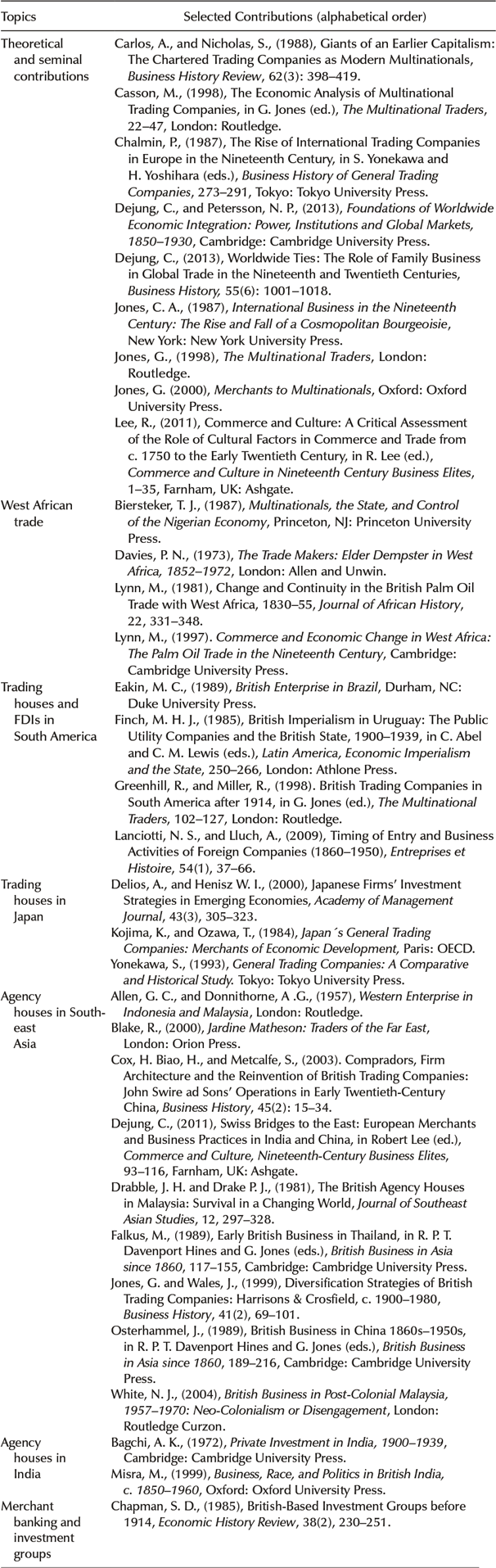
Source: Author’s compilation.
Finally, according to Casson, trading houses risk fast decline when their core commercial activities become routine, product requirements grow in sophistication, volumes approach mass production, and diversification opportunities become limited. In case of strong price volatility, the loss of flexibility in the organizational design can be fatal if the company fails to specialize and strengthen its technical expertise.Footnote 37 Thus, the trading firm’s ability to diversify and adapt to a more specialized core business, while growing in size, may reverse its decline.
In light of this, I examine the relationship between the activities of the trading firm, as described in Casson’s theory, and the process of cluster emergence. I argue that the evolution of the trading firm mirrored the emergence of the cluster, and I show that the palm oil (previously rubber) cluster in colonial Southeast Asia followed the same development path of the trading firm, transforming diversified merchant houses into rubber plantation companies. The birth of the palm oil cluster was pursued as a diversification strategy when rubber players were faced with the odds of overspecialization.
The historical analysis sheds light on the role of agents within the trading houses and describes the formation of network effects and agglomeration economies as outcomes of continuous interaction among traders and planters. Furthermore, the palm oil case illustrates how a foreign-invested agricultural cluster helped bridge the institutional gaps of “less developed economies” and favored their integration into global markets. Given that the merchants were themselves expatriates within a global network, through their activity they connected the cluster location with the international markets.
The article is based on primary sources of agency houses and the colonial plantation economy between the late nineteenth century and the 1930s. I consulted sources at seven different archives in the United Kingdom.Footnote 38 Moreover, the analysis draws on the secondary literature on the evolution of merchant firms, plantation economy in tropical areas, and the early development of palm oil and natural rubber production in Southeast Asia.
The second section focuses on the traders and trading houses operating in Malaya and Dutch East Indies (DEI) and shows that their activities set the scene for the emergence of both the rubber and the palm oil clusters. The third section explains the formation of the rubber cluster through vertical and horizontal integration of trading firms in the decades prior to the Great War. The fourth section analyzes the shift to palm oil as a response to changing demand patterns in the interwar period and the synergies with the rubber business. The final section presents the findings and concludes.
Traders’ Interaction at the Root of the Rubber and Palm Oil Cluster
Traders were crucial actors in the expansion of the plantation-based economy in colonial territories. British trading houses first introduced palm and palm kernel oil from West Africa to European markets in the early nineteenth century.Footnote 39 Following the price increases and numerous scientific achievements that occurred in the first half of the century,Footnote 40 palm oil products started to be used as industrial lubricants and components for the production of candles, soaps, and, eventually, margarine. In the 1850s, when palm oil prices experienced a downward trend,Footnote 41 the oil palm seeds had just reached the fertile soils of Southeast Asia, thanks to the activity of Dutch and British traders and the support of agricultural institutions in the colonial territories, such as the Botanic Gardens.Footnote 42 Although planters in the region were seeking new alternatives to diversify from coffee, the major export crop whose demand was stagnating, the oil palm initially spread only as an ornamental crop. Some minor attempts of domestication resulted in fiascosFootnote 43 and were not pursued further as palm oil prices continued to plummet at the end of nineteenth century.Footnote 44
Meanwhile, natural rubber from South America made its entry in the region. It soon revealed itself a game-changer for the whole local plantation economy and led to the emergence of a regional agricultural cluster. In the 1880s, the Botanic Gardens of Singapore received the first seedlings of what was alleged to be the best rubber variety, Hevea Brasiliensis, which the British adventurer Henry Wickham had smuggled from the Amazon region around Manaus via London.Footnote 45
Between 1870 and 1900, the British formal and informal empire significantly broadened in several locations of the global SouthFootnote 46 through the expansion of commercial activities and the financing of infrastructure for primary production. The geography of the empire featured a net of hubs for global trade,Footnote 47 hosting dense trading communities comprising ethnically heterogeneous and thick networks of families, which Charles Jones has labeled as “cosmopolitan bourgeoisie.”Footnote 48
After the abolition of the East India Company’s monopoly in 1813, a vast array of unincorporated individual or partnership concerns grew out from family and friendship connections among this community of merchants, specializing in distant trade across the empire (see Table 1).Footnote 49 By setting their headquarters in major European ports such as London and Liverpool in the United Kingdom, Hamburg in Germany, and Le Havre in France, these cosmopolitan bourgeoisie could access crucial information on demand (for example, volumes and product specifications),Footnote 50 while leveraging important complementary networks in banking, shipping, and highly skilled human resources to expand their activities abroad.Footnote 51 Finally, due to their presence in multiple trading locations, these merchants were in a privileged position to transfer inputs such as crops, capital, and labor from less politically stable business environments to more suitable colonial locations. Particularly, Singapore, after it became a crown colony in 1824, emerged as a global city within the British Empire and as a major trading hub where Western merchant firms established their regional branches and to which colonial institutions channeled knowledge and capital.Footnote 52
On the other hand, nonlocal Asian (often Chinese and, to a lesser extent, Indian and Hadhrami Arab)Footnote 53 traders controlled the regional trading routes from the major Southeast Asian ports, and especially Singapore. The presence of a large community of Chinese merchants operating in both British Malaya and DEI was critical to ensure Southeast Asia’s dominance in the export of tropical produce vis-à-vis other competitor locations. Unlike Brazil or West Africa, where indigenous middlemen managed local trade, in Southeast Asia commercial activity had been in the hands of outsiders since the fourteenth century. Chinese merchants were “middlemen in Singapore’s middleman economy.”Footnote 54 As such, they connected Southeast Asia’s markets with China’s, became involved in credit activities, subsequently integrated vertically into production in remote areas, and supported the rapid development of the tin industry and the cultivation of crops such as gambier, tapioca, and pepper in the early nineteenth century.
When Western traders established themselves in the Strait Settlements—Singapore, Dinding, Penang, and Malacca (see Figure 1)—these Chinese merchants represented their first natural interlocutors.Footnote 55 Due to their access to regional markets, the Chinese operated on credit as distributors of Western manufactured products in the region in exchange for raw material in bulk. Thus, securing sound contacts within the Chinese community was considered a priority for anyone who intended to run a business in the Eastern colonies, so much so that Western merchants competed (and often bankrupted themselves) to offer them the best credit terms.Footnote 56
Map of the Malay Peninsula, 1911.
Source: Papers collected in 1989 by Guy Nickalls for Great Enterprise: A History of Harrisons and Crosfield Ltd., including some original documents, ca. 1948–80, copies of press cuttings, and notes from company employees, CLC/B/112/MS37394/007, London Metropolitan Archives.

While Western traders tapped into Asian entrepreneurial dynamism, the Asian business community came to rely increasingly on Western-financed infrastructure, even for intra-Asian transactions.Footnote 57 This interaction among different groups of nonlocal traders, and the introduction of increasingly specialized services in support of the plantation business, strengthened Singapore’s role of regional interaction pole.Footnote 58 By linking traders’ activities across the Straits, Singapore brought together two formally distinct colonial territories, British Malaya and DEI, defining the geographical reach of the emerging cluster and ensuring enhanced cohesion. Western traders supplied capital inputs (seeds, machinery, and finance) and educated human resources (estate managers and engineers) who acted primarily as wholesalers to European markets. They also operated as brokers and agents for the vast community of foreign planters. Among them were young Eric MacFadyen and Herbert Brett, who would later become key employees of the leading firm H&C, and other British and Scottish owners of large estates, such as H. C. Rendle; T. W. Bailey and E. V. Carey; E. B. Skinnier (who would be the future chairman of the Rubber Growers’ Association [RGA] in the 1920s); and the Kindersley Brothers (who allegedly planted the very first rubber lot on their Selangor estates).Footnote 59
Conversely, Chinese brokers controlled the inflow of low-skilled tappers and harvesters from the surrounding territories, and operated as retailers by channeling trade flows from rural areas. The most powerful Chinese businessmen in Singapore at the turn of the century were two Malacca-born men, Tat Chin Seng (who was active in shipping and tropical planting) and Lee Keng Liat (who had a large interest in tapioca); the Singaporean Tat Tock Seng; and two self-made men from China, Yap Ah Loy and Loke Yew (who had built huge fortunes through tin and tapioca).Footnote 60
As bulk buyers and labor brokers across the region, Chinese merchants contributed to the early expansion of plantations by integrating vertically in production themselves and by distributing seeds and supporting smallholders’ activity in East Sumatra.Footnote 61 Furthermore, Chinese traders were dominant in the “coolie trade,” which involved providing indentured labor from South China, and later from Java, to the foreign-owned plantations in Malaya and Sumatra.Footnote 62 Although labor shortages remained a leitmotiv of the agricultural sector in this region too, the greater availability of labor resources relative to other tropical areas such as Africa or South America was a major factor attracting European investors and planters to Southeast Asia.Footnote 63 After 1877 the British established three colonial Protectorates of Chinese Immigrants—in Singapore, Penang, and Malacca—with the purpose of regulating the increasing flow of migrants.Footnote 64 At the turn of the century, the rubber boom boosted demand for unskilled labor so much that, between 1881 and 1932, more than one hundred thousand coolies per year reached Singapore from China and were directed to the plantations in the surrounding areas.Footnote 65 As a consequence of the increasing volumes traded,Footnote 66 the number of Indian, Chinese, and Western merchant houses more than doubled in Singapore, and between 1870 and 1915, the entrepôt city overtook the other two commercial centers of the region, Malacca and Penang, establishing itself as the major regional port for rubber.Footnote 67
In total, the extensive partnership—which almost became a mutual dependency—between these two communities of foreign merchants was vital for the emergence of the rubber—and later palm oil—cluster. Linking Asian locations with European demand, Western traders scaled up the existing Chinese commercial activity from a regional to a global scope. Furthermore, being outsiders, Chinese and Western merchants performed the function of transnational “linkers,” integrating British Malaya and DEI with both regional and global markets via Singapore.Footnote 68
Agency Houses Fund the Rubber Cluster: Vertical Integration and Concentration between 1905 and the 1920s
World demand for natural rubber more than doubled, from 20,000 tons in 1890 to 52,500 tons in 1900. At the turn of the century, Brazil and West Africa accounted for almost the entire world’s supply of the crop, with Southeast Asia representing only 5 percent of global output until 1907.Footnote 69 Between 1903 and 1907, price increases triggered a rather confused and disorganized speculative expansion of rubber estates, which, in turn, sparked a process of backward integration of existing trading activity.Footnote 70 Until 1908, global demand for rubber grew at a rate of 5.5 percent per year, followed by double-digit increases averaging over 16 percent per year until 1917.Footnote 71
Until 1905 large portions of investment in rubber had come from colonial planters previously operating in Ceylon or in the region. Faced with the escalation in demand, they found themselves lacking the financial and organizational ability to support a quick expansion. Therefore, in the first decade of the century, trading firms brokering the commodity started to support the opening of new rubber estates by sourcing financial capital from their network of bankers, directly participating in the floating of estate companies in Europe, and supplying managerial and organizational expertise to the planters in the field. In doing so, several of these firms retained equity shares in the new plantation ventures, both as a speculative investment and as a reputational signal to the financial institutions funding the expansion.
The trading firms that provided agency services to the major rubber planters were the ones destined for longstanding success: Jim Allison, of Barlow Brothers, had links with the planter Tom Bailey; Guthrie’s John Anderson used the firm’s reputation in Singapore and its contacts with powerful Chinese, such as Loke Yew, to consolidate agency in and control of the rubber estates. The Boustead Brothers—under the leadership of Edgar Money, was one of the first in Ceylon either to convert plantations from tea to rubber or add rubber to their tea investment—quickly expanded in Malaya, employing the planter Eric MacFadyen as director.Footnote 72 Finally, H&C, one of the major tea traders in Ceylon, entered the Malayan scene because of Arthur Lampard’s, its director, enthusiasm for rubber and the advice of the experienced planter Herbert Brett.Footnote 73 Simultaneously, Chinese brokers were encouraging the development of indigenous smallholdings in both Malaya and DEI, which would reach half the region’s agricultural acreage in the 1920s.Footnote 74 Taking advantage of the infrastructure available to the estates, Chinese merchants distributed rubber seedlings to ethnic Chinese farmers or former indentured labor occupying peripheral land and provided them with logistics and marketing services via Singapore.Footnote 75 This spillover effect furnished the industry with regional cohesion and bolstered the emergence of the cluster.
In line with Casson’s theory, the process of backward integration of trading concerns into production marked the transformation of trading houses from private partnerships, where they had been termed “merchant houses,” into joint-stock companies,Footnote 76 also called “agency houses,” multinational businesses, trading specialized agency, or managerial services.Footnote 77 From 1904, Guthrie, H&C, Thomas Barlow & Brothers, Boustead Brothers, Edward Boustead, Cumberbatch & Co., and others were frontrunners in this field (Table 2). Due to their liaisons within the UK banking and shipping industries, these companies were in a strong position financially and logistically to support the expansion of acreage needed to match the growing Western demand.Footnote 78 Moreover, by acquiring stakes in the plantations, these companies could monitor the mechanism of price formation and stem profit volatility through cost control. External financing went hand in hand with vertical integration, as these firms were even better able to leverage their reputations to secure creditors when they showed a commitment to the direct management of the estates. As reported in the financial press: “The fact that firms of repute such as Harrison & Crosfield were prepared to assume the responsibility of effectively controlling the management of the estates created a feeling of confidence that has not been misplaced.”Footnote 79 In 1903 H&C participated in the flotation of Anglo-Malay Rubber & Co., and of Petaling Rubber Estates Syndicate shortly thereafter. In the same year, H&C’s major rival, Guthrie, financed the acquisition of Linggi Plantations and Selangor Rubber Company, both in the Malay Peninsula.Footnote 80
Major Foreign Players in the Emergence of Rubber and Palm Oil Cluster (1880–1930)
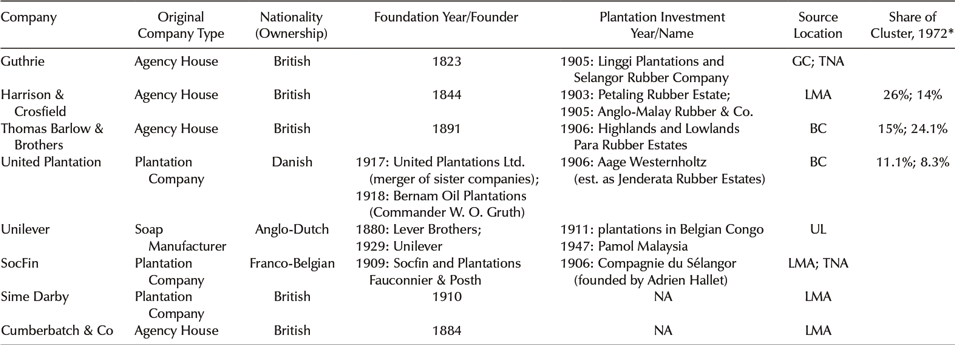
Note: BC = Barlow Collection; GC = Guthrie Collection; LMA = London Metropolitan Archives; TNA = The National Archives; UL = Unilever Archives.
* Share of acres and capital in Malaysia and Indonesia, CLC/B/MS37394/004, LMA. Although the table refers to the period 1880-1930, the values from 1972 document the long-lasting persistence of selected players within the cluster.
Sources: Pye and Bhattacharya, Palm Oil Controversy, 25–26; Tate, RGA History, 205–220; papers collected by Guy Nickalls in 1989 for Great Enterprise, Rubber Producing Companies Zorn and Leigh-Hunt’s 1972 List, CLC/B/112/MS37394/004, LMA; Linggi Plantation, GC/17, GC; Business Papers and Correspondence, 1908–1930, TB/199, BC.
In 1908 Dunlop’s introduction of the motorcar tire came alongside the expansion of automotive production in the United States, which accounted for more than 40 percent of global demand for rubber.Footnote 81 Price increases further fueled plantation mania, widely known as the “rubber boom,” through 1909 and 1910, when prices reached 12/9 USD/lb., almost doubling the 1905 level. H&C’s Petaling dividend grew 165 percent in 1909, and twice that in 1910. Rubber returns were even higher for Guthrie’s ventures, both with Linggi and with Selangor, with 1909 yielding returns of 165 percent and 287.5 percent, respectively, and almost doubling those figures in the following year.Footnote 82
Over the subsequent decade, the plantation system underwent significant reorganization. The region transformed into the world’s foremost rubber supplier and brought the formation of the export cluster, which worked as a catalyst that attracted planters and investors from all over the world. Once the speculative sprout abated, smaller trading players found themselves unable to cope with the severe price declines starting in 1911, and the industry was quickly consolidated into the hands of the biggest agency houses. Ownership concentration followed vertical integration, and few agency houses reorganized into large concerns managing plantation estates. Although several of them were also diversifying geographically into different business lines, their exposure in Malaya and DEI became increasingly specialized in rubber.Footnote 83
Despite the presence of a limited number of hardened competitors rushing to Singapore (such as Japanese traders),Footnote 84 the U.S. Rubber Company,Footnote 85 and giant manufacturers (e.g., Dunlop, Goodyear, and Firestone), by the early 1920s a few large British agency houses were in control of the lion’s share of the rubber acreage. According to Tate: “Of the 18 agencies with five or more client sterling companies in 1917, the big five merchant houses (…) controlled 2/5 of all the companies concerned, along with similar percentages for the total area owned and the capital investment in them”.Footnote 86 Above all, H&C and Guthrie rose as dominant players, partially as a consequence of their mutual hatred, yielding a rivalry that endured for more than fifty years and resulted in an investment race.Footnote 87
Despite these internal frictions, during this phase of consolidation, these cluster players also grouped several of their rubber interests in the form of investment trusts,Footnote 88 which had the effect of funneling the industry even further into the hands of a restricted nexus of businessmen (and colonial officers) through a maze of interlocked and interlinked financial ties. The second decade of the century saw these companies expanding plantations further, especially toward Sumatra and, eventually, Borneo. H&C had already opened a branch in Medan (Sumatra) in 1906 and in Java in 1911, while Guthrie opened in Medan in 1913.Footnote 89 By 1911 Sumatra already boasted almost two hundred rubber companies; 44 percent of them were registered in London under these major agencies and accounted for 70 percent of the estate land.Footnote 90 By the end of World War I, both H&C and Guthrie were involved in more than forty plantation companies, while smaller players such as Barlow or Boustead Brothers participated with different ownership stakes, with between ten and twenty companies each.Footnote 91
The ongoing concentration triggered the creation of industrial associations. In 1907 a preliminary meeting of thirty rubber agencies operating in Southeast Asia took place in London, and this, in practice, sealed the foundation of the RGA.Footnote 92 Among those present were Herbert Brett for H&C, L. T. Boustead of Boustead Brothers, and several other representatives of the most prominent rubber interests in Ceylon and Malaya.Footnote 93 The formation of the RGA represented a watershed moment in cluster emergence, whereby key participants formalized the existence of an interest group; outlined a long-term business strategy; and started collective negotiations with external stakeholders, such as the colonial government. In 1913 the RGA agreed to maintain a presence equaling one-third of the board at the Rubber Trade Association, the newly formed association of brokers and dealers in London. The same year, H&C’s Arthur Lampard supported the creation of the International Association for Rubber Cultivation in DEI to integrate the RGA with the combined rubber interests outside of Malaya.Footnote 94 Although the RGA was widely considered the voice of British agents and failed to represent a substantial part of the industry—namely non-British Western players and the large Asian interestFootnote 95 —its main advantage was that it offered an institutional umbrella to the inherently fragmented plantation industry. The RGA also held close connections with colonial officers, for example with Frank Swettenham and William Treacher, the first two resident-general officers of the Federated Malay States, who had obtained positions in the industry after serving for the colonial administration.Footnote 96 Thanks to these connections, the RGA became the main interlocutor with different industry stakeholders, to the extent that matters of marketing, promotion, pricing, and taxation became the bread and butter of its daily operations.Footnote 97 The RGA was also the prime driver for joint research efforts. During the 1910s, the RGA advocated the introduction of publicly funded research stations and the coordination of existing research projects across the empire.Footnote 98 These efforts materialized in the interwar period with the formation of the Rubber Research Institute in 1926.
The RGA in London represented the core of the cluster’s global institutional linkages, with Singapore acting as a detached geographical pivot connecting production and services through a formal institutional apparatus. Through the creation of industry associations such as the RGA, agency houses helped construct the international profile for the cluster vis-à-vis outsiders, namely global (mostly American) buyers. At the same time, the RGA lobbied for a smoother connection between different parts of the value chain. It provided the plantation economy with a service and infrastructural platform, which allowed the cluster to stretch from Singapore to the plantations in the surrounding areas. By 1920 the total combined rubber acreage for Malaya and DEI was about 3.5 million acres, which represented 80 percent of the world’s supplies, a quarter of which were auctioned through Singapore.Footnote 99 After trading firms became more involved in production activities, Singapore gradually became the main reference site for the cluster players, attracting increasingly specialized services and highly skilled specialists. Simultaneously, as happened in the case of Ceylon, similar players who were attracted to the Eastern colonies diminished the competitiveness of other rubber locations, whereby the remaining agents struggled to access the specialized knowledge and services needed to maintain a foothold in the international markets.
Palm Oil and Portfolio Diversification from the 1920s Onward
From the 1920s, agency houses’ diversification strategies initiated the gradual transformation of the rubber cluster into palm oil, whose production would escalate only after World War II. The introduction of palm oil as an alternative to rubber, and its rapid development as a global export commodity, proves that in the region the trading firms had transformed from diversified, short-term-oriented concerns into cluster players. Following Casson’s model, these companies avoided decline by adapting the plantation business model. However, the increased rigidity that ensued from rubber specialization narrowed their range of diversification options.
In the early 1920s, global demand for rubber was sluggish, prices plummeted, and the rapid expansion wiped out most of the other crops that had made the region its fortune before the turn of the century. Major price fluctuations stoked massive speculation on rubber, reinforcing its volatility through the 1920s.Footnote 100 Further, big players started to perceive smallholders’ competition as a rising threat.Footnote 101 Also in the early 1920s, rubber produced in Malayan and Sumatran smallholdingsFootnote 102 buttressed the downward trend in international prices, pushing Britain to support the introduction of a restriction plan—the Stevenson Scheme—to stabilize prices between 1924 and 1928.Footnote 103 The policy aimed to improve Britain’s debt position after WWI, but it seriously concerned U.S. buyers, who represented about 75 percent of global demand for rubber at the time.Footnote 104 Given Britain’s stubbornness in defending its quasi-monopoly, the need to manufacture a synthetic version of rubber became a pressing one for Russia and the United States, which together represented the majority of world demand.Footnote 105
On the producer side, the organizational structure, which resulted from the vertical integration and acreage expansion in the 1910s, turned into a challenge against a backdrop of depressed demand. This was especially true for Malaya, where rubber occupied the majority of cultivated land. Overdependence on one source of revenue pushed the industry to start looking for diversification strategies.Footnote 106 However, agency houses’ regional agricultural activities had become so specialized around rubber that the existing practices, agronomic knowledge, and coordinating institutions could be adapted only to a limited range of crops. The perennial problem of price volatility initially triggered the need to make production more efficient, which resulted in the increasing application of scientific methods to solve problems connected to growing and manufacturing rubber. From the end of the boom, European experts employed private companies to research efforts; these included industry associations, such as the HAPM and AVROSFootnote 107 research stations in East Sumatra, and colonial institutions, such as the Agricultural Department of Malaya and the Botanical Gardens in Singapore and Buitenzorg (eventually known as Bogor). Until the 1920s, most research activity had been focused on rubber, but during the post-WWI slump, advances in the edible oil market and several technological breakthroughs in oil processing made the production of edible oils increasingly attractive.Footnote 108 The cluster organization, already in place for rubber, could be easily repurposed for the domestication of the oil palm as an estate crop. Serendipitously, the oil palm also showcased a series of advantages over the Hevea tree. First, it flourished well in the local volcanic soil and was easier to develop because it took only three years to mature as compared to seven years for rubber trees. Second, it could grow only in a much narrower latitude span, which reinforced the region’s comparative advantage and thus reduced the number of competitor locations. Third, the oil palm was introduced directly as an estate (and European) crop, which provided a solution to rubber companies’ most pressing problem of smallholder competition. Indeed, given the need to process the fruit bunches within forty-eight hours of harvesting to contain oil acidity, the plantation lots needed to be close to mill facilities, which posed high fixed costs, favoring large-scale production over smallholding.
Finally, palm oil products represented a suitable alternative to rubber not just at the plantation level but also along its global supply chain. As palm oil products required similar bulking and shipping infrastructure to that used for liquid latex, maritime companies could leverage their expertise in rubber and easily repurpose existing facilities to store and transport palm oil.Footnote 109
Similarly, at the plantation level, new palm oil ventures could leverage low-skilled labor already working on plantations as well as a cohesive network of experienced agronomists and cutting-edge research infrastructure. In the early 1920s, The Planter, the leading publication on regional plantation agriculture, started publishing agronomists’ contributions on the potential of oil palm.Footnote 110 The pioneers of oil palm domestication in the region were indeed a handful of major rubber players. In 1911, following some investments in rubber, the Belgian agronomist and plantation entrepreneur Adrian Hallet launched experimental oil palm estates in the Deli region of Sumatra.Footnote 111 In the same period, Hallet supported two French planters, Henry Facounnier and Franck Posth, by floating a company for their coconut estate in Selangor, where the first Malayan commercial cultivation of the oil palm began in 1917.Footnote 112 During the 1910s, the Hallet Group, which merged with Société Financière des Coutchoux (Socfin) in 1919, was at the forefront of oil palm domestication, especially in Sumatra.Footnote 113 Thanks to its expertise in rubber and knowledge of oil palms acquired in Belgian Congo, the group, under the leadership of Hallet, and later his nephew, Robert Michaux, managed to lead a quick expansion of the new crop in both Malaya and DEI. In the 1920s, Socfin set up the first palm oil bulk shipping station in Belawan, East Sumatra. By the early 1930s, the company controlled more than one-third of the region’s oil palm acreage, and by 1939 it accounted for an estimated 16 percent of global exports of palm oil products. Of the agency houses based in Malaya, Guthrie’s was the first to plant oil palms in a group of estates (Linggi Plantations, United Sua Betong Rubber Estates, and Malacca Rubber Plantations) around Kluang in Johor. In 1930 Guthrie merged these three estates by creating Oil Palms of Malaya,Footnote 114 and in 1933 it organized its own palm oil bulk shipping facility in Singapore.Footnote 115 In both territories, producers were organized into selling pools (the Sumatran Pool and the Malayan Palm Oil Pool), and, by the end of the decade, Socfin and Guthrie together controlled more than 70 percent of the nascent Southeast Asian industry, accounting for more than 50 percent of global supplies. Before WWII, Sumatran estates, mostly controlled by Socfin, represented the core of the regional palm oil exports, with acreage between 24,000 and 31,000 hectares in 1925 and around 100,000 hectares in 1940Footnote 116; meanwhile, in British Malaya, expansion had been steady but remained more timid, from less than 10,000 hectares in 1922 to about 46,000 hectares in 1940.Footnote 117
In summary, at the dawn of World War II, an independent palm oil cluster had spun off from the rubber cluster, displaying its own facilities and institutions, although in an embryonic form. However, through the interwar period and up to the end of WWII, the scope of the palm oil business remained negligible as compared with rubber, and its fate was still uncertain. In a 1928 letter to Lady Anderson, a major shareholder of Guthrie, the firm’s director, John Hay, explained:
We cannot afford to lock up our own capital in that direction [palm oil production] as it necessitates the provision of a very large sum. (…) [W]e are however practically the pioneers in Malaya of the cultivation of this crop on a large scale. (…) [W]e have realized for some time back the weakness of depending too much on one product and we are therefore carrying on investigations in all sorts of alternatives.Footnote 118
Thus, with the exception of these selected companies operating in palm oil since the early 1920s,Footnote 119 Malayan rubber players were initially wary of entering the business on a large scale, which supported the preeminence of rubber through the interwar period.Footnote 120
First, as an export commodity, palm oil competed with several substitute oils, which yielded tough price competition. Second, a major cause of concern was the monopsonistic character of demand, as the soap manufacturer Lever Brothers accounted for the majority of global purchases.Footnote 121 This was the main reason for H&C’s delayed entry into the market. The firm’s chairman, Eric Miller, was skeptical if palm oil was well known; he considered it foolish to invest in vegetable oils while Unilever dominated the buyer-side of the market.Footnote 122 Thus, on palm oil, H&C initially lagged behind its archrival Guthrie, as it opened experimental lots only in 1925 and maintained a small exposure in the crop from the interwar period through to the end of WWII.Footnote 123
Lever Brothers (later Unilever) built its major soap brands on palm oil and was the major driver behind the survival of its production in Africa during the rubber boom. In 1911 the company obtained a license to open the first processing factory to exploit wild palm groves in the Belgian Congo.Footnote 124 A decade later, as palm oil was gaining ground in the East, Unilever was struggling to match production with mill capacity in both the Gold Coast and Sierra Leone.Footnote 125 Local governments in West Africa resisted granting land concessions to European producers as it could interfere with the local farming system.Footnote 126 This bears out in the correspondence between Governor Sir Ransford Slater and W. E. F. Jackson, the colonial secretary in the Gold Coast: “The cultivation of the oil palm in the hands of the natives and factors governing the ownership of land form serious obstacles to the introduction of the plantation system.”Footnote 127
The fact that Unilever held strong interests in British West Africa through the United Africa Company, and also held large concessions in nearby Belgian Congo, represents a strong indication of why the industry remained divided between West Africa and Southeast Asia for a long time instead of shifting to the latter location more quickly during the first phase of palm oil domestication. Nevertheless, the correspondence between the representatives of Unilever and the Nigerian colonial officers clearly points to the paucity of the African business environment in terms of labor, infrastructure, regulation, and the state of research, which required the company to seek the reiterated support of the colonial administration.Footnote 128
Indeed, the beneficial influence of the cluster organization on palm oil production in the East was already evident to West African producers in the mid-1920s and similar to what had happened with the South American rubber industry before the decline of Manaus,Footnote 129 palm oil production in the East was referred to as “a menace” in the conversations among high colonial officials.Footnote 130
Although industrial organizations, such as the Association of West African Merchants, were operating in the region, the palm oil industry did not display the same institutional cohesion along the supply chain and across different colonial territories, which in Southeast Asia was granted by the preexisting rubber cluster. While in Asia researchers and companies operated at the regional level, West African palm oil development remained long compartmentalized within different colonies, to the extent that during the interwar period there were more contacts between West Africa and Southeast Asia via colonial institutions than within the different territories of the Palm Oil Belt. In 1925 the colonial governments of Nigeria and the Gold Coast financed an expedition to Sumatra, sending two agronomists, William Waters and Christopher Auchinleck, to investigate the alleged superiority of palm oil production techniques in Malaya and Sumatra.Footnote 131 In his report on the condition of oil palm estates in the Far East, Auchinleck’s was struck by four major aspects: (1) the rigor in the organization of the estates; (2) the scientific methods applied to cultivation; (3) the comparatively superior infrastructure; and (4) the availability of more disciplined labor. His report was rather skeptical of the possibility of African colonies catching up to the agricultural efficiency found in the Far East:
Owing to the very large European planting population in the Netherlands East Indies and the Federated Malay States, very great strides have been made in agricultural research, far more than can be hoped for many years in West Africa. (…) The real danger to the West African oil-palm industry is probably not the disappearance of its cultivation there (…) [A] more likely danger is the loss of export trade, which means a loss of wealth and a loss of revenue.Footnote 132
Indirectly, Auchinleck described the impact of the cluster organization on the quick development of palm oil in the East as opposed to western Africa. This suggests the cluster’s key role in supporting the increasing dominance of Asian locations as producers of palm oil in the subsequent years. Indeed, in 1936, Sumatran palm oil production surpassed the industry’s leader, Nigeria, and by 1939 the plantation cluster of British Malaya and Sumatra accounted for 50 percent of global exports.Footnote 133
Conclusion
Clusters involve the concentration of economic activities related to a product group in a specific location. This article illustrated how an export cluster emerged from the specialization of trading activity in a colonial setting. Despite the abundance of studies on clusters, few deal with their emergence in relation to historical context, and even fewer do so accounting for the micro-level interaction of actors and the clusters’ integration in the global economy.
Therefore, by tracing the evolution of the palm oil cluster and, previously, the rubber cluster, in Southeast Asia, this article provides solutions to two acknowledged lacunae in cluster scholarship: the role of agents and nonlocal linkages in cluster development.
While generally agreeing with Brenner and MühligFootnote 134 that clusters can emerge because of the new combination and complementarities between elements already existing in a specific location (namely, specialized infrastructure, culture and knowledge on planting, and a platform of services for commercial activity), through the case of palm oil, I also suggest that they can be grouped into agency, supply, demand, and geographic factors. Specifically, the formation of the cluster was triggered by the interrelation of (1) the presence of rubber traders and planters; (2) a conducive business environment that could be efficiently repurposed to palm oil in the form of the rubber institutions and cluster organizational structure; (3) availability of specialized services in the regional trading hub of Singapore; (4) shocks in demand for specific products (in this case, positive for palm oil and negative for rubber); and (5) climatic and soil conditions allowing both imported crops to thrive more productively than in their native environments. The organizational structure of the rubber cluster and infrastructural support of Singapore granted the nascent palm oil cluster a strong regional cohesiveness, which was missing in the competitor West African locations.
First, behind the emergence of the palm oil cluster was a strong agency element via a community of foreign traders embedded in the local business environment and serving as “global linkages.” In Southeast Asia, the cosmopolitan bourgeoisie of European traders liaised with the major foreign community of ethnic Chinese merchants/entrepreneurs thriving mostly in Singapore. This continuous interaction between these two communities of traders led their respective activities to become specialized while increasing in size; this resulted in the birth of the cluster as the trading activity declined. This supports the argument that imported inputs can be a major trigger of cluster emergence, in addition to the “local” factors so heavily emphasized in the cluster literature.Footnote 135
Second, the historical analysis provides insights into both the major turning points and the mechanisms behind the process of cluster emergence. The analysis identifies the creation of the RGA in London as a milestone in the formation of the cluster and symbolically marks its emergence. Simultaneously, it stresses how the interrelation of the abovementioned factors occurred through time, helping this territory to integrate into the global economy. In particular, this article argues that the process of emergence of this export cluster ran parallel to the evolution of international trading houses. The cluster originated from the vertical integration, stabilization, concentration, and product specialization of trading firms’ activities in the region; this tallies with Casson’s theory of the trading firm. According to Casson, international trading firms decline if an increase in their volume of business and organizational complexity does not dovetail with improved technical expertise. This article takes it a step further and shows how the adaptation of trading houses activity via specialization and diversification leads to the emergence of a cluster. By specializing in rubber while growing, these companies transformed from traders into major cluster players. Indeed, the cluster development progressed through adapting traditional traders’ core activities such as linking supply with advanced markets; supporting the expansion of capacity by importing inputs from other locations; and injecting financial resources into the technicalities of the rubber business. The drawbacks of vertical and horizontal integration into rubber were an increase in complexity and a decrease in flexibility, which eventually shrunk the diversification options and increased risk. The domestication of the oil palm shows that in the early 1920s, investment in plantations was no longer a speculative venture but rather a regional core activity for most of these firms. Indeed, when the rise of local smallholders and volatility in rubber prices threatened the profitability of the estate system, agency houses found it more profitable to invest in agronomic research than reduce their exposure in plantations; this reflects a long-term orientation and specialization toward the business. Finally, the palm oil cluster spun off from the rubber cluster as a result of the adaptation of the strategies of cluster players.
Third, according to cluster scholarship, the singularity of local factor endowment is crucial for cluster success. However, for some clusters, the interconnectedness of stakeholders and the organizational structure supporting production may be equally, if not more, important. This case advances the hypothesis that the existence of an interaction pole or hub, in which actors can liaise and access information, is a precondition for the emergence of successful export clusters.Footnote 136
Foreign trading houses initially settled in Singapore, the port that shipped most agricultural produce. Subsequently, the increasing specialization of their activity led to a twofold development. The cluster expanded geographically through vertical integration as production radiated in the areas around Singapore. Eventually, supporting activities, such as research, marketing, shipping, financing, or legal consulting—increasingly located in Singapore—gradually created the cluster’s service hub. In the initial stages of cluster development, this service hub acted as a magnet that attracted new planters and traders from competitor locations. In light of this, the palm oil case confirms Casson’s notion that geographical concentration has historically occurred in competitive environments because trading companies did not want to remain cut out from crucial information knots and because they could potentially move existing agricultural clusters to places with superior institutional environments.Footnote 137
Finally, although the rubber cluster created unparalleled investment conditions, the strong focus on the commodity shrank the diversification opportunities for the trading firms, so much so that palm oil constituted the only viable alternative that could be quickly applied to the existing organizational structure. This shows that the risk involved in concentrating in a specific location increases together with the degree of space dependency of the cluster activity. Since geographical features (like soil and climatic conditions) play greater central roles in agriculture than in other sectors, clustering can involve heavier costs when export volumes decrease but larger gains when demand surges. Palm oil proved a lucky crop, as it was biologically similar to rubber, was highly versatile, and had a large range of applications. It could be grown in an even narrower latitude span than rubber, which reinforced the competitive advantage of Southeast Asia vis-à-vis competitor locations. The climatic preconditions and available organizational set-up allowed for the birth of an export cluster with remarkable long-term success that shapes the region’s economy to this day.



