


Introduction
The recent economic crisis has been a window of opportunity for the emergence and success of (old and) new populist parties,Footnote 1 which have challenged the status quo and the format of party systems throughout Europe. Austerity politics has intensified old grievances and brought new conflicts to the fore. New patterns of mobilization have emerged, while the breakdown of previous loyalties has facilitated the emergence of new actors. In light of this, a number of scholars have argued that the phenomenon of ‘protest populism’ is of increasing relevance in the context of the euro-crisis (Mair, Reference Mair2011; Kriesi, Reference Kriesi2014; Kriesi and Pappas, Reference Kriesi and Pappas2015). In particular, the advent (and success) of ‘new’ anti-austerity left parties such as SYRIZA in Greece or Podemos in Spain has triggered increasing interest in the emergence of ‘inclusionary’ populism in Europe (Mudde and Kasswalter, Reference Mudde and Kaltwasser2013; see also Calossi, Reference Calossi2016; Damiani, Reference Damiani2016). These cases are often presented as the two most notable examples of ‘dramatic organizational change’ (Keith and March, Reference Keith and March2016, 363).
This article contributes to the debate on new populist parties by looking at Podemos, a Spanish party founded in 2014. Despite the growing interest in this new party, extant research has focused mainly on its ideological orientations (Kioupkiolis, 2016; García and Briziarelli, Reference García Agustín and Briziarelli2018) its electoral base (Fernandéz-Albertos, Reference Fernández-albertos2015; Gomez and Ramiro, Reference Gomez and Ramiro2017) or its membership (Gómez and Ramiro, 2017). However, no comprehensive and systematic studies have been conducted about the party and we do not know the extent to which its features fit – or not – the characteristics of established parties.
Does Podemos represent a new party model? What kind of party is it precisely? What are the specificities of this new party compared to previous party types? By addressing these questions, this study provides a better grasp of the distinctiveness of this phenomenon and its evolution over time. It also offers valuable insights on the capacity of new parties to address the challenges triggered by the Great Recession. In addition, an in-depth analysis of left-wing populist parties allows us to depict the continuities with regard to ‘old’ left-wing parties, as well as the innovative dimensions of this important subtype of populist parties. These objectives will be achieved by analyzing four main dimensions, namely the genetic model, the programmatic orientations, the organizational component, and the electoral support base. In a nutshell, our argument is that left-wing populist parties politicize new issues, especially in relation to the renewal of democratic regimes, but they do not present particular characteristics in terms of organizational models or mobilization strategies. It will be argued that left-wing populist parties reflect some of the general trends of party transformation in recent decades by interacting with their genetic model, thus giving rise to a hybrid party model. Finally, it will be shown that the removal of intermediation mechanisms implies not only a depoliticization of traditional left-wing issues, but also a weak anchorage in civil society, which ultimately boosts the instability of its electoral base.
By using interviews with party activists,Footnote 2 party documents, and secondary sources, this research offers a fresh interpretation of Podemos’ party model and generates new hypotheses about the evolution of left-wing populist parties. In particular, this paper’s argument differs sharply with recent research that argues that Podemos presents a ‘completely new’ party type (Ramiro, Reference Ramiro2016, 327; see also Keith and March, Reference Keith and March2016), thus innovating traditional organizational models.
The next section defines the key concepts and provides an overview of left-wing populism and its varieties across European countries. We also briefly outline why existing typologies are of limited value in explaining the specificities of left-wing populist parties. Section three examines Podemos’ origins, and the subsequent section analyzes its ideological and programmatic stances. Section five focuses on the organizational characteristics and how the party establishes links to civil society. Section six looks at Podemos’ electoral support base. The final section discusses our findings and concludes.
Party types, populism, and the radical left
Previous path-breaking studies on parties have distinguished several party types. Seminal contributions (Neumann, Reference Neumann1956; Kirchheimer, Reference Kirchheimer1966; Duverger, Reference Duverger1981; Gunther and Diamond, Reference Gunther and Diamond2003) have considered three main party models, namely elite-based parties, mass-based parties, and catch-all (or electoralist) parties. In the 1970s, a new party type emerged, i.e. the movement parties (Kitschelt, Reference Kitschelt1988). This party family is distinct not only because of the new agenda based on postmaterialist values, but also because it innovates organizationally by adopting characteristics from social movements and grassroots organizations. Kitschelt (Reference Kitschelt2006, 280) defines movement parties as ‘coalitions of political activists who emanate from social movements and try to apply the organizational and strategic practices of social movements in the arena of party competition’. Their main characteristics are (1) little investment in formal party structures; (2) weak institutionalization of internal decision-making processes and (3) the combination of more ‘insider’ strategies with extra-institutional mobilization.
In recent decades, the transformation of mass communication and the process of disintermediation have triggered both a weakening of bureaucratic structures and more direct links between party leadership and citizens. Several scholars have devised new party types to address these changes, notably through the electoral professional party (Panebianco, Reference Panebianco1988) or the modern cadre party (Koole, Reference Koole1994) models. The main problem with these categories is that they all rely on the mass party structure (vertical organizational ties). Attempts to overcome this problem have focused on two elements of adaptation. On the one hand, the role of political entrepreneurs and the importance of the personalization of politics have been at the centre of the reformulation of party models. While Hopkin and Paolucci (Reference Hopkin and Paolucci1999) have proposed the ‘business firm’ party as a sociopolitical organization stemming from a founding firm, Calise (Reference Calise2015, 304) conceptualized a personal party as a ‘transformation of the political party where a combination of charismatic and patrimonial resources replaces the collective and legal–rational original party structure’. On the other, Heidar and Saglie (Reference Heidar and Saglie2003) aimed to further specify the modern cadre party by taking into account the role that informal party networks play in elaborating party policies and strategies. In their view, the ‘network party’ is a combination of ‘cadre’ and ‘mass’ elements, which fosters internal communication and debate and valorizes the contribution of party members.
Another influential party type was elaborated by Katz and Mair (Reference Katz and Mair1995, Reference Katz and Mair2009) through the cartel party model. This is characterized by ‘the interpenetration of party and the state’, as well as by a pattern of collusion and elements of plebiscitary democracy (e.g. direct leadership selection). According to these authors, each stage of the evolution of party types generates its own response. From this viewpoint, they argue that cartelization is likely to boost the rise and success of populist anti-party-system parties (Katz and Mair, Reference Katz and Mair2009, 759).
The recent economic crisis has provided a window of opportunity for the emergence of new actors and original forms of political mobilization. Left-wing populist parties may innovate traditional party models by displaying new features in terms of ideology and/or voters’ profile on the basis of an ‘anti-austerity’ appeal (Kriesi, Reference Kriesi2014; Calossi, Reference Calossi2016; Damiani, Reference Damiani2016). In addition, a number of authors have argued that the crisis has fostered a divide between responsible and responsive parties, which are based on populist appeals or strategies (Mair, Reference Mair2011; Kriesi and Pappas, Reference Kriesi and Pappas2015). It is unclear, however, whether these parties may also bring new organizational models to the fore.
To investigate the specificities of (left-wing) populist parties, this study adopts the analytical framework elaborated by Krouwel (Reference Krouwel2006, Reference Krouwel2012). Consequently, we focus on three distinct elements. The first is the ideological dimension, which comprises both the basis for party competition and the core values and policies that characterize a political party. The second focuses on the organizational component, which includes the relationship between the party faces, the role of party members and leaders, as well as the power balance between the centre and the periphery. Finally, the third dimension is based on the electoral arena, which differentiates parties according to their electoral appeal and social support.
In order to shed more light on this new phenomenon, we focus on two distinct strands of party literature, namely populism and radical left-wing parties. Populist parties have been studied mainly from the ideological or the electoral perspective. On the one hand, there is growing consensus that the concept of populism implies the opposition and conflict between ‘honest’ ordinary people and the ‘corrupt elite’ (Mudde, Reference Mudde2007; Stanley, Reference Stanley2008; Rooduijn and Pauwels, Reference Rooduijn and Pauwels2011; Pauwels, Reference Pauwels2014; Rooduijn, Reference Rooduijn2014). In particular, ‘left-populists are “populist” in that the dichotomy between “moral people” and a “corrupt elite” is central to their ideology. They are less concerned about doctrinal purity or class-consciousness than the traditional left (…). Nevertheless, they remain “left” in their emphasis on egalitarianism and the espousal of collective economic and social rights’ (March, Reference March2011, 118; see also Chiocchetti, Reference Chiocchetti2017).
On the other hand, the electoral roots of populist parties are based on anti-political sentiments such as political distrust, discontent, resentment, and also on negative attitudes that citizens develop against representative democracies, the ‘establishment’, the political elite and the incumbents (e.g. Oesch, Reference Oesch2008; Barr, Reference Barr2009). But there is also a protest component that may boost the success of these new parties; it is related mainly to government (or system) performance, measured through the satisfaction with political actors and the (perceived) output of democratic regimes. In general, there is broad consensus in the literature that the electoral bases of populist parties are found among more dissatisfied voters, with lower levels of political trust, lower levels of education, ideologically more extreme, with weak social ties and Eurosceptic (Pauwels, Reference Pauwels2014; Ramiro and Gómez, Reference Ramiro and Gómez2017).
Unlike ideological and electoral dimensions, there have been few studies on the organizational component of populist parties. Zaslove (Reference Zaslove2008) is one of the few scholars to associate populist parties to specific organizational traits. From this viewpoint, the populist ideal type includes ‘a charismatic and populist leader who claims to possess a direct and unmediated relationship with the people’ (Zaslove, Reference Zaslove2008, 324), which ultimately leads to a growing centralization and to low levels of party institutionalization. This is in line with March (Reference March2011, 118), according to whom left-wing populist parties may ‘adopt organizational features common to other populist parties across the political spectrum, such as the emphasis on a charismatic leader who has unmediated communication with his people and distaste for formal organization’ (see also McDonnell, Reference Martos Garcia2015).
From a theoretical point of view, this study innovates existing literature by identifying one crucial dimension that needs to be considered in order to interpret which model new parties may fit into. This aspect is related to the origin and the genetic model of these new parties. Krouwel (Reference Krouwel2006, 252) differentiates party origin according to two main criteria. The first is whether they emerge from civil society or are closer to the state, and the second is related to the type of agent – collective or individual – responsible for the foundation. There is no clear association between party origin and the emergence of left-wing populism, but this typology may elucidate the type of linkages that parties establish with civil society. As shown by radical left parties in Southern Europe, this dimension is extremely important in order to distinguish distinct party types (Backes and Moreau, Reference Backes and Patrick2008; Tsakatika and Lisi, Reference Tsakatika and Lisi2013; see also Damiani, Reference Damiani2016).
March (Reference March2011) studied left-wing populism within the framework of radical left parties, identifying two types of populism in Europe, namely ‘populist socialist parties’ and ‘social populist parties’. As Gómez et al. (Reference Gómez, Morales and Ramiro2016, 354–355) have argued, March’s classification relies mainly on party ideology but it poses several problems, notably with regard to the degree of radicalism and to its empirical validity. This is due principally to the strategic adaptation of the radical left party family and to the dynamic transformation of their ideological and programmatic stances. Zaslove’s contribution (Reference Zaslove2008) also reflects these problems by adopting a definition of left-wing populism based largely on policy orientations. It characterizes left populist parties as a combination of populist discourse with a political platform that is usually associated with socialist or social democratic parties (e.g. social justice, anti-capitalism, anti-globalization, and pacifism). Yet leftist populism differentiates itself from traditional socialist or social democratic parties by playing down class, socialism, and socialist ideology in favour of a political platform that appeals to the ‘people’. Contrary to what happens with the populist right, however, the literature on left-wing populist parties has failed to study this new phenomenon in light of existing party models.
If we look at the genetic model, Podemos stemmed from civil society and was associated (mainly) to collective actors. Therefore, the movement party model can be considered as the main benchmark to examine the experience of Podemos (Martín, Reference Martín2015; see below for more details). Yet it has been noted that the way in which parties combine assembly-based decision-making practices and plebiscitary democracy varies greatly (Poguntke et al. Reference Poguntke, Susan and Paul Webb2016). We argue that Podemos is an interesting case because it illustrates (1) the importance of the genetic model and its impact on party evolution and (2) the incapacity of existing typologies to characterize the complex functioning of new parties. In addition, this study advances the literature on (left) populist parties by arguing that hybrid traits are likely to generate internal contradictions and tensions between different party faces or arena. In particular, the case of Podemos exemplifies a permanent conflict underlying ‘new movement’ parties, namely the tension between leaders’ attempts to control the party organization and the main strategic decisions on the one hand, and the participatory dynamics on the other.
The roots of a ‘new movement’ party: Podemos and the crisis of representative democracies
Much has been written about the origin of Podemos, the importance of the intellectual milieu and television, as well as the fascinating ideas taken from left populism in Latin America that inspired the orientation and style of this new political actor (Müller, Reference Müller2014; Iglesias, Reference Iglesias2015; Martos, Reference Martos Garcia2015; Politikon, 2015; Rivero, Reference Rivero2015; Errejón and Mouffe, Reference Errejón and Mouffe2016; Guedán Vidal, Reference Guedán Vidal2016; Tamames, Reference Tamames2016). This section provides the political and social background to better characterize the context that influenced the rise of this new political force.
Podemos stemmed from three distinct traditions (see Prat, Reference de Prat2015; Torreblanca, Reference Torreblanca2015). First, the extreme left party Izquierda Anticapitalista (IA, Anti-Capitalist Left) was crucial for the new party’s organizational support and to provide party cadres with political experience and some political capital. The other important source of inspiration was the 15M-Movement, which abruptly mobilized new groups of citizens and politicized new issues related to the economic crisisFootnote 3. Moreover, a number of social movement activists participated in the launching session of Podemos in Madrid in January 2014. These movements included, for example, Marea Blanca and Marea Verde, two associations for the defence of public health and education, respectively. Last but not least, political scientist professors at Complutense have played a key role as political entrepreneurs, especially in elaborating the discourse and the programmatic orientations, while Iglesias was able to implement a very effective communication strategy.
Podemos’ electoral score in its short life has shown a positive trajectory, at least until the 2016 elections (Table 1). In its first elections, the 2014 European elections, Podemos obtained almost 8 per cent (1,253,837 of the votes), and elected five MEPs, with remarkable results in the main urban areas. In the 2015 local elections, party leadership decided to form broader alliances with distinct political forces, obtaining positive results in the two main cities (Madrid and Barcelona) where the candidates endorsed by Podemos were elected (see Rodríguez-Teruel et al., Reference Rodríguez-Teruel, Barrio and Barberà2016).Footnote 4 It was in the 2015 general election that Podemos made its major electoral breakthrough, obtaining a significant result with 20.7 per cent of the votes and 69 seats (19.7 per cent).
Podemos’ electoral performance (2014–2016)

Source: Ministerio del Interior.
Following unsuccessful negotiations among left-wing parties, new general elections were called for 26 June 2016. In this contest, Podemos ran with IU (Izquierda Unida; United Left) in the coalition Unidos Podemos (United we can). In the attempt to secure more centrist voters, campaign coordinator Errejón adopted a moderate strategy, trying to mobilize and persuade undecided voters or the dissatisfied socialist electorate (Rodríguez-Teruel et al., Reference Rodríguez-Teruel, Barrio and Barberà2016). The main aim was to ‘overtake’ the PSOE (Partido Socialista Obrero Español, Spanish Socialist Workers’ Party) and to rank first in the opposition (left) camp in order to influence post-electoral negotiations. The two parties presented their own symbol in the ballot list, a strategic decision that was important for both symbolic reasons and also the mobilization strategy given their attempt to differentiate the appeal towards distinct groups. However, it had major implications for the composition of party lists, thus creating internal problems within the two parties.
The election results were very disappointing for the party leadership. The new coalition was not able to overtake the PSOE – contrary to what most opinion polls had suggested before the elections –, nor did it increase the number of total votes. Although the proportion of votes was higher than in previous elections – due to higher abstention – the two leftist parties failed to mobilize new voters or to expand their consent within less traditional strongholds (more rural areas and small cities) (Simón, Reference Simón2016).
Against austerity, towards democratic renewal: left-wing populism, Podemos style
This section examines Podemos’ programmatic orientations in order to assess the populist character of the discourse elaborated by this new party. It will be argued that the programme is a combination of traditional leftist – especially left-libertarian – policies with the politicization of new issues related to the renewal of representative democracies. This means that the populist nature of Podemos’ programme relies mainly on its antiestablishment stances, which have an ‘inclusive’ feel associated to socio-economic policies based on state intervention in the economy, a strong welfare component and the defence of social and economic democracy.
First, Podemos’ ideology was articulated in an attempt to construct a new cleavage through a vertical division between the people and the ‘caste’. On the one hand, we have ‘normal’ people, workers, or the ‘social majority’. On the other, there is the political elite (composed of the main moderate parties: PSOE, Partido Popular, Popular Party [PP], and UPyD [Unión, Progreso y Democracia, Union, Progress and Democracy]), which is unresponsive to citizens’ preferences and insulated from popular needs and concerns. Thus, we find Podemos has the antagonistic divide that is typical of populist actors and that should be replaced with popular unity with the aim of achieving the common good (Kioupkiolis, 2016; Gómez-Reino and Plaza-Colodro, Reference Gómez-Reino Cachafeiro and Plaza-Colodro2018).
On traditional socioeconomic issues, Podemos displays anti-neoliberal stances based on expanding welfare provision financed through increased taxation of high capitals, and also stronger state intervention in the economy and the implementation of redistributive policies (Podemos, 2015b). For instance, the programme advocated increasing the minimum wage and public pensions, as well as the need to set a maximum for incomes. It also proposed reducing working hours (35-hour working week) and lowering the retirement age (60). On the other hand, Podemos supported growing public control over strategic economic and social sectors, such as health, education, transportation, and communications (Ramiro, Reference Ramiro2016). Finally, the economic proposals included in the 2015 election manifesto also defended anti-austerity measures such as the restructuring of the public debt.
Regarding left-libertarian issues, Podemos strongly advocated a national plan for energetic transition with the aim of fostering sustainable development and increased use of renewable energy. Particular emphasis is placed on the public management of natural resources – for example, water, forests, coasts – and communication (Podemos, 2016). Gender egalitarianism is also defended by implementing ‘parity laws’ in the public and private sectors. Finally, the programme supports the end of the Concordat with the Holy See and freedom of conscience.
While Podemos’ programme has similarities with other radical left parties with regards the main socioeconomic and cultural issues, the discourse on the deepening of democracy and the reform of the representative political system were framed according to a populist rhetoric. The Podemos programme defends that the roots of the current crisis lie not only in economic inequalities and the imbalances of capitalism, but also in the oligarchic character of the Spanish society and the fact that many political decisions are taken against the will of the majority. In other words, the crisis has two faces, one economic and the other political. This situation resembles the notion of ‘post-democracy’ as defined by Crouch (Reference Crouch2004), that is, a condition in which voting has no significant consequences because political elites do not respond to the public but only to big business.
The programme for the 2015 elections includes a strong emphasis on instruments of direct democracy, namely through popular initiatives, deliberation (participatory budgeting and use of public spaces), as well as popular veto based on referendums to reject laws. One of the crucial proposals was based on the permanent recallability of MPs with a view to strengthening accountability and enforcing more responsiveness (Podemos, 2015a). Moreover, all authorities elected to public office should be chosen by primaries, while the General Council of the judiciary power should also be directly elected by citizens. Other proposals sought to reform public administration and fight corruption through the elimination of privileges for politicians, more severe measures to tackle corruption, a depoliticization of the Constitutional court, a reduction in the number of senior state positions and a stricter regime of incompatibilities for public offices. The overall objective was to open up state institutions and to reverse the electorate’s current scepticism about politicians.
An important component of the populist rhetoric was the criticism of the European Union. This critical stance is not only in relation to the social model, but also to the political functioning of the main institutions. However, the program for the 2016 elections was more moderate than previous manifestos, with only ‘minimal’ reforms that do not substantially undermine the integration process. The main point is related to the elimination of the Fiscal Stability Treaty, as well as the need to implement a European fiscal policy with better coordination among countries (Podemos, 2016). There are also some general references to the democratization of European institutions and the call for a conference on debt restructuring. Podemos distinguishes itself from traditional radical left parties above all through the link between populism and Euroscepticism in that the party leadership has elaborated a Manichaean discourse around the opposition between the ‘common people’ (‘la gente’ or la ‘mayoría social’) and the ‘caste’, i.e. the elites and the privileged, which also include European leaders (Gómez-Reino and Plaza-Colodro, Reference Gómez-Reino Cachafeiro and Plaza-Colodro2018).
Podemos has gone through a process of moderation, especially with regard to European and foreign policy matters. In the first election manifesto, the idea was to call popular referendums on the acceptance of European treaties, North Atlantic Treaty Organization membership and the participation in international missions. In 2015, the party did not openly oppose the country’s international responsibilities, although it expressed some criticism (Podemos, 2015b). The shift in programmatic orientations is also clear if we look at some important economic policy stances, such as debt restructuring and the nationalization of strategic enterprises, which were removed from the 2016 manifesto (see also Prat, Reference de Prat2015; Rodríguez-Teruel et al., Reference Rodríguez-Teruel, Barrio and Barberà2016).
Overall, Podemos’ programmatic orientations combine traditional social–democratic and left-libertarian policies with the politicization of new issues; their aim was to reform the overall political system through the empowerment of citizens and the introduction of more tight controls on politicians. Its ideological proximity to the radical left is confirmed by its membership in the transnational group in the European Parliament of the European United Left/Nordic Green Left (GUE/NGL). However, it should be noted that radical ideological terms were cleared from the main leftist proposals; for example, the word ‘class’ was never used in the programme. Therefore, some ideological dimensions and especially those related to labour issues were also depoliticized, thus making it even more difficult to establish links with specific social groups (Interview 1). As Ramiro and Gómez (Reference Ramiro and Gómez2017) have noted, the peculiar combination between traditional policy stances and an innovative discourse adopted by its leaders have made Podemos a special case in the radical left party family and other party models (see Gunther and Diamond, Reference Gunther and Diamond2003).Footnote 5 In the next section, we assess its organizational features within the framework of different party models.
Podemos’ double face: between deliberation and centralization
The organizational roots of Podemos were inspired by the mobilization of the Indignados Movement that spread through numerous and spontaneous protests across Spain; this was a significant symbolic resource for the new party (Torreblanca, Reference Torreblanca2015). In addition to being mass mobilization usually involving depoliticized or more alienated groups, its legitimacy and the empowerment of new groups of citizens also made this experience important.
This grassroots mobilization, which is a typical feature of the ‘movement party’ model, made it more difficult for the new party to build an organizational structure with a reasonable territorial penetration. Moreover, time constraints made it almost impossible to create a basic party structure from scratch (Interview 2). As a result, when the opportunity arose to join forces with existing party organizations, it seemed the best solution. With the ‘marriage of convenience’ between Podemos and IA, the small far-left party was able to benefit from Iglesias’ popularity,Footnote 6 while the new political force would gain the organizational roots of IA.
During the Constituent Assembly, there was a heated debate on the organizational model the party should adopt. Echenique and Iglesias presented the two main documents. The first model was based on the political and financial independence of the circles – the main local party units –, thus defending a high degree of decentralization and autonomy. For example, circles would be given the power to choose their own candidates and to decide their own alliance strategy. In contrast, the organizational model proposed by Iglesias centred on the Citizen Council (Concejo Ciudadano), the highest party body between assemblies, together with a party leader with great powers in order to ensure unity of action and coherent political discourse.Footnote 7 Moreover, the collegial leadership defended by IA leaders was in opposition to the centralization of decision-making processes advocated by Iglesias. In June 2014 party affiliates chose Iglesias’ model, thus allowing him to establish de facto control over internal party functioning. The 62 members elected to the Citizen Council from the Constituent Assembly all belonged to Iglesias’ list, and the new leader was elected with an overwhelming majority vote (88.6 per cent). This is one of the main plebiscitary characteristics of the new party, as the collective party body has significant powers, most notably the responsibility to decide party strategy (see art. 13 of party statutes, Podemos 2015a).
The conflict between the two main components within Podemos – participatory and plebiscitary – is still one of the key characteristics of intraparty functioning (Borge and Santamarina, Reference Borge Bravo and Eduardo Santamarina2015; Torreblanca, Reference Torreblanca2015). However, new conflicts have also emerged, especially within the parliamentary group and between the centre and party branches in the Spanish autonomies (Rodríguez-Teruel et al., 2016). Moreover, some strategic divisions have emerged between Iglesias and his right arm, Errejón, especially on the politics of alliances and the mobilization strategy (Interviews 2 and 3). Besides direct links between the leadership and the party on the ground, co-optation has been one of the strategies used to keep party unity and to empower Iglesias’ leadership.Footnote 8
Podemos attempted to recreate and implement some of the central features of social movements by using new technologies. Never before had a Spanish party used social media and new digital communication tools with such success, as the number of Facebook and Twitter followers clearly demonstrates (Torreblanca, Reference Torreblanca2015).Footnote 9 Direct digital democracy was enhanced through several types of applications. For example, ‘Agora voting’ allows sympathizers to vote simultaneously on different issues using their computer or mobile phone; ‘Plaza Podemos’ sought to connect citizens and aggregate the ever more fragmented demands from civil society; and ‘appgree’ enables party members to choose specific issues for discussion, formulate questions, vote and express their preferences for decisions (Borge and Santamarina, Reference Borge Bravo and Eduardo Santamarina2015; Gerbaudo, Reference Gerbaudo2015; Casero-Ripollés et al., Reference Casero-Ripollés, Feenstra and Tormey2016).
These tools were of strategic importance when formulating the manifesto for the 2015 general elections because they ensured a participatory process that facilitated the transmission of citizens’ demands to the party leadership, without intervention from experts. This innovative mode of policy formulation contrasts sharply with the highly centralized and closed patterns of functioning that had been characteristic of Spanish politics (Vèrge, Reference Vèrge2007). Podemos’ innovation relies on a new model of participation that is more inclusive and bottom-up; it combines a deliberative moment, made possible by new technologies, with an effort to mobilize the party on the ground. For example, Podemos created ‘Ágora exterior’ in an attempt to coordinate and represent the preferences of Spanish people (mostly young) that live abroad, using online meetings (every three months) and other digital tools (Interview 3).
One of the peculiarities of Podemos’ organization is the Citizen Assembly (Asamblea Ciudadana), which includes party members without intermediators (delegates). This party body is formally responsible for key issues, such as leadership and candidate selection, party strategy and statutes. It convenes at least every three years and it uses online voting to take its decisions. However, until now it has always endorsed party leader’s orientations (see Rodríguez-Teruel et al., Reference Rodríguez-Teruel, Barrio and Barberà2016). The Assembly selects members of the Citizen’s Council (Consejo Ciudadano), including the national party leader and the 17 regional party leaders, through open lists. This party body has played a largely advisory role and is the institutional arena where party factions deliberate and negotiate (Interview 1). On the other hand, the Secretaría General (general secretariat), which is elected by the Assembly through closed lists, has been the main executive committee and takes the day-to-day decisions.Footnote 10 The party leader heads the list for the general secretariat, but it is not an autonomous party body. It is also worth noting that all positions in Podemos can be subjected to revocatory processes.
The organizational model adopted by Podemos was characterized by its decentralization and a sort of ‘franchising’ model (Carty, Reference Carty2004),Footnote 11 which granted the circles a high level of autonomy (Podemos, 2014). These circles – inspired by the ‘Bolivarian circles’ implemented in Venezuela by Chávez (Tímermans, Reference Tímermans2014) – were conceived as ‘voluntary grouping, open and autonomous’, so as to foster political change and popular democracy. Party statutes establish two types of circle: the first is territorial, and the second is functional, organized through specific themes or interests. The circles grew rapidly (to roughly 200) until the European elections in May 2014 and continued this trend until the 2015 general elections.Footnote 12 In Podemos’ second Assembly (2017), new sectoral circles have been created for women (‘Feminist Circles’), LGTB and expats. Moreover, a new party agency (called ‘Consejo rural y de la mar’) was also formed with the aim of fostering penetration in rural areas (Annex III, 2017 statutes).
The functioning of the party on the ground through the ‘circles’ has revealed some limitations in Podemos’ capacity of representation and mobilization. First, a significant proportion of these structures are inactive (‘zombie circles’), with no real participation. As a consequence, party leadership started an updating process in 2016 in order to revitalize the circles. Second, most circles do not debate key political issues but focus mostly on local problems or marginal policies (Interview 3). Finally, these structures are not connected to decision-making processes and there are often difficulties in finding a compromise between the distinct opinions and preferences presented in these forums (Interview 2).
Alongside this decentralization and deliberation, a trend towards centralization has emerged with regard to decision making on strategy and key matters (Prat, Reference de Prat2015; Rodríguez-Teruel et al., Reference Rodríguez-Teruel, Barrio and Barberà2016, 9–12). Problems of this kind arose during the primaries before the 2015 general elections. Party leadership decided that the list should be made at the national level, rejecting the proposal for the regional or provincial selection of candidates.Footnote 13 In practice, party leadership controls the most important decisions, while both the party in public office and the party in central office are subordinated to the executive agency. As one of the interviewees noted, ‘everybody is aware that the position of Iglesias is key within the party, not only because it ensures coordination among elites, but also because he is an important asset for communicating the party message to the electorate’ (Interview 1). This centralization can also be seen in the most important decisions taken in the second Assembly held in 2017, where the overwhelming majority of voters approved the choices and documents prepared by the party leadership.Footnote 14
As for party membership, party statutes establish low barriers for entering into the party organization. In fact, members have to enrol but do not need to pay a fee (Podemos, 2015). They are entitled to participate in the Citizen Assembly, which grants them huge powers in the internal party life, for example, in the politics of alliance, candidate selection, programme, pre or post-electoral agreements and election of internal party bodies (art. 11). Besides the limited membership requirements, there are no differences between members and leaders and any member may be selected for a party office, thus rejecting the principle of professionalization (Podemos, 2014). Indeed, there is no probation period and all adherents enjoy the same rights with no constraints; belonging to another party is not forbidden (Gómez and Ramiro, 2017).
The creative use of new communication technologies and the functioning of the circles made it more difficult to distinguish outsiders and insiders, while participation is reconfigured as an ‘open source programme’ (Kioupkiolis, Reference Kioupkiolis2016, 105), with variable degrees of involvement. From this perspective, Podemos can also be considered as a prototype of the ‘network’ party (Heidar and Saglie, 2003), which connects in different ways and through distinct modalities: new ICT, traditional media and local party units. Despite the loosening organizational structure, Podemos differs from this party model above all because it does not present traditional party branches. In addition, this does not mean that horizontal links have prevailed within the party or that intraparty functioning is based on informal mechanisms. While less institutionalized dynamics characterize the life of Podemos’ circles, decision-making processes at the central level are more structured and standardized (Interview 3). In practice, while some of the original characteristics – associated to the ‘movement party’ type – have been lost due to electoral pressures, vertical links and centralization have prevailed, thus enhancing the ‘old-style’ representative politics (Kioupkiolis, Reference Kioupkiolis2016, 106). In other words, Podemos seems to suffer from the same pressures that traditional parties have experienced with regards personalization, individualization, and professionalization.
Yet the organizational structure of Podemos is far from assuming traits similar to those of conventional parties in contemporary democracies. Contrary to cadre or catch-all parties, this new party still values members’ recruitment and participation, not only as a source of legitimacy but also in terms of electoral benefits.Footnote 15 Furthermore, political decision-making tends to be more participatory and less predictable than in other parties due to the substantial internal diversity of political opinions and factionalism. On the other hand, the use of new ICT has paved the way to new forms of mobilization and decision-making processes, strengthening participatory linkages and grassroots democracy. There is also consensus on some basic principles such as the turnover of public officers, gender quotas and the imposition of limits to party and institutional mandates. Finally, Podemos lacks a charismatic leadership as a source of legitimacy that defines the essence of personal parties (see above). In short, Podemos’ ‘populist’ organizational features are still very close to the characteristics of movement parties (Kitschelt, Reference Kitschelt2006).
Furthermore, similar to other left-wing parties (see Keith and March, Reference Keith and March2016), it presents some remarkable ambivalences. The tension between horizontality vs. verticality, internal pluralism vs. cohesion and efficacy, as well as between centralization and decentralization is a key element of Podemos organizational model (Kioupkiolis, Reference Kioupkiolis2016). This ambivalence emerged in the second party congress (Vistalegre II) held in February 2017, when the organizational documents presented by Iglesias and his right arm Errejón were discussed. While there was consensus on the need to boost decentralization and to enhance internal participation (especially through the empowerment of the circles and a better articulation with party representatives in local government), the two main proposals differed in important dimensions.Footnote 16 First, Iglesias supported the adoption of a majoritarian principle to elect the Coordination Council, while Errejón defended a two-thirds majority. Second, while Iglesias’ proposal advocated a direct election of the Citizen Council by all party members, his main opponent backed the representation of territorial and local party structures. Finally, and most importantly, Errejón aimed to give decision-making processes a more collegial nature, to foster power-sharing mechanisms and to increase the deliberative nature of internal debates – as opposed to plebiscitarian mechanisms and the discretionary use of direct democracy tools in the hands of the party leader.Footnote 17
These distinct models were associated to the intense strategic debate regarding the politics of alliance and the interaction between the institutional arena and social mobilization (García de Blas, Reference García de Blas2017). According to Errejón, Podemos’ voters are more moderate and more prone to cooperate with other political forces – for example, the PSOE –, whereas the leadership aims to radicalize the patterns of competition and to attract dissatisfied voters, eroding the basis of support of mainstream parties. Iglesias was the clear winner in the election for the secretary-general, although the split between the three main factions was evident in the election of the main party bodies (Table 2). Besides Iglesias’ inner core, Errejón has emerged as the main internal opponent and tried to consolidate his internal support when the crisis erupted after the scandal of Madrid’s regional president in 2018.Footnote 18 His candidacy to the Community of Madrid has also been supported by Carolina Bescansa, one of Podemos’ founding members; despite no ‘organic’ support within the party organization, Errejón’s behaviour has been interpreted as a strategic move to compete for the national leadership in the next general elections.Footnote 19 On the other hand, Miguel Urbán, MEP and member of IA, has emerged as the leader of the third faction. In sum, leadership dynamics have shown a growing level of internal fragmentation with uncertain consequences in the foreseeable future.
Documents voted for at the 2017 party meeting (Vistalegre II), results
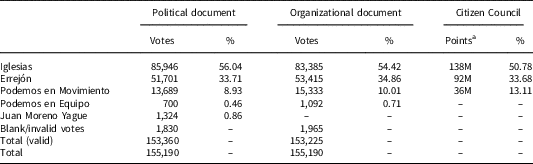
a The election of the Citizen Council uses a point system based on multiple vote.
b Other minor documents have been voted for at the II congress (for more details see: https://vistalegre2.podemos.info/resultados/).
All in all, Podemos’ experience presents both similarities and differences vis-à-vis the characteristics associated to the ‘movement party’ type. High levels of inclusiveness are facilitated by the low barriers to access party structures. But the intensity of participation varies substantially and the quality of deliberative processes seems quite low. Indeed, it has been noted that only 10 per cent of Plaza Podemos users are active, as shown by the number of comments,Footnote 20 whereas argumentation is sometimes weak (very often interventions only express the direction of vote or encourage other people to participate, see Borge and Santamarina, Reference Borge Bravo and Eduardo Santamarina2015, Reference Borge Bravo and Eduardo Santamarina2016). Another problem is that it remains difficult to hold leaders and representative accountable (Interview 2). More importantly, online instruments of participation are often disconnected from the party’s main bodies, and more effective bottom-up decision-making processes – such as citizens’ initiatives, recall or extraordinary congresses – have never been implemented for lack of support.Footnote 21
Voters’ support and mobilization strategy
It is well known that new parties’ strategic choices on organizational models and interparty competition have a crucial impact on their electoral support base (Bolleyer and Bytzek, Reference Bolleyer and Bytzek2017). To what extent does Podemos’ electoral base converge with that of other populist parties? Can Podemos be considered a protest party or does it mobilize new voters? This section aims to address these questions by using survey data from the 2015 general elections.
During the early period, Podemos was the institutional face of social movements that defended a renewal of politics and new channels of participation. Therefore, the fight against corruption, anti-party sentiments, and political mistrust were at the heart of the first wave of mobilization that led to the emergence of this new party. Yet Podemos was able to increasingly politicize issues associated to the crisis. This shift had a marked effect on the profile of Podemos supporters, and also increased the potential to reach more discontented groups of voters.
The analysis made by Fernández-Albertos (Reference Fernández-albertos2015) suggests that the Podemos electoral support base has changed significantly over its short life. In the 2014 European elections, Podemos voters were mainly young, with high levels of education and very involved in politics. But as Podemos expanded, it made considerable inroads into the groups most affected by the crisis, namely those with a negative perception of the economy and more frustrated by the lack of opportunities. Overall, the new party seems to register a shift in emphasis from post-materialist values to more materialist issues, and the increasing importance of economic voting.
We now turn to the analysis of the determinants of Podemos voters in the 2015 general elections. We draw on the 2015 Centro de Investigaciones Sociológicas (CIS) post-electoral survey (Centro de Investigaciones Sociológicas, 2015) to test how political discontent and performance evaluation affect the probability of voting for the new radical left party. Political discontent is tested by including three variables in the model, namely: ‘non voter’, which aims to gauge the capacity to mobilize new voters, ‘satisfaction with democracy’ and ‘trust in political parties’. The performance component includes two variables based on the evaluation of Spain’s political and economic situation (at the national level), and whether the crisis led to the loss of employment. We also control for the main sociodemographic variables such as gender, age, education, religion, ideology, and partisan attachments (see Appendix A for the coding of variables).Footnote 22 Given that our dependent variable is a nominal variable (the vote for the main Spanish parties), we use multinomial regression analysis (Dow and Endersby, Reference Dow and Endersby2004).Footnote 23
Table 3 reports the determinants of Podemos’ voters vis-à-vis the main parties. The model explains voters’ behaviour in Spain quite well. The Pseudo-R2 indicates that more than two-thirds of the variation in the dependent variable is explained. First, both political discontent and performance evaluation were important drivers for voters to choose the new radical left party. People who were more dissatisfied with democracy and the economic situation were more likely to vote for Podemos than for the two main governing parties. However, there was no distinction between the two radical parties in terms of protest and economic voting. Second, ideology again separates the two moderate parties from Podemos, but is not statistically significant in the case of IU.
Podemos’ electoral support base (2015 elections)
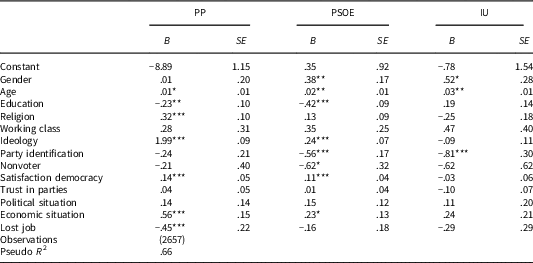
Source: CIS post-electoral survey, 2015 general elections.
Note: Multinomial regression (reference category is the vote in Podemos).
*** p < 0.001;
** p < 0.05;
* p < 0.1.
The findings related to the impact of partisan attachments are also interesting. They suggest this is a powerful predictor of why voters preferred Podemos over both the socialists and also IU. As expected, ‘new politics’ was a hallmark of the new party’s message, which aimed to challenge the (intra-party) functioning of traditional parties. Moreover, as many supporters experienced the grassroots mobilization of social movements during the crisis, Podemos’ electoral support base did not identify with any of the parties representing the establishment. In addition, the impact of the ‘non voter’ clearly demonstrates mobilization capacity as it is statistically significant for the choice between PSOE and Podemos. Finally, there is a marked difference between mainstream actors and the new party in terms of education, with voters with higher levels of skills more likely to vote for Podemos. On the other hand, the new party was able to mobilize young voters; in particular, they chose to vote for Podemos rather than for mainstream parties or the more conventional radical left party (IU). Overall, the results thus confirm that the profile of Podemos is very close to that of the radical left party family, while the crisis and discontent with the government have led to a ‘natural’ convergence between this new party and IU. From this point of view, our findings seem to confirm those of Ramiro and Gómez (Reference Ramiro and Gómez2017), who found significant impact related to the crisis.Footnote 24 Although our data do not allow us to examine the impact of Podemos’ electoral growth on the profile of its supporters, the results suggest a substantial differentiation between this new party and mainstream (left-wing) forces, contributing to the establishment of this actor as a permanent feature of the Spanish party system.
Podemos’ breakthrough was possible due to its capacity to attract support both from people who were dissatisfied with the economic situation and from the electorate with strong anti-party feelings. On the one hand, retrospective accountability had a considerable impact on Podemos’ performance. On the other, it was a vote against the ‘caste’ and the self-referential politics enacted by the ‘cartel’ between the PP and the PSOE. These general characteristics help explain Podemos’ capacity to attract support from heterogeneous groups. We believe that these results provide a better understanding of why many voters dissatisfied with the incumbents opted to vote for this new party instead of relying on the main opposition forces.
The evidence from public opinion surveys tells us that Podemos’ support stems mainly from a protest vote and its capacity to differentiate the supply side – compared to the traditional left – by appealing to less ideologically radicalized groups, dissatisfied with mainstream politics and those most hit by the crisis (people who lost their job are more likely to vote for Podemos rather than the incumbent party). We believe that one of the factors explaining Podemos’ success – but also one of its weaknesses in the medium-long term – is its capacity to intercept anti-establishment protest voters, especially leftist groups that are more ideologically aligned with the core socio-economic issues defended by this new party.
Conclusions
Our analysis of Podemos, a new party that brought innovations to Spanish politics and its party system, allows us to reexamine the debate about the ‘novelty’ of left-wing populist parties in Western Europe, especially in terms of party models and the interaction between party formation and party adaptation.
The analysis of the linkage between Podemos and citizens reveals several features that could characterize it as a ‘post-modern’ party. A first distinctive aspect of this party is its use of new ICT, which has fostered ‘post-bureaucratic’ organizations (Bimber, Reference Bimber2003) based on lightweight party structures. This has affected several aspects of this new actor, namely in terms of organization, ideology, and electoral support, each of which we discuss below. By exploring the potential of digital tools and social media to aggregate demands and ‘empower’ citizens, Podemos has breathed new life into the myth of deliberative and participatory democracy, and also strengthened local mobilization and the voters’ belief in effective politics; it therefore contrasts with the growing trend of disenchantment with politics and increasing disaffection.
A second important innovation is the ‘stratarchical’ or ‘franchise’ type of organization (Carty, Reference Carty2004; Bolleyer, Reference Bolleyer2008), which is also a feature of other populist parties such as the M5S (Bordignon and Ceccarini, Reference Bordignon and Ceccarini2013). While the party in central office defines the ‘product’ to be sold – leadership, ideology or strategy –, local units are relatively autonomous to mobilize their own resources and to choose local candidates and issues. This structure is particularly suited to multi-level politics, like that of Spain, with a functional differentiation between the centre and the periphery, and it brings several advantages for a newborn party. On one hand, it maximizes party flexibility, which makes it easier to neutralize the tensions inherent to its evolution and the uncertainties of the environment. On the other, it also boosts horizontal linkages and facilitates the mobilization of sympathizers and nonmembers, facilitating the connection with social movements. Moreover, little investment in organizational resources is required. Finally, the structure also helps neutralize internal conflicts and solve factional problems, like the ones that affected Podemos in its early stages. The fact that ‘localist’ proposals put forth in the last congress (Vistalegre II) by Errejón were rejected seems to suggest an increase in the power of the secretary-general and his coterie.
Despite these innovations, Podemos’ organization is an odd mixture of direct democracy (especially at the local level) and a plebiscitary leadership. While the genetic model is clearly inspired by the loose structure adopted by movement parties, the importance placed on personalization and top-down links in intraparty democracy has increased as the party has evolved. As a result, Podemos seems to be positioned at the junction between different organizational models, leading to a sui generis party type. Several indicators also suggest that Podemos has entered a new stage, becoming increasingly similar to traditional parties characterized by internal quarrels, competition for leadership and growing professionalization. The evolution of Podemos shows that this new party clearly differs from the (organizational) model of populist parties, which relies on the role of charismatic leadership. Internal tensions and the ‘normalization’ process, that is, the institutionalization of party leadership and the establishment of more vertical links, led to a trend towards demobilization (see Appendix B). However, after two legislative elections it seems that the party has been able to stabilize internal mobilization to some extent, with approximately one-third of sympathizers participating in electoral processes. This trend was recently confirmed at the 2017 party meeting, where the ‘cesarist’ model auspicated by Iglesias clearly prevailed, granting more power and autonomy to the party leader. Yet the institutionalization of party factions may fuel internal conflicts and endanger the equilibrium in the power relation of party elites. The future of Podemos will also depends on party strategy, especially the position vis-à-vis the socialist government (in office since June 2018) and the potential cooperation - and competition - with the PSOE.
Moving to the ideological dimension, Podemos has certainly adopted a populist discourse that aims to divide the political space into two camps, opposing civil society to the ‘corrupt elite’. However, Podemos has increasingly shown a catch-all appeal, not only by moderating its discourse, but also by depoliticizing some important dimensions. Our analysis of Podemos revealed depoliticization in at least two aspects. First, Podemos did not empower the labour movement and was unable to build a coherent and stable support base around clearly identifiable social sectors (Mateo, Reference Mateo2016). Second, the new party prompted a national-popular rhetoric that is quite atypical in the tradition of the Spanish Left, thus innovating the discourse framework used to communicate and mobilize its supporters (Briziarelli, Reference Briziarelli2016). Examining how and to what extent ideology impacts party types is an interesting avenue for future research, developing Gunther and Diamond’s (Reference Gunther and Diamond2003) seminal contribution.
As for the electoral support base, we have shown that even within ‘anti-austerity’ parties there are important differences in terms of voter’s profile. Although the distinction with the traditional left is clear-cut, Podemos differentiates also from IU, showing its capacity to match a new programmatic supply with the demand of citizens whose preferences were misrepresented within the old party system. The Podemos vote clearly incorporates a significant amount of dissatisfaction with the political system and the way the government has performed. Yet ideological and partisan identities (or lack thereof) are also important and this explains the strategic dilemma that the party has to face in the days to come. This is all the more important as Podemos’ electoral breakthrough seems not to be associated to the emergence of a new (socioeconomic) cleavage.
After analyzing the different components of Podemos, this new party can be likened to radical left parties, but with two important innovations. On the one hand, it has adopted a technopolitical organization with the particularity of seriously addressing the digital revolution and its consequences for contemporary political parties and the functioning of representative democracies. In other words, Podemos can be understood as a version of the left-libertarian parties in the Web 2.0 era. On the other hand, Podemos shares a similar populist strategy with the M5S and SYRIZA, but it presents significant differences in terms of organizational model. Given the ongoing process of disintermediation and de-bureaucratization and the growing expansion of new digital devices, Podemos may well represent a new pattern of party development, characterized by the combination of assembly-based organizational style and a frequent use of plebiscitary decision-making practices (Poguntke et al., Reference Poguntke, Susan and Paul Webb2016). The main implication of this study is that the analysis of party types needs to take into account not only the genetic model, but also the electoral and societal environment. Both elements contribute to shaping the hybridity of party models and the instruments used to develop their functions. In addition, the multidimensional analysis of Podemos has shown that the interaction between the genetic model and the environment makes it difficult to frame (left-wing) populism within the party type literature. Such a (multidimensional) redefinition of new parties underlines the need to reformulate the concept of ‘populist parties’ in order to lessen some of the conceptual confusion in the literature and to enable new comparisons.
Acknowledgment
The author would like to thank the anonymous reviewers for their useful comments and constructive criticism.
Funding
The research has been funded by the Fundação para a Ciência e Tecnologia (FCT) through a grant within the framework of the project ‘Crisis, Political Representation and Democratic Renewal: The Portuguese case in the Southern European context’ (PTDC/IVC-CPO/3098/2014).
Data
The replication dataset is available at http://thedata.harvard.edu/dvn/dv/ipsr-risp
Author ORCID
Marco Lisi https://orcid.org/0000-0001-9833-0347



