Introduction
Patients with somatic pain are common among primary care patients. Pain is also a common way to present distress. On the basis of culture and ethnicity, patients may express their pain and mental disorders in various ways (Bhui et al., Reference Bhui, Mohamud, Warfa, Craig and Stansfeld2003). However, psychological symptoms can usually be unveiled when overtly asked for in medical encounters even when expressions of sadness, guilt and death wish vary according to person, sex and cultural backgrounds (Bhugra, Reference Bhugra2004). For instance, some persons may not acknowledge feeling depressed, although they easily discern those feelings in other people (Ezeobele et al., Reference Ezeobele, Malecha, Landrum and Symes2010).
Other challenges include patient–doctor communication, which varies with the health-care system, and the fact that acculturation reformulates the way immigrant patients’ express their ill-health (Simon et al., Reference Simon, Vonkorff, Piccinelli, Fullerton and Ormel1999; Bäärnhielm and Ekblad, Reference Bäärnhielm and Ekblad2000). Thus, it is challenging to diagnose depression in patients with pain not least in multi-cultural settings in different stages of acculturation as the prevalence of depressive symptoms and the symptoms patients choose to report depends on gender, personality, age, social class, physician and health-care system (Helman, Reference Helman1990; McQueen and Henwood, Reference Mcqueen and Henwood2002; Bhui et al., Reference Bhui, Mohamud, Warfa, Craig and Stansfeld2003).
The major reasons for permanent sick leave in younger persons are pain and mental ill-health where rehabilitation effects are limited, not only in Sweden (Bao et al., Reference Bao, Sturm and Croghan2003; Alexanderson et al., Reference Alexanderson, Borg and Hensing2005; Crisp, Reference Crisp2007; Mallen et al., Reference Mallen, Peat, Thomas, Dunn and Croft2007). This comorbidity has been associated with socio-economic adversities such as poor education, language inadequacies, as well as financial and marital distress (Angst et al., Reference Angst, Gamma, Gastpar, Lepine, Mendlewicz and Tylee2002a; Arnow et al., Reference Arnow, Hunkeler, Blasey, Lee, Constantino, Fireman, Kraemer, Dea, Robinson and Hayward2006; Bay et al., Reference Bay, Sikorskii and Saint-Arnault2009). Some immigrant groups are particularly prone to remain on sick leave for considerable time (Westman et al., Reference Westman, Johansson and Sundquist2006; Tinghög et al., Reference Tinghog, Al-Saffar, Carstensen and Nordenfelt2010; Brause et al., Reference Brause, Reutin, Razum and Schott2012). Immigrant women are at special risk for pain comorbidity according to several studies (Zelkowitz et al., Reference Zelkowitz, Schinazi, Katofsky, Saucier, Valenzuela, Westreich and Dayan2004). A Swedish study indicated that foreign-born women were more on sick leave, had more pain, job strain and deeper depression (Soares and Jablonska, Reference Soares and Jablonska2004). Long-term sick leave is also a risk indicator for increased mortality (Festin and Alexanderson, Reference Festin and Alexanderson2009; Gustafsson et al., Reference Gustafsson, Lundh, Svedberg, Linder, Alexanderson and Marklund2011). However, it seems that persons with a religious identity enjoy better mental health regardless of socio-economic circumstances (Androutsopoulou et al., Reference Androutsopoulou, Livaditis, Xenitidis, Trypsianis, Samakouri, Pastelmatzi and Tzavaras2002; Green and Elliott, Reference Green and Elliott2009).
Thus, primary care physicians need strategies directed to non-European immigrant patients to diagnose and to treat pain and mental ill-health (Jain, Reference Jain2008; Pieper et al., Reference Pieper, Schulz, Klotsche, Eichler and Wittchen2008). We therefore started a new rehabilitation programme to improve the care for this group of patients at a primary care centre (PHC) in a multicultural district in Stockholm, Sweden.
This study aimed to investigate gender differences in the prevalence of depression among younger immigrant patients with chronic disabling back pain and to explore whether socio-economic factors, such as age, marital status, educational level, religious faith and number of children, or somatic factors, such as number of pain sites, could explain these differences.
We hypothesised that women were depressed more often than men and that social characteristics, religious affiliation and number of diagnosed pain sites could predict gender differences in the prevalence of depression.
Methods
Setting and participants
The study was designed as a cross-sectional study, which was carried out at a PHC in western Stockholm, Sweden, providing health-care service for 15 200 inhabitants with a median age of 29 years. Approximately 82% of the population in that district was foreign-born (first- or second-generation immigrants from 70 countries). The long-term sick leave rate in the district was two to three times higher than the average in Stockholm (Stockholm, 2007).
Between 1997 and 2007, two primary care physicians and a physical therapist ran a rehabilitation programme at the PHC suited for persons aged 18–45 years who had been on ⩾6 weeks continuous sick leave for non-malignant disorders. This study was designed as a real-life study based on data from patients in consecutive order fulfilling the inclusion criteria. Thus, estimation of the sample size was not done. During the study period, 346 patients were referred in sequential order to the rehabilitation programme by their primary care physicians. Those with severe mental or somatic disorders (n = 4) and unemployed persons with long-term social security benefits (n = 69) were excluded from this study. Furthermore, 28 persons abstained from participation. A total of 245 patients were included in this current study.
Participation was voluntary. One-third of the 245 participants were assisted by professional interpreters. In all, 32% (94% Muslims) of the participants came from Asia (including Turkey), 25% (74% Muslims) from the Middle East, 20% (45% Muslims) from Southern Europe (south of the Alps, including France) or Northern Europe (Scandinavia, Finland, Poland and England) and 18% (87% Muslims) from Africa. The remaining 5% came from South America. Here, however, the patients were largerly from the same regions in Middle East and Turkey. The patients differed in traditions and language but defined themselves as having a Muslim or Christian identity even if about one-third said they did not practice religion. The median stay in Sweden was 14 years. All, with a few exceptions, held jobs in the service sector and complained of pain of the back or/and shoulders; 9% of them also had mild anaemia, mild asthma or mild diabetes.
About 10% reported of nightmares or early morning wake up from anxiety. Nearly all patients reported disturbed sleep because of their pain.
No one had been prescribed continuous use of opiate or opiate-like medications. A few were on anti-depressive medication.
Overview of the rehabilitation programme
The four-week programme was led by two primary care physicians. It primarily aimed to reduce the anxiety caused by pain by dialogue sessions with the participants (Löfvander et al., Reference Löfvander, Engström and Nafezi2004). The programme also included daily all-round physical training.
Both physicians participated in initial assessments of the participants. They alternated as consultant doctor who also was the treating doctor in the subsequent dialogue sessions with the patient. In the initial 90-minute session, the other physician was an observer and assisted by taking notes. Questions on mental health focused particularly on depressive disorders. The function of the musculoskeletal system was in focus in the somatic assessment. This assessment followed a structured manual. Diagnostic criteria for muscular insertion lesions (ie, enthesopathies, here: pain sites) in spine, shoulder, hip, knee, etc. were reproducible tenderness in anatomical structures near the joints at static muscular contraction. The patients’ first reported pain distribution did not always coincide with these diagnosed pain sites.
Heart and lung status was checked, and routine blood sample analyses were performed.
The participants were asked about their birthplace, education, work and family situation, reasons for immigration, as well as their religious beliefs and practices. Concepts about illness were determined by open-ended medical-anthropological questions on explanatory models of illness following manuals for multicultural care (Helman, Reference Helman1990; Löfvander et al., Reference Löfvander, Engström, Theander and Furhoff1997).
During evaluation, immediately after the end of the initial session, the most pathological value was chosen if the two physicians disagreed in their assessments (Löfvander et al., Reference Löfvander, Engström, Theander and Furhoff1997).
Data collection
Diagnostic criteria and assessment scales
Criteria from axis I of the Diagnostic and Statistical Manual of Mental Disorders (DSM-III-R, 1987) were used to diagnose mild, moderate or severe depression. A special notice was put on the major criteria – sad mood and/or lack of interest – as these are recognised by most patients across cultures and valid and reliable questions in this context (Löfvander and Papastavrou, Reference Löfvander and Papastavrou1993; Löfvander et al., Reference Löfvander, Engström, Theander and Furhoff1997). In addition, three or more of the following symptoms have to be present: gain or loss of weight; increased or decreased sleep; increased or decreased level of psychomotor activity; fatigue; feelings of guilt or worthlessness; diminished ability to concentrate; and recurring thoughts of death or suicide. We used DSM-III-R throughout the project because the programme followed a previous rehabilitation programme that begun in 1993 and the DSM-IV was published later (DSM-IV, 1994). In addition, a clinical observation of sadness was used (Montgomery and Asberg, Reference Montgomery and Åsberg1979) in order to avoid underrating of depression and open up for further questions on depressed mood when needed.
Muscular insertion lesions (ie, enthesopathies, here, pain sites) in spine, shoulder, hip, knee, etc. were diagnosed as reproducible tenderness in anatomical structures near the joints at static muscular contraction.
Outcome variable of this study
Diagnoses of mild, moderate and severe depression were made on the basis of the criteria in DSM-III-R axis I and categorised as present or not.
Explanatory variables
The explanatory variables were categorised as below:
Age was categorised by the median value into two groups: 18 through 37, and 38 through 45 years.
Marital status was classified as married/cohabiting, or living single.
Educational level was divided on the basis of the number of years each person attended school: low (<9 years), intermediate (9–11 years) and high (>12 years).
Number of children living at home was categorised by reference to Swedish standards as none, 1–3, and >3. Children were defined as persons <18 years of age.
Religious affiliation was self-defined. Participants were divided into three groups: Muslims, Christians and Hindus. There was only one Hindu participant. This individual was excluded from the statistical analyses. Praying to cope with pain was just as common across the different faiths.
Pain sites were the number of locations of muscular insertion lesions diagnosed by the physicians following the criteria described above and categorised as fewer (0–2 numbers of pain sites) or multiple (⩾3 pain sites, ie, above median).
Statistical analyses
We estimated the prevalence of depression in the study population. Differences in prevalence of depression in women and men were assessed using Pearson's χ 2-test and the t-test. Unconditional logistic regression was performed to assess the association between depression and each of the explanatory variables. The results are shown as odds ratios (ORs) with 95% confidence intervals (95% CIs). All explanatory variables; that is, age, marital status, educational level, number of children living at home, religious affiliation and number of pain sites were included stepwise in the models. The fit of the models was assessed using the Hosmer–Lemeshow goodness-of-fit test, and those at P > 0.05 were considered acceptable (Hosmer and Lemeshow, Reference Hosmer and Lemeshow2002). Statistical analyses were performed using STATA version 9 software.
Ethical considerations
The study was approved by the regional ethical committee of Karolinska Institutet, D-nr 00-166. The study was conducted in conformity with the World Medical Association's ethical principles as described in the Declaration of Helsinki (Association, Reference Association1996).
Results
Table 1 shows the distribution of explanatory variables by gender across the 245 participants (142 women and 103 men) in the study population. There were no differences between men and women with regard to age and marital status. However, women were less educated and had more children than men. Distribution of the explanatory variables above was the same among Muslims (n = 182) and Christians (n = 62) in the study population. The women had a significantly higher prevalence of multiple pain sites (68.3%) than did the men (44.7%). Praying practices were equally distributed across the different faiths (not shown in the table).
Distribution (%) of explanatory variables by gender in the study population of immigrant patients 18–45 years in primary care
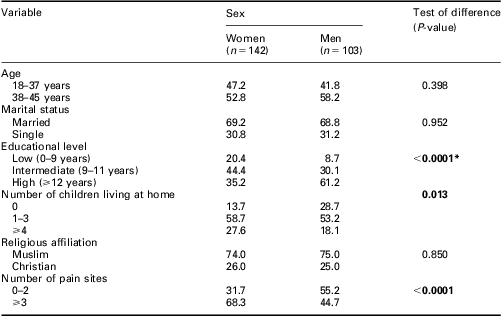
*Bold-faced numbers are statistically significant.
Table 2 shows the prevalence of depression in men and women with regard to the explanatory variables. Significantly higher percentages of the women (50%) had depression as compared with the men (33.3%), especially in the younger age group (46.4% versus 25.7%). Furthermore, the prevalence of depression was significantly higher than among the men, especially in married women, in women with high education and in women with 1–3 children. Finally, depression was significantly more prevalent in Christian women than Christian men, whereas there was no difference between Muslim women and men. There was no significant difference in the prevalence of depression between men and women with respect to religious affiliation or pain sites.
Prevalence (%) of depression across explanatory variables and gender in the study population of immigrant patients 18–45 years in primary care

*Bold-faced numbers are statistically significant.
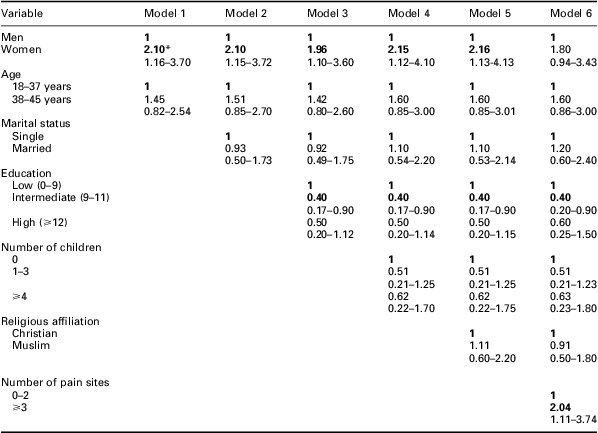
Table 3 shows the association between depression and the explanatory variables in six models in which explanatory variables were included stepwise. In the age-adjusted model (Model 1), women had twice higher odds of depression than men (OR = 2.10; 95% CI 1.16–3.70). The OR of depression in women remained unchanged after inclusion of marital status into the logistic regression analyses (Model 2). With the introduction of educational level in Model 3, the ORs of outcome decreased with 14% to 1.96 (95% CI 1.10–3.60). In Model 4, OR of depression in women increased to 2.15 (95% CI 1.12–4.10), when, in addition to the previously included variables, adjustment was made for the number of children. In Model 5, the OR was almost the same (2.16; 95% CI 1.13–4.13). Thus, in the first five models, the odds of depression were significantly higher in women than in men. Finally, in Model 6, after adjustments for all explanatory variables including pain sites were made, the higher odds of depression in women were no longer statistically significant (OR 1.80, 95% CI 0.94–3.43). Furthermore, two significant confounders were found in both women and men, namely, education and number of pain sites. Intermediate education of 9–11 years was associated with significantly lower odds of depression (OR 0.40; 95% CI 0.17–0.90) compared with lower education, regardless of the gender. In addition, higher educational >11 years had non-significant lower odds of depression (OR 0.50; 95% CI 0.20–1.12). Furthermore, participants with multiple pain sites had twice higher odds (OR 2.04; 95% CI 1.11–3.74) of depression than those with fewer pain sites, regardless the gender.
ORs and 95% CIs of depression in women with chronic back pain (reference group = men) in the study population of 245 immigrant patients 18–45 years in primary care

ORs = odds ratios; CIs = confidence intervals.
*Bold-faced numbers are statistically significant.
Discussion
To sum up, this was a cross-sectional clinical study of a multicultural group of 18–45-year-old patients with chronic backache who participated in a rehabilitation programme at a Swedish PHC. Our two hypotheses were confirmed; a significantly higher proportion of women than men had depression, and the women and men with diagnosed multiple pain sites had twice the odds of depression compared with those with fewer pain sites. In addition, intermediate education of 9–11 years was significantly associated with lower odds of depression, regardless of the gender.
Depression and a multiplicity of muscular lesion locations were linked both in men and women. In view of the fact that many more women than men had multiple pain sites, it was not surprising to find a higher prevalence of depression among the women in this particular study population. Considering the cross-sectional study design, the findings are not conclusive and should therefore be interpreted with caution.
The patients often reported that a consequence of pain was disturbed sleep during nights. Whether this had also contributed to a higher prevalence of depression is an intriguing question that could not be answered in this study. On the whole, further studies are needed to elucidate the circular association between pain, sleeping difficulties and depression. In addition, the association between education and depressed mood and that Christian men less often had depression should be explored further.
Here, depression defined by DSM-criteria was two (women) and three times (men) higher compared with the prevalence found in unselected patient populations in primary care (Angst et al., Reference Angst, Gamma, Gastpar, Lepine, Mendlewicz and Tylee2002b; Strömberg et al., Reference Strömberg, Bäcklund and Löfvander2010). Of note was the fact that a relatively high proportion of our men were diagnosed as depressed, which should be investigated in future studies. On the whole, this study illustrates the pain–depressive complex that primary care physicians meet among their adult immigrant patients, which might contribute to the underdiagnosis not only of depression but also of somatic pain conditions (Al-Windi, Reference Al-Windi2005).
This study brings new insights into clinical data and religious beliefs collected from a multicultural pain patient population in primary care. A major strength of the study is the patient-centred design with professional interpreters and two collaborating physicians. In contrast to most studies using self-reported data on depression and pain, we here diagnosed both the outcome variable and the somatic explaining variable in a personal medical encounter when using structured diagnostic signs and assessments.
A face-to-face medical encounter means that the physicians can use follow-up questions, regarding, for example, depressed mood, if the person had objective signs for distress, for example, facial and eye expressions, contradicting the narrative. Moreover, we used DSM-criteria to diagnose depression, which are standard in Swedish primary care and valid in transcultural settings (Löfvander and Papastavrou, Reference Löfvander and Papastavrou1993; DSM-IV, 1994; Al-Windi, Reference Al-Windi2005; Strömberg et al., Reference Strömberg, Backlund and Löfvander2011). Notably, DSM does not pick up on somatic pain as a presentation for depression, but includes disturbed sleep as one contributing factor for diagnosis.
The main limitations of the study are both its single location design and its cross-sectional design in terms of reversed causality and lack of reference groups. Yet, some of presented results might be possible to transfer to many primary care settings because our study population included only patients who are usually considered to be difficult to meet, treat and care for.
Notably, none of our participants had fibromyalgia. Women with fibromyalgia often seem to have depression, anxiety and somatisation signs in contrast to women with chronic back pain (Tuzer et al., Reference Tuzer, Bulut, Bastug, Kayalar, Göka and Bestepe2011). Comorbidity between depression and chronic pain is otherwise common (Edmond et al., Reference Edmond, Werneke and Hart2010). In an early study, chronic low back pain was shown to lead to depression but not to increased severity of pain (Garron and Leavitt, Reference Garron and Leavitt1983). More importantly, chronic pain is often associated with difficulties in sleeping, independent of psychiatric comorbidity (Goral et al., Reference Goral, Lipsitz and Gross2010).
Depression can also be a part of a post-traumatic stress disorder syndrome (Peters et al., Reference Peters, Slade and Andrews1999). Trauma experiences before immigration were relatively common in our study group, which may have contributed to a higher prevalence of depression in the Muslim than the Christian men in our study. Use of illegal drugs or alcohol is also relevant to consider in this patient population (Angst et al., Reference Angst, Gamma, Gastpar, Lepine, Mendlewicz and Tylee2002a). For instance, underreporting of distress has been found among Swedish men with high alcohol consumption (Löfvander and Papastavrou, Reference Löfvander and Papastavrou1993; Strömberg et al., Reference Strömberg, Bäcklund and Löfvander2010). Although possible, few showed clinical signs of substance abuse, and religious traditions and social customs restricted the use of alcohol in our study population.
Persons of foreign origin may get accustomed to use new ways of expressing distress with cultural integration (Bäärnhielm and Ekblad, Reference Bäärnhielm and Ekblad2000). Thus, it is possible that many of our patients more readily expressed mental ill-health and also with less variability than seen in more recently arrived immigrants from different socio-cultural backgrounds. However, one-third of the patients used interpreters despite the fact that they had lived in Sweden for a long time, indicating a low degree of integration. Here, we rather think that the use of interpreters reflected the social distance between high-educated physicians and poorly educated patients who wanted professional interpreters to help explain their symptoms in detail.
Religious practices such as prayers have been shown to help patients cope better with pain and improve their physical and psychological well-being (Rippentrop et al., Reference Rippentrop, Altmaier, Chen, Found and Keffala2005) and report fewer symptoms of depression (Daaleman and Kaufman, Reference Daaleman and Kaufman2006). However, it is not possible to compare our findings with those of the few studies on religiosity and mental health, as they neither include information on somatic diagnoses nor the criteria to diagnose depression.
Clinical implications
Patients with major depressive disorder and comorbid disabling chronic pain use more medical service than other groups of patients with and without depression, but this is what physicians diagnose and have to consider in their medical and personal picture of the patient. The higher frequencies of depression in both immigrant men and women having not only back pain but multiple pain locations imply the need for tailor-made treatments in primary care, especially for those with less education.
Conclusion
To conclude, the women in our study had twice the odds of having depression than did the men. This could be explained by the women's higher prevalence of diagnosed multiple pain sites, while at least intermediate education reduced their odds of depression. Further studies are needed on comorbidity of pain and depression, education and the role of religiosity in multicultural primary care settings.
Acknowledgements
The author would like to thank all the primary care centres and patients who participated in this project. They would also like to thank participating general practitioner Alf Engström for help with gathering data and Scientific Editors Kimberly L. Kane and Stella Papadopoulou at the Center for Family and Community Medicine for valuable comments and text revisions. Author contributions: M.L. conducted data collection. M.L. and M.T. planned and conducted the study. M.T. drafted the first version of the manuscript and performed statistical analysis. M.L. contributed to discussion and both authors approved the final manuscript. Source(s) of Funding: This study was funded by The Stockholm County Council.