

I. Introduction: when citizen sensing encounters a big, complex city
Rome, the Italian capital, currently presents a number of environmental issues, such as the degradation of green areas due to inadequate care of vertical (ie trees) and horizontal (ie flowerbeds) urban green spaces, poor quality of water resources, intense traffic affecting air quality and dysfunctional city waste management.Footnote 1 These issues – perceived as emergencies by competent authorities – have frequently stimulated reactive rather than forward-looking planning, which has affected several dimensions of city life and amplified urban and social malaise, especially in the peripheries.Footnote 2 Nevertheless, the situation has also triggered civic vitality,Footnote 3 especially from social actors that offered new approaches to managing the city, Footnote 4 as our case studies illustrate.
An important environmental issue for Rome is that of water quality in the Tiber, the city’s main river. The water quality of Aniene, one of the Tiber’s major tributaries, is also a source of concern.Footnote 5 The Tiber is a complex fluvial system, being the main river in central Italy and the third longest river in the country. It suffers from the impacts from human activities along its entire course. Even though competent authorities engage in river monitoring, data on city rivers’ water quality are often fragmented and/or not up to date. Budget constraints obstruct the systematic collection and dissemination of the results of such monitoring. Footnote 6 In addition, water availability is critical in the city. Rome has experienced several water shortages over recent summers.Footnote 7 Furthermore, public green areas are not sufficiently valorised or are even neglected,Footnote 8 and soil consumption at the expense of urban green spaces is a pressing problem.Footnote 9 After a period of conflict between managing authorities,Footnote 10 the situation improved recently thanks to a reorganisation of the roles within the competent public sector and the entrusting of management tasks to new actors selected by public tenders.
Policies are in place with the intention of managing Rome’s resources wisely. However, it is in the implementation phase that several weaknesses can be identified. Although the city is committed to respecting national and European Union (EU)-level rules for attaining environmental goals (as recently strengthened by the release of the European Green DealFootnote 11 and as foreseen in the Global Covenant of MayorsFootnote 12 ), often high-level political agendas fade from focus when faced with everyday city needs. In particular, the city management has frequently been perceived as being more focused on addressing isolated problems tackled as crises rather than on strategically orienting its interventions through a long-term vision. Recurring issues in need of urgent solutions have distorted the city’s public planning capacity. An example of this approach is that of city waste management. In 2013, the Malagrotta landfill, the main long-term storage site for Rome’s unsorted municipal solid waste, was closed due to an ongoing investigation into illicit waste trafficking, a charge that was subsequently dismissed in 2018 by the Court of first instance of Rome, criminal chamber.Footnote 13 Nonetheless, Italy was fined by the Court of Justice of the EU for violating EU directives on waste management in Malagrotta.Footnote 14 In addition, a criminal law proceeding for environmental disaster is still pending regarding the management of Malagrotta.Footnote 15 To this day, the city has not found a solution for the satisfactory management of urban waste. Walking through the streets of Rome, one can often find piles of uncollected rubbish.Footnote 16
Waste mismanagement, low water and air quality and poor care of public green spaces are examples of chronic and recurring problems that affect the capital, to which a temporary solution is found each time rather than a structural one. This fosters disapproval from the city’s inhabitants, who are frustrated by the local governors’ inertia in addressing these structural issues.Footnote 17 The demonstrated discontent, however, has triggered contributory forms of civic monitoring of environmental issues across the city, one of which – involving the Tiber and Aniene rivers – will be the focus of this article. The cases are situated in a widespread context of “urban stress”, as recently described by the European Environmental Agency.Footnote 18 In this context, organised civil society became a source of environmental information for fellow inhabitants,Footnote 19 at times complementing official information and at times substituting for it.
Starting from the framing of Rome’s challenges as “wicked problems”, we will explore the potential that civic monitoring could have when facing such entangled issues. “Wicked problems” are problems that result from continuously changing and interdependent factors, making them seem difficult or even impossible to solve, and in which many actors are involved with conflicting values, citing Rittel and Webber’s definition from the 1970s.Footnote 20 Theoretically, we will start from “wicked problems” to frame civic environmental monitoring (ie being performed by ordinary citizens) as a “small win” intervention that may have beneficial effects on such city problems, promoting urban transitions and generating valuable knowledge. In light of the above, our main research questions are:
-
How can civic monitoring in a large, complex city such as Rome benefit urban resource governance and foster transitions towards a more inclusive and sustainable city?
-
To what extent can these initiatives inform the scientists and policymakers responsible for designing environmental adaptations in the city?
The approach to answering said questions starts from delineating a theoretical frame based on (urban risk) governance and participation, environmental and social justice, (participatory) climate urbanism and the overarching notions of “small win” interventions and “wicked problems”. A second phase of this study entails an empirical engagement with two case studies. In particular, one author of this study Footnote 21 was able to observe the Tiber monitoring campaign “RomaUP”, as the author acted as a trainer on the legal implications of citizen science for the approximately fifty participants in that campaign. The other authors of this study have been directly engaged in running the two initiatives.
A Sud is an independent Italian association situated in Rome and founded in 2003. Footnote 22 A Sud relies on donations from individuals and foundations, and it often participates in national and EU calls for funding. The association performs research, training and interventions in the environmental and climate fields. It provides tools to communities that are facing environmental conflicts (eg engaging them as volunteers in environmental monitoring campaigns). A Sud views citizen science as useful for acquiring data and information on the environment that can leverage institutional actions.Footnote 23 The possibility of observing citizen science training provided by A Sud in conjunction with experts, interactions with participants and attendance at a data collection session on site enriched the study with first-hand data. These early observations refined the research questions and the approach to theory.
In the following sections, we first set the scene by briefly defining the key theoretical notions that guide our case analysis. Subsequently, we describe and analyse the two case studies. We discuss how the study of these initiatives sheds some light on our research questions. Lastly, we sketch some tentative answers to the research questions and avenues for future research.
II. The theoretical lens: from urban governance to citizen sensing
1. Governance in complex urban environments
The overarching theoretical frame of this study is that of governance and specifically the urban governance literature. Indeed, from this (rich) body of literature we take concepts such as “complex city”, “civic participation”, (perceived or actual) “governance failure” and “lack of implementation”. Key here is the notion of “governance” from Borraz and Le Galès,Footnote 24 who define it as a process of “coordinating actors, social groups, and institutions to attain particular goals, discussed and defined collectively in fragmented, uncertain environments”. This notion of “fragmented” and “uncertain” spaces resonates with the assumption that cities are complex systems.Footnote 25 This complexity is even more visible if one considers that cities are “networks of social interaction embedded in physical space”.Footnote 26 Under this perspective, the city not only represents a physical space but also a set of interactions. Problems stemming from public policies that struggle to meet the demands of different groups are framed as “governance failures”.Footnote 27 Exactly such failures are fertile ground for the rise of forms of civic innovations, such as the cases we discuss here.
Service provision is central in urban governance as one of the key functions of the city system. It also includes care for green areas, water resources and waste. Environmental monitoring by city authorities could be conceived of as a public service. However, the existing literature on urban governance and public service innovation does not deal at present with instances where forms of public services are provided by local people rather than by appointed institutional or private actors. This can be seen as a form of expanding the traditional notion of public service in a horizontal and decentralised way. Our article brings up this discussion as an opportunity to innovate the approach to public services provision by embracing contributions from the grassroots. Reliance on civic monitoring can also be seen as a “new strategy of governing”,Footnote 28 not inviting people to participate but actually embracing and supporting existing forms of spontaneous civic intervention in order to truly achieve “polycentric” governance.Footnote 29
Making a parallel with what is stressed in the literature on risk governance, stakeholders need to join forces to tackle complex and uncertain problems.Footnote 30 This is applicable to (environmental) risks as much as to complex city matters. The described polycentric governance is especially desirable in cases of “wicked problems”. In our cases description, we illustrate how the city’s problems that we discuss are highly divisive, entangled and untamed, which can cause institutional difficulty in addressing them. Despite a paucity of relevant literature, practitioners and researchers are increasingly linking urban issues framed as “wicked problems” to community monitoring as a resource for informing strategies and interventions.Footnote 31 We aim to enrich such emerging discussions with our contribution.
As Termeer and Dewulf suggest,Footnote 32 “wicked problems” can (also) be tackled through a “small win” approach. These authors develop a framework for understanding governance change deriving from bottom-up, accumulative processes of change (ie “small wins”) that differ from large-scale, high-gain (but also high-risk and often slow) interventions. Civic monitoring as a form of complementing existing public services and (at times) contesting mainstream approaches and demanding changes can be framed as a “small win” that could potentially instil incremental change in the system. This perspective – to our knowledge – is rarely addressed in the literature (among the few studies going in this direction we recommend the work of Gabrys et al on “just good enough data”).Footnote 33
Our “small win in reaction to wicked problems” frame is situated in a specific field of urban governance that encompasses environmental and social justice and (participatory) climate urbanism literature. Citing Bulkeley,Footnote 34 we look at the cases studied with a view to an expanded notion of “climate urbanism” in which “the challenge of addressing climate change is recognised as deeply connected to wider issues of sustainable development and social justice”. The environmental justice perspective in its earliest days already recognised the interrelation between environmental and social justice. Indeed, contaminating and environmentally damaging activities often threaten less advantaged communities to a greater extent than more advantaged ones, contributing to reinforcing the economic and social inequality already in place. Footnote 35 This happens not only in the Global South (this being a relative notion), but also in urban peripheries. Increasingly, such struggles are also linked to climate politics. In our article, we will build on these highly intertwined bodies of literature and link them to discourses on citizen science.
2. “Extreme” citizen science enters the city
“Citizen science” is a contested term, but it has been defined as “the active participation of lay people in scientific research”, Footnote 36 a notion that should be understood in its diversity and plurality.Footnote 37 Citizen science is an umbrella concept also including citizen sensing, a form of citizen science characterised by a focus on sensing (through low-cost technologies or through people’s own senses). Citizen sensing has been more specifically framed as “a technology, a social phenomenon and a method entailing ordinary people acting as intelligent interpreters through … networks … on which they actively observe, collect, analyse, report, and disseminate risk information with the aim of influencing risk policy-making and claiming environmental rights”. Footnote 38
Citizen science, as a resource and an approach appropriated by (organised) civil society, represents an opportunity to combine scientific research with environmental protection and with the enhancement of social and environmental justice. As underlined by Pykett et al and other authors, Footnote 39 citizen science can leverage impacts at individual, societal or community levels. Social benefits can stem directly from the whole engagement process through which the citizens perceive themselves as being back in control of environmental information and are able to take decisions or make claims on the basis of this information. Environmental justice outcomes are visible when citizens can ground their arguments on the data gathered and when they can actually manage to be heard. This can occur through governmental interventions, which can be framed as the policy uptake of citizen science, Footnote 40 or through courts; that is, a sort of judicial uptake of citizen-collected evidence (as experiences from EuropeFootnote 41 and the USA Footnote 42 teach us).
We analyse both initiatives discussed in our study through the frame that citizen science and the sensing literature offer. In particular, we will use the concept of “extreme citizen science”, Footnote 43 which, by other authors, has been defined as “reactive citizen science”. Footnote 44 The adjective “extreme” means that the citizen science initiative comes from the grassroots (ie it is developed by grassroots actors that engage others without passing through the government, the private sector or academia), it is highly non-hierarchical (ie every participant can play a role in every stage of the process) and it is deeply co-created (ie the participants are engaged from the stage of problem definition up to the analysis and dissemination of results).
In short, in extreme citizen science, ordinary people, such as individuals or organized civil society (eg associations), shape the initiative from the very first stages to the end. This makes it different from other types of citizen science initiatives. For example, academia- or government-led initiatives generally engage the people after the research design/problem identification stage and do not necessarily engage them in the phases that come after data collection. The private sector may chip in by providing funding, tools or data infrastructures and by sponsoring an initiative, generally asking for data in return.
These second (academia-led) and third (government-led) types of initiatives are generally more “domesticated” (embracing Law et al’s conceptualisation of “domestication”Footnote 45 ) in the sense that they are born in cooperation with institutions and tend to have contributing rather than challenging goals. Extreme forms of citizen science instead tend to “challenge” the system. This concept can also mean “at the extremes” (ie citizen science in conflictive contexts such as that of a complex city). Following King et al’s categorisation, Footnote 46 extreme or reactive citizen science stems from a local and localised issue perceived as urgent by the community. The collection of data aims at tackling exactly that problem. The generated knowledge can empower local groups and support their activities, allowing them to engage in discussions with scientists and decision-makers based on evidence, eventually contesting existing environmental governance approaches.
In extreme forms of citizen science, the engaged individuals are not passive collectors of data (or even just producers, as we become every day simply by using social media and smartphones), but rather protagonists who can shape all phases of knowledge production. They become central in the identification of the problem and of the methodologies to analyse it, in the construction of communication and advocacy strategies that look at policy planning from the perspective of a sought change, up to the possibility that the knowledge generated represents the basis of legal enforcement aimed at re-establishing social and environmental justice.
That said, it is worth stressing that categories such as citizen science and sensing are extremely blurred. Turreira-García et al note that – despite several projects claiming to conduct participatory environmental monitoring – what is actually meant by “participation” continues to manifest in many different forms. Footnote 47 Another possible connotation of these initiatives would be that of “community-based monitoring”. This notion can be considered adjacent to those of citizen science and citizen sensing but having a stronger focus on the engagement of the whole community. Footnote 48
As Butkevičienė et al summarised, Footnote 49 citizen science can also be framed as a form of and accelerator of social innovation. Innovation stemming from citizen science is based on three main dimensions (content, process and empowerment) Footnote 50 and can be process-oriented and/or goal-oriented. Footnote 51 Furthermore, the type of monitoring at issue here is particularly aimed at stimulating political innovation or political change based on the findings gathered by local people. As noted in the literature, citizen sensing has the distinctive feature of stressing the “claims that citizens can make with data”. Footnote 52 Gabrys et al distinguish between a long-standing typology of citizen science mostly entailing amateur monitoring of biodiversity, such as birdwatching, and the emerging field – in which citizen sensing would be inserted – of citizen science “invoking the political possibilities of this data”. Footnote 53
We refer to the “citizen sensing paradigm” to embrace exactly this political dimension of civic monitoring. Such a political dimension entails regarding civic monitoring beyond what it is (ie environmental data collection by ordinary people) and considering it also as a form of appropriation of existing technological, scientific and legal resources to demand interventions from the institutional side.Footnote 54 It stems from a sense of dissatisfaction and distrust towards the way a matter is managed by competent authorities and has the clear objective of changing the status quo. Civic monitoring can be regarded as a response to (perceived or actual) governance failures and governmental struggles.
III. The case study: monitoring the Tiber and Aniene rivers
1. Background of the initiatives
a. Why we focus on Rome and its resource governance
In the previous section, we highlighted that our contribution tries to link discussions on urban “wicked problems” and “small win” interventions with the scholarship on civic monitoring as a tool to foster social and environmental justice in the city. Therefore, we searched for an emblematic case of a complex city that both faces governance challenges in relation to its resource management and has experienced civic monitoring. We identified Rome as a good case study as the city is an example of the highly divisive and entangled governance issues described and is also host to a civic monitoring initiative. Two instances of civic monitoring are selected for their intent to target exactly the highlighted challenges in resources governance. The two cases are discussed both in their different development patterns and in relation to broader trends in environmental citizen science in order to assess whether such cases align with generalisable findings in the field.
b. Resource governance challenges in Rome
Water quality is a key issue for rivers in Rome. In August 2021, the Italian Regional Environmental Protection Agency (ARPA) updated the ecological and chemical status of the region’s waterways and reported poor ecological conditions for the Tiber. Footnote 55 The worst situation was recorded in the urban stretch of the river. This is worrisome especially considering that Italy has implemented the European Water Framework Directive,Footnote 56 which called for achieving good ecological and chemical status of waterways already by 2015.
In addition, in 2020, the inhabitants of Rome witnessed several occurrences Footnote 57 of fish deaths in the river, located in particular near Castel Sant’Angelo, a very central area and a prestigious touristic spot. The events occurred most often in correspondence with heavy rains after periods of drought. The dead fish created both visual and odour nuisances. Footnote 58 Analyses were carried out showing high levels of pesticides and Escherichia coli (indicating faecal pollution) in the fish. Footnote 59 The Green Europe Party filed a complaint with the competent authority, lamenting that the fish deaths were due to the concentration of harmful substances being greater than what the river ecosystem was able to absorb. The matter is under investigation by the Public Prosecutors’ Office in Rome. Footnote 60
Water quantity is also a problem in Rome as the city has experienced several water shortages in recent summers, addressed through abstractions from the nearby Bracciano lake. During summer 2017, the lake reached a critical threshold called the “hydrometric zero”, which obliged the region to stop such abstractions. At present, lake water abstractions are subject to certain emergency conditions and require prior authorisation. The capital’s water service provider, Acea, Footnote 61 continues to push for the construction of purification plants to make the Tiber water drinkable. In December 2019, Acea inaugurated a Tiber purification plant, which will serve 400,000 people living in northern Rome, who would then be able to drink the river’s water. However, this contradicts what was reported by the strategy for the Sustainable Development of the Lazio Region of March 2021, Footnote 62 which states that it is necessary to reduce network losses and to avoid increases in abstractions. Indeed, Rome’s aqueducts at present lose 45 per cent of the water put into the network due to malfunctions. Footnote 63 To date, the drinking water plant built by Acea is not in operation, but according to the company it will become so in the event of a water emergency.
Lastly, the management of public green spaces is a source of problems for the city as well. Rome’s public green areas represent 35.7 per cent of the municipal territory, the highest among the main Italian cities. Footnote 64 However, they are frequently degraded, in part due to conflicts in green area management within the local administration. Footnote 65 The judicial investigation “Mafia Capitale” shed light on the collusion between public administration officials and private service providers in charge of the city’s green areas. Footnote 66 Green areas are also at risk of reductions in extent and quality due to rampant urban concreting and soil consumption. Footnote 67
c. The deployment of civic monitoring
In response to these challenges, the independent Italian environmental association A Sud decided to engage various communities of interest in monitoring the environmental status of two of the city’s rivers: the Tiber and the Aniene. These initiatives by A Sud can be summarised as follows in terms of timeframe and funding scheme:
-
The RomaUP project: Footnote 68 funded by the non-profit humanitarian foundation Charlemagne with its “PeriferiaCapitale” programme; it started in November 2020 and ended in February 2022;
-
The “Walk Up Aniene” project: Footnote 69 funded by ACTION, Footnote 70 a cascade funding scheme under Horizon 2020; it began in March 2021 and ended in August 2021.
In comparative terms, RomaUP involved fewer participants than Walk Up Aniene, despite spanning over a longer time. RomaUP was also more affected by the Covid-19 pandemic than Walk Up Aniene where, since the area being monitored was much smaller, the local people engaged could still monitor and even rediscover the park near to their homes all the more during the pandemic. Furthermore, RomaUP was just concluded at the time of our study, whereas Walk Up Aniene already delivered results. RomaUP was also more complex at a technical level than the Walk Up Aniene project.
Both projects can be considered forms of civic, participatory environmental monitoring, falling within the categories of so-called “citizen sensing”, “community-based monitoring” and, more broadly, “citizen science”. The inhabitants of Rome, regardless of their qualifications or experience, have been engaged in monitoring the water quality of their rivers upstream (in designing the research), on the ground (collecting water samples) and downstream (in the analysis of the results). The monitoring can be considered “extreme” or deeply participatory citizen science precisely because it was run by the people (ie the organized civil society, represented by the association A Sud and all the engaged volunteers, who shaped the processes of design, creation and implementation of the initiative and then of analysis and advocacy), for the people (ie it supported environmental and social justice claims voiced by the local communities) and with the people (the leading association A Sud involved local ordinary citizens and activists as the main protagonists and beneficiaries).Footnote 71 However, we acknowledge the fact that the funding for both initiatives did not come from the citizens themselves (eg self- or crowd-funding), but rather from a non-profit foundation (RomaUP) and from a Horizon 2020 scheme (Walk Up Aniene), indicating that the initiatives were not purely grassroots-driven. They in fact entailed a (light) form of institutional support, at least from the perspective of the funding.
The initiatives are manifestations of the theoretical category of “reactive” citizen science as aimed at gathering evidence that is potentially useful for supporting the claims of (urban) communities at the margins (ie those most disproportionally affected by the city’s resource degradation). Those societal fringes engaged in the initiatives showed distrust towards how competent institutions managed the city’s rivers. In particular, people reported a lack of institutional transparency, the persistence of information monopolies and institutional inertia. All of this pushed local inhabitants to “cross-check” the quality of the rivers’ waters.
Throughout the two initiatives, A Sud was mostly in charge of organisational coordination and scientific sense-making as, during the process, existing scientific methodologies were adapted to make them more accessible to ordinary citizens and to make the overall monitoring initiative more inclusive. A Sud’s mission is to be a facilitator for community action by providing the tools, advocacy and skills to run monitoring on the ground and eventually to trigger legal interventions and policy discussions. The stages that led to the projects can be summarised as follows:
-
Phase I: After a study of Rome’s environmental issues by the A Sud research team, a focus group was set up with citizens and representatives of committees and associations active in the field, Footnote 72 with the aim of mapping the demands and interests from the grassroots. The shared need to acquire the skills to carry out environmental monitoring activities in their territories emerged.
-
Phase II: The next phase was characterised by the completion of a questionnaire by the participating citizens, committees and associations to determine their skills in environmental monitoring and their previous experience. In this case, the answers were heterogeneous: there were those who had already carried out monitoring activities and for this reason wanted to carry out new projects, while others were fascinated by the process but did not have any practical experience with civic monitoring.
-
Phase III: From this collective brainstorming, the RomaUP project was born, which today carries out both civic monitoring of the Tiber waters together with Rome’s Committee for Public Water (“Coordinamento Romano Acqua Pubblica”) and implements a training course for citizens interested in carrying out participatory environmental monitoring. After the first training on monitoring, the participants are offered the (optional) possibility to actually perform water monitoring and also to attend a planning and design course so that they can independently create other initiatives in their territories. Walk Up Aniene, for example, started as a spin-off from the RomaUP project.
In the next two sections, we describe the background and the main outcomes of the two projects. In the discussion, we juxtapose the initiatives and compare them in light of our research questions.
2. The RomaUP Tiber monitoring initiative
The RomaUP initiative aimed at improving the engagement of local people in watching over the status of their local resources, in particular by monitoring the Tiber. Local inhabitants joined in with the monitoring, as they were worried for their river based on scientific data already availableFootnote 73 and on the widespread perception that competent institutions were not doing enough to assess the river’s status. Civic groups sensitive to environmental issues from other areas of the city also joined the project. Therefore, participants were mostly people who already cared about environmental issues in general or who lived along the river and felt concerned regarding its degradation. They believed that public monitoring was performed only in a limited number of spots and with limited intervention capacity.
One of the biggest concerns that motivated the participants to monitor the river quality stems from the fact that the local water utility, Acea, had already built a purification plant (which serves the northern part of the city) to make the Tiber’s water drinkable and had pushed for the construction of other similar plants. Therefore, it appeared urgent to acquire some basic information about the river’s water quality. Furthermore, participants were even more motivated due to the fact that during the year 2020 there were recurrent fish deaths in the Tiber. These were perceived as very anomalous events for a large river like the Tiber – demonstrating a high level of ecosystem degradation – and they increased the sense of distrust among the local citizens towards the institutional governance of the river.
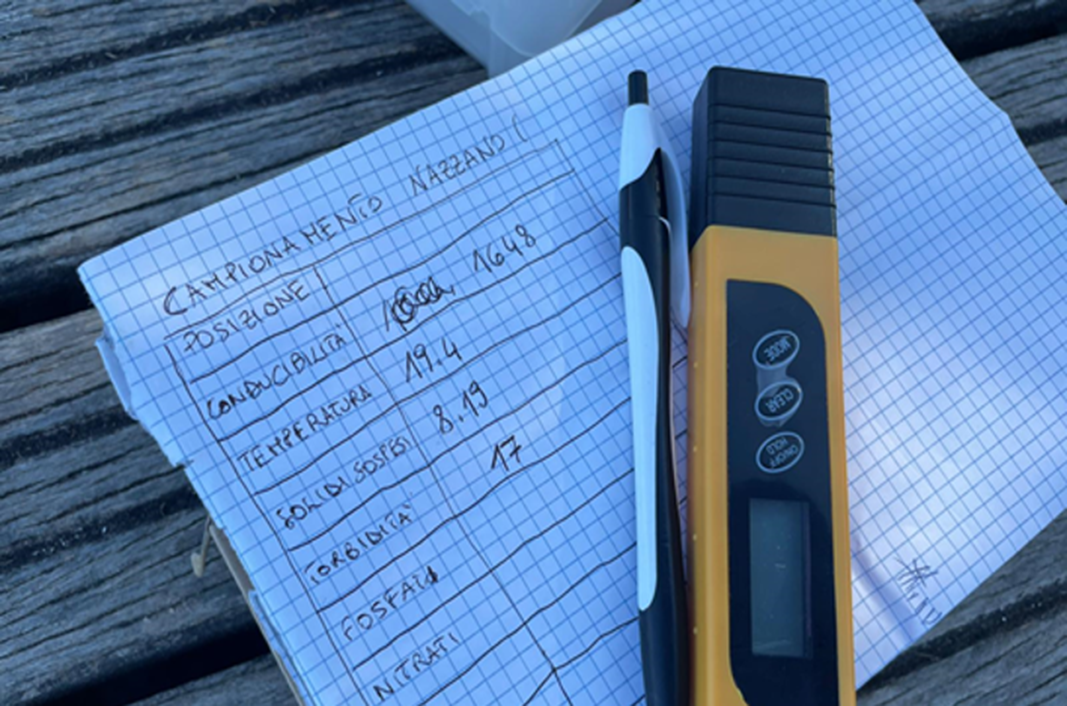
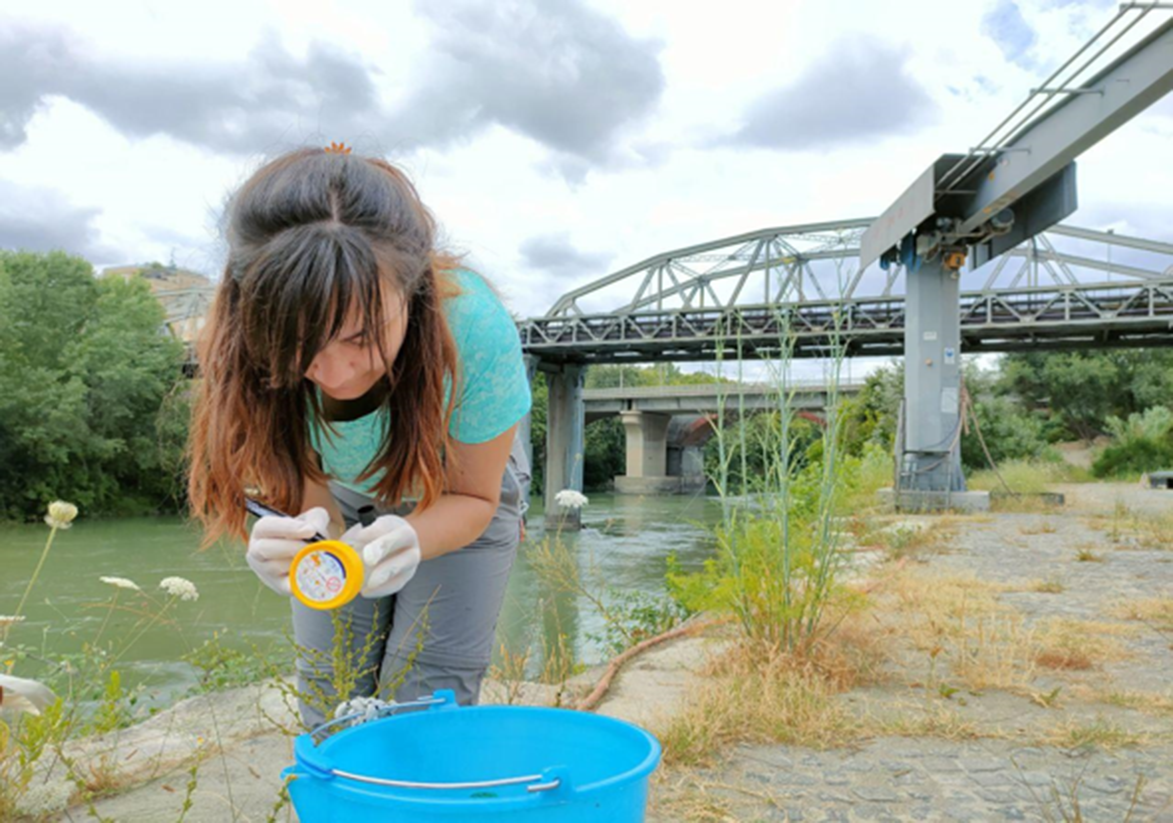
Local committees, associations and individual citizens joined in with the monitoring using tools such as that displayed in Figure 1. Approximately ten organizations and approximately fifty individual participants took part in the monitoring, although A Sud aimed at engaging at least 100 people. Thus, A Sud also worked on organising public initiatives for engaging more local inhabitants.Footnote 74 In the end, the social uptake of the initiativeFootnote 75 was lower than what was desired, partially due to the restrictions associated with the COVID-19 pandemic. Indeed, the first monitoring corresponded with the first day of the lockdown in Rome. In the lockdown period and its aftermath, people tended to remain isolated, limiting their social relationships. Thus, it was difficult for A Sud to involve new people.
Instrument to monitor the temperature, conductivity and other parameters of water at a sampling point north of Rome (photograph by A Sud).
Nonetheless, the project attracted the attention of other civic groups, such as Agenda Tevere, Footnote 76 an association promoting the joint management of the river with local actors through a “river contract” scheme. A “river contract” is a scheme through which the interventions of public administrations, water management services, private actors, associations and other organised local actors are coordinated to achieve the objective of river preservation and flourishing. The gathering of collective knowledge relating to a river can be a component of implementing a river contract. Interestingly, the establishment of a “river contract” had already taken place for the Aniene back in 2002.
In order to define the monitoring strategy, the civic actors engaged a river ecologist who was also experienced with citizen science. Remarkably, the expert was engaged by the civic groups and not vice versa (ie the scientist driving the initiative who engages the citizens, which is the more common pattern, as can be witnessed for citizen science projects in the health domain such as GenigmaFootnote 77 and Stall CatchersFootnote 78 ). The participants jointly decided that they wanted to estimate the diffuse pollution of the river’s water, so the monitoring sites were chosen to characterise the entire urban stretch of Rome as homogeneously as possible. The only exception was the sampling point located in correspondence with the intake of the Grottarossa drinking water plant, which was identified in order to monitor the quality of water captured, purified and then fed into the water network for the drinking water supply. In total, eight monitoring sites were selected, all located within the Grande Raccordo Anulare (the ring road surrounding Rome). One of them was set at Ponte Salario on the Aniene in order to evaluate the contribution of this stream to the Tiber.
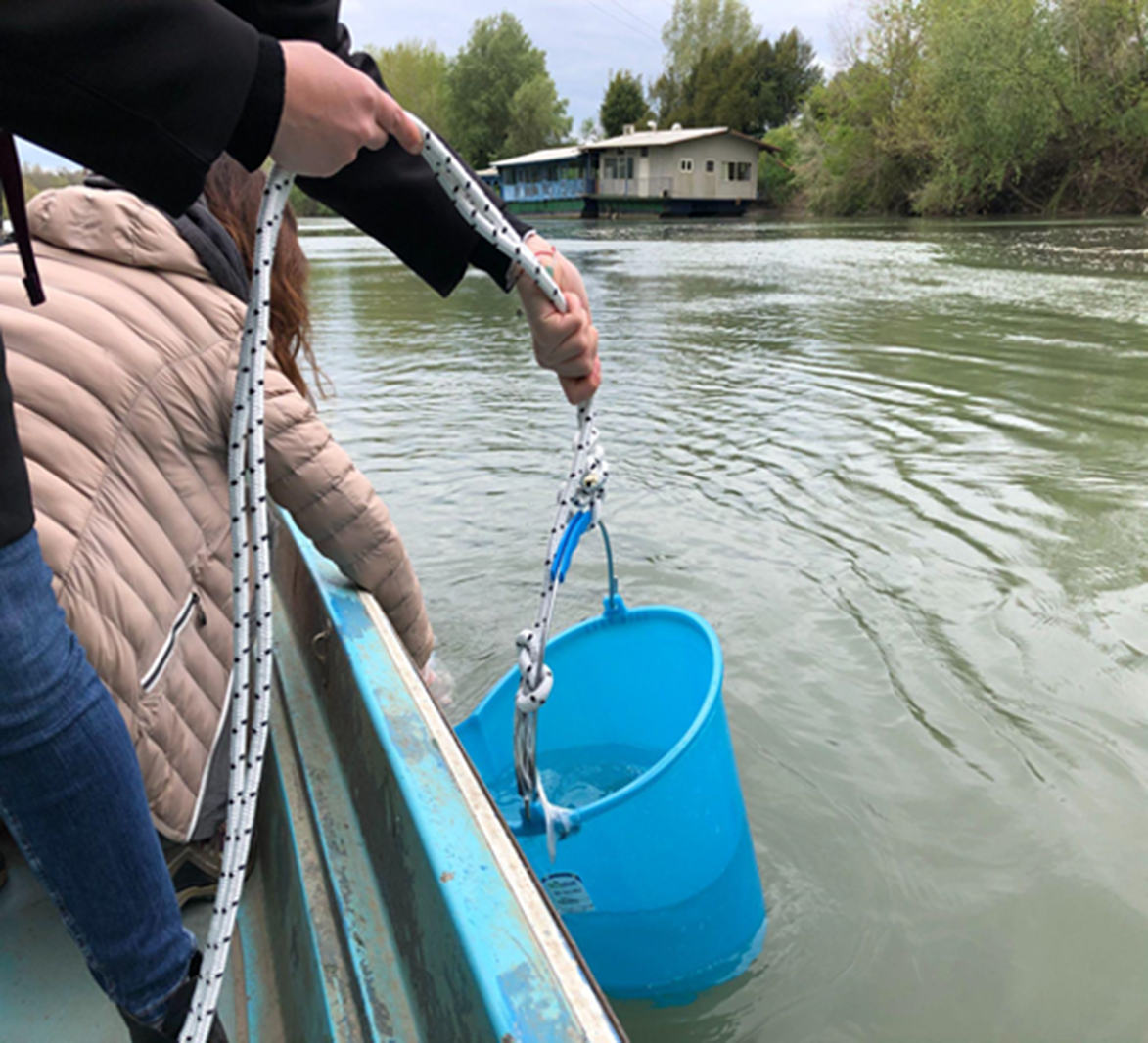
Based on scientific advice from the engaged river ecologist (but also due to budget constraints impeding more frequent measurements), each month, starting from March 2021 and continuing for one year, volunteers monitored water quality using portable and easy-to-operate water kits (see Figures 1 and 2). They gathered data on chemical and physical parameters such as conductivity, total suspended solids, pH (ie potential of hydrogen, measuring the acidity or alkalinity of water), temperature and turbidity.Footnote 79 Data on these parameters were collected as they provide basic information about the characterisation of a water body. Any change from a standard range may indicate some disturbance in the system. In addition, data on nitrates, phosphates and ammonium ions (NH4 +) were also measured, which are alarm parameters indicating a potential critical condition associated with oxygen deficiency (ie anoxia). This deficiency is a particularly concerning condition for the entire river ecosystem and it was considered by A Sud to be a potential cause of the fish deaths that had occurred in the river, as described earlier.Footnote 80 The monitoring campaigns carried out by RomaUP have partially confirmed the hypothesis that “anoxic bubbles” (ie conditions of the absence of oxygen in water) could have caused these fish deaths. However, given the characteristics of the river in the sections monitored, A Sud also recognises that these instances could have been triggered by a series of concomitant factors.Footnote 81 Finally, the water samples collected by the participants have also been analysed – this time through laboratory analyses – to assess whether there were traces of glyphosate (which was found once in the samples) and herbicides. These are harmful substances that are widely used in agriculture and often also in urban contexts.
Water sampling in the southern part of Rome, close to the Acea purification plant (photograph by A Sud).
In terms of the actual deployment of the initiative, the monitoring of the listed parameters was carried out according to the methods developed by Fresh Water Watch, Footnote 82 a global citizen science project from Earthwatch Europe aimed at researching and protecting freshwater resources. This is remarkable as it shows that even small-scale, local forms of civic monitoring can take inspiration from and be amplified by larger-scale citizen science initiatives. Each sampling from RomaUP is uploaded on the platform of the Fresh Water Watch Citizen Science Observatory. Footnote 83 This makes the local data visible to wider audiences.
3. The Walk Up Aniene monitoring project
Building on the larger RomaUP initiative, local civil society actors, such as the non-profit Insieme per l’Aniene, Footnote 84 with the guidance of A Sud, developed the Walk Up Aniene project. The initiative aimed at monitoring the status of the Aniene throughout the Nature Reserve of the Aniene Valley. Footnote 85 The project was supported by the Horizon 2020 ACTION programme. This shows a virtuous circle entailing further interventions stemming from an existing and more established civic monitoring reality. Walk Up Aniene has facilitated the engagement of approximately 100 participants from the city of Rome (all joining the training and half of them also joining the monitoring), demonstrating greater social uptake compared to RomaUP.
The main driver of the initiative was the fact that data on the environmental status of the Aniene were fragmented and/or not up to date, mostly due to the lack of economic resources for the systematic collection and dissemination of river data. Footnote 86 From the need to deepen existing knowledge on the status of the reserve, Walk Up Aniene aimed at building a civic knowledge base in order to highlight priorities for action and elements to be taken into account for management policies.
After training the participants, the project ran systematic and continuous sampling of the Aniene river shaft (ie the riparian area and immediate surroundings) using two survey instruments: the “Evaluation Sheet of the Ecomorphological Quality” of a watercourse Footnote 87 and the “Fluvial Functionality Index”. Footnote 88 Applying both methods and comparing the results improved data granularity and accuracy. By joining and simplifying both survey instruments into one accessible observation questionnaire, Walk Up Aniene made it easier for ordinary people to collect information on the status of the riverbanks, a task previously performed only by researchers. This multiplied the granularity of the measurements, now covering river stretches along the entire reserve. As participants had received training on standard scientific methods for water sampling (these methods had been adapted to be undertaken by ordinary people), they were able to perform state-of-the-art measurements that are comparable to those performed by professional scientists.
In terms of social uptake and scientific quality of the initiative, the citizens’ participation has been shown to be quick and successful both in terms of numbers of people engaged as well as in terms of the quality of the data collected. Walk Up Aniene proved to be an efficient engagement strategy to reach those citizens who were concerned for the reserve or were interested in the broader topics covered (urban nature preservation, ecology research, civic monitoring, etc.). In this endeavour, the depth of the network of the promoters and their capacity to reach local inhabitants, community leaders, local committees and schools have been fundamental. The presence of an active local association taking care of the park promoted the engagement of local dwellers who, being unable to travel much due to the COVID-19 restrictions, could rediscover nature close to their homes.
The participants used tools commonly used in the field of monitoring (observation questionnaires, mobile technologies; ie the Epicollect application Footnote 89 ) to build up the database on the status of the Aniene. Although data quality in citizen science projects is frequently called into question,Footnote 90 the quality control processes carried out on the collected data showed these data to be fully satisfactory, achieving 85 per cent reliability according to the final report of the initiative. Footnote 91 Furthermore, the results of the individual evaluation sheets for each sampling point showed discrete correspondence, which can be read as an indication of the accurate acquisition of knowledge on how to conduct the monitoring during the training prior to the fieldwork. Furthermore, the civic monitoring scheme that was followed proved to be an easily replicable operational model in other locations.
The results of the data collection for Walk Up Aniene show better river quality and functionality in river sections that are more distant from the city centre, whereas the environmental status of the river and its banks are more compromised in the more urbanised areas and at the confluence with the Tiber.Footnote 92 This confirmed the concerns of the participants that river degradation is probably due to the numerous illegal dumpsites and settlements along the urban riverbanks. Interestingly, the results enabled an understanding to be gained regarding which factors had the greatest impacts on the final evaluation of the environmental status of each stretch or bank, making it possible to hypothesise causes and corrective actions to be taken. Among other things, the data show that the quality of the riparian vegetation is the most affected system in the overall area studied, and it is also the factor contributing the most to general environmental quality.Footnote 93
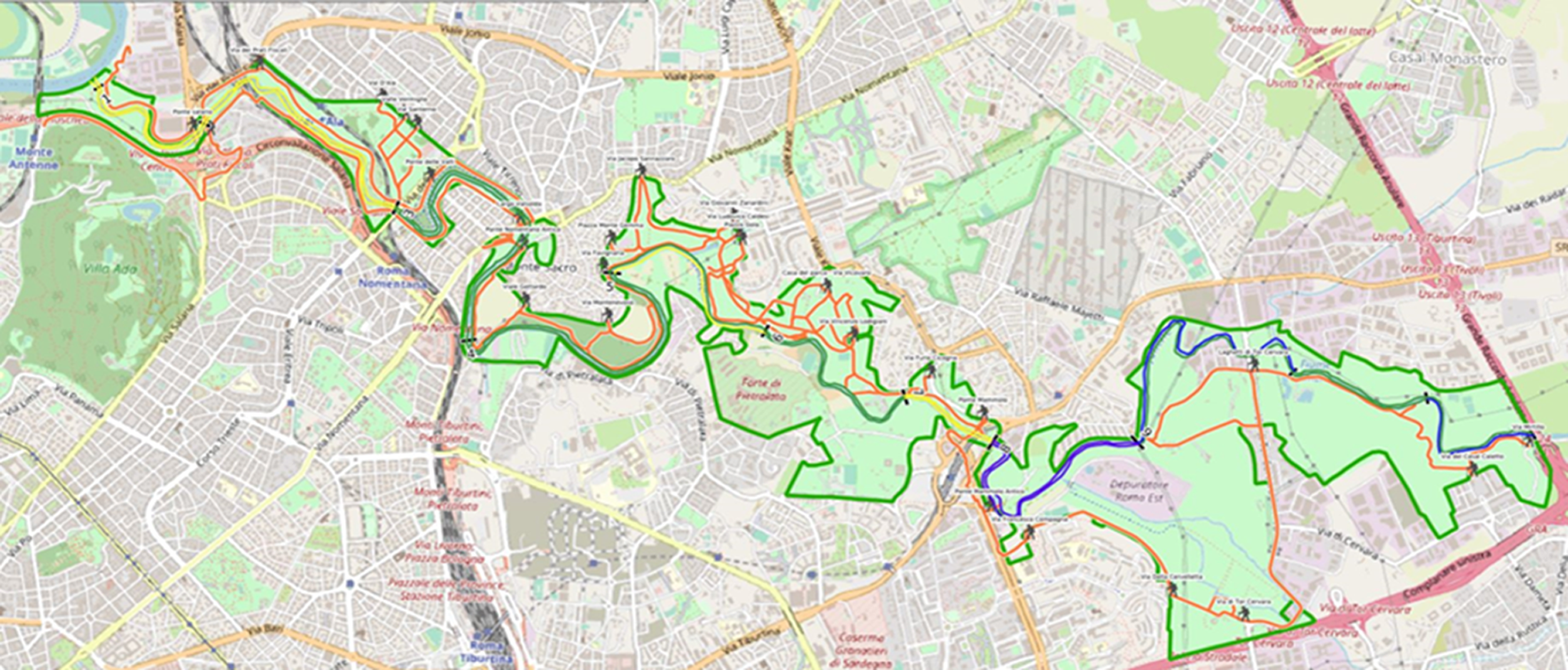
The civic monitoring delivered a complete picture of the riparian river area (see Figure 3), highlighting places of greatest importance for the conservation of the river environment, those at the greatest risk of deterioration and hydrogeological instability and those of greatest ecological value. Footnote 94 Such data are expected to facilitate a science-based dialogue with competent institutions in order to inform and steer interventions in the Aniene Valley. In particular, the production of a final report based on the initiative’s findings that includes recommendations Footnote 95 will help to better focus future research and advocacy actions directed at authorities. This knowledge could be particularly useful to those public and private entities that in the future will design and implement interventions within the Aniene basin. Such data could also be valuable in shaping decisions in relation to the ongoing experimentation regarding a river contract and its scaling up to the whole river basin. Footnote 96 Lastly, the results of the initiative could be useful for suggesting further investigations to be carried out by (citizen) scientists and by competent authorities.
Interactive map of the geomorphological status of the Aniene (open access).
IV. Discussion
1. The potential of the “citizen sensing paradigm” to accelerate urban transitions
The theoretical frame introduced at the opening of this article enabled us to define the “citizen sensing paradigm”, which is the engagement of ordinary people in environmental monitoring not (only) out of scientific curiosity but also for advocacy, underlying an intention to push for (governmental) interventions, while building knowledge from the ground up. This all occurs in a context of distrust towards institutions that seem to struggle (at least in the people’s eyes) with tackling the described “wicked problems”. Both monitoring initiatives observed had a distinctive drive for policy impact, and this is particularly visible in the recommendations produced for the public administration by Walk Up Aniene. Footnote 97 Therefore, a first key finding of our analysis is that citizen sensing can be a way to demand interventions, especially of policymakers and decision-makers, and to suggest alternatives. This is in line with the conclusions reached by Gabrys et al, who discuss how citizen data give rise to alternative ways of addressing collective environmental problems.Footnote 98 In our view, initiatives such as those discussed in this article could trigger a virtuous process of social innovation. Furthermore, although not foreseen by the initiatives at the moment, these claims could also be advanced in judicial fora (eg supporting the ongoing public inquiry into the fish deaths of the Tiber).
Another relevant perspective taken from our theoretical frame is that of “small win” interventions. The initiatives observed are relatively small-scale, situated instances that, however, are able to produce evidence for change, or at least to demand this change to occur based on the evidence that ordinary people have collected. This finding also echoes what has been argued by Gabrys et al.Footnote 99 The successful example of Walk Up Aniene is already triggering other civic monitoring initiatives across the city and may initiate a virtuous circle of similar activities. Moreover, river contracts based on collective knowledge-making could begin to multiply. The key finding under this frame is that civic monitoring can be an incremental intervention that stimulates solutions.
Both final reports of the initiatives cited show how the two civic monitoring processes have a transformative potential (ie the possibility of influencing the governance of the city’s resources towards a more sustainable and inclusive city model). This is “only” a potential, not an actual transformation. Yet the initiatives have already offered to the scientific world and the political sphere knowledge that could be valuable in the design of environmental control and remediation schemes. The reports point to civic monitoring as an efficient early-warning system to report anomalies and environmental risk factors to the authorities, who are often unable to deploy comprehensive oversight.Footnote 100 Future developments stemming from the initiatives in the coming years will prove or disprove this statement (eg whether the data produced will actually steer city authorities).
Furthermore, the production of knowledge from the ground up can contribute to the redefinition of the future of a community, starting from local instances and shifting patterns of stagnant governance. Instead of giving up on their own ability to shape the city’s future, through the collection of scientific evidence related to health and environmental problems the participants could develop or regain a sense of belonging to their territories and strengthen their identity and democratic vocation, all while overturning entrenched dynamics of power.
Both of the points just stressed are linked to another finding: that of citizen sensing at the “extremes” that becomes an act of resistance of communities exposed to environmental and social injustices. We can affirm that, through these initiatives, citizens adopted a role in promoting the well-being of their city, they felt reconnected to (lost) spaces and they could – although minimally – contribute to reducing urban distress. Civic monitoring can stimulate a city’s transition towards a more sustainable and inclusive future Footnote 101 by stimulating care for the city’s resources and building social relationships, beyond just producing scientific results. Footnote 102
In light of this last point, another finding relates to how the initiatives influenced individual and collective attitudes. Questionnaires filled in by the participants before and after joining the Aniene monitoring scheme demonstrated that people increased their knowledge of the Nature Reserve of the Aniene Valley, and this changed their perception of it in a positive way. Participants also reported an increased inclination to visit the reserve and to pay attention to and report environmental degradation. Therefore, we can affirm that the initiative generated a sense of care and of responsibility towards local resources. Furthermore, the participants affirmed that their trust towards those civil society organisations acting for the protection of the reserve was improved after joining the initiative. In the case of RomaUP, the low number of participants actually involved makes it more difficult to assess any beneficial effects at an individual and collective level.
Lastly, and with an eye to the collective dimension of citizen sensing, the initiatives fostered and were themselves social innovations. The case studies analysed appear to be both process- and goal-oriented initiatives that accelerated an ongoing transition of the city towards a more sustainable and inclusive way of managing its resources. Conceivably, in the city of the future, governance (including environmental monitoring) would be truly polycentric and thus also would rely on the “collective intelligence” of local actors and caring communities, as in the studied cases.
2. The scientific and public benefits of the initiatives
The scientific robustness of the initiatives was strengthened by the fact that professional scientists also joined the civic efforts for defining the scientific protocols of the initiatives and adapting them for use by ordinary people. This enhanced local expertise and refined the data collection strategy. The data produced showed high reliability (ie 85 per cent reliability for Walk Up Aniene, as the final report notes). Footnote 103 In particular, scientists helped the citizens to identify which parameters were relevant for monitoring (see Figure 4) and how to make this monitoring comparable and even better (in terms of granularity; ie level of spatial detail) than that of the competent authorities. The initiatives not only triggered a process of care by the people involved, but also a curiosity for science, boosting the skills of the inhabitants who gained abilities that will be a social resource for the future.
Water sampling for nitrate and phosphate in the southern part of Rome after the construction of the Acea purification plant (photograph by A Sud).

The citizen scientists could monitor areas that were overlooked by competent authorities for a variety of reasons (mainly lack of time and resources). Indeed, participants explored each month not only the most common access points to the Tiber and Aniene such as the central segments reachable by bike path, but also those where access is more difficult (eg being possible only by passing through occupied lands or by cutting through vegetation with a sickle). Overall, this information asset fills existing gaps in scientific and public knowledge and could be of value both for scientists and for policymakers.
In addition to the scientific and public benefits, it is interesting to regard the initiatives as forms of “service provision”, entailing (social) innovation in the provision of an environmental service not only for peer citizens but also for policymakers. After the RomaUP training, civic actors became able to use low-cost tools to provide the service of collecting and analysing environmental data. They also became able to spread this knowledge within their territories and communities, providing a service for peer citizens both in terms of training and in terms of actual support for the replication of the initiatives through pilots, where needed. For example, Snia Park in Rome has also started air quality monitoring activity thanks to the acquisition of knowledge regarding monitoring tools provided by A Sud. Foreseeable spin-off initiatives will be able to act independently based on the knowledge acquired. However, A Sud will continue to conduct capacity-building activities and advise local communities on running new monitoring projects.
Data on the concrete political influences of the initiatives are still incomplete, but nevertheless we can make some observations on the two citizen science initiatives discussed. For both initiatives, recommendations for policymakers have been produced, Footnote 104 but the question still remains as to whether such recommendations will be listened to by decision-makers. At this stage, we can say that this knowledge asset could enable citizens in the near future to pressure institutions to take greater care of river ecosystems. Being an active part of the monitoring process has made people feel more responsible for the state of their river and more inclined to carry out advocacy towards institutions.
Rome’s Committee for Public Water, together with A Sud, and based on the results of the two initiatives, is exerting pressure on the Rome Municipality and Acea, the multi-utility provider that is also in charge of water supply in Rome, urging them to take action as a result of the collected data. One of the lines of action will aim to block the plan for purifying the water of the Tiber for drinking purposes because of the environmental problems detected and consequent risks for citizens’ health. Recent initiatives by Acea – such as the DepurArt projectFootnote 105 – aimed at bringing the public closer to the process of water purification by turning a water purification plant into a cultural centre suggesting that Acea recognises the importance of meaningfully engaging with the people.
Furthermore, recently, A Sud presented the data and a dossier stemming from the two monitoring initiatives to local authorities (the Lazio Region and ARPA) and requested and obtained the stipulation of a protocol with ARPA for collaboration on the exchange of information. They are also replicating the same monitoring activities on other environmental matrices (such as air quality) in light of recent events that affected Rome (ie urban fires). The Lazio Region with its environment department has publicly recognised the validity of A Sud’s monitoringFootnote 106 and is pushing for ARPA to consider it as a fundamental contributor of information on the state of the health of the Tiber, thereby enhancing the participatory process. We will only be able to assess the impacts of these (early) interventions and advocacy strategies in the future, but they already indicate that remarkable levels of attention are being paid to the initiatives.
V. Conclusions, limitations and future research avenues: citizen sensing as a “small win” intervention boosting broader transitions
In this article, we illustrate how Rome – the eternal city admired for its beauty and charm – is nonetheless struggling in multiple dimensions regarding the environmental degradation that is impacting its inhabitants’ well-being and their attitude towards the city administration. Our study addressed creative forms of social innovation that start from situated problems and that have the capacity to accelerate or even trigger broader social and environmental justice outcomes. The problems targeted by our case studies were those of the scarcity and poor quality of Rome’s river waters and the degradation of surrounding river ecosystems. Interventions in our case meant collective civic monitoring of the riverbanks and waters and the production of a knowledge pool that also has the potential to stimulate a transition towards more sustainable and inclusive city management.
A transition does not stem automatically from knowledge creation. Therefore, we can identify three convincing aspects that can trigger change when coupled with knowledge creation. First, we identified the advocacy potential of the knowledge created: the participants increase their awareness but also their sense of responsibility towards local resources and start demanding interventions. Second, when public administrators realise that more and more people care about their rivers, this can initiate a virtuous circle in which public support is provided to the civic actors and structural cooperation is established. Third, as civic monitoring can be seen broadly as a public service, we can imagine that similar experiences could stimulate the embracing of polycentric governance in practice through institutional implementation/endorsement of decentralised monitoring.
We demonstrated that civic monitoring can be beneficial not only for public administrations but also at the individual and community level. Indeed, it can shape, redeem and possibly redefine the future of individuals and local communities that suffer due to river degradation. The initiatives also have had a positive impact on individual attitudes towards the city and its resources: they stimulated a sense of care and of attachment. At a collective level, all of this stimulated the formation of a watchful citizenship that will oversee the way in which the city will embrace the green transition at the local level, in line with what has been detailed by the European Green Deal strategy. Footnote 107
Furthermore, we argue that the engagement of professional scientists in the two initiatives, the preparatory training offered to the participants by A Sud and the ability for the citizens to reach difficult-to-access places made it possible to create a robust knowledge base. The data generated were comparable or perhaps even better (in terms of granularity) than those stemming from the monitoring carried out by the competent authorities. The knowledge collected could be of interest for peer citizens but also for the policymakers in charge of monitoring the rivers’ ecosystems. Under this perspective, we regard citizens as “service providers” for authorities. Providing competent authorities and communities with a large quantity of good-quality data is in itself a public and social service for more informed policy development and interventions. This could prevent mismatches occurring between the data needed for policy purposes and the data currently available. Footnote 108 The citizen scientists therefore complemented official data and even filled in gaps in such knowledge by being able to access areas that the authorities could not (as displayed in Figure 5). Based on this knowledge asset, we expect citizens to pressure institutions to take greater care of their rivers.
Labelling samples to be sent to laboratory, near Ponte di Ferro, south-central region of Rome (photograph by A Sud).
Reactive or extreme citizen science in this context becomes a fundamental advocacy tool, strengthening the impacts of local committees and associations in their dialogue with institutions, especially in cases such as a big, complex city like Rome, where people feel detached from the city and its decision-makers. As Butkevičienė et al argue, addressing the policy level is a key step in citizen science projects framed as social innovations. Footnote 109 Therefore, it is important that sustainable advocacy actions continued to be promoted once the civic monitoring and scientific processes finish.
We can now highlight some limitations of our study. The initiatives are comparable only to a certain extent, in terms of organising group (the association A Sud), activity (water quality monitoring) and that they both engaged a significant number of citizens in gathering data (eg tens of people). However, whereas RomaUP had only recently concluded at the time of writing this article, Walk Up Aniene had already delivered its results quite some time ago. This makes it more difficult to draw conclusions regarding the impacts of RomaUP’s results. However, recent developments outlined in the previous section show RomaUP’s promising policy influences.
Our study is also limited in scope: we targeted only the city of Rome and studied only two specific cases, whereas focusing on comparable cities experiencing similar distress to that of Rome and similar citizen science interventions could be helpful to test and compare our findings and conclusions. We deem that more research should be performed to refine the theoretical notion of the citizen sensing paradigm as a “small win” intervention capable of triggering broader transitions towards more sustainable and inclusive urban governance. A comparative study across different cities in different countries performed with this theoretical lens in mind could be particularly enlightening. Furthermore, the engagement of scholars from the urban governance and urban justice fields could enable the scaling up of our proposition to other areas of intervention beyond environmental monitoring to include – for example – urban safety, public well-being and quality of public services. Lastly, we hope that future research will continue to empirically explore the actual scientific, social and especially advocacy and political impact of initiatives such as those that we studied in this contribution.
Financial support
This research benefits from the support of the ongoing individual research grant for the first author, the Marie Skłodowska-Curie Actions Individual fellowship grant agreement ID: 891513.
Competing interests
The authors declare none.


 Open access

