


1. Introduction
Despite women’s and men’s convergence in many economic outcomes such as high-school performance (Fortin Reference Fortin2005), college enrollment and graduation (Goldin, Katz & Kuziemko Reference Goldin, Katz and Kuziemko2006), labor force participation (Goldin Reference Goldin2014), and wages (Kleven & Landais Reference Kleven and Landais2017), women consistently display lower levels of financial literacy than men (Bucher-Koenen et al. Reference Bucher-Koenen, Lusardi, Alessie and Roojvan2017).Footnote 1 Particularly severe and widespread across many countries (Lusardi & Mitchell Reference Lusardi and Mitchell2014; Madhavi & Horton Reference Mahdavi and Horton2014; Hasler & Lusardi Reference Hasler and Lusardi2017; Klapper & Lusardi Reference Klapper and Lusardi2020), this gender gap is of great concern given the relevance of financial literacy on day-to-day financial management skills (Lusardi & Mitchell Reference Lusardi and Mitchell2014; Bannier & Schwarz Reference Bannier and Schwarz2018; Bannier & Neubert Reference Bannier and Neubert2016). At the same time, gender differences in preferences concerning time, risk, and social interactions have been documented (Croson and Gneezy Reference Croson and Gneezy2009; Falk et al. Reference Falk, Becker, Dohmen, Enke, Huffman and Sunde2018), and they have been shown to systematically shape men’s and women’s differential economic behavior such as occupational choice, financial investment, or educational decisions (DeLeire and Levy Reference DeLeire and Levy2004; Buser, Niederle, Oosterbeek, Reference Buser, Niederle and Oosterbeek2014).
What is the role of culture as opposed to institutional or economic constraints in explaining the gender gap in financial literacy? If institutions matter, women may choose to invest less in financial knowledge than men because they expect lower returns to their knowledge given the higher legal and regulatory barriers they face relative to men (Brush et al. Reference Brush, Carter, Gatewood, Greene and Hart2004; Klapper & Parker Reference Klapper and Parker2010; Asiedu et al. Reference Asiedu, Kalonda-Kanyama, Ndikumana and Nti-Addae2013; Driva & Winter Reference Driva2016) or because they are systematically discriminated by financial institutions (Alesina et al. Reference Alesina, Lotti and Emilio Mistrulli2013; Niessen-Ruenzi & Ruenzi Reference Niessen-Ruenzi and Ruenzi2018; Brock & de Haas Reference Michelle and De Haas2019; Bhattacharya et al. Reference Bhattacharya, Kumar, Visaria and Zhao2020; Bucher-Koenen et al. Reference Bucher-Koenen, Hackethal, Koenen and Laudenbach2020). Alternatively, if cultural influences are most relevant, beliefs regarding financial matters (cultural beliefs) or preferences nested in the culture of origin might explain the size of the gender gap in financial literacy. For example, women’s lower financial knowledge may result from internalizing what constitutes being a woman and behaving according to a woman’s gender identity (Akerlof & Kranton Reference Akerlof and Kranton2000) regarding financial matters. This internalization process may affect a woman’s beliefs of her own financial abilities (“women are not good with money” or “women are not good with financial investments,” Chen & Volpe Reference Chen and Volpe2002), her (lack of) interest in financial matters (“as I am a woman, I am not motivated by money” or “as I am a woman, I do not care about money”), or her confidence and willingness to engage in tasks that are outside of a gender-specific domain (Coffman Reference Coffman2014). Alternatively, if preferences more generally matter, women’s lower (men’s higher) financial knowledge may result from a woman’s (or man’s) beliefs of her higher (his lower) impatience relative to that of men (women) or of her higher (his lower) altruism relative to that of men (women). In this paper, we investigate the role of culture, intended both as beliefs regarding financial matters and as preferences, in explaining the gender gap in financial literacy.
To study the relevance of culture regarding gender differences in financial knowledge in accounting for the gender gap in financial literacy in the United States, we apply the approach developed by Fernández (Reference Fernández2018), that is, the epidemiological approach. We compare the financial literacy of a nationally representative sample of men and women who live and were (mostly) born in the US and hence share the same institutional (including educational and financial) settings, but who identify with different countries of ancestry and hence are influenced by “customary beliefs and values that ethnic, religious, and social groups transmit fairly unchanged from generation to generation” (Guiso, Sapienza & Zingales, Reference Guiso, Sapienza and Zingales2006). To prevent picking up confounding factors that impact men and women in the same way, such as economic development or human capital development specific to each country, we exploit variation across genders within a country-of-ancestry in addition to variation across countries of ancestry as in Nollenberger, Rodríguez-Planas & Sevilla (Reference Nollenberger, Rodríguez-Planas and Sevilla2016). If the US gender gap in financial literacy is mainly a factor of the institutional and normative background in the US (after controlling for sociodemographic characteristics known to be associated with financial sophistication), the gender gap in financial literacy or in preferences from the country of ancestry should be irrelevant. Evidence that country-of-ancestry gender differences in financial literacy or preferences are associated with the gender gap in financial literacy in the US would provide evidence that culture, transmitted across generations and/or through social networks, matters.
Using a sample of 9,623 individuals from the National Longitudinal Survey of Youth who identify with 26 different ancestries, we first analyze whether coming from countries of ancestry with greater gender differences in financial literacy (as measured by the country-level S&P Global FinLit Survey) is associated with a higher financial illiteracy for women in the US relative to their male counterparts. We find that the smaller the gender gap in financial literacy in the country-of-ancestry, the smaller the gender gap in financial literacy in the US. More specifically, a one-standard-deviation decrease in the gender gap in financial literacy in the country of ancestry is associated with a 28% smaller gender gap in financial literacy in the US. This suggests that cultural beliefs regarding gender differences in financial knowledge shape differentially men’s and women’s financial literacy in the US. Notably, we find that these smaller gender gaps in financial literacy in the US are driven by a decrease in men’s financial literacy.
We then proceed to identify the mechanisms behind this result. First, we rule out that these findings are driven by confounding factors related to gender differences in economic or human capital development in the countries of ancestries or to gender differences in respondents’ sociodemographic characteristics, parental wealth, and financial sophistication, or cognitive or noncognitive skills. Second, we identify which gender differences in preferences shape men’s and women’s financial literacy in the US using a novel dataset on Global Preference Survey (Falk & Hermle Reference Falk and Hermle2018). We find that men’s lower financial knowledge in the US and women’s higher financial knowledge relative to their male counterparts are associated with smaller gender gaps in country-of-ancestry patience and altruism.Footnote 2
Importantly, netting out these preferences from country-of-ancestry financial-literacy gap reveals that smaller gaps in financial literacy are linked to higher women’s (relative and absolute) financial literacy in the US, with no impact on men. Together, these findings suggest that (1) beliefs regarding gender gaps in financial knowledge, beyond those associated with patience and altruism, are associated with women’s (relative and absolute) greater financial literacy in the US and (2) more patience and less altruism in the country of ancestry are associated with greater financial literacy for men but not for women in the US. The relative and absolute female improvement is particularly robust for knowledge related to inflation and risk diversification.
In addition to contributing to studies on the socioeconomic and demographic determinants of the gender gap in financial literacy (Fonseca et al. Reference Fonseca, Mullen, Zamarro and Zissimopoulos2012; Bucher-Koenen et al. Reference Bucher-Koenen, Lusardi, Alessie and Roojvan2017) and on non-cognitive skills as determinants of the gender gap in financial literacy (Arellano, Cámara & Tuesta Reference Arellano, Cámara and Tuesta2018), our work blends two strands of the literature: studies analyzing the cultural dimension of financially literacy (Filipiak & Walle Reference Filipiak and Walle2015; Brown, Henchoz & Spycher Reference Brown, Henchoz and Spycher2018)Footnote 3 and studies analyzing the cultural dimension of gender differences in cognitive skills (Nollenberger, Rodríguez-Planas & Sevilla Reference Nollenberger, Rodríguez-Planas and Sevilla2016). Brown, Henchoz & Spycher (Reference Brown, Henchoz and Spycher2018) identify cultural differences in financial literacy among French- versus German-speaking secondary-school students in the Swiss Canton of Fribourg but do not study the cultural dimension of the financial literacy gender gap. Filipiak and Walle (Reference Filipiak and Walle2015) identify a differential gender gap pattern in financial literacy in India based on whether individuals live in matrilineal versus patriarchal environments in India, and Nollenberger, Rodríguez-Planas & Sevilla (Reference Nollenberger, Rodríguez-Planas and Sevilla2016) show that gender differences in math test scores are socially constructed. The current paper investigates the cultural dimension of the gender gap in financial literacy in the US and identifies the role of country-of-ancestry gender differences in preferences. Three papers are particularly close to our work: Davoli & Rodríguez-Planas (Reference Davoli and Rodríguez-Planas2020), Bottazi & Lusardi (Reference Bottazzi and Lusardi2021) and Hanushek et al. (Reference Hanushek, Kinne, Lergetporer and Woessmann2022). Davoli and Rodríguez-Planas (Reference Davoli and Rodríguez-Planas2020) found that financial knowledge is socially constructed, but do not speak to whether and the extent to which culture can explain the observed gender differences in financial literacy. Bottazi & Lusardi (Reference Bottazzi and Lusardi2021) find evidence that the cultural environment in which girls and boys in Italy live (measured with medieval commercial hubs and the nuclear family structure) plays a crucial role in explaining gender differences in financial literacy. Our work shifts the attention to adult financial literacy and exploits cultural variation across a wide set of countries of ancestry, providing additional external validity (in terms of both age groups as well as geographical external validity) to Bottazi & Lusardi (Reference Bottazzi and Lusardi2021). Finally, using a similar identification strategy as Hanushek et al. (Reference Hanushek, Kinne, Lergetporer and Woessmann2022), we disentangle the role of gender differences in country-of-ancestry preferences (namely patience and altruism) from other beliefs related to financial knowledge. Hanushek et al. (Reference Hanushek, Kinne, Lergetporer and Woessmann2022) show how students’ preferences specific to their country of origin, in particular patience and risk-taking, have a large impact on test scores of 15-year-old students. Our work answers instead to the role of patience, risk-taking, and altruism in explaining the gender gap in financial literacy. By studying the cultural component behind the gender gap in financial literacy and identifying its driving mechanisms, the current study advances knowledge that ought to help design policies to improve financial literacy among both men and women underscoring the role of preferences regarding patience and altruism for men and cultural beliefs about own financial abilities or interest for financial matters for women.
2. Data
The main dataset used in the analysis is the National Longitudinal Survey of Youth (NLSY hereafter), a nationally representative study of different cohorts of individuals followed over time since they were teenagers, which provides us with a representative snapshot of financial literacy in the United States. Both the NLSY97 cohort (adults born between 1980 and 1984) and the NLSY79 one (adults born between 1957 and 1961) answered a one-time module of three financial literacy questions on inflation, risk diversification, and interest rate (added to the NLSY following Lusardi, Mitchell, & Curto, Reference Lusardi, Mitchell and Curto2010).Footnote 4 Using this information, we measure respondents’ financial literacy with a dummy variable equal to one if the respondent answered the three NLSY questions regarding inflation, risk diversification, and interest rate correctly and zero otherwise as in Lusardi & Mitchell (Reference Lusardi and Mitchell2008)—see Table A.1 in the Appendix for the wording of the three questions. In addition, we make use of different measures of individual’s sociodemographic characteristics (including parental education, employment, and wealth and financial sophistication while the respondent was a teenager), as well as information on her household composition, marital status, employment status, citizenship status, region of residence, and whether she lives in an urban or rural area to control for socioeconomic and demographic determinants of individuals’ financial knowledge. Appendix Table A.2 presents basic descriptive statistics of all the NLSY variables that we use in the study.
We merge the individual-level data from the NLSY with country-of-ancestry measures of gender differences in financial literacy and preferences, derived from the S&P Global FinLit Survey and the Global Preference Survey. Both surveys are large-scale, cross-country, and nationally representative. The S&P Global FinLit Survey, collected in 2014 by a joint effort of the World Bank, Gallup, and the Global Financial literacy Excellence Center, provides the most comprehensive measurement of financial literacy around the globe, and it allows to create a measure of the financial literacy gender gap for each country of ancestry. The survey measures the share of a country’s adult population that is financially knowledgeable by asking five questions on four fundamental concepts for financial decision-making (risk diversification, inflation, basic numeracy, and interest compounding, as detailed in Appendix Table A.3) to more than 150,000 adults living in over 140 countries. The survey was conducted on approximately 1,000 people in each of the participating countries, randomly selected to be representative of the entire population aged 15 years and above and providing a final coverage of more than 97% of the world population. Data are weighted to ensure a nationally representative sample for each economy, hence correcting for sampling and nonresponse.
The four financial concepts are similar to the ones captured by the NLSY variable, and we constructed to measure individuals’ financial literacy in the US. Because interest compounding is a harder concept, the survey asks two questions measuring knowledge of this concept and respondents need to answer only one out of two questions correctly to get a score of one. Using this dataset, the S&P FL Index defines a person as financially literate when she demonstrates understanding of at least three out of the four financial concepts. We then measure the gender gap in financial literacy in the country of ancestry as the difference between the proportions of women and men who are financially literate in each country following Hasler & Lusardi (Reference Hasler and Lusardi2017). This is our main explanatory variable.
Following Fernández (Reference Fernández2018) and central to the epidemiological approach is the use of a quantitative variable, which directly reflects the cultural attitudes of interest, as a proxy for cultureFootnote 5 . In our setting, the gender difference in financial literacy in the country of ancestry is a proxy for culture. In fact, this aggregated variable reflects a whole series of economic and institutional factors that may differ across countries (e.g., women systematical discrimination by financial institutions, higher legal and regulatory barriers women face relative to men, the likelihood of men being the financial decision makers in married couples, etc.), as well as individuals’ preferences and beliefs, broadly defined. That is, this measure may depend on how individuals perceive the role of women in the household, preferences over financial decision making, and expectations about what it constitutes being a woman and behaving according to a woman’s gender identity regarding financial matters. Hence, the financial literacy gender gap at the aggregate level will depend on the distribution of preferences and beliefs within a country, and this distribution may also vary across countries, reflecting variation in culture. If this aggregate variable has explanatory power for financial literacy outcomes of second- (and third-) generation respondent in the US, even after controlling for their individual economic attributes, it is only through the cultural beliefs transmitted to them from their parents (or their parents’ peers from the same country of ancestry living in the US) as the relevant institutions regarding financial knowledge of second- (and third-) generation are those of the country they were born in and live, that is, the US. Therefore, the gender gap in financial literacy in the country of ancestry is a proxy for country-level cultural beliefs regarding gender differences in financial literacy.
The Global Preference Survey, collected as part of the Gallup World Poll 2012, drew representative samples from 76 countries around the world for a total of about 80,000 individuals providing validated individual-level measures of economic preferences at a global scale (Falk & Hermle Reference Falk and Hermle2018). Preferences in the following domains are measured: (1) patience and (2) risk-taking, which both capture preferences over the intertemporal timing of rewards; (3) positive reciprocity, which capture the costly willingness to reward kind actions; and (4) altruism. All domains were individually measured through 12 qualitative and quantitative questions items, ex-ante experimentally validated, and pre-tested to cultural heterogeneities to provide comparable cross-countries measures of preferences. Our analysis collapsed each preference at the country-by-gender level, using the sampling weights provided by Gallup and following the same procedure as in Falk & Hermle (Reference Falk and Hermle2018). Using such information, we create representative measures of preferences for each country of ancestry by gender. We define the gender difference in preferences as the country-of-ancestry difference between average female and average male measure of a given preference. Detailed information about both datasets, as well as other country-of-ancestry variables employed in the analysis, are available in Appendix Table A.4.
To identify individuals’ country of ancestry, we use the question “What ethnic group do you identify with most?” Respondents could give up to three possible answers, ranked in their order of preference. We used the first and most preferred ethnic group to identify the respondent’s country of ancestry, unless this was missing or the respondent identified as American, in which case we used the second possible answers. The advantage of using self-identified ancestry rather than parents’ country of originFootnote 6 , as is usually done in this literature, is that, as individuals are asked about their preferred ethnicity, they are likely to report the one that truly influences them the most, reflecting the set of norms and beliefs that they conform and associate with. Moreover, relative to studies using parents’ country of birth, our approach allows us to collect information on country of ancestry for a relatively large sample of individuals, who are mostly second- or higher-generation immigrants (Davoli & Rodriguez-Planas, Reference Davoli and Rodríguez-Planas2020).
The ideal date from which to take country-of-ancestry measures of culture is not straightforward, as explained by Fernández and Fogli (Reference Fernández and Fogli2009). For second-generation immigrants, measures of culture at the time parents of respondents migrated may better reflect parents’ cultural beliefs. Yet, to the extent that respondents relate to friends and family members from their country-of-ancestry, more contemporaneous measures of culture may matter. Furthermore, since we use individuals’ self-identified country of ancestry, the contemporaneous social norms of that country may matter as much as the ones from the past. As preferences and financial literacy measures across countries were only collected in 2012 and 2014, we can only use contemporaneous measures to proxy culture. Nonetheless, Angrisani et al. (Reference Angrisani, Burke, Lusardi and Mottola2023) using a longitudinal US dataset find that financial literacy appears to be rather stable over a six-year observation period, suggesting that the time span between our US and country-of-ancestry datasets is reasonable.
To the extent that culture evolves slowly over time (Roland Reference Roland2004), using contemporaneous measures is not an issue. If past measures of culture differed from contemporaneous ones and were those that mattered for the individual, then country-of-ancestry culture measured in 2012 or 2014 would capture less accurately that of the respondents, which would add just noise into our analysis, which would lead to an underestimate of the effect of culture. Moreover, underestimating the true effect of culture with the epidemiological approach is not unusual because the persistence of country-of-ancestry culture is likely to decline with the respondents’ number of generations since migration to the US. What is relevant for our analysis is whether the association between country-of-ancestry culture and the financial literacy gender gap is statistically significant, implying that while culture persists, yet the actual estimates represent a lower bound of the true relevance of culture.
We restrict our sample to those countries/regions of ancestry with at least 5 observations, a standard restriction in this literature (Fernandez & Fogli Fernández and Fogli, Reference Fernández and Fogli2006, Reference Fernández and Fogli2009)Footnote 7 , and we also exclude from our analysis those who identify with Hawaiian descent as no financial literacy is available for Hawaii in the S&P Survey.Footnote 8 In addition, for those ethnic groups that are not directly relatable to a country from the S&P Global FinLit Survey, we computed averages across countries as in Davoli and Rodríguez-Planas (Reference Davoli and Rodríguez-Planas2020), for example, respondents declaring Arab descent were assigned as S&P country-of-ancestry gender gap the average gap across the 15 Arab countries in the S&P Survey.Footnote 9 Individuals in our final sample come from 26 different countries/regions of ancestry, covering four continents and different levels of development. Appendix Table A.5 provides a list of the countries, the number of observations, and the average financial literacy in regions of ancestry and in the US. Column 1 of Appendix Table A.5 shows that women tend to be less financially literate than men, as twenty one of the twenty-seven country-of-ancestry gender gaps in financial literacy are negative. There is also a gender gap in financial literacy in the NLSY (column 2 in Appendix Table A.5), with an average magnitude of −11.21 percentage points.Footnote 10
Figure 1 plots on the Y-axis the female-dummy coefficient from 26 separate linear regressions where individuals’ NLSY financial literacy is the LHS variable, and a female dummy is the RHS variable, for each ancestry country NLSY respondents identified with. On the X-axis, Figure 1 plots the difference between the proportion of financially literate females and proportion of financially literate males in each country of ancestry, using to the S&P financial literacy index. The fitted line is estimated from a weighted regression of the 26 coefficients with the country-of-ancestry S&P financial literacy gender gap. The raw data in Figure 1 suggest that coming from a country of ancestry with a smaller gender gap in financial literacy is associated with a smaller gender gap in financial literacy in the US. In Sections 4 and 5, we will use regression analysis to rule out that this association is not capturing confounding effects at both the individual and country-of-ancestry level, as well as that it is not driven by social inequalities across races and ethnicities in the US.
Gender gap in financial literacy in the US and country-of-ancestry gender gap in financial literacy.
Notes: Correlation between the raw average financial literacy gender gap in the United States and the financial literacy gender gap in the country of ancestry (correlation between the two variables equals 0.424, with a standard error of 0.135). On the x-axis, we plot the difference between the proportion of financially literate females and proportion of financially literate males in each country of ancestry, using to the S&P financial literacy index. More negative values imply worse women performances in the country as compared to men. The “NLSY FL Gender Gap” on the y-axis was obtained estimating 26 separate linear regressions where financial literacy is the LHS variable and a female dummy is the RHS variable, for each ancestry country NLSY respondents identify with. The fitted line is estimated from a regression of the 26 resulting coefficients on the country-of-ancestry S&P financial literacy gender gap. The bubbles are weighted by the number of individuals in our sample. Results are weighted.

3. Empirical methodology
To investigate whether culture is associated with the gender gap in financial literacy in the US, we exploit variation in country-of-ancestry outcomes to identify the role of culture for individuals born and raised in the US. Since these individuals have been exposed to a common educational system, similar labor markets, and the same laws and regulations, any association between their behavior and that of their country-of-ancestry contemporaries can only be explained by cultural beliefs transmitted across generations. We further expand this approach by focusing on the association between country-of-ancestry gender gaps and gender gaps in the country of residence, as in Nollenberger, Rodríguez-Planas & Sevilla (Reference Nollenberger, Rodríguez-Planas and Sevilla2016). This empirical strategy allows us to assess the role of culture by exploiting variation across country of ancestries gender gaps and therefore netting out any confounding factor that may impact men and women in the same way, such as economic development or human capital development specific to each country, as well as discrimination or segregation specific to each race or ethnicity.
We estimate the following OLS equation:
 $$\begin{align}F{L_{irjt}} = & {\beta _0} + {\beta _1}Femal{e_{irj}} {+} {\beta _2}SPFL\_GGa{p_j} + {\beta _3}SPFL\_GGa{p_j}{\rm{*}}Femal{e_{irj}} \\&+ {X'_{irjt}}{\beta _4} + {Z'_j}{\beta _5} + ({Z'_j} * Femal{e_{irj}}){\beta _6} + {\gamma _r} + {\gamma _t} + {\varepsilon _{irjt}},\end{align}$$
where $F{L_{irjt}}$
is a dummy indicating whether individual
$F{L_{irjt}}$
is a dummy indicating whether individual ${\rm{\;}}i$
, living in US region
${\rm{\;}}i$
, living in US region $r$
, from country of ancestry
$r$
, from country of ancestry $j$
, and interviewed in year
$j$
, and interviewed in year $t$
answered correctly the three questions regarding inflation, risk diversification, and interest rate.
$t$
answered correctly the three questions regarding inflation, risk diversification, and interest rate. $SPFL\_GGa{p_j}$
is the gender gap (difference between proportion of women and proportion of men who are financially literate) in the country of ancestry
$SPFL\_GGa{p_j}$
is the gender gap (difference between proportion of women and proportion of men who are financially literate) in the country of ancestry $j$
. The vectors
$j$
. The vectors ${\rm{\;\;}}{X_{irjt}}$
and
${\rm{\;\;}}{X_{irjt}}$
and ${Z_j}$
include a rich set of individual and country-of-ancestry covariates that vary with the estimated specification (see Table A.2 and A.4 for a complete list).
${Z_j}$
include a rich set of individual and country-of-ancestry covariates that vary with the estimated specification (see Table A.2 and A.4 for a complete list). ${\gamma _r}$
and
${\gamma _r}$
and ${\gamma _t}$
are US region-of-residence and survey-year fixed effects, respectively. Robust standard errors are clustered at the country-of-ancestry level, which is the source of identification. Because our outcome variable is a dummy variable, we conduct robustness checks with nonlinear models (logit).
${\gamma _t}$
are US region-of-residence and survey-year fixed effects, respectively. Robust standard errors are clustered at the country-of-ancestry level, which is the source of identification. Because our outcome variable is a dummy variable, we conduct robustness checks with nonlinear models (logit).
The estimate of interest, ${\hat \beta _3}$
, measures the differential impact of the country-of-ancestry gender gap in the S&P FL Survey on females’ financial literacy relative to that of males in the US. A positive and statistically significant
${\hat \beta _3}$
, measures the differential impact of the country-of-ancestry gender gap in the S&P FL Survey on females’ financial literacy relative to that of males in the US. A positive and statistically significant ${\hat \beta _3}$
would indicate that coming from a country of ancestry where women’s financial literacy is closer to or higher than that of men increases women’s financial knowledge in the US relative to men from the same country of ancestry, relative to the gap between women and men coming from countries of ancestries where women underperform men in financial knowledge. To put it differently, a positive and significant
${\hat \beta _3}$
would indicate that coming from a country of ancestry where women’s financial literacy is closer to or higher than that of men increases women’s financial knowledge in the US relative to men from the same country of ancestry, relative to the gap between women and men coming from countries of ancestries where women underperform men in financial knowledge. To put it differently, a positive and significant ${\hat \beta _3}$
would suggest that smaller gender gaps in financial literacy in the country of ancestry are associated with higher literacy among women relative to men in the US, closing the negative gender gap in financial literacy in the US.
${\hat \beta _3}$
would suggest that smaller gender gaps in financial literacy in the country of ancestry are associated with higher literacy among women relative to men in the US, closing the negative gender gap in financial literacy in the US.
If the gender gap in financial literacy in the US was mostly driven by the country’s institutions or by gender differences in socio-demographic characteristics known to be associated with financial literacy, the country-of-ancestry gender gaps in financial literacy should be irrelevant, and hence, ${\hat \beta _3}$
would be close to zero and statistically insignificant. Evidence that country-of-ancestry differences are associated with the gender gap in financial literacy in the US would instead provide evidence that cultural beliefs regarding gender differences in financial literacy, transmitted across generations, matter. Moreover, we minimize potential reverse causality concerns by focusing on respondents who were (mostly) born in the US and have been American for several generations, making it unlikely that they can have any direct impact on the financial literacy gender gap in their country of ancestry.
${\hat \beta _3}$
would be close to zero and statistically insignificant. Evidence that country-of-ancestry differences are associated with the gender gap in financial literacy in the US would instead provide evidence that cultural beliefs regarding gender differences in financial literacy, transmitted across generations, matter. Moreover, we minimize potential reverse causality concerns by focusing on respondents who were (mostly) born in the US and have been American for several generations, making it unlikely that they can have any direct impact on the financial literacy gender gap in their country of ancestry.
Two other coefficients of interest are ${\hat \beta _1}$
and
${\hat \beta _1}$
and ${\hat \beta _2}$
. The former captures the female differential in financial literacy in the US with a negative and statistically significant
${\hat \beta _2}$
. The former captures the female differential in financial literacy in the US with a negative and statistically significant ${\hat \beta _1}$
indicating women’s underperformance relative to men. The coefficient
${\hat \beta _1}$
indicating women’s underperformance relative to men. The coefficient ${\hat \beta _2}$
informs us on the association between the country-of-ancestry gender gap in financial literacy and men’s financial literacy in the US. A negative and statistically significant
${\hat \beta _2}$
informs us on the association between the country-of-ancestry gender gap in financial literacy and men’s financial literacy in the US. A negative and statistically significant ${\hat \beta _2}$
would reveal that men in the US who come from countries of ancestry where women and men have similar levels of financial literacy or where women outperform men are less financially knowledgeable than men from countries of ancestry with a larger gender gap in financial literacy. Finally,
${\hat \beta _2}$
would reveal that men in the US who come from countries of ancestry where women and men have similar levels of financial literacy or where women outperform men are less financially knowledgeable than men from countries of ancestry with a larger gender gap in financial literacy. Finally, ${\hat \beta _2}$
+
${\hat \beta _2}$
+ ${\widehat {\;\beta }_3}$
is the (absolute) effect of the country-of-ancestry gender gap on women’s financial literacy in the US.
${\widehat {\;\beta }_3}$
is the (absolute) effect of the country-of-ancestry gender gap on women’s financial literacy in the US.
4. Main findings
Gender differences in financial literacy in the US are found to be strongly associated with the gender gap in financial literacy in the country of ancestry (Table 1). Based on our baseline specification, which controls for respondents’ sociodemographic characteristicsFootnote 11 and is shown in column 2, a one-standard-deviation increase in the gender gap in financial literacy in the country of ancestry (i.e., a smaller difference between women’s and men’s financial literacy, as the gender gap is negative) is associated with an increase in women’s financial literacy in the US of 3.1 percentage points relative to that of men. This effect represents the equivalent of a reduction in the financial literacy gender gap in the US of 28%Footnote 12 or an increase in women’s financial literacy of 9% over the NLSY average female financial literacy rate of 34%. This effect is statistically significant at the 1 percent level. To put this estimate into context, the effect of country-of-ancestry financial literacy gender gap on female respondents’ financial literacy in the US is as large as one tenth of the effect of having a college degree (relative to dropping out from high school) on women’s financial literacy as having a college degree almost doubles (86% increase) the financial literacy rate in our NLSY sample of women relative to being a high-school dropout.Footnote 13
Country-of-ancestry gender gap in financial literacy and financial knowledge in the US

Notes: The dependent variable is a dummy equal to one if the respondent has answered all three financial literacy questions in the NLSY correctly. “Ancestry Country S&P Gap” refers to the difference between the proportion of financially literate females and males in the country of ancestry, taken from the S&P FinLit survey (% of adult population who answered correctly at least 3 out of 4 financial literacy concepts). “Alt FF” in column (11) stands for “Alternative functional form” (a Logit model for the left-hand side variable). Individual controls (from columns (2) to (13)) include information about age, individual’s education, place of residence, marital and employment status, family size, whether the individual is born abroad, mother’s education, and employment (for a complete list of estimates see Appendix Table A.6). Columns (3) to (11) add controls at the country-of-ancestry level. All country-level variables are also interacted with the gender dummy. Column (12) adds country of ancestry fixed effects. Results are weighted, and errors are clustered at the country of ancestry level. Standard errors in parentheses. *p an0.1, **p .10.05, ***p .00.01.
The smaller gender gap in financial literacy in the US when there is a smaller country-of-ancestry gender gap may result from lower males’ knowledge, higher females’ knowledge, or both. Interestingly, the smaller gender gap in the US is mainly driven by a reduction in men’s over-performance relative to women from the same ancestry. According to estimates of ${\hat \beta _2}\;$
from column 2 in Table 1, a one-standard-deviation increase in the gender gap in the country of ancestry is associated with a reduction in men’s financial literacy in the US of about 2.7 percentage points (or a decrease of 5.6% over the NLSY average male financial literacy rate of 48%), the equivalent of a reduction in the negative gender gap of 25%.Footnote
14
To put it differently, the effect of country-of-ancestry financial literacy gender gap on male respondents’ financial literacy in the US is one eleventh of the effect of a college degree (relative to no high-school degree) on men’s financial literacy in our NLSY sample.Footnote
15
However, in contrast with higher education, which is positively associated with respondent’s financial literacy, smaller gender differences in country-of-ancestry financial literacy are associated with lower male financial literacy in the US.
${\hat \beta _2}\;$
from column 2 in Table 1, a one-standard-deviation increase in the gender gap in the country of ancestry is associated with a reduction in men’s financial literacy in the US of about 2.7 percentage points (or a decrease of 5.6% over the NLSY average male financial literacy rate of 48%), the equivalent of a reduction in the negative gender gap of 25%.Footnote
14
To put it differently, the effect of country-of-ancestry financial literacy gender gap on male respondents’ financial literacy in the US is one eleventh of the effect of a college degree (relative to no high-school degree) on men’s financial literacy in our NLSY sample.Footnote
15
However, in contrast with higher education, which is positively associated with respondent’s financial literacy, smaller gender differences in country-of-ancestry financial literacy are associated with lower male financial literacy in the US.
Taken together, we find that a smaller country-of-ancestry gender gap in financial literacy is associated with a smaller gender gap in financial literacy in the US driven by a decrease in men’s (absolute) financial knowledge, with no effect on women’s (absolute) financial knowledge. Others have found that greater gender equality in the country of ancestry reduces the math gender gap in the country of residence (Rodríguez-Planas & Nollenberger Reference Rodríguez-Planas and Nollenberger2018). However, in such a case, the smaller math gender gap was associated with an increase in country-of-residence math performance for both boys and girls, although the gains were twice as large for females than males.
5. Ruling out alternative explanations
5.1 . Individual observable characteristics
Concerns that our estimates are picking up major confounding factors in socioeconomic status are addressed in Appendix Table A.6, where we sequentially add a rich set of sociodemographic covariates to the specification in column 1 in Table 1. In Column 2 in Appendix Table A.6, we control for economic and institutional regional differences that may correlate with financial literacy (such as differences across individuals from different educational systems or urban densities) with regional and rural dummies. Ideally, a measure of local institutions more granular than the regional dummies would reinforce our identification strategy. Unfortunately, the regional proxies available from the NLSY are four broad regions, which we employ as regional fixed effects. However, because our analysis focuses on the gender difference in financial literacy, if men and women from the same country of origin self-select into the same localities/regions, the effect of local institutions on individuals’ level of financial literacy is “washed out” by focusing on the difference in financial literacy between women and men. In Columns 3 and 4, we control for age and educational levels to account for systematic cohort or education level differences across ancestries. Concerns that family structure differs systematically across countries/regions of ancestry and at the same time affects individuals’ financial literacy are addressed in Column 5. In Columns 6 and 7, we address concerns that our coefficient of interest may be picking up differences in employment status of respondents or parental education or employment status when the respondents were teenagers. It is noteworthy that in all these specifications, our key coefficient, ${\hat \beta _3}$
, is robust in size and statistical significance, ruling out that the association between country-of-ancestry and the gender gap in financial literacy in the US is not driven by individuals’ sociodemographic characteristics.
${\hat \beta _3}$
, is robust in size and statistical significance, ruling out that the association between country-of-ancestry and the gender gap in financial literacy in the US is not driven by individuals’ sociodemographic characteristics.
5.2. Country-level human capital
To identify the potential mechanisms behind these results, we first rule out that these findings are driven by confounding factors related to gender differences in economic or human capital development in the countries of ancestries. To do so, column 3 in Table 1 controls for the level of financial literacy in the country of ancestry as well as its interaction with the female dummy and columns 4 and 5 control for country-of-ancestry literacy and numeracy rates (as measures of quality of education) and their interaction with the female dummy. Human-capital coefficients for these and alternative specifications are shown in Appendix Table A.7. Once numeracy and literacy rates at the country-of-ancestry level are also controlled for, we observe that the gender gap in financial literacy in the US virtually disappear (i.e., the estimate of ${\hat \beta _1}$
is no longer statistically significant). This is not too surprising, as numeracy and literacy have been found to be strong predictors of financial literacy. Furthermore, numeracy is a central component of the financial literacy construct (Skägerlund et al., Reference Skagerlund, Lind, Strömbäck, Tinghög and Västfjäll2018). Importantly, though, our coefficient of interest,
${\hat \beta _1}$
is no longer statistically significant). This is not too surprising, as numeracy and literacy have been found to be strong predictors of financial literacy. Furthermore, numeracy is a central component of the financial literacy construct (Skägerlund et al., Reference Skagerlund, Lind, Strömbäck, Tinghög and Västfjäll2018). Importantly, though, our coefficient of interest, ${\hat \beta _3}$
, is robust to these alternative specifications underscoring that the association between county-of-ancestry gender gap in financial literacy and women’s and men’s differential financial literacy in the US is not driven by unmeasured human capital gender differences.
${\hat \beta _3}$
, is robust to these alternative specifications underscoring that the association between county-of-ancestry gender gap in financial literacy and women’s and men’s differential financial literacy in the US is not driven by unmeasured human capital gender differences.
5.3. Country-level development
Concerns that our estimates may be capturing other country-of-ancestry characteristics, potentially correlated with both country-of-ancestry financial literacy gender gap and individuals’ own financial literacy in the US, are addressed in columns 6 to 8 in Table 1, where we control for country-level legal, economic, and financial development measures and their interaction with the female dummy. Appendix Table A.8 shows relevant coefficients for these specifications as well as others adding additional controls. Our coefficient of interest, ${\hat \beta _3}$
, ranges between 0.484 and 0.678, implying that adding ancestry-level controls either reduces or increases our estimate by at most a fifth, depending on the specification (given that in our preferred specification in column 2, Table 1,
${\hat \beta _3}$
, ranges between 0.484 and 0.678, implying that adding ancestry-level controls either reduces or increases our estimate by at most a fifth, depending on the specification (given that in our preferred specification in column 2, Table 1, ${\hat \beta _3}$
= 0.561). The results, robust to country-level controls, confirm that greater gender equality in the ancestry country is associated with an increase in women’s financial literacy in the US relative to that of men, which is mostly driven by a reduction in men’s overperformance relative to women from the same ancestry (as
${\hat \beta _3}$
= 0.561). The results, robust to country-level controls, confirm that greater gender equality in the ancestry country is associated with an increase in women’s financial literacy in the US relative to that of men, which is mostly driven by a reduction in men’s overperformance relative to women from the same ancestry (as ${\hat \beta _2}\;$
is negative and statistically significant).
${\hat \beta _2}\;$
is negative and statistically significant).
5.4. Country-level gender equality
Alternatively, ${\hat \beta _3}$
could be capturing gender equality in the country of ancestry more generally. To explore this, in Column 9 in Table 1, we also control for country-of-ancestry gender equality and allow for a differential country-of-ancestry gender equality effect. We measure gender equality with the gender gap index (GGI), which measures the relative position of women in a society taking into account the gap between men and women in economic opportunities, educational attainment, political achievements, health, and well-being. Collected by the World Economic Forum (Hausmann et al. Reference Hausmann, Tyson and Zahidi2011), the GGI, ranging from 0 to 1, is an average of four subindex scores: economic participation and opportunity subindex, education attainment subindex, political empowerment subindex, and health and survival subindex. The GGI has been frequently used in the literature to capture gender inequality (Fryer & Levitt Reference Fryer and Levitt2010; Guiso et al. Reference Guiso, Monte, Sapienza and Zingales2008; Nollenberger, Rodríguez-Planas & Sevilla Reference Nollenberger, Rodríguez-Planas and Sevilla2016; Rodríguez-Planas & Sanz-de-Galdeano Reference Rodríguez-Planas and Sanz-de-Galdeano2016; Rodríguez-Planas & Nollenberger, Reference Rodríguez-Planas and Nollenberger2018; Rodríguez-Planas et al. Reference Rodríguez-Planas, Sanz-de-Galdeano and Terskaya2022), and it ranges from a minimum of 0.60 to a maximum of 0.84 in our sample. Again, our coefficient of interest,
${\hat \beta _3}$
could be capturing gender equality in the country of ancestry more generally. To explore this, in Column 9 in Table 1, we also control for country-of-ancestry gender equality and allow for a differential country-of-ancestry gender equality effect. We measure gender equality with the gender gap index (GGI), which measures the relative position of women in a society taking into account the gap between men and women in economic opportunities, educational attainment, political achievements, health, and well-being. Collected by the World Economic Forum (Hausmann et al. Reference Hausmann, Tyson and Zahidi2011), the GGI, ranging from 0 to 1, is an average of four subindex scores: economic participation and opportunity subindex, education attainment subindex, political empowerment subindex, and health and survival subindex. The GGI has been frequently used in the literature to capture gender inequality (Fryer & Levitt Reference Fryer and Levitt2010; Guiso et al. Reference Guiso, Monte, Sapienza and Zingales2008; Nollenberger, Rodríguez-Planas & Sevilla Reference Nollenberger, Rodríguez-Planas and Sevilla2016; Rodríguez-Planas & Sanz-de-Galdeano Reference Rodríguez-Planas and Sanz-de-Galdeano2016; Rodríguez-Planas & Nollenberger, Reference Rodríguez-Planas and Nollenberger2018; Rodríguez-Planas et al. Reference Rodríguez-Planas, Sanz-de-Galdeano and Terskaya2022), and it ranges from a minimum of 0.60 to a maximum of 0.84 in our sample. Again, our coefficient of interest, ${\hat \beta _3}$
, is robust this alternative specification, suggesting that what matters for the gender gap in financial literacy in the US is greater gender equality in financial knowledge in the country of ancestry.
${\hat \beta _3}$
, is robust this alternative specification, suggesting that what matters for the gender gap in financial literacy in the US is greater gender equality in financial knowledge in the country of ancestry.
Columns 10 and 11 in Table 1 present results controlling for different country-level characteristics with an OLS regression (column 10) and a Logit model (column 11).Footnote
16
Column 12 presents results from estimating a country-of-ancestry fixed-effects model. In all three regressions, our coefficient of interest, ${\hat \beta _3}$
, is robust to these alternative specifications.
${\hat \beta _3}$
, is robust to these alternative specifications.
5.5. Additional sensitivity tests
To address concerns that our results may be driven by the disproportionate size (and hence by the characteristics) of some of the country-of-ancestry groups in the US (shown in the last column in Appendix Table A.5), we estimate our baseline specification dropping the five biggest ethnicity groups in our sample, one at a time (shown in Panel A in Table 2). Doing so has little impact on our main findings. Similarly, we have re-estimated our baseline specification dropping the NLSY respondents from the four countries of ancestry with less NLSY representation (one at a time and all together), as well as dropping all countries of ancestry with less than 50 observations in our sample. We find that our results are robust to such sensitivity analysis (shown in Appendix Table A.9).
Gender gap in financial literacy in the US and in the country of ancestry: Different samples
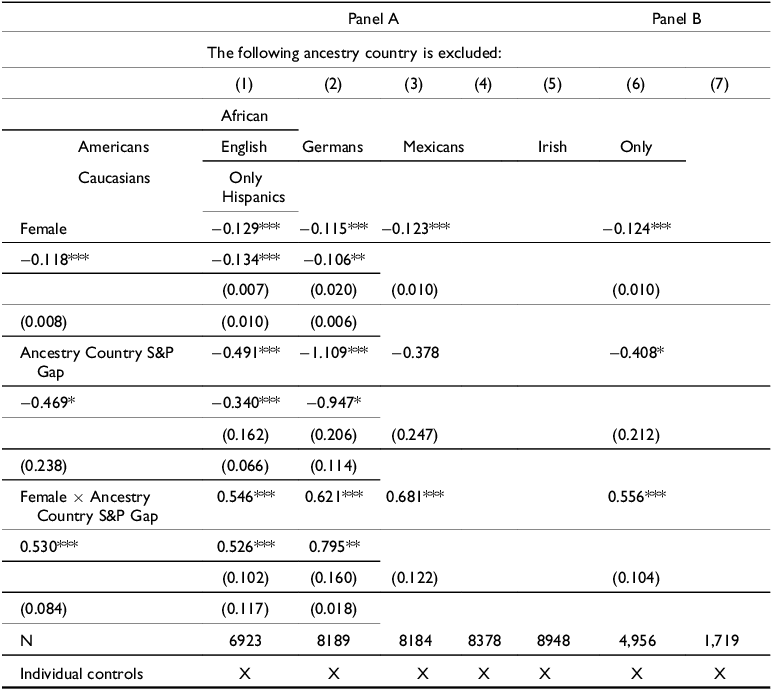
Notes: OLS estimates are reported. The dependent variable is a dummy equal to one if the respondent has answered all three financial literacy questions correctly in the NLSY survey. “Ancestry Country S&P Gap” refers to the difference between the proportion of financially literate women and men in the country of ancestry, taken from the S&P FinLit survey (% of adult population who answered correctly at least 3 out of 4 financial literacy concepts). Individual controls include information about survey year, age, education, place of residence, marital and employment status, family size, whether the individual is born abroad, mother’s education and employment. In Panel A, each column excludes the specified country of ancestry. In Panel B, each column restricts the sample to the corresponding group of individuals (column (6), “Only Caucasians,” includes English, French, German, Greek, Irish, Italian, Spanish, Polish, Portuguese, Russian, Scottish, Welsh, Danish, Dutch, Hungarian, Norwegian, and Swedish. Column (7), “Only Hispanics” includes Cuban, Mexicans, Puertoricans, and other Hispanic.). Results are weighted, and errors are clustered at the country of ancestry level. Standard errors in parentheses. *p < 0.1, **p < 0.05, ***p < 0.01.
Since we identify country-of-ancestry using self-reported ancestry as opposed to using the country-of-origin of immigrants or their parents, some may be concerned that the assumptions that individuals have been exposed to a common educational system, similar and interconnected labor markets, and the same laws and regulations in the U.S. may not hold given its racial inequalities. If this were the case, it would undermine our identification strategy. At the beginning of Section 5, we showed that our results were robust to adding a rich set of individuals’ sociodemographic characteristics to control for potential confounding factors in socioeconomic status. As explained above, Panel A in Table 2 shows that our results are robust to the exclusion of the five biggest ethnic/country groups in the dataset. The results when excluding those who identify with an Afro-American descent (column 1), and those who identify as Mexicans (column 4) are of particular relevance. If our findings were indeed a story of racial inequalities, and individuals of different ethnic background were not sharing the same educational, political, and legal system, we would not expect to find results in columns 1 and 4 as we would have excluded two groups that are most likely to suffer racial inequalities in US. The fact that the results are virtually unchanged when dropping either group from the sample speaks against this explanation. To further address these concerns, in Panel B in Table 2 (columns 6 and 7), we re-estimated our baseline specification using only Hispanics or Latinos and Caucasians.Footnote 17 The results remain robust suggesting that our findings are not driven by racial inequalities in the US.
5.6. Unmeasured human capital
Our results are also robust to the additional robustness checks, aiming at controlling for the possibility that our results may be further driven by unmeasured human capital at the individual level. In fact, one concern of our analysis is that the gender difference in financial literacy in each country may reflect, more generally, attitudes toward human capital accumulation differing by gender or systematic gender differences across ancestries in unmeasured dimensions of human capital. First, to account for the fact that our findings may reflect omitted variable bias, we re-estimated our baseline specification, adding the following covariates: father’s education and employment and household’s wealth and financial sophisticationFootnote 18 when the respondent was 14 years old (shown in Table 3). A related concern is that our results are driven by gender differences in respondents’ cognitive and noncognitive skills across countries of ancestry (as opposed to country-of-ancestry gender differences in financial knowledge). To address this, in In Table 4, we added to our baseline specification different measures of respondents’ cognitive and nocognitive skills (such as respondents’ position in the IQ distribution, risk aversion, hard work, or locus of control, among others) interacted with the female dummy. In all these specifications, our main findings hold, suggesting that gender differences in IQ, attitudes toward risks, or personality traits are not driving our findings.
Effect of country-of-ancestry financial literacy: Parents’ education and financial sophistication

Notes: OLS estimates are reported. The dependent variable is a dummy equal to one if the respondent has answered all three financial literacy questions correctly in the NLSY survey. “Ancestry Country S&P Gap” refers to the difference between the proportion of financially literate women and men in the country of ancestry, taken from the S&P FinLit survey (% of adult population who answered correctly at least 3 out of 4 financial literacy concepts). Individual controls include information about survey year, age, education, place of residence, marital and employment status, family size, whether the individual is born abroad, mother’s education, and employment. Each column adds controls related to parents characteristics when the respondents where 14 years old (father having an education (1), parents being homeowners (2), having stocks (3), debts (4), or savings(5)). Columns (3) to (5) are restricted to NLSY97 for data availability. Results are weighted and errors are clustered at the country of ancestry level. Standard errors in parentheses. *p < 0.1, **p < 0.05, ***p < 0.01.
Effect of country-of-ancestry financial literacy: Cognitive and noncognitive skills

Notes: OLS estimates are reported.The dependent variable is a dummy equal to one if the respondent has answered all three financial literacy questions correctly in the NLSY survey. ”Ancestry Country S&P Gap” refers to the difference between the proportion of financially literate women and men in the country of ancestry, taken from the S&P FinLit survey (% of adult population who answered correctly at least 3 out of 4 financial literacy concepts).
Individual controls include information about survey year, age, education, place of residence, marital and employment status, family size, whether the individual is born abroad, mother’s education and employment. Column (1) adds controls for IQ quartiles; column (2) add controls for a general attitude towards risk in life (Risk Taker(1)), and a specific risk attitude in financial matters (Risk Taker(2)). Columns (3) and (4) are restricted to NLSY79 for data availability and add controls for interest in reading newspapers and locus of control. Column (5) is restricted to NLSY97 and controls for hard-working and rule-abiding attitudes. Results are weighted and errors are clustered at the country of ancestry level. Standard errors in parentheses. *p < 0.1, **p < 0.05, ***p < 0.01.
Some limitations of our analysis, related to the data we employ, should be stressed. A first concern is given by the fact that financial literacy varies across age groups, and that comparing NLSY respondents (in their 20s and 50s) with the general adult population in the S&P Global FinLit Survey may introduce bias. In fact, prior research has established a robust life-cycle pattern in financial literacy: it is lowest among young adults, increases through middle age, and declines in later years due to cognitive aging (Lusardi, Mitchell & Curto Reference Lusardi, Mitchell and Curto2010). This suggests that financial literacy levels in the general adult population may not fully reflect the literacy of the age groups we observe in the NLSY. However, our study primarily focuses on relative gender gaps rather than absolute financial literacy levels, which helps mitigate this concern. Since gender disparities in financial literacy have been found to be persistent across age cohorts (e.g., Lusardi, Mitchell & Curto Reference Lusardi, Mitchell and Curto2010), we expect that gaps in financial literacy at the country level will still provide meaningful insights when applied to our sample.
A second concern relates to the fact that our measure of gender differences in financial literacy in the country of ancestry is observed at a slightly later point in time than the financial literacy outcomes of our U.S. sample (as far as concern the NLSY97 cohortFootnote 19 ). Hence, the validity of our approach rests on the assumption that gender gaps in financial literacy at the country level—our measure of culture—remain relatively stable over time (as discussed earlier in the Data Section).
There are different reasons to believe that this assumption is reasonable. First, financial literacy levels tend to be highly persistent across time. Prior studies have documented that the gender gap in financial literacy is widespread and remarkably stable across age groups, countries, income levels, and education groups (Lusardi & Mitchell Reference Lusardi and Mitchell2014; Hasler & Lusardi Reference Hasler and Lusardi2017; Lusardi et al. Reference Lusardi, Mitchell and Curto2010). The factors driving this gap—such as education, social norms, and financial socialization—do not shift abruptly over short periods, suggesting that the relative gender differences captured in 2014 are likely to be reflective of earlier periods as well.
Furthermore, the epidemiological approach relies on intergenerational transmission of cultural norms, which implies that financial literacy gaps in the country of ancestry do not need to be measured at the exact same time as financial literacy outcomes in the U.S. Rather, they serve as a proxy for long-standing gendered beliefs about financial knowledge that persist over generations. This aligns with previous research showing that gender disparities in financial literacy correlate with broader cultural attitudes toward gender roles, which tend to be stable over time (Bottazzi & Lusardi Reference Bottazzi and Lusardi2021).
Finally, when estimating the effect of culture separately for NLSY79 and NLSY97 respondents (results reported in Table 4), we find significant estimates for coefficient of interest ${\hat \beta _3}$
for both cohorts. The coefficients for the two NLSY cohorts have different magnitude, which could be the result of our country-of-ancestry culture, measured in 2014, being a more noisy measure of cultural beliefs for NLSY 1997 respondents than for 1979 ones, as the distance between observed financial literacy in the US and country-of-ancestry measure of financial literacy is larger (7 years versus 2 years), and thus underestimating the effect of culture for the NLSY97 cohort more so than for the NLSY79 cohort.
${\hat \beta _3}$
for both cohorts. The coefficients for the two NLSY cohorts have different magnitude, which could be the result of our country-of-ancestry culture, measured in 2014, being a more noisy measure of cultural beliefs for NLSY 1997 respondents than for 1979 ones, as the distance between observed financial literacy in the US and country-of-ancestry measure of financial literacy is larger (7 years versus 2 years), and thus underestimating the effect of culture for the NLSY97 cohort more so than for the NLSY79 cohort.
5.7. Falsification test
Finally, in Table 5, we conduct a falsification test to explore the extent to which our country-of-ancestry financial literacy gender gap variable may be picking up gender differences in human capital accumulation, reflecting gender differences in the intergenerational transmission of human capital as opposed to gender differences in the intergenerational transmission of financial information. Our falsification test re-estimates our baseline specification replacing the left-hand-side variable with different dimensions of the respondents’ human capital unrelated to their financial knowledge but likely to differ across gender, namely, height, weight, employment status, and whether they were ever arrested. As none of the ${\rm{\;}}{\hat \beta _2}$
and
${\rm{\;}}{\hat \beta _2}$
and ${\hat \beta _3}$
are statistically significantly different from zero, it is unlikely that our main finding is capturing confounding factors such as gender differences in unmeasured human capital.
${\hat \beta _3}$
are statistically significantly different from zero, it is unlikely that our main finding is capturing confounding factors such as gender differences in unmeasured human capital.
Effect of Country-of-Ancestry financial literacy on other outcomes: falsification test

Notes: OLS estimates are reported. The dependent variable is, respectively, (1) height in inches, (2) weight in pounds, (3) whether the individual is employed and (4) whether the individual has ever been arrested. ”Ancestry Country S&P Gap” refers to the difference between the proportion of financially literate females and males in the country of ancestry, taken from the S&P FinLit survey (% of adult population who answered correctly at least 3 out of 4 financial literacy concepts). Individual controls include information about survey year, age, individual’s education, place of residence, marital and employment status, family size, whether the individual is born abroad, mother’s education and employment. Results are weighted and errors are clustered at the country of ancestry level. Standard errors in parentheses. *p < 0.1, **p < 0.05, ***p < 0.01.
6. Cultural channels
Decades of research document that men and women display different economic preferences, which in turn influence their financial decisions. In fact, differences in preferences—such as risk aversion, patience, and altruism—have been shown to systematically shape men’s and women’s financial behaviors, including their engagement with financial decision-making and their incentives to acquire knowledge (Croson & Gneezy Reference Croson and Gneezy2009; Falk et al. Reference Falk, Becker, Dohmen, Enke, Huffman and Sunde2018).
Women, on average, tend to be more risk-averse than men, which can lead to lower engagement with complex financial products and, consequently, lower incentives to develop financial knowledge (Christelis, Jappelli & Padula Reference Christelis, Jappelli and Padula2010). Similarly, gender differences in patience—a preference that shapes long-term investment in human capital—are well established. Men have been found to exhibit greater patience in intertemporal decision-making (Falk et al. Reference Falk, Becker, Dohmen, Enke, Huffman and Sunde2018), which is associated with a stronger tendency to engage in financial planning and literacy acquisition. Meanwhile, altruism and social preferences, which tend to be more pronounced among women, may shift financial priorities away from individual wealth accumulation toward household or community-oriented financial decisions, thereby influencing the perceived necessity of financial literacy (Falk & Hermle Reference Falk and Hermle2018). These systematic gender differences in preferences provide a compelling theoretical rationale for investigating how they might contribute to observed disparities in financial literacy.
As cultural transmission plays a critical role in shaping both gender norms and economic preferences, gender gaps in financial literacy may emerge not simply because of differential access to knowledge but because cultural norms shape the economic preferences that drive engagement with financial decision-making. Given this, our analysis explores next the role of preferences as a potential mechanism driving the gender gap in financial literacy.
Experimental evidence has found that individuals who display higher patience are more likely to invest in human capital, health, and have higher savings (Hastings & Mitchell Reference Hastings and Mitchell2020). Developmental psychology has also found positive associations between being able to delay gratification in preschool and academic and professional achievement in adult life (Casey et al. Reference Casey, Somerville, Gotlib, Ayduk, Franklin, Askrend, Jonides, Berman, Wilson, Teslovich, Glover, Zayas, Mischel and Shoda2011 ). At the same time, lower risk aversion is associated with higher financial knowledge (Hryshko, Luengo-Prado & Sørensen Reference Hryshko, Jose and Sørensen2010). Finally, there is evidence that training children in prosocial behaviors (including fairness, altruism, and delay gratification) influences their decision-making in economic games (Heck et al. Reference Heck, Chernyak and Sobel2018; Lombardi et al. Reference Lombardi, Valle, Rinaldi, Massaro and Marchetti2021) . To the extent that women are less patient, more risk averse, and more prosocial than men, it is plausible that our findings may result from a woman’s (man’s) beliefs regarding preferences versus her (his) beliefs regarding behaviors. To put it differently, it is plausible that our findings may result from a woman’s (or man’s) beliefs of her higher (his lower) impatience relative to that of men (women) or of her higher (his lower) altruism relative to that of men (women) as opposed to her beliefs of her own financial abilities (Chen & Volpe Reference Chen and Volpe2002), her (lack of) interest for financial matters, or her confidence and willingness to engage in tasks that are outside of a gender-specific domain (Coffman Reference Coffman2014). In both cases, culture would matter, yet the type of beliefs driving the results would be different: gender differences in preferences versus gender differences in financial knowledge, and the policy implications would differ.
To explore this, we analyze which gender differences in preferences may be driving the negative association between smaller country-of-ancestry financial literacy gender gap and men’s (but not women’s) lower financial literacy in the US. To do so, we re-estimate our baseline specification substituting country-of-ancestry gender gaps in financial literacy with country-of-ancestry gender gaps in preferences, where the GPS economic preferences are proxies for preferences in the country of ancestry.Footnote 20 We focus on gender differences in (1) patience, which captures preferences over the intertemporal timing of rewards; (2) the willingness to take risks; (3) altruism, the predisposition to help others with the aim of improving the general well-being and, consequently, also one’s own; and (4) positive reciprocity, which captures the costly willingness to reward kind actions. Panel B in Table 6 shows that country-of-ancestry men are, on average, more patient and risk-taking than country-of-ancestry women, while the opposite is true for altruism and positive reciprocity.
Gender gap in financial literacy in the us and gender gap in preferences in the country of ancestry

Notes: OLS estimates are reported. The dependent variable is a dummy equal to one if the respondent has answered all three financial literacy questions in the NLSY correctly. Each column in Panel A controls for country-of-ancestry gender gap in a preference measure (i.e. the difference between the average female country-of-ancestry-level preference and the male country-level preference, taken from the GPS survey). Individual controls include information about survey year, age, individual’s education, place of residence, marital and employment status, family size, whether the individual is born abroad, mother’s education, and employment (for a complete list of estimates see Appendix Table A.6). Panel B reports the average measure of preferences at the country of ancestry level, by gender. Results are weighted, and errors are clustered at the country of ancestry level. Standard errors in parentheses. *p < 0.1, **p < 0.05, ***p < 0.01.
In column 1, Panel A in Table 6, we find that smaller gender differences in patience in the country of ancestry, with patience being a trait more salient among men, are associated with men’s lower financial literacy in the US, as ${\hat \beta _2}$
<0, and women’s lower (absolute) financial literacy, as
${\hat \beta _2}$
<0, and women’s lower (absolute) financial literacy, as $({\hat \beta _2}$
+
$({\hat \beta _2}$
+ ${\hat \beta _3})$
< 0. Similarly, a smaller gap in altruism in the country of ancestryFootnote
21
also decreases both men’s and women’s (absolute) financial literacy in the US (column 3). However, as
${\hat \beta _3})$
< 0. Similarly, a smaller gap in altruism in the country of ancestryFootnote
21
also decreases both men’s and women’s (absolute) financial literacy in the US (column 3). However, as ${\hat \beta _3} \lt 0$
, the decrease in financial literacy is smaller for women than for men
${\hat \beta _3} \lt 0$
, the decrease in financial literacy is smaller for women than for men $.$
$.$
To the best of our knowledge, analyses of the differential impact of financial literacy determinants by gender are scarce both in the empirical and theoretical related literature. For example, Lusardi et al. (Reference Lusardi, Mitchell and Curto2014) present descriptive evidence that the question framing factor has a different impact on men’s versus women’s financial literacy, similarly Davoli (Reference Davoli2023) shows how the format of the question used to test financial literacy has a differential impact on men versus women, and Fonseca et al. (Reference Fonseca, Mullen, Zamarro and Zissimopoulos2012) find a direct association between decision making and financial literacy among husbands, but not wives. Clearly, this is an intriguing result that needs to be explored further, probably by experimental economists.
In column 5 in Table 7, we re-estimate our baseline model using country-of-ancestry financial literacy gender gap net of the aforementioned preferencesFootnote
22
and no longer find a negative and statistically significant effect of country-of-ancestry financial literacy on men’s financial literacy in the US. In contrast, the association between country-of-ancestry financial literacy and women’s financial literacy relative to that of men ( ${\hat \beta _3})$
remains large and statistically significant at the 1 percent levelFootnote
23
. These results suggest that cultural beliefs regarding greater gender equality in financial knowledge in the country of ancestry, beyond those associated with patience and altruism, are associated with greater women’s (relative and absolute) financial literacy in the US. These results, taken together with those from Table 6, underscore that higher patience and lower altruism are beneficial for men’s financial literacy in the US but not for that of women.
${\hat \beta _3})$
remains large and statistically significant at the 1 percent levelFootnote
23
. These results suggest that cultural beliefs regarding greater gender equality in financial knowledge in the country of ancestry, beyond those associated with patience and altruism, are associated with greater women’s (relative and absolute) financial literacy in the US. These results, taken together with those from Table 6, underscore that higher patience and lower altruism are beneficial for men’s financial literacy in the US but not for that of women.
Country-of-ancestry gender gap in financial literacy net of preferences and financial knowledge in the US
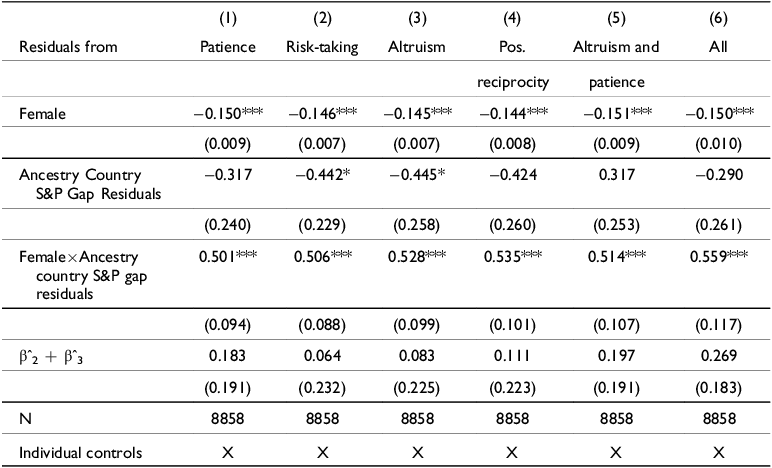
Notes: OLS estimates are reported. The dependent variable is a dummy equal to one if the respondent has answered all three financial literacy questions in the NLSY correctly. ”Ancestry country S&P gap residuals” are the residuals from a country level regression of country-of-ancestry gender gap in financial literacy (difference between the proportion of financially literate females and males in the country of ancestry, taken from the S&P FinLit survey) on male and female country-of-ancestry preferences measures (taken from the Global Preference Survey). In column (1), the ancestry country gender gap in financial literacy is regressed on patience levels, and its residuals are used as control variable. A similar procedure is applied in columns (2), (3), and (4), with different measures of preferences. In column (5), the ancestry country gender gap in financial literacy is regressed on patience and altruism levels, and its residuals are used as control variable. In column (6), a similar procedure is applied, using all the four preferences. Individual controls include information about survey year, age, individual’s education, place of residence, marital and employment status, family size, whether the individual is born abroad, mother’s education, and employment (for a complete list of estimates see Appendix Table A.6). Results are weighted, and errors are clustered at the country of ancestry level. Standard errors in parentheses. *p < 0.1, **p < 0.05, ***p < 0.01.
To further explore which elements of financial knowledge drive the above results, we re-estimate the specification in column 5 in Table 7 replacing our left-hand-side variable with respondents’ knowledge in each of the three components of financial literacy: inflation, risk diversification, and interest rate (Table 8).Footnote 24 Country-of-ancestry gender gap in financial literacy (after removing gender variation in country-of-ancestry patience and altruism) is most salient for the gender gap in inflation and risk-diversification knowledge in the US. A smaller gender gap in the country-of-ancestry financial literacy is associated with women’s higher (relative and absolute) knowledge of both inflation and risk-diversification in the US, with no effect on that of men. Appendix Table A.10 shows that this relative and absolute female improvement holds when allowing for gender differences in patience and altruism in the country-of-ancestry gender gap measure. However, in the case of risk-diversification, greater gender equality in patience and altruism in the country of ancestry is associated with some reduction in men’s literacy in the US.
Country-of-ancestry gender gap in financial literacy net of preferences and types of financial knowledge in the US

Notes: Each column presents OLS estimates of our model with a different LHS variable: whether the respondent has answered correctly the question on interest rate (column 1), inflation (column 2), or risk diversification (column 3) in the NLSY. “Ancestry Country S&P Gap Residuals” are the residuals from a country level regression of country-of-ancestry gender gap in financial literacy (difference between the proportion of financially literate females and males in the country of ancestry, taken from the S&P FinLit survey) on male and female country-of-ancestry measures of patience and altruism (taken from the Global Preference Survey). Individual controls include information about survey year, age, individual’s education, place of residence, marital and employment status, family size, whether the individual is born abroad, mother’s education and employment (for a complete list of estimates see Appendix Table A.6). Results are weighted, and errors are clustered at the country of ancestry level. Standard errors in parentheses. *p < 0.1, **p < 0.05, ***p < 0.01
7. Concluding remarks
There is a persistent gender divide in financial knowledge across surveys and countries with women underperforming relative to men (Lusardi & Mitchell Reference Lusardi and Mitchell2008, Reference Lusardi and Mitchell2014). Previous studies have not been able to explain the roots of this concerning disparity as traditional socioeconomic factors (Bucher-Koenen et al. Reference Bucher-Koenen, Lusardi, Alessie and Roojvan2017; Fonseca et al. Reference Fonseca, Mullen, Zamarro and Zissimopoulos2012) and personality and noncognitive skills (Arellano, Cámara & Tuesta Reference Arellano, Cámara and Tuesta2018) only partially help close the gender gap in financial knowledge. We add to the above literature by analyzing the role of culture for the gender gap in financial literacy in the US.
Using a nationally representative US sample of 9,623 adults from 26 countries of ancestries, we find that the smaller the gender gap in financial literacy in the country of ancestry, the higher the financial understanding of women in the US relative to their male counterparts. After ruling out gender differences in cognitive and noncognitive skills as a potential mechanism, we disentangle the role of cultural beliefs versus cultural preferences behind our findings. We find that higher patience and lower altruism in the country of ancestry are associated with higher financial literacy for men but not for women in the US. After we remove any country-of-ancestry gender variation from these preferences, cultural beliefs regarding gender equality in financial literacy continue to be associated with women’s (relative and absolute) greater financial literacy in the US, suggesting that gender differences in financial literacy in the US are socially constructed. This relative and absolute female improvement is particularly robust for knowledge related to inflation and risk diversification. Our analysis on cultural channels suggests that gender differences in preferences are more salient for men, whereas gender differences in cultural behavior are more salient for women.
These findings are relevant from a policy perspective. First, they highlight the need for financial education programs that directly address gendered differences in preferences and beliefs toward financial decision-making. Given that patience and altruism differentially shape financial literacy acquisition for men and women, targeted interventions—such as financial education initiatives that frame financial literacy as a long-term investment and incorporate gender-sensitive behavioral training—could help bridge the gap. Second, our findings suggest that cultural beliefs about financial competence are key drivers of financial literacy disparities. Addressing these beliefs through socialization and education from an early age could help shift perceptions that financial knowledge is a male-dominated domain. Schools and policymakers should consider incorporating financial literacy curricula that actively work to counteract gender stereotypes about financial decision-making and encourage both boys and girls to engage equally in financial matters.
By identifying cultural beliefs and gender differences in preferences as critical factors influencing financial literacy, our study provides a new lens through which to design more effective financial education and policy interventions. Future research should further explore how cultural shifts and changing gender norms influence financial behavior over time and evaluate the effectiveness of interventions that aim to close the gender gap in financial literacy.
Supplementary material
To view supplementary material for this article, please visit https://doi.org/10.1017/flw.2025.10001
Funding statement
Núria Rodríguez-Planas acknowledges research funding from the European Research Council (ERC) under the European Union’s Horizon Europe research and innovation program (grant agreement no. 101096525, ERC Advanced Grant 2024-2028 WomEmpower).



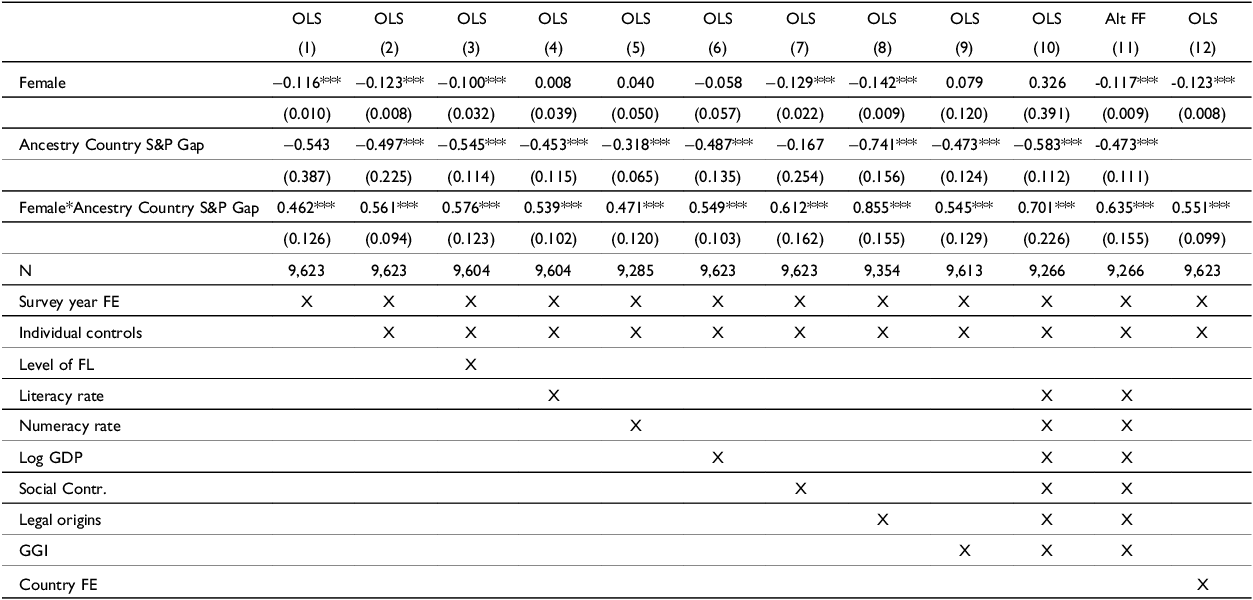
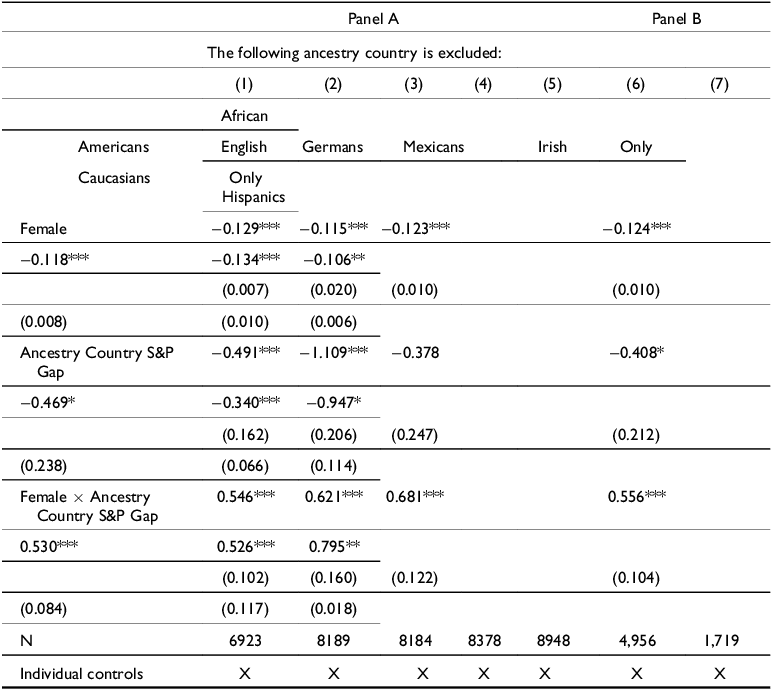
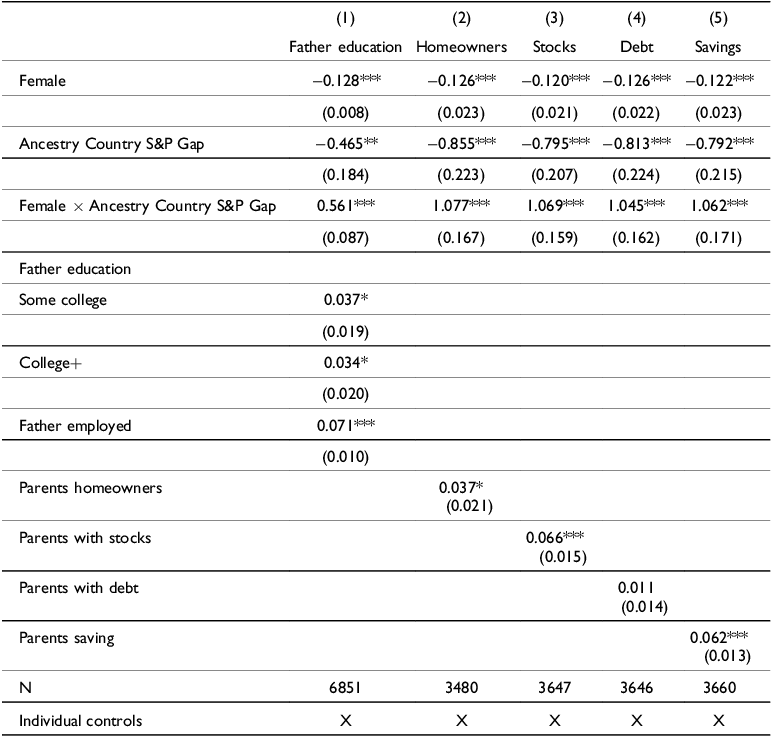
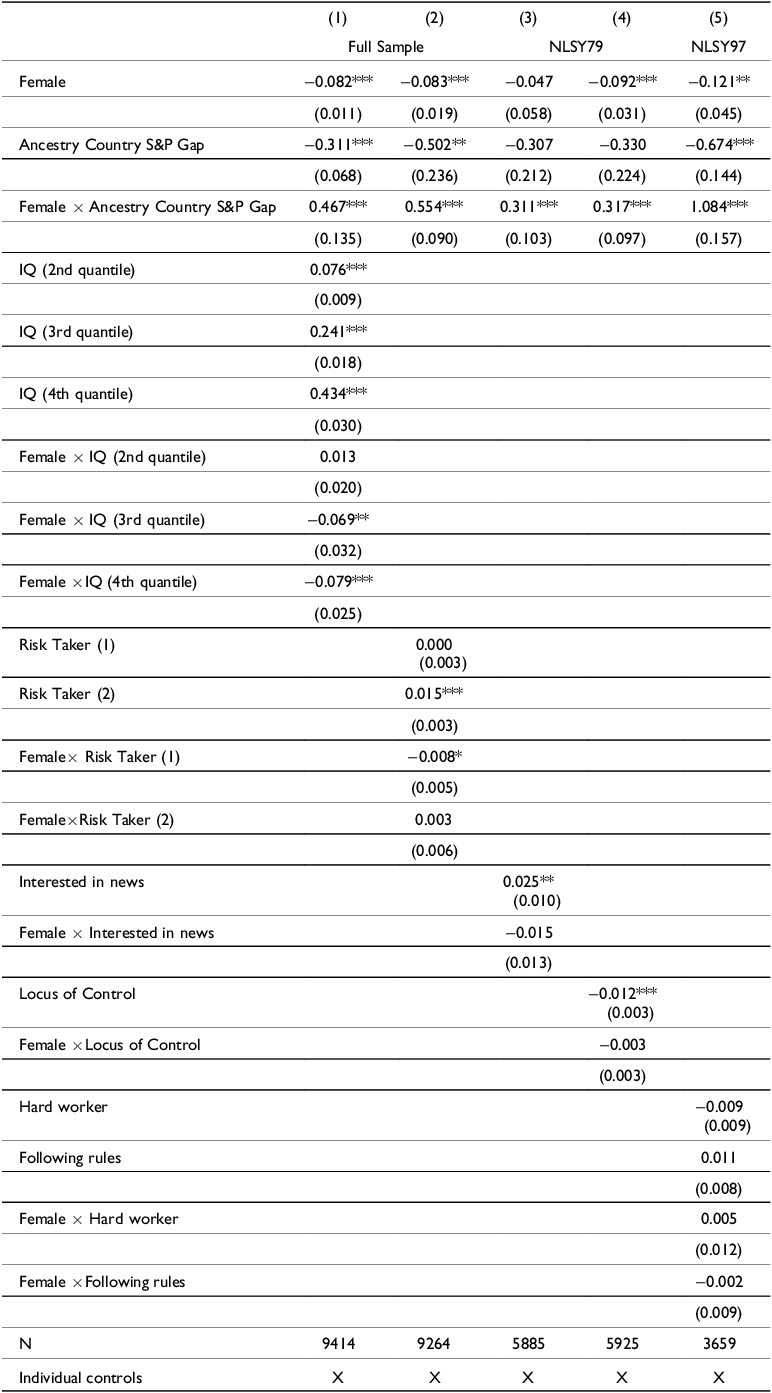
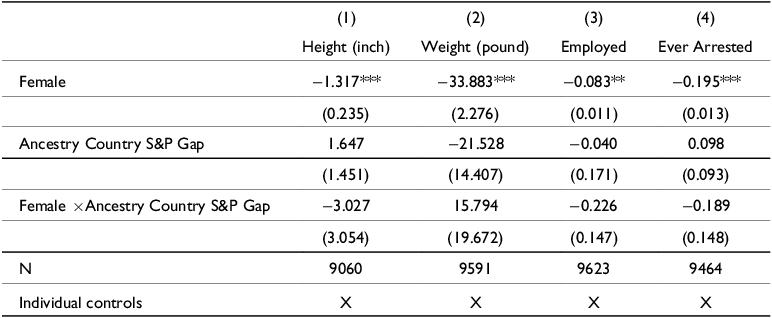
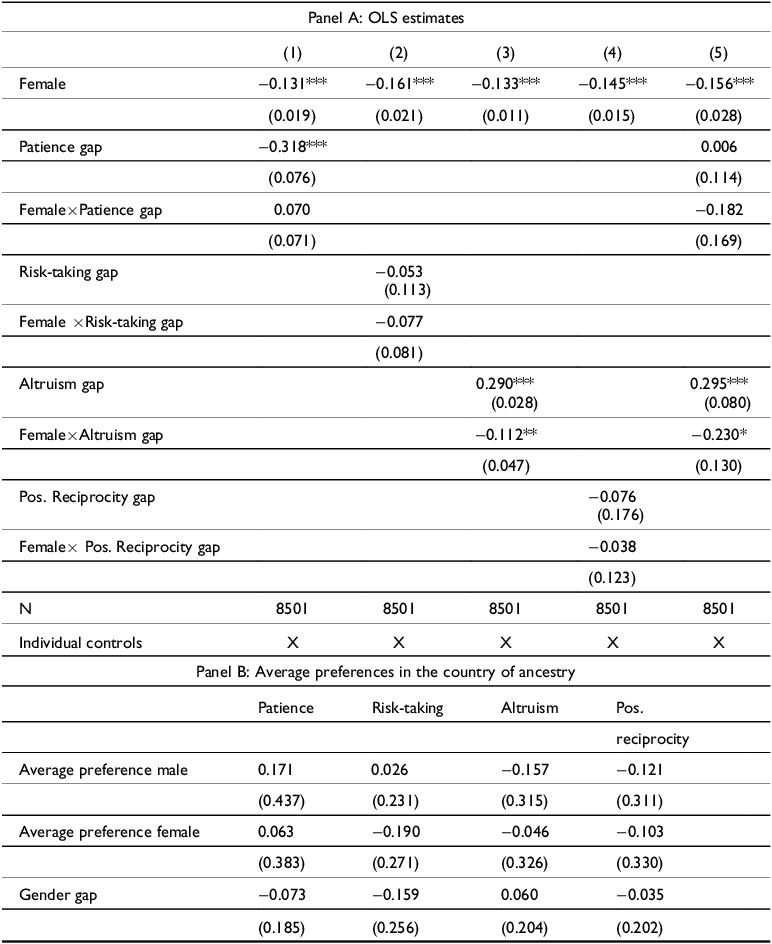
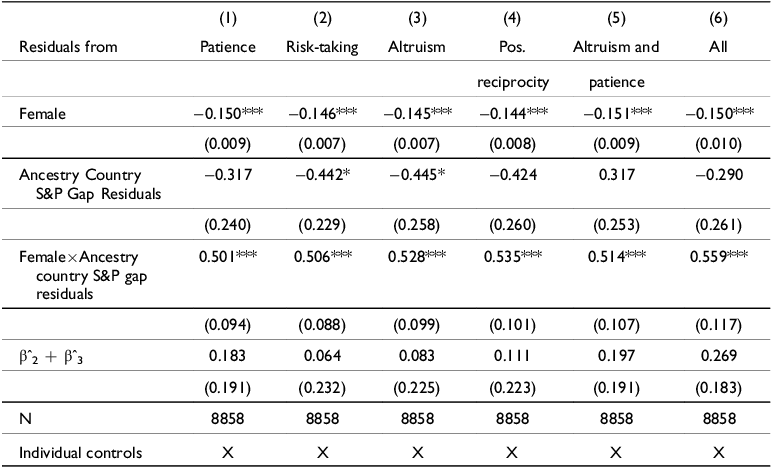
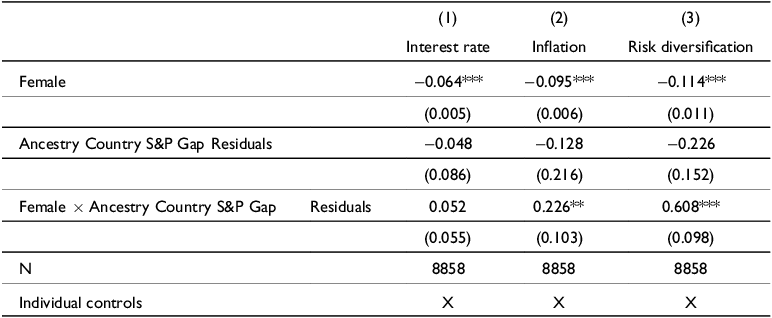


 Open access

