

 3.10
3.10


 3.10.
3.10.

Throughout this paper, all varieties are assumed to be projective and defined over $\mathbb{C}$
.
$\mathbb{C}$
.
1. Introduction
Let $Q$
be a smooth quadric threefold in
$Q$
be a smooth quadric threefold in $\mathbb{P}^4$
, let
$\mathbb{P}^4$
, let $C_1$
and
$C_1$
and $C_2$
be disjoint smooth irreducible conics in the quadric
$C_2$
be disjoint smooth irreducible conics in the quadric $Q$
. Then we can choose coordinates
$Q$
. Then we can choose coordinates $x$
,
$x$
, $y$
,
$y$
, $z$
,
$z$
, $t$
,
$t$
, $w$
on
$w$
on $\mathbb{P}^4$
such that
$\mathbb{P}^4$
such that
 \begin{align*} C_1 & =\{x=0,y=0,w^2+zt=0\},\\ C_2 & =\{z=0,t=0,w^2+xy=0\}, \end{align*}
and $Q$
is one of the following quadrics:
$Q$
is one of the following quadrics:


Let $\pi \colon X\to Q$
be the blow up of the quadric threefold
$\pi \colon X\to Q$
be the blow up of the quadric threefold $Q$
along the conics
$Q$
along the conics $C_1$
and
$C_1$
and $C_2$
. Then
$C_2$
. Then $X$
is a smooth Fano threefold in the deformation family
$X$
is a smooth Fano threefold in the deformation family  3.10, and all smooth members of this deformation family can be obtained in this way.
Alternatively, we can describe $X$
as a complete intersection in
$X$
as a complete intersection in $\mathbb{P}^1\times \mathbb{P}^1\times \mathbb{P}^4$
of three smooth divisors of degree
$\mathbb{P}^1\times \mathbb{P}^1\times \mathbb{P}^4$
of three smooth divisors of degree $(1,0,1)$
,
$(1,0,1)$
, $(0,1,1)$
,
$(0,1,1)$
, $(0,0,2)$
. Namely, if
$(0,0,2)$
. Namely, if $Q$
is the quadric
$Q$
is the quadric $(\beth )$
, then
$(\beth )$
, then

where $([u_1:v_1],[u_2:v_2])$
are coordinates on
$([u_1:v_1],[u_2:v_2])$
are coordinates on $\mathbb{P}^1\times \mathbb{P}^1$
. If
$\mathbb{P}^1\times \mathbb{P}^1$
. If $Q$
is the quadric
$Q$
is the quadric $(\gimel )$
, then
$(\gimel )$
, then

Finally, if $Q$
is the quadric
$Q$
is the quadric $(\daleth )$
, then
$(\daleth )$
, then

We know all K-polystable smooth Fano threefolds in the deformation family  3.10. Namely, it has been proved in [Reference Araujo, Castravet, Cheltsov, Fujita, Kaloghiros, Martinez-Garcia, Shramov, Süß and ViswanathanACC+23, §5.17] that $X$
is K-polystable
$X$
is K-polystable $\iff$ $Q$
is the quadric
$Q$
is the quadric $(\beth )$
.
$(\beth )$
.
The goal of this paper is prove the following result:
Main theorem.
K-polystable limits of smooth Fano threefolds in the family  3.10 are complete intersections in $\mathbb{P}^1\times \mathbb{P}^1\times \mathbb{P}^4$
which can be described as follows:
$\mathbb{P}^1\times \mathbb{P}^1\times \mathbb{P}^4$
which can be described as follows:


where $(a,b)\in \mathbb{C}^2$
and
$(a,b)\in \mathbb{C}^2$
and $[r:s]\in \mathbb{P}^1$
.
$[r:s]\in \mathbb{P}^1$
.
K-polystable Fano threefolds in the Main Theorem form an irreducible two-dimensional component of the K-moduli of smoothable Fano threefolds. In Section 6, we show that this component is a connected component of this moduli space, and it is isomorphic to $\mathbb{P}^2$
. Another two-dimensional component of this moduli space has been described in [Reference Cheltsov, Duarte Guerreiro, Fujita, Krylov and Martinez-GarciaCGF+25], and its one-dimensional components are described in [Reference Abban, Cheltsov, Denisova, Etxabarri-Alberdi, Kaloghiros, Jiao, Martinez-Garcia and PapazachariouACD+25].
$\mathbb{P}^2$
. Another two-dimensional component of this moduli space has been described in [Reference Cheltsov, Duarte Guerreiro, Fujita, Krylov and Martinez-GarciaCGF+25], and its one-dimensional components are described in [Reference Abban, Cheltsov, Denisova, Etxabarri-Alberdi, Kaloghiros, Jiao, Martinez-Garcia and PapazachariouACD+25].
Let us say few words about the threefolds in the Main Theorem. Let $\mathscr{X}$
be one of them. Then, using the natural projection
$\mathscr{X}$
be one of them. Then, using the natural projection $\mathscr{X}\to \mathbb{P}^4$
, we get a birational morphism
$\mathscr{X}\to \mathbb{P}^4$
, we get a birational morphism $\varpi \colon \mathscr{X}\to \mathscr{Q}$
, where
$\varpi \colon \mathscr{X}\to \mathscr{Q}$
, where $\mathscr{Q}$
is a (possibly singular) irreducible quadric in
$\mathscr{Q}$
is a (possibly singular) irreducible quadric in $\mathbb{P}^4$
such that either
$\mathbb{P}^4$
such that either

or

where $(a,b)\in \mathbb{C}^2$
and
$(a,b)\in \mathbb{C}^2$
and $[r:s]\in \mathbb{P}^1$
. The morphism
$[r:s]\in \mathbb{P}^1$
. The morphism $\varpi$
is a blow up of two conics:
$\varpi$
is a blow up of two conics:
 \begin{align*} \mathscr{C}_1 & =\mathscr{Q}\cap \{x=0,y=0\},\\ \mathscr{C}_2 & =\mathscr{Q}\cap \{z=0,t=0\}. \end{align*}
These conics are contained in the smooth locus of the quadric $\mathscr{Q}$
, and
$\mathscr{Q}$
, and
-
• $\mathscr{C}_1$
and
$\mathscr{C}_2$
are smooth if
$\mathscr{Q}$
is the quadric (
$\beth$
),
$\mathscr{C}_1$
and
$\mathscr{C}_2$
are smooth if
$\mathscr{Q}$
is the quadric (
$\beth$
), -
•
$\mathscr{C}_1$
and
$\mathscr{C}_2$
are reduced and singular if
$\mathscr{Q}$
is the quadric (
$\aleph$
) with
$[r:s]\ne [0:1]$
, -
•
$\mathscr{C}_1$
and
$\mathscr{C}_2$
are non-reduced if
$\mathscr{Q}$
is the quadric (
$\aleph$
) with
$[r:s]=[0:1]$
.


If $\mathscr{Q}$
is the quadric (
$\mathscr{Q}$
is the quadric ( $\beth$
), then
$\beth$
), then $\mathscr{X}$
is singular
$\mathscr{X}$
is singular $\iff$ $\mathscr{Q}$
is singular
$\mathscr{Q}$
is singular $\iff$ $a\pm b\pm 1=0$
. In this case, the singularities of the quadric
$a\pm b\pm 1=0$
. In this case, the singularities of the quadric $\mathscr{Q}$
can be described as follows:
$\mathscr{Q}$
can be described as follows:
-
• if
$a\pm b\pm 1=0$
and
$ab\ne 0$
, then
$\mathscr{Q}$
has one singular point, -
• if
$a\pm b\pm 1=0$
and
$ab=0$
, then
$\mathscr{Q}$
is singular along a line.


Similarly, if $\mathscr{Q}$
is the quadric (
$\mathscr{Q}$
is the quadric ( $\aleph$
), then
$\aleph$
), then $\mathscr{X}$
is singular, because both
$\mathscr{X}$
is singular, because both $\mathscr{C}_1$
and
$\mathscr{C}_1$
and $\mathscr{C}_2$
are singular. In this case,
$\mathscr{C}_2$
are singular. In this case, $\mathscr{Q}$
is smooth
$\mathscr{Q}$
is smooth $\iff$ $[r:s]\ne [\pm 1:1]$
, and
$[r:s]\ne [\pm 1:1]$
, and $|{\rm Sing}(\mathscr{Q})|=1$
when
$|{\rm Sing}(\mathscr{Q})|=1$
when $[r:s]=[\pm 1:1]$
.
$[r:s]=[\pm 1:1]$
.
2. First GIT quotient (bad moduli space)
In this section we describe a compact moduli space for Fano threefolds in family  3.10, by applying GIT techniques to the description of such threefolds as blow-ups of quadrics along two smooth disjoint conics. As in Section 1, we fix two smooth disjoint conics
 \begin{align*} C_1 & =\{x=0,y=0,w^2+zt=0\}\subset \mathbb{P}^4,\\ C_2 & =\{z=0,t=0,w^2+xy=0\}\subset \mathbb{P}^4, \end{align*}
where $[x:y:z:t:w]\in \mathbb{P}^4$
. Let
$[x:y:z:t:w]\in \mathbb{P}^4$
. Let $Q$
be a quadric threefold in
$Q$
be a quadric threefold in $\mathbb{P}^4$
that contains
$\mathbb{P}^4$
that contains $C_1$
and
$C_1$
and $C_2$
. Then
$C_2$
. Then $Q$
is given by an equation of the form
$Q$
is given by an equation of the form
 \begin{align} \alpha (xy+zt+w^2)+\beta xz+\gamma xt+\delta yz+\epsilon yt=0, \end{align}
where $[\alpha :\beta :\gamma :\delta :\epsilon ] \in \mathbb{P}^4$
. Let
$[\alpha :\beta :\gamma :\delta :\epsilon ] \in \mathbb{P}^4$
. Let $\pi \colon X\to Q$
be the blow up of of the conics
$\pi \colon X\to Q$
be the blow up of of the conics $C_1$
and
$C_1$
and $C_2$
. If
$C_2$
. If $Q$
is smooth, then
$Q$
is smooth, then $X$
is a smooth Fano threefold in the deformation family
$X$
is a smooth Fano threefold in the deformation family  3.10.
3.10.
Note that equations of the form (2.1) are preserved by the action of $(\mathbb{C}^\ast )^2$
given by
$(\mathbb{C}^\ast )^2$
given by
 \begin{align*} [x:y:z:t:w]\mapsto \bigg [\lambda x: \frac {1}{\lambda }y: \mu z: \frac {1}{\mu } t: w\bigg ] \end{align*}
for $(\lambda ,\mu )\in (\mathbb{C}^\ast )^2$
. This induces a
$(\lambda ,\mu )\in (\mathbb{C}^\ast )^2$
. This induces a $(\mathbb{C}^\ast )^2$
-action on the parameter space
$(\mathbb{C}^\ast )^2$
-action on the parameter space $\mathbb{P}^4$
given by
$\mathbb{P}^4$
given by
 \begin{align*} [\alpha :\beta :\gamma :\delta :\epsilon ] \mapsto \bigg [\alpha :\lambda \mu \beta : \frac {\lambda }{\mu } \gamma : \frac {\mu }{\lambda } \delta : \frac {1}{\lambda \mu } \epsilon \bigg ] \end{align*}
for $(\lambda ,\mu )\in (\mathbb{C}^\ast )^2$
. The GIT quotient by this action is isomorphic to
$(\lambda ,\mu )\in (\mathbb{C}^\ast )^2$
. The GIT quotient by this action is isomorphic to $\mathbb{P}^2$
with coordinates
$\mathbb{P}^2$
with coordinates
 \begin{align*} [{\bf x}_0:{\bf x}_1:{\bf x}_2] =[\alpha^2: \beta \epsilon : \gamma \delta ]. \end{align*}
We now classify the unstable, semistable, and stable points, and corresponding quadrics.
2.1 Unstable points
The unstable points $[\alpha :\beta :\gamma :\delta :\epsilon ] \in \mathbb{P}^4$
and the corresponding quadric threefolds can be described as follows:
$[\alpha :\beta :\gamma :\delta :\epsilon ] \in \mathbb{P}^4$
and the corresponding quadric threefolds can be described as follows:
 \begin{align*} \alpha = \beta =\gamma=0 & \quad {\rm and}\quad Q=\{y(\delta z+\epsilon t)=0\},\\ \alpha = \beta = \delta=0 & \quad {\rm and}\quad Q=\{t(\gamma x+\epsilon y)=0\}, \\ \alpha = \gamma = \epsilon=0 & \quad {\rm and}\quad Q=\{z(\beta x+\delta y)=0\}, \\ \alpha = \delta = \epsilon=0 & \quad {\rm and}\quad Q=\{x( \beta z+\gamma t)=0\}. \end{align*}
In these cases, the quadric $Q$
degenerates to a union of two hyperplanes.
$Q$
degenerates to a union of two hyperplanes.
2.2 Stable points
A point $[\alpha :\beta :\gamma :\delta :\epsilon ] \in \mathbb{P}^4$
is stable if and only if its orbit is closed and its stabiliser is finite. This occurs if and only if all of
$[\alpha :\beta :\gamma :\delta :\epsilon ] \in \mathbb{P}^4$
is stable if and only if its orbit is closed and its stabiliser is finite. This occurs if and only if all of $\beta$
,
$\beta$
, $\gamma$
,
$\gamma$
, $\delta$
and
$\delta$
and $\epsilon$
are nonzero, corresponding to points in the GIT quotient
$\epsilon$
are nonzero, corresponding to points in the GIT quotient $\mathbb{P}^2$
away from the lines
$\mathbb{P}^2$
away from the lines $\{{\bf x}_1=0\}$
and
$\{{\bf x}_1=0\}$
and $\{{\bf x}_2=0\}$
. We separate the corresponding quadric threefolds into three cases.
$\{{\bf x}_2=0\}$
. We separate the corresponding quadric threefolds into three cases.
-
(S1) Stable orbits with
$\alpha \neq 0$
correspond to points in
$\mathbb{P}^2$
with all of
${\bf x}_0, {\bf x}_1, {\bf x}_2$
nonzero. Taking the affine chart
${\bf x}_0=1$
, each such orbit contains quadrics of the formfor
\begin{align*} w^2+xy+zt+a(xt+yz)+b(xz+yt)=0, \end{align*}
$(a,b)\in (\mathbb{C}^*)^2$
given by
$a = \pm \sqrt {{\bf x}_2}$
and
$b = \pm \sqrt {{\bf x}_1}$
. The quadric is singular if and only if
$a \pm b \pm 1=0$
, which corresponds to the affine curve
\begin{align*} 1-2{\bf x}_1-2{\bf x}_2+{\bf x}_1^2-2{\bf x}_1{\bf x}_2+{\bf x}_2^2=0. \end{align*}
-
(S2) Orbits with
$\alpha=0$
and
$\gamma \delta \neq \beta \epsilon$
correspond to points in the quotient
$\mathbb{P}^2$
that satisfy the following conditions:
${\bf x}_0=0$
and
${\bf x}_1 \neq {\bf x}_2$
. So, taking the affine chart
${\bf x}_1=1$
, we see that each such orbit contains a quadric of the formfor
\begin{align*} a(xt+yz)+xz+yt=0, \end{align*}
$a \in \mathbb{C}^* \setminus \{\pm 1\}$
given by
$a = \pm \sqrt {{\bf x}_2}$
. Such quadrics have one singular point.
-
(S3) There is a unique stable orbit with
$\alpha=0$
and
$\gamma \delta = \beta \epsilon \neq 0$
, corresponding to the point
$[{\bf x}_0:{\bf x}_1:{\bf x}_2] = [0:1:1]$
in the quotient. It contains the threefoldwhich is a union of two hyperplanes.
\begin{align*} (x+y)(z+t)=0, \end{align*}










2.3 Strictly semistable points
A point $[\alpha :\beta :\gamma :\delta :\epsilon ]$
is strictly semistable if and only if it is not unstable, and at least one of
$[\alpha :\beta :\gamma :\delta :\epsilon ]$
is strictly semistable if and only if it is not unstable, and at least one of $\beta ,\gamma ,\delta ,\epsilon$
is zero. Such points have non-closed orbits or infinite stabilisers.
$\beta ,\gamma ,\delta ,\epsilon$
is zero. Such points have non-closed orbits or infinite stabilisers.
Example 2.2. If $\beta \ne 0$
,
$\beta \ne 0$
, $\gamma \ne 0$
and
$\gamma \ne 0$
and $\delta \ne 0$
, then the orbit of
$\delta \ne 0$
, then the orbit of $[\alpha :\beta :\gamma :\delta :0]$
contains the point
$[\alpha :\beta :\gamma :\delta :0]$
contains the point $[\alpha :0:\gamma :\delta :0]$
in its closure, and the orbit of
$[\alpha :0:\gamma :\delta :0]$
in its closure, and the orbit of $[\alpha :0:\gamma :\delta :0]$
is closed but has infinite stabiliser given by
$[\alpha :0:\gamma :\delta :0]$
is closed but has infinite stabiliser given by $(\lambda ,\lambda )\in (\mathbb{C}^\ast )^2$
.
$(\lambda ,\lambda )\in (\mathbb{C}^\ast )^2$
.
The strictly semistable points belonging to minimal orbits (strictly polystable points) are described below, along with their corresponding quadric threefolds.
-
(SS1) All points of the form
$[\alpha :0:\gamma :\delta :0]$
or
$[\alpha :\beta :0:0:\epsilon ]$
, where
$\alpha \beta \gamma \delta \epsilon \ne 0$
, and either
$\alpha^2 \neq \gamma \delta$
or
$\alpha^2 \neq \beta \epsilon$
, respectively. Such orbits lie over points in the quotientThe corresponding quadrics are
\begin{align*} \big \{[{\bf x}_0:0:{\bf x}_2]\ \big |\ {\bf x}_0, {\bf x}_2 \in \mathbb{C}^*,\ {\bf x}_0 \neq {\bf x}_2\big \},\\ \big \{[{\bf x}_0:{\bf x}_1:0]\ \big |\ {\bf x}_0, {\bf x}_1 \in \mathbb{C}^*,\ {\bf x}_0 \neq {\bf x}_1\big \}. \end{align*}
where
\begin{align*} \big \{w^2+xy+zt+a(xt+yz) & =0\big \},\\ \big \{w^2+xy+zt+b(xz+yt) & =0\big \}, \end{align*}
$a,b \in \mathbb{C}^* \setminus \{\pm 1\}$
. They are smooth.
-
(SS2) The orbit of the point
$[1:0:0:0:0]$
. It gives the point
$[1:0:0]$
in the quotient. The corresponding quadric threefold is
$\{w^2+xy+zt=0\}$
— it is smooth. -
(SS3) Two orbits of all points
$[0:0:\gamma :\delta :0]$
and
$[0:\beta :0:0:\epsilon ]$
such that
$\beta \gamma \delta \epsilon \ne 0$
, which lie over the points
$[0:0:1]$
and
$[0:1:0]$
in the quotient
$\mathbb{P}^2$
, respectively. This gives two singular quadrics:
$\{xt+yz=0\}$
and
$\{xz+yt=0\}$
. -
(SS4) Two orbits consisting of points of the form
$[\alpha :0:\gamma :\delta :0]$
or
$[\alpha :\beta :0:0:\epsilon ]$
, where
$\alpha \beta \gamma \delta \epsilon \ne 0$
, and either
$\alpha^2 = \gamma \delta$
or
$\alpha^2=\beta \epsilon$
, respectively. These orbits lie over the points
$[1:0:1]$
and
$[1:1:0]$
in the quotient, and the quadrics areBoth of them are irreducible and singular along the line
\begin{align*} w^2+xy+zt+xt+yz & =0,\\ w^2+xy+zt+xz+yt & =0. \end{align*}
$\{w=y-t=x-z=0\}$
.


















2.4 Quotient space
Note that the space of quadrics of the form (2.1) admits a discrete action of the group $\boldsymbol{\mu }_2^3$
given by
$\boldsymbol{\mu }_2^3$
given by
 \begin{align*} \sigma _1\colon [x:y:z:t:w] & \mapsto [y:x:z:t:w],\\ \sigma _2\colon [x:y:z:t:w] & \mapsto [z:t:x:y:w],\\ \sigma _3\colon [x:y:z:t:w] & \mapsto [x:y:z:t:-w]. \end{align*}
These involutions act on the parameter space $\mathbb{P}^4$
by
$\mathbb{P}^4$
by
 \begin{align*} \sigma _1\colon [\alpha :\beta :\gamma :\delta :\epsilon ] & \mapsto [\alpha :\delta :\epsilon :\beta :\gamma ],\\ \sigma _2\colon [\alpha :\beta :\gamma :\delta :\epsilon ] & \mapsto [\alpha :\beta :\delta :\gamma :\epsilon ],\\ \sigma _3\colon [\alpha :\beta :\gamma :\delta :\epsilon ] & \mapsto [\alpha :\beta :\gamma :\delta :\epsilon ]. \end{align*}
The involutions $\sigma _2$
and
$\sigma _2$
and $\sigma _3$
act trivially on the GIT quotient, whilst
$\sigma _3$
act trivially on the GIT quotient, whilst $\sigma _1$
acts by
$\sigma _1$
acts by
 \begin{align*} \sigma _1\colon [{\bf x}_0:{\bf x}_1:{\bf x}_2] \mapsto [{\bf x}_0:{\bf x}_2:{\bf x}_1]. \end{align*}
Therefore, to get a moduli space from our GIT quotient, we must further quotient it by the involution $\sigma _1$
to get a copy of the weighted projective space
$\sigma _1$
to get a copy of the weighted projective space $\mathbb{P}(1,1,2)$
with coordinates
$\mathbb{P}(1,1,2)$
with coordinates
 \begin{align*} [\xi :\eta :\zeta ]=\big [{\bf x}_0:{\bf x}_1+{\bf x}_2:({\bf x}_1 - {\bf x}_2)^2\big ]=\big [\alpha^2:\beta \epsilon +\gamma \delta :(\beta \epsilon -\gamma \delta )^2\big ]. \end{align*}
Over this quotient it is easy to describe where the stable and semistable threefolds occur. Namely, the stable threefolds occur where $\eta^2 \neq \zeta$
as follows:
$\eta^2 \neq \zeta$
as follows:
-
(S1) the locus with
$\xi \neq 0$
and
$\eta^2 \neq \zeta$
, and singular quadrics lie over
$\xi^2-\xi \eta +\zeta=0$
, -
(S2) the locus
$\{[0:\eta :\zeta ]\mid \eta^2 \neq \zeta \ \textrm{and}\ \zeta \neq 0\}$
, -
(S3) the point
$[\xi :\eta :\zeta ] = [0:1:0]$
.





Likewise, the strictly semistable quadrics occur along the curve $\eta^2 = \zeta$
as follows:
$\eta^2 = \zeta$
as follows:
-
(SS1) the locus where
$\eta^2 = \zeta$
and
$[\xi :\eta :\zeta ] \notin \{[1:0:0], [0:1:1], [1:1:1]\}$
, -
(SS2) the point
$[\xi :\eta :\zeta ] =[1:0:0]$
, -
(SS3) the point
$[\xi :\eta :\zeta ] = [0:1:1]$
, -
(SS4) the point
$[\xi :\eta :\zeta ] = [1:1:1]$
.





Unfortunately, the constructed moduli space is not the moduli space of K-polystable threefolds we are looking for, because the threefold $X$
obtained by blowing up the quadric in the class (S3) is reducible. Moreover, all threefolds obtained by blowing up quadrics in the class (S2) are isomorphic, and the quadrics in the class
$X$
obtained by blowing up the quadric in the class (S3) is reducible. Moreover, all threefolds obtained by blowing up quadrics in the class (S2) are isomorphic, and the quadrics in the class ${\rm (S2)}$
give K-unstable threefolds:
${\rm (S2)}$
give K-unstable threefolds:
Lemma 2.3.
Let $Q$
be the quadric
$Q$
be the quadric $\{a(xt+yz)+xz+yt=0\}\subset \mathbb{P}^4$
for
$\{a(xt+yz)+xz+yt=0\}\subset \mathbb{P}^4$
for $a\in \mathbb{C}\setminus \{0,\pm 1\}$
, and let
$a\in \mathbb{C}\setminus \{0,\pm 1\}$
, and let $\pi \colon X\to Q$
be the blow up of the quadric
$\pi \colon X\to Q$
be the blow up of the quadric $Q$
along
$Q$
along $C_1$
and
$C_1$
and $C_2$
. Then
$C_2$
. Then $X$
is K-unstable.
$X$
is K-unstable.
Proof. Observe that both $C_1$
and
$C_1$
and $C_2$
do not contain the singular point of the quadric
$C_2$
do not contain the singular point of the quadric $Q$
, the quadric threefold
$Q$
, the quadric threefold $Q$
is a cone over
$Q$
is a cone over $\mathbb{P}^1\times \mathbb{P}^1$
with vertex at the point
$\mathbb{P}^1\times \mathbb{P}^1$
with vertex at the point $[0:0:0:0:1]$
, and there exists the following commutative diagram:
$[0:0:0:0:1]$
, and there exists the following commutative diagram:
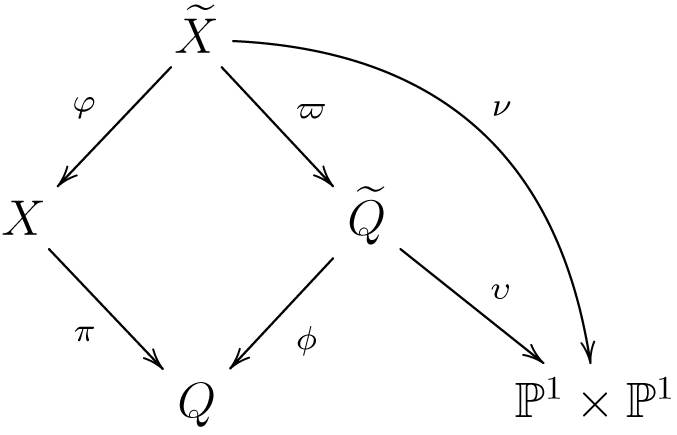
where $\phi$
and
$\phi$
and $\varphi$
are blow ups of the singular points
$\varphi$
are blow ups of the singular points ${\rm Sing}(Q)$
and
${\rm Sing}(Q)$
and ${\rm Sing}(X)$
,
${\rm Sing}(X)$
, $\upsilon$
is a
$\upsilon$
is a $\mathbb{P}^1$
-bundle,
$\mathbb{P}^1$
-bundle, $\varpi$
is the blow up of the preimages of the conics
$\varpi$
is the blow up of the preimages of the conics $C_1$
and
$C_1$
and $C_2$
, and
$C_2$
, and $\nu$
is a conic bundle.
$\nu$
is a conic bundle.
Let $E_1$
and
$E_1$
and $E_2$
be proper transforms on the threefold
$E_2$
be proper transforms on the threefold $\widetilde {X}$
of the
$\widetilde {X}$
of the $\pi$
-exceptional surfaces such that
$\pi$
-exceptional surfaces such that $\pi \circ \varphi (E_1)=C_1$
and
$\pi \circ \varphi (E_1)=C_1$
and $\pi \circ \varphi (E_2)=C_2$
. Then
$\pi \circ \varphi (E_2)=C_2$
. Then $\upsilon \circ \varpi (E_1)$
and
$\upsilon \circ \varpi (E_1)$
and $\upsilon \circ \varpi (E_2)$
are disjoint rulings of the surface
$\upsilon \circ \varpi (E_2)$
are disjoint rulings of the surface $\mathbb{P}^1\times \mathbb{P}^1$
, because planes spanned by
$\mathbb{P}^1\times \mathbb{P}^1$
, because planes spanned by $C_1$
and
$C_1$
and $C_2$
are contained in
$C_2$
are contained in $Q$
. Therefore, we may assume that both
$Q$
. Therefore, we may assume that both $\upsilon \circ \varpi (E_1)$
and
$\upsilon \circ \varpi (E_1)$
and $\upsilon \circ \varpi (E_2)$
are divisors of degree
$\upsilon \circ \varpi (E_2)$
are divisors of degree $(1,0)$
. Let
$(1,0)$
. Let $H_1$
and
$H_1$
and $H_2$
be the pull back on
$H_2$
be the pull back on $\widetilde {X}$
of the divisors on
$\widetilde {X}$
of the divisors on $\mathbb{P}^1\times \mathbb{P}^1$
of degree
$\mathbb{P}^1\times \mathbb{P}^1$
of degree $(1,0)$
and
$(1,0)$
and $(0,1)$
, let
$(0,1)$
, let $S_1$
and
$S_1$
and $S_2$
be proper transforms on
$S_2$
be proper transforms on $\widetilde {X}$
of the planes in
$\widetilde {X}$
of the planes in $Q$
that contain
$Q$
that contain $C_1$
and
$C_1$
and $C_2$
, and let
$C_2$
, and let $F$
be the
$F$
be the $\varphi$
-exceptional surface. Then
$\varphi$
-exceptional surface. Then $H_1\sim S_1+E_1$
and
$H_1\sim S_1+E_1$
and $H_1\sim S_2+E_2$
, so that
$H_1\sim S_2+E_2$
, so that
 \begin{align*} \varphi ^*(-K_X)\sim 3(H_1+H_2)+3F-E_1-E_2\sim _{\mathbb{Q}} \frac {3}{2}(S_1+S_2)+H_2+3F+\frac {1}{2}(E_1+E_2). \end{align*}
Now, take $u\in \mathbb{R}_{\geqslant 0}$
. Then
$u\in \mathbb{R}_{\geqslant 0}$
. Then
 \begin{align*} &\varphi ^*(-K_X)-uF\sim _{\mathbb{R}} 3(H_1+H_2)+(3-u)F-E_1-E_2\sim _{\mathbb{R}} \frac {3}{2}(S_1+S_2)+H_2+(3-u)F\\&\quad +\frac {1}{2}(E_1+E_2), \end{align*}
so this divisor is pseudoeffective $\iff$ $u\leqslant 3$
. Moreover, this divisor is nef
$u\leqslant 3$
. Moreover, this divisor is nef $\iff$ $u\leqslant 1$
. Furthermore, if
$u\leqslant 1$
. Furthermore, if $u\in (1,3)$
, then its Zariski decomposition can be described as follows:
$u\in (1,3)$
, then its Zariski decomposition can be described as follows:
 \begin{align*} \varphi ^*(-K_X)-uF\sim _{\mathbb{R}}\underbrace {\varphi ^*(-K_X)-uF-\frac {u-1}{2}\big (S_1+S_2\big )}_{\textrm{positive part}}+\underbrace {\frac {u-1}{2}\big (S_1+S_2\big )}_{\textrm{negative part}}. \end{align*}
Thus, we see that
 \begin{align*} \beta (F)&=2-\frac {1}{26}\int \limits _{0}^{1}\big (3(H_1+H_2)+(3-u)F-E_1-E_2\big )^3du\\ &\quad -\frac {1}{26}\int \limits _{2}^{3}\Big (3(H_1+H_2)+(3-u)F-E_1-E_2-\frac {u-1}{2}\big (2H_1-E_1-E_2\big )\Big )^3du. \end{align*}
To compute these integrals, observe that
 \begin{align*} H_1^2 & =0, & H_2^2 & =0, & E_1\cdot E_2 & =0, & E_1\cdot F & =0, & E_2\cdot F & =0,\\ F^3 & =2, & H_1\cdot F^2 & =-1, & H_2\cdot F^2 & =-1, & E_1^3 & =-4, & E_2^3 & =-4, \\ F\cdot H_1\cdot H_2 & =1, & H_1\cdot E_1 & =0, & H_1\cdot E_2 & =0, & H_2\cdot E_1^2 & =-2, & H_2\cdot E_2^2 & =-2. \end{align*}
This gives $\beta (F)=-\frac {3}{52}\lt 0$
, which implies that
$\beta (F)=-\frac {3}{52}\lt 0$
, which implies that $X$
is K-unstable [Reference FujitaFuj19a, Reference LiLi17].
$X$
is K-unstable [Reference FujitaFuj19a, Reference LiLi17].
3. Second GIT quotient (good moduli space)
In this section, we construct another compact GIT moduli space for Fano threefolds in the deformation family  3.10. Recall that all K-polystable smooth Fano threefolds in this family are contained in class $(\beth )$
, and the quadric
$(\beth )$
, and the quadric $Q$
in this case is invariant under the action of
$Q$
in this case is invariant under the action of $\boldsymbol{\mu }_2^3$
generated by the following three involutions:
$\boldsymbol{\mu }_2^3$
generated by the following three involutions:
 \begin{align*} \tau _1\colon [x:y:z:t:w] & \mapsto [y:x:t:z:w],\\ \tau _2\colon [x:y:z:t:w] & \mapsto [z:t:x:y:w],\\ \tau _3\colon [x:y:z:t:w] & \mapsto [x:y:z:t:-w]. \end{align*}
In light of this, we take $Q$
to be a quadric invariant under this
$Q$
to be a quadric invariant under this $\boldsymbol{\mu }_2^3$
-action:
$\boldsymbol{\mu }_2^3$
-action:
 \begin{align} \alpha w^2 + \frac {\beta }{2}(x^2+y^2+z^2+t^2) + \gamma (xt+yz) + \delta (xz+yt) + \epsilon (xy+zt)=0, \end{align}
where $[\alpha :\beta :\gamma :\delta :\epsilon ] \in \mathbb{P}^4$
. As before, we take
$[\alpha :\beta :\gamma :\delta :\epsilon ] \in \mathbb{P}^4$
. As before, we take $C_1$
and
$C_1$
and $C_2$
to be the two conics given by the intersection with the planes
$C_2$
to be the two conics given by the intersection with the planes $\{x=y=0\}$
and
$\{x=y=0\}$
and $\{z=t=0\}$
, namely
$\{z=t=0\}$
, namely
 \begin{align*} C_1 & = \bigg\{x=0,\, y=0,\, \alpha w^2 + \frac {\beta }{2}(z^2+t^2) + \epsilon zt=0\bigg\},\\ C_2 & = \bigg\{z=0,\, t=0,\, \alpha w^2 + \frac {\beta }{2}(x^2+y^2) + \epsilon xy=0\bigg\}. \end{align*}
Unlike the construction from Section 2, this general form allows $C_1$
and
$C_1$
and $C_2$
to degenerate.
$C_2$
to degenerate.
A simple computer calculation shows that equations of the form (3.1) are preserved by a subgroup of ${\rm PGL}(5,\mathbb{C})$
isomorphic to
${\rm PGL}(5,\mathbb{C})$
isomorphic to $(\mathbb{C}^\ast )^2$
, given explicitly by matrices of the form
$(\mathbb{C}^\ast )^2$
, given explicitly by matrices of the form
 \begin{align*}\left(\begin{array}{c@{\quad}c@{\quad}c@{\quad}c@{\quad}c}\lambda + \mu & \lambda - \mu & 0 & 0 & 0 \\ \lambda - \mu & \lambda + \mu & 0 & 0 & 0 \\ 0 & 0 & \lambda - \mu & \lambda + \mu & 0 \\ 0 & 0 & \lambda + \mu & \lambda - \mu & 0 \\ 0 & 0 & 0 & 0 & -\tfrac {2}{\lambda^2\mu^2} \end{array}\right)\end{align*}
acting on the coordinates $[x:y:z:t:w]$
, where
$[x:y:z:t:w]$
, where $(\lambda ,\mu ) \in (\mathbb{C}^\ast )^2$
and we have chosen our matrix representative to have determinant
$(\lambda ,\mu ) \in (\mathbb{C}^\ast )^2$
and we have chosen our matrix representative to have determinant $2^5=32$
(to avoid having lots of factors of
$2^5=32$
(to avoid having lots of factors of $\frac {1}{2}$
). This induces a
$\frac {1}{2}$
). This induces a $(\mathbb{C}^\ast )^2$
-action on the parameter space
$(\mathbb{C}^\ast )^2$
-action on the parameter space $\mathbb{P}^4$
given by
$\mathbb{P}^4$
given by
 \begin{align*}\left(\begin{array}{c@{\quad}c@{\quad}c@{\quad}c@{\quad}c} \tfrac {4}{\lambda^4\mu^4} & 0 & 0 & 0 \\ 0 & 2(\lambda^2+ \mu^2) & 0 & 0 & 2(\lambda^2-\mu^2)\\ 0 & 0 & 2(\lambda^2-\mu^2) & 2(\lambda^2 + \mu^2) & 0 \\ 0 & 0 & 2(\lambda^2+\mu^2) & 2(\lambda^2 - \mu^2) & 0 \\ 0 & 2(\lambda^2- \mu^2) & 0 & 0 & 2(\lambda^2+\mu^2) \end{array}\right) \end{align*}
acting on the coordinates $[\alpha :\beta :\gamma :\delta :\epsilon ]$
, where
$[\alpha :\beta :\gamma :\delta :\epsilon ]$
, where $(\lambda ,\mu ) \in (\mathbb{C}^\ast )^2$
.
$(\lambda ,\mu ) \in (\mathbb{C}^\ast )^2$
.
The ring of invariants for this action is generated by polynomials of the form
 \begin{align*} \alpha f_1f_2g_1g_2 \end{align*}
with $f_i \in \{(\beta +\epsilon ),\,(\gamma +\delta )\}$
and
$f_i \in \{(\beta +\epsilon ),\,(\gamma +\delta )\}$
and $g_i \in \{(\beta -\epsilon ),\,(\gamma -\delta )\}$
. There are nine such polynomials, corresponding to coordinates on
$g_i \in \{(\beta -\epsilon ),\,(\gamma -\delta )\}$
. There are nine such polynomials, corresponding to coordinates on $\mathbb{P}^8$
. One can show that the GIT quotient of the parameter space is isomorphic to
$\mathbb{P}^8$
. One can show that the GIT quotient of the parameter space is isomorphic to $\mathbb{P}^1 \times \mathbb{P}^1 \subset \mathbb{P}^8$
, embedded by the Segre embedding of bidegree
$\mathbb{P}^1 \times \mathbb{P}^1 \subset \mathbb{P}^8$
, embedded by the Segre embedding of bidegree $(2,2)$
. The isomorphism with
$(2,2)$
. The isomorphism with $\mathbb{P}^1 \times \mathbb{P}^1$
is given explicitly by
$\mathbb{P}^1 \times \mathbb{P}^1$
is given explicitly by
 \begin{align*} \big ([{\bf x}_0:{\bf x}_1],[{\bf y}_0:{\bf y}_1]\big ) = \big ([\beta +\epsilon :\gamma + \delta ], [\beta - \epsilon :\gamma - \delta ]\big ). \end{align*}
We now classify the unstable and stable points, and corresponding quadrics. There are no strictly semistable points under this action.
3.1 Unstable points
The unstable points $[\alpha :\beta :\gamma :\delta :\epsilon ] \in \mathbb{P}^4$
come in two types. The first are the points with
$[\alpha :\beta :\gamma :\delta :\epsilon ] \in \mathbb{P}^4$
come in two types. The first are the points with $\alpha=0$
, which have corresponding quadrics
$\alpha=0$
, which have corresponding quadrics
 \begin{align*} Q=\bigg \{\frac {\beta }{2}(x^2+y^2+z^2+t^2) + \gamma (xt+yz) + \delta (xz+yt) + \epsilon (xy+tz)=0\bigg \}. \end{align*}
In this case, the quadric $Q$
degenerates to a cone over a quadric surface. The second type are those with either
$Q$
degenerates to a cone over a quadric surface. The second type are those with either
 \begin{align*} \beta - \epsilon = \gamma - \delta=0 & \quad {\rm and}\quad Q=\bigg \{\alpha w^2 + \frac {\beta }{2}((x+y)^2+(z+t)^2) + \gamma (x+y)(z+t)=0\bigg \}, \\ \beta + \epsilon = \gamma + \delta=0 & \quad {\rm and}\quad Q=\bigg \{\alpha w^2 + \frac {\beta }{2}((x-y)^2+(z-t)^2) + \gamma (x-y)(z-t)=0\bigg \}. \end{align*}
In these cases $Q$
is singular along a line and both of the conics
$Q$
is singular along a line and both of the conics $C_1$
and
$C_1$
and $C_2$
become reducible.
$C_2$
become reducible.
3.2 Stable points
The stable points are those that are not unstable — there are no strictly semistable points. We separate the corresponding quadric threefolds into 2 cases.
-
(S1) (Class
$(\beth )$
) Stable orbits with
$\alpha \neq 0$
and
$\beta \neq \pm \epsilon$
correspond to points within the quotient space
\begin{align*} {\bf x}_0{\bf y}_0 \neq 0 \end{align*}
$\mathbb{P}^1 \times \mathbb{P}^1$
. Taking the affine chart with
${\bf x}_0=1$
and
${\bf y}_0=-1$
, we see that each such orbit contains quadrics of the formfor
\begin{align*} w^2+xy+zt+a(xt+yz)+b(xz+yt)=0, \end{align*}
$a,b\in \mathbb{C}$
given by
$a = \frac {1}{2}({\bf x}_1 + {\bf y}_1)$
and
$b = \frac {1}{2}({\bf x}_1 - {\bf y}_1)$
. This quadric is singular if and only if
$a \pm b \pm 1=0$
, corresponding to
${\bf x}_1 = \pm 1$
or
${\bf y}_1 = \pm 1$
.
-
(S2) (Class
$(\aleph )$
) Stable orbits with
$\alpha \neq 0$
and
$\beta = -\epsilon$
or
$\beta = \epsilon$
, which correspond to points in the quotient
$\mathbb{P}^1 \times \mathbb{P}^1$
with
${\bf x}_0=0$
or
${\bf y}_0=0$
, respectively. Taking the affine chart
${\bf x}_1=1$
or
${\bf y}_1=1$
, respectively, we see that such orbits contain the quadricor
\begin{align*} w^2 + r(x-y)^2+r(z-t)^2 + (2s+2)(xt+yz)+(2-2s)(xz+yt)=0 \end{align*}
for
\begin{align*} w^2 + r(x+y)^2+r(z+t)^2 + (2s+2)(xt+yz)+(2s-2)(xz+yt)=0 \end{align*}
$[r:s] \in \mathbb{P}^1$
given by
$[r:s] = [2{\bf y}_0:2{\bf y}_1]$
or
$[r:s] = [2{\bf x}_0:2{\bf x}_1]$
, respectively. Generically this defines a smooth quadric where the conics
$C_1$
and
$C_2$
are reduced and singular (pairs of lines). The exceptions are-
•
$[r:s] = [\pm 1 :1]$
, when the quadric acquires an isolated singularity, -
•
$[r:s] = [0:1]$
, when
$C_1$
and
$C_2$
become non-reduced (double lines).
-












In Sections 4 and 5, we will show that all Fano threefolds $X$
obtained as blow-ups of quadrics
$X$
obtained as blow-ups of quadrics $Q$
from classes
$Q$
from classes $(\beth )$
and
$(\beth )$
and $(\aleph )$
above are K-polystable.
$(\aleph )$
above are K-polystable.
3.3 Quotient space
Observe that the space of quadric threefolds of the form (3.1) admits an additional $\boldsymbol{\mu }_2$
-action given by
$\boldsymbol{\mu }_2$
-action given by
 \begin{align*} [x:y:z:t:w]\mapsto [x:-y:-z:t:w], \end{align*}
which acts on the parameter space $\mathbb{P}^4$
as
$\mathbb{P}^4$
as
 \begin{align*} [\alpha :\beta :\gamma :\delta :\epsilon ]\mapsto [\alpha :\beta :\gamma :-\delta :-\epsilon ]. \end{align*}
This involution induces an involution on the GIT quotient given by
 \begin{align*} \big ([{\bf x}_0:{\bf x}_1],[{\bf y}_0:{\bf y}_1]\big ) \mapsto \big ([{\bf y}_0:{\bf y}_1],[{\bf x}_0:{\bf x}_1]\big ). \end{align*}
So, to get a moduli space from our GIT quotient, we must further quotient it by this involution. The result is a copy of $\mathbb{P}^2$
with coordinates
$\mathbb{P}^2$
with coordinates
 \begin{align*} [\xi :\eta :\zeta ]=[{\bf x}_0{\bf y}_0:{\bf x}_1{\bf y}_1:{\bf x}_0{\bf y}_1+{\bf x}_1{\bf y}_0] = [\beta^2-\epsilon^2:\gamma^2-\delta^2: 2\beta \gamma -2\epsilon \delta ]. \end{align*}
Over this quotient it is easy to describe where each of the types of stable threefolds occur:
-
(S1) the locus with
$\xi \neq 0$
, singular quadrics lie over the lines
$\xi +\eta = \pm \zeta$
. -
(S2) the locus with
$\xi=0$
, singular quadrics lie over the points
$[0:1:1]$
and
$[0:-1:1]$
, and the conics
$C_1$
and
$C_2$
become non-reduced at the point
$[0:1:0]$
.


Note that this quotient identifies the two normal forms in class $(\aleph )$
.
$(\aleph )$
.
4. Threefolds in the class
$(\beth )$

Let $X$
be the complete intersection
$X$
be the complete intersection
 \begin{align*} \big \{u_1x=v_1y, u_2z=v_2t, w^2+xy+zt=a(xt+yz)+b(xz+yt)\big \}\subset \mathbb{P}^1\times \mathbb{P}^1\times \mathbb{P}^4, \end{align*}
where $(a,b)\in \mathbb{C}^2$
, and
$(a,b)\in \mathbb{C}^2$
, and $([u_1:v_1],[u_2:v_2],[x:y:z:t:w])$
are coordinates on
$([u_1:v_1],[u_2:v_2],[x:y:z:t:w])$
are coordinates on $\mathbb{P}^1\times \mathbb{P}^1\times \mathbb{P}^4$
. Then
$\mathbb{P}^1\times \mathbb{P}^1\times \mathbb{P}^4$
. Then $X$
is singular
$X$
is singular $\iff$ $a\pm b\pm 1=0$
. If
$a\pm b\pm 1=0$
. If $a\pm b\pm 1=0$
and
$a\pm b\pm 1=0$
and $ab\ne 0$
, then
$ab\ne 0$
, then
 \begin{align*} {\rm Sing}(X)=\left \{\begin{aligned} & \big ([1:1],[1:1],[1:1:-1:-1:0]\big )\quad {\rm if}\, a+b+1=0, \\ & \big ([1:1],[1:1],[1:1:1:1:0]\big )\quad {\rm if}\,a+b-1=0, \\ & \big ([-1:1],[-1:1],[1:-1:1:-1:0]\big )\quad {\rm if}\, a-b+1=0, \\ & \big ([-1:1],[-1:1],[1:-1:-1:1:0]\big )\quad {\rm if}\,a-b-1=0. \end{aligned} \right . \end{align*}
If $a\pm b\pm 1=0$
and
$a\pm b\pm 1=0$
and $ab=0$
, then
$ab=0$
, then $X$
is singular along the curve
$X$
is singular along the curve
 \begin{align*} \big \{w=0, x=z, y=t, u_1z=v_1t, u_2z=v_2t, v_1u_2=u_1v_2\big \}. \end{align*}
Let $Q$
be the quadric threefold in
$Q$
be the quadric threefold in $\mathbb{P}^4$
given by
$\mathbb{P}^4$
given by $w^2+xy+zt=a(xt+yz)+b(xz+yt)$
, and let
$w^2+xy+zt=a(xt+yz)+b(xz+yt)$
, and let $\pi \colon {X}\to {Q}$
be the morphism that is induced by the natural projection
$\pi \colon {X}\to {Q}$
be the morphism that is induced by the natural projection ${X}\to \mathbb{P}^4$
. Then
${X}\to \mathbb{P}^4$
. Then $\pi$
is a blow up of the following two smooth conics:
$\pi$
is a blow up of the following two smooth conics:
 \begin{align*} {C}_1 & =\{w^2+zt=0,x=0,y=0\},\\ {C}_2 & =\{w^2+xy=0,z=0,t=0\}. \end{align*}
The quadric $Q$
is smooth
$Q$
is smooth $\iff$ $a\pm b\pm 1=0$
. If
$a\pm b\pm 1=0$
. If $a\pm b\pm 1=0$
and
$a\pm b\pm 1=0$
and $ab\ne 0$
, then
$ab\ne 0$
, then
 \begin{align*} {\rm Sing}(Q)=\left \{\begin{aligned} & [1:1:-1:-1:0]\quad {\rm if}\, a+b+1=0, \\ & [1:1:1:1:0]\quad {\rm if}\, a+b-1=0, \\ & [1:-1:1:-1:0]\quad {\rm if}\, a-b+1=0, \\ & [1:-1:-1:1:0]\quad {\rm if}\, a-b-1=0. \end{aligned} \right . \end{align*}
If $a\pm b\pm 1=0$
and
$a\pm b\pm 1=0$
and $ab\ne 0$
, then
$ab\ne 0$
, then $Q$
is singular along the line
$Q$
is singular along the line $\{w=0, x=z, y=t\}$
.
$\{w=0, x=z, y=t\}$
.
The threefold $X$
admits an action of the group
$X$
admits an action of the group $\boldsymbol{\mu }_2^3$
given by
$\boldsymbol{\mu }_2^3$
given by
 \begin{align*} \tau _1\colon \big ([u_1:v_1],[u_2:v_2],[x:y:z:t:w]\big ) & \mapsto \big ([v_1:u_1],[v_2:u_2],[y:x:t:z:w]\big ),\\ \tau _2\colon \big ([u_1:v_1],[u_2:v_2],[x:y:z:t:w]\big ) & \mapsto \big ([u_2:v_2],[u_1:v_1],[z:t:x:y:w]\big ),\\ \tau _3\colon \big ([u_1:v_1],[u_2:v_2],[x:y:z:t:w]\big ) & \mapsto \big ([u_1:v_1],[u_2:v_2],[x:y:z:t:-w]\big ). \end{align*}
Let $G$
be the subgroup in
$G$
be the subgroup in ${\rm Aut}(X)$
generated by the involutions
${\rm Aut}(X)$
generated by the involutions $\tau _1$
,
$\tau _1$
, $\tau _2$
,
$\tau _2$
, $\tau _3$
. Then
$\tau _3$
. Then
 \begin{align*} G\cong \boldsymbol{\mu }_2^3, \end{align*}
the blow up $\pi \colon X\to Q$
is
$\pi \colon X\to Q$
is $G$
-equivariant, and the
$G$
-equivariant, and the $G$
-action on
$G$
-action on $Q$
induces a
$Q$
induces a $G$
-action on the projective space
$G$
-action on the projective space $\mathbb{P}^4$
. Therefore, we can also consider
$\mathbb{P}^4$
. Therefore, we can also consider $G$
as a subgroup in
$G$
as a subgroup in ${\rm PGL}_4(\mathbb{C})$
, where
${\rm PGL}_4(\mathbb{C})$
, where $\tau _1$
,
$\tau _1$
, $\tau _2$
,
$\tau _2$
, $\tau _3$
act on
$\tau _3$
act on $\mathbb{P}^4$
as in Section 3:
$\mathbb{P}^4$
as in Section 3:
 \begin{align*} \tau _1\colon [x:y:z:t:w] & \mapsto [y:x:t:z:w],\\ \tau _2\colon [x:y:z:t:w] & \mapsto [z:t:x:y:w],\\ \tau _3\colon [x:y:z:t:w] & \mapsto [x:y:z:t:-w]. \end{align*}
Observe that the only $G$
-fixed points in
$G$
-fixed points in $\mathbb{P}^4$
are
$\mathbb{P}^4$
are
 \begin{align*} [1:1:-1:-1:0],\quad [1:1:1:1:0],\quad [1:-1:1:-1:0],\quad [1:-1:-1:1:0]. \end{align*}
Lemma 4.1. The following two assertions hold:
-
(1) if
$X$
is smooth, then
$X$
does not have
$G$
-fixed points;
-
(2) if
$X$
has one singular point, then
${\rm Sing}(X)$
is the only
$G$
-fixed point in
$X$
.


Proof. If $Q$
is smooth, it does not contain any
$Q$
is smooth, it does not contain any $G$
-fixed points. Vice versa, if
$G$
-fixed points. Vice versa, if $Q$
is singular, then its singular point is the only
$Q$
is singular, then its singular point is the only $G$
-fixed point in
$G$
-fixed point in $Q$
. The claim follows.
$Q$
. The claim follows.
We will also need the following technical lemma:
Lemma 4.2.
Suppose that $a\pm b\pm 1=0$
and
$a\pm b\pm 1=0$
and $ab\ne 0$
. Let
$ab\ne 0$
. Let $O$
be the singular point
$O$
be the singular point ${\rm Sing}(X)$
, let
${\rm Sing}(X)$
, let $\varphi \colon \widetilde {X}\to X$
be the blow up of the point
$\varphi \colon \widetilde {X}\to X$
be the blow up of the point $O$
, and let
$O$
, and let $F$
be the
$F$
be the $\varphi$
-exceptional surface. Then
$\varphi$
-exceptional surface. Then
-
(1)
$\varphi$
is
$G$
-equivariant,
-
(2) the group
$G$
acts faithfully on
$F$
, -
(3)
${\rm rk}\,{\rm Pic}^G(F)=1$
, -
(4)
$F$
has no
$G$
-fixed points.





Proof. We only consider the case when $b=1-a$
and
$b=1-a$
and $a\not \in \{0,1\}$
; the other cases are similar. Then
$a\not \in \{0,1\}$
; the other cases are similar. Then
 \begin{align*} Q=\big \{w^2+xy+zt-a(xt+yz)-(1-a)(xz+yt)=0\big \}, \end{align*}
and $\pi (O)=[1:1:1:1:0]$
. Let us introduce new coordinates on
$\pi (O)=[1:1:1:1:0]$
. Let us introduce new coordinates on $\mathbb{P}^4$
as follows:
$\mathbb{P}^4$
as follows:
 \begin{align*} \left \{\begin{aligned} & {\bf x}=x-y, \\ & {\bf y}=x+y-z-t, \\ & {\bf z}=z-t, \\ & {\bf t}=x+y+z+t, \\ & {\bf w}=w. \end{aligned} \right . \end{align*}
In these coordinates, $Q=\{{\bf x}^2-{\bf y}^2+{\bf z}^2=(4a-2){\bf x}{\bf z}+4{\bf w}^2\}$
and
$Q=\{{\bf x}^2-{\bf y}^2+{\bf z}^2=(4a-2){\bf x}{\bf z}+4{\bf w}^2\}$
and $\pi (O)=[0:0:0:1:0]$
. Moreover, the involutions
$\pi (O)=[0:0:0:1:0]$
. Moreover, the involutions $\tau _1$
,
$\tau _1$
, $\tau _2$
,
$\tau _2$
, $\tau _3$
acts as follows:
$\tau _3$
acts as follows:
 \begin{align*} \tau _1\colon \big [{\bf x}:{\bf y}:{\bf z}:{\bf t}:{\bf w}\big ] & \mapsto \big [\!-{\bf x}:{\bf y}:-{\bf z}:{\bf t}:{\bf w}\big ],\\ \tau _2\colon \big [{\bf x}:{\bf y}:{\bf z}:{\bf t}:{\bf w}\big ] & \mapsto \big [{\bf z}:-{\bf y}:{\bf x}:{\bf t}:{\bf w}\big ],\\ \tau _3\colon \big [{\bf x}:{\bf y}:{\bf z}:{\bf t}:{\bf w}\big ] & \mapsto \big [{\bf x}:{\bf y}:{\bf z}:{\bf t}:-{\bf w}\big ]. \end{align*}
Furthermore, we can $G$
-equivariantly identify
$G$
-equivariantly identify $F$
with the projectivization of the tangent cone to
$F$
with the projectivization of the tangent cone to $Q$
at the point
$Q$
at the point $\pi (O)$
. So, we can consider
$\pi (O)$
. So, we can consider $F$
as the quadric surface in
$F$
as the quadric surface in $\mathbb{P}^3$
given by
$\mathbb{P}^3$
given by
 \begin{align*} {\bf x}^2-{\bf y}^2+{\bf z}^2=(4a-2){\bf x}{\bf z}+4{\bf w}^2, \end{align*}
where now we consider $[{\bf x}:{\bf y}:{\bf z}:{\bf w}]$
as coordinates on
$[{\bf x}:{\bf y}:{\bf z}:{\bf w}]$
as coordinates on $\mathbb{P}^3$
. Now, all assertions are easy to check looking on how the group
$\mathbb{P}^3$
. Now, all assertions are easy to check looking on how the group $G$
acts on the surface
$G$
acts on the surface $F$
.
$F$
.
We have the following $G$
-equivariant commutative diagram
$G$
-equivariant commutative diagram
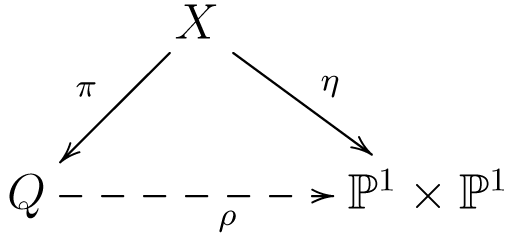
where $\eta$
is a conic bundle given by the natural projection
$\eta$
is a conic bundle given by the natural projection $X\to \mathbb{P}^1\times \mathbb{P}^1$
, and
$X\to \mathbb{P}^1\times \mathbb{P}^1$
, and $\rho$
is a rational map that is given by
$\rho$
is a rational map that is given by $[x:y:z:t:w]\mapsto ([x:y],[z:t])$
.
$[x:y:z:t:w]\mapsto ([x:y],[z:t])$
.
Remark 4.3. The only $G$
-fixed points in
$G$
-fixed points in $\mathbb{P}^1\times \mathbb{P}^1$
are
$\mathbb{P}^1\times \mathbb{P}^1$
are $([1:1],[1:1])$
and
$([1:1],[1:1])$
and $([-1:1],[-1:1])$
.
$([-1:1],[-1:1])$
.
Let $\Delta$
be the discriminant curve of the conic bundle
$\Delta$
be the discriminant curve of the conic bundle $\eta$
. Then
$\eta$
. Then $\Delta$
is given by
$\Delta$
is given by
 \begin{align*} & a^2u_1^2v_2^2+2abu_1^2u_2v_2+b^2u_1^2u_2^2+(2a^2+2b^2-4)v_1v_2u_1u_2\\&\quad +2abu_1v_1u_2^2+2abu_1v_1v_2^2+a^2u_2^2v_1^2+2abu_2v_1^2v_2+b^2v_1^2v_2^2=0,\quad \quad \quad \end{align*}
where we consider $([u_1:v_1],[u_2:v_2])$
as coordinates on
$([u_1:v_1],[u_2:v_2])$
as coordinates on $\mathbb{P}^1\times \mathbb{P}^1$
.
$\mathbb{P}^1\times \mathbb{P}^1$
.
Remark 4.4. If $a\pm b\pm 1\ne 0$
, then
$a\pm b\pm 1\ne 0$
, then $\Delta$
is smooth. If
$\Delta$
is smooth. If $a\pm b\pm 1=0$
and
$a\pm b\pm 1=0$
and $ab\ne 0$
, then
$ab\ne 0$
, then
 \begin{align*} {\rm Sing}(\Delta )=\left \{\begin{aligned} & \big ([1:1],[1:1]\big )\quad {\rm if}\, a+b\pm 1=0, \\ & \big ([-1:1],[-1:1]\big )\quad {\rm if}\, a-b\pm 1=0. \\ \end{aligned} \right . \end{align*}
Let $H$
be a proper transform on
$H$
be a proper transform on $X$
of a general hyperplane section of the quadric
$X$
of a general hyperplane section of the quadric $Q$
, and let
$Q$
, and let $E_1$
and
$E_1$
and $E_2$
be the
$E_2$
be the $\pi$
-exceptional divisors such that
$\pi$
-exceptional divisors such that $\pi (E_1)=C_1$
and
$\pi (E_1)=C_1$
and $\pi (E_2)=C_2$
.
$\pi (E_2)=C_2$
.
Lemma 4.5.
Suppose that $X$
has at most isolated singularities. Then
$X$
has at most isolated singularities. Then
 \begin{align*} {\rm Pic}^G(X)={\rm Cl}^G(X)=\mathbb{Z}[H]\oplus \mathbb{Z}[E_1+E_2]. \end{align*}
Proof. If the threefold $X$
is smooth, the assertion is obvious, since
$X$
is smooth, the assertion is obvious, since $G$
swaps
$G$
swaps $E_1$
and
$E_1$
and $E_2$
. If
$E_2$
. If $X$
has one singular point, the assertion follows from Lemma 4.2.
$X$
has one singular point, the assertion follows from Lemma 4.2.
Now, let us describe the cone of $G$
-invariant effective divisors on
$G$
-invariant effective divisors on $X$
.
$X$
.
Lemma 4.6.
Suppose that $X$
has at most isolated singularities. Let
$X$
has at most isolated singularities. Let $S$
be an
$S$
be an $G$
-invariant surface in
$G$
-invariant surface in $X$
. Then
$X$
. Then $S\sim n_1(E_1+E_2)+n_2(2H-E_1-E_2)+n_3H$
for some
$S\sim n_1(E_1+E_2)+n_2(2H-E_1-E_2)+n_3H$
for some $n_1,n_2,n_3\in \mathbb{Z}_{\geqslant 0}$
.
$n_1,n_2,n_3\in \mathbb{Z}_{\geqslant 0}$
.
Proof. By Lemma 4.5, we see that $S\sim k_1H+k_2(E_1+E_2)$
for some integers
$S\sim k_1H+k_2(E_1+E_2)$
for some integers $k_1$
and
$k_1$
and $k_2$
. On the other hand, the conic bundle
$k_2$
. On the other hand, the conic bundle $\eta \colon X\to \mathbb{P}^1\times \mathbb{P}^1$
is given by
$\eta \colon X\to \mathbb{P}^1\times \mathbb{P}^1$
is given by $|2H-E_1-E_2|$
. Then
$|2H-E_1-E_2|$
. Then
 \begin{align*} S\sim _{\mathbb{Q}} m_1(E_1+E_2)+m_2(2H-E_1-E_2) \end{align*}
for some non-negative rational numbers $m_1$
and
$m_1$
and $m_2$
. We have
$m_2$
. We have $k_1=2m_2$
and
$k_1=2m_2$
and $m_1-m_2=k_2$
. If
$m_1-m_2=k_2$
. If $k_1$
is even, then
$k_1$
is even, then $m_1$
and
$m_1$
and $m_2$
are integers and we are done, since
$m_2$
are integers and we are done, since ${\rm Pic}(X)$
has no torsion. So, we may assume that
${\rm Pic}(X)$
has no torsion. So, we may assume that $k_1=2n+1$
, where
$k_1=2n+1$
, where $n\in \mathbb{Z}$
. Then
$n\in \mathbb{Z}$
. Then $m_2=n+\frac {1}{2}$
and
$m_2=n+\frac {1}{2}$
and $m_1=k_2+n+\frac {1}{2}$
, which gives
$m_1=k_2+n+\frac {1}{2}$
, which gives $n\geqslant 0$
and
$n\geqslant 0$
and $k_2+n\geqslant 0$
, since
$k_2+n\geqslant 0$
, since $m_1\geqslant 0$
and
$m_1\geqslant 0$
and $m_2\geqslant 0$
. Hence, we have
$m_2\geqslant 0$
. Hence, we have
 \begin{align*} S\sim _{\mathbb{Q}} (k_2+n)(E_1+E_2)+n(2H-E_1-E_2)+H, \end{align*}
which gives $S\sim (k_2+n)(E_1+E_2)+n(2H-E_1-E_2)+H$
, since
$S\sim (k_2+n)(E_1+E_2)+n(2H-E_1-E_2)+H$
, since ${\rm Pic}(X)$
has no torsion.
${\rm Pic}(X)$
has no torsion.
Corollary 4.7.
Suppose that $X$
has at most isolated singularities. Let
$X$
has at most isolated singularities. Let $S$
be a
$S$
be a $G$
-invariant irreducible surface in
$G$
-invariant irreducible surface in $X$
. Then
$X$
. Then $\beta (S)\gt 0$
.
$\beta (S)\gt 0$
.
Proof. We have $\beta (S)=1-S_X(S)$
, and it follows from Lemma 4.6 that
$\beta (S)=1-S_X(S)$
, and it follows from Lemma 4.6 that
 \begin{align*} S_X(S)=\frac {1}{26}\int \limits _{0}^{\infty }{\rm vol}\big (\!-K_X-uS\big )du\leqslant \frac {1}{26}\int \limits _{0}^{\infty }{\rm vol}\big (\!-K_X-uF\big )du, \end{align*}
where $F$
is one divisor among
$F$
is one divisor among $H$
,
$H$
, $E_1+E_2$
,
$E_1+E_2$
, $2H-E_1-E_2$
. On the other hand, we have
$2H-E_1-E_2$
. On the other hand, we have
 \begin{align*} \frac {1}{26}\int \limits _{0}^{\infty }{\rm vol}\big (\!-K_X-uH\big )du=\frac {1}{26}\int \limits _{0}^{1}\big (\!-K_X-uH\big )^3du=\frac {1}{26}\int \limits _{0}^{1}2(1-u)(u^2-8u+13)du=\frac {21}{52}. \end{align*}
Similarly, we have
 \begin{align*} \frac {1}{26}\int \limits _{0}^{\infty }{\rm vol}\big (\!-K_X-u(E_1+E_2)\big )du=\frac {1}{26}\int \limits _{0}^{\frac {1}{2}}2(2u-1)(2u^2-2u-13)du=\frac {53}{208}. \end{align*}
Finally, we compute
 \begin{align*} &\frac {1}{26}\int \limits _{0}^{\infty }{\rm vol}\big (\!-K_X-u(2H-E_1-E_2)\big )du= \frac {1}{26}\int \limits _{0}^{1}\big ((3-2u)H+(u-1)E_1+(u-1)E_2\big )^3du\\[-2pt] &\quad +\frac {1}{26}\int \limits _{1}^{\frac {3}{2}}\big ((3-2u)H\big )^3du=\frac {1}{26}\int \limits _{0}^{1}12u^2-36u+26du+\frac {1}{26}\int \limits _{1}^{\frac {3}{2}}2(3-2u)^3du=\frac {49}{104}. \end{align*}
Thus, we conclude that $\beta (S)\gt 0$
, as claimed.
$\beta (S)\gt 0$
, as claimed.
We conclude this section with the following technical result:
Proposition 4.8.
Suppose that $X$
has at most isolated singularities, and let
$X$
has at most isolated singularities, and let $S$
be a smooth surface in one of the linear systems
$S$
be a smooth surface in one of the linear systems $|H-E_1|$
or
$|H-E_1|$
or $|H-E_2|$
. Then
$|H-E_2|$
. Then
 \begin{align*} \delta _P(X)\geqslant \frac {104}{99} \end{align*}
for every point $P\in S$
such that
$P\in S$
such that $P\not \in E_1\cup E_2$
.
$P\not \in E_1\cup E_2$
.
Proof. We may assume that $S\in |H-E_1|$
. Let
$S\in |H-E_1|$
. Let $u$
be a non-negative real number. Then
$u$
be a non-negative real number. Then
 \begin{align*} -K_X-uS\sim _{\mathbb{R}}(2-u)S+(H-E_2)+E_1\sim _{\mathbb{R}} (3-u)H-(1-u)E_1-E_2. \end{align*}
Then $-K_X-uS$
is nef
$-K_X-uS$
is nef $\iff$ $u\in [0,1]$
, and
$u\in [0,1]$
, and $-K_X-uS$
is pseudo-effective
$-K_X-uS$
is pseudo-effective $\iff$ $u\in [0,2]$
. Moreover, if
$u\in [0,2]$
. Moreover, if $u\in [1,2]$
, then its Zariski decomposition can be described as follows:
$u\in [1,2]$
, then its Zariski decomposition can be described as follows:
 \begin{align*} -K_X-uS\sim _{\mathbb{R}}\underbrace {(3-u)H-E_2}_{\textrm{positive part}}+\underbrace {(u-1)E_1}_{\textrm{negative part}}. \end{align*}
Thus, for transparency, we let
 \begin{align*} P(u)=\left \{\begin{aligned} & (3-u)H-(1-u)E_1-E_2\quad {\rm if}\, 0\leqslant u\leqslant 1, \\ & (3-u)H-E_2\quad {\rm if}\, 1\leqslant u\leqslant 2, \end{aligned} \right . \end{align*}
and
 \begin{align*} N(u)=\left \{\begin{aligned} & 0\quad {\rm if}\, 0\leqslant u\leqslant 1, \\ & (u-1)E_1\quad {\rm if}\, 1\leqslant u\leqslant 2. \end{aligned} \right . \end{align*}
Then
 \begin{align*} \big (P(u)\big )^3=\left \{\begin{aligned} & 26-18u\quad {\rm if}\, 0\leqslant u\leqslant 1, \\ & 40-2u^3+18u^2-48u\quad {\rm if}\, 1\leqslant u\leqslant 2. \end{aligned} \right . \end{align*}
Then
 \begin{align*} S_X(S)=\frac {1}{(-K_{X})^3}\int \limits _{0}^{2}{\rm vol}\big (\!-K_X-uS\big )du=\frac {1}{26}\int \limits _{0}^{2}\big (P(u)\big )^3du=\frac {3}{4}, \end{align*}
so that $\beta (S)=1-S_X(S)=\frac {1}{4}$
.
$\beta (S)=1-S_X(S)=\frac {1}{4}$
.
Let $P$
be a point in
$P$
be a point in $S$
, and let
$S$
, and let $C$
be an irreducible smooth curve in
$C$
be an irreducible smooth curve in $S$
such that
$S$
such that $P\in C$
. Write
$P\in C$
. Write $N(u)\vert _{S}=N^\prime (u)+{\rm ord}_{C}(N(u)\vert _{S})C$
. For every
$N(u)\vert _{S}=N^\prime (u)+{\rm ord}_{C}(N(u)\vert _{S})C$
. For every $u\in [0,2]$
, set
$u\in [0,2]$
, set
 \begin{align*} t(u)={\rm sup} \{v\in \mathbb{R}_{\geqslant 0}\ \big\vert \ \textrm{the divisor}\ P(u)\big\vert\ _{S}-vC\ \textrm{is pseudo-effective} \}. \end{align*}
Let $v$
be a real number in
$v$
be a real number in $[0,t(u)]$
, let
$[0,t(u)]$
, let $P(u,v)$
be the positive part of the Zariski decomposition of the
$P(u,v)$
be the positive part of the Zariski decomposition of the $\mathbb{R}$
-divisor
$\mathbb{R}$
-divisor $P(u)\vert _{S}-vC$
, and let
$P(u)\vert _{S}-vC$
, and let $N(u,v)$
be its negative part. Set
$N(u,v)$
be its negative part. Set
 \begin{align*} S\big (W^S_{\bullet ,\bullet };C\big )=\frac {3}{(-K_X)^3}\int \limits _0^2\big (P(u)\big \vert _{S}\big )^2\cdot {\rm ord}_{C}\big (N(u)\big \vert _{S}\big )du+\frac {3}{(-K_X)^3}\int \limits _0^2\int \limits _0^{t(u)}\big (P(u,v)\big )^2dvdu \end{align*}
and
 \begin{align*} S\big (W_{\bullet , \bullet ,\bullet }^{S,C};P\big )&=\frac {3}{(-K_X)^3}\int \limits _0^2\int \limits _0^{t(u)}\big (P(u,v)\cdot C\big )^2dvdu\\ &\quad +\frac {6}{(-K_X)^3} \int \limits _0^2\int \limits _0^{t(u)}\big (P(u,v)\cdot C\big )\cdot {\rm ord}_P\big (N^\prime (u)\big |_C+N(u,v)\big |_C\big )dvdu. \end{align*}
Then it follows from [Reference Abban and ZhuangAZ22, Reference Araujo, Castravet, Cheltsov, Fujita, Kaloghiros, Martinez-Garcia, Shramov, Süß and ViswanathanACC+23] that
 \begin{align*} \delta _P(X)\geqslant \min \Bigg \{\frac {1}{S_X(S)},\frac {1}{S\big (W^S_{\bullet ,\bullet };C\big )},\frac {1}{S\big (W_{\bullet , \bullet ,\bullet }^{S,C};P\big )}\Bigg \}. \end{align*}
But $S_X(S)=\frac {3}{4}$
. Hence, to complete the proof, it is enough to find an irreducible smooth curve
$S_X(S)=\frac {3}{4}$
. Hence, to complete the proof, it is enough to find an irreducible smooth curve $C\subset S$
such that
$C\subset S$
such that $P\in C$
, and
$P\in C$
, and $S(W^S_{\bullet ,\bullet };C)\leqslant \frac {99}{104}\geqslant S(W_{\bullet , \bullet ,\bullet }^{S,C};P)$
if
$S(W^S_{\bullet ,\bullet };C)\leqslant \frac {99}{104}\geqslant S(W_{\bullet , \bullet ,\bullet }^{S,C};P)$
if $P\not \in E_1\cup E_2$
.
$P\not \in E_1\cup E_2$
.
Now, suppose that $P\not \in E_1\cup E_2$
. In particular, this assumption implies
$P\not \in E_1\cup E_2$
. In particular, this assumption implies $P\not \in {\rm Supp}(N(u))$
, so that the formulas for
$P\not \in {\rm Supp}(N(u))$
, so that the formulas for $S(W^S_{\bullet ,\bullet };C)$
and
$S(W^S_{\bullet ,\bullet };C)$
and $S(W_{\bullet , \bullet ,\bullet }^{S,C};P)$
simplify as follows:
$S(W_{\bullet , \bullet ,\bullet }^{S,C};P)$
simplify as follows:
 \begin{align*} S\big (W^S_{\bullet ,\bullet };C\big )=\frac {3}{(-K_X)^3}\int \limits _0^2\int \limits _0^{t(u)}\big (P(u,v)\big )^2dvdu \end{align*}
and
 \begin{align*} S\big (W_{\bullet , \bullet ,\bullet }^{S,C};P\big )=\frac {3}{(-K_X)^3}\int \limits _0^2\int \limits _0^{t(u)}\big (P(u,v)\cdot C\big )\Big (\big (P(u,v)\cdot C\big )+2{\rm ord}_P\big (N(u,v)\big |_C\big )\Big )dvdu. \end{align*}
To find the required curve $C$
, recall that
$C$
, recall that $S$
is a del Pezzo surface of degree
$S$
is a del Pezzo surface of degree $6$
, and
$6$
, and
 \begin{align*} E_2\big \vert _{S}={\bf e}_1+{\bf e}_2, \end{align*}
where ${\bf e}_1$
and
${\bf e}_1$
and ${\bf e}_2$
are disjoint
${\bf e}_2$
are disjoint $(-1)$
-curves in the surface
$(-1)$
-curves in the surface $S$
. Let
$S$
. Let $Z$
be the fiber of the conic bundle
$Z$
be the fiber of the conic bundle $S\to \mathbb{P}^1$
given by
$S\to \mathbb{P}^1$
given by $([u_1:v_1],[u_2:v_2],[x:y:z:t:w])\mapsto [u_2:v_2]$
such that
$([u_1:v_1],[u_2:v_2],[x:y:z:t:w])\mapsto [u_2:v_2]$
such that $P\in Z$
. Then
$P\in Z$
. Then $Z\cdot {\bf e}_1=Z\cdot {\bf e}_2=1$
and
$Z\cdot {\bf e}_1=Z\cdot {\bf e}_2=1$
and
 \begin{align*} E_1\big \vert _{S}\sim H\big \vert _{S}\sim Z+{\bf e}_1+{\bf e}_2. \end{align*}
Let us choose $C$
to be an irreducible component of the fiber
$C$
to be an irreducible component of the fiber $Z$
that contains the point
$Z$
that contains the point $P$
. A priori, we may have the following two possibilities:
$P$
. A priori, we may have the following two possibilities:
-
(1)
$Z$
is an irreducible smooth rational curve and
$Z^2=0$
; -
(2)
$Z=\ell _1+\ell _2$
for two
$(-1)$
-curves
$\ell _1$
and
$\ell _2$
such that
$\ell _1\cdot \ell _2=\ell _1\cdot {\bf e}_1=\ell _2\cdot {\bf e}_2=1$
.


In the first case, we have $C=Z$
. In the second case, we may assume
$C=Z$
. In the second case, we may assume $P\in \ell _1$
, so
$P\in \ell _1$
, so $C=\ell _1$
. Let us compute
$C=\ell _1$
. Let us compute $S(W^S_{\bullet ,\bullet };C)$
and
$S(W^S_{\bullet ,\bullet };C)$
and $S(W_{\bullet , \bullet ,\bullet }^{S,C};P)$
in each of these cases.
$S(W_{\bullet , \bullet ,\bullet }^{S,C};P)$
in each of these cases.
First, we note that
 \begin{align*} P(u)\big \vert _{S}=\left \{\begin{aligned} & 2Z+{\bf e}_1+{\bf e}_2\quad {\rm if}\, 0\leqslant u\leqslant 1, \\ & (3-u)Z+(2-u)({\bf e}_1+{\bf e}_2)\quad {\rm if}\, 1\leqslant u\leqslant 2. \end{aligned} \right . \end{align*}
Let $v$
be a non-negative real number. If
$v$
be a non-negative real number. If $C=Z$
, then
$C=Z$
, then
 \begin{align*} P(u)\big \vert _{S}-vC=\left \{\begin{aligned} & (2-v)C+{\bf e}_1+{\bf e}_2\quad {\rm if}\, 0\leqslant u\leqslant 1, \\ & (3-u-v)C+(2-u)({\bf e}_1+{\bf e}_2)\quad {\rm if}\, 1\leqslant u\leqslant 2, \end{aligned} \right . \end{align*}
which implies that
 \begin{align*} t(u)=\left \{\begin{aligned} & 2\quad {\rm if}\, 0\leqslant u\leqslant 1, \\ & 3-u\quad {\rm if}\, 1\leqslant u\leqslant 2. \end{aligned} \right . \end{align*}
Furthermore, if $C=Z$
and
$C=Z$
and $u\in [0,1]$
, then
$u\in [0,1]$
, then
 \begin{align*} P(u,v)=\left \{\begin{aligned} & (2-v)C+{\bf e}_1+{\bf e}_2\quad {\rm if}\, 0\leqslant v\leqslant 1, \\ & (2-v)\big (C+{\bf e}_1+{\bf e}_2\big )\quad {\rm if}\, 1\leqslant v\leqslant 2, \end{aligned} \right . \end{align*}
and
 \begin{align*} N(u,v)=\left \{\begin{aligned} & 0\quad {\rm if}\, 0\leqslant v\leqslant 1, \\ & (v-1)\big ({\bf e}_1+{\bf e}_2\big )\quad {\rm if}\, 1\leqslant v\leqslant 2, \end{aligned} \right . \end{align*}
which gives
 \begin{align*} \big (P(u,v)\big )^2=\left \{\begin{aligned} & 6-4v\quad {\rm if}\, 0\leqslant v\leqslant 1, \\ & 2(v-2)^2\quad {\rm if}\, 1\leqslant v\leqslant 2, \end{aligned} \right . \end{align*}
and
 \begin{align*} P(u,v)\cdot C=\left \{\begin{aligned} & 2\quad {\rm if}\, 0\leqslant v\leqslant 1, \\ & 4-2v\quad {\rm if}\, 1\leqslant v\leqslant 2. \end{aligned} \right . \end{align*}
Similarly, if $C=Z$
and
$C=Z$
and $u\in [1,2]$
, then
$u\in [1,2]$
, then
 \begin{align*} P(u,v)=\left \{\begin{aligned} & (3-u-v)C+(2-u)({\bf e}_1+{\bf e}_2)\quad {\rm if}\, 0\leqslant v\leqslant 1, \\ & (3-u-v)\big (C+{\bf e}_1+{\bf e}_2\big )\quad {\rm if}\, 1\leqslant v\leqslant 3-u, \end{aligned} \right . \end{align*}
and
 \begin{align*} N(u,v)=\left \{\begin{aligned} & 0\quad {\rm if}\, 0\leqslant v\leqslant 1, \\ & (v-1)\big ({\bf e}_1+{\bf e}_2\big )\quad {\rm if}\, 1\leqslant v\leqslant 3-u, \end{aligned} \right . \end{align*}
so that
 \begin{align*} \big (P(u,v)\big )^2=\left \{\begin{aligned} & 2(2-u)(4-u-2v)\quad {\rm if}\, 0\leqslant v\leqslant 1, \\ & 2(3-u-v)^2\quad {\rm if}\, 1\leqslant v\leqslant 3-u, \end{aligned} \right . \end{align*}
and
 \begin{align*} P(u,v)\cdot C=\left \{\begin{aligned} & 4-2u\quad {\rm if}\, 0\leqslant v\leqslant 1, \\ & 6-2u-2v\quad {\rm if}\, 1\leqslant v\leqslant 3-u. \end{aligned} \right . \end{align*}
In particular, if $C=Z$
, then
$C=Z$
, then $P\not \in {\rm Supp}(N(u,v))$
, because
$P\not \in {\rm Supp}(N(u,v))$
, because $P\not \in E_2$
by our assumption. Now, integrating, we get
$P\not \in E_2$
by our assumption. Now, integrating, we get $S(W^S_{\bullet ,\bullet };C)=\frac {3}{4}\lt \frac {99}{104}$
and
$S(W^S_{\bullet ,\bullet };C)=\frac {3}{4}\lt \frac {99}{104}$
and $S(W_{\bullet , \bullet ,\bullet }^{S,C};P)=\frac {21}{26}\lt \frac {99}{104}$
.
$S(W_{\bullet , \bullet ,\bullet }^{S,C};P)=\frac {21}{26}\lt \frac {99}{104}$
.
Hence, to complete the proof, we may assume that $Z=\ell _1+\ell _2$
and
$Z=\ell _1+\ell _2$
and $C=\ell _1$
. Then
$C=\ell _1$
. Then
 \begin{align*} P(u)\big \vert _{S}-vC=\left \{\begin{aligned} & (2-v)C+2\ell _2+{\bf e}_1+{\bf e}_2\quad {\rm if}\, 0\leqslant u\leqslant 1, \\ & (3-u-v)C+(3-u)\ell _2+(2-u)({\bf e}_1+{\bf e}_2)\quad {\rm if}\, 1\leqslant u\leqslant 2, \end{aligned} \right . \end{align*}
which implies that
 \begin{align*} t(u)=\left \{\begin{aligned} & 2\quad {\rm if}\, 0\leqslant u\leqslant 1, \\ & 3-u\quad {\rm if}\, 1\leqslant u\leqslant 2. \end{aligned} \right . \end{align*}
Further, if $u\in [0,1]$
, then
$u\in [0,1]$
, then
 \begin{align*} P(u,v)=\left \{\begin{aligned} & (2-v)C+2\ell _2+{\bf e}_1+{\bf e}_2\quad {\rm if}\, 0\leqslant v\leqslant 1, \\ & (2-v)\big (C+{\bf e}_1\big )+(3-v)\ell _2+{\bf e}_2\quad {\rm if}\, 1\leqslant v\leqslant 2, \end{aligned} \right . \end{align*}
and
 \begin{align*} N(u,v)=\left \{\begin{aligned} & 0\quad {\rm if}\, 0\leqslant v\leqslant 1, \\[4pt] & (v-1)\big ({\bf e}_1+\ell _2\big )\quad {\rm if}\, 1\leqslant v\leqslant 2, \end{aligned} \right . \end{align*}
which gives
 \begin{align*} \big (P(u,v)\big )^2=\left \{\begin{aligned} & 6-v^2-2v\quad {\rm if}\, 0\leqslant v\leqslant 1, \\[4pt] & (2-v)(4-v)\quad {\rm if}\, 1\leqslant v\leqslant 2, \end{aligned} \right . \end{align*}
and
 \begin{align*} P(u,v)\cdot C=\left \{\begin{aligned} & 1+v\quad {\rm if}\, 0\leqslant v\leqslant 1, \\[4pt] & 3-v\quad {\rm if}\,1\leqslant v\leqslant 2. \end{aligned} \right . \end{align*}
Likewise, if $u\in [1,2]$
, then
$u\in [1,2]$
, then
 \begin{align*} P(u,v)=\left \{\begin{aligned} & (3-u-v)C+(3-u)\ell _2+(2-u)({\bf e}_1+{\bf e}_2)\quad {\rm if}\, 0\leqslant v\leqslant 2-u, \\[4pt] & (3-u-v)C+(5-2u-v)\ell _2+(2-u)({\bf e}_1+{\bf e}_2)\quad {\rm if}\, 2-u\leqslant v\leqslant 1, \\[4pt] & (3-u-v)(C+{\bf e}_1)+(5-2u-v)\ell _2+(2-u){\bf e}_2\quad {\rm if}\, 1\leqslant v\leqslant 3-u, \end{aligned} \right . \end{align*}
and
 \begin{align*} N(u,v)=\left \{\begin{aligned} & 0\quad {\rm if}\, 0\leqslant v\leqslant 2-u, \\[4pt] & (v-2+u)\ell _2\quad {\rm if}\, 2-u\leqslant v\leqslant 1, \\[4pt] & (v-2+u)\ell _2+(v-1){\bf e}_1\quad {\rm if}\, 1\leqslant v\leqslant 3-u, \end{aligned} \right . \end{align*}
so that
 \begin{align*} \big (P(u,v)\big )^2=\left \{\begin{aligned} & 2u^2+2uv-v^2-12u-4v+16\quad {\rm if}\, 0\leqslant v\leqslant 2-u, \\[4pt] & (u-2)(3u+4v-10)\quad {\rm if}\,2-u\leqslant v\leqslant 1, \\[4pt] & (3-u-v)(7-3u-v)\quad {\rm if}\, 1\leqslant v\leqslant 3-u, \end{aligned} \right . \end{align*}
and
 \begin{align*} P(u,v)\cdot C=\left \{\begin{aligned} & 2-u+v\quad {\rm if}\, 0\leqslant v\leqslant 2-u, \\[4pt] & 4-2u\quad {\rm if}\, 2-u\leqslant v\leqslant 1, \\[4pt] & 5-2u-v\quad {\rm if}\, 1\leqslant v\leqslant 3-u. \end{aligned} \right . \end{align*}
Now, integrating, we get $S(W^S_{\bullet ,\bullet };C)=\frac {99}{104}$
. Note that
$S(W^S_{\bullet ,\bullet };C)=\frac {99}{104}$
. Note that $P\not \in {\bf e}_1$
, since
$P\not \in {\bf e}_1$
, since $P\not \in E_2$
by assumption. Therefore, if
$P\not \in E_2$
by assumption. Therefore, if $P\not \in \ell _2$
, then
$P\not \in \ell _2$
, then $P\not \in {\rm Supp}(N(u,v))$
, which implies that
$P\not \in {\rm Supp}(N(u,v))$
, which implies that $S(W_{\bullet , \bullet ,\bullet }^{S,C};P)=\frac {37}{52}\lt \frac {99}{104}$
. Similarly, if
$S(W_{\bullet , \bullet ,\bullet }^{S,C};P)=\frac {37}{52}\lt \frac {99}{104}$
. Similarly, if $P\in \ell _2$
, then
$P\in \ell _2$
, then
 \begin{align*} S\big (W_{\bullet , \bullet ,\bullet }^{S,C};P\big )&=\frac {37}{52}+\frac {6}{26} \int \limits _0^2\int \limits _0^{t(u)}\big (P(u,v)\cdot C\big )\cdot {\rm ord}_P\big (N(u,v)\big |_C\big )dvdu\\[4pt] & =\frac {37}{52}+\frac {6}{26}\int \limits _0^1\int \limits _1^{2}\big (P(u,v)\cdot C\big )(v-1)dvdu+\frac {6}{26}\int \limits _1^2\int \limits _{2-u}^{3-u}\big (P(u,v)\cdot C\big )(v-2+u)dvdu \end{align*}
 \begin{align*} & =\frac {37}{52}+\frac {6}{26}\int \limits _0^1\int \limits _1^{2}(3-v)(v-1)dvdu+\frac {6}{26}\int \limits _1^2\int \limits _{2-u}^{1}(4-2u)(v-2+u)dvdu\\&\quad +\frac {6}{26}\int \limits _1^2\int \limits _1^{3-u}(5-2u-v)(v-2+u)dvdu=\frac {99}{104}. \end{align*}
This completes the proof of Proposition 4.8.
4.1 Smooth threefolds
We continue to use the notation introduced earlier in this section. The goal of this subsection is to give a new proof of the following result.
Theorem 4.9 ([Reference Araujo, Castravet, Cheltsov, Fujita, Kaloghiros, Martinez-Garcia, Shramov, Süß and ViswanathanACC+23, Proposition 5.79]). Let $X$
be a smooth Fano threefold from class
$X$
be a smooth Fano threefold from class $(\beth )$
. Then
$(\beth )$
. Then $X$
is K-polystable.
$X$
is K-polystable.
We begin with a technical lemma that will also be useful in the singular case.
Lemma 4.10.
Suppose that $X$
has at worst isolated singularities. Let
$X$
has at worst isolated singularities. Let ${\bf F}$
be a
${\bf F}$
be a $G$
-invariant prime divisor
$G$
-invariant prime divisor ${\bf F}$
over the threefold
${\bf F}$
over the threefold $X$
with
$X$
with
 \begin{align*} \beta ({\bf F})=A_X({\bf F})-S_X({\bf F})\leqslant 0, \end{align*}
and let $Z$
be its center on
$Z$
be its center on $X$
. Suppose that
$X$
. Suppose that $Z$
is not a singular point of the threefold
$Z$
is not a singular point of the threefold $X$
. Then
$X$
. Then $Z$
is an irreducible curve with
$Z$
is an irreducible curve with $\eta (Z)=([1:1],[1:1])$
or
$\eta (Z)=([1:1],[1:1])$
or $\eta (Z)=([1:-1],[1:-1])$
.
$\eta (Z)=([1:-1],[1:-1])$
.
Proof. Note first that $Z$
is a
$Z$
is a $G$
-invariant curve, by Lemma 4.1 and Corollary 4.7, and
$G$
-invariant curve, by Lemma 4.1 and Corollary 4.7, and
 \begin{align*} \delta _P(X)\leqslant 1 \end{align*}
for every point $P\in Z$
. Observe also that
$P\in Z$
. Observe also that $Z\not \subset E_1\cup E_2$
, because the surfaces
$Z\not \subset E_1\cup E_2$
, because the surfaces $E_1$
and
$E_1$
and $E_2$
are disjoint and swapped by the action of the group
$E_2$
are disjoint and swapped by the action of the group $G$
.
$G$
.
Let $S$
be any surface in
$S$
be any surface in $|H-E_1|$
. If
$|H-E_1|$
. If $S\cdot Z\ne 0$
, then choosing
$S\cdot Z\ne 0$
, then choosing $S$
to be general enough, we see that
$S$
to be general enough, we see that $S$
is a smooth del Pezzo surface and
$S$
is a smooth del Pezzo surface and $S\cap Z$
contains a point
$S\cap Z$
contains a point $P\not \in E_1\cup E_2$
. This would give
$P\not \in E_1\cup E_2$
. This would give $\delta _P(X)\gt 1$
by Proposition 4.8, which is a contradiction. So we have
$\delta _P(X)\gt 1$
by Proposition 4.8, which is a contradiction. So we have
 \begin{align*} \big (H-E_1\big )\cdot Z=0. \end{align*}
Similarly, we get $(H-E_2)\cdot Z=0$
. Therefore, we conclude that
$(H-E_2)\cdot Z=0$
. Therefore, we conclude that $\eta (Z)$
is a point in
$\eta (Z)$
is a point in $\mathbb{P}^1\times \mathbb{P}^1$
. Finally, using Remark 4.3 we get
$\mathbb{P}^1\times \mathbb{P}^1$
. Finally, using Remark 4.3 we get $\eta (Z)=([1:1],[1:1])$
or
$\eta (Z)=([1:1],[1:1])$
or $\eta (Z)=([1:-1],[1:-1])$
.
$\eta (Z)=([1:-1],[1:-1])$
.
Proof of Theorem
4.9. Suppose for a contradiction that the Fano threefold $X$
is smooth, but
$X$
is smooth, but $X$
is not K-polystable. It follows from [Reference FujitaFuj19a, Reference LiLi17, Reference ZhuangZhu21] that there exists a
$X$
is not K-polystable. It follows from [Reference FujitaFuj19a, Reference LiLi17, Reference ZhuangZhu21] that there exists a $G$
-invariant prime divisor
$G$
-invariant prime divisor ${\bf F}$
over
${\bf F}$
over $X$
such that
$X$
such that $ \beta ({\bf F})\leqslant 0$
. Let
$ \beta ({\bf F})\leqslant 0$
. Let $Z$
be the center of
$Z$
be the center of ${\bf F}$
on
${\bf F}$
on $X$
. Then by Lemma 4.10, the center
$X$
. Then by Lemma 4.10, the center $Z$
is a curve with
$Z$
is a curve with $\eta (Z)=([1:1],[1:1])$
or
$\eta (Z)=([1:1],[1:1])$
or $\eta (Z)=([1:-1],[1:-1])$
.
$\eta (Z)=([1:-1],[1:-1])$
.
Let $S$
be the unique surface in the pencil
$S$
be the unique surface in the pencil $|H-E_1|$
that contains
$|H-E_1|$
that contains $Z$
, and let
$Z$
, and let $\ell =\eta (S)$
. If
$\ell =\eta (S)$
. If $\eta (Z)=([1:\pm 1],[1:\pm 1])$
, then
$\eta (Z)=([1:\pm 1],[1:\pm 1])$
, then $\ell =\{u_1\pm v_1=0\}$
. Moreover, one can check that
$\ell =\{u_1\pm v_1=0\}$
. Moreover, one can check that
-
•
$\{u_1-v_1=0\}$
intersects
$\Delta$
in a single point
$\iff$
$b+a\pm 1=0$
, -
•
$\{u_1+v_1=0\}$
intersects
$\Delta$
in a single point
$\iff$
$b-a\pm 1=0$
.






Since $Q$
is smooth by assumption, we have
$Q$
is smooth by assumption, we have $b\pm a\pm 1\ne 0$
, and
$b\pm a\pm 1\ne 0$
, and $\ell$
intersects the discriminant curve
$\ell$
intersects the discriminant curve $\Delta$
in two distinct points. This implies that
$\Delta$
in two distinct points. This implies that $S$
is a smooth del Pezzo surface.
$S$
is a smooth del Pezzo surface.
Now, applying Proposition 4.8, we get $\delta _P(X)\gt 1$
for a general point
$\delta _P(X)\gt 1$
for a general point $P$
in the curve
$P$
in the curve $Z$
, which contradicts
$Z$
, which contradicts $\beta ({\bf F})\leqslant 0$
. This completes the proof of Theorem 4.9.
$\beta ({\bf F})\leqslant 0$
. This completes the proof of Theorem 4.9.
4.2 Threefolds with one singular point
We continue to use the notation introduced at the beginning of this section. In this subsection, we will prove the following result.
Theorem 4.11.
Suppose that $X$
is a threefold from class
$X$
is a threefold from class $(\beth )$
with one singular point. Then
$(\beth )$
with one singular point. Then $X$
is K-polystable.
$X$
is K-polystable.
Suppose that the threefold $X$
has one singular point. Then
$X$
has one singular point. Then $a\pm b\pm 1=0$
and
$a\pm b\pm 1=0$
and $ab\ne 0$
. Up to a change of coordinates, we may assume that
$ab\ne 0$
. Up to a change of coordinates, we may assume that $b=1-a$
and
$b=1-a$
and $a\not \in \{0,1\}$
.
$a\not \in \{0,1\}$
.
Let $O={\rm Sing}(X)$
. Recall that
$O={\rm Sing}(X)$
. Recall that
 \begin{align*} X=\big \{u_1x=v_1y,u_2z=v_2t,w^2+xy+zt=a(xt+yz)+(1-a)(xz+yt)\big \}\subset \mathbb{P}^1\times \mathbb{P}^1\times \mathbb{P}^4, \end{align*}
and $O=([1:1],[1:1],[1:1:1:1:0])$
. Note that
$O=([1:1],[1:1],[1:1:1:1:0])$
. Note that $O$
is an isolated threefold node (
$O$
is an isolated threefold node ( ${\rm cA}_1$
) singularity. Similarly, we have
${\rm cA}_1$
) singularity. Similarly, we have
 \begin{align*} Q=\big \{w^2+xy+zt=a(xt+yz)+(1-a)(xz+yt)\big \}\subset \mathbb{P}^4, \end{align*}
and ${\rm Sing}(Q)=\pi (O)=[1:1:1:1:0]$
. Note that
${\rm Sing}(Q)=\pi (O)=[1:1:1:1:0]$
. Note that $\eta (O)=([1:1],[1:1])$
.
$\eta (O)=([1:1],[1:1])$
.
The fiber of the conic bundle $\eta$
over the point
$\eta$
over the point $([1:1],[1:1])$
is a reducible reduced conic
$([1:1],[1:1])$
is a reducible reduced conic $L_1+L_2$
, where
$L_1+L_2$
, where $L_1$
and
$L_1$
and $L_2$
are two smooth rational curves such that
$L_2$
are two smooth rational curves such that $L_1\cap L_2=O$
, and
$L_1\cap L_2=O$
, and $\pi (L_1)$
and
$\pi (L_1)$
and $\pi (L_2)$
are the only lines in
$\pi (L_2)$
are the only lines in $Q$
that intersect
$Q$
that intersect $C_1$
and
$C_1$
and $C_2$
. We have
$C_2$
. We have
 \begin{align*} \pi (L_1) & =\{x=y,z=t,w+x-z=0\},\\[5pt] \pi (L_2) & =\{x=y,z=t,w-x+z=0\}. \end{align*}
We will use the curves $L_1$
and
$L_1$
and $L_2$
in the proofs of the next two lemmas.
$L_2$
in the proofs of the next two lemmas.
Lemma 4.12.
Let ${\bf F}$
be a
${\bf F}$
be a $G$
-invariant prime divisor
$G$
-invariant prime divisor ${\bf F}$
over the threefold
${\bf F}$
over the threefold $X$
with
$X$
with $\beta ({\bf F})\leqslant 0$
, and let
$\beta ({\bf F})\leqslant 0$
, and let $Z$
be its center on the threefold
$Z$
be its center on the threefold $X$
. Then
$X$
. Then $Z=O$
.
$Z=O$
.
Proof. Suppose that $Z\ne O$
. Applying Lemma 4.10, we find that
$Z\ne O$
. Applying Lemma 4.10, we find that $Z$
is an irreducible curve such that
$Z$
is an irreducible curve such that $\eta (Z)=([1:1],[1:1])$
or
$\eta (Z)=([1:1],[1:1])$
or $\eta (Z)=([1:-1],[1:-1])$
. But
$\eta (Z)=([1:-1],[1:-1])$
. But $Z\ne L_1$
and
$Z\ne L_1$
and $Z\ne L_2$
, since neither of the curves
$Z\ne L_2$
, since neither of the curves $L_1$
nor
$L_1$
nor $L_2$
is
$L_2$
is $G$
-invariant, so
$G$
-invariant, so $\eta (Z)=([1:-1],[1:-1])$
.
$\eta (Z)=([1:-1],[1:-1])$
.
Let $S$
be the surface in
$S$
be the surface in $|H-E_1|$
that is cut out on
$|H-E_1|$
that is cut out on $X$
by the equation
$X$
by the equation $u_1+v_1=0$
. Then
$u_1+v_1=0$
. Then $S$
is smooth and
$S$
is smooth and $Z\subset S$
, so
$Z\subset S$
, so $\delta _P(X)\gt 1$
for a general point
$\delta _P(X)\gt 1$
for a general point $P\in Z$
by Proposition 4.8. This contradicts
$P\in Z$
by Proposition 4.8. This contradicts $\beta ({\bf F})\leqslant 0$
.
$\beta ({\bf F})\leqslant 0$
.
Lemma 4.13.
Let ${\bf F}$
be any
${\bf F}$
be any $G$
-invariant prime divisor
$G$
-invariant prime divisor ${\bf F}$
over
${\bf F}$
over $X$
such that
$X$
such that $C_X({\bf F})=O$
. Then
$C_X({\bf F})=O$
. Then $\beta ({\bf F})\gt 0$
.
$\beta ({\bf F})\gt 0$
.
Proof. Let $\varphi \colon \widetilde {X}\to X$
and
$\varphi \colon \widetilde {X}\to X$
and $\phi \colon \widetilde {Q}\to Q$
be blow ups of the points
$\phi \colon \widetilde {Q}\to Q$
be blow ups of the points $O$
and
$O$
and $\pi (O)$
, respectively. As in the proof of Lemma 2.3, we have the following
$\pi (O)$
, respectively. As in the proof of Lemma 2.3, we have the following $G$
-equivariant commutative diagram:
$G$
-equivariant commutative diagram:
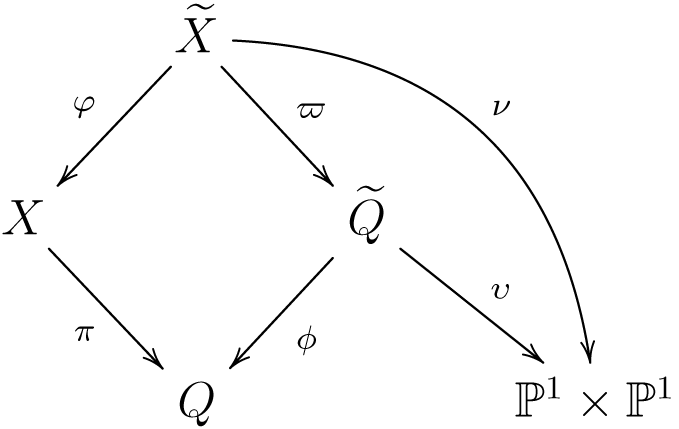
where $\varpi$
is the blow up of the proper transforms of the conics
$\varpi$
is the blow up of the proper transforms of the conics $C_1$
and
$C_1$
and $C_2$
,
$C_2$
, $\upsilon$
is a
$\upsilon$
is a $\mathbb{P}^1$
-bundle, and
$\mathbb{P}^1$
-bundle, and $\nu$
is a conic bundle. Let
$\nu$
is a conic bundle. Let $F$
be the
$F$
be the $\varphi$
-exceptional surface. Then
$\varphi$
-exceptional surface. Then $\beta (F)=2-S_X(F)$
.
$\beta (F)=2-S_X(F)$
.
Let $\widetilde {H}=\varphi ^*(H)$
, let
$\widetilde {H}=\varphi ^*(H)$
, let $\widetilde {E}_1$
and
$\widetilde {E}_1$
and $\widetilde {E}_2$
be the proper transforms on
$\widetilde {E}_2$
be the proper transforms on $\widetilde {X}$
of the
$\widetilde {X}$
of the $\pi$
-exceptional surfaces
$\pi$
-exceptional surfaces $E_1$
and
$E_1$
and $E_2$
, respectively, let
$E_2$
, respectively, let $\widetilde {S}_1$
and
$\widetilde {S}_1$
and $\widetilde {S}_2$
be the proper transforms of the quadric cones in
$\widetilde {S}_2$
be the proper transforms of the quadric cones in $Q$
that contain
$Q$
that contain $C_1$
and
$C_1$
and $C_2$
, respectively. We have
$C_2$
, respectively. We have $\varpi ^*(-K_{X})\sim 3\widetilde {H}-\widetilde {E}_1-\widetilde {E}_2$
. We also have
$\varpi ^*(-K_{X})\sim 3\widetilde {H}-\widetilde {E}_1-\widetilde {E}_2$
. We also have $\widetilde {S}_1\sim \widetilde {H}-\widetilde {E}_1-F$
and
$\widetilde {S}_1\sim \widetilde {H}-\widetilde {E}_1-F$
and $\widetilde {S}_2\sim \widetilde {H}-\widetilde {E}_2-F$
. Take
$\widetilde {S}_2\sim \widetilde {H}-\widetilde {E}_2-F$
. Take $u\in \mathbb{R}_{\geqslant 0}$
. Then
$u\in \mathbb{R}_{\geqslant 0}$
. Then
 \begin{align} \varpi ^*(-K_{X})-uF\sim _{\mathbb{R}} \frac {3}{2}\big (\widetilde {S}_1+\widetilde {S}_2\big )+\frac {1}{2}\big (\widetilde {E}_1+\widetilde {E}_2\big )+(3-u)F. \end{align}
Hence, intersecting $\varpi ^*(-K_{X})-uF$
with a sufficiently general fiber of the morphism
$\varpi ^*(-K_{X})-uF$
with a sufficiently general fiber of the morphism $\nu$
, we see that
$\nu$
, we see that $\varpi ^*(-K_{X})-uF$
is pseudoeffective
$\varpi ^*(-K_{X})-uF$
is pseudoeffective $\iff$ $u\in [0,3]$
. Moreover, we have
$u\in [0,3]$
. Moreover, we have
 \begin{align*} \widetilde {H}^3 & =2, & \widetilde {E}_1^3 & =-4, & \widetilde {E}_2^3 & =-4, & F^3 & =2, & \widetilde {E}_1\cdot \widetilde {H}^2 & =0,\\ \widetilde {E}_2\cdot \widetilde {H}^2 & =0, & \widetilde {E}_2\cdot \widetilde {E}_1^2 & =0, & \widetilde {E}_1\cdot \widetilde {E}_2^2 & =0, & F\cdot \widetilde {E}_1^2 & =0, & F\cdot \widetilde {E}_2^2 & =0,\\ \widetilde {E}_1\cdot F^2 & =0, & \widetilde {E}_2\cdot F^2 & =0, & \widetilde {H}\cdot F^2 & =0, & F\cdot \widetilde {H}^2 & =0, & \widetilde {H}\cdot \widetilde {E}_1^2 & =-2,\\ \widetilde {H}\cdot \widetilde {E}_2^2 & =-2, & \widetilde {E}_1\cdot \widetilde {E}_2\cdot \widetilde {H} & =0, & \widetilde {E}_1\cdot \widetilde {E}_2\cdot F & =0, & \widetilde {E}_1\cdot F\cdot \widetilde {H} & =0, & \widetilde {E}_2\cdot F\cdot \widetilde {H} & =0. \end{align*}
Furthermore, the divisor $\varpi ^*(-K_{X})-uF$
is nef for
$\varpi ^*(-K_{X})-uF$
is nef for $u\in [0,1]$
. Thus, we have
$u\in [0,1]$
. Thus, we have
 \begin{align*} S_X(F)&=\frac {1}{26}\int \limits _{0}^{1}\big (3\widetilde {H}-\widetilde {E}_1-\widetilde {E}_2-uF\big )^3du+\frac {1}{26}\int \limits _{1}^{3}{\rm vol}\big (\varpi ^*(-K_{X})-uF\big )du\\ &=\frac {1}{26}\int \limits _{0}^{1}26-2u^3du+\frac {1}{26}\int \limits _{1}^{3}{\rm vol}\big (\varpi ^*(-K_{X})-uF\big )du=\frac {51}{52}+\frac {1}{26}\int \limits _{1}^{3}{\rm vol}\big (\varpi ^*(-K_{X})-uF\big )du. \end{align*}
If $\ell$
is the preimage on
$\ell$
is the preimage on $\widetilde {X}$
of a general ruling of one of the cones
$\widetilde {X}$
of a general ruling of one of the cones $\pi \circ \varphi (\widetilde {S}_1)$
and
$\pi \circ \varphi (\widetilde {S}_1)$
and $\pi \circ \varphi (\widetilde {S}_2)$
, then
$\pi \circ \varphi (\widetilde {S}_2)$
, then $(\varpi ^*(-K_{X})-uF)\cdot \ell=2-u$
, which shows that
$(\varpi ^*(-K_{X})-uF)\cdot \ell=2-u$
, which shows that $\varpi ^*(-K_{X})-uF$
is not nef for
$\varpi ^*(-K_{X})-uF$
is not nef for $u\gt 2$
.
$u\gt 2$
.
Let $\widetilde {L}_1$
and
$\widetilde {L}_1$
and $\widetilde {L}_2$
be the proper transforms on
$\widetilde {L}_2$
be the proper transforms on $\widetilde {X}$
of the curves
$\widetilde {X}$
of the curves $L_1$
and
$L_1$
and $L_2$
, respectively. Then
$L_2$
, respectively. Then $\varpi ^*(-K_{X})-uF$
is not nef for
$\varpi ^*(-K_{X})-uF$
is not nef for $u\gt 1$
, because
$u\gt 1$
, because
 \begin{align*} \big (\varpi ^*(-K_{X})-uF\big )\cdot \widetilde {L}_1=\big (\varpi ^*(-K_{X})-uF\big )\cdot \widetilde {L}_2=1-u. \end{align*}
Using (4.14), one can show that $\widetilde {L}_1$
and
$\widetilde {L}_1$
and $\widetilde {L}_2$
are the only curves in
$\widetilde {L}_2$
are the only curves in $\widetilde {X}$
that have negative intersection with
$\widetilde {X}$
that have negative intersection with $\varpi ^*(-K_{X})-uF$
for
$\varpi ^*(-K_{X})-uF$
for $u\in (1,2]$
.
$u\in (1,2]$
.
Note that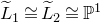 $\widetilde {L}_1\cong \widetilde {L}_2\cong \mathbb{P}^1$
and their normal bundles are isomorphic to
$\widetilde {L}_1\cong \widetilde {L}_2\cong \mathbb{P}^1$
and their normal bundles are isomorphic to $\mathcal{O}_{\mathbb{P}^1}(-1)\oplus \mathcal{O}_{\mathbb{P}^1}(-1)$
. Let
$\mathcal{O}_{\mathbb{P}^1}(-1)\oplus \mathcal{O}_{\mathbb{P}^1}(-1)$
. Let $\psi \colon \widehat {X}\to \widetilde {X}$
be the blow up of
$\psi \colon \widehat {X}\to \widetilde {X}$
be the blow up of $\widetilde {L}_1$
and
$\widetilde {L}_1$
and $\widetilde {L}_2$
, let
$\widetilde {L}_2$
, let $G_1$
and
$G_1$
and $G_2$
be the
$G_2$
be the $\psi$
-exceptional surfaces such that
$\psi$
-exceptional surfaces such that $\psi (G_1)=\widetilde {L}_1$
and
$\psi (G_1)=\widetilde {L}_1$
and $\psi (G_2)=\widetilde {L}_2$
, let
$\psi (G_2)=\widetilde {L}_2$
, let $\widehat {H}$
,
$\widehat {H}$
, $\widehat {E}_1$
,
$\widehat {E}_1$
, $\widehat {E}_2$
,
$\widehat {E}_2$
, $\widehat {S}_1$
,
$\widehat {S}_1$
, $\widehat {S}_2$
,
$\widehat {S}_2$
, $\widehat {F}$
, be the proper transforms on the threefold
$\widehat {F}$
, be the proper transforms on the threefold $\widehat {X}$
of the surfaces
$\widehat {X}$
of the surfaces $\widetilde {H}$
,
$\widetilde {H}$
, $\widetilde {E}_1$
,
$\widetilde {E}_1$
, $\widetilde {E}_2$
,
$\widetilde {E}_2$
, $\widetilde {S}_1$
,
$\widetilde {S}_1$
, $\widetilde {S}_2$
,
$\widetilde {S}_2$
, $F$
, respectively. Then
$F$
, respectively. Then
 \begin{align*} (\varpi \circ \psi )^*(-K_{X})\sim 3\widehat {H}-\widehat {E}_1-\widehat {E}_2. \end{align*}
We have $\widehat {S}_1\sim \widehat {H}-\widehat {E}_1-\widehat {F}-G_1$
and
$\widehat {S}_1\sim \widehat {H}-\widehat {E}_1-\widehat {F}-G_1$
and $\widehat {S}_2\sim \widehat {H}-\widehat {E}_2-\widehat {F}-G_2$
. This gives
$\widehat {S}_2\sim \widehat {H}-\widehat {E}_2-\widehat {F}-G_2$
. This gives
 \begin{align} (\varpi \circ \psi )^*(-K_{X})-u\widehat {F} \sim _{\mathbb{R}} \frac {3}{2}\big (\widehat {S}_1+\widehat {S}_2\big )+\frac {1}{2}\big (\widehat {E}_1+\widehat {E}_2\big )+\frac {3}{2}\big (G_1+G_2\big )+(3-u)\widehat {F}. \end{align}
For $u\in [0,3]$
, the Zariski decomposition of this divisor can be computed on
$u\in [0,3]$
, the Zariski decomposition of this divisor can be computed on $\widehat {X}$
as follows:
$\widehat {X}$
as follows:
-
• if
$u\in [0,1]$
, then the divisor
$(\varpi \circ \psi )^*(-K_{X})-u\widehat {F}$
is nef, -
• if
$u\in [1,2]$
, then the positive (nef) part of the Zariski decomposition isand the negative part of the Zariski decomposition is
\begin{align*} (\varpi \circ \psi )^*(-K_{X})&-u\widehat {F}-(u-1)(G_1+G_2)\sim _{\mathbb{R}}\\ &\sim _{\mathbb{R}}3\widehat {H}-\widehat {E}_1-\widehat {E}_2-(u-1)(G_1+G_2)\sim _{\mathbb{R}}\\ &\sim _{\mathbb{R}}\frac {3}{2}\big (\widehat {S}_1+\widehat {S}_2\big )+\frac {1}{2}\big (\widehat {E}_1+\widehat {E}_2\big )+\frac {5-2u}{2}\big (G_1+G_2\big )+(3-u)\widehat {F}, \end{align*}
$(u-1)(G_1+G_2)$
,
-
• if
$u\in (2,3]$
, then the positive part of the Zariski decomposition isand the negative part is
\begin{align*}& (\varpi \circ \psi )^*(-K_{X})-u\widehat {F}-(u-1)(G_1+G_2)-(u-2)(\widehat {S}_1+\widehat {S}_2)\sim _{\mathbb{R}}\\&\qquad\qquad \sim _{\mathbb{R}}3\widehat {H}-\widehat {E}_1-\widehat {E}_2-(u-1)(G_1+G_2)-(u-2)(\widehat {S}_1+\widehat {S}_2)\sim _{\mathbb{R}}\\&\qquad\qquad \sim _{\mathbb{R}}(7-2u)\widehat {H}-(3-u)\big (\widehat {E}_1+\widehat {E}_2+G_1+G_2\big )+(u-4)F\sim _{\mathbb{R}}\\ &\qquad\qquad \sim _{\mathbb{R}}\frac {7-2u}{2}\big (\widehat {S}_1+\widehat {S}_2\big )+\frac {1}{2}\big (\widehat {E}_1+\widehat {E}_2\big )+\frac {5-2u}{2}\big (G_1+G_2\big )+(3-u)\widehat {F}, \end{align*}
$(u-1)(G_1+G_2)+(u-2)(\widehat {S}_1+\widehat {S}_2)$
.








The intersections of the divisors $\widehat {H}$
,
$\widehat {H}$
, $\widehat {E}_1$
,
$\widehat {E}_1$
, $\widehat {E}_2$
,
$\widehat {E}_2$
, $\widehat {F}$
,
$\widehat {F}$
, $G_1$
,
$G_1$
, $G_2$
on
$G_2$
on $\widehat {X}$
can be computed as follows:
$\widehat {X}$
can be computed as follows:
 \begin{align*} \widehat {H}^3 & =2, & \widehat {E}_1^3 & =-4, & \widehat {E}_2^3 & =-4, & G_1^3 & =2,\\ G_2^3 & =2, & \widehat {F}^3 & =2, & \widehat {H}\cdot \widehat {E}_1^2 & =-2, & \widehat {H}\cdot \widehat {E}_2^2 & =-2,\\ \widehat {F}\cdot G_1^2 & =-1, & \widehat {F}\cdot G_2^2 & =-1, & \widehat {E}_1\cdot G_1^2 & =-1, & \widehat {E}_2\cdot G_1^2 & =-1,\\ \widehat {E}_1\cdot G_2^2 & =-1, & \widehat {E}_2\cdot G_2^2 & =-1, & \widehat {H}\cdot G_1^2 & =-1, & \widehat {H}\cdot G_2^2 & =-1, \end{align*}
and other triple intersections are zero. Now we are ready to compute $S_X(F)$
. We have
$S_X(F)$
. We have
 \begin{align*} S_X(F)&=\frac {1}{26}\int \limits _{0}^{1}\Big ((\pi \circ \varpi )^*(-K_{X})-u\widehat {F}\Big )^3du+\frac {1}{26}\int \limits _{1}^{2}\Big (3\widehat {H}-\widehat {E}_1-\widehat {E}_2-(u-1)(G_1+G_2)\Big )^3du\\ &\quad +\frac {1}{26}\int \limits _{2}^{3}\Big ((7-2u)\widehat {H}-(3-u)\big (\widehat {E}_1+\widehat {E}_2+G_1+G_2\big )+(u-4)F\Big )^3du\\ &=\frac {1}{26}\int \limits _{0}^{1}26-2u^3du+\frac {1}{26}\int \limits _{1}^{2}24+6u-6u^2du+\frac {1}{26}\int \limits _{2}^{3}6(2-u)(4-u)du=\frac {99}{52}. \end{align*}
Thus, we see that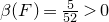 $\beta (F)=\frac {5}{52}\gt 0$
.
$\beta (F)=\frac {5}{52}\gt 0$
.
Now, suppose that $\beta ({\bf F})\leqslant 0$
. Let
$\beta ({\bf F})\leqslant 0$
. Let $\widetilde {Z}$
be the center of the divisor
$\widetilde {Z}$
be the center of the divisor ${\bf F}$
on the threefold
${\bf F}$
on the threefold $\widetilde {X}$
. Then
$\widetilde {X}$
. Then $\widetilde {Z}$
is a
$\widetilde {Z}$
is a $G$
-invariant irreducible proper subvariety of the surface
$G$
-invariant irreducible proper subvariety of the surface $F$
, since
$F$
, since $\beta (F)\gt 0$
.
$\beta (F)\gt 0$
.
Recall from Lemma 4.2 that $G$
acts faithfully on
$G$
acts faithfully on $F$
, and
$F$
, and $F$
does not have
$F$
does not have $G$
-fixed points. Hence, we conclude that
$G$
-fixed points. Hence, we conclude that $\widetilde {Z}$
is a curve. Let
$\widetilde {Z}$
is a curve. Let $\widehat {Z}$
be the proper transform of this curve on
$\widehat {Z}$
be the proper transform of this curve on $\widehat {X}$
. Then
$\widehat {X}$
. Then $\widehat {Z}=C_{\widehat {X}}({\bf F})$
and
$\widehat {Z}=C_{\widehat {X}}({\bf F})$
and $\widehat {Z}\subset \widehat {F}$
. Let us apply Abban–Zhuang theory [Reference Abban and ZhuangAZ22] to the flag
$\widehat {Z}\subset \widehat {F}$
. Let us apply Abban–Zhuang theory [Reference Abban and ZhuangAZ22] to the flag $\widehat {Z}\subset \widehat {F}$
.
$\widehat {Z}\subset \widehat {F}$
.
For every $u\in [0,3]$
, let
$u\in [0,3]$
, let $P(u)$
be the positive (nef) part of the Zariski decomposition of the divisor
$P(u)$
be the positive (nef) part of the Zariski decomposition of the divisor $(\varpi \circ \psi )^*(-K_{X})-u\widehat {F}$
(described above), and let
$(\varpi \circ \psi )^*(-K_{X})-u\widehat {F}$
(described above), and let $N(u)$
be its negative part. Observe that
$N(u)$
be its negative part. Observe that $\widehat {Z}\not \subset {\rm Supp}(N(u))$
, because
$\widehat {Z}\not \subset {\rm Supp}(N(u))$
, because $\widehat {Z}$
is irreducible and
$\widehat {Z}$
is irreducible and $G$
-invariant. Set
$G$
-invariant. Set
 \begin{align*} t(u)={\rm sup}\{v\in \mathbb{R}_{\geqslant 0}\ \big\vert \ \textrm{the divisor}\ P(u)\big\vert\ _{\widehat\ {F}}-v\widehat\ {Z}\ \textrm{is pseudo-effective}\}. \end{align*}
For $v\in [0,t(u)]$
, let
$v\in [0,t(u)]$
, let $P(u,v)$
be the nef part of the Zariski decomposition of
$P(u,v)$
be the nef part of the Zariski decomposition of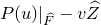 $P(u)\vert _{\widehat {F}}-v\widehat {Z}$
, and let
$P(u)\vert _{\widehat {F}}-v\widehat {Z}$
, and let $N(u,v)$
be the negative part of this Zariski decomposition. Set
$N(u,v)$
be the negative part of this Zariski decomposition. Set
 \begin{align*} S\big (W^{\widehat {F}}_{\bullet ,\bullet };\widehat {Z}\big )=\frac {3}{26}\int \limits _0^3\int \limits _0^{t(u)}\big (P(u,v)\big )^2dvdu. \end{align*}
Then it follows from [Reference Abban and ZhuangAZ22, Theorem 3.3] and [Reference Araujo, Castravet, Cheltsov, Fujita, Kaloghiros, Martinez-Garcia, Shramov, Süß and ViswanathanACC+23, Corollary 1.109] that
 \begin{align*} 1\geqslant \frac {A_X({\bf F})}{S_X({\bf F})}\geqslant \min \Bigg \{\frac {A_X(\widehat {F})}{S_X(\widehat {F})},\frac {1}{S\big (W^{\widehat {F}}_{\bullet ,\bullet };\widehat {Z}\big )}\Bigg \}=\min \Bigg \{\frac {104}{99},\frac {1}{S\big (W^{\widehat {F}}_{\bullet ,\bullet };\widehat {Z}\big )}\Bigg \}. \end{align*}
Therefore, we conclude that $S(W^{\widehat {F}}_{\bullet ,\bullet };\widehat {Z})\geqslant 1$
. Let us show that
$S(W^{\widehat {F}}_{\bullet ,\bullet };\widehat {Z})\geqslant 1$
. Let us show that $S(W^{\widehat {F}}_{\bullet ,\bullet };\widehat {Z})\lt 1$
.
$S(W^{\widehat {F}}_{\bullet ,\bullet };\widehat {Z})\lt 1$
.
The morphism $\psi$
induces a
$\psi$
induces a $G$
-equivariant birational morphism
$G$
-equivariant birational morphism $\sigma \colon \widehat {F}\to F$
that blows up two points
$\sigma \colon \widehat {F}\to F$
that blows up two points $\widetilde {L}_1\cap F$
and
$\widetilde {L}_1\cap F$
and $\widetilde {L}_2\cap F$
. By Lemma 4.2,
$\widetilde {L}_2\cap F$
. By Lemma 4.2, ${\rm rk}\,{\rm Pic}^G(F)=1$
, where
${\rm rk}\,{\rm Pic}^G(F)=1$
, where $F\cong \mathbb{P}^1\times \mathbb{P}^1$
. Thus, we see that
$F\cong \mathbb{P}^1\times \mathbb{P}^1$
. Thus, we see that $\widehat {F}$
is a smooth del Pezzo surface of degree
$\widehat {F}$
is a smooth del Pezzo surface of degree $6$
,
$6$
, ${\rm rk}\,{\rm Pic}^G(\widehat {F})=2$
, and there exists the following
${\rm rk}\,{\rm Pic}^G(\widehat {F})=2$
, and there exists the following $G$
-equivariant diagram:
$G$
-equivariant diagram:
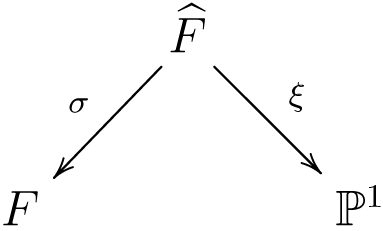
where $\xi$
is a
$\xi$
is a $G$
-minimal conic bundle with
$G$
-minimal conic bundle with $2$
singular fibers. Set
$2$
singular fibers. Set ${\bf g}_1=G_1\vert _{\widehat {F}}$
and
${\bf g}_1=G_1\vert _{\widehat {F}}$
and ${\bf g}_2=G_2\vert _{\widehat {F}}$
. Let
${\bf g}_2=G_2\vert _{\widehat {F}}$
. Let ${\bf h}$
be a curve on
${\bf h}$
be a curve on $F$
of degree
$F$
of degree $(1,1)$
, and let
$(1,1)$
, and let ${\bf f}$
be a smooth fiber of the morphism
${\bf f}$
be a smooth fiber of the morphism $\xi$
. Then
$\xi$
. Then ${\bf f}\sim \sigma ^*\big ({\bf h}\big )-{\bf g}_1-{\bf g}_2$
. Since
${\bf f}\sim \sigma ^*\big ({\bf h}\big )-{\bf g}_1-{\bf g}_2$
. Since $\widehat {Z}$
is
$\widehat {Z}$
is $G$
-invariant, we have
$G$
-invariant, we have $\widehat {Z}\sim n{\bf f}+m({\bf g}_1+{\bf g}_2)$
for some non-negative integers
$\widehat {Z}\sim n{\bf f}+m({\bf g}_1+{\bf g}_2)$
for some non-negative integers $n$
and
$n$
and $m$
. Since
$m$
. Since $\widehat {Z}$
is irreducible, we have
$\widehat {Z}$
is irreducible, we have $n\gt 0$
, so that
$n\gt 0$
, so that
 \begin{align*} S\big (W^{\widehat {F}}_{\bullet ,\bullet };\widehat {Z}\big )=\frac {3}{26}\int \limits _0^3\int \limits _0^{\infty }{\rm vol}\big (P(u)\vert _{\widehat {F}}-v\widehat {Z}\big )dvdu\leqslant \frac {3}{26}\int \limits _0^3\int \limits _0^{\infty }{\rm vol}\big (P(u)\vert _{\widehat {F}}-v{\bf f}\big )dvdu. \end{align*}
Hence, to show that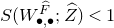 $S(W^{\widehat {F}}_{\bullet ,\bullet };\widehat {Z})\lt 1$
, we may assume that
$S(W^{\widehat {F}}_{\bullet ,\bullet };\widehat {Z})\lt 1$
, we may assume that $\widehat {Z}={\bf f}$
.
$\widehat {Z}={\bf f}$
.
We have $G_1\vert _{\widehat {F}}={\bf g}_1$
,
$G_1\vert _{\widehat {F}}={\bf g}_1$
, $G_2\vert _{\widehat {F}}={\bf g}_2$
,
$G_2\vert _{\widehat {F}}={\bf g}_2$
, $\widehat {F}\vert _{\widehat {F}}\sim \sigma ^*\big ({\bf h}\big )\sim {\bf f}+{\bf g}_1+{\bf g}_2$
and
$\widehat {F}\vert _{\widehat {F}}\sim \sigma ^*\big ({\bf h}\big )\sim {\bf f}+{\bf g}_1+{\bf g}_2$
and $\widehat {H}\vert _{\widehat {F}}\sim \widehat {E}_1\vert _{\widehat {F}}\sim \widehat {E}_2\vert _{\widehat {F}}\sim 0$
. This gives
$\widehat {H}\vert _{\widehat {F}}\sim \widehat {E}_1\vert _{\widehat {F}}\sim \widehat {E}_2\vert _{\widehat {F}}\sim 0$
. This gives
 \begin{align*} P(u)\big \vert _{\widehat {F}}-v{\bf f}\sim _{\mathbb{R}}\left \{\begin{aligned} & (u-v){\bf f}+u\big ({\bf g}_1+{\bf g}_2\big )\quad {\rm if}\, 0\leqslant u\leqslant 1, \\ & (u-v){\bf f}+{\bf g}_1+{\bf g}_2\quad {\rm if}\, 1\leqslant u\leqslant 2, \\ & (4-u-v){\bf f}+{\bf g}_1+{\bf g}_2\quad {\rm if}\, 2\leqslant u\leqslant 3, \end{aligned} \right . \end{align*}
which implies that
 \begin{align*} t(u)=\left \{\begin{aligned} & u\quad {\rm if}\, 0\leqslant u\leqslant 2, \\ & 4-u\quad {\rm if}\, 2\leqslant u\leqslant 3. \end{aligned} \right . \end{align*}
If $u\in [0,1]$
, then
$u\in [0,1]$
, then $P(u,v)=(u-v)({\bf f}+{\bf g}_1+{\bf g}_2)$
and
$P(u,v)=(u-v)({\bf f}+{\bf g}_1+{\bf g}_2)$
and $N(u,v)=v({\bf g}_1+{\bf g}_2)$
for
$N(u,v)=v({\bf g}_1+{\bf g}_2)$
for $v\in [0,u]$
, which gives
$v\in [0,u]$
, which gives $(P(u,v))^2=2(u-v)^2$
for every
$(P(u,v))^2=2(u-v)^2$
for every $(u,v)\in [0,1]\times [0,u]$
. If
$(u,v)\in [0,1]\times [0,u]$
. If $u\in [1,2]$
, then
$u\in [1,2]$
, then
 \begin{align*} P(u,v)=\left \{\begin{aligned} & (u-v){\bf f}+{\bf g}_1+{\bf g}_2\quad {\rm if}\, 0\leqslant v\leqslant u-1, \\ & (u-v)\big ({\bf f}+{\bf g}_1+{\bf g}_2\big )\quad {\rm if}\, u-1\leqslant v\leqslant u, \end{aligned} \right . \end{align*}
and
 \begin{align*} N(u,v)=\left \{\begin{aligned} & 0\quad {\rm if}\, 0\leqslant v\leqslant u-1, \\ & (v-u+1)\big ({\bf g}_1+{\bf g}_2\big )\quad {\rm if}\, u-1\leqslant u\leqslant u, \end{aligned} \right . \end{align*}
which gives
 \begin{align*} \big (P(u,v)\big )^2=\left \{\begin{aligned} & 4u-4v-2\quad {\rm if}\, 0\leqslant v\leqslant u-1, \\ & 2(u-v)^2\quad {\rm if}\, u-1\leqslant v\leqslant u. \end{aligned} \right . \end{align*}
Finally, if $u\in [2,3]$
, then
$u\in [2,3]$
, then
 \begin{align*} P(u,v)=\left \{\begin{aligned} & (4-u-v){\bf f}+{\bf g}_1+{\bf g}_2\quad {\rm if}\, 0\leqslant v\leqslant 3-u, \\ & (4-u-v)\big ({\bf f}+{\bf g}_1+{\bf g}_2\big )\quad {\rm if}\, 3-u\leqslant v\leqslant 4-u. \end{aligned} \right . \end{align*}
and
 \begin{align*} N(u,v)=\left \{\begin{aligned} & 0\quad {\rm if}\, 0\leqslant v\leqslant 3-u, \\ & (v+u-3)\big ({\bf g}_1+{\bf g}_2\big )\quad {\rm if}\, 3-u\leqslant u\leqslant 4-u, \end{aligned} \right . \end{align*}
which gives
 \begin{align*} \big (P(u,v)\big )^2=\left \{\begin{aligned} & 14-4u-4v\quad {\rm if}\, 0\leqslant v\leqslant 3-u, \\ & 2(4-u-v)^2\quad {\rm if}\, 3-u\leqslant v\leqslant 4-u. \end{aligned} \right . \end{align*}
Now, integrating, we get
 \begin{align*} S(W^{\widehat {F}}_{\bullet ,\bullet };{\bf f})&=\frac {3}{26}\int \limits _0^1\int \limits _0^{u}2(u-v)^2dvdu+\frac {3}{26}\int \limits _1^2\int \limits _0^{u-1}4u-4v-2dvdu+\frac {3}{26}\int \limits _1^2\int \limits _{u-1}^u2(u-v)^2dvdu\\ &\quad +\frac {3}{26}\int \limits _2^3\int \limits _0^{3-u}14-4u-4vdvdu+\frac {3}{26}\int \limits _2^3\int \limits _{3-u}^{4-u}2(4-u-v)^2dvdu=\frac {29}{52}\lt 1, \end{align*}
which is a contradiction. Lemma 4.13 is proved.
Now, using the $G$
-equivariant valuative criterion for K-polystability [Reference ZhuangZhu21, Corollary 4.14], we see that Theorem 4.11 follows from Lemmas 4.12 and 4.13.
$G$
-equivariant valuative criterion for K-polystability [Reference ZhuangZhu21, Corollary 4.14], we see that Theorem 4.11 follows from Lemmas 4.12 and 4.13.
4.3 Threefolds with non-isolated singularities.
We continue to use the notation introduced at the beginning of this section. Suppose, in addition, that $a\pm b\pm 1=ab=0$
. Up to a change of coordinates, we may assume that
$a\pm b\pm 1=ab=0$
. Up to a change of coordinates, we may assume that
 \begin{align*} X=\big \{u_1x=v_1y,u_2z=v_2t,w^2+(x+z)(y+t)=0\big \}\subset \mathbb{P}^1\times \mathbb{P}^1\times \mathbb{P}^4, \end{align*}
and $Q=\{w^2+(x+z)(y+t)=0\}\subset \mathbb{P}^4$
. Then
$Q=\{w^2+(x+z)(y+t)=0\}\subset \mathbb{P}^4$
. Then $X$
is singular along the curve
$X$
is singular along the curve
 \begin{align*} C=\big \{w=0,x+z=0,y+t=0,u_1z=v_1t,u_2z=v_2t,v_1u_2=u_1v_2\big \}, \end{align*}
and $Q$
is a quadric with
$Q$
is a quadric with ${\rm cA}_1$
singularities along the line
${\rm cA}_1$
singularities along the line $L=\{w=0,x+z=0,y+t=0\}$
. Recall that
$L=\{w=0,x+z=0,y+t=0\}$
. Recall that $\pi \colon X\to Q$
is a blow up of the following two smooth conics:
$\pi \colon X\to Q$
is a blow up of the following two smooth conics:
 \begin{align*} {C}_1 & =\{w^2+zt=0,x=0,y=0\},\\ {C}_2 & =\{w^2+xy=0,z=0,t=0\}, \end{align*}
which both lie in the smooth locus of the quadric $Q$
. We have
$Q$
. We have $L=\pi (C)$
. In this subsection we will prove the following result.
$L=\pi (C)$
. In this subsection we will prove the following result.
Theorem 4.16.
The threefold $X$
from class
$X$
from class $(\beth )$
described above, which has non-isolated singularities, is K-polystable.
$(\beth )$
described above, which has non-isolated singularities, is K-polystable.
Let $\Pi _1$
and
$\Pi _1$
and $\Pi _2$
be the planes
$\Pi _2$
be the planes $\{x+z=0,w=0\}$
and
$\{x+z=0,w=0\}$
and $\{y+t=0,w=0\}$
in
$\{y+t=0,w=0\}$
in $\mathbb{P}^4$
, respectively. Then
$\mathbb{P}^4$
, respectively. Then $\Pi _1$
and
$\Pi _1$
and $\Pi _2$
are contained in the quadric
$\Pi _2$
are contained in the quadric $Q$
. In fact, we have
$Q$
. In fact, we have $\Pi _1+\Pi _2=Q\cap \{w=0\}$
. Now, we let
$\Pi _1+\Pi _2=Q\cap \{w=0\}$
. Now, we let $S_1$
and
$S_1$
and $S_2$
be the proper transforms on
$S_2$
be the proper transforms on $X$
of the planes
$X$
of the planes $\Pi _1$
and
$\Pi _1$
and $\Pi _2$
, respectively. Then
$\Pi _2$
, respectively. Then $S_1\cap S_2=X\cap \{w=0\}$
,
$S_1\cap S_2=X\cap \{w=0\}$
, $\Pi _1\cap \Pi _2={\rm Sing}(Q)=L$
and
$\Pi _1\cap \Pi _2={\rm Sing}(Q)=L$
and $S_1\cap S_2={\rm Sing}(X)=C$
.
$S_1\cap S_2={\rm Sing}(X)=C$
.
Recall that $\tau _3$
is the involution in
$\tau _3$
is the involution in ${\rm Aut}(X)$
given by
${\rm Aut}(X)$
given by
 \begin{align*} \big ([u_1:v_1],[u_2:v_2],[x:y:z:t:w]\big )\mapsto \big ([u_1:v_1],[u_2:v_2],[x:y:z:t:-w]\big ). \end{align*}
We set $W=X/\tau _3$
, and let
$W=X/\tau _3$
, and let $\theta \colon X\to W$
be the quotient map. Then
$\theta \colon X\to W$
be the quotient map. Then $\theta$
is ramified in
$\theta$
is ramified in $S_1+S_2$
, and
$S_1+S_2$
, and $W$
is the smooth Fano threefold in the family
$W$
is the smooth Fano threefold in the family  3.25, which can be identified with
 \begin{align*} \big \{u_1x=v_1y,u_2z=v_2t\big \}\subset \mathbb{P}^1\times \mathbb{P}^1\times \mathbb{P}^3, \end{align*}
where we consider $([u_1:v_1],[u_2:v_2],[x:y:z:t])$
as coordinates on
$([u_1:v_1],[u_2:v_2],[x:y:z:t])$
as coordinates on $\mathbb{P}^1\times \mathbb{P}^1\times \mathbb{P}^3$
. Moreover, we have the following commutative diagram:
$\mathbb{P}^1\times \mathbb{P}^1\times \mathbb{P}^3$
. Moreover, we have the following commutative diagram:

where
-
•
$\vartheta$
is the double cover given by
$[x:y:z:t:w]\mapsto [x:y:z:t]$
, -
•
$\varpi$
is a blow up of the lines
$\vartheta (C_1)=\{x=0,y=0\}$
and
$\vartheta (C_2)=\{z=0,t=0\}$
, -
• the map
$Q\dashrightarrow \mathbb{P}^1\times \mathbb{P}^1$
is given by
$[x:y:z:t:w]\mapsto ([x:y],[z:t])$
, -
• the map
$\mathbb{P}^3\dashrightarrow \mathbb{P}^1\times \mathbb{P}^1$
is given by
$[x:y:z:t]\mapsto ([x:y],[z:t])$
, -
•
$\eta$
and
$W\to \mathbb{P}^1\times \mathbb{P}^1$
are natural projections.










Observe that the double cover $\vartheta$
is ramified in
$\vartheta$
is ramified in $\Pi _1+\Pi _2$
, the morphism
$\Pi _1+\Pi _2$
, the morphism $\eta$
is a conic bundle, and the morphism
$\eta$
is a conic bundle, and the morphism $W\to \mathbb{P}^1\times \mathbb{P}^1$
is a
$W\to \mathbb{P}^1\times \mathbb{P}^1$
is a $\mathbb{P}^1$
-bundle.
$\mathbb{P}^1$
-bundle.
Remark 4.18. It follows from [Reference DervanDer16, Reference FujitaFuj19b, Reference Liu and ZhuLZ22, Reference ZhuangZhu21] that
 \begin{align*} X \;\textrm{is K-polystable} \iff \textrm{the log Fano pair} \Big (W,\frac {1}{2}\big (\theta (S_1)+\theta (S_2)\big )\Big ) \textrm{is K-polystable}. \end{align*}
Moreover, as it was pointed to us by the anonymous referee, it is not very difficult to prove that $(W,\frac {1}{2} \theta (S_1)+\theta (S_2))$
is K-polystable using the symmetries of this log Fano pair. Nevertheless, we decided to prove the K-polystability of the Fano threefold
$(W,\frac {1}{2} \theta (S_1)+\theta (S_2))$
is K-polystable using the symmetries of this log Fano pair. Nevertheless, we decided to prove the K-polystability of the Fano threefold $X$
directly for the consistency of the exposition.
$X$
directly for the consistency of the exposition.
In addition to the finite subgroup $G\cong \boldsymbol{\mu }_2^3$
described in the beginning of this section, the group
$G\cong \boldsymbol{\mu }_2^3$
described in the beginning of this section, the group ${\rm Aut}(X)$
contains a subgroup
${\rm Aut}(X)$
contains a subgroup $\Gamma \cong \mathbb{C}^\ast$
that consists of the automorphisms
$\Gamma \cong \mathbb{C}^\ast$
that consists of the automorphisms
 \begin{align*} \big ([u_1:v_1],[u_2:v_2],[x:y:z:t:w]\big )\mapsto \Big (\Big [\frac {u_1}{\lambda }:\lambda v_1\Big ],\Big [\frac {u_2}{\lambda }:\lambda v_2\Big ],\Big [\lambda x:\frac {y}{\lambda }:\lambda z:\frac {t}{\lambda }:w\Big ]\Big ), \end{align*}
where $\lambda \in \mathbb{C}^\ast$
. Let
$\lambda \in \mathbb{C}^\ast$
. Let ${\bf G}$
be the subgroup in
${\bf G}$
be the subgroup in ${\rm Aut}(X)$
generated by the subgroup
${\rm Aut}(X)$
generated by the subgroup $\Gamma$
together with the involutions
$\Gamma$
together with the involutions $\tau _1$
,
$\tau _1$
, $\tau _2$
,
$\tau _2$
, $\tau _3$
described earlier in this section. Note that
$\tau _3$
described earlier in this section. Note that $\tau _3\in \Gamma$
, so that
$\tau _3\in \Gamma$
, so that
 \begin{align*} {\bf G}\cong \big (\mathbb{C}^\ast \rtimes \boldsymbol{\mu }_2\big )\times \boldsymbol{\mu }_2, \end{align*}
because $\tau _1\circ \gamma =\gamma \circ \tau _1$
and
$\tau _1\circ \gamma =\gamma \circ \tau _1$
and $\tau _2\circ \gamma \circ \tau _2=\gamma ^{-1}$
for every
$\tau _2\circ \gamma \circ \tau _2=\gamma ^{-1}$
for every $\gamma \in \Gamma$
. Note also that the commutative diagram (4.17) is
$\gamma \in \Gamma$
. Note also that the commutative diagram (4.17) is ${\bf G}$
-equivariant, and the curve
${\bf G}$
-equivariant, and the curve $C$
is
$C$
is ${\bf G}$
-invariant. Set
${\bf G}$
-invariant. Set
 \begin{align*} C^\prime =\big \{u_1x=v_1y,u_2z=v_2t,w^2+(x+z)(y+t)=0,x=z,t=y\big \}\subset \mathbb{P}^1\times \mathbb{P}^1\times \mathbb{P}^4. \end{align*}
Then $C^\prime$
is a
$C^\prime$
is a ${\bf G}$
-invariant irreducible smooth curve such that
${\bf G}$
-invariant irreducible smooth curve such that $\pi (C^\prime )$
is a smooth conic.
$\pi (C^\prime )$
is a smooth conic.
Lemma 4.19. The following assertions holds:
-
(1)
$X$
does not have
${\bf G}$
-fixed points;
-
(2) the only
${\bf G}$
-invariant irreducible curves in
$X$
are
$C$
and
$C^\prime$
.


Proof. Since the diagram (4.17) is ${\bf G}$
-equivariant and
${\bf G}$
-equivariant and $\tau _2$
swaps the
$\tau _2$
swaps the $\pi$
-exceptional surfaces, it is enough to prove the following assertions for the induced
$\pi$
-exceptional surfaces, it is enough to prove the following assertions for the induced ${\bf G}$
-action on
${\bf G}$
-action on $\mathbb{P}^3$
:
$\mathbb{P}^3$
:
-
(1)
$\mathbb{P}^3$
does not have
${\bf G}$
-fixed points; -
(2) the only
${\bf G}$
-invariant irreducible curves in
$\mathbb{P}^3$
are the lines
$\vartheta (L)$
and
$\vartheta \circ \pi (C^\prime )$
.


Both these assertions are easy to check, since $\tau _1$
and
$\tau _1$
and $\tau _2$
act on
$\tau _2$
act on $\mathbb{P}^3$
as
$\mathbb{P}^3$
as
 \begin{align*} \tau _1\colon [x:y:z:t] & \mapsto [y:x:t:z],\\ \tau _2\colon [x:y:z:t] & \mapsto [z:t:x:y], \end{align*}
and the subgroup $\Gamma$
acts on
$\Gamma$
acts on $\mathbb{P}^3$
as
$\mathbb{P}^3$
as $[x:y:z:t:w]\mapsto [\lambda^2 x:y:\lambda^2 z:t]$
, where
$[x:y:z:t:w]\mapsto [\lambda^2 x:y:\lambda^2 z:t]$
, where $\lambda \in \mathbb{C}^\ast$
.
$\lambda \in \mathbb{C}^\ast$
.
Let $Q\dashrightarrow \mathbb{P}^2$
be the rational map given by
$Q\dashrightarrow \mathbb{P}^2$
be the rational map given by $[x:y:z:t:w]\mapsto [x+z:y+t:w]$
. This map is undefined along the line
$[x:y:z:t:w]\mapsto [x+z:y+t:w]$
. This map is undefined along the line $\pi (C)={\rm Sing}(Q)=\{x+z=0,y+t=0,w=0\}$
, and the closure of its image is a smooth conic
$\pi (C)={\rm Sing}(Q)=\{x+z=0,y+t=0,w=0\}$
, and the closure of its image is a smooth conic $\mathscr{C}\subset \mathbb{P}^2$
. Therefore, we have a
$\mathscr{C}\subset \mathbb{P}^2$
. Therefore, we have a ${\bf G}$
-equivariant dominant map
${\bf G}$
-equivariant dominant map $\chi \colon Q\dashrightarrow \mathscr{C}$
, which fits the following
$\chi \colon Q\dashrightarrow \mathscr{C}$
, which fits the following ${\bf G}$
-equivariant commutative diagram:
${\bf G}$
-equivariant commutative diagram:

where both $\widetilde {X}$
and
$\widetilde {X}$
and $\widetilde {Q}$
are smooth threefolds, and
$\widetilde {Q}$
are smooth threefolds, and
-
•
$\phi$
is the blow of the curve
$C$
, -
•
$\widetilde {Q}\to Q$
is the blow up of the line
$L$
, -
•
$\widetilde {X}\to \widetilde {Q}$
is the blow up of the preimages of the conics
$C_1$
and
$C_2$
, -
•
${\rm pr}_{1}$
is the projection to the first factor, -
•
${\rm pr}_{2,3}$
is the projection to the product of the second and the third factors, -
•
$\widetilde {Q}\to \mathscr{C}$
is a
$\mathbb{P}^2$
-bundle, -
•
$\rho$
is a birational morphism.


To describe $\rho$
more explicitly, let
$\rho$
more explicitly, let $\mathscr{S}$
be the surface in
$\mathscr{S}$
be the surface in $Q$
that is cut out by
$Q$
that is cut out by $xt=yz$
, and let
$xt=yz$
, and let $\widetilde {\mathscr{S}}$
be its proper transform on
$\widetilde {\mathscr{S}}$
be its proper transform on $\widetilde {X}$
. Then
$\widetilde {X}$
. Then $\rho$
contracts the surface
$\rho$
contracts the surface $\widetilde {\mathscr{S}}$
to a smooth curve. Note that the birational map
$\widetilde {\mathscr{S}}$
to a smooth curve. Note that the birational map $Q\dashrightarrow \mathscr{C}\times \mathbb{P}^1\times \mathbb{P}^1$
in (4.20) is given by
$Q\dashrightarrow \mathscr{C}\times \mathbb{P}^1\times \mathbb{P}^1$
in (4.20) is given by
 \begin{align*} [x:y:z:t:w]\mapsto \big ([x+z:y+t:w],[x:y],[z:t]\big ). \end{align*}
Furthermore, there exists a ${\bf G}$
-equivariant ramified double cover
${\bf G}$
-equivariant ramified double cover $\upsilon \colon \mathscr{C}\to \mathbb{P}^1$
that fits into the following
$\upsilon \colon \mathscr{C}\to \mathbb{P}^1$
that fits into the following ${\bf G}$
-equivariant commutative diagram:
${\bf G}$
-equivariant commutative diagram:

where $\tilde {\theta }$
is the quotient by the involution
$\tilde {\theta }$
is the quotient by the involution $\tau _3$
, the map
$\tau _3$
, the map $\varphi$
is the blow up of the curve
$\varphi$
is the blow up of the curve $\theta (C)$
, and
$\theta (C)$
, and $\varrho$
is the blow up of the tridiagonal. Note that
$\varrho$
is the blow up of the tridiagonal. Note that $\widetilde {W}$
is the unique smooth Fano threefold in the deformation family
$\widetilde {W}$
is the unique smooth Fano threefold in the deformation family  4.6, and $\varpi \circ \varphi$
blows up the lines
$\varpi \circ \varphi$
blows up the lines $\vartheta (L)$
,
$\vartheta (L)$
, $\vartheta (C_1)$
,
$\vartheta (C_1)$
, $\vartheta (C_2)$
.
$\vartheta (C_2)$
.
Let $H$
be the proper transform on
$H$
be the proper transform on $X$
of a general hyperplane section of the quadric
$X$
of a general hyperplane section of the quadric $Q$
, let
$Q$
, let $E_1$
and
$E_1$
and $E_2$
be the
$E_2$
be the $\pi$
-exceptional surfaces such that
$\pi$
-exceptional surfaces such that $\pi (E_1)=C_1$
and
$\pi (E_1)=C_1$
and $\pi (E_2)=C_2$
. Then
$\pi (E_2)=C_2$
. Then
 \begin{align*} -K_X\sim 3H-E_1-E_2. \end{align*}
Let $\widetilde {H}$
,
$\widetilde {H}$
, $\widetilde {E}_1$
,
$\widetilde {E}_1$
, $\widetilde {E}_2$
be the proper transforms on
$\widetilde {E}_2$
be the proper transforms on $\widetilde {X}$
of the surfaces
$\widetilde {X}$
of the surfaces $H$
,
$H$
, $E_1$
,
$E_1$
, $E_2$
, respectively, and let
$E_2$
, respectively, and let $F$
be the
$F$
be the $\phi$
-exceptional surface. Then
$\phi$
-exceptional surface. Then $-K_{\widetilde {X}}\sim \phi ^*(-K_X)\sim 3\widetilde {H}-\widetilde {E}_1-\widetilde {E}_2$
and
$-K_{\widetilde {X}}\sim \phi ^*(-K_X)\sim 3\widetilde {H}-\widetilde {E}_1-\widetilde {E}_2$
and
 \begin{align*} \widetilde {\mathscr{S}}\sim 2\widetilde {H}-\widetilde {E}_1-\widetilde {E}_2-F. \end{align*}
Note that $F$
and
$F$
and $\widetilde {\mathscr{S}}$
are
$\widetilde {\mathscr{S}}$
are ${\bf G}$
-invariant prime divisors in
${\bf G}$
-invariant prime divisors in $\widetilde {X}$
, which intersect transversally along a smooth irreducible
$\widetilde {X}$
, which intersect transversally along a smooth irreducible ${\bf G}$
-invariant curve. Furthermore, using (4.21), we also see that the surface
${\bf G}$
-invariant curve. Furthermore, using (4.21), we also see that the surface $\widetilde {\theta }(F)$
is
$\widetilde {\theta }(F)$
is $\varphi$
-exceptional, and the surface
$\varphi$
-exceptional, and the surface $\widetilde {\theta }(\widetilde {\mathscr{S}}\,)$
is
$\widetilde {\theta }(\widetilde {\mathscr{S}}\,)$
is $\varrho$
-exceptional.
$\varrho$
-exceptional.
Lemma 4.22. The following assertions hold:
-
(a) One has
$F\cong \mathbb{P}^1\times \mathbb{P}^1$
, and
$F$
contains exactly two
${\bf G}$
-invariant irreducible curves, which are both smooth and contained in the linear system
$|\widetilde {\mathscr{S}}\,\vert _{F}|$
. -
(b) One has
$\widetilde {\mathscr{S}}\cong \mathbb{P}^1\times \mathbb{P}^1$
, and
$\widetilde {\mathscr{S}}$
contains exactly two
${\bf G}$
-invariant irreducible curves, the intersection
$F\cap \widetilde {\mathscr{S}}$
and the proper transform of the curve
$C^\prime$
, which are both smooth and contained in the linear system
$|F\vert _{\widetilde {\mathscr{S}}}|$
.


Proof. An easy explicit calculation using (4.21) and the formulas for the ${\bf G}$
-action.
${\bf G}$
-action.
On $\widetilde {X}$
, intersections of the divisors
$\widetilde {X}$
, intersections of the divisors $\widetilde {H}$
,
$\widetilde {H}$
, $\widetilde {E}_1$
,
$\widetilde {E}_1$
, $\widetilde {E}_2$
,
$\widetilde {E}_2$
, $F$
can be computed as follows:
$F$
can be computed as follows:
 \begin{align*} \widetilde {H}^3=2, \widetilde {E}_1^3=\widetilde {E}_2^3=-4,\quad F^3=-4, \widetilde {H}\cdot F^2=-2,\quad \widetilde {H}\cdot \widetilde {E}_1^2=\widetilde {H}\cdot \widetilde {E}_2^2=-2, \end{align*}
and all other triple intersections are zero.
Lemma 4.23.
Let $S$
be an
$S$
be an ${\bf G}$
-invariant prime divisor in
${\bf G}$
-invariant prime divisor in $\widetilde {X}$
. Then
$\widetilde {X}$
. Then $\beta (S)\gt 0$
.
$\beta (S)\gt 0$
.
Proof. Let $\widetilde {S}_1$
and
$\widetilde {S}_1$
and $\widetilde {S}_2$
be proper transforms on
$\widetilde {S}_2$
be proper transforms on $\widetilde {X}$
of the surfaces
$\widetilde {X}$
of the surfaces $S_1$
and
$S_1$
and $S_2$
, respectively. Using (4.20), one can show that
$S_2$
, respectively. Using (4.20), one can show that $S\sim a\widetilde {H}+b\big (\widetilde {E}_1+\widetilde {E}_2\big )+c\big (\widetilde {S}_1+\widetilde {S}_2\big )+d\widetilde {\mathscr{S}}+eF$
for some non-negative integers
$S\sim a\widetilde {H}+b\big (\widetilde {E}_1+\widetilde {E}_2\big )+c\big (\widetilde {S}_1+\widetilde {S}_2\big )+d\widetilde {\mathscr{S}}+eF$
for some non-negative integers $a$
,
$a$
, $b$
,
$b$
, $c$
,
$c$
, $d$
,
$d$
, $e$
. Thus, to prove the lemma, it is enough to show that
$e$
. Thus, to prove the lemma, it is enough to show that
 \begin{align*} \frac {1}{26}\int \limits _{0}^{\infty }{\rm vol}\big (\!-K_{\widetilde {X}}-uD\big )du\lt 1 \end{align*}
for each $D\in \{\widetilde {H}, \widetilde {E}_1+\widetilde {E}_2, \widetilde {S}_1+\widetilde {S}_2, \widetilde {\mathscr{S}}, F\}$
. The computation in the first three cases is very similar to the proof of Corollary 4.7; we’ll illustrate the cases
$D\in \{\widetilde {H}, \widetilde {E}_1+\widetilde {E}_2, \widetilde {S}_1+\widetilde {S}_2, \widetilde {\mathscr{S}}, F\}$
. The computation in the first three cases is very similar to the proof of Corollary 4.7; we’ll illustrate the cases $D=F$
and
$D=F$
and $D=\widetilde {\mathscr{S}}$
.
$D=\widetilde {\mathscr{S}}$
.
First, we compute $\beta (F)$
. Let
$\beta (F)$
. Let $u$
be a non-negative real number. Then
$u$
be a non-negative real number. Then
 \begin{align*} -K_{\widetilde {X}}-uF\sim _{\mathbb{R}}3\widetilde {H}-\widetilde {E}_1-\widetilde {E}_2-uF\sim _{\mathbb{R}}\widetilde {\mathscr{S}}+\widetilde {S}_1+\widetilde {S}_2+(2-u)F, \end{align*}
because $2\widetilde {S}_1\sim 2\widetilde {S}_2\sim \widetilde {H}-F$
. This shows that
$2\widetilde {S}_1\sim 2\widetilde {S}_2\sim \widetilde {H}-F$
. This shows that $-K_{\widetilde {X}}-uF$
is pseudo-effective
$-K_{\widetilde {X}}-uF$
is pseudo-effective $\iff$ $u\leqslant 2$
. Similarly, we see that
$u\leqslant 2$
. Similarly, we see that $-K_{\widetilde {X}}-uF$
is nef
$-K_{\widetilde {X}}-uF$
is nef $\iff$ $u\in [0,1]$
. Furthermore, if
$u\in [0,1]$
. Furthermore, if $u\in [1,2]$
, then the Zariski decomposition of this divisor can be described as follows:
$u\in [1,2]$
, then the Zariski decomposition of this divisor can be described as follows:
 \begin{align*} -K_{\widetilde {X}}-uF\sim _{\mathbb{R}}\underbrace{-K_{\widetilde {X}}-uF-(u-1)\widetilde {\mathscr{S}}}_{\textrm{positive part}}+\underbrace {(u-1)\widetilde {\mathscr{S}}}_{\textrm{negative part}}. \end{align*}
Hence, we have
 \begin{align*} \beta (F)&=1-\frac {1}{26}\int \limits _{0}^{1}\big (\!-K_{\widetilde {X}}-uF\big )^2du-\frac {1}{26}\int \limits _{1}^{2}\big (\!-K_{\widetilde {X}}-uF-(u-1)\widetilde {\mathscr{S}}\big )^2du\\[5pt]&=1-\frac {1}{26}\int \limits _{0}^{1}\big (3\widetilde {H}-\widetilde {E}_1-\widetilde {E}_2-uF\big )^2du-\frac {1}{26}\int \limits _{1}^{2}\big ((5-2u)\widetilde {H}-(2-u)\widetilde {E}_1-(2-u)\widetilde {E}_2-F\big )^2du\\[5pt]&=1-\frac {1}{26}\int \limits _{0}^{1}4u^3-18u^2+26du-\frac {1}{26}\int \limits _{1}^{2}12(u-2)^2du=\frac {1}{26}\gt 0. \end{align*}
Now, we compute $\beta (\widetilde {\mathscr{S}}\,)$
. As above, we observe that
$\beta (\widetilde {\mathscr{S}}\,)$
. As above, we observe that
 \begin{align*} -K_{\widetilde {X}}-u\widetilde {\mathscr{S}}\sim _{\mathbb{R}} \frac {3-2u}{2}\widetilde {\mathscr{S}}+\frac {1}{2}\big (\widetilde {E}_1+\widetilde {E}_2\big )+\frac {3}{2}F. \end{align*}
This shows that the divisor $-K_{\widetilde {X}}-u\widetilde {\mathscr{S}}$
is pseudo-effective if and only if
$-K_{\widetilde {X}}-u\widetilde {\mathscr{S}}$
is pseudo-effective if and only if $u\leqslant \frac {3}{2}$
. If
$u\leqslant \frac {3}{2}$
. If $u\in [0,1]$
, then the positive part of the Zariski decomposition of this divisor is
$u\in [0,1]$
, then the positive part of the Zariski decomposition of this divisor is
 \begin{align*} \frac {3-2u}{2}\big (\widetilde {\mathscr{S}}+F\big )+\frac {1}{2}\big (\widetilde {E}_1+\widetilde {E}_2\big ), \end{align*}
and the negative part is $uF$
. If
$uF$
. If $1\leqslant u\leqslant \frac {3}{2}$
, the Zariski decomposition is the following:
$1\leqslant u\leqslant \frac {3}{2}$
, the Zariski decomposition is the following:
 \begin{align*} -K_{\widetilde {X}}-u\widetilde {\mathscr{S}}\; \sim _{\mathbb{R}}\underbrace { \frac {3-2u}{2}\big (\widetilde {\mathscr{S}}+F+\widetilde {E}_1+\widetilde {E}_2\big )}_{\textrm{positive part}}+\underbrace {uF+(u-1)\big (\widetilde {E}_1+\widetilde {E}_2\big )}_{\textrm{negative part}}. \end{align*}
Note that $\widetilde {\mathscr{S}}+F+\widetilde {E}_1+\widetilde {E}_2\sim 2\widetilde {H}$
. Integrating, we get
$\widetilde {\mathscr{S}}+F+\widetilde {E}_1+\widetilde {E}_2\sim 2\widetilde {H}$
. Integrating, we get $\frac {1}{26}\int \limits _{0}^{\infty }{\rm vol}\big (\!-K_{\widetilde {X}}-u\widetilde {\mathscr{S}}\big )du=\frac {49}{104}$
.
$\frac {1}{26}\int \limits _{0}^{\infty }{\rm vol}\big (\!-K_{\widetilde {X}}-u\widetilde {\mathscr{S}}\big )du=\frac {49}{104}$
.
Now we are ready to prove that $X$
is K-polystable. Suppose that
$X$
is K-polystable. Suppose that $X$
is not K-polystable. By [Reference ZhuangZhu21, Corollary 4.14], there exists a
$X$
is not K-polystable. By [Reference ZhuangZhu21, Corollary 4.14], there exists a ${\bf G}$
-invariant prime divisor
${\bf G}$
-invariant prime divisor ${\bf F}$
over
${\bf F}$
over $X$
with
$X$
with $\beta ({\bf F})\leqslant 0$
. Let
$\beta ({\bf F})\leqslant 0$
. Let $Z$
be its center on
$Z$
be its center on $\widetilde {X}$
. Then
$\widetilde {X}$
. Then $Z$
is a
$Z$
is a ${\bf G}$
-invariant curve by Lemmas 4.19 and 4.23.
${\bf G}$
-invariant curve by Lemmas 4.19 and 4.23.
Lemma 4.24.
One has $Z\not \subset F$
.
$Z\not \subset F$
.
Proof. Let ${\bf s}$
be a section of the projection
${\bf s}$
be a section of the projection $F\to C$
such that
$F\to C$
such that ${\bf s}^2=0$
, and let
${\bf s}^2=0$
, and let ${\bf f}$
be its fiber. Then
${\bf f}$
be its fiber. Then $\widetilde {E}_1\cap F=\varnothing$
and
$\widetilde {E}_1\cap F=\varnothing$
and $\widetilde {E}_2\cap F=\varnothing$
. Moreover, we compute
$\widetilde {E}_2\cap F=\varnothing$
. Moreover, we compute $F\vert _{F}\sim -2{\bf s}+{\bf f}$
and
$F\vert _{F}\sim -2{\bf s}+{\bf f}$
and $\widetilde {H}\vert _{F}\sim {\bf f}$
, which gives
$\widetilde {H}\vert _{F}\sim {\bf f}$
, which gives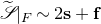 $\widetilde {\mathscr{S}}\vert _{F}\sim 2{\bf s}+{\bf f}$
.
$\widetilde {\mathscr{S}}\vert _{F}\sim 2{\bf s}+{\bf f}$
.
Suppose that $Z\subset F$
. Then
$Z\subset F$
. Then $Z\sim 2{\bf s}+{\bf f}$
, by Lemma 4.22(a). For every number
$Z\sim 2{\bf s}+{\bf f}$
, by Lemma 4.22(a). For every number $u\in [0,2]$
, let
$u\in [0,2]$
, let $P(u)$
be the positive part of the Zariski decomposition of
$P(u)$
be the positive part of the Zariski decomposition of $-K_{\widetilde {X}}-uF$
described in the proof of Lemma 4.23, and let
$-K_{\widetilde {X}}-uF$
described in the proof of Lemma 4.23, and let $N(u)$
be its negative part. Take
$N(u)$
be its negative part. Take $v\in \mathbb{R}_{\geqslant 0}$
. Then
$v\in \mathbb{R}_{\geqslant 0}$
. Then
 \begin{align*} P(u)\big \vert _{F}-vZ=\left \{\begin{aligned} & (2u-2v){\bf s}+(3-u-v){\bf f}\quad {\rm if}\, 0\leqslant u\leqslant 1, \\[5pt] & (2-2v){\bf s}+(4-2u-v){\bf f}\quad {\rm if}\, 1\leqslant u\leqslant 2, \end{aligned} \right . \end{align*}
and
 \begin{align*} N(u)\big \vert _{F}=\left \{\begin{aligned} & 0\quad {\rm if}\, 0\leqslant u\leqslant 1, \\[5pt] & (u-1)\widetilde {\mathscr{S}}\big \vert _{F}\quad {\rm if}\, 1\leqslant u\leqslant 2. \end{aligned} \right . \end{align*}
For $u\in [0,2]$
, set
$u\in [0,2]$
, set $t(u)={\rm sup}\{v\in \mathbb{R}_{\geqslant 0}\ \vert \ P(u)\vert _{F}-vZ \,\,\textrm{is pseudo-effective}\}$
. Then
$t(u)={\rm sup}\{v\in \mathbb{R}_{\geqslant 0}\ \vert \ P(u)\vert _{F}-vZ \,\,\textrm{is pseudo-effective}\}$
. Then
 \begin{align*} t(u)=\left \{\begin{aligned} & u\quad {\rm if}\, 0\leqslant u\leqslant 1, \\[5pt] & 1\quad {\rm if}\, 1\leqslant u\leqslant \frac {3}{2}, \\[5pt] & 4-2u\quad {\rm if}\, \frac {3}{2}\leqslant u\leqslant 2. \end{aligned} \right . \end{align*}
Moreover, it follows from [Reference Abban and ZhuangAZ22, Theorem 3.3] and [Reference Araujo, Castravet, Cheltsov, Fujita, Kaloghiros, Martinez-Garcia, Shramov, Süß and ViswanathanACC+23, Corollary 1.109] that
 \begin{align*} 1\geqslant \frac {A_X({\bf F})}{S_X({\bf F})}\geqslant \min \Bigg \{\frac {1}{S_X(F)},\frac {1}{S\big (W^{F}_{\bullet ,\bullet };Z\big )}\Bigg \}, \end{align*}
where
 \begin{align*} S \big (W^{F}_{\bullet ,\bullet };Z\big )= \frac {3}{26}\int \limits _0^2\big (P(u)\big \vert _{F}\big )^2{\rm ord}_{Z}\big (N(u)\big \vert _{F}\big )du+\frac {3}{26}\int \limits _0^2\int \limits _0^{t(u)}\big (P(u)\vert _{F}-vZ\big )^2dvdu. \end{align*}
In the proof of Lemma 4.23, we computed $S_X(F)=\frac {25}{26}$
, so
$S_X(F)=\frac {25}{26}$
, so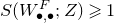 $S(W^{F}_{\bullet ,\bullet };Z)\geqslant 1$
. But
$S(W^{F}_{\bullet ,\bullet };Z)\geqslant 1$
. But
 \begin{align*} S\big (W^{F}_{\bullet ,\bullet };Z\big )&= \frac {3}{26}\int \limits _1^2\big (16-8u\big )^2(u-1){\rm ord}_{Z}\big (\widetilde {\mathscr{S}}\big \vert _{F}\big )du\\[5pt]&\quad +\frac {3}{26}\int \limits _0^1\int \limits _0^{u}4(3-u-v)(u-v)dvdu+\frac {3}{26}\int \limits _1^{\frac {3}{2}}\int \limits _0^{1}4(1-v)(4-2u-v)dvdu\\[5pt] &\quad +\frac {3}{26}\int \limits _{\frac {3}{2}}^2\int \limits _0^{4-2u}4(1-v)(4-2u-v)dvdu= \frac {2}{13}{\rm ord}_{Z}\big (\widetilde {\mathscr{S}}\big \vert _{F}\big )+\frac {33}{104}\leqslant \frac {49}{104}\lt 1, \end{align*}
which is a contradiction
Lemma 4.25.
One has $Z\not \subset \widetilde {\mathscr{S}}$
.
$Z\not \subset \widetilde {\mathscr{S}}$
.
Proof. Set ${\bf s}=F\vert _{\widetilde {\mathscr{S}}}$
. Then
${\bf s}=F\vert _{\widetilde {\mathscr{S}}}$
. Then ${\bf s}$
is a ruling of
${\bf s}$
is a ruling of $\widetilde {\mathscr{S}}\,\cong\, \mathbb{P}^1\times \mathbb{P}^1$
. Let
$\widetilde {\mathscr{S}}\,\cong\, \mathbb{P}^1\times \mathbb{P}^1$
. Let ${\bf f}$
be a ruling of this surface such that
${\bf f}$
be a ruling of this surface such that ${\bf s}\cdot {\bf f}=1$
and
${\bf s}\cdot {\bf f}=1$
and ${\bf f}^2=0$
. Then
${\bf f}^2=0$
. Then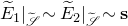 $\widetilde {E}_1\vert _{\widetilde {\mathscr{S}}}\sim \widetilde {E}_2\vert _{\widetilde {\mathscr{S}}}\sim {\bf s}$
,
$\widetilde {E}_1\vert _{\widetilde {\mathscr{S}}}\sim \widetilde {E}_2\vert _{\widetilde {\mathscr{S}}}\sim {\bf s}$
, $\widetilde {H}\vert _{\widetilde {\mathscr{S}}}\sim {\bf s}+2{\bf f}$
,
$\widetilde {H}\vert _{\widetilde {\mathscr{S}}}\sim {\bf s}+2{\bf f}$
, $\widetilde {\mathscr{S}}\vert _{\widetilde {\mathscr{S}}}\sim -{\bf s}+4{\bf f}$
.
$\widetilde {\mathscr{S}}\vert _{\widetilde {\mathscr{S}}}\sim -{\bf s}+4{\bf f}$
.
Suppose $Z\subset \widetilde {\mathscr{S}}$
. Then
$Z\subset \widetilde {\mathscr{S}}$
. Then $Z\sim {\bf s}$
by Lemma 4.22(b). For
$Z\sim {\bf s}$
by Lemma 4.22(b). For $u\in [0,\frac {3}{2}]$
, let
$u\in [0,\frac {3}{2}]$
, let $P(u)$
be the positive part of the Zariski decomposition of
$P(u)$
be the positive part of the Zariski decomposition of $-K_{\widetilde {X}}-u\widetilde {\mathscr{S}}$
described in the proof of Lemma 4.23, and let
$-K_{\widetilde {X}}-u\widetilde {\mathscr{S}}$
described in the proof of Lemma 4.23, and let $N(u)$
be its negative part. Take
$N(u)$
be its negative part. Take $v\in \mathbb{R}_{\geqslant 0}$
. Then
$v\in \mathbb{R}_{\geqslant 0}$
. Then
 \begin{align*} P(u)\big \vert _{\widetilde {\mathscr{S}}}-vZ=\left \{\begin{aligned} & (1-v){\bf s}+(6-4u){\bf f} \quad {\rm if}\, 0\leqslant u\leqslant 1, \\[5pt] & (3-2u-v){\bf s}+(6-4u){\bf f}\quad {\rm if}\, 1\leqslant u\leqslant \frac {3}{2}, \end{aligned} \right . \end{align*}
and
 \begin{align*} N(u)\big \vert _{\widetilde {\mathscr{S}}}=\left \{\begin{aligned} & u{\bf s}\quad {\rm if}\, 0\leqslant u\leqslant 1, \\[5pt] & u{\bf s}+(u-1)\widetilde {E}_1\big \vert _{\widetilde {\mathscr{S}}}+(u-1)\widetilde {E}_1\big \vert _{\widetilde {\mathscr{S}}}\quad {\rm if}\, 1\leqslant u\leqslant \frac {3}{2}. \end{aligned} \right . \end{align*}
Note that $Z\not \subset \widetilde {E}_1\cup \widetilde {E}_2$
, because
$Z\not \subset \widetilde {E}_1\cup \widetilde {E}_2$
, because $Z$
is
$Z$
is ${\bf G}$
-invariant.
${\bf G}$
-invariant.
For $u\in [0,\frac {3}{2}]$
, set
$u\in [0,\frac {3}{2}]$
, set $t(u)={\rm sup}\{v\in \mathbb{R}_{\geqslant 0}\ \vert \ \textrm{P}(u)\vert\ _{\widetilde\ {\mathscr{S}}}-vZ\ is\ \textrm{pseudo-effective}$
. Then
$t(u)={\rm sup}\{v\in \mathbb{R}_{\geqslant 0}\ \vert \ \textrm{P}(u)\vert\ _{\widetilde\ {\mathscr{S}}}-vZ\ is\ \textrm{pseudo-effective}$
. Then
 \begin{align*} t(u)=\left \{\begin{aligned} & 1\quad {\rm if}\, 0\leqslant u\leqslant 1, \\[5pt] & 3-2u\quad {\rm if}\, 1\leqslant u\leqslant \frac {3}{2}. \end{aligned} \right . \end{align*}
Moreover, it follows from [Reference Abban and ZhuangAZ22, Theorem 3.3] and [Reference Araujo, Castravet, Cheltsov, Fujita, Kaloghiros, Martinez-Garcia, Shramov, Süß and ViswanathanACC+23, Corollary 1.109] that
 \begin{align*} 1\geqslant \frac {A_X({\bf F})}{S_X({\bf F})}\geqslant \min \Bigg \{\frac {1}{S_X(\widetilde {\mathscr{S}}\,)},\frac {1}{S\big (W^{\widetilde {\mathscr{S}}}_{\bullet ,\bullet };Z\big )}\Bigg \}, \end{align*}
where
 \begin{align*} S\big (W^{\widetilde {\mathscr{S}}}_{\bullet ,\bullet };Z\big )= \frac {3}{26}\int \limits _0^{\frac {3}{2}}\big (P(u)\big \vert _{\widetilde {\mathscr{S}}}\big )^2{\rm ord}_{Z}\big (N(u)\big \vert _{\widetilde {\mathscr{S}}}\big )du+\frac {3}{26}\int \limits _0^{\frac {3}{2}}\int \limits _0^{t(u)}\big (P(u)\vert _{\widetilde {\mathscr{S}}}-vZ\big )^2dvdu. \end{align*}
We know from the proof of Lemma 4.23 that $S_X(\widetilde {\mathscr{S}}\,)=\frac {49}{54}$
. Then
$S_X(\widetilde {\mathscr{S}}\,)=\frac {49}{54}$
. Then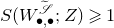 $S(W^{\widetilde {\mathscr{S}}}_{\bullet ,\bullet };Z)\geqslant 1$
. But
$S(W^{\widetilde {\mathscr{S}}}_{\bullet ,\bullet };Z)\geqslant 1$
. But
 \begin{align*}& S\big (W^{\widetilde {\mathscr{S}}}_{\bullet ,\bullet };Z\big )=\frac {3}{26}\int \limits _0^14u(3-2u){\rm ord}_{Z}\big ({\bf s}\big )du+\frac {3}{26}\int \limits _1^{\frac {3}{2}}4u(3-2u)^2{\rm ord}_{Z}\big ({\bf s}\big )du\\ &\quad +\frac {3}{26}\int \limits _0^1\int \limits _0^{1}4(1-v)(3-2u)dvdu+\frac {3}{26}\int \limits _1^{\frac {3}{2}}\int \limits _0^{3-2u}4(3-2u)(3-2u-v)dvdu=\frac {49{\rm ord}_{Z}\big ({\bf s}\big )+51}{104}, \end{align*}
which implies that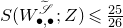 $S(W^{\widetilde {\mathscr{S}}}_{\bullet ,\bullet };Z)\leqslant \frac {25}{26}$
. This is a contradiction.
$S(W^{\widetilde {\mathscr{S}}}_{\bullet ,\bullet };Z)\leqslant \frac {25}{26}$
. This is a contradiction.
By Lemmas 4.24 and 4.25, we have $Z\not \subset F\cup \widetilde {\mathscr{S}}$
. But
$Z\not \subset F\cup \widetilde {\mathscr{S}}$
. But $Z\subset F\cup \widetilde {\mathscr{S}}$
by Lemma 4.19. The obtained contradiction implies that the Fano threefold
$Z\subset F\cup \widetilde {\mathscr{S}}$
by Lemma 4.19. The obtained contradiction implies that the Fano threefold $X$
is K-polystable, completing the proof of Theorem 4.16
$X$
is K-polystable, completing the proof of Theorem 4.16
5. Threefolds in the class
$(\aleph )$

Let $X$
be the following complete intersection in
$X$
be the following complete intersection in $\mathbb{P}^1\times \mathbb{P}^1\times \mathbb{P}^4$
:
$\mathbb{P}^1\times \mathbb{P}^1\times \mathbb{P}^4$
:
 \begin{align*} \big \{u_1x=v_1y, u_2z=v_2t, w^2+r(x+y)^2+r(z+t)^2=(2s+2)(xt+yz)+(2s-2)(xz+yt)\big \}, \end{align*}
where $[r:s]\in \mathbb{P}^1$
, and
$[r:s]\in \mathbb{P}^1$
, and $([u_1:v_1],[u_2:v_2],[x:y:z:t:w])$
are coordinates on
$([u_1:v_1],[u_2:v_2],[x:y:z:t:w])$
are coordinates on $\mathbb{P}^1\times \mathbb{P}^1\times \mathbb{P}^4$
. For every
$\mathbb{P}^1\times \mathbb{P}^1\times \mathbb{P}^4$
. For every $[r:s]$
, the threefold
$[r:s]$
, the threefold $X$
is singular at the following two points
$X$
is singular at the following two points
 \begin{align*} \big ([1:1],[-1:1],[0:0:-1:1:0]\big ),\\ \big ([-1:1],[1:1],[-1:1:0:0:0]\big ), \end{align*}
which are both isolated threefold nodes ( ${\rm cA}_1$
) in
${\rm cA}_1$
) in $X$
if
$X$
if $[r:s]\ne [0:1]$
. Furthermore, if
$[r:s]\ne [0:1]$
. Furthermore, if $[r:s]=[\pm 1:1]$
, then
$[r:s]=[\pm 1:1]$
, then $X$
has an additional isolated threefold node (
$X$
has an additional isolated threefold node ( ${\rm cA}_1$
) at the point
${\rm cA}_1$
) at the point
 \begin{align*} \big ([1:1],[1:1],[1:1:\pm 1:\pm 1:0]\big ). \end{align*}
Finally, if $[r:s]=[0:1]$
, then
$[r:s]=[0:1]$
, then ${\rm Sing}(X)$
consists of the following two curves:
${\rm Sing}(X)$
consists of the following two curves:
 \begin{align*} \big \{x=0 & ,y=0,w=0,u_1z+v_1t=0, u_2z-v_2t=0, v_1u_2+u_1v_2=0\big \},\\ \big \{z=0 & ,t=0,w=0,u_1x-v_1y=0, u_2x+v_2y=0, v_1u_2+u_1v_2=0\big \}. \end{align*}
This is a very special case (see Section 5.3 for more details).
Let $Q$
be the quadric
$Q$
be the quadric $\{w^2+r(x+y)^2+r(z+t)^2=(2s+2)(xt+yz)+(2s-2)(xz+yt)\}$ $\subset \mathbb{P}^4$
. Then
$\subset \mathbb{P}^4$
. Then $Q$
is singular
$Q$
is singular $\iff$ $[r:s]=[\pm 1:1]$
. If
$[r:s]=[\pm 1:1]$
. If $[r:s]=[\pm 1:1]$
, then
$[r:s]=[\pm 1:1]$
, then
 \begin{align*} {\rm Sing}(Q)=\big [1:1:\pm 1:\pm 1:0\big ]. \end{align*}
Let $\pi \colon {X}\to {Q}$
be the birational morphism that is induced by the projection
$\pi \colon {X}\to {Q}$
be the birational morphism that is induced by the projection ${X}\to \mathbb{P}^4$
. Then
${X}\to \mathbb{P}^4$
. Then $\pi$
is a blow up of the following two singular conics:
$\pi$
is a blow up of the following two singular conics:
 \begin{align*} {C}_1 & =\{x=0,y=0,w^2+r(z+t)^2=0\},\\ {C}_2 & =\{z=0,t=0,w^2+r(x+y)^2=0\}. \end{align*}
These conics are contained in the smooth locus of the quadric $Q$
, and they are reduced unless
$Q$
, and they are reduced unless $[r:s]=[0:1]$
. If
$[r:s]=[0:1]$
. If $[r:s]=[0:1]$
, both conics are double lines.
$[r:s]=[0:1]$
, both conics are double lines.
As in Section 4, we see that ${\rm Aut}(X)$
contains the following commuting involutions:
${\rm Aut}(X)$
contains the following commuting involutions:
 \begin{align*} \tau _1\colon \big ([u_1:v_1],[u_2:v_2],[x:y:z:t:w]\big ) & \mapsto \big ([v_1:u_1],[v_2:u_2],[y:x:t:z:w]\big ),\\ \tau _2\colon \big ([u_1:v_1],[u_2:v_2],[x:y:z:t:w]\big ) & \mapsto \big ([u_2:v_2],[u_1:v_1],[z:t:x:y:w]\big ),\\ \tau _3\colon \big ([u_1:v_1],[u_2:v_2],[x:y:z:t:w]\big ) & \mapsto \big ([u_1:v_1],[u_2:v_2],[x:y:z:t:-w]\big ). \end{align*}
Note that $\pi$
is
$\pi$
is ${\rm Aut}(X)$
-equivariant, and these involutions act on
${\rm Aut}(X)$
-equivariant, and these involutions act on $\mathbb{P}^4$
as in Section 3:
$\mathbb{P}^4$
as in Section 3:
 \begin{align*} \tau _1\colon [x:y:z:t:w] & \mapsto [y:x:t:z:w],\\ \tau _2\colon [x:y:z:t:w] & \mapsto [z:t:x:y:w],\\ \tau _3\colon [x:y:z:t:w] & \mapsto [x:y:z:t:-w]. \end{align*}
These involutions generate a subgroup in ${\rm Aut}(X)$
isomorphic to
${\rm Aut}(X)$
isomorphic to $\boldsymbol{\mu }_2^3$
. But
$\boldsymbol{\mu }_2^3$
. But ${\rm Aut}(X)$
is larger. In fact, it is infinite. Indeed, consider the monomorphism
${\rm Aut}(X)$
is larger. In fact, it is infinite. Indeed, consider the monomorphism $\mathbb{C}^\ast \hookrightarrow {\rm PGL}_4(\mathbb{C})$
given by
$\mathbb{C}^\ast \hookrightarrow {\rm PGL}_4(\mathbb{C})$
given by
 \begin{align*} \lambda \mapsto \left(\begin{array}{c@{\quad}c@{\quad}c@{\quad}c@{\quad}c} \frac {1+\lambda }{2} & \frac {1-\lambda }{2} & 0 & 0 & 0\\ \frac {1-\lambda }{2} & \frac {1+\lambda }{2} & 0 & 0 & 0\\ 0 & 0 & \frac {\lambda+1}{2 \lambda } & \frac {\lambda -1}{2 \lambda } & 0\\ 0 & 0 & \frac {\lambda -1}{2 \lambda } & \frac {\lambda+1}{2 \lambda } & 0\\ 0 & 0 & 0 & 0 & 1 \end{array}\right). \end{align*}
Note that this $\mathbb{C}^\ast$
-action leaves
$\mathbb{C}^\ast$
-action leaves $Q$
invariant. This gives a monomorphism
$Q$
invariant. This gives a monomorphism $\mathbb{C}^\ast \hookrightarrow {\rm Aut}(Q)$
. Since this
$\mathbb{C}^\ast \hookrightarrow {\rm Aut}(Q)$
. Since this $\mathbb{C}^\ast$
-action also leaves both planes
$\mathbb{C}^\ast$
-action also leaves both planes $\{x=0,y=0\}$
and
$\{x=0,y=0\}$
and $\{z=0,t=0\}$
invariant, it leaves both conics
$\{z=0,t=0\}$
invariant, it leaves both conics $C_1$
and
$C_1$
and $C_2$
invariant, because
$C_2$
invariant, because
 \begin{align*} C_1 & =Q\cap \{x=0,y=0\},\\ C_2 & =Q\cap \{z=0,t=0\}. \end{align*}
Thus the $\mathbb{C}^\ast$
-action lifts to
$\mathbb{C}^\ast$
-action lifts to $X$
. Let
$X$
. Let $\Gamma \cong \mathbb{C}^\ast$
be the corresponding subgroup in
$\Gamma \cong \mathbb{C}^\ast$
be the corresponding subgroup in ${\rm Aut}(X)$
.
${\rm Aut}(X)$
.
Let ${\bf G}$
be the subgroup in
${\bf G}$
be the subgroup in ${\rm Aut}(X)$
generated by
${\rm Aut}(X)$
generated by $\Gamma$
together with
$\Gamma$
together with $\tau _1$
,
$\tau _1$
, $\tau _2$
,
$\tau _2$
, $\tau _3$
. Then
$\tau _3$
. Then
 \begin{align*} {\bf G}\cong \big (\mathbb{C}^\ast \rtimes \boldsymbol{\mu }_2\big )\times \boldsymbol{\mu }_2, \end{align*}
because $\tau _1\in \Gamma$
, and
$\tau _1\in \Gamma$
, and $\tau _3\circ \lambda =\lambda \circ \tau _3$
and
$\tau _3\circ \lambda =\lambda \circ \tau _3$
and $\tau _2\circ \lambda \circ \tau _2=\lambda ^{-1}$
for every
$\tau _2\circ \lambda \circ \tau _2=\lambda ^{-1}$
for every $\lambda \in \Gamma$
.
$\lambda \in \Gamma$
.
Lemma 5.1.
If $[r:s]\ne [\pm 1:1]$
, then the Fano threefold
$[r:s]\ne [\pm 1:1]$
, then the Fano threefold $X$
does not have
$X$
does not have ${\bf G}$
-fixed points. If
${\bf G}$
-fixed points. If $[r:s]=[\pm 1:1]$
, then the only
$[r:s]=[\pm 1:1]$
, then the only ${\bf G}$
-fixed point in
${\bf G}$
-fixed point in $X$
is the singular point
$X$
is the singular point
 \begin{align*} \big ([1:1],[1:1],[1:1:\pm 1:\pm 1:0]\big ). \end{align*}
Proof. To simplify the ${\bf G}$
-action, let us introduce new coordinates on
${\bf G}$
-action, let us introduce new coordinates on $\mathbb{P}^4$
as follows:
$\mathbb{P}^4$
as follows:
 \begin{align*} \left \{\begin{aligned} & {\bf x}=x-y, \\ & {\bf y}=x+y-z-t, \\ & {\bf z}=z-t, \\ & {\bf t}=x+y+z+t, \\ & {\bf w}=w. \end{aligned} \right . \end{align*}
In new coordinates, the defining equation of the quadric $Q$
simplifies to
$Q$
simplifies to
 \begin{align*} 2{\bf x}{\bf z}+\frac {r+s}{2}{\bf y}^2+\frac {r-s}{2}{\bf t}^2+{\bf w}^2=0. \end{align*}
Moreover, we have ${C}_1=\{{\bf x}=0,{\bf y}+{\bf t}=0\}\cap Q$
and
${C}_1=\{{\bf x}=0,{\bf y}+{\bf t}=0\}\cap Q$
and ${C}_2=\{{\bf z}=0,{\bf y}-{\bf t}=0\}\cap Q$
. The involutions
${C}_2=\{{\bf z}=0,{\bf y}-{\bf t}=0\}\cap Q$
. The involutions $\tau _2$
and
$\tau _2$
and $\tau _3$
act as
$\tau _3$
act as
 \begin{align*} \tau _2\colon \big [{\bf x}:{\bf y}:{\bf z}:{\bf t}:{\bf w}\big ] & \mapsto \big [{\bf z}:-{\bf y}:{\bf x}:{\bf t}:{\bf w}\big ],\\ \tau _3\colon \big [{\bf x}:{\bf y}:{\bf z}:{\bf t}:{\bf w}\big ] & \mapsto \big [{\bf x}:{\bf y}:{\bf z}:{\bf t}:-{\bf w}\big ], \end{align*}
and the action of the group $\Gamma \cong \mathbb{C}^\ast$
simplifies to
$\Gamma \cong \mathbb{C}^\ast$
simplifies to
 \begin{align*} [{\bf x}:{\bf y}:{\bf z}:{\bf t}:{\bf w}]\mapsto \Big [\lambda {\bf x}:{\bf y}:\frac {{\bf z}}{\lambda }:{\bf t}:{\bf w}\Big ], \end{align*}
where $\lambda \in \mathbb{C}^\ast$
. In new coordinates, the
$\lambda \in \mathbb{C}^\ast$
. In new coordinates, the ${\bf G}$
-fixed points in
${\bf G}$
-fixed points in $\mathbb{P}^4$
are
$\mathbb{P}^4$
are
 \begin{align*} [0:1:0:0:0],\\ [0:0:0:1:0],\\ [0:0:0:0:1]. \end{align*}
Note that $[0:1:0:0:0]\in Q\iff r+s=0$
, and
$[0:1:0:0:0]\in Q\iff r+s=0$
, and $[0:0:0:1:0]\in Q\iff r-s=0$
. Moreover, we have
$[0:0:0:1:0]\in Q\iff r-s=0$
. Moreover, we have $[0:0:0:0:1]\not \in Q$
for every
$[0:0:0:0:1]\not \in Q$
for every $[r:s]\in \mathbb{P}^1$
, so the assertion follows.
$[r:s]\in \mathbb{P}^1$
, so the assertion follows.
Arguing as in the proof of Lemma 5.1, we obtain the following result.
Lemma 5.2.
Suppose that $[r:s]=[\pm 1:1]$
. Let
$[r:s]=[\pm 1:1]$
. Let $O=([1:1],[1:1],[1:1:\pm 1:\pm 1:0])$
, let
$O=([1:1],[1:1],[1:1:\pm 1:\pm 1:0])$
, let $\varphi \colon \widetilde {X}\to X$
be the blow up of the point
$\varphi \colon \widetilde {X}\to X$
be the blow up of the point $O$
, and let
$O$
, and let $F$
be the
$F$
be the $\varphi$
-exceptional surface. Then
$\varphi$
-exceptional surface. Then
-
(1)
$\varphi$
is
${\bf G}$
-equivariant,
-
(2) the group
${\bf G}$
acts faithfully on
$F$
, -
(3)
${\rm rk}\,{\rm Pic}^{{\bf G}}(F)=1$
, -
(4)
$F$
does not contain
${\bf G}$
-fixed points,
-
(5)
$F\cong \mathbb{P}^1\times \mathbb{P}^1$
contains exactly two
${\bf G}$
-invariant irreducible curves, which have bidegree
$(1,1)$
.





Proof. Let us only consider the case when $[r:s]=[1:1]$
; the other case is analogous. We use the setup and notation introduced in the proof of Lemma 5.1. It follows from this proof that we can
$[r:s]=[1:1]$
; the other case is analogous. We use the setup and notation introduced in the proof of Lemma 5.1. It follows from this proof that we can ${\bf G}$
-equivariantly identify the surface
${\bf G}$
-equivariantly identify the surface $F$
with the quadric surface
$F$
with the quadric surface
 \begin{align*} \big \{{\bf w}^2+2{\bf x}{\bf z}+{\bf y}^2=0\big \}\subset \mathbb{P}^3, \end{align*}
where we consider $[{\bf x}:{\bf y}:{\bf z}:{\bf w}]$
as coordinates on
$[{\bf x}:{\bf y}:{\bf z}:{\bf w}]$
as coordinates on $\mathbb{P}^3$
. Now our claims are easy to check.
$\mathbb{P}^3$
. Now our claims are easy to check.
For instance, if $Z$
is a
$Z$
is a ${\bf G}$
-invariant irreducible curve in
${\bf G}$
-invariant irreducible curve in $F$
, then
$F$
, then $\Gamma$
acts faithfully on
$\Gamma$
acts faithfully on $Z$
, which implies that
$Z$
, which implies that $\tau _2$
fixes a point on
$\tau _2$
fixes a point on $Z$
. Then, analyzing
$Z$
. Then, analyzing $\langle \tau _2\rangle$
-fixed points in
$\langle \tau _2\rangle$
-fixed points in $F$
, we see that either
$F$
, we see that either $Z=F\cap \{{\bf y}=0\}$
or
$Z=F\cap \{{\bf y}=0\}$
or $Z=F\cap \{{\bf w}=0\}$
as claimed.
$Z=F\cap \{{\bf w}=0\}$
as claimed.
We have the following $G$
-equivariant diagram:
$G$
-equivariant diagram:

where $\eta$
is the conic bundle that is given by the natural projection
$\eta$
is the conic bundle that is given by the natural projection $\mathbb{P}^1\times \mathbb{P}^1\times \mathbb{P}^4\to \mathbb{P}^1\times \mathbb{P}^1$
. Let
$\mathbb{P}^1\times \mathbb{P}^1\times \mathbb{P}^4\to \mathbb{P}^1\times \mathbb{P}^1$
. Let $\Delta$
be its discriminant curve in
$\Delta$
be its discriminant curve in $\mathbb{P}^1\times \mathbb{P}^1$
. Then
$\mathbb{P}^1\times \mathbb{P}^1$
. Then $\Delta =\Delta _1+\Delta _2$
, where
$\Delta =\Delta _1+\Delta _2$
, where
 \begin{align*} \Delta _1 & =\big \{(r-s+1)u_1u_2+(r-s-1)u_1v_2+(r-s-1)u_2v_1+(r-s+1)v_1v_2=0\big \},\\ \Delta _2 & =\big \{(r+s-1)u_1u_2+(r+s+1)u_1v_2+(r+s+1)u_2v_1+(r+s-1)v_1v_2=0\big \}. \end{align*}
If $[r:s]\ne [0:1]$
, then they meet transversally at
$[r:s]\ne [0:1]$
, then they meet transversally at $([1:-1],[1:1])$
and
$([1:-1],[1:1])$
and $([1:1],[1:-1])$
. The curves
$([1:1],[1:-1])$
. The curves $\Delta _1$
and
$\Delta _1$
and $\Delta _2$
are smooth for
$\Delta _2$
are smooth for $[r:s]\ne [\pm 1:1]$
. If
$[r:s]\ne [\pm 1:1]$
. If $[r:s]=[1:1]$
, then
$[r:s]=[1:1]$
, then
 \begin{align*} \Delta _1 & =\big \{(u_1-v_1)(u_2-v_2)=0\big \},\\ \Delta _2 & =\big \{u_1u_2+3u_1v_2+3u_2v_1+v_1v_2=0\big \}. \end{align*}
Similarly, if $[r:s]=[1:-1]$
, then
$[r:s]=[1:-1]$
, then
 \begin{align*} \Delta _1 & =\big \{3u_1u_2+u_1v_2+u_2v_1+3v_1v_2=0\big \},\\ \Delta _2 & =\big \{(u_1-v_1)(u_2-v_2)=0\big \}. \end{align*}
Finally, if $[r:s]=[0:1]$
, then
$[r:s]=[0:1]$
, then $\Delta _1=\Delta _2$
. We will deal with this case in Section 5.3.
$\Delta _1=\Delta _2$
. We will deal with this case in Section 5.3.
Remark 5.3. The only ${\bf G}$
-fixed points in
${\bf G}$
-fixed points in $\mathbb{P}^1\times \mathbb{P}^1$
are
$\mathbb{P}^1\times \mathbb{P}^1$
are $([1:1],[1:1])$
and
$([1:1],[1:1])$
and $([1:-1],[1:-1])$
.
$([1:-1],[1:-1])$
.
Suppose $[r:s]\ne [0:1]$
. Let
$[r:s]\ne [0:1]$
. Let $E_1$
and
$E_1$
and $E_2$
be the
$E_2$
be the $\langle \tau _3\rangle$
-irreducible reducible
$\langle \tau _3\rangle$
-irreducible reducible $\pi$
-exceptional surfaces such that
$\pi$
-exceptional surfaces such that $\pi (E_1)=C_1$
and
$\pi (E_1)=C_1$
and $\pi (E_2)=C_2$
. Set
$\pi (E_2)=C_2$
. Set $H=\pi ^*(\mathcal{O}_Q(1))$
. Then
$H=\pi ^*(\mathcal{O}_Q(1))$
. Then
 \begin{align*} {\rm Pic}^{{\bf G}}(X)={\rm Cl}^{{\bf G}}(X)=\mathbb{Z}[H]\oplus \mathbb{Z}[E_1+E_2]. \end{align*}
This easily follows from Lemma 5.2, since $C_1+C_2$
is
$C_1+C_2$
is ${\bf G}$
-irreducible.
${\bf G}$
-irreducible.
Lemma 5.4.
Let $S$
be any
$S$
be any ${\bf G}$
-invariant irreducible surface in
${\bf G}$
-invariant irreducible surface in $X$
. Then
$X$
. Then $\beta (S)\gt 0$
.
$\beta (S)\gt 0$
.
Proof. The conic bundle $\eta \colon X\to \mathbb{P}^1\times \mathbb{P}^1$
is given by the linear system
$\eta \colon X\to \mathbb{P}^1\times \mathbb{P}^1$
is given by the linear system $|2H+E_1+E_2|$
. Therefore, arguing as in the proof of Lemma 4.6, we see that
$|2H+E_1+E_2|$
. Therefore, arguing as in the proof of Lemma 4.6, we see that
 \begin{align*} S\sim a(E_1+E_2)+b(2H-E_1-E_2)+cH \end{align*}
for some non-negative integers $a$
,
$a$
, $b$
,
$b$
, $c$
. So, arguing exactly as in the proof of Corollary 4.7, we obtain the required assertion.
$c$
. So, arguing exactly as in the proof of Corollary 4.7, we obtain the required assertion.
We conclude this section with the following technical lemma:
Proposition 5.5.
Let $S$
be a smooth surface in
$S$
be a smooth surface in $|H-E_1|$
or
$|H-E_1|$
or $|H-E_2|$
. Then
$|H-E_2|$
. Then
 \begin{align*} \delta _P(X)\geqslant \frac {104}{99} \end{align*}
for every point $P\in S$
such that
$P\in S$
such that $P\not \in E_1\cup E_2$
.
$P\not \in E_1\cup E_2$
.
Proof. The proof is identical to the proof of Proposition 4.8.
5.1 Threefolds with two singular points
As before, we continue to use the notation and assumptions introduced earlier in this section. Suppose that
 \begin{align*} [r:s]\ne [\pm 1:1] \end{align*}
and $[r:s]\ne [0:1]$
. The goal of this subsection is to prove the following.
$[r:s]\ne [0:1]$
. The goal of this subsection is to prove the following.
Theorem 5.6.
Let $X$
be a singular Fano threefold from class
$X$
be a singular Fano threefold from class $(\aleph )$
with two singular points. Then
$(\aleph )$
with two singular points. Then $X$
is K-polystable.
$X$
is K-polystable.
The proof of this theorem follows the method used to prove Theorem 4.9. We begin with a technical lemma.
Lemma 5.7.
Suppose that $X$
is a Fano threefold from class
$X$
is a Fano threefold from class $(\aleph )$
with isolated singularities. Let
$(\aleph )$
with isolated singularities. Let ${\bf F}$
be a
${\bf F}$
be a ${\bf G}$
-invariant prime divisor over
${\bf G}$
-invariant prime divisor over $X$
with
$X$
with $\beta ({\bf F}) \leqslant 0$
, and let
$\beta ({\bf F}) \leqslant 0$
, and let $Z$
be its center on
$Z$
be its center on $X$
. Suppose that
$X$
. Suppose that $Z$
is not a
$Z$
is not a ${\bf G}$
-fixed singular point of the threefold
${\bf G}$
-fixed singular point of the threefold $X$
. Then
$X$
. Then $Z$
is an irreducible curve such that
$Z$
is an irreducible curve such that $\eta (Z)=([1:1],[1:1])$
or
$\eta (Z)=([1:1],[1:1])$
or $\eta (Z)=([1:-1],[1:-1])$
.
$\eta (Z)=([1:-1],[1:-1])$
.
Proof. The proof is identical to the proof of Lemma 4.10, using Lemmas 5.1 and 5.4, and also Proposition 5.5.
Now we prove Theorem 5.6. Suppose that the singular threefold $X$
is not K-polystable. By [Reference ZhuangZhu21, Corollary 4.14], there is a
$X$
is not K-polystable. By [Reference ZhuangZhu21, Corollary 4.14], there is a ${\bf G}$
-invariant prime divisor
${\bf G}$
-invariant prime divisor ${\bf F}$
over
${\bf F}$
over $X$
such that
$X$
such that $\beta ({\bf F})\leqslant 0$
. Let
$\beta ({\bf F})\leqslant 0$
. Let $Z$
be the center of
$Z$
be the center of ${\bf F}$
on
${\bf F}$
on $X$
. We seek a contradiction.
$X$
. We seek a contradiction.
By Lemma 5.1, the threefold $X$
does not contain
$X$
does not contain ${\bf G}$
-fixed singular points. Furthermore, the fibers of the conic bundle
${\bf G}$
-fixed singular points. Furthermore, the fibers of the conic bundle $\eta$
over the points
$\eta$
over the points $([1:1],[1:1])$
and
$([1:1],[1:1])$
and $([1:-1],[1:-1])$
are smooth. So, applying Lemma 4.10, we see that
$([1:-1],[1:-1])$
are smooth. So, applying Lemma 4.10, we see that $Z$
is the fiber of the conic bundle
$Z$
is the fiber of the conic bundle $\eta$
over one of the points
$\eta$
over one of the points $([1:1],[1:1])$
or
$([1:1],[1:1])$
or $([1:-1],[1:-1])$
.
$([1:-1],[1:-1])$
.
Let $S$
be the unique surface in
$S$
be the unique surface in $|H-E_1|$
that contains
$|H-E_1|$
that contains $Z$
. Observe the following:
$Z$
. Observe the following:
-
(1) if
$\eta (Z)=([1:1],[1:1])$
, then
$S$
is cut out on
$X$
by
$u_1-v_1=0$
, andthe surface
\begin{align*} {\rm Sing}(S)=\big ([1:1],[-1:1],[0:0:-1:1:0]\big )\in {\rm Sing}(X), \end{align*}
$\pi (S)$
is a quadric cone with vertex
$[0:0:-1:1:0]={\rm Sing}(C_1)$
, the intersection
$\pi (S)\cap C_2$
consists of two distinct smooth points of the conic
$C_2$
, and
$\pi$
induces a birational morphism
$S\to \pi (S)$
that blows up these two points;
-
(2) if
$\eta (Z)=([1:-1],[1:-1])$
, then
$S$
is cut out on
$X$
by
$u_1+v_1=0$
, andthe quadric surface
\begin{align*} {\rm Sing}(S)=\big ([1:-1],[1,1],[-1:1:0:0:0]\big )\in {\rm Sing}(X), \end{align*}
$\pi (S)$
is smooth,
${\rm Sing}(C_2)\in \pi (S)$
, and
$\pi$
induces a birational morphism
$S\to \pi (S)$
, which is a weighted blow up of the point
$\pi (S)\cap C_2$
.












In both cases, the surface $S$
is a singular sextic del Pezzo surface with one ordinary double point, and the curve
$S$
is a singular sextic del Pezzo surface with one ordinary double point, and the curve $Z$
is contained in the smooth locus of the surface
$Z$
is contained in the smooth locus of the surface $S$
.
$S$
.
Let us apply Abban–Zhuang theory [Reference Abban and ZhuangAZ22, Reference Araujo, Castravet, Cheltsov, Fujita, Kaloghiros, Martinez-Garcia, Shramov, Süß and ViswanathanACC+23] to the flag $Z\subset S$
. Take
$Z\subset S$
. Take $u\in \mathbb{R}_{\geqslant 0}$
. Set
$u\in \mathbb{R}_{\geqslant 0}$
. Set
 \begin{align*} P(u)=\left \{\begin{aligned} & (3-u)H-(1-u)E_1-E_2\quad {\rm if}\, 0\leqslant u\leqslant 1, \\ & (3-u)H-E_2\quad {\rm if}\, 1\leqslant u\leqslant 2, \end{aligned} \right . \end{align*}
and
 \begin{align*} N(u)=\left \{\begin{aligned} & 0\quad {\rm if}\, 0\leqslant u\leqslant 1, \\ & (u-1)E_1\quad {\rm if}\, 1\leqslant u\leqslant 2. \end{aligned} \right . \end{align*}
Then it follows from the proof of Proposition 4.8 that $P(u)$
and
$P(u)$
and $N(u)$
are the positive and the negative parts of the Zariski decomposition of
$N(u)$
are the positive and the negative parts of the Zariski decomposition of $-K_X-uS$
for
$-K_X-uS$
for $u\in [0,2]$
, respectively. Moreover, if
$u\in [0,2]$
, respectively. Moreover, if $u\gt 2$
, then
$u\gt 2$
, then $-K_X-uS$
is not pseudo-effective. This gives
$-K_X-uS$
is not pseudo-effective. This gives $S_X(S)=\frac {3}{4}$
.
$S_X(S)=\frac {3}{4}$
.
Now, we take $v\in \mathbb{R}_{\geqslant 0}$
and consider the divisor
$v\in \mathbb{R}_{\geqslant 0}$
and consider the divisor $P(u)\vert _{S}-vZ$
. For
$P(u)\vert _{S}-vZ$
. For $u\in [0,2]$
, set
$u\in [0,2]$
, set
 \begin{align*} t(u)={\rm sup}\{v\in \mathbb{R}_{\geqslant 0}\ \big \vert \ \textrm{the divisor}\ P(u)\big\vert_{S}-vZ\ \textrm{is pseudo-effective}\}. \end{align*}
Let $P(u,v)$
be the positive part of the Zariski decomposition of
$P(u,v)$
be the positive part of the Zariski decomposition of $P(u)\vert _{S}-vZ$
for
$P(u)\vert _{S}-vZ$
for $v\leqslant t(u)$
. Note that
$v\leqslant t(u)$
. Note that $Z\not \subset {\rm Supp}(N(u))$
for every
$Z\not \subset {\rm Supp}(N(u))$
for every $u\in [0,2]$
. Thus, it follows from [Reference Abban and ZhuangAZ22, Reference Araujo, Castravet, Cheltsov, Fujita, Kaloghiros, Martinez-Garcia, Shramov, Süß and ViswanathanACC+23] that
$u\in [0,2]$
. Thus, it follows from [Reference Abban and ZhuangAZ22, Reference Araujo, Castravet, Cheltsov, Fujita, Kaloghiros, Martinez-Garcia, Shramov, Süß and ViswanathanACC+23] that
 \begin{align*} \frac {A_X({\bf F})}{S_X({\bf F})}\geqslant \min \Bigg \{\frac {1}{S_X(S)},\frac {1}{S\big (W^S_{\bullet ,\bullet };Z\big )}\Bigg \}, \end{align*}
where
 \begin{align*} S\big (W^S_{\bullet ,\bullet };Z\big )=\frac {3}{(-K_X)^3}\int \limits _0^2\int \limits _0^{t(u)}\big (P(u,v)\big )^2dvdu. \end{align*}
Since $S_X(S)=\frac {3}{4}$
and
$S_X(S)=\frac {3}{4}$
and $\beta ({\bf F})=A_X({\bf F})-S_X({\bf F})\leqslant 0$
, we conclude that
$\beta ({\bf F})=A_X({\bf F})-S_X({\bf F})\leqslant 0$
, we conclude that $S(W^S_{\bullet ,\bullet };Z)\geqslant 1$
.
$S(W^S_{\bullet ,\bullet };Z)\geqslant 1$
.
Let us compute $S(W^S_{\bullet ,\bullet };Z)$
. Set
$S(W^S_{\bullet ,\bullet };Z)$
. Set ${\bf e}=E_2\vert _{S}$
. Then
${\bf e}=E_2\vert _{S}$
. Then ${\bf e}^2=-2$
and
${\bf e}^2=-2$
and $Z\cdot {\bf e}=2$
. We have
$Z\cdot {\bf e}=2$
. We have
 \begin{align*} P(u)\big \vert _{S}-vZ=\left \{\begin{aligned} & (2-v)Z+{\bf e}\quad {\rm if}\, 0\leqslant u\leqslant 1, \\ & (3-u-v)Z+(2-u){\bf e}\quad {\rm if}\, 1\leqslant u\leqslant 2, \end{aligned} \right . \end{align*}
which gives
 \begin{align*} t(u)=\left \{\begin{aligned} & 2\quad {\rm if}\, 0\leqslant u\leqslant 1, \\ & 3-u\quad {\rm if}\, 1\leqslant u\leqslant 2, \end{aligned} \right . \end{align*}
because ${\rm Supp}({\bf e})$
is contractible. Furthermore, if
${\rm Supp}({\bf e})$
is contractible. Furthermore, if $u\in [0,1]$
, then
$u\in [0,1]$
, then
 \begin{align*} P(u,v)=\left \{\begin{aligned} & (2-v)Z+{\bf e}\quad {\rm if}\, 0\leqslant v\leqslant 1, \\ & (2-v)\big (Z+{\bf e}\big )\quad {\rm if}\, 1\leqslant v\leqslant 2, \end{aligned} \right . \end{align*}
which gives
 \begin{align*} \big (P(u,v)\big )^2=\left \{\begin{aligned} & 6-4v\quad {\rm if}\, 0\leqslant v\leqslant 1, \\ & 2(v-2)^2\quad {\rm if}\, 1\leqslant v\leqslant 2. \end{aligned} \right . \end{align*}
Similarly, if $u\in [1,2]$
, then
$u\in [1,2]$
, then
 \begin{align*} P(u,v)=\left \{\begin{aligned} & (3-u-v)Z+(2-u){\bf e}\quad {\rm if}\, 0\leqslant v\leqslant 1, \\ & (3-u-v)\big (Z+{\bf e}\big )\quad {\rm if}\, 1\leqslant v\leqslant 3-u, \end{aligned} \right . \end{align*}
which gives
 \begin{align*} \big (P(u,v)\big )^2=\left \{\begin{aligned} & 2(2-u)(4-u-2v)\quad {\rm if}\, 0\leqslant v\leqslant 1, \\ & 2(3-u-v)^2\quad {\rm if}\, 1\leqslant v\leqslant 3-u. \end{aligned} \right . \end{align*}
Integrating, we obtain $S(W^S_{\bullet ,\bullet };Z)=\frac {3}{4}$
. But we already proved earlier that
$S(W^S_{\bullet ,\bullet };Z)=\frac {3}{4}$
. But we already proved earlier that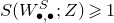 $S(W^S_{\bullet ,\bullet };Z)\geqslant 1$
. This is a contradiction. Hence, we see that
$S(W^S_{\bullet ,\bullet };Z)\geqslant 1$
. This is a contradiction. Hence, we see that $X$
is K-polystable.
$X$
is K-polystable.
5.2 Threefolds with three singular points
We continue to use the notation and assumptions introduced at the beginning of this section. Suppose that $[r:s]=[\pm 1:1]$
. The goal of this subsection is to prove the following.
$[r:s]=[\pm 1:1]$
. The goal of this subsection is to prove the following.
Theorem 5.8.
Let $X$
be a singular threefold from class
$X$
be a singular threefold from class $(\aleph )$
with three singular points. Then
$(\aleph )$
with three singular points. Then $X$
is K-polystable.
$X$
is K-polystable.
The proof follows the method used to prove Theorem 4.11. After changing coordinates, we may assume that $[r:s]=[1:1]$
. Then
$[r:s]=[1:1]$
. Then
 \begin{align*} X=\big \{u_1x=v_1y,u_2z=v_2t,w^2+(x+y)^2+(z+t)^2=4(xt+yz)\big \}\subset \mathbb{P}^1\times \mathbb{P}^1\times \mathbb{P}^4, \end{align*}
and the singular locus of the threefold $X$
consists of the following three points:
$X$
consists of the following three points:
 \begin{align*} \big ([1:1],[-1:1] & ,[0:0:-1:1:0]\big ),\\ \big ([-1:1],[1:1] & ,[-1:1:0:0:0]\big ),\\ \big ([1:1],[1:1] & ,[1:1:1:1:0]\big ), \end{align*}
which are isolated threefold nodes ( ${\rm cA}_1$
) in
${\rm cA}_1$
) in $X$
. We have
$X$
. We have
 \begin{align*} Q=\big \{w^2+(x+y)^2+(z+t)^2=4(xt+yz)\big \}\subset \mathbb{P}^1\times \mathbb{P}^4, \end{align*}
the surface $Q$
is a cone with vertex
$Q$
is a cone with vertex $[1:1:1:1:0]$
, and
$[1:1:1:1:0]$
, and $\pi$
is a blow up of the conics
$\pi$
is a blow up of the conics
 \begin{align*} {C}_1 & =\{x=0,y=0,w^2+(z+t)^2=0\},\\ {C}_2 & =\{z=0,t=0,w^2+(x+y)^2=0\}. \end{align*}
Note that $C_1$
and
$C_1$
and $C_2$
are reduced singular conics that do not contain
$C_2$
are reduced singular conics that do not contain ${\rm Sing}(Q)$
.
${\rm Sing}(Q)$
.
The fiber of the conic bundle $\eta$
over the point
$\eta$
over the point $([1:1],[1:1])$
is a reducible conic
$([1:1],[1:1])$
is a reducible conic $L_1+L_2$
, where
$L_1+L_2$
, where $L_1$
and
$L_1$
and $L_2$
are smooth irreducible curves such that
$L_2$
are smooth irreducible curves such that
 \begin{align*} \pi (L_1) & =\{x=y,z=t,w+2i(x-z)=0\},\\ \pi (L_2) & =\{x=y,z=t,w-2i(x-z)=0\}. \end{align*}
Note that $\pi (L_1)$
and
$\pi (L_1)$
and $\pi (L_2)$
are the only lines in
$\pi (L_2)$
are the only lines in $Q$
that intersect both conics
$Q$
that intersect both conics $C_1$
and
$C_1$
and $C_2$
, and each of them intersects exactly one irreducible component of the conics
$C_2$
, and each of them intersects exactly one irreducible component of the conics $C_1$
and
$C_1$
and $C_2$
. Observe that the intersection
$C_2$
. Observe that the intersection $L_1\cap L_2$
is the singular point
$L_1\cap L_2$
is the singular point $([1:1],[1:1],[1:1:1:1:0])$
. We denote this singular point by
$([1:1],[1:1],[1:1:1:1:0])$
. We denote this singular point by $O$
.
$O$
.
Lemma 5.9.
Let ${\bf F}$
be a
${\bf F}$
be a ${\bf G}$
-invariant prime divisor
${\bf G}$
-invariant prime divisor ${\bf F}$
over the threefold
${\bf F}$
over the threefold $X$
with
$X$
with $\beta ({\bf F})\leqslant 0$
, and let
$\beta ({\bf F})\leqslant 0$
, and let $Z$
be its center on the threefold
$Z$
be its center on the threefold $X$
. Then
$X$
. Then $Z=O$
.
$Z=O$
.
Proof. By Lemma 5.1, $O$
is the unique
$O$
is the unique ${\bf G}$
-fixed singular point in
${\bf G}$
-fixed singular point in $X$
. Thus, by Lemma 5.7, we see that one of the following three cases holds:
$X$
. Thus, by Lemma 5.7, we see that one of the following three cases holds:
-
(1) either
$Z=O$
, -
(2) or
$Z$
is an irreducible component of the fiber of
$\eta$
over
$([1:1],[1:1])$
, -
(3) or
$Z$
is an irreducible component of the fiber of
$\eta$
over
$([1:-1],[1:-1])$
.





In the second case, either $Z=L_1$
or
$Z=L_1$
or $Z=L_2$
, which is impossible, because neither of these curves is
$Z=L_2$
, which is impossible, because neither of these curves is ${\bf G}$
-invariant. Moreover, the fiber of
${\bf G}$
-invariant. Moreover, the fiber of $\eta$
over
$\eta$
over $([1:-1],[1:-1])$
is irreducible and smooth. So, either
$([1:-1],[1:-1])$
is irreducible and smooth. So, either $Z=O$
or
$Z=O$
or $Z$
is the fiber of the conic bundle
$Z$
is the fiber of the conic bundle $\eta$
over
$\eta$
over $([1:-1],[1:-1])$
.
$([1:-1],[1:-1])$
.
Suppose that $Z$
is the fiber of
$Z$
is the fiber of $\eta$
over
$\eta$
over $([1:-1],[1:-1])$
. Set
$([1:-1],[1:-1])$
. Set $S=X\cap \{u_1+v_1=0\}$
. Then
$S=X\cap \{u_1+v_1=0\}$
. Then $S$
is a singular sextic del Pezzo surface that contains
$S$
is a singular sextic del Pezzo surface that contains $Z$
. Moreover, we have
$Z$
. Moreover, we have
 \begin{align*} {\rm Sing}(S)=\big ([1:-1],[1,1],[-1:1:0:0:0]\big )\in {\rm Sing}(X), \end{align*}
this point is an ordinary double point of the surface $S$
, the quadric surface
$S$
, the quadric surface $\pi (S)$
is smooth, and
$\pi (S)$
is smooth, and $\pi$
induces a weighted blow up
$\pi$
induces a weighted blow up $S\to \pi (S)$
of the single intersection point
$S\to \pi (S)$
of the single intersection point $\pi (S)\cap C_2$
. Now, arguing as in the end of Section 5.1, we obtain a contradiction.
$\pi (S)\cap C_2$
. Now, arguing as in the end of Section 5.1, we obtain a contradiction.
Now we are ready to prove that $X$
is K-polystable. Suppose for a contradiction that the singular Fano threefold
$X$
is K-polystable. Suppose for a contradiction that the singular Fano threefold $X$
is not K-polystable. Then there is a
$X$
is not K-polystable. Then there is a ${\bf G}$
-invariant prime divisor
${\bf G}$
-invariant prime divisor ${\bf F}$
over
${\bf F}$
over $X$
such that
$X$
such that $\beta ({\bf F})\leqslant 0$
. By Lemma 5.9, its center on
$\beta ({\bf F})\leqslant 0$
. By Lemma 5.9, its center on $X$
is the point
$X$
is the point $O$
.
$O$
.
Let $\varphi \colon \widetilde {X}\to X$
be the blow up of the point
$\varphi \colon \widetilde {X}\to X$
be the blow up of the point $O$
, and let
$O$
, and let $F$
be the
$F$
be the $\varphi$
-exceptional divisor, and let
$\varphi$
-exceptional divisor, and let $\widetilde {Z}$
be the center on
$\widetilde {Z}$
be the center on $\widetilde {X}$
of the prime divisor
$\widetilde {X}$
of the prime divisor ${\bf F}$
. Then
${\bf F}$
. Then $\varphi$
is
$\varphi$
is ${\bf G}$
-equivariant, and
${\bf G}$
-equivariant, and
-
(1) either
$\widetilde {Z}=F$
and
$\beta (F)=\beta ({\bf F})$
, or -
(2)
$\widetilde {Z}$
is a
${\bf G}$
-invariant irreducible curve in
$F$
, or -
(3)
$\widetilde {Z}$
is a
${\bf G}$
-fixed point in
$F$
.


Case $({\rm 3})$
is impossible by Lemma 5.2. Moreover, in case
$({\rm 3})$
is impossible by Lemma 5.2. Moreover, in case $({\rm 2})$
we have two choices for
$({\rm 2})$
we have two choices for $Z$
, as described in the proof of Lemma 5.2. Now, arguing exactly as in the proof of Lemma 4.13, we obtain a contradiction. This proves that
$Z$
, as described in the proof of Lemma 5.2. Now, arguing exactly as in the proof of Lemma 4.13, we obtain a contradiction. This proves that $X$
is K-polystable.
$X$
is K-polystable.
5.3 Threefolds with non-isolated singularities
It remains to study the singular threefold $X$
from class
$X$
from class $(\aleph )$
with
$(\aleph )$
with $[r:s]=[0:1]$
. Recall that
$[r:s]=[0:1]$
. Recall that $X$
is the complete intersection
$X$
is the complete intersection
 \begin{align*} \big \{u_1x=v_1y,u_2z=v_2t,w^2=4(xt+yz)\big \}\subset \mathbb{P}^1\times \mathbb{P}^1\times \mathbb{P}^4, \end{align*}
where $([u_1:v_1],[u_2:v_2],[x:y:z:t:w])$
are coordinates on
$([u_1:v_1],[u_2:v_2],[x:y:z:t:w])$
are coordinates on $\mathbb{P}^1\times \mathbb{P}^1\times \mathbb{P}^4$
. The goal of this subsection is to prove the following.
$\mathbb{P}^1\times \mathbb{P}^1\times \mathbb{P}^4$
. The goal of this subsection is to prove the following.
Theorem 5.10.
The threefold $X$
from class
$X$
from class $(\aleph )$
described above, which has non-isolated singularities, is K-polystable.
$(\aleph )$
described above, which has non-isolated singularities, is K-polystable.
Let
 \begin{align*} Q=\big \{w^2=4(xt+yz)\big \}\subset \mathbb{P}^4, \end{align*}
and let $\pi \colon {X}\to {Q}$
be the birational morphism that is induced by the projection
$\pi \colon {X}\to {Q}$
be the birational morphism that is induced by the projection ${X}\to \mathbb{P}^4$
. Then
${X}\to \mathbb{P}^4$
. Then $Q$
is a smooth quadric threefold, and the morphism
$Q$
is a smooth quadric threefold, and the morphism $\pi$
is a weighted blow up with weights
$\pi$
is a weighted blow up with weights $(1,2)$
of the lines
$(1,2)$
of the lines ${L}_1=\{x=0,y=0,w=0\}$
and
${L}_1=\{x=0,y=0,w=0\}$
and ${L}_2=\{z=0,t=0,w=0\}$
. Note that the singular locus of
${L}_2=\{z=0,t=0,w=0\}$
. Note that the singular locus of $X$
consists of two disjoint smooth curves of
$X$
consists of two disjoint smooth curves of ${\rm cA}_1$
singularities
${\rm cA}_1$
singularities
 \begin{align*} \{v_1u_2+u_1v_2=0,u_1z+v_1t=0,u_2z=v_2t,x=0,y=0,w=0\},\\ \{v_1u_2+u_1v_2=0,u_2x+v_2y=0,u_1x=v_1y,z=0,t=0,w=0\}. \end{align*}
Let $S$
be the strict transform on
$S$
be the strict transform on $X$
of the surface in
$X$
of the surface in $Q$
that is cut out on
$Q$
that is cut out on $Q$
by
$Q$
by $w=0$
, let
$w=0$
, let ${E}_1$
and
${E}_1$
and ${E}_2$
be the two
${E}_2$
be the two $\pi$
-exceptional surfaces such that
$\pi$
-exceptional surfaces such that $\pi ({E}_1)={L}_1$
and
$\pi ({E}_1)={L}_1$
and $\pi ({E}_2)={L}_2$
, and let
$\pi ({E}_2)={L}_2$
, and let $\iota$
be the involution in
$\iota$
be the involution in ${\rm Aut}(X)$
given by
${\rm Aut}(X)$
given by
 \begin{align*} \iota \colon \big ([u_1:v_1],[u_2:v_2],[x:y:z:t:w]\big )\mapsto \big ([u_1:v_1],[u_2:v_2],[x:y:z:t:-w]\big ). \end{align*}
We set $W=X/\iota$
and let
$W=X/\iota$
and let $\theta \colon X\to W$
be the quotient map. Then
$\theta \colon X\to W$
be the quotient map. Then $W$
is a smooth threefold and
$W$
is a smooth threefold and $\theta$
is ramified in
$\theta$
is ramified in $S\cup E_1\cup E_2$
. Moreover, we have the following commutative diagram:
$S\cup E_1\cup E_2$
. Moreover, we have the following commutative diagram:
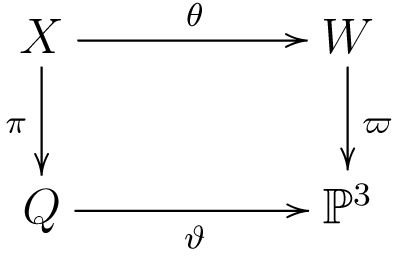
where $\vartheta$
is the double cover ramified in
$\vartheta$
is the double cover ramified in $\pi (S)$
given by
$\pi (S)$
given by $[x:y:z:t:w]\mapsto [x:y:z:t]$
and
$[x:y:z:t:w]\mapsto [x:y:z:t]$
and $\varpi$
is the blow up of the disjoint lines:
$\varpi$
is the blow up of the disjoint lines: $\{x=y=0\}$
and
$\{x=y=0\}$
and $\{z=t=0\}$
. Note that
$\{z=t=0\}$
. Note that $W$
is the unique smooth Fano threefold in the family
$W$
is the unique smooth Fano threefold in the family  3.25.
3.25.
The threefold $X$
can be also obtained via the following commutative diagram:
$X$
can be also obtained via the following commutative diagram:
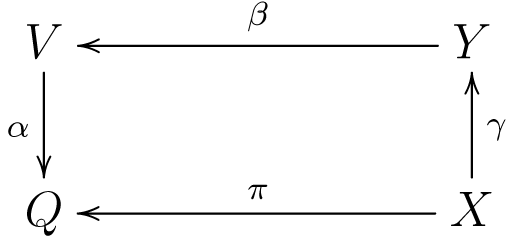
where $\alpha$
blows up the lines
$\alpha$
blows up the lines ${L}_1$
and
${L}_1$
and ${L}_2$
,
${L}_2$
, $\beta$
blows up the
$\beta$
blows up the $(-1)$
-curves in the
$(-1)$
-curves in the $\alpha$
-exceptional surfaces (which are both isomorphic to
$\alpha$
-exceptional surfaces (which are both isomorphic to $\mathbb{F}_1$
), and
$\mathbb{F}_1$
), and $\gamma$
contracts the
$\gamma$
contracts the $\alpha$
-exceptional surfaces. Note that
$\alpha$
-exceptional surfaces. Note that $V$
is the smooth Fano threefold in the family
$V$
is the smooth Fano threefold in the family  3.20. One can check that
 \begin{align*} {\rm Aut}\big ({X}\big )\cong {\rm Aut}\big ({V}\big )\cong \Big (\mathbb{C}^\ast \rtimes \boldsymbol{\mu }_2\Big )\times {\rm PGL}_2\big (\mathbb{C}\big ), \end{align*}
and $S$
is the only
$S$
is the only ${\rm Aut}({X})$
-invariant prime divisor over
${\rm Aut}({X})$
-invariant prime divisor over $X$
.
$X$
.
Set ${H}=\pi ^*(\mathcal{O}_{Q}(1))$
, and observe that
${H}=\pi ^*(\mathcal{O}_{Q}(1))$
, and observe that $-K_{{X}}\sim 3{H}-2{E}_1-2{E}_2$
and
$-K_{{X}}\sim 3{H}-2{E}_1-2{E}_2$
and $S\sim {H}-{E}_1-{E}_2$
. Then, arguing as in the proof of Lemma 4.23, we get
$S\sim {H}-{E}_1-{E}_2$
. Then, arguing as in the proof of Lemma 4.23, we get
 \begin{align*} \beta ({S})&=1-\frac {1}{26}\int \limits _{0}^{2}\big (\!-K_{X}-u{S}\big )^3du-\frac {1}{26}\int \limits _{2}^{3}\big (\!-K_{X}-u{S}-(u-2)({E}_1+{E}_2)\big )^3du\\[5pt]& =1-\frac {1}{26}\int \limits _{0}^{2}\big ((3-u){H}+(u-2)({E}_1+{E}_2)\big )^3du-\frac {1}{26}\int \limits _{2}^{3}\big ((3-u){H}\big )^3du\\[5pt]& =1-\frac {1}{26}\int \limits _{0}^{2}3u^2-18u+26du-\frac {1}{26}\int \limits _{2}^{3}2(3-u)^3du=1-\frac {49}{52}=\frac {3}{52}\gt 0. \end{align*}
Thus it follows from [Reference ZhuangZhu21, Corollary 4.14] that $X$
is K-polystable.
$X$
is K-polystable.
6. Proof of main theorem
In Section 3 we presented the parameter space $T=\mathbb{P}^4$
whose open part parametrizes all K-polystable smooth Fano threefolds in the family
$T=\mathbb{P}^4$
whose open part parametrizes all K-polystable smooth Fano threefolds in the family  3.10, and described a $(\mathbb{C}^\ast )^2$
-action on
$(\mathbb{C}^\ast )^2$
-action on $T$
such that the GIT quotient
$T$
such that the GIT quotient $T/\!/(\mathbb{C}^\ast )^2\cong \mathbb{P}^1\times \mathbb{P}^1$
parametrizes the Fano threefolds from the Main Theorem, which include all K-polystable smooth Fano threefolds in this family. Now, arguing as in [Reference Cheltsov, Duarte Guerreiro, Fujita, Krylov and Martinez-GarciaCGF+25, Section 6], we obtain the assertion of the Main Theorem.
$T/\!/(\mathbb{C}^\ast )^2\cong \mathbb{P}^1\times \mathbb{P}^1$
parametrizes the Fano threefolds from the Main Theorem, which include all K-polystable smooth Fano threefolds in this family. Now, arguing as in [Reference Cheltsov, Duarte Guerreiro, Fujita, Krylov and Martinez-GarciaCGF+25, Section 6], we obtain the assertion of the Main Theorem.
Namely, our construction implies that there is a $\mathbb{Q}$
-Gorenstein family of Fano varieties over the GIT moduli stack
$\mathbb{Q}$
-Gorenstein family of Fano varieties over the GIT moduli stack $[\mathring {T}/(\mathbb{C}^\ast )^2]$
that contains all K-polystable smooth members of the family
$[\mathring {T}/(\mathbb{C}^\ast )^2]$
that contains all K-polystable smooth members of the family  3.10, where $\mathring {T}$
is the GIT semistable open subset of the parameter space
$\mathring {T}$
is the GIT semistable open subset of the parameter space $T$
.
$T$
.
In Sections 4 and 5, we proved that all GIT-polystable objects in our family are in fact K-polystable Fano threefolds. So, we obtain a morphism of stacks
 \begin{align*} \big [\mathring {T}/(\mathbb{C}^\ast )^2\big ]\longrightarrow \mathcal{M}^{{\rm Kss}}_{3,26}, \end{align*}
where $\mathcal{M}^{{\rm Kss}}_{3,26}$
is the K-moduli stack parametrizing K-semistable Fano 3-folds of degree
$\mathcal{M}^{{\rm Kss}}_{3,26}$
is the K-moduli stack parametrizing K-semistable Fano 3-folds of degree $26$
. By [Reference AlperAlp13, Theorem 6.6], this morphism descends to good moduli spaces
$26$
. By [Reference AlperAlp13, Theorem 6.6], this morphism descends to good moduli spaces
 \begin{align*} \mathring {T}/(\mathbb{C}^\ast )^2\longrightarrow M^{{\rm Kps}}_{3,26}, \end{align*}
where points of $M^{{\rm Kps}}_{3,26}$
parameterize K-polystable Fano threefolds of degree
$M^{{\rm Kps}}_{3,26}$
parameterize K-polystable Fano threefolds of degree $26$
.
$26$
.
Lemma 6.1.
Let $X$
be a K-polystable limit of smooth Fano threefolds in the family
$X$
be a K-polystable limit of smooth Fano threefolds in the family  3.10, as described in the Main Theorem. Then the deformations of $X$
are unobstucted.
$X$
are unobstucted.
Proof. We follow the approach from the proof of [Reference Cheltsov, Duarte Guerreiro, Fujita, Krylov and Martinez-GarciaCGF+25, Proposition 2.9]. Since $X$
is a complete intersection in
$X$
is a complete intersection in $\mathbb{P}^1 \times \mathbb{P}^1 \times \mathbb{P}^4$
and
$\mathbb{P}^1 \times \mathbb{P}^1 \times \mathbb{P}^4$
and $X$
has at worst canonical singularities, it follows from [Reference SernesiSer06, Theorems 2.3.2 and 2.4.1, Corollary 2.4.2] and [Reference SanoSan16, Propositions 2.4 and 2.6] that the deformations of
$X$
has at worst canonical singularities, it follows from [Reference SernesiSer06, Theorems 2.3.2 and 2.4.1, Corollary 2.4.2] and [Reference SanoSan16, Propositions 2.4 and 2.6] that the deformations of $X$
are unobstructed if
$X$
are unobstructed if ${\rm Ext}^2_{\mathcal{O}_X}(\Omega^1_X,\mathcal{O}_X)=0$
. As in [Reference SanoSan16, §1.2], we have
${\rm Ext}^2_{\mathcal{O}_X}(\Omega^1_X,\mathcal{O}_X)=0$
. As in [Reference SanoSan16, §1.2], we have
 \begin{align*} {\rm Ext}^2_{\mathcal{O}_X}(\Omega^1_X,\mathcal{O}_X) \cong {\rm Ext}^2_{\mathcal{O}_X}(\Omega^1_X \otimes \omega _X,\omega _X) \cong H^1(X,\Omega^1_X \otimes \omega _X)^{\vee }. \end{align*}
Set $B=\{u_1x=v_1y,\, u_2z=v_2t\} \subset \mathbb{P}^1 \times \mathbb{P}^1 \times \mathbb{P}^4$
. Then
$B=\{u_1x=v_1y,\, u_2z=v_2t\} \subset \mathbb{P}^1 \times \mathbb{P}^1 \times \mathbb{P}^4$
. Then $B$
is a smooth Fano fourfold, and
$B$
is a smooth Fano fourfold, and $X$
is a divisor in
$X$
is a divisor in $B$
. We have
$B$
. We have $\omega _B \cong \mathcal{O}_B(-1,-1,-3)$
and
$\omega _B \cong \mathcal{O}_B(-1,-1,-3)$
and $\omega _B(X) \cong \mathcal{O}_B(-1,-1,-1)$
.
$\omega _B(X) \cong \mathcal{O}_B(-1,-1,-1)$
.
Tensoring the conormal sequence of $X$
in
$X$
in $B$
with
$B$
with $\omega _X$
and taking cohomology, we obtain the exact sequence
$\omega _X$
and taking cohomology, we obtain the exact sequence
 \begin{align*} H^1\big (X,\Omega^1_B\big \vert _X \otimes \omega _X\big ) \longrightarrow H^1\big (X,\Omega^1_X \otimes \omega _X\big ) \longrightarrow H^2\big (X,\mathcal{O}_B(-X)\big \vert _X \otimes \omega _X\big ). \end{align*}
By adjunction and Kodaira vanishing we have
 \begin{align*} H^2\big (X,\mathcal{O}_B(-X)\big \vert _X \otimes \omega _X\big ) \cong H^2\big (X,\omega _B\big \vert _X\big ) = 0. \end{align*}
Moreover, from the exact sequence
 \begin{align*} 0 \longrightarrow \Omega^1_B \otimes \omega _B \longrightarrow \Omega^1_B \otimes \omega _B(X) \longrightarrow \Omega^1_B|_X \otimes \omega _X \longrightarrow 0 \end{align*}
we obtain the exact sequence of cohomology groups
 \begin{align*} H^1\big (B,\Omega^1_B\otimes \omega _B(X)\big ) \longrightarrow H^1\big (X,\Omega^1_B\big |_X \otimes \omega _X\big ) \longrightarrow H^2\big (B, \Omega^1_B \otimes \omega _B\big ). \end{align*}
Then Akizuki-Nakano vanishing theorem gives
 \begin{align*} H^1\big (B,\Omega^1_B\otimes \omega _B(X)\big ) = H^2\big (B, \Omega^1_B \otimes \omega _B\big ) = 0. \end{align*}
This gives $H^1(X,\Omega^1_X \otimes \omega _X)=0$
, so
$H^1(X,\Omega^1_X \otimes \omega _X)=0$
, so ${\rm Ext}^2_{\mathcal{O}_X}(\Omega^1_X,\mathcal{O}_X)=0$
, completing the proof.
${\rm Ext}^2_{\mathcal{O}_X}(\Omega^1_X,\mathcal{O}_X)=0$
, completing the proof.
From this lemma and Luna’s étale slice theorem [Reference Alper, Hall and RydhAHR20, Theorem 1.2], we see that $M^{{\rm Kps}}_{3,26}$
is normal at
$M^{{\rm Kps}}_{3,26}$
is normal at $[X]$
for all
$[X]$
for all $[X]$
in the image of the morphism
$[X]$
in the image of the morphism $\mathring {T}/(\mathbb{C}^\ast )^2\to M^{{\rm Kps}}_{3,26}$
. Since both good moduli spaces are known to be proper, the image of this morphism is a connected component of the K-moduli space. This implies the Main Theorem.
$\mathring {T}/(\mathbb{C}^\ast )^2\to M^{{\rm Kps}}_{3,26}$
. Since both good moduli spaces are known to be proper, the image of this morphism is a connected component of the K-moduli space. This implies the Main Theorem.
We further note that the morphism $\mathring {T}/(\mathbb{C}^\ast )^2\to M^{{\rm Kps}}_{3,26}$
factors as
$\mathring {T}/(\mathbb{C}^\ast )^2\to M^{{\rm Kps}}_{3,26}$
factors as

where the map $\mathring {T}/(\mathbb{C}^\ast )^2\longrightarrow \mathbb{P}^2$
is described in Section 3.3. Note that
$\mathring {T}/(\mathbb{C}^\ast )^2\longrightarrow \mathbb{P}^2$
is described in Section 3.3. Note that $\varsigma$
is generically injective and quasi-finite. So, by Zariski’s Main Theorem,
$\varsigma$
is generically injective and quasi-finite. So, by Zariski’s Main Theorem, $\varsigma$
is an isomorphism onto the connected component of
$\varsigma$
is an isomorphism onto the connected component of $M^{{\rm Kps}}_{3,26}$
containing K-polystable smoothable Fano threefolds in deformation family
$M^{{\rm Kps}}_{3,26}$
containing K-polystable smoothable Fano threefolds in deformation family  3.10.
3.10.
Acknowledgements
We started this research project in New York back in October 2022 during the conference MMP and Moduli, and we completed it in Banff in February 2023 during the workshop Explicit Moduli Problems in Higher Dimensions. We would like to thank the Simons Foundation and Banff International Research Station for very good working conditions. We would like to thank Hamid Abban and Kento Fujita for comments, and Yuchen Liu for his help with arguments in Section 6.
Funding Statement
Ivan Cheltsov is supported by EPSRC grant  EP/V054597/1.
Alan Thompson is supported by EPSRC grant  EP/V005545/1.
Conflicts of Interest
None.
Journal Information
Moduli is published as a joint venture of the Foundation Compositio Mathematica and the London Mathematical Society. As not-for-profit organisations, the Foundation and Society reinvest $100\%$
of any surplus generated from their publications back into mathematics through their charitable activities.
$100\%$
of any surplus generated from their publications back into mathematics through their charitable activities.


 Open access

