


Inspiring a vision and being trustworthy while simultaneously managing the day-to-day operations of human services and child welfare organizations are challenging on the best of days. Couple that with tumultuous social, political, and fiscal environments, along with the aspirations for balance and support of today’s workforce, and the perfect storm converges. In human services, especially child welfare, leaders must ensure that policy and practice align with performance, that operational efficiencies, such as technology, are current, and that service delivery is strong, all while maintaining trust in the workforce, stakeholders, and clients. To do so, strong leadership must be strategically agile and flexible to drive meaningful organizational change.
Although organizations have typically concentrated on improving practice with children and families in child welfare, the foundation for the improvements lies in the trustworthiness, psychological safety, mindset, and relationships that leaders – supervisors, managers, administrators, and directors – cultivate in their daily interactions with their teams (Pittman, Reference Pittman2020; Zak, Reference Zak2017b). Leaders who rely on emotional regulation, disrupt the status quo in their organizations, and engage in crucial and compassionate conversations about accountability can break the cycle of complacency and bureaucracy, helping to forge a pathway toward a more relevant vision. Additionally, a focus on investing in intentional, multidirectional communication crafted toward the brain’s reward response significantly impacts trustworthiness, engagement, mutual respect, and psychological safety (Clark, Reference Clark2020; Edmondson, Reference Edmondson2018; Manjaly et al., Reference Manjaly, Francis and Francis2024; Pittman, Reference Pittman2020; Rock, Reference Rock2008).
Workforce Challenges
To further address leaders’ challenges, workforce retention, which has been a priority for decades, especially in child welfare, continues to be a pervasive concern. Leaders have shifted their priorities to focus on quality hiring practices, deeper onboarding, and connection to preservice training, as well as resiliency and wellness supports, to recruit and retain high-quality direct practitioners. Despite that, direct practitioners and supervisors have been turning over faster than leaders can hire, onboard, and acclimate them due to two main issues: caseload size (or team workload size) in the first weeks after preservice training and role ambiguity (Wilke, Rakes, & Randolph, Reference Wilke, Rakes and Randolph2019). Across the U.S., the average turnover rate is 30% to 65% in some jurisdictions (Route Fifty, 2023). The Quality Improvement Center for Workforce Development (2024) noted in their work with twenty-five jurisdictions that there was an average turnover from 10% to 25% in child welfare programs. In Alabama, the turnover rate was 50% in permanency planning alone (WBHM, 2025).
In North Carolina, the Department of Health and Human Services sent a letter to Social Services Directors noting a 30% turnover rate overall, with some counties experiencing a rate of more than half of their workforce (NC Department of Health & Human Services, 2023). Florida reported a 64.3% turnover rate in child protective services assessments, resulting in 698 of 1085 positions being vacant at some point during the fiscal year 2023–2024 (Florida Department of Children and Families, 2024). The same trend continues in Texas, with 28.9% turnover, or 1/3 of the child welfare practitioners leaving the organization (News4SanAntonio, 2023).
Several jurisdictions have shifted their leadership to address the dynamic needs of today’s workforce. In 2024, Louisiana Department of Child & Family Services (LADCFS) leadership worked diligently to redesign job roles in child welfare, decreasing departures and perceptions of reduced work stress and improved practice, including reduced numbers of children coming into legal custody (Quality Improvement, 2024). By doing so, they had a slight decline from 16% in FY23/24 to 15.3% in FY24/25 (Louisiana Legislative Auditor, 2025). West Virginia has decreased its turnover rate to 17%, with 12 districts reporting zero vacancies, resulting in an improvement from 34.1% to 19.4% (West Virginia Department of Human, 2024; West Virginia Watch, 2024). They have accomplished this by investing in their new practitioners through additional training supports, improving the working environment, pay increases, bonus incentives, and organizational culture shifts (West Virginia Watch, 2024). Finally, New York City began paying mentors to support direct practitioners, aimed toward improving retention and higher fidelity in practice for the children and families, showing promise for the workforce (Casey Family Programs, 2024).
As leaders, we view this challenge as an opportunity to continue pushing for intentional disruption of the status quo, thereby bolstering belonging and onboarding for new workers and fostering more innovation and support within child welfare organizations. In human services organizations, “people are an organization’s greatest asset” (Leroy et al., Reference Leroy, Segers, Van Dierendonck and Den Hartog2018, p. 249), serving as the foundation for delivering high-quality services that empower individuals, children and families, organizations and communities on their journey. Visionary leaders have already begun rethinking and retooling their organizations to attract and support the new workforce generations. According to Statista, by next year, the primary global workforce will consist of only 6% baby boomers, 35% Gen X, 35% Gen Y (Millennials), and 24% Gen Z. (Workday, n.d.). Enter Gen Alpha, born in 2010 and after, who will further shake up the workforce rules (Schawbel, Reference Schawbel2024). Having grown up in a time of rapid technological advancement and interconnectedness, Gen Alpha will demand that organizations prioritize purpose-driven work, social justice impact, enhanced collaboration, and a healthy work environment, with substantial investments in emotional capital (Schawbel, Reference Schawbel2024).
There has never been a better time to embrace shifts in evolving the leadership mindset at all levels. Leaders who are not actively creating organizational environments for a new generation of practitioners and the entire human services workforce to thrive are already behind in attracting and retaining a quality workforce. Currently, child welfare is an incubator for innovation – a ripe space to codesign a collaborative, safety culture where creative, autonomous practice, neuroscience-informed leadership, collaboration, and communication can flourish. To address these issues and lead effectively, it is imperative that leaders disrupt their leadership practices and explore new ways of building both their own and the workforce capacity in the current environment.
Leaning in toward neuroscience-informed practices, a natural fit within human services and child welfare, leaders become better able to bring engagement, communication and feedback loops, and stimulate innovative ideas through practices that help elevate the reward response in the brain, offering a culture of psychological safety, organizational, and workforce growth (Clark, Reference Clark2020; Edmondson, Reference Edmondson1999, Reference Edmondson2018; Rock, Reference Rock2009a, Reference Rock2009b, Reference Rock2010, Reference Rock2018; Zak, Reference Zak2017a). To accomplish this, the leader must learn multiple layers of practical skills.
First, leaders must ensure their leadership practices are grounded in emotional regulation and invest in nurturing emotional capital in relationships. This allows space to embody a growth mindset, inviting others to share a leadership philosophy in embracing mistakes and missteps, learning from them, and leading to the creation of a safety culture. Secondly, they must be willing to disrupt the status quo and question how things are done within the organization, creating flexibility for autonomy and innovation in practice and leadership. Engaging the workforce in codesigning practice, through human-centered design, drives practice improvements, tracks progress on priorities, and challenges the status quo toward meaningful change.
Finally, to advance trust and trustworthiness, psychological safety, and belonging, there must be a focus on purposefully building a high-performing team. Leaders accomplish this through inquiry, honest dialogue about barriers to trust, transparent and multidirectional communication, and accountability for results. Leaders building high-performing teams encourage them to use their authentic gifts, show up as themselves, and listen intently to the team’s ideas and feedback. High-trust, high-performing teams bring excellence to practice with children and families, strengthen community partnerships, and positively impact social determinants of health. Building a resilient and engaged workforce fosters belonging and improves organizational, client, and fiscal outcomes through quality service delivery (Razzetti, Reference Razzettin.d.; Zak, Reference Zak2017a).
What First?
For this system shift to occur, leaders must first be open to evolving their day-to-day leadership practices and habits, supervisors must be receptive to new approaches to critical thinking in child welfare, and the entire system must ready itself for a deeper level of trust and psychological safety. Cue a neuroscience-informed immersive capacity-building learning ecosystem model that works with all levels of the workforce – workers, supervisors, managers, directors, and all in human services and child welfare organizations. This innovative model is developed using neuroscience research from cross-disciplined sectors, building upon the application of Dr. Paul Zak’s and Dr. David Rock’s research on neuroleadership practices that improve trust, psychological safety, and communication. Pittman (Reference Pittman2020) integrated this research into new thinking about leadership in human services organizations, resulting in a practical leadership model aligned with social work values, ethics, organizational resilience, and workforce needs.
The model continues to evolve as a team of executive leaders, subject matter experts, and capacity-building coaches empower supervisors, managers, administrators, and leaders with the skills to lead differently in multiple jurisdictions in NC and other states. The immersive capacity-building model – or “learning ecosystem” – is grounded in critical consciousness and self-determination theory and consists of two foundational domains of leadership: neuroscience-informed leadership practices and technical/managerial practices. Neuroscience-informed leadership practices are soft skills intended to cultivate trust, psychological safety, and belonging – all components of a high-trust, high-performing team. They are then integrated with technical and managerial practices focused on day-to-day operational practices, utilized to manage operations, workload, and caseload needs.
This learning ecosystem is bolstered through immersive capacity-building that consists of practical, tangible, and actionable solutions through 1) learning sessions, 2) observational learning through one-on-one modeling, coaching, and reflective feedback loops 3) experiential learning to apply and practice the learning 4) action learning through coproblem-solving and decision-making and finally, 5) reflecting in daily leadership, with a peer community of practice and learning (See Figure 1). All reflective feedback magnifies strengths and identifies areas of growth based on leader practice standards, resulting in a continuous quality improvement growth plan. These combined elements create an ecosystem that surrounds leaders, providing a learning space for them to evolve themselves, their teams, and the organization. As leaders refine their skills, they begin to feel confident in reimagining their organizational culture by disrupting business-as-usual processes, practices, and service delivery, breaking through system barriers.
Immersive Leadership Capacity-Building – A “Learning Ecosystem”
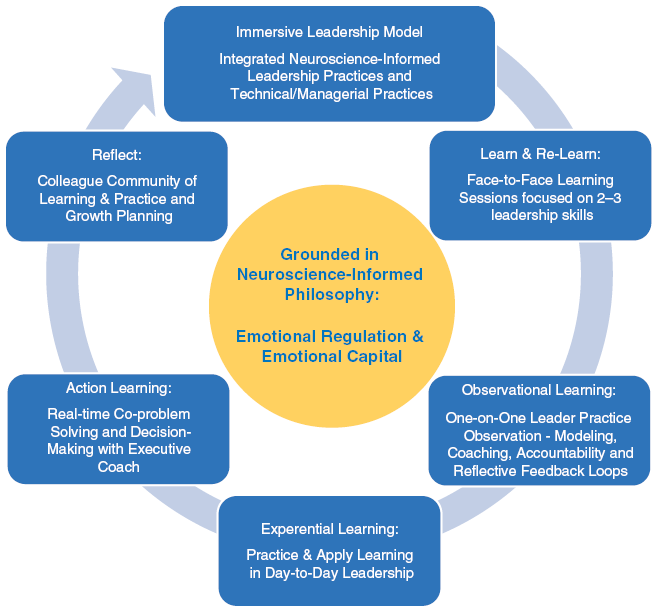
Figure 1 Long description
The image presents a circular Learning Ecosystem Cycle for Neuroscience-Informed Leadership Capacity-Building Model. At the center is a yellow circle labeled Grounded in Neuroscience-Informed Philosophy: Emotional Regulation and Emotional Capital. Surrounding it is a circular process with five blue rounded boxes connected in a loop. At the top is Immersive Leadership Model: Integrated Neuroscience-Informed Leadership Practices and Technical/Managerial Practices. On the upper right is Learn and Re-Learn: One-to-Face Learning Sessions focused on 2 to 3 leadership skills. On the lower right is Observational Learning: One-on-One Leader Practice Observation: Modeling, Coaching, Accountability and Reflective Feedback Loops. At the bottom is Experiential Learning: Practice and Apply Learning in Day-to-Day Leadership. On the lower left is Action Learning: Real-time Co-problem Solving and Decision-Making with Executive Coach. On the upper left is Reflect: Collegue Community of Learning and Practice and Growth Planning. The arrows indicate a continuous cycle around the central philosophy.
Dismantling Bureaucracy: Growth Mindset through Disruptive Leadership
Disruptive leadership plays a crucial role in driving culture and practice shifts in human services and child welfare organizations. The focus is on improving service delivery barriers, organizational health, and workforce supports. Organizational health and a culture of continuous quality improvement result in increased engagement with children, families, and their safety networks, as well as enhanced safety assessment and planning, promoting a community safety net approach to practice with workers and families (Children’s Safety Network, 2022). Leaders understand that the old, bureaucratic ways of leading no longer work for anyone, yet the existing systems are challenging to modify. Veelen et al. (Reference Veelen, Bunders, Cesuroglu, Broerse and Regeer2018) outline the history of child welfare organizations that have contributed to the current state of child welfare systems.
The first generation of child welfare, or the pre-bureaucratic era, was a collaborative approach that invited broad knowledge and experience but often resulted in detrimental practices due to a lack of understanding (Wilson, Reference Wilson2017; Veelen et al., Reference Veelen, Bunders, Cesuroglu, Broerse and Regeer2018). Formalized and standardized procedures were applied to improve processes in working with clients and create structure in practice. However, it resulted in disconnected services, inflexible management, and a focus on specific goals instead of viewing the family holistically. This led to the second generation of child welfare, the bureaucratic era, in which many organizations are still entrenched. Wilson (Reference Wilson2017) draws attention to the issue of unintentionally causing harm while doing good in the practice of social work. She suggests that the “orientation to historical practice…would attend to the affective histories that so profoundly shape how we each come to understand and define justice, and how, in turn, we each resist and reproduce the discipline we inherit” (Wilson, Reference Wilson2017, p. 8). This powerful statement encapsulates the systemic challenges within child welfare in the past and why new leadership, vision, and disruption are needed.
Enter the third generation – or post-bureaucratic era – which emphasizes the engagement of children and families, amplifies the voice of lived experience, and utilizes science and clinically based knowledge to focus on children’s rights and the intrinsic need to be with their families whenever possible (Veelen et al., Reference Veelen, Bunders, Cesuroglu, Broerse and Regeer2018). This shift led to the innovation that child welfare practice is a “craft” of reflective practitioners, who utilize a combination of their “knowledge (knowing) and skills (doing) with an intrinsic value perspective (being)” to deliver quality services to children and families that make a difference (Veelen et al., Reference Veelen, Bunders, Cesuroglu, Broerse and Regeer2018, p. 416). This mindset is crucial for leadership shifts in traditionally bureaucratic child welfare and human service organizations. Leaders have perpetuated these same bureaucratic pathways, resulting in a system that lacks questioning about the how’s of practice. This has resulted in higher removals for children of color and low-income families, a lack of engagement with children, families, and their safety networks, and impacts how organizations attract, support, equip, and retain a quality workforce. The external push against the current child welfare and human services system processes, practices, and treatment of parents and caregivers demands that leaders listen, change, or leave. Leaders who continue to perpetuate bureaucratic practices and processes can create “bureaucratic neglect,” negatively impacting support for high-quality child and family-focused practice (Yang & Ortega, Reference Yang and Ortega2016).
The concept of bureaucratic neglect can also be applied to the workforce. Leaders who still practice traditional bureaucratic leadership traits characterized by control, a culture of fear, and a lack of engagement with the workforce contradict social work values and contribute to an adverse organizational climate, secondary traumatic stress, and high workforce turnover (Pittman, Reference Pittman2020). This leadership style results in reactionary decision-making and low morale, forcing direct practitioners into coercive, compliance-driven practices rather than child-centered ones (Donnelly, Reference Donnelly2023; Pittman, Reference Pittman2020). The result is a system that is fatigued on every level, including direct practitioners, supervisors, and leaders, and leaves everyone in the organization yearning to shift the system for themselves and their clients. Leaders are rethinking traditional approaches, striving to cultivate a strong workforce and authentically respond to what staff need to improve practice, enhance family engagement, and positively impact child safety.
Leaders who begin by vulnerably evaluating their beliefs, philosophy, leadership practices, and relationships with the workforce and community come to understand that they, too, need support. Leaders who recognize and challenge structural inefficiencies, power imbalances, and rigid practices that contribute to the organization’s overall dysfunction can begin to focus on strategies that evolve themselves and their organizations. This outlook allows leaders to shift the system from bureaucratic stagnation to prioritizing children, families, and the workforce.
Flipping the Script on Bureaucracy: An Arguments for Neuroscience-Informed Leadership
Leaders who have spent years working in bureaucratic systems necessitate redirection through one-on-one support that reflects and identifies the barriers and challenges inherent in their assumptions, driving system change and improving organizational health. To set the stage for living neuroscience-informed leadership practices, there are foundational concepts leaders must understand. First, the notion of disruptive leadership and how this philosophy and action can propel momentum in innovation, codesign of practice, and leadership ideas, as well as its impact on cultivating high-performing teams. Second, the roles of critical consciousness theory and self-determination theory in self-change, supporting the workforce, and practice and service delivery. Third, the science behind neuroscience-informed leadership practices, including emotional regulation/emotional capital, growth mindset, and cultivating a safety culture to promote high-performing teams that trust and are trustworthy. Finally, integrating neuroscience-informed leadership practices with technical and managerial practices, while creating a learning ecosystem that surrounds the leader, promotes leaders’ organizational success. Through this integration, leadership is balanced and can inspire vision and drive change forward. All of these culminate in the model of immersive leadership capacity-building. The disruption of the status quo helps set the stage for the capacity-building model and opens the leader and organization up to new possibilities.
Disruptive Leadership
The concept of disruptive leadership comes from business, technology, and management disciplines. Disruptive leadership starts with a disruptive mindset, characterized by “strong self-esteem, intellectual horsepower, fortitude, motivation, and resilience” (Henman, Reference Henman2021, p. 181). Disruptive leaders “challenge the status quo and take bold, innovative actions, emphasizing a continuous quality improvement mindset of always searching for better solutions” (Disruptive Leadership, n.d.). Disruptive leadership is a strategy for a growth mindset – a core tenet of neuroscience-informed leadership practices that impact the leader and everyone in the organization. Disrupting the status quo gives the organization’s workforce the permission and freedom to seek growth, creativity, and innovative solutions and approaches (Disruptive Leadership, n.d.).
Disruptive leadership intentionally challenges the “because we have always done it this way” stance that can come from a bureaucratic system. By challenging the status quo, leaders can restructure systems and integrate innovation to achieve new outcomes (Christensen et al., Reference 66Christensen, Raynor and McDonald2015). Leaders who disrupt hierarchical communication and structures enhance workforce voice and role clarity, which are linked to organizational health, workforce engagement, and retention (Deloitte, 2025). Deloitte (2025) notes that finding a balance of workforce support, performance, and human outcomes requires leaders to navigate the tensions that exist in doing so. For example, balancing unique individual gifts and talents with the need to standardize, being agile yet providing stability within the organization, and exploring innovation and potential, while ensuring some predictability – all of these factors interact to create organizational balance and health – “it’s a both/and proposition” (Deloitte, 2025, p. 3).
Leaders who prioritize human performance by balancing business needs with workforce well-being are better positioned to build sustainable organizations that thrive. Disruptive leadership, when guided by ethical intentions, neuroscience, and a growth mindset, stabilizes chaotic systems by focusing on what matters most – enhancing workforce capacity. As a result, organizations are 1.8 times more likely to achieve stronger financial outcomes and 1.6 times more likely to offer meaningful work to their employees (Deloitte, 2025). Implementing disruptive leadership in human service organizations allows leaders to address social justice issues, dismantle outdated processes that do not benefit children and families, deliver high-quality services, and improve workforce retention and organizational performance (Bass & Riggio, Reference Bass and Riggio2006). This approach is especially relevant for fostering belonging, leadership development, and policy discussions, providing a model for tackling systemic inequities while promoting inclusive, sustainable organizational change. In social work, effective leadership requires bold advocacy on issues impacting child welfare, reflecting the profession’s core values of social justice, service, dignity and worth of individuals, and self-determination (NASW, 2021). Through these efforts, leaders develop greater self-awareness through critical consciousness.
Leadership Self-Awareness: Critical Consciousness Theory
Paulo Freire’s (Reference Freire2000) critical consciousness theory serves as a powerful framework for leaders to engage in self-reflection and analyze organizational systems through three components: critical awareness (an analysis of inequities), political efficacy (the belief in the ability to affect social and political changes for collective impact), and necessary action (a commitment to both individual and collective efforts toward advancing social justice) (Freire, Reference Freire2000; Lash & Sanchez, Reference Lash and Sanchez2021). This theory fosters an organizational growth mindset, enhances workforce resilience and wellness, improves client engagement, and transforms bureaucratic systems that fail to serve the workforce, clients, or the community effectively. Born from education and social justice, this theory has cross-disciplinary relevance and urges leaders to reflect deeply, engage in honest dialogue, and take intentional action toward meaningful and sustainable change. This approach confronts the limitations of bureaucratic systems that often do not meet the needs of the workforce, clients, and communities.
The role of critical consciousness in leadership involves a progressive journey through stages of awareness, reflection, dialogue, and systemic change, building on Paulo Freire’s foundational work. Ginwright (Reference 68Ginwright2015) expands on this foundation by emphasizing the significance of healing-centered engagement in how workers facilitate child welfare practices with children and families and how leaders support the workforce. His approach merges personal well-being with equity-focused leadership practices, encouraging organizations to lead through empathy and caring relationships. Kezar and Holcombe (Reference Kezar and Holcombe2022) also discuss the concept of a shared leadership model as a tool to create more inclusive spaces for decision-making, accountability, and challenge bureaucratic hierarchies.
Leaders who reflect on critical consciousness begin to lead differently, adopting more collaborative and inclusive approaches that make space for marginalized voices, address systemic social justice issues, and strengthen a culture of accountability. These leaders do not merely adhere to the usual rules; they pose tough questions and raise provocative topics for discussion. They reflect on their biases, investigate how power plays out within their systems, and establish space for honest, ongoing dialogue (Diem & Carpenter, Reference Diem and Carpenter2013). Rather than reinforcing hierarchical control, critically conscious leaders promote shared leadership, valuing the expertise and lived experiences of both workers and supervisors to inform policy and practice. Furthermore, critical consciousness fosters psychological safety to encourage open dialogue about system barriers and innovation (Eubanks et al., Reference Eubanks, Antes, Friedrich, Caughron, Blackwell, Bedell-Avers and Mumford2016).
Workforce Empowerment through Self-Determination Theory
Self-determination theory aligns with social work values and is rooted in our shared human experience. Self-determination theory identifies a person’s intrinsic and extrinsic motivation related to psychological needs, including autonomy, competence, and relatedness (Lumpkin & Achen, Reference Lumpkin and Achen2018). These three psychological needs culminate in the inclusive concept of belonging. Belonging is a universal basic human need, where team members can show up as they are, with their authentic gifts, and are welcomed, valued, and accepted for their contributions (Deci et al., Reference Deci, Olafsen and Ryan2017; Gonzales, Reference Gonzales2022; Kennedy & Jain-Link, Reference Kennedy and Jain-Link2021; Premuzic-Chamorrow & Berg, Reference Chamorro-Premuzic and Berg2021). Self-determination theory asks the questions: Am I trusted? (autonomy), Are my gifts valued (relatedness), Does my work make a difference? (competence), and. ultimately, Do I belong (belonging)? (Deci et al., Reference Deci, Olafsen and Ryan2017). Team members who feel included contribute to innovation through creativity, have higher psychological safety and trust, improve team cohesion, have higher retention rates, and perform better (Gonzales, Reference Gonzales2022; Kennedy & Jain-Link, Reference Kennedy and Jain-Link2021; Premuzic-Chamorrow & Berg, Reference Chamorro-Premuzic and Berg2021). Belonging is also part of Maslow’s hierarchy of needs and applies to both our personal and professional lives. It drives the workforce to commit to the overall mission, vision, and actions of child welfare practice.
The quality of child welfare practice and service delivery is closely linked with a strong sense of belonging and how connected the workforce feels to the organizational vision, philosophy, and leadership (Brimhall, Lizano, & Barak, Reference Brimhall, Lizano and Mor Barak2014). The workforce, especially millennials, Gen Z, and now Gen Alpha, articulates their desire for their work to positively advance a shared mission and have a positive impact on society. This creates a deliberate pathway for aligning their self-determination needs with the broader framework of corporate social responsibility, reinforcing their intrinsic motivation by demonstrating how their time and effort directly contribute to client outcomes, community well-being, and the more significant impact on social determinants of health (Li et al., Reference Li, Fan, Álvarez-Otero, Sial, Comite, Cherian and Vasa2021). Combining self-determination and a sense of social responsibility creates an environment that fosters innovation and a growth mindset, leading to an open learning environment where neuroscience-informed leadership practices thrive.
Seeing the Signs: Why Change in Practice, Leadership, and Culture Matters
The need to change practice, leadership, and organizational culture is sometimes evident to the leader, whether prompted by workforce turnover, client feedback, declining public trust, or concerns raised by the supervising state agency due to underperformance in key outcomes. Exit interviews, surveys, and conversations with the workforce may reveal early indicators of low organizational health, alerting leaders to act. However, leaders may not always recognize the need for organizational change themselves until an objective party points it out. A crisis or an externally imposed situation can arise that forces leaders to confront the reality that change is necessary to get back on course. There is a nuanced difference between leaders who initiate change and those who implement or execute changes initiated by others (Heyden et al., Reference 69Heyden, Fourné, Koene, Werkman and Ansari2017; Oreg & Berson, Reference Oreg and Berson2019). When change is driven by external pressures beyond a leader’s control, they often must first manage their own resistance to the imposed shift, while simultaneously working to foster workforce buy-in within a context-dependent environment (Heyden et al., Reference 69Heyden, Fourné, Koene, Werkman and Ansari2017; Oreg & Berson, Reference Oreg and Berson2019).
Leaders who are invested in authentic organizational change engage with multiple stakeholder groups to ensure that the lived experience voices of children, families, community partners, and the workforce are not only heard but meaningfully considered and integrated into decisions that shape practice and organizational health (Capacity Building Center for States, 2019; Paul Reference Paul2021). This inclusive approach aligns with trauma-informed and equity-centered approaches that emphasize shared power and collaboration with those most impacted by the organization. Furthermore, leaders who acknowledge the need for systemic changes in their organizations also recognize that changing practices, supervision, and leadership habits takes time to shift (ICF, 2021; Rock, Reference Rock2018). Outlining desired changes (priorities), teaching people new habits (habits), and implementing and embedding the organizational systems to support and sustain new habits (systems) are aligned with implementation science and crucial to any sustainable capacity-building effort (Pittman, Reference Pittman2020; Rock, Reference Rock2018). To support the workforce in making changes, leaders must adopt a growth mindset, which includes understanding the time required for change and what capacity-building entails.
Change Takes Time: Neuroscience-Based Best Practices for Lasting Habits
Capacity-building is more than learning a new practice. Research indicates that the desire to change isn’t enough to change leadership habits; therefore, it requires a significant time investment to cultivate a new way of leading. Authentic change and capacity-building occur when new habits form in an embedded, structured, and supportive way. Rock (Reference Rock2018) emphasizes that change efforts must intentionally focus on shifting habits of leaders, resulting in more sustainable systemic, leadership, and practice shifts. Rock’s (Reference Rock2018) neuroscience-informed change framework integrates priorities, habits, and systems to translate to real, sustainable change.
First, leaders must clearly communicate the desired change and the behaviors associated with it, to signal what is a priority. Capacity-building then comes into play, helping leaders and the workforce develop new habits through learning, relearning, repetition, reflective feedback (both written and verbal), rewards, and celebrating successes, thereby starting the cycle over again. Finally, ongoing positive reinforcement, embedded structural supports, and continuous strategies to enhance the change trajectory (Rock, Reference Rock2018). Rowland (Reference Rowland2016) also notes that neuroscience is at work when our emotional circuits are activated by doing something experiential or “trying it out,” as is the case in capacity-building. While trying new leadership practices, leaders begin to “be” different in their everyday leadership practices, intentionally emotionally regulate, and mindfully find time, space, and stillness for intentional self-reflection (Rowland, Reference Rowland2016). Placing leadership development within the broader context of organizational health, workforce engagement, and public trust helps to put the leadership shifts into a systemic change (Rowland, Reference Rowland2016). Finally, Rowland (Reference Rowland2016) notes one of the core components of capacity-building is to pair one-on-one coaches with leaders to help support them through change by being “less as experts, more as sherpas (Rowland, Reference Rowland2016, para. 10). This sustainable, neuroscience-informed change framework aligns with implementation science and supports the literature related to systemic change “sticking.”
Research indicates that achieving strategic alignment with evidence-based benchmarks for change, from initiation to application and sustained implementation, typically takes between eight and eighteen months (ICF, 2021; CCL, n.d.). Research in leadership capacity-building and organizational transformation consistently emphasizes that sustainable change, particularly changes that involve values, behaviors, and mindsets, requires both time and intentional, iterative engagement (Anderson & Adams, Reference Anderson and Adams2016). Following national best practice standards in leadership coaching, such as those defined by the International Coaching Federation (ICF) and the Center for Creative Leadership (CCL), this iterative capacity-building supports leaders through a phased process that includes relationship-building, cocreation of goals, skill development, and system-level application (ICF, 2021; CCL, n.d.). This timeline allows for a comprehensive cycle of assessment, coaching, implementation, reflection, and adaptation.
Changing an entire organizational system takes even longer than individual change, due to the complexities of both implicit (values, beliefs, unwritten rules) and explicit (policies, procedures, communication) culture and climate norms within the organization. Because lasting behavior and cultural change are neurological processes, systems change requires strong communication, addressing cultural issues, and reinforcement between individual changes and the desired future state of the system (Rock, Reference Rock2018; CCL, n.d.). System-wide transformation depends not only on individual habit shifts but also on a deliberate examination of underlying cultural dynamics and the interplay between leadership behavior, team interactions, and systemic structures. By embedding leadership coaching into the organizational ecosystem over a sustained period, leaders are more likely to internalize new practices and drive cultural change from within, impacting practice, organizations, and community systems. The coaching process is structured to provide continuous feedback, reinforce accountability, and deepen leaders’ self-awareness and systemic thinking, all critical elements in achieving culture change (Boyatzis et al., Reference Boyatzis, Smith and Van Oosten2013).
The Optimal Fit: Neuroscience-Informed Leadership
Neuroscience-informed leadership practices are an ideal fit for human services and child welfare organizations due to their alignment with social work values and ability to cultivate a resilient and engaged workforce (Pittman, Reference Pittman2020). Traditional leadership approaches in child welfare are often autocratic and directive, contributing to toxic workplace cultures, high turnover, and workforce burnout. However, neuroscience-informed leadership integrates brain science with leadership strategies to foster trust, emotional regulation, collaboration, and decision-making skills (Pittman, Reference Pittman2020; Zak, Reference Zak2017b). By leading through neuroscience-informed practices, human service leaders create psychologically safe learning environments that enhance job satisfaction, reduce stress, and improve client outcomes (Pittman, Reference Pittman2020; Zak, Reference Zak2017b). Research finds that organizations adopting trust-based leadership models experience greater workforce retention, increased engagement, and enhanced service delivery effectiveness (Pittman, Reference Pittman2020).
Neuroleadership practices directly address the critical challenges facing child welfare and human services agencies, such as staff burnout, secondary traumatic stress, and declining workforce morale (Pittman, Reference Pittman2020). By implementing eight neuroleadership building blocks – ovation, expectation, yield, transfer, openness, caring, investing, and natural – leaders can establish a culture prioritizing psychological safety and professional development (Pittman, Reference Pittman2020; Zak, Reference Zak2017a). The neuroscience-informed leadership approach fits naturally with the core values and ethics of the social work profession while also strengthening organizational culture and climate. Studies show that when human services agencies apply neuroleadership principles, there is higher workforce commitment, reduced turnover, and focus on quality in service delivery, all critical factors for improving outcomes in child welfare (Pittman, Reference Pittman2020; Zak, Reference Zak2017a). Child welfare agencies can create a sustainable and effective model that prioritizes worker well-being and high-quality client service by shifting toward neuroscience-informed leadership.
Finally, Rock’s (Reference Rock2018) neuroscience theory on change provides leaders with a roadmap to operationalize leadership shifts, revolutionizing organizations and facilitating changes in how service delivery is experienced. While new knowledge and learning are needed for system change, “mere intention to change is insufficient to reshape behavior” (Rock, Reference Rock2018, p. 77). Authentic shifts in behavior must be accompanied by the application of neuroscience in communicating the understanding that the new leadership or practice change is a priority. After identifying the priority, leaders must utilize repetition and reward, making the new practices automatic behaviors through the formation of new neuropathways in the brain. Ultimately, establishing a supportive framework around new practices and reinforcing them through repetition helps transform them into lasting habits that sustain leadership and promote growth in practice, service delivery, and outcomes (Rock, Reference Rock2018). Enter the immersive capacity-building model, which provides intensive support that gradually tapers off over time as the participant embeds new habits in their brain and begins to perform differently (Rock, Reference Rock2018). This model supports sustained leadership, organizational culture change, and practice shifts for service delivery.
Grounding Leadership in Neuroscience: Two Tangible Practices
Leaders’ interactions and day-to-day practices impact how they interact with the workforce and community stakeholders directly influence their organization’s ability to attract and retain talent, collaborate, and achieve community, organizational, client, and fiscal outcomes (Glisson, Green, & Williams, Reference Glisson, Green and Williams2012; Westbrook, Ellett, & Asberg, Reference Westbrook, Ellett and Asberg2012; Zak, Reference Zak2017b).
To ground leaders in core concepts that enable them to implement neuroscience-informed leadership practices more effectively, the immersive leadership capacity-building model focuses first on emotional regulation and capital, as well as living a growth mindset as a leader, to embed these principles within the organization. Through these two day-to-day grounding leadership practices, leaders further a safety culture in organizations, which is foundational to leadership in child welfare and human service organizations.
Applying Emotional Regulation to Pursue Emotional Capital
Emotional regulation is the capacity to recognize, understand, express, and manage one’s emotions while influencing relationships through understanding others’ emotions (Ballarotto et al., Reference Ballarotto, Abate, Baiocco and Velotti2025; Goleman, Reference Goleman2008). Empathy, a universally recognized human need, is crucial to emotional regulation and enables leaders to communicate effectively, navigate conflict, uphold accountability, and manage competing demands on a daily basis. Emotional regulation enhances belonging and psychological safety within teams, fostering cohesion both within the team and across the broader organizational culture. Emotional regulation has four domains and twelve core elements (Goleman & Boyatzis, Reference Goleman and Boyatzis2017):
1. Emotional Self-Awareness
2. Self-Management: emotional self-control, adaptability, achievement orientation, positive outlook
3. Social Awareness: empathy and organizational awareness
4. Relationship Management: influence, coaching and mentoring, conflict management, teamwork, and inspirational leadership.
Through intentionally focusing on regulating themselves and empathizing and coregulating with others, leaders can better lead during crises, help themselves and their teams reregulate, and attend to team emotions to improve psychological safety (Goleman & Boyatzis, Reference Goleman and Boyatzis2017).
Emotional capital levels up emotional regulation through a collective set of skills that help leaders connect even more fully to the organization and workforce. According to Khazaei et al. (Reference Khazaei, Holder, Sirois, Oades and Gendron2021), emotional capital is a collective set of leadership resources that supports personal, professional, and organizational developments while fostering social cohesion and economic success. Emotional capital is a collection of internal resources that enhance personal, professional, and organizational developments, as well as relationships within the workforce (Gendron, Reference Gendron2004; Whitener, Reference Whitener2019). By fostering resilience, trust, and social cohesion, emotional capital drives positive outcomes across individuals, teams, and broader systems (Gendron, Reference Gendron2004; Whitener, Reference Whitener2019).
Khazaei et al. (Reference Khazaei, Holder, Sirois, Oades and Gendron2021) outlines the ten components of emotional capital extracted from individual conceptualization research on emotional capital from Dr. Bénédicte Gendron and Dr. Martyn Newman. Dr. Newman further developed his research and aligned it with Goleman’s (Reference Goleman2014) research on emotional intelligence, as presented in Emotional Capitalists, where he delves deeper into the components of emotional capital in three focus areas: inner, outer, and other (see Table 1).
| Focus | EC Component | Definition |
|---|---|---|
| Inner (Self) | Self-Knowing | Recognizing how your emotions influence your opinions and choices |
| Inner (Self) | Self-Control | Managing emotions and staying regulated to make rational decisions |
| Inner (Self) | Self-Confidence | Valuing yourself and setting high personal standards |
| Inner (Self) | Self-Reliance | Taking responsibility, planning, and decision-making |
| Other (People) | Empathy | Understanding others emotions, connection |
| Other (People) | Relationship Skills | Creating authentic, strong, collaborative beneficial relationships |
| Other (People) | Straightforwardness | Expressing thoughts honestly, while respecting others views |
| Outer (System) | Adaptability | Embracing change and being open to new ideas |
| Outer (System) | Optimism | Seeing opportunities where other see obstacles |
| Outer (System) | Self-Actualization | Staying motivated and committed to long-term goals |
Whitener’s (Reference Whitener2019) insights, featured in Forbes, highlight that leaders who cultivate emotional capital build greater resilience and foster deeper trust and engagement within their organizations. In human services and leadership roles, emotional capital is a vital resource that enables individuals to show up fully and work effectively together (Whitener, Reference Whitener2019). These elements highlight how emotional capital fosters stronger teams, promotes accountability and integrity, and supports ongoing professional growth.
As leaders focus on emotional regulation in their daily leadership, managing their own emotions and supporting their teams and colleagues to do the same, they begin to create an environment that cultivates learning and teams that remain calm in chaotic times. When leaders model behaviors that encourage others to bring their unique talents to the team and the mission, other leaders within the organization will follow suit. This introduces the second core skill in the immersive leadership capacity-building model: a growth mindset.
Growth Mindset for a Learning Environment
A leader with a growth mindset is purposeful in shaping vision and willing to challenge the status quo. In 2006, Carol Dweck first outlined her conceptualization of a growth mindset. A growth mindset is grounded in the belief that people can grow, learn, and change through their motivations and efforts (Dweck, Reference Dweck2006; Kouzes & Posner, Reference Kouzes and Posner2019; Murphy & Dweck, Reference Murphy and Dweck2016). The growth mindset philosophy can be applied to leadership and organizational health, cultivating a genuine, continuous quality improvement approach or learning environment for the workforce (Kouzes & Posner, Reference Kouzes and Posner2019). A growth mindset is the belief that capacities can develop through dedication, learning, and persistence (Dweck & Yeager, Reference 67Dweck and Yeager2021). When leaders treat mistakes as part of the learning process, approach challenges with curiosity, and push themselves toward meaningful goals, they show others what a growth mindset looks like inside their organization and in their external partnerships (Kouzes & Posner, Reference Kouzes and Posner2019; Westover, Reference Westover2024). This mindset fosters adaptability, resilience, and openness to feedback, enabling individuals and organizations to thrive in the face of challenges.
Research has shown that organizations fostering a growth mindset culture experience greater trust, engagement, and innovation. In workplaces where a growth mindset is modeled and encouraged, employees demonstrate higher resilience, a greater willingness to take on challenges, and a stronger commitment to continuous learning (Dweck, Murphy, Chatman, & Kray, Reference Dweck, Murphy, Chatman and Krayn.d.). Harvard Business Review (2014) found that organizations with a growth mindset philosophy have a workforce that is 47% more likely to trust their colleagues, 34% more likely to feel a strong sense of ownership or the mission and commitment to the organization, and 49% more likely to believe that their organization fosters innovation, meeting outcomes more consistently. The emphasis on learning and continuous growth creates a culture where the workforce feels valued, leading to higher retention and quality of service delivery.
Neuroscience-informed leadership practices build on a growth mindset philosophy, culminating in higher trust, psychological safety, and overall performance. Psychological safety fosters an environment where individuals feel secure enough to take interpersonal risks. Interpersonal risks might be speaking up with ideas, questions, and concerns or sharing mistakes without fear of punishment or humiliation (Edmondson, Reference Edmondson2018). Tim Clark (Reference Clark2020) built upon Edmondson’s research and further analyzed psychological safety into four stages:
1. Inclusion safety – individuals feel valued and accepted as members of the team
2. Learner safety – individuals feel safe to engage in the learning process through questions, feedback, and making mistakes without judgment
3. Contributor safety – individuals feel empowered to apply their skills and knowledge and contribute meaningfully
4. Challenger safety – team members feel secure to challenge the status quo without fear of negative consequences
By integrating the research of Edmondson and Clark, leaders gain the insights and strategies needed to foster psychological safety, drive team performance, and cultivate a culture of trust and innovation.
Leaders cultivate a growth mindset by establishing a culture of learning, resilience, and continuous improvement. Research has shown that psychological safety enhances culture, trust, and outcomes (Clark, Reference Clark2020; Edmondson, Reference Edmondson2018). A study published in The Open Psychology Journal found that psychological safety has a significant impact on team dynamics, enhancing team learning, effectiveness, and productivity (Patil et al., Reference Akşahin, Dagli, Altinays, Altinay, Altinay, Soykurt, Bahcelerli and Adedoyin2023). This study concluded that psychological safety has a positive correlation with high-trust, high-performing team effectiveness. Furthermore, Wang & Ning (Reference Wang and Ning2024) noted that the workforce is more likely to perceive psychological safety through mutual trust, authentic relationships, and a learning environment that encourages open communication and collaboration. Finally, Zak (Reference Zak2017a) highlights that high-trust organizations that align with growth mindset principles have 50% higher productivity, 74% lower stress, and a 41% greater sense of achievement than organizations with traditional leadership.
Safety Culture for Psychological Safety and Practice Improvement
Safety culture promotes learning and balances individual and system accountability by examining system factors and the team’s culture (Casey, n.d.; Edmondson, Reference Edmondson2018). Within child welfare, safety culture refers to the alignment of an organization’s and its members’ values, attitudes, and behaviors, focusing their attention and effort on safety and pursuing reliable, harm-free operations (Vogus et al., Reference Vogus, Sutcliffe and Weick2010). Safety culture models emerged from other high-risk, high-consequence professions and organizations functioning in hazardous, fast-paced, and highly complex systems. A psychologically safe culture is driven by a leadership commitment to safety, prioritizing teamwork and open communication based on trust. This commitment involves developing and enforcing a nonpunitive approach to event reporting and analysis, as well as a commitment to becoming a learning organization (Casey, n.d.; Edmondson, Reference Edmondson2018; Vogus et al., Reference Vogus, Sutcliffe and Weick2010). Safety culture in child welfare focuses on how teams and organizations engage in work, not only policies and procedures. However, safety science tools can help inform critical thinking, decision-making, and reasoning, helping to decrease bias and build a stronger safety culture (Munro, Reference 71Munro1999).
Safety culture is directly connected to psychological safety and is a system-wide philosophy first studied by Amy Edmondson (Reference Edmondson1999, Reference Edmondson2018) in healthcare teams. Edmondson’s research demonstrated that teams who were encouraged to report and learn from mistakes in their practice and voice their ideas, questions, or concerns without fear had better outcomes than healthcare systems that did not (Reference Edmondson1999, Reference Edmondson2018). In a strong safety culture, engaged teams practice six habits to promote child safety (Casey, n.d.; Cull & Lyons, Reference Cull and Lyons2019, p. 4).
1. Make candor and respect a precondition to teamwork.
2. Spend time identifying potential issues that could arise.
3. Talk about mistakes and ways to learn from them.
4. Test change in everyday work activities.
5. Develop an understanding of “who knows what” and communicate clearly.
6. Appreciate colleagues and their unique skills.
The research of Eileen Munro (Reference 71Munro1999, Reference Munro2005, Reference Munro2010, Reference Munro2019) and Andrew Turnell et al. (Reference Turnell, Munro and Murphy2013) has made significant contributions to developing a safety culture in child welfare and organizational settings, particularly in risk assessment, decision-making, and collaborative practice. Their approaches align in promoting learning, transparency, and a shift from compliance-driven models to relationship-based and safety-focused practices (Munro, Reference Munro2010, Reference Munro2019; Turnell et al., Reference Turnell, Munro and Murphy2013). Munro (Reference Munro2010) furthers the initial research through a focus on moving away from a compliance-driven culture, replaced by a learning organization that engages all levels of the workforce through “feedback loops in the system where lower-level workers are not afraid to communicate honestly about their experiences, both good and bad, and senior managers treat their feedback as a valuable source of learning” (Munro, Reference Munro2010, p. 1135).
In her ongoing research in 2019, Munro identifies three cultural approaches to assessing child safety evidence and making decisions: pathological culture, bureaucratic culture, and generative culture (learning environment). See definitions in Table 2.
| Culture | Definition |
|---|---|
| Pathological Culture | Dismisses worries and minority opinions; responsibility is avoided and new ideas actively discouraged; lack of listening or engagement around mistakes/missteps; “failures are punished or covered up” (Munro, Reference Munro2019, p. 126). |
| Bureaucratic Culture | Information is acknowledged, but actions are not taken; “responsibility is compartmentalized”; new ideas are seen as a nuisance and messengers are not welcomed; “people are not encouraged to participate in improvement efforts” (Munro, Reference Munro2019, p. 126). |
| Generative Culture | Makes use of “information, observations and ideas wherever they exist in the system, without regard to the location or status of the person or group” Munro, Reference Munro2019, p. 126); messengers are encouraged, engaged, and rewarded. |
To help shift to a learning organization or adopt a growth mindset, leaders must embody and live leadership practices that foster critical thinking, problem-solving, and decision-making, while also helping to identify biases and prioritizing family engagement and safety networks. Finally, Turnell, Munro, and Murphy (Reference Turnell, Munro and Murphy2013) argue that an authentic learning organization is stronger than organizations with a compliance-driven philosophy, particularly when facing crises. This is particularly true in the aftermath of serious incidents like child fatalities. Leaders willing to be courageous and take a systemic view of child welfare help shift the conversation from blame to learning, creating space for growth, accountability, and meaningful change (Turnell et al., Reference Turnell, Munro and Murphy2013).
Integrated Leadership: Driven by Growth Mindset
Neuroscience-Informed Leadership Practices
In the article “Leadership Rebooted: Cultivating Trust with the Brain in Mind,” eight neuroleadership practices are tied to improving trust, psychological safety, and workforce retention (Pittman, Reference Pittman2020). This author integrated the empirical research of Dr. Paul Zak (Reference Zak2017a) and the neuroleadership research of Dr. David Rock (Reference Rock2008, Reference Rock2009a, Reference Rock2010, Reference Rock2018) to align leadership practices with the human services vision and values, resulting in a leadership approach that resonated with organizational needs. The capacity-building model draws on the concepts from Zak and Rock’s research to help leaders embrace a more human-centered, emotionally intelligent approach to leadership.
The approach evolved into the immersive leadership capacity-building model, which includes Zak’s eight leadership practices. The language was revised based on experience implementing these practices in human services and child welfare. Four additional practices were extracted and identified as core to integrate with Zak’s (Reference Zak2017a) eight highlighted practices (see Table 3). These twelve practices create a synergy that creates a learning environment, safety culture, and strategic and forward-thinking leadership that serves the workforce well (see Figure 2).
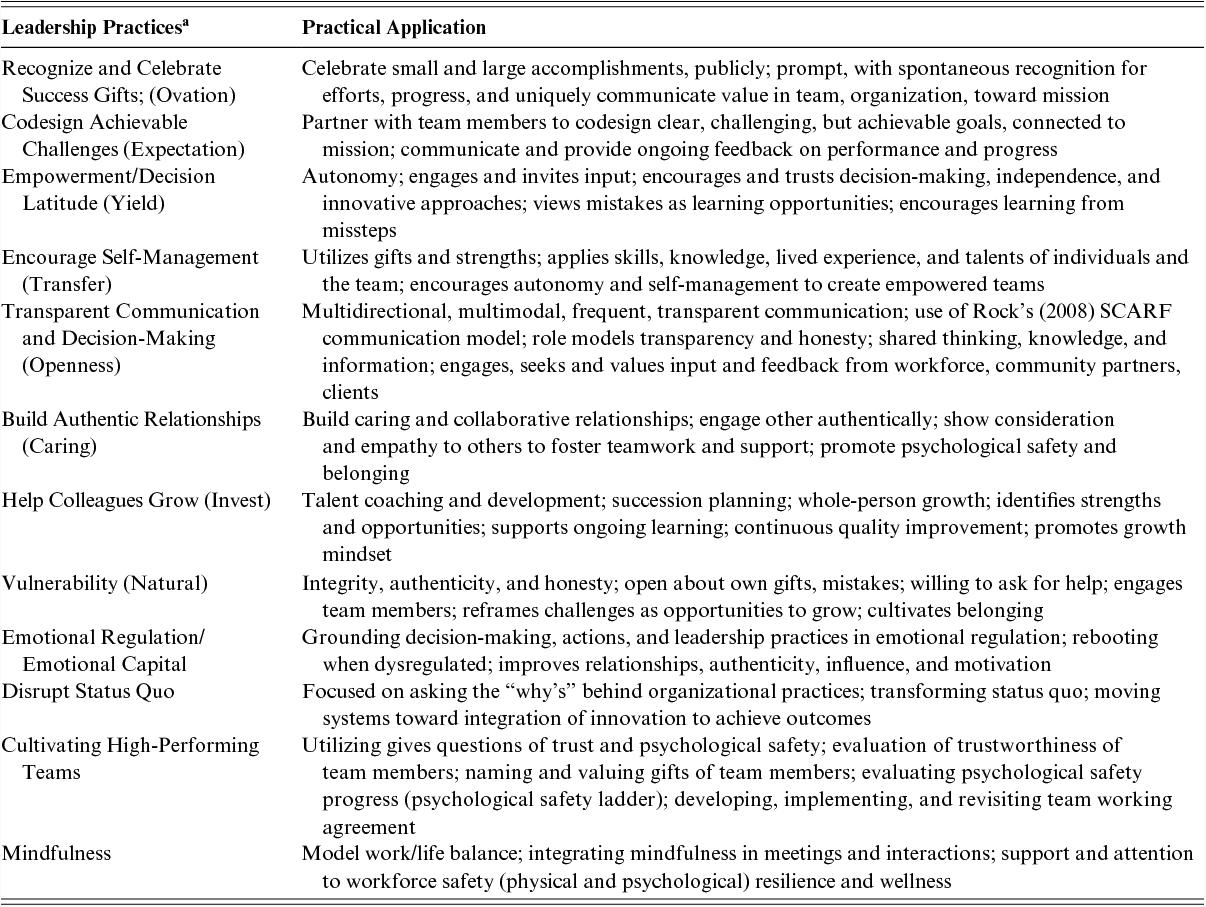
Table 3 Long description
It highlights key practices:
Leaders recognize and celebrate success, publicly acknowledging effort, progress, and individual strengths. They codesign clear, challenging, and achievable goals aligned with the organization’s mission and provide ongoing feedback.
The framework emphasizes empowerment and autonomy, encouraging independent decision-making, innovation, and learning from mistakes. Leaders promote self-management by leveraging team members’ strengths, skills, and lived experience.
It calls for transparent, multidirectional communication, modeling honesty, shared decision-making, and valuing input from staff, partners, and clients.
Leaders are encouraged to build authentic, caring relationships that foster trust, empathy, belonging, and psychological safety. They invest in growth through coaching, succession planning, and continuous learning.
The model also highlights vulnerability and integrity, emotional regulation, and grounding leadership in emotional awareness.
Additional components include challenging the status quo through innovation, intentionally cultivating trust and psychological safety within teams, and integrating mindfulness, resilience, and workforce wellness into daily practice.
Overall, the framework presents leadership as relational, transparent, growth-oriented, and mission-driven.
a Original Zak (Reference Zak2017a) neuroleadership practice term in parentheses.
Neuroscience-Informed Leadership Practices
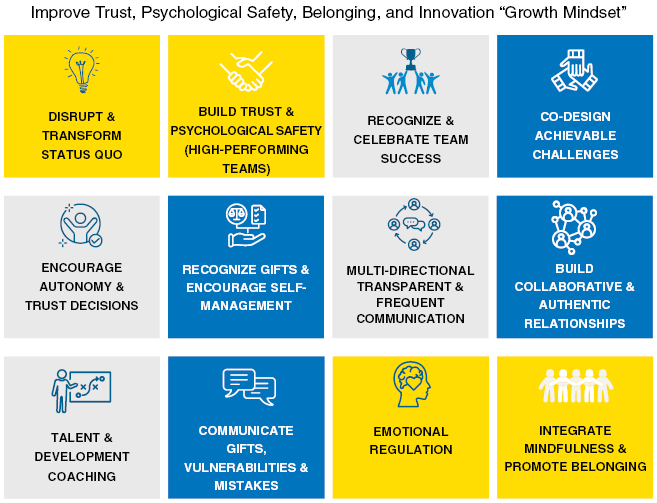
Figure 2 Long description
The image displays a 3 by 4 grid of 12 neuroscience-informed leadership practices under the heading Improve Trust, Psychological Safety, Belonging, and Innovation ‘Growth Mindset’. Each practice appears in a colored box with an icon. The practices listed are: Disrupt and Transform Status Quo; Build Trust and Psychological Safety (High-Performing Teams); Recognize and Celebrate Team Success; Co-Design Achievable Challenges; Encourage Autonomy and Trust Decisions; Recognize Gifts and Encourage Self-Management; Multi-Directional Transparent and Frequent Communication; Build Collaborative and Authentic Relationships; Talent and Development Coaching; Communicate Gifts, Vulnerabilities and Mistakes; Emotional Regulation; and Integrate Mindfulness and Promote Belonging.
The immersive leadership capacity-building model, grounded in neuroscience, is part of the biological and economic system: the brain. Zak notes that our brains “seek to deploy efficiently to help us survive and thrive” (Reference Zak2017a, p. 19). In his studies and book, The Trust Factor, Zak measured the levels of oxytocin produced by the brain in various environments, including the boardroom, office, and during meetings, when individuals experienced specific interactions with their leaders or colleagues. He found that the more people experience neuroscience-informed behaviors, the stronger their trust, cooperation, and forgiveness become (Zak, Reference Zak2017a). While some leadership models incorporate neuroscience ideas, they often fail to assess the actual biological impact on individuals. What sets the neuroscience-informed leadership capacity-building model apart is that it draws from research with measurable outcomes. It is a more evidence-informed approach tied to real-world, positive changes in leadership and organizations.
A thread running throughout the twelve leadership practices is a neuroscience-informed communication model, the SCARF model (Rock, Reference Rock2008), that helps leaders intentionally think through all communication, stimulating the workforce reward response in the brain versus the threat response. SCARF – or status, certainty, autonomy, relatedness, and fairness – of the workforce and how engagement, respect, security, control, and the sense of connectedness and belonging they feel in the organization (Manjaly et al., Reference Manjaly, Francis and Francis2024; Rock, Reference Rock2008; see Figure 3). Tailoring system changes and other communications through the SCARF model, whether written or verbal, helps inform the workforce of shifts in a way that fosters further buy-in. Leaders who structure the message specifically using the following questions, influence, motivation, and trust are furthered, even in times of crisis.
Communication to Reward Response (SCARF)
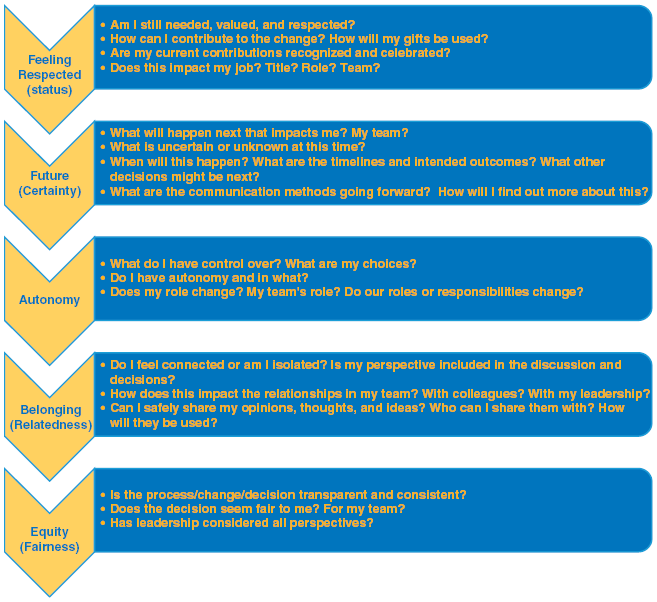
Figure 3 Long description
A vertical diagram titled Five Elements of Reward Response. On the left side are five labeled sections arranged downward: Feeling Respected (status), Future (certainty), Autonomy, Belonging (relatedness), and Equity (fairness). Each section includes guiding leadership reflection questions in adjacent blue boxes. Feeling Respected includes questions about being seen, valued, recognized, how contributions are used, and impact on title, role, or team. Future focuses on what will happen next, uncertainty, timelines, intended outcomes, next decisions, and communication methods. Autonomy asks about control over choices, level of autonomy, and whether roles or responsibilities change. Belonging addresses connection, inclusion in decisions, leadership impact, and whether ideas and feedback will be heard. Equity considers whether processes and decisions are transparent, consistent, fair, and whether all perspectives have been considered.
By using the SCARF framework to guide communication, leaders create a work environment where team members feel recognized, valued, and essential to the organization’s success. A workforce that feels important and respected, understands what will happen next, has choices and a sense of control over changes and events, and experiences a sense of being valued for their unique talents, trust, and psychological safety, along with fairness and consistent expectations, tends to stay longer, is more committed, and performs better (Rock, Reference Rock2008, Reference Rock2009a, Reference Rock2009b). By applying the SCARF model within the twelve leadership practices, leaders address the brain’s response of the workforce, engage in multilevel and multidirectional communication, and aim for more precise, clear, and transparent communication.
Impact of Living Neuroscience-Informed Leadership
As leaders implement neuroscience-informed practices, they become more effective at regulating their emotions, building trust and emotional credibility, leading with a growth mindset, and partnering with their teams to foster a culture of safety. This shift has a ripple effect, improving organizational health, strengthening service delivery, and driving better outcomes for children and families. Research and data indicate that organizations that invest in building leaders through neuroscience-informed leadership practices have healthier cultures, teams, and performance and are better able to lead through crisis (Casey, n.d.; Pittman, Reference Pittman2020; Turnell et al., Reference Turnell, Munro and Murphy2013; Zak, Reference Zak2017b). Trust and psychological safety are two of the most impactful areas that drive a learning organization. According to Google’s Project Aristotle (Google, 2015), improved psychological safety led to increased productivity by 19%, innovation by 31%, reduced turnover by 27%, and enhanced engagement by 3.6 times. Boston Consulting Group (2024) found that psychological safety significantly increases by more than four times for women and for employees who identify as Black, Indigenous, or people of color (BIPOC), by five times for people with disabilities, and by six times for LGBTQ+ employees.
Zak (Reference Zak2017a) found that organizations with high trust have a workforce with 74% less stress, 50% higher productivity, 13% fewer sick days, 76% more engagement, and 40% less burnout. Finally, Aksahin et al. (Reference Akşahin, Dagli, Altinays, Altinay, Altinay, Soykurt, Bahcelerli and Adedoyin2023) noted that leaders who apply neuroscience-informed practices help create a culture that aligns with the brain’s natural inclinations toward trust, reward, and collaboration. Research supports that organizations are better positioned to thrive by implementing intentional, neuroscience-informed leadership practices that enhance the workforce experience and activate the brain’s reward response.
Fused with Technical and Managerial Practices
Neuroscience-informed leadership practices must be integrated with technical and managerial practices for leaders to move fluidly between advancing a vision, empowering practices, and balancing support for workflow and day-to-day operations. Management is the technical knowledge process of planning, organizing, and coordinating resources to achieve specific objectives (Azad et al., Reference Azad, Anderson, Brooks, Garza, O’Neil, Stutz and Sobotka2017). Management, often characterized as the science of running an organization, is rooted in systematic approaches that transition decision-making from opinions to fact-based actions. The Children’s Bureau (n.d.) penned three briefs on successful organizational capacity directly related to leaders and their leadership practices. The model’s technical and managerial leadership practices mirror the broad structure the Children’s Bureau outlines in their second brief entitled How Can Child Welfare Organizational Capacity Be Measured? The five focus areas include resources, infrastructure, knowledge and skills, organizational culture and climate, and engagement and partnership (Children’s Bureau, n.d.; see Table 4). The immersive leadership capacity-building model anchors this side of leadership and these five areas in the realities of day-to-day operations, focused on the three broad areas of (1) operational roles, knowledge, and mission alignment, (2) strategic policy to practice decision-making, and (3) operational and fiscal excellence (see Figure 4).
| Organizational Roles, Knowledge Mission Alignment | Strategic Policy to Practice Decision-Making | Operational and Fiscal Excellence |
|---|---|---|
| Values, Missions, and Role Expectations | Apply Law, Policy, Best Practices, and Practice Tools | Standard Operating Procedures |
| Knowledge and Skills, Including Law, Policy, Best Practices | Invest in Supervision Practices and Coaching | Continuous Quality Improvement Data and System |
| Timeliness and Prioritization Develop | Training, Professional Development, and Coaching | Evaluations and Programs |
| Resources, Including Recruitment Retention and Hiring | Continuous Quality Improvement Practices | Plan, Participatory Budgeting, and Performance-Based Contracting |
| Team Performance Outcomes | Performance Metrics | Client and Workforce Experience |
| Change Management | n/a | n/a |
Technical/Managerial Leadership Practices
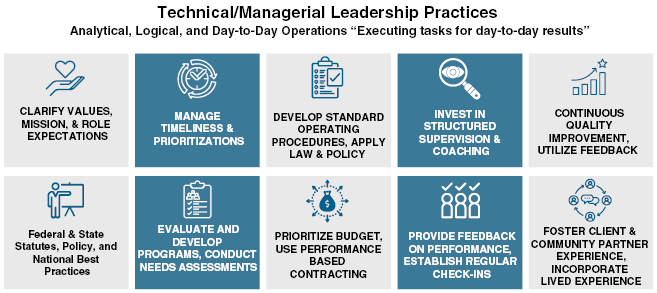
Figure 4 Long description
A grid titled Technical/Managerial Leadership Practices: Analytical, Logical, and Day-to-Day Operations ‘Executing tasks for day-to-day results.’ It displays ten practice areas in two rows of five boxes with icons. The first row includes: Clarify Values, Mission, and Role Expectations; Manage Timeliness and Prioritizations; Develop Standard Operating Procedures, Apply Law and Policy; Invest in Structured Supervision and Coaching; and Continuous Quality Improvement, Utilize Feedback. The second row includes: Federal and State Statutes, Policy, and National Best Practices; Evaluate and Develop Programs, Conduct Needs Assessments; Prioritize Budget, Use Performance Based Contracting; Provide Feedback on Performance, Establish Regular Check-Ins; and Foster Client and Community Partner Experience, Incorporate Lived Experience.
Intersectionality of Managing and Leading: Practical, Tangible, Actionable Outcomes
One of the most impactful components of immersive leadership capacity-building is translating theoretical knowledge into tangible, actionable, measurable practices and results that drive organizational change. Leadership and management are mutually reinforcing, and each is stronger when supported by the other. Leadership is about creating a clear vision and influencing the workforce to buy into it, while management is about making that vision work day-to-day, coordinating people and resources, and keeping operations on track (Azad et al., Reference Azad, Anderson, Brooks, Garza, O’Neil, Stutz and Sobotka2017; Marquette University, 2023). Leading without managing can motivate the workforce to follow a pathway, but without structure and follow-through, that energy does not turn into concrete action (Vriesendorp, Reference Vriesendorp2010). On the other hand, strong managers who lack leadership may keep everything status quo and miss opportunities for innovation (Siyal et al., Reference Siyal, Xin, Umrani and Fatima2021). Isolating these functions can lead to status quo, inertia, and poor outcomes. Research indicates that integrating leadership and management practices cultivates a balanced approach, enhancing employee satisfaction and organizational productivity (Siyal et al., Reference Siyal, Xin, Umrani and Fatima2021).
Both leadership and management are people focused, although from different perspectives. Leadership focuses on influence, motivation, empowerment, and how people work together to achieve collective goals. Management focuses on developing the most efficient and effective systems and processes to influence people systematically (Leroy et al., Reference Leroy, Segers, Van Dierendonck and Den Hartog2018). Neuroscience-informed leadership practices develop relationships, culture, and organizational health to forge a pathway to engage the workforce to achieve successful outcomes. At the same time, management helps drive the day-to-day practice, workload, and quality of services. Being an effective leader means finding the right balance between leading and managing. Just as critical is self-awareness to know which side comes more naturally to you. Some people are vision-driven leaders, while others thrive in the details of organizing and execution. When leaders take the time to recognize their own strengths and those of the people around them, they can build effective teams comprised of members who complement one another. This intentional team building creates the foundation for a strong, balanced, and high-performing team (Porter, Reference Porter2019).
The Immersive Capacity-Building Framework: Where Science Meets Practice
The immersive leadership capacity-building model is rooted in implementation science and integrates neuroscience-informed leadership and technical/managerial practices. The model has been utilized for practice, supervision, and leadership capacity-building in human services organizations. It employs a multitiered framework that links learning to practical application in leadership, decision-making, and policy-driven practices. While this article primarily focuses on leadership capacity-building, the practice capacity-building model is tailored for workers and supervisors in child welfare organizations, focusing on practice in the field and supervisory oversight and decision-making. Both practice and leadership capacity-building models are nested in the learning cycle surrounding leaders with a “learning ecosystem” where they can grow, excel, and thrive. The model focuses on leaders at all levels of the organization and has implications for cross-disciplinary success (Zak, Reference Zak2017a). Every leadership level in the organization, from supervisors, managers, administrators, deputy directors, directors, and commissioners, benefits from the learning sessions and one-on-one modeling, coaching, and support they experience together.
The dynamic learning ecosystem ensures that practice skills or leadership practices are actively lived, continuously refined, and enriched through one-on-one coaching embedded in daily environments, providing real-time support and feedback. This enables leaders to apply and operationalize their learning, yielding practical, tangible, and actionable outcomes across five key areas: (1) learning and relearning sessions; (2) observational learning through one-on-one modeling, coaching, accountability, and reflective feedback loops; (3) experiential learning through day-to-day leadership practice; (4) action learning through real-time coproblem-solving and decision-making; and (5) learning through observations and a peer learning communities.
Learning (and Relearning) Sessions
Growth is ongoing for leaders (and workers/supervisors) as they learn new leadership practices or best practices for service delivery and revisit existing ones to improve areas that are not serving themselves or others well. Learning and relearning sessions help leaders focus on core practices of neuroscience-informed leadership as well as technical and managerial skills, providing opportunities to practice these skills during the session and immediately afterward. Leaders participate in various forms of self-assessment, including self-reflection and peer feedback, across key leadership domains. These include assessing emotional regulation, practicing strategies to reregulate and coregulate, and applying insights from peer evaluations to deepen their understanding. Monthly learning sessions, supported by one-on-one coaching and interaction, help leaders apply what they have learned. Creating space for practicing concrete leadership skills ensures leaders not only gain knowledge but also implement it in real-world situations, reinforcing learning through practical application. The relearning component helps leaders revisit what they already know or need to revisit to evolve their practice, while integrating new, relevant practices aligned with real-world challenges, thus gradually building confidence and muscle memory.
Each session is purposefully designed and tailored to meet the needs of that leader or team, building capacity by connecting theory and science with practical applications. Whether through neuroscience-informed strategies that enhance self-regulation and decision-making or technical and managerial tools for workload and streamlined, more efficient processes, participants leave with two to three actionable leadership practices they can apply immediately. This ensures demonstrating tangible skills with lasting impact and measurable growth in leadership effectiveness. Topic examples include:
Organizational Values, Emotional Regulation, and Emotional Capital for Leading
Leadership Practices to Move the Mission: Support, Accountability, and Trust
The Culture of “We”: Shared Organizational Decision-Making
Cultivating a Resilient, Healthy Culture and Climate
Communication for Organizational Health, including SCARF model (Rock, Reference Rock2008)
Focus on Timeliness: Recognizing and Managing Priorities in Leadership
Continuous Quality Improvement – Growth Mindset for a Learning Environment, includes Data Deep Dives
Integration of Managing and Leading – Doing What You Say You Will (Compassionate Accountability)
Communication × Infinity: Multidirectional Feedback Loops, Utilizing the SCARF Model, and Engaging the Workforce in Practice Feedback
Outcome-Focused Leadership: Setting Goals, with Accountability
Workforce Wellness – Building a Change Agile, Resilient Workforce
Cultivating a Psychologically Safe, High-Performance Team
Executive Team: High-Performing Team Culture Deep Dive (a series of meetings)
Deep Dive Session: Delineation of Roles, Expectations, and Clarity on Leading
Networking, Collaboration, and Building Stakeholder Relationships
Observational Learning: One-on-One Modeling, Coaching, and Accountability
There are several elements in the observational learning component of the capacity-building model, all of which culminate in a learning ecosystem for the worker, supervisor, or leader. Through a series of one-on-one observations, modeling, coaching, and accountability for results lens, leaders can learn by watching an experienced capacity-building coach who has “been in their shoes,” doing (trying the skill), and being the leader they aspire to be. Their openness to learning and vulnerability are key in this part of the learning process, as they must acknowledge that they have room for growth as a leader. The relationship between the executive capacity-building coach and the leader is key for this to occur. That openness leads to opportunities for honest feedback, self-reflection, and new ways of leading.
Leader Practice Observations
To level-set and have a baseline understanding of the leader’s leadership practices, the capacity-building coach and leader must spend time together. The executive coach observes the leader in their day-to-day environment for several days, in multiple settings, and employs a structured, behaviorally focused, leader observation tool grounded in specific leader practice standards, encompassing neuroscience-informed leadership practices and technical/managerial practices. During the observations, the coach assesses strengths and identifies growth opportunities and areas for growth. The coach and leader engage in a reflective dialogue about their perspectives on the day’s interactions, focusing on where the leader felt more confident and where they would like to focus their growth plan.
This observation dialogue and written tool allows capacity-building coaches to provide real-time coaching, helping leaders enhance their practices and align their strategies with organizational goals. Reflective feedback is behaviorally specific, connected to the two leadership practice domains and magnifies the leader’s strengths. It explores growth areas through inquiry and then codesigns a growth plan with two or three specific focus areas to initiate. Through observations and feedback, leaders’ confidence and effectiveness are strengthened (Lester et al., Reference Lester, Hannah, Harms, Vogelgesang and Avolio2011). Leader confidence is directly linked to leader efficacy, an essential attribute of strategy implementation, effectiveness, and performance (Lester et al., Reference Lester, Hannah, Harms, Vogelgesang and Avolio2011).
Observational Learning
Modeling
People often learn best by watching others. Observational learning, also known as modeling, occurs when an individual learns a behavior by observing it demonstrated in a real-world setting by someone with expertise (Fryling et al., Reference Fryling, Johnston and Hayes2011). Modeling furthers self-efficacy, or a person’s belief in their ability to accomplish a new skill, reach a goal, or succeed in a situation. The modeling approach is powerful and immersive because learners not only hear about the skill, but also see it in action, experience it in context, and understand how it works in the moment (Fryling et al., Reference Fryling, Johnston and Hayes2011). The leader can observe the skills they learned in the learning sessions and how it is operationalized with their team in various settings. The executive coach can model or colead with the leader in situations that demonstrate effective, purpose-focused conferences, staffing cases, larger systems problem-solving, addressing client complaints, decision-making, adherence to policy, and strategic engagement with partners.
Observational learning reinforces their ability to move to the next level of experiential learning, which involves trying the skill themselves with their coach present. Experiential learning was first researched by Kolb and is defined as the “process whereby knowledge is created through the transformation of experiences. Knowledge results from a combination of grasping and transforming experience” (Kolb, Reference Kolb2015, p. 51). Waheed and Waseem (Reference Waheed and Waseem2023) further clarifies what we know about experiential learning, which allows leaders to apply concepts in ever-changing environments, thereby enhancing the linkages between concrete practices and abstract concepts to maximize learning. This allows the leader space to operationalize leadership through problem-solving, utilizing their teams, accountability to results, and increased confidence in leadership. In this learning space, leaders have opportunities for executive coaches to work alongside them in their day-to-day environments, model specific leadership practices or technical/managerial skills, practice these skills themselves, and receive real-time feedback based on leadership standards in various settings. This is how most humans learn best, and leaders are no exception. This has been one of the quickest ways leaders understand the new practices they have learned and the impact they can have on their leadership. Areas for modeling include:
Modeling emotional regulation, building emotional capital with multiple audiences,
Demonstrating neuroscience-informed leadership practices and technical/managerial practices,
Empowering leaders to utilize their gifts, admit mistakes, and learn from them,
Demonstrating effective communication and relationship-building techniques with all levels of the workforce and their executive team,
Modeling mutual respect, cultural humility, and bias recognition to foster trust and belonging,
Demonstrating critical thinking and decision-making during high-pressure or crisis situations, and
Demonstrating emotional regulation and supporting others in de-escalating tense situations.
Coaching
As Katz (Reference Katz2021) describes, coaching is about helping people tap into their strengths and unique gifts and supporting them to grow, work through challenges, and set clear, achievable goals. Rather than providing all the answers, coaches focus on asking the right questions to help leaders find their own answers and create space for reflection and learning. As Nicolau et al. (Reference Nicolau, Candel, Constantin and Kleingeld2023) note, focused coaching creates space for genuine growth. It is not just about performance alone but also about offering honest feedback, emotional support, and helping leaders overcome roadblocks to transition from old to new leadership habits. At the heart of it all is the relationship between the coach and the leader with whom they are capacity-building. When trust and mutual respect are present, the coaching process becomes significantly more impactful, underscoring the initial need for in-person, face-to-face time for relationship building. Ultimately, leaders who accept and engage in coaching are better equipped to operationalize new leadership practices, create spaces for innovative thinking, manage change, and focus on enhancing organizational effectiveness and performance (Halliwell et al., Reference Halliwell, Mitchell and Boyle2023). Coaching includes:
Operationalizing and applying neuroscience-informed leadership and technical/managerial practices from learning sessions
Supports leaders in integrating new skills and knowledge into their daily operations, applying them effectively in real-world scenarios
Translating policies into actionable strategies and applying them in complex case decisions
Fostering strategic thinking through honing critical thinking and problem-solving skills, identify solutions, and staying focused on organizational goals
Finding opportunities to support celebrating successes publicly and often
Identifying and addressing biases or cultural dynamics that may impact relationships and interactions
Supporting decision-making processes, including when to escalate cases for Director input or intervention
Accountability
Finally, neuroscience-informed accountability (Regier, Reference Regier2017) integrates neuroscience principles with practices that compassionately foster accountability. Accountability is typically defined as an individual’s capacity to take ownership (responsibility) of their actions or inactions, decisions, and behaviors, influenced by our brain (Edmondson, Reference Edmondson2018; Regier, Reference Regier2017). However, accountability can also be defined as “psychological ownership” (Neuroleadership, 2024), which encompasses empowerment, autonomy, and generosity and serves as an avenue for growth and development (Regier, Reference Regier2017, Reference Regier2023). Reframing how leaders think about and understand accountability can help teams recognize that accountability is not punitive; instead, it serves as a barometer of psychological safety within the team. The optimal environment for fostering a healthy, thriving, and high-performing culture masterfully integrates compassion and accountability, which Regier (Reference Regier2023) defines as compassionate accountability. Compassionate accountability acknowledges the brain’s role in shaping emotions, behavior, and decision-making, emphasizing empathy, understanding, and personal responsibility (Neuroleadership, 2024; Regier, Reference Regier2017, Reference Regier2023). The compassionate accountability framework emphasizes that compassion involves recognizing individuals as valuable, capable, and responsible and integrates clarity, alignment, and purposeful action with care and connection (Regier, Reference Regier2023). It is a method to leverage trust, achieve greater effectiveness and results, reduce misunderstandings and conflicts, and provide a way to achieve our goals, objectives, and visions more effectively (Regier, Reference Regier2023).
Accountability Connected to Psychological Safety
Amy Edmondson (Reference Edmondson1999, Reference Edmondson2018) connected her psychological safety research to accountability by delineating four distinct zones connected to team belonging, learning, and innovation. The four zones – apathy, comfort, anxiety, and learning – give leaders a framework for team members’ responses related to accountability and high performance (Edmondson, Reference Edmondson2018). In the apathy zone (characterized by low psychological safety and low accountability), team members experience neither a sense of safety nor a sense of responsibility. This leads to a lack of engagement, motivation, and limited team contributions, resulting in poor performance. In the comfort zone (high psychological safety, low accountability), team members feel safe to express themselves without fear, yet there is an absence of accountability to drive high performance. In this zone, members are not pushing each other out of their comfort levels to pursue excellence.
In the anxiety zone (low psychological safety, high accountability), there is little psychological safety and support, coupled with high expectations for performance. There is a fear of making mistakes, criticism, and reduced innovation, resulting in team members taking fewer risks. Communication and learning are stunted in this zone because the team member focuses more on self-protection. Finally, the learning zone (high psychological safety, high accountability) is the sweet spot for high-performing teams. Team members feel safe sharing innovative ideas, taking risks, and experiencing a strong sense of accountability to the team and achieving organizational success. This zone encourages strong engagement, a growth mindset, and adaptability, leading to more substantial outcomes (Edmondson, Reference Edmondson2018).
Organizational cultures that emphasize accountability without compassion can be cold and often harsh. Cultures that emphasize compassion without accountability tend to be low in energy and ineffective. Organizations that are low in both compassion and accountability tend to be chaotic. By adopting this mindset, leaders can foster environments where team members feel respected and empowered, increasing engagement and productivity. Especially in human services, accountability through the lens of “counting on you to count on me” feels more connected and human centered.
Experiential Learning: Practice and Apply
Experiential learning is achieved through the leader’s “immersive” experience in learning (Training Industry, n.d.). Kolb introduced experiential adult learning theory in 1984, built on a simple but powerful idea that people learn best through experience. Kolb’s (Reference Kolb2015) four-stage learning cycle includes concrete experience or reinterpretation of existing experience and assimilating that information, reflective observation, abstract conceptualization – or connecting experience to skills or theories – and, finally, active experimentation, which involves applying what was learned through experiential “hands-on” learning. Experiential learning brings together all the leaders who have learned prior to the capacity-building learning sessions, integrates new knowledge and insights from one-on-one observational learning and coaching, and allows them to apply and practice the skills independently. Samuel and Durning (Reference Samuel and Durning2022) found that the experiential learning model accelerated leaders’ knowledge and understanding of how it is translated in the real world, noting that the ongoing feedback from coaches fostered the most critical growth.
The feedback and the leader’s reflection on the feedback help translate learning into new behaviors, attitudes, and skills (Training Industry, n.d.). Waller et al. (Reference Waller, Reitz, Poole, Riddell and Muir2017) found that experiential learning with a coach enhanced the emotional regulation and confidence of leaders in trying new leadership practices and ideas. For leaders to be in a “reward response” in their brain during experiential learning, it is critical that they have support, feel they are in a safe psychological environment, and are focused on learning rather than “doing it right” (Waller et al., Reference Waller, Reitz, Poole, Riddell and Muir2017). The internalization of that learning occurs authentically after experiencing it firsthand, in reflection, and through feedback (Training Industry, n.d.).
The benefits of experiential learning are vast, including the fact that coaching a leader in this area can be done virtually or in person, helping bridge the gap between knowing, being, and doing (Bosworth, Reference Bosworth2023; Global Partnership, 2020). In-person connection is essential when first establishing a relationship, and building trust is imperative to the success of capacity-building. Many virtual apps and techniques allow the coach to have multiple check-ins with the leader throughout the day and be “with” their leader via video in meetings, conferences, and other settings. Neuroscience research also supports that we learn best experientially, retain knowledge, and change our behavior when “the emotional circuits within our brain are activated. Visceral, lived experience best activates these circuits; they prompt us to notice both things in the environment and what’s going on inside ourselves” (Gurdjian et al., Reference Gurdjian, Halbeisen and Lane2016, p. 2). Building upon their experiences of trying out new leadership practices, leaders’ experiential learning is complemented by action learning.
Action Learning: Real-time Coproblem-Solving and Decision-Making
Within the learning ecosystem are opportunities for leaders to ask for support and utilize modeling and coaching for immediate or crisis-oriented situations and highly complex issues. Action learning is an agile methodology that allows leaders to learn while leading, managing, and facilitating their day-to-day activities to lead organizations (Volz-Peacock et al., Reference Volz-Peacock, Carson and Marquardt2016). Action learning is a “timely, innovative, effective, and adaptive methodology for developing leaders wherever they may be” (Volz-Peacock et al., Reference Volz-Peacock, Carson and Marquardt2016, p. 319).
Action learning is a problem-solving approach and leadership learning process where leaders tackle real-world challenges and co-problem-solve with their executive coach. The leader addresses the challenge either alone or with their coach, based on the coproblem-solving idea or strategy, and then reflects with their coach on the solution’s effectiveness and what they learned (Marquardt, Reference Marquardt2011; Volz-Peacock et al., Reference Volz-Peacock, Carson and Marquardt2016). Action learning is effective face-to-face and remote/virtual, much like experiential learning. It integrates critical thinking, collaboration, and continuous improvement, making it a powerful and highly adaptive tool for leadership capacity-building. Action learning also allows the executive coach to see the leader in action in multiple venues and can contribute to their leadership practice observation opportunities.
Community of Practice and Learning
A peer-colleague Community of Learning and Practice (CoLP) supports the immersive leadership capacity-building model elements. The term was coined by cognitive anthropologists Jean Lave and Etienne Wenger, who observed that learning is stronger in a “community,” is a social activity, and that people grow and learn more readily in a community learning environment. A CoLP is based on the notion that learning occurs socially and contextually (Lave & Wenger, Reference Lave and Wenger1991; Wenger-Trayner & Wenger-Trayner, Reference Wenger-Trayner and Wenger-Trayner2020). CoLP is a group of people passionate about a common topic or goal. They learn together to improve their skills and deepen their knowledge and expertise by interacting continuously (Lave & Wenger, Reference Lave and Wenger1991; Wenger-Trayner & Wenger-Trayner, Reference Wenger-Trayner and Wenger-Traynern.d., Reference Wenger-Trayner and Wenger-Trayner2020). In Wenger-Trayner and Wenger-Trayner’s (Reference Wenger-Trayner and Wenger-Trayner2020) most recent research, they take Lave and Wenger’s thirty-year-old social theory to the next level, finding that while the intentional learning space of communities of learning and practice is important, even more learning takes place in other social learning spaces such as conferences, in team discussions, in peer interactions, and online spaces. This offers even more opportunities for leaders to apply their new knowledge, test it out, discuss it, and apply it in various situations.
In the CoLP and other learning spaces, significant learning occurs with peers and colleagues about their application and success and barriers in using neuroscience-informed leadership practices and technical/managerial practices, including their wins, missteps, and skill areas they may need to adjust. Some examples include:
Critical thinking and problem solving: “Can we work on this design and brainstorm some ideas? I am stuck.”
Applying learning and relearning: “I tried using the SCARF (Rock, Reference Rock2008) model for communication, and it worked!”
Dissecting situations that did not go well: “I tried this, but it did not work with my team. Can we brainstorm how I might do this differently? What are others’ experiences with this?”
Request for information: “Where can I find the documents on SharePoint?”
Seeking experience: “Has anyone dealt with a situation like I described?”
Reusing assets: “I have a proposal for a grant I wrote for training funds last year. I can send it to you, and you can use it to guide this opportunity.”
Coordination and synergy: “Can we combine our efforts here to address this organizational or workforce need?”
Growing confidence: “Before I do it, I’ll run it through my learning community first to see what they think.”
Discussing new developments: “What do you think of the new CCWIS system?”
Documenting projects: “We have dealt with this issue four times now. Let’s develop a standard operating procedure to guide our work.”
Identifying gaps and competence: “Who knows what, and what are we missing? What other groups should we connect with?”
The Community of Learning and Practice formally connects each month, either virtually or in person, to discuss learning (relearning) from the monthly group session, apply that knowledge in their day-to-day leadership, and share lessons learned. These sessions help supervisors, managers, and administrators foster collaborative problem-solving, enabling team members to brainstorm solutions when “real-time” challenges arise. Anyone in the group can bring a leadership, supervisory, practical, or technical/managerial issue they are currently grappling with to the group session, and the group will help refine leadership practices, critically problem-solve, and help team members come up with ideas to try for solutions. This continuous quality learning environment encourages growth, adaptability, and shared knowledge, ensuring that leadership remains proactive and prepared to face evolving demands and complexities of human services organizations.
Change Catalyzes Meaningful Cultural Work
Capacity-building develops leaders and, consequently, organizations, resulting in organizational change and the inevitable reactions from the workforce that accompany it. Capacity-building coaches must ready the leader and their teams for this transformation and the emotional impacts of change before the efforts even begin. Whether triggered by leadership transitions, structural changes, process shifts, or strategic pivots in response to or anticipation of external change, organizational change often evokes a wide range of emotional responses that reverberate throughout the workforce.
Workforce reactions are rooted in neuroscience and can impact performance, engagement, and morale (Cameron & Green, Reference Cameron and Green2019; Edmondson, Reference Edmondson2018; Rock, Reference Rock2009a). When the workforce perceives change as a threat, it activates the brain’s limbic system, triggering the stress response, which impacts problem-solving, emotional regulation, and decision-making (Rock, Reference Rock2009a). Even when the leader is attuned to transparent communication, structured to the brain’s reward response, there can still be reactions that lead to disengagement, decreased buy-in, and a breakdown in team performance. Conversely, when change is introduced within a context where the leader knows to expect these responses, they can intentionally focus on trust, fairness, and belonging through a variety of leadership practices that support the process (Charokar, Reference Charokar2024). Leaders who recognize and normalize the workforce’s emotional responses during system change are better equipped to adapt their leadership and provide supportive guidance through the transition.
The Neuroscience of Change: Understanding the Adapted Kübler-Ross Change Curve
The Kübler-Ross change curve, an organizational change framework, was initially developed to describe the stages of grief from an emotional and therapeutic perspective. However, the model has been adapted to apply to systemic change, especially in workplace and leadership contexts (Reed, n.d.). By applying the Kübler-Ross change curve framework, leaders can intentionally enhance relationships, communication, belonging, and overall organizational health, enabling the organization to move more effectively through the change process (Elisabeth Kübler-Ross Foundation, n.d.; see Table 5).
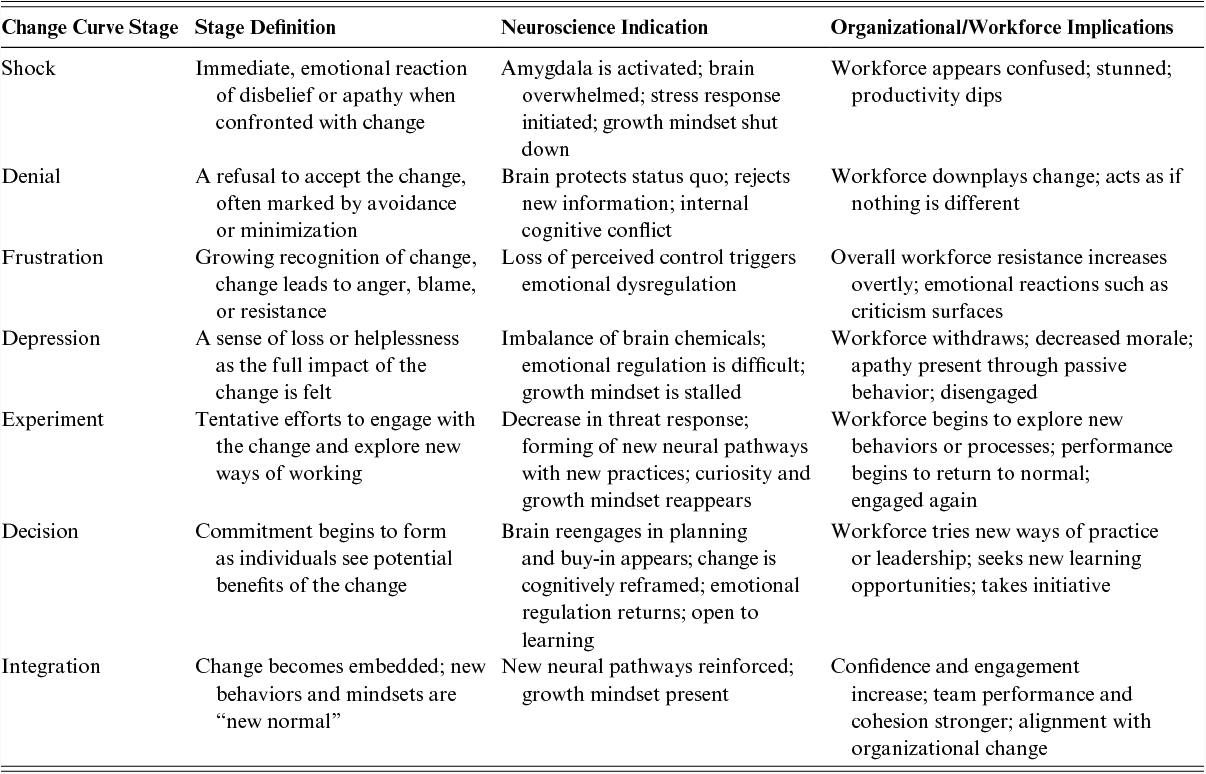
Table 5 Long description
Shock: An immediate emotional reaction of disbelief or numbness. The amygdala activates, triggering a stress response and shutting down a growth mindset. The workforce appears confused, stunned, and less productive.
Denial: Refusal to accept the change. The brain protects the status quo and rejects new information. Employees minimize the change and behave as though nothing is different.
Frustration: Growing awareness leads to anger, blame, or resistance. Loss of perceived control causes emotional dysregulation. Resistance becomes more visible and emotional reactions increase.
Depression: Feelings of loss or helplessness emerge. Emotional regulation is difficult and growth stalls. Morale drops, withdrawal increases, and disengagement is evident.
Experiment: Individuals begin cautiously trying new approaches. The brain’s threat response decreases and new neural pathways form. Curiosity returns and performance begins to recover.
Decision: Commitment develops as benefits become clearer. The brain re-engages in planning and reframes the change positively. Employees take initiative and pursue new learning.
Integration: Change becomes the new normal. New neural pathways are reinforced and a growth mindset is sustained. Confidence, engagement, cohesion, and performance strengthen across the team.
The image connects emotional responses to change with neuroscience and observable organizational behavior.
The Kübler-Ross change curve has seven stages instead of the original five, reflecting the complex and nonlinear nature of change adaptation (The Kübler-Ross Foundation, n.d.). Navigating organizational change is inherently complex, involving a dynamic interplay between the change curve stages, neuroscience-informed responses embedded in the leadership capacity-building model, and the workforce’s emotional and behavioral reactions, all of which converge into a natural trajectory of adaptation and growth (Pittman, Reference Pittman2020; The Kübler-Ross Foundation, n.d.). Keeping the change curve in mind, while evolving leadership practices and tending to culture, helps set organizations up for success.
Helping Teams Thrive: Neuroscience-Informed Support for Navigating Change
Knowledge of the emotional change curve, neuroscience-informed change impacts, and the impact it has on the workforce helps ground leaders in strategies to address the worries of the workforce during change. Charokar (Reference Charokar2024), as well as the Change Blueprint toolkit created by the University of Exeter (n.d.), outlines specific strategies for each phase of the Kübler-Ross change curve to help the workforce navigate their way through the varying emotional stages of organizational change. Addressing each stage specifically helps support the workforce and, ultimately, the organization as they move through the differing stages during times of growth. Leaders anticipating the initial shock of the change can proactively communicate in a straightforward and direct manner with the impacted team members, providing them with a safe space to absorb the information. Communicating transparently and multiple times with those impacted by the change and offering one-on-one and group check-ins to help them understand the “why” behind the change helps them move through the stages more quickly (Charokar, Reference Charokar2024; University of Exeter, n.d.).
In the denial stage, leaders must reinforce the change is happening and engage the workforce to help make the change successful through their ideas and input. Sharing concrete data and timelines to help them again understand the “why” behind the change is key. The change curve stages are an iterative process, so allowing opportunities for “venting” and expressing worries is crucial to mutual understanding and continuing to develop trust and psychological safety, even during times of change (Charokar, Reference Charokar2024; Clark, Reference Clark2020; Edmondson, Reference Edmondson2018). Dispelling rumors, repeating key information about the change, and proactively addressing misinformation are also vital to preventing the creation of misleading or inaccurate narratives during this stage.
Understanding that frustration is a natural part of any change process can help ensure leaders do not take feedback, criticism, and input personally (Charokar, Reference Charokar2024; University of Exeter, n.d.). Encouraging productive venting and redirecting it toward collaborative problem-solving guides individuals toward a growth mindset, focusing on solutions rather than an unproductive, negative “churn” (Charokar, Reference Charokar2024; Rock, Reference Rock2018). Demonstrating empathy reinforces emotional regulation for both leaders and the workforce, helping to maintain and possibly even grow psychological safety and momentum toward change (Edmondson, Reference Edmondson2018; Rock, Reference Rock2018).
Continuing the change journey, depression can be one of the most vulnerable stages for the workforce and the leader. Consistency in being present, supportive, and acknowledging the difficulty of the change can help counter some of the emotions associated with it (Charokar, Reference Charokar2024). This is an opportune time to consider team sessions that focus on wellness, self-care, and organizational value. How leaders respond during the depression stage can influence whether the workforce begins to recognize the potential benefits of the change (Charokar, Reference Charokar2024; Edmondson, Reference Edmondson2018; Rock, Reference Rock2018). Encouraging them putting a growth mindset into practice by trying new things and making it okay to make mistakes builds confidence and reinforces positive growth associated with change.
In the decision stage, the workforce joins with the leader to actively support the change. This allows space for the leader to celebrate successes, recognize team members for their support, and encourage them to share their positive experiences (Edmondson, Reference Edmondson2018; Rock, Reference Rock2018; Zak, Reference Zak2017a). This strategy also promotes a sense of ownership and belonging, enabling the team to start creating and thriving.
In the final integration stage, there is alignment and active participation with the change, investment in its success, and it becomes the new “normal” (Charokar, Reference Charokar2024). Leaders’ consistent presence, acknowledging successes, and focus on sustaining momentum help to create space for growth and addressing any barriers or challenges that might arise. Recognizing the team’s resilience, growth, and future readiness helps align organizational health (Charokar, Reference Charokar2024). Attention to the details of the change curve, supported by leadership practices that improve trust, psychological safety, and high-performing teams, reflects leadership, teams, and an organizational culture that promote success and sustainability in innovation and performance.
From Insight to Action: Leading Culture with Intention through Deep Dives
Executive teams set the tone for the overall leadership philosophy and organizational health in their day-to-day leadership practices. These teams typically consist of team members who are veterans of the organization, integrated with new team members, resulting in a team that has varying levels of trust, psychological safety, and belonging. Balancing the history that veteran leaders bring with innovative new ideas and insights from newcomers can be a delicate balance. Leaders who recognize this have the tenacity and fortitude to dig into the tough conversations with their teams about specific barriers to trust and psychological safety and how to address them. This people-first culture is a foundation for organizational health.
The concept of a people-first culture integrates research on psychological safety (Edmondson, Reference Edmondson2018) and neuroscience-informed leadership (Rock, Reference Rock2018; Pittman, Reference Pittman2020; Zak, Reference Zak2017a), and it links workforce well-being and growth as essential to organizational health (De Smet et al., Reference De Smet, Dowling, Mugayar-Baldocchi and Schaninger2021). People-first emphasizes engagement, needs, well-being, and growth of the workforce, clients, and communities as the foundation for organizational success (Deloitte, 2025; De Smet et al., Reference De Smet, Dowling, Mugayar-Baldocchi and Schaninger2021). A people-first culture does not avoid accountability for performance; rather, it is the opposite. These concepts are promoted by high-trust, high-performing teams as a direct result of the culture and climate, emotionally, cognitively, relationally, and psychologically. Balancing a people-first approach with performance and results is key to developing a high-performing team (Rock & Ringleb, Reference Rock and Ringleb2013; Pittman, Reference Pittman2020; Zak, Reference Zak2017a).
Through team culture deep dive sessions, executive teams and their larger leadership teams are led through an exercise that integrates neuroscience-informed questions (Rock, Reference Rock2018; Zak, Reference Zak2017a), psychological safety questions (Edmondson, Reference Edmondson2018), and trustworthiness and culture questions (Goleman & Boyatzis, Reference Goleman and Boyatzis2017; Razzetti, Reference Razzetti2022). Adapted by this author, these questions help trigger thinking specifically to foster team cohesion, trust, psychological safety, and belonging, ultimately culminating in a working agreement that guides the team’s interaction, innovation, and leadership. This opens up an authentic, honest, vulnerable conversation about team strengths, barriers to success, and ideas for change.
Having at least two facilitators who are not part of the organization is crucial for promoting a space that fosters authentic team growth. If capacity-building has already begun with some of the team members, the established coaching relationships help set the stage for a team culture deep dive. The capacity-building coach helps the leader prepare for the deep dive by conducting inquiry and reflection and encourages them to write down their initial thoughts about trust, psychological safety, and their concerns. In the initial team culture deep dive session, the team discusses the potential emotional impact of the culture deep dive. As referenced in the Kübler-Ross change curve (n.d.) research, change of any kind, especially deep reflective and emotional aspects of team dynamics, can lead to significant emotional responses from team members, both initially and over time.
First, the team is grounded in the purpose of the team culture deep dive, answering the question “why are we here?” The focus in these sessions is to strengthen team trust, psychological safety, cohesion and belonging, and accountability through intentional self-reflection, team reflection, and connecting around a shared commitment (Razzetti, Reference Razzetti2022). Emphasizing a team of “we” versus a team of individual members helps shift to a collective mindset. Exploring the barriers that hinder team effectiveness, using targeted questions and the psychological safety ladder exercise (Razzetti, Reference Razzetti2021), helps open up conversations about the team’s strengths, barriers to trust and high performance, and ideas to refine team priorities, working agreements, and accountability strategies that guide the team.
Next, the team is grounded in the concept of a “brave space,” which emphasizes the value of engaging in uncomfortable conversations as essential for team growth, trust, and overall organizational health (Arao & Clemens, Reference Arao, Clemens and Landreman2013). See Figure 5 for a brave space graphic, adapted from Arao & Clemens (Reference Arao, Clemens and Landreman2013).
Brave Space for Team Growth
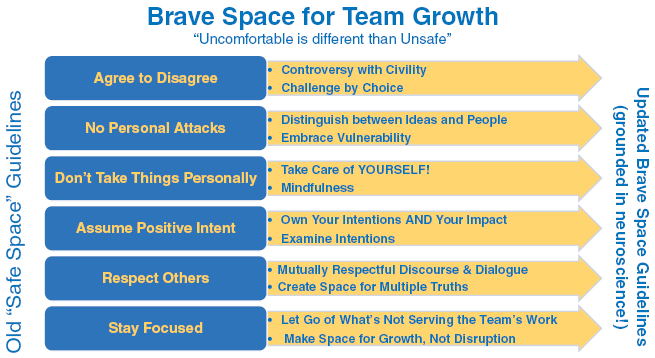
Figure 5 Long description
An infograph titled Brave Space for Team Growth with the subtitle Uncomfortable is different than Unsafe. It presents updated brave space guidelines grounded in neuroscience. On the left side, under Old ‘Safe Space’ Guidelines, six principles are listed: Agree to Disagree; No Personal Attacks; Don’t Take Things Personally; Assume Positive Intent; Respect Others; and Stay Focused. Each guideline connects to updated practices shown on the right. These include: Controversy with Civility and Challenge by Choice; Distinguish between Ideas and People and Embrace Vulnerability; Take Care of Yourself and Mindfulness; Own Your Intentions and Your Impact and Examine Intentions; Mutually Respectful Discourse and Dialogue and Create Space for Multiple Truths; and Let Go of What’s Not Serving the Team’s Work and Make Space for Growth, Not Disruption.
Defining the difference between uncomfortable and unsafe conversations is crucial for the team to be grounded in a space that intentionally forward growth. Grounded in social justice and equity work, Arao and Clemens (Reference Arao, Clemens and Landreman2013) coined the new term “brave space” to acknowledge the differences between safe space and brave space. They note that the dynamics entrenched in power, whether that be race, levels of leadership, or system barriers, create an environment where there is no true safety (Arao & Clemens, Reference Arao, Clemens and Landreman2013). By reframing a safe space as a brave space, an authentic learning environment is promoted, which acknowledges the potential for discomfort and conflict when discussing sensitive topics such as team dynamics, trust, equity, and psychological safety. “By revising our framework to emphasize the need for courage rather than the illusion of safety, we better position ourselves to accomplish our learning goals and more accurately reflect the nature of genuine dialogue regarding these challenging and controversial topics (Arao & Clemens, Reference Arao, Clemens and Landreman2013, p. 141).
Following the discussion about how the team will create and maintain a brave space, we further define and clarify the difference between being uncomfortable and being unsafe. Uncomfortable conversations arise when team members are challenged, emotionally and cognitively, exposed to new perspectives, or engage in difficult conversations that require self-reflection and stretching themselves, yet allow for a space in which team members feel secure enough to engage (Arao & Clemens, Reference Arao, Clemens and Landreman2013). Unsafe conversations, in contrast, occur when team members perceive real risks to their psychological, emotional, or physical well-being through behaviors of others, including harassment, discrimination, or personal attacks (Arao & Clemens, Reference Arao, Clemens and Landreman2013; Edmondson, Reference Edmondson2018). Level-setting these definitions allows team members to make informed decisions about the level of sharing, engagement, and vulnerability they are willing to have in the team culture deep dive. It creates an understanding that being uncomfortable is often a part of the process.
Additionally, it is important to emphasize that uncomfortable conversations lead to antifragile teams, the ability of a team (or system) to use external stress factors, shocks, and uncertainty to improve and thrive (Taleb, Reference Taleb2012). Antifragile teams and high-trust, high-performing teams share similar characteristics, resulting in better outcomes. They adapt quickly to changes, exhibit strong creativity and innovation, and effectively handle stress, adversity, failures, and setbacks (Taleb, Reference Taleb2012; Edmondson, Reference Edmondson2018; Rock, Reference Rock2018; Zak, Reference Zak2017a). The neuroscience-informed leadership practices align with the notion of antifragile teams (Edmondson, Reference Edmondson2018; Rock, Reference Rock2018; Taleb, Reference Taleb2012; Zak, Reference Zak2017a):
Psychological Safety → Embracing Volatility without Fear
Deliberate Stress-Testing → Strengthening through Challenge
Distributed Decision-Making → Autonomy Builds Cognitive Flexibility
Learning from Small Failures → Neuroplasticity through Reflection
Redundancy and Optionality → Calming Threat Response
After the stage is set for team members to be vulnerable, uncomfortable yet safe, and grounded in purpose, the difficult work of the questions begins. The facilitator begins with questions, developed by Razzetti (Reference Razzetti2022) to prime them for deeper self and team reflection: What are your uncertainties? What is making you feel afraid or anxious? What is everybody thinking, and no one is saying? What are past issues we cannot get over, and what past relationship issues are impeding our team growth? What social capital have we built with each other to overcome these? What are our guardrails for working together, valuing each other, and leaving judgments at the door?
Next are a series of questions related to psychological safety, gathered from the research of Edmondson (Reference Edmondson2018), Clark (Reference Clark2020), and Google (2015). These questions include: Have you ever felt hesitant to share an idea due to fear of judgment? Do you feel comfortable bringing concerns about a colleague’s behavior to the attention of the team? Are there any unspoken issues within the team that require attention? When was the last time you felt your opinion wasn’t valued? Can you recall a situation where you felt uncomfortable speaking up due to potential repercussions? What are the biggest challenges you face in collaborating with other team members? Do you feel your contributions are recognized and appreciated by the team? Have you ever felt excluded from important conversations or decision-making? How comfortable are you providing constructive criticism to a colleague? If you had a concern about a project, how likely are you to voice it openly? What could we do to improve communication and transparency within the team?
The facilitator then guides a deeper dialogue in later sessions, with neuroscience-informed questions grounded in the SCARF model, which include (Rock, Reference Rock2008; Reference Rock2009a; Reference Rock2018):
Status: In what ways do you feel your contributions are valued or undervalued on this team? Can you share a time when you felt seen or unseen for your expertise or perspective?
Certainty: When have you felt unsure about what’s expected of you, and how did that impact your engagement? What could the team or leadership do to provide more clarity or predictability in your day-to-day work?
Autonomy: How much freedom do you feel you have in shaping how you approach your responsibilities? Can you describe a time when autonomy helped you thrive, or when lack of it limited you?
Relatedness: What enables you to feel a sense of connection and belonging on this team? Can you describe a moment when you felt particularly included, or excluded, by the group?
Fairness: How do you experience fairness (or lack of it) in how feedback, workload, or recognition are handled? What could be done to make team processes feel more equitable or transparent?
Other neuroscience-informed questions include (Zak, Reference Zak2017a):
Recognition: What kind of recognition feels most meaningful to you, and when was the last time you experienced it here? Can you share an example of how being acknowledged (or not) affected your motivation?
Openness: What helps you feel safe sharing honest feedback or ideas in this environment? When have you hesitated to speak up, and what contributed to that hesitation?
Caring: What signals to you that teammates or leaders genuinely care about your well-being? When have you felt supported (or unsupported) during a personal or professional challenge here?
Investment: In what ways do you feel the team or organization is invested in your growth? What opportunities would help you feel more valued and developed in your role?
Communication (Natural): What communication patterns make you feel safe, heard, and respected? What’s one thing that could improve the quality of communication on this team?
Finally, questions that prompt reflection on one’s own trustworthiness as a leader and team member help deepen and inform the conversations sparked by earlier questions and sessions (Brown, Reference 65Brown2018; Clark, Reference Clark2020; Edmondson, Reference Edmondson2018; Goleman and Boyatzis, Reference Goleman and Boyatzis2017; Google, 2015; Rock, Reference Rock2018; Razzetti, Reference Razzetti2021, Reference Razzetti2022):
Presence: When you enter the room, does your presence have a warm, positive influence on the atmosphere, or does it shut down conversation and chill the air?
Collaboration: When you collaborate with your team/peers, does your influence accelerate or decelerate the speed of communication, discussion, and innovation?
Feedback: Does your influence increase or restrict the flow of authentic, critical feedback?
Inquiry: Do you have a stance of inquiry that draws people’s opinions and gifts out, or shuts them down?
Dissent/Discourse: Do you encourage and reward or discourse/punish dissent and differing opinions?
Mistakes: Do you celebrate the lessons learned from mistakes and missteps, or do you overreact and marginalize those who make them?
Openness to feedback: Do you actively solicit feedback from your team, even when it might be critical? Do you openly acknowledge when you are wrong and learn from mistakes? Do you make it clear that you value different viewpoints and perspectives?
Active listening: Do you fully engage when team members share their ideas and concerns? Do you ask clarifying questions to ensure understanding? Do you avoid interrupting and allow people to fully express themselves?
Empathy and support: Do you show genuine interest in your team members’ well-being and personal challenges? Do you provide support and encouragement, especially during difficult situations? Are you mindful of individual needs and work styles?
Positive reinforcement: Do you regularly recognize and celebrate team achievements, both big and small? Do you provide specific and timely praise for individual contributions? Do you create a positive team culture where people feel valued and appreciated?
Handling mistakes: Do you create a safe space for team members to admit mistakes without fear of punishment? Do you focus on learning from errors rather than assigning blame? Do you model how to own up to your own mistakes?
Inclusivity and diversity: Do you actively encourage participation from all team members, regardless of background or experience? Do you address and challenge biased behaviors when they arise? Do you create an environment where everyone feels respected and heard?
Leaders who desire to build their reputations as trustworthy leaders strive for the neuroscience-informed leadership practices outlined in previous sections of this manuscript. Striving to be who you say you are, embody values, “acknowledge any say-do gaps” (Carucci, Reference Carucci2021, para. 7), treat others with respect, equity, and dignity, and create opportunities for others to shine, and celebrate those successes are specific leadership behaviors that align with cultivating trust, psychological safety, and belonging. Additionally, creating a brave space, such as the one described, helps to foster a safe environment for making mistakes, learning from them, and ultimately, growth. Finally, setting and keeping boundaries, offering an invitation for dissent and feedback, and building bridges to help competitors and rivals turn into allies, furthers team and organizational health, while contributing to an environment for a team working agreement to emerge.
The number of sessions with each team varies, and the capacity-building team continually adjusts the facilitation and approach of the team culture deep dive based on each group’s needs. The gifts and skills of each facilitator are essential in this process, as they help recognize various aspects of nonverbal body language, tone, and the underlying connections between team members that emerge during the session. Facilitators should have differing skills, including one facilitator who is tuned into nonverbal responses and indications, to help steer the conversation based on the emotional energy of the room. Through this deep dive into cultural barriers that break down trust, psychological safety, and belonging, leaders and team members clear the air, reshape their relationships, and find ways to guide the team toward high trust and, consequently, high performance (Razzetti, Reference Razzetti2022; Zak, Reference Zak2017a).
Team Working Agreement
The dialogue, discussion, self-reflection, and outcome from the sessions result in a team that has furthered trust, psychological safety, and belonging, and helps build a high-performing team. Team working agreements are a foundational tool when cultivating high-performing teams, because they level-set by providing agreed-upon definitions by which the team will function (Niubó, Reference 72Niubó2023; Rossingol, Reference Rossingol2024; Somanathan, Reference Somanathan2024). Based on the literature, specific areas of leadership and team behavior must be considered for a meaningful working agreement. The working agreement must be codesigned, clear, and outline specific behaviors in each domain from which the team will function. The domains include:
Continuing to work within brave space, assuming positive intent
Trust, psychological safety, and belonging (what specifically do team members need to continue to build this)
Communication – leaving the meeting with a message of “we,” the executive team, ongoing engagement efforts with the workforce to inform practice, and specifically, how they will manage the organizational changes through the specific Kübler-Ross change curve stages
Inviting dialogue, differing opinions, and ideas
Naming, celebrating, and valuing the individual gifts of each team member and how the team will utilize them
Every voice matters: Informed decision-making, with feedback loops
Conflict: How the team members will handle conflicts when they arise, doing so early and directly, with respect and curiosity
Strategic task allocation, progress reports, and accountability for driving forward tasks and systemic change
Inviting participation, offering opportunities to process information, and revisiting discussions after reflection
Mistakes are seen as growth: Respect, nonjudgment, and inclusion
Reflective feedback, engaging in self-reflection, and opportunities to grow
Working environment, including virtual and face-to-face (i.e., engaged culture to indicate presence virtually to have the camera on)
Collaboration and working on common goals, together
Accountability, or psychological ownership, and doing what you say you will do
Once the team finalizes its working agreement, it must then put the theory into practice by bringing it to life and utilizing it consistently, encouraging one another to uphold it, and honing the leadership skills needed to improve and sustain it over time. As team members and leaders grow, they should revisit this fluid, living document to allow space for the ongoing evolution of the team. This is the foundation of a high-performing team that will continue to lead toward organizational health.
Tandem Executive Leader Capacity-Building
When teams have deeply rooted barriers, such as historical, embedded cultural, trust, or psychological safety challenges, traditional one-on-one coaching may not create the breakthrough needed to move the team forward. In such situations, tandem capacity-building, where two coaches work alongside different executive leaders, has proven to be highly effective. This dual approach sheds light on the genuine dynamics of day-to-day interactions, including how team members navigate conflict, make decisions, and influence one another. In addition, each coach gains insight from different vantage points, hearing and observing both sides of the relationship’s dynamics.
By creating space for real-time feedback and joint reflection, this dual approach accelerates a shift in leadership practices and team culture that might take much longer through individual coaching. It requires a higher level of vulnerability, openness, and willingness to change for each team member. The results can be significant and help move other team members forward as the relationships shift, which in turn helps advance the team’s performance.
Implications for Leaders and Organizations
By leveraging neuroscience and immersive capacity-building strategies, leaders in human service organizations are better equipped to drive change through practical, tangible, and actionable leadership skills that impact supervision, practice, operations, community partnerships, and outcomes. Informal qualitative insights gathered through practice observations, individual interviews, and group discussions point to encouraging outcomes. Early patterns in the qualitative data reflect positive shifts consistent with what the model is designed to achieve. These shifts align with the research findings of Pittman (Reference Pittman2020), Rock (Reference Rock2018), and Zak (Reference Zak2017a). Future formal evaluation efforts are essential to assess the model’s reliability, effectiveness, and long-term impact.
Drawing from the author’s experience utilizing the immersive leadership capacity-building model, jurisdictions consistently report that embodying neuroscience-informed leadership practices has strengthened trust, focused on engaging the workforce, enhanced communication, increased psychological safety, and high-trust, high-performance teams with elevated strategic thinking. These become a catalyst for organizational health, culture, and climate shifts that help forward a growth mindset philosophy.
Culture Catalysts
In organizations where leaders, executive teams, and the workforce have engaged in the immersive capacity-building model, in both leadership and practice, several key areas have emerged as the strongest drivers of trust: communication, role clarity, psychological safety, organizational health, high-trust high-performing teams, a sense of belonging, and a shared vision with accountability. As leaders practice their new learning, form new habits, and address cultural barriers with their teams, incremental shifts turn into significant changes that positively impact organizational health, beginning to happen. In redefining and exploring four discrete areas – communication, role clarity, culture and climate, and high-performing, high-trust teams – leaders gain leverage to strengthen their leadership practices, relationships, and organizations.
Communication
In most organizations, communication is the one leadership practice that inevitably needs strengthening, and when that occurs, it improves trust, transparency, and engagement with the workforce (Pittman, Reference Pittman2020; Zak, Reference Zak2017a). Leadership communication is the backbone of any organization’s success. When lacking, the consequences ripple across the workplace, creating discontent, a lack of trust, and inefficiencies, negatively impacting trust. When leaders fail to communicate effectively, employees are left in the dark about expectations, goals, and individual contributions to the organization’s success. Leaders who utilize the SCARF (Manjaly et al., Reference Manjaly, Francis and Francis2024; Rock, Reference Rock2008, Reference Rock2009a) find that their intentional communication resonates more positively with the workforce.
Once leaders understand the tone and science behind compelling communication, they develop and plan for consistent, purposeful, multilevel methods of communication, including opportunities for feedback loops from workers, supervisors, managers, and community partners. They utilize these communication opportunities to integrate consistent, structured communication channels that foster continuous improvement, promote transparency, and ensure effective feedback flow and an open line of communication across the organization. These opportunities also improve practice and service delivery through the ideas and engagement of the workforce. Leaders and their executive team members craft communication that helps to ensure clear, concise, and strong communication that speaks to the workforce’s reward response in the brain versus their threat response (Manjaly et al., Reference Manjaly, Francis and Francis2024; Rock, Reference Rock2008). Focusing on communication contributes to the workforce’s well-being and satisfaction, improving engagement, service delivery, and performance metrics.
Role Clarity
Role clarity is the second most neglected area in human services or child welfare organizations. This becomes especially important when direct practitioners move into supervisory roles and other promotion situations, including where the director is appointed from within. Through increased engagement with all levels of the organization and their executive teams, leaders can clearly communicate their expectations of each position, their key responsibilities, and their roles within the team. Role clarity improves job performance and access to resources to perform well and satisfies the psychological needs of self-determination and job satisfaction (Karkkola et al., Reference Karkkola, Kuittinen and Hintsa2019).
Leaders who are improving their leadership invest time and encourage dialogue on who is responsible and accountable for progress in program improvement, practice, and overall strategic direction of the organization. This encourages the workforce across the organization to ask for clarity about ambiguities in their roles. Finally, Karkkola et al. (Reference Karkkola, Kuittinen and Hintsa2019) note that through the “explicit communication of the required work-role performance, responsibilities and procedures, it may be possible to contribute to an employee of personal engagement in the job and make work a more, vitality, and the basic needs harmonious part of their identity, in addition to facilitating feelings of competence” (p. 461).
Psychological Safety
Organizational environments where team members can show up as their unique selves and can utilize their gifts without judgment set the tone for leaders, teams, and the workforce to thrive (Clark, Reference Clark2020; Edmondson, Reference Edmondson2018). By creating a brave space, offering opportunities for engagement, feedback, and input on practice and system changes, and inviting diverse opinions that help shape the organization, psychological safety flourishes. Leaders who intentionally demonstrate leadership practices that improve trust, help create this, and open up space for others to contribute and offer what they believe can continue to grow psychological safety in the organization, their team, and for them, specifically. Psychological safety enables learning and growth, fosters open communication, creates an inclusive and empowering culture, accelerates innovation, creativity, and collaboration, and strengthens overall organizational resilience and adaptability (CCL, n.d.; Clark, Reference Clark2020; Edmondson, Reference Edmondson2018).
Organizational Health
Communication and role clarity, along with employing other neuroscience-informed leadership practices, begin to improve overall organizational health. Culture is not perfect, and will never be, because it is fluid, not binary, and can shift continuously (Razzetti, Reference Razzetti2025). Embracing people’s messiness and complicated culture offers freedom for leaders to authentically foster an organizational growth mindset (Dweck, Reference Dweck2006; Razzetti, Reference Razzetti2025). Leaders who embrace neuroscience-informed leadership practices know that perfectionism is not the goal. Organizational success is achieved through engagement, dialogue, honesty, and cultivating a psychologically safe space for innovative service delivery.
Aligned with the research of Zak (Reference Zak2017a), as leaders begin to live new leadership practices, their trustworthiness improves with workers, supervisors, executive teams, colleagues, and community stakeholders. Leaders begin to celebrate their team’s successes, honor strong practices in the organization, and give unfettered praise to their teams for leading in new ways, with new habits (Pittman, Reference Pittman2020; Zak, Reference Zak2017a). Leaders own their mistakes and missteps and give others the freedom to do so, offering a pathway for progress, trust, and continuous quality improvement.
High-Trust, High-Performing Teams
The culmination of living neuroscience-informed leadership practices results in the ultimate synergy of a high-trust, high-performing team. Especially through the team culture deep dive sessions, trust is enhanced and a strong working agreement helps teams move forward confidently. Leaders who have experienced the immersive leadership capacity-building model lead their teams with emotional regulation, invest time and garner emotional capital, honor the gifts each team member brings, and facilitate vulnerable conversations about barriers to team trust and member trustworthiness. Leaders who practice neuroscience-informed leadership intentionally build relationships, foster collaboration, set clear roles and expectations, and challenge their teams to achieve more, while staying focused on strategies that advance the mission (Zak, Reference Zak2017a).
Belonging
Organizations that promote a strong sense of belonging in teams and in the overall work environment philosophy fuel connection, commitment, and collective performance. Belonging transforms culture because it meets a core human need to be seen, valued, and heard – included (Brown, Reference 65Brown2018). “Belonging…doesn’t require us to change who we are; it requires us to be who we are” (Brown, Reference 65Brown2018, p. 145), and through showing up authentically, we feel that strong sense of connection to team members and to the mission of the organization. A community is created around a shared vision, setting a foundation for organizational change, excellence in service delivery, and accountability that lands the workforce in the learning zone.
Shared Vision and Accountability
Optimally, leaders who focus on capacity-building and the leadership practices that contribute to cultivating a high-trust organization will have a strong, more resilient organization that has a shared vision of service delivery, community partnerships, and organizational, client, and fiscal outcomes. Through leader interventions that focus on communication, role clarity, psychological safety, organizational health, and fostering high-trust, high-performing teams and a sense of belonging, a collective vision grows and intensifies. Embedding these specific leadership strategies in the organization ensures sustainability, creating systems that remain vision-driven, accountable, and growth-oriented, long after the leader departs. As a result, the organization becomes more nimble, adaptable to external challenges, and better equipped to thrive during times of disruption.
Reflections
Just as leaders reflect in the Leadership & Practice Capacity-Building Model (see Figure 1), after learning and applying new practices, it’s important to reflect on the impact this model has already had on organizations, leaders, and the workforce. After experiencing the learning ecosystem of the immersive leadership capacity-building model, whether at the direct practitioner, supervisory, or executive leadership level, a growth mindset is set in motion. Leaders are naturally rewarded by learning new neuroscience-informed leadership habits, embedding the concrete skills and concepts learned, and practicing them daily with positive results. Through living the leadership practices, leaders enhance their decision-making and problem-solving, collaboration, influence, and change agility (Ghadiri, Reference Ghadiri, Habermacher and Peters2012). The data and observations note organization-wide implications for applying this model across program areas, particularly in practice, workforce retention, supervision, stakeholder collaboration, leadership succession, and overall organizational performance.
Practice and Workforce Retention
A variation of this capacity-building model has been implemented with newly trained and veteran child welfare workers following preservice training. Jurisdictions that have adopted this approach report overwhelmingly positive feedback, especially about how accompanying workers in the field, such as joining workers on their first home visits or supporting them as they hone their initial skills, has significantly improved worker confidence. These supports help bridge the gap between training (learning) and practice (doing), reinforcing how to apply preservice content, interpret the policy in real time, and make safety decisions while engaging with children and families.
Modeling child welfare practice skills for new workers has emerged as a critical learning component, and modeling coupled with coaching is even more so, especially when going into the field. It furthers essential skills such as interpreting policy through the lens of child safety, completing accurate safety assessments using structured decision-making tools, engaging in critical thinking through inquiry, and asking reflective questions to deepen connection and insight with families. Notably, several workers who were initially uncertain about remaining in child welfare reported that the capacity-building support gave them the real-world, tangible validation they needed during field visits, child and family team meetings, and case staffing with supervisors. This ultimately helps workers and supervisors make more informed decisions about their fit and future in the child welfare profession. Workers, supervisors, and leaders alike have identified the combination of learning sessions and the concrete skills they can apply with individualized modeling and coaching as a significant stay factor influencing workforce stability.
Some of the observed outcomes from capacity-building with workers include: updating documentation, in some cases that were pending for over a year; staying current in quality documentation through system tools; the codesign and successful adoption of standard operating procedures; improved application and use of structured decision-making tools; more specific, honed safety assessments and planning; increased engagement and use of safety networks; improved permanency plans realized; and timelier assessments. This also resulted in several jurisdictions completing their program improvement plans more quickly and sustaining those efforts over time. In several jurisdictions, these practice improvements were accompanied by notable workforce retention increases following capacity-building.
Supervision
Although no formal study has been conducted, informal qualitative evidence gathered over five years of facilitating the capacity-building model with supervisors suggests that new and experienced supervisors have improved their individual team’s trust, case decision-making, and programmatic oversight through one-on-one modeling and coaching. Supervisors consistently report greater skill retention when real-time coaching is embedded within their day-to-day responsibilities, such as during case staffing with workers, pre-staffing before responding to child protective services reports, and various decision-making contexts. Additionally, supervisors have noted that codesigning tools to improve documentation patterns, embedding workload management tools, and case conferencing tools focused on the inquiry have enhanced their ability to engage in deeper conversations about child safety. These tools, combined with coproblem-solving in real time and supportive coaching that normalizes asking for help, have contributed to their increased confidence in their leadership roles.
Early outcomes from implementing capacity-building with supervisors include advances in safety decision-making, increased referencing of policy during case consultations, and more consistent use of structured case conferencing tools. Supervisors demonstrated greater diligence in reviewing worker documentation in a timely manner, giving suggestions for quality improvements, and better-balanced operations and workload management across their teams. Additionally, supervisors used more reflective supervision, inquiry, and coaching to guide worker growth rather than directive approaches. Many supervisors also began mentoring their new peers, contributing to developing a collaborative learning culture within the organization. This shift helps normalize continuous learning, peer support, and shared responsibility for practice excellence. Managers noted that supervisors had increased confidence in navigating and making decisions on complex cases, clarity in expectations with their teams, and advocating more effectively for resources for team support. Overall, supervision growth contributed to greater alignment between policy, supervision, and practice with children and families while reinforcing a culture of accountability and shared learning.
Stakeholder Collaboration
Executive leaders shared that their relationships with the workforce and community partners have improved after participating in the immersive leadership capacity-building model. By attending to relationships, focusing on building trust, and navigating difficult conversations, leaders set the stage for better psychological safety in high-stakes environments with partners. Leaders reported that these practices led to stronger collaboration with community partners, more transparent communication with staff, and more aligned, shared goals and values-driven engagement across systems.
In addition, the author’s role in facilitating leadership capacity-building involved neutral facilitation with directors and community stakeholders around specific conflictual issues, giving them opportunities to see leadership practices through modeling. For example, in a serious injury child protective services case involving several organizations, leaders could better regulate their emotions, focus on strengths and commonalities, and problem-solve while disrupting the status quo of what had “always been done.” This system shift with community partners helped heal past relationships and move forward to collaborate more closely.
Leadership Growth and Organizational Performance
Leaders experiencing the immersive leadership capacity-building reported feeling more confident and had increased assurance that leadership succession could be developed with their direct reports. They reported a better understanding of their emotional regulation, building emotional capital with their teams and the workforce, and how to reregulate themselves and help others reregulate when dysregulated. This resulted in more effective team meetings and redirecting discussions to get them back on track and focused on outcomes. They also reported that attention to psychological safety and belonging on their teams helped them work through some significant team trust barriers, resulting in a team working agreement that improved accountability, team commitment, collaboration toward common outcomes, and communication. They shifted their organizational culture and health toward a more resilient one by implementing workforce wellness supports, paying attention to resiliency efforts, and creating open opportunities and diverse spaces for communication. Leaders emphasize that neuroscience-informed communication models and a growth mindset were challenging for them at first but helped them make some of the most significant shifts in how they are experienced as leaders. Additionally, the modeling of a growth mindset supported their organizations in implementing a truly embedded continuous quality improvement philosophy across their organizations.
Leaders concurrently experiencing immersive leadership capacity-building and engaged in a child welfare program improvement plan with their supervising state agency reported that integrating neuroscience-informed leadership skills significantly enhanced their ability to navigate complex change efforts. These leaders described becoming more collaborative partners with the supervising agency, fostering a shared approach to improvement rather than a compliance-driven dynamic, and the ability to better regulate during emotionally charged discussions. They also noted that the learned leadership practices helped them set a positive tone for new practice implementation, creating space for clarity around expectations, roles, and shared accountability. This clarity helped shift the organizational philosophy toward program improvement as a sustainable, continuous quality improvement practice, versus something to be checked off during the formal program improvement plan. Leaders were better equipped to balance the dual demands of meeting policy and performance benchmarks while also supporting the workforce through the realities of daily practice.
Additional benefits included increased confidence in leading through uncertainty, more substantial alignment across program leadership teams, and improved communication with staff around the “why” behind changes. Several leaders reported that their ability to model vulnerability, curiosity, and clarity under pressure built credibility with staff and stakeholders, supporting momentum for sustained change. Some observed outcomes include leaders who shifted their leadership practices, leading their organizations out of program improvement more quickly, better retaining their workforce, and incrementally improving child welfare performance metrics. Leaders also began to engage the workforce more often, applying their feedback to policy and practice, and clients who received services to help inform internal practices.
Finally, specific organizational performance and processes showed noticeable improvement across multiple program areas. These improvements included increased assessment timeliness, assessment backlog case completion, enhanced documentation quality, and more frequent and purposeful supervision. Supervisory conversations demonstrated greater depth of questions, alignment with policy, and focus on critical thinking, as evidenced through conference notes. Organizations also experienced culture shifts toward broader continuous quality improvement efforts, strengthened policy application to day-to-day decision-making, and more consistent use of practice tools. Additionally, improvements were noted in accountability across teams and more intentional use of data to guide decisions and monitor progress. Because leaders were modeling with the workforce what they expected workers to model with children and families, there was better alignment between leadership expectations and frontline practice with families, leading to greater coherence across all levels of the organization. Teams reported improved communication, precise role definition, and transparent planning with families.
Many jurisdictions also observed increased staff engagement and morale, particularly as supervisors and workers experienced coaching and support that validated their experiences and reinforced their strengths. As confidence and competence grew, so did collaboration within teams, across departments, and with external partners. Overall, all jurisdictions reported improvements in leadership across multiple levels and organizational culture and climate.
Limitations
This article is written from the experience, observations, and qualitative insights from various sources and methods across multiple jurisdictions. While the informal findings offer valuable real-world applications, several limitations should be acknowledged. First, no formal study or evaluation has been conducted to assess the model’s reliability or validity. The outcomes described are not derived from systematically collected or analyzed quantitative data. Instead, they reflect anecdotal and practice-based observations and informal qualitative data collected through facilitator notes, participant feedback, and leader, supervisor, and direct practitioner reflections. Because of that, these findings should be seen as early indicators rather than broad conclusions. The goal is to better understand how leadership practices impact outcomes for children and families, how the immersive capacity-building model improves program outcomes, particularly in child welfare, and assess whether the model can sustain and grow over time in various settings. A rigorous research evaluation is needed to collect empirical data to analyze short- and longitudinal outcomes.
Conclusion
The immersive leadership capacity-building model can potentially revolutionize leadership in human services across all program areas, child welfare organizations, child welfare practice and supervision, organizational health, and other disciplines. Applied with newly trained staff, veteran workers, supervisors, deputy directors, and executive leaders, the model’s implementation has yielded consistently positive feedback. Workers reported increased confidence, a deeper understanding of their roles, and a stronger ability to apply preservice training to real-world scenarios. Supervisors shared that they became more confident in making decisions, reviewing worker documentation, using structured conferencing tools, and managing emotional regulation when working with their teams. These shifts helped make the workforce feel clearer in their roles and retain the workforce. Supervisors also played a key role in building a learning culture within their agencies. With the help of real-time coproblem-solving, modeling, coaching, and codesigned operating procedures, the workforce grew in their ability to support peers through ongoing learning.
Organizationally, the model contributed to tangible performance outcomes, including improvements in outcomes and data on formal program improvement plans, documentation quality and timeliness, the depth and frequency of supervision, alignment between policy and practice, and the use of decision-making tools. Teams experienced greater clarity in roles, clear, concise communication, and an increased sense of accountability. Executive leaders, particularly those involved in leading program improvement plans, found that the neuroscience-informed practices embedded in the model helped them navigate change more effectively. They reported enhanced relationships with the workforce and external stakeholders, improved collaboration with supervising agencies, and the ability to lead with empathy and accountability. These leaders demonstrated a strengthened capacity to hold high standards while creating psychologically safe environments for staff to learn, grow, and perform.
The significance of this model lies in its vulnerable, human-centered, systemic approach to leadership capacity-building. By blending relational and technical leadership practices and rooting them in neuroscience, emotional regulation, and growth mindset, the model addresses the foundational drivers of workforce experience and organizational culture. It reframes leadership not as a position but as a practice that shapes trust, psychological safety, and performance at all system levels. Early results show that real, lasting change in child welfare starts with leaders – how they show up, what they believe, and how they respond in the messy, real-world complexity of the work.
The immersive leadership capacity-building model offers a compelling, practice-informed pathway for human services and child welfare leadership evolution. By equipping direct practitioners and leaders at all levels with the skills to lead with clarity, curiosity, and compassion, the model supports stronger workforce engagement, improved decision-making, and better outcomes for children and families. With continued refinement and formal evaluation, this model has the potential to serve as a national framework for leadership development in human services, child welfare systems, and beyond.
Acknowledgments
With deep gratitude, I would like to thank my husband and daughter for their unwavering support, patience, and encouragement throughout this journey. To my mom, thank you for always believing in me and reminding me of the strength that comes from persistence and purpose. You also remind me that I share my dad’s ambition and drive – two traits I insert in his “good column.”
I am especially thankful for the colleagues who have walked alongside me during my own leadership journey and the writing of this Element. Your insights, camaraderie, and belief in the changes this vital Element can bring have meant more than words can express. Especially to my colleagues who dared to speak the truth to me about my own leadership practices and how they were negatively impacting our organization – that was the catalyst for my leadership change and the development of this neuroscience-informed leadership model. I am continually inspired by the extraordinary workforce teams and executive leaders I’ve had the honor to serve with, both in the past and now. Your dedication to growth, excellence, and doing what is right, even when it is hard, has shaped the heart of this Element.
There are many researchers whose work has shaped this capacity-building model, and I am in awe of their research, intelligence, and influence in organizations and leadership. Specifically, Dr. Paul Zak, Dr. David Rock, Dr. Amy Edmondson, Dr. Timothy Clark, and Dr. Elisabeth Kübler-Ross have influenced my research, leadership, and commitment to sharing their findings with others to transform organizations.
To the individuals, children, families, and community partners I’ve had the privilege of working with and learning from: thank you. Your voices, your resilience, and your stories have been the truest teachers. May we never stop striving to create spaces where people feel seen, heard, and safe. May we strive to preserve family connections whenever possible, raise our voice to social injustices, and commit to building organizations founded on curiosity, trust, and a growth mindset.
This Element reflects many hands, hearts, and hopes. Thank you for being part of the journey. As colleagues and cocreators, may we continue to contribute to the collective leadership work ahead, strengthening the systems we lead so that they better serve the workforce, families, and communities at their center.
Series Editors
Ronald E. Riggio
Claremont McKenna College
Ronald E. Riggio, Ph.D., is the Henry R. Kravis Professor of Leadership and Organisational Psychology and former Director of the Kravis Leadership Institute at Claremont McKenna College. Dr. Riggio is a psychologist and leadership scholar with over a dozen authored or edited books and more than 150 articles/book chapters. He has worked as a consultant and serves on multiple editorial boards.
Susan E. Murphy
University of Edinburgh
Susan E. Murphy is Chair in Leadership Development at the University of Edinburgh Business School. She has published numerous articles and book chapters on leadership, leadership development, and mentoring. Susan was formerly Director of the School of Strategic Leadership Studies at James Madison University and Professor of Leadership Studies. Prior to that, she served as faculty and associate director of the Henry R. Kravis Leadership Institute at Claremont McKenna College. She also serves on the editorial board of The Leadership Quarterly.
Founding Editor
†Georgia Sorenson
University of Cambridge
The late Georgia Sorenson, Ph.D., was the James MacGregor Burns Leadership Scholar at the Moller Institute and Moller By-Fellow of Churchill College at Cambridge University. Before coming to Cambridge, she founded the James MacGregor Burns Academy of Leadership at the University of Maryland, where she was Distinguished Research Professor. An architect of the leadership studies field, Dr. Sorenson has authored numerous books and refereed journal articles.
Editorial Advisory Board
Neal M. Ashkanasy, University of Queensland
Roya Ayman, Illinois Institute of Technology
Kristin Bezio, University of Richmond
Richard Boyatzis, Case Western Reserve University
Cynthia Cherrey, International Leadership Association
Joanne Ciulla, Rutgers Business School
Barbara Crosby, University of Minnesota
Suzanna Fitzpatrick, University of Maryland Medical Center
Al Goethals, University of Richmond
Nathan Harter, Christopher Newport University
Ali Jones, Coventry University
Ronit Kark, Bar-Ilan University
Kevin Lowe, University of Sydney
Robin Martin, University of Manchester
Stella Nkomo, University of Pretoria
Rajnandini Pillai, California State University, San Marcos
Micha Popper, University of Haifa
Terry Price, University of Richmond
Krish Raval, University of Oxford
Roni Reiter-Palmon, University of Nebraska
Birgit Schyns, Durham University
Gillian Secrett, University of Cambridge
Nicholas Warner, Claremont McKenna College
in partnership with
Møller Centre, Churchill College
The Møller Institute (www.mollerinstitute.com), home of the James McGregor Burns Academy of Leadership, brings together business and academia for practical leadership development and executive education. As part of Churchill College in the University of Cambridge, the Institute’s purpose is to inspire individuals to be the best they can be, to accelerate the performance of the organizations which they serve, and, through our work, to covenant profits to Churchill College to support the education of future leaders. In everything we do our focus is to create a positive impact for people, society, and the Environment.
International Leadership Association
The International Leadership Association (www.ila-net.org) is the organization for connecting leadership scholars, practitioners, and educators in ways that serve to enhance their learning, their understanding, and their impact in the world. These exchanges are professionally enriching, serve to elevate the field of leadership, and advance our mission to advance leadership knowledge and practice for a better world.
About the Series
Cambridge Elements in Leadership is multi- and inter-disciplinary, and will have broad appeal for leadership courses in Schools of Business, Education, Engineering, Public Policy, and in the Social Sciences and Humanities. In addition to the scholarly audience, Elements appeals to professionals involved in leadership development and training.
The series is published in partnership with the International Leadership Association (ILA) and the Møller Institute, Churchill College in the University of Cambridge.
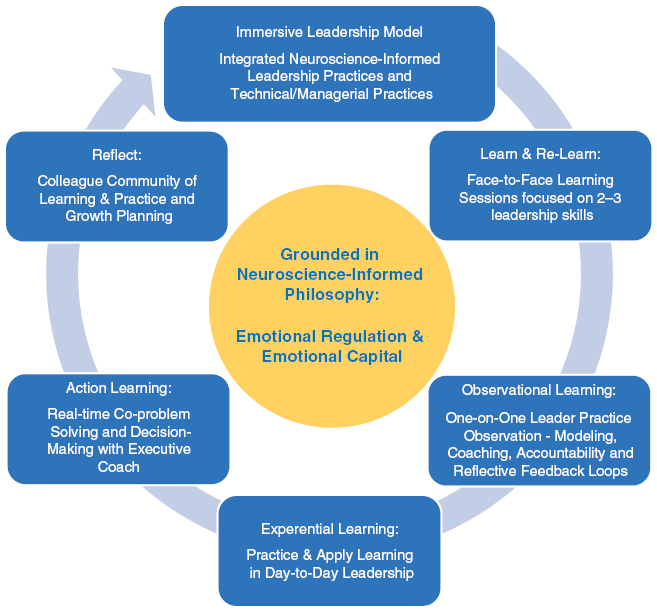
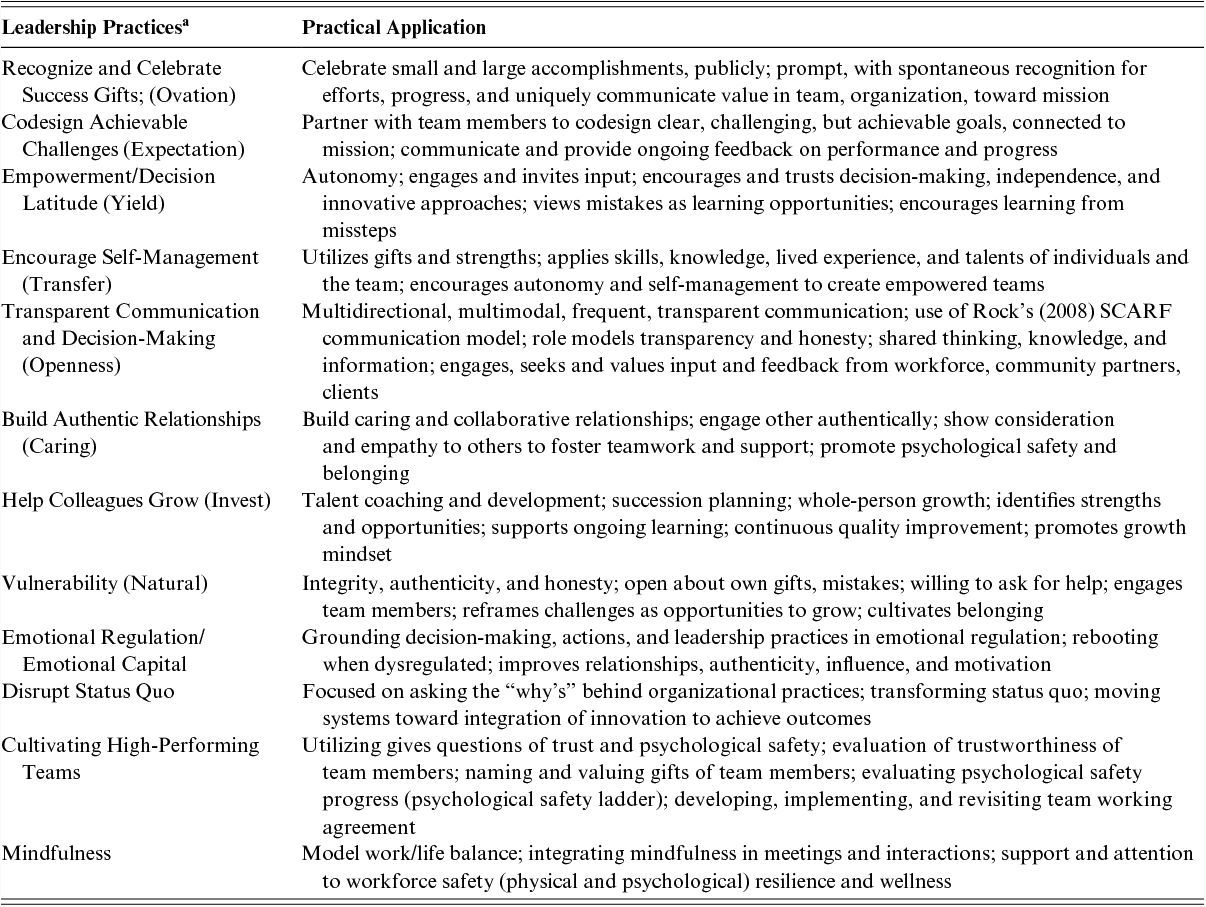
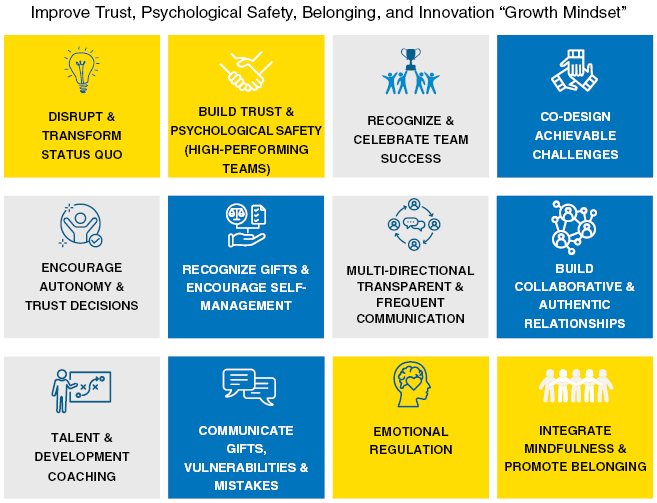
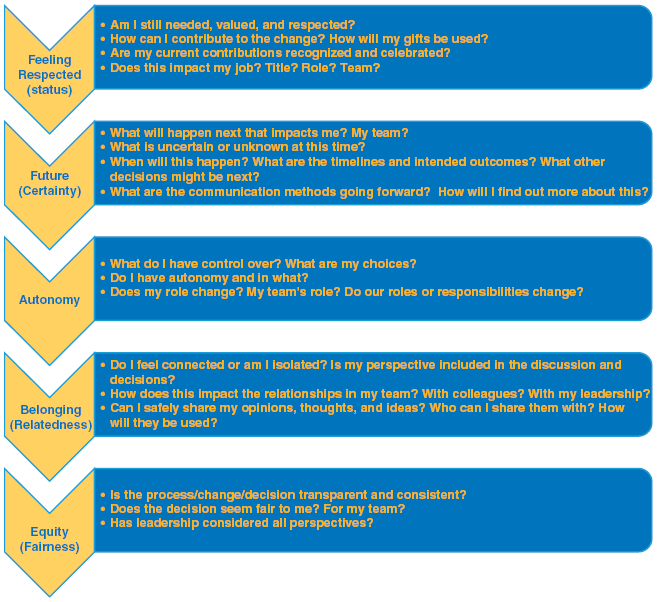
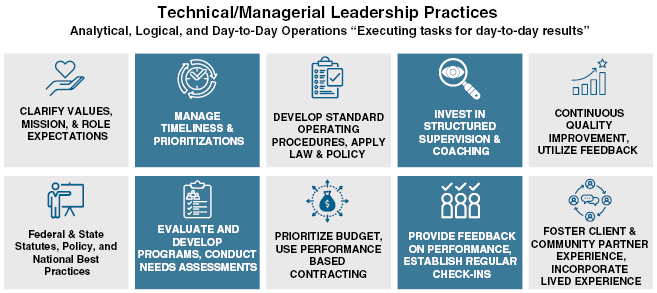
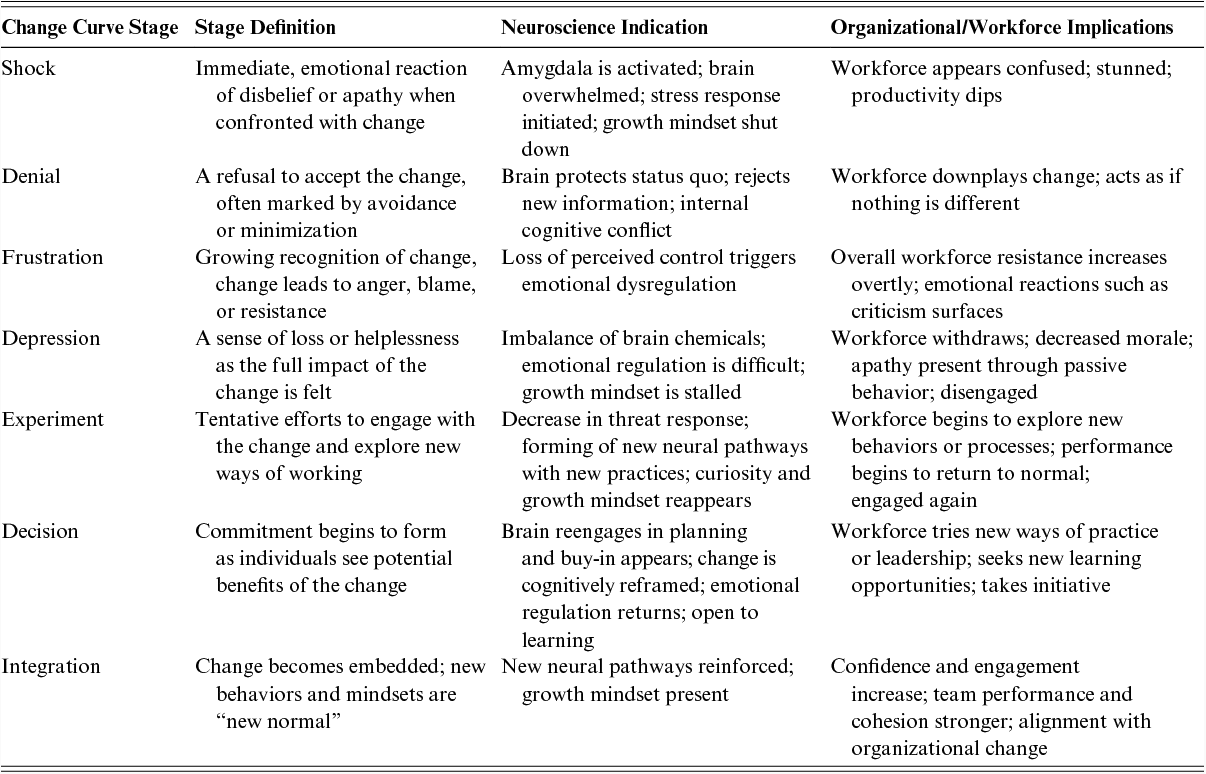
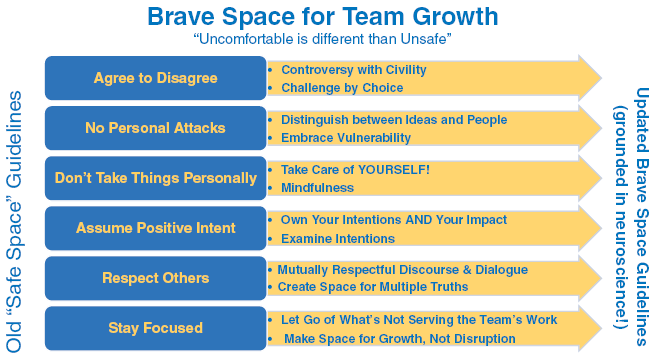

 Open access