

Sick leave is an economic burden for workplaces and societies due to lost productivity (OECD, 2010). In Norway, 6.3% of working days are lost to sick leave, more than in most industrialized countries (Osterkamp & Röhn, Reference Osterkamp and Röhn2005; Statistics Norway, 2013). Sick leave can lead to disability pensioning and social exclusion (Bryngelson, Reference Bryngelson2009). It is therefore important to identify risk factors in order to design rational preventive strategies.
Internalizing disorders (i.e., anxiety and mood disorders) are common, with a lifetime prevalence of 20–30% (Kessler et al., Reference Kessler, Berglund, Demler, Jin, Merikangas and Walters2005a; Kringlen et al., Reference Kringlen, Torgersen and Cramer2006) and are associated with sick leave in prospective studies (Jenkins, Reference Jenkins1985; Laitinen-Krispijn & Bijl, Reference Laitinen-Krispijn and Bijl2000). Measures of psychological distress comprise symptoms of internalizing disorders and also predict sick leave (Duijts et al., Reference Duijts, Kant, Swaen, van den Brandt and Zeegers2007; Knudsen et al., Reference Knudsen, Harvey, Mykletun and Overland2013; Roelen et al., Reference Roelen, Hoedeman, van Rhenen, Groothoff, van der Klink and Bültmann2014; Terluin et al., Reference Terluin, van Rhenen, Anema and Taris2011).
Patients can be granted sick leave for internalizing disorders, but having internalizing disorders or experiencing psychological distress may also increase the risk of sick leave granted for other mental as well as somatic disorders. Internalizing disorders are likely to predict sick leave granted for other mental disorders because there is substantial comorbidity for most mental disorders (Kessler et al., Reference Kessler, Chiu, Demler, Merikangas and Walters2005b). Whether internalizing disorders or distress also predict sick leave granted for somatic disorders has been unclear. It has been found that psychological distress predicts disability pensions granted for somatic disorders (Mykletun et al., Reference Mykletun, Overland, Dahl, Krokstad, Bjerkeset, Glozier and Prince2006), but results from previous studies on sick leave are conflicting (Hensing & Spak, Reference Hensing and Spak1998; Stansfeld et al., Reference Stansfeld, Fuhrer and Head2011). Such an association is, however, plausible: First, there is uncertainty associated with the diagnosis on the sick leave certificate (Maeland et al., Reference Maeland, Werner, Rosendal, Jonsdottir, Magnussen, Ursin and Eriksen2012). Usually, only one diagnosis will be given, while the patient might suffer from comorbid somatic and mental disorders. Sick leave may be granted for a somatic disorder even though the patient's main complaints arise from mental issues. Second, internalizing disorders or psychological distress may reduce the ability to work when suffering from a somatic condition or make the patient pay more attention to somatic distress. For example, the higher rates of somatization among individuals with internalizing disorders (Terluin et al., Reference Terluin, van Rhenen, Anema and Taris2011) could lead to more sick leaves granted for somatic disorders.
If an association exists between internalizing disorders or psychological distress and sick leave, twin studies can be used to determine to what degree the association is due to common genetic and/or environmental factors. In twin studies, variation in traits and covariation between traits are partitioned into three sources: genetic factors, environmental factors shared by twins, and non-shared environmental factors. Environmental covariation implies that environmental factors that influence internalizing disorders or psychological distress also have an effect on sick leave. Adverse life events are one possible example of such factors. Likewise, covariation ascribable to genetic factors refers to genes affecting both internalizing disorders or distress and sick leave. An example is genes contributing to comorbidity between internalizing disorders and the disorders for which sick leave is granted.
Internalizing disorders have been found to be influenced by genetic factors in a number of twin studies, with heritability estimates typically ranging between 30% and 60% (Bouchard, Reference Bouchard2004; Kendler et al., Reference Kendler, Prescott, Myers and Neale2003). Genetic risk factors are primarily shared for internalizing disorders and psychological distress (Gjerde et al., Reference Gjerde, Røysamb, Czajkowski, Reichborn-Kjennerud, Orstavik, Kendler and Tambs2011). There is also a familial aggregation of sick leave. Two twin studies have found that this is mainly due to genetic and not environmental factors, and have estimated the heritability to 36% (Svedberg et al., Reference Svedberg, Ropponen, Alexanderson, Lichtenstein and Narusyte2012) and 49% (Gjerde et al., Reference Gjerde, Knudsen, Czajkowski, Gillespie, Aggen, Røysamb and Orstavik2013). As sick leave is a culturally specific construct, it is likely to share genetic risk factors with various disorders and possibly be influenced by the individuals’ psychological characteristics. It is thus possible that some of the genetic factors that influence internalizing disorders and psychological distress also affect sick leave. Likewise, environmental events increasing the risk for internalizing disorders could also increase the risk for sick leave.
In the current study, prospective data from a large, population-based sample of young adult twins were used to (1) estimate the degree to which internalizing disorders and clinical levels of psychological distress are associated with sick leave granted for mental disorders and sick leave granted for somatic disorders, and (2) investigate the extent to which common underlying genetic and environmental factors can account for these associations.
Materials and Methods
Sample and Assessment
The sample for the current study originated from the Norwegian Institute of Public Health Twin Panel (NIPHTP). Twins were identified through the National Medical Birth Registry, established on January 1, 1967. The participants selected for the current study were twins born between 1967 and 1979, who took part in a large questionnaire study in 1998, and a subsample who later underwent diagnostic interviews for mental disorders. These data were linked to longitudinal registry data from Statistics Norway (2013) on sick leave, including diagnoses from 2000 to 2008. The NIPHTP is thoroughly described elsewhere (Nilsen et al., Reference Nilsen, Brandt, Magnus and Harris2012).
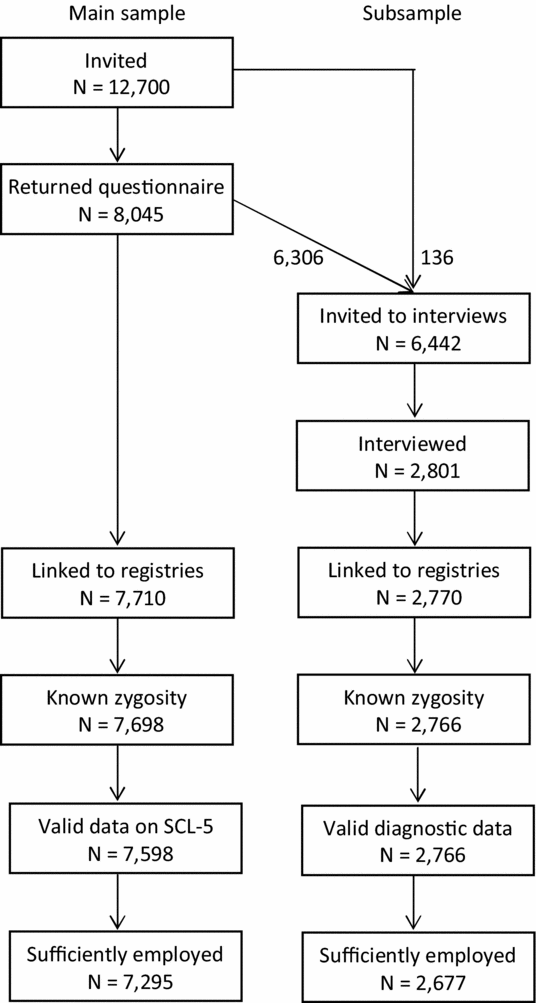
All twins born between 1967 and 1979 who were alive and had a known address in 1998 were invited to complete a questionnaire. Out of 12,700 invited twins, 8,045 (63%) responded after one reminder. The diagnostic interview was conducted between June 1999 and May 2004 (approximately 90% within the end of 2002) among a subsample of complete twin pairs who had responded to the questionnaire and had given consent to be contacted again later. Due to technical problems, 68 twin pairs were drawn directly from NIPHTP. The response rate was 44% (2,801 out of 6,306). Analyses of attrition from the questionnaire to the interview study found that out of 45 potential predictors, only older age and monozygosity predicted participation, and that this did not substantially affect estimates of genetic and environmental contributions to mental health related variables (Tambs et al., Reference Tambs, Rønning, Prescott, Kendler, Reichborn-Kjennerud, Torgersen and Harris2009).
Of the main sample, 7,710 twins were linked to sick leave data, while 335 withdrew from the study. A further 12 twins were excluded due to lack of data on zygosity. The sample of 7,698 twins included 3,108 complete pairs (492 monozygotic [MZ] male, 354 dizygotic [DZ] male, 759 MZ female, 607 DZ female, and 896 opposite sex twin pairs) and 1,482 singletons, of which 2,766 had been interviewed (1,365 complete pairs [217 MZ male, 118 DZ male, 435 MZ female, 260 DZ female] and 335 opposite sex twin pairs), and 36 single responders. Valid data were available for 7,295 twins, of whom 2,677 were interviewed. In total, 42.1% were males. Age at the start of follow-up (year 2000) spanned from 20 to 32 years (mean = 26.5). Figure 1 depicts a flowchart of the recruiting and drop-out of participants.
Participants in the study, main sample, and subsample. All twins with known zygosity are included in the analyses.
Zygosity was initially determined using questionnaire items previously shown to correctly classify more than 97% of the twin pairs (Magnus et al., Reference Magnus, Berg and Nance1983), followed by DNA analyses on a subgroup of the sample. The discrepancy between classification based on the questionnaire and DNA markers implied an expected misclassification rate of approximately 2% for the whole sample, which is unlikely to bias our results (Neale, Reference Neale2003).
Ethics
The linkage of data from NIPHTP with registries at Statistics Norway (2013) was approved by the Regional Ethical Committee. For the interview study, approval was received from the Regional Ethical Committee and the Norwegian Data Inspectorate, and written informed consent was obtained from the participants after complete description of the study.
Measures
Both a diagnostic interview and a short self-report measure of psychological distress were included as measures of internalizing disorders, or an approximation to these. Although structured diagnostic interviews are considered superior to short self-report scales, the self-report scale covered a larger sample and was measured prospectively, while the interviews were conducted after the registration of sick leave had started.
Self-reported symptoms of psychological distress
The Symptom Checklist-5 (SCL-5; Tambs & Moum, Reference Tambs and Moum1993) measures symptoms of anxiety and depression. This is a shortened version of SCL-25 (Hesbacher et al., Reference Hesbacher, Rickels, Morris, Newman and Rosenfeld1980), which has been found to correlate 0.92 with the full-scale version (Tambs & Moum, Reference Tambs and Moum1993). The SCL-5 consists of five items addressing how the subject has felt for the last 14 days, responded to on a 4-point scale with anchors 1 (not at all) to 4 (extremely). The internal consistency of the SCL-5, measured by Cronbach's alpha, was 0.83 in the present sample. The variable was dichotomized applying the recommended cut-off of 2.0 (Müller et al., Reference Müller, Postert, Beyer, Furniss and Achtergarde2010).
Diagnostic interview
The Norwegian version of the computerized Munich Composite of International Diagnostic Interview (CIDI; Wittchen & Pfister, Reference Wittchen and Pfister1997) was applied. This is a structured diagnostic interview developed by the World Health Organization for the assessment of the Diagnostic and Statistical Manual of Mental Disorders (DSM)-IV Axis I diagnoses and the International Classification of Diseases (ICD)-10 lifetime diagnoses. The interview has previously shown good test–retest and inter-rater reliability (Wittchen, Reference Wittchen1994; Wittchen et al., Reference Wittchen, Lachner, Wunderlich and Pfister1998). The interviews were mainly conducted by psychology students late in their training and psychiatric nurses who completed a standardized training program by teachers certified by the WHO. Co-twins were assessed by different interviewers. Most of the interviews (2,562) were conducted face to face, but for practical reasons 231 were interviewed over the phone. In order to investigate the broad construct of internalizing disorders, the following lifetime disorders were selected for the present study: major depressive disorder, dysthymia, generalized anxiety disorder, social phobia, panic disorder, and agoraphobia. As these disorders are strongly interrelated (Hettema et al., Reference Hettema, Neale, Myers, Prescott and Kendler2006; Krueger & Markon, Reference Krueger and Markon2006; Røysamb et al., Reference Røysamb, Tambs, Orstavik, Torgersen, Kendler, Neale and Reichborn-Kjennerud2011), a dichotomized index (no lifetime internalizing disorder vs. any lifetime internalizing disorder) was generated based on the specific diagnostic data.
Employment and sick leave
The Historical-Event Database contains data for the entire population (1992 and onwards) regarding employment, taxation, and social security benefits, including sickness benefits exceeding 16 days (covered by the mandatory Norwegian Insurance Scheme), rehabilitation allowance, and disability pensioning (Akselsen et al., Reference Akselsen, Lien and Siverstøl2007). Shorter sick leaves were not included in this study. After 52 weeks, an individual who is unable to work is sometimes granted rehabilitation allowance (Norwegian Official Reports, 2000), and these periods were included as they reflect a continuation of sick leave. For each day from January 1, 2000 to December 31, 2008, we had information on whether each participant was registered as employed, on sick leave, and/or on rehabilitation, and if applicable also diagnoses. Diagnoses set by physicians were coded according to the International Classification of Primary Care (WONCA, 2005). Diagnoses in the P-chapter were coded as mental, whereas all other diagnoses were coded as somatic. As the degree of employment varied between individuals, the sick leave variables were defined as a ratio (0–100%) of days lost to sick leave or rehabilitation granted for mental or somatic disorders to the number of potential working days. Thus, only time registered as employed was counted, and not, for example, time spent as full-time student, abroad, or after permanent disability pensioning. Sick leave days with unknown diagnosis (0.4%) were excluded. Sick leave proportions were divided into four categories, as these variables were positively skewed. The first category comprised those individuals without sick leave in the period, while cut-off values for the three other categories were chosen to apply to groups with a similar number of cases (for sick leave granted for somatic disorders, cut-offs were 2.4 and 9.3% of working days lost to sick leave; for sick leave granted for mental disorders, cut-offs were 2.8 and 9.5%). Repeated occurrences of sick leave make it possible to score positive on both sick leave variables. Sick leave was only defined for individuals who had been employed for at least 365 days during the period (97.0%).
Statistical Analyses
The association between internalizing disorders or psychological distress and sick leave was assessed by calculating polychoric correlations and through logistic regressions adjusting for non-independence between twins in a pair (General Estimating Equations [GEE]). The analyses were run using the ‘polychor’ (Fox, Reference Fox2010) and ‘gee’ (Carey et al., Reference Carey, Lumley and Ripley2012) packages for R (R Core Team, 2012) respectively. The logistic regressions were used to assess the probability of being in the group with the highest level of sick leave on each sick leave variable. Effects of differences within twin pairs (fixed effects, clustered on twin pair identity) were estimated to adjust for familial effects (genetic and shared environmental; Carlin et al., Reference Carlin, Gurrin, Sterne, Morley and Dwyer2005). In the absence of non-shared confounders, effects of differences within MZ twin pairs approach causal effects (Frisell et al., Reference Frisell, Öberg, Kuja-Halkola and Sjölander2012; McGue et al., Reference McGue, Osler and Christensen2010). These analyses were stratified by zygosity.
Trivariate Cholesky models (Neale & Maes, Reference Neale and Maes2004) were fitted to the data to investigate genetic and environmental covariance between internalizing disorders or psychological distress and sick leave granted for mental and somatic disorders. One set of models was estimated with the SCL-5 data and another set with interview data, both with two sick leave variables (mental vs. somatic diagnoses). When using ordinal data, thresholds distinguishing between the categories must be estimated (liability-threshold models). First, we ran a fully saturated model with specific thresholds for each twin in each zygosity group and tested whether thresholds could be constrained to be equal across twins in a pair, across zygosity, and across sexes. We then specified Cholesky decompositions with all three latent sources of variance: A, C, and E. Multivariate ACE Cholesky models allow for qualitative and quantitative sex differences to be tested (Neale et al., Reference Neale, Røysamb and Jacobson2006). Qualitative sex differences involve different genetic and/or environmental effects for males and females (general sex limitation [GSL] model), while quantitative sex effects involve the same genetic and environmental structure for men and women, but with different effect sizes for the sexes (common sex limitation model [CSL]). These models are compared with a model constraining the parameters to be equal across sex (no sex limitation model [NSL]). After testing for qualitative sex differences in additive genetic factors and quantitative sex differences, we ran submodels to test for the significance of A and C parameters by fixing selected parameters to be zero in AE, CE and E models consecutively.
The models were fitted using the Full Information Maximum Likelihood (FIML) as estimation procedure to raw data in OpenMx (Boker et al., Reference Boker, Neale, Maes, Wilde, Spiegel, Brick and Fox2011). The raw data method utilizes data from both complete and incomplete pairs, which increases accuracy. All twins with known zygosity were included in the analyses. The difference in -2 times log likelihood (Δ-2LL) is asymptotically χ2 distributed, which allows testing for significant differences in χ2 for nested submodels. If the difference in χ2 is non-significant, a simpler, more restricted model is preferred. In addition, we used the Akaike Information Criterion (AIC) as an index of parsimony (Akaike, Reference Akaike1987). Models with low AIC value are preferred.
Results
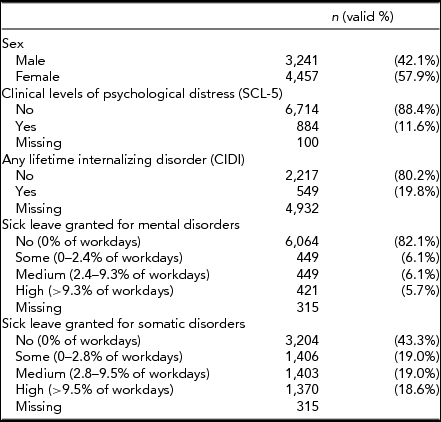
The prevalence of clinical levels of psychological distress during the past 2 weeks was 11.6% (8.6% for men and 13.8% for women) whereas 19.9% of those attending the interview scored positive for any lifetime internalizing disorder (14.2% for men, 23.2% for women). Overall, 2.5% of all working days were lost to sick leave granted for mental disorders (1.4% for men; 3.3% for women) and 6.9% to sick leave granted for somatic disorders (4.1% for men; 8.9% for women). Distribution of the sample on the included variables is shown in Table 1.
Characteristics of the Sample
Any lifetime internalizing disorder and self-reported psychological distress correlated 0.49 (95% CI 0.42–0.55). Any lifetime internalizing disorders were more strongly associated with sick leave granted for mental disorders (r = 0.45, 95% CI 0.38–0.51) than was psychological distress (r = 0.34, 95% CI 0.29 to 0.39). However, both measures of internalizing disorders and/or psychological distress were associated with sick leave granted for somatic disorders to approximately the same degree (r = 0.17, 95% CI 0.11–0.23, and r = 0.18, 95% CI 0.13–0.22).
Logistic regression analyses (Table 2) showed that individuals who screened positive on the SCL or had any lifetime internalizing disorder were more likely to be in the group with the highest level of sick leave granted for mental disorders, with sex- and age-adjusted odds ratios (ORs) 4.00 and 6.43 respectively. Individuals who screened positive on SCL or had any lifetime internalizing disorder were also more likely to have higher rates of sick leave granted for somatic disorders, with ORs of 1.76 and 1.73 respectively. Analyses of effects within twin pairs (fixed effects) showed that MZ twins who had clinical levels of psychological distress or any lifetime internalizing disorder were more likely to have high levels of sick leave granted for mental disorders than their discordant co-twins (ORs of 4.03 and 4.80 respectively). However, MZ twins with clinical levels of psychological distress or any lifetime internalizing disorder did not have statistically significantly elevated rates of sick leave granted for somatic disorders, compared with their co-twins (ORs at 1.24 and 0.88).
The Relationship Between Internalizing Disorders or Psychological Distress and Sick Leave Odds Ratios (OR) for Being in the Group With the Highest Level of Sick Leave
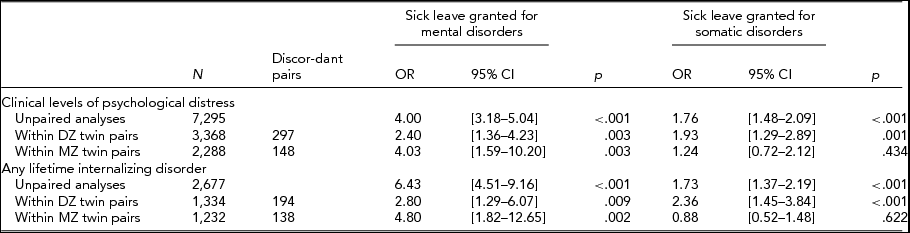
Unpaired and paired (fixed effects) results from logistic regression with generalized estimating equations, adjusted for sex and age.
Model Fitting
Self-reported psychological distress (SCL-5)
Results from the model fitting with SCL-5 and the two sick leave variables are shown in Table 3. Initial tests of invariance showed that it was possible to constrain the thresholds to be equal across twin order and zygosity groups (Δ-2LL = 61.91, Δdf = 56, p = .273), but not across gender (Δ-2LL = 843.02, Δdf = 63, p < .001), as also implied by the higher female prevalence. Thus, all Cholesky models were fitted with one set of thresholds for men and one set of thresholds for women. The ACE CSL model (II) had a better AIC fit and not significantly higher -2LL than ACE GSL model. The model fit further improved when fixing all effects of shared environment to zero (model III), whereas omitting A (CE model) substantially reduced model fit (model IV). Fixing all paths to be equal for men and women (no sex limitation; NSL) improved the model fit (model VI) compared with the ACE CSL model. The fit improved even more when removing C from the NSL model (model VII). A could not be removed from the NSL model (model VIII). The best fitting model was the AE model with no sex limitation (AIC = -11719.82, Δ-2LL = 14.18, Δdf = 18, p = .717 compared with the initial ACE GSL model).
Results of the Cholesky Model Fitting With Self-Reported Psychological Distress (SCL-5) and Sick Leave Granted for Mental and Somatic Disorders Among 7,698 Individuals (2,828 Complete Pairs With No Missing Data)
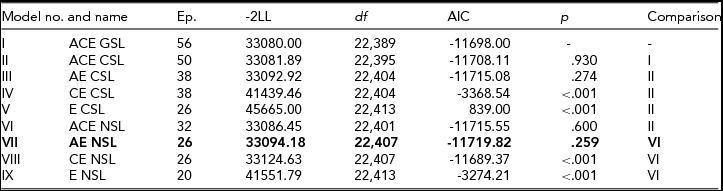
A = additive genetic effects; C = shared environmental effects; E = non-shared environmental effects; CSL = common (scalar) sex limitation; NSL = no sex limitation.
Bold type indicates the best fitting model.
Any lifetime internalizing disorder (CIDI)
For the model fitting that included interview data, the same steps were followed as for model fitting with SCL-5 (Table 4). Invariance tests showed that thresholds could be set equal across twin order and zygosity group (Δ-2LL = 65.13, Δdf = 56, p = .189), but different sets of thresholds were needed for men and women (Δ-2LL = 868.89, Δdf = 63, p < .001). Again, the best fitting and the most parsimonious model was the AE model without sex differences (AIC = -4683.77, Δ-2LL = 26.90, Δdf = 18, p = .081, compared with the ACE GSL model).
Results of the Cholesky Model Fitting With Lifetime Internalizing Disorders (CIDI) and Sick Leave Granted for Mental and Somatic Disorders Among 2,766 Individuals (1,283 Complete Pairs With No Missing Data)
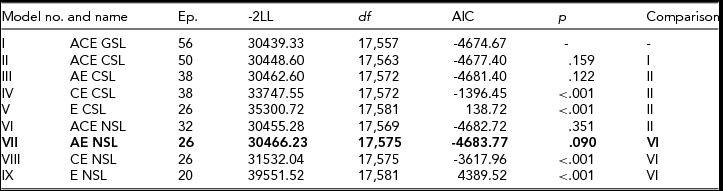
A = additive genetic effects; C = shared environmental effects; E = non-shared environmental effects; CSL = common (scalar) sex limitation; NSL = no sex limitation.
Bold type indicates the best fitting model.
Path estimates of the best fitting models
The best fitting model with path estimates for SCL-5 and sick leave is shown in Figure 2, while the estimates from the best fitting model with the diagnostic interviews are shown in Figure 3. The genetic and environmental factors influencing internalizing disorders or psychological distress (A1 and E1) had a significant impact on sick leave granted for mental disorders. These associations were somewhat stronger for the interview data than for the SCL-5 self-report data. The genetic factors involved in internalizing disorders or distress (A1) also had an effect on sick leave granted for somatic disorders. However, there were no statistically significant environmental paths (through E1) connecting internalizing disorders or distress and sick leave granted for somatic disorders. Finally, there were significant genetic paths (through A1 and A2), but no significant environmental paths (through E1 and E2) connecting sick leave granted for mental and somatic disorders. Except for the interview data being more strongly correlated with sick leave granted for mental disorders than for SCL-5 self-report data, the path estimates were similar for the two measures.
Diagram over the best fitting model (Cholesky AE, no sex limitation) of clinical levels of psychological distress (SCL-5) and sick leave granted for mental and somatic disorders. Path estimates for additive genetic (A) and non-shared environmental (E) factors, including 95% confidence intervals.
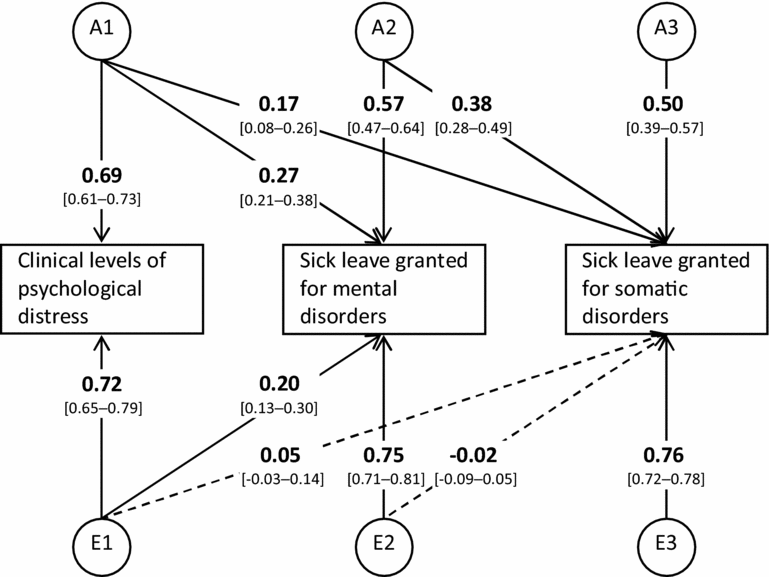
Diagram over the best fitting model (Cholesky AE, no sex limitation) of any lifetime internalizing disorder (CIDI) and sick leave granted for mental and somatic disorders. Path estimates for additive genetic (A) and non-shared environmental (E) factors, including 95% confidence intervals.

Discussion
The most important findings of this study were that individuals with internalizing disorders had higher rates of sick leave granted for both mental and somatic disorders over a period of 9 years, and that the correlation between internalizing disorders and sick leave granted for mental disorders can be accounted for by both genes and unshared environmental factors. The association between internalizing disorders and sick leave granted for somatic disorders appeared to be entirely due to a common genetic factor. Environmental factors influencing internalizing disorders did not significantly influence sick leave granted for somatic disorders. The association between internalizing disorders and sick leave granted for mental disorders was due to both genetic and environmental factors. No effects of shared environment were found. The results were approximately the same for the self-reported psychological distress measure and the internalizing disorders diagnosed by interviews. This discussion will therefore apply the term ‘internalizing disorders’ unless the results vary between the two measures.
As sick leave can be granted for internalizing disorders, it was expected that internalizing disorders were strong predictors of sick leave granted for mental disorders. Lifetime internalizing disorder predicted sick leave granted for mental disorders more strongly than did psychological distress. This is not surprising because sick leave can be granted for internalizing disorders, but not psychological distress per se. Participants with internalizing disorders also had elevated rates of sick leave granted for somatic disorders. These results are in accordance with previous studies finding that symptoms of internalizing disorders predict sick leave in general as well as sick leave and disability pensions granted for somatic disorders (Hensing & Spak, Reference Hensing and Spak1998; Knudsen et al., Reference Knudsen, Harvey, Mykletun and Overland2013; Mykletun et al., Reference Mykletun, Overland, Dahl, Krokstad, Bjerkeset, Glozier and Prince2006).
These observed associations can reflect causal relationships or common risk factors. Phenotypic causation implies that one variable affects another variable (e.g., that internalizing disorders renders a person unable to work) regardless of what causes the first variable. When each of the phenotypes is influenced by both genetic and environmental factors, as the phenotypes in this case, phenotypic causation implies that both genetic and environmental associations exist between the phenotypes (Ligthart & Boomsma, Reference Ligthart and Boomsma2012). Although common environmental and genetic influences do not necessarily imply that the variables are causally related (Neale & Kendler, Reference Neale and Kendler1995), the present findings on internalizing disorders and sick leave granted for mental disorders are consistent with phenotypic causation; that is, internalizing disorders lead to sick leave granted for mental disorders. Interestingly, there was a different pattern for sick leave granted for somatic diagnoses. There were no significant environmental associations between internalizing disorders and sick leave granted for somatic disorders. Non-significant findings do not rule out the existence of small effects. Nevertheless, the present results are not consistent with phenotypic causation of sick leave granted for somatic disorders by internalizing disorders over extended periods of time. Fixed effect results from the co-twin analyses also reflect these findings, as internalizing disorders and sick leave granted for mental disorders were not significantly associated within MZ twin pairs.
Common genetic factors alone could account for the association between internalizing disorders and sick leave granted for somatic disorders. At least part of this genetic correlation could be due to a genetically influenced comorbidity between internalizing disorders and the somatic conditions for which sick leave is granted. Many health problems, including medically unexplained somatic symptoms, are more frequent among people with anxiety and depression than among those without anxiety and depression (Prince et al., Reference Prince, Patel, Saxena, Maj, Maselko, Phillips and Rahman2007). Common genetic vulnerabilities have also been established between internalizing disorders and a range of somatic conditions, including both pain and coronary artery disease (Kato et al., Reference Kato, Sullivan, Evengård and Pedersen2006; McCaffery et al., Reference McCaffery, Frasure-Smith, Dubé, Théroux, Rouleau, Duan and Lespérance2006; Reichborn-Kjennerud et al., Reference Reichborn-Kjennerud, Stoltenberg, Tambs, Roysamb, Kringlen, Torgersen and Harris2002). In addition, people with a somatic disorder may be more likely to obtain sick leave when also having an internalizing disorder or high levels of psychological distress (Allebeck & Mastekaasa, Reference Allebeck and Mastekaasa2004; Krokstad, Reference Krokstad2002). Coping skills, for example, influence whether somatic conditions lead to sick leave (Werner & Cote, Reference Werner and Cote2009). Personality, and especially neuroticism, is also likely to affect sick leave granted for somatic disorders: Neuroticism is related to both internalizing disorders and a range of somatic health conditions, possibly due to chronic activation of stress response (Charles et al., Reference Charles, Gatz, Kato and Pedersen2008). Neuroticism may also be related to higher sensitivity to pain or other negative stimuli (Canli et al., Reference Canli, Zhao, Desmond, Kang, Gross and Gabrieli2001; Goubert et al., Reference Goubert, Crombez and Damme2004). Charles et al. (Reference Charles, Gatz, Kato and Pedersen2008) suggest that there could be a genetic pathway between neuroticism and pain experiences. Indeed, people high in neuroticism have higher rates of sick leave, even if they do not have any current psychopathology (Vlasveld et al., Reference Vlasveld, van der Feltz-Cornelis, Anema, van Mechelen, Beekman, van Marwijk and Penninx2013). Neuroticism may moreover have an effect through its association with health anxiety (Williams, Reference Williams2004).
Environmental factors that increased the liability to scoring above the threshold for internalizing disorders did not significantly affect sick leave granted for somatic disorders over the 9-year period. Nevertheless, the confidence intervals for these associations imply that an environmental association cannot be ruled out. Particularly, the lack of significant environmental association in this study does not exclude the possibility of an effect in the short run. Over a period as long as 9 years, fluctuating environmental events may even out the risk between twins to the level expected from their genetic similarity. Possible short-term effects of fluctuating environmental events can be investigated in future studies where sick leave is studied in shorter intervals. Alternatively, it is possible that environmental effects of internalizing disorders on sick leave granted for somatic disorders become more prominent with higher age. Neuroticism has been found to be a risk factor for disability pensioning granted for low back pain diagnoses, and family factors only play a minor role in that relationship (Ropponen et al., Reference Ropponen, Svedberg, Huunan-Seppälä, Koskenvuo, Koskenvuo, Alexanderson and Kaprio2012). However, genetic effects seem to play a larger role for disability pensioning among young adults than among older individuals, and twin resemblance in disability pensioning decreases with time (Gjerde et al., Reference Gjerde, Knudsen, Czajkowski, Gillespie, Aggen, Røysamb and Orstavik2013; Harkonmäki et al., Reference Harkonmäki, Silventoinen, Levälahti, Pitkäniemi, Huunan-Seppälä, Klaukka and Kaprio2008; Narusyte et al., Reference Narusyte, Ropponen, Silventoinen, Alexanderson, Kaprio, Samuelsson and Svedberg2011). Also, the pattern of association between sick leave and disability pensioning suggests phenotypic causation (Gjerde et al., Reference Gjerde, Knudsen, Czajkowski, Gillespie, Aggen, Røysamb and Orstavik2013; Narusyte et al., Reference Narusyte, Ropponen, Alexanderson and Svedberg2014). Thus, it is possible that persistent internalizing disorders have a stronger environmental effect on sick leave granted for somatic disorders. This could be addressed in older twin samples.
Shared environment was not important in explaining sibling similarity in sick leave in our best fitting models. This is in line with previous twin studies on sick leave (Gjerde et al., Reference Gjerde, Knudsen, Czajkowski, Gillespie, Aggen, Røysamb and Orstavik2013; Svedberg et al., Reference Svedberg, Ropponen, Alexanderson, Lichtenstein and Narusyte2012). Our findings therefore do not support social transmission of sick leave between family members. However, it should be noted that there is evidence of shared environmental effects on disability pensioning (Bratberg et al., Reference Bratberg, Nilsen and Vaage2013; Harkonmäki et al., Reference Harkonmäki, Silventoinen, Levälahti, Pitkäniemi, Huunan-Seppälä, Klaukka and Kaprio2008), which is a possible outcome of long-term sick leave.
The analyses showed approximately the same results for sick leave granted for somatic disorders regardless of whether internalizing disorders were observed as high SCL-5 scores or in a diagnostic interview. This strengthens the validity of the results, as it is a form of method triangulation. The diagnostic interviews were more predictive of sick leave granted for mental disorders than was the self-reported psychological distress measure. Nevertheless, the five SCL questions predicted sick leave granted for somatic disorders as well as did the more comprehensive interview.
Methodological Considerations
This study had several strengths, such as data from a diagnostic interview, highly reliable registry data on sick leave, including diagnoses, a long follow-up period, and a genetically informative sample recruited from the general twin population. There are also some limitations. First, the sample consisted of young adults, which may limit generalizability to other age groups. Second, there could be health differences between twins and singletons. However, other twin samples have been found to be representative for the general population regarding several health, lifestyle, and personality measures (Andrew et al., Reference Andrew, Hart, Snieder, de Lange, Spector and MacGregor2001; Johnson et al., Reference Johnson, Krueger, Bouchard and McGue2002), and the prevalence of mental disorders is approximately the same in our sample as other population-based studies (Gjerde et al., Reference Gjerde, Røysamb, Czajkowski, Reichborn-Kjennerud, Orstavik, Kendler and Tambs2011; Kessler et al., Reference Kessler, Berglund, Demler, Jin, Merikangas and Walters2005a). Third, the diagnostic interviews were conducted early in the follow-up period and could thus to some degree reflect consequences of sick leave. However, the self-reported psychological distress was measured several years before the sick leave and was equally strongly related to sick leave granted for somatic diagnoses. It is therefore unlikely that the association between any lifetime internalizing disorder and sick leave granted for somatic disorders is inflated. Fourth, only one diagnosis was available for each period of sick leave. Thus, we do not know whether physicians granting sick leave considered both mental and somatic disorders to be present. Fifth, this study did not include measures of somatic disorders, pain sensitivity, or personality, which may explain part of the relationship between the included variables. These variables should be investigated in future studies. Finally, the statistical power to detect shared environmental effect is rather low. The fact that we did not find such effects even with a quite large sample, such as ours, does not imply that effects of shared environment do not exist.
In conclusion, internalizing disorders among young adults indicated a risk not only of sick leave granted for mental disorders but also sick leave granted for somatic disorders. The genetic factor of internalizing disorders influenced sick leave granted for both mental and somatic disorders. The environmental factor of internalizing disorders was associated with sick leave granted for mental disorders, but did not seem to influence sick leave granted for somatic disorders among young adults. The results for sick leave granted for mental disorders are consistent with both phenotypic causation, most likely from internalizing disorders to sick leave, and genetic and environmental factors influencing both phenotypes. The results for sick leave granted for somatic disorders suggest that the phenotypic correlation between such sick leave and internalizing disorders is due to common genes, at least among young adults.
Acknowledgments
The work was supported by a grant from The Sickness Absence Research Programme at The Norwegian Research Council. The collection of twin data was also in part supported by previous grants from The Norwegian Research Council, The Norwegian Foundation for Health and Rehabilitation, and The Norwegian Council for Mental Health. We are very grateful to the twins for their participation.



