

Africa is the second largest continent in terms of size and population.1,2 With approximately 1.256 billion people (about 15% of the world’s population) and a land area of 30.3 million square kilometers (including adjacent islands), it occupies about 20.4% of the earth’s total land area.1 A significant fraction of the people in the CaribbeanFootnote * and South America are of African descent, and there are many historical and cultural links among the people of these regions.Reference Appiah and Gates3 South America has 422.5 million people, and the Caribbean has about 39.12 million people;1 hence, the total population of all three areas represents about 20% of the world’s population.1,2 Similarities in climate also mean that common approaches can be explored for establishing sustainable building materials, and the range of development indices offer unique opportunities for collaborations in research and education that can facilitate human development.4
The significant development potential of countries in Africa, South America, and the Caribbean is increasing with the growth in gross domestic products per capita. This has enabled them to be classified by the World Bank as upper middle-income countries,4,5 with incomes greater than USD$12,746 per capita.4 However, the economic indices alone do not reflect the overall levels of development.Reference Moyo6 Hence alternative metrics by the Academy of Science of the Developing World,7 the Muslim Majority Countries,8 the Developing Country Collaborations in Plant Genome Research,9 and the United States Aid Agency10 have attempted to present different perspectives.
The challenges in health, water and sanitation, energy, and the environment are often of critical importance in Africa, South America, and the Caribbean, where about 70% of the population are younger than 30 years of age. There is also a need to develop alternative strategies for the training of science, engineering, and business leaders at all levels of the educational systems.Reference Madsen11–16 Such training is necessary to nurture the talent that exists in these regions and to build on the limited infrastructure and challenges in primary and secondary schools. This could also complement global efforts to strengthen skills in these regions.Reference Madsen11–49
Diversity
Issues of gender imbalance exist in the representation of women in scientific and engineering positions. This is especially true in leadership roles in the Americas, Africa, and the Caribbean. Therefore, it is important to consider such issues in the selection of scientists and engineers for participation in international collaborations that are designed to promote excellence and diversity in science, technology, engineering, and mathematics (STEM). Although demographics with Africa, South America, and the Caribbean vary significantly, due to differences in history and migration patterns, it is generally accepted that women are underrepresented in science and engineering positions in these regions.5
The native people and people of African descent are especially less represented in the scientific and engineering workforces in South America due to challenges in the educational systems. Similar to the United States, Caribbean and South American countries consist of diverse populations that include Native Americans, people of African descent, European Americans, and Asian Americans. However, within the Americas, there are relatively low numbers of people of African descent engaged in materials science and engineering, and a need exists for international programs that increase the diversity and impact of diverse groups of people in this field.
International collaborations
This article presents examples of international collaborations in materials research and education that have enhanced diversity and cooperation in Africa, South America, and the Caribbean. The goal has been to engage scientists and engineers in cooperative activities such that they can contribute to the development of these regions. These collaborations have been enabled by a network that connects materials researchers in Africa, South America, and the Caribbean to US faculty and students. While many countries other than the United States are engaged with these regions, the US focus stems from extensive efforts in the materials science and engineering domain.
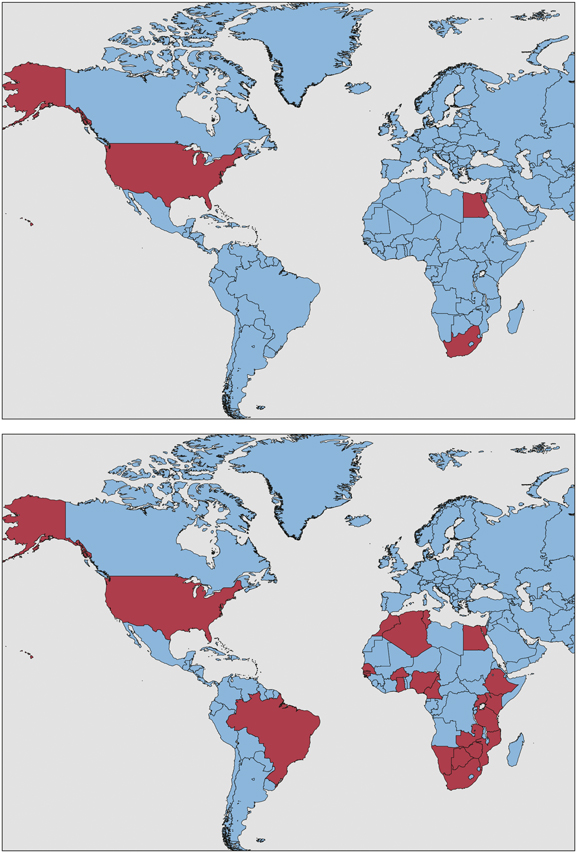
Interactions between the different groups were initiated at a US/Africa Materials Workshop held in Pretoria in 2000. At the time of the workshop, most of the materials research in Africa occurred in South Africa, with significant pockets of activity in Northern Africa (Egypt, Algeria, Morocco, Tunisia, and Senegal) (see Figure 1). In contrast, there were relatively few materials research centers in sub-Saharan Africa, although there were ongoing efforts in Nigeria, Senegal, Ghana, Cameroon, Kenya, Ethiopia, Uganda, Rwanda, Tanzania, Zambia, and Zimbabwe.Reference Soboyejo13 Hence many of the Africans engaged in African materials research and education in 2000 were in Southern and Northern Africa, although significant groups in sub-Saharan Africa were supported largely by donors from European and Asian countries. The workshop brought together researchers and policymakers from several countries in Africa. It enabled the establishment of a US/Africa network that has significantly increased exchange visits and the number of African countries engaged in materials research and education.
Countries engaged in US/Africa/Americas/Caribbean collaboration in 2000 (top) and 2018 (bottom).
Following the Pretoria workshop, several US/Africa Materials Workshops were organized in the United States, which brought together selected academics and representatives of the governments of African, Caribbean, and South American countries. Subsequent diplomatic activities also facilitated the funding of local materials research and education programs in sub-Saharan African countries, such as Nigeria, where several African countries agreed to co-fund US/Africa programs as part of the Materials World Network (MWN). The African Materials Network (AMN) that was formed as part of the MWN continues to operate within the framework of the African Materials Research Society (AMRS).
In the case of Nigeria, the late Olusegun Adewoye secured government funding to establish the Engineering Materials Development Institute in Akure, Nigeria. Adewoye was also able to convince the government of Nigeria to fund a nanotechnology initiative that brought together a diverse group of Nigerians from multiple scientific and engineering disciplines. The support of the Nigerian Nanotechnology Initiative was followed by the funding of an Advanced Materials and Manufacturing Center by the Nigerian government and the World Bank between 2011 and 2014.
Collaborations between the United States and African, Caribbean, and South American researchers were enhanced by the Non-conventional Materials (NOCMAT) conference that was held in João Pessoa, Brazil, in 2003.Reference Arsène, Savastano, Allameh, Ghavami and Soboyejo48 This conference, which was funded with resources from a National Science Foundation (NSF)-Americas program, brought together a diverse group of international materials researchers to explore non-conventional materials for applications in sustainable housing.
Khosrow Ghavami first convened the NOCMAT conference series in Rio de Janeiro in 1984.49 Since then, this conference has provided an important platform for the exchange of ideas that have impacted the development of natural fiber-reinforced composites and earth-based materials for sustainable housing. Since 2003, it has also provided an important platform for a diverse group of American, African, and Caribbean researchers to meet and collaborate with researchers from the Americas, Europe, and Australasia on the development of sustainable building materials.Reference Arsène, Savastano, Allameh, Ghavami and Soboyejo48,49
Investments in materials research and education in Africa, the Americas, and the Caribbean have enabled the formation of sustainable networks. These include the AMRS and the NOCMAT group, which continue to organize themselves around conferences that bring diverse groups of researchers and students together. These conferences have enabled new discoveries and integrated experimental/computational research efforts on materials for sustainable building materials, biomaterials, materials for energy, structural materials, and materials for water purification.
Women in materials science and engineering
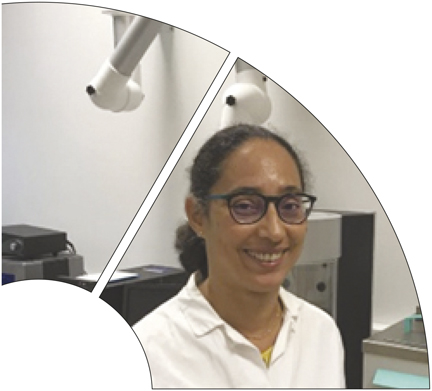
The NOCMAT, US/Africa, and Americas programs have facilitated the development of female Caribbean materials scientists such as Marie-Ange Arsène at the Université des Antilles in Guadeloupe in the Caribbean (see Figure 2). Arsène, who has held leadership roles at her university, is a great example of the female academic and administrative leadership that has been enabled by the materials collaboration activities among the United States, Africa, South America, and the Caribbean. Her work on the recycling of agro-waste into building materials has provided the Caribbean island of Guadeloupe with an example of how sugarcane bagasse fibers can be processed into sustainable building materials.Reference Arsene, Okwo, Bilba, Soboyejo and Soboyejo23,Reference Savastano, Santos, Radonjic and Soboyejo24 Such work can add significant value to agro-waste in ways that could have an impact on the economy of Guadeloupe. It can also serve as an example of how Caribbean countries can use research to drive their economic development.
Marie-Ange Arsène at her lab at the Université des Antilles in Guadeloupe.
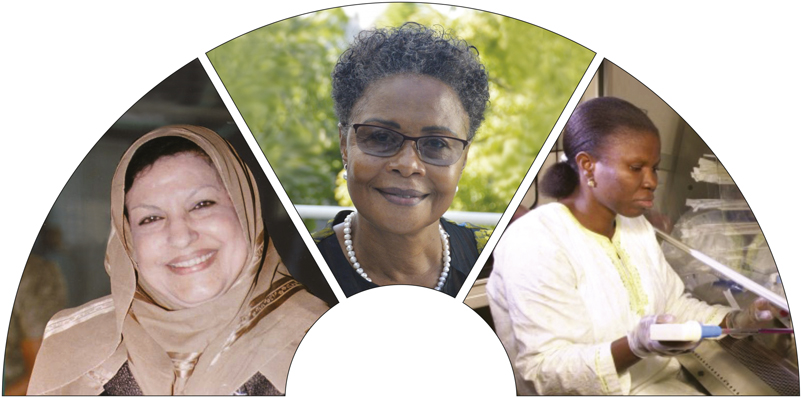
Similarly, US/Africa collaborations and Africa/Africa collaborations have enabled female African materials leaders to emerge and play a pivotal role in materials science and engineering. Women leaders include Mona Marei (Alexandria University, Egypt) (see Figure 3) in the field of tissue engineering and the first female president of AMRS; Hulda Swai (Nelson Mandela African Institute of Science and Technology in Arusha, Tanzania), a pioneer in the area of nanoscale science for the targeting of disease and the current president of AMRS; Lesley Cornish, the director of the African Materials Science and Engineering Network (AMSEN); and Grace Oyatogun, who is the head of the Materials Department at Obafemi Awolowo University in Ile-Ife, Nigeria. It is interesting to note that Oyatogun completed her PhD degree with support from the US/Africa Materials Institute (USAMI) at Princeton University. She then returned to Obafemi Awolowo University, where she has risen through the ranks to become the head of the Materials Department.
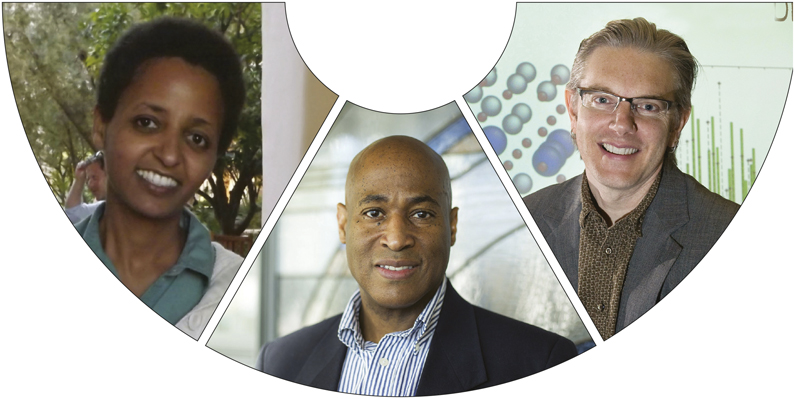
African female scientists (left to right): Mona Marei, Alexandria University, Egypt; Hulda Swai, Nelson Mandela African Institute of Science and Technology, Arusha, Tanzania; and Grace Oyatogun, Obafemi Awolowo University, Nigeria.
African women in the diaspora, such as Sossina M. Haile (see Figure 4) of Northwestern University,Reference Savastano, Santos, Radonjic and Soboyejo24 have also played a significant role in the training of the next generation of materials scientists and engineers. Working in collaboration with materials scientists and engineers from the National Renewable Energy Laboratory (Peter Green) and Columbia University (Simon Billinge), Haile has established the Joint US-Africa Materials Institute (JUAMI), which has organized teaching workshops in Eastern Africa. These workshops have contributed significantly to the training of US and African students in materials science and engineering, especially in the area of materials for sustainable energy.
Leaders of the Joint US-Africa Materials Institute (left to right): Sossina M. Haile, Northwestern University; Peter Green, National Renewable Energy Laboratory; and Simon Billinge, Columbia University.
International programs in materials science and engineering have facilitated the emergence of women in leadership roles, particularly in Africa and the Caribbean, who are now inspiring and educating a new generation of materials scientists and engineers. The programs have also deepened the expertise of US and African scientists who are engaged in aspects of materials science and engineering that are related to x-ray crystallography (Billinge) and sustainable energy (Green and Haile).
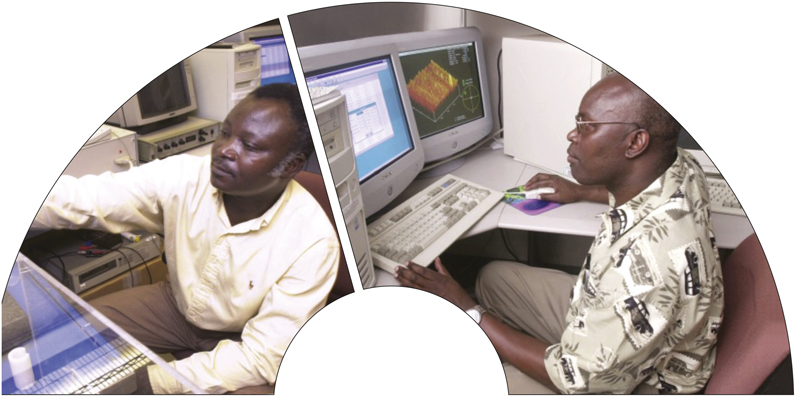
NSF-sponsored USAMI programs and those at Princeton University (between 2004 and 2009) brought together a group of US, African, Caribbean, and South American researchers that has increased the diversity of researchers engaged in materials research and education.Reference Soboyejo13 USAMI supported 100 visiting fellowships for African scientists to the United States (see Figure 5) and more than 40 visiting fellowships for US undergraduate/graduate students to Africa. USAMI also helped with the initial organization of AMRS.
African scientists at work in Princeton: Babaniyi Babatope of Obafemi Awolowo University in Nigeria (left) and Tom Otiti of Makerere University in Uganda (right).
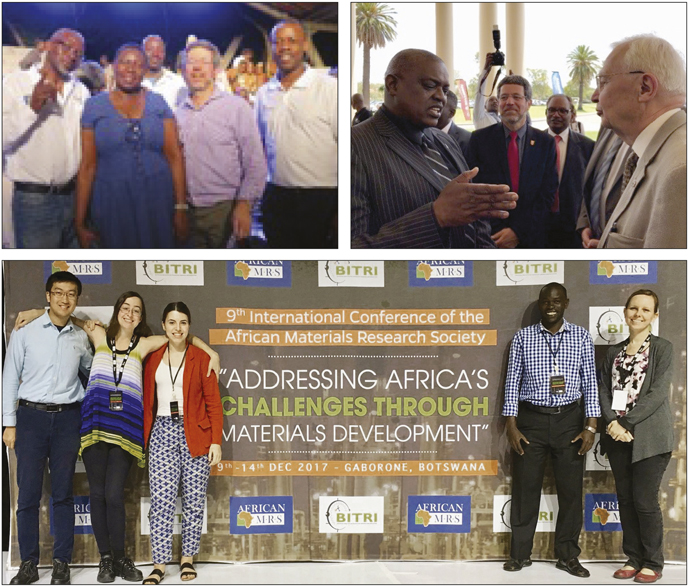
Within Africa, AMRS has continued to meet (mostly on a biannual basis) since its formation in Dakar, Senegal, in 2001. The most recent meeting of AMRS (see Figure 6) was held in Gaborone, Botswana, in December 2017. It brought together a diverse group of more than 600 people from Africa, Europe, Asia, and the Americas.
Top: The primary organizers of the most recent African MRS (AMRS) Meeting that was held in Gaborone, Botswana (left to right): Nelson Torto, executive director of the African Academy of Sciences; Bathsheba Mbongwe, Botswana Institute for Technology Research and Innovation; Eric Garfunkel, Rutgers, The State University of New Jersey; and Samuel Chigome, Botswana Institute for Technology Research and Innovation. Current President of Botswana, Mokgweetsi Masisi (left) talks to Nobel Laureate Jean-Marie Lehn (right) at the AMRS Meeting held in Botswana in December 2017. Bottom: Diverse participation at the AMRS Meeting in Botswana.
NSF-sponsored programs and AMRS
USAMI has played a significant role in enhancing the diversity of people engaged in materials research in Africa, South America, and the Caribbean,Reference Soboyejo13 with more than 100 USAMI Fellows from 35 countries in Africa. USAMI Fellows have published more than 100 journal papers, while developing the field of materials science and engineering across Africa. In sub-Saharan African countries such as Ethiopia, Nigeria, Tanzania, Uganda, Namibia, Ghana, Kenya, Cameroon, Burkina Faso, and Senegal, significant efforts are under way in materials research and education, compared to those that existed about 20 years ago.
The achievements of African female scientists, such as Marei, have contributed to the development of arginine-glycine-aspartate-coated and laser-textured titanium screws that improve the osseo-integration between titanium surfaces and bone.Reference Chen, Bly, Saad, AlKhodary, El-Backly, Cohen, Kattamis, Fatta, Moore, Arnold, Marei and Soboyejo25 Marei is an excellent example of an African female scientist who has achieved global recognition for her research on tissue engineering, which has received significant support from the Egyptian government and the international community.
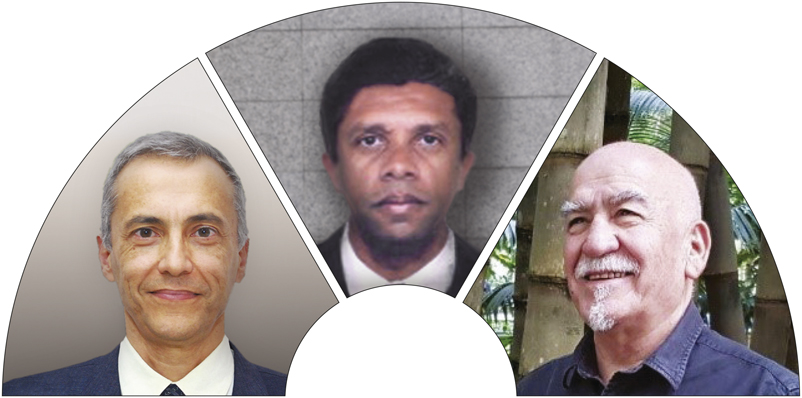
Similarly, Holmer Savastano Jr. of Brazil is a great example of a South American materials scientist and engineer who participated in the collaborations (see Figure 7). Savastano started visiting Princeton University in 2001 as part of an NSF-sponsored international program. This cooperation resulted in a series of papers on the fatigue and fracture behavior of natural fiber composites. Since then, Savastano has advanced rapidly through the ranks at the University of São Paulo, where he has served as a Dean at the campus in Pirassununga, Brazil. He has welcomed several African and Caribbean materials scientists and engineers to his lab.
US/Africa Materials Institute Fellows from Brazil (left to right): Holmer Savastano Jr., University of São Paulo; Sergio Santos, São Paulo State University (UNESP); and Khosrow Ghavami, Pontifical University of Rio de Janeiro, Brazil.
Savastano also served as a mentor to postdoctoral fellow Sergio Santos, an Afro-Brazilian, who studied materials science and engineering in Brazil. Santos visited Princeton to work with the author on the toughening of natural fiber-reinforced composites as part of his postdoctoral research experience. This visit strengthened collaborations with the Savastano group at the University of São Paulo.Reference Savastano, Santos, Radonjic and Soboyejo24 Santos also conducted research on natural fiber-reinforced cementitious composites during his visits as part of the NSF-sponsored Americas program.
Savastano’s work, which is relevant to the development of sustainable building materials and asbestos-free roofing tiles, used crack-tip shielding concepts to quantify the toughening mechanisms that were observed during fatigue and fracture experiments on natural fiber-reinforced cementitious composites.Reference Savastano, Santos, Radonjic and Soboyejo24 Santos is now one of the few Afro-Brazilians employed as an engineering professor in the Department of Materials and Technology at São Paulo State University (UNESP). He is a great example of how international exposure can facilitate the development of minority faculty in the Americas.
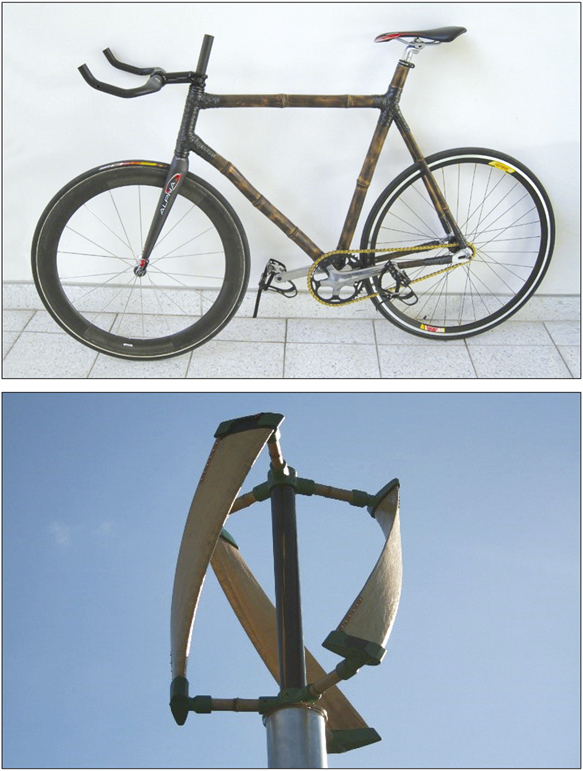
The work of Khosrow Ghavami of the Pontifical Catholic University of Rio de Janeiro (PUC-Rio) has also had a major impact on US/Brazil/Africa collaborations. Ghavami visited USAMI as part of the NSF-sponsored USAMI and Americas programs between 2002 and 2009. During this period, his passion for bamboo stimulated a significant effort on its study as a source of bioinspiration for the design of robust structural materials at the nano-, micro-, and macroscales.Reference Rahbar, Du and Soboyejo39 Ghavami inspired the author to engage a group of Princeton students in the development of a bamboo road bicycle (see Figure 8), which was subsequently commercialized by Sol Cycles Inc. and Boo Bicycles Inc. The late Ezekiel Odeh also fabricated bamboo bicycles in Nigeria and Ghana. Ting Tan (a USAMI PhD student) developed a bamboo wind turbine at the University of Vermont, while Nima Rahbar (USAMI PhD student) carried out pioneering molecular dynamic simulations to develop a fundamental understanding of the molecular origins of strength and stiffness in bamboo.Reference Youssefian and Rahbar50
Innovations inspired by the Americas and USAMI programs: bamboo road bicycle developed by Princeton team, Wole Soboyejo, Nick Frey, William Watts, Douglas Wolf, and Tom Yersak (top). Bamboo wind turbine developed by Ting Tan at the University of Vermont (UVM), which is used for powering street lights at UVM (bottom).
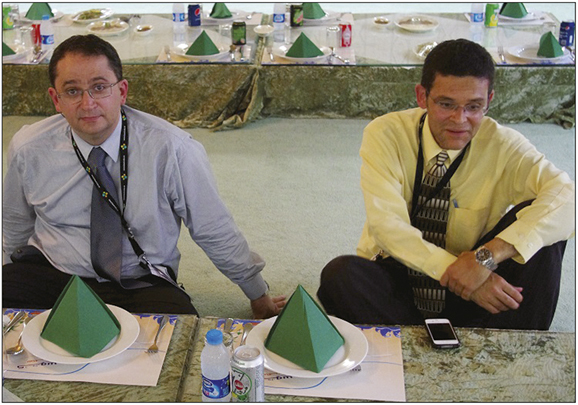
Similarly, collaborations between Emelio da Silva (University of São Paulo, Brazil) and Glaucio Paulino (Georgia Institute of Technology) (see Figure 9) were facilitated by the Americas program. Da Silva worked with Paulino in topology optimization for materials design.Reference Silva and Paulino46,Reference Stump, Silva and Paulino47 Their collaboration facilitated the growth of da Silva into one of the leaders in the field of topology optimization. It also enabled Paulino (a US immigrant from Brazil) to have an impact on the development of Brazilian students and researchers in materials design. The University of São Paulo is now widely recognized as one of the leading centers of excellence in this field.
Emelio da Silva, University of São Paulo, Brazil (left) and Glaucio Paulino, Georgia Institute of Technology, USA (right), have collaborated in the area of topology optimization for materials design.
NSF-sponsored USAMI and Americas programs has had a significant impact on the preparation of US undergraduate and graduate students. The program enabled the education of more than 40 undergraduate and graduate students who visited Africa to engage in materials research and projects, as well as workshops that prepared them for future careers in academia. Beyond academia, USAMI supported US-based African PhD students, who benefited from the international programs.
US-based K–12 students also received support from USAMI education and outreach efforts. These included minority students from inner city areas in Trenton, N.J., and New York, N.Y. These students participated in high school education and outreach programs that were organized in collaboration with the Princeton University Materials Academy (PUMA). The New York outreach efforts were organized in collaboration with the International Rescue Committee (IRC). These efforts also engaged USAMI graduate students in weekly math and science tutoring of children of US immigrants from Africa who were brought to the United States through the IRC. The program ended with a visit to Princeton University to engage in materials laboratory modules, a soccer game, and meetings with a minority vice president. These interactions also inspired one of the students to successfully pursue admission into Cornell University.
Similarly, students from Trenton High School (a very diverse school with minority students with families from Africa, the Americas, and the Caribbean) who were engaged in the PUMA program were inspired to attend college, following a four-year long education and outreach program that exposed them to materials science and engineering within the context of USAMI. They were inspired by the relevance of the science to developing countries in Africa, the Americas, and the Caribbean to pursue science and technology programs with a potential impact on development.
The PUMA education and outreach interactions, coordinated by Daniel Steinberg and Peter Gange, included classroom sessions and hands-on labs and projects that stimulated student interest in science and technology. Gange later incorporated these into a high school course on materials science and engineering at Middlesex High School in New Jersey. One of the students from this course was later admitted into Princeton University. He graduated in 2017 with a BS degree in chemical and biochemical engineering and a certificate in materials science and engineering.
Impact
The engagement of diverse groups of students by the USAMI and Americas programs has had a significant impact on the inspiration of students to pursue future careers in science and engineering in the Americas, Africa, and the Caribbean. In the case of K–12 students in the United States, the engagement of students in meaningful education and outreach programs has stimulated their interests in pursuing science and engineering careers. Such programs must build content knowledge, while providing the students with insights on how to navigate the systems that lead to scholarships.
The development of high school materials science and engineering courses could enhance interest in these topics in high school students. Teachers, in partnership with university professors, could design the courses using their combined knowledge of education and outreach.
In the case of engagement with a diverse group of undergraduate students, the key is to provide safe spaces for research, such as access to labs and support structures that can facilitate development. When supportive environments are provided with international collaborations, the students are more likely to pursue graduate degrees. They are also more likely to pursue careers in academia, industry, and government.
Similarly, in the case of graduate students, the USAMI and Americas programs have demonstrated that international programs in supportive environments promote the success of diverse students. These are crucial, and perhaps more important than presumed academic potential, as suggested by test scores and prior grades.
International programs that promote science and engineering with the potential to address human or societal problems are also more likely to attract female and minority students. Furthermore, international visits to conferences and labs in Africa, the Americas, and the Caribbean have had profound effects on the maturity and motivation of undergraduate students to pursue graduate studies and careers in science and engineering. The experience of the USAMI and Americas programs has also demonstrated that the inspiration and insights provided by purpose-driven research are more likely to stimulate diverse groups of scientists to pursue future science and engineering careers in academia, industry, and government.
In Summary
International collaborations among the United States and Africa,Reference Chen, Bly, Saad, AlKhodary, El-Backly, Cohen, Kattamis, Fatta, Moore, Arnold, Marei and Soboyejo25–Reference Plapally, Chen, Ayinde, Alayande, Usoro, Friedman, Dare, Ogunyale, Yakub, Leftwich, Malatesta, Rivera, Brown, Soboyejo and Soboyejo42 South America, and the CaribbeanReference Arsene, Okwo, Bilba, Soboyejo and Soboyejo23,Reference Savastano, Santos, Radonjic and Soboyejo24,Reference Savastano, Ghavami, Beye and Soboyejo43–49 have contributed significantly to the field of materials science and engineering. They have also enhanced the diversity of people engaged in materials research and education. There are emerging Centers of Excellence for Materials Research and Education across Africa, South America, and the Caribbean, including the Botswana Institute for Technology Research and Innovation; the Nelson Mandela African Institute of Science and Technology; the Pan African Materials Institute at the African University of Science and Technology in Abuja, Nigeria; the University of São Paulo in Pirassununga and São Paulo, Brazil, and the Université des Antilles in Guadeloupe, to name a few. These centers are making important contributions to materials science and engineering, while addressing issues of diversity and the local/global challenges in Africa, the Americas, and the Caribbean.
Acknowledgments
The author is grateful to NSF for support of the USAMI program (Grant No. DMR-0231418) and the Americas program (Grant No. CMMI-0303492). Appreciation is also extended to the World Bank, the African Capacity Building Foundation, and to all collaborators in Africa, the Americas, and the Caribbean that have helped to demonstrate how collaborations between researchers and students in these regions can prepare a diverse group of materials scientists and engineers to make significant contributions to global development in academia, industry, and government.



