


INTRODUCTION
Diarrhoea is defined by the WHO as ⩾3 loose or watery stools in 24 h [Reference Rohde, Bartolini and Jones1]. Despite a clear delineation of the treatment and prevention plan long ago, diarrhoeal diseases are still major public health concerns worldwide as well as in India [Reference Supcharassaeng and Suankratay2–Reference Patwari4]. Globally 11% of all deaths in children aged <5 years in 2010 and 15% of the total estimated deaths in 2008 were attributed to diarrhoea [5, Reference Black6]. Diarrhoea was the third most common cause of mortality in children aged <5 years India in 2010 [3]. In 2008, out of 1 257 079 estimated diarrhoeal deaths in children aged <5 years worldwide, 203 206 were from India [Reference Black6]. In the same year, 5·65 million new cases of diarrhoea in males and 5·58 million in females were reported in India [Reference Srivastava7]. Hospital-based surveillance in Kolkata during 2007–2009 showed that diarrhoeal diseases including cholera were major contributors to the morbidity and mortality especially in children [Reference Nair8].
Kolkata is one of the biggest cities of India and together with its suburbs, the third largest metropolitan area in the country (population ∼14 million) [9–11]. There are 5500 slums characterized by their social vulnerability, overcrowding and relatively unhealthy environment in the municipal area of Kolkata which is divided into 141 civic administrative units called wards. About 1·5 million people reside in these informal settlements [Reference Dutta10, 12, Reference Unger and Riley13]. Lack of proper sanitation and poor access to safe water in these slums increases the risk of diarrhoeal diseases in the residents; many of whom seek care for their diarrhoeal episodes from pharmacists and untrained practitioners [Reference Sur14].
Most of the diarrhoeal cases are less severe and self-limiting while many of them are caused by viruses. Therefore laboratory investigation and antibiotic therapy are not warranted in most of these cases [Reference Longo15, Reference Tanmaya16]. The Indian National Diarrhoea Diseases Control Programme has specifically emphasized these aspects along with oral rehydration therapy and proper nutrition for many years. However, practices regarding diarrhoeal management by physicians in India are far from satisfactory [Reference Patwari4]. The problem may be more pronounced in the urban slum areas owing to the unhealthy environment, diverse healthcare-seeking patterns of the residents and inadequate control over the availability of over-the-counter antibiotics [Reference Sur14]. Improper and injudicious use of antibiotics for the management of diarrhoeal diseases in this underserved and vulnerable population results in an increase of antibiotic-resistant cases, which increases the economic burden of the disease on both Government and individuals.
There is a paucity of published literature from India on the association between the knowledge and practice of physicians regarding diarrhoea. This present study was undertaken to assess diarrhoea-related knowledge, practice, their correlates and interrelationship among allopathic practitioners treating diarrhoea patients in the slums of Kolkata.
METHODS
Study design and population
With help from local people, community health workers, municipal health officers, opinion leaders and local medical associations, an exhaustive list of 360 private practitioners including pharmacists, unregistered practitioners with or without formal training (quacks), registered medical professionals and specialists who prescribed allopathic medicines to diarrhoea patients in the slums of eight municipal wards for at least 6 months (the respective ward numbers being: 28, 29, 30, 32, 33, 34, 59, 66) of Kolkata was prepared. A cross-sectional study was designed to interview eligible practitioners who agreed to participate. For the purpose of the study only those allopathic physicians who were practising privately, either in a clinic or in a pharmacy, were included. In the pilot phase in 2011, between May and July, 40 randomly selected eligible practitioners were interviewed using a detailed questionnaire, the information collected was analysed to check for internal consistency. The questionnaire was finalized by removing internally inconsistent components (Cronbach's α < 0·7).
Sample size
Parameters for physicians' diarrhoea-related knowledge and practice were unavailable from the study area. Hence, information from the pilot phase (variance for the overall knowledge indicator = 125·44, s.e. = 0·69) was used to calculate the sample size for the measurement of physicians' knowledge using the approximate formula for single mean: n = 4z 2 1−σ/2 * s 2/l 2, where n = required sample size, z = percentile of the standard normal distribution (for 95% confidence level, z = 1·96), s 2 = the sample variance, and l = the confidence interval width at the desired level [Reference Rosner17]. Assuming α = 0·05, with the help of the population survey module of Epi Info software version 6 (CDC, USA) the required sample size for assessment of knowledge was estimated to be 263. Additionally, a proportion of rational antibiotic use in the metropolitan area of Kolkata (0·275) as estimated by Sur & Mukhopadhyay [Reference Sur and Mukhopadhyay18] in 2001 was used for the calculation of the sample size for assessing practice. The formula: s = z 2 * p (1−p)/d 2 was used, where p = the proportion of rational antibiotic use and d = half the width of the desired confidence interval, assuming α = 0·05 with absolute precision of 10% [Reference Rosner17, Reference Dean19]. Calculated sample size was corrected for finite population using the formula: n ÷ s/(1 + (s/population size)), where n = required sample size and s = sample size calculated for large populations [Reference Rosner17, Reference Dean19]. Using the number of enlisted practitioners (n = 360) as the population size, the final sample size was calculated as 266. Based on the unique identification number assigned to each eligible physician, 266 practitioners were selected randomly using the random selection method (random number generation) of SAS software version 9.2 (SAS Inc., USA).
Ethical approval
The study was conducted after obtaining approval from the Scientific Advisory Committee and Institutional Ethics Committee of National Institute of Cholera and Enteric Diseases.
Interview
Between August 2011 and January 2012, after receiving an explanation of the study, selected physicians gave their consent for participation in questionnaire-based interviews; the interviews were conducted by trained interviewers, who were unaware of the study hypothesis. Information was collected on practitioners' qualifications, attachment, years of practice, average age, socioeconomic status (SES) and knowledge of the patients treated by them, usual dehydration profile of their patients during presentation, and their knowledge and practice regarding diarrhoea. Physicians were asked to categorize the average knowledge and SES of their patients based on their perception.
Measures
The physicians' knowledge was measured in six separate domains regarding diarrhoeal diseases (signs and symptoms), cholera (disease as a whole), occurrence and spread (causative organism as a subdomain), management, prevention/control and oral rehydration solutions (ORS). Based on standard textbooks like Harrison's Principles of Internal Medicine (17th edn, McGraw-Hill), Nelson's Textbook of Pediatrics (18th edn, Elsevier) and the WHO recommendations for management of diarrhoea, an answer to each of the questions was determined as correct or incorrect by the scientists of National Institute of Cholera and Enteric Diseases Kolkata (Indian Council for Medical Research).
Scores for individual questions (0 for incorrect and 1 for correct answer) were summed up and rescaled within 10 for each of these domains. The composite score for knowledge was calculated by adding the scores for all domains and rescaling it within 100. Scores were then re-coded into three categories (poor, average, good) using tertiles. The lowest tertiles for composite score and knowledge score for each individual domain were defined as ‘poor’, the middle tertiles as ‘average’, and the uppermost tertiles as ‘good’. Diarrhoea-related practices of the participating physicians were assessed by collecting information on the most important factors for prescribing antibiotics, whether antibiotics were prescribed, and whether laboratory investigation for stool was advised for each of their diarrhoea/cholera patients.
Statistical analysis
Descriptive analyses were conducted using survey frequency estimation methods to incorporate the cross-sectional design effect to explore the distribution of the factors related to the physicians/their patients, knowledge scores/categories and indicators for practice. Cumulative logistic regressions were next performed to determine the association between factors related to the physicians/patients and their probability of having better knowledge cumulated over poorer knowledge categories [Reference Taylor and Becker20, Reference Bender and Grouven21]. Logistic regression models were then used to estimate the associations of the physician/patient-related factors with their practices regarding diarrhoeal management and the association of knowledge with practice. SAS version 9.2 was used for statistical analyses.
RESULTS
Out of 266 randomly selected physicians, two did not provide informed consent; hence 264 were included in the analysis. Of these, 92% were male, 21% had no medical qualification, 32% had either alternative medicine or any other quack practitioner training, 26% were medical graduates and 21% had a postgraduate qualification. About 75% and 6% of the participants were attached to private and Government healthcare facilities, respectively, and 12% were pharmacists. The majority (72·35%) had been practising for more than 10 years. Of the participants, 47% were treating diarrhoea patients aged >15 years, 59% reported that their diarrhoea patients belonged to the low SES group, 61% stated that their patients had poor knowledge regarding diarrhoea and 52% usually had their patients present with some dehydration. Distribution of the characteristics of the physicians/patients are presented in Table 1.
Distribution of the factors related to the participating physicians (N = 264) and their patients
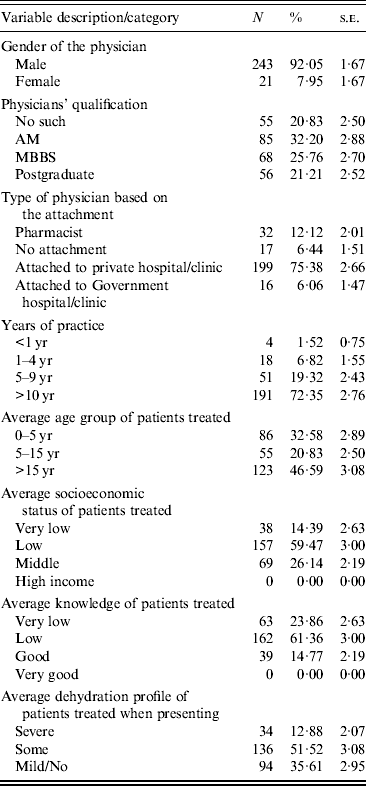
s.e., Standard error; AM, alternative medicine/equivalent quack practitioners' training in India; MBBS, medical graduation qualification in India.
The mean score for the physicians' overall knowledge regarding diarrhoea was 70·82 (s.e. = 0·72). The knowledge level of most was good regarding prevention/control (44·7%, s.e. = 3·07); average regarding diarrhoeal diseases (46·97%, s.e. = 3·08) and their occurrence/spread (43·56%, s.e. = 3·02); poor regarding cholera (50%, s.e. = 3·08), ORS (46·97%, s.e. = 3·08) and management (43·56%, s.e. = 2·84). Approximately two thirds (59·47%, s.e. = 3·03) of the participants mentioned the names of the causative organisms correctly while only 19% (s.e. = 2·43) had good overall knowledge about diarrhoea. About 77% (s.e. = 2·61) of practitioners considered severity of the diarrhoeal disease as the most important factor when deciding whether antibiotics should be prescribed or not. Of the participating physicians, 49% (s.e. = 3·08) and 80% (s.e. = 2·47) prescribed antibiotics to each diarrhoea and cholera patient, respectively, and 55% (s.e. = 3·07) advised stool examination to each diarrhoea case they treated. Results of the descriptive analysis of the knowledge and practice measures are presented in Table 2.
Descriptive analysis of the knowledge and practices regarding diarrhoeal diseases of participating physicians (N = 264)
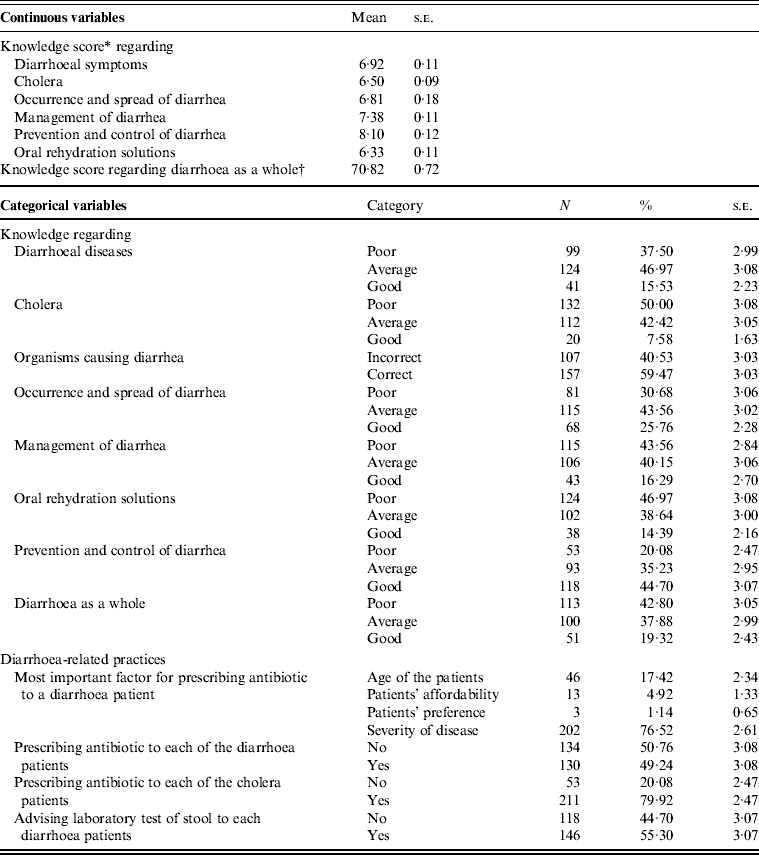
s.e., Standard error; AM, alternative medicine/equivalent quack practitioners' training in India; MBBS, medical graduation qualification in India.
* Measured in a scale of 10.
† Measured in a scale of 100.
Compared to untrained practitioners, graduate and postgraduate physicians had better diarrhoea-related knowledge overall [graduates: odds ratio (OR) 13·90, 95% confidence interval (CI) 6·13–31·54; postgraduates: OR 62·95, 95% CI 24·74–160·17] and in each individual domain. Regarding the pharmacists, physicians attached to governmental and private facilities had better knowledge regarding diarrhoea both overall (Government sector: OR 26·75, 95% CI 6·94–103·13; private sector: OR 9·33, 95% CI 3·42–25·44) and in most of the individual domains. Practitioners treating middle-income group patients had better overall (OR 2·72, 95% CI 1·27–5·79) and ORS-related (OR 4·02, 95% CI 1·76–9·21) knowledge compared to those treating lower-income groups. Physicians treating more knowledgeable patients, had better information regarding diarrhoea as a whole (OR 4·42, 95% CI 2·05–9·53) and in most of its individual domains. Compared to practitioners to whom diarrhoea patients generally presented with severe dehydration, practitioners who usually treated patients presenting with mild/no dehydration had better knowledge regarding signs/symptoms of diarrhoeal diseases (OR 2·73, 95% CI 1·26–5·92), poorer knowledge regarding cholera (OR 0·42, 95% CI 0·19–0·89) and prevention/control of diarrhoea (OR 0·32, 95% CI 0·15–0·70). Associations between the characteristics of the physicians/patients and diarrhoea-related knowledge are presented in Tables 3a , b .
Association between diarrhoea-related knowledge of participating physician (N = 264) and diarrhoeal diseases, cholera, organisms causing diarrhoea, and occurrence and spread of diarrhoea
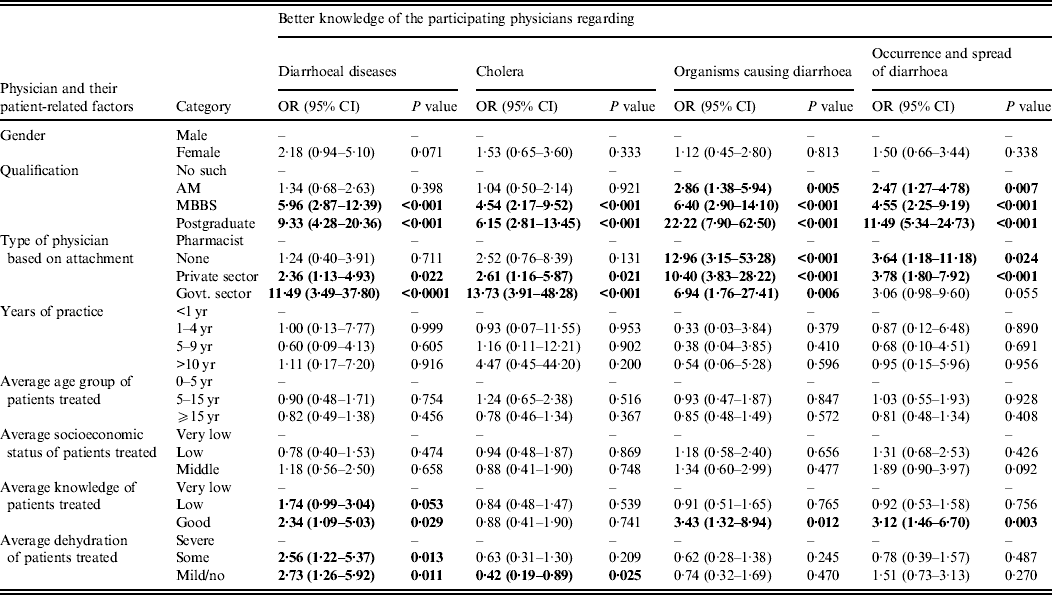
OR, Odds ratio; CI, confidence interval; AM, alternative medicine/equivalent quack practitioners' training in India; MBBS, medical graduation qualification in India.
Bold values indicate associations for which corresponding P values are <0·05.
–, Indicates reference group.
Association between diarrhoea-related knowledge of participating physician (N = 264) and oral rehydration solutions, management of diarrhoea, prevention and control of diarrhoea, and diarrhoea as a whole
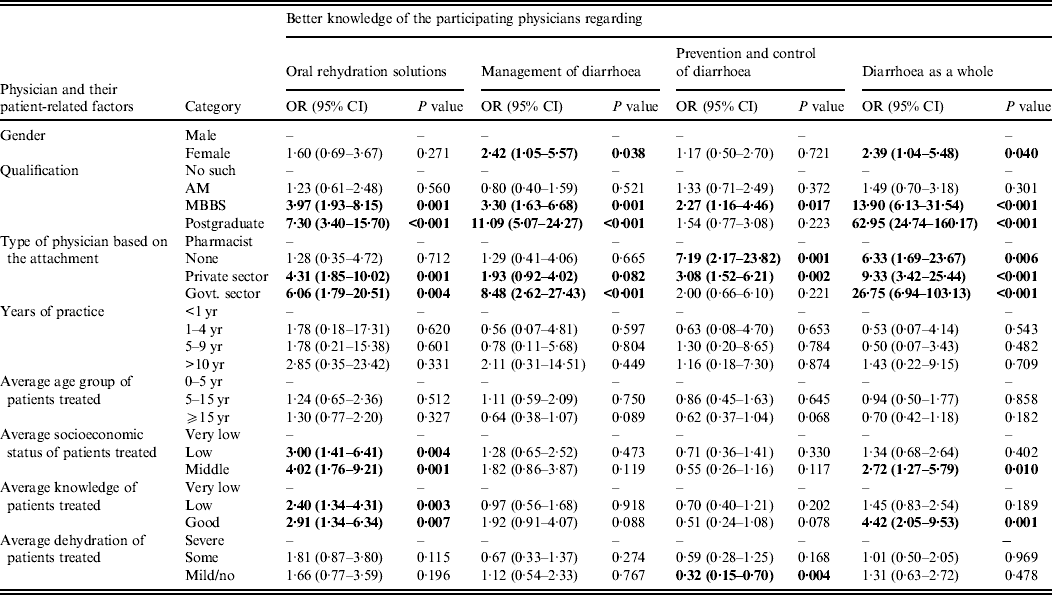
OR, Odds ratio; CI, confidence interval; AM, alternative medicine/equivalent quack practitioners' training in India; MBBS, medical graduation qualification in India.
Bold values indicate associations for which corresponding P values are <0·05.
–, Indicates reference group.
Compared to untrained practitioners, graduate and postgraduate physicians were more likely (graduates: OR 2·69, 95% CI 1·20–6·06; postgraduates: OR 4·23, 95% CI 1·63–10·97) to consider severity to be the most important factor when prescribing antibiotics to a diarrhoea patient and less likely (graduates: OR 0·30, 95% CI 0·14–0·63; postgraduates OR 0·20, 95% CI 0·09–0·46) to prescribe antibiotics to each diarrhoea patient, while practitioners having alternate medicine/equivalent training were most likely (OR 5·77, 95% CI 2·75–12·14) followed by postgraduate doctors (OR 2·93, 95% CI 1·35–6·34) to advise laboratory testing of stool. Practitioners attached to Government hospital/clinic (OR 0·24, 95% CI 0·07–0·86) were less likely to prescribe antibiotics to each diarrhoea patient with reference to pharmacists. Physicians treating adults (OR 1·78, 95% CI 1·02–3·11) and those with some dehydration (OR 2·17, 95% CI 1·01–4·70) had higher odds of prescribing antibiotics to each diarrhoea patient compared to those treating children aged <5 years and severely dehydrated patients, respectively. Association between physicians' characteristics and their diarrhoea-related practices are presented in Table 4.
Association between diarrhoea related practice of participating physician (N = 264) and other factors
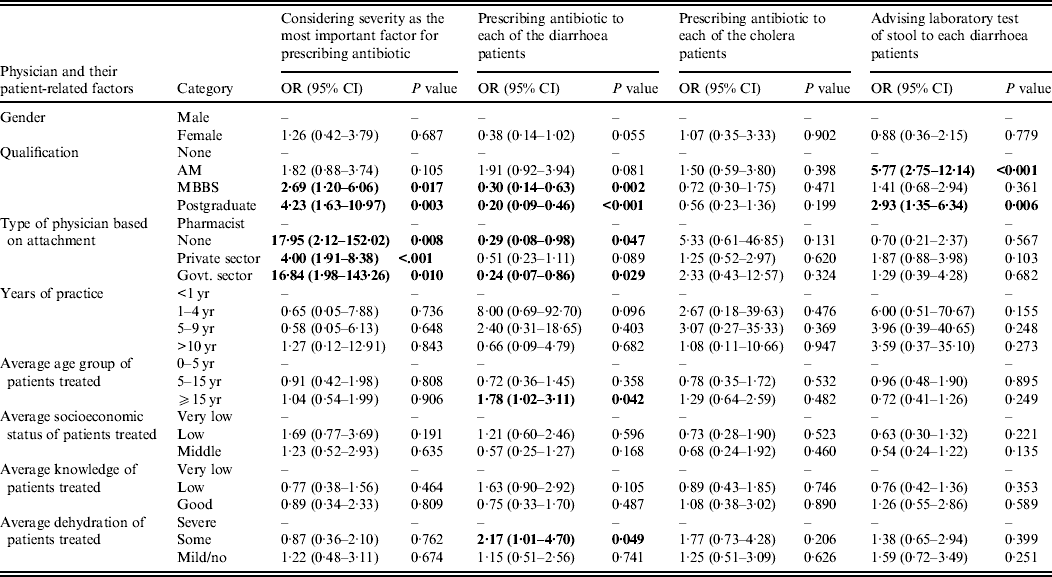
OR, Odds ratio; CI, confidence interval; AM, alternative medicine/equivalent quack practitioners' training in India; MBBS, medical graduation qualification in India.
Bold values indicate associations for which corresponding P values are <0·05.
–, Indicates reference group.
Having a higher overall knowledge score (OR 1·05, 95% CI 1·02–1·07) regarding diarrhoea was positively associated with considering diarrhoeal severity as the decisive factor when prescribing antibiotics. Having higher scores for overall knowledge (OR 0·93, 95% CI 0·90–0·95) and in the component domains were all associated with less likelihood of prescribing antibiotics to each diarrhoea patient. Physicians who had higher knowledge scores regarding cholera (OR 0·78, 95% CI 0·62–0·97) and management of diarrhoeal diseases (OR 0·84, 95% CI 0·70–0·99) were less likely to prescribe antibiotics to each cholera patients. Participants having higher knowledge scores regarding diarrhoeal diseases had lower odds (OR 0·85, 95% CI 0·74–0·98) of advising stool examination for each diarrhoea patients.
While analysing the data to estimate the association between tertile-based knowledge categories and practice regarding diarrhoea, it was observed that physicians with average (OR 2·47, 95% CI 1·29–4·74) and good (OR 2·74, 95% CI 1·17–6·42) overall diarrhoea-related knowledge were more likely to consider severity of diarrhoea as the most important factor for prescribing antibiotics to diarrhoea patients compared to their counterparts with poor knowledge in the respective domains. Compared to those giving incorrect information, practitioners having correct information regarding causative agents for diarrhoea had lower odds (OR 0·49, 95% CI 0·30–0·80) of prescribing antibiotics to each diarrhoea patient. Compared to those with poor knowledge, physicians having average and good knowledge regarding diarrhoea overall (average: OR 0·38, 95% CI 0·22–0·67; good: OR 0·12, 95% CI 0·05–0·26) and in most of its domains had a lower likelihood of prescribing antibiotics to each diarrhoea patient. Regarding poor knowledge, average knowledge about cholera (OR 0·45, 95% CI 0·24–0·87) as well as average and good knowledge regarding prevention/control of diarrhoea (average: OR 0·22, 95% CI 0·07–0·68; good: OR 0·32, 95% CI 0·11–0·97) were found to be associated with a lower likelihood of prescribing antibiotics to each cholera patient and good knowledge about cholera was associated with lower odds (OR 0·30, 95% CI 0·11–0·82) of advising laboratory testing of stool for each diarrhoea patient.
The association between physicians' diarrhoea-related knowledge (using both scores and tertile-based categories) and practices are presented in Table 5.
Association between diarrhoea related knowledge and practice of participating physician (N = 264)
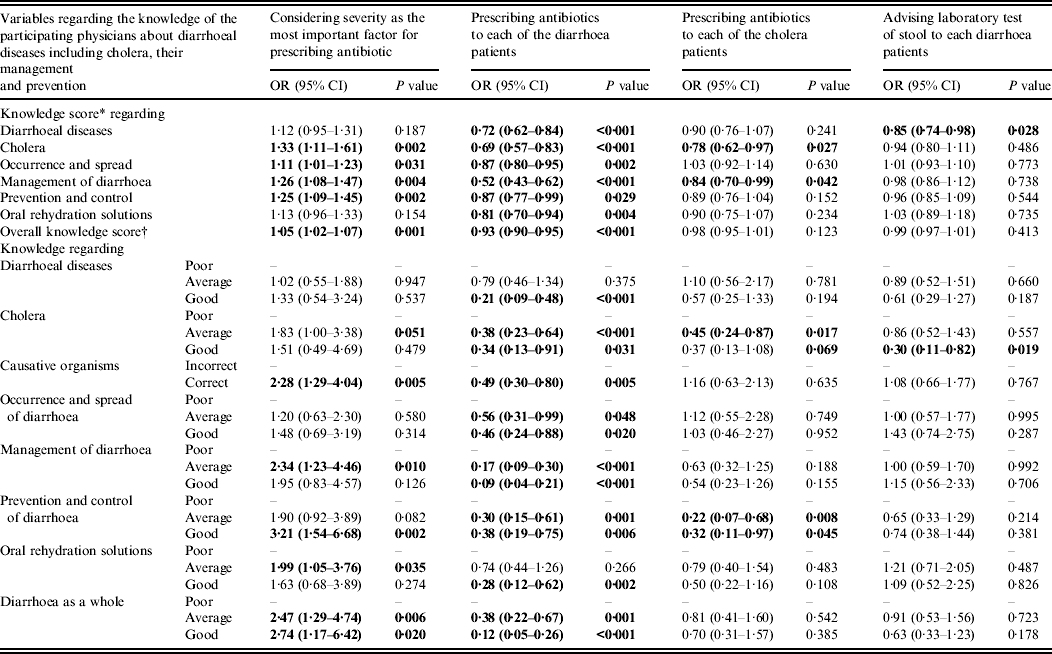
OR, Odds ratio; CI, confidence interval.
Bold values indicate associations for which corresponding P values are <0·05.
–, Indicates reference group.
* Measured in a scale of 10.
† Measured in a scale of 100.
DISCUSSION
Overall knowledge regarding diarrhoea was found to be poor in 43% and good in only 19% of the participants in this cross-sectional study conducted in the physicians practising in the urban slum areas of Kolkata. The knowledge level of most physicians was good regarding prevention/control, average regarding diarrhoeal symptoms, occurrence and spread, but poor about cholera, while 60% correctly named the organisms causing acute diarrhoea.
The majority of the study participants had poor knowledge regarding ORS and management of diarrhoeal cases. These findings corroborate the available evidence regarding the component questions used to estimate the knowledge in these two domains. Surveys conducted previously in Iran, Peru, Nigeria and USA found that participating physicians were lacking in knowledge regarding the dilution, preparation, constituents, indication and mode of action of ORS in diarrhoea cases [Reference Amini-Ranjbar and Bavafa22–Reference Reis26]. According to WHO estimates, globally less than 60% of children received ORS for the treatment of diarrhoea [27]. Other studies reported that 35% of medical officers treating children in Lahore and 32% of physicians in Mexico advised ORS for management of acute diarrhoea [Reference Gutiérrez28, Reference Seyal and Hanif29]. Only 33·8% of physicians participating in a survey conducted in seven Latin American and Caribbean countries had correct knowledge regarding treatment of acute diarrhoea [Reference Sosa and Travers30].
In the present study, the maximum number of physicians mentioned disease severity as the most important factor influencing antibiotic prescription for diarrhoea, followed by patient's age and affordability, respectively. Cross-sectional studies in Thailand, Pakistan, Peru and Brazil indicated that patient's age, severity of disease, SES and preference of the patient/caregivers were considered important by the healthcare providers when prescribing antibiotics [Reference Supcharassaeng and Suankratay2, Reference Paredes23, Reference Hussain31–Reference Schorling, De Souza and Guerrant33].
Of the participants of this survey, 51% and 80% prescribed antibiotics to each of their diarrhoea and cholera patients, respectively. In a study in Thailand during 2009–2010, 45% of diarrhoea patients received antibiotics [Reference Supcharassaeng and Suankratay2]. Survey results showed that 36% of children aged <5 years in Brazil and 61% of patients in Mexico received antibiotics for diarrhoea [Reference Schorling, De Souza and Guerrant33, Reference Bojalil and Calva34]. The WHO estimated that more than 40% of children with acute diarrhoea were treated with unnecessary antibiotics and children aged <5 years received more antibiotics than ORS for diarrhoeal treatment [27, 35].
About 55% of the practitioners participating in the current investigation advised stool examination for each of their diarrhoea patients. In a survey in 2008, 38% of physicians were found to have ordered stool culture for patients with acute diarrhoea in the USA [Reference Angulo36].
Present analyses revealed that practitioners with higher qualifications had better overall knowledge regarding diarrhoea and all its domains. The knowledge of physicians attached to Government healthcare facilities was higher than in other practitioners regarding diarrhoea as a whole, its symptoms, cholera, management of diarrhoeal diseases and ORS. This observation may reflect the fact that in India, most of the training programmes for diarrhoeal management involve Government-sector physicians. Private-sector physicians had better knowledge than their counterparts in the Government sector regarding causative organisms, occurrences/spread of diarrhoea and prevention/control. This may be explained by the better laboratory facilities in the private sector and the relatively affluent patient group attending private facilities.
Physicians treating patients with higher SES were more informed about ORS and diarrhoea as a whole. Average knowledge of the patients treated was found to be associated with physicians' knowledge regarding diarrhoeal symptoms, causative organisms, occurrence/spread, ORS and overall. These observations might indicate that patients who were economically better placed and more aware of diarrhoea-related facts, were in a position to make a better choice of physician. Practitioners, to whom patients usually presented with less serious conditions, had better knowledge regarding the symptoms but poorer knowledge about cholera and prevention/control of diarrhoea. Possibly those who usually treated mild diarrhoea cases developed a better acumen regarding symptom-based diagnoses. Cholera cases in the study area probably presented as a more serious ailment and thus those physicians who usually treated seriously ill patients had better knowledge regarding dealing with them.
Medical graduates and postgraduates considered severity more commonly as the indicator for antibiotic use in diarrhoea and were much less likely to prescribe antibiotics to each diarrhoea patient compared to others. Having higher qualifications and thus better knowledge probably helped them to be judicious when prescribing antimicrobials. Cross-sectional studies in India, Thailand, Pakistan, Peru and Brazil indicated that training/qualification and experience of physicians were important factors for antibiotic prescription [Reference Supcharassaeng and Suankratay2, Reference Paredes23, Reference Hussain31–Reference Schorling, De Souza and Guerrant33, Reference Bharathiraja37].
Compared to pharmacists, practitioners without any attachment and those in the Government sector were more influenced by disease severity when prescribing antibiotics. This may be that due to poor infrastructural support (regarding efficient laboratory testing and management of critical cases) they preferred prescribing antibiotics for all serious cases. They were also much less likely to prescribe antibiotics to each diarrhoea patient compared to pharmacists. For pharmacists, patient's age, SES and preference must have played a more important role when prescribing antibiotics and understandably they prescribed antibiotics much more commonly. Similar findings were reported from Peru and Bangladesh, where pharmacists prescribed antibiotics much more commonly than doctors [Reference Kristiansson38, Reference Ahmed and Hossain39]. In Pakistan, surveys reported that Government doctors advised less antibiotics and laboratory tests than private practitioners [Reference Hussain31, Reference Siddiqi40].
Physicians generally treating adults and cases with some dehydration were more likely to advise antibiotics for all of their diarrhoea patients compared to children aged <5 years and severely dehydrated cases, respectively. These observations may indicate that both children and seriously dehydrated patients were usually referred to Government hospitals immediately by the practitioners of the study area, before even initiating any treatment.
Odds of advising stool examination to each diarrhoea patient were highest in quacks, followed by postgraduates. Quacks might have considered stool testing as routine for each diarrhoea case whereas specialists were keen to know about the specific causative organisms before prescribing antibiotics.
Practitioners' knowledge regarding diarrhoea as a whole and in most of its domains, were positively associated with their likelihood of being influenced by disease severity when prescribing antibiotics and negatively associated with their propensity for prescribing antibiotics to each diarrhoea case they treated. Physicians having better knowledge regarding cholera, management and prevention were less likely to prescribe antibiotics to each cholera patient. Their knowledge score regarding diarrhoeal symptoms and better knowledge regarding cholera were negatively associated with their odds of advising stool examination to each of their diarrhoea patients. These findings possibly reflect physicians considering the issues of affordability of the residents of the study area; knowledgeable physicians were probably more cautious when advising antibiotics and laboratory tests. They might also have taken into account the fact that patients, if prescribed antibiotics, might not follow the full course with the resultant increased likelihood of the development of antimicrobial-resistant organisms, which is detrimental in these resource-poor settings.
Limitations
The cross-sectional design precluded any causal interpretation of the results and there remained scope for temporal ambiguity, hence the results were interpreted as associations. Similar to any other questionnaire-based assessment of knowledge and practice, differences in the attention of the participants when responding, might introduce information bias. The sample size of the study was not sufficient for multivariate analyses adjusting for potential covariates. Despite these limitations, excellent participation, a representative sample and algorithm-based assessment enabled the investigators to report some important observations which are the first of their kind from the urban slums of India.
CONCLUSION
In the slums of Kolkata, diarrhoeal management by practitioners follows their diarrhoea-related knowledge but the overall practice is far from satisfactory. In these underserved areas, residents are more vulnerable to diarrhoeal diseases due to poor access to safe water, unhygienic environment and lack of proper sanitation. While the management practice of physicians is critical for the control of diarrhoea in a community, ironically most of the diarrhoea control programmes in India involve qualified physicians only. Efforts to better the practices of qualified practitioners are clearly not adequate for this purpose in these resource-poor settings, as evident from this study, as the healthcare-seeking behaviour of these slum dwellers is very diverse and a larger proportion of these residents seek healthcare from quacks and pharmacists whose knowledge regarding enteric diseases is extremely poor. The observations of this study will be helpful in understanding the gap in knowledge of the local healthcare providers regarding diarrhoea as a whole as well as its management, with special emphasis on cholera, and this will help in strengthening public health planning for the prevention and control of diarrhoeal diseases in underserved areas. Diarrhoea prevention and control programme should also be aimed towards improving the knowledge of these untrained practitioners for the overall improvement in diarrhoeal management in urban slums. Improvement of diarrhoeal management practices and rational use of antibiotics in turn will result in a decrease in the burden of diarrhoeal diseases in these areas, and by minimizing the chances of emergence of drug-resistant cases will also help to reduce the economic burden of the disease on both Government and individuals.
ACKNOWLEDGEMENTS
The researchers acknowledge the institutional funding support of the National Institute of Cholera and Enteric Diseases (Indian Council of Medical Research), valuable suggestions of the members of the Institutional Scientific Advisory Committee and the cooperation of the participating physicians and community workers who contributed their time and effort for the conduct of this research.
DECLARATION OF INTEREST
None.



