


In January 2023, Florida Governor Ron DeSantis appointed six new members to the Board of Trustees of New College, a small, alternative liberal arts college. The new trustees, led by the conservative activist and Manhattan Institute fellow Christopher Rufo, proceeded to fire New College’s president, Patricia Okker, installing a close DeSantis ally in her place. The trustees, along with new President Richard Corcoran, immediately began to transform the College, eliminating its diversity office and gender studies program, recruiting scholarship athletes to change the student culture (and predominantly female gender composition), and delaying tenure approvals that had been voted by the faculty. Nearly a third of the teaching staff and student body soon departed. Rufo proclaimed that “our all-star board will demonstrate that the public universities, which have been corrupted by woke nihilism, can be recaptured, restructured, and reformed.”Footnote 1
For DeSantis, transforming New College was a way to demonstrate his conservative bona fides for Republican primary voters in his (ill-fated) presidential campaign. Indeed, DeSantis’s takeover of New College was a flashpoint in a building Republican attack on higher education policy. Rufo had become a minor celebrity in the aftermath of the George Floyd protests by focusing conservative media attention on the alleged threats posed by Critical Race Theory and Diversity Equity and Inclusion programs.Footnote 2 The second Trump administration broadened these attacks by withholding vast amounts of research funds from elite universities while demanding major changes in their practices regarding admissions, hiring, and campus governance.
This was by no means the first time that higher education has been in the political crosshairs. William F. Buckley Jr.’s God and Man at Yale: The Superstitions of Academic Freedom (1951) captured conservatives’ growing frustration with academia’s support for government activism in the New Deal era.Footnote 3 As he campaigned for governor of California in 1966, Ronald Reagan decried the “beatniks, radicals and filthy speech advocates” on the state’s campuses.Footnote 4 He eventually sent in the National Guard to quash the protests at UC-Berkeley’s People’s Park. A few years later, future Supreme Court justice Lewis Powell, in his influential strategy memorandum to the U.S. Chamber of Commerce, claimed that business needed to establish conservative think tanks and organizations to counter purported liberal dominance on university campuses.Footnote 5
Nonetheless, until recently, this strain of conservative criticism existed alongside considerable support among Republicans for higher education. In particular, the important economic role played by colleges and universities in their communities provided an incentive for members of both parties to back them. Despite its liberal reputation, New College long enjoyed strong support from the Republican legislators representing its Sarasota home.Footnote 6 Notwithstanding Reagan’s criticisms as governor, one could argue that the University of California (UC) fared better under Republican governors than Democratic ones in the 1980s and 1990s: while universities were just one of many programs that Democrats wanted to fund, the state university system was one of the few programs that Republican politicians believed benefited their own voters, many of whom sent their children to the University.Footnote 7 As discussed below, California Republican platforms in the 1980s and early 1990s claimed credit for big spending increases that restored the state university system to national leadership after years of Democratic fiscal neglect. It is hard to imagine any state Republican Party making a similar case today.
This article traces the development of party polarization on higher education. Our analysis of 1,044 Democratic and Republican state and national platforms from 1980 to 2025 tracks the substantial changes in the GOP’s perspective on higher education. The party generally took a positive stance with respect to colleges and universities in the 1980s and early 1990s, often advocating for greater resources while praising them as economic engines that help keep talented young people in their states. There are signs of change in the mid-1990s as about one-fifth of state Republican parties criticized alleged liberal bias, perceived limitations on conservative speech, or affirmative action in admissions. Calls for increased resources also became less common in the 1990s. Republican platforms grew increasingly critical over the ensuing years. By the 2010s, only one-fourth of platforms had anything positive to say about higher education and just 8 percent did so in 2024–25. By contrast, more than two-thirds of the state platforms criticized higher education explicitly in the 2020s, generally focusing on claims about liberal bias, race, sexuality, and campus speech.Footnote 8 The broad GOP shift evident in the states is important for understanding the political response to the Trump administration’s actions. By the time Donald Trump sought to reshape campus governance, threatened grant funding, and imposed international student restrictions in 2025, Republicans at the state level had embraced challenges to higher education, limiting the potential for pushback from GOP politicians.
For their part, Democrats consistently praised higher education in their platforms throughout the 1980s–2020s. Even as the Democratic coalition shifted over time to include many more college-educated voters, the party’s stance toward 4-year colleges and universities was largely stable. The main shift we find is increased concern with costs and student debt—and alongside this concern, greater support for loan forgiveness. A second noteworthy change toward the end of our period is increased attention to questions of race, gender, and sexuality. Roughly two-thirds of the party’s platforms were silent on these areas from the 1980s into the 2010s. Discussion of race, gender, and sexuality has become more prominent in Democratic platforms in recent years—just as Republicans became much more likely to attack prevailing policies in these domains from the right. While much of the story traced below is of steady, gradual change among Republicans, the ramping up of polarization on race and sexuality in recent years is striking—and likely illuminates why conflict over higher education has become so intense.
In one sense, the story we trace is a familiar one. Political scientists have explored the development of party polarization across a range of issues, including the civil rights realignment of the 1960s, the growing party gulf on abortion, gay rights, and guns that started in the 1970s, and the sharp divide on immigration that emerged in the early 2000s.Footnote 9 A common story across most of these cases is that the parties first began to divide at the state and local level, with allied groups and, in several cases, ordinary voters, pushing the parties further apart. For example, locally rooted Northern Democratic politicians began to embrace a pro-civil rights position in the late 1930s and 1940s in response to pressure from Black voters, labor unions, and liberal groups. National leaders, seeking to maintain their coalition with white Southern conservatives, generally resisted this pressure until the civil rights movement forced a decision in the mid-1960s.Footnote 10 Similarly, Gerald Gamm and coauthors show that state Democratic and Republican parties had diverged on abortion and gay rights before the national parties took a stand, noting that “party leadership on these issues came from the states.”Footnote 11 Kirsten Walters and Theda Skocpol find a somewhat different pattern when it comes to immigration, with the national and state parties moving roughly in tandem; even so they identify important bottom-up elements, noting “early-moving states introduced new themes that later diffused across many states and gained ground in national party platforms.”Footnote 12 Walters and Skocpol also suggest that “grassroots conservatives agitated by immigration and undocumented immigrants” played a significant role in driving the changes in the GOP’s positioning.Footnote 13
These studies collectively offer a view of partisan change that fits with traditional understandings of the U.S. federal system. From the founding era, American parties have been decentralized institutions. Even as competition for the presidency and control of Congress fostered the formation of national parties, ambitious politicians’ career ladders still ran through state and local politics—giving them an incentive to be highly responsive to locally rooted political, social, and economic constituencies. Given this institutional context, it makes sense that partisan change would typically bubble up from below.
But American politics has nationalized in recent decades.Footnote 14 Regardless of geography, the politicians in each party today raise money from many of the same donors and are attentive to the same media and activists. Faced with these new incentives, state parties have become increasingly similar across regions and are arguably less responsive to locally rooted political economic interests.Footnote 15 These developments raise the possibility that the dynamics for higher education may be different from earlier cases of partisan change. Our evidence suggests that state parties generally moved after the national GOP began to embrace a more critical stance toward academia.
We emphasize that this study is an initial effort to understand a multifaceted, complicated process. Nonetheless, after presenting our descriptive results, we consider how our findings relate to potential explanations for changing party positions. Our evidence regarding the timing of the GOP shift is not consistent with strong versions of voter-based explanations, such as the emergence of the “diploma divide” in party identification or the decline in Republican voters’ trust in higher education. The evidence is more consistent with the argument that nationally oriented conservative groups and activists played an important role in sparking GOP opposition. They articulated themes that would later become prevalent in GOP platforms, with their earliest successes evident in the party’s national platforms. Developments on campus—changes in curricula and in policies regarding speech and harassment, the increasingly liberal and Democratic allegiances of faculty, administrators, and students, and the shifting demographic composition of the student body—may well have fueled these conservative critiques.
We anticipate that future work will draw on additional data to delve more deeply into these causal dynamics. The pattern regarding which GOP states moved first and most forcefully against contemporary academia—and the similar end point reached by Republicans across the United States—are each important to understand. While we present suggestive evidence that conservative think tanks and activists played an important role in articulating themes that would later become prevalent in GOP platforms, additional research could usefully trace the diffusion of specific critiques across space and time. State legislation, budgets, and executive action should also be examined to explore the policy consequences on the ground more fully. We view the main contribution of this paper to rest on the rich descriptive data we have assembled, which provides a vantage point to understand the contours and timing of the dramatic transformation in the relationship between the U.S. party system and higher education.
1. Higher education and party realignment
This study builds on an emergent literature on changes in party positioning on higher education. While there has been a rich literature on growing partisan divisions with respect to K-12 education,Footnote 16 scholars have more recently begun to explore how higher education fits into America’s increasingly polarized party system.
Notwithstanding higher education’s role as a “generator of cultural change and conflict,” Matt Grossmann and David Hopkins note that there were not “strong policy differences between Democrats and Republicans until recently.”Footnote 17 This is evident at the national level, where few higher education votes divided members of Congress along party or ideological lines prior to the mid-to-late 1990s and congressional reauthorization of the Higher Education Act was generally routine.Footnote 18 Since the late 1990s, however, members’ roll call votes on higher education have become increasingly polarized. The Higher Education Act has not been reauthorized since 2008, as Democrats and Republicans have adopted very different frames for evaluating needed policy changes.Footnote 19
Analyses of state spending suggest that partisanship has become more important at lower levels of government as well. While early studies tended to support the view that higher education spending was driven by broad fiscal conditions rather than party,Footnote 20 several recent studies have found that Republican control is associated with less support for higher education—particularly since the Great Recession and in states where white students are becoming less overrepresented in the enrolled population.Footnote 21
Beyond spending decisions, Barrett Taylor provides an important account of the changing state politics of higher education. Taylor argues that as higher education institutions diversified racially, conservatives came to see them as “irredeemably leftist” and began to challenge their independence.Footnote 22 Starting in the early 2000s, conservative politicians in several states moved to secure greater control over admissions, curriculum, and tenure. Taylor argues that this movement was fueled, in part, by national organizations such as the American Legislative Exchange Committee, which sought a broad conservative reordering of state priorities. Although these efforts met with varying degrees of success, Taylor’s case studies of Wisconsin, Arizona, North Carolina, and Iowa demonstrate that state-level Republicans were active in the 2010s in seeking to transform higher education.
2. Data
We draw on state and national party platforms as our main data source in assessing party positioning on higher education. Platforms offer several advantages in studying partisan change. They provide a consistent, long-term data source covering many states. The national parties approve a new platform every 4 years, while most states write them every 2 years.Footnote 23 Party officials and activists devote considerable time and effort to shaping their platforms. The documents can be viewed as a reflection of the relative strength of specific groups and ideological currents within each party and as public signals of the party’s stances.Footnote 24 Indeed, the inclusion of a supportive plank is often an indication that a group has won a place in a party’s coalition, signaling the direction that the party is heading.Footnote 25 This makes platforms a particularly useful lens for studying shifts in party coalitions and priorities.Footnote 26 Although citizens rarely read platforms, they are typically covered in newspapers and can reach voters through a variety of campaign means. Furthermore, prior studies have shown that elected officials regularly seek to enact major platform goals.Footnote 27
Scholars have used platforms to trace broad changes in national party ideology and agendas and to examine the relationship between state- and national-level changes on specific issues.Footnote 28 Ross Jackson and Brian Heath examine Republican national platforms’ positioning on higher education, finding increasingly negative sentiment starting in the late 1980s.Footnote 29 We build on and extend their study by examining both parties’ stances across a wide range of states and the national level. The state-level data are useful because higher education policy is set both in state capitals and Washington and because it provides a more fine-grained measure of party positions. It also provides insight into whether the GOP shift permeated downward from the national party or bubbled up from below.
While national platforms are easily accessible, collecting state platforms is challenging. Building on the archival work of several scholars over the past two decades, we analyzed 529 state and national Republican platforms and 515 state and national Democratic platforms covering 1980–2025.Footnote 30 We coded the GOP platforms for the thirty states where we had sufficient coverage spanning both the 1980s–90s and the 2020s. We coded the Democratic platforms for all but five of these states—Alabama, South Carolina, Illinois, Oklahoma, and Missouri, for which there were few Democratic platforms.Footnote 31 As Figure 1 shows, we have platforms from each major U.S. region—with near-universal coverage west of the Mississippi River. The lack of coverage of Florida is unfortunate given its prominence in higher education debates, but we have platforms from several other southern states (Texas, Arkansas, North Carolina, and the Alabama and South Carolina GOP). Several northeastern states with a strong machine tradition also lacked sufficient platform coverage (e.g. New York, Pennsylvania, Connecticut, and New Jersey), making the mid-Atlantic and lower New England the weakest regions in terms of inclusion.Footnote 32 While we lack platforms for Ohio and Michigan, we do have Indiana, Illinois, Minnesota, and Wisconsin, giving us good coverage for the Midwest. The top panel of Figure 2 displays the total number of platforms by year, disaggregated by party. The bottom panel depicts annual party platform coverage by state from 1980 to 2025.
State Party Platforms Collected.

State Party Platform Coverage with Annual Summary.

We use the platforms to track change and continuity in each party’s stances with respect to higher education. To identify and retrieve platform references to higher education, we read through each platform and conducted a series of keyword text searches using relevant terms to ensure we did not miss any references (e.g. education, college, university, teach, teacher, professor, faculty, student, school, and campus). In many cases, the platforms had a separate section on education—and in some cases, higher education. Even so, discussion of higher education was often included in other parts of the platform, making it necessary to read through the entire document. We also retrieved all text related to K-12 education in each platform; future work can fruitfully consider the connections between changing views in these two policy domains.Footnote 33
In many cases, it was obvious that a plank referred to higher education (e.g. references to the state university system). In other cases, we examined the precise wording and context to determine whether it was, at least in part, about higher education. For example, a statement about “all levels of education” was treated as encompassing both K-12 and higher education; by contrast, when a plank emphasized “parents” or “children,” we treated it as focused on K-12 rather than higher education (see Appendix 1 for a more detailed discussion of the criteria for inclusion, with examples). While we include all references to postsecondary education (e.g. community colleges) in our word count for higher education, our coding of tone and positioning focuses on each party’s stance toward 4-year colleges and universities.
Our primary analysis relies on the authors’ hand-coding of each platform. This was a labor-intensive process, but we believe that it is the most effective approach due to the importance of context clues and knowledge of state-level politics in interpreting what certain planks were intended to convey.Footnote 34 In preparation for this hand-coding, the authors developed a detailed guide that specified the criteria for coding each variable (see Appendix 2 for this guide). The guide listed a series of specific questions that were asked about each platform (e.g. Did it advocate for increased or decreased resources for higher education? Did it include any positive statements about 4-year colleges and universities? Did it indicate that academic freedom or freedom of speech needed protection on college campuses? If so, did it suggest that the threat is coming from the right or the left? Did it advocate for or criticize curriculum that is focused on the experiences and perspectives of racial minorities?).Footnote 35
The analysis below relies heavily on these specific—and relatively straightforward—questions. However, for a broader perspective, we constructed a summary measure of the general stance of the platform with respect to the prevailing structure, policies, and role of 4-year colleges and universities. This variable ranged from −2 (negative) to +2 (positive). We coded platforms as “+2” if they were explicitly positive—for example, discussing the value of higher education for the state or advocating for increased resources. Indiana Republicans’ 1996 platform was coded “+2” for this statement:
In keeping with our long legacy of support for quality education, we restate our priority of educating future generations at ever-increasing levels of achievement from pre-school through college and beyond, utilizing the following concepts: We are dedicated to encouraging increased participation in higher education throughout the state and we are committed to improving our institutions of higher education, both public and private, to enhance the quality of life for Hoosiers and to keep our state competitive in the future.
The statement can be brief—if it praises higher education, extols its value, or endorses more resources. An example would be Missouri Republicans’ 2008 platform, which claimed credit for “Republican success in increased funding for Missouri’s public universities and colleges through the appropriations process and the Lewis and Clark Discovery Initiative.”
Platforms that included only vague, general positive language, or that had multiple positive statements but also direct criticism of one aspect of higher education, were coded as +1 (see Appendix 2 for examples of platforms in each scale category). Platforms that included a roughly equal mix of positive and negative statements, or that had no evaluative language, were coded as 0.Footnote 36 Platforms with multiple negative statements but also more limited positive language were coded −1. When a platform stated opposition to a current higher education policy (e.g. calls to end affirmative action or in-state tuition for undocumented students) but did not criticize the educational aspects of colleges and universities explicitly, it was also coded −1.
Platforms that were explicitly negative in tone were coded −2. An example is Minnesota Republicans’ 2022 platform, which condemned affirmative action in admissions, called for an end to scholarships for undocumented students, and declared that “College education should be paid for by students and not taxpayers. At the University level, we should restore academic and intellectual freedom for professors and students, and: Prohibit imposing fees that support student organizations without consent.”Footnote 37 In the aftermath of disruptions of conservative campus speakers in 2017–18, California Republicans’ 2019 platform declared:
We believe that the free exchange of ideas at institutions of higher learning is key to their fundamental purpose. We oppose all censorship of student speech on public universities through policies explicit or implicit. We believe that private institutions of higher learning must have clear and consistent policies, applied fairly, regarding student speech and expression. All universities have a responsibility to protect students seeking to engage in political activism from violent responses from those both affiliated and unaffiliated with the university.
Given the absence of any positive discussion of higher education, this clear, extensive criticism of prevailing policies led us to code the platform as −2.Footnote 38
To assess the reliability of the hand-coding, each coauthor independently coded a random sample of fifty Democratic and Republican state platforms. Seven of the 100 platforms—each Republican—had no higher education text. They are dropped from the reliability check since agreement in these seven cases was trivially achieved. (The absence of text itself is informative; as a result, these platforms are not dropped from the analysis below.) For the five-point summary measure of positive versus negative tone—which is arguably a hard test—the coders exact matched 73 percent of the time. Ninety-seven percent of the cases were within one scale unit. The two sets of scores correlated at .865 and the weighted Cohen’s kappa was .86.Footnote 39 As a further check, we supplemented the hand-coding with sentiment analysis using an established dictionary of positive and negative words and with an Large Language Model (LLM)-based coding of whether each platform included positive text (see discussion below).
Share of Higher Education Words in Platforms, 1980–2024.

3. Results
3.1. Attention to higher education
An initial question is the extent to which each party focused on higher education. Figure 3, which tracks the average share of words in each party’s platforms that address higher education, shows that Democrats and Republicans each devoted about 3 percent of their platform text to higher education in the 1980s and early 1990s (each data point reflects the average for all platforms in a 2-year period—for example, 1980–81, 1982–83—which was about twenty to twenty-six platforms per party).Footnote 40 Republican attention fell in the mid-to-late 1990s and remained in the 2 percent range through 2020, before increasing noticeably in 2022–25. Even as Republicans wrote less about higher education from the mid-1990s through 2020, the share of K-12 language in GOP platforms was higher than for Democrats. This suggests that it was something specific about the party’s perspective on higher education that led to less attention. Democratic attention was more stable by comparison, though it was, on average, slightly higher after 2010 than before.
While average attention is a useful metric, an alternative is to ask whether a platform included a substantive discussion of higher education. To assess this, we examined the share of platforms that included at least twenty-five higher education-related words.Footnote 41 The results, presented in Figure 4, show that Democratic platforms consistently included at least a minimal discussion of higher education. By contrast, many state Republican parties chose not to talk much about higher education. This is especially the case in 2012–20, when about 40 percent of GOP platforms included fewer than twenty-five words on higher education and 24 percent included no higher education words. In many states, Republicans’ turn against the higher education sector took place in two stages: initially, they simply stopped talking about it—and they only later turned decisively negative in their positioning. This is a case in which silence was itself indicative of changing priorities, as Republicans in many states evidently moved away from seeing higher education as an important public concern worth serious attention in their platforms.
Share of Platforms with Twenty-Five or More Higher Education Words, 1980–2024.

3.2. General tone and favorability
We employed several measures to assess the overall tone and favorability of each platform toward higher education. We start, in Figure 5, with the summary measure described above, which provides a global assessment of each platform’s stance toward the contemporary higher education system. It shows that Democratic platforms remained consistently positive throughout, with average scores increasing a bit in the 2010s as they approached the ceiling of +2 on the −2 to +2 scale.
Platform Average Net Tone Toward Higher Education, 1980–2024.

The story for Republicans is very different. In the 1980s and early 1990s, GOP platforms were mildly favorable to higher education with an average score of about 1.0–1.3; this is about a half point lower than average Democratic favorability but still clearly positive on balance. Indeed, just 4 percent of GOP platforms were coded as on balance negative prior to 1994. There is a steady decline in Republican favorability over the next 30 years. Even so, the average score does not turn negative until 2008. By 2024, however, the average Republican platform score is −1.6. Twenty-two of the twenty-five GOP platforms in 2024–25 were negative toward higher education; the remaining three had no higher education text.
As an example, Kansas Republicans’ 1986 platform—which was typical of its platforms that decade—advocated “developing incentives for more of the top graduates of Kansas high schools to attend state universities and colleges,” noting that “too many of our best students go out of state. Economic development for the long run will require our retaining these students.” The platform went on to support “improving the climate for research and development at our institutions of higher education. If our economy is to diversify and develop, we must help our universities and colleges use their expertise and expand their research potential.” It had no criticism of higher education. From 1996 onward, the state party’s platforms were devoid of positive discussion of 4-year colleges and universities; instead, the platform was either critical or silent. The 2018 and 2022 platforms were the most detailed in their criticism, with the former criticizing in-state tuition for undocumented students and the Boycott, Divestment, and Sanction campaign, while noting that universities should “be places of learning and impartial instruction, not zones of intellectual intolerance and political correctness.”
One might worry that the Republican trend is partly explained by changes in which states wrote platforms. To address this concern, we estimate models using the summary score as the dependent variable, with state fixed effects (and standard errors [SEs] clustered by state). A simple time trend variable is negative and statistically significant for Republicans, suggesting that platforms became .06 (robust SE = .005) more negative on the −2 to +2 scale each year. This corresponds to a shift of 1.8 scale points across 30 years, or the difference between a neutral platform and a highly negative one.Footnote 42 When we instead include a series of dummy variables for each decade, the estimates tell much the same story: a relatively small negative shift from the 1980s to the 1990s (−.33, SE = .17), followed by additional negative moves of roughly .60 in each successive decade (see Appendix 4 for the estimates). The magnitude of the shift in the 2020s is the same as in the 2000s and 2010s but took place in half of the time (2020–25).
A potential limitation is that coding the summary score requires subjective judgment. In addition to the reliability assessment above, we used a standard dictionary of positive and negative words to assess the valence of each platform’s higher education text.Footnote 43 Valence was calculated as the difference between the number of positive and negative words divided by the number of higher education words (excluding stop words).Footnote 44
As Figure 6a shows, the trend for Republicans is similar regardless of whether our hand-coding or the sentiment analysis measure is used. The two series correlate at .76.Footnote 45 However, the Democratic estimates for sentiment do not track our hand-coding: the sentiment score is often less positive than it is for Republicans in the 1980s and it declines in 2014–24 (see Figure 6b). Our examination of the negative and positive words employed in these platforms underscores why hand-coding is, for our purposes, superior to a simple sentiment analysis approach. The 1980s Democratic sentiment scores were driven down, in part, by claims that the Reagan administration was not doing enough to fund higher education. The 2014–24 decline in sentiment was due to Democrats’ emphasis on the debt burden facing students; while this could, in principle, suggest a negative view of higher education, the context of these planks suggested otherwise. Debt concerns were coupled with calls for more financial aid. The platforms consistently emphasized that everyone should have the opportunity for higher education and the government needed to pour more resources into the sector so that it would be affordable for all. New Hampshire’s 2024 Democratic platform is a telling example. It received a negative valence score (−.10) for this plank: “All students have the right to access a quality education, from early childhood through post-secondary college or career training. Increased funding for public community colleges and universities is critical. We believe that all students should be able to access college or career/technical education without a crushing debt burden.” The platform’s emphasis on the value of higher education and the urgency of funding it generously leads us to regard it as clearly positive toward the sector.Footnote 46
(a) Comparing Measures of Republican Platform Tone. (b) Comparing Measures of Democratic Platform Tone.

When one examines simpler measures of platform positioning, they tell a very similar story to the summary measure for both Democrats and Republicans. Figure 7 tracks the share of platforms that included any positive discussion of 4-year colleges or universities. This alternative measure is useful because it allows for the possibility that GOP platforms continued to see value in higher education even as they were increasingly critical of specific policies or alleged biases. An example of a positive statement is Illinois Republicans’ 1990 declaration that “we take pride in world class universities, public and private, which educate exceptional Bachelor-level and graduate-level students, and which generate important research and technology for Illinois and the world.” About 70 percent of GOP platforms and 80–90 percent of Democratic platforms in 1980–94 included at least some positive discussion of higher education. Starting in the mid-1990s, however, there is a steady downward trend for Republicans. While more than 40 percent continued to include some positive language as late as 2010, there is a steep drop in 2012–24. Ninety-two percent of GOP platforms in 2024–25 included no positive higher education references. Fully 165 of the 167 Democratic platforms from 2012 onward included at least one positive statement about higher education.
Share of Platform with Any Positive Discussion of Higher Education, 1980–2024.

As an additional check on the robustness of our coding, we used the ChatGPT LLM to code whether each platform had any positive references to 4-year colleges and universities. Our prompt instructed the LLM to code whether each platform contains “at least one statement that endorses, supports, prioritizes, or promotes higher education.”Footnote 47 Appendix Figure 3a,b compares this LLM-based coding to the hand-coded results. Strikingly, the share of platforms with positive discussion of higher education follows nearly the same exact time trends using the LLM-based coding and our hand-coding. The two series correlate at .98 when both parties are combined (using the party-year as the unit of analysis); they correlate at .95 if one focuses just on Republican platforms and at .87 for Democrats.Footnote 48 The LLM coding thus captures the same transformation in GOP platforms, which went from routinely expressing a positive view of higher education to rarely doing so today; it also indicates that Democratic platforms remained positive throughout. As a further robustness check, we examined the relationship between the LLM coding and our summary measure of platform favorability. This is a tough test since the latter measure is, by design, intended to capture degrees of favorability that are absent from the simple “anything positive” measure. Nonetheless, the two series correlate at .95 (again using party-year as the unit of analysis); the within-party correlation for Republicans was .89, while it was .83 for Democrats (see Appendix Figure 3c,d for each trend). While LLMs have important limitations, the results give more confidence that the stark patterns we find with our hand-coded data are not likely to be attributable to biases in how the authors implemented the platform coding.
Another alternative measure codes whether the platform advocated for greater resources for higher education. For example, California Republicans’ 1984 platform decried the cuts to the UC and California State University (CSU) under Democratic Governor Jerry Brown, noting “the tradition of excellence at these schools has been threatened by both economic conditions and an inadequate commitment by the state.” The platform went on to endorse Republican Governor George Deukmejian’s
plan to boost sharply the state’s general fund commitment to these institutions: 24% for UC, and 22% for CSU in 1984-85. This support would allow campuses to close the [faculty] salary gap immediately, begin the task of modernizing facilities and, bucking a nationwide upward spiral, actually reduce student fees at both universities.
Figure 8 displays the share of Democratic and Republican platforms that endorsed devoting more resources to higher education. Approximately 60 percent of Democratic platforms advocated for increased resources from 1980 to 2006. The share dropped briefly during the Great Recession (2008–10) but then rebounded. In 2016–24, more than 80 percent of Democratic platforms advocated for greater resources. The story for Republicans is much different. Although there is some variability across years, approximately 30 percent of GOP platforms endorsed increased resources in the 1980s and early 1990s. The share fell to 10–15 percent in the mid-1990s and remained in that range through 2010. None of the GOP platforms drafted after 2010 called for more resources.
Share of Platforms Advocating for More Resources for Higher Education, 1980–2024.

At the same time, calls for cuts—which were rare early on—began to appear in the 2000s. Coding for reductions in spending was tricky: relatively few platforms explicitly advocated for cuts, but it was not uncommon for Republican platforms to include planks that would have amounted to an effective cut. For example, Texas’s 2022 platform proposed to “freeze public spending on State higher education until waste and administrative costs are reduced.” The share of GOP platforms calling for cuts (including indirect ones, as in Texas) rose from 2 percent in 1980–99 to 16 percent in 2018–25. No Democratic platforms called for cuts across the entire period.
3.3. Features of the GOP critique of higher education
The results above suggest that the Republican turn against the contemporary higher education system had both gradual and sudden elements. A downward trend clearly begins in the mid-1990s, but there is still considerable diversity across state parties as late as 2010, with a fair number remaining positive even as others were turning negative and still others were silent. But there is a sharper critical turn evident in the most recent platforms.
Our reading of the platforms suggests that an early line of criticism focused on alleged liberal bias and limitations on conservative speech or expression. Figure 9 identifies platforms that indicate that free speech or academic freedom is under challenge due to intolerance either from the left (Republicans) or the right (Democrats). Such claims are virtually absent from GOP platforms until 1988. They appear in about 10–20 percent of GOP platforms from the mid-1990s through about 2014, before ratcheting up to about 30 percent in 2016–24. Democratic platforms rarely pointed to speech or academic freedom threats from the right, though there is a noteworthy uptick in 2024, as conservatives’ attack on curricula relating to race and sexuality became much more prominent.
Share of Platforms Claiming Threats to Free Speech or Academic Freedom, 1980–2024.

Figure 10 casts a broader net, examining the share of GOP platforms that express concerns about higher education’s connection to policies, ideas, or groups that Republicans associate with liberalism. Even with the most inclusive measure—which incorporates complaints about speech limitations, curriculum (e.g. regarding race, sexuality, or history), affirmative action in admissions, Diversity, Equity, and Inclusion programs (DEI), Reserve Officers’ Training Corps (ROTC) programs, LGBTQ+ issues, Title IX enforcement, undocumented students, the political use of fees, restrictions on guns on campus, alleged anti-Semitism, and general liberal bias—fewer than 10 percent of GOP platforms express one or more such concern in 1980–90. These criticisms steadily increased in the 1990s, finding their way into about 25 percent of platforms by 2000; one or more concern was present in the majority of GOP platforms starting in 2008. After flattening out through 2020 (partly due to more states staying silent on higher education), the share increases dramatically in 2022–24. By our last data point, fully 88 percent of GOP platforms included at least one concern about higher education’s association with liberal policies, groups, or ideas. The only three platforms in 2024–25 not to include one or more such concern had zero higher education-related words.Footnote 49
Share of GOP Platforms Expressing Concerns about Liberalism in Higher Education.

This dramatic uptick focused overwhelmingly on questions of race, gender, and sexuality. Figure 10 also tracks the share of the party’s platforms that express a conservative view of one or more race-related policies (i.e. affirmative action, curriculum about racism or the history of race in the United States, DEI, or race-based affinity groups) or gender/sexuality-related policies (i.e. curriculum about gender/sexuality, trans rights on campus, Title IX enforcement, or campus LGBTQ+ groups).Footnote 50 It is notable that concerns about race began to appear with greater frequency in the 1990s, just as the GOP became less positive toward higher education. Even so, platforms that discuss race or gender/sexuality in relation to higher education remained the exception until the 2020s, when there was a precipitous increase for each subject. By 2024, 84 percent of GOP platforms included conservative higher-education-related stances on race, sexuality, or both. So-called “culture war” issues thus went from being essentially absent from GOP platform discussions of higher education to being a dominant theme.
Policies regarding race and sexuality have also become more prominent in recent Democratic platforms. Appendix Figure 4 shows the share of Democratic platforms that take a liberal position on the same race-related and gender/sexuality-related topics that we examined for Republicans. From 1980 to 2016, 28 percent of Democratic platforms took a liberal position on one or more racial issues—generally on affirmative action.Footnote 51 Only 11 percent of Democratic platforms took a liberal position on a gender or sexuality-related issue during these years.Footnote 52 Starting in 2016—coinciding with Donald Trump’s first campaign—Democrats emphasized gender and sexuality far more in their platforms. The 2020 George Floyd protests also sparked increased attention to race. From 2020 to 2024, about half of all Democratic platforms mentioned each issue.
The increased salience of and polarization on racial and gender/sexuality issues is evident in Figure 11, which plots the mean score for each party on a summary variable that ranges from −2 (conservative on both race and gender/sexuality) to +2 (liberal on both). A platform that takes a conservative (liberal) position on one but is silent on the other is coded −1 (+1). Platforms that take no position are coded as 0. (No platform in 1980–2025 took a liberal position in one of these areas and a conservative position in the other.) With both parties largely silent on these issues in the 1980s–early 2000s, the two parties are only about .5 points apart on this scale.Footnote 53 But the gap widened dramatically after 2018, with Republicans moving sharply to the right and Democrats becoming more likely to articulate a liberal position. At a minimum, this evidence is consistent with the idea that the sharp increase in the intensity of partisan differences on higher education was bound up with the parties’ views of race, gender, and sexuality on campuses.
Party Polarization on Race and Sexuality.

3.4. Cost concerns and views of higher education
While Republican criticism of higher education has largely focused on questions of alleged liberal bias, speech, race, gender, and sexuality, one might ask where concerns about college costs have figured into both parties’ positions. The sticker price of attending college has dramatically outpaced inflation over the past several decades. While high private university tuition costs generate headlines, most states now pay for a much smaller share of the cost of attending public colleges and universities, with student tuition and fees picking up the slack.Footnote 54 Figure 12 presents the share of each party’s platforms claiming that tuition costs are too high or impose too big a burden on students and their families. This is one area where change is much more apparent for Democrats than Republicans: roughly 20–40 percent of Democratic platforms included such concerns in the 1980s–2012. In the past decade, about 60–85 percent has done so. By contrast, the share of GOP platforms expressing concerns about tuition costs has generally remained under 20 percent even as college costs have mounted.
Platform Concerns about High Tuition, 1980–2024.

The two parties also differ in the implications they have drawn from higher costs. Ninety percent of Democratic platforms citing cost concerns also called for increased financial aid for students or state funding for institutions (which they generally framed as leading to lower tuition). By contrast, just 16 percent of the (relatively few) GOP platforms expressing cost concerns also called for greater resources or financial aid. Democratic calls for student loan relief also increased as the party’s attention to college costs mounted. While debt relief planks were included in just 3 percent of Democratic platforms citing cost concerns prior to 2014, they were in 55 percent of these platforms from 2014 to 2025. Once a marginal issue for the party, debt relief was a prominent theme in both the lead-up to and aftermath of President Joe Biden’s executive orders on the subject.
Several recent Democratic state platforms went further, following the lead of Vermont Senator Bernie Sanders in calling for free public university tuition.Footnote 55 Oregon Democrats’ 2023 platform proclaimed that “We believe in fully-funded, free public education from preschool through the university level”—but did not offer a plan to pay for it. California Democrats’ 2024 platform called for the state to “work to return to tuition-free public college and university systems for all Californians funded through progressive taxation because a college-educated workforce without debt is vital to California’s future.” Given the challenges involved in obtaining sufficient state funding for free tuition, this is likely one area in which Democrats’ higher education commitments may have been in tension with one another (i.e. quality vs. accessibility).
4. Explaining the GOP turn against higher education: a preliminary exploration
There are several plausible explanations for Republicans’ increasingly critical stance toward 4-year colleges and universities. We expect that the data presented above—tracing where, when, and how the parties have changed on higher education—will provide a substantial evidence base for an in-depth exploration of these causal dynamics. We consider how our evidence relates to potential explanations here, but we view the primary contribution of the present study to rest on the descriptive evidence tracing the development of stark partisan polarization regarding a vital component of American civil society.
One possible explanation for the emergence of polarized party stances is that shifting preferences and demands at the mass level—such as changes in the composition of each party’s coalition—motivated GOP politicians to shift their views. College-educated voters, who traditionally aligned with the Republicans, moved to the Democrats starting in the early 2000s, while non-college voters—especially white voters, but recently also Latino and Asian American—have become more Republican.Footnote 56
The timing of the platform changes, however, is not consistent with the idea that the diploma divide was the initial source of the GOP’s turn against contemporary higher education. The changes in the party’s positioning had started by the mid-1990s, well before the diploma divide emerged. Republican partisanship among college-educated white Americans was about ten points higher than it was for non-college-educated whites as of 1996—a margin that was little changed from 1980.Footnote 57 As late as 2012, party identification among college-educated and non-college-educated white Americans was essentially identical.Footnote 58 By that time, GOP platforms were already, on balance, negative toward higher education—a sharp contrast to their positioning in the 1980s and early 1990s.
This is not to dismiss the potential role of voters in pushing the issue evolution further along once it was well underway. The vociferous criticism evident in recent GOP platforms would likely have found a less favorable reception among the party’s base had it still relied as heavily on college-educated voters. Indeed, the same cultural, gender, and racial issues that have been at the forefront of the most recent battles over higher education likely played an important role in generating the diploma divide in the first place.Footnote 59
A closely related potential explanation for party position change is decreased trust in higher education among Republican voters. Drawing on a diverse set of survey data, Brady and Kent show that similar shares of Democrats and Republicans had “a great deal” of confidence in higher education from the 1970s through the 1990s.Footnote 60 A small gap opened in the mid-to-late 1990s, but it was driven by increased Democratic confidence rather than a GOP decline. Republican voters’ confidence in higher education was still about as high in 2006 as it had been 20 years earlier. That year, more than twice as many GOP voters expressed a “great deal” of confidence (35 percent) as indicated they had “hardly any” confidence (16 percent) in higher education.Footnote 61 Given that GOP party platforms had already shifted substantially by 2006, it appears that declining voter confidence mostly followed, rather than led, the party position change.
A precipitous drop in Republican voter confidence started in 2008, opening a widening gulf between the parties. The share of Republicans expressing a “great deal” of confidence fell to 25 percent by 2012—the same as the share expressing “hardly any” confidence. Even so, when asked whether higher education has a positive or negative effect on the country, Republicans were on balance still positive as late as 2015 (54–37 percent), though less so than Democrats (70–22 percent). Republicans became much more negative over the next few years, such that by 2019, 59 percent believed higher education had a negative impact, while 33 percent cited a positive impact.Footnote 62
The rapid collapse in GOP confidence in 2015–19 likely played a role in enabling the dramatic increase in GOP platform hostility in the early 2020s. Nonetheless, the platform evidence is not consistent with the idea that declining voter trust was the root cause of the changes in Republican positioning: national and state leaders had adopted a much more critical stance toward higher education before the bulk of the mass-level change.
An alternative explanation for the GOP shift that we believe better fits the evidence is that it was the product of a long-term strategic initiative led by nationally oriented ideological activists and foundations. Indeed, declining trust among GOP voters was likely in part attributable to the success of this elite strategy.
The historian Ellen Schrecker traces the extended campaign to transform higher education hatched by conservative elites in the 1970s.Footnote 63 The Powell memo of 1971 laid out a strategy for redressing the prevalence of liberal views on American campuses through business funding of “a staff of highly qualified scholars in the social sciences who do believe in the [free enterprise] system. It should include several of national reputation, whose authorship would be widely respected—even when disagreed with.”Footnote 64 The founding of the Heritage Foundation in 1973 was an early instantiation of this strategy, which gained steam in the late 1970s when former Nixon Treasury Secretary William Simon used his perch as head of the Olin Foundation to direct money to “conservative intellectuals, student interns, alternative campus newspapers, and right-wing faculty groups.”Footnote 65 The Bradley, Coors, and Smith-Richardson foundations also “poured money into this project,” as did Charles Koch, who launched the Center for Libertarian Studies in 1976.Footnote 66
Conservative efforts initially focused on gaining a foothold in academia, providing in the words of Simon, “a nesting place … for brilliant scholars.”Footnote 67 While this necessarily involved criticism of what Simon referred to as “academic chic,” the strategy was not primarily framed as an attack on academia as a sector. But Schrecker argues that the conservative approach shifted in the mid-1980s as conservative groups began to directly attack higher education.Footnote 68
The first major front in this attack was controversy over the teaching of western civilization, which soon broadened into debates over speech and “political correctness.” William Bennett, who served as President Reagan’s head of the National Endowment for the Humanities (1981–84) and Secretary of Education (1985–88), and Lynn Cheney—who succeeded Bennett at the NEH (1986–93)—articulated the case that college campuses were hostile toward the expression of traditional western values.Footnote 69 In 1984, Bennett issued a report on higher education, To Reclaim a Legacy, claiming that humanities curricula had lost sight of universities’ “vital role as a conveyor of the accumulated wisdom of our civilization.” While Bennett acknowledged that higher education’s “increased accessibility to women, racial and ethnic minorities, recent immigrants, and students of limited means is a positive accomplishment of which our nation is justly proud,” he went on to assert that increased pluralism should not lead to a diminished focus on core western values.Footnote 70
Four years later, when Stanford University’s faculty Senate voted to replace its required Western Culture course with a new course that included texts from a wider range of cultures, Bennett pounced, accusing Stanford of “an act of intellectual suicide” and claiming that the University was “choosing works based on the ethnicity or gender of their authors.”Footnote 71 For her part, as NEH head, Cheney decried the reduced focus on western civilization and history in humanities courses, claiming that college students “don’t know what ‘The Federalist Papers’ were … they have got Stalin’s words mixed up with Churchill’s, or Karl Marx’s words with the U.S. Constitution.”Footnote 72 As a remedy, Cheney advocated a core curriculum emphasizing western culture and values.Footnote 73
These conservative arguments captured national attention with the publication of Alan Bloom’s Closing of the American Mind (1987). Bloom provided an “insider” perspective regarding the alleged devaluing of free thought in American universities amid what he characterized as the rise of moral relativism and ignorance of the western canon. The book gained extensive media coverage, bringing the argument that academia was intolerant of dissent to a wide audience.Footnote 74 During these same years, Dinesh D’Souza, who had first started to gain prominence as an undergraduate (1980–83) while writing for the Dartmouth Review—itself funded by the Olin Foundation—put forward the argument that campuses shut out conservative voices. Writing for the Heritage Foundation’s Policy Review in 1986, D’Souza claimed that administrators punish conservative free expression, while refusing to apply campus rules equally to liberal speech.Footnote 75 D’Souza joined the American Enterprise Institute in 1989 and, with support from Olin, began work on Illiberal Education (1991), which decried campus speech codes and diversity policies. It spent 15 weeks on the New York Times bestseller list.Footnote 76
The University of Michigan’s adoption of a so-called “speech code” in 1988 dramatized conservatives’ charge that liberal campuses were imposing a new orthodoxy that limited free expression. Although a federal district court struck down the code a year later as overly broad and vague, the term “political correctness” began to emerge as a rhetorical frame among conservatives. President George H.W. Bush’s University of Michigan commencement speech (1991) denounced the “notion of ‘political correctness,” claiming that while it arises from “the laudable desire to sweep away the debris of racism, sexism and hatred … it declares certain topics off-limits, certain expressions off-limits.”Footnote 77 As the Michigan case suggests, conservative leaders and writers were, at least in part, responding to real changes in campus culture and to the increasingly liberal leanings of college faculty (see discussion below), but they were also strategically seeking out potential controversies that would undermine higher education’s political standing.
Given the work of these nationally oriented conservative leaders and activists, it is perhaps not surprising that the GOP’s 1988 national platform identified restrictions on free speech as an issue, noting that freedom of speech is “one of the first lines of education. This freedom should be afforded to all speakers with a minimum of harassment.”Footnote 78 Although the plank was not nearly as explicit as later condemnations, it is noteworthy that this provision was the first of any GOP platform in our period to include what would become a key GOP line of criticism against higher education.Footnote 79
The war over “political correctness” accelerated in the early 1990s, with conservative activists working with media allies, such as Rush Limbaugh, to expose incidents of campus intolerance toward conservatives. Schrecker notes that “though often exaggerated and endlessly recycled throughout the anti-PC literature, there were enough real incidents of persecution by overzealous campus administrators to give the conservative campaign credibility.”Footnote 80 The conservatives also turned the spotlight onto courses and curricula that they alleged reflected a decline in standards, treating each case as an example of “wishy-washy faculty surrendering to their campuses’ radicals by jettisoning the West’s cultural treasures and replacing them with inferior but politically correct texts.”Footnote 81 Many of these controversies focused on content related to race, gender, and sexuality, a harbinger of the concerted attack on Critical Race Theory, DEI, and gender studies that would come to fruition in the 2020s. The developing conservative media ecosystem—which first gained a widespread audience with Talk Radio in the late 1980s but soon encompassed Fox News and social media—helped bring national attention to what otherwise might have been local stories about campus controversies.
This building conservative critique of academia found further expression in the GOP’s 1996 national platform. It promised that “to protect the nation’s colleges and universities against intolerance, we will work with independent educators to create alternatives to ideological accrediting bodies.” It went on to suggest that in the wake of rising tuitions, “meeting the higher education needs of America will require new, public and private institutions that are flexible, able to apply new technologies, willing to provide access to all those who need it, cost-effective and that place no burden on the American taxpayer.”
As is evident in Figure 10, accusations of ideological bias were still uncommon in state platforms in 1996 even as the national party took up the issue. The idea that alternatives to traditional, taxpayer-supported 4-year colleges and universities were needed had also not yet appeared in state platforms but would become more prominent in the ensuing years. This was the first national platform that we coded as, on balance, negative. That same year, just three of twenty-six GOP state platforms were coded as negative, while eleven were positive and the remaining twelve were neutral.
The national platform continued to be, on balance, negative in 2000. Strikingly, Bush’s 2004 reelection—in the wake of passage of No Child Left Behind—dropped much of the criticism of higher education (and of education more generally) and was, on the whole, positive. However, the 2008 platform—and each subsequent national platform—was clearly negative.Footnote 82 It included a section on “special challenges in higher education,” that is worth quoting at length:
Free speech on college campuses is to be celebrated, but there should be no place in academia for anti-Semitism or racism of any kind. We oppose the hiring, firing, tenure, and promotion practices at universities that discriminate on the basis of political or ideological belief. When federal taxes are used to support such practices, it is inexcusable. We affirm the right of students and faculty to express their views in the face of the leftist dogmatism that dominates many institutions. To preserve the integrity and independence of the nation’s colleges, we will continue to ensure alternatives to ideological accrediting systems.
The section went on to criticize the “hostile atmosphere toward the ROTC” on many leading universities’ campuses, noting that the party will “rigorously enforce” the law “which denies those institutions federal research grants unless their military students have the full rights and privileges of other students.” While 36 percent of GOP state platforms were negative by 2008, the average summary score for the states remained slightly positive and only about half expressed one or more of the long list of conservative concerns that we tracked (see Figure 10). By contrast, the 2008 national platform voiced several of the complaints that would become prevalent at the state level in the ensuing years. It was also the first to mention anti-Semitism and one of the first to suggest that ideological litmus tests were being applied to hiring, tenure, or accreditation processes.Footnote 83
We thus date the national platform shift to 1996—five of the six national platforms from that year through 2024 were on balance negative, with later platforms increasingly harsh. The national party was among the first to adopt a critical stance toward the higher education system. This national leadership offers a stark contrast with the civil rights, abortion, and gay rights cases, each of which emerged first at the state and local level. In these cases, a substantial number of state parties had taken a clear stand before the national parties shifted.Footnote 84 Coupled with the evidence that the higher education issue evolution started before the emergence of the diploma divide and the decline in GOP voter trust in higher education, it appears that elite-led processes likely played a more important role in this case than in these earlier major realignments.
The speed and near-uniformity with which GOP state parties embraced attacks on DEI, race- and gender/sexuality-based curricula, and trans students in the early 2020s is also consistent with the idea that national-level actors and media messages—rather than bottom-up processes—were central (see Figure 10). Conservative think tanks and foundations—including those active since the 1970s, such as the Manhattan Institute and Heritage, and newer ones, such as Russell Vought’s Center for Renewing America—played a key role in sponsoring reports, podcasts, and op-eds targeting universities’ policies on race, gender, and sexuality.Footnote 85 Conservative cable television outlets and social media platforms acted as a force multiplier for these efforts, making it more likely that each case of an alleged campus outrage would become a national story.
This seems a far cry from a locally rooted bubbling up process, and points toward the nationalization of the media and group environment as likely a major part of the higher education issue evolution. In today’s nationalized politics, the process through which issues become highly partisan may be very different from earlier eras. Rather than emanating from state and local politicians and parties responding to specific constituent demands, issue polarization today may be driven by nationally oriented ideological groups with little connection to grassroots actors.Footnote 86
It is important to acknowledge that these conservative activists’ view that academia was aligned with the other side politically had a real empirical basis. Surveys of college and university faculty from the late 1960s onward have consistently shown that self-identified liberals and “far left” faculty outnumber conservatives. Nonetheless, when the American Enterprise Journal’s Public Opinion magazine asked the question, “American Professors: How Liberal?” in 1978, the conclusion presented was “American professors are more liberal than professionals in other occupations, but they are far from being radicals or extreme liberals.”Footnote 87 But faculty have become more liberal and Democratic in recent decades. As of 1989–90, 45 percent identified as liberal or far left, as compared to 16 percent who identified as conservative or “far right”; even so, it is worth noting that a majority (55 percent) still identified as either “middle of the road” or on the right. The share of self-identified liberals started to grow in the mid-1990s, constituting 55 percent by 2004–05 and 59 percent in 2019–20, while just 10 percent identified as conservative or far-right.Footnote 88
Studies of faculty political donations also suggest a move to the left, though the data prior to 1990 is sparse. Thomas Kent draws on Adam Bonica’s DIME scores to estimate the ideology of university-affiliated donors from 1980 through 2014.Footnote 89 He finds a small (but imprecisely estimated) liberal tilt in the 1980s, which then increased steadily over the ensuing decades. By the time that Republican platforms were attacking liberal bias in the mid-to-late 1990s, university-affiliated campaign donations clearly tilted to the left, with mean ideology estimates similar to the press and scientists. This leftward drift accelerated after 2000, and by 2012–14, university-affiliated donors were among the most liberal of the twelve groups studied by Kent. Of course, Republicans’ own policies—including their increasingly skeptical view of climate change science—likely encouraged this faculty shift.Footnote 90
Surveys of college students have also shown that an earlier edge for liberals and Democrats has widened since the early 2000s.Footnote 91 These data underscore a deeper conservative concern that the experience of attending college itself churns out more liberal and Democratic voters. Although the causal evidence on this point is mixed,Footnote 92 the emergence of the diploma gap—along with the growing Democratic edge in counties that are home to a top college or universityFootnote 93—may have accentuated Republicans’ belief that something about what is going on in college classrooms is leading students toward liberalism.
The timing of changing faculty and student partisanship is thus broadly consistent with the changes in GOP positioning and quite plausibly worked in tandem with conservative think tanks and media’s campaign to highlight examples of alleged faculty and administrator bias and of student intolerance. Together, they likely contributed to Republican politicians’ and voters’ perception that university campuses were increasingly connected to causes that they opposed.Footnote 94
With academia increasingly associated with liberalism, it is perhaps not surprising that Republican officials and staff are now less likely to be drawn from highly rated colleges and universities. For example, Craig Volden, Jonathan Wai, and Alan Wiseman find that Republican members of Congress have become much less likely to be graduates of elite educational institutions over the past 50 years—while Democrats have become more likely to be elite institution alums.Footnote 95 A similar pattern characterizes White House staff, with recent Democratic presidents employing staffs with a substantially higher share of elite educated individuals than Republicans.Footnote 96 To the extent that top universities benefited from a political culture in which the elites of both parties were drawn from their ranks, that advantage has dissipated. Even so, the early shift in Republicans’ national platforms—which occurred at a time when national leaders were still largely elite-educated—leads us to be skeptical that this was an initial cause of the GOP’s issue evolution, even if it subsequently reinforced it.Footnote 97
4.1. State-level variation and the GOP turn against contemporary higher education
While our evidence suggests that national forces were critical to the higher education issue evolution, state-level variation should provide additional leverage for teasing out the causal dynamics. For example, future work could fruitfully explore the extent to which changes in GOP elites’ educational backgrounds correlate with changing party positions at the state level. Similarly, state-level data will be helpful for evaluating the argument that the increased representation of people of color in the student population has provoked the GOP backlash.Footnote 98 The share of white students in degree-granting institutions fell from 70 percent in 2000 to 62 percent in 2010 and 56 percent in 2016. During that period, the share of Latino students nearly doubled from 10 to 19 percent, while the share of Asian Americans rose to 6 percent and the share of Black Americans went from 12 to 14 percent.Footnote 99 Drawing on data from 2006 to 2015, Barrett Taylor and coauthors find that party control of state government interacts with white racial representation among students to influence funding for public higher education: unified GOP governments have actually spent more than Democratic or divided governments when white students are overrepresented—but spend less otherwise.Footnote 100 As white overrepresentation has fallen in many states, this is a potential explanation for at least some of the decline in GOP support.Footnote 101 The prominence of race-related complaints in elite rhetoric and GOP platforms—particularly in recent years—is consistent with the idea that changing campus demographics have played a significant role.
Although a detailed exploration of state-level variation is beyond the scope of this article, we briefly consider which states moved first against higher education. Figure 13 ranks the order in which each state had its first platform that we coded as negative on higher education, conditional on that state having no subsequent platforms that were coded as positive.Footnote 102 (This coding would date the national platform as turning negative in 2008; however, as noted above, five of six national platforms starting in 1996 were negative.) The earliest negative states in our sample are Oklahoma (1988), South Carolina (1988), Minnesota (1992), Kansas (1996), Oregon (1996), Texas (1998), California (2000), Iowa (2004), and North Carolina (2004). Southern states are overrepresented (four out of six for which we have coverage were “early movers”) as compared to non-southern states (five out of twenty-four non-southern states were “early movers”). But it is striking that a handful of relatively progressive northern and western states also moved early, which suggests that the GOP shift on higher education was not simply a reflection of a general conservative movement within the party.Footnote 103
Timing of Republican State Platforms Turning Negative.

If one instead focuses on the “late” movers—those which did not become clearly negative until 2021 or later—one sees a wide range of states: Alabama, Alaska, Arizona, Idaho, Illinois, Nevada, Nebraska, and West Virginia; Vermont and Indiana did not become negative even in their last platforms, though Indiana had become notably less positive over time and did not write a 2024 platform.Footnote 104 Several of these states were silent on higher education throughout most of the 2010s, suggesting again that it may be fruitful to consider when parties choose to ignore, rather than engage with, prominent institutions. In any case, this list is regionally diverse and includes both relatively conservative and moderate states. It also includes states with relatively well-funded university systems (e.g. Indiana and Illinois) and states with poorly funded systems (e.g. Arizona and Vermont).Footnote 105
Although beyond the scope of the present paper to model the determinants of variation in the timing and extent of party position change, we expect that this rich data source will be useful to scholars as they seek to explain why certain states moved more quickly and decisively.Footnote 106 At the same time, the similarity in the end point reached by GOP state parties in 2021–25—nearly unanimous in their criticism of higher education—suggests that our attention should focus as well on the pervasive national forces that led to this dramatic turnabout.
5. Conclusions
Since taking office in January 2025, the Trump administration has moved against numerous perceived enemies in American civil society, including universities, media outlets, liberal nonprofits, law firms, and corporate diversity policies. The president’s ability to leverage the regulatory and funding powers of the administrative state to challenge the autonomy of powerful and well-resourced civil society institutions requires scholars of American politics to rethink their understanding of state–society relations in the United States.Footnote 107
Trump’s specific targeting of higher education appears to have caught university administrators by surprise. In a sense, that surprise is understandable: the pressure exerted by Trump went well beyond past precedents—and appears to have violated the law in several cases. Clearly, something fundamental has changed.
Yet Trump’s assault has not come out of nowhere. It is the culmination of a long process of change in Republican views of higher education—one with roots that go back several decades. Our analysis of 1,044 state and national party platforms from 1980 to 2025 shows that Republicans have not always been critical of higher education. The party’s platforms in the 1980s and early 1990s were generally positive. They emphasized the economic benefits that strong colleges and universities provided for their states and the nation and often noted the importance of keeping highly educated, well-trained young people in their states. Beginning in 1988, the party’s national platform began to elaborate the case that higher education is biased in favor of liberals. This argument gradually spread at the state level. Although many state parties remained positive toward higher education into the early 2000s, the average platform leaned negative after 2008. The platforms’ tone toward higher education became steadily more negative throughout this period, with a more rapid erosion evident after 2020 as race- and sexuality-related issues became a staple of GOP rhetoric.
This substantial Republican shift coincided with more modest changes in Democrats’ positioning on higher education. As the party’s coalition has come to include far more college-educated voters, Democrats have become more focused on rising tuition costs and student loan debt. The party has also focused more on race, gender, and sexuality in the past decade—roughly paralleling the GOP shift to the right on these issues. But our reading of the platforms suggests limited evidence that Democrats have responded directly to Republican attacks with a forthright defense of the value of higher education.
One might argue that the group with the greatest responsibility for mounting such a response is not the Democratic Party, but the leaders of colleges and universities themselves. Although we have not gathered data on this, it seems that campus leaders—and campus politics more generally—proceeded in something of a vacuum, where the major shift in GOP views left little mark on either their behavior or rhetoric until very recently. The moves against tenure in several red states—and the takeover of New College—drew localized responses, but nothing approaching a concerted response from the higher education sector. There are many good reasons that there was no such response, including internal campus politics, coordination challenges across institutions, and genuine uncertainty as to whether any plausible response consistent with core principles of academic freedom would have materially shifted the tide of criticism coming from Republicans.Footnote 108
From our standpoint, however, the case of higher education underscores how, in a world of intense party polarization, it is extremely dangerous for any civil society institution when one party views that institution in negative terms. America’s two-party system has not traditionally been viewed as a source of vulnerability for civil society institutions. Indeed, a polity characterized by catch-all, federated parties and a diverse, fragmented society arguably went hand-in-hand in giving rise to a pluralistic politics that limited authoritarian threats—at least to well-resourced groups that held sway with locally rooted politicians.Footnote 109 But in an era of nationalized polarization, distinctly local interests—such as state politicians’ longstanding, bipartisan stake in a vibrant higher education sector that promoted economic growth and helped keep talent from leaving their state—have lost much of their force.
New College of Florida learned about this danger in 2023. Donald Trump and the Republican Party are forcing the entire higher education sector to grapple with it today. The future of American higher education depends on how colleges and universities—and their allies outside academia—collectively respond. Political scientists have generally not paid a lot of attention to the study of higher education or of many of the other civil society institutions that are now under intense pressure. But given that the future of America’s pluralistic republic rests on the continued vitality of such institutions, it is well past the time for our discipline to make it a priority to study their politics and their relationship to state power.
Supplementary material
The supplementary material for this article can be found at https://doi.org/10.1017/S0898588X26100327.
Acknowledgements
We thank Rafael Borisonik, Natalie Greene, Yonatan Paz-Priel, and Sona Rae Wyse for excellent research assistance. The helpful comments and suggestions of Larry Bartels, Desmond Jagmohan, Frances Lee, Hunter Rendleman, Robert Van Houweling, two anonymous reviewers, and the Washington University at St. Louis and Harris School of Public Policy American Politics workshops are gratefully acknowledged. We thank Henry Brady for sharing his survey data on institutional trust and Daniel Coffey for sharing his party platforms collection. We are especially thankful to Gerald Gamm and Justin Phillips who shared their extensive archive of state party platforms.


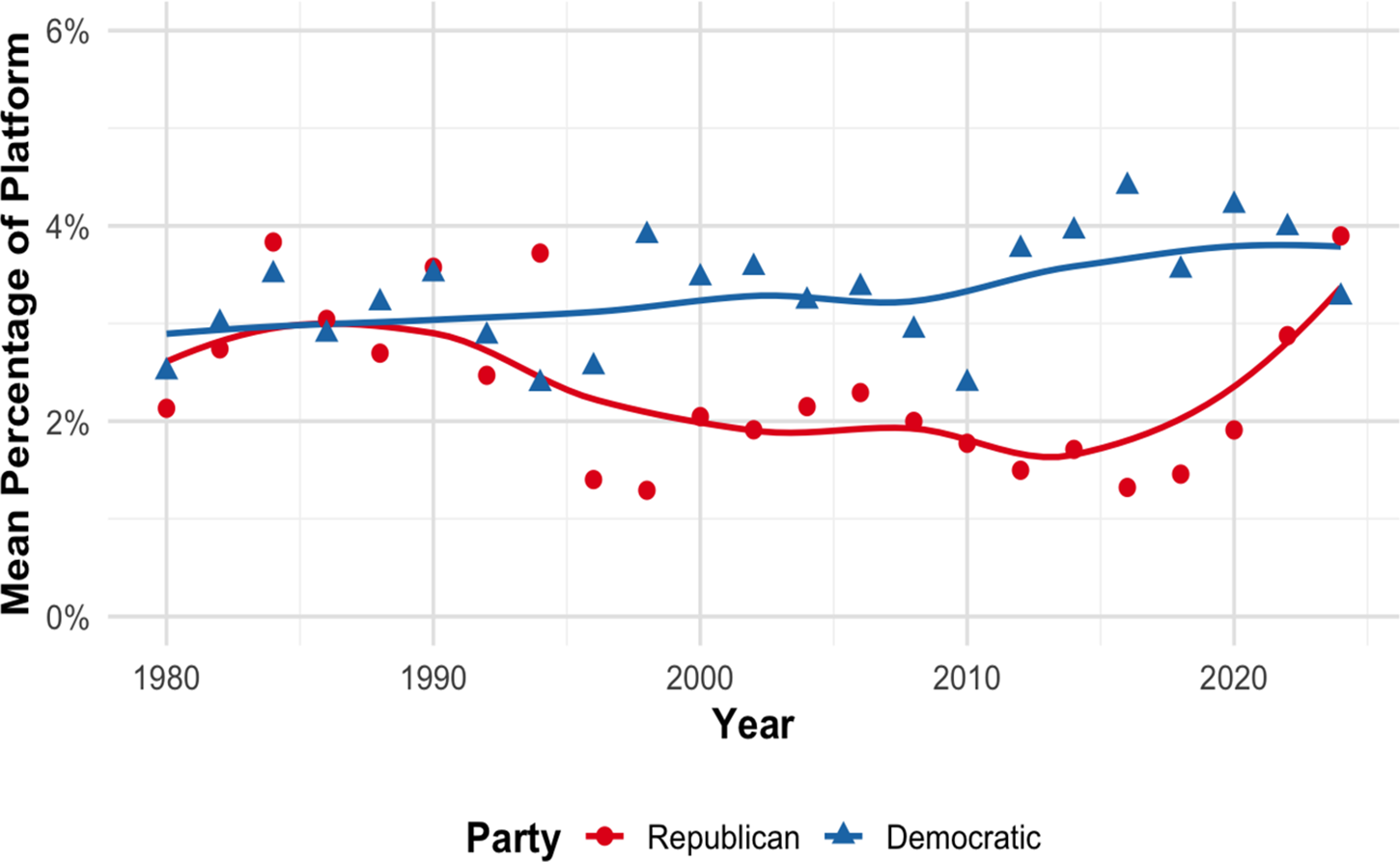
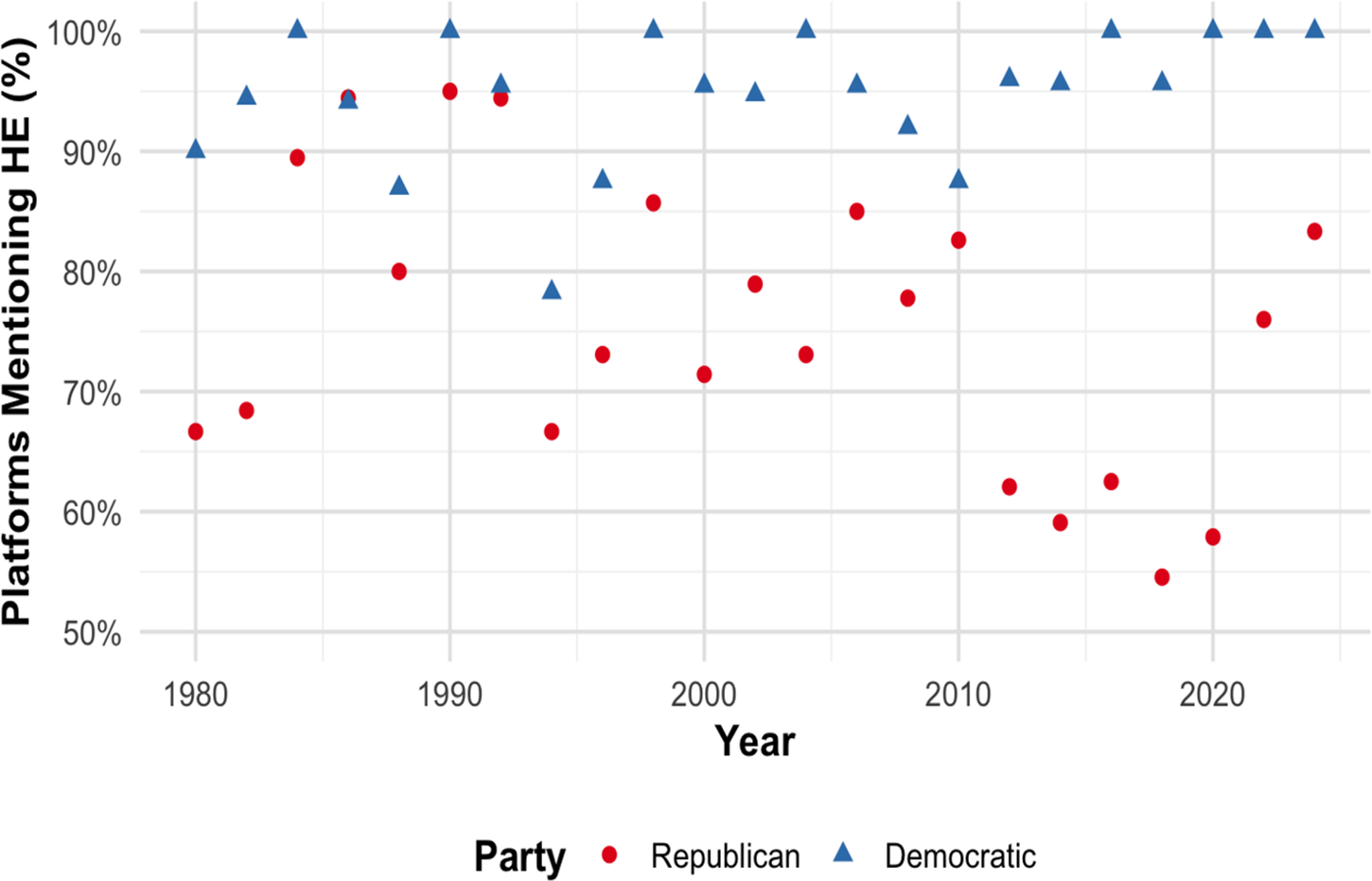
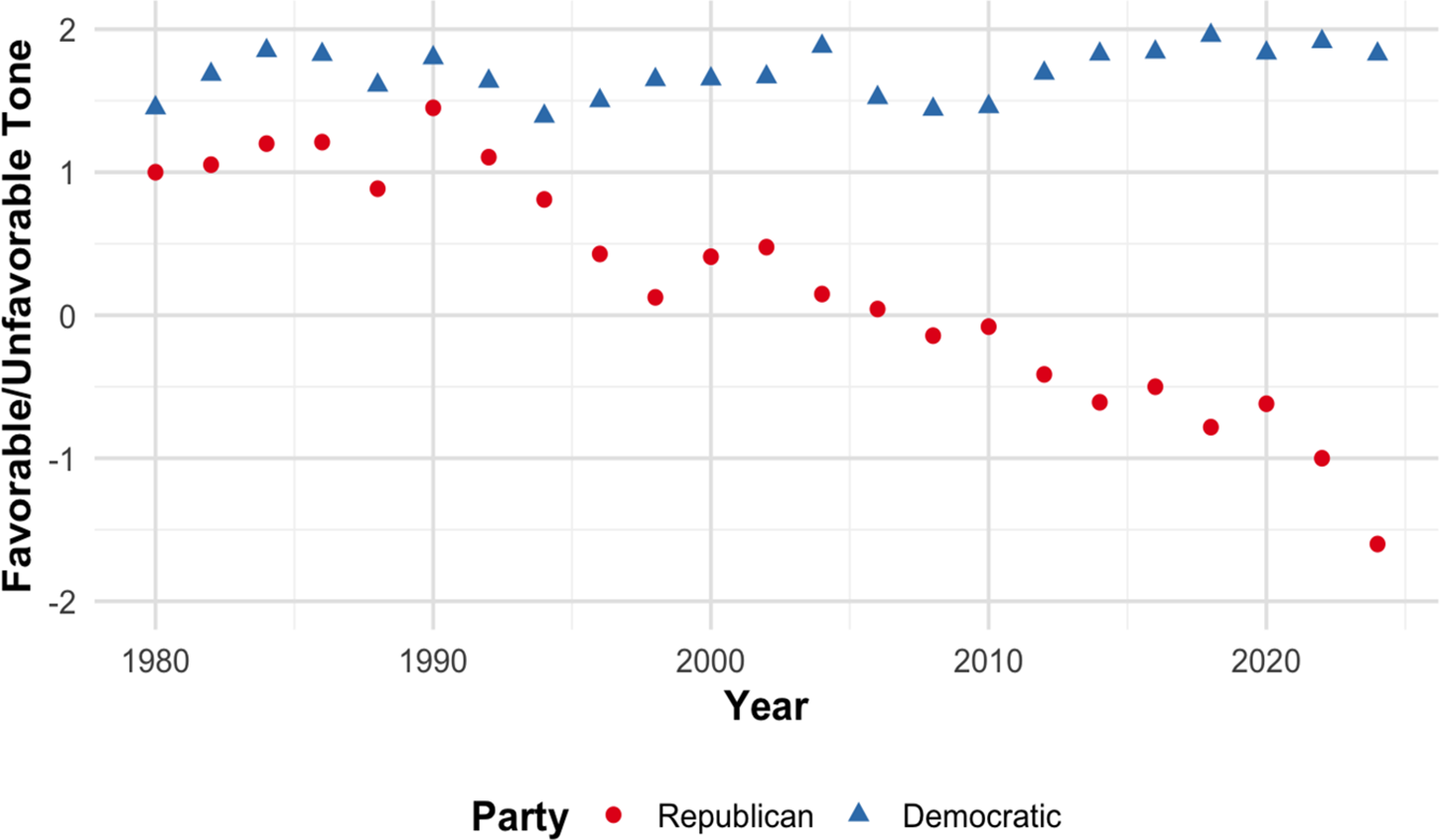
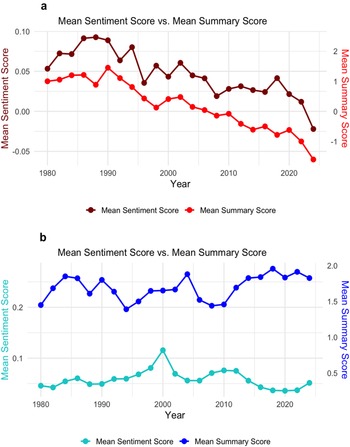
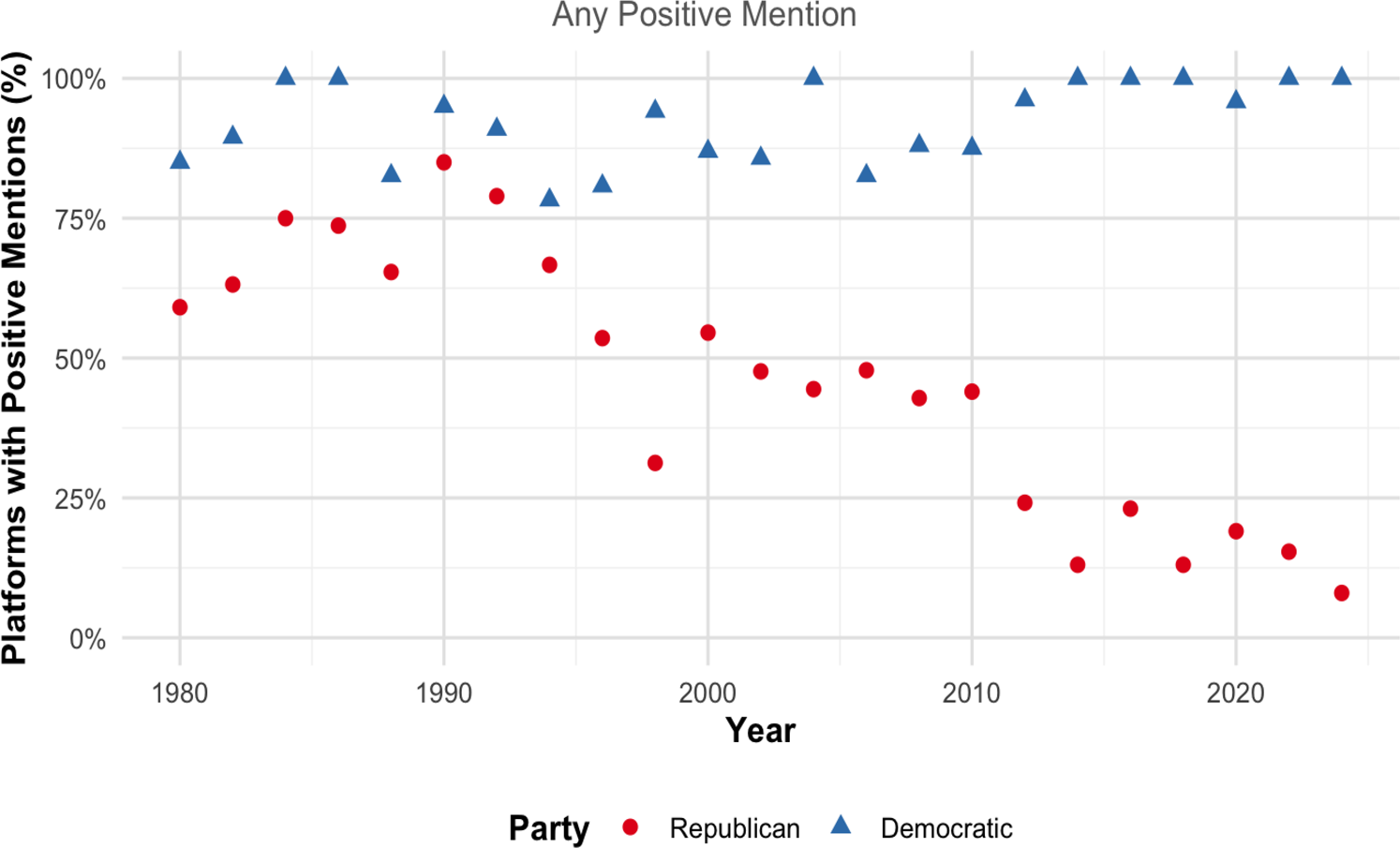
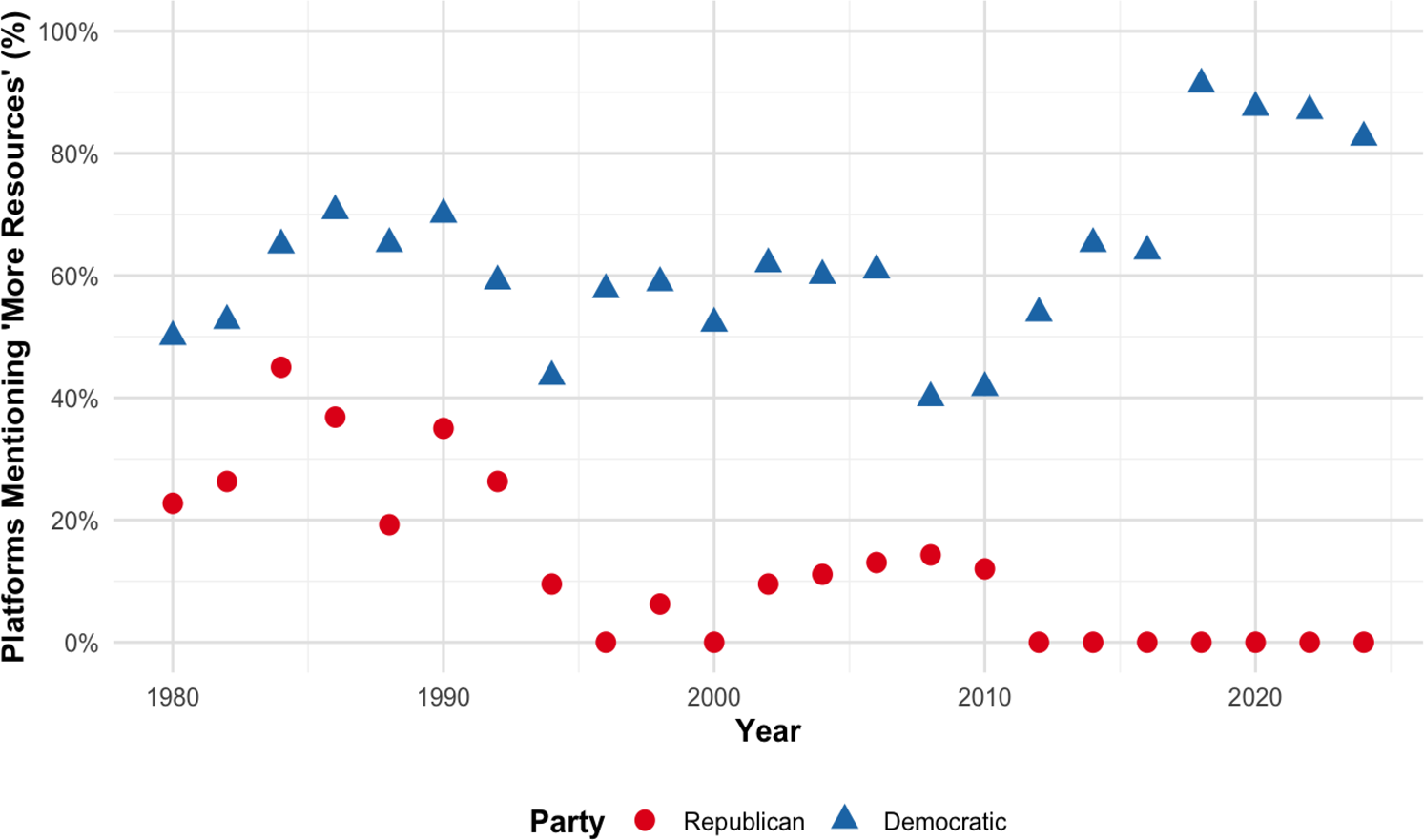
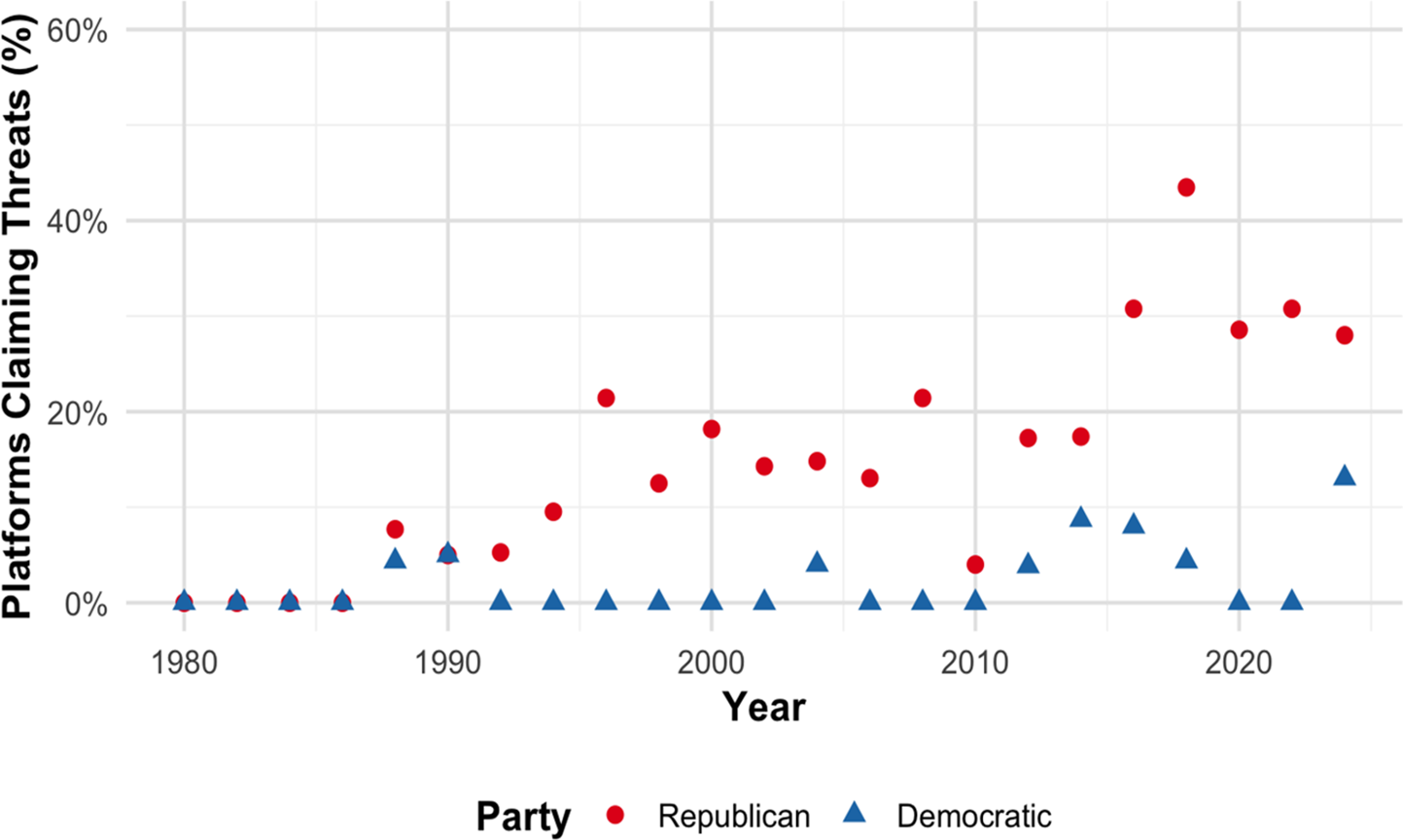
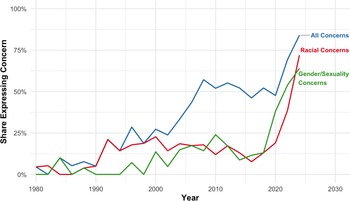
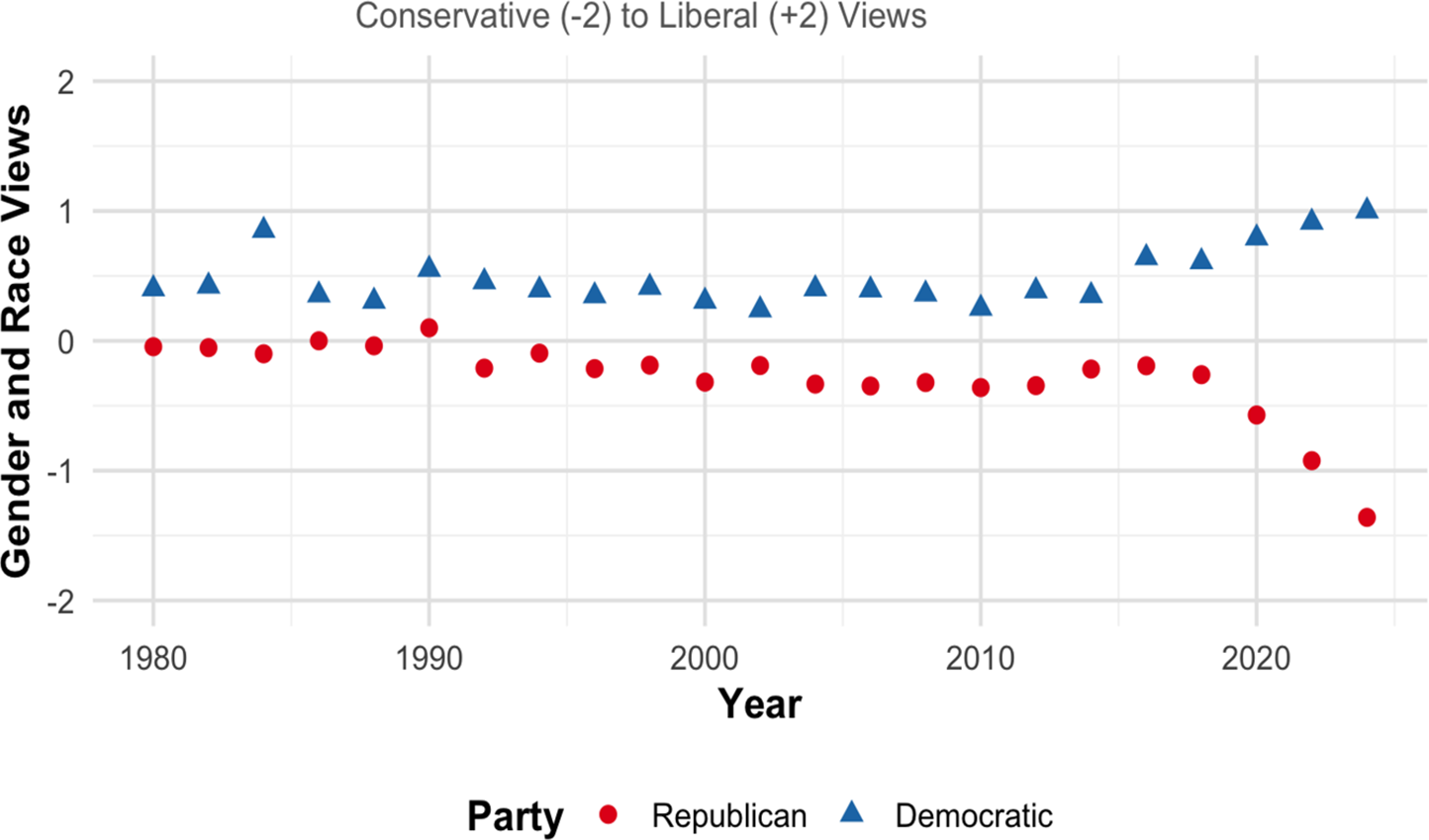
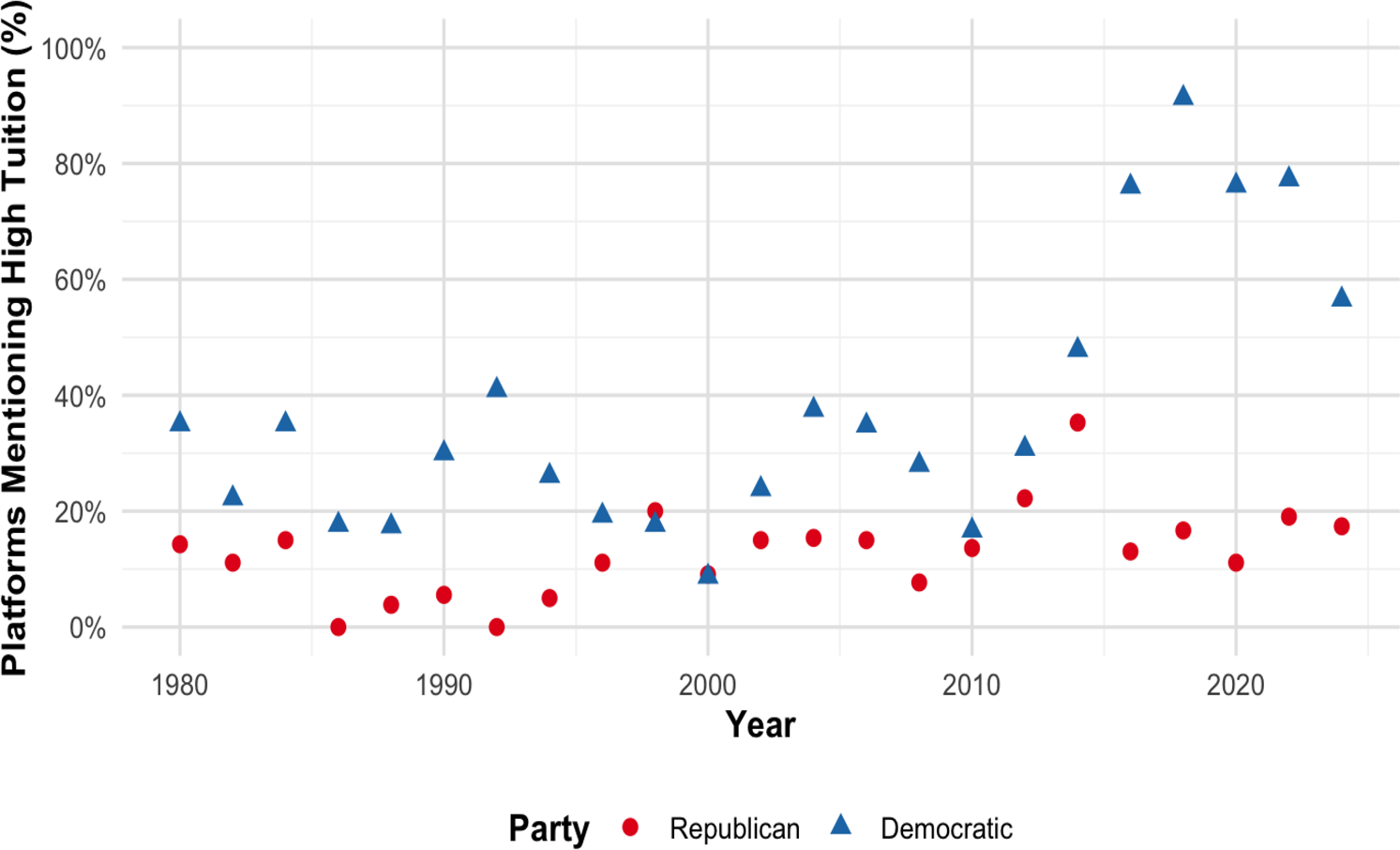


 Open access

