


Introduction
Invasive alien species (IAS) are recognized as one of the five major drivers of global biodiversity decline, alongside habitat alteration, over-exploitation, climate change and pollution; their spread and impacts are projected to intensify in the future (IPBES Reference Roy, Pauchard, Stoett and Renard Truong2023). The ornamental horticulture industry is a primary global pathway for the introduction of IAS, as many invasive plants were originally introduced for ornamental purposes (Dehen-Schmutz et al. Reference Dehnen-Schmutz, Touza, Perrings and Williamson2007, Hulme et al. Reference Hulme, Brundu, Carboni, Dehnen-Schmutz, Dullinger and Early2018, Banerjee et al. Reference Banerjee, Khuroo, Dehnen-Schmutz, Pant, Patwardhan, Bhowmick and Mukherjee2021). For example, in the Caribbean, more than half of the invasive species were deliberately introduced for ornamental purposes (Rojas-Sandoval & Ackerman Reference Rojas-Sandoval and Ackerman2021). In the USA, ornamental purposes account for over 60% of the intentional introductions of IAS, with 82% of invasive woody plants were introduced specifically for this reason (Reichard Reference Reichard1994, Lehan et al. Reference Lehan, Murphy, Thorburn and Bradley2013). In Australia, 65% of established plant species identified between 1971 and 1995 were introduced for ornamental purposes (Groves & Hosking Reference Groves and Hosking1998). The ornamental plant trade is the leading source of IAS (Dodd et al. Reference Dodd, Burgman, McCarthy and Ainsworth2015). In India, several invasive alien plants were first introduced for ornamental purposes and have since spread extensively across the country (Banerjee et al. Reference Banerjee, Khuroo, Dehnen-Schmutz, Pant, Patwardhan, Bhowmick and Mukherjee2021). These include Asclepias curassavica, Antigonon leptopus, Ipomoea cairica, Mirabilis jalapa, Passiflora foetida, Ruellia tuberosa, Senna alata and Sphagneticola trilobata. Among the most notable cases, Lantana camara has become one of the most aggressive invaders in various ecosystems (Kannan et al. Reference Kannan, Shackleton and Uma Shaanker2013).
Gardening is a globally practised hobby characterized by a dynamic interaction between consumer preferences and market forces, wherein consumer demand for novel and exotic species influences the market, while the industry simultaneously facilitates and stimulates this demand (Dehnen-Schmutz et al. Reference Dehnen-Schmutz, Touza, Perrings and Williamson2007). On the demand side, gardening enthusiasts actively seek exotic species with unique aesthetic attributes (Dehnen-Schmutz et al. Reference Dehnen-Schmutz, Touza, Perrings and Williamson2007, Hu et al. Reference Hu, Jin, Liao, Huang, Zhou and Long2023). This behaviour is often shaped by social factors, such as ‘garden voyeurism’ and the use of alien plants as status symbols (Rodríguez‐Cala et al. Reference Rodríguez‐Cala, Fried, Wilson, Dehnen‐Schmutz, Tshwenyane and Legwaila2025). On the supply side, the industry responds by cultivating plants with traits that appeal to consumers, such as rapid growth and ease of maintenance and propagation, which are frequently associated with invasiveness (Dehnen-Schmutz et al. Reference Dehnen-Schmutz, Touza, Perrings and Williamson2007, Bufford et al. Reference Bufford, Dawes and Hulme2025). Furthermore, the industry actively cultivates consumer desire through marketing strategies (Dehen-Schmutz et al. Reference Dehnen-Schmutz, Touza, Perrings and Williamson2007, Rodríguez-Cala et al. Reference Rodríguez-Cala, Wilson, Dehnen-Schmutz, Fried, Tshwenyane and Legwaila2026), while modern supply chains have increased the global availability and propagule pressure of these species (Humair et al. Reference Humair, Humair, Kuhn and Kueffer2015, Dong et al. Reference Dong, Dong, Fu, Yang, Dai, Luo and van Kleunen2024).
Although less than 10% of introduced ornamental species escape cultivation, the volume of the ornamental plant trade contributes significantly to the spread of potentially invasive species (Hulme et al. Reference Hulme, Brundu, Carboni, Dehnen-Schmutz, Dullinger and Early2018). Widespread cultivation and frequent replanting of ornamentals increase propagule pressure, increasing the chances of establishment and spread (Rojas-Sandoval & Ackerman Reference Rojas-Sandoval and Ackerman2021). Online platforms have significantly exacerbated this issue by expanding the reach and quantity of the ornamental plant trade (Maher et al. Reference Maher, Stringham, Moncayo, Wood, Lassaline, Virtue and Cassey2023). The rapid growth of e-commerce has made online trade in plants an increasingly important route for the introduction of alien species (Roy et al. Reference Roy, Pauchard, Stoett, Renard Truong, Meyerson and Bacher2024), facilitating the long-distance spread of IAS and frequently bypassing existing biosecurity regulations (Humair et al. Reference Humair, Humair, Kuhn and Kueffer2015, Maher et al. Reference Maher, Stringham, Moncayo, Wood, Lassaline, Virtue and Cassey2023). Many recognized invasive plant species are traded daily online. Humair et al. (Reference Humair, Humair, Kuhn and Kueffer2015) utilized an automated search algorithm to demonstrate that nearly three-fifths of the world’s seed-plant species, including over 500 recognized invasive species, are traded daily through global internet platforms such as eBay. Despite strict national biosecurity policies, studies in countries such as Australia (Maher et al. Reference Maher, Stringham, Moncayo, Wood, Lassaline, Virtue and Cassey2023) and the USA (Beaury et al. Reference Beaury, Fusco, Allen and Bradley2021) have documented the availability of invasive plants for purchase, including those that are federally or state-regulated, indicating that online trade is becoming a major pathway for global invasions.
In India, the relatively unregulated e-commerce environment, coupled with active trade in established invasive species as reported by Banerjee et al. (Reference Banerjee, Khuroo, Dehnen-Schmutz, Pant, Patwardhan, Bhowmick and Mukherjee2021), poses a significant environmental risk. This trend is particularly concerning given India’s vulnerability to biological invasions. It is estimated that 66% of the country’s natural ecosystems are at risk, with high-impact invasive species already affecting 22% of these areas (Mungi et al. Reference Mungi, Qureshi and Jhala2023). According to Bang et al. (Reference Bang, Cuthbert, Haubrock, Fernandez, Moodley and Diagne2022), the economic cost of IAS in India from 1960 to 2020 has been at least USD 127.3 billion. This conservative estimate includes only observed and highly reliable cost data. However, when potential costs and low-reliability estimates are included, the total impact rises to USD 182.6 billion, a figure still considered a gross underestimation of the actual burden (Bang et al. Reference Bang, Cuthbert, Haubrock, Fernandez, Moodley and Diagne2022). Given the scale of impact, there is a need to enforce stricter controls on the trade in potentially invasive species and to integrate comprehensive risk-assessment frameworks into biosecurity and trade policies (Banerjee et al. Reference Banerjee, Khuroo, Dehnen-Schmutz, Pant, Patwardhan, Bhowmick and Mukherjee2021). Such measures would enable the early identification and interception of high-risk species, reducing future ecological damage and economic losses.
One of the key indicators of future invasiveness is a species’ history of being invasive or naturalized in other regions, which suggests inherent traits and ecological adaptability (Caley & Kuhnert Reference Caley and Kuhnert2006). In fact, the ‘invasive elsewhere’ metric is used across various types of weed risk assessment (WRA), from comprehensive assessments such as the Australian WRA (Pheloung et al. Reference Pheloung, Williams and Halloy1999) and the Hawaiian WRA (Daehler et al. Reference Daehler, Denslow, Ansari and Kuo2004), rapid assessments such as Horizon Scanning (Roy et al. Reference Roy, Peyton, Aldridge, Bantock, Blackburn and Britton2014, Bayon & Vila 2019) or watchlists (Faulkner et al. Reference Faulkner, Robertson, Rouget and Wilson2014) and short decision trees (e.g., Caley & Kuhnert Reference Caley and Kuhnert2006). Species known to cause adverse impacts in one region are likely to pose similar risks elsewhere, unless clear evidence suggests otherwise. Daehler et al. (Reference Daehler, Denslow, Ansari and Kuo2004) and Gordon et al. (Reference Gordon, Onderdonk, Fox and Stocker2008) showed that a simple query, such as whether a species is invasive in other regions, can produce high predictive accuracy in identifying potential invaders. Another important criterion is the degree of climatic similarity between a species’ native and introduced ranges (Rojas-Sandoval & Ackerman Reference Rojas-Sandoval and Ackerman2021). Species originating from regions with climates similar to those of the introduced range are more likely to establish and spread (Aravind et al. Reference Aravind, Shaanker, Bhat, Charles, Shaanker and Shah2022). Early detection of such high-risk species provides crucial warnings and enables stakeholders to make informed decisions. These environmental scans (Hulme Reference Hulme2025) can effectively highlight short-range biological invasion threats, which should then be prioritized for formal risk assessment and integrated into national policy frameworks to prevent further introduction, establishment and spread.
Given that e-commerce platforms allow sellers to reach buyers across the entire country, it is critical to know which species are being traded online, as some of these may be potentially high-risk invaders. Developing a systematic inventory of ornamental plants sold through these platforms is essential for assessing invasion risks. Such an inventory not only provides the baseline data needed for evidence-based management and policy decisions (Rodríguez-Cala et al. Reference Rodríguez-Cala, Wilson, Dehnen-Schmutz, Fried, Tshwenyane and Legwaila2026), but can also help identify research gaps and prioritize species already known to be invasive or naturalized elsewhere for targeted risk assessment. Rapid assessments are particularly valuable in this context as thousands of species are traded online, and using criteria such as ‘invasive elsewhere’ or ‘naturalized elsewhere’ can enable the screening of high-risk species, which can then undergo more comprehensive evaluation. Recognizing and acting on these early warning signals is fundamental to strengthening national biosecurity frameworks (Silva et al. Reference Silva, Martini and Amaral2024).
However, systematic assessments of the composition and invasion risk of ornamental plants traded through Indian e-commerce platforms remain lacking. Therefore, the objectives of the present study were: (1) to compile a comprehensive inventory of ornamental plant species currently available in India’s online market and to analyse the representation of alien species, native species and IAS; and (2) to evaluate the invasion potential of alien species sold online based on their invasion or naturalization status elsewhere, categorizing them into high-risk, moderate-risk and low-risk groups.
Methods
A comprehensive catalogue of plants available for purchase nationwide was compiled from three prominent online plant retailers that offer shipping services across India and more than 6000 taxa. These nurseries are well-regarded and offer thousands of plant varieties. Data were collected via automated web scraping using the rvest package v1.0.4 (Wickham Reference Wickham2024) in R, with Cascading Style Sheet (CSS) selectors identified using SelectorGadget (https://selectorgadget.com). In accordance with Rodríguez-Cala et al. (Reference Rodríguez-Cala, Wilson, Dehnen-Schmutz, Fried, Tshwenyane and Legwaila2026), ornamental plants are defined herein as species cultivated for a multifaceted range of aesthetic, cultural, genetic and psychosocial purposes. Data pertaining to the scientific nomenclature and native area information of the plants were sourced from the Plants of the World Online database (POWO 2024), a comprehensive resource that reflects the latest taxonomic classification and distribution of plants. Duplicates, particularly those arising from taxonomic synonymy, were excluded. Subsequently, the compiled species list nomenclature was updated in accordance with POWO (2024).
The native range of each species was classified into botanical continents according to the World Geographical Scheme for Recording Plant Distributions (Brummitt et al. Reference Brummitt, Pando, Hollis and Brummitt2001). This botanical continental classification deviates from the traditional continental framework to more accurately represent plant distributions and phytogeographical relationships, as well as to serve as a convenient reference system. In this classification, Asia is divided into two botanical continents: Asia-Tropical and Asia-Temperate. Australasia encompasses both Australia and New Zealand. The islands of the western and central Pacific Ocean have a continental status due to their abundance and distinctive flora. The division between Northern and Southern America bisects Mexico.
The compiled list includes both naturally occurring varieties and widely cultivated hybrids but excludes cultivars. For example, Chrysanthemum × morifolium is an accepted hybrid included in the list; however, its cultivars have not been listed. The taxa list compiled was subsequently evaluated across three databases to categorize them into high-, moderate- and low-risk groups: ILORA (Indian Alien Flora Information v1.1; Pant et al. Reference Pant, Patwardhan, Patil, Bhowmick, Mukherjee and Banerjee2021, Banerjee Reference Banerjee2022), GRIIS (Global Register of Introduced and Invasive Species; Pagad et al. Reference Pagad, Bisset, Genovesi, Groom, Hirsch and Jetz2022) and GLONAF (Global Naturalized Alien Flora; van Kleunen et al. Reference van Kleunen, Pyšek, Dawson, Essl, Kreft and Pergl2019). The ILORA database was utilized to ascertain the naturalized and invasive status of plant species in India, offering detailed information on the occurrence, taxonomy, distribution and habitat of alien species within the country. Additionally, data on invasiveness in other global regions (invasive elsewhere) were obtained from GRIIS (https://griis.org; accessed 11 July 2024), a comprehensive, country-level database that contains validated lists of introduced and invasive species. Similarly, information on the global naturalization of these species was sourced from the GLONAF database (https://glonaf.org; accessed 9 January 2025), which provides extensive records of naturalized alien plant species worldwide, facilitating the assessment of their global distribution and extent of naturalization beyond their native ranges.
High-risk species were identified as those naturalized in India (based on GLONAF and ILORA) and reported as invasive in other regions (based on GRIIS). Moderate-risk species included those that are invasive elsewhere but have not yet been recorded as naturalized or invasive in India. Low-risk species comprised those that are naturalized in both India and other regions but have not been documented as invasive either within India or globally.
All statistical analyses, graphical representations and word cloud visualizations were performed using R version 4.3.3 (R Core Team 2023). The word cloud was generated using the wordcloud package v2.6 (Fellows Reference Fellows2018). Larger text in the word cloud signifies families with a higher number of species. Sankey plots were created using the networkD3 package v0.4.1 (Allaire et al. Reference Allaire, Ellis, Gandrud, Kuo, Lewis and Owen2017) to visualize the native botanical continent sources of the compiled alien plant species sold online (Fig. S1) and to evaluate the contribution of these sources to the global and regional pools of invasive and naturalized species represented in the dataset. All graphs were produced using the ggplot2 package (Wickham Reference Wickham2016).
Results
Taxonomic richness and invasion patterns by family and lifeform
The compiled list of taxa included 1856 plants sold online in India, representing 1045 genera across 194 families. The five families with the highest species richness were Apocynaceae (7.8%), Cactaceae (6.8%), Fabaceae (5%), Crassulaceae (4.2%) and Asteraceae (4.1%; Fig. S2).
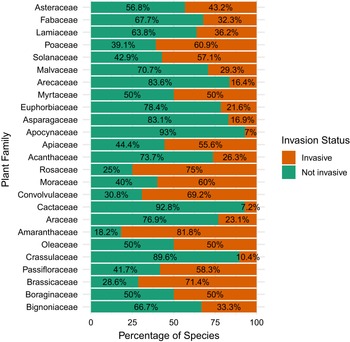
Families such as Actinidiaceae, Bixaceae and Cannabaceae had 100% of their recorded species classified as invasive, although these families typically had only one or two species (Table S1). Among families with comparatively larger species counts, Amaranthaceae exhibited a high proportion of invasiveness, with nine species accounting for 82%, while the remaining two species, Iresine diffusa f. herbstii and Iresine lindenii, are reported to be naturalized elsewhere (Fig. 1). Similarly, Rosaceae and Brassicaceae showed high proportions of invasives at 75% and 71%, respectively. In contrast, although species-rich families such as Fabaceae (93 species) and Asteraceae (74 species) contribute substantially to the overall number of invasive species, the proportions of invasive species within these families are relatively low, at c. 32% and 43%, respectively. Some families, such as Crassulaceae, Orchidaceae and Cactaceae, had very low proportions of invasive species relative to their total species richness. In contrast, 35% of the families (especially those with one to a few species) had no invasive species at all.
Proportions of invasive and non-invasive species within the 25 plant families containing the highest number of invasive species. Families are ranked in descending order based on their total invasive species count. Invasive status was synthesized using data from the ILORA and GRIIS databases.
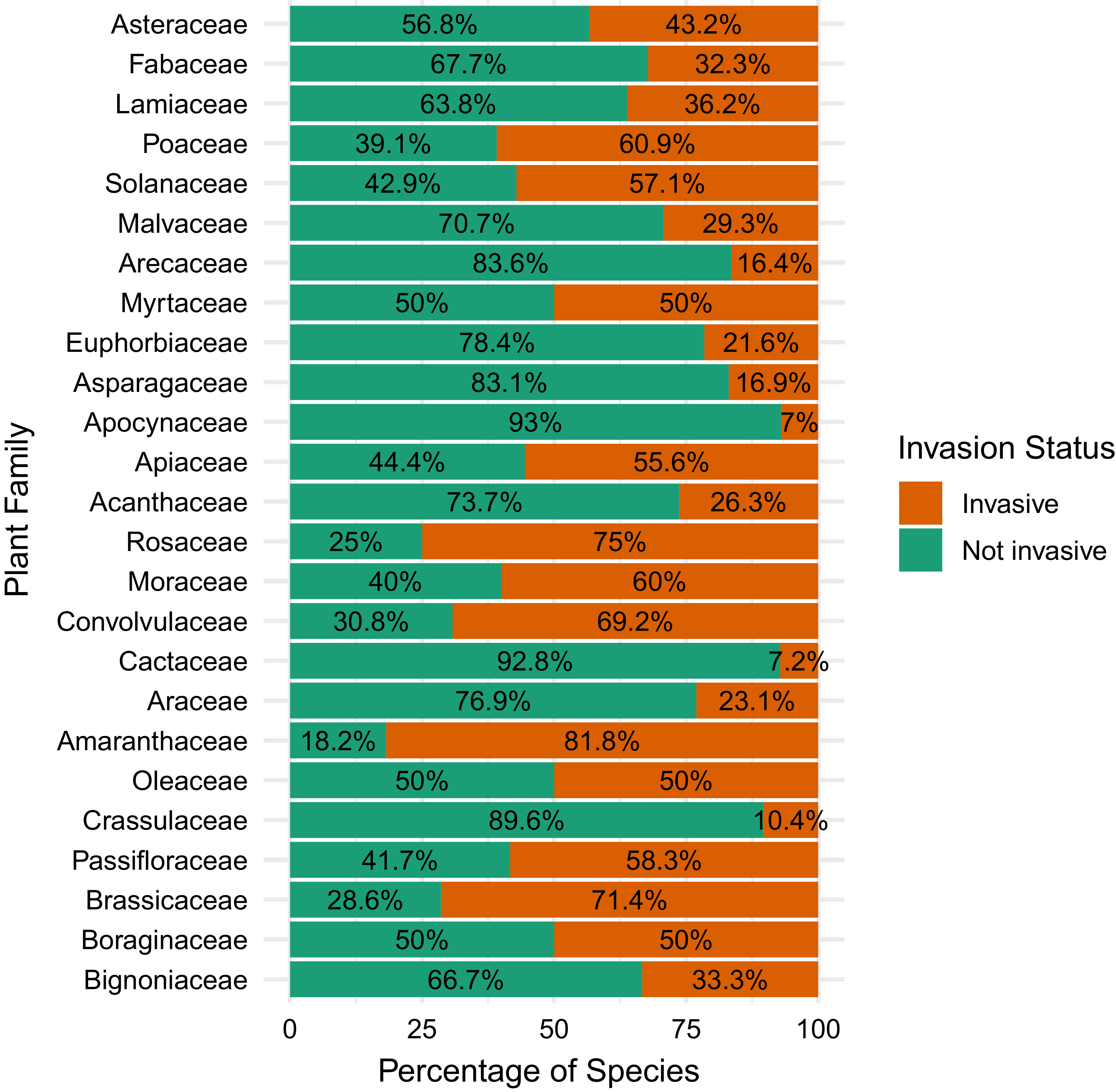
Figure 1. Long description
A horizontal bar graph compares the proportions of invasive and non-invasive species within the 25 plant families with the highest number of invasive species. The plant families are listed on the vertical axis, and the percentage of species is shown on the horizontal axis, ranging from 0 to 100 percent. Each bar is divided into two segments: one representing invasive species in orange and the other representing non-invasive species in green. The graph includes the following plant families and their respective proportions of invasive and non-invasive species: Asteraceae (43.2 percent invasive, 56.8 percent non-invasive), Fabaceae (32.3 percent invasive, 67.7 percent non-invasive), Lamiaceae (36.2 percent invasive, 63.8 percent non-invasive), Poaceae (60.9 percent invasive, 39.1 percent non-invasive), Solanaceae (57.1 percent invasive, 42.9 percent non-invasive), Malvaceae (29.3 percent invasive, 70.7 percent non-invasive), Arecaceae (16.4 percent invasive, 83.6 percent non-invasive), Myrtaceae (50 percent invasive, 50 percent non-invasive), Euphorbiaceae (21.6 percent invasive, 78.4 percent non-invasive), Asparagaceae (16.9 percent invasive, 83.1 percent non-invasive), Apocynaceae (7 percent invasive, 93 percent non-invasive), Apiaceae (55.6 percent invasive, 44.4 percent non-invasive), Acanthaceae (26.3 percent invasive, 73.7 percent non-invasive), Rosaceae (75 percent invasive, 25 percent non-invasive), Moraceae (60 percent invasive, 40 percent non-invasive), Convolvulaceae (69.2 percent invasive, 30.8 percent non-invasive), Cactaceae (7.2 percent invasive, 92.8 percent non-invasive), Araceae (23.1 percent invasive, 76.9 percent non-invasive), Amaranthaceae (81.8 percent invasive, 18.2 percent non-invasive), Oleaceae (50 percent invasive, 50 percent non-invasive), Crassulaceae (10.4 percent invasive, 89.6 percent non-invasive), Passifloraceae (58.3 percent invasive, 41.7 percent non-invasive), Brassicaceae (71.4 percent invasive, 28.6 percent non-invasive), Boraginaceae (50 percent invasive, 50 percent non-invasive), and Bignoniaceae (33.3 percent invasive, 66.7 percent non-invasive).
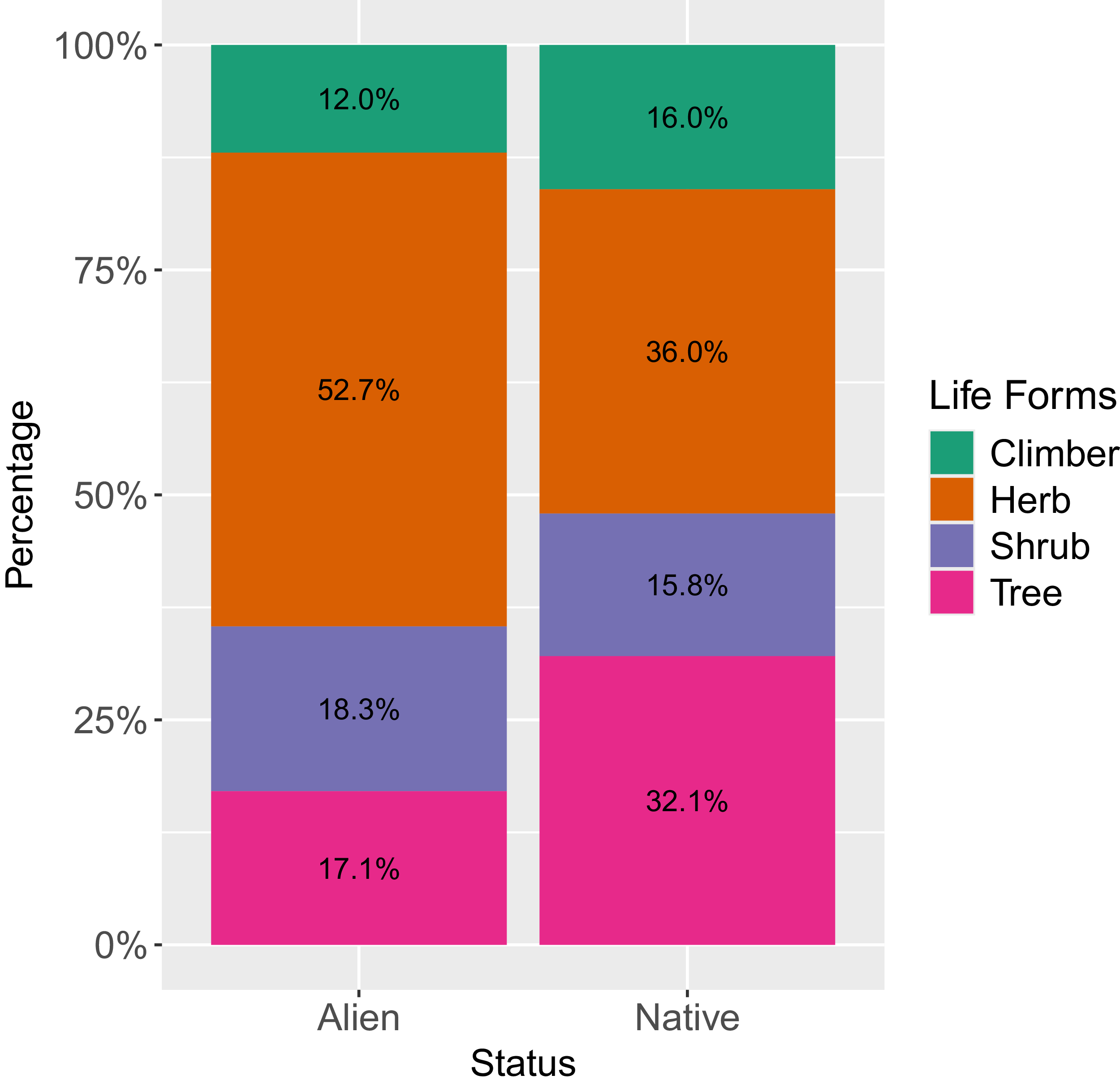
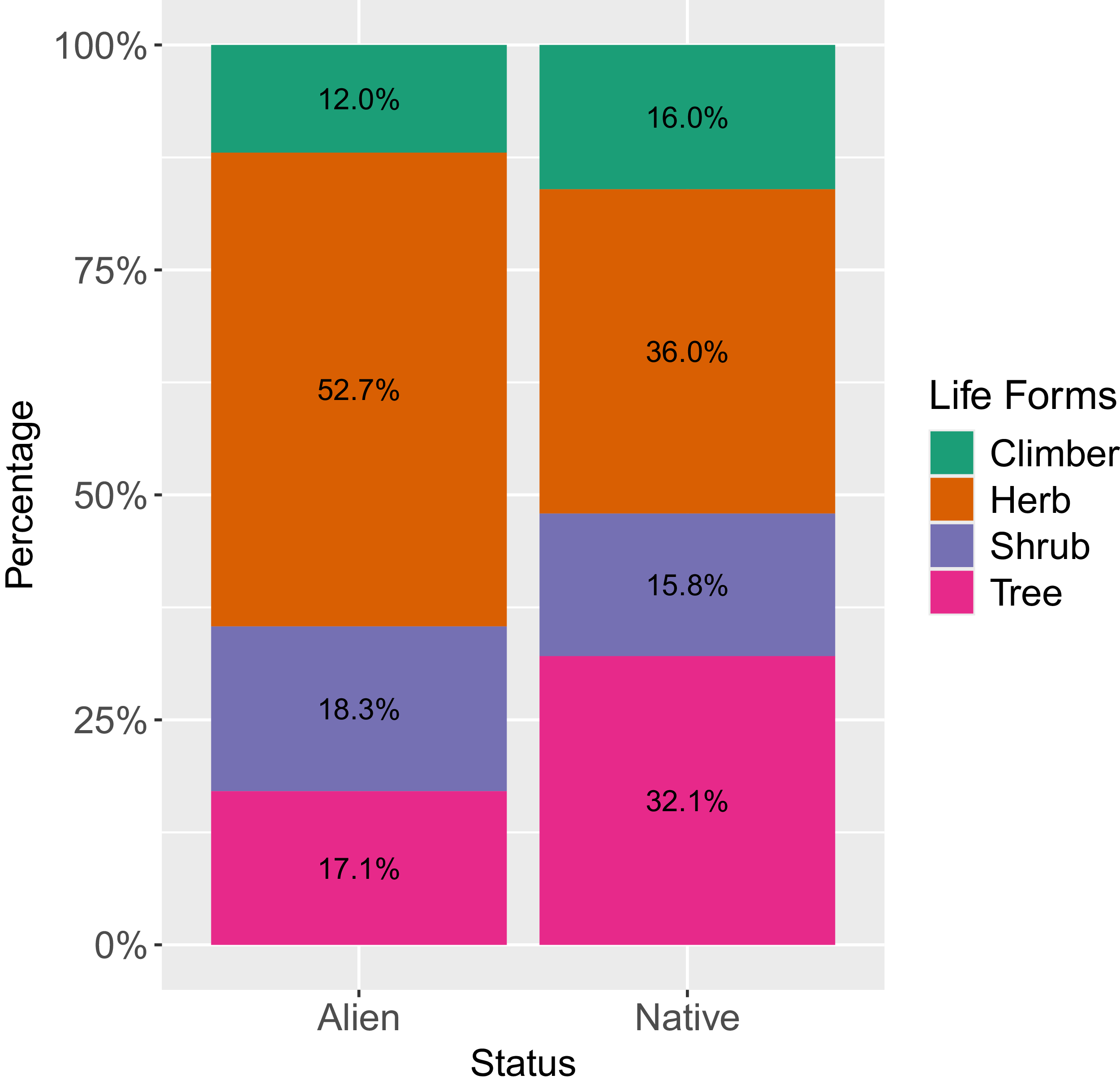
Herbs were the most prevalent growth form, accounting for 898 taxa, followed by trees (389 taxa), shrubs (328 taxa) and climbers (241 taxa; Fig. 2). Although herbs constituted the predominant life form among both native and alien taxa, trees represented a larger proportion of native taxa (32%) compared to alien taxa (17%). The number of alien species available for sale online was 1371, substantially higher than the 480 native species recorded. The distribution of life forms among invasive species also differed, with herbs (219) being markedly over-represented relative to trees (105), shrubs (84) and climbers (53).
Bar graph displaying the percentages of native and alien species sold online in India, categorized by life form. Native area information was extracted using the Plants of the World Online (POWO 2024) database.
Origin, naturalization and invasion dynamics
The majority of the alien plant species originated from Southern America (427 species), followed closely by Northern America (421 species), Africa (351), Asia-Tropical (224) and Asia-Temperate (223), while Europe (104), Australasia (55) and the Pacific (31) accounted for smaller proportions.
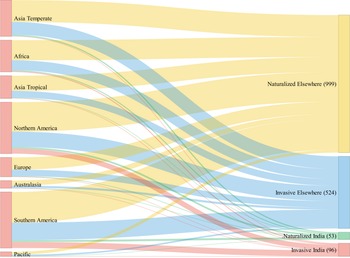
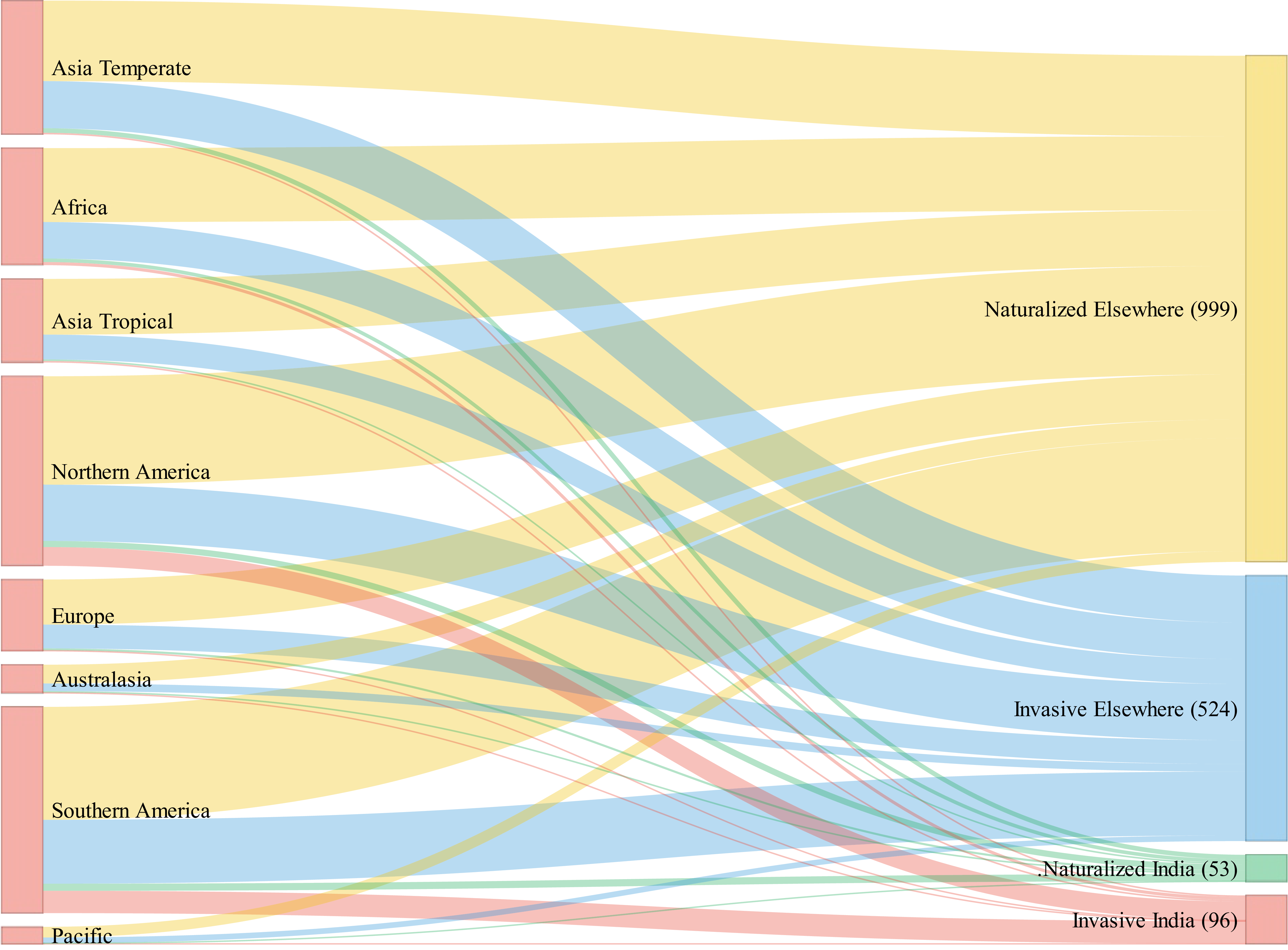
The majority of species in the inventory that are naturalized elsewhere (GLONAF) originate from Southern America (223 species), Northern America (214 species) and Asia-Temperate (159 species; Fig. 3). A similar trend is observed among species in the inventory that have already naturalized in India (ILORA v1.1), with most originating from Southern America (14 species), Northern America (12 species) and Asia-Temperate (9 species). For species that are invasive elsewhere (GRIIS), the majority also originate from Southern America (126 species), Northern America (111 species) and Asia-Temperate (93 species). This pattern is consistent for species in our list that are invasive in India (ILORA v1.1), with most originating from Southern America (44 species) and Northern America (37 species).
Sankey diagram showing the native continent origins of alien plant species sold online in India that are reported to be invasive or naturalized in India and/or other countries globally. Flow width corresponds to the number of species; classification of naturalization and invasiveness status was derived from the ILORA, GRIIS and GLONAF databases.
Known invasive species in trade
Crucially, we found that 57 species recognized as invasive in India, as per both ILORA and GRIIS, are accessible for online purchase (Table S2), including Lantana camara and Parthenium hysterophorus. In terms of broader invasion risk, we identified 327 alien species within our inventory that are listed as invasive in the GRIIS database. Among these, 55 species are also recognized as invasive in India according to ILORA, while the remaining 257 alien species, though invasive elsewhere (GRIIS), have not yet been recorded as invasive or naturalized in ILORA. Notably, 72 species are reported as invasive in more than 10 countries globally, and 35 of these are already listed as invasive in India according to the ILORA database (Fig. S3).
Known naturalized species in trade
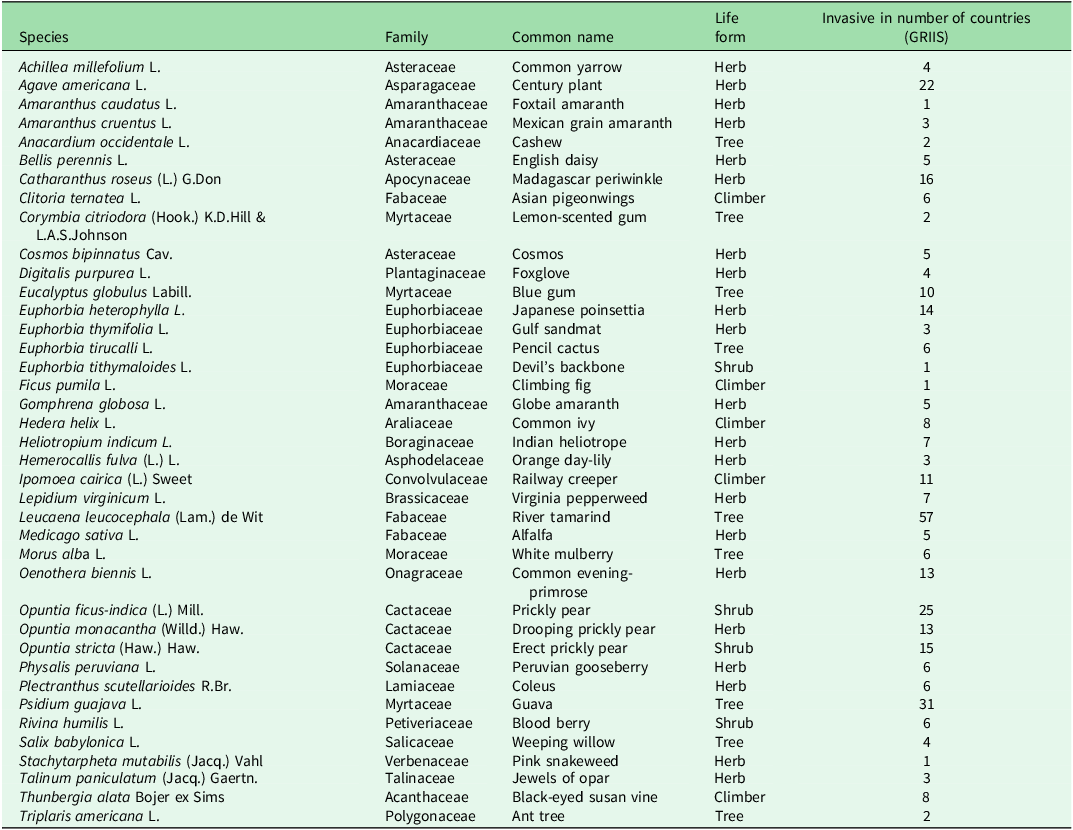
We identified 639 alien species that correspond with records in the GLONAF database. Among these, 36 species classified as naturalized in India (ILORA) are currently available for purchase on online platforms. There is a considerable risk that these naturalized species may become invasive; 32 of the 36 are already documented as invasive in other regions (GRIIS). For example, Leucaena leucocephala is naturalized in India but is reported as invasive in 57 countries, followed by Psidium guajava (31 countries), Opuntia ficus-indica (25 countries), Agave americana (22 countries) and Catharanthus roseus (16 countries). Globally, more than 200 of these traded alien species have been naturalized in more than 10 countries (Fig. S4). The species in our inventory with the highest levels of global naturalization are Ricinus communis (86 countries), Datura stramonium (85) and Portulaca oleracea (81). All three are currently established invasive species in India (GRIIS + ILORA).
Potentially low-, moderate- or high-risk alien plants in trade
A total of 39 species identified as naturalized in India (GLONAF + ILORA) were found to be invasive elsewhere (GRIIS), representing potential high-risk species for future invasion threat (Table 1). Notably, at least 11 of these species are invasive in more than 10 countries. Examples include Ipomoea cairica, reported as invasive in 11 countries, and Agave americana, considered invasive in 22 countries. Additionally, 239 species were identified as moderate-risk species, as they are reported as invasive in other countries but are not yet naturalized or invasive in India (Table S3). Some examples include Spathodea campanulata, reported as invasive in 21 countries, and Agave sisalana, reported as invasive in 18 countries. Only Ziziphus jujube and Eleutherine bulbosa were identified as low-risk species, which are naturalized in India and elsewhere but not invasive globally.
List of alien species naturalized in India and reported as invasive in other regions, identified as high-risk species.
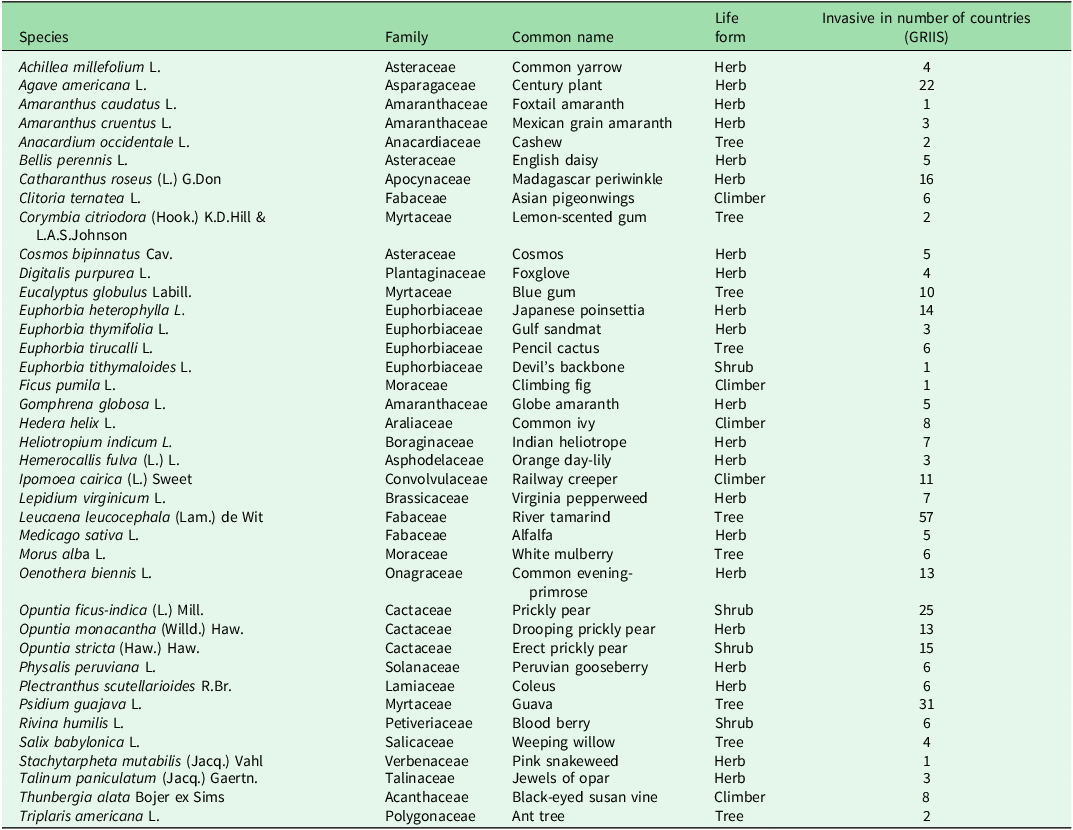
Source: ILORA and GLONAF (naturalization); GRIIS (global invasiveness); POWO (nomenclature and nativity).
Discussion
Our study shows that India reflects global trends, with its online ornamental plant market mainly consisting of alien species, many of which are invasive in other regions. Our findings reveal a significant biosecurity gap: numerous species available for purchase in India are already naturalized or invasive elsewhere, and several are currently recognized as invasive within the country. This aligns with broader concerns that the e-commerce plant trade frequently bypasses traditional biosafety protocols, thereby accelerating the global transition towards the ‘Homogocene’ (Gillman Reference Gillman2023). Additionally, the preliminary risk assessment presented here offers an evidence-based foundation for prioritizing species in regions such as India, where systematic WRA frameworks are still under development and the risk of biological invasion is imminent.
The presence of a substantial number of species already naturalized or invasive elsewhere suggests a high inherent potential for invasiveness, given their past success in becoming established in new environments (Kumschick & Richardson Reference Kumschick and Richardson2013, Bayón & Vilà Reference Bayón and Vilà2019). High-risk species identified in this study have demonstrated both an established presence within the Indian environment and a documented history of ecological impact in other regions; consequently, they represent an imminent threat that warrants immediate regulatory priority. This list can serve as an essential starting point to prioritize species for more thorough and resource-intensive risk assessments. These assessments could then be used to investigate species-specific characteristics, potential impacts and the context of the receiving environment in India (Kumschick & Richardson Reference Kumschick and Richardson2013, Banerjee et al. Reference Banerjee, Khuroo, Dehnen-Schmutz, Pant, Patwardhan, Bhowmick and Mukherjee2021).
Our study shows Southern America and Northern America as the main source regions for species that are widely naturalized and invasive across multiple regions, including India. The repeated prominence of Southern America and Northern America as source regions highlights the need for increased scrutiny of species originating from these areas. These patterns are reflected in the composition of our high-risk list as well. The substantial contribution of Southern American species to the invasive flora of South Asia can be attributed to shared tropical climatic conditions (Gulzar et al. Reference Gulzar, Wani, Hassan, Reddy, Shrestha and Mukul2024), which facilitate the successful establishment, spread and transition from casual to invasive status. Interestingly, Silva et al. (Reference Silva, Martini and Amaral2024) found that invasive alien ornamental plants in Brazil are primarily native to Asia, with China and India being the major exporting countries. This bidirectional flow underscores the role of the global ornamental trade in facilitating biotic exchange and driving floristic homogenization across geographically distant but climatically similar regions. As Gillman (Reference Gillman2023) highlights, many urban and rural areas are now dominated by alien plants, leading to landscapes that lose their unique biodiversity and cultural identity. Even if these species never become truly invasive, their dominance directly displaces native flora, leading to homogenization.
Globally, Asteraceae, Fabaceae and Poaceae disproportionately dominate invasive floras across diverse regions, including the Caribbean, Spain and South Asia (Andreu & Vilà, Reference Andreu and Vilà2010, Rojas-Sandoval & Ackerman, Reference Rojas-Sandoval and Ackerman2021, Gulzar et al. Reference Gulzar, Wani, Hassan, Reddy, Shrestha and Mukul2024). Our findings confirm Asteraceae as the most globally invasive family (GRIIS), and this is the case for India as well (ILORA v1.1), probably due to its immense species richness (Gulzar et al. Reference Gulzar, Wani, Hassan, Reddy, Shrestha and Mukul2024). Consequently, Asteraceae has emerged as a major concern in invasion biology (Hu et al. Reference Hu, Jin, Liao, Huang, Zhou and Long2023) and as a predictive metric for invasiveness in pre-border risk assessments for China (Wang et al. Reference Wang, Huang, Zhang, Li, He and Wen2024).
In our inventory, Apocynaceae was the most dominant plant family, probably due to the presence of over 60 Hoya spp. in the market. The second most prominent family was Cactaceae, mainly because of the widespread popularity of Mammillaria spp., which are most likely favoured for their compact shape, solitary colourful crown flowers, ease of growth, low maintenance and suitability for small-space urban gardening. While these families maintain a notable regional presence, with Apocynaceae containing two invasive (Asclepias curassavica, Cryptostegia grandiflora) and three naturalized species, and with Cactaceae including two invasive Opuntia spp. and four naturalized species in India (ILORA v1.1), they do not match the pervasive global dominance of the primary invasive families. Among life forms, herbs were dominant in both native and alien ornamental categories, probably due to their ease of cultivation, rapid growth and suitability for space-limited urban gardening, where their compact size and low maintenance make them ideal for balconies and small areas. Their affordability and quick turnover also make them attractive in the ornamental plant trade, especially online. However, several ecological and life-history traits commonly associated with herbaceous plants, such as high reproductive output, environmental stress tolerance, early germination, rapid growth and efficient dispersal mechanisms, also facilitate invasiveness (Khuroo et al. Reference Khuroo, Ahmad, Hamid, Rather, Malik, Rashid, Pullajah and Ielmini2021). Consequently, a substantial proportion of invasive plants in India are herbaceous in nature (ILORA v1.1).
To mitigate these growing threats, Banerjee et al. (Reference Banerjee, Khuroo, Dehnen-Schmutz, Pant, Patwardhan, Bhowmick and Mukherjee2021) advocate adopting a ‘blacklist’ strategy, which involves banning the import, sale and cultivation of identified invasive species as a key measure to preventing their introduction and spread. Although blacklists follow an ‘innocent until proven guilty’ approach, which is often criticized for being more reactive than proactive (Kumschick et al. Reference Kumschick, Fernandez Winzer, McCulloch-Jones, Chetty, Fried and Govender2024), they serve as an essential immediate measure while a comprehensive risk-assessment framework remains under development in the Indian context. These species should also be added to the quarantine list to limit their entry into the country and to enforce a ban on their domestic trade. Currently, Schedule VIII of India’s Plant Quarantine (Regulation of Import into India) Order 2003 (amended in 2023) lists 57 quarantine weed species. However, strictly speaking, only one of these, Anthemis cotula (dog fennel), is recognized as an IAS in the ILORA database v1.1. Whitelists offer a more preventative ‘guilty until proven innocent’ model (Dehnen-Schmutz Reference Dehnen-Schmutz2011, as cited in Hulme et al. Reference Hulme, Brundu, Carboni, Dehnen-Schmutz, Dullinger and Early2018), but they require resource-intensive risk-assessment frameworks with clear criteria and risk thresholds to be effective. Consequently, identifying high-risk and moderate-risk species based on their naturalization and invasive history elsewhere provides a critical intermediate step. However, it is important to recognize that our lists of high-, moderate- and low-risk species do not provide a definitive prediction of future invasions. While this study drew on established databases such as GLONAF, GRIIS and ILORA to assess the status of alien species, it is also important to recognize the inherent limitations of relying solely on such sources. As Hulme (Reference Hulme2025) highlights, one of the enduring challenges in invasion science lies in the ‘unknown unknowns’, with over 50% of alien species recorded since 1950 being not previously documented as established elsewhere. This suggests that a substantial number of potential future invaders may be missing from current datasets, increasing the risk of underestimating emerging threats when assessments rely exclusively on historical records. Consequently, our high- and moderate-risk species lists should be employed as preliminary screening tools to prioritize these species for thorough risk assessments.
Ensuring compliance with existing legislation while simultaneously encouraging the adoption of voluntary codes of conduct can enhance the effectiveness of invasive plant management (Hulme et al. Reference Hulme, Brundu, Carboni, Dehnen-Schmutz, Dullinger and Early2018, Bayón & Vilà Reference Bayón and Vilà2019). Collaboration between the ornamental plant industry, government agencies and environmental organizations can be effective for both developing regulations to limit the sale of invasive ornamentals and disseminating information on plant invasion risks to the public. The Systems Approach to Nursery Certification (SANC) is a voluntary, opt-in initiative that brings together government, academic and industry stakeholders to develop standardized protocols to reduce plant pest risks in the plant trade industry (Teich et al. Reference Teich, Eversole and Brown2024). The PlantRight programme in California successfully decreased the percentage of listed ornamental invasive plants carried by participating retailers from 44% to 20% over 7 years (Lee Reference Lee2021). The Australian Gardening Responsibly initiative, supported by environmental and horticultural organizations, promotes the use of low-risk ornamental plants through a science-based certification system (www.gardeningresponsibly.org.au; accessed 19 July 2025). It actively involves horticultural suppliers and consumers to prevent garden escapes and reduce plant invasions, with a focus on voluntary compliance guided by industry and environmental partnerships. Simultaneously, raising consumer awareness of the ecological risks associated with purchasing potentially invasive plants online could be a crucial tool for reducing demand and unintentional propagation. These programmes aim to guide consumers towards non-invasive choices, often emphasizing native species. To improve retailer participation, Teich et al. (Reference Teich, Eversole and Brown2024) recommend that certifying organizations provide both financial incentives, such as grants or tax benefits, and non-financial incentives, including business promotion. They suggest opt-in labelling programmes in which certifying partners classify plants based on their risk of invasiveness, and retailers then voluntarily apply the corresponding labels to their plant products. When combined with public awareness campaigns (Hulme et al. Reference Hulme, Brundu, Carboni, Dehnen-Schmutz, Dullinger and Early2018) and efforts to increase the supply of native species (Coombs et al. Reference Coombs, Gilchrist and Watson2020), these labelling initiatives have the potential to influence consumer behaviour and foster the sale of ecologically beneficial plant species.
Conclusion
Our key insights into the composition and potential risks of India’s online ornamental plant trade reveal a predominance of alien species in the market, many of which are already known to be invasive or naturalized elsewhere. The identification of high- and moderate-risk species underscores the substantial future threat posed by biological invasions through this pathway. To address these risks, a multifaceted approach is needed, including stronger regulatory measures, systematic risk-assessment protocols, enhanced public awareness and coordinated action among the ornamental plant industry, government agencies and conservation organizations. Implementing voluntary codes of conduct, certification programmes and consumer education initiatives could help mitigate risks of invasion while supporting responsible trade practices. Overall, we highlight the urgent need for proactive management strategies to curb the introduction and spread of IAS through the online ornamental plant trade in India.
Supplementary material
To view supplementary material for this article, please visit https://doi.org/10.1017/S0376892926100502.
Acknowledgements
We thank Dr R Ganesan for assistance with the taxonomy and life-form classification of the species included in this study. KCB is grateful to Dr Anirban Roy and Sonam Yangchen Bhutia for valuable feedback on the manuscript.
Financial support
This work was supported by a grant from the Rufford Foundation (37329-1) to KCB. KCB also gratefully acknowledges the Ministry of Tribal Affairs (MoTA) for supporting this work through an NFST fellowship.
Competing interests
The authors declare none.
Ethical standards
Not applicable.
Disclaimer
The views expressed in this article are those of the authors and do not necessarily reflect the positions of their affiliated institutions.