





Context
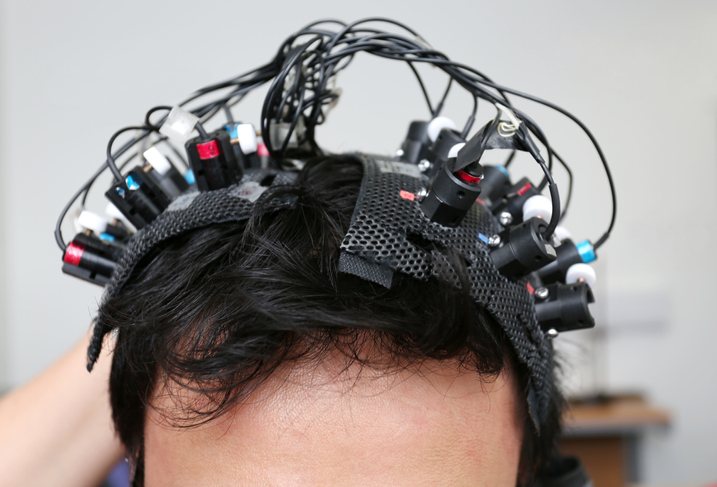
The advent of new non-invasive (largely EEG and MRI-based) methods for recording the activity of critical brain circuits (frontotemporal and subcortical) and networks (Default Mode, Salience, Central Executive), cross-sectionally and longitudinally, as well as concurrently (EEG and fMRI), has led to a focus on whether such techniques could be used to guide individual treatment selection. While this work has commenced with specific relevance to depression and other mood disorders (Goldstein-Piekarski et al., Reference Goldstein-Piekarski, Ball, Samara, Staveland, Keller, Fleming, Grisanzio, Holt-Gosselin, Stetz, Ma and Williams2022; Hack et al., Reference Hack, Tozzi, Zenteno, Olmsted, Hilton, Jubeir, Korgaonkar, Schatzberg, Yesavage, O’Hara and Williams2023; Scangos et al., Reference Scangos, State, Miller, Baker and Williams2023), there is still much to be learnt and a great need to replicate findings across different cohorts and different research centres.
For various depressive disorder sub-types, and for various more specific phenomena (such as ruminations, obsessive thoughts, concurrent anxiety, catastrophic thinking, motor retardation or agitation), links to specific circuits, or under or overactivity of specific networks, have been proposed (1–3). The concept of identifying such specific changes pre-treatment, selecting more targeted treatments on the basis of these changes and then monitoring changes in those circuits or networks post-treatment (assuming that such changes are correlated with specific symptom improvement) is a very attractive one.
The apparent impact of certain treatments (pharmacological or behavioural) on the activity of specific networks – for example, the effects of psychedelics or meditation on the Default Mode Network (DMN), which otherwise appears overactive in those with ruminative states – has sparked great interest in these approaches. Others have suggested a focus on the Salience Network, given its importance for switching attention from internal (and potentially ruminative processes) to externally focused and action-orientated behavioural and emotional responses. New brain stimulation tools are available both to test the integrity, and manipulate the function, of these putative circuits – in humans as well as more extensively and directly in animal models.
Larger-scale data acquisition processes are now underway, with attempts to define new biotypes of depression and other mood disorders and to relate these to specific patterns of treatment response. While these developments are at any early stage, they do have the potential to move quickly from the research laboratory to the clinic.
To facilitate these developments, replication of findings related to cohort stratification and links to more specific treatment responses are urgently required. There are real challenges in the way that data are acquired, analysed and reported. Development of common methods and sharing of relevant data across differing research centres are likely to be key drivers of progress in this area.
How to contribute to this Question
If you believe you can contribute to answering this Question with your research outputs find out how to submit in the Instructions for authors (https://www.cambridge.org/core/journals/research-directions-depression/information/author-instructions/preparing-your-materials). This journal publishes Results, Analyses, Impact papers and additional content such as preprints and “grey literature.” Questions will be closed when the editors agree that enough has been published to answer the Question so before submitting, check if this is still an active Question. If it is closed, another relevant Question may be currently open, so do review all the open Questions in your field. For any further queries check the information pages (https://www.cambridge.org/core/journals/research-directions-depression/information) or contact this email (depression@cambridge.org).
Competing interests
IBH is the Co-Director of Health and Policy at the Brain and Mind Centre (BMC) University of Sydney, Australia. The BMC operates an early-intervention youth services at Camperdown under contract to Headspace. Professor Hickie has previously led community-based and pharmaceutical industry-supported (Wyeth, Eli Lily, Servier, Pfizer, AstraZeneca, Janssen Cilag) projects focused on the identification and better management of anxiety and depression. He is the Chief Scientific Advisor to, and a 3.2% equity shareholder in, InnoWell Pty Ltd which aims to transform mental health services through the use of innovative technologies.

 Open access