





1. Introduction
Rational curves on algebraic surfaces form a classical topic that has sparked great interest in the realm of enumerative geometry. Although configurations of such curves (especially lines and conics) on various classes of surfaces have been studied for over 150 years, it was only within the last decade that most questions concerning line configurations on polarized K3 surfaces over various fields have been answered (see, e.g., [Reference Degtyarev4], [Reference Degtyarev5], [Reference Degtyarev, Itenberg and Sertöz8], [Reference Degtyarev and Rams9], [Reference Miyaoka13], [Reference Rams and Schütt16], [Reference Rams and Schütt17], [Reference Shimada and Shioda22]). Far less is known about the behavior of large configurations of conics (see, e.g., [Reference Bauer2], [Reference Bonnafé and Sarti3], [Reference Degtyarev6], [Reference Degtyarev7], [Reference Miyaoka13]).
For a fixed algebraically closed field ${{k}}$
, and integers
${{k}}$
, and integers $d \geq 1$
and
$d \geq 1$
and $h \geq 2,$
let us define
$h \geq 2,$
let us define
 $$ \begin{align*}\mathfrak r_{{{k}}}(h,d) := \max \{ r_d(X) : X \text{ is a degree-}2h \text{ smooth K3 surface over } {{k}}\}, \end{align*} $$
where $r_d(X)$
is the number of degree-d rational curves on the surface X (in this note, a rational curve is defined as an irreducible curve of geometric genus zero—cf. [Reference Miyaoka13]). As a consequence of the orbibundle Miyaoka–Yau–Sakai inequality [Reference Miyaoka12], Miyaoka obtained (see [Reference Miyaoka13, Proposition A]) the following inequality:
$r_d(X)$
is the number of degree-d rational curves on the surface X (in this note, a rational curve is defined as an irreducible curve of geometric genus zero—cf. [Reference Miyaoka13]). As a consequence of the orbibundle Miyaoka–Yau–Sakai inequality [Reference Miyaoka12], Miyaoka obtained (see [Reference Miyaoka13, Proposition A]) the following inequality:
 $$ \begin{align*} \frac{1}{d} r_1(X) + \frac{2}{d} r_2(X) +\cdots+ r_d(X) \leq \frac{24 h}{h-2d^2} \end{align*} $$
for each fixed positive integer d and for every smooth complex projective degree- $2h\, K3$
surface, where
$2h\, K3$
surface, where $h> 2d^2$
. Miyaoka also asked to what extent the resulting bounds
$h> 2d^2$
. Miyaoka also asked to what extent the resulting bounds
 $$ \begin{align} \mathfrak r_{{\mathbb C}}(h,d) \leq \frac{24 h}{h - 2 d^2} \quad \text{ for } h> 2 d^2 \, \end{align} $$
are sharp (see [Reference Miyaoka13, p. 920]).
Obviously, (1.1) implies the inequality $ \mathfrak r_{{\mathbb C}}(h,d) \leq 24$
for
$ \mathfrak r_{{\mathbb C}}(h,d) \leq 24$
for $h> 50 d^2$
. In fact, if we fix a positive integer d and assume that
$h> 50 d^2$
. In fact, if we fix a positive integer d and assume that $h> 42 d^2$
, then a stronger inequality
$h> 42 d^2$
, then a stronger inequality
 $$ \begin{align*} r_1(X) + r_2(X) +\cdots+ r_d(X) \leq 24 \end{align*} $$
holds for every smooth projective degree- $2h$
K3 surface over a field of characteristic
$2h$
K3 surface over a field of characteristic $p \neq 2,3$
(see [Reference Rams and Schütt18, Theorem 1.1]).
$p \neq 2,3$
(see [Reference Rams and Schütt18, Theorem 1.1]).
Focussing on lines, that is, $d=1$
, the function
$d=1$
, the function $h \mapsto \mathfrak r_{{\mathbb C}}(h,1)$
becomes periodic for large h by [Reference Degtyarev4, Theorem 1.5], and in fact,
$h \mapsto \mathfrak r_{{\mathbb C}}(h,1)$
becomes periodic for large h by [Reference Degtyarev4, Theorem 1.5], and in fact,
 $$ \begin{align*}\mathfrak r_{{\mathbb C}}(h,1) \in \{21, 22, 24\} \quad \text{for } h \gg 0. \end{align*} $$
(For precise arithmetic conditions on the degree- $2h$
of the polarization for Miyaoka’s bound of 24 lines to be attained, see [Reference Degtyarev4, Theorem 1.5].) Consequently, (1.1) fails to be sharp for lines on complex degree-
$2h$
of the polarization for Miyaoka’s bound of 24 lines to be attained, see [Reference Degtyarev4, Theorem 1.5].) Consequently, (1.1) fails to be sharp for lines on complex degree- $2h$
K3 surfaces for infinitely many h. On the other hand, by [Reference Rams and Schütt18, Theorem 1.1], we have
$2h$
K3 surfaces for infinitely many h. On the other hand, by [Reference Rams and Schütt18, Theorem 1.1], we have
 $$ \begin{align*}\mathfrak r_{{{k}}}(h,d) = 24 \quad \text{ for } d \geq 3, \, \, h> 42d^2 \text{ and } \text{char}( {k}) \neq 2,3 \,. \end{align*} $$
Unfortunately, the main construction from [Reference Rams and Schütt18] yields K3 surfaces with nodal rational curves, so it cannot be applied for conics. The aim of this article is to prove that there are no arithmetic conditions on the degree of the polarization for Miyaoka’s bound of at most 24 rational curves on degree- $2h$
K3 surfaces to be attained by even degree smooth rational curves (once h is large enough), as captured in our main theorem.
$2h$
K3 surfaces to be attained by even degree smooth rational curves (once h is large enough), as captured in our main theorem.
Theorem 1.1. Let $d, h\in {\mathbb Z}_{>1}$
and let k be an algebraically closed field of characteristic
$d, h\in {\mathbb Z}_{>1}$
and let k be an algebraically closed field of characteristic $p\geq 0$
,
$p\geq 0$
, $p\neq 2,3$
. There is a degree-
$p\neq 2,3$
. There is a degree- $2h$
K3 surface X over k containing 24 smooth degree-d rational curves if
$2h$
K3 surface X over k containing 24 smooth degree-d rational curves if
-
1. $h\geq 2d(2d+3)-2,$
and
$h\geq 2d(2d+3)-2,$
and -
2. d or h is even.

Note that both, for even and odd integer d, Theorem 1.1 implies that Miyaoka’s bound of at most 24 rational curves of a given degree d on a smooth degree- $2h$
K3 surface is attained by configurations of smooth rational degree-d curves for infinitely many values of h. We record this for even degrees as follows.
$2h$
K3 surface is attained by configurations of smooth rational degree-d curves for infinitely many values of h. We record this for even degrees as follows.
Corollary 1.2. Let $d\in {\mathbb N}$
and
$d\in {\mathbb N}$
and $h> 168d^2$
and let k be an algebraically closed field of characteristic
$h> 168d^2$
and let k be an algebraically closed field of characteristic $p\geq 0$
,
$p\geq 0$
, $p\neq 2,3$
. Then the maximal number of smooth rational curves of degree (at most)
$p\neq 2,3$
. Then the maximal number of smooth rational curves of degree (at most) $2d$
on a smooth degree-
$2d$
on a smooth degree- $2h$
K3 surface over k is
$2h$
K3 surface over k is $24$
(i.e.,
$24$
(i.e., $\mathfrak r_{{{k}}}(h,2d) = 24$
). In particular, Miyaoka’s bound (1.1) for the number of smooth rational curves of degree
$\mathfrak r_{{{k}}}(h,2d) = 24$
). In particular, Miyaoka’s bound (1.1) for the number of smooth rational curves of degree $2d$
on a degree-
$2d$
on a degree- $2h$
complex K3 surface is sharp for any
$2h$
complex K3 surface is sharp for any $h>200d^2$
. In particular, it holds for conics whenever
$h>200d^2$
. In particular, it holds for conics whenever $h>200$
.
$h>200$
.
Indeed, Theorem 1.1 combined with [Reference Rams and Schütt18, Theorem 1.1.1] yields the equalities
 $$ \begin{align*}\mathfrak r_{{{k}}}(h,2d) = 24 \quad \text{ for } \, \, h> 168d^2 \text{ and } \text{char}( {k}) \neq 2,3, \end{align*} $$
which completes the picture of the behavior of large configurations of low-degree rational curves on high-degree K3 surfaces (at least in complex case—recall that [Reference Degtyarev4] is devoted to lines on complex K3 surfaces).
Corollary 1.2 has an obvious analog for odd degrees d and even h. It is natural to ask whether the assumption that h is even, especially in Theorem 1.1(2), can be weakened. We discuss this question briefly in Section 6, but avoid lengthy arguments in order to keep this note reasonably compact and independent of extensive computer-aided computations. Finally, let us recall that (1.1) fails over fields of characteristic $p=2,3$
(see §6.5 or [Reference Rams and Schütt18, Theorems 1.2, 1.3]).
$p=2,3$
(see §6.5 or [Reference Rams and Schütt18, Theorems 1.2, 1.3]).
Convention 1.3. We assume that the base field k of characteristic $p\geq 0$
is algebraically closed. Throughout this article, all root lattices are assumed to be negative-definite, and all rational curves are assumed to be irreducible (but they may have singular points).
$p\geq 0$
is algebraically closed. Throughout this article, all root lattices are assumed to be negative-definite, and all rational curves are assumed to be irreducible (but they may have singular points).
2. Preliminaries
As in [Reference Degtyarev4], [Reference Miyaoka13], [Reference Rams and Schütt18], we consider pairs $(X,H)$
, where X is a smooth K3 surface over an algebraically closed field k of characteristic p, and H is a very ample divisor with
$(X,H)$
, where X is a smooth K3 surface over an algebraically closed field k of characteristic p, and H is a very ample divisor with $H^2=2h$
. By definition, the linear system
$H^2=2h$
. By definition, the linear system $|H|$
defines an embedding
$|H|$
defines an embedding
 $$\begin{align*}X \hookrightarrow \mathbb P^{h+1} \,. \end{align*}$$
Since its image is a smooth degree- $2h$
surface, we call
$2h$
surface, we call $(X,H)$
a polarized degree-
$(X,H)$
a polarized degree- $2h$
K3 surface (and simply write X instead of
$2h$
K3 surface (and simply write X instead of $(X,H)$
whenever it leads to no ambiguity). In order to prove that a given H is very ample, we will use the following criterion from [Reference Saint-Donat20].
$(X,H)$
whenever it leads to no ambiguity). In order to prove that a given H is very ample, we will use the following criterion from [Reference Saint-Donat20].
Criterion 2.1. Let $p \neq 2$
and let H be a divisor on a K3 surface X. If
$p \neq 2$
and let H be a divisor on a K3 surface X. If
-
1.
$H.C> 0$
for every curve
$C\subset X$
; -
2.
$H.E>2$
for every irreducible curve
$E\subset X$
of arithmetic genus
$1$
; -
3.
$H^2\geq 4$
, and for
$H^2=8$
, the divisor H is not
$2$
-divisible in
$\mathrm {Pic}(X)$
,


then H is very ample.
3. Complex case, even d
Here, we prove Theorem 1.1 for even d and $k = {\mathbb C}$
. The restriction on the base field plays an important role in the second step of the proof (cf.
$k = {\mathbb C}$
. The restriction on the base field plays an important role in the second step of the proof (cf. $\S $
3.2).
$\S $
3.2).
Proposition 3.1. For even d and every $h\geq 2d(2d+3)-2$
, there exists a complex projective degree-
$h\geq 2d(2d+3)-2$
, there exists a complex projective degree- $2h\, K3$
-surface with exactly
$2h\, K3$
-surface with exactly $24$
smooth degree-d rational curves.
$24$
smooth degree-d rational curves.
Proof. We proceed in several steps.
3.1. Step 1
We start by following closely the construction from [Reference Rams and Schütt18, §11.3]. Assume that char $(k)\neq 2$
and consider squarefree polynomials
$(k)\neq 2$
and consider squarefree polynomials $f,g\in k[t]$
of degree
$f,g\in k[t]$
of degree $4$
which are relatively prime such that
$4$
which are relatively prime such that $f-g$
is also squarefree of the same degree. (One of the three polynomials could also be allowed to have degree
$f-g$
is also squarefree of the same degree. (One of the three polynomials could also be allowed to have degree $3$
, accounting for a zero at
$3$
, accounting for a zero at $\infty $
.) Then the extended Weierstrass form
$\infty $
.) Then the extended Weierstrass form
 $$ \begin{align} E: \;\;\; y^2 = x(x-f)(x-g) \end{align} $$
defines the generic fiber of an elliptic K3 surface X over $\mathbb P^1_t$
with 12 singular fibers of type
$\mathbb P^1_t$
with 12 singular fibers of type ${\mathrm {I}}_2$
at the zeros of
${\mathrm {I}}_2$
at the zeros of $f, g$
, and
$f, g$
, and $f-g$
. Generically, one has
$f-g$
. Generically, one has $\mathop {\mathrm {MW}}(X) = E(k(t)) \cong ({\mathbb Z}/2{\mathbb Z})^2$
with disjoint sections given by the following
$\mathop {\mathrm {MW}}(X) = E(k(t)) \cong ({\mathbb Z}/2{\mathbb Z})^2$
with disjoint sections given by the following $k(t)$
-rational points on E:
$k(t)$
-rational points on E:
 $$\begin{align*}P_1 = (0,0), \;\;\; P_2 = (0,f),\;\;\; P_3 = (0,g), \;\;\; O = \,\text{the point at }\infty. \end{align*}$$
Using Criterion 2.1, one finds the following fact.
Fact 3.2 [Reference Rams and Schütt18, Fact 11.3].
Assume that d is even. Let F denote a fiber and $N>d$
. Then
$N>d$
. Then $H=NF+\frac {d}{2} (O+P_1+P_2+P_3)$
is very ample.
$H=NF+\frac {d}{2} (O+P_1+P_2+P_3)$
is very ample.
We put $\Theta _{0,j} + \Theta _{1,j}$
for
$\Theta _{0,j} + \Theta _{1,j}$
for $j=1, \ldots , 12$
to denote the 12 singular fibers of the type
$j=1, \ldots , 12$
to denote the 12 singular fibers of the type ${\mathrm {I}}_2$
. Then since
${\mathrm {I}}_2$
. Then since $(O+P_1+P_2+P_3).\Theta _{i,j} = 2$
for every
$(O+P_1+P_2+P_3).\Theta _{i,j} = 2$
for every $i,j,$
we have
$i,j,$
we have
 $$ \begin{align*}H.\Theta_{i,j} = d \;\; \text{ for every } \; i,j. \end{align*} $$
Therefore, X admits degree- $2h$
models for
$2h$
models for $h=d(2N-d)$
with 24 smooth degree-d rational curves in characteristic
$h=d(2N-d)$
with 24 smooth degree-d rational curves in characteristic $\neq 2$
. Since d is even, we derive the congruence
$\neq 2$
. Since d is even, we derive the congruence
 $$ \begin{align} H^2\equiv 2d^2 \equiv 0 \quad\mod 4d. \end{align} $$
In particular, we see that there are $2d-1$
residue classes
$2d-1$
residue classes $H^2$
modulo
$H^2$
modulo $4d$
left to be covered.
$4d$
left to be covered.
3.2. Step 2
In this section, we restrict to the complex numbers, for otherwise the Noether–Lefschetz loci in consideration need not be non-empty, but we will see in Section 5 how to overcome this in positive characteristic.
Consider the transcendental lattice $T(X)$
of a very general choice of X. By assumption, this has signature
$T(X)$
of a very general choice of X. By assumption, this has signature $(2,6)$
, and in fact, it takes the shape
$(2,6)$
, and in fact, it takes the shape
 $$ \begin{align} T(X) \cong U(2)^2 \oplus A_1^4. \end{align} $$
To see this, note that $\mathrm {NS}(X)$
is an index 4 overlattice of the trivial lattice
$\mathrm {NS}(X)$
is an index 4 overlattice of the trivial lattice $\mathrm {Triv}(X)=U\oplus A_1^{12}$
generated by zero section O and fiber components. As this is 2-elementary, so is
$\mathrm {Triv}(X)=U\oplus A_1^{12}$
generated by zero section O and fiber components. As this is 2-elementary, so is $\mathrm {NS}(X)$
and thus also
$\mathrm {NS}(X)$
and thus also $T(X)$
. But then the claim follows from [Reference Nikulin14] by verifying that each discriminant form assumes non-integer values. For
$T(X)$
. But then the claim follows from [Reference Nikulin14] by verifying that each discriminant form assumes non-integer values. For $T(X)$
, this is obvious from (3.3); for
$T(X)$
, this is obvious from (3.3); for $\mathrm {NS}(X)$
, consider the fiber components not met by O and number them
$\mathrm {NS}(X)$
, consider the fiber components not met by O and number them $\Theta _1,\ldots ,\Theta _4$
at
$\Theta _1,\ldots ,\Theta _4$
at $f=0$
,
$f=0$
, $\Theta _5,\ldots ,\Theta _8$
at
$\Theta _5,\ldots ,\Theta _8$
at $g=0$
, and
$g=0$
, and $\Theta _9,\ldots ,\Theta _{12}$
at
$\Theta _9,\ldots ,\Theta _{12}$
at $f-g=0$
. Then
$f-g=0$
. Then $(\Theta _1+\Theta _5+\Theta _9)/2\in \mathrm {NS}(X)^\vee $
with square
$(\Theta _1+\Theta _5+\Theta _9)/2\in \mathrm {NS}(X)^\vee $
with square $-3/2$
as required.
$-3/2$
as required.
In the sequel, we shall use the fact that $T(X)$
represents every even integer by (3.3). More precisely, it is well-known that, for any even
$T(X)$
represents every even integer by (3.3). More precisely, it is well-known that, for any even $r<0$
, we can choose a primitive vector
$r<0$
, we can choose a primitive vector $D \in T$
with
$D \in T$
with $D^2 =r$
. By moduli theory for
$D^2 =r$
. By moduli theory for $K3$
surfaces, there exists a
$K3$
surfaces, there exists a $K3$
surface W (deforming in a five-dimensional family) such that for its transcendental lattice, we have
$K3$
surface W (deforming in a five-dimensional family) such that for its transcendental lattice, we have
 $$ \begin{align*}T(W) \cong D^{\perp_{T(X)}}. \end{align*} $$
By definition, W inherits the structure of elliptic surface from X. In detail, we have the primitive closure
 $$ \begin{align*} \mathrm{NS}(W) = \overline{\mathrm{NS}(X) \oplus {\mathbb Z} D} \subset H^2(W,{\mathbb Z}), \end{align*} $$
exhibiting $\mathrm {NS}(W)$
as an index 2 overlattice because
$\mathrm {NS}(W)$
as an index 2 overlattice because $T(X)$
is 2-divisible as an integral lattice (not even!), so any primitive vector
$T(X)$
is 2-divisible as an integral lattice (not even!), so any primitive vector $v\in T(X)$
has
$v\in T(X)$
has $v/2\in T(X)^\vee $
which glues to some element in
$v/2\in T(X)^\vee $
which glues to some element in $\mathrm {NS}(X)^\vee $
. The embedding of the hyperbolic plane
$\mathrm {NS}(X)^\vee $
. The embedding of the hyperbolic plane $U\hookrightarrow \mathrm {NS}(X)$
corresponding to our fixed elliptic fibration on X induces the claimed fibration (with section) on W. Its singular fibers are encoded in the roots of
$U\hookrightarrow \mathrm {NS}(X)$
corresponding to our fixed elliptic fibration on X induces the claimed fibration (with section) on W. Its singular fibers are encoded in the roots of $\overline {A_1^{12} \oplus {\mathbb Z} D}$
. One directly verifies that this root lattice continues to be
$\overline {A_1^{12} \oplus {\mathbb Z} D}$
. One directly verifies that this root lattice continues to be $A_1^{12}$
unless
$A_1^{12}$
unless $D^2=-2$
(where
$D^2=-2$
(where $A_1^3\oplus {\mathbb Z} D$
may have
$A_1^3\oplus {\mathbb Z} D$
may have $D_4$
as an overlattice) or
$D_4$
as an overlattice) or $D^2=-4$
(where
$D^2=-4$
(where $A_1^2\oplus {\mathbb Z} D$
may have
$A_1^2\oplus {\mathbb Z} D$
may have $A_3$
as an overlattice). Note that
$A_3$
as an overlattice). Note that $D^2=-6$
could a priori yield
$D^2=-6$
could a priori yield $\overline {A_1\oplus {\mathbb Z} D}=A_2$
, corresponding to a fiber of type
$\overline {A_1\oplus {\mathbb Z} D}=A_2$
, corresponding to a fiber of type ${\mathrm {I}}_3$
or
${\mathrm {I}}_3$
or $\mathop{\mathrm {IV}}$
, but then the setup of (3.1) implies that the discriminant
$\mathop{\mathrm {IV}}$
, but then the setup of (3.1) implies that the discriminant $\Delta $
has even vanishing order at any fiber, ruling out
$\Delta $
has even vanishing order at any fiber, ruling out ${\mathrm {I}}_3$
. Generally, at any additive fiber, the prime-to-characteristic part of
${\mathrm {I}}_3$
. Generally, at any additive fiber, the prime-to-characteristic part of $\mathop {\mathrm {MW}}_{\text {tor}}$
embeds into the group of simple fiber components by [Reference Schütt and Shioda21, Proposition 6.33(iv)]. With
$\mathop {\mathrm {MW}}_{\text {tor}}$
embeds into the group of simple fiber components by [Reference Schütt and Shioda21, Proposition 6.33(iv)]. With $2$
-torsion sections, this rules out type
$2$
-torsion sections, this rules out type $\mathop{\mathrm {IV}}$
(and
$\mathop{\mathrm {IV}}$
(and $\mathop{\mathrm {II}}, \mathop{\mathrm {IV}}^*, \mathop{\mathrm {II}}^*$
). Hence, enhancing
$\mathop{\mathrm {II}}, \mathop{\mathrm {IV}}^*, \mathop{\mathrm {II}}^*$
). Hence, enhancing $\mathrm {NS}(X)$
by a divisor D with
$\mathrm {NS}(X)$
by a divisor D with $D^2=-6$
generally preserves the fiber configuration comprising 12 fibers of type
$D^2=-6$
generally preserves the fiber configuration comprising 12 fibers of type ${\mathrm {I}}_2$
.
${\mathrm {I}}_2$
.
Under the condition that $D^2<-4$
, we thus obtain that all singular fibers of the fibration on W have type
$D^2<-4$
, we thus obtain that all singular fibers of the fibration on W have type ${\mathrm {I}}_2$
. Hence,
${\mathrm {I}}_2$
. Hence,
 $$ \begin{align*}\mathrm{Triv}(W) = \mathrm{Triv}(X) \;\; \; \text{ and } \;\;\; D \in \mathrm{Triv}(W)^{\perp}\subset\mathrm{NS}(W). \end{align*} $$
It follows from the theory of Mordell–Weil lattices [Reference Shioda23] that there is a section $Q\in \mathop {\mathrm {MW}}(W)$
meeting each fiber in the identity component (met by O) such that
$Q\in \mathop {\mathrm {MW}}(W)$
meeting each fiber in the identity component (met by O) such that $D = \varphi (Q)$
, where
$D = \varphi (Q)$
, where $\varphi $
is the orthogonal projection from
$\varphi $
is the orthogonal projection from $\mathrm {NS}(W)$
with respect to
$\mathrm {NS}(W)$
with respect to $\mathrm {Triv}(W)$
. Note that, in general, this projection requires tensoring with
$\mathrm {Triv}(W)$
. Note that, in general, this projection requires tensoring with ${\mathbb Q}$
, as it involves rational correction terms at the singular fibers, but since D is supported on the integral orthogonal complement of
${\mathbb Q}$
, as it involves rational correction terms at the singular fibers, but since D is supported on the integral orthogonal complement of $\mathrm {Triv}(W)$
, there is presently no need for correction terms. In other words, Q lies in the narrow Mordell–Weil lattice MWL
$\mathrm {Triv}(W)$
, there is presently no need for correction terms. In other words, Q lies in the narrow Mordell–Weil lattice MWL $^0(W)$
which will be instrumental in the sequel (see §5). In detail,
$^0(W)$
which will be instrumental in the sequel (see §5). In detail,
 $$ \begin{align*}D = Q - O - ((Q.O)+2)F, \end{align*} $$
but then
 $$ \begin{align} -D^2 = 4 + 2 (Q.O) \;\;\; \text{ so } \;\;\; (Q.O) = -D^2/2-2. \end{align} $$
3.3. Step 3
Choose $-D^2\in \{6, 8,\ldots ,4d+4\}$
to cover all even residue classes modulo
$-D^2\in \{6, 8,\ldots ,4d+4\}$
to cover all even residue classes modulo $4d$
while preserving the configuration of singular fibers. (Here,
$4d$
while preserving the configuration of singular fibers. (Here, $-D^2=4d$
may be omitted in view of (3.2).) Then (3.4) implies that
$-D^2=4d$
may be omitted in view of (3.2).) Then (3.4) implies that
 $$ \begin{align*}(Q.O) \leq 2d. \end{align*} $$
Since torsion sections are always disjoint, we also get the following estimate:
 $$ \begin{align*}(Q.P_i) = (Q.O)+2 = -D^2/2 \leq 2d+2 \;\;\; (i=1,2,3) \end{align*} $$
from the zero height pairing
 $$ \begin{align*}0 = \langle Q,P_i\rangle = 2 + (Q.O) + (P_i.O) - (Q.P_i). \end{align*} $$
3.4. Step 4
We put $H^{\prime } := H + D$
and check when this defines a very ample divisor using Criterion 2.1. We have
$H^{\prime } := H + D$
and check when this defines a very ample divisor using Criterion 2.1. We have
 $$ \begin{align*}(H^{\prime})^2 = H^2 + D^2 = 4Nd + D^2 \geq 4d(N-1)-4 \end{align*} $$
and spell out
 $$ \begin{align*}H^{\prime}= (N-(Q.O)-2) F +\frac{d}{2}(P_1+P_2+P_3) + \left(\frac{d}{2}-1\right)O + Q. \end{align*} $$
Again, we check the conditions of Criterion 2.1:
-
1.
$H^{\prime }.F = H.F=2d\geq 4$
; -
2.
$H^{\prime }.\Theta = H.\Theta = d\geq 2$
for any component
$\Theta $
of a reducible fiber; -
3.
$H^{\prime }.O = N-d$
; -
4.
$H^{\prime }.P_i = N-(Q.O)-2 -d + (Q.P_i) = N-d$
for each
$i=1,2,3$
; -
5.
$H.Q = N +(2d-2)(Q.O) + 3d-4 \geq N+2$
; -
6.
$H^{\prime }.P'\geq N-(Q.O)-2 \geq N-2d-2$
for any other section
$P'$
; -
7.
$H^{\prime }.D^{\prime }\geq d'(N-(Q.O)-2) \geq 2(N-2d-2)$
for any irreducible multisection
$D^{\prime }$
of degree
$d'>1$
; in particular, if
$p_a(D^{\prime })=1$
, then
$H^{\prime }.D^{\prime }>2$
as required per Criterion 2.1 if
$N>2d+3$
.












By varying $N>2d+3$
and taking D with
$N>2d+3$
and taking D with $D^2$
in the above range, we thus derive the following conclusion using Criterion 2.1.
$D^2$
in the above range, we thus derive the following conclusion using Criterion 2.1.
Conclusion 3.3. For any even d, we obtain projective models of W for any degree $2h\geq 4d(2d+3)-4$
with 24 smooth rational curves of degree d.
$2h\geq 4d(2d+3)-4$
with 24 smooth rational curves of degree d.
In particular, this completes the proof of Proposition 3.1.
Remark 3.4. This already proves that Miyaoka’s bound for conics [Reference Miyaoka13, Proposition A] on complex degree- $2h$
K3 surfaces is sharp for
$2h$
K3 surfaces is sharp for $h> 200$
, as claimed in Corollary 1.2.
$h> 200$
, as claimed in Corollary 1.2.
4. Complex case, odd d
In this section, we use lattice enhancements and theory of lattice-polarized complex K3 surfaces to deal with the case when d is odd.
Proposition 4.1. For odd $d>1$
and every even
$d>1$
and every even $h\geq 2d(2d+3)-2$
, there exists a complex projective degree-
$h\geq 2d(2d+3)-2$
, there exists a complex projective degree- $2h\, K3$
surface with exactly
$2h\, K3$
surface with exactly $24$
smooth degree-d rational curves.
$24$
smooth degree-d rational curves.
Proof. To prove the proposition, we employ the same approach as in the previous section, but we start from a specific K3 surface W deforming inside a five-dimensional family obtained by enhancing X by a section Q of height $2$
meeting all
$2$
meeting all $I_2$
fibers in a different component than O, to be called the non-identity component. Explicitly, we let the divisor D with
$I_2$
fibers in a different component than O, to be called the non-identity component. Explicitly, we let the divisor D with $D^2=-8$
be the sum of generators of the four orthogonal
$D^2=-8$
be the sum of generators of the four orthogonal $A_1$
summands in
$A_1$
summands in $T(X)$
in (3.3). Then
$T(X)$
in (3.3). Then $D/2\in T(X)^\vee $
glues to an element
$D/2\in T(X)^\vee $
glues to an element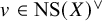 $v\in \mathrm {NS}(X)^\vee $
determined by a given anti-isometry of discriminant groups
$v\in \mathrm {NS}(X)^\vee $
determined by a given anti-isometry of discriminant groups $A_{T(X)}\cong A_{\mathrm {NS}(X)}$
. Presently, we can set this up as follows.
$A_{T(X)}\cong A_{\mathrm {NS}(X)}$
. Presently, we can set this up as follows. $\mathrm {NS}(X)$
is an index 4 overlattice of
$\mathrm {NS}(X)$
is an index 4 overlattice of $U+A_1^{12}$
, with generators of the
$U+A_1^{12}$
, with generators of the $A_1$
summands denoted by
$A_1$
summands denoted by $a_i\; (i=1,\ldots ,12)$
, obtained by adjoining the vectors
$a_i\; (i=1,\ldots ,12)$
, obtained by adjoining the vectors $v_1=(a_1+\cdots +a_8)/2$
and
$v_1=(a_1+\cdots +a_8)/2$
and $v_2=(a_5+\cdots +a_{12})/2$
which correspond to two of the 2-torsion sections. We develop a basis of the discriminant group
$v_2=(a_5+\cdots +a_{12})/2$
which correspond to two of the 2-torsion sections. We develop a basis of the discriminant group $A_{\mathrm {NS}(X)}$
which realizes the anti-isometry with
$A_{\mathrm {NS}(X)}$
which realizes the anti-isometry with $A_{T(X)} \cong A_{U(2)}^2 \oplus A_{A_1}^4$
by choosing
$A_{T(X)} \cong A_{U(2)}^2 \oplus A_{A_1}^4$
by choosing
-
•
$(a_1+a_2)/2, (a_1+a_3)/2$
corresponding to one copy of
$A_{U(2)}$
; -
•
$(a_5+a_6)/2, (a_5+a_7)/2$
corresponding to another copy of
$A_{U(2)}$
; -
•
$(a_4+a_8+a_i)/2$
for
$i=9,\ldots ,12$
for four copies of
$A_{A_1}$
.







It now follows that $D/2$
glues to
$D/2$
glues to $v=(a_9+\cdots +a_{12})/2$
in
$v=(a_9+\cdots +a_{12})/2$
in $\mathrm {NS}(W)$
, and
$\mathrm {NS}(W)$
, and $D/2+v+v_1$
is the class of the anticipated section Q meeting each
$D/2+v+v_1$
is the class of the anticipated section Q meeting each $I_2$
fiber at the non-identity component; by construction,
$I_2$
fiber at the non-identity component; by construction, $D/2=\varphi (Q)$
is the image of Q under the orthogonal projection
$D/2=\varphi (Q)$
is the image of Q under the orthogonal projection $\varphi $
from
$\varphi $
from $\mathrm {NS}(W)_{\mathbb Q}$
with respect to the trivial lattice
$\mathrm {NS}(W)_{\mathbb Q}$
with respect to the trivial lattice $\mathrm {Triv}(W) = \mathrm {Triv}(X)$
.
$\mathrm {Triv}(W) = \mathrm {Triv}(X)$
.
As before, we obtain a five-dimensional family of complex K3 surfaces whose very general member W has transcendental lattice
 $$\begin{align*}T(W) = D^\perp = U(2)^2 \oplus A_3(2) \subset T(X). \end{align*}$$
As a direct application of Criterion 2.1, we obtain the following lemma.
Lemma 4.2. $H=NF+d(O+Q)$
is very ample for all
$H=NF+d(O+Q)$
is very ample for all $N>2d$
.
$N>2d$
.
Since $H^2=4Nd$
, this implies Proposition 4.1 for all
$H^2=4Nd$
, this implies Proposition 4.1 for all $h>8d^2$
with
$h>8d^2$
with $h\equiv 0\mod 2d$
. To cover all other residue classes modulo
$h\equiv 0\mod 2d$
. To cover all other residue classes modulo $2d$
, we further enhance
$2d$
, we further enhance $\mathrm {NS}(W)$
by a divisor
$\mathrm {NS}(W)$
by a divisor $D^{\prime }\in T(W)$
with
$D^{\prime }\in T(W)$
with $D^{\prime 2}<-4$
. Again, this results in a family of K3 surfaces, this time four-dimensional. By choosing
$D^{\prime 2}<-4$
. Again, this results in a family of K3 surfaces, this time four-dimensional. By choosing $D^{\prime }$
supported on
$D^{\prime }$
supported on $U(2)^2$
, we can ensure that the induced elliptic fibration on the very general member V is non-degenerate, that is, it still has 12
$U(2)^2$
, we can ensure that the induced elliptic fibration on the very general member V is non-degenerate, that is, it still has 12 $I_2$
fibers.
$I_2$
fibers.
Lemma 4.3. $H+D^{\prime }$
is very ample for all
$H+D^{\prime }$
is very ample for all $N>(Q'.O)+3$
.
$N>(Q'.O)+3$
.
Proof of Lemma 4.3.
The proof of the lemma proceeds as in the previous section by writing
 $$ \begin{align*}D^{\prime} = \varphi(Q') = Q' - O - ((Q'.O)+2)F \end{align*} $$
for some section $Q'\in \mathop {\mathrm {MW}}(V)$
. Then we check the conditions of Criterion 2.1 as in Step 4, including the section
$Q'\in \mathop {\mathrm {MW}}(V)$
. Then we check the conditions of Criterion 2.1 as in Step 4, including the section $Q'$
.
$Q'$
.
With Lemma 4.3 at our disposal, Proposition 4.1 follows immediately for all even $h\geq 2d(2d+3)-2$
by taking
$h\geq 2d(2d+3)-2$
by taking $D^{\prime }$
with
$D^{\prime }$
with $D^{\prime 2}=-8, -12,\ldots , -4d-4$
because then
$D^{\prime 2}=-8, -12,\ldots , -4d-4$
because then $-4d-4\leq D^{\prime 2} = \varphi (Q')^2 = -4-2(Q'.O)$
, whence
$-4d-4\leq D^{\prime 2} = \varphi (Q')^2 = -4-2(Q'.O)$
, whence $(Q'.O)\leq 2d$
.
$(Q'.O)\leq 2d$
.
Remark 4.4. Since $T(W)$
only represents integers divisible by
$T(W)$
only represents integers divisible by $4$
, the above approach cannot cover the residue classes congruent to
$4$
, the above approach cannot cover the residue classes congruent to $2$
modulo
$2$
modulo $4$
.
$4$
.
5. Algebraic approach
To prove Theorem 1.1 in positive characteristic, one can in principle pursue the same moduli-theoretic approach as in the previous sections. However, there is the subtlety of proving that the resulting Noether–Lefschetz loci parameterizing the enhanced K3 surfaces W, respectively, V are non-empty. In [Reference Rams and Schütt19], this kind of problem was overcome by considering terminal objects in higher Noether–Lefschetz strata. Here, we follow a different method by working, almost, with two single K3 surfaces doing the job directly for us, thanks to their large Mordell–Weil lattices. In fact, the arguments from Sections 3 and 4 carry over literally once we know that there is the desired section Q (or also $Q'$
), and this can be achieved almost independently of the characteristic. Our first surface will showcase this in a prototypical way.
$Q'$
), and this can be achieved almost independently of the characteristic. Our first surface will showcase this in a prototypical way.
5.1. A special singular K3 surface
Let X denote the complex K3 surface with transcendental lattice $T(X)=$
diag
$T(X)=$
diag $(12,12)$
. By [Reference Shioda24, Theorem 2.1], following [Reference Kuwata11], X can be given by the Weierstrass form
$(12,12)$
. By [Reference Shioda24, Theorem 2.1], following [Reference Kuwata11], X can be given by the Weierstrass form
 $$ \begin{align} X: \;\;\; y^2 = x^3 - 3 t^4 x + t^{12} + 1, \end{align} $$
which exhibits X as a triple cover of the Kummer surface of $E\times E$
, where E denotes the elliptic curve with an automorphism of order
$E\times E$
, where E denotes the elliptic curve with an automorphism of order $4$
. The given elliptic fibration has 12 fibers of type
$4$
. The given elliptic fibration has 12 fibers of type ${\mathrm {I}}_2$
, non-degenerate outside characteristics
${\mathrm {I}}_2$
, non-degenerate outside characteristics $2$
,
$2$
, $3$
, Picard number
$3$
, Picard number $\rho (X)=20,$
and Mordell–Weil group
$\rho (X)=20,$
and Mordell–Weil group $\mathop {\mathrm {MW}}(X) \cong {\mathbb Z}^6\times ({\mathbb Z}/2{\mathbb Z})^2$
over
$\mathop {\mathrm {MW}}(X) \cong {\mathbb Z}^6\times ({\mathbb Z}/2{\mathbb Z})^2$
over ${\mathbb C}$
. The same holds in characteristic
${\mathbb C}$
. The same holds in characteristic $p\equiv 1\mod 4$
; otherwise, that is, if
$p\equiv 1\mod 4$
; otherwise, that is, if $p\equiv 3\mod 4, p>3$
, the surface becomes supersingular and the Mordell–Weil rank is raised to
$p\equiv 3\mod 4, p>3$
, the surface becomes supersingular and the Mordell–Weil rank is raised to $8$
, but in what follows, we will only need the above subgroup which always persists; for simplicity, we therefore state all results only for the complex K3 surface X.
$8$
, but in what follows, we will only need the above subgroup which always persists; for simplicity, we therefore state all results only for the complex K3 surface X.
Lemma 5.1. $\mathrm {MWL}(X) \cong A_1^-(1/2)^2 \oplus A_2^-(1/2)^2$
.
$\mathrm {MWL}(X) \cong A_1^-(1/2)^2 \oplus A_2^-(1/2)^2$
.
Proof. Abstractly, this can be built up successively from quotients of X by involutions. In detail, the quotient by the involution $t\mapsto -t$
is a rational elliptic surface S with six fibers of type
$t\mapsto -t$
is a rational elliptic surface S with six fibers of type ${\mathrm {I}}_2$
, hence,
${\mathrm {I}}_2$
, hence, $\mathrm {MWL}(S)^-\cong (A_1^\vee )^2$
by [Reference Schütt and Shioda21, §8] which pulls back to the two copies of
$\mathrm {MWL}(S)^-\cong (A_1^\vee )^2$
by [Reference Schütt and Shioda21, §8] which pulls back to the two copies of $A_1^-(1/2)$
inside
$A_1^-(1/2)$
inside $\mathrm {MWL}(X)$
. Orthogonally to this, we find the pull-back of
$\mathrm {MWL}(X)$
. Orthogonally to this, we find the pull-back of $\mathrm {MWL}(S')$
for
$\mathrm {MWL}(S')$
for $S'$
the quadratic twist of S at
$S'$
the quadratic twist of S at $0, \infty $
, that is, the minimal resolution of the quotient of X by the Nikulin involution
$0, \infty $
, that is, the minimal resolution of the quotient of X by the Nikulin involution
 $$ \begin{align*}(x,y,t)\mapsto (x,-y,-t). \end{align*} $$
Again, by [Reference Shioda24, Theorem 2.1], this has $T(S')=$
diag
$T(S')=$
diag $(6,6)$
; using this and the determinant formula [Reference Schütt and Shioda21, Corollary 6.39], one can prove that
$(6,6)$
; using this and the determinant formula [Reference Schütt and Shioda21, Corollary 6.39], one can prove that $\mathrm {MWL}(S') \cong (A_2^-)^2$
, again using involutions, this time based on the symmetry
$\mathrm {MWL}(S') \cong (A_2^-)^2$
, again using involutions, this time based on the symmetry $t\mapsto 1/t$
of
$t\mapsto 1/t$
of $\mathbb P^1$
which respects both (5.1) and the induced fibration on
$\mathbb P^1$
which respects both (5.1) and the induced fibration on $S'$
. This pulls back to
$S'$
. This pulls back to $A_2^-(2)^2\subset \mathrm {MWL}(X)$
. Another application of the determinant formula forces two extra divisibilities among the sections on X thus obtained. By inspection of the configuration of singular fibers and sections, and of the symmetries of X, these divisibilities can only occur on the sections pulled back from
$A_2^-(2)^2\subset \mathrm {MWL}(X)$
. Another application of the determinant formula forces two extra divisibilities among the sections on X thus obtained. By inspection of the configuration of singular fibers and sections, and of the symmetries of X, these divisibilities can only occur on the sections pulled back from $S'$
, giving the claimed isometry.
$S'$
, giving the claimed isometry.
One can also make this fully explicit. To this end, we translate the ${\mathbb Q}$
-rational 2-torsion section to
${\mathbb Q}$
-rational 2-torsion section to $(0,0)$
. Then (5.1) transforms to
$(0,0)$
. Then (5.1) transforms to
 $$\begin{align*}X: \;\;\; y^2 = x(x^2 - 3(t^4+1)x + 3(t^8+t^4+1)). \end{align*}$$
This admits a height 4 section $P'$
with x-coordinate
$P'$
with x-coordinate $x(P') = 2\sqrt 3 t^2$
pulling back from
$x(P') = 2\sqrt 3 t^2$
pulling back from $S'$
, which is 2-divisible by virtue of the section
$S'$
, which is 2-divisible by virtue of the section $\hat P$
with
$\hat P$
with $x(\hat P)=\sqrt 3 (t^2+t+1)(t^2-\sqrt 3 t+1)$
. Applying the order
$x(\hat P)=\sqrt 3 (t^2+t+1)(t^2-\sqrt 3 t+1)$
. Applying the order $3$
automorphism
$3$
automorphism $t\mapsto \zeta _3 t$
from (5.1) to
$t\mapsto \zeta _3 t$
from (5.1) to $\hat P$
, we get
$\hat P$
, we get $A_2^-(1/2)$
, supplemented by another orthogonal copy of
$A_2^-(1/2)$
, supplemented by another orthogonal copy of $A_2^-(1/2)$
, gained by applying the order
$A_2^-(1/2)$
, gained by applying the order $4$
automorphism
$4$
automorphism $\psi : t\mapsto \zeta _4t$
. Similarly, the section
$\psi : t\mapsto \zeta _4t$
. Similarly, the section $Q_0$
with x-coordinate
$Q_0$
with x-coordinate $x(Q_0)=(1 + 2\zeta _3)(t^2 - \zeta _3^2)(t^2 + \zeta _3)$
pulls back from S and can be augmented by applying
$x(Q_0)=(1 + 2\zeta _3)(t^2 - \zeta _3^2)(t^2 + \zeta _3)$
pulls back from S and can be augmented by applying $\psi $
to give
$\psi $
to give $A_1(1/2)^2$
.
$A_1(1/2)^2$
.
Lemma 5.2. The narrow Mordell–Weil lattice of X equals
 $$\begin{align*}\mathrm{MWL}^0(X) \cong A_1^-(2)^2 \oplus A_2^-(2)^2. \end{align*}$$
Proof. By inspection of the singular fibers, any section $P\in \mathop {\mathrm {MW}}(X)$
satisfies
$P\in \mathop {\mathrm {MW}}(X)$
satisfies $2P\in \mathop {\mathrm {MW}}^0(X)$
, hence
$2P\in \mathop {\mathrm {MW}}^0(X)$
, hence $\mathrm {MWL}^0(X) \supseteq A_1^-(2)^2 \oplus A_2^-(2)^2$
. On the other hand, one can check explicitly with the above six sections and the 2-torsion sections that there cannot be any further sections in
$\mathrm {MWL}^0(X) \supseteq A_1^-(2)^2 \oplus A_2^-(2)^2$
. On the other hand, one can check explicitly with the above six sections and the 2-torsion sections that there cannot be any further sections in $\mathrm {MWL}^0(X)$
. (The
$\mathrm {MWL}^0(X)$
. (The $8\times 12$
matrix indicating the fibers met at non-identity components has full rank over
$8\times 12$
matrix indicating the fibers met at non-identity components has full rank over $\mathbb F_2$
.)
$\mathbb F_2$
.)
Proposition 5.3. For any $d>1$
and every even
$d>1$
and every even $h\geq 2d(2d+3)-2$
, there exists a degree-
$h\geq 2d(2d+3)-2$
, there exists a degree- $2h$
model of X with exactly
$2h$
model of X with exactly $24$
smooth degree-d rational curves in any characteristic
$24$
smooth degree-d rational curves in any characteristic $p\neq 2,3$
.
$p\neq 2,3$
.
Proof. As explained, it suffices to prove the claim over ${\mathbb C}$
. For even d, this follows readily by applying the results from Section 3 because
${\mathbb C}$
. For even d, this follows readily by applying the results from Section 3 because $\mathrm {MWL}^0(X)$
obviously represents any integer divisible by
$\mathrm {MWL}^0(X)$
obviously represents any integer divisible by $4$
by the four square theorem.
$4$
by the four square theorem.
For odd d, we first single out the height 2 section $Q=Q_0+\psi ^*Q_0$
which exactly takes the shape required in Section 4. It can thus be augmented by any element in
$Q=Q_0+\psi ^*Q_0$
which exactly takes the shape required in Section 4. It can thus be augmented by any element in $\varphi (Q)^\perp \subset \mathrm {MWL}^0(X)$
. This lattice equals
$\varphi (Q)^\perp \subset \mathrm {MWL}^0(X)$
. This lattice equals $A_1^-(4)\oplus A_2^-(2)^2$
and still represents all integers divisible by
$A_1^-(4)\oplus A_2^-(2)^2$
and still represents all integers divisible by $4$
as an immediate application of the 290 theorem.
$4$
as an immediate application of the 290 theorem.
Summary 5.4. Theorem 1.1 is proved for even $h\geq 2d(2d+3)-2$
in all characteristics
$h\geq 2d(2d+3)-2$
in all characteristics $p\neq 2,3$
.
$p\neq 2,3$
.
Remark 5.5. Systematically, X can be found using Nishiyama’s method [Reference Nishiyama15]. This amounts to exhibiting a rank 6 even negative-definite lattice L (of the same discriminant form as $T(X) =$
diag
$T(X) =$
diag $(12,12)$
) embedding primitively into the Niemeier lattice
$(12,12)$
) embedding primitively into the Niemeier lattice $N(A_1^{24})$
such that the orthogonal complement
$N(A_1^{24})$
such that the orthogonal complement $L^\perp $
has root sublattice
$L^\perp $
has root sublattice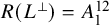 $R(L^\perp )=A_1^{12}$
.
$R(L^\perp )=A_1^{12}$
.
5.2. Elliptic K3 surfaces coming from Kummer surfaces
To cover odd h (and even d) in Theorem 1.1 in positive characteristic, we start with Kummer surfaces of the Jacobians of genus 2 curves. By [Reference Kumar10], these admit an elliptic fibration with two fibers of type ${\mathrm {I}}_0^*$
and six
${\mathrm {I}}_0^*$
and six ${\mathrm { I}}_2$
, just like
${\mathrm { I}}_2$
, just like $S'$
above. Hence, quadratic base change ramified at the
$S'$
above. Hence, quadratic base change ramified at the ${\mathrm {I}}_0^*$
fibers yields a three-dimensional family of K3 surfaces
${\mathrm {I}}_0^*$
fibers yields a three-dimensional family of K3 surfaces
 $$ \begin{align} y^2 =\ &(x + 4 (a - 1) (b - 1) c (t^2 - a) (t^2 - b))\nonumber\\ & (x + 4 (b - 1) (c - 1) a (t^2 - b) (t^2 - c))\cdot\\ & (x + 4 (c - 1) (a - 1) b (t^2 - c) (t^2 - a))\nonumber \end{align} $$
with 12 fibers of type ${\mathrm {I}}_2$
at the square roots of
${\mathrm {I}}_2$
at the square roots of $a,b,c,ab,bc$
, and
$a,b,c,ab,bc$
, and $ca$
. Very generally, one has
$ca$
. Very generally, one has $\mathop {\mathrm {MW}}\cong {\mathbb Z}^3\times ({\mathbb Z}/2{\mathbb Z})^2$
with linearly independent sections given by the following x-coordinates:
$\mathop {\mathrm {MW}}\cong {\mathbb Z}^3\times ({\mathbb Z}/2{\mathbb Z})^2$
with linearly independent sections given by the following x-coordinates:
 $$ \begin{align*} P: x(P) & = 4 (t^2 - a) (t^2 - b) (t^2 - c) (t^2-a b c)/t^2, \nonumber\\Q: x(Q) & = -(4 a b c - 4 a b - 4 c^2 + 4 c) (t^2 - a) (t^2 - b),\nonumber\\Q': x(Q') & = {4 (1-c)((a b - a - b + a b/c )t^2 - a b (a + b - c - 1)) (t^2 - c)},\nonumber \end{align*} $$
where $h(P) = 2$
,
$h(P) = 2$
, $h(Q)=1$
and
$h(Q)=1$
and $h(Q')=1$
.
$h(Q')=1$
.
More precisely, the sections are orthogonal with respect to the height pairing, of height indicated by the last entry in each row. Moreover, P meets each ${\mathrm {I}}_2$
fiber at the non-identity component, and the same holds for
${\mathrm {I}}_2$
fiber at the non-identity component, and the same holds for $Q+Q'$
exactly as in the previous section. It follows that the narrow Mordell–Weil lattice contains
$Q+Q'$
exactly as in the previous section. It follows that the narrow Mordell–Weil lattice contains
 $$\begin{align*}\mathrm{MWL}^0 \supseteq \langle 2Q, 2Q', P+Q+Q'\rangle \;\;\; \text{ with quadratic form } \;\;\; \begin{pmatrix} 4 & 0 & 2\\ 0 & 4 & 2\\ 2 & 2 & 4 \end{pmatrix} \end{align*}$$
(very generally as a finite index sublattice). The quadratic form obviously only represents integers divisible by $4$
(as in the previous section), so we specialize to a subfamily admitting a section
$4$
(as in the previous section), so we specialize to a subfamily admitting a section $P'$
of height
$P'$
of height $3/2$
. Assuming
$3/2$
. Assuming $P'$
to take the shape
$P'$
to take the shape
 $$\begin{align*}x(P') = d(t^2 - a)(t - \beta)(t - \gamma), \;\;\; \text{ where } \;\;\; \beta^2=b,\; \gamma^2=c, \end{align*}$$
one easily finds that $d = -4 \beta \gamma (\gamma - 1) (\beta - 1) (a - 1)$
ensures
$d = -4 \beta \gamma (\gamma - 1) (\beta - 1) (a - 1)$
ensures $P'$
to meet the
$P'$
to meet the ${\mathrm {I}}_2$
fiber at
${\mathrm {I}}_2$
fiber at $-\beta \gamma $
at the non-identity component, in addition to the fibers at
$-\beta \gamma $
at the non-identity component, in addition to the fibers at $\pm \sqrt a, \beta $
,
$\pm \sqrt a, \beta $
, $\gamma $
. Moreover,
$\gamma $
. Moreover, $a,\beta $
, and
$a,\beta $
, and $\gamma $
have to lie on a hypersurface
$\gamma $
have to lie on a hypersurface $Z\subset \mathbb A^3$
which is birational to the double cover of
$Z\subset \mathbb A^3$
which is birational to the double cover of $\mathbb P^2$
branched in the sextic
$\mathbb P^2$
branched in the sextic
 $$\begin{align*}( \gamma + 1) ( \beta + 1)( \beta + \gamma)( \beta^2 \gamma + \beta \gamma^2 + \beta^2 - 6 \beta \gamma + \gamma^2 + \beta + \gamma) = 0. \end{align*}$$
One can show that this defines the singular K3 surface with transcendental lattice diag $(2,6)$
, but we will only need that one can work out explicit examples for
$(2,6)$
, but we will only need that one can work out explicit examples for $P'$
by using the rational curve in Z given by
$P'$
by using the rational curve in Z given by $\beta +\gamma =-1$
, for instance (on which the fibration (5.2) does not degenerate). Using this, one can verify that
$\beta +\gamma =-1$
, for instance (on which the fibration (5.2) does not degenerate). Using this, one can verify that $(P'.P)=2, (P'.Q)=0, (P'.Q')=1$
whence the height pairing returns a rank 4 sublattice
$(P'.P)=2, (P'.Q)=0, (P'.Q')=1$
whence the height pairing returns a rank 4 sublattice
 $$\begin{align*}\langle 2Q, 2Q', P+Q+Q',2P'\rangle\subseteq\mathrm{MWL}^0 \end{align*}$$
with quadratic form given by the matrix
 $$\begin{align*}A := \begin{pmatrix} 4 & 0 & 2 & 2\\ 0 & 4 & 2 & 0\\ 2 & 2 & 4 & 0\\ 2 & 0 & 0 & 6 \end{pmatrix}. \end{align*}$$
For a very general K3 surface Y inside this two-dimensional family, the above inclusion has finite index.
Lemma 5.6. The quadratic form given by the matrix $(\frac {1}{2}A)$
represents every integer except for
$(\frac {1}{2}A)$
represents every integer except for $1$
.
$1$
.
Proof. Direct check by applying [Reference Barowsky, Damron, Mejia, Saia, Schock and Thompson1, Corollary 2] to the exception $m=1$
.
$m=1$
.
By the same arguments as in the proof of Proposition 5.3, we can thus prove the following.
Proposition 5.7. For any even d and every odd $h\geq 2d(2d+3)-2$
, there exists a degree-
$h\geq 2d(2d+3)-2$
, there exists a degree- $2h$
model of Y with exactly
$2h$
model of Y with exactly $24$
smooth degree-d rational curves in any characteristic
$24$
smooth degree-d rational curves in any characteristic $p\neq 2,3$
.
$p\neq 2,3$
.

6. Concluding remarks
Theorem 1.1 leaves the case open, where both d and h are odd. Here, we comment on this briefly, without proofs and only over ${\mathbb C}$
.
${\mathbb C}$
.
6.1.
Part of the open case can be covered by considering elliptic K3 surfaces with eight fibers of type ${\mathrm {I}}_3$
(i.e., quadratic base changes of the Hesse pencil). Combining [Reference Degtyarev4], [Reference Rams and Schütt18, §11.2] and the approach from Section 3, one can show the following proposition.
${\mathrm {I}}_3$
(i.e., quadratic base changes of the Hesse pencil). Combining [Reference Degtyarev4], [Reference Rams and Schütt18, §11.2] and the approach from Section 3, one can show the following proposition.
Proposition 6.1. For any $d\in {\mathbb N}$
and
$d\in {\mathbb N}$
and $h'\gg 0$
, there are complex elliptic K3 surfaces with eight fibers of type
$h'\gg 0$
, there are complex elliptic K3 surfaces with eight fibers of type ${\mathrm {I}}_3$
admitting model of degree
${\mathrm {I}}_3$
admitting model of degree $6h'+2d^2$
with smooth fiber components featuring as degree d curves.
$6h'+2d^2$
with smooth fiber components featuring as degree d curves.
6.2.
For degree $d>1$
, elliptic K3 surfaces with six fibers of type
$d>1$
, elliptic K3 surfaces with six fibers of type ${\mathrm {I}}_4$
, as in [Reference Rams and Schütt18, §11.1], do not yield anything additional compared to Theorem 1.1.
${\mathrm {I}}_4$
, as in [Reference Rams and Schütt18, §11.1], do not yield anything additional compared to Theorem 1.1.
6.3.
For h large compared to d, there are no K3 surfaces with exactly 23 smooth rational curves of degree d, by the same arguments as in the line case in [Reference Degtyarev4], thanks to the general bound from [Reference Rams and Schütt18].
6.4.
Constructing K3 surfaces containing 22 smooth rational curves (for large h) is surprisingly subtle. In fact, for odd d and h, we could not cover any additional values compared with the examples extracted from [Reference Degtyarev4].
6.5.
In characteristics $2$
,
$2$
, $3$
, there are different bounds due to the occurrence of quasi-elliptic fibrations (see [Reference Rams and Schütt18]). For K3 surfaces of finite height, however, and for elliptic fibrations in general, Miyaoka’s bound carries over, but then some of the above constructions degenerate, so the problem is decidedly more subtle.
$3$
, there are different bounds due to the occurrence of quasi-elliptic fibrations (see [Reference Rams and Schütt18]). For K3 surfaces of finite height, however, and for elliptic fibrations in general, Miyaoka’s bound carries over, but then some of the above constructions degenerate, so the problem is decidedly more subtle.
Acknowledgements
We thank the referee for thorough comments that helped us to improve the article.
Funding statement
The first author’s research was funded by the National Science Centre, Poland, Opus grant no. 2024/53/B/ST1/01413. The second author’s research is conducted in the framework of the research training group GRK 2965: From Geometry to Numbers, funded by DFG.
Competing interests
The authors declare none.


 Open access

