




In recent years, a growing body of academic work has explored the dynamic relationships between China and South-East Asian countries, yet little work has critically examined these relationships from China’s own perspectives.Footnote 1 This paper aims to fill that gap with an empirical exploration of how the Chinese public conceptualizes and perceives South-East Asia. It proposes that the Chinese public’s view of China’s southern neighbours can be broadly categorized into three dominant frames or lenses. These frames are neither mutually exclusive nor exhaustive, but together they lead to complex and multifaceted public perceptions of South-East Asia within China.
The first frame, “affinity,” is deeply rooted in the historical context of Chinese migration and the presence of a large Chinese diaspora in South-East Asia.Footnote 2 It reflects a sense of kinship and cultural connection within the general Chinese populace towards South-East Asia. The second frame, “annoyance,” stems from contemporary geopolitical tensions, particularly those related to territorial disputes in the South China Sea (SCS).Footnote 3 As several South-East Asian countries are involved in these disputes with China, they are often portrayed in the domestic media as provocateurs challenging China’s status as a great power.Footnote 4 Finally, there is the “apprehension” frame, which presents South-East Asia as an exotic but unsafe land. This negative perception has been exacerbated by the recent increase in cyber scams and criminal activities targeting Chinese citizens, contributing to stereotypes of South-East Asia as lawless and dangerous.Footnote 5
This paper presents data gathered from an original survey recently conducted in China, which correspond, in sequence, to the three frames in terms of their statistical distribution, the contexts of their origins, contemporary manifestations and political implications within the People’s Republic of China (PRC) today. It concludes by explaining why Chinese public perceptions of South-East Asia matter for understanding how China’s relations with South-East Asia may evolve in the years to come.
Data and Methodology
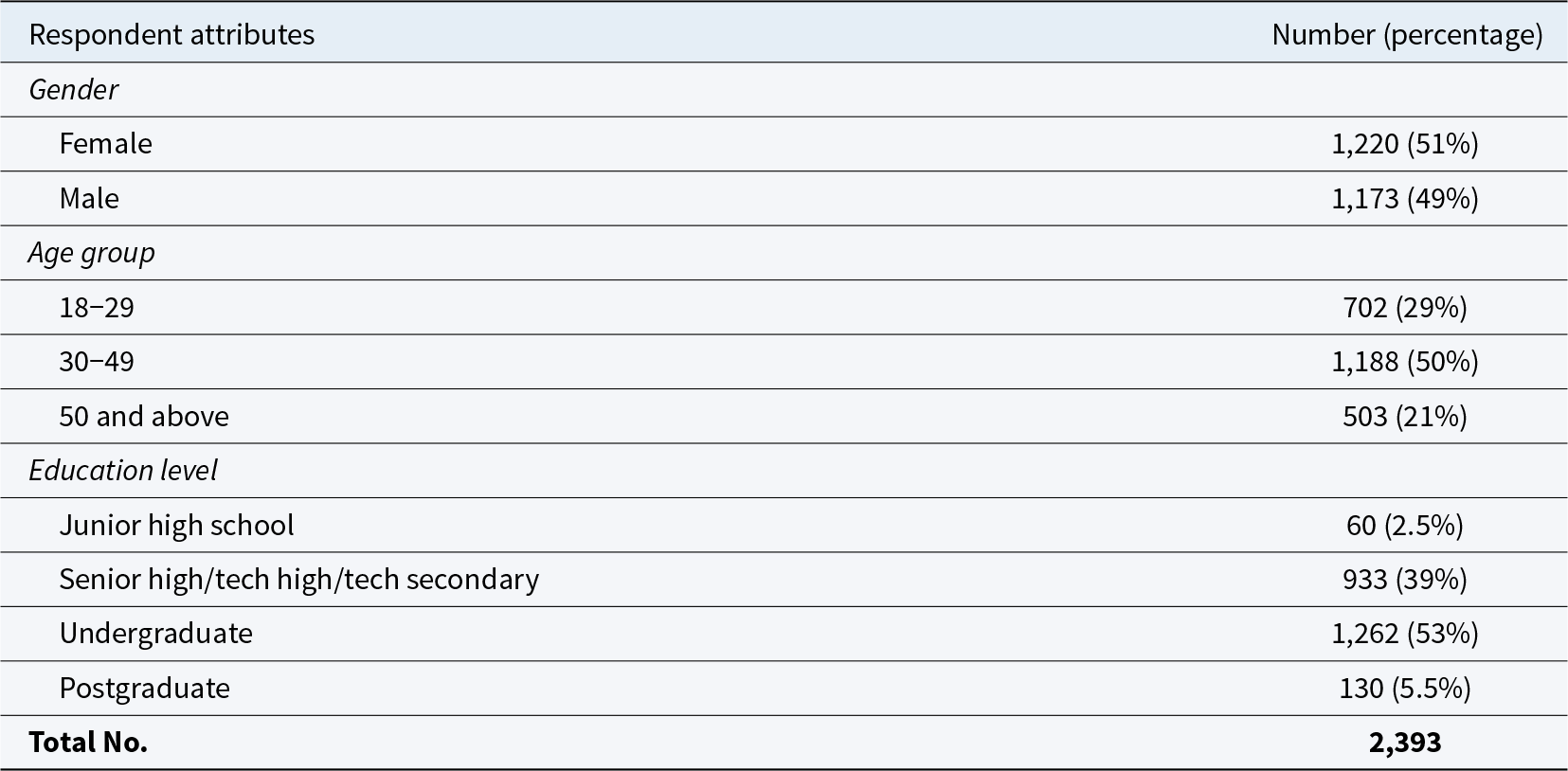
The survey was conducted in China in March 2025 by Dynata, an internationally renowned public opinion research company, and yielded 2,393 effective responses. Table 1 shows that there were slightly more female than male respondents, and they tended to be relatively young and well-educated. Given the online nature of the survey, deviations from national census demographics are expected, as older and less-educated populations typically have lower online survey participation rates.
Survey Demographic Details

Table 1 Long description
The table summarizes survey respondent demographics by gender, age group, and education level, reporting counts and percentages. There were 2,393 respondents in total. Gender was nearly balanced: 1,220 female (51%) and 1,173 male (49%). The largest age group was 30–49 with 1,188 respondents (50%), followed by 18–29 with 702 (29%) and 50+ with 503 (21%). Education was concentrated at the undergraduate level with 1,262 respondents (53%), followed by senior high/technical high/technical secondary with 933 (39%), postgraduate with 130 (5.5%), and junior high school with 60 (2.5%). Percentages are shown within each category and may not sum exactly to 100% due to rounding.
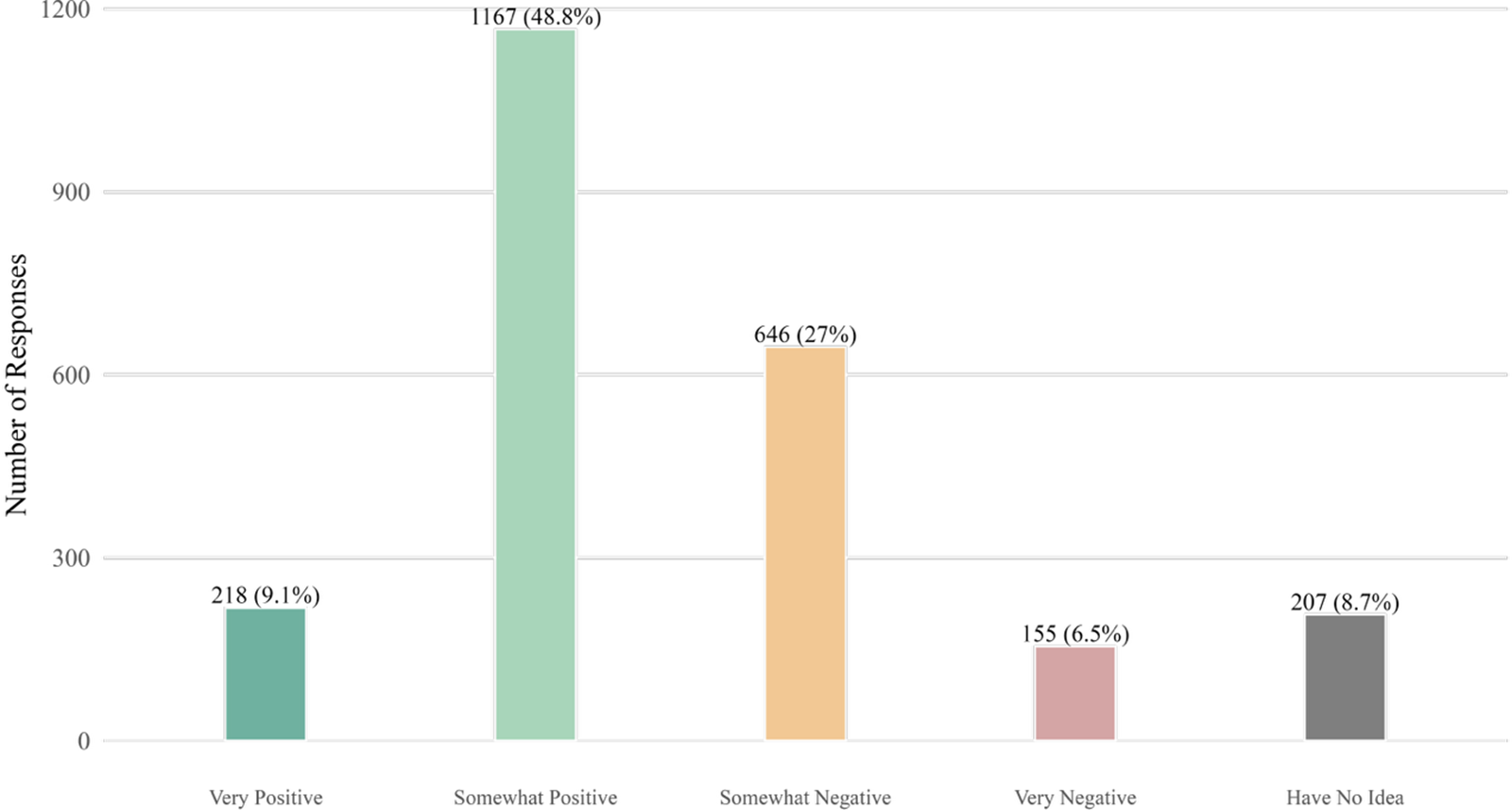
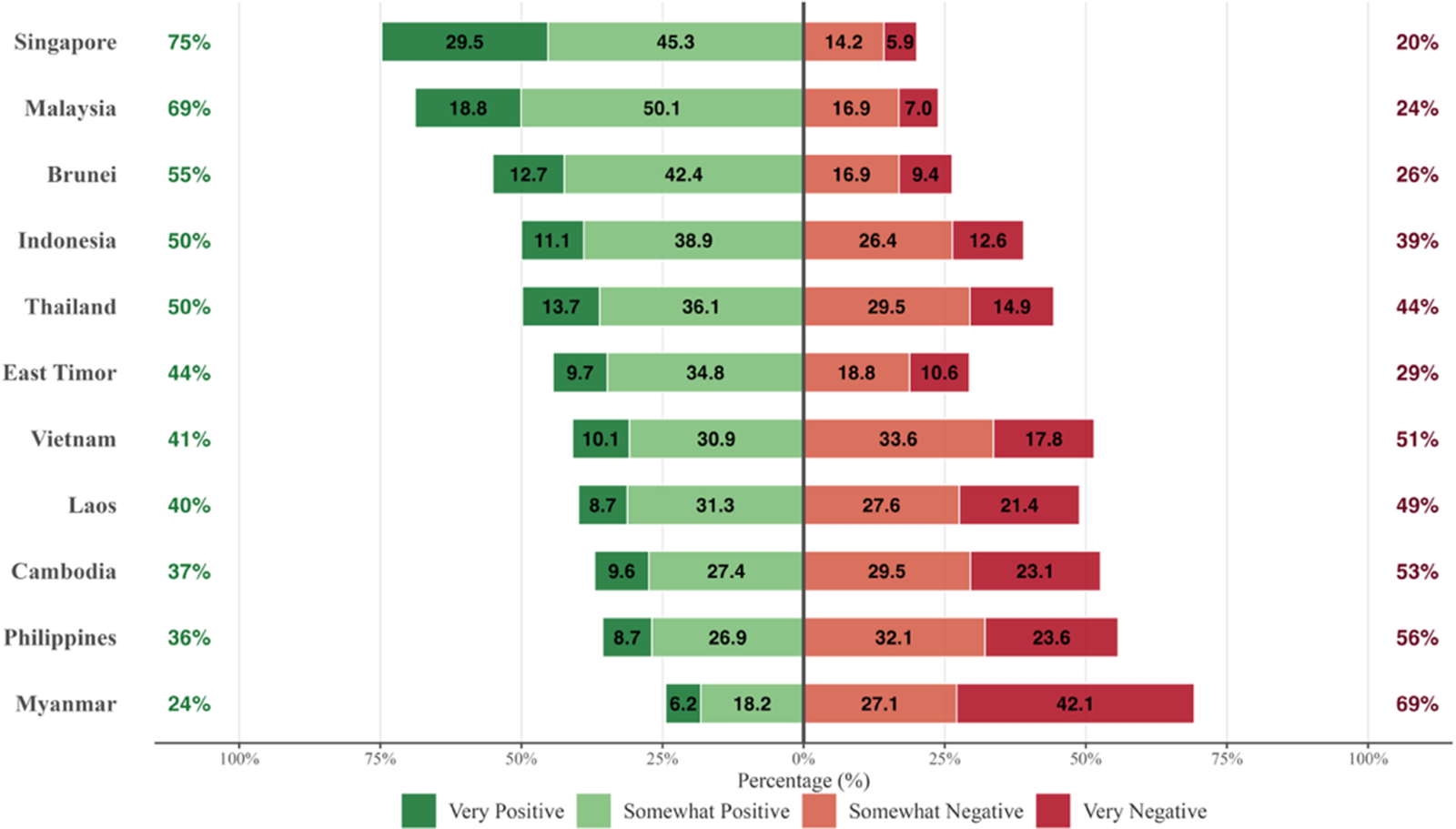
Figure 1 shows that the Chinese people generally hold a positive view of South-East Asia. Nearly 58 per cent of the respondents reported either very positive or somewhat positive perceptions of the region. On the other hand, as we can see from Figure 2, perceptions of individual South-East Asian countries vary significantly. Singapore received the most favourable impression, with 75 per cent of respondents expressing very or somewhat favourable views, followed closely by Malaysia at 69 per cent. Approximately half of the respondents viewed Indonesia and Thailand favourably, trailing slightly behind Brunei.
Chinese Public’s Overall Views on South-East Asia

Figure 1 Long description
The bar graph has the y-axis label Number of Responses, with tick labels 0, 300, 600, 900, 1200. The x-axis categories are Very Positive, Somewhat Positive, Somewhat Negative, Very Negative, Have No Idea. Bar labels are: Very Positive 218 left parenthesis 9.1 percent right parenthesis; Somewhat Positive 1167 left parenthesis 48.9 percent right parenthesis; Somewhat Negative 646 left parenthesis 27 percent right parenthesis; Very Negative 153 left parenthesis 6.4 percent right parenthesis; Have No Idea 207 left parenthesis 8.7 percent right parenthesis.
Chinese Public’s Views on Individual South-East Asian States

Figure 2 Long description
The heatmap displays Chinese public perceptions of South-East Asian countries. The vertical axis lists countries: Singapore, Malaysia, Brunei, Indonesia, Thailand, East Timor, Vietnam, Laos, Cambodia, Philippines and Myanmar. The horizontal axis categorizes sentiment into Very Positive, Somewhat Positive, Somewhat Negative and Very Negative. Numerical values within cells represent percentages. Singapore has the highest positive perception with 29.6 percent Very Positive and 45.3 percent Somewhat Positive. Malaysia follows with 18.2 percent Very Positive and 50.8 percent Somewhat Positive. Myanmar has the highest negative perception with 42.1 percent Very Negative. The legend indicates sentiment intensity, with higher percentages reflecting stronger sentiments. Overall, Singapore and Malaysia are viewed most positively, while Myanmar is viewed most negatively.
Five countries in the region were viewed negatively by more than half of the respondents. Notably, Laos and Cambodia, despite being considered the most pro-China countries in the region by many Western observers, received negative ratings from our respondents. However, the most critical perceptions were reserved for the Philippines and Myanmar. The negative perception of the Philippines likely stems from ongoing territorial disputes with China. Myanmar, in particular, was assessed harshly, with 69 per cent of respondents holding negative views, including 42.1 per cent expressing very negative opinions. Such unfavourable ratings may be attributed to prominent domestic media coverage of the lawlessness and rampant scam operations within the country that negatively affect Chinese society.
Diasporic Ties and Kinship Affinity
Every year during the Spring Festival Gala, which is broadcast by Chinese Central Television (CCTV), the hosts usually take a moment to extend warm New Year greetings to overseas Chinese compatriots. Such a gesture reflects the deep connection that Beijing seeks to cultivate between PRC citizens and the tens of millions of Chinese living abroad, known as haiwai qiaobao 海外侨胞. Liaising with the Chinese diaspora has long been an important component of Chinese foreign policy for both the Republican and Communist governments.Footnote 6 And, since the inception of the reform and opening up policies in the late 1970s, Beijing has made a concerted effort to promote strong kinship ties between the Chinese people on the mainland and their compatriots living in various parts of the world, particularly in South-East Asia.Footnote 7
Beijing views overseas Chinese communities as political targets to mobilize, as crucial sources of economic investment and as cultural capital through which to project China’s global presence and influence.Footnote 8 It has actively engaged with these communities through United Front co-optation, investment incentives, cultural exchange programmes and educational initiatives.Footnote 9 These efforts are aimed at strengthening the bonds between the Chinese diaspora and China and fostering a shared sense of identity and belonging. As China continues to rise as a global power, Beijing believes that overseas Chinese communities will likely play an increasingly important role in bridging cultural divides and enhancing China’s image on the international stage.Footnote 10
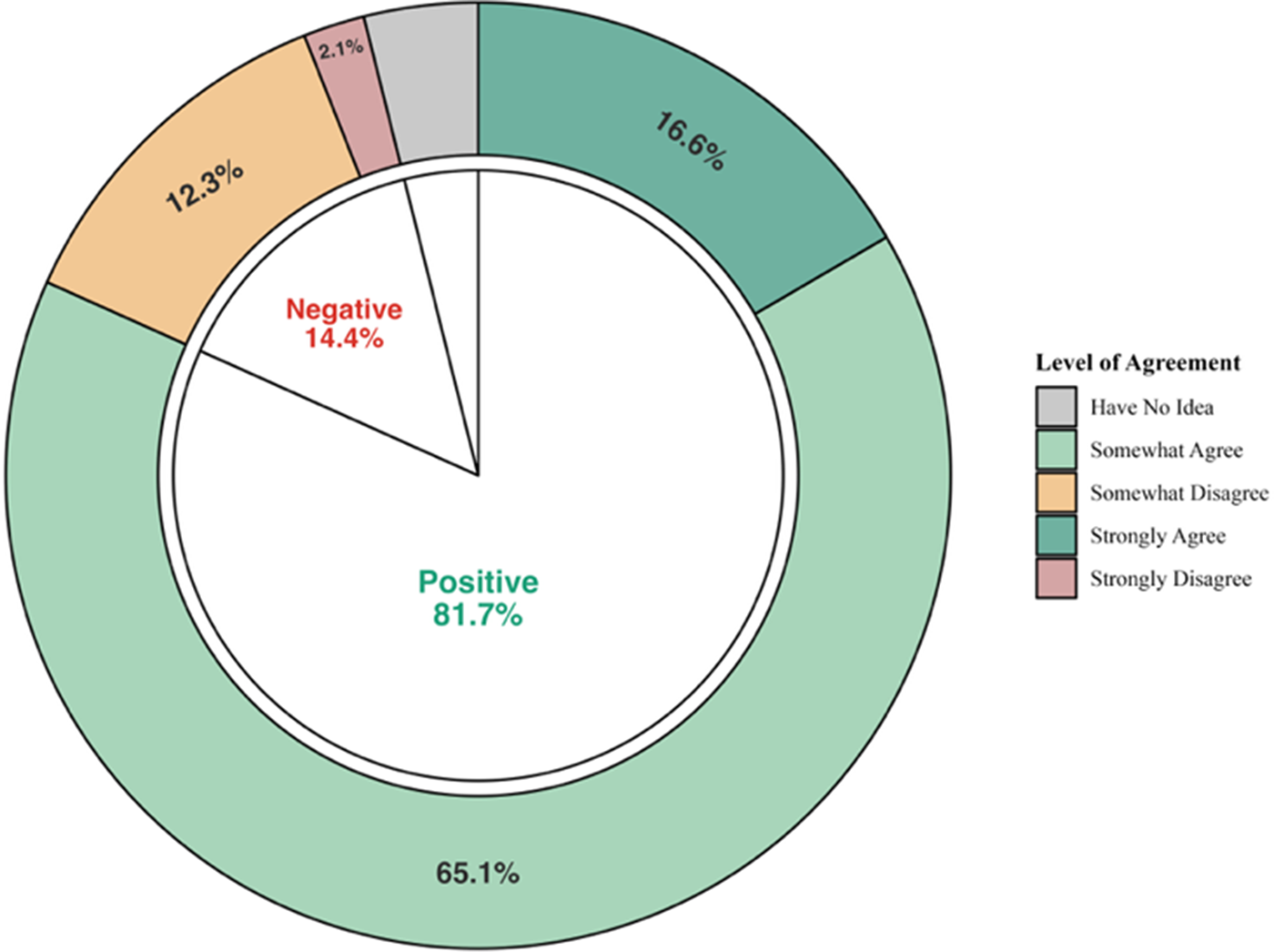
As Figure 3 shows, an overwhelming majority (81.7 per cent) of respondents agreed with the statement, “The Chinese diaspora communities in South-East Asia have strong familial ties with China and belong to the same Chinese national community.” This consensus indicates that many people in China maintain a strong sense of shared identity with ethnic Chinese populations in the region. This points to a broader tendency among the Chinese public to perceive overseas Chinese as integral members of the Chinese nation, reflecting a trend towards the re-territorializing of the boundary and scope of the Chinese national community.Footnote 11
Chinese Public Views on Kinship Ties with the Chinese Diaspora in South-East Asia

Figure 3 Long description
The pie chart illustrates levels of agreement regarding kinship ties with the Chinese diaspora. The inner circle shows Positive agreement at 81.7 percent and Negative agreement at 14.4 percent. The outer ring segments are labeled as follows: 'Strongly Agree' at 65.1 percent, 'Somewhat Agree' at 16.6 percent, 'Have No Idea' at 12.3 percent, 'Strongly Disagree' at 2.1 percent and 'Somewhat Disagree' at 3.9 percent. The legend indicates the categories and their corresponding labels. The largest segment is 'Strongly Agree,' and combined positive agreement significantly outweighs negative agreement.
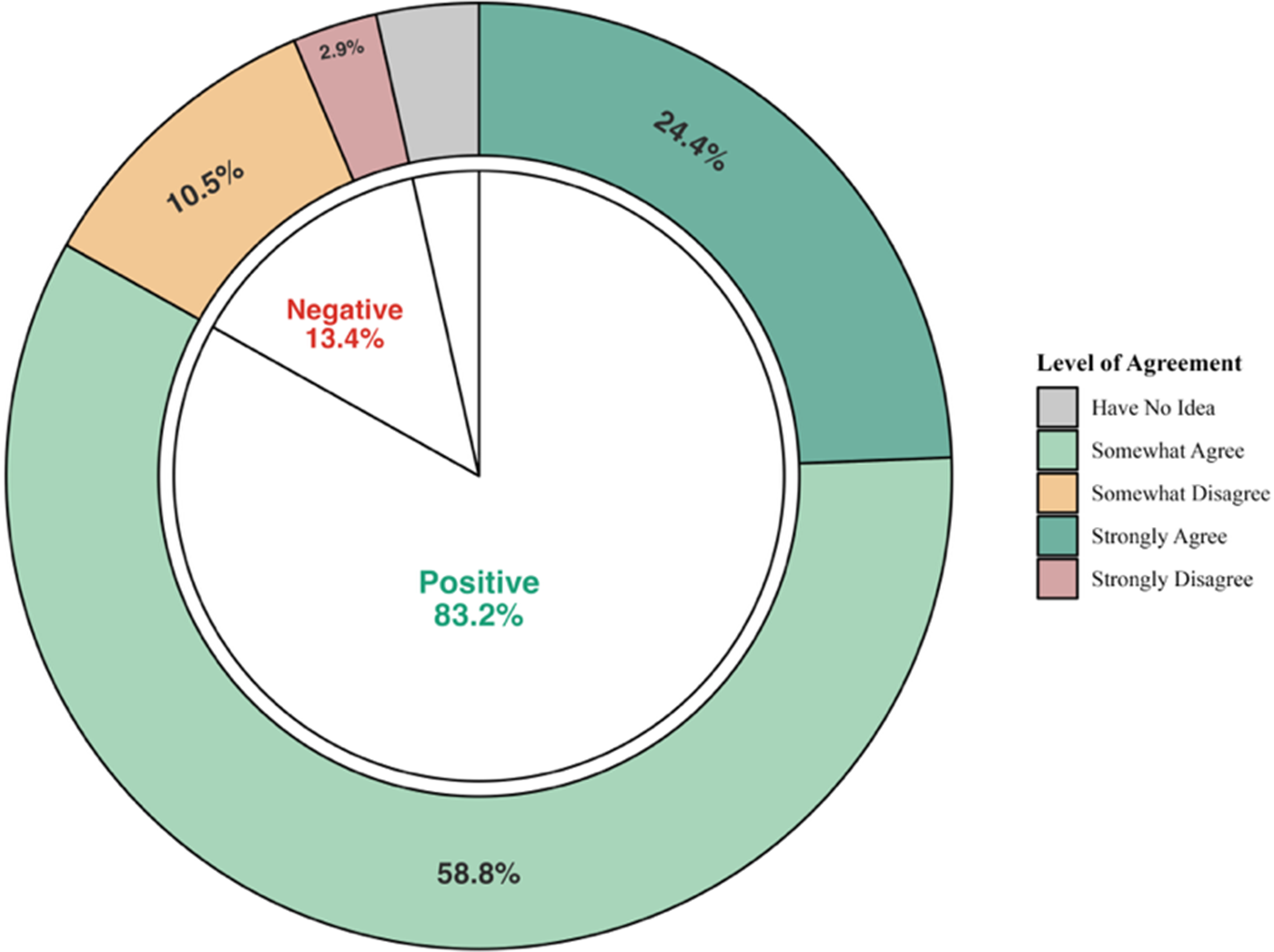
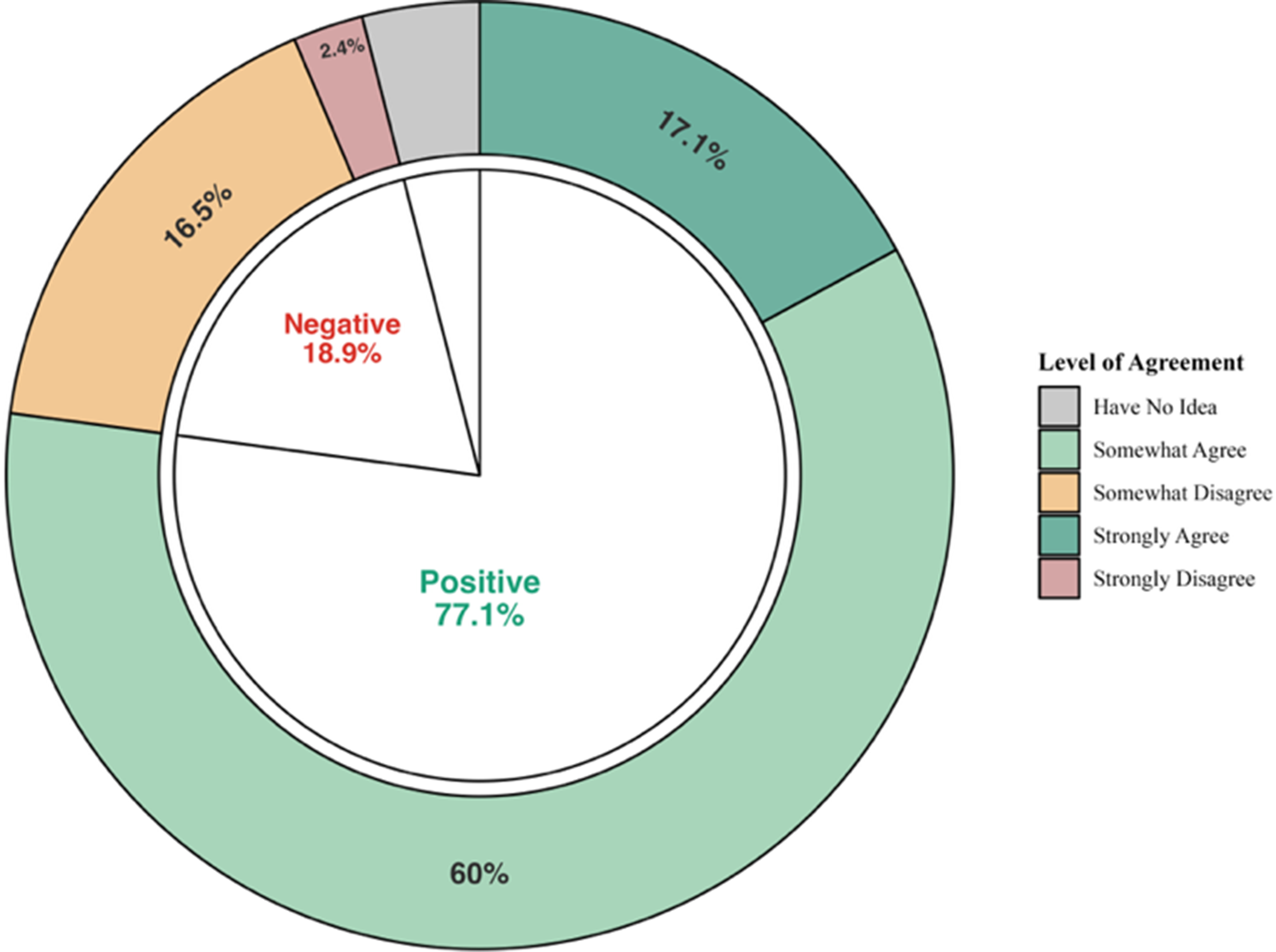
A large majority of respondents also reacted positively to the statement: “China should welcome overseas Chinese from South-East Asia to work, study, and live in China” (Figure 4). This stance highlights not only perceived ethnic connections but also the Chinese public’s openness and enthusiasm for cultural and social interaction with overseas compatriots. Additionally, a substantial majority (77.1 per cent) either strongly or somewhat agreed that such ties significantly contribute to a close relationship between China and South-East Asia (Figure 5). This suggests that respondents see overseas Chinese communities as a valuable bridge for fostering mutual understanding, cooperation and closer diplomatic relations, underscoring the potential influence of people-to-people ties in international affairs.
Chinese Public Views on Welcoming Overseas Chinese in South-East Asia

Figure 4 Long description
A doughnut chart with a legend titled Level of Agreement. The legend lists five categories: Have No Idea, Somewhat Agree, Somewhat Disagree, Strongly Agree, Strongly Disagree. Text inside the chart reads: Positive 83.2 percent and Negative 13.4 percent. Slice labels shown on the ring are 58.8 percent, 24.4 percent, 10.5 percent and 2.3 percent.
Chinese Public Views on the Role of Overseas Chinese in Bilateral Relations

Figure 5 Long description
The chart text reads “Level of Agreement.” The legend lists: Have No Idea, Somewhat Agree, Somewhat Disagree, Strongly Agree, Strongly Disagree. The outer ring shows five labeled percentages: 60 percent, 17.1 percent, 16.5 percent, 2.4 percent and 4 percent. The inner circle text reads “Positive 77.1 percent” and “Negative 18.9 percent.”.
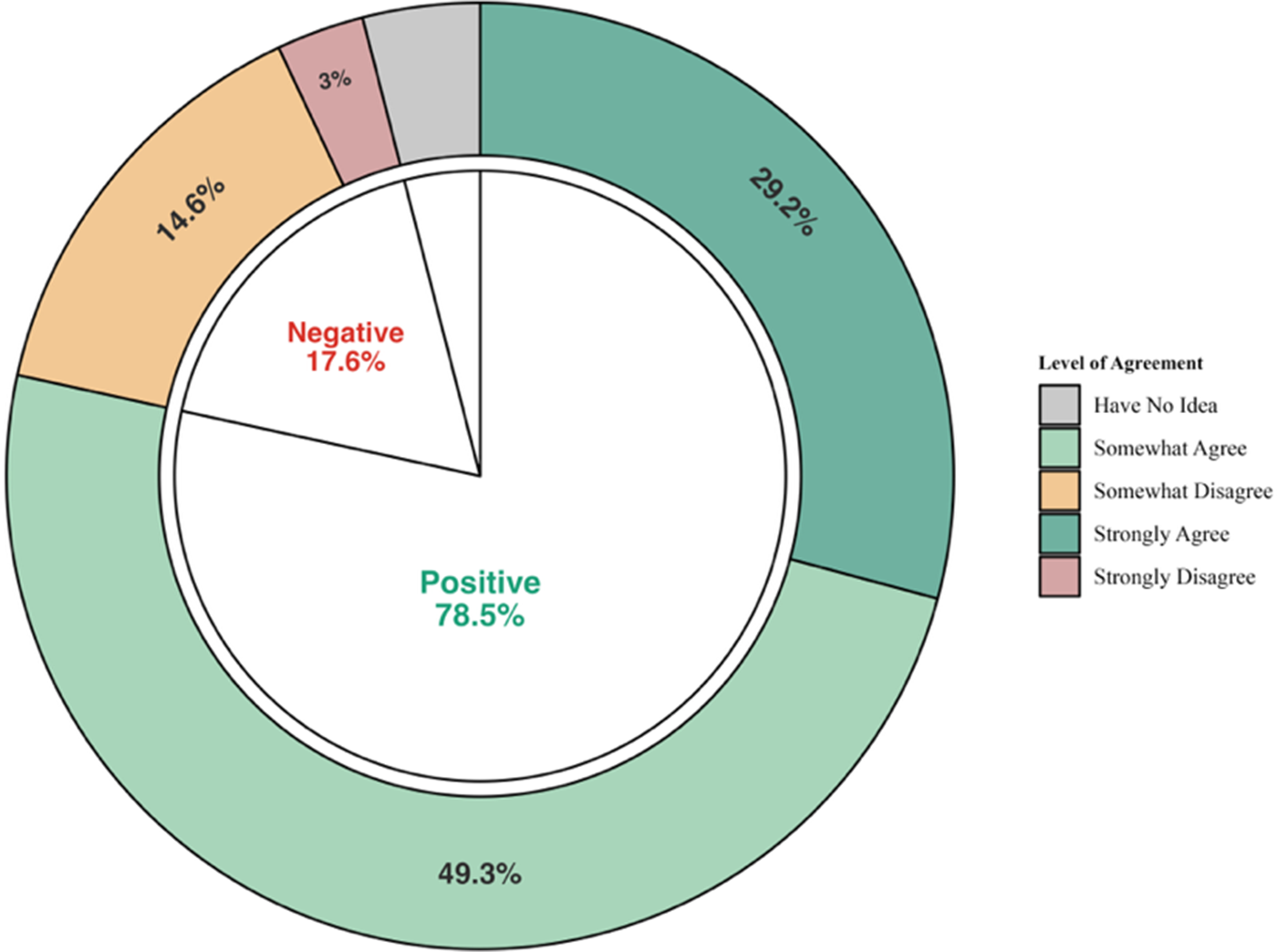
Finally, as shown in Figure 6, 78.5 per cent of respondents either strongly or somewhat agreed that China should play a protective role for overseas Chinese in the region. This question touches on a contentious issue shaped by the historical complexities of citizenship, identity and the evolving relationships between overseas Chinese, China and regional governments.Footnote 12 It was especially prominent during the 1998 Indonesian riots, when anti-Chinese violence erupted and Beijing faced criticism at home for not intervening.Footnote 13 Today, as China’s regional influence grows, Beijing must carefully balance its support for overseas Chinese communities with the need to maintain positive diplomatic relations with South-East Asian governments, which regard these populations primarily as their own citizens.Footnote 14
Chinese Public Views on Protection of Overseas Chinese in South-East Asia

Figure 6 Long description
A doughnut chart with a legend titled "Level of Agreement" and five response categories. Center text: Positive 78.5 percent Negative 17.6 percent Slice labels shown on the chart: 49.3 percent 29.2 percent 14.6 percent 3 percent 3.9 percent Legend categories listed: Have No Idea Somewhat Agree Somewhat Disagree Strongly Agree Strongly Disagree.
Territorial Disputes and Annoyance by the “Lilliputians”
It is a well told story that in July 2010, during an ASEAN Regional Forum meeting in Hanoi, the-then Chinese foreign minister, Yang Jiechi 杨洁篪, snapped that “China is a big country and other countries are small countries and that is just a fact.” Clearly annoyed and feeling ganged up on by its “smaller” South-East Asian neighbours, Yang’s attitude has been interpreted as “emblematic of China’s diplomatic missteps in Southeast Asia over the past year, which have sent ripples of concern across the region … and led to a renewed appreciation of America’s diplomatic role and military presence in Asia.”Footnote 15
The SCS territorial disputes between China and several South-East Asian countries, including Brunei, Malaysia, the Philippines and Vietnam, have resulted in substantial militarization in recent years, as Beijing has advanced it claims through the so-called “nine-dash line.”Footnote 16 The conflict has intensified since 2009, when China formally submitted its claim to the United Nations, followed by increasingly assertive actions, including island-building activities that have significantly expanded the physical presence of the Chinese territorial state in the SCS.Footnote 17
Beijing’s assertive expansion has drawn strong reactions from neighbouring countries and external powers like the United States, which maintains a substantial naval presence in the region under the banner of ensuring freedom of navigation.Footnote 18 The 2016 ruling by the Permanent Court of Arbitration in The Hague on a SCS territorial dispute case submitted by the Philippines, but boycotted by China, rejected Beijing’s expansive claims in the SCS.Footnote 19
China’s domestic media coverage, along with patriotic education, has fostered a widespread belief in the historical legitimacy of its maritime claims. Many citizens view the South China Sea as inherently Chinese territory, based on centuries of navigation records and historical maps.Footnote 20 Consequently, ordinary Chinese citizens often express frustration at what they perceive as unreasonable challenges from their “lilliputian” neighbours, whom they frequently characterize as opportunistic actors exploiting China’s past weakness to seize its rightful territory. These disputes are often framed as proxy conflicts engineered by the United States to contain China’s rise, with some South-East Asian claimants viewed not as independent actors pursuing legitimate national interests but as pawns in a larger geopolitical competition.Footnote 21
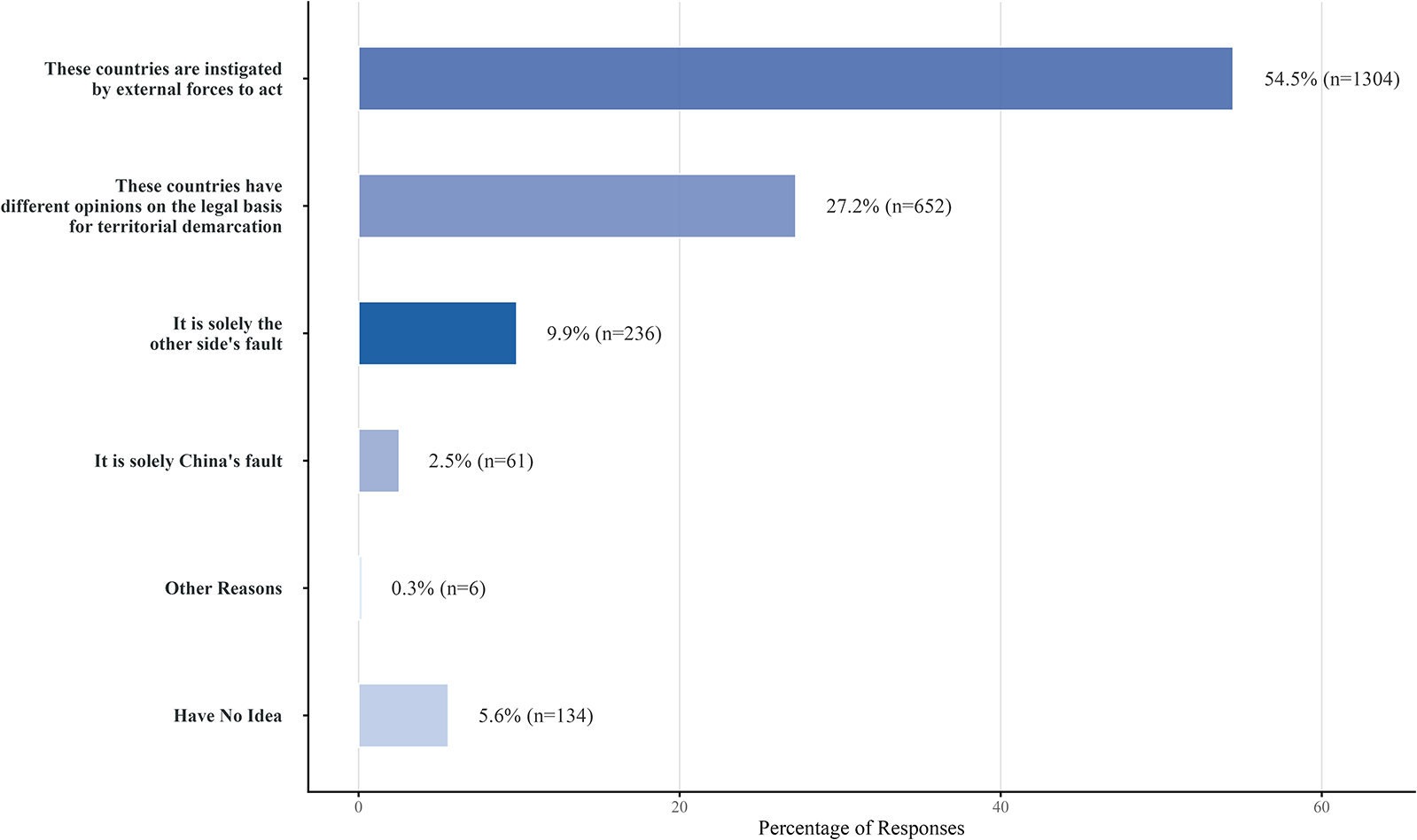
The survey asked respondents what they perceived to be the primary cause of territorial disputes between China and certain South-East Asian countries, with the results presented in Figure 7. Notably, over 54 per cent of respondents attributed these disputes to provocations by external powers, i.e. the United States, while another 27.2 per cent viewed them as normal disagreements, with legitimate grounds, between China and the South-East Asian nations involved. Only a small fraction of respondents attributed the disputes solely to either China (2.5 per cent) or South-East Asian countries (9.9 per cent).
Chinese Public Views on Disputes in the SCS

Figure 7 Long description
A horizontal bar graph with six categories on the vertical axis and one bar for each category. The horizontal axis label reads Percentage of Responses. The horizontal axis shows tick labels 0, 20, 40 and 60. The vertical axis categories, from top to bottom, read: These countries are instigated by external forces; These countries have different views on the legal basis for territorial disputes; It is solely the other side’s fault; Have No Idea; It is solely China’s fault; Other Reasons. Bar end labels show: 54.5 percent left parenthesis n equals 1304 right parenthesis for These countries are instigated by external forces; 27.2 percent left parenthesis n equals 652 right parenthesis for These countries have different views on the legal basis for territorial disputes; 9.9 percent left parenthesis n equals 236 right parenthesis for It is solely the other side’s fault; 5.6 percent left parenthesis n equals 134 right parenthesis for Have No Idea; 2.5 percent left parenthesis n equals 61 right parenthesis for It is solely China’s fault; 0.3 percent left parenthesis n equals 6 right parenthesis for Other Reasons.
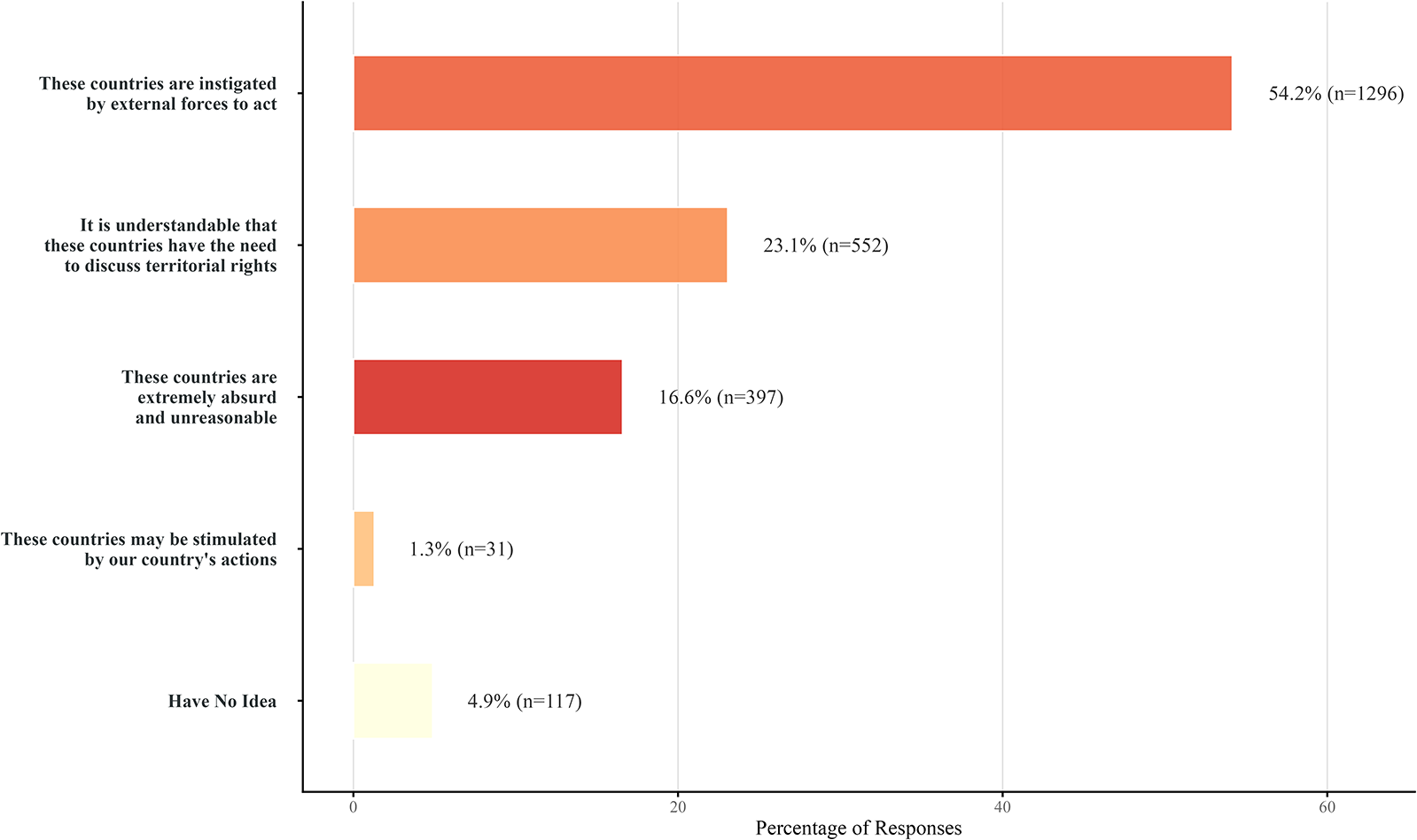
The responses to a separate question on why people think South-East Asian claimant countries might engage in disputes with China in the SCS were quite consistent: over 54 per cent of respondents believed these countries were acting as proxies for external powers seeking to provoke China (Figure 8). Meanwhile, 16 per cent considered such claims to be extremely unreasonable, while another 23 per cent believed it was reasonable for these countries to engage in dialogue with China over territorial claims.
Chinese Public Views on Disputes in the SCS

Figure 8 Long description
The horizontal bar graph has five categories on the vertical axis. The horizontal axis label reads Percentage of Responses. The horizontal axis shows tick labels 0, 10, 20, 30, 40, 50, 60. Category 1 label: These countries are instigated by external forces. Bar label: 54.2 percent left parenthesis n equals 1290 right parenthesis. Category 2 label: It is understandable that these countries have the need to defend their territorial rights. Bar label: 23.1 percent left parenthesis n equals 550 right parenthesis. Category 3 label: These countries are extremely absurd and unreasonable. Bar label: 16.6 percent left parenthesis n equals 397 right parenthesis. Category 4 label: Have No Idea. Bar label: 4.9 percent left parenthesis n equals 117 right parenthesis. Category 5 label: These countries may be stimulated by the country’s interest. Bar label: 1.3 percent left parenthesis n equals 31 right parenthesis.
Such findings indicate that the majority of respondents perceive external interference as the primary factor fuelling territorial disputes between China and some South-East Asian countries. This is confirmation of the widespread belief among the Chinese public that outside actors, particularly the United States, are intensifying tensions or complicating otherwise manageable disputes.Footnote 22 Additionally, the significant proportion of respondents who view these disagreements as normal disputes grounded in legitimate issues implies an acknowledgement of genuine competing national interests.
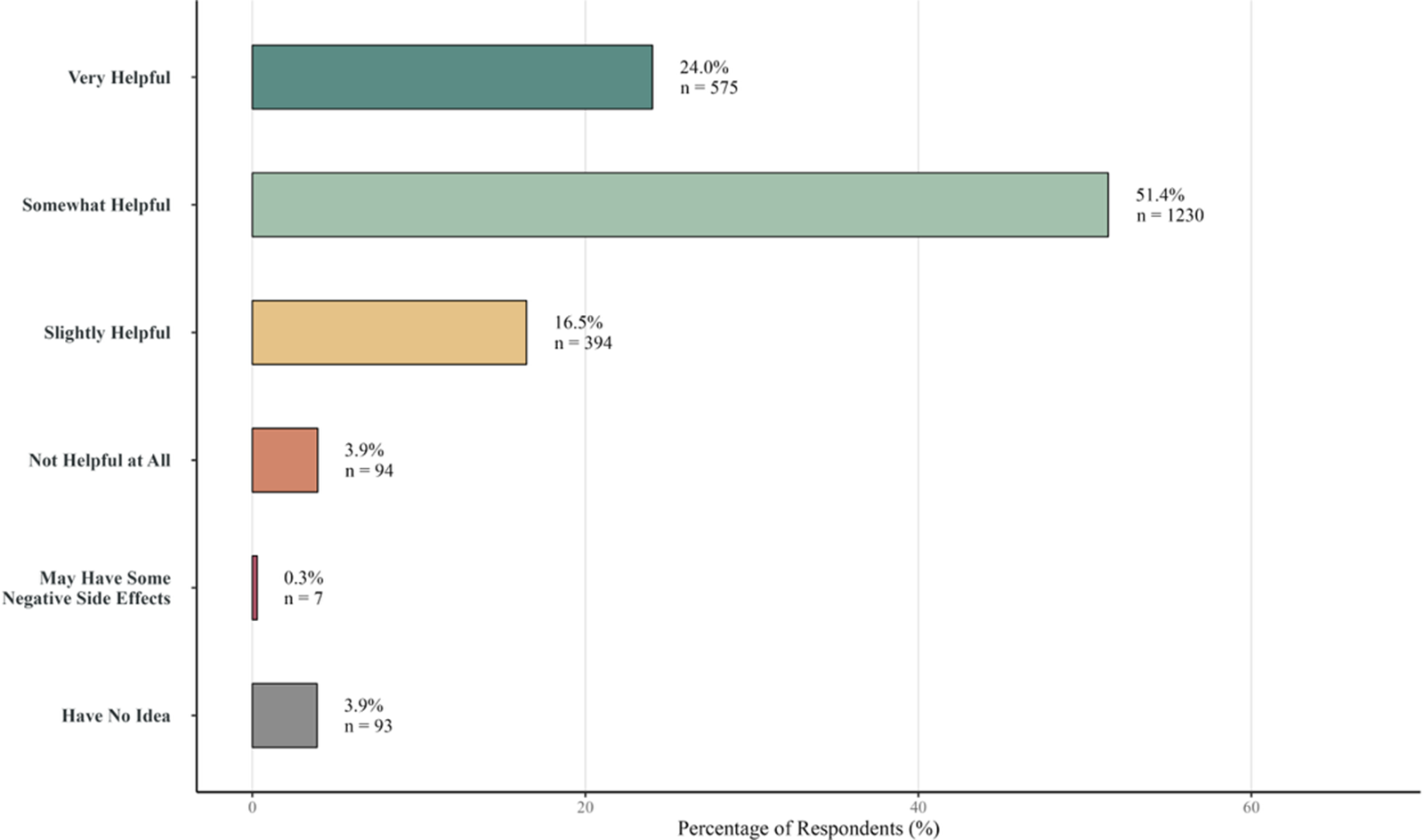
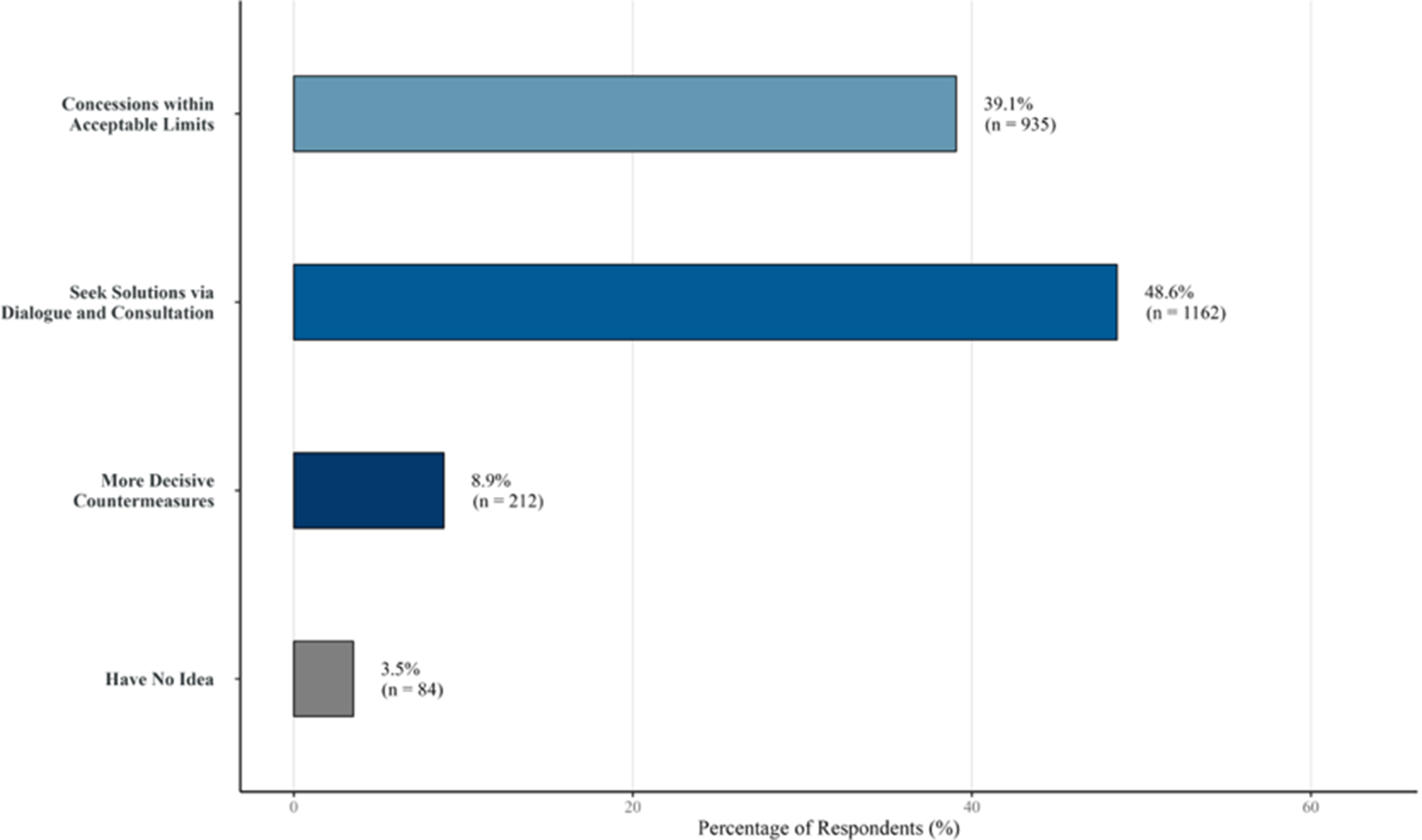
When it comes to maintaining China’s geostrategic security, a strong majority (75.4 per cent) believe that managing relations with South-East Asian countries is either very helpful or somewhat helpful (Figure 9). This broad consensus underscores the perceived importance of diplomacy and regional engagement in advancing China’s security interests. Notably, public opinion also leans towards restraint and negotiation in the face of territorial disputes with South-East Asian nations (Figure 10). While 39.1 per cent of respondents support making concessions within acceptable limits, 48.6 per cent favour resolving disputes through increased dialogue and consultations. Only a small minority advocate for more decisive or confrontational countermeasures.
Chinese Public Views on the Importance of South-East Asia for China’s Security

Figure 9 Long description
A horizontal bar graph with six response categories on the vertical axis: Very Helpful, Somewhat Helpful, Slightly Helpful, Not Helpful at All, May Have Some Negative Side Effects and Have No Idea. The horizontal axis label is Percentage of Respondents left parenthesis percent right parenthesis, with tick labels 0, 10, 20, 30, 40, 50 and 60. Very Helpful: 24.8 percent, n equals 575. Somewhat Helpful: 51.8 percent, n equals 1200. Slightly Helpful: 16.5 percent, n equals 384. Not Helpful at All: 3.9 percent, n equals 91. May Have Some Negative Side Effects: 0.3 percent, n equals 7. Have No Idea: 2.9 percent, n equals 53.
Chinese Public Views on China’s Strategies in the SCS

Figure 10 Long description
The bar graph has four horizontal bars. The horizontal axis label is Percentage of Respondents left parenthesis percent right parenthesis, with tick labels 0, 20, 40, 60 and 80. The vertical axis lists four categories: Concessions within Acceptable Limits; Seek Solutions via Dialogue and Consultation; More Decisive Countermeasures; Have No Idea. Concessions within Acceptable Limits is labeled 39.1 percent left parenthesis n equals 935 right parenthesis. Seek Solutions via Dialogue and Consultation is labeled 48.6 percent left parenthesis n equals 1162 right parenthesis. More Decisive Countermeasures is labeled 8.9 percent left parenthesis n equals 212 right parenthesis. Have No Idea is labeled 3.5 percent left parenthesis n equals 84 right parenthesis.
Such findings indicate that the Chinese public generally endorses a pragmatic and calibrated approach to territorial disputes with China’s South-East Asian neighbours. While sentiments of irritation and perceptions of external provocation are present, the prevailing public attitude appears to reflect a measured and balanced view of China’s geostrategic posture in the region. Moreover, there is a discernible acknowledgement that sustained stability in South-East Asia is not only vital for regional prosperity but also for China’s long-term strategic security interests.
Apprehending the Exotic and Dangerous Lands
In Chinese popular culture, the representation of South-East Asia has been frequently characterized by exoticization, particularly with reference to the Golden Triangle. Located in the border territories of Laos, Myanmar and Thailand, this area has historically been associated with lawlessness and drug trafficking.Footnote 23 This public image of South-East Asia as a lawless place has been reinforced by recent media coverage of rising crime in the region, such as online scams, kidnapping and human trafficking, which have targeted Chinese nationals.Footnote 24 Northern Myanmar, in particular, has become synonymous with lawlessness, especially since the 2021 coup, which further intensified civil war and the fragmentation of its borderlands.Footnote 25
For instance, in October 2023, three ethnic armed organizations (EAOs) – the Arakan Army, the Myanmar National Democratic Alliance Army and the Ta’ang National Liberation Army – launched “Operation 1027,” which drove the Myanmar military junta’s Border Guard Forces (BGF) from Kokang following intense fighting. The Chinese domestic media focused heavily on how the military offensive was necessary to crack down on the scam centres and criminal enterprises operating in Kokang that were targeting Chinese citizens. Later, the three EAOs handed over some of the ringleaders from the scam centres to the Chinese authorities for prosecution. Again, this was heavily covered in the Chinese domestic media and portrayed as a major law and order victory.Footnote 26
Neighbouring Thailand has become collateral damage to Myanmar’s growing lawlessness, particularly around Karen State’s Myawaddy region just across the border from Thailand. Shwe Kokko, in particular, has gained notoriety as a scam city operating under the control of a Karen BGF.Footnote 27 The issue exploded across the Chinese media when, in early 2025, Chinese actor Wang Xing 王星 vanished after flying to Bangkok for what he believed was an acting job. Kidnappers seized him on arrival and transported him across the border to a scam centre in Myanmar. A social media outcry spurred the Chinese embassy in Bangkok to work with Thai authorities, who eventually located the compound, rescued Wang and freed several other victims who were being forced to participate in online scams.Footnote 28
The incident has had serious repercussions for Thailand’s tourism industry, particularly its vital Chinese market. In the aftermath of the abduction incident, the number of Chinese tourists visiting Thailand dropped sharply. From January to April 2025, the figure fell to 1.64 million, down 25 per cent compared to the same period last year.Footnote 29 The negative publicity and mounting pressure forced Thai authorities to take swift action. Bangkok not only intensified its crackdowns on human trafficking and scam operations along the Thai–Myanmar border but also sought to control the flow of “grey capital” that finances these networks.Footnote 30 Nonetheless, the Wang Xing case has heavily tarnished Thailand’s image in the eyes of the Chinese public, which explains the relatively negative views of Thailand reported earlier.
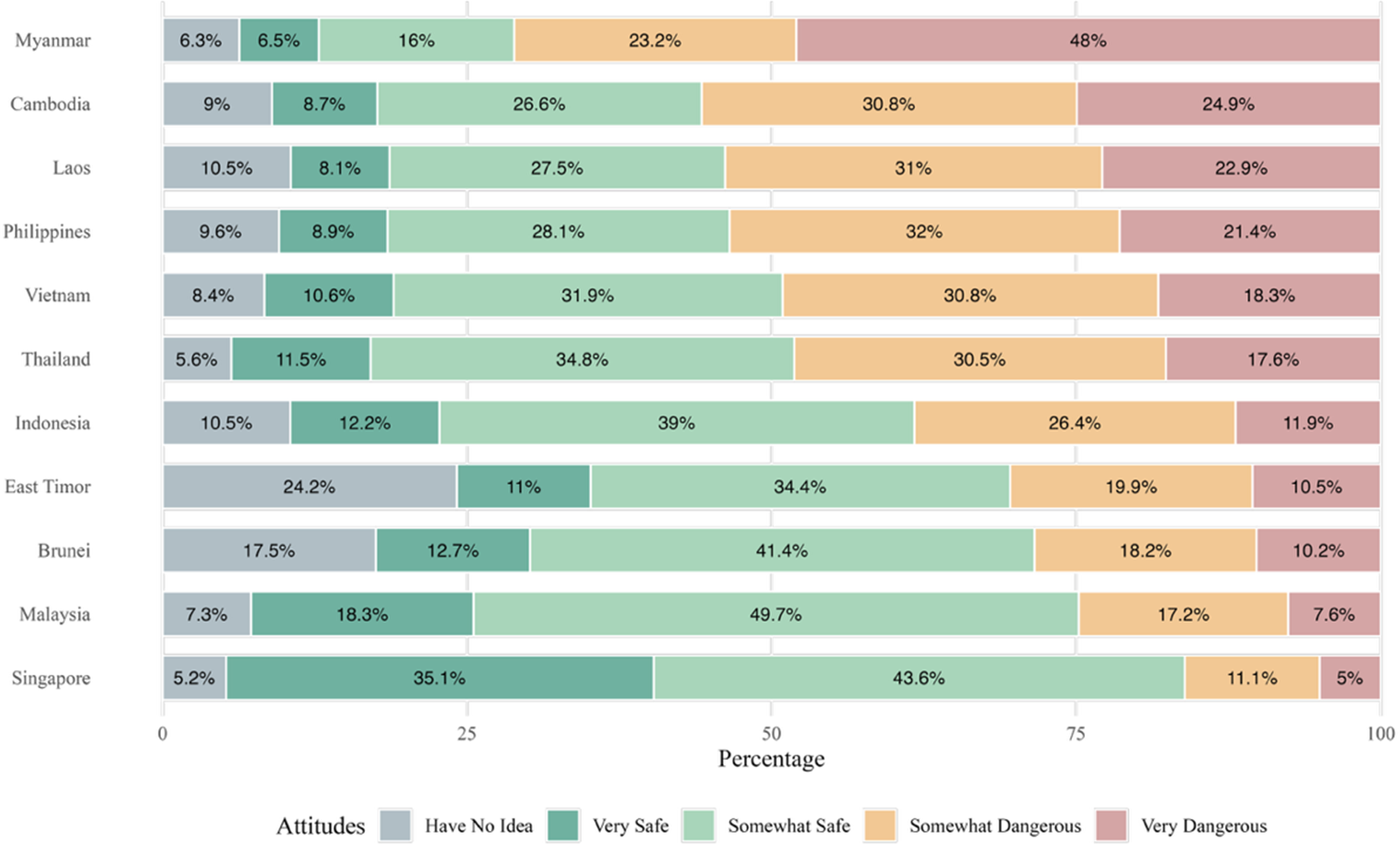
Figure 11 shows that respondents overwhelmingly (71.2 per cent) rated Myanmar as either very dangerous or somewhat dangerous. This is followed by Cambodia, Laos and the Philippines. Interestingly, all four countries have either previously hosted or continue to host casinos and online gambling sites that are specifically aimed at the Chinese market.Footnote 31 Indeed, it was after 2019, when the Chinese government put pressure on both Cambodia and the Philippines to stop licensing online casinos, that some of these casinos migrated to Myanmar, where many later transformed into scam centres.Footnote 32
Chinese Public’s Safety Perception of Individual South-East Asian Countries

Figure 11 Long description
The stacked bar graph lists countries on the vertical axis: Myanmar, Cambodia, Laos, Philippines, Vietnam, Thailand, Indonesia, East Timor, Brunei, Malaysia, Singapore. The horizontal axis label is Percentage, with a range from 0 to 100. A legend titled Attitudes shows five categories: Have No Idea, Very Safe, Somewhat Safe, Somewhat Dangerous, Very Dangerous. Myanmar: 6.3 percent, 8.5 percent, 16 percent, 23.2 percent, 46 percent. Cambodia: 9.1 percent, 8.7 percent, 26.9 percent, 30.9 percent, 24.9 percent. Laos: 10.5 percent, 8.1 percent, 27.9 percent, 31 percent, 22.9 percent. Philippines: 9.8 percent, 10.4 percent, 28.1 percent, 30 percent, 21.4 percent. Vietnam: 8.4 percent, 10.6 percent, 31.9 percent, 30.8 percent, 18.3 percent. Thailand: 5.9 percent, 11.5 percent, 34.4 percent, 30.5 percent, 17.8 percent. Indonesia: 8.2 percent, 12.2 percent, 39 percent, 26.4 percent, 14.2 percent. East Timor: 24.2 percent, 11 percent, 34.4 percent, 19.6 percent, 10.9 percent. Brunei: 17.9 percent, 12.7 percent, 41.4 percent, 18.2 percent, 10.2 percent. Malaysia: 7.3 percent, 18.3 percent, 49.7 percent, 17.2 percent, 7.7 percent. Singapore: 5.2 percent, 35.1 percent, 43.6 percent, 11.1 percent, 5 percent.
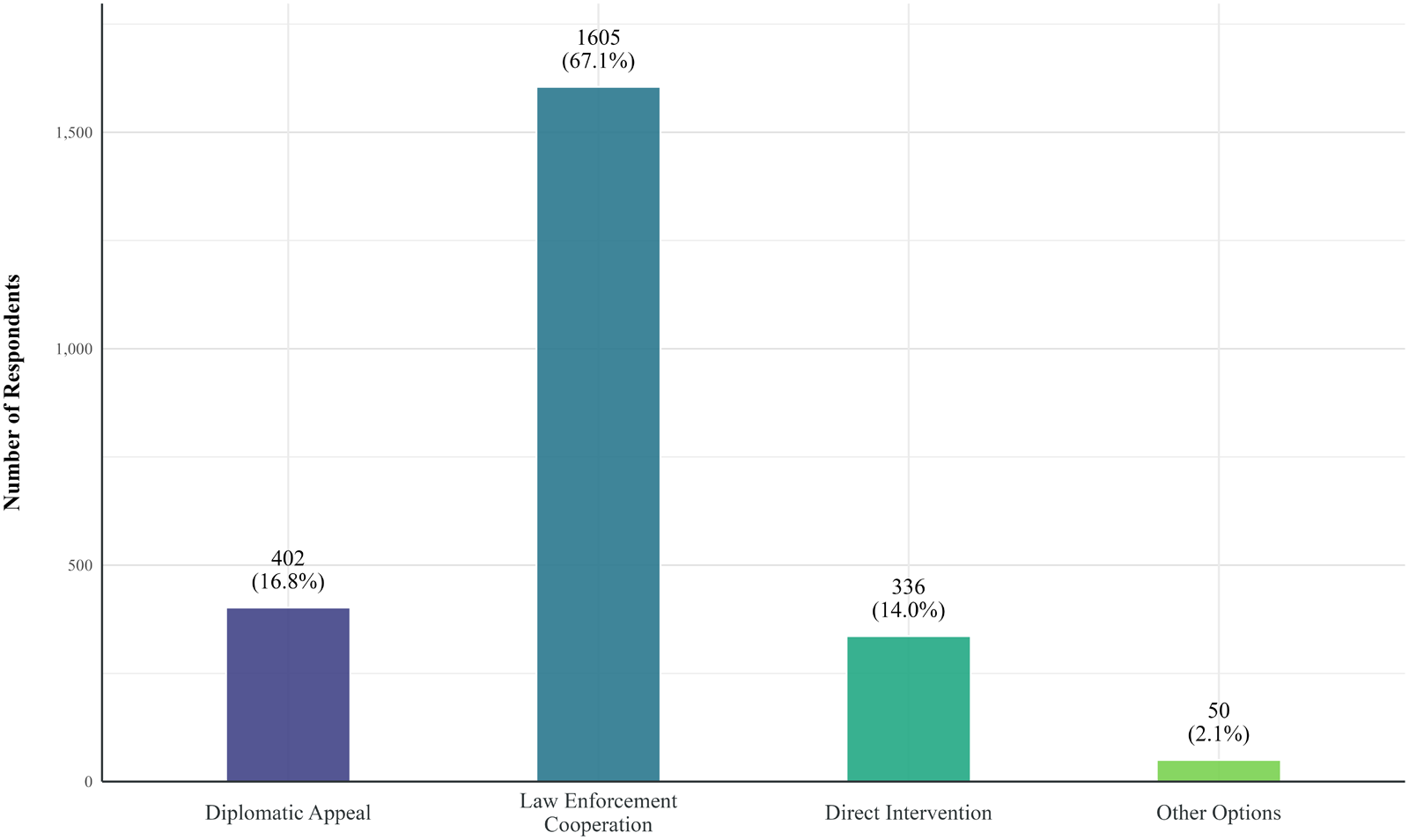
Finally, in terms of what actions should be taken to combat organized crime in South-East Asia (Figure 12), 67.1 per cent of respondents believed that China should set up law-enforcement cooperation centres with South-East Asian countries and enter into comprehensive legal agreements to target these transnational organized crimes; 16.8 per cent of respondents supported diplomatic appeals to South-East Asian countries to better implement domestic law and order measures. Interestingly, 14 per cent thought that China should conduct direct law enforcement interventions in South-East Asia.
Chinese Public Views on Law-and-Order Cooperation in South-East Asia

Figure 12 Long description
A vertical bar graph. Y axis label: Number of respondents. Y axis tick labels: 0, 500, 1000, 1500. X axis categories: Diplomatic Appeal; Law Enforcement Cooperation; Direct Intervention; Other Options. Values shown above bars: Diplomatic Appeal 402 left parenthesis 16.8 percent right parenthesis. Law Enforcement Cooperation 1605 left parenthesis 67.1 percent right parenthesis. Direct Intervention 336 left parenthesis 14.0 percent right parenthesis. Other Options 50 left parenthesis 2.1 percent right parenthesis.
These findings suggest potentially serious implications for understanding Beijing’s changing approach to security cooperation in South-East Asia. The strong public support for establishing law enforcement cooperation centres indicates that Chinese citizens expect their government to take a proactive yet collaborative approach to transnational crime, which could strengthen China’s legitimate security presence in the region.Footnote 33 However, the notable minority supporting direct intervention is potentially troubling, as such an approach could undermine ASEAN’s principles of non-interference and regional autonomy. If Chinese policymakers were to respond to these public sentiments, we might see an expansion of China’s security footprint through formal bilateral agreements, increased intelligence sharing, joint operations against criminal networks and possibly the establishment of permanent security coordination facilities in willing host nations.
Conclusion
Overall, it seems there is an interesting correlation between Chinese citizens’ safety perceptions and their impressions of South-East Asian countries, which suggests that public security concerns significantly influence how Chinese people view their neighbours to the South. The Chinese public’s perception of ethnic and cultural ties to the overseas Chinese in South-East Asia is not surprising, but it can also mean potential support for interventionist foreign policy in the region in the name of supporting the diaspora. Additionally, in terms of annoyance over territorial disputes, it appears that Chinese citizens are relatively clear-headed in their assessment of the causes and solutions and tend to blame external powers, such as the United States. To note, however, the Chinese public’s understanding of the outside world, including South-East Asia, is not necessarily grounded in direct experience or factual knowledge. Instead, such perceptions are shaped by a combination of historical narratives, media portrayals and nationalistic sentiments, which collectively form a kind of imagined reality rather than an empirically grounded understanding.
Unlike democracies, where electoral politics creates direct accountability to public sentiment, the authoritarian Chinese political system might not have such accountability pathways.Footnote 34 However, given that the Chinese government’s legitimacy rests in part on nationalism and its claimed ability to protect Chinese citizens abroad,Footnote 35 we can reasonably foresee how Beijing’s hands may be tied to respond visibly when Chinese nationals or even overseas Chinese are faced with security threats in South-East Asia. Given the large numbers of overseas Chinese in the region, as well as the more recent migrants from China,Footnote 36 there is considerable scope for Beijing to adopt an interventionist stance with regard to diasporic issues.Footnote 37
Furthermore, strong negative public perceptions of certain South-East Asian countries may limit Beijing’s ability to pursue deeper engagement with those nations without addressing underlying concerns. As shown above, owing to its lawlessness and the unchecked growth of scam centres there, Myanmar has overwhelmingly become the most disliked country in South-East Asia. Such negative public opinion could constrain Beijing’s diplomatic initiatives to promote further integration between the two countries.Footnote 38 However, on the flipside, it might also provide the necessary public opinion support Beijing needs to push for a more law-and-order oriented intervention in Myanmar.Footnote 39
Finally, given the tight control over public information in China, an alternative approach to interpret the findings of this paper is to view Chinese public opinion as a reflection of the media cues from Beijing and its ability to shape public views in specific ways. In this sense, the Chinese public opinion data presented in this paper can offer valuable insights into how Beijing has sought to frame its relations with South-East Asia, as well as its concerns about the opportunities and challenges facing China’s foreign policy towards the region. More future research is needed to tease out the intricate relationship between Chinese public opinion and the wider political and economic implications for China, South-East Asia and beyond.
Acknowledgements
I would like to thank Haozhe Zhang for providing valuable research assistance for this project. Funding for the survey was provided by the department of politics and public administration, The University of Hong Kong.
Competing interests
None.
Enze HAN is an associate professor at the department of politics and public administration, the University of Hong Kong.

 Open access

