

Preface
Although written over a few months, it is appropriate to state that this Element has been in the making over the twenty years that have passed since I completed my doctoral thesis on the Bell Beaker Phenomenon. In the meantime, my take on archaeology has changed through the vagaries of short-term academic jobs and the serendipities of scientific meetings. At the same time, it is evident that the discipline I was trained in during the 1990s has evolved to become the multi-faceted topic I now teach at Bournemouth University. In many respects, the structure of this small Element, combining traditional synthetic sections with more speculative/hypothetical ones inspired by ecology, reflects this entangled personal and disciplinary trajectory.
Key themes here are those of connectivity and mobility. Under the impetus of new techniques, archaeology is coming to terms with its self-inflicted mistrust of human dispersal as a mechanism for change. Challenges in addressing questions of mobility and migration are now back at the forefront of archaeological thinking. From a personal standpoint, my involvement in these discussions has been coloured by fact that at the same time as Sr isotopes and ancient DNA were making their way into the archaeological toolbox, I became a migrant myself, having moved from Belgium to the United Kingdom. This new status was initially and will forever remain linguistic. Yet, being a migrant was, at least at the beginning, never really about identity. Over the past few years, however, the political climate in the United Kingdom has reshaped and even rephrased in strictly defined legal terms this migrant identity. How much these have effectively influenced my thinking on human mobility is unclear, but the realities of life always feature in one’s personal evolution.
1 Thematic Encounters
1.1 Archaeological Cultures … Again – But Why?
The thought of writing an Element on an archaeological culture may sound old-fashioned in the early 21st century AD. These days indeed, one prefers to dedicate time, effort, and academic reputation to a process, a theme, a method, or a theory, but not to an archaeological culture, that old and reeking concept which has been lingering at the bottom of our toolbox for over a century. A sceptical reader may wonder if the author did not learn any lessons from sixty years of archaeological fashions, which all seem to agree that archaeological cultures survive only as oddities stacked on the shelves of a cabinet of archaeological curiosities. In my defence, I would argue that archaeological cultures remain relevant for contemporary and future archaeological method and theory. Their prominence within the so-called third revolution spearheaded by ancient DNA is surely telling; either the lure of high-profile publications is leading archaeologists to discard their theoretical heritage and pride or – not mutually exclusive – there might well be still some life left in the old concept for understanding the past. A very brief detour via the history of archaeological cultures can help to shed some light on the latter proposition.
Archaeological cultures were originally developed to organise the growing amount of data faced by antiquarians, and thus played a foundational role in the transition of archaeology from cataloguing to interpreting the past (Reference Roberts, Vander, Roberts and VanderRoberts and Vander Linden 2011). That they then became tangled in an obsessive focus on ethnic groups is as much a by-product of the intellectual ambiance at the time as a spontaneous consequence of their methodological and conceptual design. It is undeniable that archaeological cultures can easily be translated into faceless groups endlessly, almost haphazardly, migrating across Eurasia and other continents. But, as argued here and elsewhere (Reference Roberts, Vander, Roberts and VanderRoberts and Vander Linden 2011), their core analytical remit is still relevant to today’s challenges. Arguably, most archaeological cultures were often merely monothetic entities defined through ceramic typology only, and there is a tempting parallel to be drawn here with the primacy given to ancient DNA data in recent narratives about past migrations. Beyond such cautionary tales, one of the key objectives of this Element is to show how archaeological cultures, as analytical tools, can help us to handle the fast-flowing streams of unstructured, proteiform data which increasingly characterise the archaeological record.
The subject of this Element, the Bell Beaker Phenomenon, provides a case in point. This near-consensual label refers to an uneven set of artefacts (namely the eponymous bell-shaped ceramic vessel, but also various artefacts possibly related to archery, as well as daggers and other copper implements), and practices (especially individual burial, often but not always linked to binary sex-related body disposal rules) widely distributed across the European space and beyond during the 3rd and, locally, early 2nd millennium calBC. The Bell Beaker Phenomenon stands proud amongst the behemoths of Holocene European Prehistory, those quasi-mythical analytical beasts that fascinate as much as they seem to resist any straightforward interpretations. Familiar names such as the Linearbandkeramik, Corded Ware, Urnfield, or La Tène should all bring back memories of introductory lectures taught in archaeology departments across Europe and beyond. Although most specialists would probably raise an eyebrow at contemplating the possibility of comparing these complexes, I would suggest that four common traits define access to this pantheon of archaeological complexes:
1) Space – All of these archaeological complexes present extensive spatial distributions, breaching modern-day boundaries and covering large swaths of the European peninsula. From a Bell Beaker point of view, its undeniable importance lies in its presence along the entire Atlantic European coast, from southern Scandinavia to the tip of the Iberian Peninsula and even northern Africa, and from the Irish shores to the banks of the Danube in central Hungary.
2) Time – This transgressive character is also temporal, as so-called cultural complexes often lie at the interface between broader chronological sub-divisions (e.g., Mesolithic-Neolithic, Neolithic-Bronze Age, Bronze Age-Iron Age). Not only does the geographic Bell Beaker spread correlate with a varied linguistic terminology (e.g., French, Spanish and Portuguese Campaniforme, German Glockenbecher), this diversity also encompasses many chronological labels, including Late or Final Neolithic, Early Bronze Age, and Chalcolithic. Behind this myriad of names lies a tacit, common acknowledgement that the Bell Beaker Phenomenon is situated at the interface between the Neolithic and the Bronze Age. For many, this transition would not be merely chronological but testimony of a profound societal transformation from one historical epoch to another, marked by the rise of social hierarchies. Since the work of Vere Gordon Childe, various scenarios have considered the leading role of copper metallurgy in this process, although it is noteworthy that this particular technology, subject to uneven rates of production and consumption, had existed in various parts of Europe since the late 6th millennium calBC (Reference Rojo-Guerra, Garrido-Pena, García-Martínez-de-Lagrán, Juan-Tresseras and MatamalaRoberts et al. 2009). The link between early copper metallurgy and the Bell Beaker Phenomenon is thus tenuous at best, or at least very localised. More recently, some have revived the idea that new systems of belief and social institutions, introduced by migrant populations, were the key factor in propelling Europe into a new age (e.g., Reference Kroon, Huismans, Bourgeois, Braekmans and FokkensKristiansen et al. 2017), although, as we will see, this particular hypothesis is not free of major difficulties either.
3) Definitional uncertainty – Cultural complexes exhibit wide-ranging variation in the archaeological record leading to unresolved and often Byzantine disputes amongst specialists as to what constitutes, or not, their material identity. Despite many attempts, there is still no agreement as to what represents a common artefact or package, let alone assemblage or practice, which would apply to and define the entirety of the Bell Beaker domain. At the risk of being pedantic, one could even argue that in light of the diversity of the archaeological record and the multiplicity of research traditions and approaches, all of the aforementioned local Bell Beaker labels are actually not strict synonyms and do not point to analogous archaeological units, although, as will be argued further here (see Section 4), their exceptional combination is what makes them stand out in European later prehistory.
4) Human dispersal – As a correlate of their wide-ranging spatial distribution, debates have raged regarding the role of human migration in the making of these archaeological cultures, a theme whose vagaries are the most remarkable yet predictable aspect of the Bell Beaker historiography. After early years of emphasis upon the centrality of migration, followed by three decades of total denial, the Bell Beaker Phenomenon has become a laboratory for the application of new scientific techniques which led to the factual demonstration of some level of human mobility. The latest addition of ancient DNA has confirmed not only the existence of episodes of human dispersal but, as for all themes outlined above, a marked regional and temporal variation in the magnitude of these events across the Bell Beaker territory.
Taken together, these four traits allow us to map some of the interpretative challenges raised by the Bell Beaker Phenomenon. They also reinforce the thesis that the concept of archaeological culture still presents some validity: how do we account, on the one hand, for the fact that the Bell Beaker Phenomenon is perceived as a key transition period largely shaped by human dispersal, and on the other hand, it exhibits such a wide spatial distribution and range of material expressions? Rather than assuming the existence of a Bell Beaker archaeological culture, this constitutes one of the explicit research questions at the core of this element: is a definition, for instance expressed in polythetic terms (Reference ClarkeClarke 1968), of the Bell Beaker Phenomenon possible, and if so, how does it help us in characterising the processes at play in linking together this panoply of records, practices, and human communities?
1.2 An Illustrious Gallery of Portraits
Unsurprisingly, these four defining traits regularly feature across the vast and long-lasting literature dedicated to the Bell Beaker Phenomenon. Perhaps more for this period than for any of the other archaeologically attested cultural behemoths, the historiography of the Bell Beaker Phenomenon is impressive and deceptive in equal measures. Impressive given its gallery of illustrious protagonists, including the likes of Vere Gordon Childe, Stephen Shennan, David Clarke, and, perhaps less well-known to a non-English readership but fundamental in their own right for European continental archaeology, Evžen Neustupný and Alain Gallay. And yet the range of scholars who have engaged with this topic is sadly deceptive as theories of the Bell Beaker Phenomenon have tended to be repetitive and explore a narrow range of themes. This is not to say that there is a lack of conceptual imagination, far from it, but that the majority of existing theories weave together the same transversal themes, ever repeated even if subject to fluctuations largely predicted by the wider trends of archaeological theory.
Culture-historical accounts are not merely defined by their focus on migration as the driving force of change but also in their insistence on the position of the Bell Beaker Phenomenon at the transition between the Neolithic and the Bronze Age, and on its extensive geographical distribution, the latter emphasis related to the need to anchor relative time through typological comparison. One of the earliest occurrences of the label ‘bell beaker’ was set forth by Reference AbercrombyAbercromby (1902). The purpose of his contribution was actually to provide a typological framework and geographical origin for ‘the advent of a people of new stock, distinguished from the older neolithic [sic] inhabitants by taller stature and moderately brachycephalous head’ (Reference AbercrombyAbercromby 1902: 374). Within several decades, Abercromby’s lead was followed by several scholars across Europe, and the Bell Beaker Phenomenon quickly acquired the international stardom that characterises it to this very day. As comments and papers were published, the narratives gradually became more layered and complex, as the following excerpt from the sixth edition of Gordon Childe’s opus magnum The Dawn of European civilisation, the epitome of the culture-historical take on the Bell Beaker Phenomenon, illustrates:
The Beaker-folk was a principal agency in opening up communications, establishing commercial relations, and diffusing the practice of metallurgy [ … ] Beaker-folk can be recognised not only by their economic activities but also by their distinctive armaments, ornaments and above all pottery, associated together everywhere in their graves. Indeed, the inevitable drinking cup, which gives a name to its users, may be more than a readily recognized diagnostic symptom; it symbolizes beer as one source of their influence (Reference ChildeChilde 1957: 222, 223). The people buried with Bell Beakers [ … ] are round-headed [ … ] In this instance, therefore, it looks as if culture and race coincided and one might legitimately speak of a Beaker race.
While some of Childe’s vocabulary has aged poorly and may seem unfortunate to a modern readership, this quote is testimony to his genius and legacy, as it encapsulates all the major culture-historical tropes of the Bell Beaker Phenomenon: unquestioned association between the eponymous bell beaker ceramic vessel and a migrating human population, defined by specific physical (today genomic) traits, as well as with copper metallurgy, funerary weaponry, and the social practice of drinking.
The key topic remained for several decades the identification of a Bell Beaker homeland, a putative quasi-mythical geographically well-delimited land from which Bell Beaker material traits, and hence their historical interpretation, would flow. In hindsight, it is easy to consider such obsession as naive, an impression reinforced by the fact that, with the sole exception of Ireland and Britain – culture-historical Britain was always in a position of reception rather than innovation as famously pointed out by Clark (Reference ClarkClark 1966) – all regions within the Bell Beaker domain have at some point been considered candidates for the title of homeland (e.g., Clarke’s oft-forgotten preference for Mediterranean France: Reference ClarkeClarke 1970). This being said, two main contenders have battled for supremacy: on the one hand, various locations along the Rhine basin, and on the other hand, the Iberian Peninsula, in particular the Tagus estuary. Christian Jeunesse recently provided a thorough account of the evidence, and lack thereof, supporting this latter hypothesis (Reference Joseph, Julien, Leroy-Langelin, Lorin and PraudJeunesse 2015). In a nutshell, while it is undeniable that the Portuguese Atlantic façade has provided some the oldest radiocarbon dates associated with Bell Beaker traits (Section 2), a key issue remains the absence of clear typological prototypes for several facets of the Bell Beaker archaeological record. This limit was recognised by early 20th-century scholars, who handled it with sometimes impressive technical sophistication. In a contribution which marks the nadir of the culture-historical tradition, Edward Sangmeister suggested that the Bell Beaker variation was best explained by an initial movement out of the Iberian Peninsula towards central Europe, followed by a later backflow in the opposite direction, thus suggesting the existence of two distinct, successive homelands (the so-called Rückstrom theory: Reference SarauwSangmeister 1966). Sangmeister’s work rested upon an exceptional command of the then available documentation (though not free of flaws: Reference ClarkeClarke 1970), but the elegance of his argument ultimately lies within what remains a narrow perception of the archaeological record.
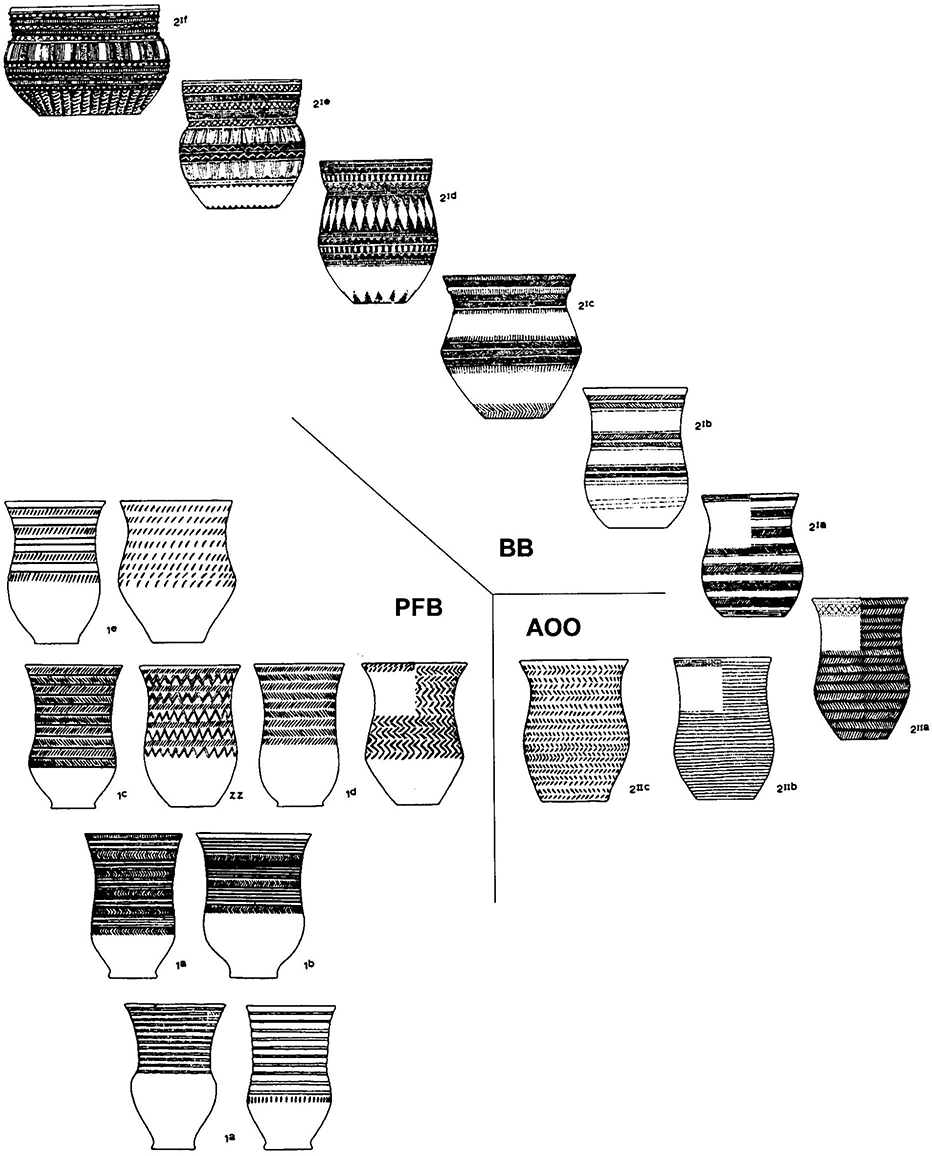
While Sangmeister was drawing arrows criss-crossing Europe, the first series of 14C dates of Bell Beaker contexts were carried out in the Netherlands (Reference de Vries, Barendsen and Waterbolkde Vries et al. 1958). While this revolutionary technique provided the means to test independently competing hypotheses about the location of the Bell Beaker homeland, its impact on the field would not be noticeable for nearly two decades. In the late 1970s, building upon the legacy of early radiocarbon dates and previous typological work (Reference Villalba-Mouco, Oliart and Rihuete-Herrada-van der Waals and Glasbergen 1955), Lanting and van der Waals published an influential study combining typo-chronology and absolute chronology and argued for the local development of Dutch Bell Beakers from the regional facies of the Single Grave Culture (Reference Lazaridis and ReichLanting and van der Waals 1976; Figure 1). While Lanting and van der Waals never explicitly considered the implications of their research for areas outside the remit of their original case study, their work was soon embraced as proof of a homeland located in the Lower Rhine which offered a robust alternative to the Iberian hypothesis (e.g., Reference Harrison and HeydHarrison 1980). Although the details and wider relevance of this typo-chronological scheme are still discussed, it is noteworthy that the general validity of the local Single Grave Culture – Bell Beaker sequence remains unquestioned (Reference BeckermanBeckerman 2011–2; see Section 2).
The ‘Dutch model’ of typo-chronological development from the single grave culture to the Bell Beaker phenomenon.
As any student of archaeology knows, the late 1960s and 1970s witnessed a paradigm shift with the onset of processual archaeology and the contributions of larger-than-life figures such as Lewis Binford and Colin Renfrew. In the Bell Beaker case, a break from culture-historical themes is noticeable, but it took the form of a more uneven transition. For instance, if the Dutch model directly stems from the availability of radiocarbon dating, its impact remains limited to weighing more in favour of a given homeland than in any upheaval of the associated theoretical architecture. The intellectual development of the Cambridge-based scholar David Clarke provides a good example of this transition.
Clarke’s doctoral thesis, completed in 1962 but only published in 1970, took advantage of emerging computing power to pioneer the application of statistical techniques to archaeological interpretation (Reference ClarkeClarke 1970). His matrix analysis applied to an extensive corpus of British bell beakers allowed him to define several typological groups in a quantitative way. These groups had limited geographical coherence and, as their labelling indicates (e.g., Wessex/Middle Rhine), were all seen through the culture-historical prism as a direct reflection of cross-Channel contacts. Though featuring in Analytical Archaeology (Reference ClarkeClarke 1968), this interpretation had little influence on the rest of this landmark publication in theoretical archaeology, and at the time of his premature death in 1976, Clarke’s view on the Bell Beaker Phenomenon had changed radically. In line with his definition of an archaeological culture as a polythetic set, he considered the bell beaker as an artefact to be unrelated to any specific assemblage, but rather embedded in wider social strategies (Reference Clarke, Lanting and van der WaalsClarke 1976). Stephen Shennan, one of Clarke’s students, furthered this view by demonstrating that various components of Bell Beaker material culture in central Europe did not fulfil the canonical definition of an archaeological culture, as their distribution was hardly overlapping (Reference ShennanShennan 1978). In contrast, Shennan defined a stable assemblage of artefacts found primarily in funerary context (e.g., drinking cup, dagger, stone wrist-guard). In a direct echo of Clarke’s ideas, Shennan’s view was that this package existed in a social sphere distinct from the rest of the material culture and constituted objects of prestige circulating amongst emerging local élites (Reference ShennanShennan 1976). This emulation network was thus substituted for the idea of the Beaker folk, and the diffusion of practices and ideas took over from the dispersal of individuals as the mechanism of change.
At the same time, several continental scholars were conducting equally ground-breaking research. The Swiss archaeologist Alain Gallay re-considered the Bell Beaker variation through the examination of several distinct facets of the ceramic record, as well as other categories of evidence (e.g., battle axes), and more abstract concepts such as the transition to the Early Bronze Age, leading him to define the phenomenon as a series of networks. In line with the strong formal reasoning which characterised his epistemological work, he eventually identified five diffusion networks, each with a specific spatial structure that encompassed a new material cartography of the Bell Beaker Phenomenon (Reference Gandois, Burlot, Mille and de VesludGallay 1973).
The 1980s and 1990s are often considered a quieter period in the Bell Beaker historiography, overshadowed by the interpretative monuments laid out by Clarke and Shennan (e.g., Reference Shepherd, Allen, Gardiner and SheridanShennan 1986, Reference Sherratt, Hodder, Isaac and Hammond1993; see also Reference BrodieBrodie 1994, Reference Brodie1997 for an insightful analysis of the many variations of the prestige model). But the year 1987 also saw the publication of an influential paper by Andrew Sherratt revisiting the long-assumed link between bell beakers and alcoholic beverages (Reference Sjögren, Olalde and CarverSherratt 1987). Sherratt’s argument rests upon the intuition that the production of alcoholic drinks was made more readily possible thanks to the access to new resources, facilitated by Sherratt’s own Secondary Products Revolution (Reference SimonsenSherratt 1981), and that the consumption of these beverages was embedded in ritual practices performed by social élites. While Sherratt’s focus on the production of drinks is arguably innovative, conceptually speaking his eventual scenario does not differ significantly from the one outlined in Childe’s aforementioned quote.
By contrast, from the late 1990s onwards, the Bell Beaker historiography was characterised by a growing awareness of the limits of these theoretical models, and in particular their poor fit with the data (e.g., absence of graves meeting the criteria of the canonical definition of the package: Reference SalanovaSalanova 1998; largely local production of bell beakers, contrary to the predictions of the prestige model: Reference Salavert, Zazzo and MartinSalanova et al. 2016). As a consequence, scholars all over Europe embarked upon a renewed, though not coordinated, re-evaluation of the material culture. Noticeably, Laure Salanova showed that bell beakers were often decorated using a narrow set of rules and tools (e.g., cardium shell) and suggested that only a comparatively limited number of vessels were typologically coherent enough to constitute a pan-European commonality (so-called ‘standard’: Reference Salanova, Salanova and TchérémissinoffSalanova 2000). In the footsteps of Alain Gallay, Marie Besse demonstrated the existence of regional traditions in the oft-neglected domestic ceramic assemblages in which the bell beakers appear (e.g., Reference BesseBesse 2003), and comparable results have been obtained for lithics, another historically overlooked category of evidence (e.g., Reference FurholtFurestier 2007; Reference Bailly, Arbogast and Greffier-RichardBailly 2014). More synthetic accounts include my own attempt at applying widely Clarke’s polythetic notion of culture on a combination of traits (ceramic decoration and morphology, funerary practices, and settlement patterns: Reference van der Waals and GlasbergenVander Linden 2006), and, more recently, Kleijne’s formal application of network theory (Reference Kleijne, Drenth and GibsonKleijne 2019). The resulting literature is vast, scattered across many papers, monographs, conference proceedings, and edited volumes (e.g., Reference Noble, Brophy, Hamilton, Leach and SheridanNicolis 2001, Reference Fokkens, Achterkamp and KuijpersFokkens and Nicolis 2012; Reference CzebreszukCzebreszuk 2014; Reference Gibson and GibsonGibson 2019a). Thanks to this vast undertaking, we now possess a much improved empirical data set, without which the present element would simply be impossible. It is also worth pointing out that a coherent descriptive vocabulary and/or standardised terminology are still lacking. Although much of this work grew out of discontent with existing theories, there has been a comparative dearth of new theoretical developments and, despite its many criticisms, the prestige model for instance remains widely quoted in several regional traditions (e.g., Reference Garrido-Pena and GibsonGarrido-Pena 1997, Reference Garrido-Pena, Flores Fernández and Herrero-Corral2019). This being said, there is an implicit consensus that no single explanatory factor can account for the entire variation of the Bell Beaker Phenomenon, and that narrowing down its material definition to a few chosen traits has proved a fallacy.
1.3 New Techniques, Old Ideas: The Return of the Beaker Folk
It is a cliché to state that scientific progress is intimately linked to technological advances, and like any other cliché, this one has limited value. While the radiocarbon revolution was instrumental in the way archaeologists have tackled processes such as the spread of early farming or megalithism, its impact upon Bell Beaker studies was minimal. In the same vein, this section is built on a simple idea. Without denying the technical achievements of strontium isotope analysis and ancient DNA, that their recent success in Bell Beaker circles owes an extensive debt to this paradoxical combination of increased empirical knowledge and yet has remained a relative interpretative vacuum.
The first steps towards reconsidering the role of human mobility during this period were provided by the results of Sr analysis for a selection of central European Bell Beaker cemeteries (Reference Priego and QueroPrice et al. 1998, Reference Price, Grupe and Schröter2004). These papers demonstrated that a substantial fraction of the buried individuals had relocated between their places of birth and death, although there were no discernible patterns regarding the identity of these ‘non-locals’ (e.g., sex-based). Despite the pioneering nature of this research, it was a different find that truly sent shockwaves through the discipline. The grave known as the ‘Amesbury Archer’ was discovered prior to the construction of a housing development in the vicinity of Stonehenge. Not only is the burial exceptional due to the large and outlandish range of associated grave goods (Reference Fokkens and NicolisFitzpatrick 2013; see Section 3) but, more crucially, isotopic analysis indicates that this individual came from continental central Europe. Together with other sites (e.g., ‘Boscombe bowmen’: Reference Favrel and NicolasEvans et al. 2006), these studies ignited a necessary reconsideration of the importance of mobility, and of the potential underlying social mechanisms of such movement (e.g., post-marital residency rules: Reference Vander LindenVander Linden 2007) during this period. However, the impact of isotopic analysis remained minimal, largely due to the limits of the technique in pinpointing with certainty the area of origin of ‘non-local’ individuals (Reference BentleyBentley 2006; Reference Britton, Crowley, Bataille, Miller and WoolerBritton et al. 2021). As such, these results cannot be readily interpreted in terms of population history, which would be necessary to postulate an episode of dispersal of individuals of significant scale and magnitude to shape local demographic regimes. It is only over the past decade that such results have become available due to the development of new generation sequencing of ancient DNA.
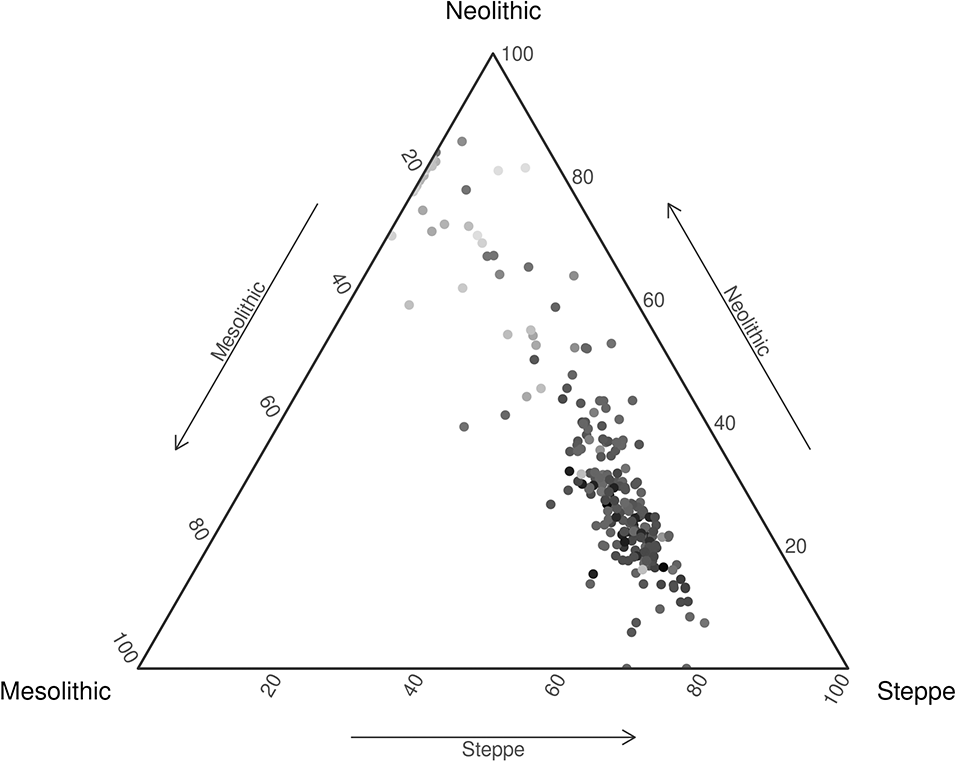
Spring 2015 saw the publication in close succession of two papers which independently showed that the Corded Ware Complex of central and northern Europe was associated with the introduction of a new ancestry component in the genetic landscape of later prehistoric Europe (Reference Allentoft, Sikora and SjögrenAllentoft et al. 2015; Reference HakenbeckHaak et al. 2015).Footnote 1 The extensive proportion of this ancestry carried by multiple individuals indicates the robustness of these results: there is no denying that a migration happened in this area at the beginning of the 3rd millennium calBC, although many discussions – healthily so – continue with regard to the exact corresponding social mechanisms and their relationships with the archaeological record (e.g., Reference FurholtFurholt 2018, Reference Gallay2019; Reference Kristiansen, Allentoft and FreiKristiansen 2022). The putative link between archaeological material culture and genetic relatedness was at the core of a large-scale aDNA study on the Bell Beaker Phenomenon published in 2018 (Reference Olalde, Mallick and PattersonOlalde et al. 2018). Based on extensive, though geographically uneven, sampling of individuals, Olalde and collaborators confirmed that the Bell Beaker Phenomenon marks the introduction of this steppe ancestry into other parts of Europe. Yet, in contrast to the initial naive claims of one-on-one identity between the Corded Ware Complex and the proposed ‘steppe ancestry’, there appears to be more genetic variation in the Bell Beaker samples, pointing to differing scales in this process of human dispersal (Figure 2). The extremes of this range are best encapsulated by, on the one hand, Britain with a – debatable (e.g., Reference Booth, Brück, Brace and BarnesBooth et al. 2021) – suggestion of near entire population turnover, and, on the other hand, a limited incidence of ‘steppe ancestry’ across the Iberian Peninsula (see Sections 3, 4).
ternary chart of BB ancestry, using foragers, farmers, and Shading indicates latitude.
This is not the right moment to discuss the pros and cons of ancient DNA. For the time being, to paraphrase the proverbial storm in a teacup, the ripples generated by isotopic and aDNA research are merely proportional to the deceptive status quaestionis regarding the interpretation of the Bell Beaker Phenomenon. As seen, thematic consistency pervades Bell Beaker historiography, and such disciplinary dependability is fragile. This is not to say that previous generations lacked any form of imagination but rather that they only engaged in a relatively superficial way with questions of space, time, variation, and human dispersal, and how these four traits combine to constitute the unique architecture of the Bell Beaker Phenomenon.
1.4 So, What Is This Element All About?
The challenge of this Element is to show how an old concept, archaeological culture, and four long-recognised traits can help us in shaping an analytical framework to, first, account for the vast and unstructured data produced over the past couple of decades and, second, offer a hopefully original take on the period.
The first objective is thus to synthesize, within the bounds of the present editorial format, the Bell Beaker material variation. After discussing chronology and geography in Section 2, Section 3 aims at providing a partial, yet representative view of the existing data. This section constitutes the bulk of the text and is organised in loose geographical terms, as such an outline has the advantage of retaining the simple fact that the archaeological record stems from the agency and action of people who lived together, did and practised different things, and possibly drew boundaries between these different spheres of activity. This undertaking is explicitly polythetic as it aims to account for multiple categories of evidence without reifying any of them. In this sense, this Element does not assume the existence of a putative Bell Beaker identity, nor does it aim at providing a material definition of the Bell Beaker culture. Rather, the objective is to characterise the variation of archaeological contexts grouped under that label and, from there, to infer processes responsible for such variation. It is also noteworthy that this presentation does not claim to be exhaustive and thus, from time to time, casts its gaze over several well-rehearsed themes.
The previous pages have shown that any solution to the Bell Beaker problem does not rest solely on the development and application of new techniques but must engage with a robust theoretical framework. To this purpose, my personal inclination lies in ecology and the breadth of concepts and tools it has to offer. Themes of space, variation, and dispersal all strongly resonate with the ecological notion of connectivity, that is, the flow of individuals, matter, and energy within and between habitats, and a key property in explaining their formation and conservation. In this sense, the differences between archaeology and ecology are perhaps not as marked as one may think. Both tackle an equally complex web of networks encompassing movement of individuals, while ecology’s interest in matter and energy can be substituted for archaeology’s focus on objects and ideas. As explored in Section 4, such an ecological take helps us to re-assess the undeniable qualitative difference that distinguishes the Bell Beaker Phenomenon from the other European prehistoric behemoths and makes it possible to re-evaluate its role in shaping the historical trajectories of the following centuries.
2 Where and When?
2.1 Where and Where Not
Perhaps the most obvious and eye-catching trait of the Bell Beaker Phenomenon is its geographic range. With finds distributed from Ireland in the west to central Hungary in the east, and from Norway to the north all the way to Morocco to the south, the spatial spread of the Bell Beaker Phenomenon is unique in later European prehistory and unchallenged in extent until the expansion of the Roman Empire in the first centuries AD. Beyond its vast geographic footprint, two other fundamental properties set this phenomenon apart from any other European prehistoric complexes.
The first property is best encapsulated by translating the geographical reach of the Bell Beaker Phenomenon into numbers: in longitudinal degrees it spans between c. 10° W and 20° E, or over 2000 km, and in latitudinal degrees, from c. 60° N to 35° N, or over 2500 km (Figure 3). While the longitudinal spread of the Bell Beaker Phenomenon is assuredly impressive, it is actually on par with, if not less than, that of the other later prehistoric behemoths mentioned earlier. However, for the first time in Holocene European prehistory, we observe here a process with a strongly latitudinal distribution. For instance, the early spread of farming occurs within two latitudinal bands and corresponding ecological niches, loosely associated with distinct archaeological complexes, namely the LBK and Impressa-Cardial (Reference Banks, Antunes, Rigaud and ErricoBanks et al. 2013). Despite the contemporary and later circulation of goods (e.g., Reference Petřík, Sosna, Prokeě, Štefanisko and GaletaPétrequin et al. 2012), practices (e.g., Reference Sample, Fryxell and BieriSalavert et al. 2020), and individuals (e.g., Reference Roberts, Thornton and PigottRivollat et al. 2015), interactions between these two bands remained minimal. Likewise, the Corded Ware Complex only occupies a relatively narrow latitudinal band.
Distribution map of Bell Beaker sites.

Chronologically speaking, the Bell Beaker Phenomenon spans the so-called 4.2 climatic event, which formally marks the transition between the middle and the late Holocene. It is, however, noteworthy that the exact magnitude of this climate event, and its impact upon local environments, remains uncertain, and most likely did not lead to any extensive temperature and/or precipitation shifts across Europe (e.g., Reference Bini, Zanchetta and PerşoiuBini et al. 2019; Reference Bradley and BakkeBradley and Bakke 2019). Therefore, although the precise bounds of biogeographical and climatic divisions remain difficult to pinpoint with great precision for this period, one can consider that their modern distribution provides a robust analogue. This minor clarification matters in the sense that the Bell Beaker local groups encompass a diversity of regional landscapes, biomes, and climatic zones.
Because of the general paucity of settlements across much of the domain (Figure 4; see Section 3), it is difficult to assess with absolute certainty how much this ecological diversity is mirrored by a variety of food acquisition strategies and settlement patterns, although most of the evidence suggests that it does, a point addressed in the next chapter. Regardless, the implications of the environmental variability are essential. Assuming that some level of connectivity links together these local groups, whatever the exact factors at play are, it seems unlikely that they are to be sought in the realms of subsistence. Most fundamentally, it is noteworthy that Bell Beaker connectivity bridged ecological divides which had so far played a structuring role in the cultural geography of Holocene Europe.
Distribution maps of Bell Beaker funerary sites (left) and settlements (right).
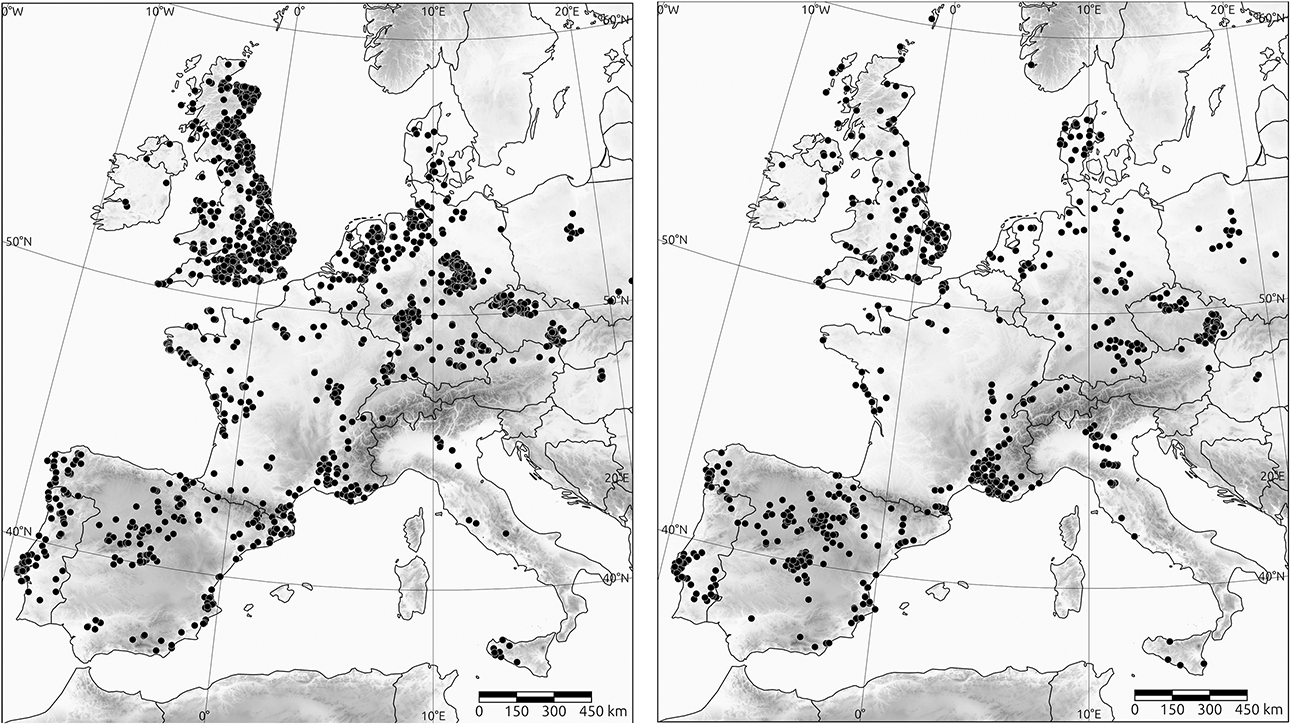
The second property of the Bell Beaker Phenomenon has long been recognised. The numbers quoted above suggest a territory covering four to five million square kilometres. Yet, a quick glance at the maps (Figures 3–4) demonstrates how misleading this figure is, as we are not dealing with a continuous distribution but rather a patchwork of spatially disconnected groups. The tension between fragmented and unified cartographies of the Bell Beaker Phenomenon is long-lasting and underscores two diverging views of the period, one explicitly tackling variation, and one leaning towards the identification of commonalities across the domain. Mapping this phenomenon accurately has proved an arduous task given its presence in multiple countries and traditions of research, but also, most importantly, because of the lack of any agreed, overarching, material definitions. Figure 5 offers a picture of the state of affairs at the beginning of the 2000s. Twenty years later, it ought to be possible to assess its accuracy, and, yet at the time of writing, there is still no Bell Beaker atlas in the sense of a comprehensive georeferenced dataset of archaeological sites and finds. There are, however, a few regional maps and site gazetteers (e.g., Reference Noble, Brophy, Hamilton, Leach and SheridanNicolis 2001; Reference Frei, Bergerbant and SjögrenFokkens et al. 2016; Reference LevinLemercier et al. 2019). At a larger scale, the only attempt at a site-based cartography is that published by Michael Reference BilgerBilger (2019), which forms the empirical basis of Figure 3. Although his synthesis does not claim to be exhaustive, it presents a transparent methodology as its maps are built from the compilation of site-based information, rather than inferring local distributions from the literature. As Bilger himself acknowledges (Bilger, personal communication Oct. 2022), the result is far from complete and therefore ought to be used with caution and is unfit for statistical purposes. Yet, it offers a rare snapshot of the Bell Beaker cartography.
Geographical extent of regional Bell Beaker groups as per 2006.
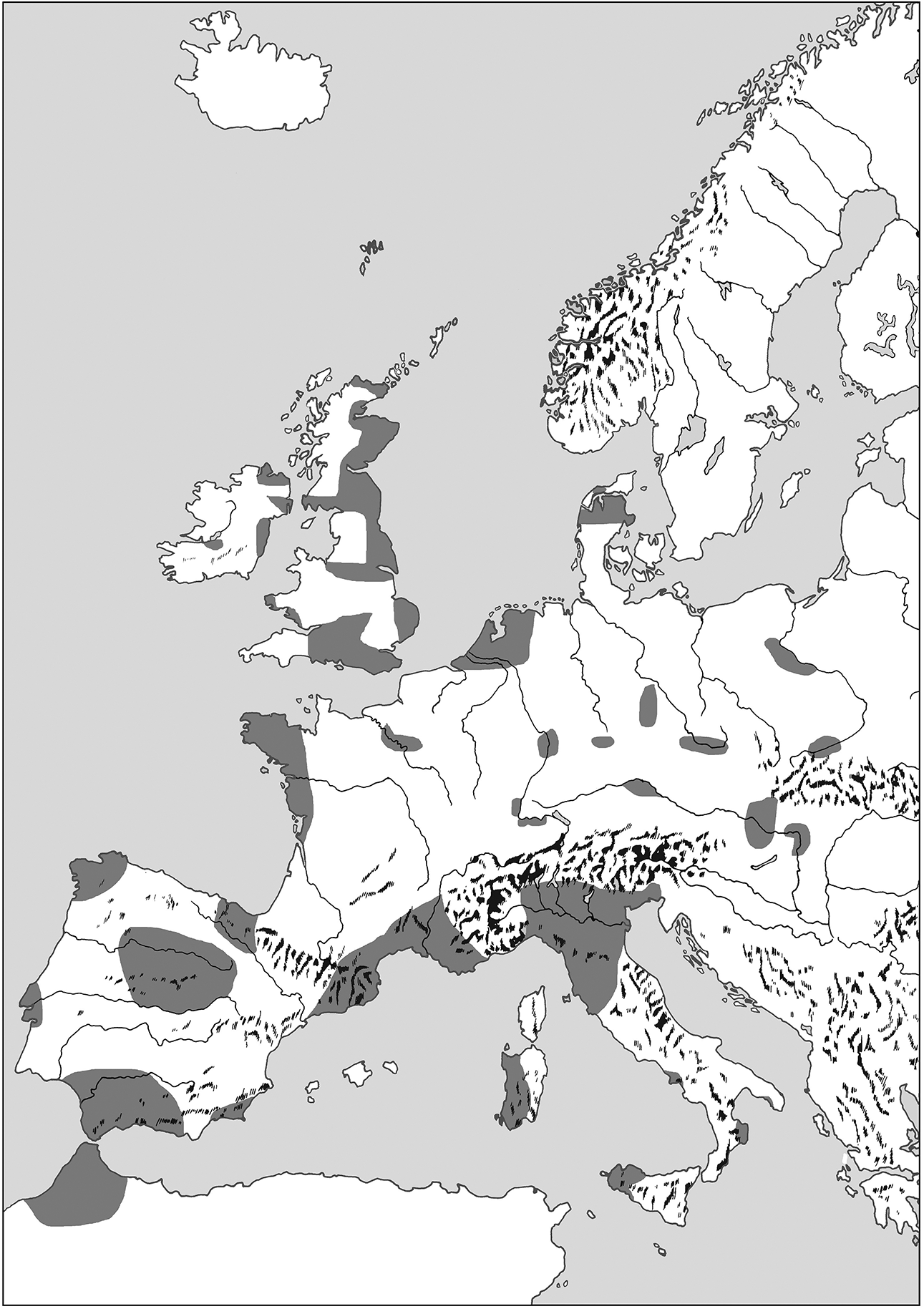
At first sight, this map confirms the discontinuous character of the distribution. Or, put more simply, this map stands out for both the extent of Bell Beaker regional groups and for the lack of them. However, this impression should not be taken at face-value as the problem lies in evaluating the nature of empty spaces and the density of the existing groups. The latter is hardly informative, especially in light of the aforementioned limits of Bilger’s data collection, and also because it is notably difficult to assess site density without any in-depth knowledge of local archaeological practices (e.g., areas that might be over-represented due to the intensity of development-led fieldwork). Visual comparison with published regional maps suggests a general level of accuracy, though certain areas with known Bell Beaker sites are under-represented (e.g., south-eastern France: Reference LevinLemercier et al. 2019) if not absent (e.g., Reference Mittnik, Massy and KnipperSardinia: Melis 2019).
As noted above, this distribution is noticeable for its alternation of filled and void areas. The Iberian Peninsula presents a strong Atlantic representation from Galicia to the Tagus estuary, but not in the southernmost tip, occupied by the contemporary Ferradeira horizon (Reference Vander LindenValera et al. 2019). Further inland, a large central group stretches from the Basque country to the Meseta. There, the Bell Beaker presence is clearly documented, though in several instances, it is rather diffuse within existing cultural traditions so that local specialists speak of sites with Bell Beakers rather than Bell Beaker sites (Reference Garrido-Pena, Flores Fernández and Herrero-CorralGarrido-Pena 2019; see Section 3). The same distinction applies to Mediterranean France, where, alongside contemporary Late Neolithic groups, sites yield assemblages with varying degrees of Bell Beaker material culture (Reference LevinLemercier et al. 2019). The rest of the Western Mediterranean basin is characterised by a comparable mix of areas rich in Bell Beaker finds, and areas devoid of them but occupied by other archaeological groups, such as along the eastern coast of Iberia, the Italian Tyrrhenian coast, or in Sicily. Further north, the Saône-Rhône axis plays a structuring role as a north–south corridor, contrasting with the discontinuous distribution of Atlantic France, with empty areas such as the Landes, seemingly an ecological wasteland for much of later prehistory. Few but significant Bell Beaker finds are known in Normandy (e.g., Reference Maréchal, Pétrequin, Pétrequin and ArbogastMarcigny et al. 2003, Reference Marcigny and Ghesquière2004) and along the Seine River, but in lesser quantity in northern France and in the Paris basin, where they coincide with sites with other types of material assemblages (Reference Salanova, Brunet and CottiauxSalanova et al. 2011). Ecology is arguably the biggest factor in shaping settlement pattern in the Netherlands, which was dominated by large areas of peatland unsuitable for human settlement (Reference Frei, Bergerbant and SjögrenFokkens et al. 2016). Bell Beaker groups extend further in northern Germany, but then abruptly stop before resuming in northern Jutland. The position of the latter is largely dictated by its late chronology (see below), and once more the apparent gaps are actually filled by sites with non-Beaker material culture (Reference Sarti, Fenu, Leonini, Martini, Perusin, Borgna and Müller CelkaSarauw 2019). Not featuring on this map, a few Bell Beaker finds are present in coastal Norway (Reference Price, Knipper, Grupe and SmrckaPrescott 2020). To the east, there are clear concentrations along the Rhine and Danube river valleys, as well as in Bohemia, Moravia, and Poland (Reference Valera, Žalaitė and MaurerTurek 2019). The easternmost Bell Beaker group is located in central Hungary, alongside several local Early Bronze Age groups (Reference Risch, Friederich, Küssner and MellerReményi et al. 2019). Lastly, the distribution in Britain presents a strong bias towards the eastern coast, and Bell Beaker finds in Ireland remain sporadic within an otherwise rich archaeological landscape (Reference CarlinCarlin 2018; Reference Goldberg, Günther, Rosenberg and JakobssonGibson 2019b).
Although the state of documentation has improved and fieldwork has filled in a few gaps over the past two decades, the picture remains one of spatially disconnected groups whose separation is structured by a complex mix of landscape affordances and areas with other contemporaneous archaeological expressions, and whose connection seems to favour corridors provided by major river valleys and maritime littorals.
2.2 Time matters, or the never-ending quest for a homeland
The geographic fragmentation of the Bell Beaker Phenomenon is reinforced by its chronology since several of these groups are either not contemporaneous or characterised by divergent typological and historical trajectories. However, the current state of the radiocarbon documentation does not allow us to validate this point systematically in a quantitative way. Unlike other prehistoric processes, there is no comprehensive gazetteer of radiocarbon dates for the entire Bell Beaker Phenomenon apart from a few high-quality regional datasets (e.g., Reference BeckermanBeckerman 2011–12; Reference Parker Pearson, Chamberlain and JayParker Pearson et al. 2019). Even though several inclusive repositories have thousands of dates for the period under consideration, it is often impossible to connect these data with high-resolution contextual information, especially typological attribution of the corresponding archaeological contexts.
It is tempting to view this state of affairs as an unfortunate consequence of a limited lack of engagement with radiocarbon and associated quantitative modelling within Bell Beaker academic circles. As we have seen, the publication of the Dutch Model in the mid-1970s triggered a passion for placing the mythical homeland in the Netherlands, rather than a methodological interest in replicating these results and techniques. Although regional programmes were undertaken (e.g., Reference KleijneBritain: Kinnes et al. 1991), the quantity of data available today stems more from the increased application of radiocarbon dating within the discipline more generally than from targeted dating programmes. Likewise, while existing reviews all point to the existence of early dates in the Iberian Peninsula (e.g., Reference Müller, van Willingen and NicolisMüller and van Willingen 2001), none of them attempt to apply any of the quantitative methods that could help in identifying a spatio-temporal structure potentially informative of a dispersal process, as has been carried out for the spread of early farming for instance.
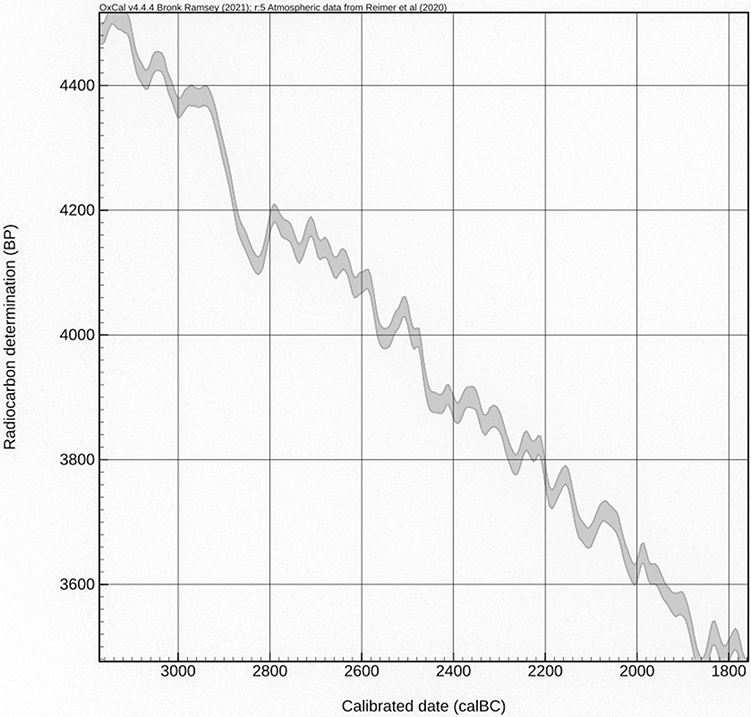
In all fairness, such methodological sophistication would be hindered by the tortuous shape of the radiocarbon calibration curve for the 3rd millennium calBC, which is marked by a flat-ish section between c. 2800 and 2600 calBC, followed by a couple of steep wiggles until c. 2475 calBC, and another flat segment until c. 2200calBC (Reference Remicourt, Saintot and ReyReimer et al. 2020; Figure 6). Despite many technical and methodological improvements in the technique (e.g., more accurate calibration curves, gradual lowering of the standard deviation for new dates, and application of Bayesian statistics for regional or site sequences), the ups and downs of the curve remain an obstacle which needs to be factored into any assessment of the Bell Beaker chronology. Keeping this in mind together with the state of the evidence, the following investigative approaches attempt to evaluate the interplay between the geography and temporality of the Bell Beaker Phenomenon, and how in concert they constitute a key component of any analytical assessment of its variation.
Intcal20 northern hemisphere calibration curve for the 3rd millennium calBC.
Even prior to the days of radiocarbon dating, the Iberian Peninsula, and especially the Portuguese Estremadura, has been in the running as one of the main contenders for the coveted status of Bell Beaker homeland. And indeed, only this area yields numerous dates falling between c. 2700 and 2450 calBC. Although these dates come from several sites (e.g., Leceia, Porto das Carretas, Miguens 3, Perdigões: Reference CardosoCardoso 2014; Reference Vander LindenValera et al. 2019), stratigraphic and typological issues preclude any Bayesian modelling (e.g., problems of residuality and contamination for the Zambujal sequence: Reference Kleijne, Drenth and GibsonKleijne 2019). Typological uncertainty also mars the credentials of the area as a homeland candidate, as there is a limited consensus on whether local ceramic productions can be regarded as prototypes for Bell Beaker pottery or not (Reference CardosoCardoso 2014). Stylistically speaking, so-called Maritime beakers appear throughout the 3rd millennium calBC across the entire Iberian Peninsula, sometimes alongside regional styles (e.g., Reference de Jesus Sanches and Barbosade Jesus Sanches and Barbosa 2018). From c. 2400–2300 calBC onwards, local sequences are characterised by increased regionalisation, eventually leading to the development of local facies, such as the Ciempozuelos group.
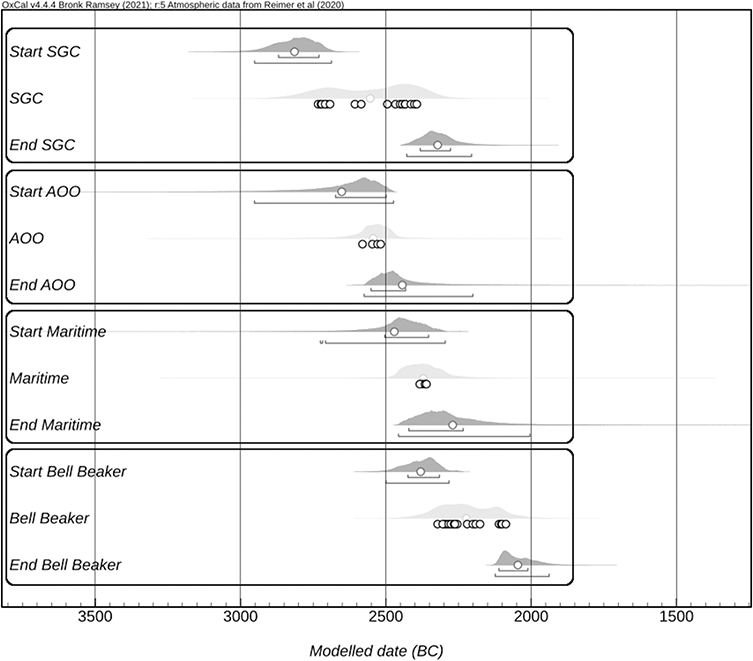
Another local sequence with a long pedigree in the competition for the title of Bell Beaker homeland is the Netherlands. Originally based solely on typological grounds, the Dutch model has gone through numerous versions over several decades, and its many iterations have all placed data hygiene at the forefront through rigorous assessment of sample quality (e.g., old wood effect, link between date and ceramic type). Beckerman’s recent appraisal considers that almost 50per cent of available dates have to be rejected on such grounds (Reference BeckermanBeckerman 2011–2). On this basis and through visual inspection of the date probabilities, she concludes that it is impossible to test the validity of the specific typological schemes posed by many authors (e.g., Single Grave Culture (SGC) – All-Over-Ornamented (AOO) beakers – Maritime beakers), although the continuity between the Single Grave Complex and the Bell Beaker (BB) Phenomenon is undeniable. Figure 7 provides a Bayesian model of Beckerman’s data, by considering the SGC, AOO, Maritime, and other BB ceramic productions as overlapping phases. Despite issues linked to the limited number of dates and the shape of the curve, its results confirm Beckerman’s conclusion, with the SGC and AOO styles presented as strictly contemporaneous and dated to the first half of the 3rd millennium calBC, followed by the Maritime and Bell Beaker productions, which largely overlap during the second half of the same millennium. From this perspective, while Dutch Maritime bell beakers are thus later than their Iberian counterparts, the overall typological continuity cannot be denied. It is fair to say that, rather than leaving us in the dark as to the question of a homeland, such results demonstrate the limits of typological thinking, and of anchoring the roots of the Bell Beaker Phenomenon in a single, spatially confined area.
Bayesian modelling of single grave culture – Bell Beaker Phenomenon typo-chronological development in the Netherlands.
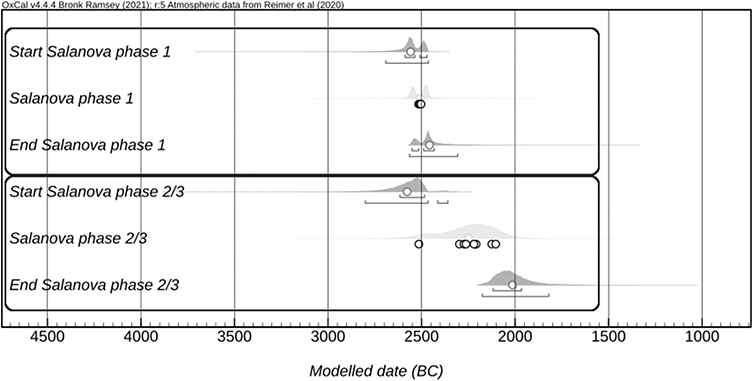
In all other regions, radiocarbon dating points to local Bell Beaker sequences starting no earlier than c. 2500calBC, a date strongly correlated to the end of the aforementioned steep wiggle in the radiocarbon curve. Another commonality is the existence of a relatively short first horizon characterised by lower typological variation. In the Paris basin, this first phase is associated with maritime and All-Over-Corded beakers between 2550 and 2450 calBC. It is then followed by two other phases lasting until the beginning of the 2nd millennium calBC (Reference Salanova, Brunet and CottiauxSalanova et al. 2011). Bayesian modelling of the few existing 14 C dates as two overlapping phases, however, indicates that these brackets must be considered with some caution (Figure 8). In a similar vein, Reference Lemercier, Furestier, Müller, Salanova and TchérémissinoffLemercier (2012) has put forward a threefold chronological division of the Bell Beaker sequence in southern France, with a first short phase (2550/2500 to 2400/2350 calBC) marked by relative homogeneity of the ceramic decoration (Maritime, AOC, mixed styles), quickly followed by a second phase which sees the development of multiple regional groups (c. 2400/2350 to 2150calBC). This eventually leads to the transition to the Early Bronze Age. Likewise, in central Europe, Bayesian modelling places the start of the Bell Beaker Phase around 2450calBC, lasting until 2150–2045 calBC (Reference Brunner, von Felten, Hinz and HafnerBrunner et al. 2020).
Bayesian modelling of the suggested three-fold chronological development in the Paris Basin.
The British sequence rests upon a robust combination of extensive 14 C sampling and Bayesian modelling (Reference Parker Pearson, Chamberlain and JayParker Pearson et al. 2019). As elsewhere, the earliest phase, lasting between 2450/2400 and 2300 calBC, is characterised by a low stylistic ceramic diversity (low-carinated beakers). The picture changes from 2300/2250calBC, with an increased regional variation, especially in funerary contexts, leading to a preferred terminology of ‘beakers’ in opposition to the rest of the European Bell Beaker traditions. This diversification phase is generally referred to as the ‘fission horizon’, following Stuart Needham, who first identified this pattern (Reference Needham, Lawson and WoodwardNeedham 2005). Beaker traits last until the early 2nd millennium BC, when they are succeeded by the local Early Bronze Age facies. It is noteworthy that the start of the fission horizon closely matches the beginning of the Bell Beaker presence in Denmark, estimated between 2350/2300 and 1900 calBC (Reference Sarauw and GibsonSarauw 2007).
Although hardly exhaustive, several conclusions can be drawn from this appraisal of the Bell Beaker chronologies. Firstly, the start of the phenomenon lies in the interval between 2700/2600calBC and 2450calBC. At this time, the Portuguese Estremadura is the only area which yields bell beakers in their narrowest typological definition (i.e., maritime style), while the Dutch sequence, for this time bracket, comprises All-Over-Ornamented beakers. Not only is it thus impossible to identify a single putative point of origin from which the Bell Beaker Phenomenon would stem but such reasoning is anyway of limited interest in view of the extensive material variation exhibited by all regional groups (see Section 3). Secondly, there is a wider generalisation of Bell Beaker groups across most of Europe from c.2500/2450 calBC onwards, a process often materialised locally by a limited ceramic typological diversity. Thirdly, from c. 2300 calBC onwards, there seems to be an increased level of regionalisation in pottery styles, which also marks the onset of new regional groups such as in Denmark. From then onwards, the situation becomes blurred, with the inception of the Early Bronze Age varying locally. This means that dependent upon regional typological considerations, terminologies, and research traditions, some of the corresponding groups can either be considered as late Bell Beaker or individualised as Early Bronze Age. In any case, Bell Beaker traits do not seem to extend way beyond 1900calBC.
Altogether, the Bell Beaker Phenomenon can be described as a suite of spatially distinct patches, covering a wide array of potential habitats, and connected for a few centuries by an apparent homogeneity that was gradually encroached on by regionalisation. Admittedly, this description is predicated on the coupling of radiocarbon and pottery typology, but, as the next section demonstrates, it encompasses some of the essential properties of the Bell Beaker Phenomenon.
3 Variation, Variation, Variation
The previous pages led us to conclude that, in spatial terms, the Bell Beaker Phenomenon is best described as a discontinuous patchwork. Although one could theoretically follow this point to its logical conclusion by adopting an atomic stance where each patch is considered in succession, the premise of the entire historiography and of this Element is that some level of connectivity underlies the entire complex. Even the most zealous deniers of archaeological cultures would admit that the mere existence of shared traits is informative about some sort of interaction and/or contacts between past people. The question is what type of interaction, and the answer lies first and foremost in a thorough description of the variation exhibited by the archaeological assemblages involved. This section aims to do that, though the following survey is unapologetically impressionistic and subjective. After a brief assessment of the historical context within which regional sequences unfold, these pages are primarily concerned with linking variation and connectivity, and thus focus on certain categories of evidence: funerary practices, because they generally form the bulk of the documentation; settlement patterns, a trickier source of information but privileged here because they reflect habitat diversity; material culture mostly through the prism of exchange and technological transfer; and lastly, strontium and ancient DNA data as our main proxy for human dispersal.
3.1 Iberian Peninsula
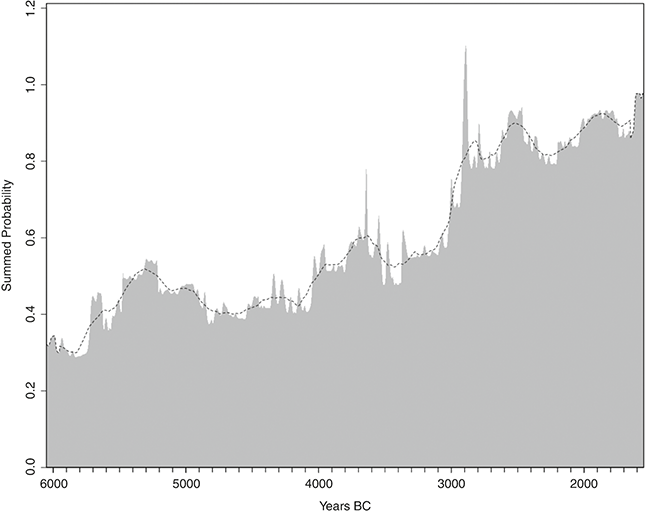
Although radiocarbon dating does not provide a straightforward sequential ordering of the individual Bell Beaker patches, it makes sense to begin with the Portuguese Estremadura and the Iberian Peninsula. Bell Beakers emerge at the end of a long episode of sustained demographic rise beginning in the mid-4th millennium calBC, as suggested by summed probability distributions of radiocarbon dates (hereafter SPDs; Reference LilliosLillios et al. 2016; Reference Blanco-González, Lillios, López-Sáez and DrakeBlanco-González et al. 2018; Figure 9). This trend is noticeable across the southern half of the peninsula, where the archaeological record has revealed a multiplication of sites, increased diversity, and a marked trend towards monumentality. Firstly, well-rooted in traditions stretching back to the late 5th mill. calBC, megalithism continues to flourish. Necropolises including a wide range of collective burials and architectural forms, some of them with exquisite sophistication, are founded and remain in use during the 3rd millennium calBC (e.g., Valencina de la Concepción: Reference Garrido-PenaGarcía Sanjuán et al. 2018). Secondly, impressive stone-dry monumental complexes are built, including Leceia, Zambujal, and Los Millares. A more recent addition to the archaeology of the area is the discovery of ditched enclosures. These monumental sites are composed of several concentric ditches up to 400 m in diameter and include a variety of burials and other deposition practices (e.g., Perdigões, Marroquíes: Reference Madgwick, Lamb and SloaneLillios 2020). Both ditched and walled enclosed sites witness human and animal mobility, though there are no patterns in the proportion of outliers or their spatial range (e.g., Reference Wilkin, Vander Linden, Anderson-Whymark, Garrow and SturtWaterman et al. 2014; Reference Wright, Waterman and PeateWright et al. 2019; Reference Vander LindenValera et al. 2020). The movement of people and animals echoes the vibrant economic life occurring on these sites, reflected in copper metallurgy and trade (e.g., Reference Murillo-Barroso, Peñalver and BuenoMurillo-Barroso et al. 2017), amber sourced from Sicily (Reference NeedhamMurillo-Barroso et al. 2018), and ivory from both African savannah and Indian elephants (Reference Shennan, Lanting and van der WaalsSchuhmacher et al. 2009; Reference O’BrienNocete et al. 2013).
Summed probability distribution of 14 C dates for the Iberian Peninsula. Dashed lines indicate a running mean of 200 years.
This combination of traits is often interpreted in terms of emergent social complexity and stratification (e.g.; Reference Madgwick, Lamb and SloaneLillios 2020), from which the regional Bell Beaker Phenomenon would emerge. Several elements indeed point to continuity across the 3rd millennium calBC. More tentatively, the suggestion that the Bell Beaker Phenomenon stems from a world pervaded by social complexity and competition fits with processual readings cast in terms of élites and social prestige. A first argument in support of such a thesis would be based on the discovery of early bell beakers on monumental fortified sites such as in Leceia and Zambujal in Portugal. In both cases, however, most of the beaker remains were found in peripheral positions in contrast to their presence in other fortified sites built during the late 3rd millennium calBC (Reference CardosoCardoso 2014). Further south in the Alentejo region, Bell Beaker remains are also found on sites displaying evidence for long-term use, such as in Perdigões, where they are associated with the construction of small circular stone structures with radial walls (Reference Vander LindenValera et al. 2019). On the same site, Bell Beaker pottery was found in association with cremated human remains, and, in another tomb, gold foil ornaments (Reference Montes-Landa, Murillo-Barroso, Montero-Ruiz, Rovira-Llorens and Martinón-TorresMonge Soares et al. 2012). Otherwise, the Bell Beaker Phenomenon is generally rare in funerary contexts across the Alentejo, unlike Estremadura, where Bell Beaker material culture is routinely discovered in megalithic monuments, as well as in long-used funerary caves (e.g., Reference Lillios, Blanco-González, Drake and Lóp-SáezLillios et al. 2010; Reference Zilhão, Monge Soares and GonçalvesZilhão et al. 2022).
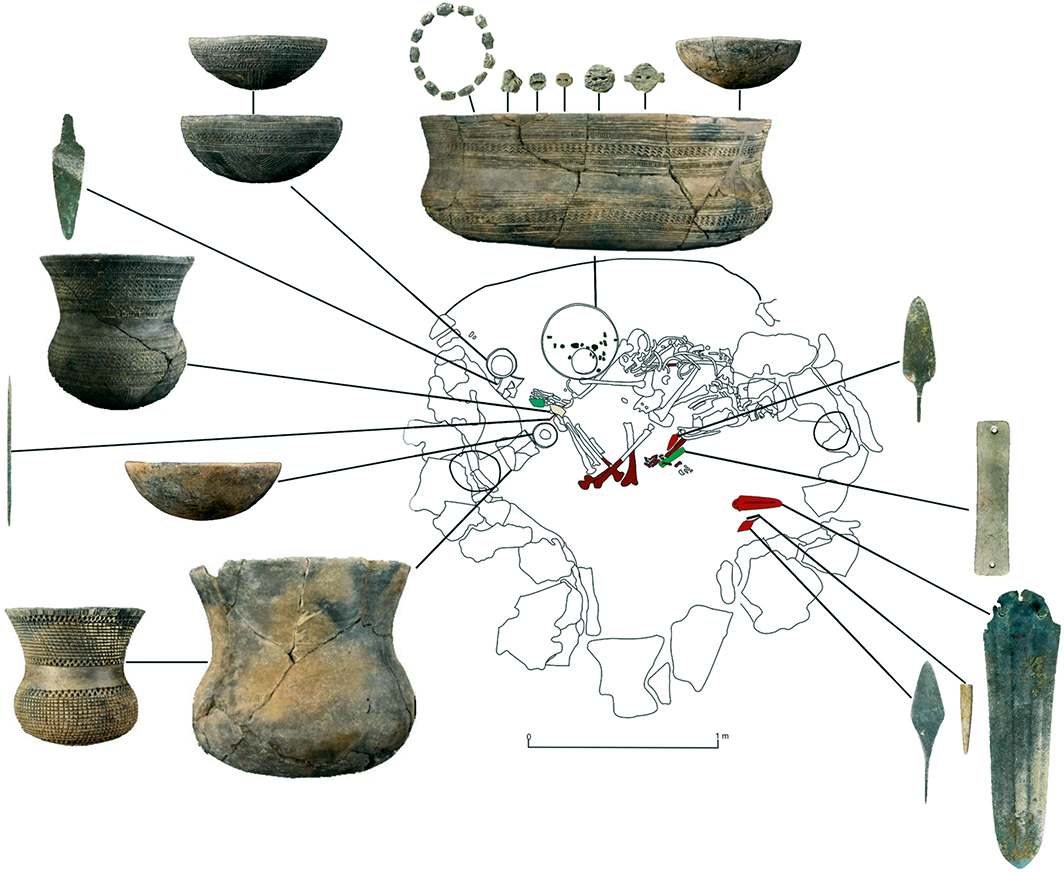
This diversity in domestic and funerary sites provides a template for the entire Iberian Peninsula. Galicia hosts Bell Beaker reuse of both older megalithic and previously abandoned Chalcolithic fortified sites, as well as newly created unenclosed settlements (Reference Racimo, Woodbridge and FyfePrieto-Martinez 2019). Across the Meseta, the majority of sites correspond to surface finds, with few associated structures, often located on ridges overlooking rivers and/or terraces, but rarely in caves and/or rock-shelters (Reference Garrido-Pena, Flores Fernández and Herrero-CorralGarrido-Pena 2019). In most instances it is notable that pits with Bell Beaker materials are in the minority, suggesting that these are best considered as settlements with bell beakers, rather than Bell Beaker settlements (Reference Garrido-Pena, Flores Fernández and Herrero-CorralGarrido-Pena 2019). There are few exceptions to this pattern, and the site of El Ventorro, published in 1992, remains unmatched with its twenty-three pits, two huts, and traces of copper smelting (Reference Prieto-Martinez and SalanovaPriego & Querro 1992). As elsewhere in the Iberian Peninsula and contemporary non-Bell Beaker areas (e.g., Reference Vander LindenValera et al. 2019; Reference Aranda Jiménez, Milesi García and HamiltonAranda Jiménez, et al. 2022), the funerary record in the Meseta features a combination of reused megalithic dolmens and caves alongside funerary pits, and the practice of both collective and individual burials (Reference Bueno Ramirez, Barroso Bermejo, De Balbin Behrmann, Joussaume, Laporte and ScarreBueno Ramírez et al. 2005; see also Reference FitzpatrickFernández-Crespo et al. 2019). In addition to bell beakers and numerous other ceramic types, grave good assemblages include several types of ornament (e.g., V-perforated buttons), weapons (e.g., copper daggers, stone wristguards, or slender copper points known as Palmela points, e.g., Reference Spatzier, Schumke and GibsonSoriano et al. 2021), and miniature vessels probably made on purpose for children (Reference IhuelHerrero-Corral et al. 2019). One particular site deserves some attention. Humanejos, a cemetery in use from the Chalcolithic to the Bronze Age, includes nine Bell Beaker graves. Tomb 1, a carefully built stone chamber, contained the successive burials of a woman and a man, the latter associated with multiple pots, ornaments (including some made of ivory), a stone bracer, Palmela points, and, exceptionally for Iberia, a halberd (Reference Gašpar, Petřiík and FotjíkGarrido-Pena et al. 2022; Figure 10). The lavishness and repetitive deposition of otherwise equivalent artefacts (e.g., multiple weapons) puts this burial into the category of so-called over-provisioned graves, a particular type which we will encounter on other occasions across the Bell Beaker domain.
Humanejos.
Much has been written about the idea that bell beakers were vessels for consuming alcoholic beverages. Yet, empirical confirmation of this putative function is elusive and the literature points to several instances of beakers containing other things than drinks (Reference BrodieBrodie 1994). A rare positive identification of drink comes from the site of La Sima, where residue analysis confirmed the presence of a beer-like beverage through identification of cereals, yeast, starch granules showing surface alterations related to germination, and Calcius oxalate, a crystalline deposit linked to malt and beer preparation (Reference Saag, Varul and ScheibRojo-Guerra et al. 2006). Other scientific analyses of pottery have also been undertaken on a relatively large scale over the past few decades in order to test the hypothesis of direct exchange of pottery between communities. Chemical characterization of clay and temper indicates that most vessels were produced with locally available raw materials; for example, in Galicia, a third of the pots were made from clay sourced from within a 7-km radius, and the rest from a maximum distance of 37 km (Reference Salavert, Zazzo and MartinSalanova et al. 2016). This pattern, repeated in other regions, contrasts with long-distance technological similarities between Galicia and Brittany, indicated by the use of kaolin for white incrustation, and of the use of donax and cockle shells for impressed decoration (Reference Reimer, Austin and BardPrieto-Martinez & Salanova 2009). In Alentejo, the presence of only a few pottery imports suggests that bell beakers were added to the local ceramic repertoire (Reference Dias, Prudêncio and ValeraDias et al. 2017). Other categories of evidence point to continuing economic dynamism: copper metallurgy, including production workshops (e.g., Reference Drenth, Freudenberg and WilliamsDorado Alejos et al. 2021; Reference Müller and NicolisMontes-Landa et al. 2021), and acquisition of amber with multiple origins, including locally and from Sicily (Reference NeedhamMurillo-Barroso et al. 2018).
As is always the case in Bell Beaker studies, the question of the movement of goods leads to a discussion regarding the scale and nature of human mobility. Strontium isotope analyses indicate a variety of scenarios (e.g., Reference Wilkin, Vander Linden, Anderson-Whymark, Garrow and SturtWaterman et al. 2014; Reference Díaz-Zorita Bonilla, Beck and BocherensDíaz-del-Río et al. 2022), often with a low level of mobility but sometimes with indications of movement over longer distance and involving more individuals, as is the case at the early 2nd millennium calBC site of Valdescusa (Reference Ovaskainen and SaastamoinenOrtega et al. 2021). It is noteworthy that this diversity is echoed by work undertaken on contemporaneous non–Bell Beaker sites (Reference Dolfini, Roberts and ThorntonDíaz-Zorita Bonilla et al. 2018). Ancient DNA provides a different view of mobility. The second half of the 3rd millennium calBC, and thus the Bell Beaker Phenomenon, marks the introduction in Iberia of the steppe ancestry genetic signature, though at a much lower level than elsewhere (Reference Olalde, Mallick and PattersonOlalde et al. 2018). This genomic component reaches a higher proportion in the succeeding Early Bronze Age, including in areas lying outside of the Bell Beaker range (e.g., El Argar culture in south-eastern Spain: Reference Ortega, Alonso-Fernández and GuedeOlalde et al. 2019; Reference Waterman, Peate, Silva and ThomasVillalba-Mouco et al. 2021). This intriguing result suggests that the connections established during the Bell Beaker period remained active for several centuries and eventually spilled over spatially. Lastly, one must also point out the existence of a few individuals throughout the 3rd millennium calBC who show signs of North African ancestry (Reference Greaney, Hazell and BarclayGonzález-Fortes et al. 2019; Reference Ortega, Alonso-Fernández and GuedeOlalde et al. 2019). This last find echoes the discovery of various goods sourced from northern Africa, and the presence of numerous Bell Beakers in the coastal and hinterland Maghreb (e.g., Reference NicolasNekkal and Mikdad 2014).
All in all, one is left with a strong sense of continuity across time and space, as the Bell Beaker Phenomenon appears firmly embedded in the dynamics of the earlier phases of the Chalcolithic, and in the wider variation of contemporaneous Iberian communities. A certain sense of incipient social complexity is inescapable, though perhaps taking different forms in the late 3rd millennium calBC. The Bell Beaker Phenomenon across the Iberian Peninsula thus is marked by a new material culture added to an existing set of social and cultural practices, rather than a radical upheaval. Ancient DNA results similarly point to the inception of the new steppe ancestry in the local genomic landscape instead of a massive population turnover. Yet, it would be too hasty, especially at this stage of the inquiry, to draw any parallel between material culture and genetics.
3.2 Another Homeland? The Low Countries
Let us contrast Iberia with the lower Rhine basin, the other area often quoted as a potential Bell Beaker homeland. As discussed previously, the cultural background here corresponds to the Single Grave Culture, which constitutes the western-most facet of the Corded Ware Complex. Due to the quasi-general absence of bone samples caused by soil acidity, the assimilation of this complex with an episode of mass migration in this region has to be assessed using more traditional categories of archaeological evidence, thus allowing Dutch scholars to investigate these historical trajectories at multiple scales. While older megalithic tombs are reused, the main innovation of the period is the appearance across the landscape of circular funerary barrows, generally covering one or several individual burials, a practice recorded across the entire Corded Ware distribution (Reference BourgeoisBourgeois 2013). Links with the rest of the complex are also visible in the way bodies are placed on a roughly east–west axis, either in a left (for women) or right (for men) crouched position facing south. Grave good choices echo wider Corded Ware trends, with ceramic offerings dominated by beakers and amphorae, various types of ornaments, and so-called battle axes. Often interpreted in a context of interpersonal violence, recent traceological analysis suggests that these were utilitarian tools linked to deforestation (Reference Woodward, Hunter and IxerWentink 2020). Large-scale network analysis of body and grave good position further demonstrates how funerary Single Grave Culture preferences were part of a widely shared set of rules, characterised by higher formality (i.e., reduced variation) for men’s burials (Reference Bourgeois and KroonBourgeois & Kroon 2017). Pottery techniques suggest that the introduction of the Single Grave Culture in the coastal Netherlands took the form of more of a patchwork process, with both imports and traces of technological continuity (Reference Lanting, van der Waals, Lanting and van der WaalsKroon et al. 2019).
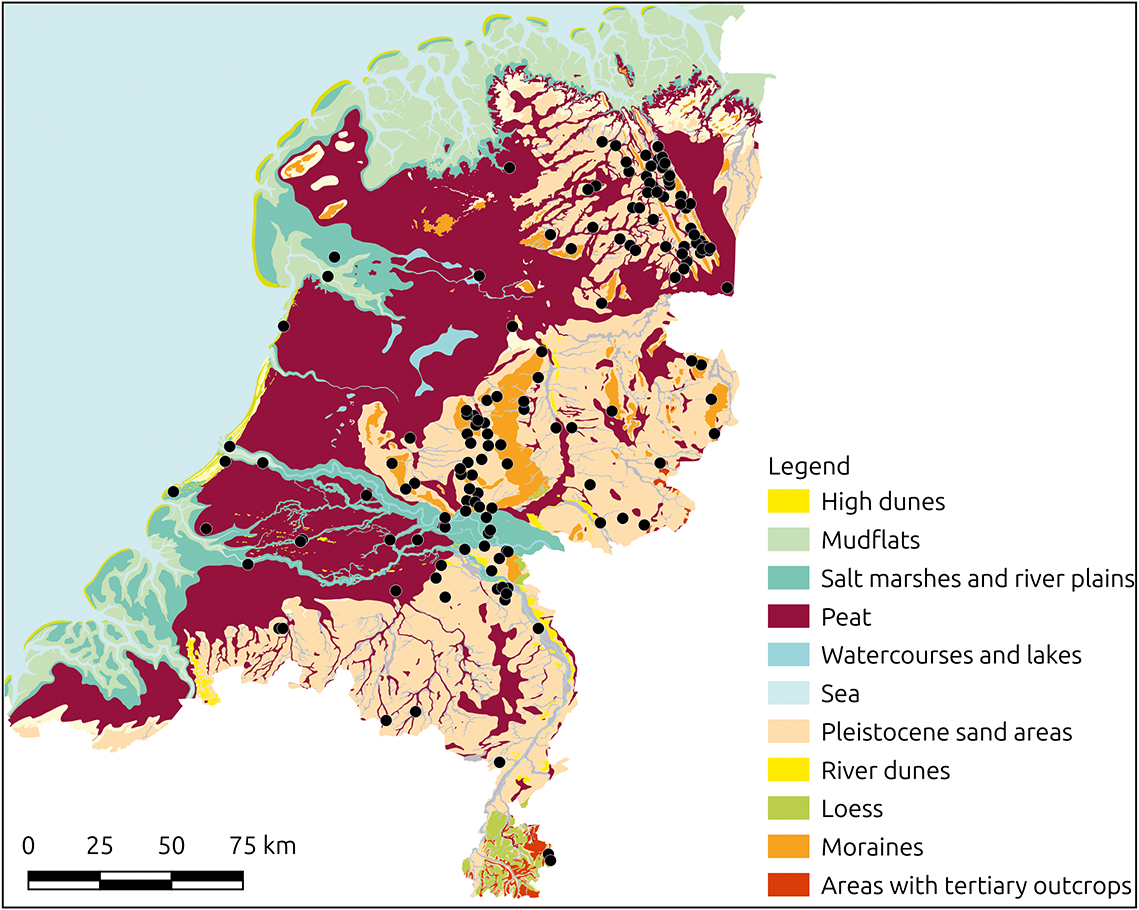
Pottery plays a fundamental role in the idea of an unbroken local development from the Single Grave Culture to the Bell Beaker Phenomenon. The hypothesis of a continuous tradition bridging both complexes in the Netherlands is generally accepted, with debates focusing on the precise shape of this typological transition. A narrative of continuity is supported by other categories of evidence. In contrast with most Bell Beaker regions, settlement patterns are well documented for the Netherlands, largely owing to intensive development-led fieldwork and subsequent synthesis (Reference Frei, Bergerbant and SjögrenFokkens et al. 2016). The area stands out because of the nature of the Holocene landscape, with its diversity of marsh ridges, floodplains, fens, peatland, and changing coastlines (Figure 11). Late Neolithic human communities took full advantage of the resulting multiplicity of available eco-zones by making use of an extended farming system in which agriculture and herding were supplemented by fishing, hunting, and gathering (Reference Frei, Bergerbant and SjögrenFokkens et al. 2016). There is, however, more uncertainty regarding the nature of building plans. Fokkens and colleagues consider that the Dutch territory has not yielded any convincing house plans for the Bell Beaker period and the Early Bronze Age (Reference Frei, Bergerbant and SjögrenFokkens et al. 2016). This position can be contrasted with the views of Reference Kleijne, Drenth and GibsonKleijne and Drenth (2019), who mention some – questionable in my opinion – reconstructions, especially for the very late 3rd–early 2nd millennium calBC (e.g., Molenaarsgraf, Noordwijck-Bronsgeest). Nevertheless, the development of a two-aisled building tradition during the Late Neolithic and Early Bronze Age is not in doubt.
Distribution map of recently identified Dutch Bell Beaker sites against palaeoecological zones.
A recurrent trait of the Late Neolithic in the Low Countries is a landscape dotted by barrows. Here again, the Bell Beaker Phenomenon exhibits continuity with the Single Grave tradition while also significantly departing from it, with barrows often built a few hundreds of metres apart and rarely in groups of more than three monuments (Reference BourgeoisBougeois 2013). The same general impression of continuity holds for other facets of the funerary record. Ceramics, and especially beakers, retain their privileged status as grave goods, as do weapons, although archery items (stone bracers, arrowheads), and daggers are substituted for battle-axes (Reference Woodward, Hunter and IxerWentink 2020). The occurrence of cushion-stones and hammers at Hengelo and other sites testifies to the practice of copper metallurgy and the recognised status of the craftworkers (Reference Dulias, Foody and JusteauDrenth et al. 2016). There is much variation in the placement of the dead in the grave, and no clear shift in the main axis from the preceding period, unlike central Europe during this period. The picture is, however, blurred by the generally poor preservation of skeletal remains. In this context, the exceptional Niersen burial is worth highlighting (Reference Bourgeois, Amkreutz and PanhuysenBourgeois et al. 2009). This barrow was excavated in 1907 and led to the discovery of a burial with human remains. Given the rarity of such finds in a Dutch context, the foresighted decision was made to lift and preserve the burial in its entirety. Recent re-examination of the archives and the remains indicates an open wooden chamber comprising two individuals, the first to be deposited represented by disarticulated remains and the second in an articulated position. Unfortunately, due to the state of the documentation, it is impossible to evaluate with precision the timing of this succession (i.e., either whether both bodies were deposited placed in a single event or the remains of the first individual were pushed to the side when the second individual was interred).
The acidity of the sandy soils also limits the application of any form of laboratory analysis, either strontium isotopes or ancient DNA. Isotope studies are simply non-existent for Late Neolithic human remains, while aDNA analysis is confined to a handful of individuals from a single site (Reference Olalde, Mallick and PattersonOlalde et al. 2018). This point is far from anecdotal, as these samples provide a key data point in the identification of a massive population turnover in Britain, a contentious point to which we will return later. Since further samples have become available from the sites of Ottoland and Molenaarsgraf, all results point to these individuals deriving c. 60 per cent of their ancestry from the steppe (Reference Pétrequin and LemonnierPatterson et al. 2021).
As for Iberia, multiple lines of evidence converge towards an impression of cultural continuity across the 3rd millennium calBC in the Lower Rhine area. Some changes are noticeable, for instance in the funerary realms, and point to amendments to rules set within the general framework established during the Single Grave period. But the Iberian–Dutch parallel stops there, and both sequences unfold within markedly distinct social ambiances and cultural backgrounds.
3.3 Atlantic Europe
Between these two potential homelands lies a vibrant cultural space stretching from the Bay of Biscay to the shores of the Channel. During the late 4th and early 3rd millennium calBC the Atlantic continental façade witnessed various interaction processes. Perhaps the most well-known of these corresponds to the diffusion of Grand-Pressigny flint daggers. Although there is a large degree of variation in this raw material, it is distinctive; this honey-coloured flint was extracted and knapped into long daggers, and a few other tool types, in various workshops in the Touraine region of central France. From there, daggers were distributed during the late 4th and the early 3rd millennium BC across large areas, with a noticeable concentration along the Atlantic coast and in particular the Morbihan, pointing to a well-established maritime trade network (Reference James, Willmes and BoelIhuel 2014). Grand-Pressigny daggers are under-represented in the rest of Brittany, and in nearby Normandy, but are found in northern France and Belgium, with the northernmost examples occurring in AOO burials in the Netherlands. Another continental Atlantic network can be inferred from the discovery of large rectangular buildings from the Dordogne to northern France and Belgian Flanders. This loose architectural tradition encompasses large-scale to fully monumental buildings, generally found in isolation or in small groups of two to four. In several instances, such as in Brittany and Hauts-de-France, clusters of sites with shared architectural traits point to well-established micro-regional communities of practice (Reference Kern, Morschhauser, Penz, Schmitsberger and GibsonJoseph et al. 2011; Reference TurekTinévez 2022). These sites, often enclosed, encompass a wide variety of functions and activities, with settlements involved in specific tasks such as linen processing in northern France for instance (Reference Melis and GibsonMartial et al. 2013). Despite undeniable variety, it is hard to eschew the view that these various local areas are all connected within a relatively coherent cultural koinè. In parallel with this apparent homogeneity, Late Neolithic communities along the Atlantic façade also present marked idiosyncrasies as demonstrated in funerary practices and ceramic typology.
This intricate mix of local and pan-regional expressions extends further during the Bell Beaker period. Variation is evident in the funerary sphere, with several areas containing few individual graves (Reference Salanova, Renard, Mille, Salanova and TchérémissinoffSalanova 2011), but there are hotspots of collective burials and reuse of megalithic architecture, as in Brittany (Reference Fernandes, Mittnik and OlaldeFavrel & Nicolas 2022). A closer look at some of the individual graves reveals an intriguing pattern: a couple of graves found at Ciry-Salsogne and Jablines, in the Paris Basin rather than along the Atlantic coast stricto sensu, have both yielded AOC beakers associated with Grand-Pressigny flint daggers, funerary packages strongly reminiscent of Dutch examples though both graves postdate by a century or two the corresponding typological phase in the Netherlands (Reference Salanova, Renard, Mille, Salanova and TchérémissinoffSalanova 2011). Noticeably, the individual buried at Ciry-Salsogne presents high level of steppe ancestry (Reference Brunel, Bennett and CardinBrunel et al. 2020). Likewise, though further south and at a later date (c. 2350–2200 calBC), the grave of Poitiers – La Folie included an AOO beaker and was surrounded by an incomplete circular ring of posts, which would appear alien in the Low Countries (Reference TinévezTchéréminisoff et al. 2011). To this brief set of northerly influenced graves, one can add the old discovery of Wallers – Arenberg in northern France with two beakers with strong Dutch or British Late Beaker typological connections, a chronological attribution which cannot be tested in the absence of bones suitable for radiocarbon (Reference Salanova, Brunet and CottiauxSalanova et al. 2011). Finally, let us mention several individual graves from Normandy, sometimes associated with settlements and dated to the latest centuries of the 3rd millennium BC and thus attributed to the Early Bronze rather than the Bell Beaker Phenomenon per se (Reference Maréchal, Pétrequin, Pétrequin and ArbogastMarcigny & Ghesquière 2003; Reference Marcigny and GhesquièreMarcigny et al. 2004; Reference Billard, Salanova and TchérémissinoffBillard 2011).
Bell Beaker material culture is also routinely found in collective burials and megalithic monuments, though in most cases the long and complex history of use and reuse of these sites precludes precise evaluation of the Bell Beaker context (Reference Fernandes, Mittnik and OlaldeFavrel & Nicolas 2022). An exception is provided by the chance discovery of the Tumulus des Sables in Aquitaine (Reference JeunesseJames et al. 2019). This non-megalithic collective burial comprised the remains of around thirty individuals, with radiocarbon dating indicating a first use in the Middle Neolithic, and a main period of human deposition during the Bell Beaker period. Sr and O isotope analyses point to very limited human mobility, with a single individual identified as non-local. Otherwise, the main concentration of Bell Beaker finds in megalithic tombs lies in southern Brittany, with a plethora of beakers and arrowheads (Reference NicolasNicolas 2017). These squared barbed and tanged arrowheads are generally made of non-local raw material, and technological analysis points to limited required skills, and thus to individually, rather than specialised, crafted products. Noticeably, these are sometimes encountered in vast quantities at a single site, with a maximum example of sixty, echoing the previously encountered notion of funerary over-provisioning. It is also noteworthy that this particular type has a long-standing pedigree in Atlantic France, starting in the local Late Neolithic, and with Bell Beaker-influenced types being a common occurrence in Early Bronze Age barrows, the latter process is also observed in Britain and Denmark (Reference NicolasNicolas 2017).
In comparison to the Late Neolithic rectangular buildings, continental Atlantic Bell Beaker architecture is dominated by smaller structures, between 5 to 7 m wide and from 10 to 20 m long. Only twenty or so actual buildings are known from over 100 domestic sites, the majority of which are almond or pear-shaped (Reference NicolisNicolas et al. 2019). Their distribution is biased towards Brittany (Reference TurekTinévez 2022), although rare examples are recorded in Normandy and Charente. Most of these buildings date to between 2430 and 2150 calBC and are thus not directly associated with the earliest Bell Beaker horizon. For instance, the site of Anse de la République, in Vendée, has recently been redated to the 25th and 24th centuries BC (Reference García Sanjuán, Vargas Jiménez and Cáceres PuroGandois et al. 2020). This site is of particular interest as it has yielded direct evidence of copper metallurgy in the form of beaker sherds used as crucibles, which have direct parallels on other western French sites (e.g., Les Florentins: Reference Billard, Querré and SalanovaBillard et al. 1998).
The events unfolding in Atlantic France during the late 3rd millennium calBC matter not only because they provide a geographical bridge between both putative homelands but more fundamentally because they demonstrate how much connectivity is a central feature of the Bell Beaker Phenomenon for its entire duration. Funerary similarities linking this space to the Low Countries are not restricted to a narrow early temporal horizon but occur over several centuries. Further, it is also noteworthy how practices initiated during this period (e.g., preference for arrowheads as grave goods) impacted the development of the succeeding Early Bronze Age.
3.4 Central Europe
Central Europe has always enjoyed an awkward status in Bell Beaker studies: rarely considered as a potential homeland, yet seen as a driving force, this area provides some of the highest regional concentrations of finds of the entire domain. One of the key elements in this discussion relates to the assessment of the legacy of the cultural substrate known as the Corded Ware Complex in this sequence.
The Corded Ware Complex is well-known in Later European prehistory for its combination of broad geographic distribution, relative lack of settlement evidence, and highly patterned funerary practices, most burials being individual graves with bodies laid on an east–west axis facing south, men lay on their right side and women on their left. However, as demonstrated by Furholt (e.g., Reference FurholtFurholt 2014), behind this apparent homogeneity lies a tapestry of regional variation. The archaeological fame of this complex has also been raised within archaeological ranks – and most unfortunately beyond (e.g., Reference Hanski and OvaskainenHakenbeck 2019) – by its association with high-profile aDNA studies and findings. As previously mentioned, samples dated to this period demonstrate the introduction of a new genomic component in the genetic variation of Europe, the so-called steppe ancestry (Reference Allentoft, Sikora and SjögrenAllentoft et al. 2015; Reference HakenbeckHaak et al. 2015). Despite decades of discussion on the presence, or lack of, migration during this period, these studies were met by a range of reactions ranging from devoted support (e.g., Reference Kroon, Huismans, Bourgeois, Braekmans and FokkensKristiansen et al. 2017) to cautious criticism (e.g., Reference Všianský, Kolář and PetříkVander Linden 2016; Reference FurholtFurholt 2018). A few years on, new studies and samples, unsurprisingly, given the limited size and geographical spread of the original studies, point to more complexity than was suggested by the original claim of massive migrations. Re-examination of the original data led to identification of sex bias in the migratory movement, pointing to an imbalance in favour of men (Reference Goldberg, Günther, Rosenberg and JakobssonGoldberg et al. 2017a). Fiercely debated at first (Reference Le Brun-Ricalens, Toussaint, Valotteau, Salanova and TchérémissinoffLazaridis & Reich 2017, and countered by Reference González-Fortes, Tassi and TrucchiGolberg et al. 2017b), this interpretation has found empirical support in regional studies (e.g., Reference SalanovaSaag et al. 2017). In Moravia, Papac and colleagues report high levels of steppe ancestry in Corded Ware individuals of both sexes, but also four women without any trace of it at all, as well as the inception of another genetic ancestry linked to the forest zone, thus pointing to a mixture of individuals from various geographical origins and local populations all contributing to the gene pool (Reference Parker PearsonPapac et al. 2021). Interestingly, they also report shifts in genetic diversity over time in the course of the Corded Ware Complex, a welcome reminder that archaeological complexes are dynamic processes and should never be reduced to static ethnographic-like snapshots.
In light of these points, it is easy to see how and why the Corded Ware Complex and the Bell Beaker Phenomenon are sometimes seen as archaeological siblings. This impression is reinforced by their geographic and chronological overlap. Regarding the latter, the image of a typological chest of drawers, whereby one culture simply succeeds another, has sometimes been invoked to account for the Corded Ware-Bell Beaker sequence. Many elements, however, indicate that this perception is misleading and that face-to-face interactions between the producers and bearers of these respective material cultures effectively happened. Such encounters are implicitly at the core of Sangmeister’s Rückstrom theory to account for typological traits of assumed Corded descendent traits in later Bell Beaker assemblages. Setting such typological presuppositions aside, occurrences of graves of both cultures in the same cemeteries have long been reported, but the best demonstration of the effective contemporaneity of both complexes comes from settlement evidence. Recent excavation and survey programmes conducted in development-led contexts in the Saale and Elbe river valleys of central Germany have demonstrated the co-existence of both complexes between 2500 and 2200 calBC, characterized by distinctive architectural traditions and settlement patterns (Reference Roberts, Vander, Roberts and VanderRisch et al. 2022; see also Reference Strahm and GibsonSpatzier and Schumke 2019; Reference Tchérémissinoff, Convertini, Fouéré, Salanova, Salanova and TchérémissinoffStrahm 2019). Bell Beaker buildings present a trapezoidal shape roughly comparable to the Corded Ware examples, though the latter are generally wider. More significantly, while Corded Ware sites are found on high, grazing grounds, Bell Beaker ones are preferentially located on agricultural lands closer to the rivers. All in all, at least for this region, one can firmly speak of two communities living side-by-side, using different material cultures, practising related yet diverging burial rituals (see below), and exploiting different parts of the landscape.
Settlement evidence has always been the documentary weakest link for the Bell Beaker Phenomenon, thus contributing to its identification with wandering pastoralist peoples, a vision which provides a simplistic mechanism to account for its large-scale distribution. However, as the previous example shows, the empirical situation has improved over the past few decades, and even though building plans remain scarce, the number of domestic sites has steadily increased as has our knowledge of regional Bell Beaker settlement patterns. The Bell Beaker situation just described for the Elbe–Saale river valley differs from the Lake Constance region, where Corded Ware settlements are located by the lake, alongside the low-lying hinterland for pasture, while the shores are abandoned during the Bell Beaker phase in favour of the higher Hegau region (Reference Lefebvre, Gazenbeek and PernotLechterbeck et al. 2014). In Moravia and Bohemia, the distribution of findspots suggests networks of small settlements, located close to rivers and with access to pastureland given the primacy of cattle in the zooarchaeological assemblages (c. 70% on average: Reference Valera, Žalaitė and MaurerTurek 2019). Preferential use of low terraces and lowlands is also noted in eastern Austria, with the notable mention of two boat-shaped houses on the site of Walpersdorf, and a high proportion of horse bones at Vienna 3 (Reference Kinnes, Gibson and AmbersKern et al. 2019). Use of river terraces, boat-shaped houses, and faunal assemblages dominated by horse remains are recurrent features in the central Hungarian Bell Beaker–Csepel group in central Hungary (Reference Risch, Friederich, Küssner and MellerReményi et al. 2019).
The bulk of the evidence for the central European Bell Beaker still comes from the funerary sphere, with individual graves found isolated, in small groups, or in cemeteries organised in rows. These graves also famously follow strict rules, with bodies being generally aligned on a north–south axis, men lying on their left side facing east, and women in a symmetrical position on their right side, facing east. Though reminiscent of the Corded Ware rules, it is noteworthy that, in order to move from one pattern to the other, one has to apply two geometric transformations: a rotational and a reflectional symmetry. Arguably both Corded Ware and Bell Beaker practices present a much wider range of variation, but the necessity of applying these two transformations points to shared conceptions underlying both funerary conceptions. Another widely encountered practice in central European Bell Beaker graves reinforces the importance of gender in the funerary ideology: once more keeping in mind the existence of numerous exceptions, men tend to be buried with drinking vessels and weapons, especially echoing the world of archery, and women with drinking and other vessels. Much has been written on this topic (e.g., Reference Valera, Mataloto, Basílio and GibsonTurek 2013; Reference Müller, van Willingen and NicolisMüller 2001), and in view of the overall objectives of this element, the key thing here is to stress that, overall, gendered disposal rules were important, though their regional implementation varied extensively.
The examination of grave goods provides further information regarding the rules governing mortuary practices. Bell beakers in funerary contexts are often the main drinking vessel in a grave, though in some cases, handled cups are used as a substitute (Reference BesseBesse 2003; Figure 11). Stone bracers – worn on the forearm – are another common feature in graves, especially male ones. These artefacts present extensive variations in raw material, colour, and morphology (e.g., number of perforations ranging from two to six), and technological analysis suggests limited knowledge involved in their making, thus possibly indicating personal production (Reference Nicolas, Favrel, Rousseau and GibsonNicolas 2020). Several examples of reshaping or redrilling of the perforations indicate that these bracers were effectively worn, although use-wear analysis does not support their assumed function as archers’ wristguards (Reference Nicolas, Favrel, Rousseau and GibsonNicolas 2020; Reference Fokkens, Steffens and van AsFokkens et al. 2008). By comparison, the relationship between arrowheads and archery is unquestionable. Regional variation occurs here as well, although at a much larger scale. Corresponding to the barbed and tanged specimens of western Europe, in central Europe we see arrowheads with concave bases delineating two distinctive wings (Reference Bailly, Arbogast and Greffier-RichardBailly 2014). Geometric morphometrical analysis of Moravian examples suggests a low typological diversity, amplified by minor micro-regional variation in terms of raw material use (Reference Prescott, Gron, Sørensen and Rowley-ConwyPetřík et al. 2018). Interestingly, there are few known broken examples, suggesting that these arrowheads were part of arrow shafts made and deposited on purpose in the graves (Reference Prescott, Gron, Sørensen and Rowley-ConwyPetřík et al. 2018).
Other dimensions of the funerary record point to further (micro-)regional variation. For instance, cremations are frequent in the central Hungarian Csepel group, but otherwise use of fire in the mortuary context is infrequent. Another example, though not a cremation as such, is provided by a couple of graves excavated at Altwies – Op dem Boesch, in present-day Luxemburg (Reference Lechterbeck, Kerig and KleinmannLe Brun-Ricalens et al. 2011). The first grave contained the remains of a single individual, while the second included those of an adult, most likely a woman, and a three- to four-year-old child. Both burials followed the same sequence of events: after digging the pit, a hearth was lit at the bottom, and then the bottom surface was carefully cleaned prior to the deposition of the dead. Eventually the graves were sealed using some form of solid lid. The existence of funerary chambers and/or multiple burials is actually documented across central Europe, but especially at its western periphery. Located less than a 100 km from Altwies, the site of Pouilly has yielded another example of a double grave covered by a wooden lid (Reference LemercierLefebvre et al. 2011). Here, the human remains included those of an individual buried according to the traditional central European Bell Beaker pattern, as well as long bones and a skull, possibly collected in a box. Nearby, at Hatrize, French archaeologists have reconstructed an entire wooden chamber containing the burial of an adult individual, a three- to five-year-old child, and a cremation. This tradition of funerary chambers is also documented by several examples at Mondelange (Reference Lefebvre, Franck, Veber, Duval, Salanova and TchérémissinoffLefebvre et al. 2008).
Such wooden chambers are not the sole expression of funerary architecture in this part of the Bell Beaker domain. Located at its geographical margins, the site of Petit-Chasseur, in the Swiss western Alps, exemplifies several key Bell Beaker traits. Built and first used as a collective burial in the Late Neolithic alongside anthropomorphic stelae, this monument was emptied, reused, and partially rebuilt during the Bell Beaker period (Figure 12). This phase of activity is famous for the creation of richly decorated anthropomorphic stelae, with an intricate iconography displaying the importance of archery and martiality for their creators (Reference Herrero-Corral, Garrido-Pena and Flores FernándezHarrison & Heyd 2007). Monumentality remains a rare feature in the central European Bell Beaker landscape, aside from a handful of examples. In this context the recent discovery of a monumental complex at Pömmelte is as stunning as it is exceptional (Reference Stevens and FullerSpatzier & Bertemes 2018). Located in Saxony-Anhalt, this circular enclosure of c.100 m diameter combines several concentric ditches and posts circles. Bayesian modelling of 14C dates places the beginning of the building activity around 2450 to 2200 calBC, followed by two successive phases of occupation, until deconstruction in the 21st century calBC, a phase linked to the Early Bronze Age Únětice culture. This complex monument includes several categories of deposits. The earliest – Bell Beaker – involved not only the creation of the enclosure itself but also the digging of shaft-like pits for deposition of various kinds of material culture, animal bones, as well as ‘deviant’ human burials, many of them showing signs of inter-personal violence. While unique in central Europe, such a range of construction, use and ritual activity strongly echoes contemporary sites from southern Britain, raising the question of possible direct connections between these two areas.
Proportion of handled cups in settlement and burials.
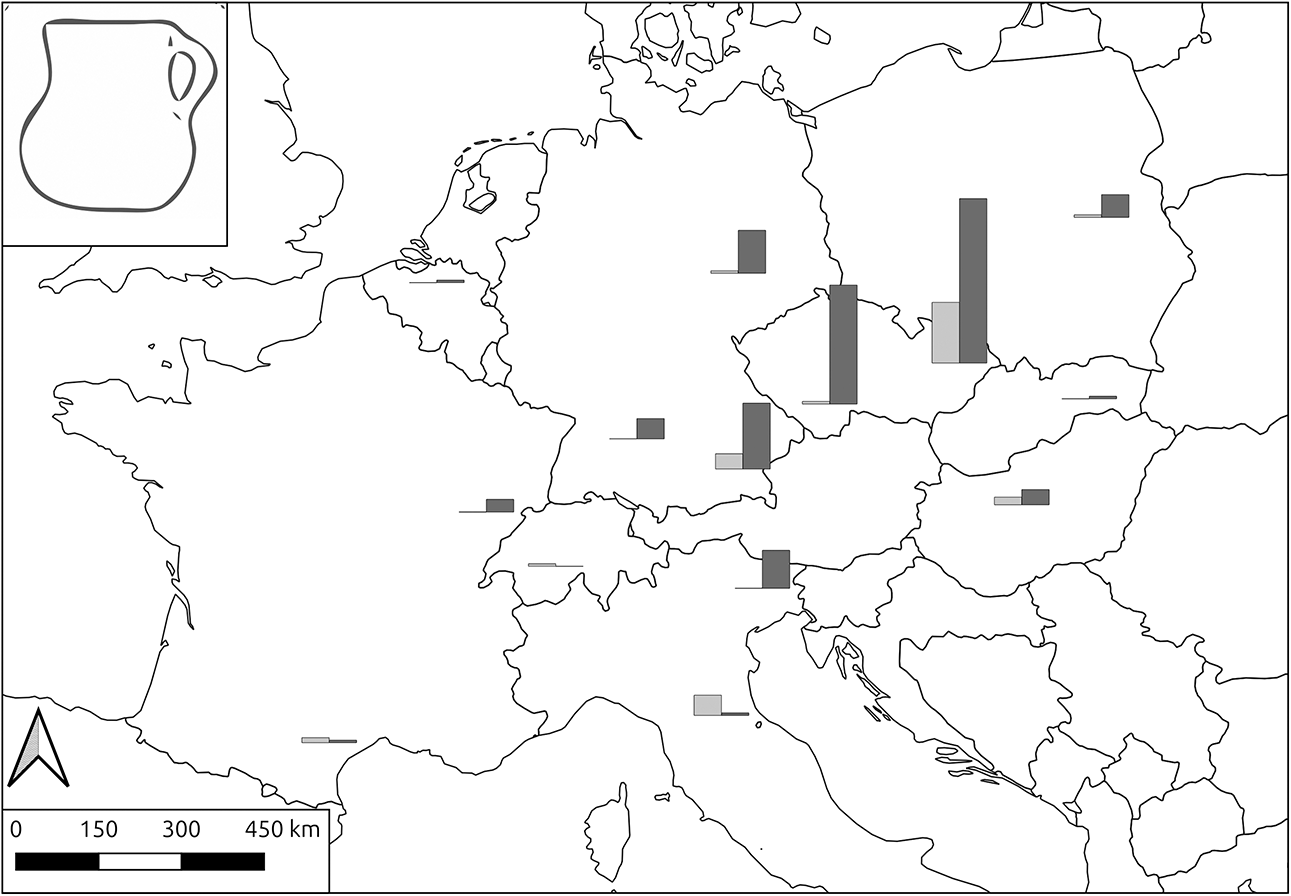
As interesting, though more modest in size, is Brodek in Czechia (Reference GibsonGašpar et al. 2023; Figure 13). Another recent discovery, this site has yielded a set of four grave-like pits organised in a rectangular pattern, coupled with two parallel rows of nine postholes. None of the four pits contained human remains, but each was associated with a specific range of material culture reminiscent of grave goods, for instance arrowheads, stone bracers, and ornaments in structure 1, tools for metalworking (cushion stones) in structure 2, and many pottery types in all of them. Several of these pots presented incised decoration, filled by a white inlay. This decorative trait, widely observed across the area, is a post-firing treatment which was obtained using a range of raw materials including kaolin, bone, or gypsum. Across the Morava river valley catchment, this technology presents some micro-regional variation, alluding to the existence of local pottery traditions (Reference WentinkVšianský et al. 2014). At Brodek, provenance study of this white inlay indicates a mixture of local and non-local sources, with up to a quarter of the assemblages deriving from places 15 to 55 km away, thus suggesting that the site could have attracted communities originating from a variety of places.
Plan of Petit-Chasseur I necropolis.
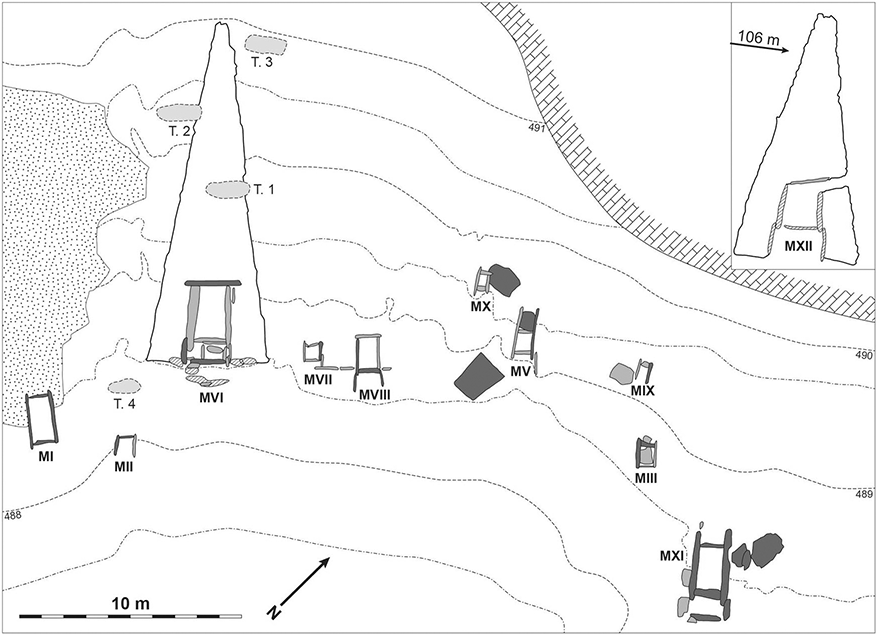
Plan of Brodek.

While the movement of individuals across the landscape, for instance to potential ritual gathering sites, is interesting in its own right, undeniably the focus over the past ten years has been on relocation and migration. Pioneering work by Price and colleagues on central European sites suggested a relatively high level of mobility, but no clear patterning in terms of gender, though there was a slightly higher proportion of women who had undertaken relocation over the course of their lifetimes (Reference Priego and QueroPrice et al. 1998, Reference Price, Grupe and Schröter2004). Further studies have confirmed these results, with changing levels of mobility and a trend towards preferential movement of women over men. Joint aDNA and isotopic sampling of thirty-four individuals in the cemeteries of Alburg and Irlbach have identified eight non-locals, six of them women (Reference Soriano, Herrero-Corral, Garrido-Pena and MajóSjögren et al. 2020). This last trait is reinforced by a high level of mitochondrial DNA diversity, contrasting with homogeneity for the Y-chromosome. Noticeably, extensive amounts of first-degree relationships between individuals were recorded on both sites, pointing to the importance of kinship ties in the making of funerary communities. Similar results in terms of high mtDNA variation were also observed for several sites in the Lech valley, in south-western Germany (Reference Kolář, Macek, Tkáč, Novák and AbrahamKnipper et al. 2017; Reference Monge Soares, Alves and FriadeMittnik et al. 2019). The number of outliers identified by strontium analyses for this region is not straightforward, as only one woman presents an isotopic signature markedly different from the local baseline, with a further two women and one man less certain. Arguably, strontium analysis only provides a minimum number of individuals flagged as non-locals (as individuals moving within the same bioavailable strontium area would not be identified). It is essential, however, to stress the uncertainty inherent in these analytical techniques, especially in contrast with the simplicity of interpretative models stressing the role of post-marital residency rules (see Section 4).
At the population level, Olalde and colleagues’ study (Reference Olalde, Mallick and Patterson2018) highlighted the presence of steppe ancestry amongst central European Bell Beaker individuals, and the lack of discernible ancestry out of Iberia, challenging earlier results based on uniparental makers (Reference Brandt, Haak and AdlerBrandt et al. 2013; Reference Brotherton, Haak and TempletonBrotherton et al. 2013). More recent work has systematically pointed to a higher level of Neolithic farming ancestry in Bell Beaker samples than in Corded Ware ones, suggesting admixture with local groups (e.g., Reference Monge Soares, Alves and FriadeMittnik et al. 2019; Reference Parker PearsonPapac et al. 2021). Papac and collaborators also reported differences in Y-chromosome variation and lineages between the Corded Ware, central European Bell Beaker, and British Bell Beaker samples, highlighting the demographic diversity of the phenomenon (Reference Parker PearsonPapac et al. 2021).
As in the Netherlands, the Bell Beaker Phenomenon in central Europe is more than a mere temporal continuity of Corded Ware traits, with a complex population history, and new trends in both settlement pattern and funerary practices. However, especially regarding the latter, it remains clear that the vocabulary and framework established during the Corded Ware period constituted a key reference for Bell Beaker practices.
3.5 Western Mediterranean Basin
The cultural landscape of the Western Mediterranean basin, excluding the Iberian Peninsula previously covered, is marked, on the one hand, by a variety of local ceramic traditions, and on the other by widely shared funerary practices such as collective burials, though with some regional diversity. The Late Neolithic of southern France presents a dazzlingly complex terminology, mirroring blends of typological traits, technological traditions, and likely small-scale population movements (e.g., Reference Pétrequin, Cassen and ErreraPétrequin 1993; Reference CauliezCauliez 2011). At the same time, the funerary landscape is dominated by collective burials set in multiple contexts, with a noticeably high frequency of cases of interpersonal violence (Reference Haak, Lazaridis and PattersonGuilaine & Zammit 2001). Other expressions of violence, such as the diversity and quantity of arrowheads (Reference Rivollat, Mendisco and PemongeRemicourt et al. 2018), and of masculinity (as seen in ornaments: Reference BargeBarge 1982; see also Reference Martial, Médard, Cayol, Anderson, Cheval and DurandMaréchal et al. 1998), all contribute to an ambiance of increased intra-group social tension and competition. Though, to a lesser extent, the Italian sequence also exhibits a relative diversity of cultural traditions, the most notable feature is the rise of martial ideologies, especially in the funerary realm (Reference Dorado Alejos, Mederos Martín and González QuinteroDolfini 2022). Lastly, it is worth noting that the western Mediterranean basin witnesses the onset of copper metallurgy during the late 4th and early 3rd millennium calBC, with traces of mining and smelting at several locations, and extensive consumption evidenced in both domestic and funerary contexts (e.g., Reference Ambert and CarozzaAmbert & Carozza 1996; Reference DolfiniDolfini 2014).
The extent and nature of Bell Beaker expressions vary greatly across the Western Mediterranean basin, from a high density of sites across southern France to patches in the Balearic Islands, Sardinia, Sicily, and the Tyrrhenian coast, and near-complete absence in Corsica and the Adriatic basin. As in the preceding period, collective burials of varying size and architecture (e.g., dolmens, hypogea, small caves) remain the norm, with several instances of reuse of existing sites during the Bell Beaker period (e.g., Reference Lemercier, Tchérémissinoff, Salanova and TchérémissinoffLemercier & Tchéréminisoff 2011; Reference Mittnik, Massy and KnipperMelis 2019). Individual burials remain rare, for instance a newborn burial at La Grotte-Murée (Reference Courtin, Bouville, Lemercier, Salanova and TchérémissinoffCourtin et al. 2011) and the site of La Fare. The latter grave, dated to the first centuries of the Bell Beaker chronology (c. 2450–2280 calBC), belongs to a man, buried with a beaker, several other pots, a likely locally produced copper dagger. It was found in the middle of a settlement otherwise characterised by material culture belonging to the local Rhône-Ouvèze ceramic group. All evidence suggests that this could correspond to the burial of a ‘foreigner’ within a local environment (Reference Lemercier, Tchérémissinoff, Salanova and TchérémissinoffLemercier et al. 2011). This interpretation seems to be confirmed by the high proportion of steppe ancestry identified for this individual (c. 58 per cent: Reference Olalde, Mallick and PattersonOlalde et al. 2018; Reference Pétrequin and LemonnierPatterson et al. 2021). Across most of Italy, funerary Bell Beaker finds remain exceptional, with a single sherd in over a hundred tombs in central Italy (Reference DolfiniDolfini 2019), a potential barrow associated with domestic remains at Via Bruschi (Reference Schuhmacher, Cardoso and BanerjeeSarti et al. 2012), and the deposition of human remains with Bell Beaker pottery and a wristguard at Fosso Connochio (Dolfini 2009).
Settlements are relatively well documented in southern France and northern Italy, far less so in other areas. A recurring feature in southern France, as just noted for La Fare, is the presence of Bell Beaker finds in sites otherwise characterised by the material culture of local traditions, leading to a distinction between so-called Bell Beaker sites and sites with bell beakers, echoing the situation for the Iberian Peninsula (Reference LevinLemercier et al. 2019). Settlements are found in all sorts of topographical settings, but with some regional preferences (e.g., hilltops in western Provence). As in other parts of the domain, architectural features and structures remain rare (Reference LevinLemercier et al. 2019). Northern Italy presents a relative concentration of domestic sites. Regional diversity is the rule, with caves, rock shelters, and marshlands all favoured, as well as alluvial plains, sometimes with clusters of sites in specific river valleys (Reference Baioni, Martini, Nicolis, Poggiani Keller, Sarti and GibsonBaioni et al. 2019).
While strontium and ancient DNA sampling remain very limited in comparison to other parts of Europe, the inception of steppe ancestry seems to be later here than in central and northern Europe (Reference Brunel, Bennett and CardinBrunel et al. 2020), although modelling of the few available genomic sequences suggests this event dates to c. 2600–2500 calBC in southern France, contemporary with the earliest local Bell Beaker phase (Reference Shennan and HodderSeguin-Orlando et al. 2021). It is worth pointing out the occurrence, at the same time, of individuals without any traces of steppe ancestry. The onset of steppe ancestry in the Balearic Islands, probably from Iberia, dates to 2400 calBC, in Sicily to 2200 calBC with the same likely source, and to the 2nd mill calBC in Sardinia (Reference Fernández-Crespo, Ordoño, Barandiarán, Andrés and SchultingFernandes et al. 2020). For Italy, the few existing samples indicate the presence of steppe ancestry by the last centuries of the 3rd millennium calBC, though this genomic signature is not confined to individuals from Bell Beaker cultural contexts (Reference Seguin-Orlando, Donat and Der SarkissianSaupe et al. 2021).
Although areas such as southern France and northern Italy are certainly rich in Bell Beaker finds and sites, it is hard not to conclude that the Western Mediterranean basin sits in a peripheral position, either physically, culturally, or genetically, compared to the rest of the Bell Beaker Phenomenon.
3.6 Britain and Ireland
The cultural, social, and economic picture in Britain for the first half of the 3rd millennium BC is best described in terms of mobile, yet inward-looking processes, though with instances of interactions across the Irish Sea. While famous sites such as Skara Brae testify to the architectural richness in Scotland and nearby islands, settlements remain rare and are confined to pit scatters across most of England (Reference BradleyBradley 2019: 88–149). Together with the scarcity of cereals in archaeobotanical assemblages, several scholars see this period as one dominated by pastoralism and an overall low population density, although the local validity of this interpretation remains debated (Reference Sweeney, Harrison and Vander LindenStevens & Fuller 2012; Reference BishopBishop 2015). Not much information is available on the funerary world either, aside from a few cremation cemeteries (e.g., Reference Patterson, Isakov and BoothParker Pearson et al. 2009; Reference Nocete, Vargas, Schuhmacher, Banerjee and DindorfNoble et al. 2017). By far the most significant traits are, across most of the island, the occurrence of the Grooved Ware ceramic tradition, and the emphasis upon monuments and monumental landscapes (e.g., Reference Towers, Montgomery, Evans, Jay and ParkerThomas 2010). These last two elements also occur in parts of Ireland, though its cultural trajectory remains markedly different in several respects such as the continuing importance of megalithic architecture and other funerary practices (Reference BradleyBradley 2019: 88–149). Noticeably, the high level of interaction across the Irish Sea is not mirrored by the movement of goods, ideas, or people across the Channel and the North Sea, or at least nothing which left any conspicuous traces in the archaeological record; Britain seems isolated from the many changes happening on the contemporary continent (Reference Woodward, Hunter and BukachWilkin & Vander Linden 2015).
The situation radically changes in the 25th century BC with the arrival of the Bell Beaker Phenomenon and transformations in many facets of the archaeological record. Burial practices offer the most striking evidence of this upheaval; the stereotypical image of the individual crouched burial placed under a barrow holds a certain truth, as hundreds of such sites feature prominently across British landscapes. However, as recently discussed by Reference Bloxam and PearsonBloxam and Parker Pearson (2022), other practices such as disarticulation and cremation repeatedly occur before, during, and after the Bell Beaker phase across all of the British regions. Gender-based rules regarding the disposal of the body and of grave goods are recorded across Britain although with an extensive degree of regional variation (Reference Sherratt, Waldren and KennardShepherd 2012). Beakers, arrowheads, varied ornaments, and wristguards feature prominently in funerary assemblages, sometimes in exceptional quantities as in the case of the Amesbury Archer (Reference Fokkens and NicolisFitzpatrick 2013). Arguably, these traits present clear antecedents in continental Europe, but, at the same time and as seems to be the norm during the Bell Beaker period, they all reflect extensive local reinterpretation by British communities. This process is evident in ceramic decoration, and in particular after 2300 calBC, the so-called fission horizon is marked by a multiplicity of local styles (Reference Needham, Lawson and WoodwardNeedham 2005; Reference Parker Pearson, Chamberlain and JayParker Pearson et al. 2019). Stone wristguards tell a similar tale. Morphologically and technologically, these compare well with their continental prototypes, but, in terms of raw material, it is noticeable that several examples share common lithology with Neolithic axes, as both traditions sourced their raw material from Langdale volcanic stuff (Reference Wright, Waterman and PeateWoodward et al. 2006, Reference Zilhão, Monge Soares and Gonçalves2011). The use of such a specific local raw material indicates a high level of familiarity with available lithological sources by the makers, and possibly users, of these objects.
The key area of British Bell Beaker cultural exceptionalism is monuments. Henges as well as stone and timber circles were already central to the ritual world of pre-Beaker populations, with extensive evidence of feasting and movement of animals to such sites (e.g., Reference Marcigny, Carpentier and GhesquièreMadgwick et al. 2019). Ongoing Bell Beaker activity on several monumental sites demonstrates continuity between both periods. Examples largely drawn from south-western Britain include a deposition phase at the mega-henge of Mount Pleasant (Reference Grimm, Revilla and BergerGreaney et al. 2020), the building of Silbury Hill, a solid mound of turf and chalk (Reference Bayliss, Mc Avoy and WhittleBayliss et al. 2007) in the Avebury complex, and a new phase of construction at Stonehenge (Reference Darvill, Marshall, Parker Pearson and WainwrightDarvill et al. 2009). The latter also acts as a visual point of reference in the landscape, with several barrows, such as that of the Amesbury Archer, erected on the surrounding horizon line or in its near vicinity during the Bell Beaker Period and the succeeding Early Bronze Age (e.g., Reference Nekkal and MikdadNeedham et al. 2010).
By contrast with the architectural extravaganza of monuments, data on settlements and particularly houses remain scanty. Noticeably, this evidential state of affairs has hardly changed even after recent and extensive commercial work, suggesting that we are dealing here with a real pattern and not an artefact of modern rescue archaeology (Reference Gibson and GibsonGibson 2019a). The few known house buildings, all dry stone-walled houses, come from the Hebridean islands, while across Britain, settlements take the form of few features such as pits or stakeholes, and/or surface materials (Reference Goldberg, Günther, Rosenberg and JakobssonGibson 2019b). Available zooarchaeological remains point to an apparent importance of cattle, a pattern also suggested by extensive cattle deposits in funerary contexts in Irthlingborough and Gayhurst (Reference Turek and GibsonTowers et al. 2010). Despite this paucity of settlements, the Bell Beaker period, especially its later phases, seems linked to a new uptick in agricultural intensification, which was to last into the Middle Bronze Age (Reference Sweeney, Harrison and Vander LindenStevens & Fuller 2012).
Britain has one of the most extensive strontium and ancient DNA samples, giving us a unique window into the complexity of mobility patterns, and the vagaries of aligning the results of both techniques. Strontium analyses conducted across the island point to a minimal proportion of c. 30 per cent of non-local individuals, a relatively stable figure across time. Regional variation occurs but is likely to be related to the resolution of the technique and local underlying geology rather than to past divergences in human behaviour (Reference Parker Pearson, Chamberlain and JayParker Pearson et al. 2019; Figure 15). Examples of long-distance movements, such as the Amesbury Archer, however, are very rare. This last result contrasts with those gained from ancient DNA, which indicates a large-scale migration from the continent associated with the onset of the Bell Beaker Phenomenon (Reference Olalde, Mallick and PattersonOlalde et al. 2018). While the existence of such migration is undeniable, assessing its structure is more difficult. Reference Olalde, Mallick and PattersonOlalde and colleagues (2018) originally suggested a population turnover of more than 90 per cent by the Middle Bronze Age. Further work demonstrates that we need to go beyond this astounding – and frankly controversial – number. For instance, the genetic make-up of the incoming population was fairly complex, with the Amesbury Archer for instance presenting a low level of steppe ancestry (Reference Pétrequin and LemonnierPatterson et al. 2021). Careful examination also indicates a higher proportion of individuals with local Neolithic ancestry during the closing centuries of the 3rd millennium calBC (Reference Booth, Brück, Brace and BarnesBooth et al. 2021; Figure 16). In this sense, the mismatch between strontium and ancient DNA does not lie so much in the fact that the former can only identify so-called first-generation migrants, a point often stressed by strong advocates of aDNA research (e.g., Reference Armit and ReichArmit and Reich 2021). It rather seems that, after the initial population movement, frequent but spatially limited mobility took place within Britain, including through post-marital residency rules. The associated genetic shuffling must have contributed to the overall demographic structure of this population, although the details remain unclear (see also Reference Booth, Brück, Brace and BarnesBooth et al. 2021). On that note, it is noteworthy that ancient DNA has also proven long suspected family ties between individuals buried under the same mound or barrow, although the emerging picture is far from clearly patterned (Reference Booth, Brück, Brace and BarnesBooth et al. 2021).
Sr data for UK.
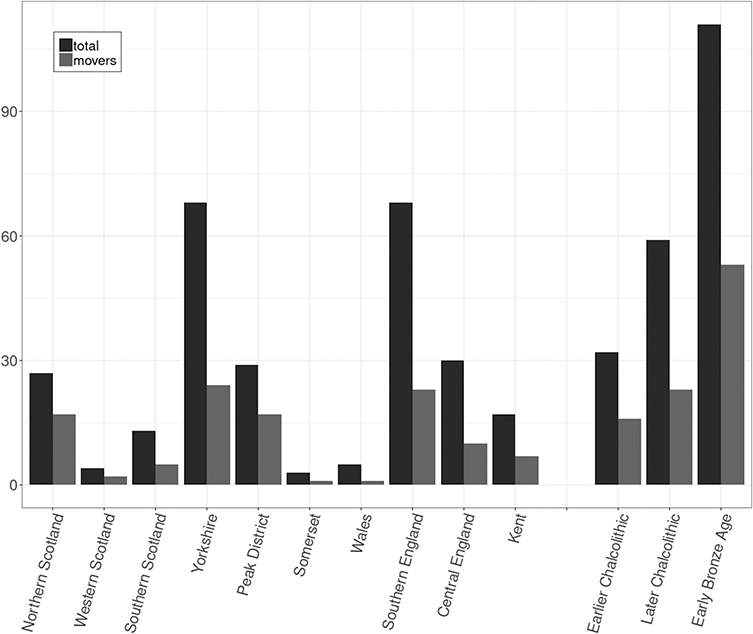
Changing proportion of EEF ancestry.
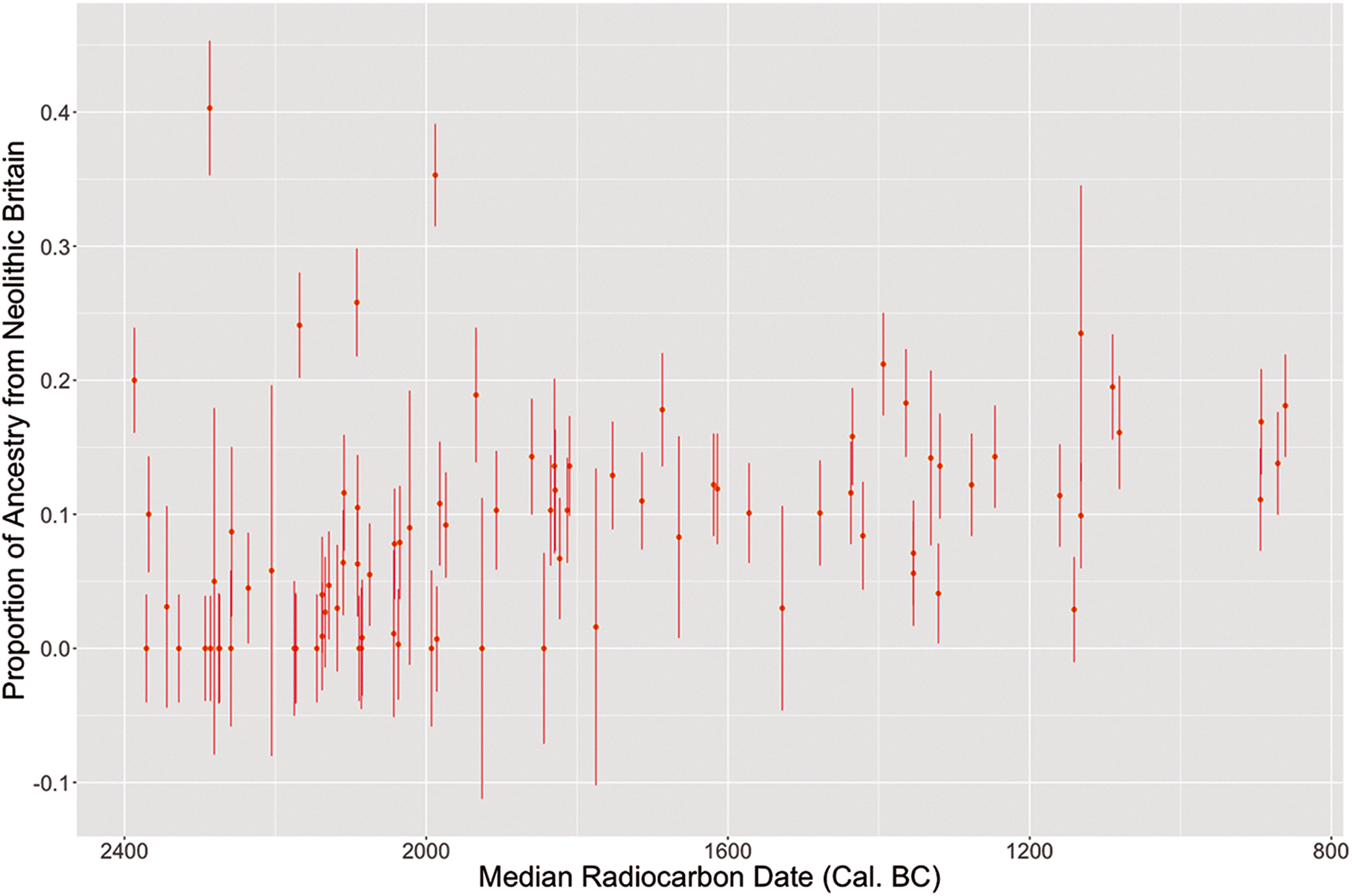
Although Britain and Ireland are tackled here together given their geographical proximity, their cultural trajectory and identity within the Bell Beaker Phenomenon are far from identical (Reference CarlinCarlin 2018). Only two aspects of the Irish manifestation of the BBP echo the British situation: firstly, poorly known domestic architecture, with the settlement record only yielding pits, artefacts spreads, and very few postholes and stakeholes; secondly, presence of Bell Beaker material culture on monuments such as timber circles. The funerary domain sees the reuse of older monumental tombs, and the development of a new megalithic architectural type, wedge tombs, which contain a combination of cremation, collective burials, and possible successive individual burials (Reference CarlinCarlin 2018). Another key trait of the Irish Bell Beaker sequence is copper metallurgy, with the founding of and continuous activity at the Ross Island copper mine (Reference Olalde, Brace and AllentoftO’Brien 2004). This site supplied the majority of copper in Ireland and Britain for several centuries (e.g., Reference Bray and PollardBray & Pollard 2012), with exports also known along the entire Atlantic coast (e.g., Reference Gandois, Rousseau and GehresGandois et al. 2019). Lastly, although sampling remains limited to a handful of Early Bronze Age individuals, steppe ancestry was introduced to Ireland during the Bell Beaker period (Reference Cassidy, Martiniano and MurphyCassidy et al. 2016).
Ireland thus remains in a somewhat peripheral position within the Bell Beaker sphere, and this is in spite of extensive economic contacts as indicated by the widespread occurrence of Ross Island copper. Britain, for its part, clearly appears as a Bell Beaker–rich area, marked by a profound transformation of the funerary world, mirrored by extensive reshaping of the genomic landscape. At the same time, Britain’s trajectory is by no means a mere extension of nearby north-western continental Europe, with continuity in monumental occupation and construction, and local reinterpretation of many traits.
3.7 Northern Europe
The last region considered in this short overview is northern Europe, where the Bell Beaker Phenomenon succeeds regional groups of the Corded Ware Complex. Some of the key elements noted in the previous pages, such as individual burials or the introduction of steppe ancestry, are well in place by the time Bell Beaker traits enter the local archaeological record. It is also worth remembering that, especially when compared to the rest of the BBP, the northernmost Bell Beaker groups start late in the sequence, that is, no earlier than 2350 calBC, if not later.
The highest regional density of finds and sites comes from Jutland and concerns the domestic realm. For the Late Neolithic I (2350–1950 calBC), Sarauw mentions no less than 340 houses from 160 sites, of which 100 houses in 48 sites are identified as Bell Beaker (Reference Sarti, Fenu, Leonini, Martini, Perusin, Borgna and Müller CelkaSarauw 2019). The majority of those present a sunken end which, unlike Medieval examples, was unlikely to have been used as a byre but was rather dedicated to other functions such as grain storage or processing (Reference SolheimSimonsen 2018). From a mortuary point of view, there is clear continuity with the dominant individual burial rite. Interestingly, and in contrast with other European regions, bell beakers are absent from funerary inventories. However, numerous graves, whose distribution overlaps with that of Bell Beaker settlements, have yielded daggers and arrowheads, possibly related to an ideological influence from the rest of the Bell Beaker domain (Reference Sarauw and GibsonSarauw 2007). Further north in Norway, several finds, including at least one beaker but also several barbed-and-tanged arrowheads and wristguards, point to either a direct Bell Beaker presence or at least some interaction with Jutland communities (e.g., Reference Price, Knipper, Grupe and SmrckaPrescott 2020). This was a process unfolding against a background of profound socioeconomic transformation marked by the full transition to agriculture and a related demographic explosion (Reference Spatzier and BertemesSolheim 2021; Figure 17).
SPDs of directly dated cereal samples for Norway.
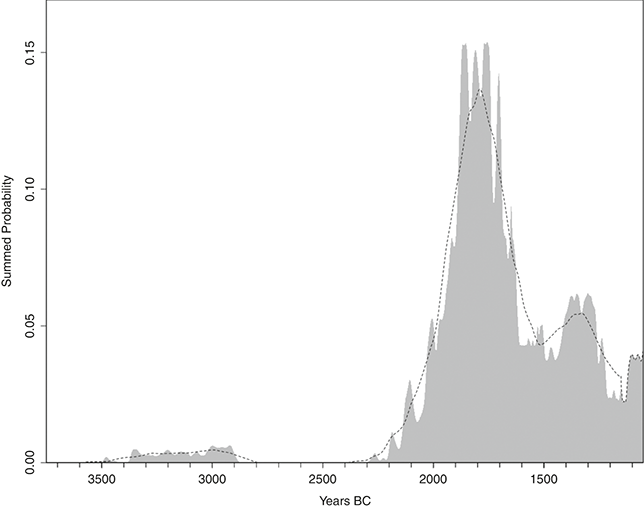
Direct information on Bell Beaker mobility and genomic ancestry for this region remains limited. Steppe ancestry was introduced parallel to the Corded Ware Complex, an event which profoundly reshaped the genomic diversity of the region (Reference Evans, Chenery and FitzpatrickEgfjord et al. 2021). Results only available as a preprint at the time of writing suggest further fine-grained changes in the ancestry profile of Danish individuals between the Late Neolithic and the Early Bronze Age, thus postdating the local Bell Beaker sequence (Allentoft et al. 2024). Likewise, a Neolithic–Bronze Age transect of strontium analysis of human samples points to a continuous low proportion of outliers across all Neolithic periods, with profound changes only occurring from 1600 calBC onwards (Reference Frieman, Teather and MorganFrei et al. 2019).
Although clearly set in a geographical and cultural periphery, the dynamics of this region encapsulate the kaleidoscopic variation which has accompanied this journey across the Bell Beaker Phenomenon. The presence of Bell Beaker material culture is itself subject to tremendous variation as, for instance, in cases where beakers are absent from the funerary sphere but are dominant in the domestic one. Even in such cases a martial dimension can be observed in mortuary practices, another recurrent trait, though reflecting a myriad of local versions and reinterpretations. The question remains: Is there any harmony to be found within this difference? The following section answers with a resounding yes, though to get there a detour via population ecology is required.
4 The Emergence of a Metapopulation?
Imagine an idealised, simplistic landscape composed of spatially discrete habitats, some unoccupied, some hosting a single population. Assume also that the demographic history of each group is relatively independent (i.e., prone to random fluctuations), although all populations interact together to some extent, for instance, through the movement of individuals. In such a model, while each group follows its own trajectory and thus eventually goes extinct, the entire set of populations considered together, referred to as a metapopulation, will remain stable thanks to the continuous flow of individuals between patches. For example, a given group may grow and repopulate an abandoned patch or bring in new individuals to a population on the brink of collapse (e.g., Reference Lévi-StraussLevins 1969; Reference HarrisonHanski & Ovaskainen 2003).
diagrammatic illustration of metapopulation models. In this version, all patches are populated and interconnected.
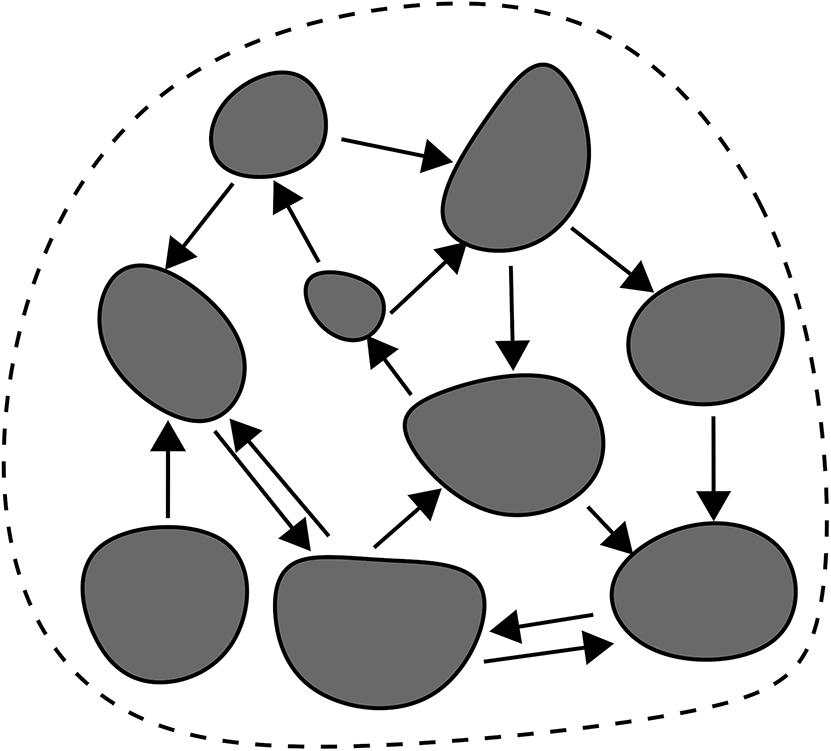
This is known in population ecology as a metapopulation model and was formalised in 1969 by Richard Levins to originally account for insect pests in agricultural fields (Reference Lévi-StraussLevins 1969). Since then, this model has been applied to numerous ecological contexts and refined in several ways (e.g., Reference Papac, Ernée and DobešOvaskainen & Saastamoinen 2018). One improvement particularly relevant for our purpose is the addition of habitat properties. In its original formulation, the model assumes that the landscape is homogeneous, that is, that all patches are qualitatively equal. In such cases, the degree of connectivity between patches is dependent upon the distance between them. Obviously, in real life this assumption is rarely, if ever, met. More recent versions of the models therefore consider habitat fragmentation, so that each habitat has its own properties, which in turn impact the behaviour and eventual demographic history of the population inhabiting it (e.g., Reference HarrisonHanski & Ovaikanen 2003).
One may wonder why this digression, and what a model drawn from theoretical population ecology can contribute to our goal in this volume. The argument developed in this section is that the Bell Beaker Phenomenon constitutes a metapopulation (Figure 19), a structure not only unprecedented in Later European prehistory but which also constitutes the framework for the key dynamics of the succeeding Bronze Age.
Sjögren and colleagues’ model of social institutions and associated mobility patterns for the Bell Beaker Phenomenon.
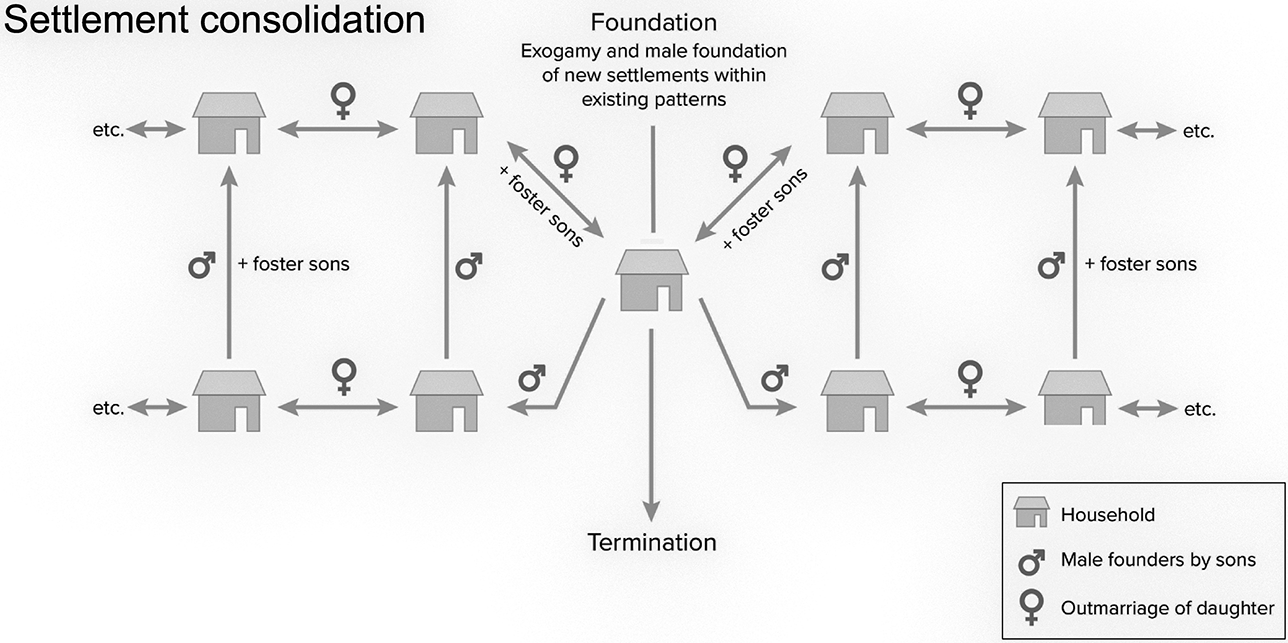
The suggested identity rests upon two points. Firstly, the spatially discontinuous patterning of habitats in the theoretical model matches the patchwork of heterogeneous regional Bell Beaker groups. As seen in Section 2, one of the key traits of this spatial structure lies in its latitudinal spread, and thus the multiplicity of environments and landscapes occupied by Bell Beaker communities. Further, these diverse patches do not constitute a continuous territory, with the nature of the blank areas in-between having also been explored in Section 2. Secondly, and as a correlate of the first point, just as the theoretical ecological model relies upon the movement of individuals between patches to ensure the long-term stability of the overall metapopulation, our review of the evidence has shown that all regions exhibit varying levels of human mobility. Stressing the role of migration and post-marital rules is hardly original in view of the recent data, but the argument here is to generalise the suggestion that connectivity is instrumental to both the creation and the maintenance of the Bell Beaker Phenomenon. It is this process which marks a qualitative difference between pre- and post-Bell Beaker in the general trajectory of Later European Prehistory, an essential point which the concept of metapopulation helps to identify and further explore.
Yet, if we keep the description at such a general level, would it not be simpler and possibly more accurate to speak of the Bell Beaker Phenomenon as a network, instead of resorting to such a specific ecological model? Formally speaking, a metapopulation constitutes a network, where each patch is a node, and where the corridors connecting the patches correspond to the vertices. However, while a metapopulation is always a network, the reverse proposition is not necessarily true as the assumptions associated with each diverge profoundly. Network analysis has gained a certain level of attention in archaeological thought (e.g., Reference Collar, Coward, Brughmans and MillsCollar et al. 2015) and has been used to describe sets of relationships between individual sites in a variety of settings, including Bell Beaker ones (e.g., Reference Kleijne, Drenth and GibsonKleijne 2019; Reference CaraglioCaraglio 2020). Drawing such a network relies upon selecting one or several traits to measure similarity between nodes, and while pottery typology is often favoured, other items have also been taken into consideration (e.g., Reference Bourgeois and KroonBourgeois & Kroon 2017). The key difference between network analysis and the metapopulation model lies in the nature of the vertices. Network analysis can be used to conceptualise and visualise the effects of various processes (e.g., trade, interaction), with the assumption that higher similarity between nodes reflects increased levels of contact (Reference Collar, Coward, Brughmans and MillsCollar et al. 2015). By contrast, in a metapopulation, the movement of individuals is the sole mechanism linking patches and thus a property of the system more than a mere attribute. In this sense, if any archaeological culture could theoretically be described and analysed as a network, the same does not hold in metapopulation terms.
The possible identification of the Bell Beaker Phenomenon as a metapopulation raises the question of the origins of this particular structure. Do pre-existing interaction networks explain the Bell Beaker Phenomenon, and, if not, how do we qualify the different state of affairs pertaining in the first and second halves of the 3rd millennium calBC? As seen in Section 3, lots of things and lots of people are moving around Europe during the centuries, leading up to the Bell Beaker Phenomenon: Grooved Ware and monuments across Britain and the Irish Sea, amber and ivory flowing – albeit in likely small quantities – in Iberia, Grand-Pressigny daggers being exchanged along stretches of the French Atlantic coast, and migrations within the Corded Ware Complex. And yet, the overall impression is one of fragmentation given the general small scale of these networks, with the notable exception of the Corded Ware Complex, although how this migratory flow translates into material homogeneity is open to question (Reference FurholtFurholt 2014). This sum of limited connections is supported by a variety of artefacts, raw materials, and humans so that, eventually, it is impossible to reconstruct a cohesive mesh. Further, when compared to the Bell Beaker distribution, this mesh would also present several gaps, such as the apparent lack of cross-Channel contacts. During the Bell Beaker Phenomenon, artefacts are unsurprisingly also being exchanged, though the scale and nature of this process are open to debate. Archaeometric programmes aimed at testing the prestige hypothesis have repeatedly shown that, while there are undeniable instances of bell beakers being traded, these remain a minority. Thus, transfer of knowledge, often leading to local reinterpretation, is a more compelling explanation for their widespread distribution, one that seems to be valid for other components of the Bell Beaker package, as exemplified by British stone bracers for instance.
Taking into consideration material culture only, there are thus clear indications that human mobility, as the vector for such suggested knowledge and technological transfer, plays a key role in the making of the Bell Beaker Phenomenon. Until recently, such movement was generally envisaged as the being due to the travels of craftspeople (e.g., Reference Reimer, Austin and BardPrieto-Martinez & Salanova 2009), in some ways echoing Childe’s old idea of wandering smiths. Over the past two decades, such a limited view of human mobility has been radically transformed by the growing body of strontium and especially ancient DNA research. However, there is a wide and frightening gulf between, on the one hand, the technical sophistication of such studies and, on the other, the shallowness of the theoretical discourse on mobility in archaeology. Numerous studies have begun to fill this problematic gap, ranging from critical assessment of the perceived naivety of ancient DNA scholars to a more proactive attitude that seeks to build appropriate concepts. In regard to the latter, several archaeologists have, as so often is the case in times of epistemological crisis in the discipline, fallen back on ethnographic inspiration or, in a more innovative move, on comparative linguistic data. Arguably, the most articulate version of this last trend can be seen in a contribution by Reference Soriano, Herrero-Corral, Garrido-Pena and MajóSjögren and colleagues (2020). Combining isotopic and genomic data from two Austrian Bell Beaker cemeteries with information gained from comparative Indo-European linguistics, they offer a model of social institution relying upon three distinct mechanisms of human mobility: foundation of new settlements by male individuals, female patrilocality (i.e., relocation of married women in the settlement of their husbands), and fosterage of younger boys in their mother’s family (Figure 19). This model, however, presents some issues. Without advocating a strict obedience to Popper’s epistemology, it must be pointed out that it is empirically difficult to test and thus to falsify the presuppositions. Indeed, the resolution of strontium isotopes implies that a lot of movement is likely to go unnoticed. More crucially, the putative identification of men as outliers would be ambiguous as these could either disprove or prove the model (i.e., matrilocality vs. men as founders). The latter would, ideally, require confirmation by genetic studies (i.e., suggested genetic founders being isotopic outliers as well), a requirement that is, however, not met in the original study. Without even considering that human systems are not formal but present varying degrees of agency, one can see how the level of precision of this model constitutes in equal measures its main appeal and weakness, and thus why its range of application to other well-documented situations is limited (see Reference Booth, Brück, Brace and BarnesBooth et al. 2021). The problem lies in its attempt to strictly map onto a given analogy – the reconstructed Indo-European kinship system– on the assumption of implicit historical continuity. More fundamentally, and back to our interest in metapopulations, such precision fails to account for a more fundamental property of human mobility patterns during the Bell Beaker Phenomenon.
Back in 2007, in order to account for the then newly emerging strontium data, I revisited Claude Lévi-Strauss’ distinction between restricted and generalised marital exchange systems (Reference Lillios, Waterman, Artz and JospehsLévi-Strauss 1949; Reference Vander LindenVander Linden 2007). In a restricted system, the transfer of one individual from one community to another one is paralleled by a reciprocal movement, so that only a couple or very limited number of communities are involved. This system is very common and possibly accounts for a large proportion of the proliferation of archaeological case studies documenting outliers. In contrast, in a generalised system reciprocity is delayed and not obligatorily fulfilled by the original receiving group, thus implying a larger range of communities arranged in chains. In true structuralist fashion, individual groups matter less in such a system than its totality. A huge theoretical leap – one I am not willing to consider here – is required to equate Lévi-Strauss’ generalised system and metapopulation, but both models encapsulate in different terms how much the proteiform, continuous, and somewhat structured flow of individuals between all patches constitutes the hallmark of the Bell Beaker Phenomenon.
All in all, the suggested identity of a metapopulation with the Bell Beaker Phenomenon accommodates both its unique geographic and material patterning, and the growing body of evidence regarding the many forms of human mobility in both past and present. Although, in contrast to the theoretical terms of the model, given that none of the local patches ends up abandoned through extinction of the local population, the new primary role of human connectivity also explains how the overall stability of the entire system can occur despite each patch retaining its individual trajectory (i.e., each local sequence presents its own uniqueness). It is also noteworthy that this structure, set up during the Bell Beaker period, remains active in the following centuries as human dispersals remain documented through ever-changing levels of genomic ancestry, though admittedly with varying degrees of spatial and temporal intensity. One may also wonder to what extent material connectivity, with flows of copper, tin, and bronze artefacts, does not take over as key parameter in the maintenance of this structure.
This being said, the presence of a Bell Beaker metapopulation does not explain how a set of heterogeneous and loosely connected patches ended up becoming such an integrated structure or, in simple terms: What is the driving force behind the constitution of the Bell Beaker Phenomenon in the first instance? Though we have already seen that the pre-existing networks cannot be considered a strong explanatory factor, the historiography offers us another list of likely candidates. Could it be linked to a common economy and/or a technological drive? Or social institutions and, especially, the rise of élites and social hierarchy? Should we consider a new, persuasive ideology? Or, simply, the dispersal of one or several communities, characterised and thus traceable by their genomic profile? The following paragraphs consider each of these questions separately.
The idea of common economy or shared technological breakthrough stresses the possibility of a causal factor, with cascading repercussions felt across the entirety of the social system. For Childe, this role was played by copper metallurgy. Fast-forward a century later, this proposition does not hold much ground, as copper metallurgy has a millennia-long pedigree, with its presence being demonstrated in numerous local groups several centuries prior to the onset of the Bell Beaker Phenomenon. Likewise, while copper circulation plays a key role in linking several Bell Beaker nodes, we have seen it does not constitute a potent force in the trajectory of the overall process. When considering subsistence techniques and keeping in mind evidential shortcomings, dramatic changes at a local scale do sometimes occur, but the overall picture remains one of great diversity, parallel to the latitudinal and environmental variation. Much has also been written on the potential importance of the ‘secondary products revolution’ (e.g., Reference Garrido-Pena and GibsonGarrido Pena 1997), yet the implementation of this concept remains empirically challenging.
Ideally, one would expect to identify not only clear technological factors but also a linear response in social terms, in the form of increased hierarchy or complexity, with elites controlling resources and access to the new products. If the lack of identifiable economic novelties jeopardises such a simplistic model, one should not, however, discard social complexity as an explanatory variable for the Bell Beaker Phenomenon. After all, the identification of the Bell Beaker package with prestige being expressed and circulated amongst the nouveaux riches of the 3rd millennium calBC has played a dominant historiographic role, despite a conspicuous lack of defined independent causes. Discrepancies in the quantity and quality of grave goods between burials do exist, though they remain rare and unpatterned at the global scale of the phenomenon. Looking at the world of the living by contrast, there are some incidental clues to coordinating powers, but these are uncommon and, more importantly, less frequent than for preceding periods in various regions (e.g., Iberian Peninsula). There is perhaps more to be gained by rejecting the idea of a putative social ladder and adopting a more inclusive take on the notion of social institutions. Some scholars have followed such a direction by exploring ideas of post-marital mobility rules and fosterage. Yet, here also, methodological and documentary limits are hard to eschew, as is the general feel of regional variation. All in all, there seems to be no coherent Bell Beaker social order.
Retaining the idea of marriage as a social institution, one can wonder if such a transfer of individuals across communities can only exist through the presence of a shared, cautionary discourse, or ideology. Compared to all other factors listed so far, this one scores highly at first sight. Setting aside exceptional connections as suggested for Pömmelte and its contemporary southern British counterparts, funerary practices constitute the crown jewel of Bell Beaker practices. It might prove ultimately impossible, or at least not advisable, even when resorting to historical or ethnographic analogies, to reconstruct fully the Bell Beaker ideology, but if such a coherent body of knowledge ever existed, it surely incorporated elements of gender, cosmology, and martiality. Following Reference Woodward, Hunter and IxerWentink (2020), the ever-repeated, stereotypical material dimension of these concepts could well have provided the support and medium of expression of a so-called ‘social front’, a set of loosely shared recognised values enabling and facilitating extensive social interaction which many implicitly assume form the core of the Bell Beaker Phenomenon. This social front may have functioned in accord with specific institutions, such as drinking parties. More fundamentally, as also pointed out by Reference Woodward, Hunter and IxerWentink (2020; see also Reference van der Waals and GlasbergenVander Linden 2006), the more this framework relied upon general, almost without substance, terms of reference, the easier, and thus the more proteiform, would its local implementations and eventual material – and by extension – archaeological actualisations have been.
If the notion of a common ideology proves the most appealing explanation for the BBP so far, its effective mode of transmission must also be addressed. Should we think in terms of neighbour-to-neighbour interactions, proselytising missionaries, a package introduced by a (large?) population of newcomers? Notwithstanding that these suggestions are not mutually exclusive, the latter is not only the oldest explanation found in the historiography, the gold standard against which all other main theories have been built and evaluated, but also the one that has grabbed the headlines over the past few years. It is today impossible to deny the sheer existence of such population movements, and the Bell Beaker Phenomenon builds on a process initiated earlier in the 3rd millennium calBC with the Corded Ware Complex. And yet, once more, the key lies in regional variation. Some areas such as Britain seem to have been hit by a population tsunami (though closer inspection of the data and recent genomic sequencing paints a more complicated picture: Reference Booth, Brück, Brace and BarnesBooth et al. 2021; Reference Pétrequin and LemonnierPatterson et al. 2021), while varying levels and tempos in the inception of steppe ancestry point to a less dramatic migratory flux in other parts of the domain. As Olalde and colleagues have already highlighted (Reference Olalde, Mallick and PattersonOlalde et al. 2018), there was no homogeneous Bell Beaker folk wandering across Europe. Rather than a single migratory movement, one should envisage a multiplicity of local and regional shuffling of communities, some of which might well be perceived only though in-depth analysis of specific genetic markers (e.g., Reference Egfjord, Margaryan and FischerDulias et al. 2022).
In the most unsatisfactory way for those seeking a simple explanation, it is clear that each of these factors presents its own relevance, and it would be misleading to consider them in isolation. There might well be some value in ranking these factors in disentangling their respective weight on a region per region basis. However, such an approach would miss the point, and not only because I seriously doubt that the statistical elegance of a general linear regression model is attainable. More fundamentally, the intricacy of multiple causal relationships, let alone of feedback loops further driving the system into one or several directions, rather indicates that the essence of the Bell Beaker Phenomenon is its emergence (Figure 20). By emergence, I specifically refer to a property often encapsulated by the old adage that ‘the whole is more than the sum of its parts’.
Schematic explanation of the Bell Beaker Phenomenon as a complex system. During Stage 1, an initial dispersal leads to a series of regional variants of the original system. In Stage 2, feedback loops between components of individual systems, and intergroup interactions increase in a nonlinear way the overall level of regional variation, possibly leading to further episodes of dispersal.
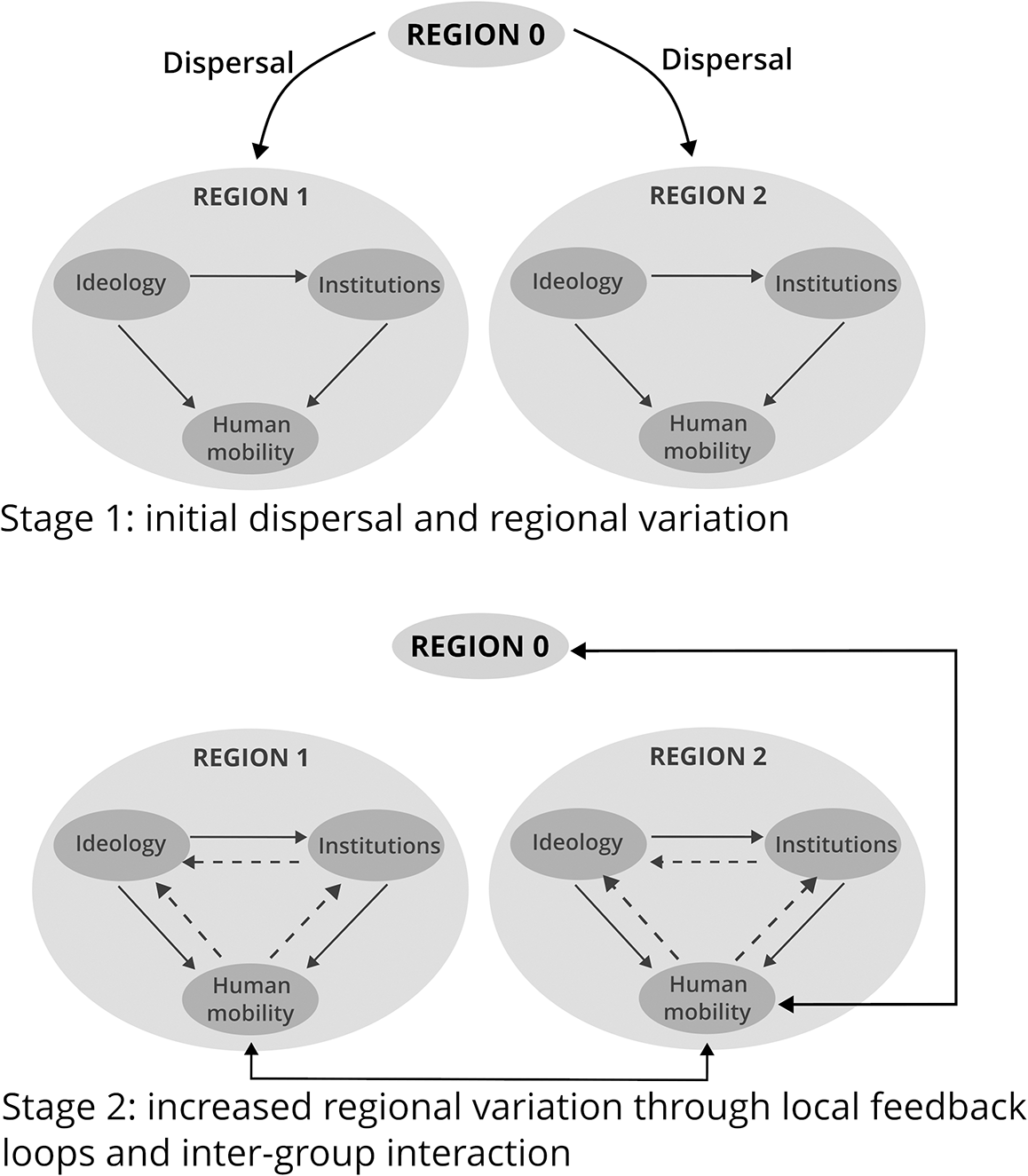
In complex systems theory, an emergent property is generally defined as a feature of a system which is not present in any of its individual components, and which cannot be directly derived from the rules dictating their individual interactions. The biologist Peter Reference CorningCorning (2002: 22) considers that an emerging property must fulfil five key criteria, largely paraphrased here:
(1) it must be radically novel (i.e., not previously seen in the system);
(2) it presents a level of coherence (i.e., the integrated whole will have some temporal duration);
(3) it happens at a global or macro ‘level’;
(4) it is the outcome of a dynamic process; and
(5) it is ‘ostensive’, in the sense that it can be observed, more generally in the form of a pattern.
Let us consider each of these points, though not in the original sequential order. The oft-quoted radical novelty is perhaps the less contentious, and the preceding pages have made clear that, while individual mechanisms comparable to those observed in the Bell Beaker Phenomenon can be found in some regions in the preceding centuries, their scale and combination during the second half of the 3rd millennium calBC are unmatched for the entirety of later European Prehistory.
Corning’s final point on the ‘ostensive’ character of emergence strongly resonates with the repeated argument that the central issue with the Bell Beaker Phenomenon lies in the description of its variations, and thus the elucidation of regional and supra-regional patterns. Points 2 and 3 are analytical extensions of this pattern-oriented search, through the characterisation of metapopulation as a key property of integration and wholeness of the period. Point 4 insists on the dynamical dimension of connectivity as an emergent property. Following the lead of many others, I have stressed how much the Bell Beaker Phenomenon as a global process is a comparatively short-lived event spanning two to three centuries at most and then followed by increased regionalism in the form of local groups with Beaker typological roots of various kinds. This two-stage sequence is best articulated by Stuart Needham’s contrast between his fusion and fission horizons to account for the changing relationships across Britain and north-western continental Europe (Reference Needham, Lawson and WoodwardNeedham 2005). While at least in typological terms the high level of interaction is of short duration, it is noteworthy that the flow of people, in many forms, extends well beyond this stage. In this sense, there is no contradiction between the fact that, on the one hand, the individual trajectory of each local group appears largely independent (i.e., characterised by its own typological development) and, on the other hand, that the whole structure, as a metapopulation, remains unchanged and provides an overarching framework for the movement of people.
5 A Few Points to Conclude
In the introduction we asked a seemingly simple yet challenging question: Is the concept of an archaeological culture still relevant? This question is perhaps not as remedial as it may at first seem, as recent technical advances have led to the resurrection of migratory narratives which seem directly lifted from culture-historical textbooks. My argument is that the return of migrations demands a reconsideration of archaeological cultures because of the need to challenge the worrying naivety attached to such interpretations, and because the discipline has come full circle since the concept was first defined. Just as archaeological cultures grew out of the need to account for more data, the present-day empirical diversity requires integrative, synthetic concepts. Theoretical and methodological cohesiveness can arguably be sought within and outside our discipline, but seeking solace in archaeological cultures makes sense as they require direct engagement with the complexity of data, and the multiplicity of scales and signals they potentially encompass.
To this end, the bulk of this element aimed to offer a brief overview of the available evidence, and, more fundamentally, to stress how much the description per se of the Bell Beaker variation is an interpretative act. In this it differs from many older studies which were restricted to a few selected tropes. What emerges from this exercise is that the Bell Beaker Phenomenon can advantageously be described as an archaeological culture at two congruent levels since, either at the level of the discontinuous patch or at the level of the whole BBP, the archaeological record presents an undeniable degree of structured variation, and thus a narrow definition as a mere list of given material types remains out of reach and illusory. As discussed in the preceding section, the key lies in identifying a mechanism which allows us to resolve both scales at once. This is a condition that is met by the idea of the Bell Beaker Phenomenon as an emergent metapopulation. This final suggestion is likely to feel somewhat tentative to many readers, partly due to the difficulties inherent in assessing archaeological evidence through the lens of theoretical ecology.
Salvation does not lie in a purely theoretical discourse. Aside from the fact that the metapopulation model echoes existing notions of migration and mobility, the rationale for such an abstract theoretical concept is that apart from dealing with the oft-acknowledged Bell Beaker uniqueness, it offers alternative interpretative directions. In this sense, for the concept to be truly successful, one would need to test it formally and demonstrate how the requirements of such test would open new avenues for research. Such an enterprise would be articulated along two axes: firstly, anchoring with greater accuracy and precision the spatial limits and idiosyncrasies of individual patches; secondly, a renewed characterisation and measure of human connectivity. The rest of this conclusion briefly explores the implications of this focus on metapopulation for gathering and interrogating present and future data, for revisiting and detoxifying older interpretative themes, and for overhauling the seemingly never-ending quest for ‘the explanation’ of the Bell Beaker Phenomenon.
5.1 Data, Data, Data
Having reached the final stage of this short journey across the Bell Beaker Phenomenon, it is traditional, if not compulsory, to consider the imperious need to obtain more data, and to list the particular domains where the dearth of such evidence is most obvious. Assuredly, from the point of view of improved patch characterisation, further settlement data would be welcome, and one can expect more information to become available under the impetus of landscape-scaled projects only possible with the financial and logistic means of development-led archaeology. Such sites would in turn allow us to acquire much needed zooarchaeological and archaeobotanical data to get the pulse of Bell Beaker subsistence economy, an area where high variation is expected in view of the latitudinal spread of the phenomenon. Likewise, considering the question of connectivity, improved ancient DNA coverage would feature at the top of any data wish list, and, in the few years since the publication of Reference Olalde, Mallick and PattersonOlalde et al.’s (2018) seminal paper, regional transects and methodological innovations have already given us a glimpse of future gains to come. Such empirical imperatives are without doubt essential although, to be honest, such a statement amounts to little more than a cliché.
Indeed, a bigger challenge lies ahead in terms of collecting, analysing, and sharing old and future data. Open science, FAIR and CARE principles, and ‘big data’ have over the past few years slowly morphed from buzzwords to emerging realities and calls for best practices in archaeology. The picture, however, changes between regional research traditions and fields of expertise, and personal experience suggests that, most unfortunately, Bell Beaker studies lag some way behind in this process. For instance, the mapping provided in Figure 1 was unachievable until the completion of Bilger’s thesis (Reference BilgerBilger 2019), although access to the data itself was kindly provided by the author. Indeed, while the idea of a Bell Beaker atlas or pan-regional catalogue has been floated on several occasions at conferences I had the opportunity to attend, it has failed to materialise for various reasons, though regional exceptions are noticeable and laudable (e.g., Reference KristiansenKolar et al. 2022). Likewise, radiocarbon datasets have flourished over the past decade but offer at best a starting point for further work rather than a coherent resource. Ancient DNA sequences are, by contrast, made available immediately at time of publication via dedicated repositories, and updated lists are managed by individual laboratories, though unstructured archaeological labelling of samples is noticeable and hampers ready reuse by non-specialists. Isotopic data are also often published in the form of supplementary information and several initiatives have been put forward to centralise records though, to my knowledge, none can pretend to be exhaustive, and a period-specific Bell Beaker compilation remains lacking. Arguably, the situation is not eased by the geographical span of the Bell Beaker Phenomenon, but this short list highlights how much the creation of any dataset can prove a Sisyphean task. In this sense, the acquisition of new data, including through new sampling and excavation, requires a fundamental overhaul that depends first and foremost on how we consider and treat information.
5.2 Detoxifying Interpretative Themes
The absence of readily available synthetic datasets, in contrast to data in the form of papers and monographs, is detrimental to the production of knowledge, a situation even more damaging in view of the popular interest triggered by the Bell Beaker Phenomenon. Under the impetus of ancient DNA findings, the Bell Beaker Phenomenon has experienced a renewed interest in popular outlets and online forums, a trajectory which poses many problems. It is hard to deny that gender identity constitutes a recurring structuring dimension of Bell Beaker funerary practices. Yet, as ever with the Bell Beaker period, any closer examination reveals a kaleidoscope of regional variations and the existence of numerous exceptions, thus challenging the identification of any straightforward pattern. In a related way, much has recently been written on post-marital exchange rules, with a strong tendency to identify women as passive actors being relocated between villages. Here also, empirical evidence paints a more diverse picture than is sometimes acknowledged. In both cases, stressing variation is essential to counteract uncritical projections of contemporary gender relations and expected roles (Reference FurestierFrieman et al. 2019). Likewise, the return of migration towards the top of the agenda has been accompanied by increased references to the Bell Beaker Phenomenon in varied media, including those expressing nationalistic and far-right views. Others have commented upon this worrying trend much better than me, but the key argument is worth repeating here: through an active and explicit politics of public engagement, some of the leading aDNA laboratories, as well as some of their key archaeological collaborators, have actively promoted and disseminated interpretations set in simplistic terms, thus facilitating their re-appropriation by extreme groups (Reference Hanski and OvaskainenHakenbeck 2019). Here as well, increased interpretative sophistication and theoretical imagination are required to counter-balance the toxic potential inherent in simple, attractive, and easily marketable narratives.
The key message is that such complexity must be supported, substantiated, and accompanied by an active involvement in data management and sharing. The implied shift in attitude is even more imperative as archaeologists are increasingly required to manipulate and evaluate an ever-growing diversity of strands of evidence on a daily basis. Kristian Kristiansen recently suggested that the value of new ‘scientific’ data rests in their capacity to provide intellectual freedom (Reference Kristiansen, Allentoft and FreiKristiansen 2022). I would rather suggest that intellectual freedom was and is always present, and that data, novel in their scope as they might be, ought never to drive the agenda which, under these conditions, can only be reactive and opportunistic at best. Any intellectual source of inspiration – anthropological, philosophical, ecological – is welcome, as long as it opens new paths allowing for the exploration of new territories. From this perspective, the idea set forth here of the Bell Beaker Phenomenon as an emergent metapopulation presents at least two advantages. Firstly, it offers a radical departure from the unimaginative previous tropes which litter the Bell Beaker historiography; secondly, it allows us to reconsider in a new light the twin question of is the nature of the Bell Beaker Phenomenon and how it differs from previous periods.
5.3 How Rather Than Why
Evidential problems such as those mentioned above are detrimental in several ways. For instance, to go back to metapopulation and emergence, a massive part of the appeal of using such concepts and the fields associated with them lies in the available array of formal statistical and computational models that accompany them. Such models provide ways to translate the multiplicity of corresponding data into rules and thus to move away from simple causal models (i.e., stressing the role of a single factor) towards the identification of emergent properties, the creation of feedback loops between different mechanisms, and other processes explored by complex systems theory (e.g., Reference LevinsLevin 1999). While such models can be built from theoretical first principles only, an extensive literature demonstrates how such conceptual exercises can also be driven by data exploration (so-called pattern-oriented modelling: Reference Guilaine and ZammitGrimm et al. 2005). Metapopulation properties can be tested by incorporating information on the ecological make-up and spatial structure of patches, their carrying capacity, and estimates of population size and connectivity (e.g., proportion of individuals moving from patch to patch) (Reference SangmeisterSample et al. 2018). Translated into archaeological terms, it is unlikely that precise values can be inferred from the available data alone, though reducing the range of the parameters by reference to data would already be a huge pioneering undertaking. Rather than co-opting ecological models in an uncritical fashion, the real challenge thus lies in creating new, more appropriate models, informed by systematic and synthetic account of the data, rather than mere ‘hunches’ as is the case here. Last but not least, cohesive datasets would also play an essential role in testing the simulated outputs and predictions of these computational models. All in all, such data and subsequent analysis would make it possible to better delineate and characterise the individual patches in Figure 21, as well as to identify and weigh the properties of the links between them, rather than the generalized arrows suggesting the directional flows of influence as is still necessary now.
Bell Beaker phenomenon as a metapopulation.
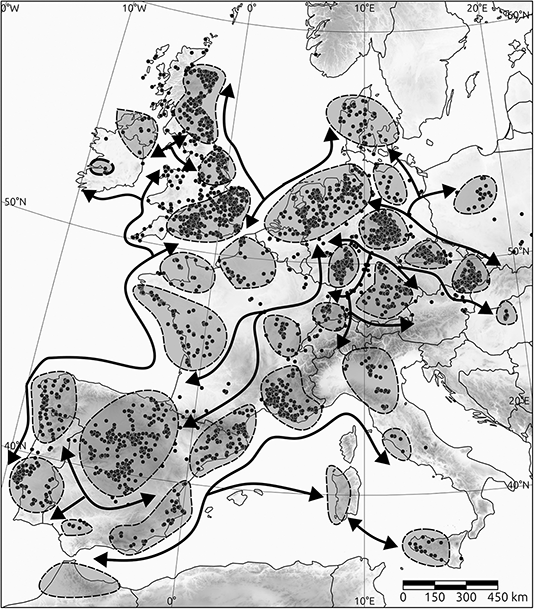
If the metapopulation model provides an accurate description and explanation for the Bell Beaker Phenomenon, one can reasonably expect some level of predictability in the data and thus in the generation of hypotheses to be tested. The central tenet of the concept is that, though the trajectory of each patch remains largely independent and thus prone to stochasticity, the overall structure remains stable over the long term. As we have seen, this property echoes the fact that each Bell Beaker region presents its own undeniable identity and that it is hard to eschew the reality of the wholeness of the Bell Beaker Phenomenon. To echo the subtitle of this Element, we are witnessing a harmony of difference. But we can perhaps go one step further. In the original model, the stochastic character of each patch implies continuous fluctuations, sometimes leading to local cycles of extinction and repopulation. Although nothing so dramatic occurs in the archaeological record of the 3rd millennium calBC, this raises the question of whether or not such local demographic oscillations actually happened, and if their potential negative impact was negated through the extensive connectivity underlying the overall network. The identification of such a double mechanism requires a careful multi-proxy appraisal of the fine-grained demographic history of individual patches (e.g., population size and demographic structure) and a high-resolution chronology to identify temporal relationships between them. Although such requirements are not strictly met right now, I would suggest that such model could account for the apparent synchrony between the fission horizon in many parts of north-western Europe, and the northward expansion of Bell Beaker traits and farming in northern parts of Scandinavia.
Regardless of the future success or failure of this last hypothesis, this example has attempted to showcase the merits of recasting older questions within a renewed conceptual framework. While I am not so pretentious as to seek to recommend any particular path beyond my own theoretical inclinations, I am tempted to say that some of the points made here probably have wider relevance for the discipline. Debates on the role of ‘archaeological science’, itself an unsatisfactory umbrella term for a huge range of analytical techniques and methods, raged in the early 2000s and never entirely faltered as indicated by some early reactions to ancient DNA studies. Yet, the discipline has moved on towards a more realistic position and the use of such methods is unlikely to diminish, instead becoming routine. If the archaeological toolbox is possibly one of the most varied ones around, such multiplicity and the technical approaches that support it can be daunting to say the least, and demand equally systematic action in terms of data management and conceptual imagination.
Metapopulation’s defining characteristic is connectivity, as it is what makes the whole more than the sum of its parts. Connectivity is a trait of many human societies and can be identified across later European prehistory through multiple methods and proxies. However, in the case of the Bell Beaker Phenomenon, connectivity, especially the structured flow of individuals between patches, undergoes a qualitative shift and becomes the defining feature of the system. Obviously, the Bell Beaker Phenomenon is more than mobility, and the role of other factors in propping up this structure has to be re-evaluated. But such investigation, in contrast to over a century of research into this topic, will require explicit consideration of multiple factors, and concepts such as multi-scalar, non-linearity, feedback loops, or cascade effects, to name but a few. A future framed in such a way may sound strange, less familiar than one built on old comfortable themes, and thus unsettling, but is and will prove exciting, promising, and ultimately rewarding.
Acknowledgements
Over the past two decades, my trajectory has not only involved crossing the North Sea but also journeying across several institutions, and building a network of contacts with colleagues across Europe and beyond. It is impossible for me to name all the outstanding individuals who, at some point and in varying capacity, have been kind enough to listen to me, and to speak to me. Though bound to forget several names, I would thus like to take the opportunity to thank: David Meltzer, Erick Robinson, Jacob Freeman, Nicki Whitehouse, Andrew Fitzpatrick, Ben Roberts, Niels Njørkær Johannsen, Martin Furholt, Dani Hoffmann, Colin Haselgrove, Mike Parker Pearson, Kevan Edinborough, Stephen Shennan, Cyprian Broodbank, Sue Hakenbeck, Paul Lane, Chris Evans, Cameron Petrie, Enrico Crema, Maja Gori, Andrea DiRenzoni, Giulio Lucarini, Johan Ling, Christian Horn, Jean-Pierre Bocquet-Appel†, David Orton, Aitor Ruiz-Redondo, Ivana Jovanović, Sébastien Manem, Jane Gaastra, Anne de Vareilles, and Nelis Drost. In March 2022, I joined the Institute for Modelling of Socio-Environmental Transitions at Bournemouth University, and I would like to thank my colleagues there who, perhaps more than they realise it, have had a positive impact upon my career: Adrian Newton, Kim Davies, Fiona Coward, Phil Riris, Emma Jenkins, and Fabio Silva. Extra special thanks to Mark Gillings for being kind enough to read and comment upon the first draft of this manuscript. Lastly, extra thanks are due to Manuel Fernandez-Gotz for inviting and trusting me to deliver this little opus.
Becoming a migrant also shaped my personal life in the most unexpected, long-lasting, and blossoming way. In this sense, this little element would not have seen the light without that experience and without the support of my parents in letting me set myself free from the shackles of then unrewarding Belgian academia. But the most important thanks of all go to my children, Lili and Charly, for being so unique and for putting up with their father’s commute and bad bilingual puns, and to my wife, Tamsin O’Connell, simply for everything she has ever offered to me.
Manuel Fernández-Götz
University of Edinburgh
Manuel Fernández-Götz is Abercromby Professor of Archaeology at the University of Edinburgh. His research focuses on late prehistoric and Roman Europe, the archaeology of identities, and conflict archaeology. He has directed fieldwork projects in Spain, Germany, the United Kingdom, and Croatia. Between 2015–21 he was board member of European Association of Archaeologists.
Bettina Arnold
University of Wisconsin–Milwaukee
Bettina Arnold is a Full Professor of Anthropology at the University of Wisconsin–Milwaukee and Adjunct Curator of European Archaeology at the Milwaukee Public Museum. Her research interests include the archaeology of alcohol, the archaeology of gender, mortuary archaeology, Iron Age Europe and the history of archaeology.
About the Series
Elements in the Archaeology of Europe is a collaborative publishing venture between Cambridge University Press and the European Association of Archaeologists. Composed of concise, authoritative, and peer-reviewed studies by leading scholars, each volume in this series will provide timely, accurate, and accessible information about the latest research into the archaeology of Europe from the Paleolithic era onwards, as well as on heritage preservation.


 Open access