

Introduction: the Uruk Expansion
The Uruk Phenomenon of the fourth millennium bce represents the first period in Mesopotamia (modern Iraq, northeastern Syria, southwestern Türkiye and western Iran) characterized by significant interactions and the regional integration of Mesopotamia. Guillermo Algaze (Reference Algaze1993; Reference Algaze2008) formulated a World Systems model (after Wallerstein Reference Wallerstein1974) to explain the presence of Uruk material culture (ceramics, administrative objects, architecture) across Mesopotamia, arguing that the ‘Uruk Expansion’ was driven by burgeoning urban (proto)-state(s) in search of raw materials and resources absent in the southern Mesopotamian alluvium in an asymmetrical, exploitative relationship with the ‘periphery’ of northern Mesopotamia. The result he argued, was an informal empire of economic domination. Yet such a globalizing outlook implies a unified Uruk system and does not fully account for variable interaction between mobile agents in the Uruk sphere and the local communities.
Scales of connectivity represent a key feature within archaeological research: The focus of purely top-down grand narratives has shifted to a refocusing of local agency and bottom-up narratives, usually viewed from a site-specific vantage, as a result of the Postcolonial response which have seen the rejection of all, or elements, of Algaze's model (for alternative views, see Baldi et al. Reference Baldi, Iamoni, Peyronel and Sconzo2022 and contributions; Butterlin Reference Butterlin2003; Reference Butterlin2018; Frangipane Reference Frangipane2018; Rothman Reference Rothman2001 and contributions; Stein Reference Stein1999; etc.). The reasons behind the Uruk Expansion are undoubtedly important, likely muti-faceted and complex though beyond the scope of the current paper. Counter-arguments include refugee movement (Johnson Reference Johnson1988–1989; Pollock Reference Pollock and Rothman2001), the quest for more grazing areas (McCorriston Reference McCorriston1997), even violent invasion by Uruk communities (Reichel Reference Reichel and Meller2009). Nevertheless, the Uruk Phenomenon as an economically driven expansion remains widely accepted, albeit with the recognition of more equal relations between northern and southern Mesopotamia (Frangipane Reference Frangipane2018; Oates et al. Reference Oates, McMahon, Karsgaard, al Quntar and Ur2007; Stein Reference Stein1999; etc.). We now are faced by many competing narratives to explain global change, with no single dominant account (Lyotard [1979] Reference Lyotard1984). This is not to suggest that a single narrative is ideal, feasible, or even likely; rather, it highlights the need to bridge the gap between broad overarching narratives and localized archaeological investigations of the Uruk Phenomenon.
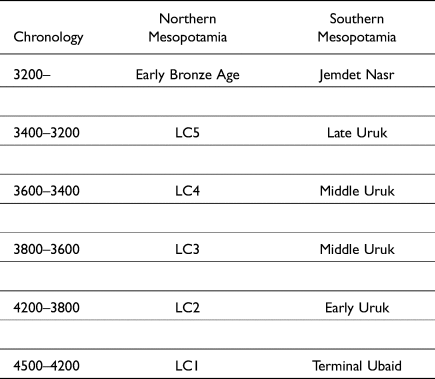
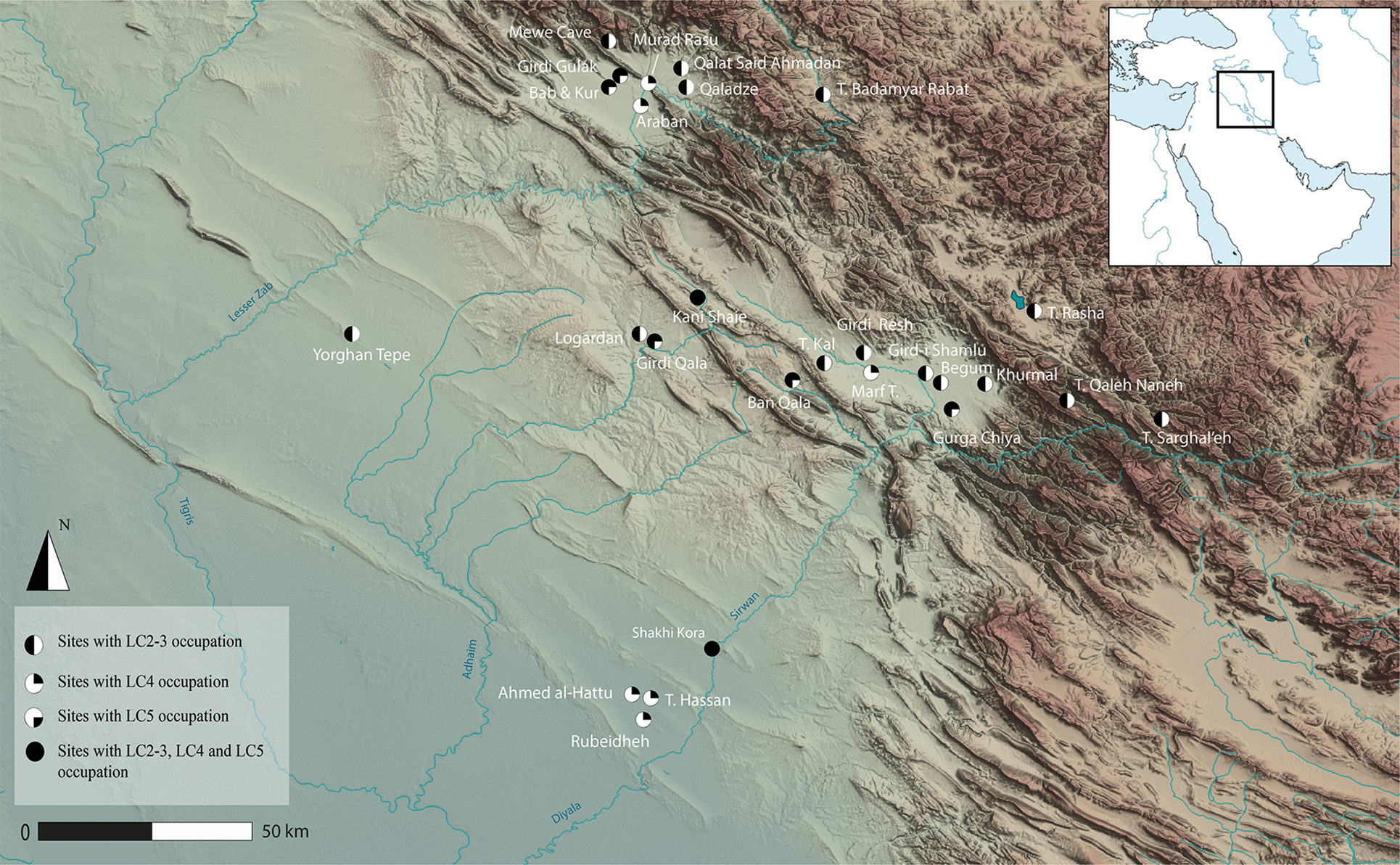
Ongoing investigations within the Adhaim-Sirwan Drainage Basin, two important tributaries of the River Tigris in central-northern Iraq, broadly covering Sulaymaniyah Governorate, Iraqi Kurdistan, are presenting exciting, sometimes contradictory new data. These emerging data support the presence of complex, long-lasting connections between the Uruk Phenomenon and the local communities once deemed to be peripheral to the Uruk interaction sphere, while also highlighting the longevity and complexity of cultural interaction (e.g. Baldi et al. Reference Baldi, Iamoni, Peyronel and Sconzo2022 and contributions therein). It is with this outlook that this paper seeks to contribute: to suggest a new interpretive framework to interpret the Uruk Phenomenon that explains its nuance and complexity, and importantly, its interplay with the local communities. To do this, I offer glocalization as a framework. While a focus on the archaeology within the modern borders of Iraqi Kurdistan is arbitrary, and there are other nexus of activity during the Uruk Phenomenon (e.g. Aydoğan et al. Reference Aydoğan, Batihan, Sağlamtimur, Baldi, Iamoni, Peyronel and Sconzo2022; Frangipane Reference Frangipane2018; Fuensanta et al. Reference Fuensanta, Mederos Martín and Muminov2021; Petrie Reference Petrie2013; Strommenger Reference Strommenger, Sürenhagen and Rittig2014; van Driel & van Driel-Murray Reference van Driel and van Driel-Murray2023; etc.), the emphasis here will be toward recent archaeological research of the fourth millennium bce, termed the Late Chalcolithic (henceforth LC: Table 1) in Iraqi Kurdistan, though with frequent forays into adjacent regions to provide an overview of the Uruk Phenomenon. From there, I will explore local variation of sites and assemblages within the Adhaim-Sirwan Basin, a region featuring a notably high concentration of Uruk sites (Fig. 1), which I argue represents an area of highly concentrated interaction between local communities and mobile agents during the Uruk Phenomenon.
Chronological subdivisions for the Mesopotamian fourth millennium bce
Key sites from the Adhaim-Sirwan Basin and adjacent regions mentioned in text featuring Uruk occupation and/or Uruk-related material culture. (Base map by S. Renette.)
Problematizing scales: local versus global
The concept of ‘culture’ is prominent within this paper, and it is important to examine it critically (albeit briefly): a monothetic notion of neatly bounded, homogenous units defined by a shared cultural package of material culture, practice and technology as developed by culture-historical archaeologists (e.g. Childe Reference Childe1929) misrepresents the frequent internal variation within the archaeological record (after Furholt Reference Furholt2020, 3). Such an approach assumes that all cultural elements are present throughout all sites within a designated cultural sphere, though does not reflect the archaeological reality, as documented throughout Uruk Mesopotamia (see Baldi et al. Reference Baldi, Iamoni, Peyronel and Sconzo2022 and contributions therein, Frangipane Reference Frangipane2018; Fuensanta et al. Reference Fuensanta, Mederos Martín and Muminov2021; Stein Reference Stein1999; see also Journal of Archaeological Science: Reports 7: Emberling & Minc Reference Emberling and Minc2016, etc.). In reality, multiple overlapping communities of practice existed (Wenger Reference Wenger1998) and acknowledging this facilitates a more accurate representation of the nuances of past realities (Furholt Reference Furholt2020). Analysing the data from the Adhaim-Sirwan Basin through a glocalizing lens highlights how local responses are influenced by, and in turn influence, broader regional similarities, while also accounting for individual, site-specific variations. Such an approach enables a richer understanding of the complexities and variability of the Uruk Phenomenon.
I maintain that neither World Systems Theory nor Algaze's treatise wholly explain the variability in Uruk material assemblages from archaeological sites in the Adhaim-Sirwan. Archaeological discussion and interpretation of the Uruk Phenomenon is waylaid at a crossroads, with division between macro-scalar grand narratives and their tendency to overlook local variability (e.g. Algaze Reference Algaze1993; Reference Algaze2008) and more specific site-based studies which dominate current literature (most recently Baldi et al. Reference Baldi, Iamoni, Peyronel and Sconzo2022 and contributions). What we are missing is a way to ‘affirm the distinctive dynamics of the local while also maintaining their integral, co-constructive link to the high-scale interactions of cultures’ (Fine & Thompson Reference Fine and Thompson2018, 5). I pay homage to Algaze's magnum opus, though suggest it is time to offer a viable alternative to one of elite-driven expansion: one which incorporates and connects the globality of the Wallerstein–Algaze World System with the bottom-up, site-specific studies while also accounting for the multi-stage, chronological longevity of the Uruk Phenomenon (Butterlin Reference Butterlin2018), but also accounts for the regionalized trajectories which characterize the Uruk Phenomenon in the study region. Glocalization provides just such an approach to do so.
Before approaching glocalization, we must address the elephant in the room: How do both ‘local’ and ‘global’ differ from glocalization? Defining ‘local’ is difficult. Of course, local is relative, which can represent the immediate household, an entire settlement, or a regional area—the only way to clarify it is to define this clearly according to the research context (Barrett et al. Reference Barrett, Robertson, Roudometof, Salazar, Sherratt, Fine and Thompson2018, 17–18). Global, too, is relative, though it need not encompass the entirety of the globe: rather, it refers to the widespread homogenization of material culture and practices through increasing connectivity (Fine & Thompson Reference Fine and Thompson2018, 5; Nieuwenhuyse Reference Nieuwenhuyse and Hodos2017, 841; Robertson Reference Robertson2012, 200). The exact definition of globalization is not the key point here; what matters is that archaeologists often use the term in various contexts, as long as ‘global’ is not taken literally. Globalization transcends earlier core-periphery frameworks and ideas of cultural dominance (Nieuwenhuyse Reference Nieuwenhuyse and Hodos2017, 851) and represents, the ‘compression of the world as a whole … the linking of locales’ (Robertson Reference Robertson1992, 8; Reference Robertson2012, 200). Far more, then, than just increasing connectivity (Hodos Reference Hodos and Hodos2017, 4) and the interconnectedness of humanity in time and space through active decision-making, but the awareness of people to these processes, and acting to it, through critically (re)constructing differences in that context (Beyer Reference Beyer and Beyer2022, 6).
My critique is not aimed at Algaze, or prior applications of globalization, which are not uncommon in the archaeology of pre-protohistoric Mesopotamia (notably Algaze Reference Algaze1993; Reference Algaze2008; also Nieuwenhuyse Reference Nieuwenhuyse and Hodos2017; Wengrow Reference Wengrow2010, 54–6). My critique is that globalization and similar approaches fall short at interpreting the nuances of supra-regional dynamics of local variability to these phenomena (Kraidy Reference Kraidy2003, 37). Similarly, globalization does not do justice fully to the Uruk Phenomenon. Firstly, it assumes that Uruk material culture was a singular entity, despite almost universal agreement that it was not (Algaze Reference Algaze2008, 111; Butterlin Reference Butterlin2018; Porter Reference Porter2012, 73; etc.). That is not to say there are not undeniable similarities in Uruk material culture across the Uruk sphere—there are (see Algaze Reference Algaze1993, fig. 3, 17; Butterlin Reference Butterlin2018; also Baldi et al. Reference Baldi, Iamoni, Peyronel and Sconzo2022; Rothman Reference Rothman2001; etc.)—nevertheless, in seeing the Uruk as a unified phenomenon, or globalizing World System, we are at risk of obfuscating the regional nuances which may help more comprehensively explain it in future. Finally, it adopts a homogenizing stance via the domination of a World System (Robertson Reference Robertson2012), implying that the Uruk Phenomenon was a singularly top-down, elite-driven enterprise throughout.
A continuous problem within studies of the Uruk Phenomenon is that of scale—how can we concurrently engage with the ‘global’ Uruk, and the local individual experiences within a unified framework which does justice to both? Bridging this requires a middle-range theoretical framework, able to articulate the multiple scales and social phenomena at play. I propose viewing the Uruk Phenomenon through a glocalizing lens to highlight this heterogeneity through examination of individual responses to this global phenomenon (as per Robertson Reference Robertson2012, 191). We stand to benefit from the explicit emphasis of studying the individuals’ interaction within the Uruk Phenomenon at a variety of scales—we cannot understand it if we focus exclusively on either the local or the supra-local (after Nieuwenhuyse Reference Nieuwenhuyse and Hodos2017, 850).
Glocalization. Neither global nor local
Initially applied to the social sciences in the early 1990s by Roland Robertson (Reference Robertson1992), glocalization was borrowed from the Japanese concept of dochakuka, a neologism fusing both global and local. Robertson (Reference Robertson1992) argued that the global cannot exist in isolation from the local, with glocalization embodying ‘the simultaneity—the co-presence—of both universalizing and particularizing tendencies’ (Robertson Reference Robertson2012). At its heart, glocalization is a fractal, heuristic tool which considers the interplay between global and local (Barrett et al. Reference Barrett, Robertson, Roudometof, Salazar, Sherratt, Fine and Thompson2018; Kraidy Reference Kraidy2003, 38; Roudometof Reference Roudometof2016a, 9). These are not diametric opposites, but engage in a symbiosis, highlighting how the local is part of, and concurrently occurs within, the global (Barrett et al. Reference Barrett, Robertson, Roudometof, Salazar, Sherratt, Fine and Thompson2018; Kraidy Reference Kraidy2003, 38; Robertson Reference Robertson2012; Roudometof Reference Roudometof2016a, 142). In short, the global cannot exist without the local (Robertson Reference Robertson1992).
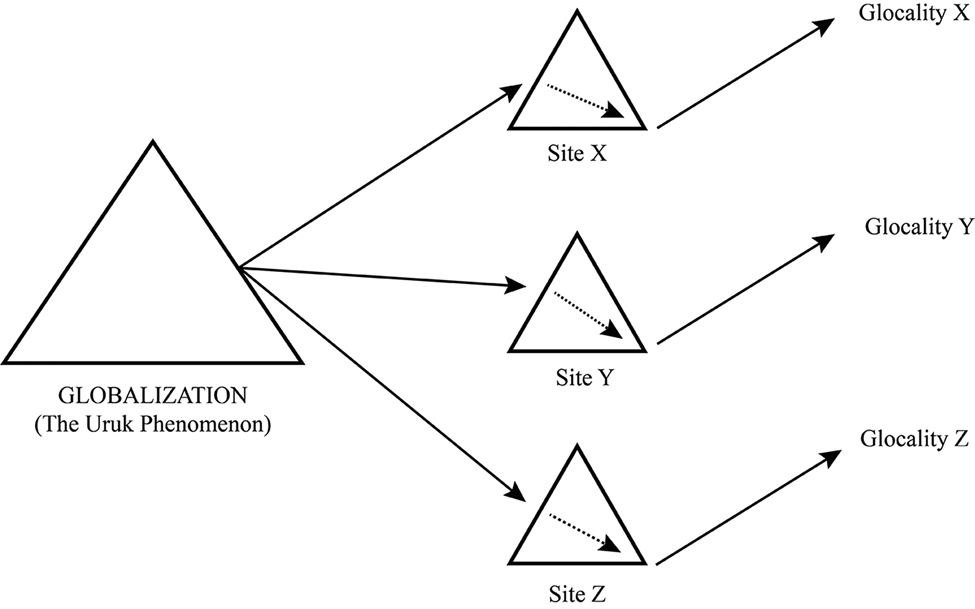
Following debates by Robertson (Reference Robertson1992; Reference Robertson2012) and Ritzer (Reference Ritzer2003; Reference Ritzer2004), glocalization appeared to lack a solid theoretical foundation for explaining its dynamics and agency (Barrett et al. Reference Barrett, Robertson, Roudometof, Salazar, Sherratt, Fine and Thompson2018, 15; Montoya Gonzalez Reference Montoya Gonzalez2021). Victor Roudometof addressed this by highlighting its applicability and drawbacks, ultimately providing a modified explanatory model. In a similar vein to Kraidy (Reference Kraidy2003, 41–2), who viewed the interplay between the local and global as different lenses through which to examine the world, a hermeneutic outlook allows for the simultaneous examination of both the whole and the constituent parts of their interaction; Roudometof's model (Fig. 2) describes glocalization as a dynamic process where global influences act like waves, reaching different cultures and leaving their mark without completely homogenizing them (Kraidy Reference Kraidy2003, 64; Roudometof Reference Roudometof2016b). These globalizing waves spread outward where they are shaped and, importantly, filtered by local human agency. People and communities engage with these influences, interpreting and adapting them in ways that reflect their unique identities, ultimately sending their own responses back into the world stage (Montoya Gonzalez Reference Montoya Gonzalez2021, 99; Roudometof Reference Roudometof2016a, 65). ‘Just like light that passes through glass radiates an entire spectrum, so does globalization passing through locales radiate a spectrum of differences … heterogeneity becomes the end state of the globalization’ (Roudometof Reference Roudometof2016b, 399). The local is not absorbed or destroyed by globalization, but affects the outcome, resulting in heterogeneity; ‘Glocality is defined as experiencing the global locally or through local lenses’ (Roudometof Reference Roudometof2016a, 68).
Schematic diagram to illustrate the glocalization of the Uruk Phenomenon within the upper Adhaim-Sirwan Basin. The global Uruk Phenomenon is refracted through individual sites, resulting in glocalization. (After Roudometof Reference Roudometof2016a, fig. 4.2.)
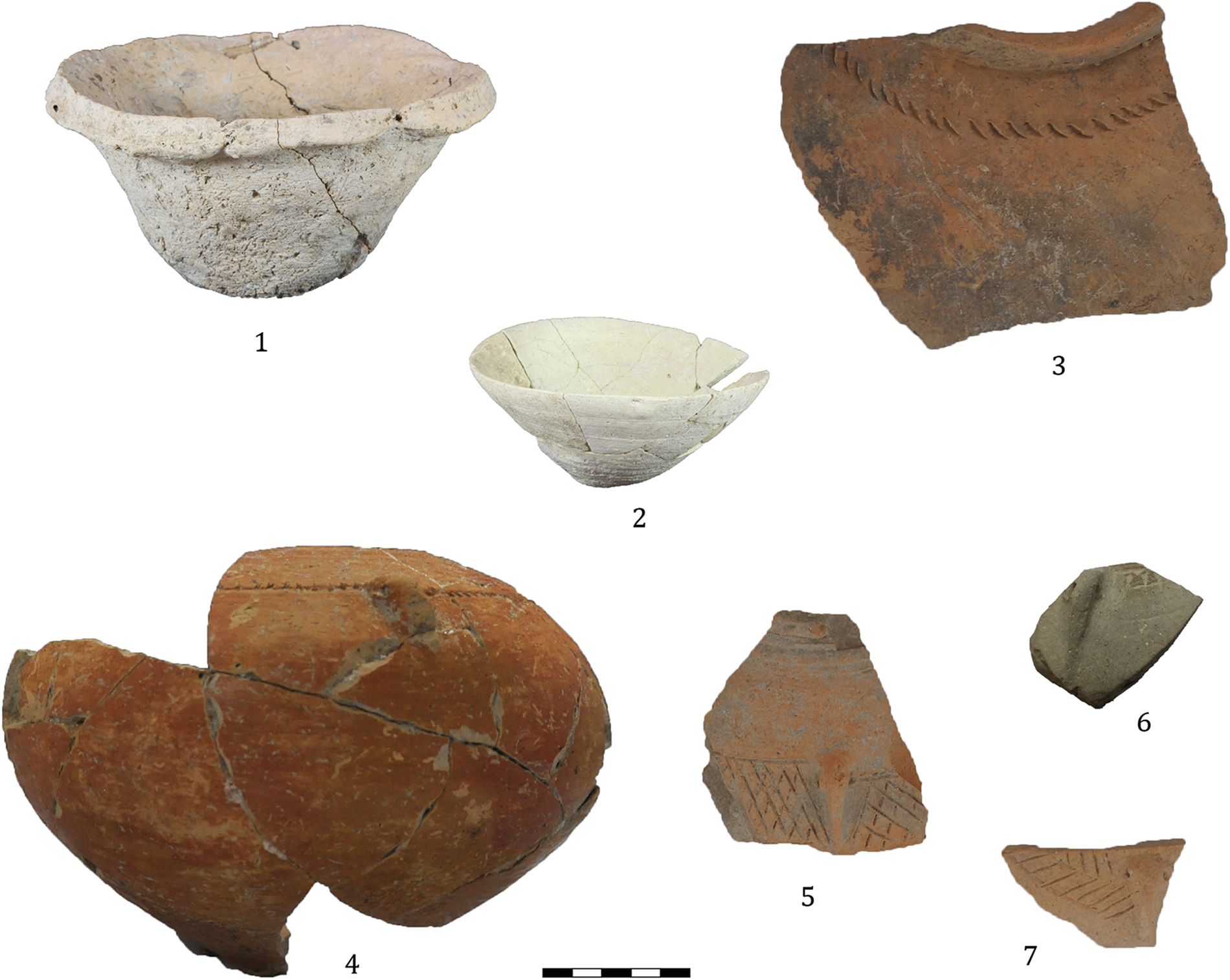
Characteristic LC4-5 Uruk pottery from Kani Shaie. (Renette et al. Reference Renette, Abu Jayyab and Gibbon2021, fig. 14.)
The interaction between local communities and Uruk people and their material culture was contextually dependent and should be central to investigations of the Uruk Phenomenon, or indeed interaction between any different communities. A criticism of Roudometof's model is that by focusing on broader cultural patterns rather than the specific human (inter)-actions, it downplays individual agency. Glocalization does acknowledge the complexity of how individuals and communities negotiate their identities in the face of globalization and greatly aids in interpreting global and local dynamics. It must be remembered that it is the complexity of interactions and negotiated interplay between different people that drove the Uruk Phenomenon, and its internal variability highlights active human agency as a relational force, playing a key role in the creation of a glocalized expression of identity. That is, communities are affected by (and simultaneously effect) the Uruk Phenomenon differently and thus, the outcome of the Uruk Phenomenon on that community and its appearance in the archaeological record is equally differential. Glocalization highlights the complex, conscious interplay between local people and the incoming Uruk whom they encounter (whether Uruk people, or associated material culture), resulting in a negotiation of the ‘local’ with the ‘foreign’, and the incorporation of specific elements of this into the local cultural repertoire. Roudometof's model emphasizes the diverse glocalities that can arise from a single wave of globalizing interactions among different communities, a perspective which is crucial in showcasing local responses to the Uruk Phenomenon. This has the effect of emphasizing local agency and locally contingent contexts at play when met with the refraction of the Uruk Phenomenon (as per Montoya Gonzalez Reference Montoya Gonzalez2021, 101).
Several terms superficially resemble glocalization, yet they have distinct meanings. Despite their similarities and frequent conflation, glocalization differs from these alternatives, as they do not capture its specificityFootnote 1, Footnote 2 (Roudometof Reference Roudometof2016a, 138). Such terms include transculturalism, creolization and, often referenced in the context of the Uruk Phenomenon, hybridization (Helwing Reference Helwing1999; Tirpan Reference Tirpan and Card2013). Barbara Helwing's (Reference Helwing1999) hybridization model explores the response to encounters between local and Uruk populations. This response included the creation of a new, third class of material culture—or ‘hybrids’—blending elements from both coalesced groups. One challenge to a hybrid model is that it allows for anything to be categorized as a hybrid, focusing more on labels than on the actual processes involved (summarized by Mills Reference Mills2018, 1079). While hybridization is evident in the Adhaim-Sirwan (prevalent within ceramic studies: e.g. Renette et al. Reference Renette, Abu Jayyab and Gibbon2021; Vallet et al. Reference Vallet, Baldi, Naccaro, Rasheed, Saber and Hamarasheed2017, 80; etc.), glocalization enhances it by emphasizing local variation and site-specific differences, allowing communities to interact with global elements while retaining their unique cultural identities.
Having outlined glocalization, this paper will highlight archaeological data from the Adhaim-Sirwan Basin and apply Roudometof's model to cultural practices associated with the Uruk Phenomenon.Footnote 3 While previous studies have addressed the diversity of material culture and interactions between local communities and the Uruk Phenomenon, this paper uniquely applies a glocalizing lens, prioritizing local reception and adaptation within a global context. The aim is to enrich our understanding of Uruk Mesopotamia and its transmission into the Adhaim-Sirwan region, emphasizing the variability of this phenomenon, which arose from the integration of local and global cultural elements across multiple stages and scales of interaction (as per Butterlin Reference Butterlin2018).
The LC2–3. Preludes to the Uruk Expansion
We cannot begin to understand the transmission of the Uruk Phenomenon into the Adhaim-Sirwan without contextualizing northern Mesopotamia. Significant changes in settlement patterns throughout Mesopotamia during the LC2–3 are characterized by rapid urbanization and substantial structural changes (Butterlin Reference Butterlin2003; McMahon Reference McMahon2020). The subsequent collapse of this first ‘proto-urban experiment’Footnote 4 was equally abrupt as its appearance and, in the wake of its collapse, many sites and even whole regions of northern Mesopotamia were abandoned, with similar abandonment at sites surrounding Lake Urmieh and those of the central-northern Zagros (Abedi et al. Reference Abedi, Heidari, Salimi and Eskandari2019, 420; Dadaneh et al. Reference Dadaneh, Ghrasrian, Colantoni and Skuldbøl2019; Renette & Mohammadi Ghasrian Reference Renette and Mohammadi Ghasrian2020).
It is with this backdrop that we now turn to Iraqi Kurdistan. The influx of Uruk influence in the region, and the high point of Uruk culture-contact during the LC4 in the Adhaim-Sirwan Basin, seem to have happened in the wake of this disruption to settlement patterns. It is plausible that these two events are directly correlated; however, until our immediate requirement for additional absolute dating is met, particularly regarding the initial appearance of the Uruk at these sites, this is not possible to ascertain.
LC2–3 in the Adhaim-Sirwan: emerging culture-contact and the initial transmission of the Uruk Phenomenon
The Uruk Phenomenon is typically dated to the (later) LC3 in northern Mesopotamia; however, sites in the Adhaim-Sirwan show signs of culture-contact with the Uruk world from the LC2–LC3, suggesting it may have appeared earlier here (Vallet et al. Reference Vallet, Baldi, Naccaro, Rasheed, Saber and Hamarasheed2017; Reference Vallet, Baldi and Zingarello2019), prior to the secondary transmission of the ‘mature’ Uruk Phenomenon of the LC4.Footnote 5
This early culture-contact during the late LC2–early LC3 between the local communities, and the Uruk Phenomenon is archaeologically observed via the presence of key ceramic type-fossils of this southern Mesopotamian phenomenon; Bevelled Rim Bowls (BRBs, e.g. Fig. 4.1, below). These mass-produced ceramic bowls represent the initial calling-cards of the Uruk Phenomenon, and in most circumstances are the only ‘Uruk’ ceramic type found in these early strata. BRBs are widely observed from stratified soundings and archaeological survey in the Shahrizor Plain at Gird-i Shamlu and Gurga Chiya (Lewis Reference Lewis, Baldi, Iamoni, Peyronel and Sconzo2022a), Tell Begum (Nieuwenhuyse et al. Reference Nieuwenhuyse, Odaka, Kaneda, Müehl, Rasheed and Altaweel2016), Girdi Resh (Hijara Reference Hijara1976), Tepe Kal (Mühl Reference Mühl2013, Tafel 89), Shakar Tepe (Odaka et al. Reference Odaka, Maeda, Shimogama, Hayakawa, Mohammed, Rasheed, Marchetti, Cavaliere, Cirelli, D'Orazio, Giacosa, Guidetti and Mariani2023, fig. 7.12) and Khurmal (A. Ameen pers. comm., 2023). In the Bazian and Qara Dagh region they are present at Kani Shaie (Renette et al. Reference Renette, Abu Jayyab and Gibbon2021), Logardan and Girdi Qala (Vallet et al. Reference Vallet, Baldi and Zingarello2019), in the Sirwan Valley at Shakhi Kora (Glatz et al. Reference Glatz, Del Bravo and Chelazzi2024) and Yorghan Tepe (Starr Reference Starr1939, pl. 50).Footnote 6 Finally, there is widespread evidence of LC2–3 occupation across the Rania and Peshdar Plains,Footnote 7 with local northern Mesopotamian pottery forms found alongside BRBs (e.g. Abu al-Soof Reference Abu Al-Soof1964; D'Agostino et al. Reference D'Agostino, Eidem, Giannessi, Mazzoni, Orsi and Rasheed Raheem2016; Skuldbøl & Colantoni Reference Skuldbøl, Colantoni, Baldi, Iamoni, Peyronel and Sconzo2022; Tsuneki et al. Reference Tsuneki, Rasheed and Saber2016, fig. 4.4). At Mewe CaveFootnote 8 in the Peshdar, local LC2 pottery found alongside Early Uruk pottery may signpost terrestrial route-ways for this early Uruk transmission into the Adhaim-Sirwan (Giraud et al. Reference Giraud, Baldi and Bonilauri2019, fig. 16.8–11).
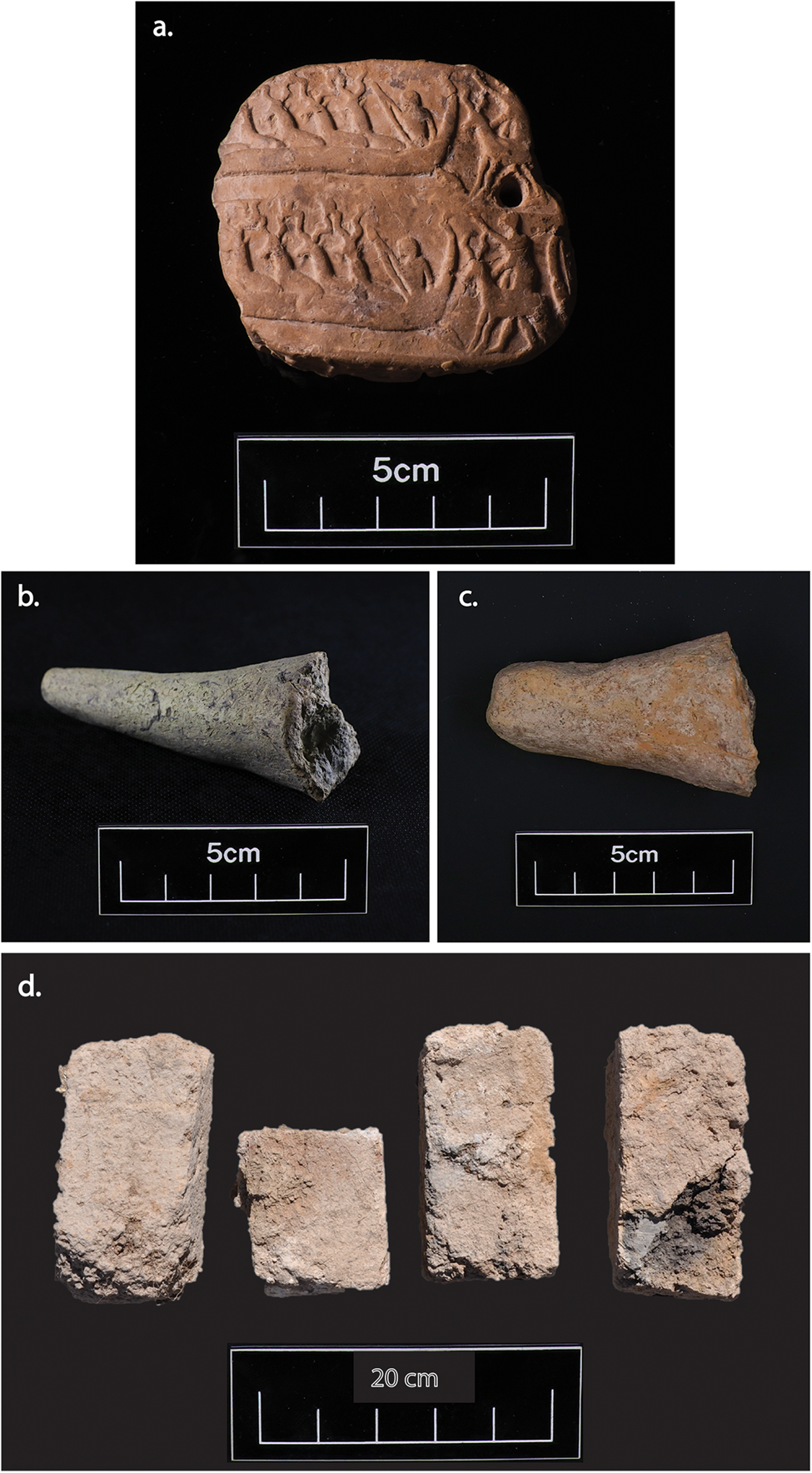
LC4–5 southern Mesopotamian, Uruk material culture from Kani Shaie. (a) Numerical tablet with cylinder-seal impression; (b, c) clay wall cones (d) Riemchen bricks. (© Kani Shaie Archaeological Project.)
Within the intermontane valleys of the western Iranian Zagros additional evidence during this initial phase of Uruk culture-contact is present which, although outside the immediate study region, still deserves discussion as the material assemblages are closely interrelated with those of the Adhaim-Sirwan. BRBs are present, though again represent the sole evidence of this early Uruk culture-contact. Examples are noted from the Marivan Plain at both Tepe Rasha (Dadaneh et al. Reference Dadaneh, Ghrasrian, Colantoni and Skuldbøl2019) and Tepe Qaleh Naneh (Saed Mucheshi et al. Reference Saed Mucheshi, Mohammadi Ghasrian and Azizi2018), and Tepe Sarghal'eh (Saed Mucheshi et al. Reference Saed Mucheshi, Azarshab and Ghaffari2013) from south of Marivan, with additional examples from sites north of the Rania, along the Lesser Zab River (Nobari et al. Reference Nobari, Binandeh, Nestani and Nasab2012), including Tepe Badamyar Rabat (Abedi et al. Reference Abedi, Heidari, Salimi and Eskandari2019). Further discussion is difficult as both the absolute and ceramic chronologies of the north-central Zagros are poorly defined.Footnote 9 Thus a comprehensive picture of the early Uruk transmission here, and the relationship with communities of the north-central Zagros, remains speculative. The absence of other Uruk ceramic type-fossils at these sites may suggest that these sites, too, were abandoned prior to the subsequent LC4 Uruk transmission (Renette & Mohammadi Ghasrian Reference Renette and Mohammadi Ghasrian2020, 112–13), or alternatively it represents the conscientious rejection of the Uruk Phenomenon and the maintenance of local traditions. While the presence of a single ceramic form is not a clear indicator of the modalities of this interaction, it does point to widespread culture-contact and the gradual formation of a globalizing network linking Uruk people with communities along the Adhaim-Sirwan at this early phase of the Uruk Phenomenon. BRBs are conspicuously absent from contemporary sites of the late LC2–early LC3 further northwest of the Adhaim-Sirwan, where there are remarkably few published sites/data with confirmed archaeology related to the Uruk Phenomenon (Abu al-Soof Reference Abu Al-Soof1966; Iamoni et al. Reference Iamoni, Valente, Scattini and Hasan2023; Rothman Reference Rothman2002; Vacca & Peyronel Reference Vacca, Peyronel, Baldi, Iamoni, Peyronel and Sconzo2022) Evidence indicates many of these sites were abandoned during the late LC2–early LC3, prior to the Uruk Phenomenon.Footnote 10
BRBs, then, represent the first indication of this Uruk culture-contact. However, archaeologists working in the northwestern Qara Dagh highlight a stronger connection at this early phase in the Uruk Phenomenon, even outright colonization by southern Uruk populations (Baldi Reference Baldi, Baldi, Iamoni, Peyronel and Sconzo2022; Vallet et al. Reference Vallet, Baldi, Naccaro, Rasheed, Saber and Hamarasheed2017; Reference Vallet, Baldi and Zingarello2019). Excavations at Logardan and Girdi Qala present exciting yet complex new data for a more concrete Uruk presence at an earlier date than previously anticipated, based on their excavations and presence of Early Uruk ceramics. They argue that the late LC2 at Logardan featured a monumental terrace/acropolis complete with clay wall cones (Vallet et al. Reference Vallet, Baldi, Naccaro, Rasheed, Saber and Hamarasheed2017), a typically Uruk architectural element used to adorn monumental Uruk buildings.Footnote 11 Ceramics from the Logardan acropolis were mainly Uruk in appearance, though with local northern Mesopotamian ceramics found elsewhere in areas of grain processing and small-scale industry (Baldi Reference Baldi, Baldi, Iamoni, Peyronel and Sconzo2022, 132, 136), while surrounding the base of neighbouring Girdi Qala, pottery kilns are argued to have produced Uruk ceramics. The later LC3 period saw the Logardan acropolis restructured as an exclusively Uruk site for pottery production, with evidence of Uruk agricultural tools and bureaucratic/accounting devices (Baldi Reference Baldi, Baldi, Iamoni, Peyronel and Sconzo2022, 136, fig. 7.8).
Excavations of multi-chambered, interconnected kilns from late LC2 at Girdi Qala and a comparative complex from the early LC3 at Kani Shaie challenge our understanding of the pyrotechnological capabilities of LC2–3 craftspeople. The Girdi Qala complex included multiple combustion chambers linked by a complex series of flues (Vallet et al. Reference Vallet, Baldi, Naccaro, Rasheed, Saber and Hamarasheed2017; Reference Vallet, Baldi and Zingarello2019), with a similar, unpublished complex also excavated at Kani Shaie. Unlike Girdi Qala, which features a wholly southern Mesopotamian Uruk pottery assemblage (Baldi Reference Baldi, Baldi, Iamoni, Peyronel and Sconzo2022, 132), at Kani Shaie, the exact opposite scenario is noted, whereby the kiln complex and surrounding contexts feature vegetal-tempered, LC3 northern Mesopotamian pottery. Small quantities of Early Uruk pottery were noted in adjacent contexts, primarily BRBs and proto-BRBs, alongside a reserve-slipped jar (Abu Jayyab pers. comm., 2022) demonstrating that Kani Shaie also had more concrete culture-contact with the Uruk Phenomenon during early LC3. The presence at Girdi Qala of exclusively southern Mesopotamian, Early Uruk pottery is interpreted that these vessels were fired there, and therefore the complex represented an Uruk technological development (Baldi Reference Baldi2021, 189; Vallet et al. Reference Vallet, Baldi and Zingarello2019, 171). Given the contrasting pottery assemblages, it is not possible to classify the kiln complexes definitively as either an Uruk pyrotechnological development (as per Baldi Reference Baldi, Baldi, Iamoni, Peyronel and Sconzo2022, 131) or a locally derived innovation, as suggested by evidence from Kani Shaie. However, it is indicative that this specialized firing technology may be a local development. One possibility is that these pyrotechnological advancements relate to early Uruk cultural contact in northern Mesopotamia, though labelling them as explicitly southern Mesopotamian technology is perhaps premature.
Archaeometric and petrographic investigations of the LC2–3 early Uruk ceramics are limited, making discussions of this crucial period of early culture contact preliminary and in need of further data and absolute dating. Analysis of clay recipes from Kani Shaie phase Vd (LC3) shows that Uruk vessels did not use distinct clay recipes compared to local ceramics (Lewis Reference Lewis2022b). In the Qara Dagh (late LC2), however, vegetal tempering was predominant (Baldi Reference Baldi, Baldi, Iamoni, Peyronel and Sconzo2022, 142). This variation may relate to differing chronologies, but initial Uruk culture contact at both sites revealed overarching similarities alongside site-specific differences.
LC4 and the Mature Uruk Phenomenon
After the initial emergence of the Uruk Phenomenon in the Adhaim-Sirwan, the LC3–4 experienced rapid settlement changes and even abandonment across northern Mesopotamia, including the upper Adhaim-Sirwan. The influx of Uruk influence has been linked to this disruption (McMahon Reference McMahon2020, 303), and while the exact relationship between the Uruk transmission and these settlement changes remains unclear, it seems reasonable to suggest a connection. Abandonment is noted at several sites in the Shahrizor Plain including Girdi Resh, Gird-i Shamlu and Begum, while an occupational hiatus is observed at Gurga Chiya, with few confirmed sites featuring Uruk pottery currently known from the plain (Carter et al. Reference Carter, Wengrow and Saber2020; D'Anna et al. Reference D'Anna, Nieuwenhuyse, Mühl, Baldi, Iamoni, Peyronel and Sconzo2022; Lewis Reference Lewis, Baldi, Iamoni, Peyronel and Sconzo2022a, Reference Lewisb; Mühl Reference Mühl2013, Tafel 89). At Kani Shaie, settlement disruption includes major restructuring and possible initial shrinkage of the settlement, with a short-lived hiatus in occupation covering part of the LC3 (Renette et al. Reference Renette, Abu Jayyab and Gibbon2021; Reference Renette, Lewis, Wencel, Farahani, Cabral and Tomé2023). Interpreting contemporaneous patterns from the Rania is currently difficult. Several sites investigated during the 1950s–60s feature Uruk pottery, though the chronological terminology and absence of absolute dates means that more precise dating is difficult. Nevertheless, the majority of presented material appears to date to the LC2-3 (Abu al-Soof Reference Abu Al-Soof1964).Footnote 12
The Rania appears to feature an increase in site numbers during the latter LC connected with the Uruk Phenomenon (Eidem & Giannessi Reference Eidem and Giannessi2021; Skuldbøl & Colantoni Reference Skuldbøl, Colantoni, Baldi, Iamoni, Peyronel and Sconzo2022). Excavations across the plain demonstrate that during the first half of the LC, many settlements featured tripartite buildings, evidence of emerging elites, local bureaucracy, and administration. The sites here seem to have embarked upon similar urban trajectories to those elsewhere in northern Mesopotamia, albeit on a much smaller scale (Skuldbøl & Colantoni Reference Skuldbøl, Colantoni, Baldi, Iamoni, Peyronel and Sconzo2022). Following this, the LC4–5 in the Rania witnesses substantial changes in site use. Spatial reorganization seems to give way to large-scale industrialization of the landscape with considerable industrial activity at Bab and neighbouring Kur, at Girdi Gulak, and possibly at Araban and Mullah Shell (Eidem & Giannessi Reference Eidem and Giannessi2021; Skuldbøl & Colantoni Reference Skuldbøl, Colantoni, Baldi, Iamoni, Peyronel and Sconzo2022).Footnote 14, Footnote 15 Numerous pits and pyrotechnological features indicate large-scale Uruk pottery production and systematic rubbish disposal, representing a landscape of industrialization during the LC4(–5) and highlighting significant changes in site use therein (Eidem & Giannessi Reference Eidem and Giannessi2021; Skuldbøl & Colantoni Reference Skuldbøl, Colantoni, Baldi, Iamoni, Peyronel and Sconzo2022, 15). Limited published Uruk pottery (likely LC4) is also depicted from neighbouring Murad Rasu (MacGinnis et al. Reference MacGinnis, Raheem and Ismael2020, fig. 22) though further discussion regarding the nature of the site is not yet possible.
Other Adhaim-Sirwan sites show more limited traces of the Uruk Phenomenon. Gurga Chiya appears to be a small, rural settlement with ephemeral architecture, where evidence of small-scale industrialization is indicated by ovens, pottery kiln, and rubbish disposal. (Carter et al. Reference Carter, Wengrow and Saber2020; Lewis et al. Reference Lewis, Quinn and Carter2020). At Ban Qala in the southeastern Qara Dagh, a scatter of pottery resembling that at Gurga Chiya may indicate a similar phenomenon of pottery production and discard (Catanzariti et al. Reference Catanzariti, Tanaka, Maskevich, Otto, Herles, Kaniuth, Korn and Heidenreich2020, 46). Similar evidence for garbage disposal to that observed in the Rania are noted at Kani Shaie via the presence of an extensive pottery spread featuring large quantities of complete BRBs. More substantial evidence of occupation during the LC4–5 is found at Kani Shaie: Phase Vc, securely dated to the LC4, features two phases of large-scale architecture. The later structure contained burnt collapse, Uruk pottery (Fig. 3), animal bone, and distinctive Uruk baked ‘Riemchen’ bricks (Fig. 4d). An earlier structure, also from the early LC4, was excavated below but was mostly cleared before constructing the later Phase Vc building (Renette et al. Reference Renette, Abu Jayyab and Gibbon2021; Reference Renette, Lewis, Wencel, Farahani, Cabral and Tomé2023).
Evidence of administration and bureaucracy during the Uruk Phenomenon in the region is rare. The presence of a clay sealing with cylinder seal impression and a numerical tablet with cylinder seal impression, both depicting Uruk iconographic scenes from Kani Shaie, are regionally significant (Fig. 4a: Tomé et al. Reference Tomé, Cabral, Renette, Kopanias and MacGinnis2016). A recently published numerical tablet from Girdi Qala North, alongside a series of complex tokens dated to the late Middle Uruk (Baldi Reference Baldi, Baldi, Iamoni, Peyronel and Sconzo2022, fig. 7.8.E–F), are likely contemporary, providing strong evidence of southern Mesopotamian Uruk administration and bureaucracy within these communities.
The late LC3–early LC4 features settlement transformations with abandonment, or settlement contraction at Logardan and the establishment of a new settlement at adjacent Girdi Qala North during the early LC4 dominated by Uruk material culture (Baldi Reference Baldi, Baldi, Iamoni, Peyronel and Sconzo2022, 132; Paladre et al. Reference Paladre, al Debs, Amin and Vallet2016, fig. 10) presenting further evidence for the integration of the northwestern Qara Dagh within the Uruk sphere. It suggests the widening of distinctions between different communities, with the continued presence of a local population alongside the establishment of a southern Mesopotamian settlement at Girdi Qala North. With this new settlement foundation come dramatic changes to the production of material culture (namely pottery), administrative and bureaucratic changes and overall, substantial restructuring of the entire settlement system. What emerges, according to the excavators, is the emplacement of a colony of southern Mesopotamians and their segregation from the extant local community.
Ongoing excavations at Shakhi Kora in the Sirwan Valley identify the site as a regionally significant settlement during the LC4–5, featuring monumental Uruk architecture, extensive quantities of Uruk pottery and material culture (Glatz et al. Reference Glatz, Del Bravo and Chelazzi2024). The Hamrin Basin at the southern extent of the Adhaim-Sirwan, though outside the focus of this paper, also features another concentration of LC4 Uruk sites: Rubeidheh, Tell Hassan and Ahmed al-Hattu (Killick Reference Killick1988; Nanucci Reference Nannucci and Mazzoni2012; Sürenhagen Reference Sürenhagen1981).
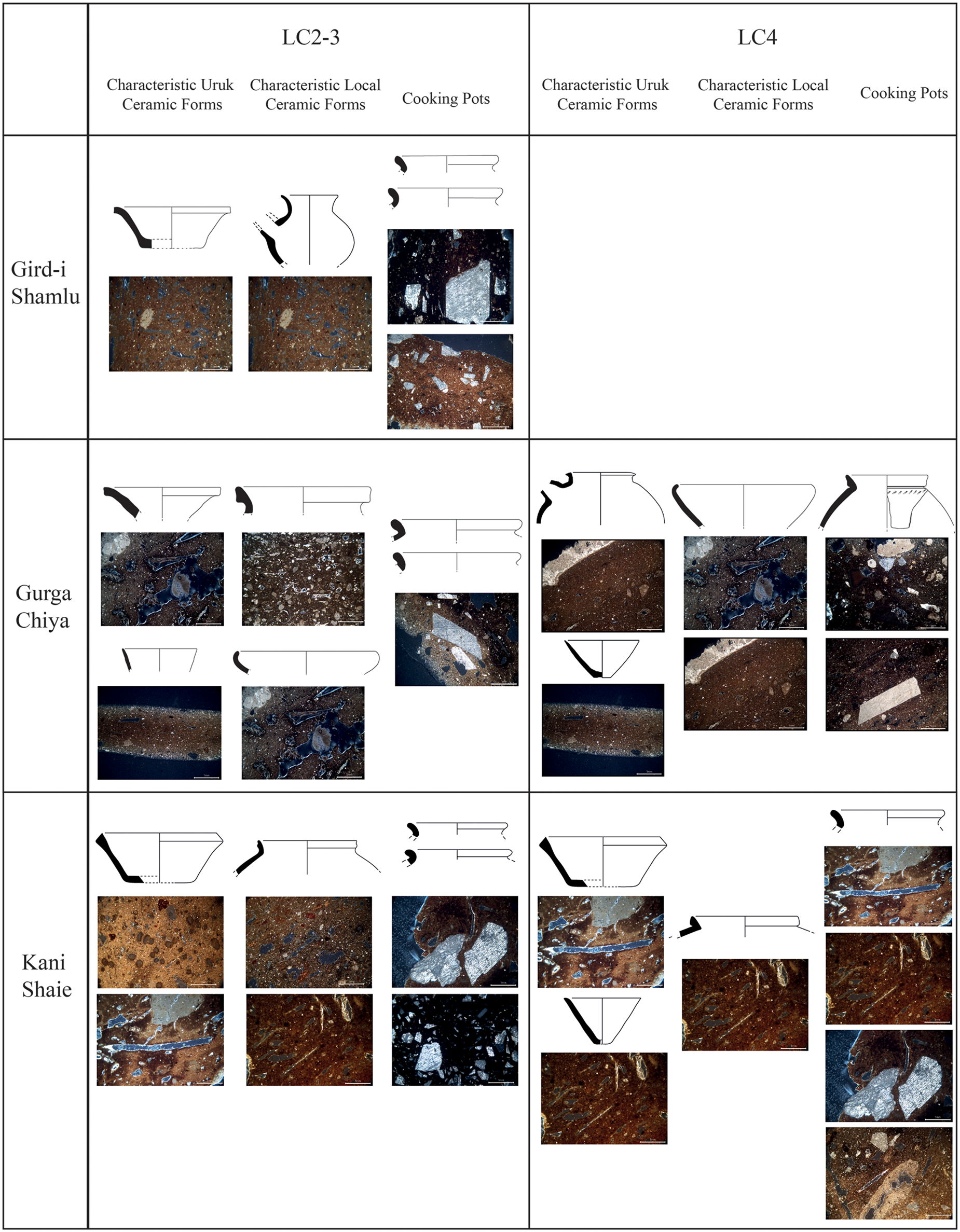
Radiocarbon dates from the Adhaim-Sirwan indicate that the high point of Uruk culture-contact in the region was brief but highly pronounced, broadly spanning the duration of the LC4.Footnote 16 The LC4 at Kani Shaie is marked by the rapid disappearance of mineral-tempered ceramics, while at Gurga Chiya, mineral-tempered ceramics increase throughout the LC4 (Lewis Reference Lewis, Baldi, Iamoni, Peyronel and Sconzo2022a, Reference Lewisb). There is no clear dichotomy of either temper tradition being exclusively used for Uruk or local ceramic forms,Footnote 17 and indeed there was considerable variation in clay traditions (Fig. 5). These factors demonstrate site-specific variation and active choices by the potters regarding ceramic production. Additional analysis of clay recipes and temper use from cooking pots suggests household manufacture of these vessels, while other vessels were manufactured by an emergent class of pottery specialists (Baldi Reference Baldi2021; Lewis Reference Lewis2022b). A wider range of temper choices was noted for cooking pots compared other ceramics from Kani Shaie and Gurga Chiya, and an increase in clay recipes from the preceding LC2–3 indicates the uptake of new potting traditions, perhaps the integration of new potters into local potting communities (Lewis Reference Lewis2022b, 310). Logardan and Girdi Qala add further nuance to the picture: Gradual differentiation in Uruk pottery from northern Mesopotamian traditions throughout the LC4 portrays an increasing process of segregation of the manufacturing process. Changes in clay recipes, via gradual increase in mineral tempering, and the emergence of new forming techniques are linked to Uruk craftspeople (Baldi Reference Baldi, Baldi, Iamoni, Peyronel and Sconzo2022, 142–4).
Chronological development of petrographic recipes from selected Adhaim-Sirwan sites featuring Uruk and northern Mesopotamian ceramics (after Lewis Reference Lewis2022b, fig. 11.1). Variation in paste preparation can be seen from selected photomicrographs, while the lack of correlation between petrographic groups of Uruk and local pottery is also presented. Cooking pots feature a variety of different clay recipes. Overall, a complex picture of intra-site variability and glocalized pottery manufacture is presented.
The LC4 saw widespread settlement change including reoccupation at selected sites following a period of abandonment during the LC3. Archaeology suggests a reduction in settlement numbers with concentrated Uruk presence at specific local centres which featured variable uptake in Uruk material culture. Sites like Kani Shaie, Shakhi Kora, Logardan and Girdi Qala bearing distinctly Uruk-related material culture, architecture and accounting/bureaucracy are complimented by small rural communities such as Gurga Chiya and Rubeidheh, which present a more limited uptake of Uruk practices.
Notably, the Rania features a densely industrialized landscape—perhaps even the industrialization of the landscape itself—adding a new dimension to Algaze's model of Uruk sites. Evidence of site-specific pottery manufacturing traditions and active decision-making further highlights the variation of the Uruk Phenomenon and its integration within the communities of the Adhaim-Sirwan.
LC5 and the end of the Uruk Phenomenon
The final phase of the Uruk Phenomenon, the LC5, is virtually absent from the Transtigridian Piedmont including Iraqi Kurdistan, signalling widespread settlement abandonment.Footnote 17 Kani Shaie is one of very few Transtigridian sites featuring confirmed LC5 occupation (Renette et al. Reference Renette, Abu Jayyab and Gibbon2021; Reference Renette, Lewis, Wencel, Farahani, Cabral and Tomé2023). Ceramic parallels from LC5 contexts here compare to southern Mesopotamian ceramics (Fig. 6), with additional comparatives from the Eski Mosul region (see Renette et al. Reference Renette, Abu Jayyab and Gibbon2021, fig. 15 for Eski-Mosul-related ceramic comparatives from Kani Shaie. See also Roaf Reference Roaf1984; Sconzo Reference Sconzo2019; etc.). One explanation proposes a more ‘provincial’ Uruk ceramic style within the northern reaches of the Transtigridian Piedmont (Sconzo Reference Sconzo2019), indicating a degree of conservatism in ceramic traditions, or a prolonged LC4 (Lewis Reference Lewis2022b; Renette et al. Reference Renette, Abu Jayyab and Gibbon2021, 158–9). However, this may alternatively reflect chronological factors. Lower reaches of the Adhaim-Sirwan conversely maintained closer connections with southern Mesopotamia and the Uruk world, as evidenced by the presence of large quantities of LC5 Uruk ceramics and monumental structures from Shakhi Kora (Glatz et al. Reference Glatz, Del Bravo and Chelazzi2024).
LC5 Uruk ceramics from Kani Shaie. (Drawing: M.P. Lewis. © Kani Shaie Archaeological Project.)

Discussion. Glocalizing the global Uruk Phenomenon
World Systems Theory overwhelmingly looks to economic reasons to account for the interaction between ‘core’ and ‘periphery’. While economic reasoning was probably important in driving the Uruk Phenomenon, there were likely additional reasons, and while a definitive answer remains beyond the scope of this paper, the valleys of the Zagros may actively have inflated the effects of glocalization, whereby the fragmented landscape directly resulted in distinctly glocalized expressions within the micro-regions of the Zagros foothills.
By applying a glocalized framework to interpret the events and archaeological data, we move beyond the requirement for a single explanatory model. As a heuristic tool, then, glocalization has not been deployed here to explain the root causes of the Uruk Phenomenon. Instead, it provides a mechanism that appreciates the heterogeneous manifestations of the Uruk Phenomenon, emphasizing diversity and heterogeneity. Through this paper, glocalization presents a means to highlight how specific local peoples and social groups—in this case, those of the upper Adhaim-Sirwan—responded to increasing conditions of global connectivity. This framework adds a greater degree of nuance to the understanding of the Uruk Phenomenon, given that its manifestation was shaped by the integration of both local and global cultural elements. Such manifestations were variable, locally derived, and resulted in the formation of distinct cultural responses. The Adhaim-Sirwan represents a case-study par excellence of glocalization, with people and communities linked together, and their gradual integration into the Uruk Phenomenon. We observe local responses and adaptations to the globalizing Uruk Phenomenon thus generating manifestations of glocality (after Cobb Reference Cobb, Roudometof and Dessi2022, 32).
The Uruk was a fractal phenomenon with substantial internal variability. The case studies from this small region reinforce this variability and emphasize that the appearance of the Uruk Phenomenon was subject to, and at the mercy of, human agency. Glocalization represents a deliberate, active process undertaken and replicated by local people with local agency at its heart (Beyer Reference Beyer and Beyer2022; Cobb Reference Cobb, Roudometof and Dessi2022). Cultural messages were globally shared but locally interpreted and, rather than a universalizing process, Uruk cultural messages were differentially absorbed by local communities, resulting in a myriad of responses. Communities of the Adhaim-Sirwan reinvented themselves in relation to the Uruk Phenomenon, the contours of the process of which were variable and prone to fluctuation. It may have been a global phenomenon, but the uptake and subsequent replication of Uruk cultural content were decidedly local.
Roudometof's model illustrates how globalizing tendencies give rise to multiple glocalities, with Adhaim-Sirwan communities developing distinct relationships with the Uruk Phenomenon. Material culture was interpreted and recreated differently, reflecting local techniques and traditions. These ‘hallmarks of heterogeneity’ (Cobb Reference Cobb, Roudometof and Dessi2022, 39) show that these communities selectively embraced, rejected, or adapted elements of Uruk culture—whether in pottery, administrative practices, or architecture—and that this selective embrace of Uruk material culture varied chronologically, contextually and geographically. Some sites demonstrated a more concrete and lasting presence of Uruk influence, while others were more transient or selective. Ultimately, in much the same way that cultures are not sharply bounded entities, the boundaries between global and local are similarly mercurial (Kraidy Reference Kraidy2003, 42).
The early expression and culture contact of the LC2–3 saw a relatively muted, restricted uptake in Uruk material culture, largely though not exclusively limited to the incorporation of BRBs within culinary practices. Limited evidence of non-local vessels from Kani Shaie may suggest the arrival of people and their pottery from outside the immediate catchment of the site (Lewis Reference Lewis2022b), though these new arrivals quickly integrated their pottery production within local practices with no clear dichotomy separating the two, a scenario mirrored in the northwestern Qara Dagh; though here, archaeologists argue in favor of the demic dispersal and arrival of non-local groups to the region and their incorporation within the pottery manufacturing process.
The LC4 saw greater variability in the uptake of Uruk material culture. Local centres such as Girdi Qala, Kani Shaie and Shakhi Kora embrace a wider range of Uruk material culture, including monumental buildings decorated with wall-cones present alongside Uruk bureaucracy and administration. The manufacture of material culture using local resources and techniques, but in styles which draw upon both local and interregional influence, are specifically highlighted as strong candidates for glocalization (Cobb Reference Cobb, Roudometof and Dessi2022, 36). Uruk ceramics from the study region strongly adhere to this. Distinctively Uruk pottery is widespread in the study region, though with differential manufacturing techniques; residents at Kani Shaie manufactured Uruk pottery using local clay recipes, while within Girdi Qala the increase in mineral-tempered vessels, traditionally ascribed as an Uruk cultural practice, denotes a noteworthy change in vessel production. The appearance of new clay recipes at multiple sites within the Adhaim-Sirwan supports the demic dispersal of people at different stages of the Uruk Phenomenon and their direct involvement in pottery production.
The development of industrialized landscapes during the LC4 presents a new addition to Algaze's original Uruk Expansion model. Such landscapes are particularly characteristic of the Rania, where large numbers of clay pits, pottery kilns and extensive waste disposal provide strong evidence for Uruk industrialization, with additional, smaller-scale examples of industrialization from the Adhaim-Sirwan. Finally, at small communities such as Gurga Chiya, limited evidence of Uruk material culture is present, though largely restricted to key ceramic forms.
The final phase of the Uruk Phenomenon in the Adhaim-Sirwan Basin is difficult to characterize. Sites in the lower reaches such as Shakhi Kora maintained stronger connections with southern Mesopotamia and the Uruk world. In contrast, the situation in the upper Adhaim-Sirwan is less clear, possibly indicating weakened ties to southern Mesopotamia, a prolonged LC4 ceramic horizon, or the need for further refinement of LC5 ceramic chronologies. It is clear that the end of the Uruk Phenomenon and the transition to the Early Bronze Age (EBA) mark a significant shift in the region's cultural trajectories: rapid, almost hyper-regionalization of material culture—especially pottery—is noted via the emergence of highly decorative, strongly regionalized painted pottery traditions (e.g. Lewis Reference Lewis and Couturaud2024; Tomé et al. Reference Tomé, Cabral, Renette, Kopanias and MacGinnis2016; see also Couturaud Reference Couturaud2024 and contributions). The weakening of links between the Adhaim-Sirwan and southern Mesopotamia and re-emergence of regionalized trajectories is demonstrative of the underlying strength and persistence of local elements at play, namely, glocalization. The opening centuries of the EBA see the rapid diminishing and almost disappearance of pan-Mesopotamian influence within the Adhaim-Sirwan, and indeed much of northern Mesopotamia, while local elements are strengthened and reinforced. These regionalized trajectories which characterize the early phases of the EBA emphasize and strengthen that glocal elements truly were embedded within the ethos of interaction between the local communities and the Uruk Phenomenon within the upper reaches of the Adhaim-Sirwan Basin.
Conclusions
Within this paper, a key aim was to revive theoretical discussions regarding the transmission of the Uruk Phenomenon while highlighting aspects of regionalization in the upper Adhaim-Sirwan. By contextualizing the Uruk Phenomenon within a glocalizing framework, it is essential to investigate further the tangible impacts—social, economic, political and cultural—of these interactions on the Adhaim-Sirwan and the wider region (Cobb Reference Cobb, Roudometof and Dessi2022, 33–4). Understanding material culture can be significantly enriched by considering both local and global contexts together, rather than in isolation (van Altern Reference van Altern2017, 15). In this regard, a glocalizing framework effectively links these two perspectives, allowing for a more balanced understanding of the Uruk Phenomenon.
Data from the Adhaim-Sirwan indicate a complex, evolving relationship between both local and Uruk communities, highlighting the region as a crucial nexus of cultural interaction. The Adhaim-Sirwan served as a corridor of intense exchange between northern Mesopotamian and Uruk communities during the fourth millennium. These cultural encounters spanned an extensive chronological period, characterized by variability and repetition (Skuldbøl & Colantoni Reference Skuldbøl, Colantoni, Baldi, Iamoni, Peyronel and Sconzo2022, 11), largely supporting Butterlin's (Reference Butterlin2018) premise of multiple expansion events of the Uruk Phenomenon. As Uruk influence spread into the Adhaim-Sirwan, it generated diverse local responses and adaptations, resulting in glocality. Glocalization should not be viewed as a pathway to cultural homogeneity, but rather as a complex negotiation where new global (i.e. Uruk) material culture was interpreted regionally or site-specifically. This led to differential adoption and adaptation of material culture across various local contexts in the Adhaim-Sirwan Basin, while still retaining its distinctly ‘Uruk’ character (van Altern Reference van Altern2017, 15).
A glocalizing framework is also key in highlighting the importance and power of local agency: their interaction with this phenomenon shaped its appearance through complex process of negotiation between distinct communities, thus shaping its outcome. Glocalization permits and enables the amalgamation and rearticulation of different scales and directions of interaction (i.e. top-down and bottom-up) while preserving their diversity (Kraidy Reference Kraidy2003, 43). Glocalization thus integrates the prior Algazean grand narratives of elite-driven enterprise with the recent suite of bottom-up, site-specific studies which highlight the influence of local individuals. The Uruk Phenomenon in the Adhaim-Sirwan is therefore seen not so much as globalization, but as a distinctly regionalized glocal phenomenon.
Acknowledgements
Elements of this paper were developed as part of my PhD at the Department of Archaeology, University of Cambridge, funded by the AHRC. I am incredibly grateful to help and guidance from Professor Augusta McMahon and Dr Steve Renette throughout my PhD. My thanks also to André Tomé for feedback on the paper, and to Sergio Russo. Finally, my thanks to the three anonymous reviewers for their feedback and suggestions.


 Open access

